
Uncategorized
I’ll Pay N4.7m NECO Fee For 148 Prison Inmates

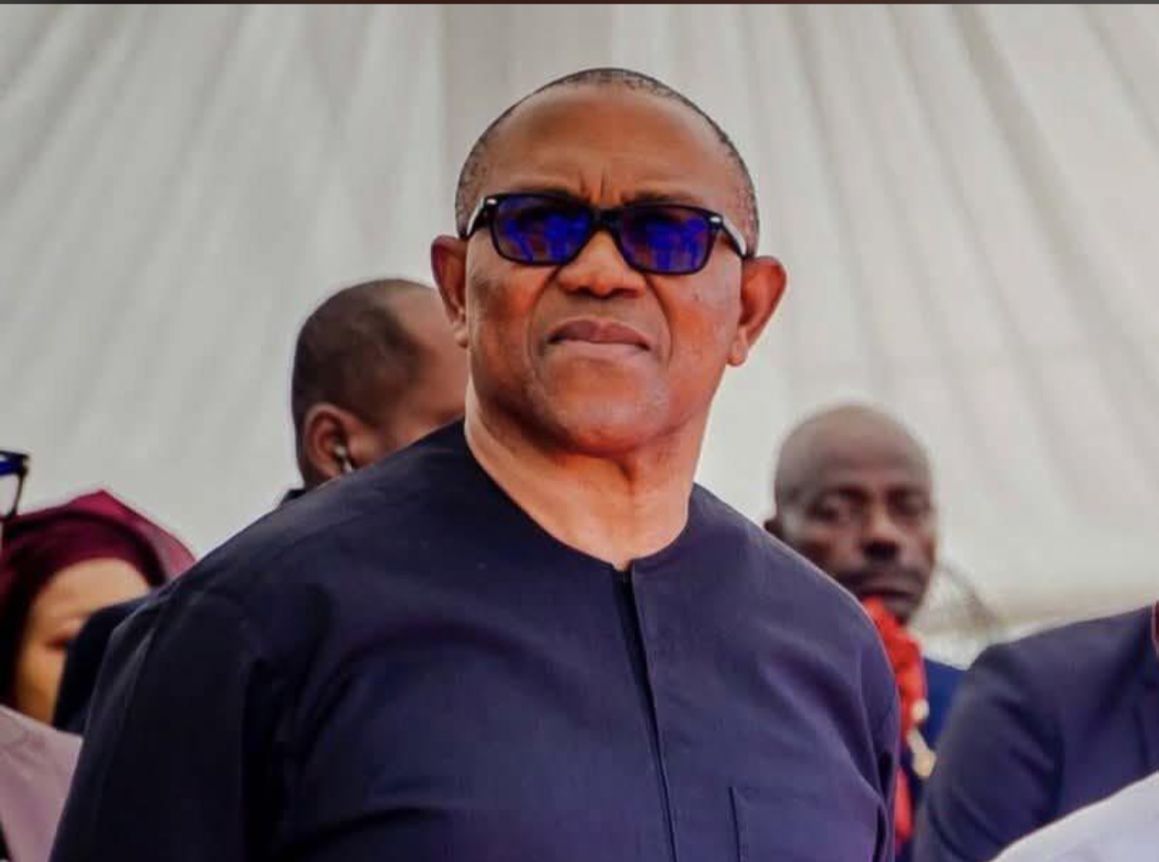
Candidate of the Labour Party (LP) in the 2023 presidential election, Mr Peter Obi, has offered to pay the sum of ₦4,741,400 for 148 inmates in various prisons in Anambra State who are expected to write their National Examinations Council (NECO) this next year.
Obi, in a statement on X, formerly Twitter, over the weekend, assured that the money would be paid on Monday, December 8, to enable the inmates to sit for the examination.
The inmates, according to him, comprise 50 in Awka prison, 36 in Onitsha, 25 in Nnewi, and 37 in Aguata.
“The cost per student is ₦30,050, with an additional ₦2,000 for logistics, bringing the total required to ₦4,741,400.
“I will write to the representatives on Monday, guaranteeing that the fees will be paid so the inmates can sit for the exams. I also assured them that I would work with friends and well-wishers to help cover the costs,” Obi said on X.
The Labour Party candidate who disclosed that he visited California State University, Sacramento, in April this year, said he was inspired by the university’s transformative programs, including the “Guidance Scholars Program,” which supports children from foster homes, and “Project Rebound,” which rehabilitates formerly incarcerated individuals and helps them reintegrate into society.
According to him, witnessing these initiatives reinforced his belief that inclusive, compassionate leadership, which values every human life and provides second chances, is essential for building a society where everyone can thrive.
Obi, however, said his concern is extended beyond Anambra State, and wondered if other inmates in other states have access to similar opportunities.
He noted that many people who end up in correctional centres turned to crime due to a lack of education.
“These centres are meant to be places of reformation, and a key component of that mission is to provide opportunities for learning and skills acquisition, something that should ordinarily be the government’s responsibility.”
He suggested that when inmates complete their terms, they should be equipped to contribute positively to themselves and to society.
“These young men deserve a real chance to turn their lives around and become productive members of the community,” Obi said.
Please follow and like us:

Uncategorized
How Nigeria Security Operatives and a Cartel Allegedly Orchestrate a Billion-Naira Smuggling Ring at Nigeria’s Borders

A massive, “mafia-style” smuggling operation along the Seme-Badagry and Idi Iroko border routes is reportedly netting a network of Nigerian security operatives—including personnel from the Army, Police, and Nigeria Customs Service (NCS)—an estimated N4 billion to N6 billion weekly by escorting contraband goods, rice, and vehicles from the Benin Republic into Lagos. Insiders from the Union of Pioneers Association, a coalition of over 3,000 local smugglers and indigenes, claim a powerful, security-backed syndicate has monopolized this illicit trade, sidelining indigenous operators who are being used as mere ground workers without benefiting from the high profits.
The syndicate allegedly pays “settlements” to customs officers for clearance and secures military escorts, with soldiers from major Badagry military formations reportedly deployed to protect trucks of contraband instead of the country’s territorial integrity. One source claims Army personnel were spotted supervising loading operations as recently as Saturday, November 22nd. While the cartel is thriving, with its notorious coordinator accumulating wealth despite having no personal vehicles, the local Union members feel cheated, particularly as the profitable December “Christmas window” for heightened smuggling approaches. They allege that while Lagos border operations are “dead” for independent operators, seven border points in Ogun State are “booming” as alternative, questionable corridors. Frustrated by the cartel’s and security forces’ alleged collusion to monopolize the trade, the Pioneers Association is now planning to send a petition to National Security Adviser Nuhu Ribadu, demanding an investigation into this “billion-naira smuggling empire supported by uniformed personnel.”
Uncategorized
50 Abducted Pupils Escape St. Mary’s Catholic School; 253 Victims Still Held By Terrorists in Niger State
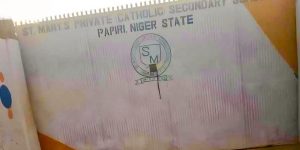
In a moment offering a slight reprieve amidst the ongoing crisis, the administration of St. Mary’s Private Catholic Primary and Secondary Schools in Papiri, Niger State, has confirmed that 50 pupils who were tragically abducted have managed to escape. This encouraging development, verified through contact and visits to the parents of the rescued children, saw the pupils flee and return home between Friday and Saturday, days after the initial terrorist attack that saw a total of 303 students and pupils taken.
The overall picture, however, remains deeply troubling. Following the escapes, the Catholic Bishop of Kontagora Diocese and Chairman of the Christian Association of Nigeria (CAN) Niger State chapter, Most Rev. Bulus Dauwa Yohanna, provided a sobering updated count. The Bishop’s media aide, Daniel Atori, electronically signed a statement confirming that 253 victims—comprising 236 primary pupils, an additional 3 children belonging to staff, and 14 secondary students—along with 12 teachers, are still held captive.
While acknowledging the return of the 50 children with a “sigh of relief,” the Bishop urgently appealed for continued prayers and calm among the community. He stressed that collaborative efforts are actively underway, involving security operatives, community leaders, and government officials, all working towards the safe and swift release of every remaining abductee. This collaborative endeavor underscores the collective will to bring all the victims home safely.
Uncategorized
FG High Court Orders Tinubu Government to Publish Names of NDDC N6 Trillion Misappropriation Suspects and Audit Report

A significant ruling has emerged from the Federal High Court in Abuja, issuing a direct order to President Bola Tinubu. This landmark judgment compels the Tinubu administration to ensure the swift and comprehensive public disclosure of individuals implicated in the massive alleged misappropriation—exceeding N6 trillion—that marred the operations of the Niger Delta Development Commission (NDDC) between 2000 and 2019, covering abandoned projects and administrative expenditures.
The directive, stemming from a Freedom of Information (FoI) suit filed by the Socio-Economic Rights And Accountability Project (SERAP), specifically instructs the President to command the Attorney General of the Federation’s office to widely publish the list of the indicted and the full NDDC forensic audit report, which was submitted to the federal government back on September 2, 2021.
Justice Gladys Olotu, who delivered the judgment on November 10, clearly articulated that both the audit report and the names within it fall squarely under the definition of “public records” as outlined in the FoI Act. The court firmly established that this information, being directly related to the “use and management of public funds,” is not protected by any exemption clauses in the Act. Justice Olotu underscored that the previous refusal by the President and the Attorney General to act on SERAP’s demand constituted a clear breach of their statutory duties under the FoI Act, the Nigerian Constitution, and Nigeria’s international transparency commitments.
Hailed by SERAP’s deputy director, Kolawole Oluwadare, as a “ground-breaking” victory for public accountability, the ruling was also strongly welcomed by human rights lawyer Femi Falana, SAN. Falana praised SERAP’s “patriotic public interest litigation” and stressed that the time for secrecy regarding the massive oil money and the names of those responsible is now over, urging the Tinubu government to demonstrate its commitment to the rule of law by immediately enforcing the judgment. SERAP has since formally written to President Tinubu, urging him to direct the publication and make a “clean break with the past” by demonstrating transparency and accountability in governance.
Uncategorized
Imo Police Accused of Pressuring Family to Accept Stranger’s Decomposing Body as Missing Lawyer Jeffrey Ucheagwu

The family of Jeffrey Ucheagwu, a lawyer missing since October, has raised serious allegations against the Imo State Police, accusing officers of attempting to close the investigation prematurely by pressuring them to accept a highly decomposed, unidentified body as Jeffrey’s remains. According to Jeffrey’s sister, Sandra, the police contacted her brother, Henry, on November 6 with certainty that they had found Jeffrey’s body, even requiring him to pay for the fueling of a police vehicle to retrieve it.
However, upon Henry’s arrival at the scene, he was alarmed to find media crews already present and recording. After examining the corpse, Henry immediately rejected the police’s identification, noting that the body appeared to have been decomposing for up to three months, a timeline inconsistent with Jeffrey’s recent disappearance. Despite this firm rejection, the officers allegedly insisted the body was Jeffrey’s and tried to obtain recorded statements from Henry affirming their position, which he refused.
The police then pressured the family to pay for a DNA test to confirm the identity, an expense the family questioned since they were certain the body was not their missing relative. The situation escalated when a publication suggested the found body might be Jeffrey’s and that perpetrators were being pursued, a narrative the family claims is aimed at prematurely concluding the case. Jeffrey Ucheagwu remains missing, and his family is pleading with the public for help, while the Imo State Police spokesperson has yet to respond to inquiries regarding the controversial handling of the case.

The Federal Ministry of Arts, Culture, Tourism and Creative Economy has announced the postponement of the 2025 National Festival of Arts and Culture (NAFEST), which was originally scheduled to commence on November 22 in Enugu State. The decision, conveyed in a statement by Nneka Anibeze, Special Assistant to Minister Hannatu Musawa, was reached after a careful evaluation of the national mood and the worsening issue of insecurity across various parts of the country.
Out of deep respect and solidarity for the families and communities affected by recent violence and loss of life, the Minister, in consultation with stakeholders, approved moving the festival to a later, unspecified date. The statement emphasized NAFEST’s critical role in nation-building, highlighting its capacity to unite Nigerians, strengthen social cohesion, and project a positive image of unity, hospitality, and national confidence.
The Facebook account of Rev. Ezekiel Dachomo, a prominent cleric based in Plateau State, has been deleted, sparking widespread concern among his supporters who allege an attempt to silence voices speaking out against the killings in Nigeria. This news was first publicized by social media influencer Isaac Show, a supporter of the pastor, who revealed that Rev. Dachomo was notified that his posts were considered to “jeopardise national security.” Both Show and Dachomo strongly rejected this claim, with Show expressing outrage that individuals he termed “terrorist sympathizers” continue to operate freely online.
Dachomo, who confirmed the deletion to journalists, has gained national and international attention for his vocal claims of “genocidal killings” targeting Christian communities across several states, including Plateau, Benue, Kaduna, and Taraba. He has repeatedly documented what he describes as mass burials, even claiming to have presided over more than 70 such exercises, once burying 500 people at once. These assertions were notably repeated during a testimony before the United States Congress and in an interview with British journalist Piers Morgan, where he alleged global institutions were neglecting the issue.
Despite publicly stating that his life is under threat, Dachomo has maintained he is “not afraid to die” if it means speaking the truth. Furthermore, Isaac Show reported that his own Facebook page has been shadow-banned, severely restricting its visibility. The deletion is expected to intensify ongoing debates in Nigeria regarding online censorship, the balance between national security and freedom of religious expression, and the widening trust gap between the public and government institutions, especially since authorities have not issued an official response regarding the account removal.
Uncategorized
Nigeria’s Day of Prayer: CAN Rallies Nation Against ‘Christian Genocide’ Amidst Contentious Debate
The Christian Association of Nigeria (CAN), following its National Executive Council meeting on November 18, 2025, in Jos, has directed all Christian denominations across the country to observe a nationwide day of prayer on Sunday, December 7, 2025. This declaration, signed by General Secretary Apostle Professor Samson A. Fatokun, is in response to what the association terms the “ongoing Christian Genocide” in Nigeria.
The prayer is specifically aimed at invoking divine intervention to halt the violence, resettle displaced Christian communities, end the activities of terrorists, kidnappers, and bandits, grant wisdom to the government, and restore peace and tranquility throughout the nation, drawing spiritual guidance from 2 Chronicles 7:14 and Esther 4:15–16. This serious observance comes amidst a significant and contested national debate, with groups like the International Society for Civil Liberties and Rule of Law alleging tens of thousands of Christian deaths and church destructions since 2009, and U.S. politicians like Senator Ted Cruz labeling Nigeria as the “deadliest country in the world for Christians.”
However, Nigerian officials, including the Foreign Minister and the Governor of Benue State, vehemently dispute the characterization of the violence as a religious genocide, arguing that the insecurity affects all citizens, and attributing conflicts to broader issues like herder-farmer disputes and general terrorism that targets both Muslims and Christians. The controversy was recently intensified by the October 31, 2025, redesignation of Nigeria as a “Country of Particular Concern” (CPC) for religious freedom violations by President Donald Trump, a move praised by some advocacy groups but rejected by Nigerian authorities and the Supreme Council for Islamic Affairs, who deem it politically motivated.