
TECHNOLOGY
Streamer Awards host QTCinderella on dark side of streaming


Laura CressTechnology reporter
 BBC
BBC

The popular Twitch streamer QTCinderella says she would be a “happier person” if she could go back and tell her younger self to choose a different career.
The 31-year-old, real name Blaire (she does not make her second name public), became famous for playing video games and cooking meals in live videos for her 1.2 million followers online.
In 2021 she created the annual Streamer Awards, which will be streamed online on Saturday.
But she told the BBC while she felt “incredibly lucky” to be in her position, the negatives of the role – ranging from being under constant scrutiny to at times being concerned for her safety – makes it difficult to enjoy.
“If I could go back and never experience some of the things I’ve experienced because of this job, I do think I would be a happier person overall,” she said.
“The biggest thing I wish I could do, if I went back and was able to whisper in my ear, I would say, don’t do it.”
 Getty Images
QTCinderella at the Streamer Awards in 2024
Throughout 2025, several female content creators have spoken out about concerns of their safety, particularly when attending public events.
In March, three US Twitch streamers, Cinna, Valkyrae and Emiru, were taking part in a week-long marathon stream when a man threatened to kill them.
Then, at the annual streamer event TwitchCon in October, a man from the crowd grabbed Emiru and tried to kiss her without her consent.
While her personal security were able to intervene, she accused the on-site security team of not detaining him until hours after the event – something Twitch refuted in a statement.
Harassment – or the threat of it – is an issue which Blaire says she has also had to face since her rise in popularity online.
“I could open my Instagram DMs right now and read you 100 horrible things about why or how I could be harmed by people,” she said.
In 2021, Blaire said she spent over $2,000 (£1,500) every month to have heavily edited photos of her removed from the internet.
Then in January 2023, she discovered a deepfake website was using a likeness of her in pornographic material, alongside other popular female streamers.
Now, she said despite opening a craft shop in Los Angeles earlier this year, it’s rare she ever visits – because of men turning up to the shop and asking for her.
“I thought it’d be fun,” she said.
“Unfortunately, it’s gotten to the point where I can’t go there because we’ve had men show up looking for me.
“I don’t want it to be unsafe for my employees.”
From drama to positivity
Blaire said she thought security at the Streamer Awards would be “aggressive” in comparison to other events, as she hopes to help the attendees from the streaming world feel as safe as possible.
The ceremony recognises top creators across various categories like Gamer of the Year and Best Community, while this year’s Streamer of the Year nominees includes the most-followed Twitch streamer with 20 million followers, Kai Cenat.
A mix of 70% fan votes and 30% industry panellists decide the winners.
In November, Blaire faced accusations from viewers claiming certain popular streamers were blocked from particular categories for being too “problematic” – which she denied.
Clips of the streamer tearfully replying to criticisms of the event soon spread online.
“I think I need to respond less”, she said.
“But as a human, you just want to be understood”.
The constant ebb and flow of streamer “drama” which many content creators like Blaire experience is one of the reasons she finds the job tough – but she said it was also why she started the awards.
“For me, it’s really important to bring people together, because I do think there’s lots of toxicity on the internet,” she said.
“And if people were just able to have a dinner together or reach across the board, it makes a big difference.
“For one night of the year, the negativity is silent”.



At the African Prosperity Summit 2025, held from November 12 to 14, 2025, founders, fund managers, policymakers, and investors gathered to discuss the state of capital in the continent’s technology system
The main event, held on November 13, 2025, featured a plethora of conversations with key players in the African business ecosystem and African private capital leaders.
Setting the tone of the event, Kola Aina, founding partner of Ventures Platform, highlighted that there is a significant gap between capital raised and exits achieved in the tech ecosystem.
Kola Aina – Founding Partner of Ventures Platform, during his opening speech at the African Prosperity Summit 2025
In his opening speech, Aina shared that since 2020, African startups have raised a total of $18 billion, and fund managers with dedicated African strategies have raised an additional $2.3 billion. Using a Venture Capital (VC) return on investment projection, Aina estimated that in total, “If you piece that together, we’re talking about something in the region of $20 billion [range] dedicated to African VC strategies.”
In VC economics, a 3x return (DPI—Distributed to Paid-In capital) is generally considered the benchmark for a successful fund. With a 2x to 3x return, Aina shared that the DPI expectation by 2035 is $40 to $60 billion for the VC market to be regarded as a sustainable market that makes an impact and delivers returns on investment.
The deadline for these returns is “by about 2035” based on the standard 10-year lifecycle of a venture capital fund. If capital is raised between 2020 to 2025, the fund must liquidate (exit) its assets between 2030 to 2035.
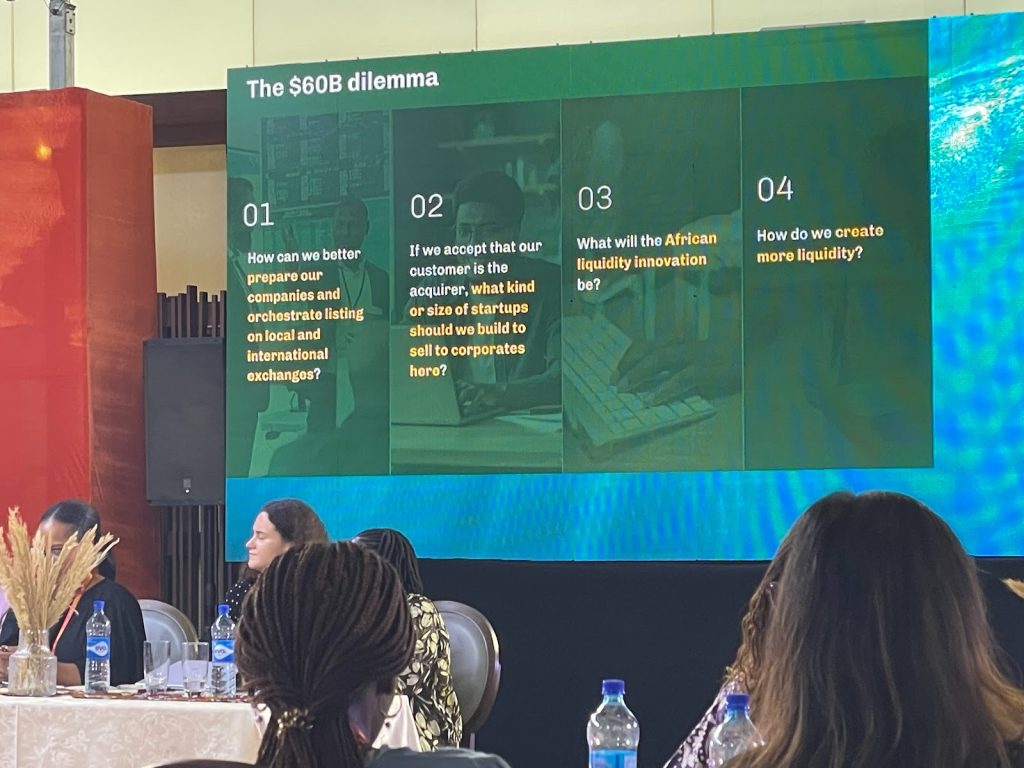 Image source: TechCabal
Aina urged VCs to engage in the conversation: “There is a direct correlation between liquidity and participation.” It is clear, and he emphasised, there is a $60 billion to contend for, and this dilemma is what the summit set out to answer, especially as this number is growing with capital pouring every day from the venture ecosystem.
The strategic pivot: Unicorns vs. SMEs
The first step to returning this capital would seem to be an operational reality check. During the Liquidity as Leverage panel, industry leaders argued that the “growth at all costs” model often creates companies that are too expensive to be bought.
Bunmi Akinyemiju, CEO of Venture Garden Group, argued that founders must be clear on whether they are building a venture company or an SME (small to medium-sized enterprise).
Akinyemiju said, “If you’re building an SME, you price the SME…and you sell it to somebody that buys an SME,” or simply generate dividends. The disconnect arises when founders build SMEs but price them like Unicorns, making exits impossible.
On the same panel, discussing catalysing exits to sustain the cycle, Ross Strike, SVP, Investor Relations at Moniepoint, added that exit readiness isn’t just about sales; it’s about building a “business machine” with strong governance and financial controls from day one.
However, Daniel Adeoye of Verod Capital warned founders of a “strategic debt,” noting that the market can sometimes penalise companies for becoming too big, limiting the pool of potential acquirers to international giants. He said, “Usually ticket sizes in this market [in this continent] are $50 to $100 million. So there’s such a thing as being a strategic fit.” By this, Adeoye implied, there is a sweet spot where local banks, telcos, and conglomerates can comfortably acquire a company in Africa.
The ‘strategic debt’ growth trap he warns of can happen when a startup becomes too expensive for local acquirers, yet too risky or complex for global ones. As companies are defining their operational landscape, they should be wary of this. By raising at a high valuation today, founders are “borrowing” the expectation of a massive exit tomorrow, and if companies cannot repay the debt by securing one of the few global buyers available, they default on their liquidity promise to investors. It is often better to sell earlier to a local strategic buyer for a modest, guaranteed return than to hold out for a massive global unicorn exit that might never happen.
The capital shift: Patience and alternatives
If the operational model must change, so must the capital timeline. Chirantan Patnaik, Director at Ventures Platform, noted in his presentation, ‘A View from the Capital Stack’, that for a $5 billion fund to succeed, the ecosystem requires a $160 billion exit value. He questioned whether the standard 10-year fund lifecycle is realistic for the African context.
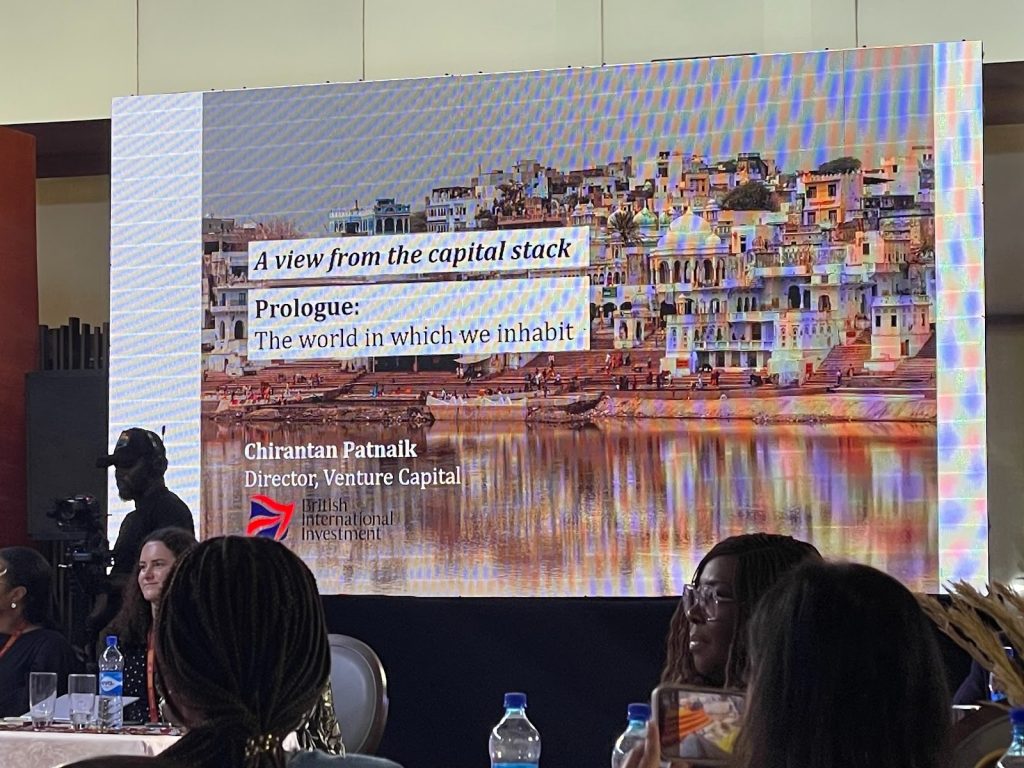 Image source: TechCabal
This sentiment was echoed by Bolaji Balogun, CEO of Chapel Hill Denham, during the panel session on ‘Policy and markets: building for the long term.’ Balogun argued that the traditional private equity model of a three-to-five-year exit horizon has “failed in Africa”. The traditional Private Equity (PE) model is time-bound. A PE firm raises a fund with a mandate to return the money in roughly 10 years. This forces them to invest, grow the company, and exit (sell) within a three-to-five-year window
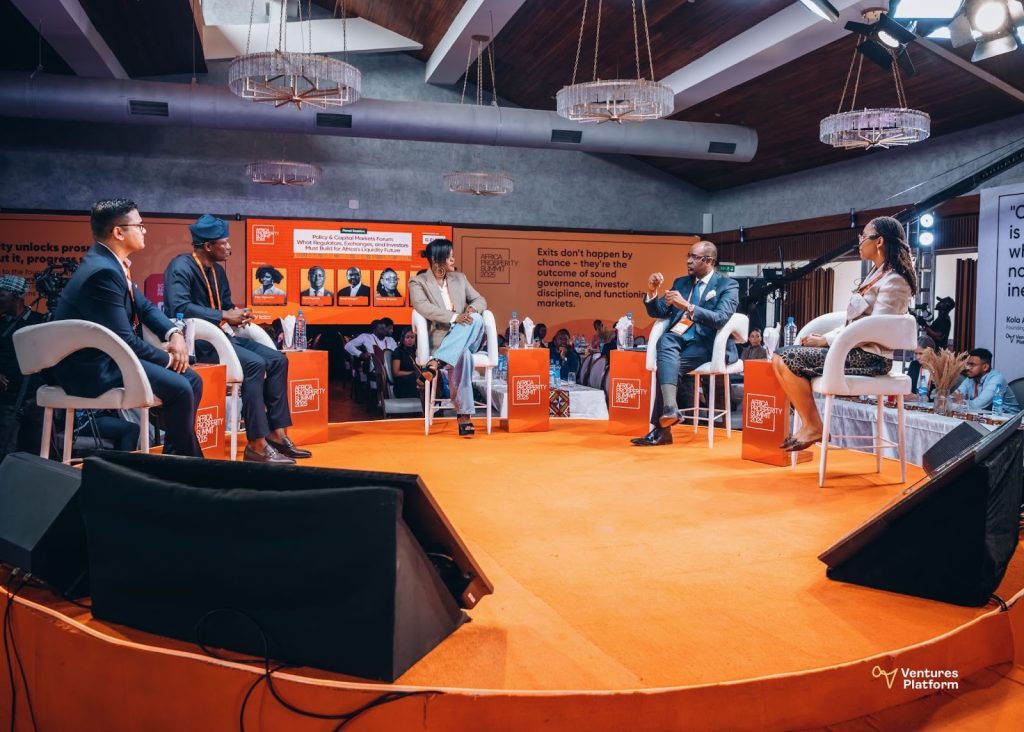 L_R – Chirantan Patnaik (Director, VC – BII), Temi Popoola (GCEO, NGX Group), Fatu Ogwuche (Founder, Big Tech Week), Bolaji Balogun (Chapel Hill Denham), and Michelle Chikezie (Partner, G.Elias)
“Create long-duration funds,” Balogun advised. ”There’s a world-class model that works [and can be] found in the UK market. 103 of the 350 companies in the FTSE 350 are listed investment trusts. And what listed Investment Trusts allow you to do is basically to bring liquidity to an inadequate asset class.”
Unlike a standard VC fund that must liquidate after 10 years, a Listed Investment Trust is a company listed on a stock exchange (like the London Stock Exchange or NGX). This way, the fund is permanent. The fund can hold the company for 10, 15, or 20 years without being forced to sell. If an investor wants their money back, they don’t force the fund to sell the startup. Instead, they simply sell their shares in the Trust to another investor on the stock market.
Hayo Afman, Regional Director Africa for Alder Tree Investments, offered a solution from the family office perspective. Speaking on the panel on ‘Betting on Africa: The Global Investor Perspective,’ he noted that family offices, which manage generational wealth, do not have the same aggressive liquidity timelines as VCs.
“We don’t need to see liquidity for the next [couple of] years,” Afman stated, emphasising that patient capital allows assets to mature properly.
Also, equity is not the only route, and this concept was elaborated in the panel session about structuring alternative capital pathways.
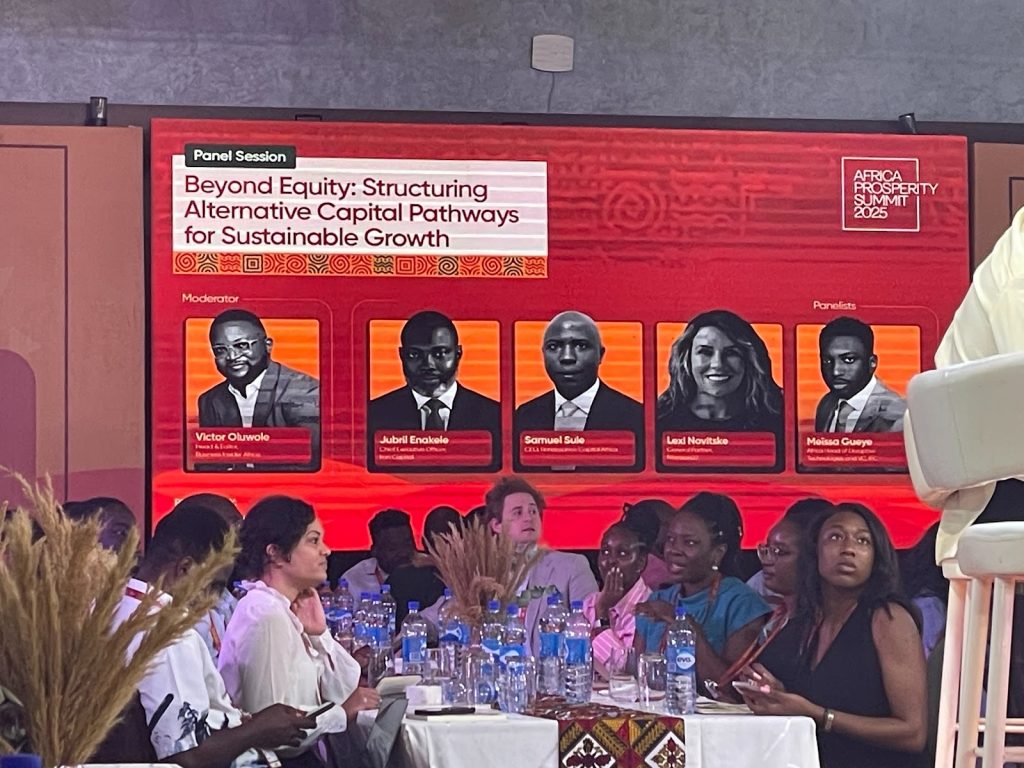 Image source: TechCabal
Lexi Novitske, General Partner at Norrsken22, noted that debt financing is an effective alternative for asset-heavy models, predicting a rise in “consumer-backed financing” where customers essentially fund the product they use.
“What’s going to come longer-term in some African markets is more consumer-backed financing, [by] consumers [who] want to have an [earned] product,” Novitske said. “ I think Piggyvest already does this for several of its customers. But it could be anything from owning a share of property to having a portfolio of maybe super credits.”
The market unlock: Domestic liquidity
Returning $60 billion requires a marketplace that can absorb it. Patnaik used India as a case study, noting that its ecosystem matured because domestic institutional investors eventually outpaced foreign ones. This means seeking participation from non-traditional investors, such as financial institutions and corporate venture capital (CVCs), and building for the continent’s near-term evolution rather than its current state.
 Chirantan Patnaik – Director, Venture Capital – BII
With India, he showed:
- Domestic capital is key: India’s ecosystem matured not just because of foreign VC, but because domestic institutional investors eventually outpaced foreign ones.
- Retail participation: He highlighted the role of “Systematic Investment Plans” (SIPs), where ordinary citizens invest small amounts (e.g., $3/month), creating a massive pool of domestic capital.
To put Patnaik’s thoughts simply, startups earn in local currency (Naira, Cedi, Shilling) but raise in Dollars, and domestic capital can speed up returns by aligning the currency of investment with the currency of revenue.
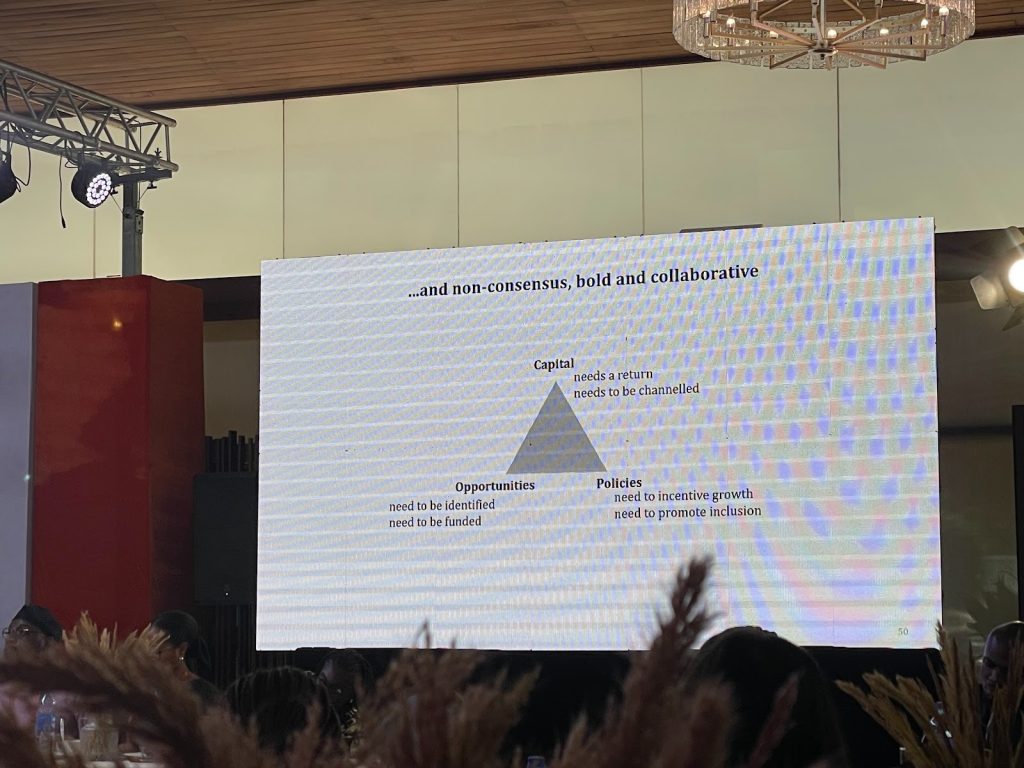 Image source: TechCabal
Ultimately, the path to returning $60 billion involves a shift from relying solely on foreign acquisitions to engineering local exits, embracing patient capital, and building businesses priced correctly for the market they serve.


TikTok is launching “Shared Collections,” a new way for users to share and organize TikTok content in one place with friends or family. The company also teased the upcoming launch of “Shared Feeds,” which will let users watch TikTok content together through a shared interest-based feed.
TikTok rolled out individual Collections earlier this year to let users save content in custom folders. With Shared Collections, users can now do things like create a space to share cookie-swap plans and holiday-dinner ideas with their family. Or, they can create Shared Collections to organize decor inspo or secret Santa ideas.
“Whether it’s content from their favorite creators, inspiration for a home design project, or a new skill they’re learning together, Shared Collection makes it easy for people to stay organized as they discover and save on TikTok,” the company explained in a blog post.
Image Credits:TikTok
You can only create a Shared Collection with someone if you’re both following each other. Collections can stay just between friends and family, or they can be made public.
Shared Collections are available globally to accounts over age 16.
As for Shared Feeds, which are launching in the coming months, TikTok sees them as a way for users to discover content together. Users can generate Shared Feeds in one-on-one direct messages.
Shared Feeds will surface new content tailored to both users’ tastes, such as sports, winter activities, and their favorite creators. The feeds are generated based on users’ TikTok activity, such as what they like, watch, and comment on.
Techcrunch event
San Francisco
|
October 13-15, 2026
It’s worth noting that the feeds aren’t continuous, as users will find a selection of 15 videos in their Shared Feed each day.
 Image Credits:TikTok
The feature is similar to Instagram Reels’ Blend feature that lets you create a custom, personalized reels feed for you and your friends.
Users will be able to create a Shared Feed by sending an invite to another user. Once the invitation is accepted, they can create a feed and chat about it in DMs. After both people have watched all the videos, they can view metrics, including which videos they both liked, in their “Shared Likes” history.
TikTok also announced that it’s launching greeting cards that users can send each other. Users will be able to select a greeting card inside their chats, write a message, and send it. The receiver will get a festive animation alongside the message.


Photo by Cemrecan Yurtman / Unsplash
If you’ve ever taken a portrait of someone in a dim restaurant or at a concert, you know how iPhones usually handle it. Recent Pro models could brighten the shot with Night Mode and still keep the soft background blur that Portrait mode adds. It was one of those features people relied on without thinking about how it worked.
This week, though, iPhone 17 Pro and 17 Pro Max owners noticed that the option has quietly disappeared. Switch to Portrait in low light, and the Night Mode icon no longer appears. The phone also stops saving the depth data needed to add blur later. Users flagged the change on Reddit and Apple’s forums, and Apple’s documentation confirms that the 17 Pro series simply no longer supports the combo.
Night Mode Portraits used to work because the camera captured depth information even in very low light. On the iPhone 17 Pro lineup, that depth data simply isn’t saved in those conditions, which means the blur effect can’t be applied. The practical impact translates to low-light portraits that now require choosing between brightness and background separation. Moments that depend on fast, flattering low-light shots, birthday dinners, concerts, and late-night events lose a feature many people never realized they depended on.
Apple Reportedly Delays Next iPhone Air as Ultra-Slim Design Struggles to Catch On
The company will now focus on its traditional lineup while taking a more cautious approach to this experimental design.

Apple hasn’t explained the decision, but there are technical factors that make the change plausible. Combining Night Mode’s long exposures with Portrait’s depth mapping can introduce motion blur, increase noise, or force the camera to drop resolution.
Older Night Portraits often landed at 12MP, while the iPhone 17 Pro shoots at higher native resolutions. Maintaining image quality at those levels may have required Apple to remove the combined mode entirely. Multiple outlets have pointed to these trade-offs as the most likely reason.
For now, iPhone 17 Pro users have to pick between a bright Night Mode shot or a blurred-background Portrait. Third-party apps can simulate depth or background blur after the fact, but results vary. Unless Apple reverses the decision in a software update, Night Mode Portraits are effectively gone from the newest Pro models, and low-light portraits will require a bit more planning.
iPhone 17 vs. Google Pixel 10
Which flagship should you buy?


On Saturday, December 6th, 2025, top Nigerian creators asserted their dominance at the 2025 TikTok Awards in Sub-Saharan Africa by securing six awards out of ten categories.
The annual Award night themed “New Era, New Icons” took place in Johannesburg, South Africa.
According to TikTok, this year’s event celebrated the most impactful and inspiring creators across Sub-Saharan Africa. It also highlighted the extraordinary ways creators have engaged, inspired, and connected communities on and off TikTok.
 Boniswa Sidwaba, TikTok’s Head of Content Operations for Sub-Saharan Africa
“With Nigerian creators securing six of the ten awards, we are honoured to celebrate their impact, especially as these victories were voted for by the TikTok community, who continue to champion the stories shaping culture”, Boniswa Sidwaba, TikTok’s Head of Content Operations for Sub-Saharan Africa, said.
She added that the annual ceremony was a gathering of the trailblazers who have redefined what it means to be a creator in Africa.
“This year, we are honoured to see West African creators who turned short video clips into cultural movements be recognised,” she said.
Read also: Full list: Nigerian creators dominate 2025 TikTok SSA nominations

Here is the full list of Nigerian winners from TikTok’s 2025 Sub-Saharan Awards
Creator of the Year (Sponsored by NIVEA)
Winner: Raja’atu Muhammed Ibrahim @diaryofanortherncook (Nigeria)
Raja’atu is a food content creator based in Sokoto, Nigeria. She was recognised for her mastery of visual storytelling through food with the rich sounds of northern music and Nigerian cuisines.
Storyteller of the Year (Sponsored by inDrive)
Winner: Brian Nwana @briannwana (Nigeria)
On the second of the list is Brian Nwana, an Abuja-based food content creator who claimed the Storyteller of the Year award through his food content. From street interviews to compelling personal narratives woven into his food adventures, Brian has a rare gift for capturing the human experience bite by bite.
Education Creator of the Year
Winner: Izzi Boye @izziboye (Nigeria)
Making tech accessible to the masses, Izzi Boye is the go-to guy for gadget reviews, hacks, and digital tips. He won the education creator award, which proves that TikTok is a powerful classroom for the digital age.
His runner-up was Michelle (@michelle_expert) from South Africa. She empowers her audience with expert advice and actionable insights from career development and financial literacy to personal growth and everyday decision-making.
 Belove Olocha, Entertainment Creator of the Year
Entertainment Creator of the Year (Sponsored by PEP)
Winner: Belove Olocha @beloveolocha (Nigeria)
Fourth on the list is Belove Olocha, a Lagos-based content creator who was awarded for her consistent ability to entertain and engage audiences with relatable movie content. She also stands out for incorporating her love for movies, sharing film moments and recommendations that resonate with her community.
Her runner-up was Jabulani Macdonald @jabu_macdonald from South Africa. He is a staple of South Africa’s entertainment scene, known for his quick wit and engaging presence.
Social Impact Creator of the Year (Sponsored by Dis-chem)
Winner: Dejoke Ogunbiyi @noositiwantiwa_ (Nigeria)
The Social Impact Creator of the Year was awarded to Dejoke Ogunbiyi, also known as Noosi Tiwantiwa. Using the platform for good, she is driving conversations that matter. From Ibadan, she tackles social issues with grace and impact, mobilising her community for positive change.
Her runner-up was Sinethemba Masinga (@ufarm_julia) from South Africa – A champion for agriculture and sustainability, proving that farming is the future.
 Crown Uzama, Artist of the year
Artist of the Year
Winner: Crown Uzama @theycallmeshallipopipp (Nigeria)
The biggest moment came when the artist Shallipopi, nicknamed “Pluto Presido,” won the Artist of the Year Award. This superstar, who is from Benin City, has been extremely popular throughout 2025.
His huge hit song, “Laho,” was a massive success. It went to the top of the music charts and became a viral trend that everyone saw on their TikTok feeds. The song mixes his unique street language from the Edo area with a catchy Afrobeats rhythm.
The track became hugely popular everywhere, showing that when Nigerian artists make something new, it influences the world.
Read also: Why TikTok banned late-night live streams for Nigerian creators


Increased use of social media by children damages their concentration levels and may be contributing to an increase in cases of attention deficit hyperactivity disorder, according to a study.
The peer-reviewed report monitored the development of more than 8,300 US-based children from the age of 10 to 14 and linked social media use to “increased inattention symptoms”.
Reseachers at the Karolinska Institute in Sweden and the Oregon Health & Science University in the US found that children spent an average of 2.3 hours a day watching television or online videos, 1.4 hours on social media and 1.5 hours playing video games.
No link was found between ADHD-related symptoms – such as being easily distracted – and playing video games or watching TV and YouTube. However, the study found that social media use over a period of time was associated with an increase in inattention symptoms in children. ADHD is a neurodevelopmental disorder with symptoms including impulsiveness, forgetting everyday tasks and difficulty focusing.
“We identified an association between social media use and increased inattention symptoms, interpreted here as a likely causal effect,” said the study. “Although the effect size is small at individual level, it could have significant consequences if behaviour changes across population level. These findings suggest that social media use may contribute to rising incidence of ADHD diagnoses.”
Torkel Klingberg, a professor of cognitive neuroscience at the Karolinska Institute, said: “Our study suggests that it is specifically social media that affects children’s ability to concentrate.
“Social media entails constant distractions in the form of messages and notifications, and the mere thought of whether a message has arrived can act as a mental distraction. This affects the ability to stay focused and could explain the association.”
The study found the ADHD link was not affected by socioeconomic background or a genetic predisposition towards the condition. Klingberg added that increased use of social media may explain part of the increase in ADHD diagnoses. Its prevalence among children has risen from 9.5% in 2003-07 to 11.3% in 2020-22, according to the US national survey of children’s health.
The researchers stressed the results did not imply all children who used social media developed concentration problems. But they pointed to increased use of social media by children as they got older and to children using social media well before they turned 13, the minimum age for apps such as TikTok and Instagram.
The report said: “This early and increasing social media use underscores the need for stricter age verification and clearer guidelines for tech companies.”
The study found a steady increase in social media use from about 30 minutes a day at age nine to two and a half hours a day by age 13. The children were enrolled for the study at the ages of nine and 10 between 2016 and 2018. The study will be published in the Pediatrics Open Science journal.
“We hope that our findings will help parents and policymakers make well-informed decisions on healthy digital consumption that support children’s cognitive development,” said Samson Nivins, one of the study’s authors and a postdoctoral researcher at the Karolinska Institute.


A new strain of mpox has been discovered by scientists in England.
The new strain was found in a person who had recently travelled to Asia, the UK Health Security Agency (UKHSA) said.
Officials said they had identified a “new recombinant mpox virus” – meaning it has genetic material from different viral strains.
The UKHSA said genomic sequencing showed the mpox genome contained elements of clade Ib and IIb mpox.
Dr Katy Sinka, head of sexually transmitted infections at UKHSA, said: “It’s normal for viruses to evolve, and further analysis will help us understand more about how mpox is changing.
“Although mpox infection is mild for many, it can be severe.
“Getting vaccinated is a proven effective way to protect yourself against severe disease, so please make sure to get the jab if you are eligible.”
The NHS offers the mpox vaccine to those considered at higher risk of catching the virus, such as men who have sex with other men and have multiple partners.
The UKHSA said it will “continue to assess the significance of the strain”.
Read more:
Vaccine reminder as mpox strain spreads in Europe
Dr Boghuma Titanji, assistant professor of medicine at Emory University in Georgia in the US, said the identification of the new recombinant strain “is precisely what experts in the field feared would happen if the virus continued to spread globally without a decisive response to stop it”.
She added: “The key concern now is whether events like this will alter the virus’s transmissibility or virulence.”
What are the symptoms of mpox and how can it spread?
Symptoms include a skin rash with blisters, spots, or ulcers that can appear anywhere on the body, as well as fever, headache, backache, and muscle aches.
A rash usually appears one to five days after a fever, headache and other symptoms.
The virus spreads between people through direct contact with rashes, skin lesions or scabs caused by the virus, including during sexual contact, kissing, cuddling or other skin-to-skin contact.
There is also a risk from contact with bodily fluids such as saliva or snot, as well as contact with bedding, towels or clothing. There is a possibility of spread through close and prolonged face-to-face contact, such as talking, breathing, coughing or sneezing.

Since joining Crypto Valley VC (CV VC), a Swiss-based venture capital firm that backs blockchain-based startups, as Head of Investment for Africa in November 2024, Jarryd Kennedy has been at the centre of the firm’s push to spot businesses using blockchain technology to solve everyday problems across fintech, payments, and data infrastructure on the continent.
Kennedy’s career before CV VC began in investment banking, mergers and acquisitions (M&A), and private equity across London, New York, and South Africa. His experience gives him a dealmaker’s discipline and a technology-first lens, helping him identify use cases where blockchain reduces friction, improves trust and builds real economic infrastructure rather than hype.
In 2022, CV VC launched a $20 million Africa Blockchain Fund, which has invested in 13 early-stage Web3 startups across Nigeria, South Africa, Kenya, Egypt, and Ghana, including Nigerian podcast-hosting platform Jamit, South African crypto investment startup Altify, Kenyan Web3 agritech Shamba Records, and South African neobank Kasi.
The firm’s investment strategy writes direct cheques and backs early-stage startups from its accelerator. Through CV Labs, CV VC selects 7–9 startups to participate in a cohort each year, providing them with mentorship and growth strategy consultations. It backs nearly all the selected startups with $135,000 in funding in return for a 7% convertible note. It also writes $500,000 follow-on cheques for its portfolio startups.
After witnessing African startups’ struggles to access additional capital and infrastructure for growth, the VC firm adjusted its take rate to a 6% equity through debt, increasing its ticket size to $150,000. As of October 2025, the firm claimed more than half of the startups in its portfolio have raised follow-on funding.
Circle Ventures, the investment arm of the US-based issuer of the USDC stablecoin, is among the external backers of CV VC’s Africa Blockchain fund, signalling global interest in the firm’s thesis.
I spoke with Kennedy for this week’s Ask an Investor to understand his career, what it takes to lead CV VC’s African team, and global investor appetite for African blockchain products.
This interview has been lightly edited for clarity.
What brought you into Web3 venture capital, and which past roles mattered most?
My entry into the Web3 venture capital ecosystem has been shaped by a decade of experience across investment banking, M&A, and private equity, with roles spanning London, New York, and South Africa. The bulk of my career has been at Deutsche Bank, gaining exposure to Telco, Media and Technology (TMT) across capital markets and M&A.
Over time, I moved into private equity with Convergence Partners, a pan-African private equity firm focused on digital infrastructure. There, I led and supported investments into technology and telecom businesses across markets like Rwanda, South Africa, Kenya, and Malawi. That experience was pivotal because it gave me a deep appreciation for how technology can drive inclusion and development in emerging markets.
Importantly, throughout my career, there has been an enduring focus on technology: I have always viewed it as a tool to revolutionise monolithic, legacy systems, enabling the creation of more efficient outcomes. That is what ultimately drew me to Web3: I saw blockchain as an evolution in the global technology stack that could enable new structures for decentralised ownership, efficient value exchange, transparent governance, and the removal of intermediaries, thereby lowering barriers to entry and creating entirely new economic models.
At CV VC, I lead our venture investments across Africa, applying that same technology-oriented lens to early-stage startups that are building transformative real-world solutions by utilising blockchain technology.
What does being CV VC’s Head of Investment for Africa mean from an operational lens?
At CV VC, no two days are the same. We are a Swiss-headquartered venture capital (VC) firm with a global footprint, and although we operate in a decentralised way, we stay tightly connected through daily team calls, cross-functional projects, and in-person engagements.
On a typical day, I split my time across three areas: pipeline, portfolio, and investors. On the pipeline, it is all about travel, conferences, and networking, to enable relationship-building with the best startups and founders. Thereafter, we evaluate investment pitches and assess new opportunities through a data-driven lens to benchmark their performance.
On the portfolio side, I work closely with founders across our African investment portfolio, with a mix of relationship-building, hands-on support, and facilitating connections to other ecosystem participants. Finally, on the investor front, we are consistently engaged with investors to report on progress with the goal of leveraging investor expertise to bolster that progress, creating a flywheel of value creation across the ecosystem.
Across all three areas, staying sharp on market trends and emerging utility is important. This encompasses diving into data, strategic analysis, or contributing to knowledge-building efforts, which helps shape global understanding of blockchain’s real-world impact on the continent.
African Web3 startups raised $122.5 million in 2024, a decline in deal value from the previous year, despite high user adoption on the continent. Why is there a gap between usage and investor appetite?
It is important to distinguish between crypto and blockchain: Crypto is one of the first applications of blockchain technology. Investors are not necessarily focused on crypto itself, but on the broader capability of blockchain technology to improve upon legacy technology stacks and to create new structures for ownership, value exchange, governance, and the removal of intermediaries.
The investment case for blockchain has never been stronger. What the internet has done for the exchange of data is equivalent to what blockchain is doing for the exchange of value. Nobody talks about a “cross-border email” because of the ubiquity with which data flows around the world! Blockchain is creating this ubiquity for the exchange of value on the internet, enabling an economic value layer which is democratised and globally accessible.
Encouragingly, we see blockchain adoption rates which are reminiscent of early internet adoption, and the blockchain economy has never been stronger. Top academics, visionary founders and over 26,000 blockchain developers are converging within the blockchain ecosystem, resulting in significant capital invested in blockchain companies and over 500 million global crypto users.
Has Africa’s funding winter of 2023–2024 changed the quality or number of African Web3 startups raising capital?
Investor capital remains cautious, not just in Africa, but also across the rest of the world, which is mostly a reflection of heightened global uncertainty driven predominantly by geopolitical factors. Despite the slow start to the year, the remainder of 2024 was actually positive for Web3 venture funding, with blockchain startups taking an outsized share of venture investment in Africa.
Regardless of funding levels, blockchain builders on the continent have not been deterred in any way, with no shortage in quality or quantity of strong blockchain startups in Africa. Our pipeline is full of highly compelling investment opportunities across a wide range of sectors and geographies.
CV VC has kept writing cheques into African Web3 teams while others pull back. What explains that commitment?
Our commitment is rooted in a long-term investment philosophy and a belief in the transformative power of blockchain technology, especially in markets where it can solve real, structural problems. We focus solely on utility and ignore speculation. We’re not just investing in trends; we’re backing determined founders who are building infrastructure, improving access, and bringing trust to systems that need it most. That’s exactly what we see happening across Africa.
Despite global funding fluctuations, innovation hasn’t stopped; founders are still building, and the use cases for blockchain in multiple sectors are more relevant than ever.
How do accelerator programmes like CV Labs and ecosystem grants fit into your Africa strategy?
The proprietary CV VC accelerator program is designed to bring founders together, not just to gain investment but to share expertise, cross-pollinate ideas, and build resilience through community. Ultimately, it’s about catalysing innovation that can flourish long after the initial investment.
In Africa, where markets are often fragmented and infrastructure is still evolving, accelerators play a crucial role in strengthening local capabilities and expanding access to global networks. They allow us to identify promising talent early, provide tailored support, and help founders scale solutions that are contextually relevant and often globally competitive.
Besides being highly beneficial for founders and the ecosystem at large, the accelerator is ultimately an additional mechanism used to deploy equity cheques alongside our traditional direct venture strategy. Investors benefit through an extended due diligence exercise and favourable risk-reward profiles given the early entry point.
Which African sectors best match CV VC’s thesis on trust and decentralisation?
Our investment theme revolves around three key areas and applies to startups from any continent: first, applications built directly on blockchains. Second, we prioritise startups using blockchain to drive broader tech and social megatrends. Third, we also strongly consider service providers and infrastructure players that support the broader blockchain ecosystem.
From a sector point of view, we see a mature dispersion of activity across multiple sectors. Fintech leads the charge, which is in line with the broader African venture landscape and funding allocation. Beyond that, we see unique applications across the technology-enabled subset of agriculture, media, climate, property, mobility, healthcare, education, identity, gaming, and HR. Additionally, we see a focus on blockchain infrastructure development, including developer tooling and business-to-business (B2B) applications.
Given the global risk-off mood, are investors still cautious about Web3 in Africa? If so, why?
There is still some caution among investors when it comes to Web3 in Africa. This caution can be attributed to investors allocating capital based on a spectrum of risk, where blockchain, as an emerging technology and Africa, as an emerging market, are perceived as higher risk and therefore draw increased caution. This is influenced by the current risk-off sentiment globally, driven predominantly by geopolitical factors, and this is not, in our view, a critique of the technology or the market.
Having said this, many investors are intrigued by the potential of blockchain technology and its specific applications for the African continent, and appetite is growing. Investors are watching closely as African founders demonstrate real utility using blockchain to solve core issues like financial inclusion, identity, remittances, and land ownership provenance.
We believe that as more success stories emerge from the continent, confidence will follow. Our role at CV VC is to be early in that cycle to back the builders today who will shape the narrative of tomorrow.
Do regulatory developments in key African markets matter? Which countries are leading?
Absolutely. Regulatory clarity is essential for economic competitiveness in the Web3 space. Well-defined policies attract risk-tolerant venture capital, as we’ve seen in Africa’s leading all-sector VC hubs of Nigeria, Kenya, Egypt, and South Africa. In contrast, regulatory ambiguity drives talent and capital offshore, undermining trust and stalling innovation.
Investors are also encouraged by the global shifts happening, notably the US moving toward a more friendly stance in 2025. Many African lawmakers are pushing to replace fragmented oversight with clearer frameworks.

Paramount Skydance on Monday launched a hostile, $108.4 billion bid to buy Warner Bros. Discovery (WBD), days after Warner agreed to be acquired by Netflix for $82.7 billion.
Paramount is going straight to WBD’s shareholders with an all-cash offer of $30 per share, and it noted that its offer provides shareholders $18 billion more cash than the Netflix deal, which offered $23.25 in cash and $4.50 in Netflix shares for a total of $27.75 per share.
Paramount is bidding for all of WBD, while Netflix’s deal with the company only includes its Hollywood studios and streaming business.
CNBC reported on Monday that these were the very terms from Paramount that WBD’s board rejected a week ago.
“We believe the WBD Board of Directors is pursuing an inferior proposal which exposes shareholders to a mix of cash and stock, an uncertain future trading value of the Global Networks linear cable business and a challenging regulatory approval process,” Paramount CEO David Ellison said in a statement.
Paramount’s offer is backstopped with equity financing from the Ellison family and the private-equity firm RedBird Capital, in addition to $54 billion of debt commitments from Bank of America, Citi, and Apollo.
Netflix came out on top on Friday after winning a bidding war against Paramount and Comcast, but Paramount’s hostile bid is sure to drag on the battle for one of Hollywood’s most iconic studios, a fight which has already stretched out for months.
Techcrunch event
San Francisco
|
October 13-15, 2026
Netflix’s proposed deal has already raised antitrust questions, as it would combine two of the most popular streaming platforms into one. Additionally, President Donald Trump has said the deal “could be a problem” because of the size of the combined companies’ market share.
A deal between WBD and Paramount would also likely raise similar concerns.
Netflix agreed to pay WBD $5.8 billion if the deal doesn’t go through. WBD would have to pay Netflix $2.8 billion if the deal collapses.
Netflix did not immediately respond to a request for comment.

The Nigerian Communications Commission (NCC) has been recognised as one of the top five best-performing Federal Government agencies in the Transparency and Efficiency category for 2025. This honour was awarded by the Presidential Enabling Business Environment Council (PEBEC) during its Awards and Gala Night, held at the State House Banquet Hall in Abuja.
The Commission received recognition alongside the Nigerian Content Development and Monitoring Board, which secured the top position. Other organisations included in the ranking are the National Drug Law Enforcement Agency, the Nigeria Customs Service, and the Nigerian Ports Authority. This award honours operational excellence, transparency, and accountability within Nigeria’s public service.
Dr Aminu Maida, NCC Executive Vice Chairman/CEO, received the award on behalf of the Commission, reaffirming the agency’s commitment to promoting a fair and competitive telecom environment.
 Nigeria’s Minister of Communications, Innovation and Digital Economy, Dr. Bosun Tijani and Executive Vice Chairman of the NCC, Dr. Aminu Maida at an event
NCC is setting a standard for telecom and governance
Dr Maida described the award as both a validation and a responsibility: “This recognition reassures us that we are on the right path and challenges us to deepen our commitment to the Nigerian people. Nigerians can rest assured that we will not rest on our oars.”
He emphasised that the NCC’s mandate is to create an environment where operators thrive, investors are encouraged, and consumers enjoy high-quality services.

PEBEC Director-General Zahrah Mustapha-Audu stated that the awards celebrate champions of reform and progress in enhancing Nigeria’s business environment. Vice President Kashim Shettima, who chairs the council, emphasized that the awards demonstrate the government’s commitment to an efficient and competitive public service.
“Tonight, we salute the men and women driving these institutions. When we commit to working together across MDAs, across states and across sectors, Nigeria wins,” he said.
Read also: Nigeria now has 175 million telecom subscribers, NCC data says
The recognition highlights how efficient governance in the telecom sector can improve Nigeria’s overall business environment. Effective regulation attracts investment, fosters competition, and promotes innovation, benefiting both companies and consumers.

This award also underscores the importance of collaboration among telecom operators, industry stakeholders, and government agencies to improve service quality and foster a conducive environment for investment.
As the NCC strengthens its systems and implements reforms, this accolade highlights the importance of consistency, accountability, and a collective commitment to progress in Nigeria’s public and economic sectors.

In 2022, Caroline Idiens was on holiday halfway up an Italian mountain when her brother called to tell her to check her Instagram account. “I said, ‘I haven’t got any wifi. And he said: ‘Every time you refresh, it’s adding 500 followers.’ So I had to try to get to the top of the hill with the phone to check for myself.”
A personal trainer from Berkshire who began posting her fitness classes online at the start of lockdown in 2020, Idiens, 53, had already built a respectable following.
But after one video offering guidance on getting toned summer arms was picked up by a US fitness account, that number rocketed to 50,000 – and beyond. “I post it every year now as a bit of a tribute,” she jokes. “It was that reel that launched me into a whole new market.”
Today, as @carolinescircuits, she has 2.3 million followers on Instagram, more than 70,000 on Tiktok and 50,000 on YouTube, and a book, Fit at 50, that was a recent Sunday Times bestseller – making her a key influencer in an increasingly important demographic for social media platforms: those in midlife and older.
If you want to grow your reach on social media, figures suggested this week, you could do worse than target the over-55s.
Research from media analysts Ampere found it was people in the 55 to 64 age bracket who were delivering the highest growth in YouTube traffic, up 20% since 2020 in the US and 14% in the UK. Tiktok, too, has had a 16% rise in British users in this age bracket in the past year.
Valerie Mackay has gained 312,000 followers on Tiktok and almost 1 million on Instagram as @embracingfifty.
“We’ve been seeing this trend over the last few years where older audiences who have traditionally [focused on] linear and broadcast TV have been digitising,” says Minal Modha, the head of Ampere’s consumer research division.
“And by getting access to things like smartphones and smart TVs in particular, it’s opening up a whole new world for them.” More than half of US adults in the age bracket now watch influencer videos weekly.
Some of them will be tuning in to Valerie Mackay from Inverness, who as @embracingfifty has gained 312,000 followers on Tiktok and almost 1 million on Instagram since she started her warmly chatty account eight years ago.
“In hindsight, I wouldn’t have picked that name ’cause I’m now 62 and stuck with it. But the point of the name was I was embracing life over 50. I had two children, they had both left home and I was enjoying life with myself and my husband, it was like freedom.”
She founded her account after overhearing a woman asking what was the point of makeup and style after a certain age. “I just thought, well, what’s the point in life? Just dress and be who you want to be.”
Mackay says she tries not to think about the huge numbers watching her from around the world – many of whom share an interest in the Scottish weather.
“I get asked a lot: ‘I’m coming to Scotland, what do I wear?’ Which it’s difficult for me to answer because I might be flitting about in a trench coat and they might need big coats.”
Mark Lidster is a 62-year-old from north London who posts videos as FitnessGeezer on YouTube and Instagram, attracting up to 1m views. “There are a lot of guys out there getting to 40, through to 70, 80 – who relate and take inspiration from what I’m doing,” he says.
Mark Lidster, AKA FitnessGeezer, says he tries to create a community feel. Photograph: Mark Lidster
Like Mackay, Lidster says actively engaging with his audience is crucial. As well as becoming more savvy with tech, he says, “people of that age are feeling more disconnected from society, and getting lonelier. Social media is another way of feeling part of something – I try to create that community feel.”
The crucial thing with 50-somethings and older is “to keep it genuine”, says Idiens, who is 53.
“The biggest thing about social media in this age bracket is trust,” she says.
“It has to be genuine – we are a little bit older and wiser, and what the audience are really looking for are people that they can trust with advice. For the midlife demographic, they also really love that sense of community.
“Even with an audience of 2 million, I still think, when I’m putting up a post, that it’s going to my friends and family group. And the feedback I get is that [my followers] still feel like I’m a PT [personal trainer] in their sitting room – which, for me, is everything. That’s what I want.”