
TECHNOLOGY
Here are the 82 CBN-licenced BDC operators in Nigeria


On Monday, the Central Bank of Nigeria (CBN) issued licences to 82 new Bureaux De Change (BDC) operators, allowing them to operate under the revised Regulatory and Supervisory Guidelines for BDC Operations (2024).
The licences, effective from November 27, were granted across Tier 1 and Tier 2 categories, with the CBN stating that only BDCs listed on its website are authorised to operate going forward. The CBN advises the public to only initiate transactions with authorised BCDs, as more licenced operators are updated on its website. Here is a list of the newly approved BDCs:
Tier 1 BCD operators
Operators in this category can operate and set up branches in any state within the country, including the Federal Capital Territory (FCT). Of the 82 newly licenced operators, only two have a Tier 1 licence, and they are:
- DULA GLOBAL BDC LTD
- TRURATE GLOBAL BDC LTD
Get The Best African Tech Newsletters In Your Inbox
Tier 2 BCD operators
Operators in this category are permitted to operate only in one state within the country, but can establish up to five branches, subject to approval of the CBN. The newly approved Tier 2 BCD operators include:
- ABBUFX BDC LTD
- ACHA GLOBAL BDC LTD
- ARCTANGENT SWIFT BDC LTD
- ASCENDANT BDC LTD
- BARACAI BDC LTD
- BERGPOINT BDC LTD
- BRAVO MODEL BDC LTD
- BRIMESTONE BDC LTD
- BROWNSTON BDC LTD
- BUZZWALLET BDC LTD
- CASHCODE BDC LTD
- CHATTERED BDC LTD
- CHRONICLES BDC LTD
- COOL FOREX BDC LTD
- CORPORATE EXCHANGE BDC LTD
- COURTESY CURRENCY BDC LTD
- DANYARO BDC LTD
- DASHAD BDC LTD
- DEVAL BDC LTD
- DFS BDC LTD
- EASY CASH BDC LTD
- ELELEM BDC LTD
- E-LIOYDS BDC LTD
- ELOGOZ BDC LTD
- ENOUF BDC LTD
- EVER JOJ GOLD BDC LTD
- EXCEL RIJIYA FOREX BDC LTD
- FABFOREX BDC LTD
- FELLOM BDC LTD
- FINE BDC LTD
- FOMAT BDC LTD
- GENELO BDC LTD
- GENTLE BREEZE BDC LTD
- GRACEFUL GLORY AND HUMILITY BDC LTD
- GREENGATE BDC LTD
- GREENVAULT BDC LTD
- HAZON CAPITAL BDC LTD
- HIGH-POINT BDC LTD
- I & I EXCHANGE BDC LTD
- IBN MARYAM BDC LTD
- JOURNEY WELL BDC LTD
- KEEPERS BDC LTD
- KHADHOUSE SOLUTIONS BDC LTD
- KIMMELFX BDC LTD
- KINGSOFT ATLANTIC BDC LTD
- M.S. ALHERI BDC LTD
- MASTERS BDC LTD
- MCMENA BDC LTD
- MKOO BDC LTD
- MKS BDC LTD
- MR J GOLF BDC LTD
- MUSDIQ BDC LTD
- MZ FOREX BDC LTD
- NEJJ BDC LTD LTD
- NETVALUE BDC LTD
- NEW WAVE BDC LTD
- NOTABLE AND KINGSTON BDC LTD
- PILCROW BDC LTD
- RAPID BDC LTD
- RIGHTWAY BDC LTD
- RWANDA BDC LTD
- SABLES BDC LTD
- SAFETRANZ BDC LTD
- SAMFIK BDC LTD
- SEVENLOCKS BDC LTD
- SHAPEARL BDC LTD
- SIMTEX BDC LTD
- SOLID WHITE BDC LTD
- ST. NICHOLAS GLOBAL BDC LTD
- TOPFIRST UNIQUE MULTICHOICE BDC LTD
- TOPGATE BDC LTD
- TRAVELLER’S CHOICE BDC LTD
- TUCA GLOBAL BDC LTD
- TURBOVA BDC LTD
- TURN-UP BDC LTD
- UNIGO BDC LTD
- VICTORY AHEAD BDC LTD
- WHITEWAY WWW BDC LTD
- YUND GLOBAL LINK BDC LTD
- ZAMAD FOREX BDC LTD

Ampersand Energy, an electric mobility company operating in Rwanda and Kenya, has opened its battery swap network to global electric vehicle (EV) manufacturers to drive global adoption of electric mobility across Africa’s commercial motorcycle markets.
Since launching its first electric motorcycle in 2019, the company has been designing and assembling motorbikes using components from various suppliers, powering them with its proprietary batteries, swap stations, and the software that connects them. That vertical integration allowed the company to guarantee reliability in a market where many EV startups struggle with poor battery performance, short vehicle lifespans, and constant downtime.
Josh Whale, Ampersand Energy’s CEO, said opening the swap network is driven by both market demand and its research and development from six years of operations, adding that the network will unbundle the most profitable part of the company’s business: the battery and energy layer.
“There has been a lot of interest from motorcycle manufacturers that came to us and said, ‘We would love to build great motorbikes that can use Ampersand’s network.’ And there’s also demand from users, too,” he said. So we have created a top-tier energy infrastructure that any vehicle partner meeting our quality standards can join.”
Ampersand’s move marks a shift in Africa’s EV landscape; instead of competing on motorcycle hardware, it is betting that a shared, reliable battery swap network will drive mass adoption. By opening its system to global manufacturers, the company aims to speed up electrification in a commercial motorcycle market where uptime, low operating costs, and durability determine riders’ livelihoods. This also promises EV startups a dependable energy infrastructure.
Wylex Mobility, an established Asian EV manufacturer, is the first to join Ampersand’s open network. Under the partnership, Ampersand will provide the batteries and swap station access while Wylex Mobility supplies the motorcycle hardware, pushing its entry into the East African market. Whale said the bikes will be assembled at its factory in Nairobi, and riders will access them through existing asset-finance partners.
“We realised we add the most value on the energy side with our batteries, the swap stations, and the software,” Whale said. “Customers want more motorcycle options, but they still want to stay on our network because of reliability.”
Eileen Huang, Wylex’s CEO, said the partnership rests on complementary strengths. “With nearly three decades of engineering experience, we build strong and long-lasting vehicles. Ampersand’s customer focus and reliable swap network made them the ideal partner for our entry into East Africa.”
The partnership creates an unusual dynamic: Ampersand’s own Alpha motorcycle; its flagship model will now compete directly with Wylex Mobility motorbikes on the same energy infrastructure. Whale insists this is deliberate.
“Yes, they compete with the Alpha. That’s healthy,” he said. “Our customers benefit from Wylex’s manufacturing and R&D capacity, their price point, and features like the flat seat that riders in Kenya really appreciate.”
Opening its battery network also marks a major strategic shift for Ampersand, signalling the company’s conviction that Africa’s EV future will be won on energy infrastructure, not on who manufactures the motorcycles.
Ampersand’s broader ambition is to sit at the center of that transition. Whale says the company’s goal is to build 50 to 60 strategically located swap stations in cities like Nairobi and Kigali. With each site designed to serve thousands of riders, that network could support 100,000 to 150,000 motorcycles per city.
Africa’s commercial motorcycle market is vast. A report estimates that Sub-Saharan Africa has about 27 million motorcycles. In Kenya alone, over 2 million internal-combustion motorcycles are in operation, most used for commercial transport. In 2024, the country recorded 68,804 registered new motorcycles, out of which 4,862 were electric, giving e-bikes a 7.1% share of that year’s new registrations.
The company said it already delivers more than 20,000 swaps a day across Kenya and Rwanda. Whale said each swap costs riders about $2 for roughly 80 km of range, cutting fuel costs by about 35%.
“Riders typically spend more than $1,000 a year on petrol,” Whale said. “With the EV option, that cost drops sharply, effectively increasing riders’ take-home income.”
Whale said the company does not consider EV manufacturers like Roam or Spiro as competitors. Instead, he sees them as future collaborators as the market grows.
“They are much more potential allies than competitors,” he said. “The energy business for motorbikes in Africa is probably five times larger than the motorcycle industry itself, and that is where we can add the most value.”
Whale believes the company’s model will define the next phase of Africa’s electric mobility growth: “Ultimately, the more great motorcycle riders can choose from, the faster the market grows. And every new bike on the road that joins our network makes the entire system stronger.”


OpenAI just placed its biggest international bet yet. The company announced OpenAI for Australia on December 4, combining a $4.6 billion (A$7 billion) data center partnership with NEXTDC, an Australian Data Centre operator in Sydney and a workforce training initiative targeting 1.2 million Australians. It’s the first country-specific program in the Asia-Pacific region, and the scale signals how seriously OpenAI is taking global expansion as competition heats up.
The infrastructure piece centers on NEXTDC’s S7 site in Eastern Creek, Sydney. The planned 550-megawatt GPU supercluster would be one of the most powerful in the southern hemisphere, designed specifically for sensitive government and enterprise workloads that need to stay within Australian borders. NEXTDC’s stock surged nearly 11% following the announcement, closing 3.1% higher as investors recognized the long-term revenue potential.
The facility will utilize closed-loop liquid cooling with zero drinking water consumption and will be powered by renewable energy. Construction is scheduled to be completed in the second half of 2027, creating thousands of jobs in engineering, manufacturing, and operations.
OpenAI Bets on India With a Year of Free ChatGPT Go Access
When users won’t pay, you buy their loyalty, and OpenAI’s free ChatGPT Go plan is a billion-user bet on the future of AI adoption.
But the ChatGPT maker isn’t just building compute capacity. The company partnered with three of Australia’s largest employers, Commonwealth Bank, Coles, and Wesfarmers, to roll out AI skills training through OpenAI Academy. The program will reach over 1.2 million workers and small business customers starting in 2026, making it one of the greatest coordinated AI upskilling efforts globally.
Commonwealth Bank will distribute training modules to approximately one million small business clients. Coles and Wesfarmers, which together employ more than 200,000 people, will provide AI literacy programs to their entire workforces.
OpenAI has increasing competition. Google’s Gemini hit 650 million monthly active users in October 2025, drawing closer to ChatGPT’s total of 800 million weekly active users. Anthropic’s Claude is also gaining traction in the enterprise sector. In light of this, CEO Sam Altman reportedly issued an internal “code red”, shutting down other projects to devote resources to keeping the lead with ChatGPT.
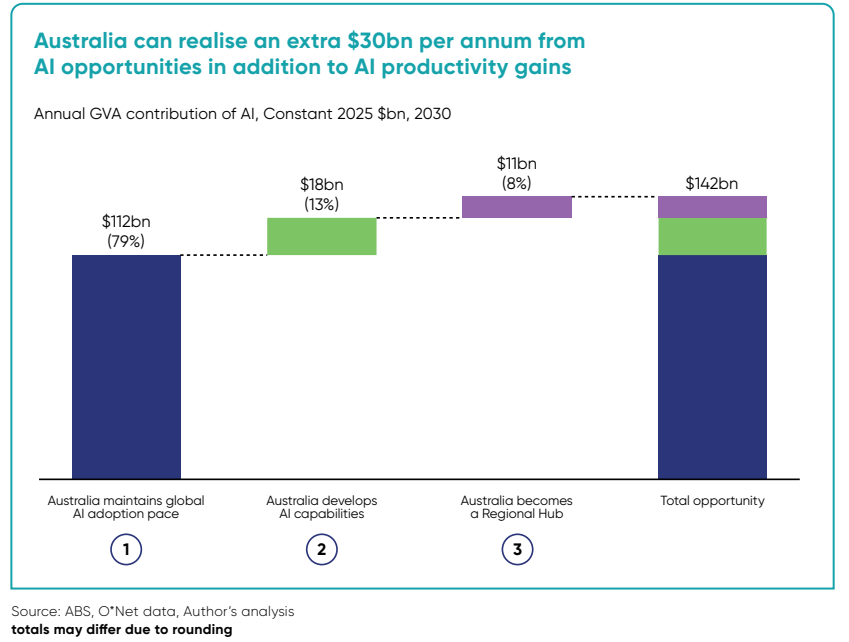 Australia’s $142bn AI opportunity by 2030 (Credit: NextDC Report)
Australia gives a range of strategic advantages: abundant renewable energy, a highly educated English-speaking workforce, stable regulatory frameworks, and even a government actively encouraging AI adoption under its National AI Plan. By embedding itself into Australia’s infrastructure, workforce, and startup ecosystem all at once, OpenAI is not just selling software; it is becoming integral to the country’s digital backbone.
Federal Treasurer Jim Chalmers called the partnership “terrific proof Australia has the talent, clean energy potential, and policy settings needed to be one of the big winners when it comes to AI.”
Whether this model succeeds will determine OpenAI’s blueprint for global expansion. If it works, expect similar programs in other strategic markets. If it stumbles, competitors will have learned what not to do.
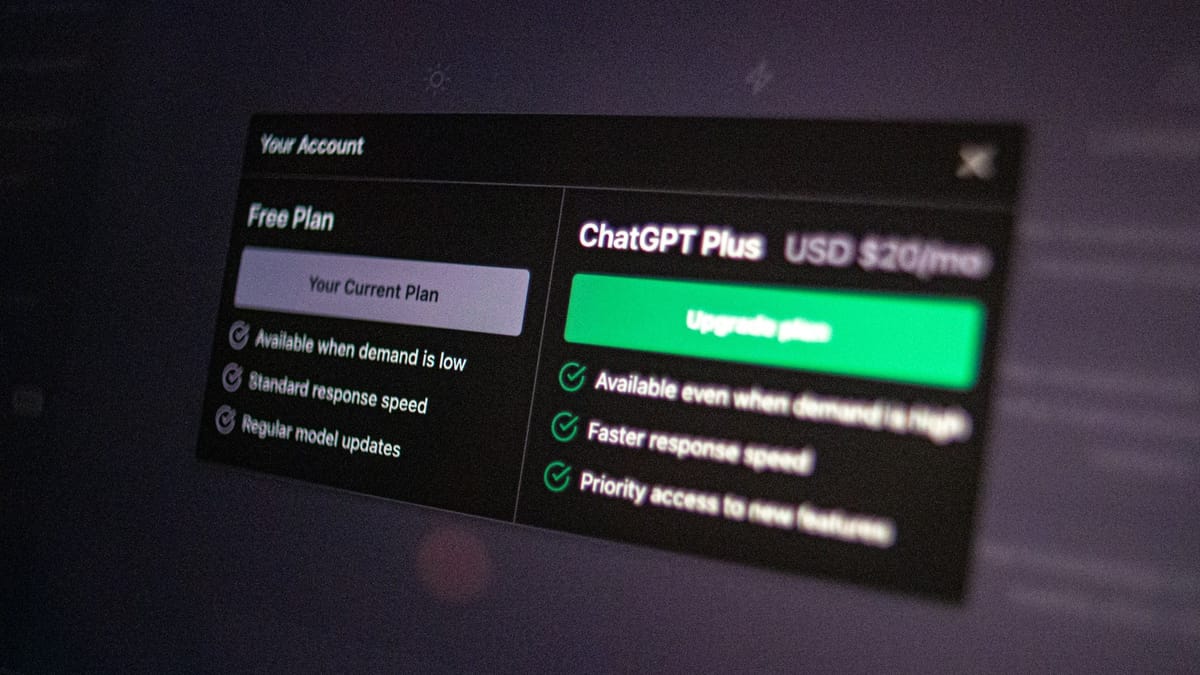
OpenAI and Google Reduce Free Sora and Gemini Usage Limits
The two companies decided to quietly implement the limits right as we approach the festive season.

December 09, 2025
Link copied!
Copy failed!


Nigeria is about to launch its first domestic mosquito net manufacturing facility, marking a significant shift in the country’s approach to combating malaria through local production rather than imports.
The groundbreaking ceremony for the SNG Health facility, a joint venture between the Swiss company Vestergaard and the Nigerian firm Harvestfield, signals the beginning of operations expected to produce 10 million long-lasting insecticidal nets annually, while creating over 600 jobs during both the construction and operational phases.
The facility represents more than $30 million in combined investment from Vestergaard and Harvestfield, with additional financial commitments from the Gates Foundation, the United States International Development Finance Corporation and MedAccess.
Isaac Awofisayo, Deputy Managing Director of SNG Health, emphasised the project’s dual mandate of health security and economic development during the ceremony.
“We are looking after our people in Nigeria. We will create 100 jobs for our people in Nigeria through construction all the way to operations,” he stated, adding that the facility would ensure sustainable access to WHO pre-qualified long-lasting insecticidal nets for years to come.
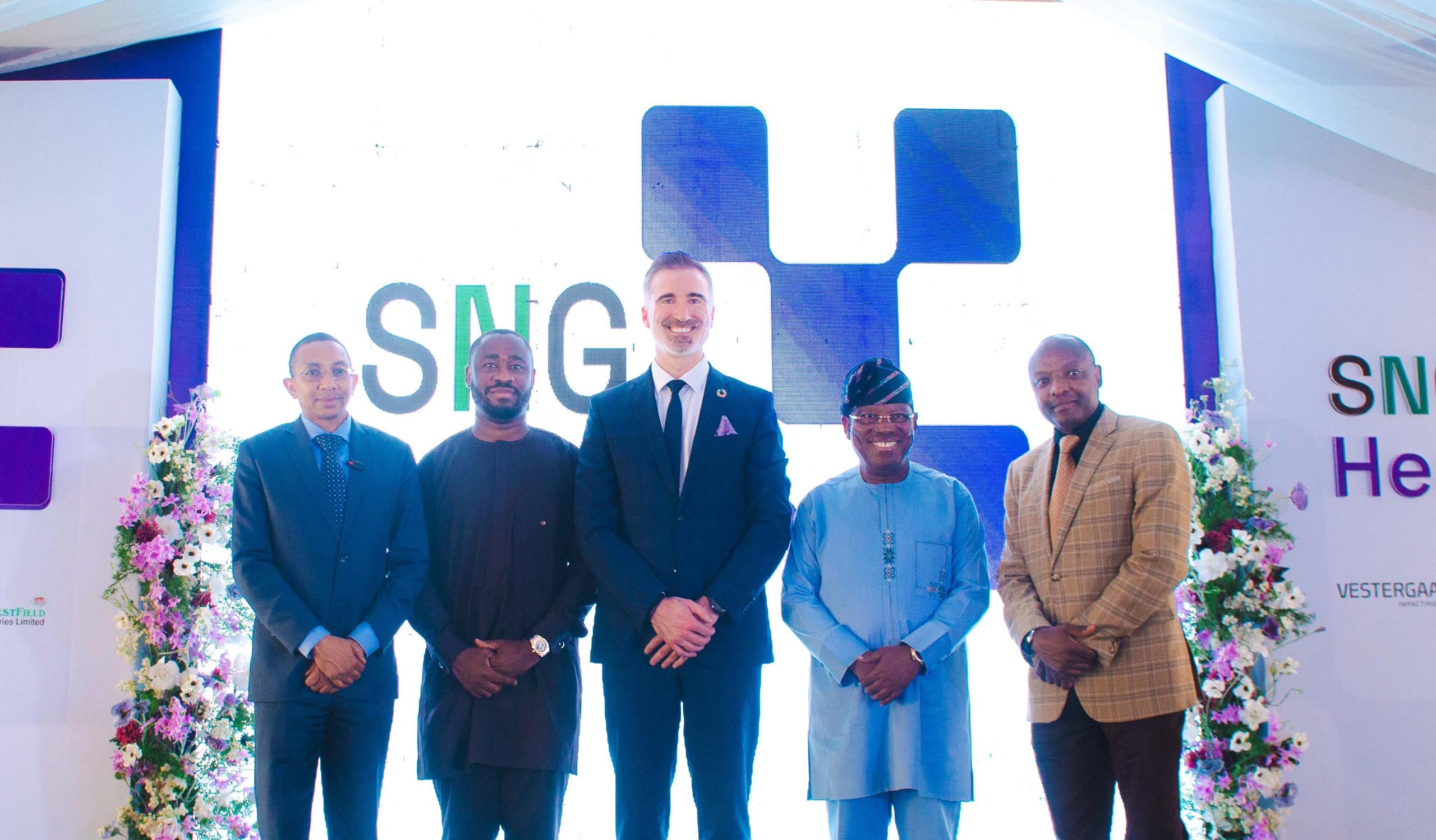
Local mosquito net manufacturing addresses import dependencies
Nigeria currently bears 25 per cent of the global malaria burden, yet until now, all mosquito nets distributed in the country have been imported.
Read also: How SORA Technology is fighting malaria in Africa using AI and drones
Nicholas Schornoz, Chief Financial Officer of Vestergaard, described this dependency as adding cost, delays and uncertainty to a life-saving supply chain.
“Building this facility and producing the next generation of insecticide-treated nets here in Nigeria are changing the equation,” Schornoz said. He noted that with domestic production of dual active ingredient insecticide nets, SNG Health can respond to national needs in real time, ensuring availability, stability and resilience in the face of rising insecticide resistance.
The facility will manufacture PermaNet Dual, an advanced mosquito net featuring two different insecticides designed to combat mosquito populations that have developed resistance to single-ingredient treatments.
Schornoz emphasised that Nigerians will have access to world-leading mosquito nets made in Nigeria for Nigeria, creating local jobs, skills and industrial competitiveness.
He cited data showing that mosquito nets remain the single most impactful tool in malaria prevention, responsible for 72 per cent of all malaria cases averted over the last 25 years, with new dual active ingredient nets alone preventing an additional 40 million cases since 2017.
Martins Awofisayo, Chief Executive Officer of Harvestfield, described the partnership as a dream come true for his company, which has been operating in Nigeria’s malaria prevention sector for 25 years.
He recalled Harvestfield’s humble beginnings in February 2000, when the company started by manually dipping plain nets in insecticide solutions and drying them in living rooms before taking them to market.
“Isaac [Awofisayo] used to be the leading one spreading the net in our living room when we were still doing the dip washing,” Awofisayo said, referring to his son. “And today, it’s a dream come true that that same young Harvestfield is now partnering with the biggest manufacturer, the world’s largest manufacturer of insecticide-treated nets.”
Awofisayo noted that Vestergaard had celebrated producing its first one billion mosquito nets at a United Nations General Assembly side event two years ago, attended by Nigeria’s Minister of Health.

“Together we are establishing a facility that will deliver long-lasting insecticidal nets produced in Nigeria for the first time,” he said, emphasising that the nets being manufactured represent the newest generation available.
Awofisayo called the facility ‘end of discussion.’
Cornelia Camenzind, Consul General of Switzerland in Lagos, contextualised the project within broader African manufacturing priorities.
She noted that 70 per cent of public health commodities in Africa are imported despite the continent accounting for 95 per cent of global malaria cases.
“This factory stands for the first African country that will produce dual active ingredients at scale. I think that deserves a loud applause,” Camenzind said. She highlighted her personal connection to malaria prevention work, recalling her earlier posting in Tanzania in the early 2000s, where the Swiss Tropical Institute of Health in Basel led development of functional malaria vaccines and promoted impregnated mosquito netting for vulnerable populations.
Camenzind pointed to Switzerland’s consistent ranking as the world’s most innovative country for 14 consecutive years, noting that Vestergaard exemplifies this tradition of teaming up with global partners to spread knowledge through cooperation among business communities and research projects.
She stated that 50 Swiss companies currently operate in Nigeria, with Vestergaard, Harvestfield and SNG Health representing an excellent example of how such partnerships can work and prosper.
Onoriode Ezire, Task Team Leader for the World Bank, framed the project within the institution’s global focus on job creation as a pathway to reducing poverty and addressing inequalities.
“Your intention, your work that you have done with Vestergaard, is contributing to achieving our own goal, which is creating jobs as a way to reduce poverty and address inequalities in the world,” Ezire told the assembled stakeholders.

He emphasised the human capital dimension, noting that malaria-related absences from work directly impact productivity and GDP. “If you are sick, you can’t work. If we can’t work, we can’t be productive. If the country is not productive, our GDP will go down. So your partnership with Vestergaard is helping to achieve our goal of strengthening human capital.“
Ezire recounted that two years earlier, Vestergaard had approached the World Bank asking how many nets the institution would guarantee to purchase if the company established a factory in Nigeria. “I think it was a difficult question, but then I made some commitment that yes, if you can set up a factory as soon as possible, under the HIPAA project, we can encourage our partners, that is the state government, to buy from you,” he said.
He confirmed that Lagos State is already committed to buying nets from the facility this year and expressed hope that six other states implementing the HIPAA project would follow suit.
The facility’s location was strategically chosen within Ogun State, in proximity to major transportation infrastructure, and benefits from support provided by multiple government agencies and international organisations including the Presidential Initiative for Unlocking the Healthcare Value Chain, the National Malaria Elimination Programme and various development partners.
The PVAC National Coordinator, Dr Abdul Mukhtar, talked about the impact of the project. “The strategic partnerships” ensure the project comes to light.
“The Nigerian government will do whatever is possible to support this project…when you produce, we’d buy.”
TECHNOLOGY
‘Don’t pander to the tech giants!’ How a youth movement for digital justice is spreading across Europe | Social media


Late one night in April 2020, towards the start of the Covid lockdowns, Shanley Clémot McLaren was scrolling on her phone when she noticed a Snapchat post by her 16-year-old sister. “She’s basically filming herself from her bed, and she’s like: ‘Guys you shouldn’t be doing this. These fisha accounts are really not OK. Girls, please protect yourselves.’ And I’m like: ‘What is fisha?’ I was 21, but I felt old,” she says.
She went into her sister’s bedroom, where her sibling showed her a Snapchat account named “fisha” plus the code of their Paris suburb. Fisha is French slang for publicly shaming someone – from the verb “afficher”, meaning to display or make public. The account contained intimate images of girls from her sister’s school and dozens of others, “along with the personal data of the victims – their names, phone numbers, addresses, everything to find them, everything to put them in danger”.
McLaren, her sister and their friends reported the account to Snapchat dozens of times, but received no response. Then they discovered there were fisha accounts for different suburbs, towns and cities across France and beyond. Faced with the impunity of the social media platforms, and their lack of moderation, they launched the hashtag #StopFisha.
It went viral, online and in the media. #StopFisha became a rallying cry, a safe space to share information and advice, a protest movement. Now it was the social media companies being shamed. “The wave became a counter-wave,” says McLaren, who is now 26. The French government got involved, and launched an online campaign on the dangers and legal consequences of fisha accounts. The social media companies began to moderate at last, and #StopFisha is now a “trusted flagger” with Snapchat and TikTok, so when they report fisha content, it is taken down within hours. “I realised that if you want change in your societies, if you come with your idea alone, it won’t work. You need support behind you.”
Shanley Clémot McLaren at the UN. Photograph: Baz Ratner
Four years later, this strategy is playing out on an even larger scale. McLaren and other young activists across Europe are banding together against social media and its ruinous effects on their generation. Individually, young people are powerless to sway big tech, but they are also a substantial part of its business model – so, collectively, they are powerful.
This is the first generation to have grown up with social media: they were the earliest adopters of it, and therefore the first to suffer its harms. The array of problems is ever-expanding: misogynistic, hateful and disturbing content; addictive and skewed algorithms; invasion of privacy; online forums encouraging harmful behaviours; sextortion; screen addiction; deepfake pornography; misinformation and disinformation; radicalisation; surveillance; biased AI – the list goes on. As the use of social media has risen, there has been a corresponding increase in youth mental health problems, anxiety, depression, self-harm and even suicide.
“Across Europe, a generation is suffering through a silent crisis,” says a new report from People vs Big Tech – a coalition of more than 140 digital rights NGOs from around Europe – and Ctrl+Alt+Reclaim, their youth-led spin-off. A big factor is “the design and dominance of social media platforms”.
Ctrl+Alt+Reclaim, for people aged 15 to 29, came about in September last year when People vs Big Tech put out a call – on social media, paradoxically. About 20 young people who were already active on these issues came together at a “boot camp” in London. “We were really given the tools to create the movement that we wanted to build,” says McLaren, who attended with her partner. “They booked a big room, they brought the food, pencils, paper, everything we needed. And they were like: ‘This is your space, and we’re here to help.’”
The group is Europe’s first digital justice movement by and for young people. Their demands are very simple, or at least they ought to be: inclusion of young people in decision-making; a safer, healthier, more equitable social media environment; control and transparency over personal data and how it is used; and an end to the stranglehold a handful of US-based corporations have over social media and online spaces. The overarching principle is: “Nothing for us, without us.”
“This is not just us being angry; it’s us having the right to speak,” says McLaren, who is now a youth mobilisation lead for Ctrl+Alt+Reclaim. Debates over digital rights are already going on, of course, but, she says: “We find it really unfair that we’re not at the table. Young people have so much to say, and they’re real experts, because they have lived experience … So why aren’t they given the proper space?”
McLaren’s work with #StopFisha took her on a journey into a wider, murkier world of gender-based digital rights: misogynist trolling and sexism, cyberstalking, deepfake pornography – but she realised this was just one facet of the problem. What women were experiencing online, other groups were experiencing in their own ways.
A fellow activist, Yassine, 23, is well aware of this. Originally from north Africa and now living in Germany, Yassine identifies as non-binary. They fled to Europe to escape intolerance in their own country, but the reality of life, even in a supposedly liberal country such as Germany, hit them like a “slap”, they say. “You’re here for your safety, but then you’re trying to fight not only the system that is punishing the queerness of you, but you also have another layer of being a migrant. So you have two battles instead of one.”
‘The systems are patriarchal and racist by design’ … Yassine, who leads on digital rights at LGBTQ+ youth rights organisation IGLYO. Photograph: IGLYO
As a migrant they are seen as a threat, Yassine says. “Our bodies and movements must be tracked, fingerprinted and surveilled through intrusive digital systems designed to protect the EU.” For queer people, there are similar challenges. These include “shadow-banning”, for example, by which tech platforms “silence conversations about queer rights, racism or anything that is challenging the dominant system”, either wilfully or algorithmically, through built-in biases.
Measures such as identity verification “are also putting a lot of people at risk of being erased from these spaces”, says Yassine. There can be good reasons for them, but they can also end up discriminating against non-binary or transgender people – who are often presented with binary gender options; male or female – as well as against refugees and undocumented people, who may be afraid or unable to submit their details online. Given their often tenuous residency status, and sometimes limited digital literacy and access, migrants tend not to speak out, Yassine says. “It definitely feels like you are in a position of: ‘You need to be grateful that you are here, and you should not question the laws.’ But the laws are harming my data.”
On a more day-to-day level, Yassine says, they must “walk through online spaces knowing they could do harm to me”. If they click on the comments under a social media post, for example, they know they are likely to find racist, homophobic or hateful attacks. Like McLaren, Yassine says that complaining is futile. “I know that they will come back with, ‘This is not a community guidelines breach’, and all of that.”
These are not mere glitches in the system, says Yassine, who now leads on digital rights at IGLYO, a long-running LGBTQ+ youth rights organisation, founded in Brussels, with a network of groups across Europe. “The systems we design inherit the very structures they arise from, so they inevitably become systems that are patriarchal and racist by design.”
Adele Zeynep Walton’s participation in Ctrl+Alt+Reclaim came through personal experience of online harm. In 2022, Walton’s 21-year-old sister, Aimee, took her own life. She had been struggling with her mental health, but had also been spending time on online suicide and self-harm forums, which Walton believes contributed to her death. After that, Walton began to question the digital realm she had grown up in, and her own screen addiction.
Walton’s parents made her first Facebook account when she was 10, she says. She has been on Instagram since she was 12. Her own feelings of body dysmorphia began when she was 13, sparked by pro-anorexia content her friends were sharing. “I became a consumer of that, then I got immersed in this world,” she says. “Generations like mine thought it was totally normal, having this everyday battle with this addictive thing, having this constant need for external validation. I thought those were things that were just wrong with me.”
Adele Zeynep Walton, who became a campaigner after the death of her sister, in the garden of her family home in Southampton. Photograph: Peter Flude/The Guardian
In researching her book Logging Off: The Human Cost of our Digital World, Walton, 26, also became aware of how little control young people have over the content that is algorithmically served up to them. “We don’t really have any choice over what our feeds look like. Despite the fact there are things where you can say, ‘I don’t want to see this type of content’, within a week, you’re still seeing it again.”
Alycia Colijn, 29, another member of Ctrl+Alt+Reclaim, knows something about this. She studied data science and marketing analytics at university in Rotterdam, researching AI-driven algorithms – how they can be used to manipulate behaviour, and in whose interests. During her studies she began to think: “It’s weird that I’m trained to gather as much data as I can, and to build a model that can respond to or predict what people want to buy, but I’ve never had a conversation around ethics.” Now she is researching these issues as co-founder of Encode Europe, which advocates for human-centric AI. “I realised how much power these algorithms have over us; over our society, but also over our democracies,” she says. “Can we still speak of free will if the best psychologists in the world are building algorithms that make us addicted?”
The more she learned, the more concerned Colijn became. “We made social media into a social experiment,” she says. “It turned out to be the place where you could best gather personal data from individuals. Data turned into the new gold, and then tech bros became some of the most powerful people in the world, even though they aren’t necessarily known for caring about society.”
Social media companies have had ample opportunities to respond to these myriad harms, but invariably they have chosen not to. Just as McLaren found with Snapchat and the fisha accounts, hateful and racist content is still minimally moderated on platforms such as X, Instagram, Snapchat and YouTube. After Donald Trump’s re-election, Mark Zuckerberg stated at the start of this year that Meta would be reducing factcheckers across Facebook and Instagram, just as X has under Elon Musk. This has facilitated the free flow of misinformation. Meta, Amazon and Google were also among the companies announcing they were rolling back their diversity, equity and inclusion initiatives, post-Trump’s election. The shift towards the right politically, in the US and Europe, has inevitably affected these platforms’ tolerance of hateful and racist content, says Yassine. “People feel like now they have more rights to be harmful than rights to be protected.”
All the while, the tech CEOs have become more powerful, economically, politically and in terms of information control. “We don’t believe that power should be in those hands,” says Colijn. “That’s not a true democracy.”
Europe’s politicians aren’t doing much better. Having drafted the Digital Services Act in 2023, which threatened social media companies with fines or bans if they failed to regulate harmful content, the European Commission announced last month it would be rolling back some of its data privacy laws, to allow big tech companies to use people’s personal data for training AI systems.
“Big tech, combined with the AI innovators, say they are the growth of tomorrow’s economy, and that we have to trust them. I don’t think that’s true,” says Colijn. She also disagrees with their argument that regulation harms innovation. “The only thing deregulation fosters is harmful innovation. If we want responsible innovation, we need regulation in place.”
Walton agrees. “Governments and MPs are shooting themselves in the foot by pandering to tech giants, because that just tells young people that they don’t care about our future,” she says. “There’s this massive knowledge gap between the people who are making the decisions, and the tech justice movement and everyday people who are experiencing the harms.”
Ctrl+Alt+Reclaim is not calling for the wholesale destruction of social media. All these activists say they have found community, solidarity and joy in online spaces: “We’re fighting for these spaces to accommodate us,” says Yassine. “We’re not protesting to cancel them. We know how harmful they are, but they are still spaces where we have hope.”
‘The only thing deregulation fosters is harmful innovation’ … Alycia Colijn, co-founder of Encode. Photograph: Henry Maathuis
Colijn echoes this. “Social media used to be a fun place with the promise of connecting the world,” she says. “That’s where we started.” And that’s what they want it to be again.
Will big tech pay attention? They might not have a choice, as countries and legislators begin to take action. This week Australia will become the first country to ban social media accounts for under-16s on major platforms including Snapchat, Instagram, TikTok and X. Last week, after a two-year deliberation, X was fined €120m (£105m) by the EU for breaching data laws. But these companies continue to platform content that is hateful, racist, harmful, misleading or inflammatory, with impunity.
Meanwhile, Ctrl+Alt+Reclaim is just getting started. Other discussions on the table include campaigning for an EU-funded social media platform, an alternative to the big tech oligopoly, created by and for the public. Another alternative is direct action, either protest or consumer activism such as coordinated boycotts. “I think it’s lazy for us to be like: we don’t have any power,” says Walton. “Because we could literally say that about anything: fast fashion, fossil fuels … OK, but how do we change things?”
The other alternative is simply to log off. “The other side of the coin to this movement of tech justice, and a sort of liberation from the harms that we’ve experienced over the past 20 years, is reducing our screen time,” says Walton. “It is spending more time in community. It is connecting with people who maybe you would have never spoken to on social media, because you’d be in different echo chambers.”
Almost all the activists in Ctrl+Alt+Reclaim attest to having had some form of screen addiction. As much as social media has brought them together, it has also led to much less face-to-face socialising. “I’ve had to sort of rewire my brain to get used to the awkwardness and get comfortable with being in a social setting and not knowing anyone,” says Walton. “Actually, it would be really nice to return to proper connection.”
In the UK and Ireland, Samaritans can be contacted on freephone 116 123, or email jo@samaritans.ie. In the US, you can call or text the 988 Suicide & Crisis Lifeline at 988 or chat at 988lifeline.org. In Australia, the crisis support service Lifeline is 13 11 14. Other international helplines can be found at befrienders.org
In the UK, the charity Mind is available on 0300 123 3393 and Childline on 0800 1111. In the US, call or text Mental Health America at 988 or chat 988lifeline.org. In Australia, support is available at Beyond Blue on 1300 22 4636, Lifeline on 13 11 14, and at MensLine on 1300 789 978

National treasury CS Hon. FCPA John Mbadi (seated, centre) during the National Treasury market updates and MoU signing ceremony at the Jw Marriot hotel in Nairobi on Monday/Image Source: TechCabal
Do you remember the whole Vodacom-Safaricom dance we delivered to your inbox on Friday? The one where we noted that Vodafone, owned by Vodacom, now has a 55% majority control stake in Safaricom due to the Kenyan government selling 15% of its stake. Remember, we noted Vodacom was still awaiting regulatory approvals from the Capital Markets Authority (CMA), the Competition Authority (CAK), the Central Bank of Kenya (CBK), and regional competition bodies before gaining full control. Vodacom has also said it is not trying to take full control of Safaricom, but well, whatever the long-term plan is, the Kenyan government has given conditions for the deal to progress, and they are… firm.
Top of the list: Safaricom’s CEO and board chair must be Kenyan citizens. Full stop. Regardless of a foreign majority ownership or not, the Kenyan government wants leadership to stay local.
That’s just the beginning: Vodacom cannot alter Safaricom’s name, trademarks, brand identity, or corporate symbols without government approval. It also can not introduce sweeping changes to suppliers or declare staff redundancies outside normal business cycles. Even expansion outside Kenya requires consultation with the state. In addition, all Safaricom and M-PESA Foundation trustees must be Kenyan, and its funds must be spent domestically.
What does this mean? The Kenyan government needed some extra cash, but not a loss of control. Safaricom is a national asset, and these conditions allow the government to preserve its identity, workforce, and regional priorities even after selling a significant stake.
Is this unusual in Africa? Surprisingly, no. Countries often tighten governance rules when foreign ownership rises. In Ethiopia, foreign investors are only allowed to own up to 49% of local banks. This is after decades of the country’s banking industry being off-limits for foreign players.
Can Kenya do this legally? If Vodacom agreed to the terms, and it looks like they did, then absolutely. So yes, Vodacom is getting 55%, but Kenya is holding the steering wheel with two hands.


US President Donald Trump has announced that he will allow AI chip giant Nvidia to sell its advanced H200 chips to “approved customers” in China.
“We will protect National Security, create American Jobs, and keep America’s lead in AI,” Trump said on social media on Monday.
The decision will apply to other US chip companies like AMD and comes after extensive lobbying by Nvidia boss Jensen Huang, who visited Washington last week to drum up support.
Nvidia – both the world’s leading chip firm and most valuable company – has found itself at the centre of a geopolitical tug-of-war between the US and China in recent months, and had been banned from selling its most advanced chips to Beijing.
Trump reversed the chip-selling ban in July, but demanded that Nvidia pay 15% of its Chinese revenues to the US government.
Beijing then reportedly ordered its tech companies to stop buying Nvidia chips manufactured for use in the Chinese market.
“We applaud President Trump’s decision to allow America’s chip industry to compete to support high paying jobs and manufacturing in America,” Nvidia said in a statement provided to BBC News.
Nvidia’s H200 is a generation behind its Blackwell chip, which is considered to be the world’s most advanced AI semiconductor.
Mr Huang told the BBC in September that the US needed “to make sure that people can access this technology from all over the world, including China.”
He has also repeatedly warned that China, which has cultivated a chip production ecosystem of its own, was close behind the US in chip development.
Nvidia hailed Trump’s announcement on Monday.
“Offering H200 to approved commercial customers, vetted by the Department of Commerce, strikes a thoughtful balance that is great for America,” Nvidia said in its statement.
The companies shares rose slightly on the news.
Trump said “$25% [sic] will be paid to the United States of America” in his post.
The BBC has reached out to the White House for clarification on the arrangement, which will likely face opposition from national security hawks in Congress.
The sale of H200 chips to some Chinese customers “buys time” for the US to negotiate a deal with Beijing over rare earths and prevent major disruptions to global supply chains, Alex Capri from the National University of Singapore said.
China holds a near-monopoly on the processing of rare earth minerals, which are essential for the production of most electronics.
Although access to H200 chips is likely to benefit China’s technology sector, Beijing is still expected to work towards reducing dependence on the US, Mr Capri said.
Beijing had previously directed local tech firms to reject Nvidia’s older H20 chips and encouraged them to buy domestically produced semiconductors, he noted.
Researchers at Georgetown University’s Center for Security and Emerging Technology (CSET) said China’s People’s Liberation Army is using advanced chips designed by US companies to develop AI-enabled military capabilities.
“By making it easier for the Chinese to access these high-quality AI chips, you enable China to more easily use and deploy AI systems for military applications,” said Cole McFaul, senior research analyst at CSET. “They want to harness advanced chips for battlefield advantage.”

AI helps jobseekers to apply for hundreds of roles, meanwhile employers use AI to filter them.
SOURCE PAGE


A stalkerware maker who was banned from the surveillance industry after a data breach that exposed the personal information of its customers, as well as the people they were spying on, will not be able to go back to selling the invasive software, according the U.S. Federal Trade Commission.
The FTC denied a request to cancel that ban made by Scott Zuckerman, the founder of consumer spyware company Support King and its subsidiaries SpyFone and OneClickMonitor.
On Monday, the FTC announced the denial in a press release after Zuckerman petitioned the federal watchdog to rescind or modify the ban order in July of this year.
In 2021, the FTC banned Zuckerman from “offering, promoting, selling, or advertising any surveillance app, service, or business,” effectively preventing him from running another stalkerware business. The agency also ordered Zuckerman to delete all the data collected by SpyFone, as well as to undergo frequent audits and establish certain cybersecurity practices for his businesses.
“SpyFone is a brazen brand name for a surveillance business that helped stalkers steal private information,” said Samuel Levine, then acting director of the FTC’s Bureau of Consumer Protection. “The stalkerware was hidden from device owners, but was fully exposed to hackers who exploited the company’s slipshod security.”
In his petition, Zuckerman claimed that the FTC order’s security requirements have made it harder for him to run his other businesses due to financial costs, despite the fact that Support King is no longer in operation and he now only runs a restaurant and plans other “tourism ventures” in Puerto Rico, according to the petition.
When reached via email, Zuckerman declined to comment and referred questions to his lawyer.
Techcrunch event
San Francisco
|
October 13-15, 2026
The FTC ban stemmed from an incident in 2018, when a security researcher found an Amazon S3 bucket belonging to SpyFone that left extremely sensitive data — including selfies, text messages, chat app messages, audio recordings, contacts, location, hashed passwords and logins, and more — exposed online for anyone to see and access.
The exposed data included 44,109 unique email addresses and, according to the researcher who found the breach, “at least 2,208 current ‘customers’ and hundreds or thousands of photos and audio in each folder” from 3,666 phones that had the SpyFone stalkerware installed on them.
Contact Us
Do you have more information about stalkerware makers? From a non-work device, you can contact Lorenzo Franceschi-Bicchierai securely on Signal at +1 917 257 1382, or via Telegram and Keybase @lorenzofb, or email.
Less than a year after the 2021 FTC order, TechCrunch reported that Zuckerman appeared to be running another stalkerware company. In 2022, TechCrunch received a trove of breached data from stalkerware app SpyTrac. The data revealed that SpyTrac was run by freelance developers with direct ties to Support King, in what appeared to be an attempt to circumvent the FTC’s ban. Furthermore, the breached data included records from SpyFone, which Zuckerman was ordered to delete, and keys to access the cloud storage of OneClickMonitor, another one of his stalkerware apps.
Eva Galperin, a prominent expert on stalkerware, celebrated the news. “Mr. Zuckerman was clearly hoping that if he laid low for a few years, everyone would forget about the reasons why the FTC issued a ban not only against the company, but against him specifically,” Galperin told TechCrunch.
TechCrunch’s revelation in 2022 that Zuckerman apparently violated the FTC ban, “suggests that Zuckerman did not learn his lesson,” added Galperin, who is the director of cybersecurity at the digital rights nonprofit Electronic Frontier Foundation.
Stalkerware apps allow their customers to surreptitiously spy on the phones and devices of their loved ones. In addition to enabling potentially illegal activities, for the last eight years, there have been at least 26 stalkerware companies that have been hacked or left sensitive data exposed online, according to TechCrunch’s tally. These repeated incidents show these companies have repeatedly failed to protect the privacy of their customers, as well as the people they spy on.
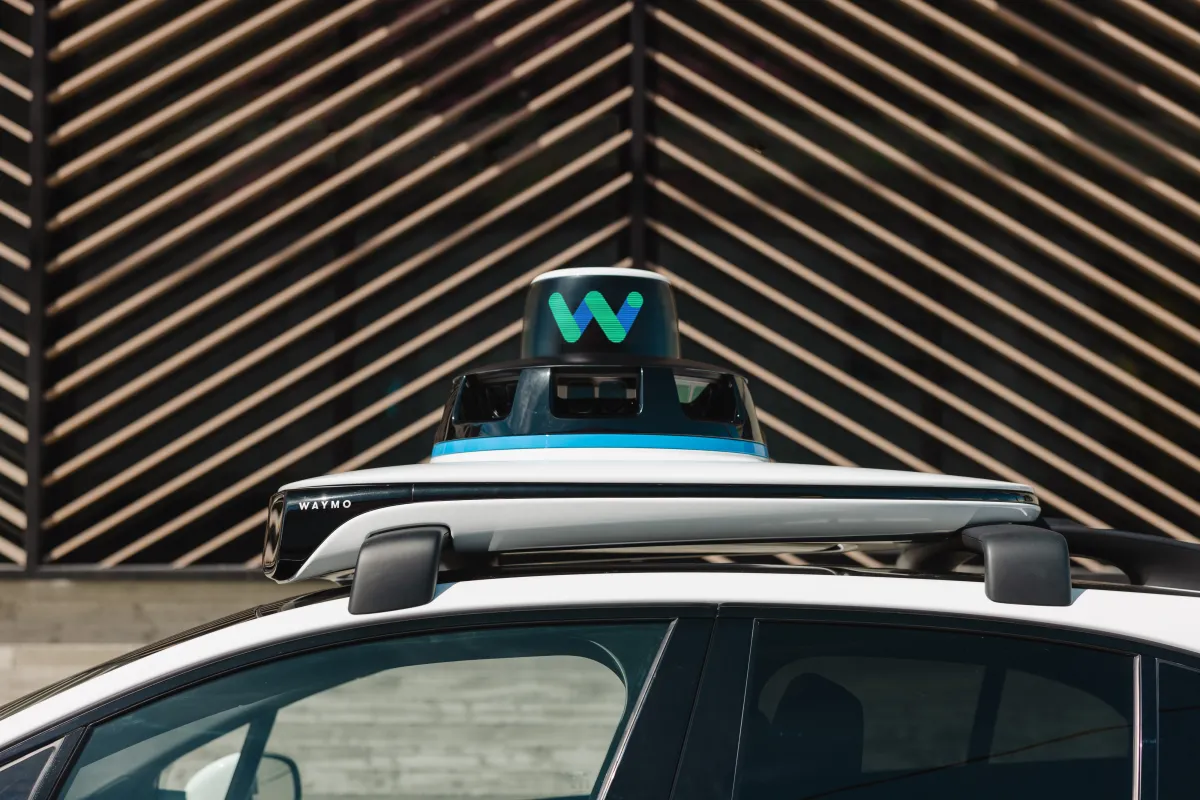
Six months ago, Waymo disclosed it was providing 250,000 robotaxi rides a week across its service areas, an ever-growing list that includes Atlanta, Austin, Los Angeles, Phoenix, and the San Francisco Bay Area.
The Alphabet-owned self-driving company has been coy ever since, simply stating it is many hundreds of thousands of weekly rides. Now, we have a firmer grasp on those weekly ride numbers, thanks to a leaked letter from Tiger Global Management to it investors that was first reported by CNBC.
The letter was an appeal for investment into Tiger Global’s next venture capital fund and called out the gains, so far, of its current fund. Those gains rested largely on its investments in hot companies like OpenAI, Databricks and Waymo. In the letter, Tiger disclosed that Waymo is now providing 450,000 robotaxi rides per week — nearly double the amount it disclosed this spring.
That number will rise as the company continues its aggressive rollout strategy, too. Waymo, which provides commercial robotaxi service in five cities, has announced plans to launch in 12 additional cities in 2026, including Dallas, Denver, Houston, Nashville, and San Diego.
A Waymo spokesperson declined to comment.

The Central Bank of Nigeria (CBN) has issued the first batch of final licences to 82 Bureau De Change operators under its 2024 Regulatory and Supervisory Guidelines, part of its move for a tighter FX market, aimed at shrinking the space for unregulated operators and restoring confidence after years of parallel-market distortions.
It is also part of the CBN’s push for a tighter, compliance-heavy FX framework aimed at shrinking the space for street trading, sanitising the supply chain, and restoring confidence across the market.
Under the revamped regime introduced in 2024, the CBN created two licence classes — Tier 1 and Tier 2 — with significantly higher entry thresholds. Tier 1 operators must maintain a minimum capital base of ₦2 billion ($1.38 million), while Tier 2 operators require ₦500 million ($344,385.82). The rules also shut out commercial banks, payment service banks, fintechs, IMTOs, and other regulated financial institutions from obtaining BDC licences.
Of the newly licensed BCD operators, only two operate as Tier 1 BCDs, while the other 80 remain Tier 2 BCDs and must therefore be operational only in one state. This directive aims to clean up Nigeria’s informal foreign exchange (FX) market by reducing illegal operations and restoring confidence in retail FX transactions.
In a statement signed by Hakama Ali, Acting Director of Corporate Communications, the CBN said the new licences became effective on November 27, 2025, issued pursuant to the Bank and Other Financial Institutions Act (BOFIA) 2020.
“By this notice, only Bureaux De Change listed on the Bank’s website are authorised to operate from the effective date,” Ali said. “While the CBN will continue to update the list of Bureaux De Change with valid operating licences for public verification on our website (www.cbn.gov.ng), the Bank advises the general public to avoid dealing with unlicensed Foreign Exchange Operators.”
Operating a BDC without a valid licence now attracts sanctions under Section 57(1) of BOFIA 2020, meaning that they are liable to a fine of up to ₦10,000,000 ($6,887.72) and an additional ₦200,000 ($137.75) for each day the infraction continues.
The cleanup follows a turbulent period for the FX market. In 2024, the CBN revoked the licences of over 4,000 BDCs for failures ranging from non-payment of regulatory fees to non-compliance with AML/CFT reporting obligations. It was also the year the regulator deployed the EFCC to clear FX street traders, a practice the new guidelines have now expressly prohibited.
“What we’re hoping to accomplish by this, frankly, is to bring some sanity to an industry that arguably no longer serves the interests of those whom it was meant to protect,” CBN governor Olayemi Cardoso said in 2024.
The reforms come as the naira’s official and parallel rates converge at a little less than ₦1,500, an outcome the CBN hopes to solidify by tightening control over one of the most porous segments of the FX market.
As the regulator continues to update the list of valid BCD operators on its website, the public is urged to verify the status of any BDC before initiating a transaction to ensure compliance with the new financial order.