
WORLD NEWS
Afghan asylum seekers jailed for rape of UK teen in Warwickshire park


NEWYou can now listen to Fox News articles!
Two teenage asylum seekers from Afghanistan have been jailed after admitting to the rape of a 15-year-old girl in a U.K. park, officials have confirmed.
According to police, the victim had been in Leamington in Warwickshire with friends on May 10 when they met Jan Jahanzeb and Israr Niazal.
The teenage girl began talking with them before they asked her to join them on a walk.
They then led her to a park area known as Newbold Comyn, where they raped her, Warwickshire police confirmed in a statement released online.
STATE DEPARTMENT WARNS UK OVER GROOMING GANG HANDLING: ‘UNSPEAKABLE ABUSE’
Two teenagers admit rape charges in UK court proceedings after a park attack.
Following the attack, the teenager managed to flag down a passerby, who contacted local police.
Detectives launched an investigation using CCTV footage and photographs the victim had taken on her phone earlier in the day.
Officers were able to identify and arrest the two 17-year-old suspects.
Jahanzeb and Niazal were charged with rape and later appeared before the youth court in Coventry, where they admitted the offense.
FRANTIC MANHUNT LAUNCHED AFTER ASYLUM SEEKER WHO SEXUALLY ASSAULTED TEEN ACCIDENTALLY FREED FROM PRISON
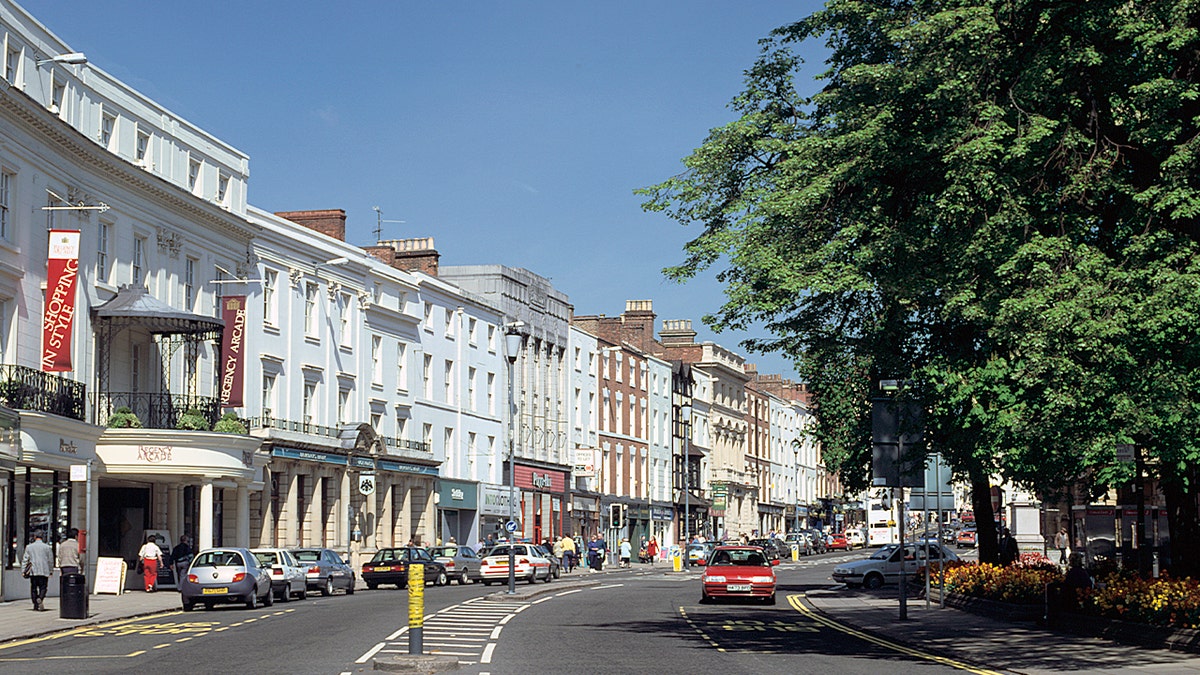
Two teenage asylum seekers from Afghanistan were jailed after admitting to the rape of a 15-year-old girl in Leamington, Warwickshire. (Peter Thompson/Heritage Images/Getty Images)
At their sentencing hearing at Warwick Crown Court on Monday, the judge lifted reporting restrictions that had previously prevented the pair from being named because of their age.
It was also confirmed in court that both are Afghan asylum seekers.
Jahanzeb was sentenced to 10 years and eight months, while Niazal received nine years and 10 months.
Both will begin their terms in a Young Offenders’ Institution and will be transferred to an adult prison at a later stage.
They were also placed on the Sex Offenders’ Register for life and handed indefinite restraining orders.
DUBLIN PROTESTERS CLASH WITH POLICE, BURN VEHICLE AFTER MIGRANT ACCUSED OF SEXUALLY ASSAULTING IRISH GIRL

Police officers in the U.K. (Jacob King/PA Images via Getty Images)
U.K. Detective Chief Inspector Richard Hobbs praised the victim for her courage in coming forward.
“This was a hugely traumatic incident, and I can’t speak highly enough of the victim for the bravery she has shown,” he said in a statement.
He added that the investigation had been handled by specially trained officers who had supported the victim from the outset.
“Jahanzeb and Niazal went out of their way to befriend the victim with the intention of raping her. The length of their sentence reflects the severity of their crime and the need to protect the public from them,” he added.
CLICK HERE TO DOWNLOAD THE FOX NEWS APP
DCI Hobbs said he hoped the case would reassure other victims of sexual violence that they would be listened to and supported if they report offenses.
“We will always investigate thoroughly and sensitively, and do everything in our power to bring offenders to justice,” he added.
Emma Bussey is a breaking news writer for Fox News Digital. Before joining Fox, she worked at The Telegraph with the U.S. overnight team, across desks including foreign, politics, news, sport and culture.


Train services between Surrey and London were disrupted by an emergency incident and all power to the track needed to be switched off in the affected area, causing major delays.
SOURCE PAGE

Surat, India – In 2018, Alpesh Bhai enrolled his three-year-old daughter in an English-language private school in Surat. This was something he never imagined possible while growing up in his village in the Indian state of Gujarat, where his family survived on small fields of fennel, castor and cumin, with their earnings barely enough to cover basic needs.
He had studied in a public school, where, he recalled, “teachers were a rarity, and English almost didn’t exist”.
Recommended Stories
list of 4 itemsend of list
“Maybe if I knew English, I would have been some government worker. Who knows?”, he said, referring to the dream of a majority of Indians, as government jobs come with tenure and benefits.
His finances improved once he joined the diamond cutting industry in Surat, a city perched along India’s Arabian Sea coast, where nearly 80 percent of the world’s diamonds are cut and polished. Monthly earnings of 35,000 rupees ($390) for the first time brought Alpesh a sense of stability, and with it, the means to give his children the education he never had.
“I was determined that at least my children would get the kind of private education I was deprived of,” he said.
But that dream did not last. The first disruption to business came with Russia’s full-scale invasion of Ukraine in 2022. The sanctions on Russia hurt supply chains, as India sourced at least a third of its raw diamonds from Russia, leading to layoffs.
Alpesh’s earnings fell to 18,000 rupees ($200) a month, then to 20,000 rupees ($222). Soon, the 25,000 rupees ($280) annual school fee became unmanageable. By the time his older daughter reached grade three, just as his younger child started school, the pressure became impossible.
Earlier this year, he pulled both children out of private school and enrolled them in a nearby public one. A few months later, when new United States tariffs deepened the crisis as demand slumped further, his polishing unit laid off 60 percent of its workers, Alpesh among them.
“Seems like I’ve come back to where I started,” he said.
Surat, India’s diamond hub, employs more than 600,000 workers, and hosts 15 large polishing units with annual sales exceeding $100m. For decades, Surat’s diamond‑polishing industry has offered migrant workers from rural Gujarat, many with little or no education, higher incomes, in some cases up to 100,000 rupees ($1,112) a month, and a path out of agrarian hardship.
But recent shocks have exposed the fragility of that ladder, with close to 400,000 workers having faced layoffs, pay cuts, or reduced hours.
Even before Russia’s war on Ukraine began in February 2022, Surat’s diamond industry faced multiple challenges: disrupted supplies from African mines, weakening demand in key Western markets, and inconsistent exports to China, the second-largest customer. With the onset of the war, India’s exports of cut and polished diamonds in the financial year ending on March 31, 2024, fell by 27.6 percent, with sharp declines in its top markets – the US, China, and the United Arab Emirates.
The 50 percent tariffs imposed by US President Donald Trump have worsened the downturn.
Alpesh now works loading and unloading textile consignments for about 12,000 rupees ($133) a month, barely enough to cover food and rent.
“If I had kept them in the private school, I don’t know how I would have survived,” Alpesh said. “People here have killed themselves over debts and school fees. When you don’t have enough to eat, how will you think of teaching your children well?”
His daughters are still adjusting. “They sometimes tell me, ‘Pupa, the studies aren’t as good now’. I tell them we’ll put them back in the private school soon, but I don’t know when that will happen.”
‘An exodus’
Some workers have returned to their villages, as many migrant families in Surat can no longer afford rent or find alternative work.
Shyam Patel, 35, was among them. When exports slowed and US tariffs hit in August, the polishing unit where he worked shut down. With no other work available, he returned to his village in the Banaskantha district the following month.
“What other option was there?” he said. “In the city, there’s rent to pay even when there’s no work.”
He now works as a daily-wage labourer in cotton fields in his village. His son, who was in the final year of high school, dropped out after four months of the new academic session.
“We’ll put him back in school next year,” Shyam said. “The government school said they can’t take new students in the middle of the term. Till then, he helps me in the fields.”
Across the city, the disruption is evident in government data. More than 600 students left school mid-session last year as their parents lost work or returned to their villages, mostly in Saurashtra and north Gujarat.
“Most migrants come to Surat to settle – the city has entire [neighbourhoods] and housing clusters built for diamond workers,” said Bhavesh Tank, vice president of the Diamond Workers Union Gujarat. “An exodus in the middle of the year is unprecedented, and the drop in school enrolment suggests many are not coming back soon.”
The union estimates that about 50,000 workers have left Surat over the past 12 to 14 months.
The Vishwa Hindu Parishad (VHP), a Hindu nationalist group allied with Prime Minister Narendra Modi’s governing Bharatiya Janata Party (BJP), has been closely observing the diamond industry crisis in Surat.
“The number of dropouts has reached a point where even government schools are struggling to take in new students, said Purvesh Togadia, a VHP representative in the city. “The poor quality of education is making the transition even more disheartening for families.”
The poor quality of education in public schools is well established. In 2024, only 23.4 percent of grade three students could read at a grade two level, compared with 35.5 percent in private schools. By grade 5, the gap persisted – 44.8 percent in government schools versus 59.3 percent in private ones.
Kishor Bhamre, director at Pratham, an organisation working on children’s rights across education and labour, said the setback is not just academic but psychological.
“Children moving from private to government schools lose the environment they grew up in – their friends, familiar teachers, and a sense of community. For many, it also means shifting from an urban to a rural setting, which makes the adjustment even harder and affects their learning,” he said.
Al Jazeera reached out to the Surat Municipal Corporation and the state’s education minister for comment, but did not receive a response.
Limited help
The Diamond Workers Union has repeatedly appealed to the state government to provide an economic relief package and revise salaries in line with inflation. The union has also urged authorities to address the equally pressing situation of the growing number of school dropouts among workers’ children.
The Gujarat government in May introduced a special assistance package for affected diamond workers – a rare move in the industry.
Under the scheme, the state government committed to paying for one year of school fees for diamond polishers’ children, up to 13,500 rupees ($150) annually. To qualify, workers must have been unemployed for the past year and have at least three years of experience in a diamond factory. The fees will be paid directly to the schools.
The government received nearly 90,000 requests from diamond workers across Gujarat, including about 74,000 from Surat alone. After a slow start – it had provided assistance to only 170 children by July – officials reported disbursing 82.8 million rupees ($921,000) towards school fees for 6,368 children of jobless diamond workers in Surat by mid-September.
But about 26,000 applicants were rejected, reportedly due to “improper details mentioned” in the forms, leading to frustration and anger among workers. In the past few days, nearly 1,000 diamond polishers have filed applications with the local government, demanding to know who rejected their forms and on what grounds, and alleging opacity in the process.
The scheme’s rigid eligibility criteria have also excluded workers.
“The scheme only covers those who have completely lost their jobs, but it leaves out many who are facing partial cuts or reduced work,” said Tank. “They’re struggling just as much and need support equally.”
Tank added that education remains one of the most common concerns among workers reaching out to the union’s suicide prevention helpline, which was set up by the Diamond Workers Union after Surat had already recorded at least 71 suicides among diamond workers by November 2024. It has received more than 5,000 calls so far.
Divyaben Makwana, 40, lost her 22-year-old son, Kewalbhai, who had been working as a diamond polisher for three years. On June 14, he died by suicide.
Kewalbhai had been under immense mental stress after losing his job in the diamond market, his mother told Al Jazeera.
“He was earning around 20,000 rupees ($220) a month, and when even that collapsed,” he took his life, she said. “We took him to the hospital and did everything we could. I borrowed 500,000 rupees ($5,560) from relatives and friends, but we couldn’t save him. Now, I don’t have a son – only a loan.”
She lives in Surat with her husband, who has been unable to work due to prolonged illness, and their younger son, Karmdeep, 18. With no means to return to their village in Saurashtra, Divyaben has begun working as a domestic worker to make ends meet. Karmdeep dropped out after grade 11, and now attends a local coaching centre, where he is learning diamond faceting while looking for work.
“Education has become so expensive,” Divyaben said. “At least with coaching, he’ll learn a skill. By the time the market recovers, if he’s trained as a craftsman, maybe we’ll be able to repay some of our debts.”
She paused, her voice low. “I don’t know if education, whether taken on loan or given free, can really change our fate. Our only hope is still the diamond.”
If you or someone you know is at risk of suicide, these organisations may be able to help.
You can access the Diamond Workers Union helpline at +91-92395 00009.
WORLD NEWS
NSW fires: arson squad investigating whether bushfire that destroyed 16 homes was deliberately lit | Bushfires

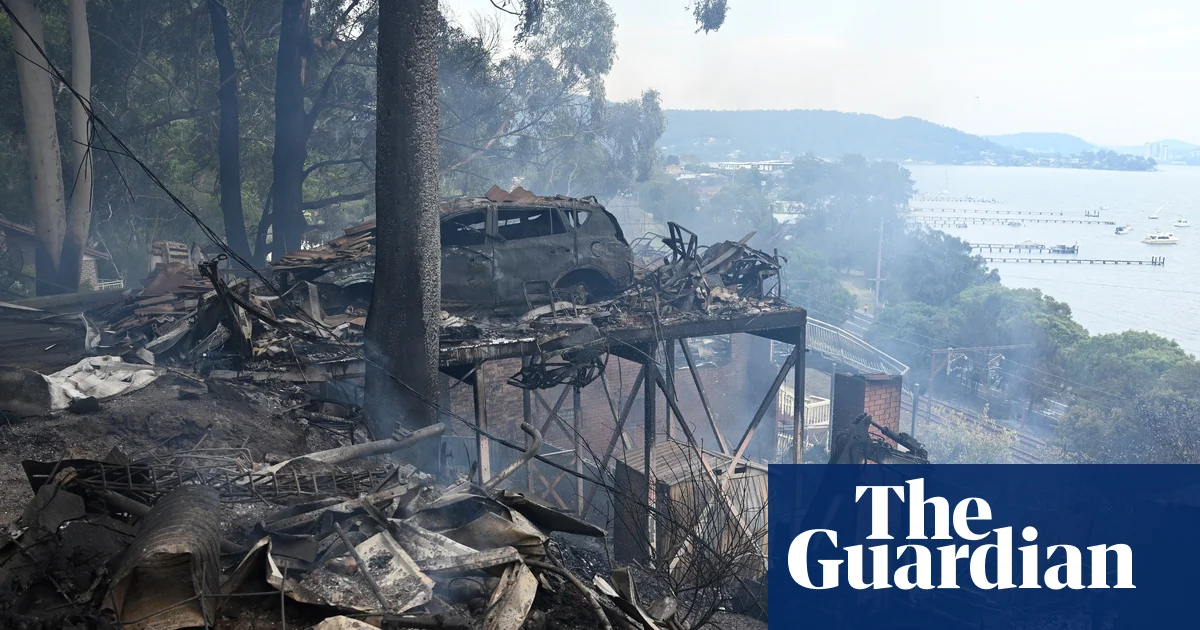
Arson squad and forensic officers are investigating the cause of a bushfire that destroyed 16 homes on the New South Wales Central Coast on the weekend.
Fanned by high temperatures and strong winds, the out-of-control blaze swept across Koolewong on Saturday afternoon, with the flames at one point jumping a stretch of water 1km wide.
On Tuesday morning, NSW police confirmed crime scenes had been established at houses and dwellings on Nimbin Avenue, Glenrock Parade and John Street in Koolewong.
The Rural Fire Services (RFS) commissioner, Trent Curtin, said it was still unclear how the Koolewong fire started.
“We don’t want to speculate at this stage as to what the cause might be. There are many things that it may be,” Curtin said on ABC radio.
The national broadcaster reported an officer was photographed at the scene carrying a clear plastic evidence bag containing a red jerry can.
NSW police said investigations at the “active crime scenes” had been suspended due to “safety concerns” with structural engineers now engaged.
“Investigations are anticipated to recommence once the area has been declared safe by authorities,” a spokesperson said.
“As investigations remain ongoing, the NSW police force, Fire and Rescue NSW and NSW Rural Fire Service will continue operations in the area for the foreseeable future.”
Central Coast council said it was unable to comment, given the police investigation was ongoing.
Another four homes were destroyed in a bushfire at Bulahdelah on the mid-north coast on the weekend. In Tasmania, 19 homes were lost in Dolphin Sands.
The Tasmania Fire Service issued fresh “watch and act” advice for Dolphin Sands on Tuesday before midday.
“Although there is no immediate danger from bushfire, residents need to monitor conditions and be alert for any changes,” the service stated.
Firefighters in NSW were continuing to contain the bushfire south of Buladelah on both sides of the Pacific Highway that had burned more than 4,600 hectares.
The blaze, at advice level, was burning in the Myall Lakes national park between Crawford River and Nerong.
Smoke blankets the town of Nerong. Photograph: Blake Sharp-Wiggins/The Guardian
The RFS had urged the small community of Nerong to prepare to evacuate on Monday evening but back-burning overnight was successful.
On Tuesday morning, the RFS was working to put out spot fires in the area, assisted by water-bombing helicopters.
Tracy, who owns a holiday home opposite the national park in Nerong, was up until 2am watching for embers on her property. She arrived in town four days ago to prepare.
“We had bins set out the front full of water, with buckets on them, because if we lost power, we had no way of protecting our homes,” she said on Tuesday.
“Fire and rescue were here all the way along the street [last night] and the brigades were all through the bush.
“I was definitely feeling nervous yesterday, but as soon as all the crews turned up … they took over, and we just watched for embers on our houses.”
With hot and dry conditions expected for the rest of the day, the RFS was urging communities at Bombah Point Road, Crawford River and the Branch to monitor conditions.
Firefighters battle a bushfire off the Pacific Highway near Nerong. Photograph: Blake Sharp-Wiggins/The Guardian
Bushfire smoke had impacted air quality down through the Central Coast to Sydney.
On Tuesday morning, air quality in the Lower Hunter, Lake Macquarie and Central Coast regions was poor, according to government monitoring. Air quality in both western Sydney and the eastern suburbs was fair.


Soutik BiswasIndia correspondent
 Hindustan Times via Getty Images
Women in Maharashtra aged 21-65 receive a monthly cash transfer of 1,500 rupees ($16)
In a village in the central Indian state of Madhya Pradesh, a woman receives a small but steady sum each month – not wages, for she has no formal job, but an unconditional cash transfer from the government.
Premila Bhalavi says the money covers medicines, vegetables and her son’s school fees. The sum, 1,500 rupees ($16: £12), may be small, but its effect – predictable income, a sense of control and a taste of independence – is anything but.
Her story is increasingly common. Across India, 118 million adult women in 12 states now receive unconditional cash transfers from their governments, making India the site of one of the world’s largest and least-studied social-policy experiments.
Long accustomed to subsidising grain, fuel and rural jobs, India has stumbled into something more radical: paying adult women simply because they keep households running, bear the burden of unpaid care and form an electorate too large to ignore.
Eligibility filters vary – age thresholds, income caps and exclusions for families with government employees, taxpayers or owners of cars or large plots of land.
“The unconditional cash transfers signal a significant expansion of Indian states’ welfare regimes in favour of women,” Prabha Kotiswaran, a professor of law and social justice at King’s College London, told the BBC.
The transfers range from 1,000-2,500 rupees ($12-$30) a month – meagre sums, worth roughly 5-12% of household income, but regular. With 300 million women now holding bank accounts, transfers have become administratively simple.
Women typically spend the money on household and family needs – children’s education, groceries, cooking gas, medical and emergency expenses, retiring small debts and occasional personal items like gold or small comforts.
What sets India apart from Mexico, Brazil or Indonesia – countries with large conditional cash-transfer schemes – is the absence of conditions: the money arrives whether or not a child attends school or a household falls below the poverty line.
 AFP
AFP

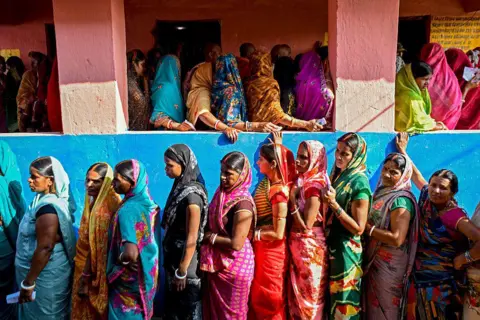
Bihar transferred 10,000 rupees to women’s bank accounts ahead of polls
Goa was the first state to launch an unconditional cash transfer scheme to women in 2013. The phenomenon picked up just before the pandemic in 2020, when north-eastern Assam rolled out a scheme for vulnerable women. Since then these transfers have turned into a political juggernaut.
The recent wave of unconditional cash transfers targets adult women, with some states acknowledging their unpaid domestic and care work. Tamil Nadu frames its payments as a “rights grant” while West Bengal’s scheme similarly recognises women’s unpaid contributions.
In other states, the recognition is implicit: policymakers expect women to use the transfers for household and family welfare, say experts.
This focus on women’s economic role has also shaped politics: in 2021, Tamil actor-turned-politician Kamal Haasan promised “salaries for housewives”. (His fledgling party lost.) By 2024, pledges of women-focused cash transfers helped deliver victories to political parties in Maharashtra, Jharkhand, Odisha, Haryana and Andhra Pradesh.
In the recent elections in Bihar, the political power of cash transfers was on stark display. In the weeks before polling in the country’s poorest state, the government transferred 10,000 rupees ($112; £85) to 7.5 million female bank accounts under a livelihood-generation scheme. Women voted in larger numbers than men, decisively shaping the outcome.
Critics called it blatant vote-buying, but the result was clear: women helped the Bharatiya Janata Party (BJP)-led coalition secure a landslide victory. Many believe this cash infusion was a reminder of how financial support can be used as political leverage.
Yet Bihar is only one piece of a much larger picture. Across India, unconditional cash transfers are reaching tens of millions of women on a regular basis.
Maharashtra alone promises benefits for 25 million women; Odisha’s scheme reaches 71% of its female voters.
In some policy circles, the schemes are derided as vote-buying freebies. They also put pressure on state finances: 12 states are set to spend around $18bn on such payouts this fiscal year. A report by think-tank PRS Legislative Research notes that half of these states face revenue deficits – this happens when a state borrows to pay regular expenses without creating assets.
But many argue they also reflect a slow recognition of something India’s feminists have argued for decades: the economic value of unpaid domestic and care work.
Women in India spent nearly five hours a day on such work in 2024 – more than three times the time spent by men, according to the latest Time Use Survey. This lopsided burden helps explain India’s stubbornly low female labour-force participation. The cash transfers, at least, acknowledge the imbalance, experts say.
Do they work?
Evidence is still thin but instructive. A 2025 study in Maharashtra found that 30% of eligible women did not register – sometimes because of documentation problems, sometimes out of a sense of self-sufficiency. But among those who did, nearly all controlled their own bank accounts.
 Swastik Pal
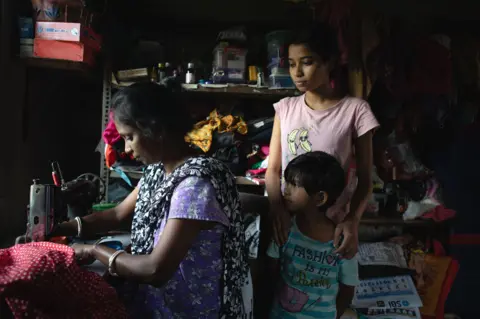
Soma Das sells clothes using the money, supporting her household in West Bengal
A 2023 survey in West Bengal found that 90% operated their accounts themselves and 86% decided how to spend the money. Most used it for food, education and medical costs; hardly transformative, but the regularity offered security and a sense of agency.
More detailed work by Prof Kotiswaran and colleagues shows mixed outcomes.
In Assam, most women spent the money on essentials; many appreciated the dignity it afforded, but few linked it to recognition of unpaid work, and most would still prefer paid jobs.
In Tamil Nadu, women getting the money spoke of peace of mind, reduced marital conflict and newfound confidence – a rare social dividend. In Karnataka, beneficiaries reported eating better, gaining more say in household decisions and wanting higher payments.
Yet only a sliver understood the scheme as compensation for unpaid care work; messaging had not travelled. Even so, women said the money allowed them to question politicians and manage emergencies. Across studies, the majority of women had full control of the cash.
“The evidence shows that the cash transfers are tremendously useful for women to meet their own immediate needs and those of their households. They also restore dignity to women who are otherwise financially dependent on their husbands for every minor expense,” Prof Kotiswaran says.
Importantly, none of the surveys finds evidence that the money discourages women from seeking paid work or entrench gender roles – the two big feminist fears, according to a report by Prof Kotiswaran along with Gale Andrew and Madhusree Jana.
Nor have they reduced women’s unpaid workload, the researchers find. They do, however, strengthen financial autonomy and modestly strengthen bargaining power. They are neither panacea nor poison: they are useful but limited tools, operating in a patriarchal society where cash alone cannot undo structural inequities.
 Swastik Pal
Women welcome the dignity the cash transfers provide
What next?
The emerging research offers clear hints.
Eligibility rules should be simplified, especially for women doing heavy unpaid care work. Transfers should remain unconditional and independent of marital status.
But messaging should emphasise women’s rights and the value of unpaid work, and financial-literacy efforts must deepen, researchers say. And cash transfers cannot substitute for employment opportunities; many women say what they really want is work that pays and respect that endures.
“If the transfers are coupled with messaging on the recognition of women’s unpaid work, they could potentially disrupt the gendered division of labour when paid employment opportunities become available,” says Prof Kotiswaran.
India’s quiet cash transfers revolution is still in its early chapters. But it already shows that small, regular sums – paid directly to women – can shift power in subtle, significant ways.
Whether this becomes a path to empowerment or merely a new form of political patronage will depend on what India chooses to build around the money.
WORLD NEWS
ICE threatened to dump migrants in Mexico after ‘mental torture’ and ‘crushed genitals’ at Fort Bliss, complaint alleges

Sign up for the daily Inside Washington email for exclusive US coverage and analysis sent to your inbox
Get our free Inside Washington email
Get our free Inside Washington email

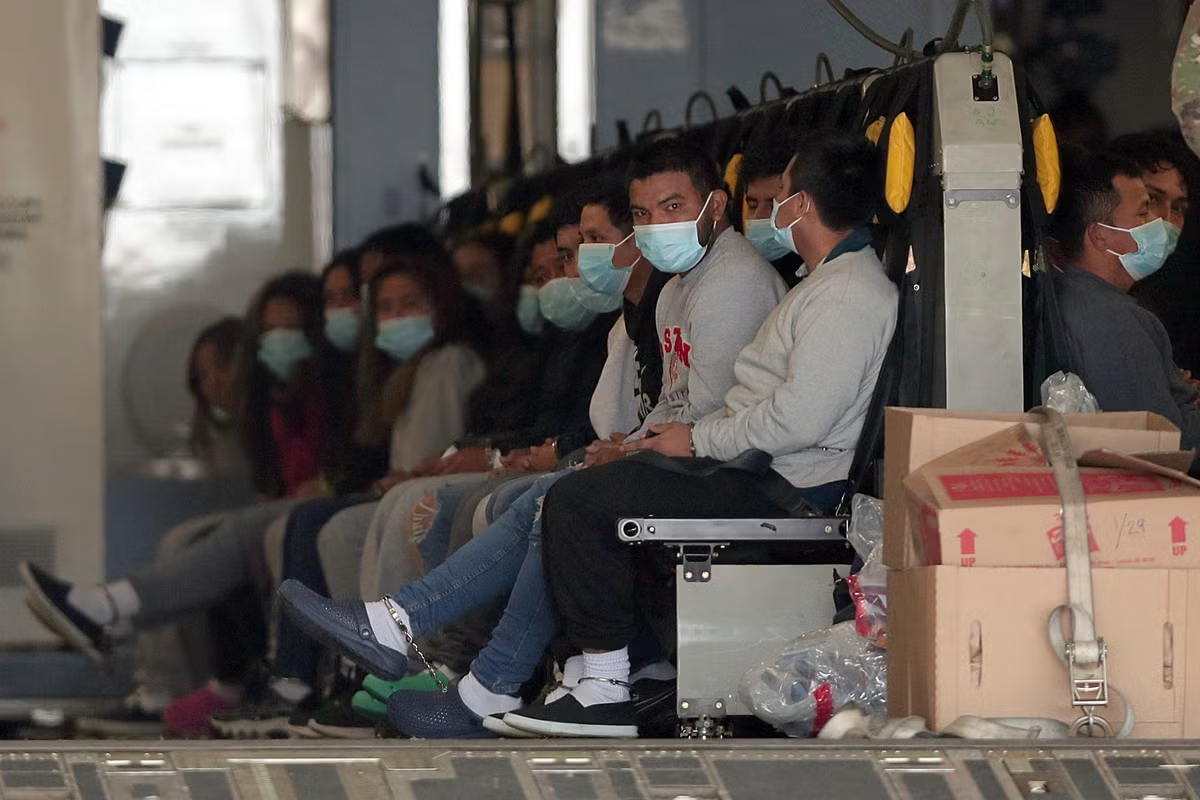
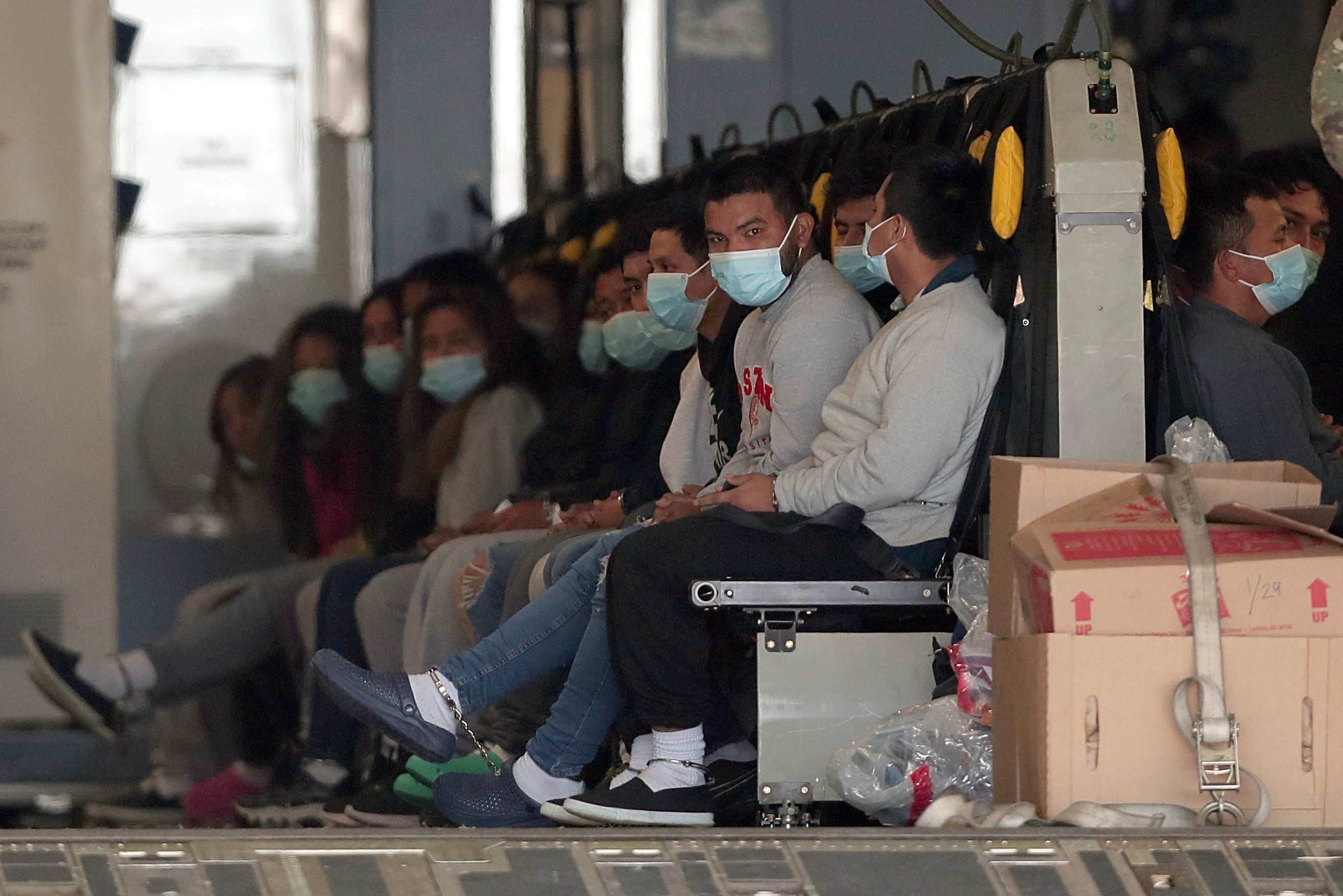
Cuban immigrants detained inside a military compound in Texas were severely beaten by guards before they tried to illegally coerce them into crossing the U.S.-Mexico border, according to a complaint to Immigration and Customs Enforcement filed by civil rights groups.
Four Cuban immigrants inside a makeshift facility at Fort Bliss were among dozens of immigrants loaded into buses and pressured by masked federal agents to cross the border or risk being deported to Africa or a brutal prison in El Salvador – or face the prospect of indefinite detention at the military base, the letter says.
The filing from the American Civil Liberties Union and other groups is based on interviews with 45 detainees at the facility, a sprawling $1.2 billion project that Donald Trump’s administration has designed to hold 5,000 people to support his mass deportation agenda.
A series of sworn testimonials describes the facility’s deteriorating conditions and routine beatings that have left several people hospitalized, including detainees whose testicles were “firmly crushed” by guards.
“This place does not seem designed for humans to be here,” a 32-year-old detainee from Venezuela wrote.
open image in gallery
A complaint from human rights groups alleges immigrants at a sprawling ICE facility in Texas have faced severe beatings by guards and are routinely dumped across the border (AP)
Isaac, a 43-year-old Cuban man who lives with his 5-year-old daughter and her mother in Florida, said a group of 30 guards beat him after he resisted his removal to Mexico.
“My fear is that one day they will take us on a bus and they will put bags over our heads and they will drop us in the middle of the desert to fend for ourselves,” he said.
Benjamin, a 49-year-old Cuban hibachi chef who lives in Florida, wrote in his statement that guards threatened to do exactly that.
“They threatened me by saying I have a bad record and the only solution is to go to Mexico,” he said. “They said they would handcuff us, put bags over our heads and send us to Mexico. I refused to sign the papers.”
Benjamin is among several Cuban detainees who said they were cuffed at the wrists, hands and waists when they were loaded on buses bound for the border. “These threats feel like mental torture,” he wrote.
“I started feeling very anxious at this point and I started yelling and screaming at the immigration guard in Mexico that this is a kidnapping and I don’t want to be taken,” wrote Abel, a 51-year-old Cuban truck driver who has lived in the United States since 1994.
“The guard from Mexico then said that they don’t want anyone who was going to be forced to go to Mexico,” he wrote. “If I hadn’t started kicking and screaming at that moment, I believe I might have been taken to Mexico.”
Eduardo — a 35-year-old electrician and father of three U.S. citizen children, including a five-month-old — said guards drove him and others to a portion of the border wall and told them to jump over.
He said they threatened to charge him with federal crimes and “never get out” of Fort Bliss if he didn’t cross.
“These actions by federal officers are clear violations of statutory, regulatory, and due process protections, including mandatory protections that require meaningful notice and an opportunity to contest a third-country removal on the basis of fear,” according to the letter from the ACLU and other human rights groups.

open image in gallery
ICE is running a $1.2 billion project turning the Fort Bliss military base into a sprawling detention center, where detainees endure overflowing toilets, lack of medical care and little to no time outside, according to a new complaint (REUTERS)
In more than a dozen testimonials, detainees describe losing consciousness after being repeatedly kicked in the ribs, overflowing toilets, “rotten juice” and food that makes them vomit to think about, and spending weeks indoors.
“I have not seen the sun in more than three months,” a 44-year-old Cuban man wrote.
“Lately, I’ve been scared to ask for anything because I’ll just get beaten. I feel ostracized, like I am an animal,” said Eduardo.
A 52-year-old construction worker from Mexico who has lived in the United States for 24 years said he endured “serious delays” getting his diabetes medicine and went more than two weeks without it.
Detainees routinely go on hunger strike, feeling that the only way to have their needs met is if they are on the verge of severe illness or death, another detainee wrote.
A 19-year-old Venezuelan detainee said he chipped his tooth when guards tossed him to the ground, while an officer “grabbed my testicles and firmly crushed them,” he wrote. Another guard forced his fingers deep into his ears and another pulled fingers back, he said.
After his release from a hospital, he was placed in solitary confinement, or “the hole,” which guards call a “center for discipline,” where he was held for eight days without speaking to anyone, he said.
“I feel like I don’t know who to trust or what to do,” Abel wrote.
The Independent has requested comment from Homeland Security.

open image in gallery
Federal judges across the country are scrutinizing conditions at ICE facilities after civil rights groups and detainees file lawsuits alleging similar poor conditions as Trump ramps up his mass deportation campaign (AFP via Getty Images)
The allegations echo lawsuits and sworn statements from immigrants in detention centers across the country, including litigation against ICE makeshift facilities in Chicago and New York, where federal judges have ordered the administration to swiftly address decaying conditions that have left immigrants without adequate food and water in cramped cells near open toilets under lights that stay on at all hours, and with little to no time spent outside.
Human rights groups are calling on the administration to close the Fort Bliss camp.
In July, ICE instructed agency personnel to deport immigrants to a so-called third country with as little as six hours’ notice.
That guidance followed a Supreme Court’s order that overruled a lower-court judge’s decision that immigrants must be given “meaningful opportunity” to contest their removal to a third country where immigrants have no claim of citizenship or connections.
That temporary decision has opened the door for Homeland Security to swiftly remove immigrants to war-torn African nations and other countries with poor human rights records and no due process.
In their letter to ICE, human rights groups demanded an immediate end to the “coercive and abusive attempts” at third-country removals from Fort Bliss to Mexico, as well as “a thorough investigation” into the allegations in the complaint.
“I am scared of retaliation for speaking about my experience here,” wrote Abel, “but I believe the whole world should know what is happening.”

NEED TO KNOW
- On Monday, Dec. 8, the Maryland Zoo announced that eight critically endangered African penguins had hatched
- The birds were named after fruits and vegetables
- The first two names announced by the zoo are Kiwi and Cayenne
The Maryland Zoo has hatched eight African penguins this breeding season, keeping hope alive for the critically endangered population.
According to the Baltimore-based zoo’s website, the African penguin (Spheniscus demersus) population has declined by 90% since the turn of the 20th century, leaving the current wild population estimated at about 52,000 animals.
On Monday, Dec. 8, the Maryland Zoo announced that eight critically endangered African penguins had hatched and were named by the zoo’s penguin keepers.
The PEOPLE Puzzler crossword is here! How quickly can you solve it? Play now!
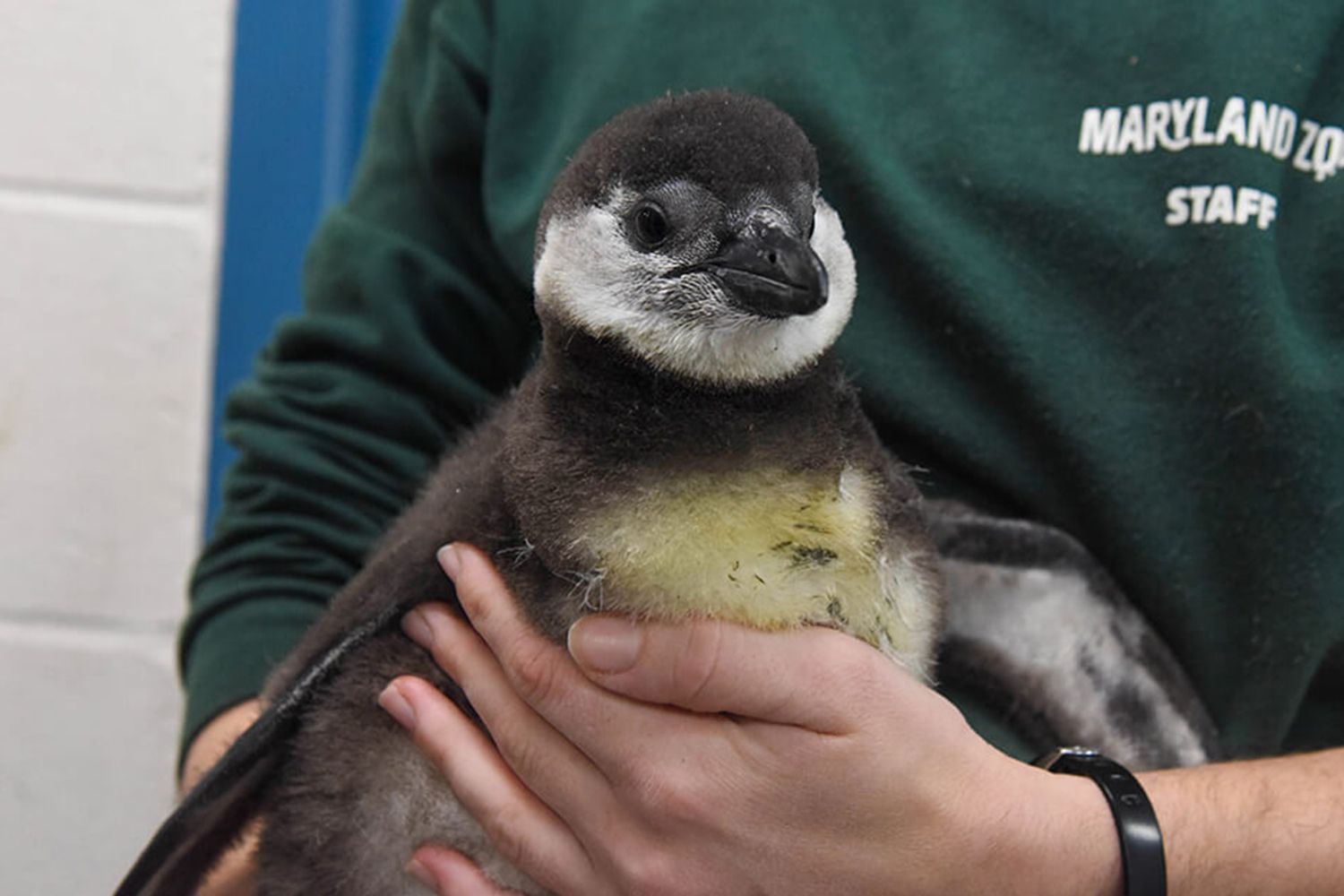
Photo of an African penguin chick at Maryland Zoo named Cayenne.
Maryland Zoo
The theme for this year’s names is fruits and vegetables. The first two names unveiled by the zoo are Kiwi and Cayenne, while more names are expected to be revealed in the coming weeks.
Mimicking the spring-to-summer breeding season in their native South Africa and Namibia, the African penguins’ breeding season at the zoo begins in mid-September and lasts until the end of February.
The Maryland Zoo is home to the largest colony of African penguins in North America, with more than 1,000 hatched at the zoo since 1967, according to the zoo’s website.
While most of the hatched penguin chicks remain in Baltimore, the animals have also helped establish new colonies at zoos and aquariums in 35 states and Canada, the zoo’s announcement states.
Photo of an African penguin chick at Maryland Zoo named Kiwi.
Maryland Zoo
However, Maryland Zoo bird curator Jen Kottyan said in a press statement that “the number of African penguins in the wild is dropping” despite being a protected species under the International Union for Conservation of Nature.
Kottyan is also the program leader for the African Penguin Species Survival Plan (SSP), overseeing African penguin breeding programs at zoos accredited by the Association of Zoos and Aquariums (AZA).
Never miss a story — sign up for PEOPLE’s free daily newsletter to stay up-to-date on the best of what PEOPLE has to offer, from celebrity news to compelling human interest stories.
“If we can fix the issues these birds face in the wild, such as overfishing and habitat loss, one day penguins from our highly managed SSP could be sent to their native South Africa and Namibia to repopulate the wild colonies, which means every chick hatched here is important to this species’ global survival,” said Kottyan.

There is an "active shooter" at a US army base, with people urged to ‘stay inside’
SOURCE PAGE


A powerful earthquake struck off northern Japan, injuring 23 people and unleashing a tsunami.
The 7.5-magnitude quake struck at about 11.15pm local time, around 80 kilometers off the coast of Aomori prefecture.
Japan’s Fire and Disaster Management Agency said 23 people were injured, including one seriously, with most hurt by falling objects.
A road is congested with cars heading for higher ground in Tomakomai City December 8, 2025 after a magnitude 7.6 earthquake. Pics: AP
A tsunami of 70cm was measured just south of Aomori, in Kuji port, Iwate prefecture, while levels of up to 50cm struck elsewhere in the region, the Japan Meteorological Agency said.
“I’ve never experienced such a big shaking,” said Nobuo Yamada, who owns a convenience store in Hachinohe, Aomori, in an interview with public broadcaster NHK.
Earlier on, the meteorological agency issued an alert for potential tsunami surges of up to 3m/10ft, with 90,000 residents ordered to evacuate.
Residents were urged by chief cabinet secretary Minoru Kihara to go to higher ground or seek shelter until advisories were lifted.
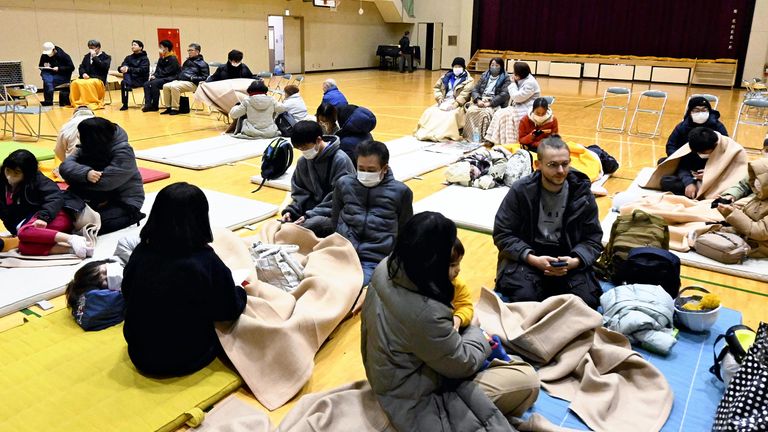
People sheltering today in Kamaishi Elementary School in Kamaishi City, Miyagi Prefecture. Pic: AP
He said about 800 homes were without electricity, and that the Shinkansen bullet trains and some local lines were suspended in parts of the region.
Some 480 residents took shelter at the Hachinohe Air Base, defence minister Shinjiro Koizumi said, with 18 defence helicopters mobilised for damage assessments.
While Satoshi Kato, vice principal of a public high school in the same town, encountered traffic jams and car accidents en-route to the school as panicked people tried to flee.
Japan has recent experience of the perils of earthquakes – one in 2011 unleashed a tsunami that killed some 20,000 people and triggered a nuclear meltdown at the Fukushima Daiichi Nuclear Power Plant.

The earthquake warning off the coast of Aomori Prefecture, Japan. Pic: AP
Today’s quake caused about 450 litres of water to spill from a spent fuel cooling area at the Rokkasho fuel reprocessing plant in Aomori, the Nuclear Regulation Authority said.
But water levels remained within the normal range and there was no safety concern, the authority added.
Read more:
Tokyo overtaken as world’s biggest city
Japan sends in troops over deadly bear attacks
The Japanese government has now lifted all remaining tsunami advisories, but warned people to remain alert for another week in case of aftershocks.
Satoshi Harada, from the meteorological agency’s earthquake and volcano division, cautioned that the 2011 quake could repeat itself.
“You need to prepare, assuming that a disaster like that could happen again,” he said.
WORLD NEWS
Waymo runs into safety concerns and competition as it expands in the US | Automotive Industry


San Francisco, the United States: The sidewalk outside Majed Zeidan’s grocery store in San Francisco’s Mission District has stayed filled with flowers, candles, memorials and pictures since his cat was crushed under a Waymo in late October. A month later, a Waymo reportedly crushed a dog.
Amid the pictures of the cat, a visitor had placed a poster that said, “save the cat, kill the car”. That’s when Zeidan knew Kit Kat, his bodega cat, had become the face of the simmering discontent over San Francisco’s growing number of self-driving cars.
Recommended Stories
list of 4 itemsend of list
Two years since it got approved to ply its driverless cars, Waymo, owned by Google parent company Alphabet, has become a part of San Francisco’s landscape.
Residents became increasingly comfortable riding one, costumed Halloween parade goers clambered on its rooftops and danced, and pedestrians occasionally banged its bonnet to get it to give way to them.
In November, Waymo got approvals for its biggest expansions so far – to ply on the Bay Area’s freeways and pick up passengers from San Jose International Airport. Waymo also started, or is about to start, services in Dallas, Houston, Orlando, Miami and Washington, DC, in the last few weeks.
But the expansion comes with heightened safety concerns and new competition. Amazon’s Zoox driverless vehicle has begun running in the Mission, too. And Zeidan says the Kit Kat incident opened pent-up resentment over the melding of the new entrants into the city’s hilly, colourful streets.
Around Kit Kat’s memorials is a poster with a barcode to sign a petition, moved by Jackie Fielder, the area’s representative to the San Francisco Board of Supervisors, that autonomous vehicles should have oversight from city authorities and not just state authorities.
“Waymo is operating in something of a laissez-faire environment right now,” says California State Senator Dave Cortese, who chairs the state assembly’s transportation committee and whose district encompasses San Jose and other Silicon Valley cities where Waymo services recently began.
Currently, the California Public Utilities Commission (CPUC) and Department of Motor Vehicles (DMV) regulate the testing and approval process for autonomous vehicles.
“My sense is that Waymo’s ability to grow without legislation will not last too long. I just hope it doesn’t take a tragedy for it to happen,” says Cortese, who had also tabled a bill in the California State Assembly to bring autonomous vehicles under the ambit of local authorities, including firefighters and police.
Waymo’s website says its vehicles have been in 91 percent fewer accidents, and 92 percent less accidents involving pedestrian injuries than vehicles driven by people. Waymo did not respond to a request for comment for this story. Kit Kat, Waymo said in a statement at the time of the cat’s death, “darted under our vehicle as it was pulling away. We send our deepest sympathies to the cat’s owner and the community who knew and loved him.”
Steve Larson, a former executive director of the CPUC, says Waymo’s stellar safety record and successful rollout is at least partly because regulators “gave Waymo good advice and [the two organisations] took their time in getting things right”.
Karl Brauer, an automation writer and analyst with iSeeCars.com, says he was “sceptical” that before the end of the decade, self-driving cars would be as widespread as they are now. Better sensors and an improved ability to process information from videos have led to the success of Waymo, in particular, Brauer says.
But Waymo’s biggest expansion so far will be tested as more autonomous vehicles hit the road and Waymo itself drives further afield into uncharted territory.
Waymo is allowed to ply on the Bay Area’s freeways and pick up passengers from San Jose International Airport [File: Godofredo A Vasquez/AP Photo]
‘No driver to scream at’
Zeidan had kept Kit Kat in his grocery store, Randa’s Market, for six years. “He recognised regular customers and followed them around,” Zeidan recalled. “They rubbed his tummy.” From his bed, Kit Kat kept an eye on the store’s entryway on busy 16th Street, with its independent movie theatre, bars and restaurants. He became known as “mayor of 16th Street”.
“I would rub his butt and his tail would go up,” recalled one regular customer, at Randa’s to buy beer on credit. “He would affectionately paw at us.”
On October 27, Zeidan got a call a little before midnight from a bartender at a neighbourhood bar saying Kit Kat had been in an accident. A Waymo had stopped outside his closed store and Kit Kat had crouched under it. A lady nearby spotted Kit Kat and called her to come out, but she didn’t. She tapped the car so it would not move.
“There was no driver to scream at,” Zeidan says. Soon, the car moved, crushing the cat underneath. On Thursday, Zeidan released security footage confirming how Kit Kat had died.
Scott Moura, professor and director of the Energy, Controls, & Applications Lab at the University of California, Berkeley, says the Kit Kat accident represents a challenge for autonomous vehicle software development.
“Perception, prediction and planning are the key aspects of this software, and the bodega cat incident is indicative of perception since the car could not make out the cat was there,” Moura says.
“The hardest part, though, might be predicting what to do when it does know.”
This may have been the case with the dog, since it was said to be unleashed and may have run onto the street, according to media reports, which said the dog had died.
Waymo said in a public statement, “Unfortunately, a Waymo vehicle made contact with a small, unleashed dog in the roadway. We are dedicated to learning from this situation and how we show up for our community as we continue improving road safety in the cities we serve.”
‘Driving is social’
Moura expects perception and prediction issues to come up more as more autonomous vehicles come onto city streets and freeways and more cities with different weather.
Brauer of iSeeCars.com says that while Waymo has been in San Francisco and expanded mostly to warmer cities such as Dallas and Miami, being in cities with snow could clog its sensors and make perception hard. “Weather will be a big factor for Waymo sensors and its expansion plans,” he says.
 The death of Kit Kat has revealed the pent-up anger against self-driving cars and how they are changing San Francisco’s streets [Saumya Roy/Al Jazeera]
As for prediction, “driving is social”, Moura says, noting, “we want cars to anticipate and act accordingly”.
He has looked at what kinds of signals autonomous vehicles can give people, leading to better coordination between the two. This could include LED lights or voice announcements that the car is turning or dropping off passengers – signals that Moura found to be valuable.
This could lead self-driving cars to look and feel quite different from conventional cars. Some such unique features have been included in the Amazon-backed Zoox vehicle that is also running in a few San Francisco areas, including the Mission, since November. There is a waitlist of customers to try it. Zoox, which does not resemble a traditional car, does not have a steering wheel and can seamlessly move forward and backward.
Waymo is also adding custom-made vehicles from Zeekr, a Chinese carmaker, and Hyundai, along with its more than 1,500-car-strong fleet from Jaguar.
Cuts to public transport
But the entry of Zoox, along with the expansion of Waymo, has also raised concerns about the nature of San Francisco streets and the city itself.
“All the issues we’ve had will now be exacerbated,” says Claire Amable, director of advocacy at the San Francisco Bicycle Coalition, which pushes for the city to encourage sustainable transport.
In 2023, she wrote to the CPUC after an incident when she was leading a children’s cycling trip and a Waymo came up close to the children at the back of the group. The organisers had to bang on the roof of the car to stop it before it hit the children.
Even as self-driving cars become more common, public transport is underfunded and needs to be prioritised, Amable told Al Jazeera.
In August, for instance, city authorities allowed autonomous cars and ride-hailing services on Market Street, the city’s commercial hub, after three years of it being car free. At the same time, bus services have been reduced on the street due to budget cuts.
A spokesperson for the city’s transit authority declined a request to comment for this story.
 Amazon’s Zoox self-driving vehicle is posing some competition to Waymo [File: John Locher/AP Photo
Amable and others have pushed for a phased rollout of self-driving cars. But easy availability of Robotaxis may in fact hurt an already underfunded public transit system as well as sustainable transportation such as cycling.
Joel Smith had always cycled to work at a well-known city grocery store. But when he sent his bike for repairs last month, Smith downloaded the Waymo app and took his first ride. “It was such a comfortable ride and the best thing is I could play whatever music I want, at the volume I want.” He plans to mix Waymo rides with biking now that his bike is back.
Brauer says the rapid development of artificial intelligence to quickly process not just language but video in real time has led to the faster-than-expected success of self-driving cars. It meant Waymo could see incoming traffic or people very well and drive accordingly without mishaps. Cruise autonomous vehicles from General Motors – cars that launched along with Waymo – had been in an accident with a pedestrian in 2023 , and have since discontinued service. But Waymo’s safety record allowed it to expand, and it has done so in a measured way.
“They may be safer, but that doesn’t mean the government should not do its job,” says Senator Cortese, who is considering bringing back a version of a previous bill asking for more local regulation for Robotaxis. “Regulation helps companies to develop products safely and reduce liability.”
Brauer believes that constant improvement in the ability to see and process input from the road means that by 2028-2030, “we will be surprised to see the number of non-human cars across the US”, and “this will be the inflexion point where this became possible”.
Meanwhile, Zeidan has made baseball caps and T-shirts that say #Remembering Kit Kat to sell at his store. He believes the merchandise memorialises Kit Kat but also brings together the city’s bubbling opposition to the rapid growth of self-driving cars.

The government of Benin confirmed on Monday that there had been “casualties on both sides” after an attempted coup was put down with the help of foreign military intervention at the weekend — but the leader of the putsch reportedly remains on the run.
“The small group of soldiers who organized the mutiny planned to remove the president of the republic from office, to subjugate the Republic’s institutions and to challenge the established order,” said the government’s secretary general, Edouard Ouin-Ouro.
“They initially attempted to neutralize or kidnap certain generals and senior army officers,” he continued, naming army chief-of-staff General Abou Issa and National Guard chief-of-staff Faizou Gomina as those abducted from the Togbin military base.
Both men were eventually released in Tchaourou, a central city located more than 350 kilometers (215 miles) from Cotonou, the government said, while the army “surrounded the Togbin base” and launched “targeted, surgical airstrikes… without exposing surrounding neighborhoods” to danger.
Benin’s armed forces foil coup attempt
To view this video please enable JavaScript, and consider upgrading to a web browser that supports HTML5 video
Benin coup leader Tigri still at large
As of Monday, at least 14 people had been arrested in connection with the attempted uprising, according to the government.
But the whereabouts of would-be coup leader, Lieutenant Colonel Pascal Tigri, a former artillery officer and member of President Talon’s protection detail, remained unknown, as did the fate of a number of hostages.
Talon described the coup late Sunday as a “senseless adventure,” and vowed to punish mutineers and ensure the safety of hostages. He didn’t disclose their identities, and it wasn’t clear how many were held, but some are believed to be senior military officers.
Early on Sunday morning, “violent clashes” had broken out between army mutineers and the Republican Guard around the residence of President Patrice Talon in Cotonou, the economic capital of Benin.
The rebels reportedly got close enough for Talon to witness the fighting at first hand, according to an official cabinet account which said that the fatalities included the wife of the president’s military chief-of-staff, General Bertin Bada, who was himself fatally wounded in a separate, earlier assault.
Meanwhile, army rebels calling themselves the Military Committee for Refoundation (Comité militaire pour la refondation), or CMR, led by Lieutenant Colonel Tigri stormed the national television station and appeared in a broadcast announcing the removal of President Talon, the dissolution of the government and the suspension of state institutions.
The rebels reportedly got close enough for President Talon to witness the fighting at first handImage: AP Photo/picture alliance
Why did Nigeria and ECOWAS intervene?
But the coup was put down by Beninese troops with the help of air and ground forces from neighboring Nigeria, deployed as part of an Economic Community of West African States (ECOWAS) operation which also included forces from Ghana, Ivory Coast and Sierra Leone.
Nigeria and the ECOWAS regional bloc hadn’t intervened in a member state since 2017, when it sent troops to Gambia to force then President Yahya Jammeh to vacate power following his election loss.
Recent West African coups in Mali, Burkina Faso, Chad, Guinea and Gabon didn’t lead to interventions, prompting analysts to criticize ECOWAS for a lack of consistency.
“The coup in Benin is one too many,” Oluwole Ojewale, a senior security researcher at Dakar-based Institute for Security Studies, told the Associated Press (AP). “Nigeria cannot afford to be encircled by hostile governments.”
Edited by: Dmytro Hubenko