
SCIENCE
Iain Douglas-Hamilton obituary | Zoology


The British scientist Iain Douglas-Hamilton, who has died aged 83, became the world’s leading authority on the behaviour of African elephants and played a vital part in ensuring their conservation.
His efforts to save the African elephant began in 1965 when, as an Oxford zoology graduate who had also just received his pilot’s licence, he flew his Piper Pacer bush plane from Nairobi down to Tanzania’s pocket-sized Lake Manyara national park. The challenge he had accepted at the age of 23 was how to solve the problem of 450 elephants confined in a space too small to support them.
For five years, having built a camp in an area renowned for its tree-climbing lions, he lived among Manyara’s elephants, first teaching himself to recognise them as individuals in order to make the first systematic study of their behaviour in the wild.
He was utterly fearless, a quality that stood him in good stead, as his work was not without risks. Often he was forced to climb trees to avoid being killed by angry elephants, such as the formidable matriarch he called Boadicea, and on three occasions his Land Rover was skewered by their tusks. But eventually they came to accept him, while remaining truly wild.
It was also during his sojourn in Manyara that Oria Rocco came to visit him from her family’s farm on the shores of Lake Naivasha in Kenya. Oria not only fell in love with Manyara and its elephants – she stayed and married the dashing young scientist in 1971 and they had two daughters, Saba and Dudu. The story of their early years together, Among the Elephants (1975), which became a bestseller, was illustrated by Oria’s superb photographs – including a picture of her introducing Saba as a babe in arms to a wild cow elephant and its calf.
Having become the first scientist to study the elephants’ social interactions, Iain came to believe that understanding their seasonal migratory movements was the key to their conservation. But the growing menace of ivory poaching soon caused him to devote the rest of his life to staunching the flow of tusks that was bleeding Africa dry.
Douglas-Hamilton, founder of Save the Elephants, at the Kenya Wildlife Training School in 2011, as confiscated ivory is burnt. Photograph: Sayyid Azim/AP
Although elephant poaching had been endemic in Africa, the price of ivory had remained stable until 1969, but then suddenly took off as tusks became a commodity, to be stored and traded like gold. This proved disastrous for Africa’s great elephant herds, and Kenya became the first country to feel the full effect of the ivory price hike as the shifta – Somali poachers armed with semi-automatic weapons – swept down into Tsavo national park, the country’s biggest elephant stronghold.
I first met Iain in the late 1970s and it was at his insistence that I went to Tsavo in 1988 to report for the Sunday Times on what became known as the ivory wars. By then, the poaching scourge had already spread far beyond Kenya, reaching into every corner of the elephants’ range and reducing their numbers from 1.3m to 600,000 in a decade.“Make no mistake,” he declared. “What we are witnessing is the greatest animal tragedy of this century.”
To prove his point he had begun carrying out pan-African aerial surveys that revealed the extent of the crisis for the first time. In 1980 he was made honorary chief warden in Uganda, where he introduced air and ground patrols against Sudanese poachers who sometimes shot at his plane, and in 1988 he was awarded the Order of the Golden Ark by Prince Bernhard of the Netherlands for alerting the world to the sheer scale of the elephant killing. He was appointed CBE in 2015.
It emerged that 90% of all ivory stocks had been obtained illegally, and in July 1989, the Kenyan president Daniel arap Moi publicly torched a 12-tonne pyre of tusks worth $6m. So powerful was the case put forward by Iain and his fellow conservationists that Cites (the Convention on International Trade in Endangered Species) was compelled to ban the international trade in ivory in 1990. The full story is told in Battle for the Elephants (1992), written by Iain and Oria.
Douglas-Hamilton fits a GPS collar on to an elephant in Meru national park, 1998. Photograph: Jean-Marc Bouju/AP
Although the ban did not put a complete end to poaching, it bought Africa’s dwindling elephant herds a precious reprieve, a time in which their numbers might increase again, and to this end in 1993 Iain moved to Samburu national park in northern Kenya and founded Save the Elephants, a conservation charity working to secure a future for the species by enabling them to coexist alongside local communities. There he pioneered techniques of tracking collared elephants by satellite, an invaluable tool to increase their protection and avoid possible conflicts with people.
Born in Donhead St Andrew, Wiltshire, Iain was the son of Lord David Douglas-Hamilton, who had commanded a Spitfire squadron during the second world war and was killed in a crash in 1944, and Prunella Stack, the head of the Women’s League for Health and Beauty, a fitness organisation founded by her mother in the 1930s. He was educated at Gordonstoun school in Scotland and Oriel College, Oxford, where he gained a BSc in biology and a DPhil in zoology before realising his childhood dream of moving to Kenya.
In 2008 Iain almost came to grief at Samburu when he was charged by a cow elephant that then tried to impale him as he lay on the ground. Somehow he emerged unscathed, with little damage except for a broken pair of spectacles. In the event it was not elephants that ended his life but a swarm of bees, which attacked him while he was walking back to his home at Naivasha. He was flown to Cape Town for treatment but never recovered.
He is survived by Oria, Saba and Dudu, and six grandchildren, Bundi, Selkie, Mayan, Luna, Cosimo and Luca.
Iain Douglas-Hamilton, zoologist and conservationist, born 16 August 1942; died 8 December 2025
SCIENCE
Synthetic chemicals in food system creating health burden of $2.2tn a year, report finds | Pfas

Scientists have issued an urgent warning that some of the synthetic chemicals that help underpin the current food system are driving increased rates of cancer, neurodevelopmental conditions and infertility, while degrading the foundations of global agriculture.
The health burden from phthalates, bisphenols, pesticides and Pfas “forever chemicals” amounts to up to $2.2tn a year – roughly as much as the profits of the world’s 100 largest publicly listed companies, according to the report published on Wednesday.
Most ecosystem damage remains unpriced, they say, but even a narrow accounting of ecological impacts, taking into account agricultural losses and meeting water safety standards for Pfas and pesticides, implies a further cost of $640bn. There are also potential consequences for human demographics, with the report concluding that if exposure to endocrine disruptors such as bisphenols and phthalates persists at current rates, there could be between 200 million and 700 million fewer births between 2025 and 2100.
The report is the work of dozens of scientists from organisations including the Institute of Preventive Health, the Center for Environmental Health, Chemsec, and various universities in the US and UK, including the University of Sussex and Duke University. It was led by a core team from Systemiq, a company that invests in enterprises aimed at fulfilling the UN sustainable development goals and the Paris agreement on climate change.
The authors said they had focused on the four chemical types examined because “they are among the most prevalent and best studied worldwide, with robust evidence of harm to human and ecological health”.
One of the team, Philip Landrigan, a paediatrician and professor of global public health at Boston College, called the report a “wake-up call”. He said: “The world really has to wake up and do something about chemical pollution. I would argue that the problem of chemical pollution is every bit as serious as the problem with climate change.”
Human and ecosystem exposure to synthetic chemicals has surged since the end of the second world war, with chemical production increasing by more than 200 times since the 1950s and more than 350,000 synthetic chemicals currently on the global market.
Three years ago, researchers from the Stockholm Resilience Centre (SRC) concluded that chemical pollution had crossed a “planetary boundary”, the point at which human-made changes to the Earth push it outside the stable environment of the past 10,000 years, the period in which modern human civilisation has developed.
Unlike with pharmaceuticals, there are few safeguards to test for the safety of industrial chemicals before they are put into use, and little monitoring of their effects once they are. Some have been found to be disastrously toxic to humans, animals and ecosystems, leaving governments to pick up the bill.
This report assesses the impact of four families of synthetic chemicals endemic in global food production. Phthalates and bisphenols are commonly used as plastic additives, employed in food packaging and disposable gloves used in food preparation.
Pesticides underpin industrial agriculture, with large-scale monoculture farms spraying thousands of gallons on crops to eliminate weeds and insects, and many crops treated after harvest to maintain freshness.
Pfas are used in food contact materials such as greaseproof paper, popcorn tubs and ice-cream cartons, but have also accumulated in the environment to such an extent they enter food via air, soil and water contamination.
All have been linked to harms including endocrine (hormone system) disruption, cancers, birth defects, intellectual impairment and obesity.
Landrigan said that during his long career in paediatric public health he had seen a shift in the conditions affecting children. “The amount of disease and death caused by infectious diseases like measles, like scarlet fever, like pertussis, has come way down,” he said. “By contrast, there’s been this incredible increase in rates of non-communicable diseases. And of course, there’s no single factor there … but the evidence is very clear that increasing exposure to hundreds, maybe even thousands of manufactured chemicals is a very important cause of disease in kids.”
Landrigan said he was most concerned about “the chemicals that damage children’s developing brains and thus make them less intelligent, less creative, just less able to give back to society across the whole of their lifetimes”.
“And the second class of chemicals that I worry really worried about are the endocrine-disrupting chemicals,” he added. “Bisphenol would be the classic example, that get into people’s bodies at every age, damage the liver, change cholesterol metabolism, and result in increased serum cholesterol, increased obesity, increased diabetes, and those internally to increase rates of heart disease and stroke.”
Asked whether the report could have looked beyond the groups of chemicals studied, Landridge said: “I would argue that they’re only the tip of the iceberg. They’re among the very small number of chemicals, maybe 20 or 30 chemicals where we really have solid toxicologic information.
“What scares the hell out of me is the thousands of chemicals to which we’re all exposed every day about which we know nothing. And until one of them causes something obvious, like children to be born with missing limbs, we’re going to go on mindlessly exposing ourselves.”

China continues to make big advances in the final frontier.
You may like
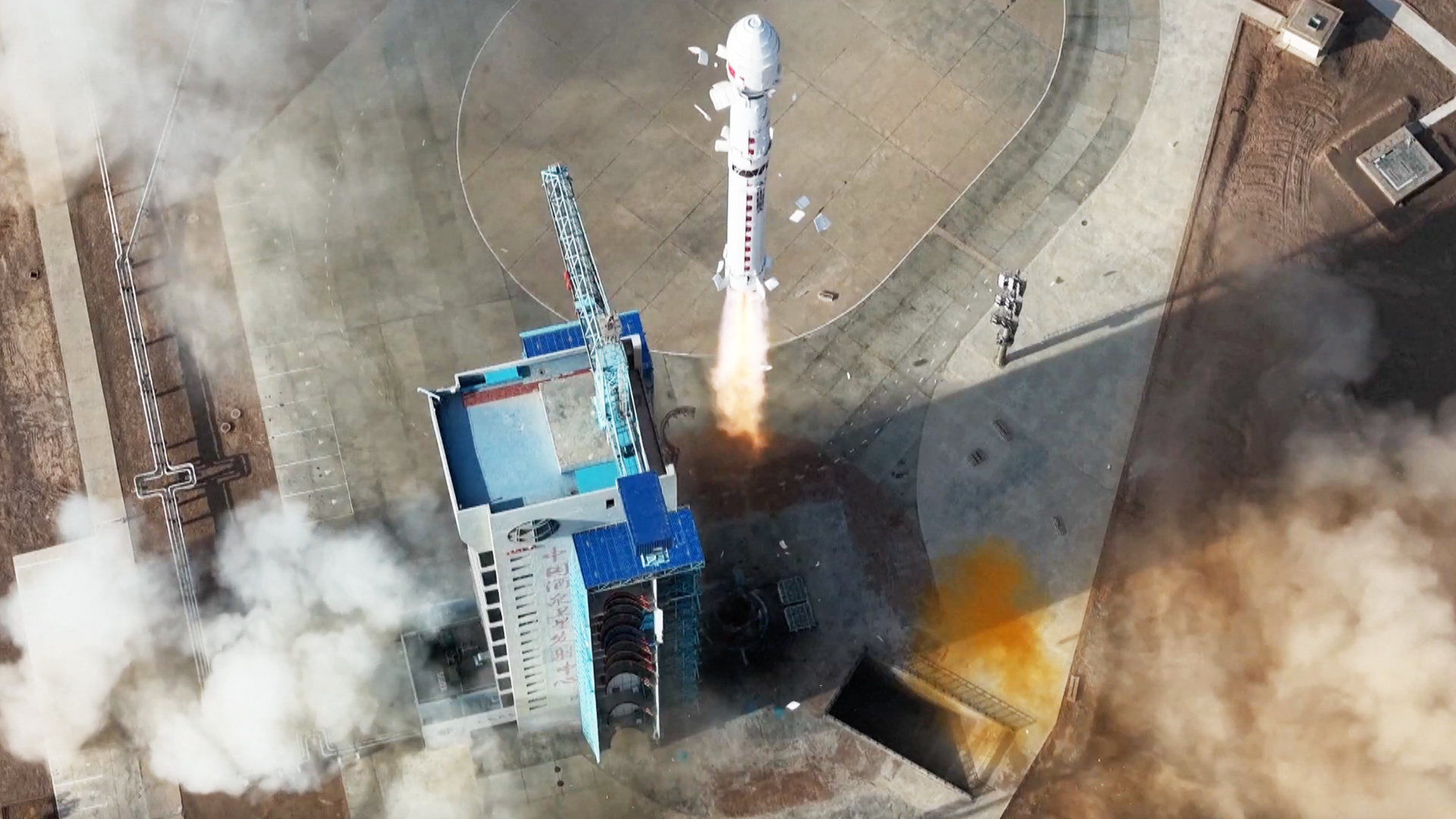
A Chinese Long March 4B rocket launches the Yaogan 47 satellite to space from Jiuquan Satellite Launch Center on Dec. 9, 2025. (Image credit: CCTV)
The flurry began Monday (Dec. 8) at 5:11 p.m. EST (2211 GMT), when a Long March 6A rocket lifted off from Taiyuan Satellite Launch Center in northern China. That mission successfully sent a batch of broadband satellites to low Earth orbit for the Guowang (“national network”) megaconstellation.
Then, at 10:41 p.m. EST on Monday (0341 GMT on Tuesday, Dec. 9), the mysterious Yaogan 47 spacecraft took flight atop a Long March 4B from Jiuquan Satellite Launch Center in the Gobi Desert. Yaogan 47 is a classified satellite that will be used by the Chinese military.
The tripleheader wrapped up on Tuesday at 10:08 a.m. EST (1508 GMT) with the launch of another classified satellite, known as TJSW-22, on a Long March 3B from Xichang Satellite Launch Center in western China.
All three of these launches took place on Tuesday Beijing time, as noted by the China Aerospace Science and Technology Corporation (CASC), the state-owned entity that operates the Long March family of rockets.
“This was the third successful launch of China’s Long March rockets today, setting a new record of three launches in one day,” CASC officials said in a statement on Tuesday, referring to the TJSW-22 liftoff (in Mandarin; translation by Google).
A total of five orbital launches have now occurred in the 24-hour stretch beginning with Monday’s Guowang liftoff. The other two were SpaceX Falcon 9 missions — a Monday evening flight lofted a batch of the company’s Starlink satellites and the NROL-77 launch for the U.S. National Reconnaissance Office happened on Tuesday afternoon.
That’s not a 24-hour record, however: Between April 28-29 of this year, six different rockets launched toward orbit in a span of just 18 hours — a Long March 5B, two Falcon 9s, a United Launch Alliance Atlas V, an Arianespace Vega C and Alpha, a vehicle built and operated by Texas-based company Firefly Aerospace. All but Alpha were successful.

An incredibly luminous star system that has long baffled astronomers could soon light up the sky with the nuclear brilliance of thousands of suns, new research suggests. When that happens, the results may be visible from Earth with the naked eye — in day or night.
The star system, called V Sagittae, is composed of a white dwarf — the dense core of a dead, sun-like star — and a more-massive stellar companion, located about 10,000 light-years away, in the constellation Sagitta, the arrow. The voracious white dwarf is gorging on material from its companion “at a rate never seen before,” the team said in a statement.
You may like
“The matter accumulating on the white dwarf is likely to produce a nova outburst in the coming years, during which V Sagittae would become visible with the naked eye,” Pablo Rodríguez-Gil, a professor at the Institute of Astrophysics of the Canary Islands in Spain and co-author of the study, said in a statement.
Understanding the beast
An illustration of a nova: an explosion that occurs when a white dwarf star siphons too much material from its larger stellar companion. (Image credit: International Gemini Observatory/NOIRLab/NSF/AURA/M. Garlick, M. Zamani)
In a study published in November in the journal Monthly Notices of the Royal Astronomical Society, an international research team led by the University of Turku in Finland analyzed the light emitted by V Sagittae to better understand exactly what type of beast it may be.
These data were gathered over a 120-day observation period by the X-Shooter spectrograph at the European Southern Observatory’s Very Large Telescope, situated at an altitude of 8,600 feet (2,600 meters) atop Cerro Paranal in Chile’s Atacama Desert.
Spectrographs like X-Shooter collect incoming light from celestial objects and then separate that light into its constituent wavelengths. This provides a spectrum that reveals the object’s chemical composition, since each atom and molecule absorbs and reflects a certain wavelength of light. For perspective, think of how a prism splits white light into its constituent colors to produce a rainbow.
This spectral data helped the researchers re-analyze V Sagittae’s characteristics. Previously, in a study from 1965, astronomers calculated that its two stars were 0.7 and 2.8 solar masses, though this is a controversial conclusion.
To constrain stellar sizes, this more recent study considered factors like orbital period to suggest that the entire system may be below 2.1 solar masses, with both the white dwarf and its companion each weighing in at around 1 solar mass.
Phil Charles, a professor emeritus of astronomy at the University of Southampton and co-author of the study, described the confusion surrounding this “very important system.” The uncertainty stems from V Sagittae’s complicated, constantly fluctuating light emissions, which are “more likely due to fast outflows” rather than the stars’ orbital motions, making it hard to pin down their sizes.
You may like
“From our study we show that no one has yet been able to uniquely identify the orbital motion of each component, and hence we don’t yet have a good measure of each star’s mass.” Charles told Live Science via email.
An orbiting nuke
The researchers also identified V Sagittae as a supersoft X-ray source (SSS), meaning it generates lower-energy X-rays compared with hard sources like active black holes and colliding neutron stars. Classical SSS are composed of an accreting white dwarf and a more massive star whose gas is overspilling and falling onto the white dwarf.
V Sagittae’s prodigious gravitational appetite is causing a sustained thermonuclear reaction on the white dwarf’s surface, turning it into an orbiting nuke and the brightest SSS in the galaxy, researchers said in a statement.
In fact, even during its fainter phases V Sagittae is 100 times brighter than other variable star systems. The speed of the infalling material in the white dwarf’s accretion disk shifts dramatically and unpredictably, sometimes in just days, as it struggles to consume all the material it pilfers from its partner, the team said in a separate statement.
As a result, a significant amount of material has escaped and formed a ring, or halo, of gas that encircles both stars, composing a “circumbinary disk” with a radius that may span about two to four times the separation between the two stars.
A daytime supernova
V Saggitae’s chaotic accretion and extreme brightness are signs of its imminent, violent death, which will be prefaced by an explosive appetizer, as it were, offering a promising scenario for hopeful stargazers: a nova explosion.
Novae occur when an accreting white dwarf engulfs too much material and then explosively ejects it from their surface. These stellar explosions do not destroy their white dwarfs but are nonetheless stunning, with the average nova shining hundreds of thousands of times as brightly as the sun. Since they do not destroy their white dwarfs, these novae can reoccur across thousands or millions of years.
Yet this spectacular sight will only be a prelude to the main event. When the stars spiral into each other and smash together, they’ll produce a “supernova explosion so bright it’ll be visible from Earth even in the daytime,” adds Rodríguez-Gil.
This ultimately brilliant finale may occur as early as 2067, according to a 2020 study from Louisiana State University, which predicted V Saggitae’s demise based on the decreasing orbital period of its stars. Charles concludes that if the “[observed] period decline continues then it must happen, but stellar evolution is hard to predict exactly, so that might easily change!”
So keep an eye tuned toward Sagitta for a nova and mark your calendars for the supernova that will spectacularly spell the end of one of our galaxy’s most tantalizing star systems.

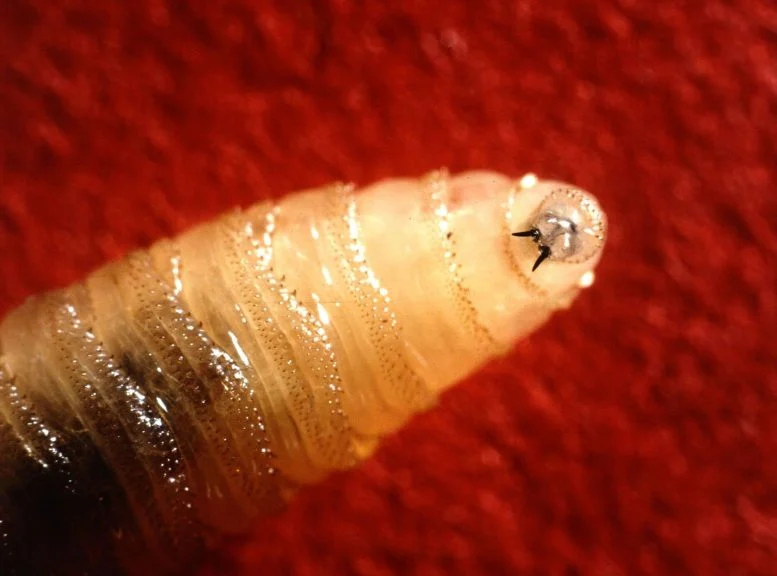
Researchers are trapping and tracking the New World screwworm to detect it early before it threatens livestock. The previous arrival of the New World screwworm in the U.S. caused major losses to livestock and led to an eradication effort that lasted for decades. Researchers at the University of California Riverside are now taking early action […]
SOURCE PAGE
SCIENCE
This 7-hour cosmic explosion is the longest gamma-ray burst ever seen: Could it be from an elusive class of black hole?


Astronomers have spotted the longest gamma-ray burst ever seen, a cosmic explosion that lasted seven hours — and they determined it could be the work of a black hole destroying a star.
Gamma-ray bursts (GRBs) are considered to be the most powerful cosmic explosions since the Big Bang, but when GRB 250702B was first detected on July 2, 2025 by NASA’s Fermi Gamma-ray Space Telescope, it quickly stood out among the around 15,000 GRBs detected thus far. The blast could be the result of an elusive intermediate-mass black hole devouring a star.
You may like
“The initial wave of gamma rays lasted at least 7 hours, nearly twice the duration of the longest GRB seen previously, and we detected other unusual properties,” team member Eliza Neights of George Washington University and NASA’s Goddard Space Flight Center in Greenbelt, Maryland, said in a statement. “This is certainly an outburst unlike any other we’ve seen in the past 50 years.”
Following up on Fermi’s initial detection, astronomers turned to the Very Large Telescope (VLT) located on Cerro Paranal in the Atacama desert of northern Chile. This revealed the location from which the GRB erupted, a galaxy billions of light-years away from the Milky Way.
Investigating the afterglow of GRB 250702B with three of the world’s most powerful ground-based telescopes, the Víctor M. Blanco 4-meter Telescope and the twin 8.1-meter International Gemini Observatory telescopes, a team of researchers led by Jonathan Carney, of the University of North Carolina at Chapel Hill, found clues as to what caused this record-breaking explosion.
“The ability to rapidly point the Blanco and Gemini telescopes on short notice is crucial to capturing transient events such as gamma-ray bursts,” Carney said in a statement. “Without this ability, we would be limited in our understanding of distant events in the dynamic night sky.”
What caused the longest gamma-ray burst ever recorded?
This research suggested that the initial gamma-ray signal from GRB 250702B emerged from a narrow, near-light-speed jet of plasma slamming into surrounding gas and dust. This indicates that the galaxy that is home to this event is packed with a vast amount of dust around the point of emission. The team also found that the host galaxy of GRB 250702B is more massive than those of other GRBs.
One current theory about the creation of GRBs suggests they happen when massive blue supergiant stars collapse at the end of their lives, when an extreme neutron star called a magnetar is born, or when a black hole rips apart a star in a so-called “tidal disruption event” (TDE). However, GRB 250702B doesn’t seem to completely fall in line with any of these scenarios.
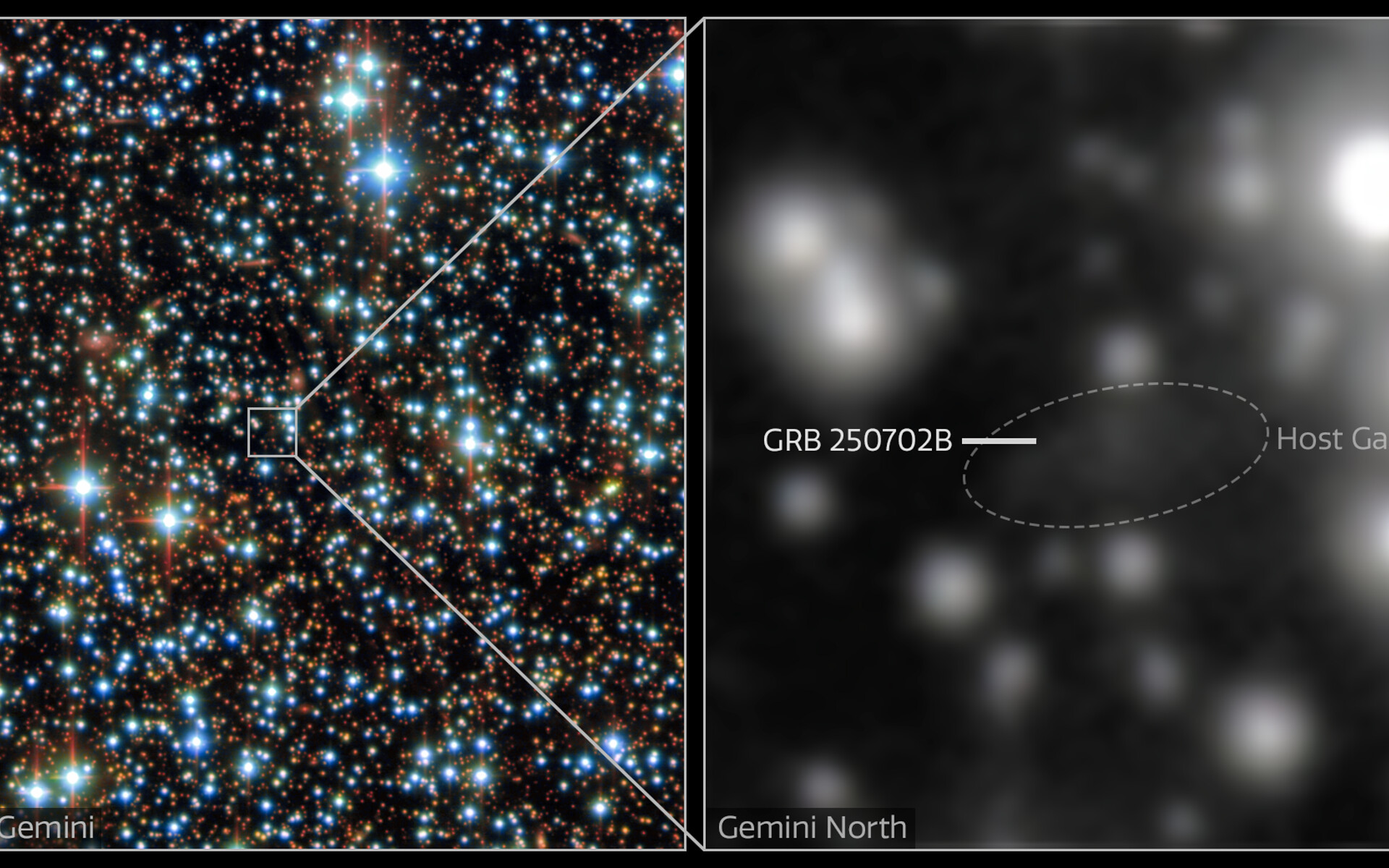
Left: The stellar field around the host galaxy of GRB 250702B — the longest gamma-ray burst that astronomers have ever observed. It comprises observations from the Gemini North telescope, one half of the International Gemini Observatory, funded in part by the U.S. National Science Foundation and operated by NSF NOIRLab, as well as the U.S. Department of Energy-fabricated Dark Energy Camera, mounted on the NSF Víctor M. Blanco 4-meter Telescope at Cerro Tololo Inter-American Observatory, a Program of NSF NOIRLab.Right: Close-up view of the host galaxy taken with the Gemini North telescope. This image is the result of over two hours of observation, yet the host galaxy appears extremely faint due to the large amount of dust surrounding it. (Image credit: International Gemini Observatory/CTIO/NOIRLab/DOE/NSF/AURAImage processing: J. Miller (International Gemini Observatory/NSF NOIRLab), M. Zamani & D. de Martin (NSF NOIRLab))
Researchers currently have three ideas of what event could have launched this record-breaking GRB. The first would involve a black hole colliding with a star that has had its outer layers of hydrogen stripped and is now composed mostly of helium.
You may like
The second scenario suggests a star or a smaller stellar body like a brown dwarf or even a planet could have encountered the immense gravitational influence of a black hole or a neutron star, resulting in a smaller, less powerful TDE-type event called a micro-tidal disruption event.
The third potential launch mechanism for GRB 250702B involves an elusive class of black hole called an “intermediate mass black hole,” with a mass ranging from 100 times that of the sun, to 100,000 times the mass of our star. Despite the fact that scientists believe the cosmos is packed with these middle-of-the-road black holes, they are rarely detected. If this scenario is the right fit for GRB 250702B, this would represent the first time astronomers have spotted an intermediate-mass black hole producing a plasma jet after ripping up a star.
“This work presents a fascinating cosmic archaeology problem in which we’re reconstructing the details of an event that occurred billions of light-years away,” Carney said. “The uncovering of these cosmic mysteries demonstrates how much we are still learning about the universe’s most extreme events and reminds us to keep imagining what might be happening out there.”
The team’s research was published in November in The Astrophysical Journal Letters.
SCIENCE
The Arab region — a swath from Morocco to the United Arab Emirates — just had its hottest year on record


The Arab region — a vast swath of 22 countries in northern Africa and the Middle East — had its hottest year on record in 2024, according to a first-of-its-kind climate report. In 2024, the region had an alarmingly high average temperature that was 1.9 degrees Fahrenheit (1.08 degrees Celsius) higher than the annual average temperature from 1991 to 2020, the report found.
The rate of warming in the region is accelerating alongside an increase in climate-related events such as flooding and heatwaves, according to the first State of the Climate in the Arab Region report, published by the World Meteorological Organization (WMO) on Dec. 4.
“2024 was the hottest year on record for the Arab region — a continuation of a long-term trend,” WMO Secretary-General Celeste Saulo said in a statement. Some heat waves, she said, are “pushing society to the limits. Human health, ecosystems and economies can’t cope with extended spells of more than 50° Celsius [122 F] — it is simply too hot to handle.”
You may like
The Arab region covers 5 million square miles (13 million square kilometers) from Morocco to the United Arab Emirates. It contains 15 of the world’s 20 most water-scarce countries. Much of the region is dry and arid, though some areas in North Africa experience wetter winters.
According to the report, the Arab region warmed about 0.77 F (0.43 C) per decade between 1991 and 2024 — twice as fast as the global average during that time period, and about twice as fast as the period from 1961 to 1990.
In the decade from 2015 to 2024, temperatures across the region were about 0.9 F (0.58 C) higher than the 1991 to 2020 average and 2.6 F (1.44 C) higher than the average from 1961 to 1990. In 2024, several countries experienced multiple heatwaves, some lasting up to two weeks. Southeastern parts of the Near East had 12 days in 2024 where the maximum temperature was at least 122 F (50 C).
Air temperature anomalies in the Arab region (Image credit: World Meteorological Organization)
In addition to heat extremes, drought affected parts of North Africa for the sixth year in a row, though this isn’t outside the norm for the region. Rains that fell after long drought episodes caused flash flooding in several countries, including Morocco, Libya, Somalia and Lebanon.
“Droughts are becoming more frequent and severe in one of the world’s most water-stressed regions,” Saulo said. “And at the same time, we have seen some disruptive and dangerous deluges.”
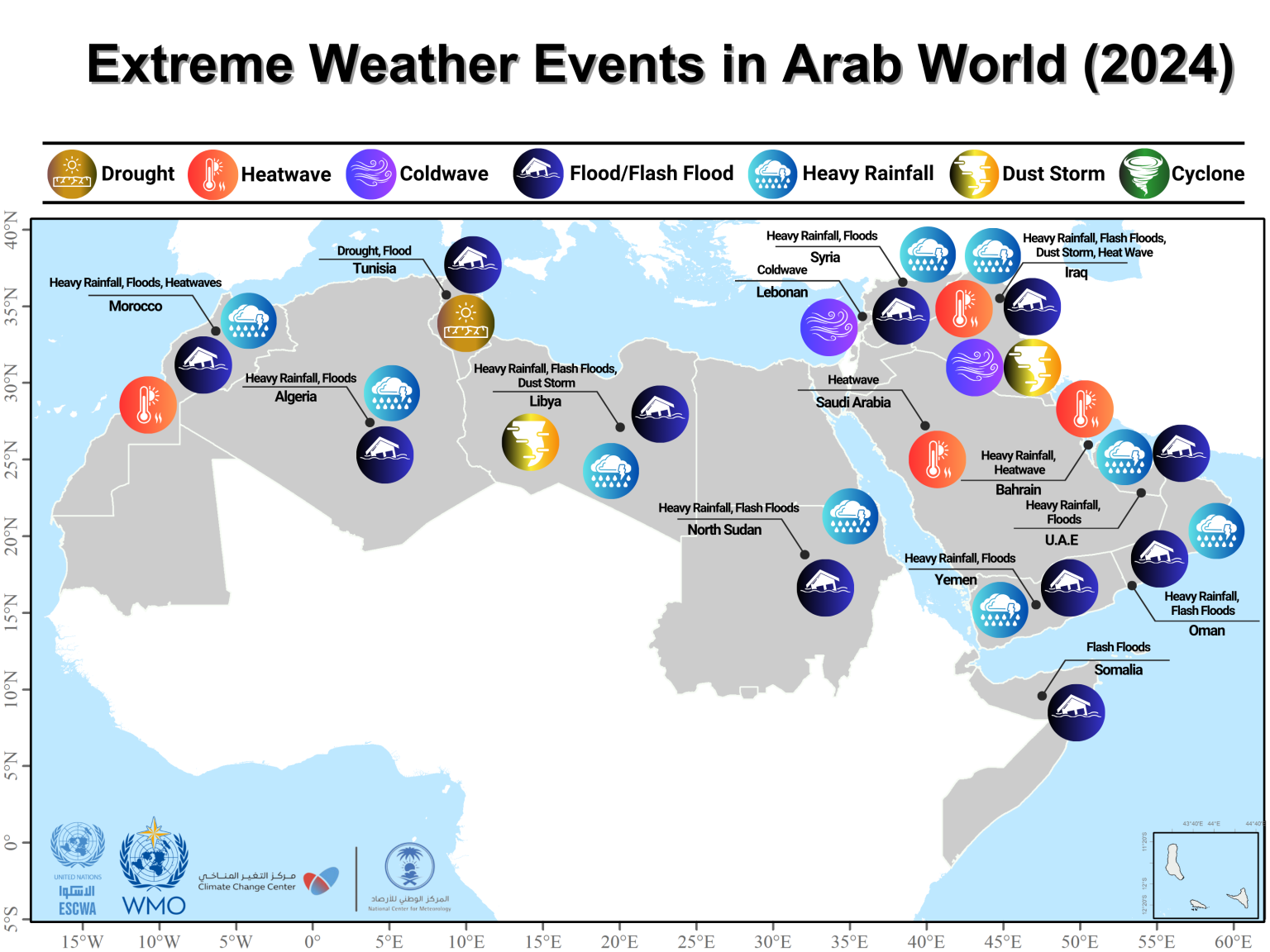
Many extreme weather events happened in the Arab region in 2024, a new report found. (Image credit: World Meteorological Organization)
Early warning systems for both severe weather and natural disasters such as flooding could help protect people in the region as these events become more frequent, according to the report.
“Multi-hazard early warning systems are more important than ever before — this is not a cost but an investment in saving lives and livelihoods,” Saulo wrote in a foreword to the report. “Nearly 60% of Arab countries have such systems in place, above the global average but still not enough.”
You may like
Several countries are also investing in strategies to improve water management, including seawater desalination, building new dams and creating new wastewater treatment facilities.
The report is a “qualitative step towards enhancing our collective understanding of climate patterns, associated risks and their social and economic impacts,” Ahmed Aboul Gheit, Secretary-General of the League of Arab States, said in the statement.
The report also included predictions of future climate scenarios in the region from the Intergovernmental Panel on Climate Change, offering a framework in which to plan for climate impacts in the coming years.
“By incorporating climate projections, the report provides an annual snapshot of current conditions, while also serving as a strategic foresight tool that empowers the region to prepare for tomorrow’s climate realities,” Rola Dashti, United Nations Executive Secretary of Economic and Social Commission for Western Asia, said in the statement.

Chinese astronauts just got an up-close look at the damage that space junk can cause.
You may like
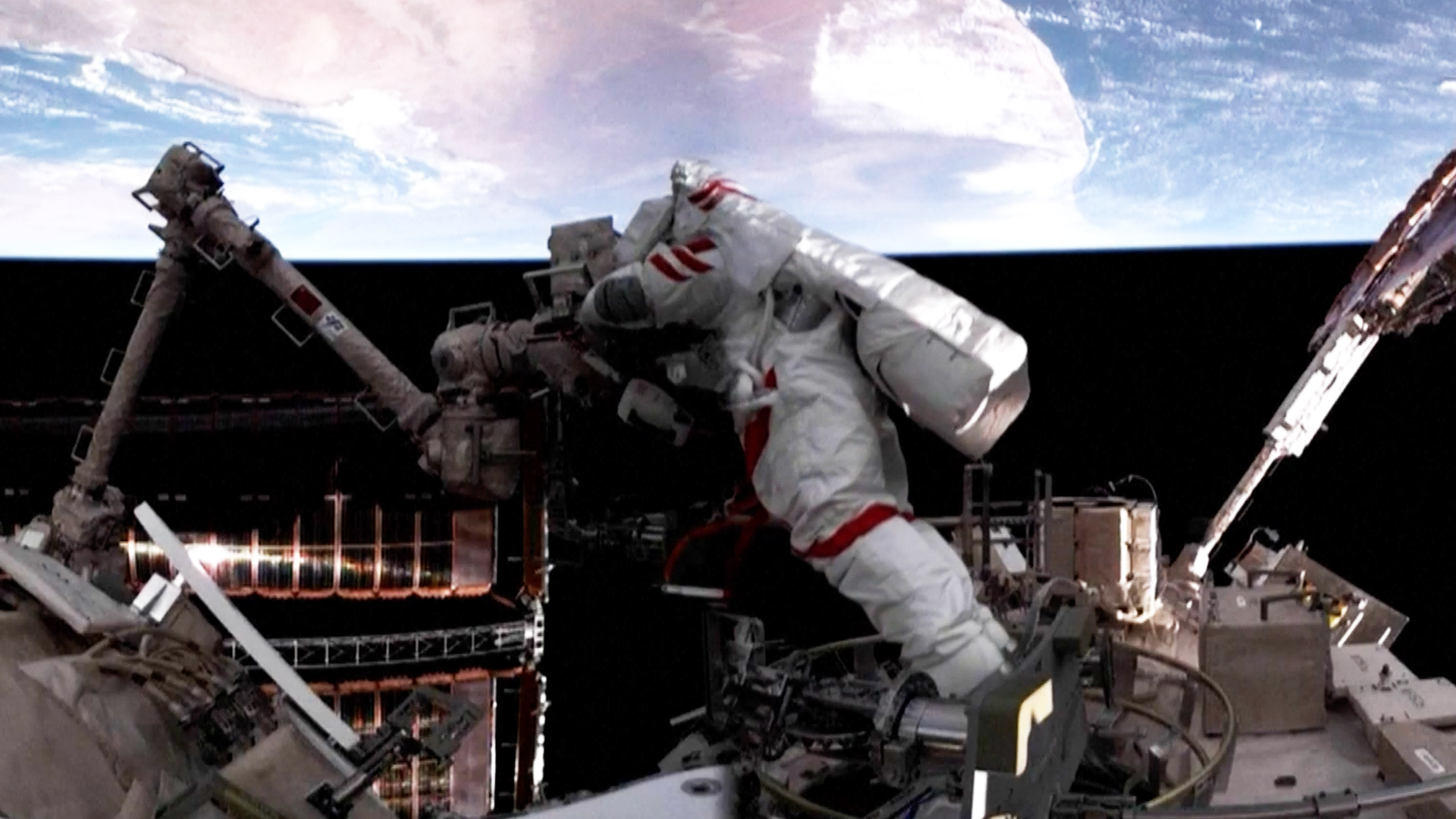
A Shenzhou 21 astronaut conducts a spacewalk outside China’s Tiangong space station on Dec. 9, 2025. (Image credit: CCTV)
The Shenzhou 20 vehicle arrived at Tiangong in late April, carrying three astronauts for a regular six-month rotation aboard the station. That trio was supposed to head back to Earth on Nov. 5, but inspections revealed cracks in Shenzhou 20’s windows — the apparent result of a space junk strike, Chinese space officials said.
After some deliberation, the Shenzhou 20 capsule was deemed unsafe to carry astronauts down through Earth’s atmosphere. So the mission’s three crewmembers ended up returning home on Nov. 14 aboard the Shenzhou 21 vehicle, which had just arrived at Tiangong on Halloween night.
On Nov. 24, China launched the Shenzhou 22 spacecraft with nobody on board, to give the Shenzhou 21 taikonauts a safe ride back to Earth when their mission is over.
Chinese space officials have said that they plan to bring the Shenzhou 20 vehicle home, crewless, at some point in the future. And they likely now have a better understanding of its condition, thanks to Tuesday’s spacewalk.
The EVA was the first for the Shenzhou 21 mission, which consists of commander Zhang Lu, 48, who also flew on the Shenzhou 15 flight in 2022; rookie Wu Fei, 32, and rookie Zhang Hongzhang, 39.
Wu Fei is the youngest member of China’s astronaut corps, and on Tuesday he became the youngest person from his country ever to perform a spacewalk. Zhang Lu also ventured outside the three-module Tiangong, while Zhang Hongzhang assisted from inside the station.
Tuesday’s EVA was not the first to beef up Tiangong’s debris shielding; a number of previous spacewalks have done so recently as well. And that appears to be a wise move, considering what happened to Shenzhou 20.

Scientists think a very common childhood infection may be linked to bladder cancer — and now, they’re figuring out the chain reaction that connects the two diseases.
It’s known that people who get kidney transplants are three times more likely to develop bladder cancer than the general population. Researchers have hypothesized that because transplant patients are immunosuppressed, dormant viruses lurking in the body are given the opportunity to reactivate.
You may like
In a study published Dec. 3 in the journal Science Advances, researchers showed that the virus can cause the type of DNA damage that is also seen in bladder cancer that occurs later in life. But instead of finding DNA mutations directly caused by the virus, the researchers found that the culprit was the body’s own immune system.
“This is a nicely-done laboratory study to show a possible way that BKV could have a larger role in bladder cancer than previously thought,” Dr. Patrick Moore, a tumor virology researcher at the University of Pittsburgh who was not involved in the study, told Live Science in an email.
Connecting the dots
There are several types of viral infections that can lead to cancer. Some viruses, such as HPV, hijack the host cells of the infected person and insert their viral genetic material into the human genome, which causes the host cell to become cancerous. However, in some cancers, like those originating in the bladder, no detectable virus is present —but nonetheless, there are genetic signs of a previous viral infection.
“The long-running narrative since the 1950s has been that smoking and industrial exposures are the big cause of bladder cancer,” said senior study author Simon Baker, a cancer researcher at the University of York in the U.K. But the patterns of DNA mutation seen in bladder cancers are different from those resulting from chemical carcinogens.
Instead, the cancers bear mutational signatures known to be caused by a family of enzymes called APOBEC. Normally, these enzymes help form the body’s first-line defense against viruses and other pathogens. “They have these signatures from APOBECs, and we know APOBECs are part of the antiviral host defense,” Baker explained.
Baker and his team took healthy human bladder cells and infected them with the BK virus in lab dishes. They found that the cells not only exhibited mutations similar to those seen in bladder cancer but also boosted the activity of APOBEC3, an enzyme that damages viral genomes in response to infection.
When the scientists turned off APOBEC3 and then infected the cells with the BK virus, the DNA damage didn’t occur. This finding suggests that the enzyme made by the host cell was causing the damage, not the virus itself.
You may like
Additionally, the researchers found increased APOBEC3 expression and cancer-like genetic mutations in nearby “bystander” cells that hadn’t been infected with the virus. So, a cell doesn’t have to contain the actual virus to accumulate genetic mutations caused by an infection elsewhere in the body.
“That was a surprise,” Baker said. “But the reason it makes perfect sense is that … bladder cancers don’t have viruses in them.” This finding starts to unravel the connection between early-life viral infections and cancers diagnosed decades later.
A starting point
Although these initial data are impactful, Moore said he would like to see whether patients with bladder cancer are infected more often with the BK virus than people without the cancer.
“It is intriguing,” he said, “but only a starting point and work needs to be done to show its actual importance to human cancer.”
When a person contracts the BK virus in childhood, they generally experience common cold symptoms before recovering. The virus then stays inactive, or dormant, in the kidney, bladder and tubes between the two organs. For most people, it never becomes an issue, and it’s not routinely tested for outside of hospital settings.
For those about to have a kidney transplant, however, the immunosuppressants that prevent the rejection of their new kidney can also result in the reactivation of the BK virus, possibly damaging the kidneys, ureter and bladder in the process.
Tim Tavender, a kidney transplant patient from Southampton, developed a BK virus infection following his procedure and eventually had bladder cancer.
“Seeing this research makes me hopeful,” Tavender told The Independent. “If scientists like Dr. Baker can find new ways to control BK virus, it could spare other people from going through what I did — and that would be life changing.”
This article is for informational purposes only and is not meant to offer medical advice.

Male bonobos have developed a surprisingly savvy strategy for navigating the confusing fertility cues of females, whose conspicuous swelling doesn’t reliably indicate ovulation. By tracking both how long it’s been since a female reached peak swelling and the age of her youngest infant, males zero in on the moments when conception is most likely. Male […]
SOURCE PAGE


The first astronauts to set foot on Mars should hunt for signs of past or present Red Planet life.
That’s the overarching conclusion of an in-depth report about human Mars exploration from the U.S. National Academies of Sciences, Engineering and Medicine that came out today (Dec. 9).
You may like
The National Academies prepared the report for NASA, which wants to send astronauts to the Red Planet as soon as the mid-2030s. The document offers recommendations for how the agency can maximize the science gains of its planned crewed Mars campaign.
Those recommendations are extensive and detailed. For example, the report lays out 11 science objectives that such a campaign should pursue, with the search for signs of life (as well as indications of “indigenous prebiotic chemistry” and a broad assessment of habitability) at the top of the list.
The other 10 objectives, listed in order of descending priority, are:
- Characterize Mars’ water and carbon dioxide cycles
- Map Martian geology in detail
- Determine how the Martian environment affects the physical and psychological health of astronaut explorers
- Figure out what starts and drives Martian dust storms
- Determine the availability and accessibility of Martian resources that could “support permanent habitation”
- Discover if exposure to the Martian environment affects DNA and reproduction
- Learn about the population dynamics of microbes on Mars, and if microbial species from Earth could adversely affect astronauts’ health and performance on the Red Planet
- Determine how Martian dust affects astronauts and their hardware
- Learn how the Martian environment affects a transplanted ecosystem of Earth microbes, plants and animals
- Gain a better understanding of the Martian radiation environment and how it may affect crewmembers and their missions
“A Science Strategy for the Human Exploration of Mars” also proposes four possible three-mission campaigns, the top-ranked of which could achieve all 11 of the above objectives.
That campaign would send all three missions to “a low- to mid-latitude site with near-surface glacier ice and diverse geology,” the report states. “The search for prebiotic chemistry and life would focus on near-surface niche environments, such as geologically recent transiently habitable zones, and/or ice, including layered ice.”
Another possible campaign would target the deep subsurface, establishing a powerful drilling operation that could get 1.2 to 3 miles (2 to 5 kilometers) beneath the red dirt, where pockets of liquid water are thought to exist.
Both of those proposed campaigns would feature an initial 30-sol crewed surface mission, an uncrewed cargo delivery flight and then a 300-sol astronaut mission on the surface. (One sol, or Martian day, is slightly longer than an Earth day — about 24 hours and 40 minutes.) So would a third proposed campaign, though a fourth would launch three crewed 30-sol missions to three different sites on the Red Planet.
There is some commonality across all the proposed campaigns. For example, according to the report, no matter how NASA’s crewed Mars plans take shape, the agency should aim to build a science lab on the Red Planet’s surface, haul Mars samples home from every astronaut mission and set up a recurring “Mars Human-Agent Teaming Summit” to maximize and coordinate the efforts of robotic missions, astronauts and artificial intelligence.
In addition, the report notes, a concerted search for Mars life will be constrained by current “planetary protection” guidelines, which aim to minimize the chances that our exploration efforts contaminate other worlds with Earth microbes or bring alien life to our shores.
Therefore, the document states, “NASA should continue to collaborate on the evolution of planetary protection guidelines, with the goal of enabling human explorers to perform research in regions that could possibly support, or even harbor, life.”