
TECHNOLOGY
India proposes charging OpenAI, Google for training AI on copyrighted content


India has proposed a mandatory royalty system for AI companies that train their models on copyrighted content — a move that could reshape how OpenAI and Google operate in what has already become one of their most important and fastest-growing markets globally.
On Tuesday, India’s Department for Promotion of Industry and Internal Trade released a proposed framework that would give AI companies access to all copyrighted works for training in exchange for paying royalties to a new collecting body composed of rights-holding organizations, with payments then distributed to creators. The proposal argues that this “mandatory blanket license” would lower compliance costs for AI firms while ensuring that writers, musicians, artists, and other rights holders are compensated when their work is scraped to train commercial models.
India’s proposal comes amid mounting concerns in global markets over how AI companies train their models on copyrighted material, a practice that has triggered lawsuits from authors, news organizations, artists, and other rights holders in the U.S. and Europe. Courts and regulators are still weighing whether such training qualifies as fair use, leaving AI firms operating under legal uncertainty and allowing them to rapidly expand their business without clear regulations.
Unlike the U.S. and the European Union, where policymakers are debating transparency obligations and fair-use boundaries, India is proposing one of the most interventionist approaches yet by giving AI companies automatic access to copyrighted material in exchange for mandatory payment.
The eight-member committee, formed by the Indian government in late April, argues the system would avoid years of legal uncertainty while ensuring creators are compensated from the outset.
Defending the system, the committee says in a 125-page submission (PDF) that a blanket license “aims to provide an easy access to content for AI developers… reduce transaction costs… [and] ensure fair compensation for rightsholders,” calling it the least burdensome way to manage large-scale AI training. The submission adds that the single collecting body would function as a “single window,” eliminating the need for individual negotiations and enabling royalties to flow to both registered and unregistered creators.
The committee also points to India’s growing importance as a market for GenAI tools. Citing OpenAI CEO Sam Altman’s remark that India is the company’s second-largest market after the U.S. and “may well become our largest,” it argues that because AI firms derive significant revenue from Indian users while relying on Indian creators’ work to train their models, a portion of that value should flow back to those creators. That, it says, is part of the rationale for establishing a “balanced framework” that guarantees compensation.
Techcrunch event
San Francisco
|
October 13-15, 2026
India’s proposal lands amid intensifying legal battles worldwide over whether AI companies can lawfully use copyrighted material to train their models.
In India, news agency ANI sued OpenAI in the Delhi High Court, arguing its articles were used without permission — a case that has prompted the court to examine whether AI training is itself an act of reproduction or protected by “fair dealing.” Courts in the U.S. and Europe are confronting similar disputes, with creators alleging that tech companies have built their models on unlicensed content.
AI proposal sees pushback and dissent
Not everyone is convinced by the Indian government’s proposed model, though.
Nasscom, the industry body representing technology firms including Google and Microsoft, filed a formal dissent arguing that India should instead adopt a broad text-and-data-mining exception that would allow AI developers to train on copyrighted content as long as the material is lawfully accessed. It warned that a mandatory licensing regime could slow innovation and said rightsholders who object should be allowed to opt out rather than force companies to pay for all training data.
The Business Software Alliance, which represents global tech firms including Adobe, Amazon Web Services, and Microsoft, pressed the Indian government to avoid a purely licensing-based regime. It urged India to introduce an explicit text-and-data-mining exception, arguing that “relying solely on direct or statutory licensing for AI training data may be impractical and may not yield the best outcomes.”
Limiting AI models to smaller sets of licensed or public-domain material, BSA warned, could reduce model quality and “increase the risk that outputs simply reflect trends and biases of the limited training data sets,” adding that a clear TDM exception would better balance innovation and rights holders’ interests.
The committee did not consider both a broad text-and-data-mining exception and an opt-out model, arguing that such systems either undermine copyright protections or are impossible to enforce. Instead, it proposed a “hybrid model” that would grant AI firms automatic access to all lawfully available copyrighted works while requiring them to pay royalties into the central collecting body that distributes the proceeds to creators.
The Indian government has now opened the proposal for public consultation, giving companies and other stakeholders 30 days to submit their comments. After reviewing the feedback, the committee will finalize its recommendations before the framework is taken up by the government.
OpenAI and Google did not respond to requests for comments.
TECHNOLOGY
Are we alone in the universe? Latest episode of Daily Mail’s Photo Evidence examines the strongest evidence for life beyond Earth – from classified archives to the farthest reaches of space

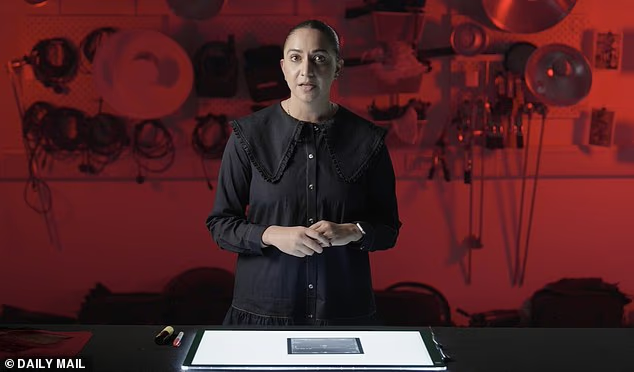
It is one of science’s most important questions: Are we alone in the universe?
From the Pacific Coast to the Scottish Highlands, authentic images of unidentified aerial phenomena have been documented for decades.
They have sparked questions about advanced technology, secret military programmes, and, above all, the potential for life beyond Earth.
Now, as well as video captured on Earth, a new generation of telescopes is gathering chemical signatures of distant worlds – data precise enough to suggest whether life might exist on planets over 120 lightyears away.
In the lastest episode of the Daily Mail’s Photo Evidence, the Daily Mail’s Science & Technology Editor, Shivali Best, and Cambridge University’s Professor Nikku Madhusudhan, explore the strongest evidence for life beyond Earth.

In the lastest episode of the Daily Mail’s investigative mini–doc series, Photo Evidence, the Daily Mail’s Science & Technology Editor, Shivali Best, and Cambridge University’s Professor Nikku Madhusudhan, explore the strongest evidence for life beyond Earth
Share or comment on this article:
Are we alone in the universe? Latest episode of Daily Mail’s Photo Evidence examines the strongest evidence for life beyond Earth – from classified archives to the farthest reaches of space


Image Source: TechCentral
After launching a smartphone brand, Salt, Mr Price’s next growth experiment is taking it to Europe.
Mr Price, the South African retail company, is buying NKD Group, a German clothing and homewares retailer, which will instantly give the South African company an additional 2,100 stores across seven European countries. Per Business Tech, Mr Price is paying R9.7 billion ($572 million) to acquire 100% of the company.
Between the lines: Mr Price is financing the deal by buying the whole holding company that owns NKD (Pegasus Group Holding), rather than just picking up a few assets, and is also taking over the shareholder loans sitting in the structure. In numbers, the deal adds up to R9.7 billion ($572 million) in enterprise value, split between €415 million ($484 million) for the shares themselves and about €38.5 million ($45 million) for those shareholder loans, all of which will be settled in cash.
The money will come from a mix of Mr Price’s own cash and new borrowing, and if all the regulatory boxes get ticked, both companies expect the transaction to close around Q2 2026.
Is this Mr Price’s first time? Before now, Mr Price has kept its retail operations local, operating mainly in South Africa, while keeping its presence lean across the rest of the continent. This home-first approach has previously led the retail giant to scale back its international expansion attempts and exit markets like Nigeria and Australia. It wanted to compete with Spar, Checkers Sixty60, and Shoprite, another retail giant scaling back its foreign operations.
However, with a planned European entry, Mr Price seems to have regained its confidence to lead foreign operations at that scale. NKD Group made around €850 million ($994 million) in sales (2024) and serves millions of customers in the value retail segment. It is a mid-sized company, but not as large as competitors like Pepco and KIK, and foreign players like H&M.
Yet the deal gives Mr Price an instant plug-and-play presence in Germany, Austria, Italy, Croatia, Slovenia, the Czech Republic, and Poland. It lifts its store count past 5,000 as it hunts for new growth verticals. Pepkor, another South African retailer, is chasing growth through finance. South African retailers are now split between staying home and spreading wide, or going abroad. Mr Price is betting it is finally ready to pull the next lever in European value retail.


Google just made the Pixel Watch a lot easier to use when your hands aren’t free. With its latest update now rolling out, the company is adding two fresh one-handed gestures—Double Pinch and Wrist Turn—designed to help users handle calls, notifications, and messages with minimal effort.
Alongside the new gestures, Google is also upgrading the Pixel Watch’s AI-powered message replies, making responses smarter and more context-aware. The update is part of Google’s broader push to make wearables feel less fiddly and more intuitive—especially for moments when pulling out your phone simply isn’t an option.
What can these gestures actually do?
The Double Pinch gesture works by tapping your index finger and thumb together twice. With this simple motion, you can scroll through notifications, dismiss alerts, snooze your alarm, manage a timer or stopwatch, pause your music, select a smart reply to respond, and answer or end phone calls—basically handling most everyday watch tasks without ever touching the screen.
Meanwhile, the Wrist Turn gesture lets you quickly flick your wrist away and back to silence incoming calls or dismiss notifications. Think of it as the digital equivalent of waving someone away when you’re busy.
Image Credit: Google
What’s clever about Google’s implementation is the contextual hints that pop up on your screen. Helpful prompts appear to let you know exactly when you can use a Double Pinch, so you’re never guessing when a gesture is available. You can customize how often these reminders appear—daily, weekly, monthly, or just once.
The gestures are similar to features already available on Apple Watch’s Double Tap and Samsung’s gesture suite on Galaxy Watches, but Google differentiates itself with these contextual on-screen hints that guide users on when gestures are available.
Smarter replies that actually make sense
Beyond gestures, Google is upgrading Smart Replies on both the Pixel Watch 3 and 4. In what Google calls “a first for smartwatches,” Pixel Watch 3 and newer watches will now use an on-device Gemma-based language model to generate Smart Replies for Google Messages and more, even when you aren’t tethered to your phone.
Image Credit: Google
The stats are impressive: the new model is twice as fast and nearly three times more efficient in terms of memory usage compared to the previous generation.
More importantly, the replies are context-aware. If someone asks you to pick up lemons, instead of generic responses like “OK” or “Thanks,” you’ll see suggestions like “How many lemons do you need?” or “Regular ones or Meyer lemons?”
That’s the difference between AI that feels mechanical and AI that actually understands what you’re talking about.
But there’s a catch. The new gestures are exclusive to the Pixel Watch 4, which launched with AI-powered Gemini features built in. If you own a Pixel Watch 2 or 3, you’re out of luck on the gesture front, though Watch 3 owners do get the smarter Smart Replies.
It makes sense from a technical standpoint—the Pixel Watch 4’s new hardware likely enables better gesture detection through improved sensors, but it’s still frustrating for anyone who bought a Pixel Watch just last year. Google frames the update as particularly timely for the holiday season: “Whether you’re walking the dog, carrying your holiday shopping, making cookies or wearing mittens, it’s as easy as looking, tapping and sending.”
Bottom line
Google is clearly borrowing inspiration from Apple and Samsung here, but that’s not necessarily a bad thing. These gestures solve a real problem: trying to interact with a tiny screen when your hands are occupied or dirty.
Whether you’re cooking, exercising, or just carrying stuff, being able to control your watch with simple finger taps or wrist movements is genuinely useful. The update is rolling out now through the Pixel Watch app and Google Play Store.
If you own a Pixel Watch 4, it’s worth enabling and testing these gestures to see how they fit into your daily routine. And if you are just thinking about getting one, well, features like this might just tip the scales for you.
How to Connect a Pixel Watch to Your Android Phone
The Google Pixel watch is a very fine innovative wearable by Google, and you can easily connect it to your Android phone to improve your functionality. By connecting your Android phone to your Pixel watch, you can enjoy the synchronization it offers. You can run your Android Apps and carry

December 11, 2025
Link copied!
Copy failed!

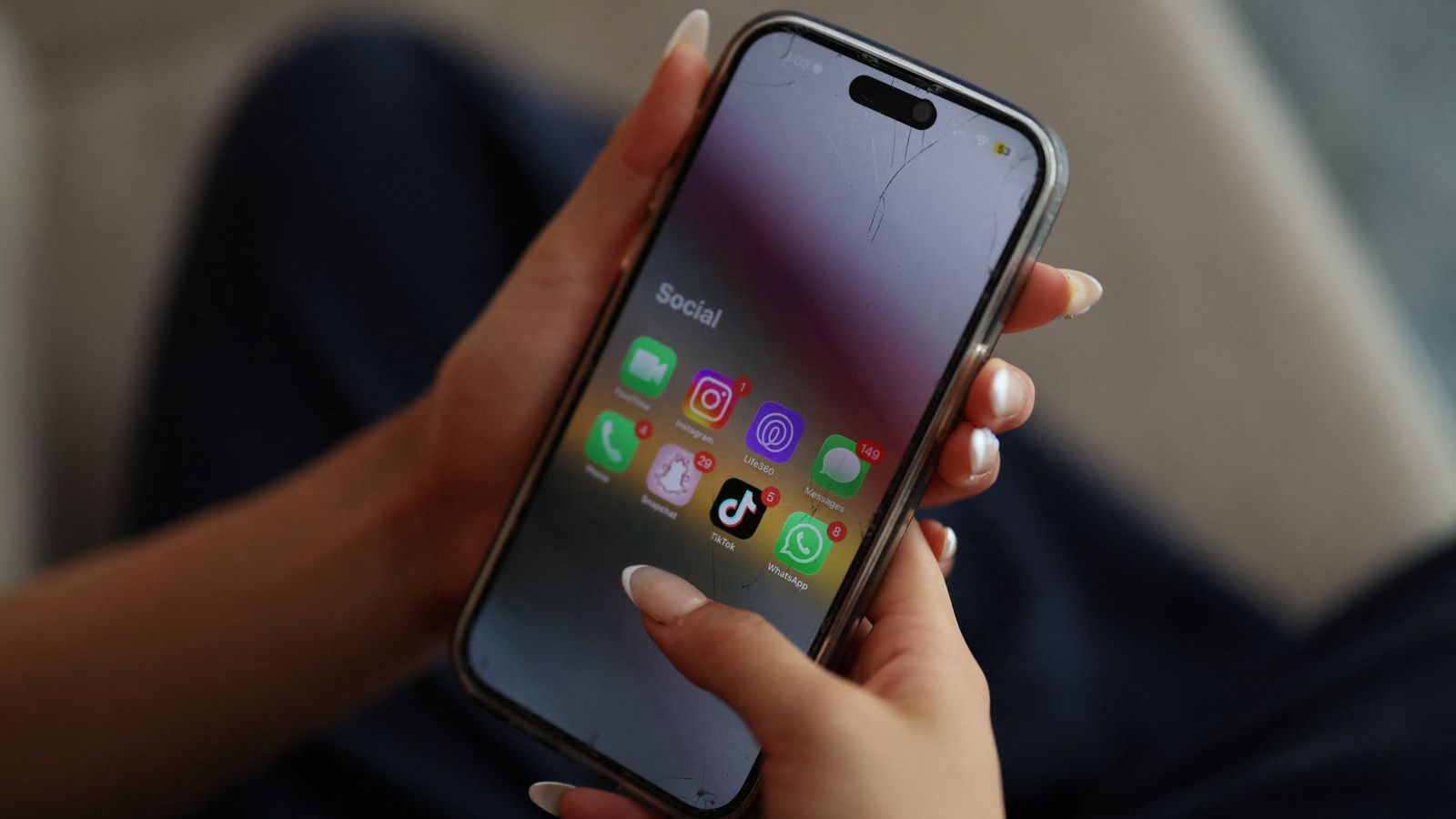
Snapchat is the most commonly-used social media platform in reported child exploitation and abuse offences, according to new police figures.
In 2024, 122,768 child sexual exploitation offences were recorded – an increase of 7,279, or 6%, on 2023.
Child sexual exploitation and abuse online increased by 26%, with 51,672 crimes recorded – 42% of the total.
Some 11,912 were on Snapchat, followed by Meta-owned WhatsApp and Instagram on 1,870 and 1,705.
Acting Chief Constable Becky Riggs, national lead for child protection and abuse investigation, said social media platforms must do more to report crime and stop underage images being shared.
“I know that these platforms, with the technology that’s out there, could prevent these harms from occurring in the first instance,” she said.
The senior officer said parents should be able to buy their children a phone safe in the knowledge that it will be safe to use, including social platforms.
The government has said it has no plans to enforce a social media ban on children to keep them safe, but ministers say they’re watching Australia’s ban – which started this week – with interest.
Chief Constable Riggs also stopped short of calling for such a ban.
“We experiment with some of these tech giants ourselves now to say, can we stop this crime from happening in the first place?” she said.
“Because that’s the utopia. Let’s put a hard stop in that prevents it from occurring.”
‘I’ve been on social media since I was 10’
White Britons committing most abuse crimes
The police figures also showed that of 122,768 child sexual abuse and exploitation offences recorded in 2024, self-defined ethnicity was recorded for 34% of victims and 34% of perpetrators.
The majority of perpetrators were white British, making up 86.9% of offenders. White British made up 74.4% of the population in the 2021 census.
A separate report was released on group-based child abuse, including grooming gangs.
Within that criteria, Pakistani perpetrators made up 3.94% of offenders, when 2.7% of the population is this ethnicity, while white British made up 78.03% of offenders compared to 74.4% of the population.
Read more:
What are the signs of grooming?
The women living alongside their abusers
Why are the Conservatives talking about grooming gangs?
Home Secretary Shabana Mahmood wants offenders’ ethnicities to be recorded in all instances, but police leaders say this will not be possible.
Gareth Edwards, head of the Vulnerability Knowledge and Practice Programme, said: “We’re never going to get to 100% completion rate. Sometimes we won’t know who the suspects are.
“Sometimes victims may not engage, there might be third-party reports… there are different reasons why we won’t always have that data available.
“But I think the ambition for us to improve our quality in that area is what we share collectively.”
A spokesperson for Snapchat said recently: “We work closely with the police, safety experts, and NGOs in an effort to prevent, identify, and remove this activity from our platform and, where appropriate, we report offenders to help secure justice for victims.
“We block teens from showing up in search results unless they have multiple mutual connections and they have to be mutual friends or existing phone contacts before they can communicate directly.
“We also deploy in-app warnings for teens to help prevent unwanted contact from people they may not know. We will keep strengthening our safety tools with the goal of making Snapchat an inhospitable place for people intent on doing harm.”

A pregnant woman in San Francisco gave birth inside a Waymo robotaxi Monday night en route to UCSF Medical Center, marking the latest milestone in the driverless car saga that no one saw coming — except everyone with more than six months of experience behind the wheel of a ride-share vehicle.
According to The SF Standard, Waymo’s remote team detected “unusual activity” and called 911, though the vehicle beat emergency services to the hospital.
Some traditions, it seems, are immune to disruption. For decades, expectant mothers have been racing against biology in the back seats of taxis and Ubers from London to Los Angeles. There was the mother in India who named her son Uber after giving birth to him en route to the hospital (the driver reportedly helped in the delivery). There was also the California couple in 2017 who welcomed their baby in an Uber during Shabbat.”Everyone is telling us to name the baby Uber,” the father joked, before adding, “But we can’t do that.” (Ah, though, they could have!)
The stories go on and on. Now, Silicon Valley has automated the experience, at least partially.
The vehicle in San Francisco was promptly removed for cleaning. Further, this wasn’t Waymo’s first birth — the company told the Standard that a Phoenix baby got there first. “While this is a very rare occurrence,” a Waymo spokesperson deadpanned, “some of our newest riders just can’t wait to experience their first Waymo ride.”


Shares of cloud computing giant Oracle plunged more than 10% in after-hours trading on Wednesday after the company’s revenues fell short of Wall Street expectations.
The company reported revenue of $16.06bn (£11.99bn) for the three months that ended in November, compared with the $16.21bn projected by analysts.
Revenue growth was up 14%, with a 68% surge in sales at its AI business, Oracle Cloud Infrastructure (OCI), the company said.
OCI services major AI technology developers whose demand for Oracle’s AI infrastructure helped the company’s shares reach new highs this fall but Wednesday’s results failed to quell fears about a potential AI bubble.
In September, Oracle agreed a highly sought-after contract with ChatGPT-maker OpenAI, which agreed to purchase $300bn in computing power from Oracle over five years.
Oracle chairman and chief technology officer Larry Ellison briefly became the world’s richest man in after the announcement.
But the firm’s shares have lost 40% of their value since peaking three months ago. Still, they are up by more than a third since the start of the year.
In a statement issued on Wednesday, Mr Ellison struck a cautious tone.
“There are going to be a lot of changes in AI technology over the next few years and we must remain agile in response to those changes,” he wrote.
Mr Ellison also appeared to snub Nvidia, the designer of highly-sophisticated AI chips, saying Oracle would buy chips from any maker in order to serve clients.
“We will continue to buy the latest GPUs from Nvidia, but we need to be prepared and able to deploy whatever chips our customers want to buy,” Mr Ellison declared in a policy he called “chip neutrality”.
Oracle is involved in multiple AI infrastructure arrangements that have raised the prospect that major players in the sector are participating in ‘circular financing’ deals whereby companies finance purchases of their own products and services.
“Oracle’s earnings arrive as investors weigh whether its massive OpenAI partnership might mean overexposure with a customer currently in the spotlight over profitability concerns,” said Emarketer analyst Jacob Bourne following the release of the company’s quarterly report.
Mr Bourne said Oracle faced mounting scrutiny over the increased debt the company has amassed to fund building data centres.
Oracle raised a record $18bn in a massive bond sale in September, one of the largest debt issuances ever in the tech sector.
“Although Oracle’s shares are buoyed by its September surge, this revenue miss will likely exacerbate concerns among already cautious investors about its OpenAI deal and its aggressive AI spending,” Mr Bourne said.
The Ellison family, supporters of US President Donald Trump, also recently purchased Paramount and have spearheaded a bid to take over another major Hollywood studio, Warner Brothers Discovery.

Google just made a major move in the AI infrastructure arms race, elevating Amin Vahdat to chief technologist for AI infrastructure, a newly created position reporting directly to CEO Sundar Pichai, according to a memo first reported by Semafor and since confirmed by TechCrunch. It’s a signal of just how critical this work has become as Google pours up to $93 billion into capital expenditures by the end of 2025 — a number that parent company Alphabet expects will be a whole lot bigger next year.
Vahdat isn’t new to the game. The computer scientist, who holds a PhD from UC Berkeley and started as a research intern at Xerox PARC back in the early ’90s, has been quietly building Google’s AI backbone for the past 15 years. Before joining Google in 2010 as an engineering fellow and VP, he was an associate professor at Duke University and later a professor and SAIC Chair at UC San Diego. His academic credentials are formidable — with what appears to be around 395 published papers — and his research has always focused on making computers work more efficiently at massive scale.
Vahdat already maintains a high profile with Google. Just eight months ago, at Google Cloud Next, he unveiled the company’s seventh-generation TPU, called Ironwood, in his role as VP and GM of ML, Systems, and Cloud AI. The specs he rattled off at the event were staggering, too: over 9,000 chips per pod delivering 42.5 exaflops of compute — more than 24 times the power of the world’s No. 1 supercomputer at the time, he said. “Demand for AI compute has increased by a factor of 100 million in just eight years,” he told the audience.
Behind the scenes, as noted by Semafor, Vahdat has been orchestrating the unglamorous and essential work that keeps Google competitive, including those custom TPU chips for AI training and inference that give Google an edge over rivals like OpenAI, as well as the Jupiter network, the super-fast internal network that allows all its servers to talk to each other and move massive amounts of data around. (In a blog post late last year, Vahdat said that Jupiter now scales to 13 petabits per second, explaining that’s enough bandwidth to theoretically support a video call for all 8 billion people on Earth simultaneously.) It’s the invisible plumbing connecting everything from YouTube and Search to Google’s massive AI training operations across hundreds of data center fabrics worldwide.
Vahdat has also been deeply involved in the ongoing development of the Borg software system, Google’s cluster management system that acts as the brain coordinating all the work happening across its data centers. And he has said he oversaw the development of Axion, Google’s first custom Arm-based general-purpose CPUs designed for data centers, which the company unveiled last year and continues to build.
In short, Vahdat is central to Google’s AI story.
Indeed, in a market where top AI talent commands astronomical compensation and constant recruitment, Google’s decision to elevate Vahdat to the C-suite may also be about retention. When you’ve spent 15 years building someone into a linchpin of your AI strategy, you make sure they stay.
Techcrunch event
San Francisco
|
October 13-15, 2026

John LaurensonBusiness reporter, Lugano, Switzerland
 AFP via Getty Images

Shops and restaurants across the Swiss city of Lugano now accept bitcoin
In a McDonald’s by a lake surrounded by mountains, in the centre of the Swiss city of Lugano, a customer orders coffee.
“Can I pay with bitcoin?” he asks, and the person behind the counter holds out what looks like a credit card payment terminal.
It is in fact a machine for paying by crypto currency. The equipment has been distributed free to local retail businesses by the city council.
The buyer pays by contactless, from the bitcoin wallet on his mobile phone. The bill comes to 0.00008629, which is roughly $8.80 (£6.60).
Few people who have bought bitcoin would probably think about using it to purchase actual things in shops. It is instead generally seen as an investment, a bet on its value going up.
But in Lugano, in the Italian-speaking part of Switzerland, it’s a different story.
While you can of course still pay for everything in Swiss francs, some 350 shops and restaurants now also accept bitcoin. The local authority has even started taking payments in crypto currency for municipal services. You can, for example, pay for pre-school childcare in bitcoin.
I get talking to the McDonald’s customer, Nicolas, who comes from France. He is what you might call a bitcoin true believer.
“What’s great about paying in bitcoin is the feeling of freedom it gives you,” he says. “You are no longer dependant on a financial system with its middlemen and its costs.”
Nicolas says he’s discovered bitcoin cards in Switzerland. These are prepaid gift cards. You buy a certain sum in Swiss francs but download it in bitcoin onto a digital wallet on your phone.
I walk through the centre of Lugano, down a high street where just about all the shops sell luxury stuff. Jewellery or expensive clothes mainly.
In a shop called Vintage Nassa that sells new and second-hand bags and watches, the owner Cherubino Fry tells me he accepts bitcoin because the processing fee he has to pay per transaction is less than those charged by credit card companies.
For bitcoin it is generally below 1%, while for debit cards it can be as high as 1.7%, and up to 3.4% for credit cards. Although for the latter two it can vary from country to country.
I ask Mr Fry if he does much business in bitcoin.
“In reality, not a lot. For now, only sporadically, only some clients,” he says. “But using bitcoin will be like a tree growing, and this tree will grow very big in five, 10 years.”

Users pay via bitcoin using a suitable app on their mobile phone
A stone’s throw from Mr Fry’s shop, I visit the headquarters of Plan B, an initiative launched in 2022 by the City of Lugano in collaboration with crypto currency platform Tether.
With the B standing for bitcoin, its stated aim is to educate people about cryptocurrency, and “to make Lugano the European hub for bitcoin”.
“I want to talk about an experiment I did this July,” says Plan B hub director Mir Liponi. She explains that she had a problem with her bank, which resulted in her not being able to access her funds.
For 11 days she had no way of paying, other than with bitcoin, but she says that experiment turned out well, and that you can mostly survive just on bitcoin in Lugano.
“It’s missing public transportation at the moment… another one is fuel. Groceries are okay. I got things delivered at home, even.
“Plenty of medical places, but not a dentist. And another big thing is [energy] bills. You cannot pay bills in bitcoin yet.”
Ms Liponi adds that in the future she wants to see “circular economies where people earn bitcoin, keep bitcoin, spend bitcoin, pay for services in bitcoin”.
Yet elsewhere, similar bitcoin projects to Lugano’s have come unstuck.
In 2021, El Salvador made bitcoin legal tender alongside the US dollar. To encourage its use the government gave people the bitcoin equivalent of $30 that they downloaded via an app.
“So what people did was download the app, exchange the bitcoin for dollars and never use it again,” says Vincent Charles, head of crypto currency firm Unchain Data.
He went to El Salvador earlier this year to see how bitcoin uptake was going, and concluded that people don’t really use it, and retailers and service providers rarely accept it.
However, there are other successful bitcoin adoption examples from around the globe. Slovenian capital Ljubljana was declared the world’s most crypto-friendly city in a report back in April, followed by Hong Kong and Zurich.

Shopkeeper Cherubino Fry expects the use of bitcoin to grow strongly
Back in Lugano, not everyone is seemingly impressed with bitcoin. In a park on the lakefront there used to be a statue representing Satoshi Nakamoto, the pseudonym used by the unknown person or persons who claim to have invented the crypto currency back in 2008.
In August, vandals broke the sculpture into bits and threw it into Lake Lugano.
“It’s interesting because not that many things get vandalised around here,” says Lucia, a passerby who lives in the city. “People are usually fairly well behaved. And you don’t see often people having very strong political opinions either.”
She adds, though, that she herself is skeptical of cryptocurrencies in general.
“At the University of Lugano where I study there’s a club to promote bitcoin and everything. I do find it surprising that institutions such as my university would promote cryptocurrencies so much. I think they are associated with crime, with the dark web and speculation.
“A lot of people lose their money because they invest in a cryptocurrency and then it crashes.”
 AFP via Getty Images
Special ATM machines in Switzerland allow people to convert Swiss francs to bitcoin, and vice versa
Sergio Rossi is a professor of economics at Switzerland’s University of Fribourg. He says that bitcoin is a risk for shopkeepers in Lugano or elsewhere because of its volatility – its value can go sharply up and down.
So, he says it is important that they instantly convert the bitcoin they receive into Swiss francs, euros, or another currency issued by a government or central bank. These are also known as “fiat” currencies.
He adds: “There is also a reputational risk with those cryptocurrencies used in illegal transactions, which could affect the city of Lugano and its financial institutions.”
Prof Rossi also cautions that people’s bitcoin is held by a digital third party, which makes it risky. “If the platform where my digital wallet is recorded fails or goes bankrupt, my cryptocurrencies disappear instantaneously.
“And therefore, I lose the corresponding amount forever. By contrast, in Switzerland, all bank deposits are guaranteed up to the amount of 100,000 Swiss francs ($125,000; £94,000). This means that if the bank where my savings are recorded goes bankrupt, I can recover them up to this amount.”
At Lugano town hall I ask Mayor Michele Foletti if he is concerned that Lugano could be a magnet for mafia money.
“No. You can use fiat money to do something good or something bad,” he says. “The same with bitcoin.
“And mafia people are more interested to use fiat for money laundering. When they sell drugs or something like this, they receive [physical] fiat money, not bitcoin because the more anonymous way is cash,” he says.
He adds that bitcoin continues to be positive for Lugano, and that 110 crypto-sector companies have now moved to, or started up, in the city.
TECHNOLOGY
Revealed: Amazon Alexa’s most-asked questions of 2025 – including ‘how tall is Tom Cruise?’ and ‘how long do I poach an egg for?’

It’s the go–to smart assistant for thousands of people across the UK.
Now, Amazon has revealed the questions that have been asked to Alexa the most this year.
The questions cover a range of trends and topics – including sporting heroes, mysterious billionaires, and stock prices.
Cristiano Ronaldo tops the list as the most asked–about celebrity, pipping Taylor Swift, Elon Musk and David Attenborough to the post.
Meanwhile, when it comes to net worths, Elon Musk has had the most users talking, ahead of MrBeast and Taylor Swift.
Many Brits have also turned to Alexa to answer their most burning questions in day–to–day life.
‘What’s the diameter of the Earth?’ was one of the most–asked general knowledge questions, alongside ‘what is the UK minimum wage?’ and ‘how long do I poach an egg for?’
‘Alexa is always ready to help and has once again been on hand to answer the millions of questions posed by inquisitive customers,’ Amazon explained.

It’s the go–to smart assistant for thousands of people across the UK. Now, Amazon has revealed the questions that have been asked to Alexa the most this year

‘What’s the diameter of the Earth?’ was one of the most–asked general knowledge questions, alongside ‘what is the UK minimum wage?’ and ‘how long do I poach an egg for?’
Amazon has broken the list down by category, including sports, people, general knowledge, and music (scroll down for the full breakdown).
Football tops the list as the most asked–about sport, ahead of Formula 1, rugby, cricket, and golf.
When it comes to athletes, it was Cristiano Ronaldo people were most interested in, along with Lionel Messi, David Beckham, John Cena, and Ricky Hatton.
In the general knowledge category, several of the most burning questions were science related.
This includes ‘what’s the diameter of the Earth?’, ‘What does AI mean?’ and ‘How many moons does Jupiter have?’
Others were food–based, including ‘how long do I poach an egg for?’, what are the benefits of chia seeds?’ and ‘is a tomato a fruit or a vegetable?’
In terms of celebrities, Taylor Swift joins Cristiano Ronaldo, Elon Musk, David Attenborough and Elizabeth II in the top list.
Meanwhile, the most–asked about heights belong to Tom Cruise (5ft 6inches), Peter Crouch (6ft 7), and Taylor Swift (5ft 10).


The most–asked about heights belong to Tom Cruise (5ft 6inches), Peter Crouch (6ft 7), and Taylor Swift (5ft 10)

Amazon has also revealed celebrities’ spouses UK users were most interested in. Ed Sheeran (pictured with his wife, Cherry Seaborn), Rod Stewart, Elon Musk, and Princess Anne were among the most–asked about celebrities in this category
Amazon has also revealed the celebrities’ spouses UK users were most interested in.
Ed Sheeran, Rod Stewart, Elon Musk, and Princess Anne were among the most–asked about celebrities in this category – while Katy Perry also got people talking with her new relationship with Justin Trudeau.
In the music category, APT by Rosé & Bruno Mars was found to be the most requested song, ahead of Golden by HUNTR/X (KPop Demon Hunters), Pink Pony Club by Chappell Roan, and Soda Pop by Saja Boys (KPop Demon Hunters).
‘KPop Demon Hunters was a hit with Brits,’ Amazon explained.
‘With the soundtrack topping the charts as the most played album, and Golden hitting the high notes at #2 of the top 10 requested songs via Alexa and Amazon Music.’
Alexa’s most asked questions of 2025 in the UK
Sport
The most asked about sports:
- Football
- Formula 1
- Rugby
- Cricket
- Golf
The most asked about athletes:
- Cristiano Ronaldo
- Lionel Messi
- David Beckham
- John Cena
- Ricky Hatton
General Knowledge
General knowledge highlights:
- What’s the diameter of Earth?
- How long do I poach an egg for?
- What the UK minimum wage?
- What are the benefits of chia seeds?
- What’s the words to the Lord’s prayer?
- Is a tomato a fruit or vegetable?
- What is the UK retirement age?
- What does AI mean?
- How long did it take to build Tower Bridge?
- How many moons does Jupiter have?
- What’s the stock price of Marks and Spencer?
People
The most asked about celebrities:
- Cristiano Ronaldo
- Taylor Swift
- Elon Musk
- David Attenborough
- Elizabeth II
- Charles III
- Elvis Presley
- Rod Stewart
- Lionel Messi
- Ozzy Osbourne
The most asked about heights:
- Tom Cruise
- Peter Crouch
- Taylor Swift
- Lionel Messi
- Sabrina Carpenter
- Cristiano Ronaldo
- Shaquille O’Neal
- Kevin Hart
- LeBron James
- Dwayne Johnson
The most asked about net worths:
- Elon Musk
- MrBeast
- Taylor Swift
- Cristiano Ronaldo
- Jeff Bezos
- Jeremy Clarkson
- David Beckham
- Paul McCartney
- Elton John
- Bill Gates
The most asked about actors / actresses:
- Tom Cruise
- Clint Eastwood
- Dwayne Johnson
- Joanna Lumley
- Pierce Brosnan
The most asked about spouses:
- Ed Sheeran
- Rod Stewart
- Elon Musk
- Katy Perry
- Princess Anne
- Beyonce
- Eminem
- Prince William
- Stephen Mulhern
- Amanda Holden
Music
The most played artists:
- Taylor Swift
- Bruno Mars
- Ed Sheeran
- Rosé
- Chappell Roan
- Sabrina Carpenter
- Eminem
- HUNTR/X (KPop Demon Hunters)
- Oasis
- Lady Gaga
The most played songs:
- APT, Rosé & Bruno Mars
- Golden, HUNTR/X (KPop Demon Hunters)
- Pink Pony Club, Chappell Roan
- Soda Pop, Saja Boys (KPop Demon Hunters)
- Ordinary, Alex Warren
- Die With a Smile, Lady Gaga & Bruno Mars
- Messy, Lola Young
- Your Idol, Saja Boys
- Takedown, HUNTRX (KPop Demon Hunters)
- That’s So True, Gracie Abrams
The most played albums:
- KPop Demon Hunters
- The Life of a Showgirl, Taylor Swift
- A Minute, Myles Smith
- The Art of Loving, Olivia Dean
- Play, Ed Sheeran
The most requested podcasts:
- The Archers
- The Rest is Politics
- MrBallen Podcast: Strange, Dark & Mysterious Stories
- The Rest is Football
- The Rest is History
- No such Thing As a Fish
- Parenting Hell
- Americast
- RedHanded
- The Archers Omnibus
The most asked about musicians:
- Taylor Swift
- Elvis Presley
- Rod Stewart
- Ozzy Osbourne
- Elton John
TECHNOLOGY
State attorneys general warn Microsoft, OpenAI, Google, and other AI giants to fix ‘delusional’ outputs
After a string of disturbing mental health incidents involving AI chatbots, a group of state attorneys general sent a letter to the AI industry’s top companies, with a warning to fix “delusional outputs” or risk being in breach of state law.
The letter, signed by dozens of AGs from U.S. states and territories with the National Association of Attorneys General, asks the companies, including Microsoft, OpenAI, Google, and 10 other major AI firms, to implement a variety of new internal safeguards to protect their users. Anthropic, Apple, Chai AI, Character Technologies, Luka, Meta, Nomi AI, Perplexity AI, Replika, and xAI were also included in the letter.
The letter comes as a fight over AI regulations has been brewing between state and federal government.
Those safeguards include transparent third-party audits of large language models that look for signs of delusional or sycophantic ideations, as well as new incident reporting procedures designed to notify users when chatbots produce psychologically harmful outputs. Those third parties, which could include academic and civil society groups, should be allowed to “evaluate systems pre-release without retaliation and to publish their findings without prior approval from the company,” the letter states.
“GenAI has the potential to change how the world works in a positive way. But it also has caused — and has the potential to cause—serious harm, especially to vulnerable populations,” the letter states, pointing to a number of well-publicized incidents over the past year — including suicides and murder — in which violence have been linked to excessive AI use,” the letter states. “In many of these incidents, the GenAI products generated sycophantic and delusional outputs that either encouraged users’ delusions or assured users that they were not delusional.”
AGs also suggest companies treat mental health incidents the same way tech companies handle cybersecurity incidents — with clear and transparent incident reporting policies and procedures.
Companies should develop and publish “detection and response timelines for sycophantic and delusional outputs,” the letter states. In a similar fashion to how data breaches are currently handled, companies should also “promptly, clearly, and directly notify users if they were exposed to potentially harmful sycophantic or delusional outputs,” the letter says.
Techcrunch event
San Francisco
|
October 13-15, 2026
Another ask is that the companies develop “reasonable and appropriate safety tests” on GenAI models to “ensure the models do not produce potentially harmful sycophantic and delusional outputs.” These tests should be conducted before the models are ever offered to the public, it adds.
TechCrunch was unable to reach Google, Microsoft, or OpenAI for comment prior to publication. The article will be updated if the companies respond.
Tech companies developing AI have had a much warmer reception at the federal level.
The Trump administration has made it known it is unabashedly pro-AI, and, over the past year, multiple attempts have been made to pass a nationwide moratorium on state-level AI regulations. So far, those attempts have failed—thanks, in part, to pressure from state officials.
Not to be deterred, Trump announced Monday he plans to pass an executive order next week that will limit the ability of states to regulate AI. The president said in a post on Truth Social he hoped his EO would stop AI from being “DESTROYED IN ITS INFANCY.”