
LIFESTYLE
Twenty Years of Glory: A Night to Remember at The Experience 20


If the concrete grounds of Tafawa Balewa Square could speak, they would tell a story of consistency. For two decades, this space has transformed annually from a city square into a global altar, and this year (The Experience 20) felt like a crowning moment. It wasn’t just an event; it was a homecoming for millions of hearts united by one sound.
From the moment the lights went up, you could feel the weight of history. We weren’t just watching performances; we were journeying through time. Israel Houghton set the tone, his legendary fusion of gospel reminding us that after twenty years, it is still a “New Season” of grace. The atmosphere thickened when Sinach took the microphone; hearing a sea of voices sing “Way Maker” in unison was a chilling reminder of how a song birthed here has traveled to the ends of the earth.

The night ebbed and flowed between deep intimacy and explosive joy. There was a tangible shift when Travis Greene, Chandler Moore, and Naomi Raine ministered. It felt like the heavens opened up during “Jireh” and “Promises,” creating a space where the crowd didn’t just sing along, they poured their hearts out.
But this is Lagos, and we know how to praise. The energy in the square hit a fever pitch when Bidemi Olaoba grabbed the mic. All he had to say was his signature “The Bible Says,” and the crowd erupted, dancing to that indigenous highlife sound that feels like home. The “Culture Architect,” Gaise Baba, and the revivalist Moses Bliss kept that fire burning, proving that the gospel is as vibrant and youthful as ever.

We saw the beauty of the nations, too. From the Caribbean fire of Chevelle Franklyn to the heavenly saxophone notes of Mike Aremu and the dynamic UK sound of Muyiwa Olarewaju, the stage was a tapestry of global faith. Anchoring it all was our host, Pastor Toluwani Odukoya, whose genuine worship kept us grounded in the reason we gathered.
Through the marathon of praise, we stayed energized thanks to our friends at Coca-Cola. They were more than just sponsors; they were the pulse that kept the crowd refreshed, ensuring that the dancing and singing didn’t stop for a second.

As the night drew to a close, we witnessed the birth of something new. The unveiling and performance of the new anthem, “Jesus United,” by The Experience Lagos All Stars was the perfect seal on the evening. It was a promise that while we celebrate 20 years of the past, we are ready for the future.
The Experience 20 was more than a concert. It was a reminder that no matter how much the world changes, the sound of worship remains the same. Here’s to the memories, the music, and the next 20 years.





Sponsored Content


Get the free Morning Headlines email for news from our reporters across the world
Sign up to our free Morning Headlines email
Sign up to our free Morning Headlines email

Aldi is recalling a popular Christmas food product over an allergy risk.
The supermarket chain is urging customers who have bought a batch of the Perfect Christmas Mozzarella Sticks in Blankets not to eat them.
It warned that the product contains egg, but this ingredient is not mentioned on the label – meaning the food is potentially dangerous for anyone with an allergy or intolerance to egg.
Customers are advised to return the item to their nearest store for a full refund.
The affected batch has a use by date of 15 December 2025, weight of 278g, and the barcode 4069365328743.

open image in gallery
The product contains egg, but it isn’t mentioned on the label (Stock image)
The company has issued a notice and apology to customers, and also alerted allergy support organisations.
Aldi’s product safety recall notice reads: “As a precautionary measure, our supplier is recalling Perfect Christmas Mozzarella Sticks in Blankets because the product is labelled incorrectly and contains an undeclared allergen (egg).
“Customers are asked to return this product to their nearest store, where a full refund will be given.
“We apologise that this product did not meet our normal high standards and thank you for your co-operation.”
The Food Standards Agency (FCA) advised: “If you have bought the above product and have an allergy or intolerance to egg do not eat it.
“Instead, return it to your nearest Aldi store for a full refund.
“For further details, please visit help.aldi.co.uk or contact customer services on 0800 042 0800.”
It explained that recall notices, when customers are asked to return a product, are issued when there is a problem with a food product that means it cannot be sold, such as if there is a risk to consumers because the allergy labelling is missing or incorrect or if there is any other food allergy risk.

Photo Credit: Ayra Starr/Instagram
Ayra Starr is opening a new chapter, and she’s doing it in her own words. In her first Substack post, “I’m Not Scared, I Promise,” the singer writes from her almost-empty New York apartment, sharing what life feels like when the noise dies down and you’re left alone with your thoughts.
She describes New York with humour and honesty, calling it “a walk-in freezer with rent,” and writes about the kind of cold that makes you question your decisions. While many back home are deep into Detty December, Ayra finds herself in a quieter season, navigating distance, solitude, and the mental weight of always needing to prove herself.
“There’s a certain kind of despondent, fatigued feeling surrounding me, a lifetime spent proving myself,” she writes, capturing the exhaustion that can sit beneath success.
The essay also reflects on ambition and the pressure to be understood. Ayra shares advice from someone she admires: “No one is supposed to understand what you’re doing. If they understand immediately, try again.” It’s a line she returns to as she moves through the city, holding her jacket tighter against the cold.
By the end of the piece, she speaks about choosing not to limit herself to anyone’s expectations and allowing room to grow in different directions. “I will exist in multitudes. I will unfold endlessly,” she writes, repeating the phrase that anchors the essay: I’m not scared, I promise.

Stay ahead of the curve with our weekly guide to the latest trends, fashion, relationships and more
Stay ahead of the curve with our weekly guide to the latest trends, fashion, relationships and more
Stay ahead of the curve with our weekly guide to the latest trends, fashion, relationships and more

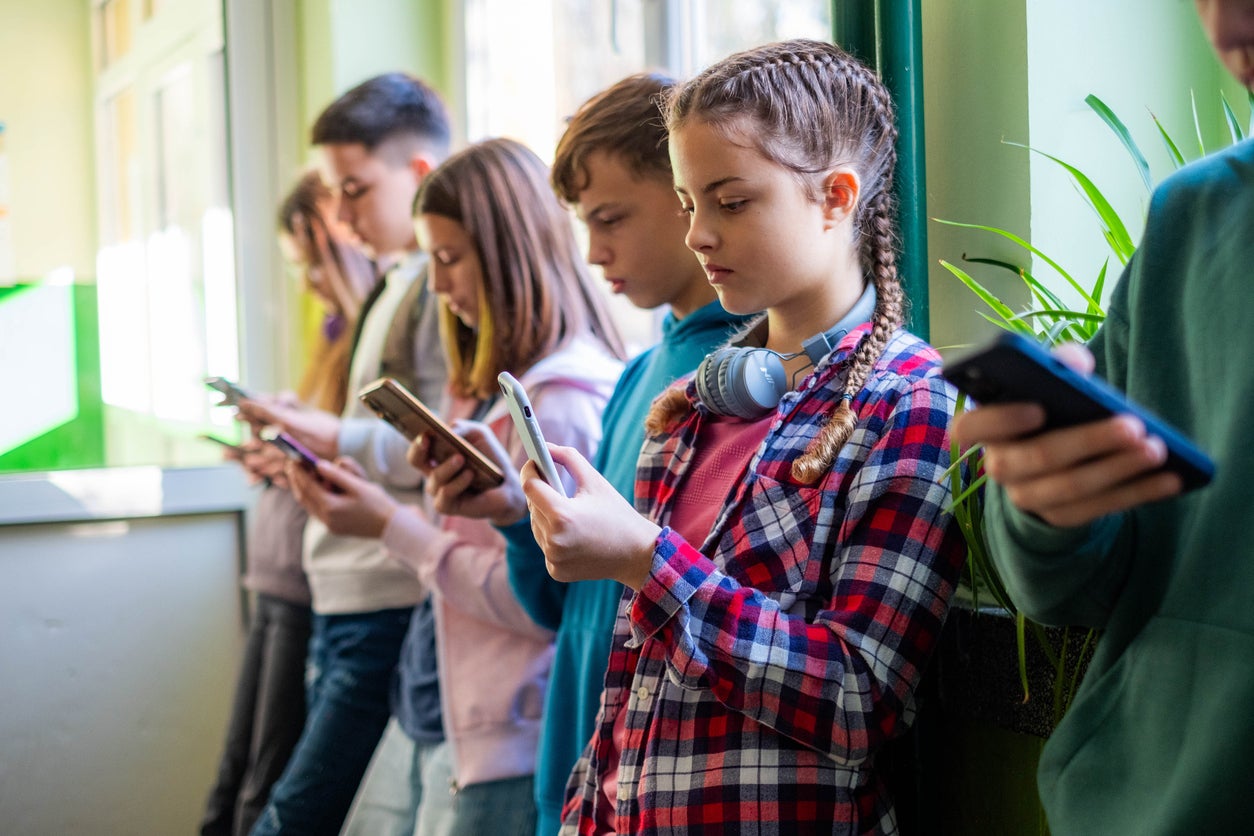
Australia has officially banned teens from using social media until they’re 16, leaving many to wonder if the U.S. could follow its lead.
The social media ban, which took effect December 10 in Australia, requires 10 of the largest social networks, including TikTok, YouTube, Instagram, Facebook, and X, to turn anyone under the age of 16 away. If any of these platforms fail to take the steps to block children from having accounts, the companies will face fines of up to $49.5 million Australian dollars ($32.9 million USD).
Many children in Australia are unhappy about the ban, with one teen tweeting ahead of time that they’ll have “no more contact with the rest of the world” and another 15-year-old saying he has no idea how he’ll keep in touch with his long-distance friends.
Despite the discourse, many mental health experts in the U.S. believe that Australia is actually taking a step in the right direction, given how addictive social media apps can be for children. Speaking to The Independent, New York City-based psychotherapist Jonathan Alpert explained how he’s seen social media negatively impacted children’s developing minds.
“They keep kids locked into reward loops that heighten anxiety, shorten attention spans, and create a constant sense of comparison. I’m also seeing more teens who struggle with face-to-face communication because so much of their social life has moved online,” Alpert, author of Therapy Nation, said.
open image in gallery
Mental health experts believe that the U.S. could also ban children from social media until 16 (Getty Images)
He also acknowledged that if the U.S. banned young kids from using social media, it would reduce cyberbullying and experiencing the constant social comparison that undermines self-esteem. This would also give children’s developing brains a chance to mature before they are hooked to Instagram and TikTok.
“It gives kids space to develop real-world social skills. When kids spend less time online, they spend more time interacting in person, dealing with conflict, and learning how to read social cues,” he added. “Those are foundational skills that many teens today are missing because so much of their social life happens on a screen.”
Research has continued to find that social media harms kids’ well-being. In a recent study published in JAMA Network Open, researches found that as children, aged nine to 13, increased their daily social media use from an average of seven to 73 minutes over three years, their symptoms of depression rose by 35 percent.
Earlier this month, doctors at UC San Francisco also found that just an hour spent on a social media app each day can knock down test scores by one or two points for students between the ages of nine and 13. Students who spent as many as four hours per day on social media saw up to a five-point drop on their tests.
Dr. Gail Saltz, Associate Professor of Psychiatry at the NY Presbyterian Hospital Weill-Cornell School of medicine, told The Independent that she understands Australian teens’ frustrations about being barred from social media, since they no longer have the freedom to use the apps they want.
However, just like Alpert, she believes that the cons of kids using social media before the age of 16 outweigh the pros.

open image in gallery
Experts note that kids who spent too much time on social media experience heighten anxiety, shorten attention spans, and create a constant sense of comparison (Getty Images)
“Kids become addicted to social media quite easily. The jury is out as to whether the impact on the brains of young people whose brains are still developing may permanent changes in neurocircuitry,” she added. “So from a youth health perspective, delaying as long as possible the participation in social media is very beneficial.
According to Saltz, 16 is also the most suitable age for children in the U.S. and other countries to create social media accounts.
“This ban took child development and the risks like bullying, etc. into account and chose 16,” she noted. “Maturity of the child, judgment of the child, susceptibility, mental health all influence when they are ready.”
Many U.S. states are already putting restrictions on social media usage for kids. Last year, California Governor Gavin Newsom signed a bill that prohibits social media platforms from knowingly providing certain feeds to children without parental consent. In October, he also signed a bill that requires social media apps to display health warning labels for minors and check children’s ages.
Also last year, Maryland governor Wes Moore started the Maryland Kids Code, which seeks to limit data that could be collected from children online and protect them from being flooded with harmful material they were not trying to find. However, it has faced several legal challenges, with tech groups claiming the act infringes on their free speech rights.

Get the Well Enough newsletter by Emilie Lavinia and make sense of the wild world of wellness
Get our wellbeing editor’s newsletter: Well Enough by Emilie Lavinia
Get the Well Enough email by Emilie Lavinia

You call your teen’s name, but they don’t respond. They’re staring past you. You call again, louder this time. Nothing – how rude.
But what if they’re zoning out?
For some teens, this can be a sign of dissociation, a temporary disconnection from thoughts, feelings, body or surroundings. It’s the brain’s way of protecting itself from overwhelming stress or emotion.
Dissociation is often linked to trauma – experiences that feel deeply distressing or life-threatening.
But because dissociation is quiet and invisible, it often goes unnoticed. A withdrawn or “spacey” teen draws less attention than one who’s anxious or acting out. Misunderstanding this response can lead to frustration and strained relationships.
In two recent studies, we interviewed teens who dissociate, as well as their parents and clinicians. We wanted to understand better what it feels like when it happens – and what would help.
What is dissociation?
Dissociation is the brain’s safety switch. When emotions or memories feel too intense, the brain creates distance, like mentally stepping out of the room.
It’s common to experience mild forms of dissociation, such as zoning out during a boring meeting. But for teens who’ve experienced trauma, it can feel more intense and be more disruptive.
Many people underestimate how common trauma is for young people.
Worldwide, almost three in four teens have experienced at least one traumatic event, such as violence, serious accidents, or the death of a loved one. In Western countries, this may be closer to one in two.

open image in gallery
Many people underestimate how common trauma is for young people (Getty/iStock)
Distressing content is also streamed directly to teens’ devices. Violent videos, cyberbullying or hate-based online abuse can all trigger overwhelmed feelings.
When feelings become too much to handle, dissociation offers immediate relief. But overuse of dissociation to cope can disrupt learning, relationships and daily life.
Surveys suggest this clinical form of dissociation affects 7–11% of high school students, making it as common as anxiety disorders.
Yet dissociation in young people is still not well understood, even by professionals.
What we wanted to find out
To better understand dissociation, our research team spoke with dissociating teens about what the experience feels like, what triggers it and what helps.
Seven teenagers who had experienced significant trauma and were receiving care at a Western Australian mental health service shared their experiences. Given that dissociation can affect memory and awareness, we also interviewed each teen’s parent and primary clinician.
While our study involved a small number of teens, their reflections gave us powerful insight into the lived experience of dissociation in adolescence.
What teens told us
Teens described dissociation as feeling disconnected from their body or as though reality had gone blurry.
Lisa* (age 17) said: “I could look in the mirror and not feel like it was me […] I knew it was me, but I didn’t feel like it was me.”
Verity* (age 14) explained: “I’m zoned out and don’t notice what’s going on around me. […] People could be calling my name or waving in my face, and like, I don’t notice.”

open image in gallery
Some teens may just want company, and some might want help with calming techniques (PA)
Parents told us their teens could sometimes become completely unresponsive – unable to move or talk – or have emotional outbursts they later couldn’t remember.
Dissociation was most likely when teens felt strong emotions triggered by reminders of trauma, conflict or peer rejection.
What helps
Many teens said the most helpful thing was knowing a trusted person was nearby. They often didn’t want advice or questions – just reassurance that someone would stay close.
Lisa said: “I like having company because I don’t cope on my own […] it’s helpful to have someone just wait with me until it’s over.”
Sometimes, they wanted more active help with strategies.
Amy* (age 16) said calming techniques can help: “if someone else is there and they’re telling me what to do […] I can’t really do it on my own when I’m like that [dissociating].”
Others said retreating to quiet spaces helped them come back to the present.
But when they didn’t feel able to reach out for support, some teens turned to less helpful strategies, like disappearing into fantasy worlds for hours.
Our research suggests that to reduce the chances of this, it’s important for teens to know you’re there.
What parents can do
Bullying, rejection or failure can all feel catastrophic to a developing mind. Teens may also experience traumas that adults don’t know about.
If a teen seems distant or unresponsive, stay curious rather than frustrated. Ask yourself what might be happening beneath the surface.
About the authors
Bronwyn Milkins is a Postdoctoral Researcher in Youth Trauma and Dissociation at The Kids Research Institute Australia.
Helen Milroy is a Professor & Director in the Centre for Aboriginal Medical and Dental Health (CAMDH) at The University of Western Australia.
This article is republished from The Conversation under a Creative Commons license. Read the original article.
When dissociation happens, stay physically present and calm. Offer to help them with activities like going for a walk, breathing slowly, or doing something sensory, such as holding a warm drink.
If dissociation happens frequently or severely, consider reaching out to a mental health professional or GP for support.
Why it matters
Dissociation isn’t bad behaviour – it’s a coping response to trauma and stress, and can be a sign a teen is overwhelmed. When adults recognise this, they can respond with empathy instead of frustration.
We’d like to see trauma-informed approaches in homes and schools. This means building safety and trust with young people and supporting collaboration.
Offering choice (for example, taking a short break or choosing where they sit in the classroom) can empower them to have some control over their environment. Calm, sensory-friendly spaces can also help kids feel safe and ready to learn.
Recognising dissociation and responding with patience and compassion can help your teen and strengthen your relationship in the process.
*Names have been changed to protect privacy.
If this article has raised issues for you, or if you’re concerned about someone you know, call Lifeline on 13 11 14 or Kids Helpline (ages 5–25 and parents) on 1800 55 1800.
If you are experiencing feelings of distress, or are struggling to cope, you can speak to the Samaritans, in confidence, on 116 123 (UK and ROI), email jo@samaritans.org, or visit the Samaritans website to find details of your nearest branch.
If you are based in the USA, and you or someone you know needs mental health assistance right now, call or text 988, or visit 988lifeline.org to access online chat from the 988 Suicide and Crisis Lifeline. This is a free, confidential crisis hotline that is available to everyone 24 hours a day, seven days a week. If you are in another country, you can go to www.befrienders.org to find a helpline near you.

They say love begins at home, and this touching video is sweet proof. As this beautiful bride got hitched to her heartthrob, her parents only saw it befitting to give them a wonderful gift, one that really surprised her.
Waiting for her outside was a large gift box. She pulled the rope, and there it was…her parents had gifted her a beautiful red car for her wedding! You can clearly see the excitement and gratitude in her eyes. It was indeed a thoughtful gift, one that the couple deeply appreciated. Hearty congratulations to the newlyweds! Starting forever on such a sweet note is absolutely amazing, and we are truly thrilled for them. 🎉
Enjoy the video below:

Sign up to our free Living Well email for advice on living a happier, healthier and longer life
Live your life healthier and happier with our free weekly Living Well newsletter
Live your life healthier and happier with our free weekly Living Well newsletter
Many of us turn to Sudoku, Wordle or brain-training apps to sharpen our minds. But research is increasingly showing one of the best ways to boost memory, focus and brain health is exercise.
Our new research reviewed data from more than 250,000 participants across 2,700 studies. We found exercise helps boost brain function – whether it’s walking, cycling, yoga, dancing, or even playing active video games such as Pokémon GO.
Moving your body improves how we think, make decisions, remember things and stay focused – no matter your age.
What the science says
Our review adds to a growing body of research that shows regular physical activity improves three key areas of brain function:
- cognition, which is your overall ability to think clearly, learn and make decisions
- memory, especially short-term memory and the ability to remember personal experiences
- executive function, which includes focus, planning, problem-solving and managing emotions.
We conducted an umbrella review, which means we looked at the results of more than 130 high-quality research reviews that had already combined findings from many exercise studies. These studies usually involved people starting a new, structured exercise program, not just tracking the exercise they were already doing.

open image in gallery
New research shows that regular physical activity improves three key areas of brain function
To assess the effects on cognition, memory and executive function, the original studies used a range of brain function tests. These included things like remembering word lists, solving puzzles, or quickly switching between tasks – simple activities designed to reliably measure how well the brain is working.
The improvements were small to moderate. On average, exercise led to a noticeable boost in cognition, with slightly smaller but still meaningful gains in memory and executive function.
The benefits showed up across all age groups, though children and teens saw major gains in memory.
People with attention-deficit hyperactivity disorder (ADHD) showed greater improvements in executive function after physical activity than other population groups.
The brain started responding fairly quickly – many people experienced improvements after just 12 weeks of starting regular exercise.
Generally, the greatest benefits were seen in those doing at least 30 minutes of exercise on most days of the week, aiming for a total of about 150 minutes per week.
What’s happening in the brain?
Activities such as walking or cycling can increase the size of the hippocampus, the part of the brain responsible for memory and learning.
About the authors
Ben Singh is a Research Fellow in Allied Health & Human Performance at the University of South Australia.
Ashleigh E. Smith is an Associate Professor in Healthy Ageing at the University of South Australia.
This article is republished from The Conversation under a Creative Commons licence. Read the original article.
In one study, older adults who did aerobic exercise for a year grew their hippocampus by 2 per cent, effectively reversing one to two years of age-related brain shrinkage.
More intense workouts, such as running or high-intensity interval training, can further boost neuroplasticity – the brain’s ability to adapt and rewire itself. This helps you learn more quickly, think more clearly and stay mentally sharp with age.
Another reason to get moving
The world’s population is ageing. By 2030, one in six people will be aged over 60. With that comes a rising risk of dementia, Alzheimer’s disease and cognitive decline.
At the same time, many adults aren’t moving enough. One in three adults aren’t meeting the recommended levels of physical activity.
Adults should aim for at least 150 minutes of moderate exercise – such as brisk walking – each week, or at least 75 minutes of more vigorous activity, like running.
It’s also important to incorporate muscle-strengthening exercises, such as lifting weights, into workouts at least twice a week.
Everyday movement counts
You don’t need to run marathons or lift heavy weights to benefit. Our study showed lower-intensity activities such as yoga, tai chi and “exergames” (active video games) can be just as effective – sometimes even more so.
These activities engage both the brain and body. Tai chi, for instance, requires focus, coordination and memorising sequences.

open image in gallery
Lower-intensity activities like yoga can be just as effective as other exercises (Getty/iStock)
Exergames often include real-time decision-making and rapid response to cues. This trains attention and memory.
Importantly, these forms of movement are inclusive. They can be done at home, outdoors, or with friends, making them a great option for people of all fitness levels or those with limited mobility.
Although you may already be doing a lot through daily life – like walking instead of driving or carrying shopping bags home – it’s still important to find time for structured exercise, such as lifting weights at the gym or doing a regular yoga class, to get the full benefits for your brain and body.
Real-life applications
If you’re a grandparent, consider playing Wii Sports virtual tennis or bowling with your grandchild. If you’re a teenager with signs of ADHD, try a dance class, and see if it impacts your concentration in class. If you’re a busy parent, you might be more clear-headed if you can squeeze a 20-minute yoga video session between meetings.
In each of these cases, you’re not just being active, you’re giving your brain a valuable tune-up. And unlike most brain-training apps or supplements, exercise delivers far reaching benefits, including improved sleep and mental health.
Workplaces and schools are starting to take note. Short movement breaks are being introduced during the workday to improve employee focus.
Schools that incorporate physical activity into the classroom are seeing improvements in students’ attention and academic performance.
Exercise is one of the most powerful and accessible tools we have for supporting brain health. Best of all, it’s free, widely available and it’s never too late to start.

What if we told you that your love story might just be hiding somewhere in your pile of unanswered DMs? Still doubting the possibility? Esther and Churchill’s sweet love story might just change your mind.
Churchill first came across Esther on Instagram and, despite several attempts to strike up a conversation in her DMs, he didn’t get a response. That all changed when a mutual friend stepped in and bridged the gap, and it’s safe to say Esther finally gave him a chance, and it turned out to be the best decision ever. Fast forward to today, and the two are set to spend the rest of their lives together as they say “I do” in an intimate civil wedding. For the big day, they stepped out serving chic, effortlessly stylish looks. Their sweet love radiates in every frame, and we are so excited for them as they embark on their forever journey.
Enjoy their civil wedding photos and love story below:



How we met
By the bride, Esther:
Our journey started with a DM I refused to open my heart to. He saw me on Instagram and reached out, but I kept reading and ignoring his messages — I’m naturally cautious with social media, so I never take DMs seriously. He kept trying, though. His last message said, “Reply me. Not everyone is out to harm you — some of us genuinely have good intentions.” Still, I formed ‘strong girl’ and moved on. What I didn’t know was that destiny had already connected us. At a friend’s event — her mum’s burial ceremony, where we wore matching asoebi — we took a picture together. When she posted it, he saw it immediately. They were friends, too, though I had no idea. He reached out to her and said he had been trying to talk to me, but I never replied. He asked if she could help us meet. One day, while I was visiting her at her university hostel, he came over to see me for the first time. And just like that, everything aligned — conversation flowed, chemistry sparked, and something beautiful began. That’s how our love story started. So maybe, just maybe… reply that DM.































Credits
Bride: @hairbyqueen_esther
Planner: @t.e.m_affairs
Makeup: @revysbeauty
Hairstylist: @myhair.ng
Dress: @nicholestylish
Shoes: @aminamuaddiofficial
Groom’s suit: @dejiandkola
Photography: @promzimedia
Content Creator: @castletop_

Is this the most Christmassy town in the UK?
Bowness-on-Windermere, a picturesque town situated in the heart of the Lake District, has just been crowned the UK’s most festive town or city, according to a survey by Betway, judging locations by festive-themed criteria such as average December snowfall and temperature and the number of cosy cafes.
With an average snowfall of 84mm in December, a mean temperature of 4C and more than 30 cafes and pubs, this Cumbria town definitely has all the makings of a winter wonderland.
But is it the best? The Independent spoke to locals, councillors and tourists to find out.

Stay ahead of the curve with our weekly guide to the latest trends, fashion, relationships and more
Stay ahead of the curve with our weekly guide to the latest trends, fashion, relationships and more
Stay ahead of the curve with our weekly guide to the latest trends, fashion, relationships and more
Kelsey Grammer has opened up about parenting his eighth child at the age of 70.
The actor first revealed in October that his wife, Kayte Walsh, gave birth to their fourth child together. Grammer has four other children from previous relationships.
Speaking to E! News, Grammer spoke about how he’s coping two months after the birth of his son Christopher.
“It’s kind of amazing,” he told the publication in an interview published Friday. “He’s a really easy kid, but my wife Kayte has been exemplary. The first couple kids, we were still sort of improving a little bit, but we were good at it.
“He’s sleeping through the night,” the actor continued. “He is her little charge right now, and he’s a wonderful kid. He was smiling at me this morning, and we were having a little chat.”

open image in gallery
‘He’s sleeping through the night,’ Grammer said about his youngest child (Getty Images)
open image in gallery
Grammer and his wife, Kayte Walsh, share four children together (Getty Images)
The Cheers alum married British film producer Walsh in 2011. They also share children Faith, 12, Gabriel, 10, and James, eight. He is also father to daughter Spencer, 41, whom he shares with first wife Doreen Alderman; daughter Greer, 33, with ex Barrie Buckner; and daughter Mason, 23, and son Jude, 20, with ex Camille Grammer.
Grammer also spoke about what it means to be an older father and how he raised his other children.
“I’ve got older kids, and I still reflect on that,” he continued. “I think, ‘Well, maybe I could’ve done that all better. I wish I could’ve done this a little better. I wish we were closer.’ It’s been a great life with me and my families and the chances I’ve had with the kids.”
“You have a responsibility to have a little design and a little bit of focus and some responsibility,” he added. “I was probably a little weak on that element in the early days, because I was still sort of fleshing myself out, figuring out where all my demons lived, and where all my anxiety was, and all the tragedy I’d had, I was still sort of sorting through some of that when I started having kids.”
Grammer has spoken about his love of fatherhood in the past. He told Variety in June 2024: “My children — my young children, older children — the happiest I ever am is if they’re all in the same room together.
“My work has allowed me to be able to do that. I’ve been given this great experience. It’s been painful and challenging and hard and tragic — all those things. But boy, it’s a great life. And I want to pass that on to them.”

Get the free Morning Headlines email for news from our reporters across the world
Sign up to our free Morning Headlines email
Sign up to our free Morning Headlines email
King Charles has issued a heartfelt plea for people across the UK to attend cancer screenings, drawing on his “overwhelming” personal health journey and highlighting millions of missed opportunities for early diagnoses.
In a recorded message supporting Stand Up to Cancer, the monarch announced his own treatment would be scaled back in the new year, describing it as a “personal blessing”.
Reflecting on his experiences, the King revealed he was “deeply troubled” to learn that at least nine million individuals in the UK are not up to date with the cancer screenings available to them.
Here is the message in full:
This is a season when our thoughts turn to celebrations with our friends and families.
In the midst of this festive period, I just wanted to ask you to join me today in finding a special place in your hearts and your minds and prayers for the hundreds of thousands of people across our United Kingdom who receive a cancer diagnosis each year – and for the millions more who love and care for them.
I know from my own experience that a cancer diagnosis can feel overwhelming.
Yet I also know that early detection is the key that can transform treatment journeys, giving invaluable time to medical teams – and, to their patients, the precious gift of hope.
These are gifts we can all help deliver.

open image in gallery
The King reads cards and messages sent by wellwishers following his cancer diagnosis, in February 2024 (Jonathan Brady/PA)
Throughout my own cancer journey, I have been profoundly moved by what I can only call the “community of care” that surrounds every cancer patient – the specialists, the nurses, researchers and volunteers who work tirelessly to save and improve lives.
But I have also learned something that troubles me deeply – at least nine million people in our country are not up to date with the cancer screenings available to them.
That is at least nine million opportunities for early diagnosis being missed.
The statistics speak with stark clarity. To take just one example: When bowel cancer is caught at the earliest stage, around nine in 10 people survive for at least five years. When diagnosed late, that falls to just one in 10.
Early diagnosis quite simply saves lives.
Now, I have heard this message repeatedly during my visits to cancer centres across the country. I know, too, what a difference it has made in my own case, enabling me to continue leading a full and active life, even while undergoing treatment.
Indeed, today I am able to share with you the good news that thanks to early diagnosis, effective intervention and adherence to “doctors’ orders”, my own schedule of cancer treatment can be reduced in the new year.

open image in gallery
In the King’s recorded a video message, he urged people to attend the cancer screenings available to them (Tommy Forbes/Bango Studios/PA)
This milestone is both a personal blessing and a testimony to the remarkable advances that have been made in cancer care in recent years; testimony that I hope may give encouragement to the 50 per cent of us who will be diagnosed with the illness at some point in our lives.
Yet too often, I am told, people avoid screening because they imagine it may be frightening, embarrassing or uncomfortable.
If and when they do finally take up their invitation, they are glad they took part. A few moments of minor inconvenience are a small price to pay for the reassurance that comes for most people when they are either told either they don’t need further tests, or, for some, are given the chance to enable early detection, with the life-saving intervention that can follow.
This is why I am so encouraged to learn about the new national Screening Checker that is available online. This simple tool allows you to check whether you are eligible for breast, bowel or cervical cancer screening. It demystifies the process, answers your questions, and guides you towards taking that crucial step.
As I have observed before, the darkest moments of illness can be illuminated by the greatest compassion. But compassion must be paired with action.
This December, as we gather to reflect on the year past, I pray that we can each pledge, as part of our resolutions for the year ahead, to play our part in helping to catch cancer early.
Your life – or the life of someone you love – may depend upon it.
Therefore, this brings my most heartfelt thanks to the doctors, nurses, researchers and charity workers involved in diagnosis and treatment programmes, together with my particular good wishes to those for whom they care so selflessly.