
NIGERIA NEWS
VIP protection: Low manpower not problem — NSCDC CG

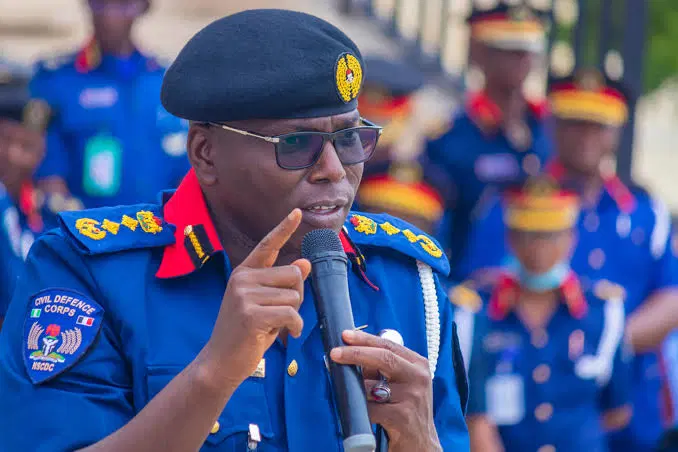
Dr Ahmed Audi, Commandant-General (CG) of the Nigeria Security and Civil Defence Corps (NSCDC), has disclosed that the corps is prepared to provide protection for Very Important Persons (VIPs) despite its low manpower.
Audi said this during the CG’s Quarterly meeting with senior officers on Tuesday at the NSCDC National Headquarters in Abuja.
According to him, despite the manpower of the corps which is about 63,000, the NSCDC remained dedicated to following the directive of President Bola Tinubu.
“The corps has keyed professionally to the Renewed Hope Agenda of Mr President to ensure the protection of Nigerians and all Critical National Asset and Infrastructure (CNAI).
“Despite our size, we are not complaining as this assignment is an assignment the corps is ready to tackle and it’s a welcome idea,” he said.
The News Agency of Nigeria (NAN) reports that President Tinubu, through his spokesman, Bayo Onanuga, had announced that VIPs seeking official protection must now obtain “well-armed personnel” from the NSCDC.
The NSCDC boss further said the meeting was also aimed at discussing strategies and modalities to be adopted in handling VIP protection.
He said that the corps will also engage in strategic discussions with stakeholders at various levels to see how best to discharge the new duty assigned to it.
He however stated that personnel of the NSCDC had been actively involved in the protection of VIPs, adding that the assignment wasn’t new to the corps.
“We have been part of it alongside other agencies and it is important to note that we get trained by the military, especially the training of our special forces,” Audi said.
The CG also said that the ongoing recruitment exercise into the corps by the Civil Defence, Correctional, Fire and Immigration Services Board (CDCFIB) will further boost the manpower of the NSCDC.
Audi charged all state Commandants and heads of formations to live up to expectations in the discharge of their duties, adding that anyone who does not take his job seriously will be sanctioned.
“We will strengthen the monitoring mechanism on performance of heads of formations nationwide with a view to checking what they do and assessing them,” he stated.
He appreciated the efforts, professionalism, resilience and determination of personnel so far in projecting the service. (NAN)
The post VIP protection: Low manpower not problem — NSCDC CG appeared first on Vanguard News.


Go and Win Osun, Tinubu Charges APC Aspirants
Deji Elumoye and Chuks Okocha in Abuja
After a meeting with 29 Chairmen of the Peoples Democratic Party (PDP) in the states, the National Chairman of the party, Taminu Kabiru Turaki, has said his agenda was to take the party down to the grassroots across the country.
Turaki, who leads the mainstream faction of the PDP, spoke at the meeting with forum of the states chairmen of the party, where they passed a vote of confidence on him and members of the National Working Committee (NWC), however, boasted that the party was set to reclaim the Ekiti State governorship.
Also, in a move that underscored the importance of the Osun State governorship to him, President Bola Tinubu, yesterday, charged all the eight All Progressives Congress (APC) governorship aspirants ahead of the primary election scheduled for Saturday, December 13, to work together and win the main elction.
Speaking at his meeting, the PDP national chairman, noted that, “From the beginning, this is our desire, to take the party back to the people and who will be our better partners in achieving this desire other than our state chairmen.
“The National Organization Secretary described you as Brigade Commanders. I want to correct that wrong impression.
“Today, PDP is on a new mission and this new mission is to reclaim Nigeria from the inept APC leadership. A leadership that, instead of taking Nigeria progressively forward, is taking us retrogressively backward.
“Today, Nigerians are living witnesses that the achievements, the progress that had been made in the 16 PDP’s glorious years have either been destroyed, or shattered, or reversed,” Turaki stated.
The PDP national chairman further stated, “So, when you look at 29 state chairmen sitting with us, with apologies coming from two, then when you also take into account the fact that there were some chapters that were dissolved, and so do not have leadership constituted presently, which we are planning to do in due course, then tell me, distinguished ladies and gentlemen, who is not here. If all the state chairmen are here with us, then who is it that is not with us?
“If all the state chairmen are supporting us, then who, sincerely speaking, can be fighting us? So, this is something for the whole world to see.
“These are known faces, these are veterans in their right, and they are here physically, not virtually, and they are here in person, not via representation. So as far as PDP is concerned, I think it speaks for itself.
“People now know where the leadership of PDP is, and people know who the true leaders of the party are, and of course we are the leaders, the genuine bona fide leaders of the people,” Turaki stressed.
The party leadership also met senators and members of the House of Representatives.
Also yesterday, the party presented the certificate of returns to the Ekiti State governorship candidate, Dr. Oluyede Olueole.
The certificate of election was presented to him by the chairman of the Ekiti State governorship panel, the former governor of Gombe State, Ibrahim Dankwambo, who said Oluyede Oluwole won with 297 in an election monitored by INEC.
The certificate of return as the PDP governorship was presented to him by the national chairman, Turaki, who also presented INEC documentation process as the authentic governorship candidate for the PDP.
By implication, Turaki said INEC has recognised the present National Working Committee members of the party.
He, therefore, challenged the Nyesom Wike group to present their governorship candidate for Ekiti State that is recognised by INEC.
Go and Win Osun Guber Election, Tinubu Charges Aspirants Ahead Party Primaries
President Bola Tinubu, yesterday, ordered all the eight APC governorship aspirants ahead of the primary election scheduled for Saturday, December 13 to work together and win the main election.
The move was believed to have underlined the importance of the Osun State governorship to him. He gave the charge after a meeting with APC leaders and the governorship aspirants.
The president assured the aspirants and leaders that they had his support and that of the party’s national leadership, just as he appealed for unity and consensus-building ahead of the governorship primary.
The president, according to a release by his Adviser on Information and Strategy, Bayo Onanuga, met with the aspirants at State House, Abuja, last night.
The aspirants at the meeting included former Deputy Governor Benedict Olugboyega Alabi, Dotun Babayemi, Akin Ogunbiyi, Senator Babajide Omoworare, Kunle Adegoke, SAN, Babatunde Oralusi, Mulikat Jimoh, and Munirudeen Oyebamiji.
But former deputy governor of the state, Senator Iyiola Omisore, who had previously dismissed his disqualification from the primary as a “joke”, did not attend the meeting.
Those that attended the meeting from the APC national leadership were National Chairman, Professor Nentawe Yilwatda; Secretary to the Government of the Federation, Senator George Akume; Chairman of Progressive Governors Forum, Governor Hope Uzodimma; and Minister of Marine and Blue Economy, Adegboyega Oyetola.
Tinubu praised the aspirants for their contributions to APC in the state, and urged them to close ranks and support the consensus candidate the party would present for the governorship election.
He stated, “You all have a duty and obligation to the party by ensuring the candidate of our party wins the next election in Osun State. You must strengthen the bonds of unity, party supremacy and collective responsibility.
“I have absolute confidence in your ability to deliver victory to our party in Osun State. You have my support and that of the national leadership of APC to win the coming election.”
Tinubu advised them to avoid the internal bickering and disunity that caused the party to lose the last election in the state to Peoples Democratic Party (PDP).
Emphasising the importance of party supremacy, the president charged the aspirants to be guided by the party’s interest in making the choice of a flagbearer.
At the end of the meeting, a joint statement was issued in which the aspirants and the leaders committed to support the candidate who would emerge at the primary.
The agreement, signed by all the aspirants and APC leaders, stated, “We, the undersigned aspirants for the 2025 Osun State Governorship Election under the platform of the All Progressives Congress (APC), having met and deliberated in the presence of President Bola Tinubu, and the National Chairman of the APC, Prof. Nentawe Yilwatda, and in the spirit of unity, discipline, and loyalty to our great party, hereby declare as follows:
“That we affirm and uphold the supremacy of the All Progressives Congress (APC) in guiding and determining the most appropriate process for selecting the party’s flag bearer for the 2025 governorship election in Osun State.
“That we unanimously agree to abide by the party’s decision to nominate a consensus candidate for affirmation at the APC Primary Election scheduled for Saturday, 13th December 2025.
“That we accept the outcome of the party-led nomination process in good faith, and pledge our total support to the candidate so nominated and affirmed.
“That we commit ourselves to peace, unity, and cohesion within the APC, and pledge not to engage in any act, public or private, that may undermine the integrity of the process or the standing of the party.”
The aspirants and leaders also stated, “That we will work collectively and individually to ensure the success of the APC at the polls and the consolidation of good governance in Osun State.
“We make this declaration voluntarily, in absolute loyalty to our great party, and in recognition of the guidance provided by Mr President and the National Chairman in the overriding interest of the progress and stability of Osun State.”
…Describes terrorism claims as political mischief
By Luminous Jannamike
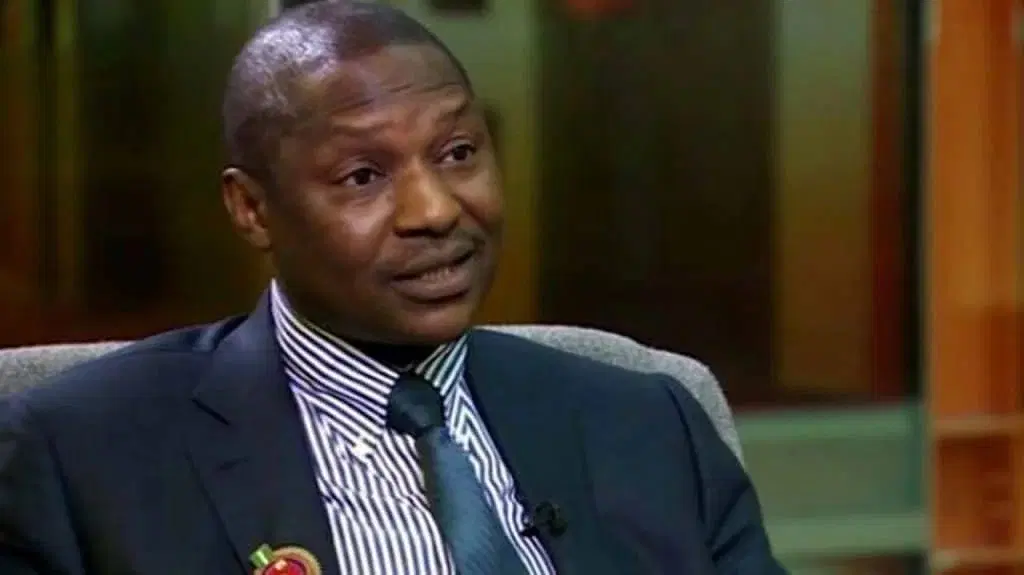
ABUJA—Former Attorney General of the Federation, AGF, and Minister of Justice, Abubakar Malami, SAN, is set to spend a third night in Economic and Financial Crimes Commission, EFCC, custody due to his inability to meet the bail conditions set by investigators.
Malami, who is being investigated by the EFCC over allegation of terrorism financing and operating 46 bank accounts, has, meanwhile, dismissing them as politically driven fabrications aimed at damaging his reputation.
The conditions include the seizure of his international passport, effectively preventing him from travelling out of the country, and a directive that he report daily to the EFCC headquarters in Abuja for questioning over a specified period, initially fixed at 30 days. He is also expected to present two serving permanent secretaries as sureties among other conditions set by the investigating team.
The denials were contained in a statement by his Media Assistant, Mohammed Doka, who maintained that the allegations making the rounds were false, mischievous and unsupported by any official documents.
Doka stressed that Malami had never been investigated for terrorism financing by the EFCC or any security or intelligence agency within or outside Nigeria.“We state without equivocation that there is no allegation, investigation or charge of terrorism financing against Malami, SAN, by the EFCC or by any other security, intelligence or law-enforcement agency, whether in Nigeria or abroad,” Doka said.
He added that claims suggesting the former minister operated 46 bank accounts were nothing more than fiction amplified by sensational media narratives rather than evidence.
“Similarly, claims suggesting that Mr. Malami operates or controls ‘46 bank accounts’ are entirely fictitious, unsupported by facts, official records or lawful findings, and merely form part of a coordinated media trial aimed at character assassination.
“At no time has Mr. Malami been questioned, investigated or confronted with issues relating to terrorism financing or any alleged multiple bank accounts. Even the retired military officer cited in recent reports explicitly clarified that he never accused Mr Malami of financing terrorism.”
“Mr Malami’s public service record directly contradicts such insinuations. During his tenure as Attorney-General, he played a leading role in strengthening Nigeria’s anti-money laundering and counter-terrorism financing (AML/CFT) framework, including the establishment of an independent Nigerian Financial Intelligence Unit (NFIU).”
“We urge Nigerians of goodwill to disregard the concocted allegations, sensational reporting and ongoing media trial designed to malign the person and record of Malami, SAN.
“We sincerely thank all right-thinking Nigerians for their concern, prayers, support and steadfast confidence. Your messages of encouragement reaffirm our belief that truth, law and reason will always prevail.
“We remain confident that Malami, SAN, will emerge stronger and better, and that together, we shall triumph against all forms of political witch-hunt, misinformation and intimidation,” he added.
The post Ex-AGF, Malami, spends third night in EFCC custody appeared first on Vanguard News.


(Tribute To Sam Nda-Isaiah, 1 May 1962 – 11 December 2020)
Five years after Sam Nda-Isaiah slipped away, his presence still sits with us like a verdict. His voice—booming, impatient, unmistakable – lingers at the edge of memory, summoning dread and inspiration in equal measure. Sam didn’t enter rooms; he arrived. He filled space with conviction, urgency, and a muscular impatience that banished lazy thinking. When he left, he left a silence yet to be filled, a seat waiting for his interruption, a nation missing the trumpet he loved to blow.
To work with him was to live in a whirlwind: gentle and volcanic, cerebral and impulsive, generous and exacting. He could fire you at noon and send you a book by dusk; he could rebuke a sloppy sentence and then pay your cab fare. He decided policy in a heartbeat and debated the philosophy behind it for days. He was the kind of boss who made you want to quit – and then return. I did, again and again, because LEADERSHIP, the newspaper he founded, was more than a newsroom. It was a crucible, and Sam was the fire.
He saw something in people, especially restless minds. He doubled my salary before I edited a single page of LEADERSHIPEDGE. He bought me books on every trip and challenged me to think harder, write sharper, and dream bigger. He was a man in a hurry – racing against his beginnings, against mediocrity, against time itself. He wanted to build an empire of ideas, a nation of thinkers. In one of his columns he wrote, ‘Nations are not built by slogans but by ideas, pursued with courage and consistency.’ That was his creed – and he lived it.
Sam’s management style was unconventional, chaotic even. He could elevate a novice one day and reverse the decision the next. Yet he believed in second chances. He believed in people, even when they failed him. He was no saint – erratic in staffing, sentimental in judgement – but never petty, never cruel. His generosity was legendary. He would pay school fees for staff members’ children, sponsor weddings, and support colleagues in distress. Yet he demanded excellence, often pushing people beyond their comfort zones. He once told me, ‘If you are not offending mediocrity, you are not doing journalism.’
He was never just a publisher. As a serial entrepreneur, he built ventures to house his philosophy of ideas. Banana Republic, his hospitality outfit, was not merely a restaurant; it was a salon where conversation flowed with the wine and ideas were incubated among thinkers, politicians, and dreamers. He believed leisure could be purposeful, hospitality a bridge, and well-designed spaces a crucible for creativity. He also started Allan Wood for human capital development and strategic thinking. His agri-business was to nurture a healthy population and give food security a practical meaning. His business instincts ranged beyond Nigeria, true to his view that enterprise is both local duty and global opportunity. For him, institutions – newspapers or restaurants – should not be merely functional; they should be transformative.
He learned the rigours of corporate governance at the feet of masters like General T.Y. Danjuma and in political governace, Lee Kwan Yew was his idol. From these two great men he internalised discipline, negotiation, patience in turbulence and in season of anomie. Those lessons steadied his ventures and gave him the confidence to sit where capital, policy, and vision meet. He felt at home in boardrooms because ideas deserve structure; in newsrooms because structure deserves ideas. From that vantage – entrepreneur, publisher, strategist – he entered what he called the ‘perilous mine’ of politics. He knew the risks – reputational, financial, personal – but stepped in regardless.
His foray into politics strained his business. Salaries faltered; staff scattered. Yet Sam remained defiant – still dreaming, still building. He was fearless: challenging Obasanjo, confronting Yar’Adua, even his erstwhile boss Buhari – speaking truth to power when it mattered most. He believed politics was too important to be left to career politicians. He wanted thinkers, builders, and dreamers to shape Nigeria’s destiny. As he wrote elsewhere, ‘Leadership is not about occupying office; it is about offering vision. Without vision, power is an empty chair.’
He had reservations too. He worried about sending underage children to school abroad: would distance dilute guidance; would cosmopolitan polish cost rootedness? It was a rare vulnerability in a man armoured with confidence. He was also a notorious micromanager – not from distrust of talent but from fear of failure. The masthead bore his name; if anything collapsed, the mockery would be his. So he hovered, corrected, intervened – guarding vision like a flame in a storm. It was his strength and his weakness.
His celebrated ‘Nigeria: Full Disclosure’ – a collection of his columns – carried a refrain: ‘For God and country, we must tell ourselves the truth, no matter how bitter.’ Patriotism, he argued, is honesty. ‘We cannot continue to deceive ourselves; nations are built on truth, not lies.’
He raged against the tyranny of small minds. Nigeria, he said, is too important for the dictatorship of tiny imaginations. Our poverty was not of resources but of ambition – small men in oversized agbadas, small ideas wrapped in national slogans. He did not hate politicians; he hated the smallness politics often rewards. Nations, he insisted, are built on substance, not slogans.
He wrote about corruption with moral and mathematical anger. Every naira stolen was not just theft from a vault but from a future. ‘Every naira stolen is a child’s school denied, a hospital unbuilt, a road left in dust. Corruption is not just stealing; it is stealing tomorrow.’ He despised euphemism – ‘misappropriation’ for looting, ‘brief illness’ for truths the public deserves. A nation that whispers when it should speak, he warned, risks forgetting its name.
He died at a moment that demanded trumpet blasts for truth, and the irony still stings. Had he written his own obituary, he would have named the enemy and demanded lessons from COVID-19. His passing was not the end of an argument; it was the silencing of a trumpet. We are poorer – unless we refuse to let the silence stand.
What would he say now, two and a half years into the Tinubu presidency, with inflation as theology and hope as contraband? He would separate loyalists from patriots and insist on substance over slogan. He would call for competence over camaraderie, policy that survives applause and passes the audit of results. He would remind us that feedback is not insult, criticism not sabotage; that the press must speak without fear and the state must learn without defensiveness. He would say the nation is haemorrhaging not only naira but hope, and that the first duty of leadership is to stop the bleeding.
At home – his immediate, makeshift nation – the work continues with a quiet stubbornness he would have loved. Zainab, his soulmate and wife, has guided LEADERSHIP as Chairman with dignified steadiness: love as public duty; continuity without mimicry. To lead in the shadow of such a figure is to balance humility with firmness; she has chosen resilience over despair. The children carry his name and, more importantly, his courage. Emerson said an institution is the lengthened shadow of one person; shadows should not eclipse the living but guide them. Let them build their own lights – tempering his impatience into their healthier pace while retaining his allergy to mediocrity.
To his brothers – Abraham, Jonathan, and Solomon – who laboured with me in the newsroom’s holy chaos: you know the crucible he created, the fire that singed and refined. The scaffolding has shaken and stood. Achebe warned that integrity’s true test is refusal to be compromised. When fatigue tempts compromise, choose ache. Choose integrity. Keep the voice loud enough to make enemies and clear enough to make them reconsider. Consider Sam’s love for you, his siblings and clothe his children, wife and business with the same regalia.
His maxims remain usable truths. Leadership begins at the mirror. Nations are moral communities; institutions reflect their builders. Patriotism is practical – measured not by anthems but by lawful behaviour. The citizen’s duty is as essential as the president’s; a culture of shortcuts leads nowhere. He distrusted the theatre of reform that changes signage and salaries but leaves rot intact. He argued for full disclosure – of budgets, deals, public health – because sunlight is not just disinfectant; it is architecture, building rooms with transparent walls where accountability becomes habit.
He urged leaders to read their own policies as literature: test the logic, hear the false notes, force coherence, excise rhetoric that cannot survive reality. He believed in constructive risk: launch the paper others say won’t work; publish the uncomfortable story; run the serious campaign; hire hunger; offer second chances where bad mentorship wrecked first ones. If you go under, let it be for refusing to lie, not for refusing to think.
Five years on, we must ask: Are we telling ourselves the truth? Building institutions or merely inhabiting them? Setting standards that outlast us? Educating citizens to interrogate policy rather than worship personality? Choosing the dull pain of reform over the sweet narcotic of flourish?
LEADERSHIP – the paper and the virtue – still has a story to tell. Newsroom seasons thin and thicken, but the mandate endures: fearless reporting, honest analysis, comfort the informed, discomfort the powerful. Publish truth, elevate standards, teach for mastery, hire for talent, cultivate editors brave in judgement and reporters who love facts more than access or virality.
To readers, practitioners, and citizens who miss that trumpet: honour him by practice, not cult. Read carefully. Write honestly. Build arguments like bridges that bear weight. Demand accountability without smugness; hope without naïvety. Reject cynicism – the cheap wisdom of the unambitious – and choose the harder hope that holds leaders and citizens to standards.
To policymakers, the faithful memorial is reform that survives you. If your agenda requires your presence, it is performance, not architecture. Engineer transparency into procurement; open budgets in formats any citizen can read; improve data until bad policy becomes mathematically embarrassing; train civil servants like athletes; replace loyalty tests with competence audits; banish press releases bloated with adjectives and empty of numerators and denominators.
Sam loved wit because it reveals the skeleton of argument. He teased slogans until they confessed their emptiness. In the newsroom he demanded a disciplinary humour: if you couldn’t explain a story in one sentence to an intelligent uncle, it needed more reporting. Words, he insisted, are tools of construction, not anaesthesia. He preferred hard verbs, clean nouns, ruthless adjectives.
He expected mistakes and respected those who corrected them quickly. He tolerated argument but punished laziness. He prized insolence in intellect and humility in habit; he distrusted vanity that arrived before the work. He nurtured restless minds like dangerous seeds – wanting forests, not reception ornaments.
A soft hymn would betray him. The proper ending is an assignment. The baton is in our hands – Zainab’s steady leadership, the children’s emerging ambitions, the brothers’ stewardship, the staff’s daily graft, the readers’ discrimination, the citizens’ discipline and associates living true to his virtues and shunning the vices he detested. Do not let the trumpet rust. Let his shadow be signal, not shelter: run further, think harder, insist on truth, refuse mediocrity, and demand courage.
He kept a line from T.S. Eliot like a talisman: ‘the end is where we start from’. The abrupt end of his life is no excuse for nostalgia; it is a beginning we must hate to waste. Emerson’s shadow is a challenge: let it lengthen with shape, not merely size. Achebe’s counsel on integrity – refuse compromise – must be our daily oath. Marcus Aurelius – ‘the soul is dyed by its thoughts’ – should colour our newsroom and our nation: think cleanly, act explicitly, build courageously.
Rest well, Sam, man of big ideas. You ran against mediocrity, complacency, and time – making sentences work harder than their syllables and the press louder than power preferred. You taught us that running is the point: the restless, purposeful motion that turns rooms into workshops, meetings into laboratories, and a good nation into a better one. Your trumpet is silent, but the music persists among those you taught to breathe truth and blow courage. We will keep sounding it – without sentimentality, without cowardice, without pause, Chairman!

• Women journalists intensify awareness campaigns
About 4,000 cases of Gender -based Violence (GBV) and child protection cases have been recorded in Anambra State this year. Out of this number, the government reconciled over 3,000 cases for different families through the Alternative Dispute Resolution (ADR) option, while the other more difficult cases were charged to court, resulting in 400 convictions
The Commissioner for Women Affairs and Social Welfare, Mrs Ify Obinabo, disclosed this while defending her ministry’s 2026 Budget before the House of Assembly Committee on Budget. She noted that with increased funding, her ministry would do more in protecting children, women and widows, as well as men who are abused by their wives.
Meanwhile, the State Chapter of Nigerian Association of Women Journalists (NAWOJ) and stakeholders lauded the enactment of Cybercrimes (Prohibition, Prevention, etc.) Act, 2025, which criminalises cyber bullying and trolling, among others.
Speaking on the occasion of the 16 Days of Activism against GBV, with the theme, ‘Unite to End Digital Violence Against Women and Girls’ in Awka, yesterday, the Headline Sponsor and Chairman of Kates Associated Industries Limited, Ikem Osanakpo, said the organisation sponsored the event due to high rate of GBV in the society and to make people hear voices of NAWOJ in the campaign, to eliminate the scourge.
Osanakpo, who was represented by the Chief Executive Officer, Enebeli Osanakpo, called on the citizenry to take advantage of the Cybercrime Act 2025, which provides for punishments against online stalking and other forms of cyber bullying.
In her remarks, the state Chairperson of International Federation of Women Lawyers (FIDA), Amara Mojekwu, pointed out that the digital violence, which takes place online criminally, has been taken care of by the Cybercrime Act, 2025 by an imposition of two years imprisonment, including touching without consent, assuring of pro bono services for victims.
Contributing, the member of House of Assembly representing Onitsha North 1 State Constituency, Mimiy Azikiwe, lauded the vista of opportunities created by digital space, but decried it hasn’t become a safe place for women and girls in the context of cyber bullying, especially in Africa and India.
Azikiwe, while appreciating the existence of federal and state laws against GBV, regretted that a lot of people were ignorant of them and called for a more sensitisation and enactment of stringent laws and to protect females from violence.
In her remarks, first female Mass Communication Professor in Africa sub-region, Stella Okunna, noted that the event by NAWOJ as a body of female media practitioners would afford the opportunity to amplify to their voices, raise awareness, and take collective action to end all forms of violence against women and girls.
Earlier in her welcome address, the Organising Committee Chairperson, Rotn Oby Arinze, said: “Today, we stand united with a shared purpose: to confront, challenge, and ultimately end GBV in all its forms. Your presence here is a powerful statement that together, we refuse to remain silent in the face of injustice.
According to her, NAWOJ is committed to building a society where safety, dignity, and equality are guaranteed for every woman, girl, man and boy, as GBV does not discriminate.


Security operatives at the General Tunde Idiagbon International Airport, Ilorin, Kwara State, on Wednesday apprehended a suspected stowaway attempting to smuggle himself out of the country by hiding beneath a departing aircraft.
The suspect, identified as Segun Martins, was caught at exactly 3.02 p.m. after gaining unauthorised access to the restricted airside area of the airport.
Authorities said Martins was found at the base of an Overland Airways aircraft as it was taxiing for takeoff.
On his verified 𝕏 handle, the Director of Public Affairs and Consumer Protection at the Nigerian Civil Aviation Authority (NCAA), Mr Michael Achimugu, disclosed that the suspect had tried to conceal himself between the aircraft’s tyres in a desperate bid to escape the country.
He confirmed that the man was immediately arrested and handed over to personnel of the Airport Police Command for interrogation and further investigation.
Achimugu said, “At approximately 1502 hours, a male, identified as Segun Martins, gained unauthorised access to the foot of an Overland aircraft that was about to taxi for takeoff and attempted to conceal himself between the aircraft tyres.
“Ground security apprehended the individual. He was immediately handed over to the Airport Police for further investigation.
“Mr Segun Martins stated that he believed the aircraft was bound for the United States of America and intended to escape by hiding on the aircraft.”
© 2025 Naija News, a division of Polance Media Inc. Contact us via [email protected]


Fresh controversy has erupted at the University of Nigeria, Nsukka, as pressure continues to mount on the Vice-Chancellor, Prof. Simon Ortuanya, to leave office following allegations of tampering with the academic records of former Minister of Innovation, Science and Technology, Uche Nnaji.
The renewed call for his resignation resurfaced after concerns grew over the handling of documents linked to Nnaji’s years as a student at the institution.
Former Minister Nnaji had earlier accused the Vice-Chancellor of altering his university records at a time when there were widespread claims that he had presented a falsified UNN degree certificate.
This was despite an earlier confirmation by the university’s registrar stating that Nnaji’s academic documents were original and valid.
A coalition under the banner of the Joint Civil Society Front (JCSF), Enugu State, addressed journalists and revealed that the Minister of Education, Dr. Tunji Alausa, had already set up an investigative panel to look into the allegations surrounding the alleged certificate tampering.
According to the group, the Federal Ministry of Education wants to establish what happened, how the documents were handled, and why the university’s earlier official position had suddenly changed.
Attempts by reporters to obtain a direct response from Prof. Ortuanya or the university’s Public Relations Office were unsuccessful, as neither the VC nor the communications unit agreed to comment on the matter.
The JCSF, however, insists that the Vice-Chancellor cannot remain in office while the investigation continues. The group argues that Ortuanya should step down in the same way Nnaji resigned to allow for a fair and open inquiry.
Moreover, they warned that allowing the VC to remain in his position could compromise the work of the investigative panel set up by the Education Ministry.
Speaking at the briefing, the group’s coordinator, Vincent Ani, said the pressure on Ortuanya intensified after he allegedly released Nnaji’s academic details on his own authority and asserted that the former minister never graduated from the university.
According to Ani, this act directly contradicted the registrar, who is the official custodian of student records. He added that by taking over the registrar’s statutory duty, Ortuanya raised serious questions about motive, neutrality, and due process within the institution.
Ani stated: “This action bypassed the Registrar, the statutory custodian of academic records. This action has raised immediate concerns about the motive behind the action of the Vice Chancellor, who suddenly performed a statutory responsibility of the registrar.
This singular action from the Vice Chancellor, Prof Simon Ortuanya, is a strong sign of institutional malaise and a politically motivated bias with an undertone geared towards maligning the person of Chief Uche Nnaji.”
The group welcomed the decision of the Education Minister to constitute a panel but insisted that standard practice requires the suspension of any official under investigation to prevent interference, intimidation of staff, or alteration of evidence.
They said: “This will prevent interference, intimidation, destruction of evidence, or manipulation of records by the persons being investigated. The Joint Civil Society Front (JCSF), Enugu State, hereby demands that Prof. Simon Uchenna Ortuanya be suspended while the panel conducts its assignment.”
According to the group, the heart of the issue goes beyond Nnaji and directly affects the reputation of UNN. They noted that the university had maintained a clear position in 2023 affirming that Nnaji graduated, only to reverse that same position in 2025.
The sudden disappearance or alteration of documents, they said, sends a disturbing message about the institution’s internal controls.
They warned that this type of inconsistency is capable of damaging the university’s credibility for years if not handled decisively. The JCSF further stressed that Nnaji’s resignation as minister was not an admission of wrongdoing, but a gesture aimed at ensuring transparency. They now expect the same from the Vice-Chancellor.
They added: “We therefore expect that Prof Simon Ortuanya should do the same willingly, like Uche Nnaji or be suspended by the Federal Ministry of Education so that the investigative panel should do their job smoothly without let or hindrance.”
Recall, we earlier reported that the resignation of former Minister Uche Geoffrey Nnaji was directly linked to the same certificate scandal at University of Nigeria, Nsukka (UNN).
The Ex-Minister stepped down in early October 2025 after revelations that UNN and the National Youth Service Corps (NYSC) disowned the academic and service certificates he submitted when he was appointed minister.

Chiemelie Ezeobi
As the world marks the United Nations Anti-Corruption Day, the Civil Society Legislative Advocacy Centre (CISLAC), the Nigerian chapter of Transparency International (TI), has warned that corruption remains one of the most destructive forces fuelling insecurity across Nigeria.
In a statement signed by its Executive Director and Head of TI-Nigeria, Comrade Auwal Musa Rafsanjani, the organisation expressed concern that despite huge investments in defence and internal security, corruption within the system continues to weaken national safety and leave citizens exposed to persistent violence.
CISLAC/TI-Nigeria said Nigeria’s prolonged battles with terrorism, banditry, kidnapping, militancy, communal clashes and organised crime have been worsened by entrenched corruption that “undermines every layer of the security architecture.”
It warned that corruption affects defence procurement, personnel recruitment, welfare administration, intelligence sharing and operational command in ways that directly fuel insecurity.
The organisation noted that “security funds continue to disappear through inflated contracts, questionable procurement deals, misallocation of resources and outright diversion of money meant for operations and equipment.” It said welfare-related corruption has left frontline personnel demoralised, while families of deceased officers often receive no entitlements, further eroding trust within the ranks.
CISLAC/TI-Nigeria also decried recruitment corruption, saying it has “placed unqualified individuals in sensitive positions and pushed competent officers aside.” It cautioned that the misuse of security priority, where a few individuals enjoy excessive protection while citizens remain vulnerable, reflects systemic inequality. The group also condemned nepotism and the manipulation of laws to unlawfully extend tenure in security institutions, describing it as dangerous to national stability.
The organisation raised concerns about weak National Assembly oversight and the persistent failure of government institutions to enforce accountability. It lamented poor intelligence sharing among security agencies, saying such gaps are routinely exploited by criminal networks.
It added that illegal payments collected by police officers at roadblocks to remit “returns” to superiors show how corruption has permeated routine law enforcement.
CISLAC/TI-Nigeria criticised what it described as “the collapse of administrative justice,” noting that impunity persists for security failures and corruption-related misconduct. The group also faulted the widespread violation of the presidential directive withdrawing police personnel from VIPs, saying the order “has been largely disregarded.”
According to the organisation, “insecurity has now become a lucrative enterprise for certain actors in government who facilitate ransom payments and negotiations with terrorists.” It warned that these short-term arrangements undermine long-term stability and feed the criminal economy.
On the proliferation of small arms, CISLAC/TI-Nigeria said Nigeria now accounts for roughly 70 percent of illicit weapons circulating in West Africa. It further warned that concerns about terrorism financing contributed to Nigeria’s ranking as 8th among the top 10 countries most affected by terrorism in the 2024 Global Terrorism Index. The trend, it said, underscores the need for urgent reforms to prevent further national destabilisation.
The organisation called for sweeping reforms and urged the Federal Government, National Assembly, security agencies and anti-corruption bodies to prioritise transparency in defence and security spending. It emphasised the need for full disclosure of procurement processes and audited expenditure in line with global standards.
CISLAC/TI-Nigeria also pushed for stronger legislative oversight and an independent defence procurement audit mechanism to eliminate contract inflation, ghost projects and misused funds.
The group urged government to implement strict disciplinary measures for officers involved in bribery, extortion, collusion with criminals or operational compromise. It also called for improved welfare, insurance cover and adequate equipment for frontline personnel to rebuild morale.
It added that enhanced intelligence sharing, inter-agency cooperation and whistle-blower protection are essential to closing gaps exploited by criminal organisations.
CISLAC/TI-Nigeria stressed that Nigeria cannot overcome insecurity without first tackling corruption within the security sector, saying “no volume of military spending or sophisticated equipment will deliver results if diverted funds, weak oversight and entrenched impunity continue to undermine the system.”
The organisation said the safety of Nigerians must not be compromised by corruption, political interests or institutional negligence. It reaffirmed its commitment to working with government, parliament, security agencies and citizens to strengthen accountability and rebuild public trust.
“Nigeria deserves a secure, just and prosperous future,” the organisation stated. “Such a future can only be achieved by confronting and eliminating corruption at the heart of the country’s security framework.”
By Henry Umoru & Johnbosco Agbakwuru
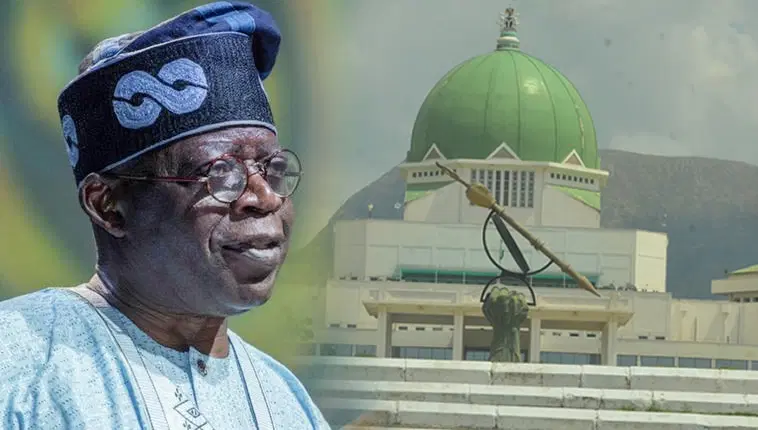
ABUJA —The Senate yesterday raised alarm over what some senators described as selective implementation of President Bola Tinubu’s order on withdrawal of police orderlies from Very Important Persons, VIPs, to complement efforts to tackle the high level insecurity in the country.
The senators complained that while their orderlies had been withdrawn, several VIPs still enjoyed the services of police orderlies.
Their complaint came on a day President Tinubu ordered total compliance with his earlier directive withdrawing all policemen attached to Very Important Personalities, VIPs, across the country.
The President also directed the Minister of Interior, Inspector-General of Police, IGP, and the Nigeria Security and Civil Defence Corps, NSCDC, to ensure immediate replacement of police officers on special security duties not to leave people exposed.
Angered over the selective the enforcement, even when the Inspector-General of Police, IGP, Kayode Egbetokun, vowed to arrest any officer found with a VIP in violation of the directive, the senators are demanding that it be done across board in the spirit of fairness and equity.
While alleging that sons and daughters of political office-holders still have police orderlies and enjoy security cover, the senators sought exemption from the enforcement to avoid being used as scapegoats .
The complaints expressed about the implementation in Senate yesterday came on the strength of a motion raised by Senator Abdul Ningi.
Senator Ningi, who moved the motion through a point of order, informed the Senate that the only police orderly he had was withdrawn in the early hours of yesterday, while some other VIPs in the country are still enjoying the privilege.
Ningi, who demanded that enforcement should be done across board in the spirit of fairness and equity, said: “It should be done across the board. Let’s see what happens from the office of the President, to the Vice President, to the Senate President, to the Speaker of the House, to the ministers.
“I saw two convoys of ministers and they were carrying lots of security personnel. Mr. President, I have also seen business concerns, Chinese and other business concerns with their complements of orderlies.
“Mr. President, I have also seen daughters and sons of political office-holders having orderlies and having security covers.
“Mr. President, I have seen singers having orderlies and complementary protection. I cannot ever imagine that a senator of the Federal Republic of Nigeria, who has been here for a very long time will have his only one orderly withdrawn.
“I can take care of myself but let it be done across the board. Let me not see governors, ministers, and business tycoons, being escorted by security personnel.
NASS shouldn’t be used as scapegoats
“This matter should be addressed with all seriousness it deserved. I, therefore, call on the President of the Senate to ask the Chairman of Committee on Police Affairs to investigate why the directive is seemingly being implemented selectively. The National Assembly should not be used as a scapegoat.”
In his brief remarks , the Deputy President of the Senate, Barau JibrIn who presided over the session, said the issue raised by Ningi was extensively deliberated upon by the leadership of the Senate on Tuesday.
He specifically informed the senator and other affected senators that efforts were being made to convince the Presidency to exempt members of the National Assembly from orderly withdrawal implementation.
Jibrin said: “I want to assure you that the issue raised to protect you is taken seriously, and that at the leadership side yesterday (Tuesday), we agreed that the course of action should be undertaken in order to restore your police orderly to you, because it’s in line with international practice.
“I’m sure we have a listening President. He will listen to us, and by the grace of God, he will save us from that order, which was given in good faith.”
Tinubu orders comprehensive enforcement of police withdrawal from VIPs
Meanwhile, President Tinubu yesterday ordered total compliance with his earlier directive withdrawing all policemen attached to Very Important Personalities, VIPs, across the country.
The President also directed the Minister of Interior, the Inspector-General of Police, IGP, and the Nigeria Security and Civil Defence Corps, NSCDC, to ensure immediate replacement of police officers, who are on special security duties in order not to leave people exposed.
Tinubu, who gave the directives in his remarks before commencement of the Federal Executive Council, FEC, meeting at the Council Chambers, Presidential Villa, Abuja, said in the wake of kidnapping and terrorism, the country needs to utilise all the forces to protect the citizens.
Recall that amid worsening security situation in the country, with the recent kidnappings of students in Kebbi and Niger states, the President had directed that police officers with VIPs should be withdrawn and also approved recruitment of additional 20,000 police officers.
Speaking at the council chambers, the President also told the Vice President, Senator Kashim Shettima, to liaise with state governments, through the National Economic Council, NEC, on grazing reserves that could be salvaged or rehabilitated into ranches and livestock settlements.
Tinubu said he was serious with his orders on the withdrawal of police from VIPs and that it must effective, adding that anyone who needs the services of police should take permission from the IGP who, in turn, should take permission from him.
He said: “I told the IGP and I hope the Minister of Police Affairs is here, if you have any problem of security because of the nature of assignment, please contact the IGP and get my clearance.
“The Minister of Interior should liaise with IGP and Civil Defence structure to replace those police officers who are on special security duties, so that you don’t leave people exposed.
“NSA and DSS to provide further information and form themselves the committee and review the structure.
“It should be effected. We face challenges of kidnapping and terrorism; we need all the forces we can utilise.
“I know some of our people are exposed and I understand that we have to make exceptional provision for them and the Civil Defence are equally armed and I want NSA to ensure our forest guards are armed too, so take it very seriously.
“On livestock reform, I think the vice president should get NEC, first of all, to see which village or grazing reserves that can be salvaged or rehabilitated into ranches, livestock settlements.
“We must eliminate the possibility of conflicts and turn livestock reform into economically viable development. The opportunity is there, let’s utilise it.
“Let’s exercise the constitutional requirement which states that land belong to states. Whichever one they can salvage, convert to livestock village, let us stop this conflict area and turn it to economic opportunities and prosperity.”
The post Police orderly withdrawal: Senators kick, Tinubu insists appeared first on Vanguard News.

• Transport union members decry move
To mitigate the effect of petrol subsidy removal on the transport sector, the Ogun State Government said it has concluded plans with the Federal Government to replace existing parks and garages in the state with modern terminals for easy movement of goods and services across the 20 council areas.
Commissioner for Transport, Gbenga Dairo, in a chat at his office in Oke-Mosan, Abeokuta, said the initiative was part of the Federal Government’s plan to pick the state for the construction of modern terminals to change the face of transportation structure in the state.
Dairo stated that the modern terminals would feature state-of-the-art facilities, including a petrol and Compressed Natural Gas (CNG) station, warehouses, parking spaces, administrative offices, passengers’ amenities, security as well as Information and Communication Technology (ICT) features, among others, to meet the modern-day transportation system and generate employment opportunities, especially for operators in the existing parks and garages.
He mentioned Kuto and Panseke as part of the parks and garages that would be turned to modern terminals, stressing that the state government’s plan to move the existing parks and garages to a new site would attract investors and businesses as well as improved transportation system in the state for residents to enjoy.
The commissioner said: “Our focus is to consolidate terminals in major cities, especially in Abeokuta, and we are working together with the Federal Government to build a new multinational and multi-dimensional modern terminal in Abeokuta. I hope all the various parks and garages that are congested in the state capital, Abeokuta, will be relocated to a new site for a better transportation system. Part of the parks and garages where the terminal will be situated is Kuta, Panseke and others.”
Meanwhile, Secretary of the National Union of Road Transport Workers (NURTW), Kuto Branch, Abeokuta, Oluyinka Oluseye, called on the state government to demolish houses within the Kuto Parks and Garages to enlarge the place and accommodate the proposed modern terminals.
Oluseye appealed to the state government to also create a small portion from the extension for market women and transport union to operate from the existing parks and garages beside the modern one, stressing that moving the parks and garages to a new site would affect the union’s transport business.
He said: “It is a welcome development from the government angle to create modern terminals, but trying to move the existing park and garage in Kuto to another site would be difficult and would affect our transport operations and the business of the market women.
“What I think the government should do is break down structures to enlarge the Kuto Park and Garage for the construction of the modern terminals and create a small place for us and the market where women do businesses.”
Also, a leader of National Union of Road Transport Workers (NURTW) at anonymity, appealed to the state government to create a small portion of land for the union to operate their transport business instead relocating them to a new site.
The source said although the union could not oppose any government policy on transportation system, it urged the government to consider the plight of stakeholders, including members of the union, shops and small business owners at the park and garages would undergo in the course of relocating to the new site.
He lamented that the union would lose a number of passengers who board inter-state buses at Panseke Park and Garage, should the government relocate the part, adding that even small business owners would lose their customers and would take time for them to get new ones at the relocated site.
“When you look at Panseke Park and Garage, you will see that the space is not enough for the state government to use for the proposed modern terminal. Even the Shop Complex is not big enough. But you know if the government wants to do something, we can’t stop. We can only beg them as a transport union to give us small space to operate because relocation of the park and garage will be stressful and cause a setback to our transport business. Not only members of the union will be affected, even those who have shops at the complex and those who display their wares around the park and garage,” he added.
The Federal Government has raised serious concern over the growing link between kidnapping and terrorist financing across the country.
Officials say kidnapping, which many once viewed as a random criminal act, has now grown into a major financial engine for violent groups operating in Nigeria.
This warning was issued on Wednesday in Abuja during a Stakeholders Workshop organised for the Multi-Agency Kidnap Fusion Cell.
The National Coordinator of the National Counter-Terrorism Centre (NCTC), Maj. Gen. Adamu Laka, explained that kidnapping has now become one of the most reliable revenue channels for criminal and extremist groups.
He stated that ransom payments have empowered these networks to purchase arms, strengthen their logistics, and sustain coordinated attacks across several regions.
According to him, “As we are all aware, Nigeria continues to grapple with a broad spectrum of security challenges driven by terrorism, banditry, separatist violence, and farmer-herder clashes. A common trend across these threats is the pervasive use of kidnapping.”
Maj. Gen. Laka noted that what used to be a crime of opportunity has now transformed into a sophisticated and lucrative enterprise.
He added that this shift has allowed criminal groups to deepen their influence in rural and semi-urban areas, with some gaining enough resources to challenge state authority.
“What was once an opportunistic crime has become a persistent and destabilising enterprise, enabling these groups to procure logistics, perpetuate terror, and, in some cases, exert territorial control,” he said.
Laka explained that concerns over worsening kidnapping cases prompted Nigeria and the United Kingdom to jointly establish the Multi-Agency Kidnap Fusion Cell housed at the NCTC.
The centre, inaugurated by the National Security Adviser on 19 December 2024, was created to improve intelligence sharing, operational coordination, and rapid response across security agencies.
He highlighted that since it began operations, the Cell has brought together the Armed Forces, intelligence agencies, and law enforcement units to track syndicates, disrupt planned abductions, and rescue victims.
He said analysts working within the Cell have successfully produced intelligence that led to arrests, dismantling of kidnap networks, and recovery of hostages in multiple states.
To improve its reach, the NCTC also conducted a nationwide expansion programme in July 2025, involving Anti-Kidnap Commanders of the Nigeria Police Force and operatives of the Department of State Services from all 36 states and the FCT.
However, despite the recorded gains, Laka stressed that the current security environment requires wider collaboration.
He said the anti-kidnap framework can only be fully effective when supported by media organisations, telecom operators, and social media platforms.
Laka urged participants at the workshop to develop practical solutions that can boost rescues, weaken kidnapping rings, and enhance early-warning systems for communities.
He also emphasised the need for constant synergy with the Fusion Cell to support ongoing operations across the country.
Also speaking, the Acting High Commissioner of the British High Commission, Gill Lever, commended the progress recorded by the centre.
She said the UK government is impressed with the impact of the Fusion Cell and remains committed to supporting Nigeria’s fight against terrorism and kidnapping.
Head of the UK’s National Crime Agency, Chris Gibson, also stressed the need for strong cooperation among all agencies.
He advised Nigerians to continue backing the government’s counter-kidnap initiatives, reminding citizens that “anti-kidnapping is a responsibility of every citizen.”
Kidnapping remains one of Nigeria’s most pressing security threats, with criminal groups increasingly relying on ransom payments to sustain their operations.
The government is banking on stronger intelligence fusion, international partnerships, and a multi-layered response system to curb the menace.