
NIGERIA NEWS
First Lady Remi Tinubu Breaks Silence on Controversy With Osun Governor Adeleke

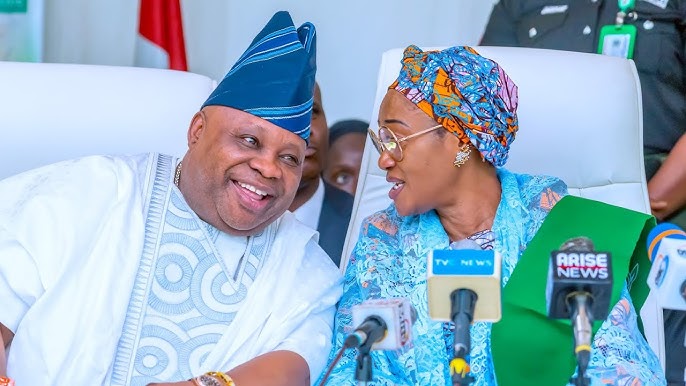
Nigeria’s First Lady, Senator Oluremi Tinubu, has publicly reacted to the intense debate surrounding her interaction with Osun State Governor, Ademola Adeleke, during the 10th coronation anniversary of the Ooni of Ife.
The event, which held in Ile-Ife on Sunday, was meant to celebrate a decade on the throne for Oba Enitan Adeyeye Ogunwusi.
The ceremony also featured the conferment of the traditional title Yeye Asiwaju Gbogbo Ile Oodua on the First Lady.
However, it took an unexpected turn after her exchange with Governor Adeleke.
While the governor stepped forward to deliver his remarks, he began by singing praises to the monarch and to the First Lady.
It was at this point she intervened, telling him: “Enough with the music, or I’ll switch off the microphone,” before instructing him that he had “five minutes to conclude” his message.
The moment was captured on video and immediately spread across social media, drawing widespread criticism from Nigerians who saw her tone as confrontational and unnecessary.
Amid the heated public reactions, Mrs Tinubu took to her Facebook page on Monday night to address the controversy.
Posting a picture of herself standing with Governor Adeleke, she wrote that public figures are often judged harshly for actions that might otherwise be overlooked.
In her words, “Those entrusted with leadership understand their duties and how to steer the affairs of society. More often, it is the followers and critics who scrutinize every step, amplify minor missteps, and turn them into needless controversy.”
Her comment has not slowed down the backlash online. Many Nigerians insist her approach towards the governor was disrespectful and unbecoming of the office she occupies.
As of the time of filing this report, the Osun State Government has not released an official statement or addressed the mounting public criticism.


The Federal Government on Wednesday arraigned former Minister of Aviation, Senator Stella Oduah, before the High Court of the Federal Capital Territory on N5 billion corruption charges.
She was put on trial by the Attorney General of the Federation and Minister of Justice, Prince Lateef Fagbemi, on five counts relating to advance fee fraud and conspiracy.
In one of the counts, Stella Oduah was accused of obtaining, by fraudulent pretences, a sum of N2.4 billion through Broad Waters Resources from the Federal Ministry of Aviation.
She was said to have fraudulently claimed that the money represented the cost of technical supervision.
The alleged fraud was said to have been perpetrated in January 2014.
In another count, Stella Oduah was alleged to have collected N1.6 billion and a further N839 million through the same means, contrary to Section 8 of the Advance Fee Fraud Act.
The former minister, who was docked along with one other accused person, however denied the charges.
Justice Hamza Muazu admitted her to bail on self-recognisance, but ordered that she must deposit her travelling passport with the court and must not travel outside Nigeria without the court’s permission.
Legal luminary Onyechi Ikpeazu represented the former minister during the arraignment.

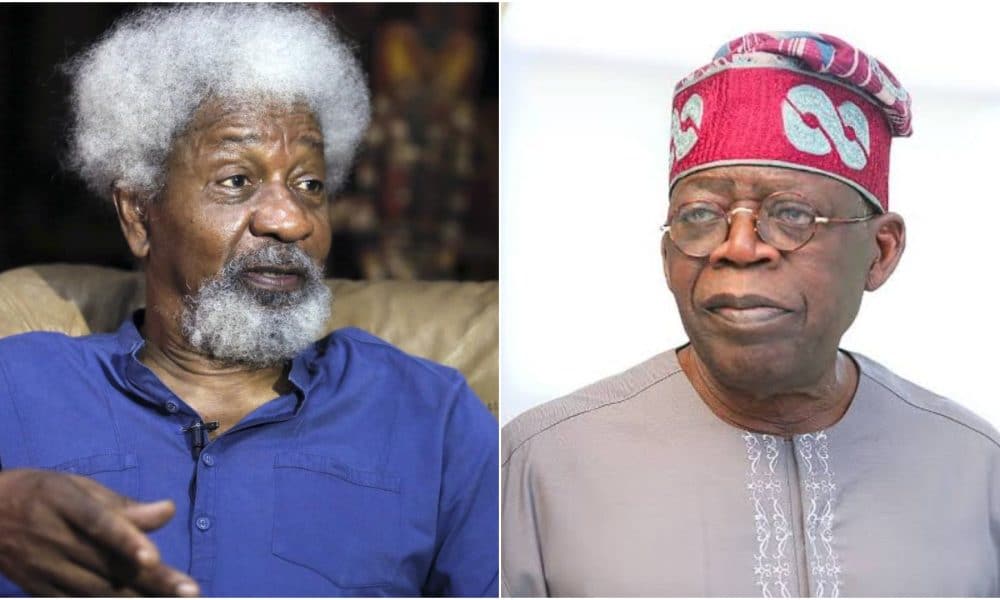
Nobel laureate, Professor Wole Soyinka, has mocked President Bola Ahmed Tinubu over what he described as the excessive deployment of armed security personnel around his family.
Speaking on Tuesday at the 20th Wole Soyinka Centre for Investigative Journalism (WSCIJ) Awards held in Lagos, Soyinka said the amount of security protecting Tinubu’s son, Seyi, was enough to invade a small country.
Soyinka joked that the President should have mobilised the security details around his son to confront threats in countries like the Benin Republic.
Soyinka said, “Tinubu didn’t have to send the air force and the military to deal with this particular insurrection, this threat to our own sense of security and equilibrium. No. There is an easier way to do it.
“Let me tell you where Tinubu should look for forces to quell that insurrection. Right here, in Lagos, or in Abuja, perhaps.
“And I think next time there’s an insurrection, I think the president should just call that young man and say, ‘Seyi, go and put down those stupid people there. You have troops under your command’”.
© 2025 Naija News, a division of Polance Media Inc. Contact us via [email protected]
NIGERIA NEWS
N1.38 trillion, $53.84 billion, £1 million allegedly stolen in 100 high-profile corruption cases – HEDA report


A new report by the Human and Environmental Development Agenda (HEDA) Resource Centre has revealed the vast scale of corruption in Nigeria, documenting 100 high-profile cases involving public officials and private individuals.
According to the compendium, allegedly stolen amounts are reported in multiple currencies: N1.387 trillion, $53.84 billion, and £1 million.
The report, unveiled Tuesday by the HEDA Resource Centre in Lagos, referenced pending court cases involving former governors, ministers, senators, and other public officials accused of fraud, money laundering, embezzlement, and abuse of office.
Notable high-profile cases
PREMIUM TIMES reviewed the compendium and found that the cases include one involving former Anambra State Governor Willie Obiano, who is accused of money laundering involving N4 billion in public fund.
Former Accountant-General of the Federation Ahmed Idris is facing trial over alleged N109 billion fraud.
In contrast, former Kogi State Governor Yahaya Bello faces N110 billion in fraud charges and property forfeiture worth N80.2 billion.
Former Minister of Power and Steel Olu Agunloye is also undergoing prosecution for a $6 billion scheme tied to the Mambilla Hydroelectric Plant, while former Petroleum Minister Diezani Alison-Madueke faces allegations of $20 billion in fraud and property forfeiture.
Other notable cases include Ali Bello and Daudu Sulaiman’s N10 billion fraud case and Fatuyi Yemi Phillips’ N43.5 billion misappropriation allegations.
Prominent former governors also appear in the compendium. Former Abia State Governor Orji Uzor Kalu, who is a serving senator, also faces N7.6 billion money laundering allegations.
Former Taraba Darius Ishaku and former Abia State State Governor Theodore Orji are linked to N27 billion and N60.85 billion fraud cases, respectively, while former Benue State Governor Gabriel Suswam faces allegations involving N3.1 billion money laundering.
The compendium also listed cases involving corporate and agency officials. Former AMCON Managing Director Ahmed Kuru faces N33.8 billion in money laundering charges, while former Central Bank Governor Godwin Emefiele is also facing corruption charges in different courts in Lagos and Abuja.
Patterns and agency involvement
According to the report, fraud, money laundering, and embezzlement dominate high-profile financial misconduct, often accompanied by abuse of office.
It added that the Economic and Financial Crimes Commission (EFCC) is prosecuting 76 per cent of these cases, while the Independent Corrupt Practices Commission (ICPC) handles 16 per cent. Other agencies involved include the Code of Conduct Tribunal (CCT) and the National Drug Law Enforcement Agency (NDLEA).
Analysis shows former governors account for 16 per cent of defendants, former ministers and advisers 7 per cent, senators 1 per cent, and other public officials 76 per cent. Most cases (58 per cent) are ongoing; 11 per cent have resulted in sentencing, and 9 per cent involve property seizures. Fraud accounts for 54 per cent of charges, money laundering 20 per cent, and misappropriation or mismanagement 8 per cent.
The report said corruption increases the cost of doing business, discourages investment, and undermines economic and political decisions, contributing to underdevelopment, insurgency, forced migration, and widespread poverty.
HEDA researchers compiled the report by reviewing all available sources on 100 high-profile cases, pdating the data with current information, and analysing it using IBM SPSS Version 23 to produce tables, histograms, and visualisations.
Nigeria’s intractable corruption crisis
Transparency International has consistently ranked Nigeria among the world’s most corrupt nations. In the 2022 Corruption Perception Index (CPI), the country placed 150th with 24 points.
Nigeria, however, recorded a slight improvement in the CPI released in January 2024 by Transparency International (TI), moving five places up to 145 out of 180 countries assessed. Apart from climbing from its previous 150th position, the country also gained one point, scoring 25 out of a possible 100 in the 2023 CPI results.
The CPI, arguably the world’s most widely referenced corruption ranking, measures perceived levels of corruption in the public sector. It is scored on a scale of zero to 100, where zero represents “highly corrupt” and 100 indicates a “very clean” system.
“Small fluctuations or changes in a country’s CPI score are not usually significant,” TI, the Berlin-based non-profit organisation focused on combating corruption globally, stated.
Despite the marginal improvement, TI noted that Nigeria’s 25 points place it below the Sub-Saharan African average of 33 points.
Seychelles (71 points) remains the top performer in the region, followed by Cabo Verde (64) and Botswana (59). At the bottom of the index are Equatorial Guinea (17), South Sudan (13) and Somalia (11), all showing no signs of improvement.
Nigeria shares its 145th position with Liberia, Madagascar and Mozambique.
“Cases of corruption and related challenges in justice systems in the region range from reports of bribery to extortion and political interference in justice systems of countries like Nigeria (25), to the dismissal and imprisonment of magistrates accused of corruption in Burundi (20), and all the way to the denial of justice for victims of human rights violations in the Democratic Republic of Congo (20),” TI reported.
‘Youth as catalysts of integrity’
In his keynote address at the unveiling event, former Kano State Public Complaint and Anti-Corruption Commission Chairman Muhyi Magaji urged Nigerian youths to champion integrity in the fight against corruption.
Speaking on the theme, “Youth as Catalysts of Integrity: Building a Corruption-Free Future for Nigeria,” Mr Magaji said high unemployment and limited opportunities often encourage tolerance for corrupt practices.
He encouraged youths to embrace honesty, fairness, and civic responsibility and use education and social media to strengthen transparency.
“Integrity pays. No matter what. No matter how long,” Mr Magaji said, calling for active youth participation in national development and anti-corruption efforts.
The event drew civil society leaders, government representatives, legal practitioners, media professionals, and youth advocates.
A panel of youth leaders and law students echoed this message, emphasising the critical role of young Nigerians in shaping the country’s future leadership.
Moderated by Mayowa Shobo of HEDA, the panel featured Anyawu Chinwe of the Lagos State Young Lawyers Association, Adigun Olalekan of the National Youth Council of Nigeria (NYCN) Lagos Chapter, and law students Abdullahi Adesina and Ajiri Peter from the Lagos State University and the University of Lagos, respectively.
The panel highlighted that youths, who constitute 60 to 65 per cent of Nigeria’s population, are uniquely positioned to influence governance and serve as advocates for transparency.
Ms Anyawu stressed the importance of positive role models, saying, “If they are involved in politics from now, they are going to be in front of the leaders in the future.”
Mr Adesina emphasised ethics education as a means to guide youths toward corruption-free leadership, while Mr Peter pointed out that corruption exists in everyday actions, including favouritism, queue-jumping, and abuse of office.
The panellists also linked economic empowerment to anti-corruption efforts, noting that unemployment and financial hardship often push youths into unethical survival strategies.
Ms Anyawu advised young people to define personal boundaries and rely on moral guidance from family and religious institutions.
Mr Olalekan encouraged youth training and skills development initiatives as platforms for self-reliance.
‘Corruption, a development crisis’
Speaking on the broader context of corruption, Adeola Soetan, a public affairs analyst, described Nigeria’s corruption landscape as “both beautiful and awkward” during the compendium presentation.
He cited high-profile cases, including embezzlement by public officials and business leaders, and underscored systemic issues such as judicial delays, political interference, and technical legal manoeuvres that allow perpetrators to evade accountability.
He praised whistleblowers, civil society, and anti-corruption agencies like the EFCC and ICPC for their roles in exposing malpractices.
READ ALSO: N6.5bn Scandal: Activists fault judge’s ruling shielding top Kano official from corruption probe
HEDA Executive Secretary Sulaimon Arigbabu, in his welcome remarks, said the unveiling of the ninth edition of the compendium reaffirms the organisation’s commitment to accountability, transparency, and civic engagement.
He described corruption as “not merely a financial crime but a development crisis” that erodes public trust and deprives citizens of essential services.
He encouraged youths, lawyers, media professionals, and civil society actors to use the compendium as a tool for advocacy, research, and public enlightenment.
Representatives of key institutions also delivered goodwill messages. Nita Chikura, representing ICPC Chairman Musa Aliyu, who is a Senior Advocate of Nigeria (SAN), urged stronger youth involvement, citing programmes such as Anti-Corruption Clubs in schools and Student Anti-Corruption Vanguards in tertiary institutions.
Zandra Eguavoen of the National Orientation Agency (NOA) highlighted the role of youths in national value renewal and civic responsibility, while Oluwakemi Peters of the Lagos State Consumer Protection Agency (LASCOPA) called for collective action across sectors to combat corruption and protect consumer rights.
Mary Omonoyan of ICPC further encouraged youths to adopt innovative approaches, using digital platforms and tech initiatives to expose corrupt acts, promote accountability, and foster social responsibility.
She warned against prioritising material wealth over civic and moral obligations, urging parents and communities to instil ethical values in children from an early age.
Concluding the event, stakeholders agreed that corruption can only be effectively tackled through collective engagement, ethical leadership, and practical initiatives.
They reaffirmed the centrality of Nigerian youths in driving a culture of integrity and shaping a corruption-free future.


The Chairman of the Building Materials Association, Mararaba, in Karu Local Government Area of Nasarawa State, Dr. Christopher Ibe, has appealed to the state government for urgent intervention to address persistent security challenges and severe flooding affecting the popular market
Speaking with journalists in Nasarawa State, Dr. Ibe said he was first persuaded by members of the association to lead the market, noting that the achievements recorded during his initial tenure earned him a second term in office.
He recalled that on assumption of office, the market was plagued by numerous challenges, including the absence of a meeting hall, inadequate chairs and basic facilities, and a disorganised trading environment.
“We took immediate action by providing meeting facilities, fencing the market, installing lighting and improving security. These efforts won the confidence of traders and residents,” he said.
According to him, the second term has seen additional improvements, including the renovation of damaged sections of the market and the provision of safer shop structures with access to clean water. More solar street lights have also been installed to strengthen night-time security in the bustling commercial centre.
Dr. Ibe noted that preparations for the association’s end-of-year programme, initially planned as a low-key event, had grown due to the anticipated attendance of dignitaries, community leaders, the Etsu of Karu, the Karu Local Government chairman and government representatives. The ceremony is scheduled for December 13.
Despite the progress recorded, the chairman expressed deep concern over lingering security threats, stressing that the day-and-night security personnel currently deployed are insufficient without stronger government backing.
“Security is critical for traders and customers. We contribute revenue to the state government, and our concerns deserve urgent attention,” he said.
He also lamented the market’s recurring flooding problem, which destroys goods during the rainy season and forces traders to dig makeshift drainages to protect their warehouse s.
According to him, traders spend significant amounts of money each year to manage the situation due to the absence of effective government intervention.
“The construction of proper drainage systems will permanently address this challenge,” he appealed.
Looking ahead to 2026, Dr. Ibe said the association aims to attract major contractors and importers directly to Mararaba, thereby transforming the market into a direct supply hub and reducing the need for traders to source materials from Lagos and other distant cities.
“We have begun engaging relevant stakeholders to turn this vision into reality,” he added.
NIGERIA NEWS
Lady Returns to Nigeria from Mali By Bus, Mentions How Many Days She Spent on Road: “It Wasn’t Easy”


- A lady returning to Nigeria from Mali shared her unpleasant experience after travelling by road, as she appreciated God for journey mercy
- She narrated her encounter on the road and how many days the journey took from Mali to Nigeria using the road instead of a flight
- Her video caught people’s attention on social media, as they took to the comments to share similar experiences and question her decision
A lady shared her experience after she returned to Nigeria from Mali by road.
She gave details of her journey and shared a video where she documented her trip experience.
 A lady shares her journey by road from Mali to Nigeria. Photo: @babylight945
Source: TikTok
Lady shares experience from Mali to Nigeria
In a TikTok video by @babylight945, the lady mentioned that she spent five days on the road.
She also mentioned that she was met with temptations on the road, as she appreciated God for journey mercy.
Her video was captioned:

Read also
“Address me properly”: Lizzy Anjorin announces new academic title, warns her critics
“Omo it hasn’t really been easy. Spent 5 days on the road from Mali to Nigeria. Thank God for save journey… cause omo the temptation we passed through on the road, hasn’t passed it be4.. thank God for journey mercy sha!”
Watch the video below:
Reactions trail lady’s experience from Mali to Nigeria
@Enyi nna ya said:
“Chaii that year i pass through this roots Senegal to Nigeria 6 days journey morning /night the stress no be here, Customer welcome.”
@Ella24 said:
“Ya’ll asking why she didn’t use flight,most of them do not have passports, they traveled by road and return by road.”
@TikTok ER said:
“me wey dey Senegal 🇸🇳 like this, na joy full this side, almost 3 months now, by plane, I thank God, the lifestyle here is way too better.”
@Last Born said:
“everyone here abusing her is not good ,she went for work ,and now she as rerun safely we should thank God for her.”
@Lonely said:
“People dey plan to run ,you dey come back home, hope say you don buy tools,make aboki no use you shine.”
@Ruth said:
“Girl don’t mind them jare they will jump on the opportunity if they can find welcome back ml.”
Read also
Lady shares how father refused to give her N5,000 but donated N110k to church, video trends
@Successful Ella said:
“This comment section eeh so any one that traveled is now in os eeh Omor eeh nnem welcome back the best thing is u came back successfully thank God.”
@Olaitan Iremide said:
“Some people saying na ashewo she go do at least after everything thank God the amount no be useless naria wey hard some of una to get.” A lady uses a bus to travel from Mali to Nigeria. Photo: @babylight945
Source: TikTok
In related stories, a lady returned from Libya after four years, while another showed her medical report while returning to Nigeria from Libya.
Lady returns from UK after 2 years
Meanwhile, Legit.ng previously reported that a lady who relocated to the UK announced her return to Nigeria permanently after spending years abroad.
She mentioned why she returned permanently to Nigeria after two years of staying in the United Kingdom.
Her reason caught people’s attention, as they took to the comments section to welcome her back home.
Source: Legit.ng

The newly elected President of the Actors Guild of Nigeria (AGN), Abubakar Yakubu, who won the election by a narrow margin of 116 votes to 113 against Rita Daniels, with three votes declared invalid, has reportedly been involved in a fatal motor accident in Surulere, Lagos.
Preliminary reports indicate that the crash resulted in the death of an individual.
Yakubu has been taken into police custody at the Barracks Police Station in Surulere, where investigations into the circumstances surrounding the accident are ongoing.
Authorities are yet to issue an official statement on the cause of the crash or the progress of the investigation.
Further details will follow as the news develops…

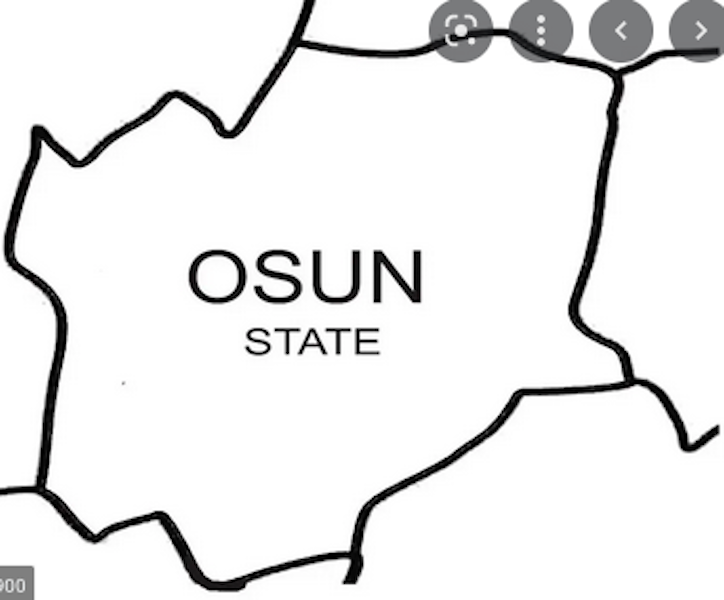
The recent dust raised by the disqualification of seven aspirants from contesting for the governorship primary of the All Progressives Congress for the 2026 governorship election in Osun State is not likely to settle soon. Apart from the bad blood it has generated within the party and the sour taste it has unexpectedly left in the mouths of the supporters of the aspirants, there are also wider implications for the party as build-up to the election continues. Raheem Akingbolu reports.
The Furore the Morning After…
In what looked like a political tsunami, seven governorship aspirants, who were warming up to take part in the All Progressives Congress (APC) primaries slated for Saturday, December 13, got their hope dashed last week. In a unanimous decision, the party’s seven-member screening committee, led by ObinnaUzor, disqualified seven of the nine contestants that already signified intention, from contesting for the position of Osun State governor under the party. One week after, the decision is still generating furore within and outside the party because of the history of political complexity Osun enjoys and perhaps the profile paraded by those disqualified.
Even a political rookie in Osun State knows that a few of those eased out are not political light-weights. Those disqualified are IyiolaOmisore, BabatundeHaketerOralusi, OyedotunBabayemi and Akin Ogunbiyi. Others are Benedict Alabi, Rasheed Adegoke and BabajideOmoworare.
However, two aspirants, MulikatAbiolaJimoh and Munirudeen Bola Oyebamiji, popularly known as AMBO, were cleared to contest the primary. Oyebamiji was GboyegaOyetola’s Commissioner for Finance when he was Osun state governor and immediate past Managing Director of National Inland Waterways Authority (NIWA).
Omoworare, a lawyer, was a former senator who once represented Osun East (Ife/Ijesa) Senatorial District in the national assembly.
Omisore was a former deputy governor of the state from 1999 to 2002. Apart from this, he was also the National Secretary of the party and one time Senator representing Osun East Senatorial District.
Like Omisore, Alabi was also a former Deputy Governor, who was in office from 2018 to 2022 under Governor Oyetola.
Another strong contender who was eased out is Adegoke, a constitutional lawyer and a Senior Advocate of Nigeria (SAN), who once slugged it out with former governor Oyetola during the build up to the 2017 primaries. Two others, Babayemi and Ogunbiyi are Nigeria’s leading technocrats and business executives who have made indelible marks in Osun political landscapes.
Esau’s Hand, Jacob’s Voice?
Over the weekend, one of the disqualified contestants, Omisore met the APC screening appeal panel and after the meeting, the former party scribe claimed the chairman of the panel reportedly told them he received a call instructing him to “disqualify those who were barred”. He added that his disqualification was the “jokest report” of the year.
“We’re in December, abi? That’s the jokest report of this year. It’s so unfortunate that people are taking partisanship beyond politics,” Omisore said. He explained that they had not been officially communicated as per the reason for their disqualification.
“We haven’t been written to. So, what are the bases of the disqualification? You said we didn’t have nominators, five per local government. But the law says, he who alleges must prove. They should have used another method to disqualify us.”
Omisore and the other disqualified aspirants have claimed that a former governor of the state and current Minister of Marine and Blue Economy, GboyegaOyetola, is behind the whole drama. They claimed that the chairman of the screening panel told them he was “under pressure” to bar them from contesting for the ticket. This was apart from the fact that about three reports from the screening exercise and the one taken to the national secretariat of the party was not the original one.
“We are aware that the panel members have two, three reports. The one taken to the secretariat wasn’t the original report. As we speak today, none of us has seen their report or why we were disqualified,” Omisore said.
He added that they were not pushovers in the politics of the state and that their disqualification only meant the party was preparing for failure.
“You can see for yourself that when you disqualify people like us in any contest, where do we go from there? The party is pointing at failure.”
Omisore further claimed that the screening committee chairman confessed that it was Oyetola that told him to disqualify the other aspirants so as to pave way for easy emergence of Oyebamiji; who Omisore described as Oyetola’s ‘poster boy’.
“He told us that Minister GboyegaOyetola called him that they must disqualify all of us because he wants his lackey, his poster boy, Oyebamiji,” Omisore said.
Omisore Effect of 2018…
Ismail Omipidan, the former Chief Press Secretary to Oyetola argued in a recent post on his facebook that “the Aregbesola camp may argue that the APC did not need Omisore to win the 2018 governorship re-run election, the facts say otherwise. If what happened did not happen, the party leaders who championed the negotiations at the time would not have run to Omisore.”
He added that this was despite the fact that some of those who served as negotiators with Omisore had also been the ones that created the problem the party was trying to wriggle out of from then. He argued that they funded and supported MoshoodAdeoti in the ADP which led to the party staring defeat on the face and which led to INEC dubiously declaring the election as being inconclusive and fraudulently ordering a rerun in Ile-Ife, Omisore’s stronghold.
It could also be recalled that former President MohammaduBuhari, while speaking to party leaders in 2019 ahead of that year’s general elections said the party won the 2018 election in Osun State via “remote control”. Perhaps, if a whole President could say that publicly, he surely knew what he was talking about. As admitted by Omipidan, the person that made the ‘remote control’ victory possible was Omisore.
And Compensation Followed…
Going by the mercantile nature of Nigerian politics, Omisore could not have readily stuck out his troubled but effective political neck out if he did not extract some commitments from those who approached him for help. Omipidan claimed that the only position negotiated and agreed with Omisore and which was not implemented was the ministerial position. He said every other commitment was fulfilled.
“Apart from the ministerial position, every other item that was negotiated was implemented to the letter by Oyetola. He gave out commissionership and SA slots and he consistently deferred to Omisore on several sensitive matters, often to the displeasure of some of his closest aides. It even got to a point where Aregbesola began referring to Omisore as Oyetola’s new leader,” Omipidan wrote.
He added that if Oyetola cannot be credited for anything else, he should at least be acknowledged for saving Omisore from political oblivion. He added that the former governor was also responsible for the emergence of Omisore as the National Secretary of the ruling party.
“If not for Oyetola’s efforts and insistence, there was no way Omisore would have emerged as the APC National Secretary at the time he did. And that single event revived and preserved Omisore’s political career. Till today, some APC elders in the South-West have not forgiven Oyetola for the role he played in Omisore’s emergence.”
It must, however, be noted that former Governor KayodeFayemi of Ekiti State and late RotimiAkeredolu of Ondo State also played important roles in the emergence of Omisore as the National Secretary of the party. But Omipidan insisted that if Omisore did not get the needed home support then, it would have been difficult.
“I know some people may argue that Omisore could still have secured the position without Oyetola’s backing, given the support he enjoyed from the late Akeredolu, Dr. KayodeFayemi and some of Buhari’s men. But the prestige and political weight of home support accorded him would certainly not be there without Oyetola. I was at the convention ground. I saw and knew all that transpired. I was always with Oyetola, in the days leading to that convention, going back and forth to Asiwaju, our now President and Baba Akande’s residences. In fact, there are days that we (would) go there more than thrice in one day and remain sometimes till 2 am.”
Osun APC: One Team, One Dream…
Considering the influence of those that have been edged out of the Saturday primary, political watchers have recommended a far-reaching reconciliation to enable the party go to next year election as one big family.
Some analysts have, however, cautioned the six aspirants not to spill the beans because the tide didn’t favour them.
A politician and convener, Occupy Iwoland for AMBO, Sulayman O. Nafiu, admitted that the aspirants who did not scale through the screening exercise would have a sour taste after their hopes of taking part in the primaries failed to materialize but urged them to respect and regard the supremacy of the party on such matter.
“What is scary and should not be taken lightly is the solidarity now created by the strange bedfellows who are now united with an arrowhead and spokesperson on their behalf to ridicule the decision of the party. From the days of our respected late leader and father of Progressives in the South-West, Chief Obafemi Awolowo, our in-house culture of party supremacy has remained our strength. To this end, we should rally our support, allow reconciliation, and work for the party’s victory.” Nafiu stated.
Misplaced Sense of Invincibility…
Giving the profile of those disqualified and their influences, those who understand the dynamic of Osun politics have expressed their worries that the decision might become an albatross for the party if not well managed.
For instance, while Omisore may have his political baggages, he remains a political force in the state. Also, in Ife and its environ, Omoworare enjoys a resounding popularity. For Adegoke, Babayemi and Ogunbiyi, who had contested before and have structures across the state, it may be difficult to push them aside without some understanding.
As things stand, the fact that APC is at the centrenot withstanding, the party must approach the current issue in Osun with caution and humility to appease those disqualified.
The Wider Implications…
Many watchers of Osun’s political developments still believe the person to beat in the election proper is the incumbent, Senator AdemolaAdeleke. While that might look so on paper, Adeleke has his own headache to deal with it. He has resigned from the PDP on which platform he rose to power in 2022. As of now, no one is sure on which platform he plans to contest. Some are saying the Accord Party and others claim he is negotiating with the African Democratic Congress.
Whichever party they join, all Omisore and his co-travellers need to create problems for the APC is to align with former Governor Aregbesola, currently the National Secretary of the ADC and Adeleke.
If this will happen, is a wild conjecture but as it stands, the dust from the camps of those disqualified are still blowing, and no one knows its final direction.
NIGERIA NEWS
“I can’t love Nigeria” – American rapper Azealia Banks declares, calls for IPOB freedom


American rapper Azealia Banks has stirred fresh controversy after sharing strong views about Afrobeats and Nigerian culture during an appearance on the Cheapy’s Two Cents podcast.
Her comments have triggered intense debate across social media, with many Nigerians calling her remarks insensitive and provocative.
During the podcast, Banks boldly stated, “I don’t want to listen to someone singing in pidgin, I would even prefer patois.” She went on to claim that the word “Nigerian” sounded like “nigga’ria,” a description that immediately sparked outrage among listeners.
She also added that she “can’t love Nigerians as they want to be loved,” insisting that the country lacks deep cultural foundations.
Harsh words for Rema, praise for Tiwa Savage
Banks criticised Afrobeats star Rema, describing him as a “skinny little boy” and declaring that she is not interested in “such boys’ music.”
Her comments drew swift backlash from fans who felt she crossed a line by attacking the singer personally.
Despite her harsh tone, Banks offered praise for Tiwa Savage, calling the singer “exceptional” and the only Nigerian artist she enjoys.
This selective admiration has led to further debate online, with many questioning why she singled out one artist while dismissing the rest.
Banks calls for IPOB freedom
In a surprising twist, the rapper also expressed support for the Indigenous People of Biafra (IPOB), arguing that the group deserves freedom.
Her statement added more heat to an already tense conversation, with many Nigerians accusing her of interfering in internal matters she barely understands.
Widespread backlash online
Her remarks have triggered anger across X and other platforms, with fans defending Nigeria’s rich cultural heritage.
Many argue that Afrobeats has become a global force, and accuse Banks of using inflammatory statements to stay relevant. Others claim her praise for Tiwa Savage feels inconsistent with her sweeping criticism of the industry.
NIGERIA NEWS
NNPC, Heirs Energies sign Gas Flare Commercialization Agreements to boost power generation – Nairametrics

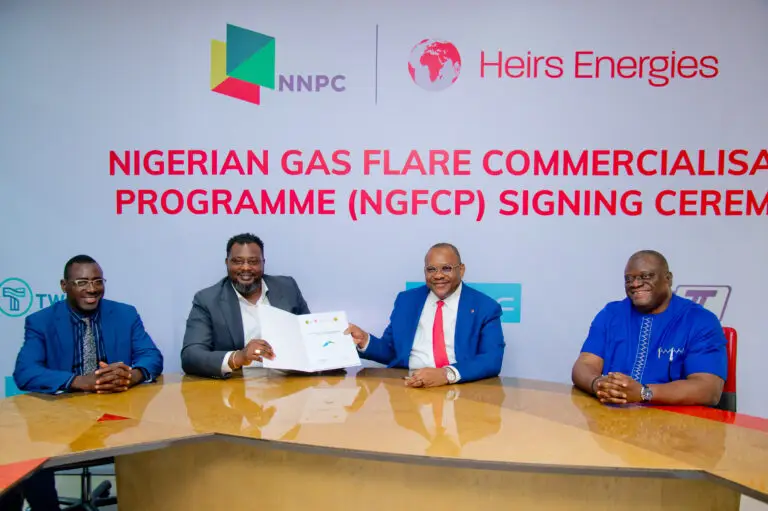
The Nigerian National Petroleum Corporation (NNPC) and Heirs Energies on Tuesday signed a Gas Flare Commercialization Agreements in a significant move to advance Nigeria’s gas commercialisation efforts.
The event, which was part of the Nigerian Gas Flare Commercialization Programme (NGFCP) and approved non-NGFCP frameworks, represents a crucial step towards Nigeria’s energy transition goals.
The signing ceremony, held at Heirs Energies headquarters in Lagos, symbolized the transition from regulatory approvals to tangible commercial execution.
Through this initiative, flare gas volumes from OML 17 will be captured and deployed for various productive uses such as power generation, industrial applications, and the production of LPG and CNG.
The agreement is expected to significantly reduce routine gas flaring and convert previously wasted resources into valuable energy for the Nigerian economy.
At the ceremony, Engr. Seyi Omotowa, Chief Upstream Investment Officer of NUIMS, representing NNPC Limited, emphasized that flare gas commercialisation was not merely a compliance measure, but a strategic pathway to enhancing energy availability, fostering gas-based industrialisation, and reinforcing Nigeria’s position as a responsible energy producer.
The Nigerian Upstream Petroleum Regulatory Commission (NUPRC), represented by Mr. Ojo Olalekan Ezekiel, Senior Manager at NUPRC, also reiterated the regulatory body’s commitment to supporting flare gas commercialisation initiatives.
Ezekiel acknowledged the partnership’s role in achieving national energy and emission reduction goals and noted that the collaboration with offtakers such as AUT Gas, Twems Energies, GPID, PCCD, and AGTC would be instrumental in advancing the project.
Heirs Energies’ CEO, Osa Igiehon, highlighted the company’s gas-led strategy, which focuses on creating long-term value for Nigeria.
“Gas sits at the heart of Nigeria’s development journey,” Igiehon said, highlighting the company’s efforts to strengthen domestic energy supply while ensuring responsible and sustainable operations.
Key highlights of the agreement:
- Increased gas deliverability: The successful completion of the flare gas commercialization agreements allows for the strategic deployment of flare gas for power generation, industrial applications, LPG, and CNG.
- Commitment to environmental stewardship: This initiative is in line with Nigeria’s energy transition objectives, which focus on reducing emissions while enhancing energy availability.
- Enhanced Partnerships: The agreement brings together NNPC, Heirs Energies, and various private sector offtakers to ensure that Nigeria’s gas resources are utilized responsibly and profitably.
- Strategic impact: The OML 17 project plays a pivotal role in advancing Nigeria’s gas-to-power initiatives, contributing to enhanced power generation across the country.
The signing ceremony reflects Nigeria’s continued commitment to improving its energy landscape and its ambition to become a leading hub for gas commercialization in Africa.
As the flare gas offtakers move into the next phase of the project, full-scale implementation is expected to begin soon, delivering economic, environmental, and social benefits for Nigeria.
Backstory
OML 17, operated by Heirs Energies, has long been a focal point for Nigeria’s gas development agenda.
Since Heirs Energies took over the joint venture in 2021, the company has made significant strides in revitalizing the asset.
Through a series of brownfield excellence interventions, Heirs Energies has turned OML 17 into a key source of both oil and gas production, with gas now being positioned as a core value stream.
The successful rigless recompletion of a key non-associated gas well in 2025 doubled the JV’s gas output, significantly improving Nigeria’s gas availability for domestic power generation and industrial use.
What you need to know
Heirs Energies Limited is a leading indigenous energy company focused on responsible oil and gas production, gas commercialization, and long-term value creation aligned with Nigeria’s development priorities.
As operator of the OML 17 Joint Venture, Heirs Energies has contributed significantly to Nigeria’s gas development strategy through brownfield excellence and strong host-community partnerships.
- In 2025, the company reached a gas production peak of 135 million standard cubic feet per day (MMscf/d) from OML 17, following the restoration of the Agbada-67 well and deployment of rigless through-tubing technology.
- This breakthrough with NNPC Limited now supplies 45 MMscf/d of gas to Nigeria’s national grid.
Heirs Energies plays a pivotal role in Nigeria’s energy security and industrial growth, with gas supply to the Eastern Domestic Gas Market more than doubling to 135 MMscf/d.
- Power generation from plants in the eastern region has surged, with TransAfam Power Plant output increasing from 50 MW to over 180 MW, and aggregate power generation rising from 100 MW to 325 MW, peaking at 455 MW.
The company is also committed to social impact, supporting host communities with healthcare, education, and skills development initiatives. These efforts align with Nigeria’s Decade of Gas initiative and long-term energy transition goals.
The successful execution of the NGFCP and Non-NGFCP flare gas commercialization agreements marks a key milestone in turning waste into opportunity.
By converting flare gas into energy, Heirs Energies supports emission reduction, strengthens energy security, and enhances industrial growth, reinforcing Nigeria’s position as a leading energy producer in Africa.
Follow us for Breaking News and Market Intelligence.




SOURCE PAGE

Islamic cleric Sheikh Ahmad Gumi has stated that Nigeria’s armed forces lack the capacity to eliminate bandit groups through military force, arguing that dialogue remains the only practical route to ending the worsening insecurity across the northwest and other affected regions.
In an exclusive interview with the BBC, Gumi asserted that modern militaries everywhere struggle against guerrilla-style fighters, and that Nigeria is facing the same challenge.
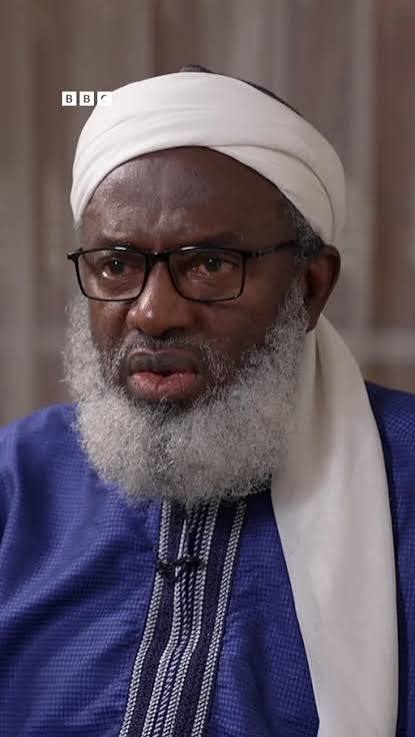 Sheikh Gumi
He said …
“But even the military says that in dealing with this civil unrest and criminality, only 25% is kinetic action; the rest depends on the government, politics, and local communities. The military cannot do everything.
“Where have you ever seen the military defeat guerrilla fighters? Nowhere.”
His comments come at a time when President Bola Tinubu’s administration is introducing sweeping security measures, including a shake-up in military leadership and a nationwide security emergency targeting the criminal networks behind widespread kidnappings, extortion, and violent rural attacks.
Addressing longstanding allegations that he maintains ties with bandit commanders, Gumi denied having any contact with them since 2021, the year the federal government officially designated the groups as terrorist organisations.
“I never went there alone
“It was in 2021 when I was trying to see how we could bring them together. But unfortunately, the government at the time, the federal government, was not interested. They declared them terrorists, and since that time we have completely disengaged from all contact with them,” he said.
Although he has faced criticism for allegedly emboldening armed groups and weakening governmental authority, Gumi maintains that engaging non-state actors in dialogue is a globally recognised conflict-resolution strategy.
“When they say we don’t negotiate with terrorists, I don’t know where they got that from,” Gumi said. “It is not in the Bible, it is not in the Quran. America had an office negotiating with the Taliban in Qatar. Everyone negotiates with outlaws if it will stop bloodshed.”
Gumi characterised the armed groups wreaking havoc across the northwest, and now spreading to other parts of the country, as predominantly Fulani herders who, in his view, are involved in what he described as an “existential war” driven by pressures and disruptions to their long-standing cattle-rearing way of life.
“They want to exist. That is their life. They know where to graze and how to care for their cattle,” he said, while emphasizing that the unrest has transformed from local farmer–herder tensions into widespread criminality.