
TECHNOLOGY
Skate Story rolls out on PC, PS5, and Switch 2 with a fresh take on skateboarding gameplay


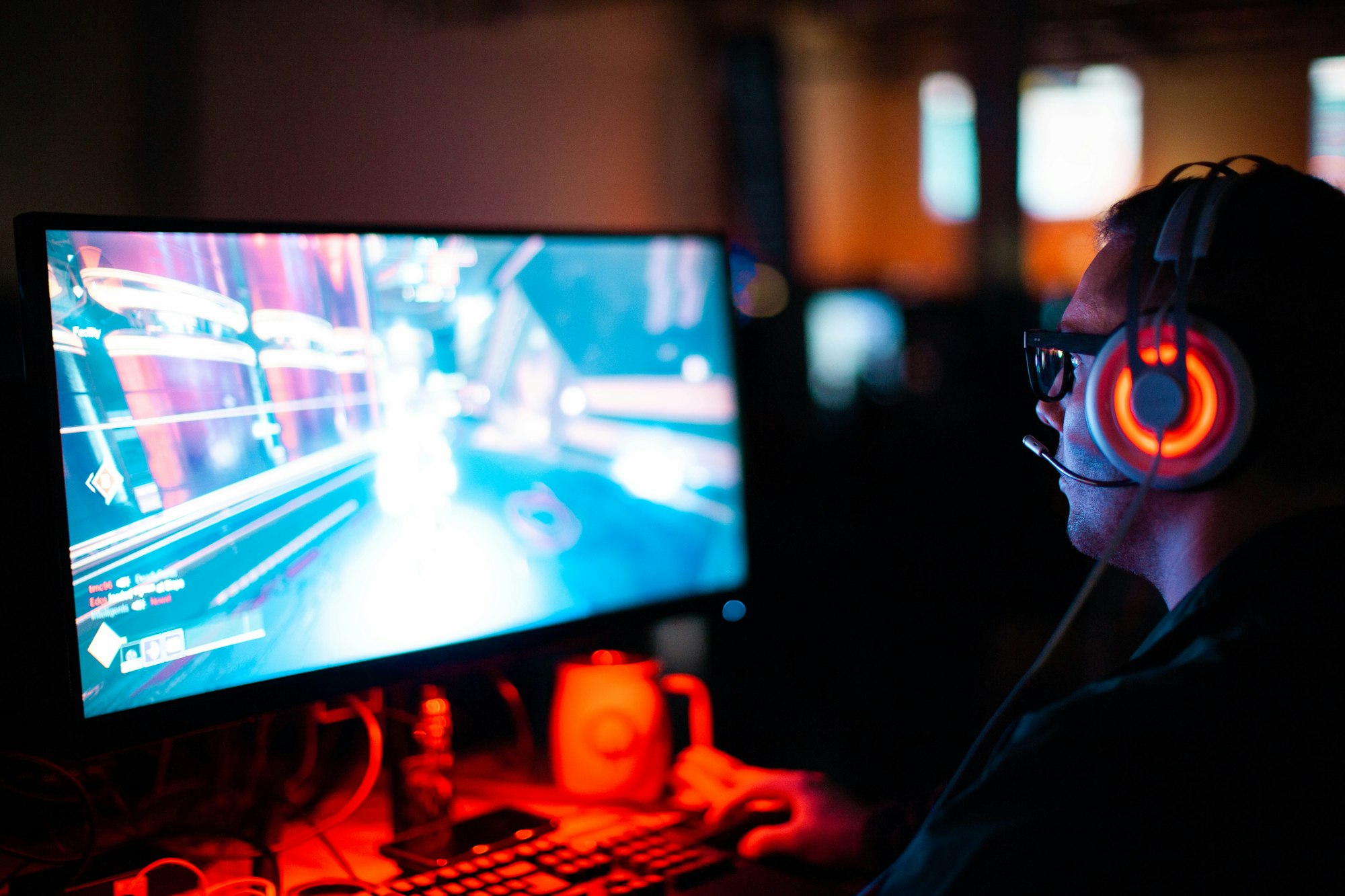
If you’ve ever played a skateboarding game and felt something was missing, Skate Story takes that idea in an entirely different direction. Instead of placing players in realistic plazas or sunlit skateparks, it drops them into a vaporwave-styled underworld where you control a character made of glass and pain.
The result is a skateboarding experience built as much around atmosphere and storytelling as mechanics, offering a version of the genre that feels unlike anything else on the market.
Skate Story’s gameplay controls are simple but deliberate. One button triggers an ollie, while a shoulder button shapes tricks into kickflips, heelflips, pop shuvits, and other familiar moves. Animations focus heavily on precision, highlighting foot placement, posture, and weight shifts. Falls play out in a first-person blur that mimics the disorientation of real skating, adding a physical dimension that sits alongside the more stylized visuals.
Image credit: Skate Story
The game’s world also alternates between tight, high-speed tunnels that demand focus and larger open spaces populated with surreal characters a rabbit mystic, a pigeon writing a script, a ghost waiting in a laundromat. Neon accents, vaporwave hues, and a pulsing electronic soundtrack give the environments a strong sense of mood without overwhelming the actual gameplay.
While the premise of skating to the moon and swallowing it is abstract, it anchors the game’s pacing and progression. Instead of chasing points or mastering fixed routes, players move through environments that use tone and visual storytelling to shape the experience. The narrative leans into themes of repetition, challenge, and persistence, using its surreal setting to explore emotions not usually foregrounded in skateboarding games.
SKATE STORY
OUT TOMORROW (9AM PST/NOON EST)
PC, PS5, Nintendo Switch 2 pic.twitter.com/wvrOVTUiQm
— SKATE STORY (@skatestorygame) December 7, 2025
Skate Story’s approach sits closer to indie documentaries about skate culture than to mainstream series like Tony Hawk’s Pro Skater or Skate. Its design prioritizes atmosphere, internal momentum, and creative world-building rather than high scores or competitive mastery. By blending expressive visuals with tight mechanical control, it pushes the genre toward something more interpretive, where movement is tied as much to mood as to technique.
The takeaway
Skate Story shows how a skateboarding game can stretch beyond traditional goals of tricks and scoring. Its mix of stylized environments, narrative framing, and precise mechanics offers a version of skating that’s more reflective and experimental than most titles in the genre.
For developers, it’s an interesting example of how sports mechanics can be reimagined through art-driven design. For players, it’s a reminder that skate games don’t always need to recreate real-world parks to explore what skating feels like. You can jump in whether you’re on PC, PS5, or the Nintendo Switch 2, so no matter your setup, the underworld is open to you.
Red Dead Redemption rolls out on Netflix, iOS, Android, PS5, Xbox Series, and Nintendo Switch 2
Red Dead Redemption is letting players play anywhere at anytime following launch.

December 10, 2025
Link copied!
Copy failed!
TECHNOLOGY
Tesla Optimus robot takes a suspicious tumble in new demo – sparking rumours it’s being controlled by a human


Tesla’s humanoid robot, Optimus, has taken a suspicious tumble in a new demo.
In a viral clip, the robot suddenly jerks back, reaches up as if to remove something from its head, and tumbles backwards with a crash.
Many have compared the robot’s strange movements to the distinctive gesture of someone taking off a virtual reality headset.
On social media, this has sparked a flurry of rumours that the supposedly autonomous robot is really controlled by a human.
The shocking moment was captured by a Reddit user who was filming Optimus handing out bottles of water at the Tesla The Future of Autonomy Visualized event in Miami.
In a post, the user wrote: ‘I think Optimus needs an update.’
As the video spread online, others were quick to accuse Tesla of overstating its bot’s ability to function on its own.
One commenter wrote: ‘Honestly looks like the dude teleworking this bad boy took off his headset.’

Elon Musk’s Tesla Optimus robot has taken a suspicious tumble in a viral video, as it appears to make the motion of removing a VR headset

On social media, tech fans have taken this as evidence that the robot was being remotely controlled by a teleoperator rather than operating autonomously

Commenters have mocked Tesla for the blunder, with one joking that robots would at least not be taking human jobs
The embarrassing video has caused hilarity for online tech fans, as one dubbed it ‘my favourite video of all time.’
”At least humans will have jobs,’ another commenter joked.
While another chimed in: ‘idk looks to me like that robot just killed itself.’
Although Tesla CEO Elon Musk has repeatedly insisted that the Optimus robots are autonomous, many social media users have been quick to suggest that it could be teleoperated.
Teleoperated robots are controlled by a human wearing a VR headset, who acts out motions for the robot to mimic.
In the past, Tesla has come under fire for using teleoperated robots at its events while continuing to suggest that they are fully autonomous.
For example, the robots at Tesla’s ‘We Robot’ event were largely controlled by remote operators, despite Tesla not explicitly making this clear to the public.
Now, the strange behaviour of this Optimus robot moments before its collapse has led many to believe that it was also being teleoperated.

The video was captured at Tesla’s ‘The Future of Autonomy Visualized’ event in Miami, where Optimus was handing out bottles of water

Many fans pointed out that the robot’s motion towards its head has a clear resemblance to the gesture of someone removing a VR headset, which would make sense if it were being controlled remotely

Many commenters joked about the supposed teleoperator’s speedy exit, with one suggesting that they felt a spider running up their leg
Tesla’s humanoid robot Optimus
Height: 5ft 8in (173cm)
Weight: 57kg (125 lbs)
Carrying capacity: 20kg
Predicted price: £15,000–£22,000 ($20,000-$30,000)
Intended use: Manual labour in Tesla factories
One commenter wrote: ‘Looks like the operator took off their VR headset.’
‘And spilled hot coffee on his lap right before that lol,’ another chimed in.
Others made fun of the supposed teleoperator’s speedy exit, with one writing: ‘Teleoperator logged out early that day.’
Another joked: ‘Looks like the operator felt a spider running up his / her leg and panicked.’
Meanwhile, one frustrated commenter added: ‘It all feels very Wizard of Oz. Pay no attention to the man behind the curtain – our product is right around the corner!’
These accusations may be especially embarrassing for Tesla since the fall occurred at an event intended to showcase ‘Autopilot technology and Optimus’.
However, the robot’s supposed teleoperation isn’t the only thing that is causing concern.
As the Tesla Optimus falls out of control, the video shows its hands swinging down with such force that they crush a bottle of water on the table.

This comes after Elon Musk, Tesla CEO, specifically insisted that Optimus was controlled by AI and was not teleoperated

Tesla has not confirmed whether the robot which collapsed was being controlled by AI or remotely by a human

Some commenters on X were more concerned by the power of Optimus’ crash, which easily crushed a nearby water bottle

One Tesla fan branded the bot as ‘too dangerous’ and questioned whether the robot’s swinging hand could ‘crack a human skull’
‘Interesting how easily Optimus crushed the bottle,’ one commenter wrote.
Another added: ‘I wonder if Optimus can crack a skull with that punch, too dangerous.’
‘The spray on that little karate chop was pretty impressive don’t let one of these fall on your dog or something,’ a concerned commenter chimed in.
This comes amidst a boom of humanoid robots as investors bet that autonomous labour will replace humans in the future.
Tesla CEO Elon Musk has been a major champion of using robots for labour, and has frequently said that they could be used to replace humans in environments like factories to perform repetitive or dangerous tasks.
To achieve this, he hopes to massively scale up the production of robots and reduce their cost.
According to Musk, when Optimus finally launches in 2026, it will retail for $20,000 to $30,000 (£15,000–£22,000) with the potential for the price to fall further in the future.
Speaking at a tech conference in Saudi Arabia last year, Musk predicted that there could be as many as 10 billion humanoid robots on Earth by 2040.

Elon Musk has been a major champion of using robots to replace human labour in factories. However, this will only be possible if his Optimus robots (pictured) can operate autonomously
However, for robots to be a genuine replacement for humans, they will need the ability to operate autonomously without human intervention.
So far, Optimus has only been seen performing sequences of pre–programmed moves or following the commands of a teleoperator.
And if this recent video really shows that Optimus is still not autonomous, Musk’s dreams of a robot workforce may still be far from being realised.
Tesla has been contacted for comment.
Elon Musk’s hatred of AI explained: Billionaire believes it will spell the end of humans – a fear Stephen Hawking shared

Elon Musk pictured in 2022
Elon Musk wants to push technology to its absolute limit, from space travel to self-driving cars — but he draws the line at artificial intelligence.
The billionaire first shared his distaste for AI in 2014, calling it humanity’s ‘biggest existential threat’ and comparing it to ‘summoning the demon’.
At the time, Musk also revealed he was investing in AI companies not to make money but to keep an eye on the technology in case it gets out of hand.
His main fear is that in the wrong hands, if AI becomes advanced, it could overtake humans and spell the end of mankind, which is known as The Singularity.
That concern is shared among many brilliant minds, including the late Stephen Hawking, who told the BBC in 2014: ‘The development of full artificial intelligence could spell the end of the human race.
‘It would take off on its own and redesign itself at an ever-increasing rate.’
Despite his fear of AI, Musk has invested in the San Francisco-based AI group Vicarious, in DeepMind – which has since been acquired by Google – and OpenAI, creating the popular ChatGPT program that has taken the world by storm in recent months.
During a 2016 interview, Musk noted that he and OpenAI created the company to ‘have democratisation of AI technology to make it widely available’.
Musk founded OpenAI with Sam Altman, the company’s CEO, but in 2018 the billionaire attempted to take control of the start-up.
His request was rejected, forcing him to quit OpenAI and move on with his other projects.
In November, OpenAI launched ChatGPT, which became an instant success worldwide.
The chatbot uses ‘large language model’ software to train itself by scouring a massive amount of text data so it can learn to generate eerily human-like text in response to a given prompt.
ChatGPT is used to write research papers, books, news articles, emails and more.
But while Altman is basking in its glory, Musk is attacking ChatGPT.
He says the AI is ‘woke’ and deviates from OpenAI’s original non-profit mission.
‘OpenAI was created as an open source (which is why I named it ‘Open’ AI), non-profit company to serve as a counterweight to Google, but now it has become a closed source, maximum-profit company effectively controlled by Microsoft, Musk tweeted in February.
The Singularity is making waves worldwide as artificial intelligence advances in ways only seen in science fiction – but what does it actually mean?
In simple terms, it describes a hypothetical future where technology surpasses human intelligence and changes the path of our evolution.
Experts have said that once AI reaches this point, it will be able to innovate much faster than humans.
There are two ways the advancement could play out, with the first leading to humans and machines working together to create a world better suited for humanity.
For example, humans could scan their consciousness and store it in a computer in which they will live forever.
The second scenario is that AI becomes more powerful than humans, taking control and making humans its slaves – but if this is true, it is far off in the distant future.
Researchers are now looking for signs of AI reaching The Singularity, such as the technology’s ability to translate speech with the accuracy of a human and perform tasks faster.
Former Google engineer Ray Kurzweil predicts it will be reached by 2045.
He has made 147 predictions about technology advancements since the early 1990s – and 86 per cent have been correct.

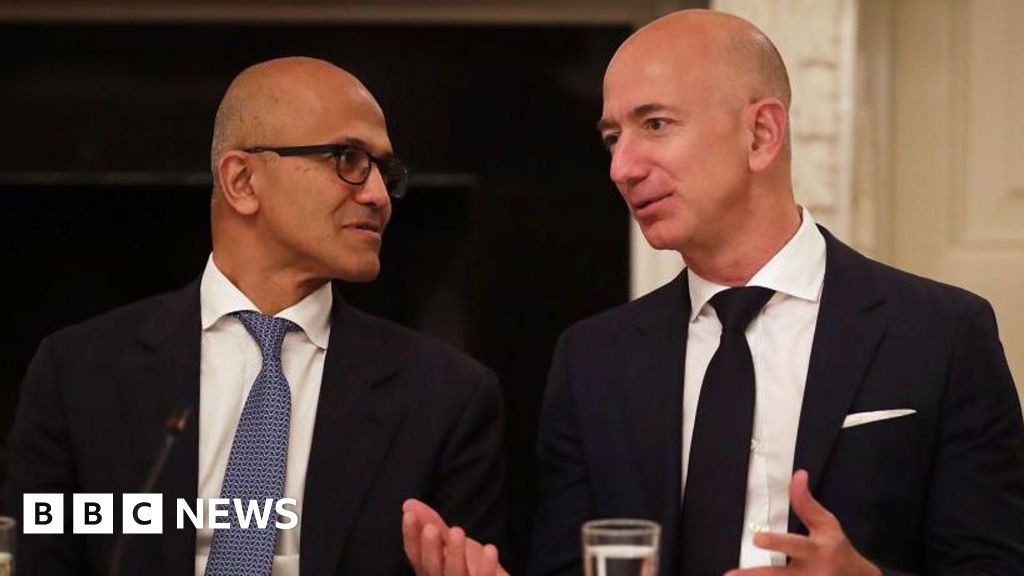
Tech giants Amazon and Microsoft have announced a combined $52.5bn (£39.4bn) investment plan for India over the coming years.
Amazon said on Wednesday it was pumping in $35bn into India by 2030 to advance AI-driven digitisation, export growth and job creation, a day after Microsoft committed $17.5bn strengthen the country’s AI ecosystem.
India, which is an emerging AI and cloud infrastructure hub, has witnessed a surge of global tech investments recently.
In October, Google announced a $15bn investment to build an AI data hub, and earlier this week Intel announced a collaboration with Mumbai-based Tata Electronics as its first major customer in the latter’s $14bn semiconductor manufacturing plans.
“When it comes to AI, the world is optimistic about India,” Indian Prime Minister Narendra Modi said in a post on X, after meeting Microsoft CEO Satya Nadella on Tuesday.
Amazon’s $35bn investment will build on the $40bn already invested in India – establishing the company as “the largest foreign investor” in India, the company said in a statement.
A key component of it will go into local cloud and AI infrastructure.
Microsoft’s fresh commitment follows a $3bn investment announced by the company earlier this year.
It includes a new “hyperscale cloud region” – a cluster of data centres – in the southern India’s Hyderabad city, set to go live in mid-2026, the company said in a statement.
Data centres are centralised physical facilities that host computer servers, IT infrastructure and network equipment, and are a key component of the AI value chain that India is focusing on despite concerns around water shortages.
India will also be given access to Microsoft’s “sovereign public cloud”, which offers tools to help organisations run their data and applications while keeping sensitive information within the country.
The India investment is part of Microsoft’s $23bn AI expansion across countries including Canada, Portugal and the UAE, as the company vies with rivals such as Amazon and Google.
In a statement Microsoft said it also aims to integrate AI into Indian government platforms, supporting around 310 million informal workers.
The announcements come as India steps up activity in semiconductor manufacturing, with several state-backed and private projects aiming to build a domestic chipmaking industry.
While India is a big market for AI – with a billion internet users and a big tech talent pool – it still lags behind global leaders like China and the US.
However, the country has been drawing billions in investments in key computing technologies such as chips, with the government’s semiconductor mission offering generous subsidies to firms setting up chip-making facilities.
India’s sovereign AI model is also expected to be unveiled in February next year.
Follow BBC News India on Instagram, YouTube, Twitter and Facebook.
TECHNOLOGY
From ‘glacier aesthetic’ to ‘poetcore’: Pinterest predicts the visual trends of 2026 based on its search data | Pinterest


Next year, we’ll mostly be indulging in maximalist circus decor, working on our poetcore, hunting for the ethereal or eating cabbage in a bid for “individuality and self-preservation”, according to Pinterest.
The organisation’s predictions for Australian trends in 2026 have landed, which – according to the platform used by interior decorators, fashion lovers and creatives of all stripes – includes 1980s, aliens, vampires and “forest magic”.
The bookish and weird is the inspiration for ‘the poet aesthetic’, which jumped in search popularity this year. Photograph: Naomi Rahim/WireImage
Among the Pinterest 2026 trends report’s top 21 themes are “Afrohemian” decor (searches for the term are on the rise by baby boomers and Gen X); “glitchy glam” (asymmetric haircuts and mismatching nails); and “cool blue” (drinks, wedding dresses and makeup with a “glacier aesthetic”).
Pinterest compared English-language search data from September 2024 to August 2025 with those of the year before and claims it has an 88% accuracy rate. More than 9 million Australians use Pinterest each month.
Wednesday’s report found searches for 1980s luxury soared by 225%, “Scotland Highlands aesthetic” by 465% and “the poet aesthetic” by 175%. “Poetcore” – a key trend for Gen Z and millennials – takes its inspiration from the bookish: turtlenecks, fountain pens, satchels and ties.
Photograph: Eugenio Marongiu/Getty Images/Image SourceWill millenials be going poetcore in 2026? Photograph: Alexander Spatari/Getty Images
Driven by Gen Z and millennials, lace will be in, according to the data, including in doily, bandana and makeup form – as will khaki, field jackets and pleated trousers, aka the “paleontologist aesthetic”.
They’ll also be working an intergalactic “aliencore aesthetic”.
For Gen Z and millennials, travel will be adrenaline-seeking; for baby boomers, it will be to places that are “mystical” and “ethereal”. Searches for “Faroe Island aesthetic” almost doubled.
‘Gummy bears aesthetic’ searches aren’t looking for candy – it’s more about makeup products and nail art. Photograph: Anna Efetova/Getty Images
Pinterest predicts boomer and Gen X food trends to be cruciferous, with kimchi, dumplings and golumpki soup all raising the cabbage’s status. A younger trend for a “gummy bears aesthetic” goes beyond sweets and into makeup products and rubberised nail art.
And “niche perfume collection” is having its moment in the sun, as are “perfume layering combinations”.
Pinterest said there was a theme uniting trends as disparate as masquerades and operas, dragonfly wing-patterned nails and animal-inspired outfits, forecasting a move towards individuality and away from imitation.
The future is now for devotees of aliencore aesthetics. Photograph: Jacob Wackerhausen/Getty Images
Melinda Petrunoff, the managing director for Pinterest ANZ, told Guardian Australia that “people are craving comfort, authenticity and grounded optimism in a world that feels increasingly fast and often noisy”.
“What’s driving this is a desire for individuality and self-preservation – people are moving towards curating rather than copying, choosing to engage with what truly resonates with them instead of chasing every viral moment,” she said.
“We’re moving away from one-size-fits-all aesthetics and endless trend cycles that leave people feeling overwhelmed and disconnected.”

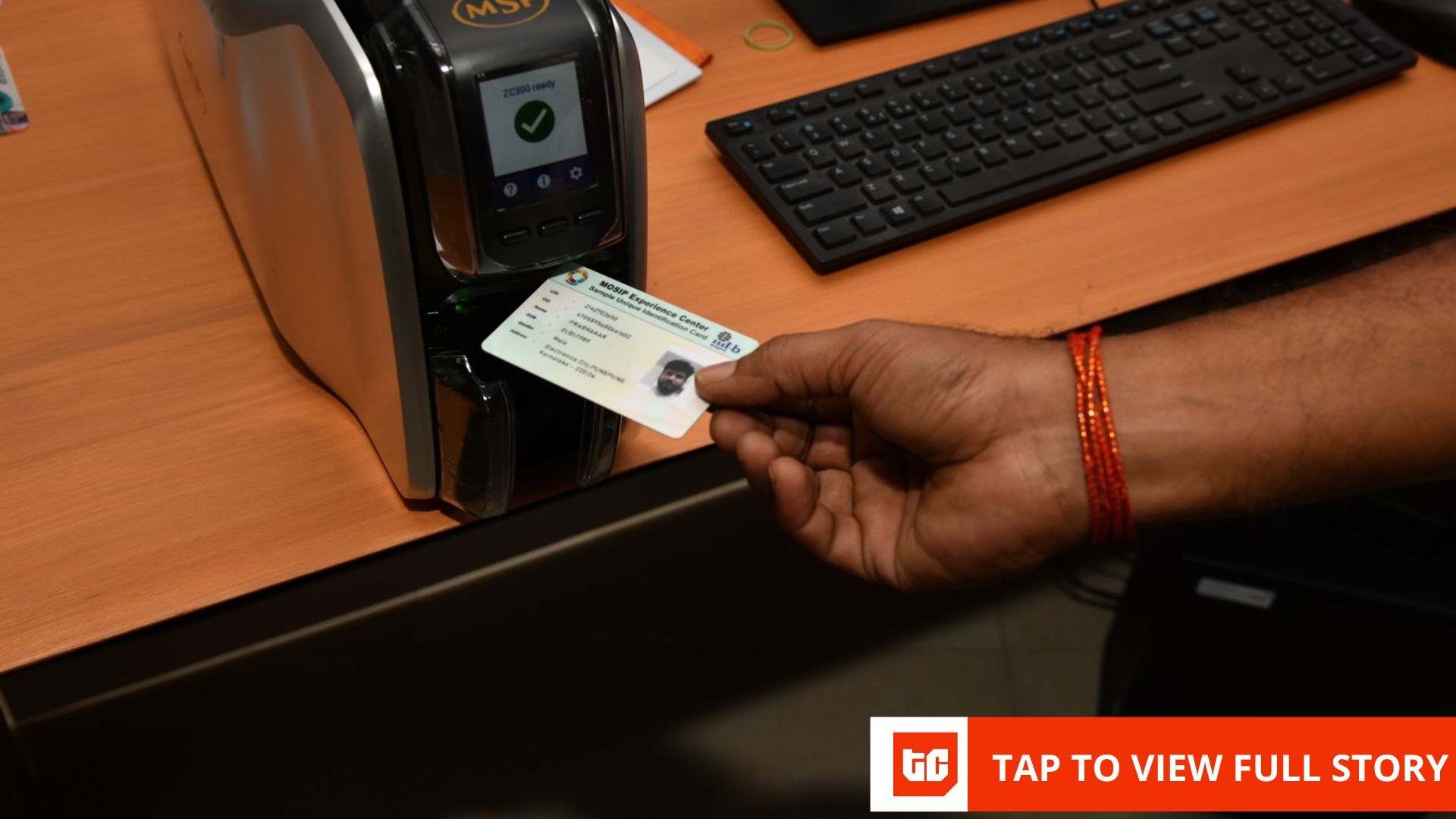
When Nigeria’s National Identity Management Commission (NIMC) began migrating the country’s foundational identity system onto an open-source platform known as Modular Open Source Identity Platform (MOSIP) in July 2025, it marked one of the most consequential technology shifts in the country’s digital history.
The move is central to the World Bank-backed Nigeria Digital Identity for Development (ID4D) programme, which has committed more than $430 million to reshaping identity infrastructure and recently issued an $83 million tender for a system integrator to deploy Nigeria’s next-generation National Identity Management System (NIMS 2.0) on MOSIP.
The stakes are immense. As of October 2025, NIMC had issued approximately 124 million National Identification Numbers (NINs) to eligible Nigerians and diaspora residents. That figure represents a near-ninefold increase over the past 25 years: from about 14 million in 2000, to 28 million in 2015, to 114 million in 2024, and now 124 million in 2025.
Today, the NIN underpins banking, SIM registration, social services, pensions, education records, e-commerce, and digital payments. Rebuilding the underlying system is not a routine upgrade but a whole reconstruction of Nigeria’s digital identity system.
Who has Nigeria enrolled so far?
NIMC’s latest demographic breakdown shows that 69.7 million NINs (56.25%) have been issued to men, while 54.2 million (43.7%) have gone to women, revealing persistent gender gaps in national enrolment.
Geographically, enrollment is sharply uneven. Lagos State leads with 13.1 million issued NINs, split between 7.14 million men and 5.9 million women. Kano follows with 11.5 million, then Kaduna (7.3 million), Ogun (5.12 million), Oyo (4.7 million), Katsina (4.21 million), Abuja (4 million), Rivers (3.6 million), Delta (3.37 million), and Bauchi (3.22 million) complete the top ten.
At the other end of the scale, enrolment remains weakest in Bayelsa (803,874), Ebonyi (1.03 million), Ekiti (1.16 million), Cross River (1.42 million), Taraba (1.8 million), Kogi (1.95 million), Enugu (2.01 million), Yobe (2.09 million), Imo (2.1 million) and Kwara (2.1 million), underscoring the regional inequality Nigeria’s digital ID programme still struggles to overcome.
Diaspora enrolment has also expanded steadily, with 1.53 million NINs issued abroad, including 953,952 to men and 584,630 to women.
This human infrastructure—124 million unique digital identities and counting—is what Nigeria is now attempting to migrate onto a new technological foundation.
What exactly is being rebuilt
MOSIP is a modular, API-driven system made up of several core components. These include tools for citizens to pre-register, software for capturing demographic and biometric data during enrolment, and a biometric de-duplication system (ABIS) that prevents duplicate identities.
It also generates unique ID numbers, stores identity records in a central database, and powers authentication services. MOSIP further supports digital credentials through the Inji app, which acts as a secure digital identity wallet where users can download, store, and manage their verified digital ID cards. It also enables QR codes and offline verification.
These modules make MOSIP function like a flexible digital identity toolbox that governments can adapt to their needs. It not only issues ID numbers but also makes them useful in everyday life. Through its authentication services, organisations can verify identities online or offline. At the same time, the Inji app on MOSIP allows people to present their digital ID, share QR codes, and authenticate themselves even without internet access. This ensures that citizens can conveniently use their identity credentials across services, anytime and anywhere.
Across Africa, around a dozen countries are either fully deploying MOSIP or actively piloting it. Public reports note that MOSIP has 26 global country engagements, with at least nine African nations, including Morocco, Ethiopia, Togo, and Uganda, already in pilot or implementation phases, while others like Guinea, Burkina Faso, Sierra Leone, Madagascar, and Niger are running pilot programmes as they work toward national adoption.
A MOSIP representative in Africa declined to comment on this story, citing contractual agreements with NIMC as constraints.
Public procurement notices reveal the scale of the upgrade. NIMC is acquiring thousands of MOSIP-certified mobile enrolment devices to support mass registration. The $83 million system integrator contract covers deployment, data migration, Automated Biometric Identification System (ABIS) integration, and platform customisation for Nigeria’s environment.
NIMC confirmed to TechCabal in a response to questions that the migration is total.
“The whole migration process is well thought out, and proper change-management procedures are in place to ensure a seamless transition,” the commission said.
That statement masks one of the most critical phases of any national ID overhaul: planetary-scale data migration.
The risk at the core: migrating 124 million identities
Transferring approximately 124 million biometric identities, each with fingerprints, facial images, and demographic data, into a new architecture is among the riskiest operations in digital government. Errors can result in ghost identities, mass duplication, service exclusion, or irreversible biometric corruption.
NIMC said a specialised system integrator will manage the process, declining to name the company.
“A competent knowledge system integrator is being engaged to handle the process, who will also work with the commission’s technical team to ensure transfer and capacity building for sustainability,” it said in the response, adding that the engagement is following “the highest international standards.”
Yet the risks go beyond engineering. Foundational ID systems like the NIN centralise both power and failure. If the authentication layer falters, entire sectors, from banking to telecoms, can lock out millions overnight.
“NIMC’s antecedents (of data breaches) show an organisation that has demonstrated in the past that it has gaps that need to be filled, and which they have never acknowledged that it has,” said Adeboye Adegoke, a digital rights advocate and former senior manager at Paradigm Initiative, a digital rights and inclusion organisation.
Vendor-neutral in theory, political in practice
MOSIP’s appeal lies partly in vendor neutrality: the ability to avoid proprietary lock-in. But genuine neutrality depends on governance, procurement discipline, and political will.
Nigeria’s identity verification industry is already raising alarm. A highly-placed industry expert, who asked not to be named to speak freely, says the leading operators haven’t been consulted on MOSIP’s implications for the domestic verification ecosystem.
“Founders built this industry, employing thousands of Nigerians,” the person said. “Nobody in NIMC has spoken to us about MOSIP. Now it feels like a system backed by global philanthropy is being introduced in a way that sidelines an entire industry.”
The expert argues that Nigeria risks sleepwalking into a new form of dependency. “Bill Gates’ organisations aren’t using MOSIP in the U.S. or the U.K., but it’s being pushed here. Why must Nigeria adopt what advanced economies don’t use? Vendor neutrality means nothing if local stakeholders are excluded.”
In reality, the Gates-funded MOSIP is designed primarily for low- and middle-income countries and is not deployed as a national ID platform in high-income ones like the U.S. or U.K., where long-standing legacy systems already exist. The Bill and Melinda Gates Foundation frames its support for MOSIP as helping governments in Africa and Asia adopt open, vendor-neutral digital ID infrastructure, but the expert sees that very positioning as reinforcing unequal power dynamics in how digital identity systems are built and governed.
Data sovereignty and auditing
For Nigerians, the most sensitive question remains whether biometric data will ever leave the country. MOSIP’s open-source nature theoretically allows full hosting in local data centres, but experts warn that sovereignty is not just about software location; it is about institutional control.
Policy lawyer Timi Olagunju argues that the real vulnerability lies inside NIMC: “The challenge with sovereignty is not MOSIP; it’s the problematic nature of NIMC. Downtime and verification failures cannot be solved by MOSIP alone.”
At the same time, NIMC faces a significant capacity challenge. A platform of this scale, if largely operated and maintained by external vendors—often non-Nigerian—can weaken sovereignty in practice, even if the underlying software is open. Without strong local technical ownership and in-house troubleshooting capacity, operational control can gradually drift away from the state.
Olagunju further warns about cloud dependency. MOSIP’s technical alignment with providers such as Amazon Web Services (AWS) introduces additional risk. In the absence of strict data residency rules, robust IT governance, and continuous independent audits—frameworks that remain underdeveloped in Nigeria, the cloud infrastructure itself can become the de facto sovereign over national identity data, even when the platform is formally open-source.
A second challenge is operational capacity. Large-scale identity platforms often rely heavily on external vendors to run critical components. Without deep local expertise, sovereignty becomes nominal rather than actual.
The expert echoes this fear from an industry perspective: “Nigeria has the experts to manage its identity systems. Giving foreigners control of our national database is irresponsible, especially in a world where data is national security.”
Cloud dependency intensifies the concern. MOSIP’s alignment with Amazon Web Services (AWS) means that, without strict data-residency mandates, strong IT governance, and regular independent audits—areas in which Nigeria has historically struggled—the cloud provider itself becomes a de facto authority over national identity data.
NIMC insists this will not be the case.
“The commission is fully committed to protecting the security and integrity of the National Identity Database,” it said, adding that its operations comply with the Nigeria Data Protection Act (NDPA).
The agency also cites its ISO 27001 certification, held since 2014 and now upgraded to the 2022 standard. Still, MOSIP’s global developer ecosystem, cloud-deployment options, and donor financing raise a profound oversight question: who audits the auditors when identity becomes transnational infrastructure?
Will Nigerians get MOSIP’s privacy features?
MOSIP is marketed as privacy-preserving by design, supporting tokenised identifiers, minimal-data authentication, and consent-based verification. But many countries adopt only partial implementations because legacy systems, limited technical and financial capacity, weak or incomplete data‑protection frameworks, and political risk concerns make a phased, minimal rollout more feasible than deploying all of its advanced privacy‑preserving features at once.
NIMC said Nigeria will not dilute those protections. “The features mentioned already exist in our various services, and the commission will not be downgrading or deploying weak versions of any solution whatsoever.”
If fully implemented, tokenised IDs could significantly reduce the frequency with which raw NINs circulate across banks, telcos, and fintech platforms, thereby reducing identity-theft risks at the source.
The missing public timeline
Despite the scale of the transformation, NIMC has not published a public migration roadmap. “These will be communicated in due course,” the commission said when asked about pilots, national rollout timelines, and public milestones.
That opacity creates accountability risk. With Nigeria already experiencing periodic authentication outages under the current system, citizens, banks, and telecom operators have little visibility into whether the country is months or years away from running dual identity stacks in parallel.
“If NIMC wants to be proactive, they need to come out and say exactly what process they went through to arrive at this juncture (choosing MOSIP), and what safeguards are in place,” Adegoke, the digital rights activist, said.
In theory, very little should change, except speed. MOSIP is expected to operate behind familiar services like NIN enrolment, NIN updates, SIM registration, e-KYC, and social-service authentication. NIMC said the platform will be combined with its existing NIN Authentication Service to “improve the customer journey and enhance integration for service delivery across the board.”
In practice, transitions of this scale almost always produce friction: temporary delays, regional outages, biometric mismatches, and data-synchronisation conflicts between old and new systems.
Foundational ID rarely fails quietly.
Perhaps the most consequential question is liability. When a national identity system fails—blocking a loan application, invalidating a SIM card, or excluding a citizen from welfare—who answers?
NIMC’s response is direct: “The National Identity Management Commission is the sole body mandated by the constitution for identity management in Nigeria. The commission will not shift her responsibilities to any other body.”
That clarity matters. MOSIP supplies software. The World Bank supplies money. The integrator supplies engineering. But accountability will remain domestic and political.
A high-stakes bet on open infrastructure
Nigeria’s MOSIP migration is both a technical upgrade and a political wager: that open digital public infrastructure can scale more sustainably than proprietary alternatives. If successful, Nigeria would become one of MOSIP’s largest real-world deployments.
Failure would be destabilising. No other system, tax, telecoms, banking, education, or elections, touches more Nigerians daily than the NIN.
Olagunju sees opportunity in the challenge, if governance and skills transfer are prioritised: “If there’s no local data and skills transfer, NIMC has simply swapped one sovereign system for another.”
For the expert, the issue is even more fundamental: national identity should never be outsourced. “Giving away your identity infrastructure is not an alternative—ever,” he said.
For now, the transition continues largely out of public view. What is clear is the direction of travel: Nigeria is rebuilding its identity layer not just as a registry, but as core digital infrastructure. Whether MOSIP becomes an instrument of sovereignty or a new dependency will depend less on software and more on governance, transparency, and execution in the years ahead.
This report is produced under the DPI Africa Journalism Fellowship Programme of the Media Foundation for West Africa and Co-Develop.
Editor’s note: A previous version of this article erroneously included the name of a source. This has now been removed. We regret the error.
TECHNOLOGY
Hackers exploit Binance co-CEO Yi He’s WeChat account to pump memecoin – pocketing 55,000 USDT


Binance co-CEO Yi He’s official WeChat account was compromised and used to promote a little-known memecoin, triggering what analysts say was a classic pump-and-dump scheme that left late buyers nursing losses.
The breach became public after suspicious posts appeared on Yi He’s verified account, pushing a meme token to her large Chinese-language audience. The posts were swiftly deleted, and both Yi He and Binance confirmed the account had been hijacked.
Yi He later explained that the attacker gained access through an old phone number previously linked to her WeChat account. The number was no longer under her control, creating an unexpected security gap that the hacker exploited.

Binance founder Changpeng Zhao also issued a warning on X, making it clear that the promotional posts did not originate from Yi He. He urged users to ignore token promotions from compromised accounts and reminded the community that social media remains a weak link in crypto security.
On-chain data shows that shortly after the posts went live, newly created wallets began accumulating the promoted memecoin, simply known as MUBARA. Trading volume spiked as retail traders piled in. The wallets then rapidly sold into the surge, extracting tens of thousands of dollars in profit before activity subsided.
Blockchain analysis firms estimate the attacker made roughly 55,000 USDT across multiple sales while retaining a sizeable remaining token balance. The pattern closely mirrors previous social-engineering-driven market manipulations seen across decentralised exchanges.
Binance’s Yi He’s WeChat hack: Concerns grow over social media abuse
The incident arrives amid growing scrutiny of social media conduct inside major crypto firms. It follows rumours circulating in the industry that Binance recently suspended an employee for allegedly using a personal social media account to promote a fake blockchain project.
While Binance has not officially confirmed details of that suspension, the timing of the Yi He hack has sharpened concerns about how easily influence, visibility and trust can be misused in crypto markets. Together, the two episodes highlight the thin line between personal online presence and corporate responsibility in a sector still heavily driven by personalities.
Yi He was recently named co-CEO of Binance, marking a major step in her leadership role after years as one of the company’s most prominent executives. The hack has not affected her position, but it has triggered renewed internal reviews around account security and public-facing communications.
 Binance co-founder and new co-CEO Yi He
Binance reiterated that neither executives nor staff will ever promote unverified tokens through personal channels. The company urged users to treat any such promotions as scams, even when they appear to come from trusted figures.
The episode underscores a broader problem for the crypto industry. Trust is routinely built through social media rather than fundamentals, and attackers continue to exploit that dynamic. As this case shows, even top executives at the world’s largest exchange are not immune.
For retail investors, the warning is familiar but increasingly urgent. Verify information independently, ignore hype-driven endorsements, and assume that no token is legitimate simply because a high-profile name appears beside it.

Image source: Ampersand Energy
Ampersand Energy, a Rwandan electric mobility startup, has opened its battery-swap network to any global electric vehicle (EV) manufacturer that meets its standards, to drive adoption of electric mobility across Africa’s commercial motorcycle markets. It’s a big step for a startup that has designed its own e-bikes, built its own batteries, and run its own swap stations.
So, what’s this battery-swap network? It’s an energy grid built for commercial motorcycles. Instead of a rider parking their bike for hours to charge, they can pull into a swap station, unlock the empty battery, slot it out, and slide in a fully charged one. Ampersand owns the batteries, maintains them, charges them, and tracks their performance through software. Riders never have to worry about battery health, charging time, electricity access, or degradation.
By opening this network, Ampersand is saying the EV market belongs to those who control the energy layer, and that layer is lucrative. The company already does over 20,000 swaps daily, each costing riders about $2 for roughly 80 km.
Why does this matter? It means that riders won’t lose money while waiting for their bikes to charge. The batteries may also last longer because Ampersand manages them properly. This swapping network solves an essential infrastructure problem in Africa’s EV market: the lack of charging infrastructure.
Wylex Mobility, an established Asian EV manufacturer, is the first to join Ampersand’s open network. The foreign e-mobility company is bringing the hardware e-bike parts, while Ampersand will supply batteries, control software, and access to swap stations. As part of the partnership, Ampersand will also assemble Wykex’s bikes at its Nairobi factory.
Yet by opening up its infrastructure to other e-mobility players, Ampersand could be directly enabling them to compete. The Rwandan startup says it is fine with that, as it believes providing easy access to charging infrastructure will increase EV uptake in East Africa.
TECHNOLOGY
Do you have ringing in your ears? For millions who do, there could now be a solution | Science, Climate & Tech News


Do you suffer from ringing in your ears? For millions of people in the UK who do, researchers say they may have found a solution.
Experts are hopeful that a new sound therapy for tinnitus could one day be available as a smartphone app.
The therapy involves patients listening to modified sounds in an effort to disrupt patterns of activity in their brains and quieten the ringing.
The trial, led by Newcastle University and part-funded by RNID, the national charity for deaf people, included 77 patients with tinnitus, which can be caused by hearing loss, certain medications or depression and anxiety.
Tinnitis leaves people with the perception of noises such as buzzing, humming, throbbing or hissing, despite there being no outside sound.
Dr Will Sedley, consultant neurologist and researcher at Newcastle University, said: “At the moment, there aren’t really very good treatments to get rid of the tinnitus sound, and it’s all about helping people disengage and learn to live better with the symptom.”
Millions of people in the UK are impacted by the condition. File pic: iStock
The researchers made small changes to synthetic musical notes for one group, while other patients were given placebo sounds to listen to, which had been modified to different frequencies.
The groups listened to sounds online for an hour a day over six weeks, before having a three-week break.
They then listened for another six weeks, with the sounds swapped, although patients were not aware which sound was the modified musical note and which was the placebo.
Read more from Sky News:
‘Unacceptable’ maternity care
COVID fraud cost taxpayers £11bn
Dr Sedley said, on average, “people listening to the active ones, but not the placebo ones, during that phase did get a significant quieting of their tinnitus”.
The therapy quietened tinnitus by around 10% on average, which lasted for around three weeks after the treatment finished, the study found.
Researchers are hopeful that the therapy can be developed further.
Dr Sedley added: “There’s all manner of different modifications we can make to the sounds themselves, or how long a day you listen for.
“If we could build this into the normal, listening to music, and talk radio, podcasts, people are doing anyway, they could rack up hours and hours of listening every day.”
TECHNOLOGY
Mysterious interstellar object spreading life-creating particles throughout the solar system as it nears Earth

The mysterious interstellar object that’s been flying through the solar system may be leaving behind the building blocks of life on our neighboring worlds.
Scans of 3I/ATLAS have revealed two key substances being released from the object, methanol and hydrogen cyanide, which combine to kickstart the chemical process needed to create genetic material like DNA and RNA.
Although 3I/ATLAS, which NASA and the European Space Agency (ESA) have declared a comet, will only come within 170million miles of Earth in December 19, it’s been getting much closer to several other planets and moons this year.
Its relatively close passes by Venus, Mars, and Jupiter have led Harvard Professor Avi Loeb to suspect that live-giving particles may be raining down on these worlds – a phenomenon called panspermia.
This cosmic process takes place when chemicals like methanol and hydrogen cyanide hitchhike on comets and later land on planets or moons, paving the way for organisms to form.
Loeb and other scientists have previously theorized that life on Earth began through a similar process, such as a meteor strike, billions of years ago.
Loeb added that 3I/ATLAS could end up playing the role of a ‘friendly gardener,’ seeding our solar system with new life, especially on moons which have been found to contain liquid water and ice, such as Jupiter’s Europa and Saturn’s Enceladus.
However, the astrophysicist still questioned whether this was a natural comet or something else, noting yet another strange anomaly in the space rock’s makeup which scientists can’t explain.

3I/ATLAS passed the sun on October 29, but new images show it has remained in one piece, which is unusual for a comet

New scans by the ALMA telescope in Chile have found 3I/ATLAS has been releasing methanol and hydrogen cyanide, two building blocks of life
Compared to other comets humans have seen, the powerful ALMA telescope in Chile found 3I/ATLAS has an unusually high amount of the ‘good’ methanol compared to the ‘risky’ hydrogen cyanide, releasing over 100 times more methanol.
Loeb revealed that’s the highest ratio ever recorded except for one oddball comet in our own solar system, giving it a chemical balance which favors life over toxic contamination.
Prior to this discovery, the Harvard professor had uncovered a dozen other strange properties of 3I/ATLAS, including a cometary tail pointing in the wrong direction, the object turning blue as it neared the sun, and course changes that defy gravity.
In fact, its gravity-bending course has brought the interstellar object within 18million miles of Mars, 60million miles of Venus, and is set to take 3I/ATLAS with 33million miles of Jupiter in March 2026.
Loeb explained that such a unique flight path through the solar system was so rare, it suggested that the object was intentionally guided on that course by an unknown intelligence.
NASA and other astronomers have largely rejected the interstellar spacecraft theory, contending that 3I/ATLAS has so many strange characteristics because it formed in a distant solar system under chemical conditions far different from our solar system.
Whether the object is a comet or an artificial object, the new scans revealed it’s giving off more and more gas the closer it gets to the sun.
The hydrogen cyanide has mostly come straight from the space rock’s core, while the methanol has been produced both from the core and in the gas cloud trailing behind it for hundreds of miles.

Stargazers recently captured brand new clear images of the interstellar object 3I/ATLAS using lower quality telescopes compared to those used by NASA

Scientists don’t yet agree on how exactly life on Earth began, but some suspect that it started with microbes being delivered from space by meteorites and comets
Methanol is a simple type of alcohol. In space, it’s commonly found around new stars and baby planets. On Earth, however, tiny organisms like bacteria and yeasts can eat it as food to grow and make energy.
Plants make it naturally too, and it helps them fight off bugs or heal wounds. It works as building block for life by serving as an abundant organic molecule in space that can transform into more complex molecules such as sugars and amino acids.
Meanwhile, hydrogen cyanide is a bit trickier, existing as a gas that can be deadly in large doses. In smaller amounts, however, it’s helpful.
Plants and bacteria produce it to protect themselves from attackers or to help seeds sprout under tough conditions. Chemically, it can link up to form the bases in DNA (adenine) and amino acids, which are life’s core tools.
Loeb noted the discovery of a pro-life balance of these chemicals helps to rule out the speculation that this object could be a ‘serial killer’ moving through the solar system with hostile intent.
‘The anomalously large ratio of methanol to hydrogen-cyanide production by 3I/ATLAS suggests a friendly nature for this interstellar visitor,’ he concluded in a statement.


It’s been quite the year for Coreweave. In March, the AI cloud infrastructure provider went public in one of the biggest and most anticipated IPOs of the year that didn’t live up to its hype.
Another setback took place in October, when a planned acquisition of the cloud provider’s business partner, Core Scientific, faltered due to skepticism from the acquisition target’s shareholders.
In the meantime, the firm has acquired a number of different companies, its stock has gone up and down, and it’s been both criticized and lauded for its role in the booming AI data center market.
In an interview at Fortune’s AI Brainstorm summit in San Francisco on Tuesday, Coreweave’s co-founder and CEO, Michael Intrator, defended his company’s performance from critics, noting that it was in the midst of creating a “new business model” for how cloud computing can be built and run. Their collection of Nvidia GPUs is so valuable, they borrow against it to help finance their business. The executive seemed to imply: If you’re charting a new path, you’re destined to encounter some road bumps along the way.
“I think people are myopic a lot of times,” Intrator said, when questioned about his company’s occasionally unstable stock price. “Yes, it is see-sawing,” he admitted, while noting that the Coreweave IPO took place not long before President Trump’s tariffs went into effect—a notably uncertain moment for the overall economy.
“We came out into one of the most challenging environments, right around Liberation Day and, in spite of the incredible headwinds, were able to launch a successful IPO,” the CEO told Brainstorm editorial director Andrew Nusca. “I couldn’t be prouder of what the company has accomplished,” he added.
Coreweave’s stock may have debuted amidst the economic doldrums of March but its price has gone on quite the journey since then. It debuted at $40 and, over the past eight months, has climbed to well over $150, but currently rests at around $90. Its more wary critics have compared it to a meme stock due to its penchant for going up and down.
Techcrunch event
San Francisco
|
October 13-15, 2026
Some of the uncertainty around Coreweave’s stock has been credited to the company’s hefty level of debt. Not long after Coreweave announced a deal on Monday to issue even more debt to finance its data center buildout, its stock dropped some 8 percent.
Intrator seems to see his company as a disruptor, one whose unconventional tactics may take some getting used to. “When you introduce a new model, when you introduce a new way of doing business, when you disrupt what has been a static environment, it’s going to take some people some time,” he said, during his appearance Tuesday.
Coreweave actually started its corporate life as a crypto-miner but, in short order, built itself into a pivotal provider of “AI infrastructure” to some of the tech industry’s most major players. In that role, it provides GPUs to AI developers, and has made major partnerships with Microsoft, OpenAI, Nvidia, Meta, and other tech titans.
Another topic broached Tuesday was the notion of “circularity” within the AI industry. “Circular” business deals, in which a small number of powerful AI companies invest in one another, have frequently been criticized, and have raised questions about the industry’s long term economic stability. Perhaps not surprisingly, since Nvidia is one of its investors as well as its supplier of GPUs, Intrator swatted away such concerns. “Companies are trying to address a violent change in supply and demand,” he said. “You do that by working together.”
Since the IPO, Coreweave has continued to make efforts to expand its business. After it acquired Weights and Balances, an AI developer platform, in March, it went on to acquire OpenPipe, a startup that helps companies create and deploy AI agents through reinforcement learning. In October, it also made deals to acquire Marimo (the creator of an open source notebook) and Monolith, another AI company. It also recently announced an expansion of its cloud partnership with OpenAI and said it has plans to move into the federal market, where it wants to provide cloud infrastructure to U.S. government agencies and the defense industrial base.

Laura CressTechnology reporter
 Getty Images

UK adults spent over half an hour longer online every day in 2025 than they did during the pandemic, according to an annual survey of internet habits by the regulator Ofcom.
The Online Nation report found on average, people in the UK spent four hours and 30 minutes online every day in 2025 – 31 minutes longer than in 2021.
Psychologist Dr Aric Sigman told the BBC this was not a problem in itself, but what mattered was “what this time is displacing and how this may harm mental health”.
He added the “good news” was society was “beginning to question online time more critically”.
In a year where the major UK Netflix drama Adolescence won praise and politicial attention for shining a light on misogynistic online content, the survey found adults were feeling less positive about the impact of the internet overall.
Only a third (33%) said they felt it was “good for society” – down from 40% in 2024.
However, nearly two thirds of people still believed the benefits of being online outweighed the risks.
And many adults said they found the internet to be a source of creativity, with roughly three quarters agreeing being online helped them to broaden their understanding of the world.
Children wary of ‘brain rot’
The report also explored children’s experiences of being online.
While more than eight in ten aged 8-17 said they were happy with the amount of time they spent on the internet, they also recognised there were negative impacts of endlessly scrolling on smartphones.
The term “brain rot” was used by some children surveyed to describe the feeling they were left with after spending too long on their devices.
It has become a popular phrase to describe overconsuming online posts and videos considered to be the opposite of mentally challenging.
And Ofcom found across four of the main services used by children – YouTube, Snapchat, TikTok and WhatsApp – up to a quarter of the time 8 to 14-year-olds spent online was between 2100 and 0500.
VPN use more than doubles
From 25 July, Ofcom required websites operating in the UK with pornographic content to “robustly” age-check users, under the Online Safety Act.
Some people began using a virtual private network (VPN) at this time – tools which can disguise your location online to allow you to use the internet as though you are in another country.
The increase indicates people are likely using them to bypass requirements of the Act.
After the age checks became mandatory, the survey said VPN use more than doubled, rising from roughly 650,000 daily users before July and peaking at over 1.4 million in mid-August
But it also found the number had since declined to around 900,000 in November.
ASMR ‘relaxing’
The report also found 69% of children aged 13 to 17 said they used online services to help with their wellbeing, either to relax or improve their mood.
More than half named ASMR as a tool they had used in particular to help them relax.
These videos became an online phenomenon more than a decade ago – which some people claim causes them to feel a tingling sensation.
It has led to an entire industry of online creators making special content viewed on platforms such as YouTube.
But children were not solely positive about their online experiences.
Seventy percent said they had issues with self-improvement media – involving toxic messaging or body shaming.
