
TECHNOLOGY
UK spending half an hour longer online than in pandemic, says Ofcom


Laura CressTechnology reporter
 Getty Images

UK adults spent over half an hour longer online every day in 2025 than they did during the pandemic, according to an annual survey of internet habits by the regulator Ofcom.
The Online Nation report found on average, people in the UK spent four hours and 30 minutes online every day in 2025 – 31 minutes longer than in 2021.
Psychologist Dr Aric Sigman told the BBC this was not a problem in itself, but what mattered was “what this time is displacing and how this may harm mental health”.
He added the “good news” was society was “beginning to question online time more critically”.
In a year where the major UK Netflix drama Adolescence won praise and politicial attention for shining a light on misogynistic online content, the survey found adults were feeling less positive about the impact of the internet overall.
Only a third (33%) said they felt it was “good for society” – down from 40% in 2024.
However, nearly two thirds of people still believed the benefits of being online outweighed the risks.
And many adults said they found the internet to be a source of creativity, with roughly three quarters agreeing being online helped them to broaden their understanding of the world.
Children wary of ‘brain rot’
The report also explored children’s experiences of being online.
While more than eight in ten aged 8-17 said they were happy with the amount of time they spent on the internet, they also recognised there were negative impacts of endlessly scrolling on smartphones.
The term “brain rot” was used by some children surveyed to describe the feeling they were left with after spending too long on their devices.
It has become a popular phrase to describe overconsuming online posts and videos considered to be the opposite of mentally challenging.
And Ofcom found across four of the main services used by children – YouTube, Snapchat, TikTok and WhatsApp – up to a quarter of the time 8 to 14-year-olds spent online was between 2100 and 0500.
VPN use more than doubles
From 25 July, Ofcom required websites operating in the UK with pornographic content to “robustly” age-check users, under the Online Safety Act.
Some people began using a virtual private network (VPN) at this time – tools which can disguise your location online to allow you to use the internet as though you are in another country.
The increase indicates people are likely using them to bypass requirements of the Act.
After the age checks became mandatory, the survey said VPN use more than doubled, rising from roughly 650,000 daily users before July and peaking at over 1.4 million in mid-August
But it also found the number had since declined to around 900,000 in November.
ASMR ‘relaxing’
The report also found 69% of children aged 13 to 17 said they used online services to help with their wellbeing, either to relax or improve their mood.
More than half named ASMR as a tool they had used in particular to help them relax.
These videos became an online phenomenon more than a decade ago – which some people claim causes them to feel a tingling sensation.
It has led to an entire industry of online creators making special content viewed on platforms such as YouTube.
But children were not solely positive about their online experiences.
Seventy percent said they had issues with self-improvement media – involving toxic messaging or body shaming.


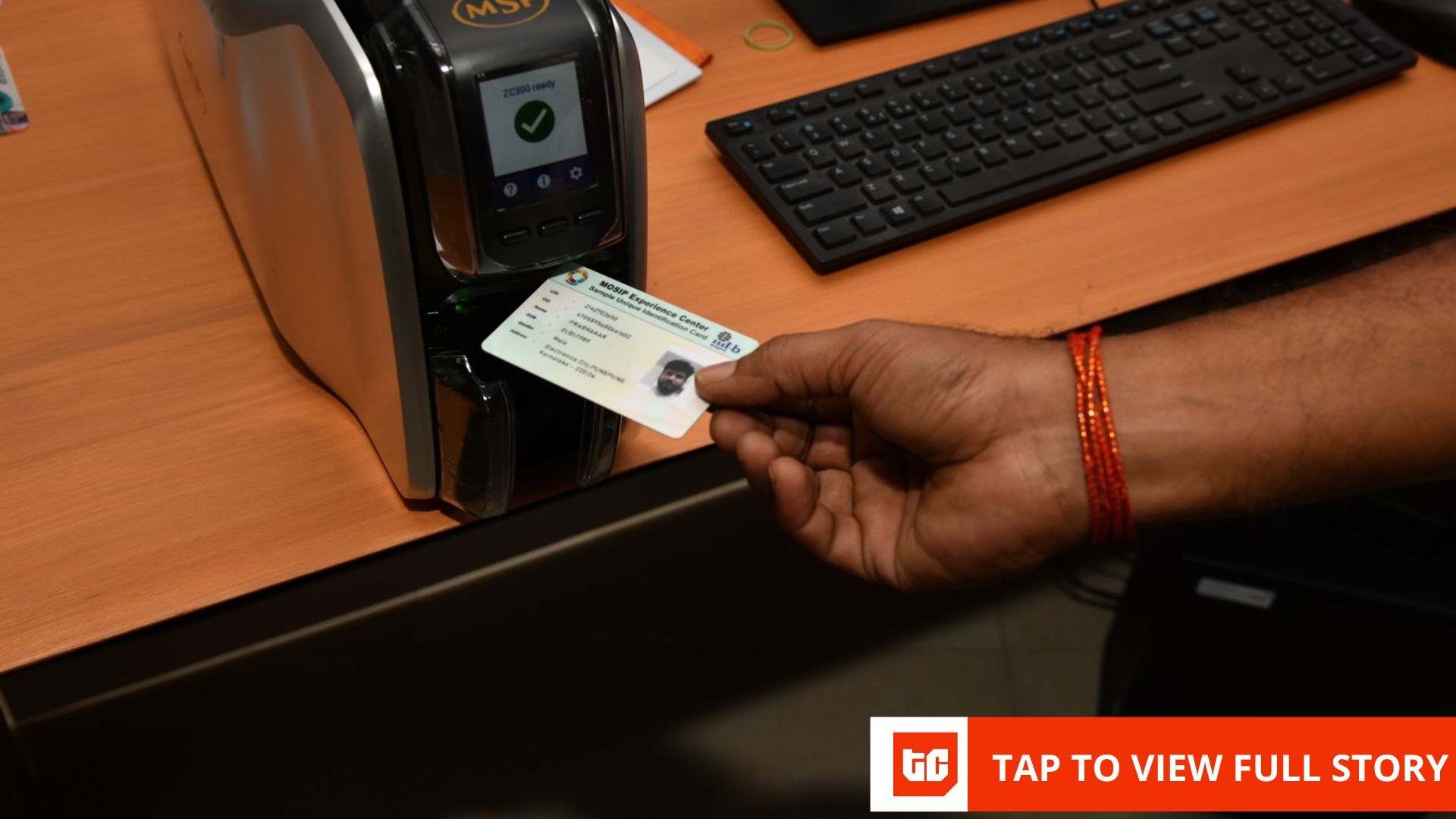
When Nigeria’s National Identity Management Commission (NIMC) began migrating the country’s foundational identity system onto an open-source platform known as Modular Open Source Identity Platform (MOSIP) in July 2025, it marked one of the most consequential technology shifts in the country’s digital history.
The move is central to the World Bank-backed Nigeria Digital Identity for Development (ID4D) programme, which has committed more than $430 million to reshaping identity infrastructure and recently issued an $83 million tender for a system integrator to deploy Nigeria’s next-generation National Identity Management System (NIMS 2.0) on MOSIP.
The stakes are immense. As of October 2025, NIMC had issued approximately 124 million National Identification Numbers (NINs) to eligible Nigerians and diaspora residents. That figure represents a near-ninefold increase over the past 25 years: from about 14 million in 2000, to 28 million in 2015, to 114 million in 2024, and now 124 million in 2025.
Today, the NIN underpins banking, SIM registration, social services, pensions, education records, e-commerce, and digital payments. Rebuilding the underlying system is not a routine upgrade but a whole reconstruction of Nigeria’s digital identity system.
Who has Nigeria enrolled so far?
NIMC’s latest demographic breakdown shows that 69.7 million NINs (56.25%) have been issued to men, while 54.2 million (43.7%) have gone to women, revealing persistent gender gaps in national enrolment.
Geographically, enrollment is sharply uneven. Lagos State leads with 13.1 million issued NINs, split between 7.14 million men and 5.9 million women. Kano follows with 11.5 million, then Kaduna (7.3 million), Ogun (5.12 million), Oyo (4.7 million), Katsina (4.21 million), Abuja (4 million), Rivers (3.6 million), Delta (3.37 million), and Bauchi (3.22 million) complete the top ten.
At the other end of the scale, enrolment remains weakest in Bayelsa (803,874), Ebonyi (1.03 million), Ekiti (1.16 million), Cross River (1.42 million), Taraba (1.8 million), Kogi (1.95 million), Enugu (2.01 million), Yobe (2.09 million), Imo (2.1 million) and Kwara (2.1 million), underscoring the regional inequality Nigeria’s digital ID programme still struggles to overcome.
Diaspora enrolment has also expanded steadily, with 1.53 million NINs issued abroad, including 953,952 to men and 584,630 to women.
This human infrastructure—124 million unique digital identities and counting—is what Nigeria is now attempting to migrate onto a new technological foundation.
What exactly is being rebuilt
MOSIP is a modular, API-driven system made up of several core components. These include tools for citizens to pre-register, software for capturing demographic and biometric data during enrolment, and a biometric de-duplication system (ABIS) that prevents duplicate identities.
It also generates unique ID numbers, stores identity records in a central database, and powers authentication services. MOSIP further supports digital credentials through the Inji app, which acts as a secure digital identity wallet where users can download, store, and manage their verified digital ID cards. It also enables QR codes and offline verification.
These modules make MOSIP function like a flexible digital identity toolbox that governments can adapt to their needs. It not only issues ID numbers but also makes them useful in everyday life. Through its authentication services, organisations can verify identities online or offline. At the same time, the Inji app on MOSIP allows people to present their digital ID, share QR codes, and authenticate themselves even without internet access. This ensures that citizens can conveniently use their identity credentials across services, anytime and anywhere.
Across Africa, around a dozen countries are either fully deploying MOSIP or actively piloting it. Public reports note that MOSIP has 26 global country engagements, with at least nine African nations, including Morocco, Ethiopia, Togo, and Uganda, already in pilot or implementation phases, while others like Guinea, Burkina Faso, Sierra Leone, Madagascar, and Niger are running pilot programmes as they work toward national adoption.
A MOSIP representative in Africa declined to comment on this story, citing contractual agreements with NIMC as constraints.
Public procurement notices reveal the scale of the upgrade. NIMC is acquiring thousands of MOSIP-certified mobile enrolment devices to support mass registration. The $83 million system integrator contract covers deployment, data migration, Automated Biometric Identification System (ABIS) integration, and platform customisation for Nigeria’s environment.
NIMC confirmed to TechCabal in a response to questions that the migration is total.
“The whole migration process is well thought out, and proper change-management procedures are in place to ensure a seamless transition,” the commission said.
That statement masks one of the most critical phases of any national ID overhaul: planetary-scale data migration.
The risk at the core: migrating 124 million identities
Transferring approximately 124 million biometric identities, each with fingerprints, facial images, and demographic data, into a new architecture is among the riskiest operations in digital government. Errors can result in ghost identities, mass duplication, service exclusion, or irreversible biometric corruption.
NIMC said a specialised system integrator will manage the process, declining to name the company.
“A competent knowledge system integrator is being engaged to handle the process, who will also work with the commission’s technical team to ensure transfer and capacity building for sustainability,” it said in the response, adding that the engagement is following “the highest international standards.”
Yet the risks go beyond engineering. Foundational ID systems like the NIN centralise both power and failure. If the authentication layer falters, entire sectors, from banking to telecoms, can lock out millions overnight.
“NIMC’s antecedents (of data breaches) show an organisation that has demonstrated in the past that it has gaps that need to be filled, and which they have never acknowledged that it has,” said Adeboye Adegoke, a digital rights advocate and former senior manager at Paradigm Initiative, a digital rights and inclusion organisation.
Vendor-neutral in theory, political in practice
MOSIP’s appeal lies partly in vendor neutrality: the ability to avoid proprietary lock-in. But genuine neutrality depends on governance, procurement discipline, and political will.
Nigeria’s identity verification industry is already raising alarm. A highly-placed industry expert, who asked not to be named to speak freely, says the leading operators haven’t been consulted on MOSIP’s implications for the domestic verification ecosystem.
“Founders built this industry, employing thousands of Nigerians,” the person said. “Nobody in NIMC has spoken to us about MOSIP. Now it feels like a system backed by global philanthropy is being introduced in a way that sidelines an entire industry.”
The expert argues that Nigeria risks sleepwalking into a new form of dependency. “Bill Gates’ organisations aren’t using MOSIP in the U.S. or the U.K., but it’s being pushed here. Why must Nigeria adopt what advanced economies don’t use? Vendor neutrality means nothing if local stakeholders are excluded.”
In reality, the Gates-funded MOSIP is designed primarily for low- and middle-income countries and is not deployed as a national ID platform in high-income ones like the U.S. or U.K., where long-standing legacy systems already exist. The Bill and Melinda Gates Foundation frames its support for MOSIP as helping governments in Africa and Asia adopt open, vendor-neutral digital ID infrastructure, but the expert sees that very positioning as reinforcing unequal power dynamics in how digital identity systems are built and governed.
Data sovereignty and auditing
For Nigerians, the most sensitive question remains whether biometric data will ever leave the country. MOSIP’s open-source nature theoretically allows full hosting in local data centres, but experts warn that sovereignty is not just about software location; it is about institutional control.
Policy lawyer Timi Olagunju argues that the real vulnerability lies inside NIMC: “The challenge with sovereignty is not MOSIP; it’s the problematic nature of NIMC. Downtime and verification failures cannot be solved by MOSIP alone.”
At the same time, NIMC faces a significant capacity challenge. A platform of this scale, if largely operated and maintained by external vendors—often non-Nigerian—can weaken sovereignty in practice, even if the underlying software is open. Without strong local technical ownership and in-house troubleshooting capacity, operational control can gradually drift away from the state.
Olagunju further warns about cloud dependency. MOSIP’s technical alignment with providers such as Amazon Web Services (AWS) introduces additional risk. In the absence of strict data residency rules, robust IT governance, and continuous independent audits—frameworks that remain underdeveloped in Nigeria, the cloud infrastructure itself can become the de facto sovereign over national identity data, even when the platform is formally open-source.
A second challenge is operational capacity. Large-scale identity platforms often rely heavily on external vendors to run critical components. Without deep local expertise, sovereignty becomes nominal rather than actual.
The expert echoes this fear from an industry perspective: “Nigeria has the experts to manage its identity systems. Giving foreigners control of our national database is irresponsible, especially in a world where data is national security.”
Cloud dependency intensifies the concern. MOSIP’s alignment with Amazon Web Services (AWS) means that, without strict data-residency mandates, strong IT governance, and regular independent audits—areas in which Nigeria has historically struggled—the cloud provider itself becomes a de facto authority over national identity data.
NIMC insists this will not be the case.
“The commission is fully committed to protecting the security and integrity of the National Identity Database,” it said, adding that its operations comply with the Nigeria Data Protection Act (NDPA).
The agency also cites its ISO 27001 certification, held since 2014 and now upgraded to the 2022 standard. Still, MOSIP’s global developer ecosystem, cloud-deployment options, and donor financing raise a profound oversight question: who audits the auditors when identity becomes transnational infrastructure?
Will Nigerians get MOSIP’s privacy features?
MOSIP is marketed as privacy-preserving by design, supporting tokenised identifiers, minimal-data authentication, and consent-based verification. But many countries adopt only partial implementations because legacy systems, limited technical and financial capacity, weak or incomplete data‑protection frameworks, and political risk concerns make a phased, minimal rollout more feasible than deploying all of its advanced privacy‑preserving features at once.
NIMC said Nigeria will not dilute those protections. “The features mentioned already exist in our various services, and the commission will not be downgrading or deploying weak versions of any solution whatsoever.”
If fully implemented, tokenised IDs could significantly reduce the frequency with which raw NINs circulate across banks, telcos, and fintech platforms, thereby reducing identity-theft risks at the source.
The missing public timeline
Despite the scale of the transformation, NIMC has not published a public migration roadmap. “These will be communicated in due course,” the commission said when asked about pilots, national rollout timelines, and public milestones.
That opacity creates accountability risk. With Nigeria already experiencing periodic authentication outages under the current system, citizens, banks, and telecom operators have little visibility into whether the country is months or years away from running dual identity stacks in parallel.
“If NIMC wants to be proactive, they need to come out and say exactly what process they went through to arrive at this juncture (choosing MOSIP), and what safeguards are in place,” Adegoke, the digital rights activist, said.
In theory, very little should change, except speed. MOSIP is expected to operate behind familiar services like NIN enrolment, NIN updates, SIM registration, e-KYC, and social-service authentication. NIMC said the platform will be combined with its existing NIN Authentication Service to “improve the customer journey and enhance integration for service delivery across the board.”
In practice, transitions of this scale almost always produce friction: temporary delays, regional outages, biometric mismatches, and data-synchronisation conflicts between old and new systems.
Foundational ID rarely fails quietly.
Perhaps the most consequential question is liability. When a national identity system fails—blocking a loan application, invalidating a SIM card, or excluding a citizen from welfare—who answers?
NIMC’s response is direct: “The National Identity Management Commission is the sole body mandated by the constitution for identity management in Nigeria. The commission will not shift her responsibilities to any other body.”
That clarity matters. MOSIP supplies software. The World Bank supplies money. The integrator supplies engineering. But accountability will remain domestic and political.
A high-stakes bet on open infrastructure
Nigeria’s MOSIP migration is both a technical upgrade and a political wager: that open digital public infrastructure can scale more sustainably than proprietary alternatives. If successful, Nigeria would become one of MOSIP’s largest real-world deployments.
Failure would be destabilising. No other system, tax, telecoms, banking, education, or elections, touches more Nigerians daily than the NIN.
Olagunju sees opportunity in the challenge, if governance and skills transfer are prioritised: “If there’s no local data and skills transfer, NIMC has simply swapped one sovereign system for another.”
For the expert, the issue is even more fundamental: national identity should never be outsourced. “Giving away your identity infrastructure is not an alternative—ever,” he said.
For now, the transition continues largely out of public view. What is clear is the direction of travel: Nigeria is rebuilding its identity layer not just as a registry, but as core digital infrastructure. Whether MOSIP becomes an instrument of sovereignty or a new dependency will depend less on software and more on governance, transparency, and execution in the years ahead.
This report is produced under the DPI Africa Journalism Fellowship Programme of the Media Foundation for West Africa and Co-Develop.
Editor’s note: A previous version of this article erroneously included the name of a source. This has now been removed. We regret the error.
TECHNOLOGY
Hackers exploit Binance co-CEO Yi He’s WeChat account to pump memecoin – pocketing 55,000 USDT


Binance co-CEO Yi He’s official WeChat account was compromised and used to promote a little-known memecoin, triggering what analysts say was a classic pump-and-dump scheme that left late buyers nursing losses.
The breach became public after suspicious posts appeared on Yi He’s verified account, pushing a meme token to her large Chinese-language audience. The posts were swiftly deleted, and both Yi He and Binance confirmed the account had been hijacked.
Yi He later explained that the attacker gained access through an old phone number previously linked to her WeChat account. The number was no longer under her control, creating an unexpected security gap that the hacker exploited.

Binance founder Changpeng Zhao also issued a warning on X, making it clear that the promotional posts did not originate from Yi He. He urged users to ignore token promotions from compromised accounts and reminded the community that social media remains a weak link in crypto security.
On-chain data shows that shortly after the posts went live, newly created wallets began accumulating the promoted memecoin, simply known as MUBARA. Trading volume spiked as retail traders piled in. The wallets then rapidly sold into the surge, extracting tens of thousands of dollars in profit before activity subsided.
Blockchain analysis firms estimate the attacker made roughly 55,000 USDT across multiple sales while retaining a sizeable remaining token balance. The pattern closely mirrors previous social-engineering-driven market manipulations seen across decentralised exchanges.
Binance’s Yi He’s WeChat hack: Concerns grow over social media abuse
The incident arrives amid growing scrutiny of social media conduct inside major crypto firms. It follows rumours circulating in the industry that Binance recently suspended an employee for allegedly using a personal social media account to promote a fake blockchain project.
While Binance has not officially confirmed details of that suspension, the timing of the Yi He hack has sharpened concerns about how easily influence, visibility and trust can be misused in crypto markets. Together, the two episodes highlight the thin line between personal online presence and corporate responsibility in a sector still heavily driven by personalities.
Yi He was recently named co-CEO of Binance, marking a major step in her leadership role after years as one of the company’s most prominent executives. The hack has not affected her position, but it has triggered renewed internal reviews around account security and public-facing communications.
 Binance co-founder and new co-CEO Yi He
Binance reiterated that neither executives nor staff will ever promote unverified tokens through personal channels. The company urged users to treat any such promotions as scams, even when they appear to come from trusted figures.
The episode underscores a broader problem for the crypto industry. Trust is routinely built through social media rather than fundamentals, and attackers continue to exploit that dynamic. As this case shows, even top executives at the world’s largest exchange are not immune.
For retail investors, the warning is familiar but increasingly urgent. Verify information independently, ignore hype-driven endorsements, and assume that no token is legitimate simply because a high-profile name appears beside it.

Image source: Ampersand Energy
Ampersand Energy, a Rwandan electric mobility startup, has opened its battery-swap network to any global electric vehicle (EV) manufacturer that meets its standards, to drive adoption of electric mobility across Africa’s commercial motorcycle markets. It’s a big step for a startup that has designed its own e-bikes, built its own batteries, and run its own swap stations.
So, what’s this battery-swap network? It’s an energy grid built for commercial motorcycles. Instead of a rider parking their bike for hours to charge, they can pull into a swap station, unlock the empty battery, slot it out, and slide in a fully charged one. Ampersand owns the batteries, maintains them, charges them, and tracks their performance through software. Riders never have to worry about battery health, charging time, electricity access, or degradation.
By opening this network, Ampersand is saying the EV market belongs to those who control the energy layer, and that layer is lucrative. The company already does over 20,000 swaps daily, each costing riders about $2 for roughly 80 km.
Why does this matter? It means that riders won’t lose money while waiting for their bikes to charge. The batteries may also last longer because Ampersand manages them properly. This swapping network solves an essential infrastructure problem in Africa’s EV market: the lack of charging infrastructure.
Wylex Mobility, an established Asian EV manufacturer, is the first to join Ampersand’s open network. The foreign e-mobility company is bringing the hardware e-bike parts, while Ampersand will supply batteries, control software, and access to swap stations. As part of the partnership, Ampersand will also assemble Wykex’s bikes at its Nairobi factory.
Yet by opening up its infrastructure to other e-mobility players, Ampersand could be directly enabling them to compete. The Rwandan startup says it is fine with that, as it believes providing easy access to charging infrastructure will increase EV uptake in East Africa.
TECHNOLOGY
Do you have ringing in your ears? For millions who do, there could now be a solution | Science, Climate & Tech News


Do you suffer from ringing in your ears? For millions of people in the UK who do, researchers say they may have found a solution.
Experts are hopeful that a new sound therapy for tinnitus could one day be available as a smartphone app.
The therapy involves patients listening to modified sounds in an effort to disrupt patterns of activity in their brains and quieten the ringing.
The trial, led by Newcastle University and part-funded by RNID, the national charity for deaf people, included 77 patients with tinnitus, which can be caused by hearing loss, certain medications or depression and anxiety.
Tinnitis leaves people with the perception of noises such as buzzing, humming, throbbing or hissing, despite there being no outside sound.
Dr Will Sedley, consultant neurologist and researcher at Newcastle University, said: “At the moment, there aren’t really very good treatments to get rid of the tinnitus sound, and it’s all about helping people disengage and learn to live better with the symptom.”
Millions of people in the UK are impacted by the condition. File pic: iStock
The researchers made small changes to synthetic musical notes for one group, while other patients were given placebo sounds to listen to, which had been modified to different frequencies.
The groups listened to sounds online for an hour a day over six weeks, before having a three-week break.
They then listened for another six weeks, with the sounds swapped, although patients were not aware which sound was the modified musical note and which was the placebo.
Read more from Sky News:
‘Unacceptable’ maternity care
COVID fraud cost taxpayers £11bn
Dr Sedley said, on average, “people listening to the active ones, but not the placebo ones, during that phase did get a significant quieting of their tinnitus”.
The therapy quietened tinnitus by around 10% on average, which lasted for around three weeks after the treatment finished, the study found.
Researchers are hopeful that the therapy can be developed further.
Dr Sedley added: “There’s all manner of different modifications we can make to the sounds themselves, or how long a day you listen for.
“If we could build this into the normal, listening to music, and talk radio, podcasts, people are doing anyway, they could rack up hours and hours of listening every day.”
TECHNOLOGY
Mysterious interstellar object spreading life-creating particles throughout the solar system as it nears Earth


The mysterious interstellar object that’s been flying through the solar system may be leaving behind the building blocks of life on our neighboring worlds.
Scans of 3I/ATLAS have revealed two key substances being released from the object, methanol and hydrogen cyanide, which combine to kickstart the chemical process needed to create genetic material like DNA and RNA.
Although 3I/ATLAS, which NASA and the European Space Agency (ESA) have declared a comet, will only come within 170million miles of Earth in December 19, it’s been getting much closer to several other planets and moons this year.
Its relatively close passes by Venus, Mars, and Jupiter have led Harvard Professor Avi Loeb to suspect that live-giving particles may be raining down on these worlds – a phenomenon called panspermia.
This cosmic process takes place when chemicals like methanol and hydrogen cyanide hitchhike on comets and later land on planets or moons, paving the way for organisms to form.
Loeb and other scientists have previously theorized that life on Earth began through a similar process, such as a meteor strike, billions of years ago.
Loeb added that 3I/ATLAS could end up playing the role of a ‘friendly gardener,’ seeding our solar system with new life, especially on moons which have been found to contain liquid water and ice, such as Jupiter’s Europa and Saturn’s Enceladus.
However, the astrophysicist still questioned whether this was a natural comet or something else, noting yet another strange anomaly in the space rock’s makeup which scientists can’t explain.

3I/ATLAS passed the sun on October 29, but new images show it has remained in one piece, which is unusual for a comet

New scans by the ALMA telescope in Chile have found 3I/ATLAS has been releasing methanol and hydrogen cyanide, two building blocks of life
Compared to other comets humans have seen, the powerful ALMA telescope in Chile found 3I/ATLAS has an unusually high amount of the ‘good’ methanol compared to the ‘risky’ hydrogen cyanide, releasing over 100 times more methanol.
Loeb revealed that’s the highest ratio ever recorded except for one oddball comet in our own solar system, giving it a chemical balance which favors life over toxic contamination.
Prior to this discovery, the Harvard professor had uncovered a dozen other strange properties of 3I/ATLAS, including a cometary tail pointing in the wrong direction, the object turning blue as it neared the sun, and course changes that defy gravity.
In fact, its gravity-bending course has brought the interstellar object within 18million miles of Mars, 60million miles of Venus, and is set to take 3I/ATLAS with 33million miles of Jupiter in March 2026.
Loeb explained that such a unique flight path through the solar system was so rare, it suggested that the object was intentionally guided on that course by an unknown intelligence.
NASA and other astronomers have largely rejected the interstellar spacecraft theory, contending that 3I/ATLAS has so many strange characteristics because it formed in a distant solar system under chemical conditions far different from our solar system.
Whether the object is a comet or an artificial object, the new scans revealed it’s giving off more and more gas the closer it gets to the sun.
The hydrogen cyanide has mostly come straight from the space rock’s core, while the methanol has been produced both from the core and in the gas cloud trailing behind it for hundreds of miles.

Stargazers recently captured brand new clear images of the interstellar object 3I/ATLAS using lower quality telescopes compared to those used by NASA

Scientists don’t yet agree on how exactly life on Earth began, but some suspect that it started with microbes being delivered from space by meteorites and comets
Methanol is a simple type of alcohol. In space, it’s commonly found around new stars and baby planets. On Earth, however, tiny organisms like bacteria and yeasts can eat it as food to grow and make energy.
Plants make it naturally too, and it helps them fight off bugs or heal wounds. It works as building block for life by serving as an abundant organic molecule in space that can transform into more complex molecules such as sugars and amino acids.
Meanwhile, hydrogen cyanide is a bit trickier, existing as a gas that can be deadly in large doses. In smaller amounts, however, it’s helpful.
Plants and bacteria produce it to protect themselves from attackers or to help seeds sprout under tough conditions. Chemically, it can link up to form the bases in DNA (adenine) and amino acids, which are life’s core tools.
Loeb noted the discovery of a pro-life balance of these chemicals helps to rule out the speculation that this object could be a ‘serial killer’ moving through the solar system with hostile intent.
‘The anomalously large ratio of methanol to hydrogen-cyanide production by 3I/ATLAS suggests a friendly nature for this interstellar visitor,’ he concluded in a statement.


It’s been quite the year for Coreweave. In March, the AI cloud infrastructure provider went public in one of the biggest and most anticipated IPOs of the year that didn’t live up to its hype.
Another setback took place in October, when a planned acquisition of the cloud provider’s business partner, Core Scientific, faltered due to skepticism from the acquisition target’s shareholders.
In the meantime, the firm has acquired a number of different companies, its stock has gone up and down, and it’s been both criticized and lauded for its role in the booming AI data center market.
In an interview at Fortune’s AI Brainstorm summit in San Francisco on Tuesday, Coreweave’s co-founder and CEO, Michael Intrator, defended his company’s performance from critics, noting that it was in the midst of creating a “new business model” for how cloud computing can be built and run. Their collection of Nvidia GPUs is so valuable, they borrow against it to help finance their business. The executive seemed to imply: If you’re charting a new path, you’re destined to encounter some road bumps along the way.
“I think people are myopic a lot of times,” Intrator said, when questioned about his company’s occasionally unstable stock price. “Yes, it is see-sawing,” he admitted, while noting that the Coreweave IPO took place not long before President Trump’s tariffs went into effect—a notably uncertain moment for the overall economy.
“We came out into one of the most challenging environments, right around Liberation Day and, in spite of the incredible headwinds, were able to launch a successful IPO,” the CEO told Brainstorm editorial director Andrew Nusca. “I couldn’t be prouder of what the company has accomplished,” he added.
Coreweave’s stock may have debuted amidst the economic doldrums of March but its price has gone on quite the journey since then. It debuted at $40 and, over the past eight months, has climbed to well over $150, but currently rests at around $90. Its more wary critics have compared it to a meme stock due to its penchant for going up and down.
Techcrunch event
San Francisco
|
October 13-15, 2026
Some of the uncertainty around Coreweave’s stock has been credited to the company’s hefty level of debt. Not long after Coreweave announced a deal on Monday to issue even more debt to finance its data center buildout, its stock dropped some 8 percent.
Intrator seems to see his company as a disruptor, one whose unconventional tactics may take some getting used to. “When you introduce a new model, when you introduce a new way of doing business, when you disrupt what has been a static environment, it’s going to take some people some time,” he said, during his appearance Tuesday.
Coreweave actually started its corporate life as a crypto-miner but, in short order, built itself into a pivotal provider of “AI infrastructure” to some of the tech industry’s most major players. In that role, it provides GPUs to AI developers, and has made major partnerships with Microsoft, OpenAI, Nvidia, Meta, and other tech titans.
Another topic broached Tuesday was the notion of “circularity” within the AI industry. “Circular” business deals, in which a small number of powerful AI companies invest in one another, have frequently been criticized, and have raised questions about the industry’s long term economic stability. Perhaps not surprisingly, since Nvidia is one of its investors as well as its supplier of GPUs, Intrator swatted away such concerns. “Companies are trying to address a violent change in supply and demand,” he said. “You do that by working together.”
Since the IPO, Coreweave has continued to make efforts to expand its business. After it acquired Weights and Balances, an AI developer platform, in March, it went on to acquire OpenPipe, a startup that helps companies create and deploy AI agents through reinforcement learning. In October, it also made deals to acquire Marimo (the creator of an open source notebook) and Monolith, another AI company. It also recently announced an expansion of its cloud partnership with OpenAI and said it has plans to move into the federal market, where it wants to provide cloud infrastructure to U.S. government agencies and the defense industrial base.
TECHNOLOGY
The monogamy ‘league table’ for the animal kingdom: Deer mice and wild dogs top the list…while humans are 7th in the rankings

If you truly want to commit to someone for life, it’s worth taking notes from the California deer mouse.
This tiny rodent has topped the animal kingdom’s monogamy ‘league table’ – while humans rank seventh.
Scientists analysed the proportions of full versus half–siblings in a range of species, as well as several human populations throughout history.
Those with higher levels of monogamy are likely to produce more siblings that share both parents, while species which are more promiscuous tend to record a higher proportion of half–siblings.
Analysis revealed that the California deer mouse is the most monogamous creature, with 100 per cent of siblings sharing both parents.
Humans, meanwhile, only record 66 per cent full siblings.
This places us lower than the African wild dog, Damaraland mole rat, moustached tamarin, Ethiopian wolf and Eurasian beaver.
However, compared to our distant primate cousins, we’re much more faithful – making our preference for monogamy ‘highly unusual’, experts said.
Dr Mark Dyble, from the University of Cambridge, devised a computational model to calculate an estimated monogamy rating for each species.
The top 11 species in the rankings are considered ‘socially monogamous’, preferring long–term pair bonds.
‘There is a premier league of monogamy, in which humans sit comfortably, while the vast majority of other mammals take a far more promiscuous approach to mating,’ he said.
‘The finding that human rates of full siblings overlap with the range seen in socially monogamous mammals lends further weight to the view that monogamy is the dominant mating pattern for our species.’
The most promiscuous species, according to his analysis, is the Soay sheep – a breed that descended from a feral population that live on Scotland’s St Kilda archipelago.
Only 0.6 per cent of lambs from this breed are full siblings, Dr Dyble revealed, as each ewe mates with several rams.
Others that rank low in the table include the Celebes crested macaque, black bear, Antarctic fur seal and killer whale.
Meanwhile the red fox, grey wolf and meerkat appear in the middle of the table – and are included in the ‘socially monogamous’ category.

The California deer mouse is the most monogamous creature, with 100 per cent of siblings sharing both parents (file image)

The African wild dog also scored highly for monogamy, with 85 per cent of children being full siblings (file image)

Just above humans, in sixth place, is the Eurasian beaver. They scored 72.9 per cent as part of the analysis (file image)
What is monogamy?
Monogamy is the practice or state of having a sexual relationship with only one partner at a time.
This relationship structure emphasises exclusivity and fidelity.
Polygamy, meanwhile, involves having multiple partners or spouses simultaneously – with the consent of all the people involved.
The only other non–human primate that appears in the top division is the moustached tamarin – a small Amazonian monkey the typically produces twins or triplets.
All other primates included in the research are known to have polygynous or polygynandrous – where both males and females have multiple partners – mating systems, and tank way down the table.
Mountain gorillas manage a six per cent full sibling rate, while chimpanzees come in at just four per cent – on a par with dolphins.
Various macaque species, from Japanese to Rhesus, sit almost at the bottom of the table.
‘Based on the mating patterns of our closest living relatives, such as chimpanzees and gorillas, human monogamy probably evolved from non–monogamous group living, a transition that is highly unusual among mammals,’ Dr Dyble said.
He added: ‘This study measures reproductive monogamy rather than sexual behaviour. In most mammals, mating and reproduction are tightly linked. In humans, birth control methods and cultural practices break that link.
‘Humans have a range of partnerships that create conditions for a mix of full and half–siblings with strong parental investment, from serial monogamy to stable polygamy.’
The findings were published in the journal Proceedings of the Royal Society B Biological Sciences.

The only other non–human primate that appears in the top division is the moustached tamarin – a small Amazonian monkey the typically produces twins or triplets (file image)

The most promiscuous species, according to his analysis, is the Soay sheep – a breed that descended from a feral population that live on Scotland’s St Kilda archipelago (file image)

Mountain gorillas – among our closest living relatives – only have a 6 per cent full sibling rate, the study revealed (file image)
A previous study made the controversial claim that monogamy may not be the best approach for human relationships and is based on ‘flawed science’.
In the study, researchers reviewed several earlier works and surveyed more than 2,000 people, and found that non–monogamous relationships are just as ‘functional’ as traditional ones.
They measured for trust, jealousy, passion, and overall satisfaction, and found that there were no differences in how the relationships function.
Still, non–monogamy remains somewhat taboo, and the researchers say the cultural dominance of more traditional relationships could be affecting the way intimacy is studied.
The most monogamous animals
- California deer mouse (100%)
- African wild dog (85%)
- Damaraland mole rat (79.5%)
- Moustached tamarin (77.6%)
- Ethiopian wolf (76.5%)
- Eurasian beaver (72.9%)
- Humans (66%)
- Lar gibbon (63.5%)
- Meerkat (59.9%)
- Grey wolf (46.2%)
- Red fox (45.2%)
% of siblings that are full siblings
The most promiscuous animals
- Soay sheep (0.6%)
- Celebes crested macaque (0.8%)
- Rhesus macaque (1.1%)
- Japanese macaque (2.3%)
- Black bear (2.6%)
- Antarctic fur seal (2.9%)
- Killer whale (3.3%)
- Savannah baboon (3.7%)
- Vervet monkey (4%)
- Bottlenose dolphin (4.1%)
- Common chimpanzee (4.1%)
% of siblings that are full siblings

Hinge CEO Justin McLeod is stepping down from his role to launch a new AI dating product called Overtone.
Match Group, the dating giant that owns apps like Hinge, Tinder, and OkCupid, is backing Overtone with pre-seed financing and plans to take a “substantial ownership position,” according to a press release.
With Match’s support, Overtone was incubated as a project inside of Hinge. McLeod and a dedicated team spent the year developing the idea of Overtone, which is described as “an early-stage dating service focused on using AI and voice tools to help people connect in a more thoughtful and personal way.”
McLeod isn’t the only dating app founder branching out into new, standalone AI experiences. Whitney Wolfe Herd, founder of Bumble, said she wants to use AI to make “the world’s smartest and most emotionally intelligent matchmaker in existence.” Somewhat infamously, Wolfe Herd proposed the idea last year of singles using AI to stand-in for themselves and date other people’s AIs.
It’s not yet clear how Overtone will differentiate itself from other dating apps, which have been experimenting with AI features to compensate for the market’s growing malaise with online dating — especially among Gen Z.
Tinder has reported nine straight quarters of paying-subscriber declines and has leaned into AI with features that are supposed to help users get more matches. Hinge launched another AI feature just this week called “Convo Starters,” which is supposed to help daters come up with more interesting things to say than the usual small talk. Tinder and Facebook Dating have each experimented with AI-powered matching to combat “swipe fatigue.”
Ceding control of your dating experience is one thing, but other attempts at integrating AI into these apps get even more dubious.
Techcrunch event
San Francisco
|
October 13-15, 2026
Match CEO Spencer Rascoff said last month that a “major pillar of Tinder’s upcoming 2026 product experience” will be a feature called Chemistry. With the user’s permission, the feature will access users’ camera rolls to learn more about them. (For the record, we would advise that you do not give tech companies unfettered access to even more of your data.)
McLeod founded Hinge in 2011 as a dating app with a greater focus on building relationships than facilitating casual dates. The app, which is on track to hit $1 billion in revenue by 2027, was acquired by Match in 2019. Jackie Jantos, Hinge’s president and chief marketing officer, will take over as CEO. McLeod will remain in an advisory position at Hinge through March.
This summer, TechCrunch spoke to Jantos at SXSW London about how Hinge will address Gen Z, a market that’s growing increasingly disillusioned with meeting people online.
“This is a generation that has grown up with a deep understanding of how digital experiences are created and what they are trying to get out of them,” Jantos told TechCrunch.
Gen Z wants transparency and authenticity from digital brands, according to Jantos. While some might see this as inherently incompatible with the company’s growing reliance on AI, Hinge’s AI recommendation feature, launched in March, drove a 15% increase in matches and contact exchanges in the first quarter of this year.
Based on Jantos’ comments upon assuming her new role, it seems that Hinge will continue investing in these features under her leadership.
“Our focus will remain on intentional innovation that is grounded in culture, creativity, and a deep understanding of how people connect today,” Jantos said in a statement.

SpaceX is planning to go public in mid-to-late 2026 and is looking to raise $30 billion at a valuation of around $1.5 trillion, according to a new report from Bloomberg News citing multiple unidentified sources.
That would make it the largest IPO of all time, edging out Saudi Aramco’s public listing in 2019, which brought in $29 billion. It would also be a bit of a reversal for SpaceX, which previously considered spinning off its Starlink division for an IPO, while keeping the main company private.
Bloomberg’s report comes just a few days after The Information was first to report that Elon Musk’s space company was targeting a late 2026 IPO.
The Wall Street Journal also recently broke the news that SpaceX was engaged in another secondary share sale for employees that would peg the company’s current valuation at around $800 billion. Bloomberg’s report says SpaceX has “firmed up” that share sale in recent days and the valuation is above the $800 billion figure, with employees being allowed to sell around $2 billion worth of shares at $420 per share.
This story has been corrected to have $1.5T in the headline, not $1.5B.


Donald Trump has cleared the way for Nvidia to begin selling its powerful AI computer chips to China, marking a win for the chip maker and its CEO, Jensen Huang, who has spent months lobbying the White House to open up sales in the country.
Before Monday’s announcement, the US had prohibited sales of Nvidia’s most advanced chips to China over national security concerns.
Trump posted to Truth Social on Monday: “I have informed President Xi, of China, that the United States will allow NVIDIA to ship its H200 products to approved customers in China, and other Countries, under conditions that allow for continued strong National Security. President Xi responded positively!”
Trump said the Department of Commerce was finalising the details and that he was planning to make the same offer to other chip companies, including Advanced Micro Devices (AMD) and Intel. Nvidia’s H200 chips are the company’s second most powerful, and far more advanced than the H20, which was originally designed as a lower-powered model for the Chinese market that would not breach restrictions, but which the US banned anyway in April.
The president said the US would receive 25% of the proceeds, more than the 15% previously agreed to with Nvidia in an earlier deal to lift restrictions. This deal follows similar unorthodox plans for the federal government to take a financial cut from private business dealings. In August, Trump said the US would receive a 10% stake in the tech company Intel. Some lawmakers have questioned the legality of such arrangements.
According to the Hill, the Democratic senators Elizabeth Warren of Massachusetts and Andy Kim of New Jersey sent letters to the commerce secretary, Howard Lutnick, last week outlining their concerns over selling these chips to China and saying it risked powering the country’s “surveillance, censorship and military applications”.
They wrote: “I urge you to stop ignoring the input of bipartisan members of Congress and your own experts in order to cut deals that trade away America’s national security.”
On social media, Warren called for Huang to appear before Congress to testify under oath.
Huang has worked closely with Trump since the inauguration and has made several trips to the White House. The CEO attended the president’s AI summit in July, met Trump as recently as last week and was even a guest at the White House dinner for the Saudi crown price, Mohammed bin Salman. Huang has pledged to invest $500bn in AI infrastructure in the US over the next four years.
Huang has visited China several times, meeting officials and Chinese tech executives, as US bans were variously lifted and reintroduced. Earlier this year, China imposed its own controls on the imports of Nvidia chips, with top tech firms reportedly instructed to cancel orders, citing national security concerns and confidence in China’s domestic chip development.
In October, Huang said Nvidia has gone from having 95% of the Chinese market to having none, and called the bans a “strategic mistake”.
Selling chips to China, the world’s second largest economy, could now mean a windfall worth billions of dollars for Nvidia, which is already valued at $4.5tn.
An Nvidia spokesperson said: “We applaud President Trump’s decision.” He said offering the H200 chips “to approved commercial customers, vetted by the Department of Commerce, strikes a thoughtful balance that is great for America”.
The Nvidia spokesperson and Trump said the move would support US jobs and manufacturing.
In his Truth Social post, Trump condemned the Biden administration’s policies, which imposed strict export controls on powerful chips. The Biden administration had said withholding such technology from China bolstered US competition, protected national security and hampered AI development in China.
“That Era is OVER!” Trump wrote. “My Administration will always put America FIRST.”
On Tuesday afternoon, China’s foreign ministry said it had noted the reports. “China has always adhered to the principle that China and the United States can achieve mutual benefit and win-win results through cooperation,” the spokesperson said. A final decision from Beijing is still in the works, according to a report from the Financial Times. The newspaper said regulators may still opt to limit access to H200 chips in China so that the country can continue to focus on its own technology.
Ma Jihua, a telecom industry analyst, told the state media outlet the Global Times that years of US curbs on AI exports had “provided a rare chance of China’s domestic chip industry to grow and catch up”.