
TECHNOLOGY
Zipline’s culture chief on why ‘brilliant jerks’ are a liability


What does a human resources leader at one of the most impactful startups operating in Africa look for when hiring? “You can have the best engineer in the world who has a brilliant jerk attitude and just disrupts your whole company,” says Juliet Oshagbemi, Zipline’s Chief People & Culture Officer, Africa.
For a drone technology company where technical skills are critical, Oshagbemi says character and attitude can take precedence.
This can range from a talent’s humility and vulnerability, the kind that encourages taking responsibility for mistakes, to being entrepreneurial, curious, and willing to share informed and direct feedback without stripping a person of their dignity. When she asks for your past career experience in an interview, it’s less about where you’ve worked or for how long, and more about how you articulate those past experiences. For a global company with distributed teams, the ability to articulate and communicate your work and output is crucial.
At Zipline, she looks for people who are “able to roll up your sleeves and get your hands dirty” across various roles, in typical startup fashion. It’s grit, resilience, and being “good at collaborating cross-functionally.”
“I think the other piece is looking [for] someone who has leadership potential, someone that could lead a team in the future,” Oshagbemi says. “At Zipline, we’re very quick to identify people that could lead and give you the skills you need to lead.”
Finding purpose in uncertainty
More than two decades ago, long before Zipline, Oshagbemi sat before a recruiter at Blue Arrow, a recruitment agency for seasonal workers in London, to find out if any jobs had shored up. She’d dropped her resume at the agency a week earlier, on her way home from a part-time job at Marks & Spencer, eager for an inroad into a more stable career path. Already, she’d left behind studies in Medicine and Biomedical Sciences. “I just couldn’t deal with not being in control of the outcome,” she says of her time in the medical sciences.
Just minutes before she’d walked into the agency, however, the recruiter had trashed her resume. “I just threw your CV away!” Oshagbemi recalls the recruiter telling her before reaching back into the trash to retrieve the resume and attempt to straighten it out.
She was asked to sit and, within half an hour, was placed in a supporting role for the recruitment team at the Metropolitan Police. At the station, she was tasked with putting together recruitment packs for individuals who’d expressed interest in the police force. There was nothing particularly exciting about this job, but Oshagbemi recalls doing it with fervour: listening to music from 9 a.m. till 5 p.m. at the station along Brook Street, sorting some 30 pages of recruitment information, gathering them in a file, sending it off to a would-be police officer, repeat.
Someone was taking note. Three weeks in, she says, the station’s recruitment manager bumped her into the recruitment team where she was tasked with hiring police officers who respond to 999 calls.
“I absolutely did not like it,” she says.
It was too routine, like checking the same items off the same lists over and over. So a year and a half later, she moved into generalist HR and climbed the ranks, from deputy HR manager to a HR manager responsible for about 900 staff. She was around 23.
You won’t be remiss to say her foray into personnel management was accidental, but nearly a decade later, Oshagbemi says seeking out the best talent in Africa and creating work environments that allow them to thrive has become a life’s mission.
Get The Best African Tech Newsletters In Your Inbox
A life-changing experience
After eight years at the Met Police, Oshagbemi truly cut her teeth as an HR professional at the Dangote Group. At the time, she did not know she was interviewing for a role at the conglomerate until late in the process. After interviewing with an all-male hiring panel in fishnet tights and a forwardness not often expected of women in corporate settings, she was surprised to learn she’d been hired.
“I think it was August 31st, 2009. I walked into Marble House, and I was responsible for learning and development for the group,” she says.
At the time, the conglomerate was looking for disruptors, a leader who could transform the group’s approach to personnel management. They’d appreciated the forwardness she’d brought to the interviews, her refusal to respond in ways “people wanted to hear”, and were confident that she could drive the change the company needed.
“Apparently, they were deadlocked. I think out of the panel—there were six—four wanted me to be hired, two did not,” she says. Those two would later tell her that “they were happy that they agreed in the end.”
At Dangote Group, Oshagbemi truly grew as an HR leader. From maintaining a high-quality talent pipeline, identifying and budgeting for personnel learning and development to recruiting, relationship building and succession planning, the size and complexity of the business presented a rare opportunity to work across every aspect of human resources management.
But after more than a decade working across those subsidiaries, Oshabegemi says she was ready to move on to newer opportunities. It was in the process of figuring out what this next move was that she was head-hunted by Zipline.
Oshagbemi says she’d never heard of the company when she was approached to join the team. She Googled them, of course, and took a preliminary conversation with the recruiter, “and I still wasn’t very convinced.” For one, the company had about a tenth of the staff capacity at Dangote, and it was going to be a significant downgrade in the scale of responsibilities she’d been handling for almost 13 years.
“Of course, another lesson learned for me was, just don’t look at the number of employees. Look at other things,” she reflects.
That ‘other thing’ took a visit to one of Zipline’s distribution centres in Ghana.
“When I walked into that distribution centre, and I heard the drone being launched, I think that was like a life-changing moment for me.”
Oshagbemi lost her father in 1999. Tragically. He’d been shot six times in the stomach, she recalled. At the hospital, five of the bullets were extracted, but the lone remaining bullet was lodged in his intestine, and he was losing so much blood that they couldn’t save him.
“Now imagine me, fast forward to many, many years later, at a facility where they were putting blood into a drone to send it to a hospital to save a life,” she says quietly.
She knew for sure that she was going to join the Zipline team then, to continue a career trend of working in companies whose impact is often ubiquitous and central to everyday survival.
At the time, the company was scouting for someone to lead learning and development, but after conversations with the recruiter and realising they needed more human resources structures in place, the role broadened in scope. She joined Zipline as its Chief People & Culture Officer in March 2022.
Culture as currency
Long gone are the days when a human resources leader’s role entailed payroll management, hiring, and firing. Today, human resources leaders are not only maintaining a healthy talent pipeline, establishing and fostering healthy work cultures, and handling change management, but they’ve also become, according to Oshagbemi, critical business partners to a company’s leadership. To contribute meaningfully, HR leaders of today must understand the numbers, how they influence decision-making, how profit and loss (P&L) works, how balance sheets work, and, for companies like Zipline that are heavily regulated, how regulation impacts business operations.
Especially for startups, an HR leader may need to wear more than one hat—Oshagbemi supports procurement, logistics, and security efforts at Zipline—and must embed themselves into the companies they work with to truly understand how to advocate for staff.
“You need to know what people are doing, what their pain points are,” Oshagbemi says. “You need to do a day in the life of someone in operations so that when you’re making that policy or when you are aligning on a decision at [the] board level, you have the right data points.”
At Zipline, “operations is our bread and butter,” she adds. “I need to understand what operations need, what are their priorities, or even speak the operation language.”
This capacity and intent to place oneself in the shoes of staff members with the aim of understanding their motivations and pain points are captured by the principle of ethical leadership. To create an enabling environment in which human capital thrives, where talent has the freedom and encouragement to do their best work, as well as the psychological safety to fail and learn without reproach, an ethical leader leads by example and with integrity. They embody the traits and cultures they want to see in their organisations and empathise with the limitations of those tasked with bringing the company’s vision to life.
“I can sit here and talk to you about performance management, talent management, chain management, and all those things,” she says. “But I think without having [an] enabling environment, all those things are just, you know, words.”
Though some studies show limitations, this style of leadership is largely regarded as beneficial. According to Legal Research Network’s Benchmark of Ethical Culture, which surveyed more than 8,500 full-time employees across 13 industries and 15 countries (African countries not included), companies with strong ethical cultures outperform companies without by about 50% across metrics such as customer satisfaction, adaptability, innovation, growth, and employee loyalty. This style of leadership fosters, perhaps crucially, psychological safety—a term coined in 1999 that describes an environment where staff can speak up without fear of embarrassment or retribution when things go awry.
For some leaders, empathy and ethical behaviour might be innate, while for others, especially younger leaders and middle managers, they have to be learned, Oshagbemi says.
In addition to ethical leadership, enabling work environments are corporate cultures that favour expertise over the personal preferences of a single, often top company leader, according to Vivian Offodile-Adukwu, a human resources expert with over a decade of experience, including in tech startups.
“I always say that if you recruit me or if you bring me on board your team, it means that you have value or trust in the experience that I bring,” Offodile-Adukwu says.
In other words, great benefits and pensions are no longer enough to keep a multigenerational talent pool truly committed. “When I was in the police force, you’d have people wanting to work there for 30, 35 years because there was a great pension and there were great benefits. That has changed now,” Oshagbemi says. At Dangote, people stayed on for a decade, two, more, “because they were growing, because they were given opportunities to do other things.”
Get The Best African Tech Newsletters In Your Inbox
The “brilliant jerk” trap
The concept of ethical leadership—modelling healthy culture and empathy towards staff—is especially critical in startups where entrepreneurs often zero in on product and marketfit, fundraising, and scaling, while people management falls to the side.
“People will probably hire the CTO before they hire an HR person. Or the CFO. But why are you not looking at people person first and being able to build a solid culture for your company from the beginning, [rather] than making it an afterthought?” Oshagbemi asks.
Offodile-Adukwu agrees, adding that when founders fail to establish healthy corporate culture strategies and protocols from the start, there’s a higher chance that the culture will become unhealthy and toxic, leading to high attrition rates. And when fixes are eventually pursued, often without expert change management personnel or processes in place, the same results occur: talent leave.
“Your policies, your structure, reporting chain, modus operandi, everything has to reflect the culture that you see your company or startup [looking] like in the next 5, 10 years,” Offodile-Adukwu says.
When companies place greater emphasis on technical skills, which Offodile-Adukwu argues can be taught or developed, they can miss out on soft skills that often can’t be taught or are harder to teach in adulthood, but which have dire consequences for a team when they’re absent.
Global corporate culture and legacy
Zipline’s drone technology enables the company to deliver essential medical supplies, food, and other consumer products with speed and efficiency. The company was founded in America and now operates in eight countries across four continents. Bridging the gap between different corporate cultures and aligning them with the central global strategy is another critical part of Oshagbemi’s job.
“My role and the role of the other people partners in the company is to be a bridge, right? It’s to educate people on the cultural differences,” she says.
To do this requires cultural intelligence and awareness of how simple things like salutations, language, and sociocultural norms can creep into the ways people work and do business. It means communicating these nuances across the company’s various markets or organising cultural awareness workshops for American staff coming to Africa and vice versa to make cross-cultural interactions less nerve-racking and more beneficial.
Why does all of this work matter to Oshagbemi?
Africa has great talent, and many go undiscovered or unsupported to reach whatever summits they dream of in their careers, she argues. In addition to her role at Zipline, she works as a career coach, “because people do make wrong career decisions” and sometimes need assistance to get things right.
But when she looks back at her career in years to come, Oshagbemi says a worthwhile legacy is one that reflects her contributions to developing ethical leaders whose personal and company impact is felt beyond their individual companies, across entire industries and for years to come.
Recommended Read: Hannah Kates was at Stears; now, she’s mapping Lagos’ ferry routes for free

Nvidia is allegedly testing software that can track the location of its AI chips as reports of its chips being smuggled into China are on the rise.
Nvidia has built location verification technology that would allow it to track which country a chip is located in, Reuters originally reported, citing anonymous sources. This software tracks computing performance but the delay in communication between servers also offers a sense of a chip’s location.
This software will be optional for customers to use and will be made available for Blackwell chips first, Reuters said.
Multiple reports have surfaced in the last few days that allege China’s DeepSeek AI models have been trained on smuggled Nvidia Blackwell chips. Nvidia responded to these reports by saying it hasn’t seen evidence of this type of smuggling.
“We haven’t seen any substantiation or received tips of ‘phantom data centers’ constructed to deceive us and our OEM partners, then deconstructed, smuggled, and reconstructed somewhere else. While such smuggling seems far-fetched, we pursue any tip we receive,” an Nvidia spokesperson told TechCrunch.
This news comes just days after Nvidia got the green light from the U.S. government to start selling its H200 AI chips to approved customers in China on Monday. That announcement pertains only to older H200 chips and not the company’s Blackwell chips.
TECHNOLOGY
14 unexpected US gifts to give the men in your life this holiday season | Gift ideas from the Filter US


Whether you have been together for years, just made it official, or maybe you’re just shopping for your brother, one thing remains certain: he is going to claim he doesn’t need anything. The special guys in our lives often default to what they’ve always used and loved, from threadbare T-shirts to melted spatulas.
The Guardian’s journalism is independent. We will earn a commission if you buy something through an affiliate link. Learn more.
This season, give him the gift of novelty. Introduce him to a new gadget he hasn’t thought of for his man-cave (yes, our respondents still have those). Show him that it’s OK to cry with a personalized keepsake commemorating your shared history. Introduce a little color into his life if his year has been a bit bleak.
We tapped several guys to hear about the unexpected gifts they now couldn’t live without – and we heard from some of the givers, too. From headphones to keep him plugged into his favorite podcast to personalized artwork that tugs at his heartstrings, here is exactly what to get the lucky guy in your life this holiday season.
Plufl Human Dog Bed
 Photograph: Courtesy of Plufl$275 at Plufl
Whether he’s a family man or a dog dad, the Plufl human-sized dog bed is about to take center stage in his living space. Not only does it feature deep bolsters and orthopedic foam to support his joints and give his pup a soft place to rest, but it’s a breeze to store when not in use.
“I didn’t expect to love this human doggy bed as much as I do, but honestly, it’s become one of my favorite spots in the house,” says Amir A, a software developer. “My dog curls up in it, my kids join him, and half the time I end up climbing in there with them too. It’s so comfortable that I’ve actually fallen asleep in it a few times. This bed was supposed to be for the dog, but now we’re basically sharing it.”
Ridge Wallet
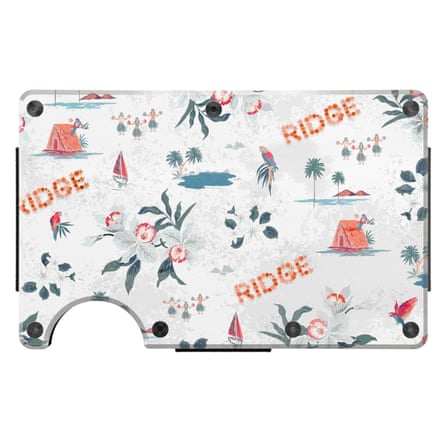 Photograph: Courtesy of Amazon$68.99 at Amazon$69 at Ridge
If his wallet is currently disintegrating in his pocket, with cash and cards peeking out from under its frayed edges, it’s time to upgrade him to the Ridge, made of near-indestructible materials and RFID-blocking technology that defies chip readers. “I had been complaining about my slim wallet for a while, so my wife got me the top-of-the-line one with an AirTag attachment so I never lose it,” says Jamie Gewurz, a financial planning associate.
Apple AirPods Pro 3 Wireless Earbuds
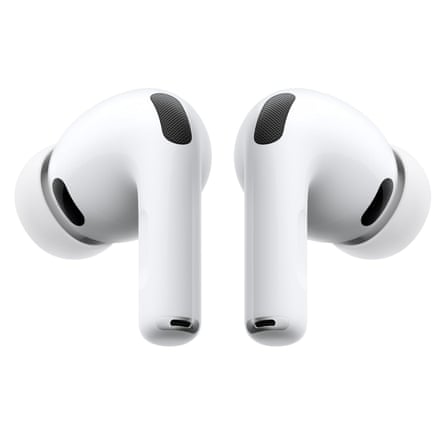 Photograph: Courtesy of Amazon$219.99 at Amazon$249 at Apple
He’s got to tune out the world somehow. Let him do it in style with Apple’s new AirPods Pro 3 earbuds, which pair effective noise-cancellation with crisp sound quality. “I listen to music and podcasts all the time. When I’m engaged in a project at work, they help me lock in,” says James Anderson, a structural engineer. They can also double as hearing aids and allow live translation when paired to newer iPhones.
Custom ‘Met, Engaged, Married, Live’ map print
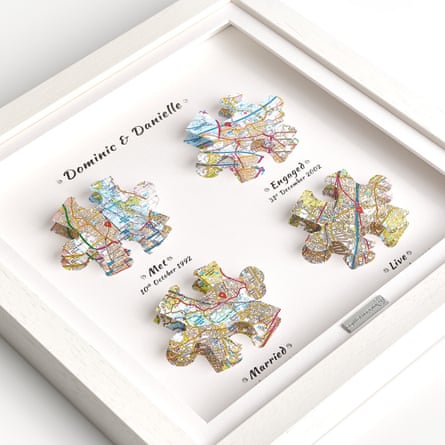 Photograph: Courtesy of EtsyFrom $90.38 at Etsy
Matthew K, an e-commerce manager, recently received this puzzle from his wife to commemorate his first-year anniversary. It depicted exact pinned locations of their first date, their engagement spot, wedding venue, and honeymoon. “I thought it was a cool way to remember our history. It was definitely an interesting way to present our relationship milestones on paper, which happens to be customary for the first anniversary,” says Matthew.
HexClad 4.5qt deep sauté pan with tempered glass lid
 Photograph: Courtesy of Amazon$189 at Amazon$189 at HexClad
Robert Hartry, an architectural designer, received this HexClad pan from his partner for Christmas last year. “Its side walls are higher than a normal sauté pan, so it makes it very versatile,” says Hartry. “I also love that it’s fairly indestructible. Emily has tried, and this pan has yet to fail.”
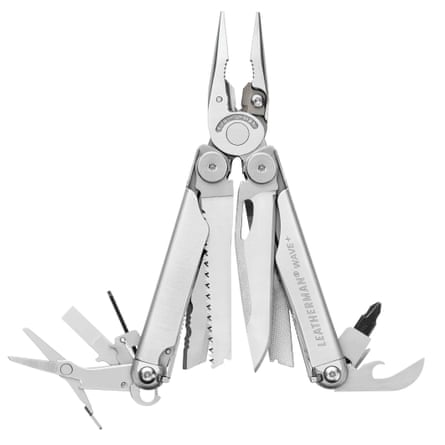 Photograph: Courtesy of REI$119.95 at Global Industrial $119.95 at Amazon
With 18 built-in tools from scissors to pliers, any guy with a knack for DIY projects will start to consider this Leatherman an extension of his hand. “I got it for my brother for Christmas,” says Elizabeth Tomaras, a quality manager. “He’s always outdoors for work and even for play, and I knew he had [a multitool] but definitely not as nice as this one. I don’t think he would necessarily spend that much on a tool for himself. He likes its sleek design and that there are so many options. It’s not just the basic model.”
Saxx Stretch Cotton Boxer Briefs
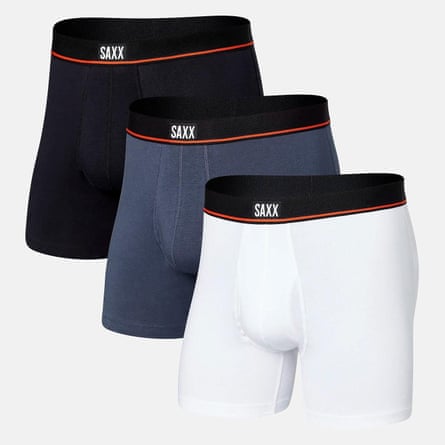 Photograph: Courtesy of Amazon$68 for three-pack at Zappos
Noticing his underwear could use a little TLC? Run this thoughtful errand for him with this pack of three supportive cotton-blend pairs. “A classic gift Jamie has gotten for me, and something no guy actually buys for himself, is Saxx underwear,” says Lukas Snyder, a trader. “I get all of my underwear over the holidays, and only from the women in my life.”
Jumbo playing cards
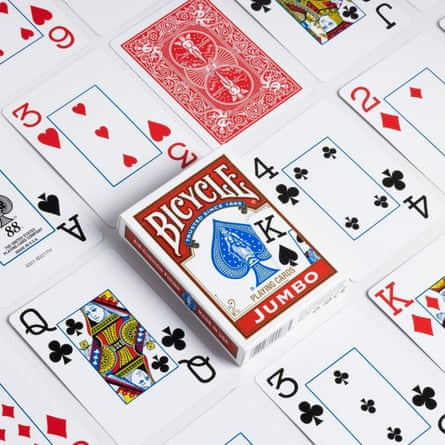 Photograph: Courtesy of Walmart$3.54 at Walmart$3.99 at CVS
Snyder’s girlfriend got a standard deck of cards and kicked it up a notch for serious sentimental value. “She bedazzled a deck of cards into a ‘52 things I love about you’ gift. She cut out small squares of paper and glued them on to each card and wrote on it,” says Snyder. “She also drew on the cards, then put a keychain around the corner to bind it all together.”
Crocs clogs
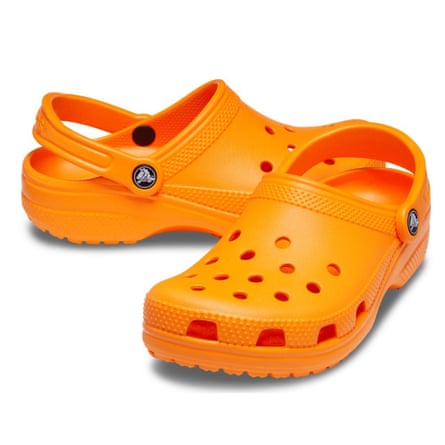 Photograph: Courtesy of Amazon$34.99 at Crocs $38.87 at Amazon
Crocs are a lot cooler now than they once were, making them a practical gift for your brother who’s hard to shop for. “When they first came out, I thought they were ugly and I didn’t get the hype,” says Shawn Thicke, a children’s musician and performer. “As I performed for more and more kids, they started showing me their Crocs and some even told me I should get some. Funny enough, a parent let me try theirs and I was immediately sold. They were so comfy.
“My sister remembered how much I enjoyed them, so she surprised me with a pair. I now wear them all the time! I love them. So comfy! I even wear them to gigs.”
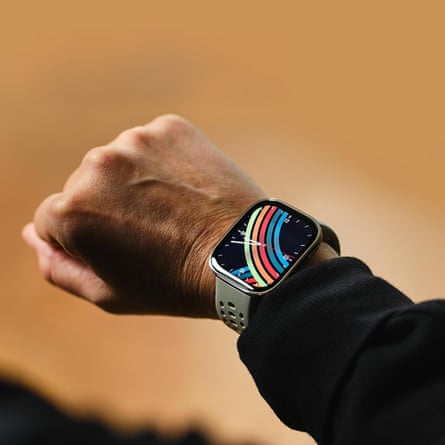
Amazfit Bip 6 smartwatch
 Photograph: Courtesy of Amazon$79 at Amazon $79 at Walmart
For a guy who values fitness but doesn’t want all the distractions of an Apple Watch, this Amazfit smartwatch is a smart alternative. “It’s really good quality and has a lot of features you don’t need to pay monthly for, unlike other smartwatches,” says Reza T, an IT specialist. That includes GPS run tracking, more than 140 workout modes, AI fitness coaching and more.
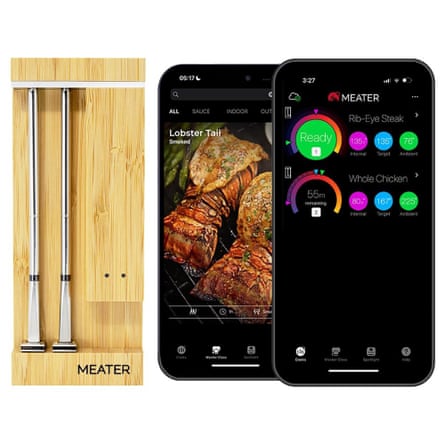
Meater Pro Duo Wireless Smart Meat Thermometer
 Photograph: Courtesy of Amazon$199.95 at Amazon$199.95 at Meater
Jennifer Orleans got her grill-enthusiast brother this heavy-duty wireless smart meat thermometer, and there is so much your favorite carnivore is going to love about it too. “He likes how it enables a perfect cook every time,” says Orleans, a project manager. “He can go inside and will get a notification on his phone when it’s ready.”
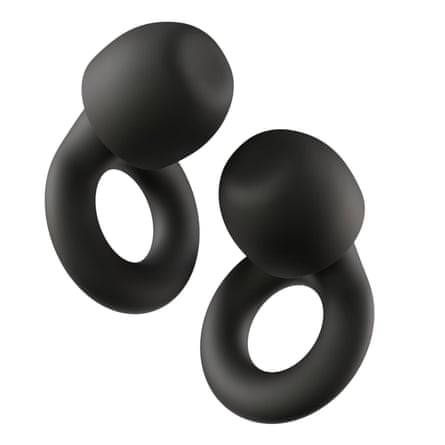
Loop Quiet 2 Ear Plugs
 Photograph: Courtesy of Amazon$20.95 at Amazon $24.99 at Target
Chantal Stafford-Abbott, a model, considers these viral reusable earplugs the ultimate gift for a guy who might need a little extra shuteye in less-than-quiet circumstances. “They actually work, you don’t have to buy loads from the pharmacy, and they come in the cutest little case,” she says. Four tip sizes in a comfortable, flexible silicone material ensure he finds the perfect fit, and there are no batteries to charge or replace.
Target Darts Corona Vision Dartboard Lighting System
 Photograph: Courtesy of Amazon$89.84 at Amazon$106.49 at Walmart
If you know a guy trying to recreate his favorite watering hole at home, there’s a gift for that. When they were just dating, Matthew’s then girlfriend gifted him this ringlight for his dartboard to increase visibility and up his game. “It gives you that professional at-home setup, illuminating your space if you’re playing in the dark,” says Matthew.
Custom family trading card
 Photograph: Courtesy of EtsyFrom $3.46 at Etsy
Jacqueline Hopmeyer, a marketing director, gifted her husband this custom trading card as “a super cute Father’s Day present that could double as a holiday gift”. You can customize the sport, number of kids, hair color, jersey and more. It’s set in transparent acrylic that stands upright on its own, ready to display proudly on his shelf. “He was so moved by this,” she says.


This week, President Donald Trump announced that he would allow US chipmaker Nvidia to sell its advanced H200 chips to China, describing the move as overturning a failed Biden administration policy that he says “slowed innovation and hurt the American worker.”
He continued, “That era is over.”
The first notable thing about the decision is that it’s a clear victory for Nvidia and its allies in the administration over Washington’s China hawks, who have pushed to block China’s access to the chips needed to develop the most advanced AI models. (Nvidia’s even more cutting edge B200 chips are still off the table.)
The second notable thing is that if this is the end of an era, it’s an era that began during Trump’s own first term. “The original person who pivoted the US away toward a chip control strategy was Trump,” said Steven Feldstein, a senior fellow at the Carnegie Endowment, who studies technology and geopolitics. This era began in earnest with Trump’s bans on supplying US-origin components to the Chinese tech giants ZTE and Huawei in 2019, citing those companies’ links to the Chinese government and military.
Feldstein says it was these moves that first got Chinese leaders thinking seriously about how to escape their vulnerabilities to US-controlled chokepoints in the chip supply chains. (While China has semiconductor manufacturing of its own, the most advanced chips are overwhelmingly designed by US companies — namely Nvidia — and produced in Taiwan with equipment made in the Netherlands.)
This was an area of continuity between the first Trump and Biden administrations. Biden tightened the restrictions on Huawei and also expanded the policy, restricting not only equipment used by Chinese companies to make chips but also exports of the most advanced chips themselves. This happened in the context of Russia’s war in Ukraine, during which Chinese companies have been accused of supplying tech components to Russia, defying US sanctions as well as the AI boom that kicked off in earnest with ChatGPT’s release in 2022.
In the view of some Biden administration officials, the US and China were in a new arms race to develop superintelligent AI, and America’s control of the chip supply chain gave it a head start in that race. This culminated in a wide-ranging rule, dividing the world’s countries into three tiers of access to American chips. America’s closest allies could buy the chips, adversaries like China and Russia could not, and most of the world was in the middle, facing heightened scrutiny.
Since Trump’s return, though, there’s been an active debate over the strategy of restricting chip exports. On one side are China hawks in both parties who largely support these measures; there are proposed bipartisan bills to codify the Biden restrictions into law. Their argument is that restricting the most advanced AI chips, like Nvidia’s H200, will preserve the US advantage in the AI race, which is particularly important given China’s efforts to develop AI-related military capabilities. AI developers, in particular Anthropic’s Dario Amodei, have also been outspoken in support of the restrictions.
The most influential voice on the other side of the debate has been the world’s most valuable company, Nvidia, whose CEO Jensen Huang argues that the best way for the US to maintain AI supremacy is to keep the rest of the world dependent on American chips. (Chinese companies have also been skirting the restrictions by importing black market chips or operating out of data centers in third countries.)
The Taiwanese-born Huang had long been scrupulously apolitical, which was easier to pull off in the days when Nvidia was better known for making the graphics cards that made games like Doom and Quake possible. But his company is now deeply tied to the AI boom and all the geopolitical entanglements that come with that, and Huang has lately been an inescapable presence at Trump’s side, arguably replacing Elon Musk as the tech CEO closest to the White House. It surely doesn’t hurt his cause that the AI boom is keeping the stock market afloat; Nvidia itself accounts for about 8 percent of the S&P 500. The prospect of the US taking a cut of Nvidia’s revenue no doubt sweetened the deal.
The chipmaker also has allies in the administration, notably the investor, influential podcast host, and White House AI czar David Sacks, who has made the case that US interests are better served by loosening restrictions to help US companies maintain their market share. Commerce Secretary Howard Lutnick, too, has argued that the US should try to keep China “addicted” to US chips. It’s been a great week for this tech-aligned faction of Trumpworld, between this announcement and Trump’s teasing of an executive order blocking state-level AI regulation over the objections of some of his MAGA allies.
Notably, though Huang and Sacks often frame their arguments in terms of maintaining the US edge over China, it’s not even clear Trump is very interested in that. His statement made clear that “President Xi responded very positively!” to the announcement.
Backing out of “great power competition”?
Back in 2017, the Trump administration proclaimed in its National Security Strategy that “great power competition” had returned, a framework the Biden administration also enthusiastically embraced. The chip restrictions were part of an overall strategy to maintain a technological and military edge over a great power rival. This Trump administration seems less interested in competing with China than cutting deals with it, a reality underlined by a new 2025 National Security Strategy, released last week, which prioritized security concerns in the Western Hemisphere and culture war conflicts with Europe over great power competition.
Trump’s decision puts Republican China hawks in an awkward spot. “The CCP [Chinese Communist Party] will use these highly advanced chips to strengthen its military capabilities and totalitarian surveillance,” said Rep. John Moolenaar, co-chair of the Select Committee on Competition with China. And it’s another example of the degree to which personal relationships and business interests often guide this administration’s foreign policy more than ideology or traditional national security concerns.
However, it’s also possible that Nvidia may have won over the wrong government. Despite Trump’s announcement, China is reportedly planning to limit domestic access to the H200 chips, as part of a strategy to encourage its own companies to make products that compete with the Americans.
Trump may have declared a truce in the chip war, but nobody told Beijing.

Several of Apple’s most popular services are currently down, leaving iPhone users unable to stream music or watch shows.
According to Apple’s service dashboard, Apple Music, Apple TV, and Apple TV Channels are experiencing outages, which began around 3pm ET.
Downdetector, a site that tracks online disruptions, also received reports of a glitch with the App Store, though Apple’s status page indicates the store is running normally.
Apple users reported on X that App Store Connect, Apple’s web-based hub for developers to manage, and TestFlight, a beta testing platform that lets developers distribute pre-release versions of their apps to a group of testers, are also down.
TestFlight supports up to 10,000 external testers per app, with millions of developers using it across the vast Apple ecosystem, making it a widely used platform.
‘Some users are affected. Users may be experiencing intermittent issues with this service,’ Apple’s alert reads.
Earlier today, Game Center also experienced an outage, but the issues were fixed about 30 minutes later.
This is a developing story… More updates to come.

Apple fans are outraged after several of their favorite iPhone services stopped working on Wednesday afternoon
Share or comment on this article:
Apple is down as popular iPhone services are hit with major outage

Spotify announced on Wednesday that, for the first time, it’s giving users more control over the streaming service’s algorithm. That’s at least how the company is framing the launch of its new “Promoted Playlists,” a feature that will initially be available to Premium subscribers in New Zealand.
The feature, which is currently available in English only, is still in beta and will evolve before rolling out to other markets, according to Spotify.
The new tool allows users to describe what they want to hear in a personalized playlist that reflects the “full arc” of their tastes, according to the company. That means the playlist focuses not only on the songs you like now, but your entire Spotify listening history from day one — something that differentiates the feature from other playlists, the company says.
The feature is an evolution from Spotify’s existing AI playlist option, which debuted last year, and also works through written prompts. As with AI playlists, the new Prompted Playlists allow users to request what they want to hear with written instructions. However, they can now write much longer prompts with more specific instructions. That’s because the new AI feature factors in world knowledge, a rep from Spotify explained to TechCrunch.
In addition, the ability to go further back in your listening history and schedule how often the playlist refreshes makes it different from Spotify’s other AI playlist offerings.
For instance, Spotify suggests subscribers can use the new feature to ask for something like, “music from my top artists from the last five years,” then amend the prompt to include a request for “deep cuts I haven’t heard yet.”
Image Credits:Spotify
In another example of a longer prompt, Spotify said you could ask for “high-energy pop and hip-hop for a 30-minute 5K run that keeps a steady pace before easing into relaxing songs for a cool-down” or “music from this year’s biggest films and most-talked-about TV shows that match my taste.”
Techcrunch event
San Francisco
|
October 13-15, 2026
In addition, you can continue to fine-tune the prompt to make it even more specific, and can set how often you want it to refresh, like daily or weekly. The idea is that users can essentially make their own version of something like Spotify’s flagship playlist, Discover Weekly, but one that’s focused on a type of music, genre, or time period they’d like to track, or their own version of something like Spotify’s genre-focused Daily Mixes.
The company says the playlist will include descriptions and context so you know why you’re getting the recommendation. Plus, it will offer a set of prompts to help users get started.
Spotify isn’t the only social app pitching how it’s letting users take control of its algorithm. Instagram today also introduced a new feature that lets users control what type of reels they see. Bluesky, a decentralized X competitor, also lets users swap out its algorithm for one of their own.

ChatGPT may dominate the AI chatbot market, but a new report suggests popularity does not equal trustworthiness. A December 2025 study examining how leading AI chatbots perform in everyday work scenarios has ranked ChatGPT as the least reliable option for professional tasks. The findings raise fresh concerns for businesses that increasingly depend on AI tools for daily operations.
The study, conducted by Relum, didn’t just look at specs on paper; they stress-tested ten major AI chatbots in real-world professional scenarios. The results? A massive disconnect between hype and reality.
The study assessed each chatbot across four key criteria. These were hallucination rate, customer product ratings, response consistency across tasks, and downtime frequency. Each factor contributed to a composite reliability risk score, with higher scores indicating greater potential workplace issues.
Here is the stat that should keep business leaders up at night: Despite controlling a massive 81% of the market and boasting high user ratings, ChatGPT recorded a hallucination rate of 35%.
In plain English, that means more than one out of every three answers it gives contains fabricated or incorrect information. If you are using it to draft a fantasy novel, that’s fine, but if you are using it for compliance reports or financial decision-making, that is a recipe for disaster. Consequently, the study slapped ChatGPT with a reliability risk score of 99 out of 99, the worst in the group.
 ChatGPT
Google didn’t fare any better. While Gemini had better uptime, it actually performed worse on pure accuracy, registering the highest hallucination rate of the entire group at 38%. It highlights a weird paradox in the current AI market: the tools we use the most are often the ones struggling the hardest to keep their facts straight.
Claude and Meta AI occupy a murky middle ground. Claude, despite being a favourite for its writing style, ranked as the second least reliable due to frequent downtime and a 17% hallucination rate. Meta AI was more accurate (15% hallucination), but users seem not to like the experience, giving it the lowest satisfaction rating of the bunch (3.4 out of 5).
The “underdogs” – Grok and DeepSeek steal the show from ChatGPT
If the big names are dropping the ball, who is actually doing the work? Surprisingly, the study points to Grok and DeepSeek as the most reliable tools for professional use. They don’t have the massive marketing budgets or brand recognition of OpenAI, but they simply worked better. DeepSeek recorded zero service outages and kept hallucinations to a minimum.
Kimi also scored well, finding a sweet spot between consistency and uptime. Meanwhile, paid options like Perplexity AI were solid but raised questions about whether the subscription cost is worth it when cheaper, lesser-known alternatives are outperforming them.

Relum’s Chief Product Officer, Razvan-Lucian Haiduc, warned that reliability should be a central factor in AI adoption decisions. He noted that around 65% of US companies now use AI chatbots in daily workflows. Nearly 45% of employees admit to sharing sensitive company information with these tools.
As AI becomes more embedded in routine work, the risks of misinformation multiply. Haiduc emphasised that the most widely used chatbot is not always the best fit for every industry. Accuracy, uptime and task-specific performance should outweigh brand familiarity.
The report serves as a reality check for the industry. Trust shouldn’t be given just because a chatbot is famous; it should be earned through consistent, verifiable truth. Right now, it looks like the market leaders have some serious catching up to do.
TECHNOLOGY
Stunning ‘Good Shepherd Jesus’ mural discovered in ancient tomb proves significant Bible verse


A colorful fresco depicting the ‘Good Shepherd Jesus’ has been uncovered on the wall of an ancient tomb in Turkey, aligning with one of the most significant verses in the Bible.
Found on the north wall of an underground chamber tomb, the third-century artwork shows Jesus walking through a field surrounded by goats.
He appears as a young, beardless man wearing a simple tunic, a goat draped across his shoulders.
The fresco confirms that early Christians were using the same imagery and titles for Jesus found in the New Testament, including the ‘Good Shepherd’ motif referenced in John 10:11: ‘I am the good shepherd.’
Turkish officials said the discovery is exceptional, noting it is the only known early Christian-era example of its kind outside Italy.
The fresco emerged during ongoing excavations at the Hisardere Necropolis in the Iznik district of Bursa, one of the region’s largest ancient burial grounds.
Dating from the 2nd to 5th centuries AD, the site preserves a remarkably varied landscape of burials, including İznik’s signature terracotta-roofed chamber tombs, heavy stone sarcophagi, upright-slab cist graves and expansive hypogea carved deep into the earth.
Along the north wall sits a raised platform, or kline, lined with square terracotta slabs where the deceased were placed. Directly behind it, the rare Good Shepherd fresco remains intact.

Experts said the ‘Good Shepard Jesus’ fresco represents a transition from pagan to Christian beliefs
The tomb, constructed when the region was called Anatolia, featured three preserved walls and a ceiling also covered in frescoes.
What sets this tomb apart from others in the region is its depiction of human figures, a rare feature in local funerary art.
On the west wall, a married couple, presumably the tomb’s occupants, is portrayed as aristocrats, their status conveyed through fine attire and adornments.
The accompanying symposium scene, despite the tomb’s Christian context, continues pagan traditions depicting the afterlife as an everlasting feast.
Before the cross became Christianity’s defining symbol, early believers relied heavily on the Good Shepherd motif to express their faith.
Portraying Jesus with a sheep across his shoulders conveyed themes of protection, salvation and divine guidance, allowing Christians to communicate their beliefs subtly at a time when overt religious imagery was still uncommon.
Experts told Middle East Eye that the image of Jesus painted inside the tomb represents a transition from pagan to Christian beliefs.
Anatolia, also known as Asia Minor, served as a crossroads for many civilizations due to its strategic location between Asia and Europe.

Along the north wall sits a raised platform, or kline, lined with square terracotta slabs where the deceased were placed. Directly behind it, the rare Good Shepherd fresco remains intact

Found on the north wall of an underground chamber tomb, the third-century artwork shows Jesus walking through a field surrounded by goats
It was home to numerous ancient peoples, including the Hittites, and was later part of empires like the Roman and Byzantine Empires, eventually becoming the heartland of modern Turkey.
The earliest known forms of worship in Anatolia were centered on a pagan system, but started adopting Christianity early in the first century, following Jesus’s crucifixion.
Turkey has produced a treasure trove of religious artifacts, as it was the cradle of early Christianity.
Some of the Apostles traveled to the region following the crucifixion and built churches and ministered to the locals.
Notably, the first distinct Christian church and the first recorded use of the term ‘Christian’ appeared in the ancient city of Antioch, now Antakya in modern Turkey.
After Jerusalem fell in AD 70, the region became a central hub for the growth of Christianity.

On the west wall, a married couple, presumably the tomb’s occupants, is portrayed as aristocrats, their status conveyed through fine attire and adornments
Archaeologists said the newly discovered fresco will offer valuable insights into Early Christian iconography, Roman-era burial practices and the spread of Christianity in Anatolia.
The find also reinforces İznik’s status as a major religious and historical center, already renowned for hosting the First Council of Nicaea in 325 AD, which shaped foundational Christian doctrines.
As excavations continue, researchers hope the Hisartepe Necropolis may yield additional frescoes, inscriptions or artifacts, shedding further light on the multicultural and religious history of ancient Nicaea.
Reddit is starting a limited test of verified profiles, which places a grey checkmark beside the username of a notable person or business.
“This feature is designed to help redditors understand who they’re engaging with in moments when verification matters, whether it’s an expert or celebrity hosting an AMA, a journalist reporting news, or a brand sharing information,” Reddit wrote in a blog post.
Believe it or not, there used to be a time on the internet where a verification checkmark simply just confirmed that a notable figure is who they say they are, and was not a signifier that you are paying a monthly fee to Elon Musk and/or Mark Zuckerberg. But Reddit has decided that perhaps it is, actually, a good idea to verify the accounts of public figures in an attempt to mitigate the spread of misinformation.
Reddit acknowledges that pseudonymity is a key part of its culture, allowing users to express themselves more openly than they would if their real name was attached to everything they say. But Reddit says that this feature is completely voluntary and opt-in. The verification feature is less so about denoting a special elite status, but making it easier for both ordinary users and subreddit moderators to quickly verify that someone is being truthful about their identity.
The absence of a checkmark doesn’t mean someone is a fraud, though. Reddit is piloting this feature with a small batch of profiles, and even if the checkmarks get a full rollout, it’s still possible that some famous Redditors won’t get a check.
Tony Hawk, for example, posts very casually on skateboarding subreddits, simply chatting about his favorite sport with likeminded fans. He’s just like us! But he does blow up his spot a bit when he shares his own skating videos on r/OldSkaters, because there probably aren’t many 57-year-olds doing heel flips.
While Reddit’s checkmarks are in their alpha rollout, users will be eligible if they’re active contributors in good standing and “trusted partners,” which Reddit did not specify. Having a checkmark doesn’t give a user any special privileges. However, users will not be eligible for a checkmark if they are an NSFW profile, or if they primarily engage in NSFW communities.
For now, Reddit is manually verifying profiles, but says it will use a third-party process in the future.
It’s probably not a coincidence that Reddit is exploring verification at the same time that its co-founder Alexis Ohanian is launching a reboot of the social aggregator, Digg. Digg’s founders have expressed concern that the internet is becoming flooded with bots and AI agents, and they want Digg to be a place where people can connect with actual humans. They’ve said they’re looking into using zero-knowledge proofs as a potential way to verify that users are human.
Sam Altman, co-founder and CEO of OpenAI, has also been exploring means of verifying people’s humanity online. World, Altman’s human verification project, is expected to release an app this week that also focuses on keeping out bots.
TECHNOLOGY
itel SUPER 26 Ultra Wins “Best Curved Display and AI-Powered Smartphone of the Year” at the 2025 Nigeria Technology Awards

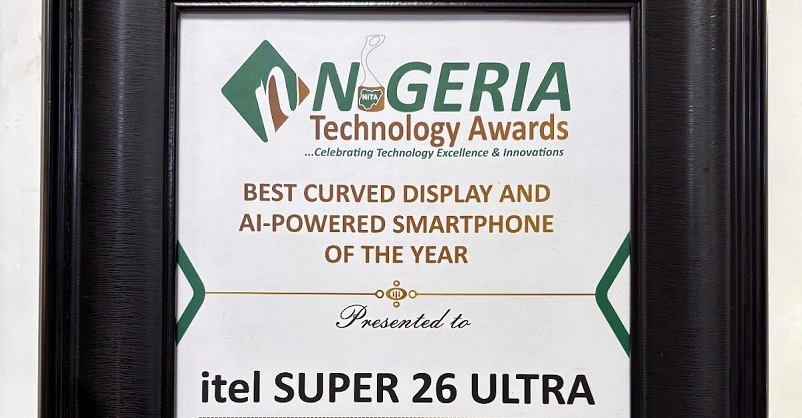
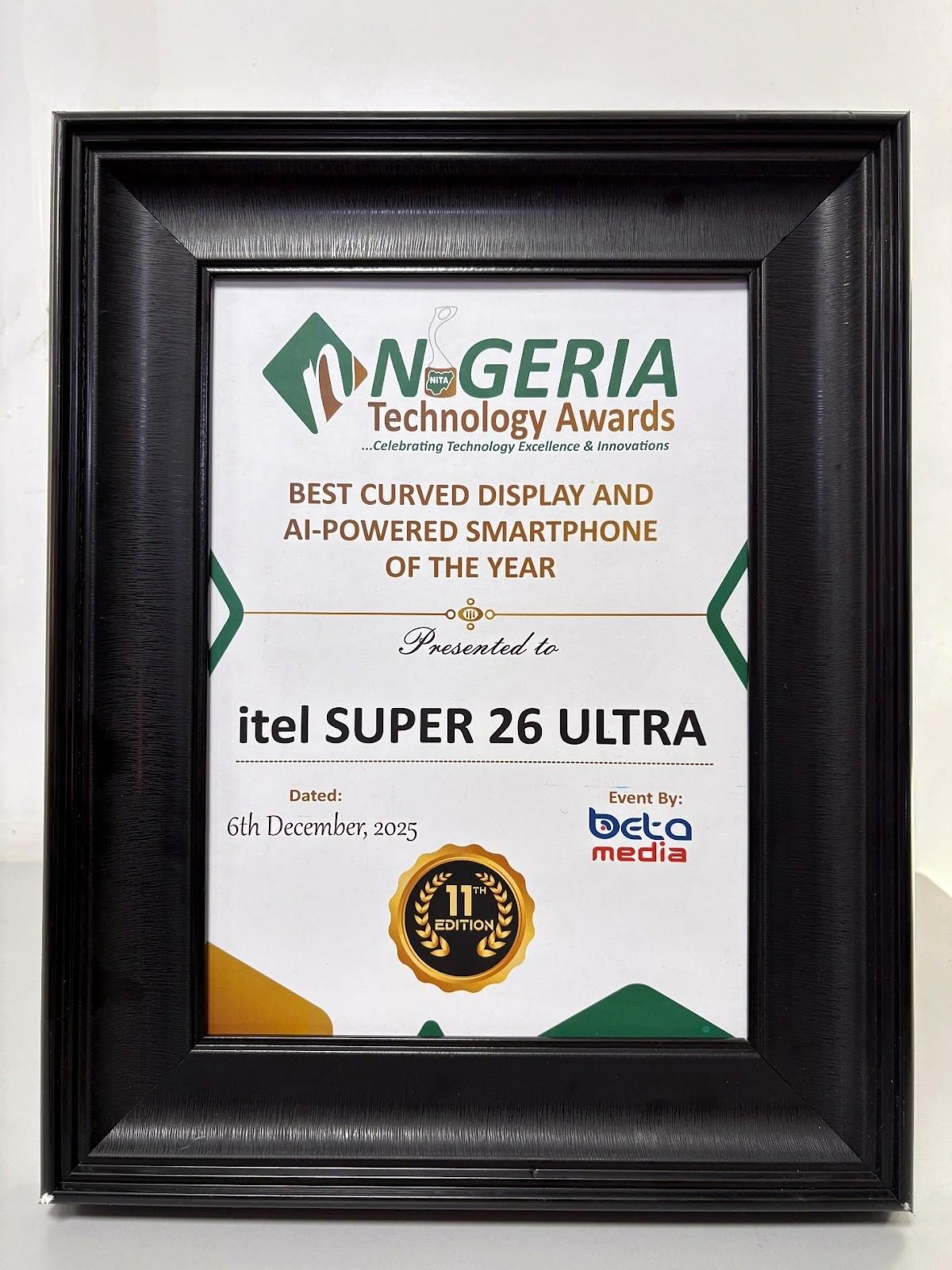
itel has once again reinforced its leadership in accessible innovation with the itel SUPER 26 Ultra winning the prestigious “Best Curved Display and AI-Powered Smartphone of the Year” at the 2025 Nigeria Technology Awards (NiTA).
The awards ceremony organized by Beta Media Group, held on December 6, 2025, at the VirginRose Resort, Victoria Island, Lagos, brought together top players in Nigeria’s tech ecosystem to celebrate excellence, creativity, and industry growth.

This recognition highlights the SUPER 26 Ultra’s groundbreaking curved display design and its next-generation AI capabilities, which elevate the smartphone experience across photography, performance, personalization, and security. As consumer expectations continue to rise, the SUPER 26 Ultra stands out for delivering premium, flagship-level features at an accessible price point, strengthening itel’s position as a trusted technology empowerment brand.
Winning at NiTA perfectly aligns with itel’s strategic ambition to sustain consumer interest, increase brand visibility, and enhance credibility in the market. It also reinforces the brand’s commitment to designing high-quality devices that suit the lifestyle and aspirations of young, dynamic, and value-driven consumers.
Speaking about the achievement, Dolapo Olorun-nimbe, ATL Marketing Manager at itel Mobile Nigeria, expressed excitement and appreciation:
“This award is a testament to itel’s dedication to making cutting-edge technology available to everyone. The SUPER 26 Ultra, with its stunning curved display and intelligent features, reflects our commitment to blending style, innovation, and affordability. We are grateful to consumers who believe in our vision, and this recognition motivates us to keep raising the bar in design and user experience.”
Also reflecting on the milestone, Terngu Simeon Shagba, PR Supervisor at itel Mobile Nigeria, emphasized the significance of the recognition on brand trust and market positioning:
“Winning at NiTA is not just an award for us, it is proof that our efforts to stay ahead in innovation and deliver value-driven smartphones are being acknowledged at the highest level. This achievement strengthens our credibility, energizes our brand presence, and reaffirms our promise to help consumers enjoy better life through technology.”
With this milestone, itel continues to push boundaries within Africa’s tech landscape. The SUPER 26 Ultra represents the brand’s continuous drive to enhance the digital experience for millions through devices that combine top-tier design, intelligent features, and reliability.
Recall that, on November 13, 2025, itel SUPER 26 Ultra received the prestigious award for “The Best Curved Display Phone Under ₦260,000 (Top 1 Recommended Curved Display Phone Under ₦260,000)” at the Africa Tech Alliance Excellence (ATAEx) Awards 2025.
As itel celebrates this major win, the brand remains focused on future-forward innovation and delivering products that empower individuals, connect communities, and accelerate technological advancement across emerging markets as a Tech Empowerment Brand. For itel, the NiTA 2025 award is not just an accolade; it is a beacon for even greater breakthroughs ahead.


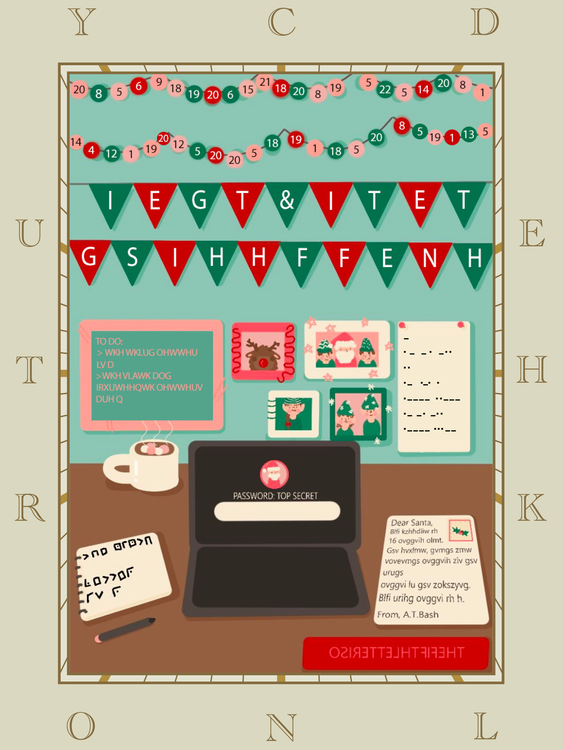
GCHQ has released its annual Christmas challenge, with seven puzzles aimed to put the nation’s codebreaking skills to the test.
Devised by in-house puzzlers at the UK’s intelligence agency, the challenge is geared towards testing a range of skills to unlock a festive message.
This year, for the first time, extra puzzles feature on the front of the card. These were designed by three schoolchildren, after more than 500 children entered the agency’s competition to hunt down the best budding spies.
Some challenges involve codebreaking, maths and analysis, while others test skills including lateral thinking, ingenuity and perseverance – the same blend of skills GCHQ said are used every day to keep the country safe.
However “no one will find them easy”, the agency’s chief puzzler – known only as Colin – said.
Pic: GCHQ

Pic: GCHQ
Pic: GCHQ
The Christmas card competition tasked schoolchildren with answering the question: ‘What do you think GCHQ looks like on Christmas Day?’ as well as putting hidden codes and puzzles into their designs.
The winning designs came from Haoran, a year 8 student from Wilson’s School in London, Mariia, a year 10 student at the Henry Beaufort School in Winchester, and year 12 student Amelie from South Wilts Grammar School in Salisbury.
GCHQ director Anne Keast-Butler, was one of those tasked with picking the winners. She said she hopes the challenge will “inspire the next generation to explore STEM subjects and consider the rewarding careers available in cybersecurity and intelligence”.
Read more from Sky News:
Author Sophie Kinsella dies
Storm Bram brings winds, rain and flooding to parts of UK
This year’s Christmas cards – and challenges – are available to download from GCHQ.gov.uk.
Answers will be published by the intelligence agency at 9pm on Wednesday 10 December.