
TECHNOLOGY
Revealed: The 19 unusual historic buildings and places granted protection in England in 2025 – including a Cornwall ‘pepperpot’, a Norwegian ice-skate shop, and Dragon’s Teeth


An ‘exceptionally rare’ shipwreck, a gnome garden and ‘Dragon’s Teeth’ Second World War defences are among the weird and wonderful historic structures that have gained heritage protection over the previous year.
The National Heritage List for England ranks entries based on their importance, with Grade I reserved for sites considered to be of ‘exceptional interest’, while Grade II covers those of ‘special interest’.
Other newly protected sites range from a Neolithic burial mound dating to 3400BC in the Yorkshire Dales to a ‘time capsule’ Victorian ironmongers that specialised in making ice skates.
They are joined by Victorian guide posts to help drivers in Cheshire, a tin tabernacle church in Essex and the concrete 1980s London workshop of architect Sir David Chipperfield.
Other listings will divide opinion, including a 1960s university block in Manchester dubbed a ‘modernist icon’ by fans – and an outdated eyesore by some critics.
Heritage Minister Baroness Twycross said: ‘Britain’s heritage is as varied as it is brilliant, with each of these buildings playing a part in shaping our national story over the centuries.’
Below are 17 of the most unusual and surprising entries.
Dragon’s Teeth WWII anti–tank defences
Thorneycroft Wood, Guildford (scheduled monument)

Anti–tank defences known as Dragon’s Teeth were built at Thorneycroft Wood near Guildford in 1941–42

Consisting of concrete blocks in the shape of pyramids, they are among the best–preserved examples of the defences set up to counter a feared Nazi invasion
These remarkable anti–tank obstacles known as Dragon’s Teeth were built at Thorneycroft Wood in Surrey in 1941–42.
Consisting of concrete blocks in the shape of pyramids, they are among the best–preserved examples of the defences set up to counter a feared Nazi invasion.
This period saw the construction of a network of coastal defences and inland strongholds called ‘nodal points’ that were expected to resist attack for up to seven days.
Nearby Guildford was designated a ‘Category A’ nodal point, and the Dragon’s Teeth in Thorneycroft Wood guarded the eastern approach to the town.
Built by the Royal Engineers and manned by the 4th Guildford Battalion Surrey Home Guard, the defences are designed to take advantage of the natural landscape, topography and surrounding woodland.
Dragon’s teeth like this are not unique to location and are found UK–wide, with others at Fairbourne Beach in Wales and on GHQ Line near Waverley Abbey, Surrey.
‘Time capsule’ Victorian ironmongers
Adams Heritage Centre, 17 Main Street, Littleport, Cambridgeshire (Grade I)

Built in 1893 and originally an ironmongers, this shop in Littleport served the local community for over 100 years and remains a rare survival of its kind

Now known as Adams Heritage Centre, it has achieved a Grade II listing, meaning it is of special interest
What are Grade–listed buildings?
Buildings that are of special architectural or historic interest can be listed, giving them legal protection.
There are three categories:
– Grade I – buildings of the highest significance
– Grade II* – particularly important buildings of more than special interest
– Grade II – buildings that are of special interest
Adams Heritage Centre in Littleport has been listed at Grade II for its exceptional preservation of Victorian commercial architecture.
Built in 1893 and originally an ironmongers, the building served the local community for over 100 years and remains a rare survival of its kind.
The shopfront still has many original features including large display windows, ornate wrought–iron folding gates, etched glass with painted lettering and a recessed entrance.
Inside, tall wooden shelving (relocated from a 19th–century chemist’s shop in Ely), and a steel–framed structure – which was very advanced for its time – give a glimpse into the working life of a traditional shop.
It gained a national reputation for fitting and maintaining Norwegian ice skates, widely used by fen skaters, the traditional form of ice skating in fens of East Anglia.
Under owner John Henry Adams, the shop became a hub for the sport, even importing skates from Oslo and distributing them across the UK.
Rare 19th–century wreck complete with original fittings
St Albans Head, Dorset (scheduled monument)

This exceptionally rare shipwreck lost in 1903 known as the Pin Wreck in Dorset is a scheduled monument – a nationally important archaeological site

Mooring lighters were specialised working vessels that laid and recovered heavy moorings and anchors that allowed ships to secure safely in harbours and anchorages
This ‘exceptionally rare’ wreck of a 19th–century steam mooring lighter is strewn with hundreds of copper bolts that once supported its hull.
The ‘Pin Wreck’ is located 89ft underwater off St Albans Head and is believed to be a Yard Craft 8, lost in 1903.
Mooring lighters were specialised working vessels that laid and recovered heavy moorings and anchors that allowed ships to secure safely in harbours and anchorages.
They could handle the enormous chains and equipment needed to maintain port operations.
Only 47 mooring vessels operated across 20 naval dockyards during the late Victorian period and just four were steam–powered mooring lighters.
This wreck represents the only known surviving example. Historic England recommended the site for protection following archaeological surveys by Bournemouth University.
Dock equipment linked to first transatlantic phone calls
Enderby’s Wharf, Greenwich (scheduled monument)

This cable hauler and gantry at Enderby’s Wharf stand as reminders of Greenwich’s place in the development of worldwide undersea communications
A steel cable gantry (built between 1897 and 1907) and cable hauler (from 1954) at Enderby’s Wharf stand as reminders of Greenwich’s place in the development of worldwide undersea communications which laid the foundations for today’s subsea optical cables that transmit internet traffic worldwide.
These structures were once part of the busy undersea works that helped connect England to the rest of the world.
The cable hauler was installed specifically to assist with loading the first successful transatlantic telephone cable, which became operational in 1956 – a major milestone in global communication history, allowing simultaneous phone calls between Britain and North America.
Previously, these calls had only been possible via a radio telephone service
From the mid–19th century, Greenwich played a key role in developing, producing and loading the heavy armoured cables that carried telegraph and telephone signals across oceans, with the technological leap required to manufacture these cables known as the ‘moon shot’ of the 19th century.
Rare 1843 working smock mill – a survivor of Kent’s rural past
St Peter’s Footpath in Dane Valley, Margate, Kent (Upgraded from Grade II to Grade II*)

Coming up to 200 years old, Draper’s Windmill in Margate, Kent has been upgraded from Grade II to Grade II*

Built around 1843, probably by the millwright John Holman of Canterbury to grind grain into flour, it has survived in remarkable condition. Pictured is a man enjoying the view from a window
Timber–framed Draper’s Windmill in Margate, Kent has been upgraded from Grade II to Grade II* – a particularly important building of more than special interest.
It was built around 1843, probably by the millwright John Holman of Canterbury to grind grain into flour, and has survived in remarkable condition.
It had been Grade II listed since 1973, but its significance as a 19th–century smock mill with rare surviving internal machinery has now been formally recognised.
The Grade II* listing reflects the increasing rarity of operational historic mills across England and celebrates this important part of Kentish heritage.
Today, the handsome black smock windmill is open by appointment or when volunteers are on site.
Sir David Chipperfield’s 1980s Camden workshop
Cobham Mews Studios, 1 and 1a Cobham Mews, London (Grade II)

Architect Sir David Chipperfield’s striking Camden workshop has now been designated Grade II

The design draws inspiration from small–scale industrial buildings as well as Victorian artist’s studios, using rooflights and glass bricks to bring in natural light
Sir David Chipperfield’s first UK building has been designated Grade II, following a listing application in January.
Cobham Mews Studios, designed by David Chipperfield Architects and built between 1987 and 1989, was the practice’s first complete building after a series of luxury shop interiors, including for Japanese fashion designer Issey Miyake.
Seeing the potential of a back–land plot, then in use as a scrapyard, Chipperfield worked with Derwent Valley Property Developments to create a pair of studio offices tucked behind the residential terraces of central Camden. The building remained the practice’s home for over 20 years.
The design draws inspiration from small–scale industrial buildings as well as Victorian artist’s studios, using rooflights and glass bricks to bring in natural light whilst protecting the privacy of surrounding houses.
The exterior nods to Modern Movement pioneers of the 1920s and 30s which were an early influence on Chipperfield. Inside, crisp detail, double–height spaces and mezzanine floors create spatial drama.
Best known for The Hepworth Wakefield gallery (2003–2011) and Turner Contemporary gallery, Margate (2006–2011), Chipperfield is famous worldwide.
Storm tower dubbed ‘the Pepperpot’
Compass Point, Bude, Cornwall (Grade II List Amendment)

Victorian Bude Storm Tower has been saved from the risk of falling into the sea for a second time in its history through a major conservation project
Inspired by the ancient Tower of the Winds in Athens and known as ‘the Pepperpot’ due to its distinctive shape, this tower has been saved from the threat of coastal erosion and has had its list entry amended to reflect its new location.
Victorian Bude Storm Tower has been saved from the risk of falling into the sea for a second time in its history through a major conservation project partly funded by The National Lottery Heritage Fund and local people.
Built in 1835 and designed by renowned architect George Wightwick, it was moved inland from its original clifftop location in 1881 due to cliff collapse.
Nicknamed ‘the Pepperpot’ due to its shape, it was listed at Grade II in 1985. The octagonal tower was recently relocated again 120 metres north–east due to the imminent threat of cliff erosion caused by climate change.
Commissioned by Sir Thomas Dyke Acland, it originally served as a coastguard lookout and refuge.
Bude Storm Tower has had its list entry updated with new information about how it was built and its new location.
Edwardian Arts and Crafts gem
Sharlands House, Sharlands Lane, Braunton, Devon (Grade II)

Sharlands House was designed by notable architect and craftsman Godfrey A E (Bertie) Schwabe for artist Thomas A Falcon RBA

Alongside original works by Falcon, such as two decorative panels with geometric designs in the drawing room, the intended aesthetic of the house has been maintained to the present
Completed in 1912, Sharlands House was designed by notable architect and craftsman Godfrey A E (Bertie) Schwabe for artist Thomas A Falcon RBA.
The building in Braunton, Devon is a bold design in a Georgian revival style. The elegant interior features well–crafted panelling, a marble–tiled hall and fine detailing including beaten copperwork.
Alongside original works by Falcon, such as two decorative panels with geometric designs in the drawing room, the intended aesthetic of the house has been maintained over a century later.
Mr Schwabe, who established his career working with internationally renowned architect Edgar Wood from 1893 to 1910, designed the house as a commission for his sister and brother–in–law. This family connection is reflected in the attention to detail throughout the building.
Sharlands House is representative of an era when artistic, cultural and scientific communities flourished in the English countryside.
Neolithic burial site that sheds light on ancient farmers
Dudderhouse Hill Neolithic Long Cairn, Long Scar, Yorkshire Dales (scheduled monument)

Dudderhouse Hill is located near Ingleborough in the Yorkshire Dales and provides important evidence of early prehistoric communities in northern England

This partly turf–covered mound of stone dates to around 3400–2400 BC and measures 23 metres long and 12 metres wide
The burial site at Dudderhouse Hill is located near Ingleborough in the Yorkshire Dales and provides important evidence of early prehistoric communities in northern England.
This partly turf–covered mound of stone, dating to around 3400–2400 BC and measuring 23 metres long and 12 metres wide, is one of the oldest visible monuments in the landscape and offers a rare insight into prehistoric ritual and burial practices.
Until the 1990s, experts believed long cairns were absent from the Yorkshire Dales, assuming that Neolithic communities in the area used natural cave systems for burial instead. However, fieldwork over the past two decades has identified a small number of these ancient monuments across the region.
First identified in 2008, the Dudderhouse Hill Long Cairn displays evidence of structural arrangements, including large stone slabs and edge–set stones suggesting internal compartments.
Remarkably, the Cairn’s orientation appears carefully planned with its axis aligned towards Pen–y–ghent, a prominent peak, whilst mirroring the Ingleborough to Simons Fell ridge to the north–west.
Victorian ‘tin tabernacle’ church
St Peter’s Church, Littlebury Green, Essex (Grade II)

St Peter’s Church is a rare example of a ‘tin tabernacle’ – a type of prefabricated church built by the Victorians

While many tin tabernacles were temporary structures later dismantled, replaced or moved, St Peter’s is unusual in surviving on its original site and retaining the majority of its original fabric
St Peter’s Church is a well–preserved Victorian ‘tin tabernacle’ – a once–common but now increasingly rare type of prefabricated church.
Built in 1885 as a chapel of ease, (situated for the convenience of people who lived a distance from the main parish church), the building was supplied in kit form by C.Kent of London, with corrugated–iron cladding from Frederick Braby & Co’s ‘Sun Brand’; materials that made fast, affordable church building possible for growing 19th–century communities.
While many tin tabernacles were temporary structures later dismantled, replaced or moved, St Peter’s is highly unusual in surviving on its original site and retaining the majority of its original fabric.
Its wooden cupola with bell, pointed Gothic openings and Y–tracery windows give the modest structure surprising architectural presence.
The pine–lined interior also survives almost completely intact, with original pews, altar fittings, decorative transfers in the windows and a biblical text encircling the chancel arch.
‘Enchanting’ inter–war gnome garden
Garden at Tudor Croft, Stokesley Road, Tees Valley (Grade II)

A gnome peeks through the undergrowth at Tudor Croft’s garden in Guisborough, North Yorkshire

Created from 1934 for industrialist Ronald Crossley, the site is a rare survival of an inter–war suburban garden in a relaxed Arts and Crafts style
This ‘enchanting’ inter–war garden has terracotta gnomes, pixies and elves and the far–reaching landscape of the North York Moors beyond
Tudor Croft’s garden, created from 1934 for industrialist Ronald Crossley, is a rare survival of an inter–war suburban garden in a relaxed Arts and Crafts style. Designed to complement the family home, it remains largely intact, with the house overlooking the garden and the North Yorkshire Moors.
The highlight is the Gnome Garden, entirely populated by magical beings. Hand–crafted terracotta ornaments by potter and sculptor Walter Scott, including elves, gnomes playing instruments, pixies, birds and animals are scattered throughout the garden, all produced at the Commondale brickworks.
Their cheeky features have an affinity with the fairytale illustrations of Cecily Mary Barker or Margaret Tarrant which had become popular in the 1920s.
There is also a secret garden with a small stone–flagged bridge over a pond with a terracotta fisherman at the opposite end. It also features a rare, roofed fernery and intricate rockwork, likely by the acclaimed Backhouse Nursery of York, a curving rose pergola of Crossley bricks and a water garden.
Unlike the rigid geometries of earlier Arts and Crafts gardens, Tudor Croft’s design is one of personal expression.
Coal duty boundary post harking back to the Great Fire
South side of Epping Road, Essex (Grade II)

This distinctive Victorian cast–iron marker, erected in the 1860s, is one of the few remaining roadside posts from a ring of approximately 280 that once encircled London
A tangible reminder of London’s industrial past and taxation system to help London rebuild after the Great Fire of 1666
This distinctive Victorian cast–iron marker, erected in the 1860s, is one of the few remaining roadside posts from a ring of approximately 280 that once encircled London at a 20–25 mile radius from the City.
They marked the boundary where duty was payable on coal imported into the capital under the London Coal and Wine Duties Continuance Act of 1861.
Cast by Henry Grissell of the Regents Canal Ironworks, the white–painted square column, features a pyramidal top and the City of London crest. It bears the inscription ’24 VICT’, referring to the 1861 Act, along with the maker’s mark at ground level.
The marker provides a physical connection to the tax on coal that helped fund London’s development following the Great Fire of 1666. The duty system originated with the First Rebuilding Act of 1667 and evolved over centuries as coal transportation shifted from sea to road, canal and rail routes.
The 1861 Act aligned the duty boundary with the Metropolitan Police District, requiring new markers between 1859 and 1864. The tax continued until 1891, when the Corporation of London relinquished its collection rights.
Rare Arts and Crafts–inspired suburban garden
Garden of Great Ruffins, Wickham Bishop, Essex (Grade II)

The Edwardian garden is at Great Ruffins, a Grade II* listed building, in Wickham Bishop, Essex

The garden was created in 1903 by pioneering architect and designer Arthur Heygate Mackmurdo
The garden at Great Ruffins was created in 1903 by pioneering architect and designer Arthur Heygate Mackmurdo.
It is the only surviving garden known to be of his design and is a rare example of an Arts and Crafts suburban landscape.
Mr Mackmurdo designed the garden as an expression of his ideals of social harmony and a life lived in balance with nature.
Set across sloping grounds, it transitions from formal terraced areas near the house to informal woodland walks and countryside views beyond.
Many original features have survived, including clipped yew hedges, a cedar avenue, garden rooms, a sunken rockery, and a bowling green.
Together, they form a near–complete picture of early 20th–century garden design inspired by Arts and Crafts values.
Manchester lecture theatre block
Renold Building, UMIST Campus, Manchester (Grade II)

With its daring form and sculptural Modernist style, the Renold Building in Manchester announced a new era of academic architecture

It remains divisive today, with some considering it an example of the ugly post–war architecture that many blame for blighting Britain’s cities
Designed by W.A. Gibbon of the Manchester–based firm Cruickshank and Seward, the Renold Building became the first purpose–built lecture theatre block in an English higher education institution.
With its daring form and sculptural Modernist style, the Renold Building announced a new era of academic architecture.
You might not know it from looking at the exterior, but the building’s concept was as practical as it was visionary.
Instead of scattering lecture halls across campus, it consolidated them into a single structure with three larger lecture theatres in the podium and six lecture theatres stacked vertically in the tower, creating space for 3,000 students under one roof.
But it remains divisive today, with some considering it an example of the ugly post–war architecture that many blame for blighting Britain’s cities.
‘A cathedral for a new age’
Liverpool Metropolitan Cathedral of Christ the King, Liverpool (Upgraded from Grade II* to Grade I)

Designed by Sir Frederick Gibberd and built between 1962 and 1967, Liverpool’s Metropolitan Cathedral marked a turning point in British cathedral architecture

The soaring lantern, filled with coloured glass by John Piper and Patrick Reyntiens, floods the space with light and symbolises the connection between earth and heaven
Liverpool’s Metropolitan Cathedral has been upgraded to Grade I, placing it among the most important buildings in England.
Designed by Sir Frederick Gibberd and built between 1962 and 1967, this radical design marked a turning point in British cathedral architecture.
Gibberd’s circular plan broke with tradition, placing worshippers around a central altar and emphasising communal participation – ideas that echoed the changes of the Second Vatican Council.
The soaring lantern, filled with coloured glass by John Piper and Patrick Reyntiens, floods the space with light and symbolises the connection between earth and heaven.
The cathedral is also home to some of the finest examples of post–war liturgical art, including works by William Mitchell, Elizabeth Frink and Margaret Traherne.
Three unusual cast–iron guideposts
Ashley, Cheshire (Grade II)

Three cast–iron guideposts in Ashley, Cheshire, offer a glimpse of early road transport in England
Three unusual cast–iron guideposts charting Cheshire’s roads, craftsmanship and motoring history also make the list
The cast–iron guideposts in Ashley, Cheshire, offer a glimpse of early road transport in England.
Dating from the late 19th to early 20th centuries, each guidepost, standing at a triangle of minor roads in the parish, displays a slightly different design.
They illustrate the evolution of fingerpost styles in response to motor travel legislation from the 1888 County Councils Act to Ministry of Transport guidance in the 1920s and 1930s.
Crafted by W H Smith & Co (Whitchurch) Ltd, the posts feature scalloped or squared finger ends and distinctive finials, including the firm’s signature chess pawn motif.
They have become increasingly rare after the 1960s as modern road signs replaced them.
Bournville radio sailing and model boat club boathouse
Bourneville, Birmingham (Grade II)

Bournville Radio Sailing and Model Boat Club’s boathouse and boating lake were built by the Cadbury family

With only 11 pre–war model boating clubhouses remaining in England, Bournville’s is an exceptionally rare building
Bournville Radio Sailing and Model Boat Club’s boathouse and boating lake are an important part of Birmingham’s social history.
Built in 1933, the boathouse and its distinctive teardrop–shaped lake are an example of the philanthropy of the Cadbury family of chocolatiers, known for their concern for employee welfare.
Cadbury hired 64 men who were long–term unemployed and not eligible for state benefit to build the club and boating lake.
Workers spent four days a week on construction and the fifth day attending carpentry or gardening classes, to help increase their chances of future employment.
With only 11 pre–war model boating clubhouses remaining in England, Bournville’s is an exceptionally rare building.
The listing at Grade II recognises both the careful craftsmanship of the timber–framed boathouse with its tall doors and pantile roof, purpose–built to accommodate fully rigged model yachts, and its cohesive design scheme – linking both the building and lake and the Cadbury family’s philanthropy.
School recognised for its neoclassical design and remarkable interior
King Edward VI Handsworth School for Girls, Rose Hill Road, Birmingham, (Grade II*)

The grand and colourful King Edward VI Handsworth School for Girls in Birmingham was built in 1911

The school retains its original plan and a remarkable number of original fixtures and fittings
King Edward VI Handsworth School for Girls in Birmingham was built in 1911. Designed by locally significant architect P B Chatwin, the school is an impressive example of neoclassical design.
The school retains its original plan and a remarkable number of original fixtures and fittings. This level of survival is unusual for a building of this type and age that remains in active use.
The building’s long façade features two full–height gabled entrance bays flanking a central hall, carved stone and a distinctive domed cupola.
The interior centres on a full–height hall with detailed plasterwork and ornamental leadwork.
Throughout the building, architectural features including arches, decorated corridors and stairwells demonstrate craftsmanship of a very high standard.
Symbols of King Edward VI appear repeatedly – in the hall plasterwork, staircase newel posts, glazing leadwork, and the wrought iron gates – speaking to the pride in the school’s identity and the careful attention to detail in its design.
Rare example of Victorian private Catholic worship
Broxwood Court Garden Chapel, Bonds Green Road, Chapel, Bonds Green Road, Pembridge, Lower Broxwood, Herefordshire (Grade II)

Located in Herefordshire, this modest brick–built chapel represents a rare surviving example of a 19th–century private Catholic place of worship

The chapel was constructed by the Snead–Cox family as an expression of gratitude following Richard Snead–Cox’s recovery from an accident
The modest brick–built chapel represents a rare surviving example of a 19th–century private Catholic place of worship.
Built in the Gothic style popular for Catholic architecture of the period, it features a decoratively tiled roof and stained–glass windows.
The chapel was constructed by the Snead–Cox family as an expression of gratitude following Richard Snead–Cox’s recovery from an accident, making it a physical embodiment of the family’s deep Catholic faith. Small, private Catholic chapels from this period are extremely rare, with few comparable examples known to exist.
Recent additions to the chapel include memorial glass commemorating three Snead–Cox brothers who were lost during the First World War, adding poignant layers to its significance as a place of private family worship.
It has group value with other nearby sites connected with the Snead–Cox family that demonstrate their Catholic faith; these include the Biblically named walks in the Registered Park and Garden, St Joseph’s hut, and the larger Chapel of the Holy Family.
The 19 remarkable historic places listed in England this year
- Submarine telephone cable hauler and gantry, Enderby’s Wharf, Royal Borough of Greenwich, London
- Dragon’s Teeth, Thorneycroft Wood, Guildford, Surrey
- Draper’s Windmill, St Peter’s Footpath in Dane Valley, Margate, Kent
- Cobham Mews Studios, 1 and 1a Cobham Mews, London
- Wreck of an Admiralty Mooring Lighter, known as the Pin Wreck, located off St Albans Head, Dorset
- Bude Storm Tower, Compass Point, Bude, Cornwall
- Sharlands House, Sharlands Lane, Braunton, Devon
- Dudderhouse Hill Neolithic long cairn, Long Scar, Yorkshire Dales
- Garden at Tudor Croft, Stokesley Road, Guisborough, Redcar and Cleveland, Tees Valley
- Coal duty boundary post south side of Epping Road, Essex
- Adams Heritage Centre, 17 Main Street, Littleport, Cambridgeshire
- Garden of Great Ruffins, Wickham Bishop, Essex
- St Peter’s Church, Littlebury Green, Essex
- Renold Building, UMIST Campus, Manchester
- Liverpool Metropolitan Cathedral of Christ the King, Liverpool
- The 3 Ashley Parish guideposts, Ashley, Cheshire
- Bournville Radio Sailing and Model Boat Club Boathouse and Associated Concrete Boating Pond
- King Edward VI Handsworth School for Girls, Rose Hill Road, Birmingham
- Broxwood Court Garden Chapel, Bonds Green Road, Pembridge, Lower Broxwood, Herefordshire


Startups On Our Radar spotlights African startups solving African challenges with innovation. In our previous edition, we featured seven game-changing startups pioneering aquaculture, financing, funding, and healthcare. Expect the next dispatch on December 19, 2025.
This week, we explore seven African startups in the health, education, travel, and automotive sectors and why they should be on your watchlist. Let’s dive into it:
Zof AI wants to automate the entire software-testing lifecycle with specialised AI agents (AI, USA)
Founded by Kevin Kissi, a former engineer at Microsoft and the US Bank, Zof AI addresses the inefficiencies of manual software testing, which is often slow and limited in scope. At Microsoft, he saw how manual testers and separate units handling security, compliance, privacy, and accessibility, all needing to validate a product before release. These workflows made testing slow, fragmented, and expensive. Kissi left Microsoft with the insight that AI agents could fully automate every layer of software testing, from generating test cases to executing them at scale.
Zof AI’s platform runs software tests using 40 specialised AI agents, with each one dedicated to a specific testing category such as unit testing, integration testing, accessibility, security, device emulation, localisation, or SQL-injection detection. Users upload a requirements document or let the system generate one if none exists, which will allow Zof AI to automatically crawl the application, learn its behaviour, generate test scenarios, and assign them to its agent network. Inside the platform’s dashboard, users can start tests, target individual agents, or schedule automated runs that execute in the cloud, even when the user is offline.
Results of tests may include bug reports and analysis, and improvement suggestions. The system scores every developer based on bug frequency in their code, the speed at which they fix it, and historical quality. Zof AI integrates with GitHub, Slack, Asana, and a suite of enterprise tools.
The startup operates a tiered subscription model that includes an entry plan of $99 monthly for 120 credits and access to three agents, a higher tier at $599 monthly for 8,000 credits and full access to all 40 agents, and enterprise pricing, which is handled through corporate licensing deals. Zof AI is transitioning to a new pricing system that will price each agent individually and introduce team and business billing tiers.
Zof AI uses a mix of internally fine-tuned models and external large models, like Llama 70B and Mistral, and assigns different underlying models to each agent type depending on which performs best for its task. These models are trained on data that combines synthetic datasets, scraped public-domain materials, and open datasets. Since launching in Q4 2025, Kissi claims that Zof AI has raised $250,000 from angel investors, onboarded 50 startups, 10 medium-sized companies, and one major enterprise client in France, and is currently raising its seed round.
Why we’re watching: Competing platforms, like Katalon, applitools, testsigma, and Tricentis, still require recordings, pre-written test cases, or human-in-the-loop inputs. Zof AI’s differentiator lies in its ability to crawl applications, interpret requirements, autonomously generate hundreds of test cases, and deploy 40 specialised agents to those tests. The company is also preparing to launch an always-on feature that continuously tests software by monitoring codebases and documentation without requiring a user to manually trigger a test.

My Oga Mechanic wants to save Nigerian car owners from unreliable mechanics and expired papers (Autotech, Nigeria)
Founded by Kefas Longshak, My Oga Mechanic was born from personal frustration. In 2016, Longshak bought a Volkswagen Passat, then spent over a year being exploited by mechanics when the car got faulty. Recognising that many vehicle owners lack technical knowledge and struggle with trust, he built My Oga Mechanic as a single mobile application to handle all vehicle needs, from documentation to diagnostics and repairs.
Users can renew and register all vehicle documents, including change of ownership, vehicle licenses, tint permits, and driver’s licenses. They can also book vetted mechanics for two types of repairs: on-site fixes (with a flat ₦10,000 [$6.90] logistics fee) or in-shop repairs at a mechanic’s workshop. Longshak claims that My Oga Mechanic operates a growing marketplace of over 2,000 mechanics, spare-parts vendors, and service centres across Lagos. Each vendor goes through a multi-step verification process that includes identity checks with the national identification number (NIN), on-site visits, skills assessments, and provides dedicated agents to support mechanics who don’t own smartphones.
Users get full cost visibility with mechanics providing estimates for necessary autoparts and workmanship before a job begins. Payments are split into two. Mechanics receive an upfront amount to buy parts and then get the balance only after the user confirms completion.
Every repair comes with repair protection insurance (charged at an extra 1% of the repair cost) to cover unexpected damage during vehicle repair. My Oga Mechanic also supports accident repair claims for users with third-party or comprehensive insurance, by handling the entire claims workflow between service centres and insurers.
Its flagship feature is MechaAI, an automotive diagnostic AI agent that lets users describe car symptoms and chat about issues that come up with their vehicles. It can also make suggestions for simple fixes or recommend verified mechanics. MechaAI pulls from a large internal database of repair manuals and technical data, and is built on a custom AI model that sits on top of Google Gemini to handle natural-language conversations. Additionally, the platform handles document renewals, delivering updated papers directly to the user’s doorstep.
The platform runs on a subscription model. Users pay ₦6,000 ($4.14) per month for a primary vehicle and ₦3,500 ($2.41) for each additional vehicle. Subscribers get unlimited MechaAI access, free and timely document renewals, and no booking fees, meaning that subscribers pay only for actual repair parts and workmanship. Non-subscribers pay ₦1,000 ($0.69) per MechaAI session and ₦2,000 ($1.38) booking fees. My Oga Mechanic earns a 10% commission on mechanic workmanship and commissions on spare parts sales, and claims to have a network of 306 spare parts suppliers offering warranties on all purchases. The startup is currently bootstrapped and preparing for a full launch on iOS and Android. It claims to have 103 active users in beta and has completed about 30 document-processing tasks.
Why we’re watching: My Oga Mechanic is attempting to unify the fragmented auto-repair industry by combining insurance and AI on top of a standard marketplace of mechanics and car parts. This is its differentiation. Its AI-powered diagnostics tool enables car owners to understand issues before dealing with mechanics, thereby addressing a major trust barrier in the market. The startup plans to launch an IoT On-Board Diagnostics (OBD) device that streams real-time data to the app for predictive fault detection, alerting users to issues before breakdowns occur.

Timon is ensuring that spending and connecting around the world is effortless for travellers (TravelTech, Nigeria/Global)
Timon is a travel-tech startup designed to solve the payment frustrations faced by nomads, particularly those from emerging markets. The product was born from the observation that payments often fail when users are abroad, or travellers struggle to access local payment methods, such as M-Pesa in East Africa, when visiting new countries. Rather than just building another fintech wallet, the team set out to create a solution that ensures a traveller’s money works everywhere they go.
Founded by Chizaram Ucheaga and Oluwatomi Ayorinde, Timon allows users to request physical cards that can be funded directly in their local currency. Timon claims to be live in 16 African countries and Canada. It also offers virtual cards, called Timone Black, which support Apple Pay and Google Pay. The founders say the app enables users to make local transfers to mobile money wallets in 16 African countries, meaning a visitor in Kenya can pay a local vendor using M-Pesa directly from the Timon app.
The platform also provides local, regional, and global eSIMs to keep travellers connected without relying on hotel Wi-Fi. Additional travel features, like bookings and travel planning, are under development for release in 2026.
Timon earns revenue through a small funding fee when users fund their cards or wallets. Other revenue streams come from profit-sharing agreements with service providers, such as eSIM partners or payment infrastructure partners, and from charged card-provider fees that are split between Timon and its partners.
Since launching fully in September 2024, the platform claims to have grown to nearly 50,000 users. Its wallet can be funded from the US, Canada, the EU, and 16 African countries, with plans to expand into the UK, Latin America, and parts of East Asia.
Why we’re watching: Timon is positioning itself as a travel-tech companion built around payments, and addressing challenges that neobanks, eSIM sellers, or booking services handle in isolation. While the startup claims to have no direct competitors in the African space currently, it views existing travel or payment players such as Booking.com and Send by Flutterwave as potential integration partners.

Foolen Games wants to turn mobile playtime into real economic value (Gaming, Côte d’Ivoire)
Foolen Games, founded by Azyz Kouyo, is a mobile gaming platform designed around African realities by African developers for the continent’s youth. The platform hosts casual mobile games created by African developers, operating on a play-to-earn model. The platform converts every minute of gameplay into African Free Coins (IFC), a virtual currency that players earn as they play. Foolen Games integrates a fintech solution called Foolen Pay, a digital wallet where users accumulate every IFC coin earned. Players can exchange these coins for real products from partner brands, including shoes, food, fast food, and other everyday items. Each IFC has a defined value of 0.5 CFA ($0.00089), meaning users accumulate coins until they can afford physical goods.
Foolen Games operates as a free-to-play platform. Revenue comes from brand partnerships, collaborations, and advertising, with five partner brands already onboard in Côte d’Ivoire, including restaurants, gaming communities, and bakeries. For African game developers, the platform is currently free to join, allowing them to host their mobile games without upfront fees. Official launch is slated for January 2026, and the founder claims that the platform has already attracted over 100 testers.
Why we’re watching: Foolen Games differentiates itself from platforms like Gara, which functions primarily as a distribution hub. Instead, Foolen Games is building a closed-loop economy that merges entertainment, fintech, and e-commerce, allowing users to monetise their leisure time for necessities like food.
Get The Best African Tech Newsletters In Your Inbox
Bravoo wants to pay Nigerians to learn tech skills (Edtech, Nigeria)
Bravoo, founded by Jessie Udah, is a gamified learning platform built for people who want to break into tech but often struggle with where to start and how to stay motivated. The idea emerged from Flowva, the startup’s previous product, where early users showed far more interest in earning rewards and improving their skills than in the tool-organising features. Inside Bravoo, users complete bite-sized missions that take about 2–5 minutes across areas like design or AI prompting.
Each mission includes a short learning segment and a practical assignment that the user must recreate and submit. Bravoo reviews the submissions, gives corrections, and rewards users with 10–50 coins per task. These coins can be redeemed for items like gadgets, airtime, or data.
Bravoo’s product is still in development and will go live on January 10, launching first in Nigeria, where the founder believes people have fewer accessible online earning opportunities.
All learning modules are produced in-house, and the company plans to add a social squad missions layer where groups complete tasks and share rewards. Bravo will be free for its first two to three years, and will generate revenue from brand partnerships, affiliates, and light advertising.
Why we’re watching: Bravoo is uniting people’s urgency to learn tech skills and the need to earn money. It does this by gamifying the upskilling process with tangible rewards like airtime and data. The model is comparable to that of platforms like BitDegree, except that Bravoo focuses on mainstream tech skills rather than blockchain-specific learning. Udah claims that the startup has over 10,000 users acquired during the Flowva era and early brand affiliations that are ready to fund user rewards.
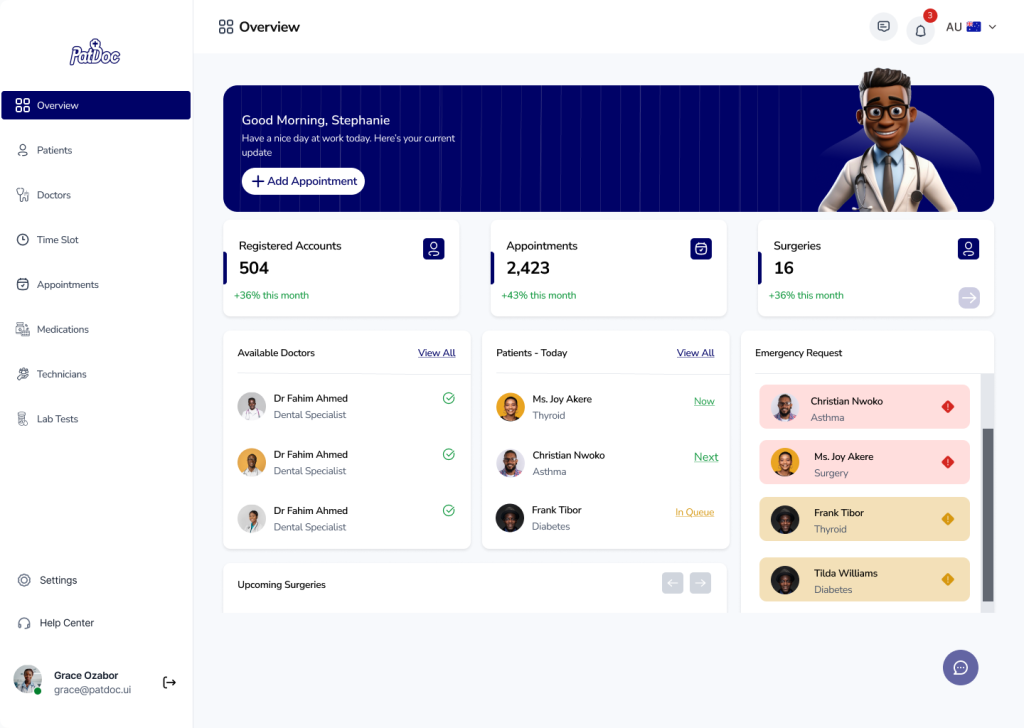
PatDoc wants to be the digital bridge between hospitals and their patients (Healthtech, Nigeria)
Founded by Tunde Owolawase, Abdulmutalib Amoka, and Mohammed Otu, PatDoc is a telemedicine platform designed as a white-label SaaS communication system for hospitals that lack the technical capacity to build their own digital patient–doctor interface.
PatDoc was inspired by a personal ordeal during the COVID-19 pandemic when Amoka struggled to access medical care for his ill child due to movement restrictions and unreachable doctors. He realised how difficult it was for patients to access care due to long wait times or secure follow-ups. He also observed that patient health records and lab results are often stored within hospital filing systems, making them inaccessible to patients once they leave the facility.
PatDoc addresses this by offering a dual solution that functions as a standalone telemedicine app and, more centrally, as a white-label SaaS platform for healthcare providers. The platform allows hospitals to launch their own branded applications, giving their patients the ability to book appointments based on doctor availability, conduct video or audio consultations, and receive lab results and prescriptions directly on their mobile devices, through an integrated lab module that allows labs to upload test results directly to a patient’s profile using a unique user ID. Both the patient and the doctor get access to results immediately.
PatDoc also features a queue management system to manage patient flow, and a role-based access control for patients who manage multiple profiles, such as children or dependents. It keeps full records of appointments, diagnoses, prescriptions, and follow-up instructions. Hospitals can license a customised version that would have their own doctors and patients.
The startup operates on a subscription-based business model, charging hospitals an annual fee with tiered packages based on the number of doctors and patients they wish to onboard. Hospitals get access to the back-end portal for managing appointments and queues, while PatDoc handles all hosting and technical maintenance. The app is live on the Google Play Store, currently under Apple Store review, and the team is preparing a soft launch ahead of a full rollout in early 2026.
Why we’re watching: PatDoc distinguishes itself from the crowded market of B2C telemedicine apps by operating a B2B2C model that empowers hospitals to digitise their own operations and bridges the communication gap between hospitals, doctors, and patients. Unlike traditional hospital management systems that are purely internal, PatDoc turns that closed loop into a continuous channel by giving patients real-time access to their own medical data from the comfort of their homes.
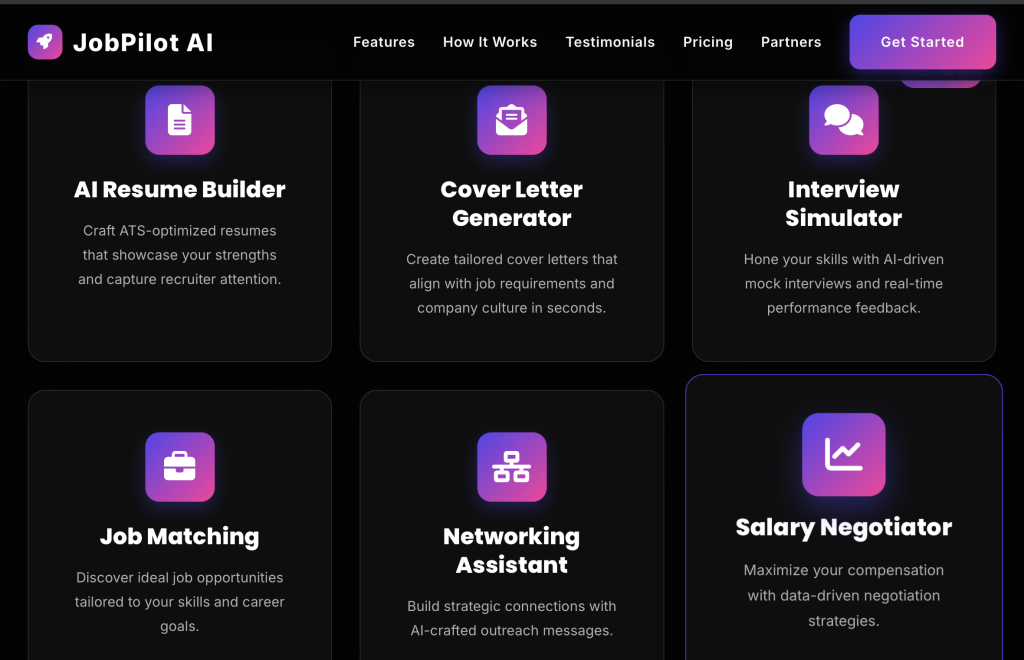
JobPilot AI wants to become the all-in-one career copilot for Africa’s job seekers (HRTech, Ghana)
Founded by Kelvin Agyare Yeboah and Anthony Gudu, JobPilot AI is an AI-powered career companion designed to help job seekers across Africa prepare for interviews, build stronger applications, and find relevant roles, all from a single platform. Yeboah built the platform after his personal observation that African graduates are often underemployed despite their talent due to interview anxiety and a lack of structured preparation. The startup addresses the fragmentation of the career support market, where users typically bounce between LinkedIn and other job boards for job hunting and separate tools for resume building.
It does this by bundling together AI-powered interview simulations that provide instant feedback and build confidence, a smart job listing engine that matches candidates to opportunities across Africa and Europe based on their skillsets, a community forum for peer-to-peer mentorship, an AI resume/cover-letter generator designed to produce ATS-friendly documents, and a dashboard for tracking career progress.
The startup runs on a premium subscription model. This subscription unlocks the ability to create multiple resumes and grants access to expert coaching in the community forum. Since launching in April 2025, the startup has focused on outreach to universities, including the University of Ghana, where some institutions have shown interest in purchasing subscriptions for their students.
Why we’re watching: JobPilot AI layers résumé generation, interview simulation, intelligent job matching, networking, and mentorship all in one place. This strategy distinguishes it from big players like LinkedIn, which lacks AI résumé/cover-letter generation and built-in interview simulation, and Wellfound, which lists startup jobs and offers some career tools but doesn’t provide an interview test simulator. Interest from schools and paying users, even before large marketing budgets, suggests genuine demand for such services, and JobPilot AI wants to fill that gap.
That’s all for today. Expect our next dispatch on December 19th. Know a startup we should feature next? Please nominate here.


Photo by Z M / Unsplash
💡
TD;DR
Fintech is using modern technology like mobile apps, AI, and data to transform the financial services industry by digitising everything from payments, lending, to investing. While adoption is accelerating and provides benefits including 24/7 access, lower fees, and better personalisation, regulatory uncertainty and cybersecurity remain key concerns.
You’ve probably heard the word “fintech” tossed around a lot. Maybe even used it in a conversation yourself. But have you ever actually stopped to think about what it really means?
If you’ve sent money using PayPal, bought Bitcoin, or used an app to budget your spending, you’ve already experienced fintech in action. It is how technology has come to define how we interact with money. We have come a long way from every financial transaction involving a visit to the bank. tellers and cheque
While the term itself isn’t brand new, its use has exploded, growing 25-fold in the past decade, according to Michigan Technological University. The financial industry has always evolved with tech, but the internet and mobile devices have massively accelerated the pace. Today, anyone with a smartphone can move money, get a loan, invest, or even trade stocks in real time. No bank branch needed.
As adoption grows, the industry has ballooned, and the numbers show just how big this has become. The global fintech market is estimated to be worth $209.7 billion in 2024 and is on track to surpass $644 billion by 2029, according to Exploding Economics. While that’s still just a slice of the broader financial sector, estimated at $33 trillion globally in 2024, fintech is gaining ground fast. In fact, fintech companies are now growing twice as fast as traditional financial firms, per the BCG Global Fintech Report 2025.
What Is Fintech?
The word “Fintech” is a combination of two words: “Financial” and “Technology.” It is the use of technology to make financial services more accessible, faster, and often cheaper.
In the early 2000s, fintech mostly worked behind the scenes, powering the backend technology for financial institutions. But today, fintech has expanded into more consumer-centric services, providing digital solutions directly from your smartphone or your PC.
This technology is usually in the form of apps or platforms that leverage cutting-edge software algorithms, data analytics, AI, and cloud computing to make money management simpler, more efficient, and often cheaper for businesses, entrepreneurs, and consumers.
These platforms are usually provided by digital-only banks (often called neobanks and even fintech companies themselves). They offer everything from checking accounts, savings tools, and even credit products, without the baggage of physical branches or legacy systems.
What Makes a Company Fintech?
A fintech company is any business using technology to deliver financial services, or better, faster, and more accessible. According to McKinsey, they are companies that rely primarily on technology and cloud services, and less so on physical locations, to provide financial services to customers.
Their service can be tailored to different use cases. Some build tools for consumers directly, employing a B2C model. Others work behind the curtain to power the tech used by banks and other institutions, which is a B2B model. These companies have essentially reimagined banking without physical branches. Fintechs include start-ups, growth companies, banks, nonbank financial institutions, and even cross-sector firms.
Why Fintech is Relevant
Fintech provides a kind of access that mortar-and-brick banks never will. Its real power is in its ability to democratize finance, breaking down the walls that once kept people from participating in the financial system. It brings financial tools directly to your pocket, allowing the underserved populations, the underbanked and unbanked, to tap into the possibilities it offers.
Today, you can open a bank account on your phone, verify your identity digitally, and begin managing your finances, or get loans without needing to step into a building. You can even track your spending in real-time, get alerts when you’re off budget, or receive automated tips on how to improve your financial health
Most importantly, fintech gives you a choice. It’s often faster and often cheaper than the alternative.
How Fintech Actually Works
The way fintech works is by digitising the traditional processes of financial services and delivering them through user-friendly digital platforms like your smartphone or other forms of mobile devices.
So, rather than visiting a bank branch or calling a broker, you can interact with an intuitive mobile or web interface. Behind that interface, data is shared securely between banks, payment processors, financial databases, and AI tools using APIs to perform actions like transferring money, checking balances, analysing spending habits, or approving loans in real-time.
Each time you tap “send” or “invest,” fintech kicks off a series of automated back-end processes. Your input is authenticated, and your financial data is accessed. These computations or checks are run in real time, and the results are returned to you in seconds. It is a whole process that happens invisibly in the background, powered by a well-orchestrated digital infrastructure.
Here are the core technologies and systems that make this possible:
- APIs (Application Programming Interfaces): These are like translators. APIs act as a connection between fintech apps and financial institutions. They enable apps to request account information, authorise payments, or verify identities in real time.
- Cloud Infrastructure: Hosting platforms in the cloud give fintech companies flexibility and speed. With this infrastructure, fintechs can scale easily to serve millions of users, store data securely, and deploy updates instantly without relying on physical hardware.
- Data Analytics: Every transaction or click generates data. Fintech uses this data to deliver insights, detect suspicious activity, predict behaviour, and offer tailored financial advice or products.
- Machine Learning and AI: These technologies allow fintech systems to learn from user behaviour. AI helps detect fraud patterns, automate customer support, approve loan applications, and personalise financial recommendations.
- Encryption and Cybersecurity Protocols: Strong security measures protect financial data during transmission and storage. Fintech apps use encryption, tokenisation, and multi-factor authentication to guard against fraud and breaches.
- Mobile and Web Interfaces: This is where users interact with fintech. These interfaces are designed for speed, simplicity, and accessibility, allowing people to manage finances quickly and intuitively.
When these components work together, they allow fintech platforms to deliver financial services that feel seamless and immediate, even though they’re supported by highly complex digital systems.
Types of Fintech Products
Fintech covers a wide range of services, but those fintech products can be grouped into key categories based on what they help people or businesses do.
- Digital Banks (Neobanks): These are fully online banks with no physical branches that offer checking and savings accounts, debit cards, and early paycheck access, all with low or no fees. Their apps are designed to be intuitive and user-friendly, appealing especially to younger, mobile-first customers. Examples are like Chime, Varo, Opay, and Revolut.
- Payment apps: These are the major drivers of the cashless economy. These digital payment apps like Venmo, Zelle, Apple Pay, and Google Pay make it effortless to pay friends, split bills, or buy things online without using physical cash.
- Personal finance apps: These apps help users see all their accounts in one place, track spending, and find ways to save. Examples are fintech apps like Mint, YNAB (You Need A Budget), and Rocket Money
- Investment platforms: These platforms give everyone a chance to grow their money by buying stocks or crypto on their phone (e.g., Robinhood, Coinbase).
- Crypto wallets: allow instant global transactions with digital currencies.
- Lenders: Apps like SoFi, Affirm, and Upstart offer instant loans or buy-now-pay-later options, often with better terms than traditional banks. They analyse alternative data — like your income flow — instead of just your credit score, making credit accessible to more people.
- Embedded finance: This is when a non-financial company offers financial products. For example, Amazon gives small business loans. Shopify offers checking accounts to sellers. Uber drivers can cash out instantly using Uber’s debit cards. These financial tools are baked directly into other services.
Real-World Examples of Fintech
- Venmo / Cash App / Stripe – Person-to-person (P2P) payments
- Robinhood / Acorns / Bamboo– Stock and micro-investing
- Chime / Revolut / Opay / Nubank / Tymebank – Digital banking (neobanks)
- Coinbase / Binance / Crypto.com – Cryptocurrency trading
- Lemonade / Root Insurance – Digital insurance platforms
- Klarna / Affirm / CredPal / LazyPay – Buy-now-pay-later services
- PayPal / Stripe / Square – Online payments and business transactions
- Mint / YNAB / Copilot – Budgeting and personal finance tools
Benefits of Fintech
- 24/7 Access: Fintech apps let users manage money anytime, anywhere. There’s no need to wait for business hours or visit a branch.
- Lower Costs: Many fintech platforms operate with fewer overheads than traditional banks, allowing them to offer cheaper fees, better interest rates, or no fees at all.
- Increased Financial Inclusion: People who’ve been shut out of traditional banking — due to geography, credit history, or income — can now access services from their phone.
- Faster Transactions: Whether sending money, applying for loans, or investing, fintech processes are usually quicker than those of legacy systems.
- Personalised Experiences: Fintech apps tailor insights, alerts, and recommendations based on your financial behaviour and goals.
- Better Tools for Businesses: Small businesses benefit from faster payments, simplified accounting, and easier access to credit, thanks to platforms like Stripe, QuickBooks, and Wave.
Challenges of Fintech
- Data Privacy Risks: With so much sensitive data being collected, there’s a constant threat of data breaches, leaks, or misuse.
- Regulatory Uncertainty: Laws and regulations are often two steps behind the pace of fintech innovation, especially around crypto and digital lending.
- Cybersecurity Threats: Fintech companies are frequent targets for hackers. Keeping systems secure is a constant challenge.
- Digital Divide: Not everyone is comfortable or familiar with using digital tools, potentially leaving behind older or less tech-savvy users.
- Dependence on Technology: Outages, bugs, or server issues can block users from accessing their money or completing transactions.
- Lack of Physical Presence: Some consumers still value in-person support, which most fintech services don’t provide.
What’s Next?
Fintech has already transformed how we handle money. But this is just the beginning. With AI, blockchain, and other tech entering the mix, expect smarter, faster, and more personalised financial services in the years ahead.
AI specifically, will transform financial technology into a more seamless system. Fintech platforms will now be able to personalise services based on your financial habits, helping you make smarter choices and putting control in your hands.
Whether you’re splitting dinner, building credit, launching a business, or planning for retirement, fintech is quietly reshaping your financial life.
So the next time you tap your phone to pay or check your investment portfolio over breakfast, remember: that’s fintech at work.


Promising Nigerian startups took to the stage to showcase their innovations at the iHatch National Demo Day (4th Cohort). This initiative was organised by the National Information Technology Development Agency (NITDA) and the Japan International Cooperation Agency (JICA).
According to the organisers, the showcase, held on Thursday, brought together investors, policy makers and hosts to witness startup founders pitch their ideas. The event also marked the culmination of months of hard work, state-level selections, and regional competitions.
Launched in 2021, iHatch is a 5-month free intensive incubation program designed to help Nigerian entrepreneurs refine their business ideas through a series of coaching, lectures, and boot camps to generate viable, scalable business models. The incubation programme focuses on the youth, innovation, entrepreneurship, and technology.
NITDA noted that iHatch aligns with the Federal Government’s commitment under President Bola Tinubu’s Renewed Hope Agenda. It added that the space provides a clear pathway for homegrown talent to contribute significantly to economic diversification and digital transformation.
 iHatch 2025
iHatch focuses on supporting youth-driven innovation and entrepreneurship in technology, particularly in sectors like EdTech, AgriTech, HealthTech, FinTech, Logistics, Security, and GovTech, to address social challenges and strengthen Nigeria’s technological ecosystem.
Also Read: Mauritius-based fintech Black Swan emerges MEST Africa Challenge 2025 winner.
iHatch 2025: Meet the 5 standout performers
1. Interface Africa
iHatch 2025 Prize: Secured $15,000 equity-free funding
Founded in 2022 by Al Amin Idris, Interface Africa is a technology company that connects underserved “last-mile” communities with essential services like energy and finance, and operates the continent’s most comprehensive data exchange platform for the informal economy.
The Kaduna-based clean energy startup leverages a network of community agents and digital platforms to bridge access gaps that traditional systems cannot reach. Interface Africa aims to drive economic growth and financial inclusion by offering solutions that address specific local challenges, such as a lack of access to credit and reliable energy.
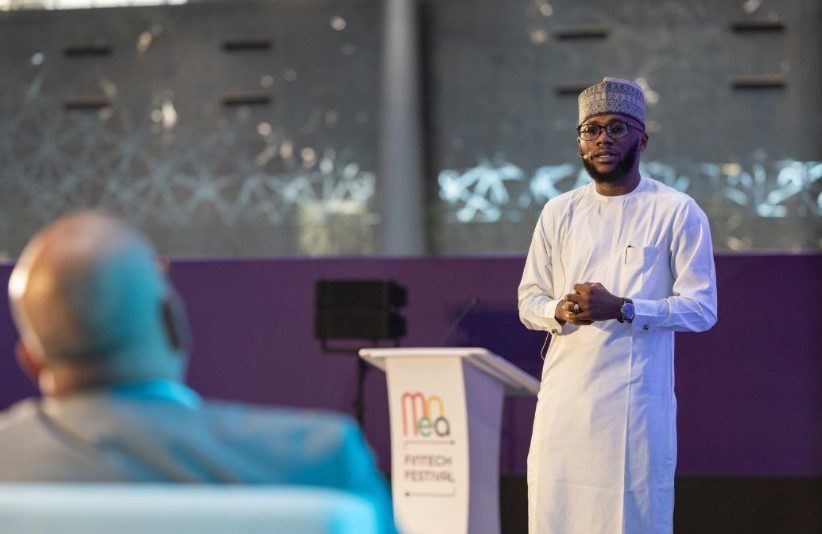 Founder of Interface Africa, Al Amin Idris
The company has been recognised for its innovative solutions, including winning the £1.5 million NextGen Innovation Challenge in October 2025 for its affordable solar financing model.
2. Ahioma
iHatch 2025 Prize: Secured $12,000 equity-free funding
Founded in 2020, Ahioma is an e-commerce platform and virtual marketplace that focuses on enhancing food accessibility with a digital marketplace connecting consumers directly to trusted vendors.
The Umuahia-based startup offers diverse products, including electronics, fashion, home goods, and groceries, aiming to provide a seamless online shopping and delivery experience for African customers.
Ahioma also focus on the Igbo business culture and rallies for local entrepreneur support.
3. Linia Finance
iHatch 2025 Prize: Secured $10,000 equity-free funding
Co-founded by Bassey Asuquo, Blessing Nnamani and Chinomso Ohakwe, the Enugu-based fintech helps Nigerians take control of their finances with tools for budgeting, tracking, and smart money planning.
Linia Finance offers digital tools for financial control, positioning itself as a key player in Nigeria’s growing tech scene and supported by initiatives like Enugu’s tech ecosystem. The startup previously excelled at the Enugu Campus Hackathon Bootcamp.
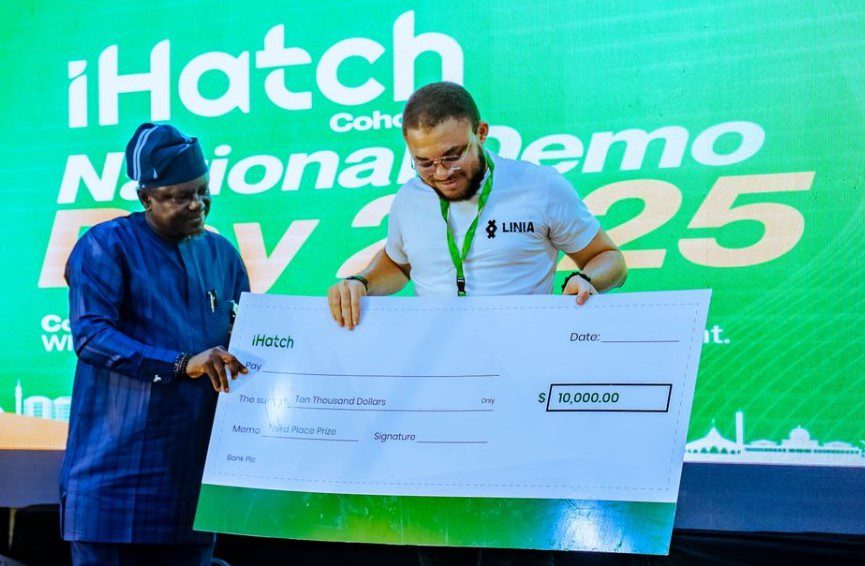 Linia at iHatch 2025
4. Chapta
iHatch 2025 Prize: Laptop
Founded in 2025, the young startup delivers an offline-capable school application ensuring consistent, accessible learning for students everywhere. The platform refers to itself as Africa’s first school operating system on Google Sheets and WhatsApp.
The startup makes it seamless for schools to go digital. On the platform, Schools can mark attendance and send updates to parents instantly, record and share results in real time, track fees and student progress and use it on any phone, tablet, or computer.
5. Softdrop
iHatch 2025 Prize: Laptop
Founded in 2022, Softdrop is a Lagos-based startup that solves logistics challenges through a modern delivery platform designed for speed, convenience, and efficiency.
SoftDrop is powered by a state-of-the-art fintech solution, which enables it to be seamless and affordable, enabling financial inclusion by decentralising logistics in the whole logistics space.

According to information on its platform, Softdrop has partnered with businesses of all sizes to enable same-day deliveries for intra-cities, intra-States and international logistics with more than 3,000,000 carriers nationwide. Softdrop covers more than 400,000 local routes, making us the largest local same-day delivery footprint in the nation.


Companies generate massive profits from people’s information, with experts describing user data as “the new oil”.
Some of these companies are household names but many are unknown, with one analyst comparing the relationship between companies and users as “David vs Goliath”.
Is there anything you can do about it, or are you resigned to having companies know all about you – and make money on it?
How companies collect data
Sam Jones, founder of Gener8, a company that helps users make money from their own data online, told our Money team how companies farmed data on users.
“Companies collect data about people through a range of methods, many of which operate quietly in the background as we go about our daily lives,” he said.
“Most of us have heard of ‘cookies’, but perhaps many of us don’t realise that a ‘cookie’ is really another word for a tracker.
“And when you click ‘accept’ on a cookie banner, you are not just allowing the website you are on to track you, but often you’re allowing hundreds of different companies who are hidden in the website terms and conditions.”
Other methods of data collection include (but are not limited to):
• Pixels: Tiny images embedded on websites and emails that track activity;
• Device fingerprinting: Sites gather device-specific information (for example, screen size, browser type, font type) to create a unique way to identify it;
• And mobile apps: Many include third-party software that sends data to other companies about users – this can be location or usage habits for example.
There are also companies known as data brokers that compile information about users that can be sold to advertisers, insurers or even political groups.
“In the end, users are frequently handing over significant amounts of data without fully realising the scale of what’s being collected, how it’s being used, or who it’s being shared with,” Jones told Money.
iStock
What data do companies collect?
Experts say collected data largely falls into two categories:
• Personal data: Information about users, such as name, email, phone number and location;
• Behavioural data: Information about how users interact with websites, which ones they visit, what they search for, how they search, where they click and how long they spend on each part of the site.
Combined, these can be used to predict interests, habits and even life events.
Why do companies collect data?
Advertising is one of the main – and most profitable – reasons companies collect data.
If companies understand users better, they’re better placed to sell them products (or help others sell them products).
We’ve already mentioned data brokers, which sell the user information itself to companies that are hoping to reach people for a variety of reasons. Another big use is research, because knowing more about users lets companies spot trends (or problems) and inform decision-making.
But Oliver Devane, senior security researcher at McAfee, explained to Money that information gathering wasn’t all sinister.
“One reason why is basically to improve the user experience as well,” Devane said. He gave the example of a video-sharing platform tailoring its experience to a football fan by showing them videos of the sport and their club.
Tilman Harmeling, a data protection expert at Userscentrics, added that some data collection companies undertook was a legal requirement.
What can you do about it?
It can seem daunting, knowing that information about you is out on the internet, and our experts have tips to help – but it’s not easy.
Money was repeatedly told that the best first step was to be aware of where your data is on the internet.
Various online tools will, for a price, scrape through the internet to see which companies have a user’s information and remove it for them.
But to do this yourself (for free), you need to conduct a personal digital audit. This can be done by:
• Go through your emails and see what you’re signed up to;
• And search your name and phone number on various search engines to see where you pop up.
Once you’ve identified where your information exists, you can go about scrubbing it. Sites that may have your data will have a privacy policy (they all do), and Devane says to look out for sections that refer to users’ rights or data.
From here, you can often find how to request a deletion, or can contact the company to do so.
Read more:
Bad news for chancellor as UK economy shrinks again
Daily Mail owner lines up Natwest to help fund Telegraph bid
Burger King UK lands new backing from buyout firm
With more recent privacy laws, you can also submit legal requests to take down your data – for example, Google’s Results About You tool.
Forgotten accounts can also be a hub of a user’s data on the internet, so don’t forget to purge them, deleting any unused profiles.
Similarly, be cautious about who you share your data with from the off and be choosy about app permissions on your mobile – delete old and unused apps because fewer apps mean fewer avenues of data collection.
Meanwhile, on social media pages, it’s always worth being aware of what you’re sharing and what your privacy settings are.
There are also technical ways to protect your data online, according to Devane. He said people could use protection software such as VPNs.
Our experts generally recommended that people do a clean-up regularly, but all acknowledge the difficulty of this and how the issue is stacked against users.
TECHNOLOGY
Vegan children are skinnier and SHORTER than those who eat meat, largest study of its kind reveals

Vegan and vegetarian children are skinnier and shorter than those who eat meat, the largest study of its kind reveals.
Researchers in the US, Italy and Australia analysed prior studies representing more than 40,000 youngsters consuming different diets.
According to the findings, vegans were, on average, up to 4cm (1.5 inches) shorter than omnivorous youngers.
Young vegans and vegetarians also had body mass index (BMI) – a measure of how much bodily fat you have relative to height. The lower your BMI, the closer you are to being underweight.
Plant-based diets lack essential nutrients such as calcium, iron, vitamin B12, iodine and selenium – and kids may have higher nutritional needs during periods of rapid growth and development.
The scientists say meat-free diets are good for the planet and can be healthy – as long as dietary supplements are being taken.
‘Well-planned vegetarian and vegan diets are nutritionally adequate and beneficial for adults,’ said study author Dr Wolfgang Marx at Deakin University in Australia.
‘[But] there is far less clarity about their suitability for children – leading to inconsistent or even conflicting advice for parents.

Vegan and vegetarian diets can support healthy growth but carry a risk of deficiencies if key nutrients are not obtained through supplements, scientists report
‘Our findings suggest that a balanced approach is essential, with families paying close attention to certain nutrients – particularly vitamin B12, calcium, iodine, iron and zinc – to ensure their children get everything they need to thrive.’
For their study, the researchers examined data from 59 studies across 18 countries representing 48,000 children and adolescents.
It compared 7,280 vegetarians, 1,289 vegans and 40,059 omnivores – those who eat both plant and animal matter.
‘Included studies covered children and adolescents, with ages ranging from infancy to late adolescence, depending on the individual study,’ study author Monica Dinu, professor of biology at the University of Florence, told the Daily Mail.
According to the results, vegetarians were on average 0.69 kg lighter and 1.19 cm shorter than omnivores, while vegans were 1.17 kg lighter and 3.64 cm shorter than omnivores.
Compared with omnivores, vegetarians also had lower fat mass, bone mineral content and BMI, while vegans had shorter stature and lower BMI.
‘Both groups had significantly lower BMI, reflecting a leaner growth profile, consistent with previous findings, ‘ the team report.
The study also identified the nutrients consumed relative to other dietary groups.

Children on plant-based diets tended to be leaner than omnivores, the study found. Vegetarian children were slightly shorter and lighter, with lower body mass index (BMI), fat mass and bone mineral content. Vegan children also had shorter stature and lower BMI scores
Average differences between groups
WEIGHT
- Vegetarians vs omnivores: −0.69 kg
- Vegans vs omnivores: −1.17 kg
HEIGHT
- Vegetarians vs omnivores: −1.19 cm
- Vegans vs omnivores: −3.64 cm
Vegetarian children consumed more fibre, iron, folate, vitamin C and magnesium than omnivores, but they had lower intakes of energy, protein, fat, vitamin B12 and zinc.
‘Vegans showed similar patterns, with particularly low calcium intake,’ the scientists report.
Despite these findings, vegetarian and vegan diets did have some advantages over meat-based ones.
Vegan and vegetarian children had better cardiovascular health than omnivores, with lower total and low-density lipoprotein (LDL) cholesterol – the ‘unhealthy’ form of cholesterol.
Overall, the researchers urge parents to ‘take an informed approach’ where they research the available supplements and seek support from clinicians.
Vegan and vegetarian diets can support healthy growth in children and may offer certain health advantages, such as heart health.
However, vegetarian and vegan diets carry a risk of deficiencies if key nutrients like vitamin B12 and zinc are not obtained through shop-bought supplements that come in pill form.
‘Our analysis of current evidence suggests that well-planned and appropriately supplemented vegetarian and vegan diets can meet nutritional requirements and support healthy growth in children,’ said Professor Dinu.
Over the past decade, the popularity of vegetarian dietary patterns has increased due to ‘ethical, environmental, and health-related motivations’, according to the team.
‘However, they also present specific nutritional challenges that warrant careful dietary management and ongoing clinical attention, they say in their paper, published in the journal Critical Reviews in Food Science and Nutrition.
The NHS says red meat is a good source of protein, vitamins and minerals, and can form part of a balanced diet, but eating too much of it increases your risk of bowel cancer.
Red meat consumption has already been linked to heart disease – the world’s biggest killer – as well as rectum cancer.
Meat-heavy diets not only risk our health but that of the planet, as livestock farming on a massive scale destroys habitats and generates greenhouse gases.
Why is meat bad for the planet?
Meat-heavy diets risk the health of our planet, as livestock farming on a massive scale destroys habitats and generates greenhouse gases.
Animal agriculture contributes to global warming because of the methane, nitrous oxide and carbon emissions – not just emitted by the animals themselves but the process of packing and transporting their meat.
Also, the clearing of trees to make way for grazing cattle reduces carbon sequestration (trees capturing and storing atmospheric carbon dioxide).
That’s why climate scientists routinely suggest we replace meat in our diet with plant-based options like vegetables, nuts, seeds and pulses, as well as fungi-based options like mushrooms and mycoprotein
Recently, a scientist suggested we should eat more offal – the internal organs of a slaughtered animal such as liver, kidneys and lungs.
Of course, eating offal still requires farmed and slaughtered animals – but eating more offal could at least reduce the rate at which animals are farmed and slaughtered.

Valuations are important for tech startups; they determine whether investors can earn a return on their capital and whether a startup can raise more money at all or on favourable terms. They also shape everything from employee equity value to a company’s ability to attract top talent and strategic partners.
At the height of Africa’s post-COVID tech fundraising boom, startups commanded Silicon Valley–esque valuations as global investors poured into the continent. With interest rates at record lows worldwide, riskier asset classes like venture capital in Africa suddenly looked far more attractive.
But that era is behind us. African investors now outnumber foreign ones in deal count, and they invest with expectations of lower valuations. This has been caused by weaker startup performance, which has eroded founders’ leverage, and investors demanding profitability even from younger startups still finding market fit.
With this new reality of investors wanting proof of steady cash, stable margins, and plans that can withstand currency swings, how African startups are valued has changed. While the top group still adds up to more than $20 billion, the gap between firms with steady profit and those that need new money has widened.
This list includes only tech-enabled startups with core operations in Africa and is based on the last known paper valuation from company press releases, media reports, investor filings, or investor communications.
While listed companies are excluded, it is worth noting that in November 2025, two listings ended a prolonged freeze in tech markets. Optasia, a South African fintech, was listed in Johannesburg and raised $345 million at a $1.4 billion valuation. Morocco’s Cash Plus, another fintech, was listed in Casablanca and raised $82.5 million at a $550 million valuation. Their debuts came after years without an African tech initial public offering (IPO) and helped restore confidence in African startups.
These listings fed rising confidence, as both stocks opened strongly in their home markets, suggesting public investors are again open to pricing African fintech risk. African startups also raised $2.8 billion by the end of 2025, a 50% rise from the previous year, adding to signs that the deal market is moving again.
- Flutterwave ($3 billion)
Flutterwave, Africa’s largest payments startup, sits at the top at $3 billion, although the company has not shared any new valuation numbers in over three years. This valuation is based on its February 2022 Series D, which raised $250 million.
It has kept its footing through steady gains in payment volume and improved margins. By mid-2025, it had nearly doubled monthly profit levels compared to the year before. Its push into remittances in Europe and the US shows where it sees the next wave of demand, though licensing troubles in Kenya remain a hurdle.
- OPay ($2.7-$3 billion)
OPay follows closely behind with a value near the same mark. Opera, which owns 9.4% of OPay, disclosed in its 2024 SEC filings that its stake was worth $258.3 million, implying an OPay valuation between $2.7 billion and $3 billion.
OPay gained ground during Nigeria’s 2023 cash shortage and has stayed on that path through a large agent network and over 20 million daily active users. Its cost structure and reach make it one of the few large consumer fintech firms in the region that can post stable profits.
- Wave ($1.7 billion)
Senegal’s Wave holds the next major spot at $1.7 billion, its valuation after it raised $200 million in a Series A round in 2021. It changed the mobile-money market in Francophone West Africa with a low-fee model that chipped away at telecom incumbents. Its steady revenue, broad user base and ability to raise debt in 2025 helped it keep its valuation, even as many peers lost ground.
- TymeBank ($1.5 billion)
Tyme became Africa’s ninth unicorn in December 2024, after raising $250 million in Series D led by Brazilian neobank Nubank at a $1.5 billion valuation. Tyme runs TymeBank in South Africa and GoTyme in the Philippines, using a hybrid model: fully digital accounts onboarded through thousands of in-store kiosks at retailers like Pick’n Pay and The Foschini Group. The group passed 15–17 million customers across South Africa and the Philippines and reached profitability in its home market before raising the D round, which will fund expansion into more Southeast Asian markets.
- Andela (about $1.5 billion)
Andela sits near the same range as TymeBank. Originally a “hire, train, deploy” model for junior African developers, Andela has morphed into a global marketplace matching experienced engineers in emerging markets with international companies. Like Flutterwave, its $1.5 billion valuation has not been updated in over three years.
- MNT-Halan (over $1 billion)
Egypt’s MNT-Halan became a unicorn in early 2023 after raising about $400 million (equity plus securitised debt) at a post-money valuation of roughly $1 billion. The company originally combined ride-hailing and logistics with micro-lending but has since focused on lending-led financial services, disbursing over $2 billion in loans to consumers and micro-entrepreneurs and layering on wallets and e-commerce.
A follow-on $157.5 million round in 2024 did not publicly disclose a new valuation, so the $1 billion mark from 2023 remains the last known figure.
- Moniepoint (over $1 billion)
Moniepoint joined the unicorn club in October 2024, when it raised $110 million in Series C from DPI, Google’s Africa Investment Fund, Verod and others. The company runs one of Nigeria’s largest agent-banking and POS networks while also offering business and personal bank accounts, lending, remittances and business software. At the time of the 2024 round, Moniepoint said it processed over 1 billion transactions worth more than $22 billion monthly, with annualised revenue above $100 million and profitability.
- Interswitch (about $1 billion)
Interswitch is Africa’s oldest tech unicorn. In November 2019, Visa acquired a minority stake in Interswitch at a $1 billion valuation. The company holds a central role in Nigeria’s payments system, operating at a different scale and age than most firms on this list.
Founded in 2002, Interswitch built an electronic payment switching infrastructure and the Verve card scheme and remains a central B2B payments infrastructure player across the continent. Because it has not gone public and no subsequent deal has disclosed a different valuation, $1 billion remains the last known external valuation.
- Palmpay ($800 million)
PalmPay’s last known valuation is between $800 million and $900 million, based on its 2021 $100 million Series A.
PalmPay runs a consumer digital wallet and banking app across Africa (mainly Nigeria), offering peer-to-peer transfers, bill payments, airtime, savings and merchant payments. It has raised about $140 million across two rounds and is now profitable and raising again to deepen its presence in Nigeria, expand B2B products and enter more markets.
- Moove ($750 million)
Moove sits at $750 million, though it is courting a larger $300 million round that could lift that figure. It finances vehicles for ride-hailing workers, pulling repayments straight from driver earnings. The model is capital-heavy, yet Moove has raised more than $1 billion in debt and is pushing into the US, UAE and India.
- Yassir ($600 million)
Algeria’s Yassir, valued between $600 million and $800 million according to TechCrunch, leads ride-hailing and delivery in North Africa. Its position is firm in markets that foreign rivals avoid or enter slowly.
- Wasoko-MaxAB ($625 million)
The joint entity formed by Wasoko and MaxAB is valued at about $625 million. Both faced pressure in the B2B retail space and merged in 2024 to cut costs and join markets, though integration risks remain.
- M-KOPA ($500 million)
M-KOPA’s estimated range sits between $500 million and $600 million. It reached a profit in 2024, a rare feat for a company that finances hardware across millions of households. Its credit model, backed by IoT controls, limits defaults and helps attract debt investors.
- Kuda (about $500 million)
Kuda’s last known valuation sits at $500 million. It grew early through digital accounts, but now competes with larger rivals that built major agent networks. A diaspora remittance play in the UK is its next push.
- Chipper Cash (between $250-500 million)
Chipper Cash has taken the hardest hit in this list. It peaked at $2.2 billion during the 2021 surge but now stands closer to $250 million to $500 million, according to Forbes. The collapse of FTX and SVB, its key backers, cast a long shadow, and efforts to sell the company have not led to a deal. It still has millions of users, but it must prove it can turn a margin.
- Yoco and Onafriq ($300 to $500 million)
Yoco and Onafriq close the list. Each is valued between $300 million and $500 million, per TechCrunch. Yoco builds payment tools for small businesses, whereas Onafriq connects mobile money and bank systems across countries so users and institutions can move funds. Both operate in payments, lending, distribution, and cross-platform connections, areas that have stayed steady even when fundraising slowed.
Most startups do not disclose their valuation
One reason several companies on this list do not disclose valuations is that many raised their last priced rounds during the 2021 peak. Publishing new numbers now could show drops that could hurt fundraising, unsettle staff or weaken negotiations with partners.
Others avoid public figures because they rely on debt, not equity, and prefer to keep attention on revenue rather than implied share prices. Some firms operating in fragile currency markets also find that releasing dollar figures invites unwelcome comparisons with past highs.
Besides, private companies are under no obligation to share these numbers, so most choose to remain silent unless doing so serves a strategic need.
It is a fintech list, and Nigeria tops
Fifteen of the companies operate in payments, lending, banking, or related services. This tracks broader fundraising data, showing that African VC capital is heavily concentrated in financial services.
Additionally, Nigeria still produces the most prominent startups, yet currency strain forces local firms to grow far faster just to preserve dollar value. Egypt continues to attract capital through super-app and lending platforms. Kenya shows strength in asset finance and cross-border payments, while South Africa remains key in digital banking and merchant tools.

Disney’s new partnership with OpenAI goes far beyond a simple licensing arrangement. It ties together a multiyear character-licensing deal with a $1 billion investment, and it sets the stage for a new layer of interaction with some of the world’s most famous franchises.
When support rolls out in early 2026, Sora users will be able to generate short videos featuring more than 200 characters across Disney, Pixar, Marvel, and Star Wars. It isn’t just Mickey or Iron Man showing up in AI clips. It’s Disney opening a controlled creative sandbox at a scale no studio has offered before.
Disney hints at AI tools and interactive features coming to Disney+
AI creation tools and interactive features could give Disney Plus subscribers’ new ways to engage with the platform.
Can fans finally create Disney content without entering a legal gray zone?
For years, fan edits lived in an uncertain space. They attracted big audiences, but they sat just outside what Disney could formally endorse. This deal shifts that dynamic by creating a licensed sandbox where fans can experiment with shorts, remixes, and concepts that feel authentic without running into legal boundaries.
This new freedom doesn’t just change fan behavior. It raises a bigger question about how Disney itself will handle interactivity. With OpenAI’s tools available behind the scenes, Disney+ could move toward personalized shorts, character-driven learning experiences, or branching stories shaped by viewer choices.
Once fans get a taste of creating their own moments, it becomes natural to imagine Disney offering more interactive ones as well, like Netflix’s Bandersnatch. But with Disney’s expansive universe and storytelling expertise, the possibilities are far broader.
Zootopia 2 surges to a Record $556 million global opening, becomes biggest animated debut ever
Disney’s sequel is breaking box office records worldwide, setting the stage for a massive finish to 2025.

Will AI speed up how Disney develops and tests new stories?
Those new viewing possibilities reflect what’s also changing inside the studio. Disney isn’t talking about replacing animators, but it’s looking at how AI can speed up early creative work. Storyboards can be visualized faster, alternate scenes can be tested without full teams, and effects ideas can be prototyped in minutes instead of weeks.
When you shorten those early loops, the range of stories a studio can explore starts to widen. Suddenly, shorts, spin-offs, and experimental ideas become more feasible. And because Disney will use these tools in real production environments, the feedback it provides can help OpenAI refine the models in ways that improve both studio output and the tools available to everyday Sora users.
Disney loses its bid to block Sling TV’s one-day streaming passes
Will this open up the door for Sling’s right to push its one-day streaming passes?

Does the Disney-OpenAI deal raise the quality ceiling for AI animation itself?
That refinement is where the partnership becomes even more consequential. Disney’s animation library spans decades of structured 2D and 3D work, motion-capture data, effects simulations, and polished character rigs. For an AI system, this is a rare source of consistent, expressive, high-quality material.
Models trained and improved with that input can learn not just how to recreate a look, but how to deliver movement, timing, and emotional clarity that feel cinematic. As Disney feeds its production insights back into OpenAI’s tools, the quality of AI animation can rise on both sides, inside the studio and for everyday users.
What does this actually mean for the future of animation?
All of these point to a shift in how animation could be made and consumed. Instead of treating AI as a threat, Disney is positioning it as a creative amplifier that expands what artists can imagine and what audiences can experience. Fans gain new tools. Artists gain faster workflows. And AI systems gain a richer understanding of visual storytelling. The future of animation looks less like a replacement battle and more like a collaboration where human craft sets the direction, and AI expands what’s possible.
Disney Channels return to YouTube TV as companies resolve blackout
Hopefully, we don’t get any blackouts like this again anytime soon.


December 12, 2025
Link copied!
Copy failed!

MoMo Payment Service Bank, a subsidiary of MTN Nigeria, has rolled out a new campus mobility initiative that allows students of the University of Lagos (UNILAG) to pay only ₦10 for each bus trip. The company announced that the offer is part of a partnership with Ogata Electric Vehicles, which operates shuttle buses on the campus.
Under this arrangement, students pay the standard ₦100 fare at the bus stop using their MoMo wallet, either by transfer or QR code. Immediately after payment, they receive a ₦90 cashback, effectively reducing the cost of each ride to just ₦10. The service operates on popular university routes, including the busy stretch between the Main Gate and the campus.
MoMo PSB says its goal is to ease financial pressure on students, especially amid nationwide increases in transport costs. The organization describes the shuttle subsidy as part of its broader push to make essential services cheaper and more accessible for young Nigerians.
Electric mobility and digital payments come together through MoMo
The partnership also expands MoMo PSB’s sustainability efforts, as all shuttle buses running the service are electric vehicles. Ogata’s EV fleet is expected to reduce campus emissions while providing quieter, more environmentally friendly transportation for students.
For MoMo PSB, the initiative serves two purposes: Supporting student mobility and encouraging more young people to adopt digital payments for everyday transactions. The company says this aligns with its long-term financial inclusion goals, especially for users who rely on its wallet for transfers, savings, and bill payments.
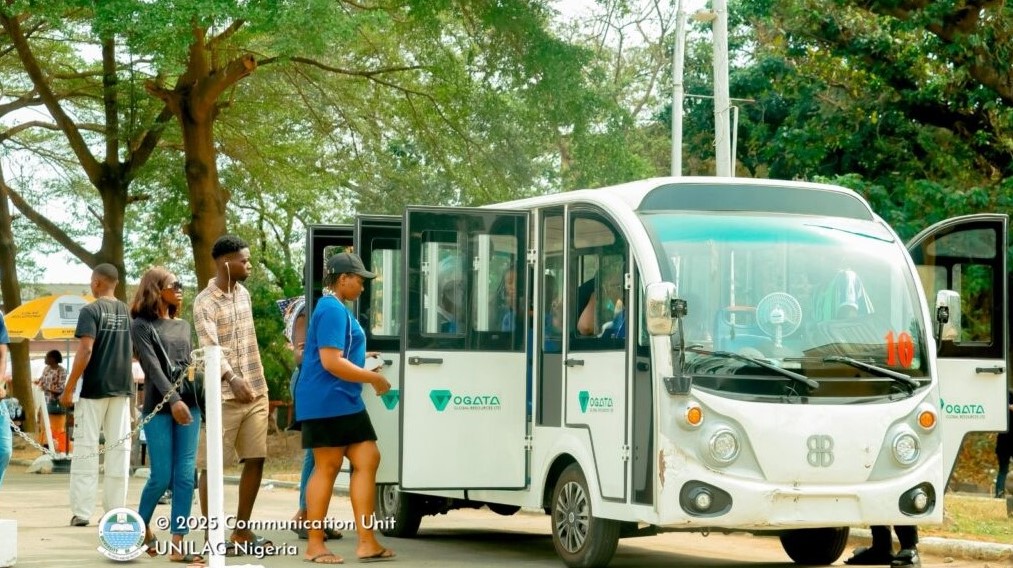 Electric Vehicle – UNILAG
Ogata Electric Vehicles reported that integrating with MoMo has eliminated the delays and confusion often associated with cash payments. With electronic payments, buses load more quickly and long queues move efficiently during peak hours.
Also read: MTN Uganda set to launch MoMo as an independent fintech company
The new fare structure matters most to students who travel several times a day. For example, a student who rides four times daily saves ₦360, which totals over ₦7,000 each month. These savings can help students pay for food, data, or other important needs.
 UNILAG
In addition to its transport offer, MoMo PSB now has two discounted data bundles in its app. Users can get 1GB for ₦200 or 2.5GB for ₦500, which is cheaper than on other platforms. The payments company says this is part of its ongoing effort to make digital access more affordable for young Nigerians.
The company says students can access these bundles and other services by downloading the MoMo PSB app from the App Store or Google Play Store, or by visiting its social media platforms.


Game of the year
Clair Obscur: Expedition 33 – WINNER
Death Stranding 2: On the Beach
Donkey Kong Bananza
Hades II
Hollow Knight: Silksong
Kingdom Come: Deliverance II
Best game direction
Clair Obscur: Expedition 33 – WINNER
Death Stranding 2: On the Beach
Ghost of Yōtei
Hades II
Split Fiction
Best narrative
Clair Obscur: Expedition 33 – WINNER
Death Stranding 2: On the Beach
Ghost of Yōtei
Kingdom Come: Deliverance II
Silent Hill f
Best art direction
Clair Obscur: Expedition 33 – WINNER
Death Stranding 2: On the Beach
Ghost of Yōtei
Hades II
Hollow Knight: Silksong
Best score and music
Christopher Larkin, Hollow Knight: Silksong
Darren Korb, Hades II
Lorien Testard, Clair Obscur: Expedition 33 – WINNER
Toma Otowa, Ghost of Yōtei
Woodkid and Ludvig Forssell, Death Stranding 2: On the Beach
Best audio design
Battlefield 6 – WINNER
Clair Obscur: Expedition 33
Death Stranding 2: On the Beach
Ghost of Yōtei
Silent Hill f
Best performance
Ben Starr, Clair Obscur: Expedition 33
Charlie Cox, Clair Obscur: Expedition 33
Erika Ishii, Ghost of Yōtei
Jennifer English, Clair Obscur: Expedition 33 – WINNER
Konatsu Kato, Silent Hill f
Troy Baker, Indiana Jones and the Great Circle
Innovation in accessibility
Assassin’s Creed Shadows
Atomfall
Doom: The Dark Ages – WINNER
EA Sports FC 26
South of Midnight
Games for impact
Consume Me
Despelote
Lost Records: Bloom & Rage
South of Midnight – WINNER
Wanderstop
Best ongoing
Final Fantasy XIV
Fortnite
Helldivers 2
Marvel Rivals
No Man’s Sky – WINNER
Baldur’s Gate 3 – WINNER
Final Fantasy XIV
Fortnite
Helldivers 2
No Man’s Sky
Best independent game
Absolum
Ball x Pit
Blue Prince
Clair Obscur: Expedition 33 – WINNER
Hades II
Hollow Knight: Silksong
Best debut indie game
Blue Prince
Clair Obscur: Expedition 33 – WINNER
Despelote
Dispatch
Best mobile game
Destiny: Rising
Persona 5: The Phantom X
Sonic Rumble
Umamusume: Pretty Derby – WINNER
Wuthering Waves
Best VR/AR
Alien: Rogue Incursion
Arken Age
Ghost Town
Marvel’s Deadpool VR
The Midnight Walk – WINNER
Best action game
Battlefield 6
Doom: The Dark Ages
Hades II – WINNER
Ninja Gaiden 4
Shinobi: Art of Vengeance
Best action/adventure
Death Stranding 2: On the Beach
Ghost of Yōtei
Hollow Knight: Silksong – WINNER
Indiana Jones and the Great Circle
Split Fiction
Best RPG
Avowed
Clair Obscur: Expedition 33 – WINNER
Kingdom Come: Deliverance II
Monster Hunter Wilds
The Outer Worlds 2
Best fighting
2XKO
Capcom Fighting Collection 2
Fatal Fury: City of the Wolves
Mortal Kombat: Legacy Kollection
Virtua Fighter 5 REVO World Stage
Best family
Donkey Kong Bananza – WINNER
Lego Party!
Lego Voyagers
Mario Kart World
Sonic Racing: Crossworlds
Split Fiction
Best sim/strategy
Final Fantasy Tactics – The Ivalice Chronicles – WINNER
Jurassic World Evolution 3
Sid Meier’s Civilization VII
Tempest Rising
The Alters
Two Point Museum
Best sports/racing
EA Sports FC 26
F1 25
Mario Kart World – WINNER
Rematch
Sonic Racing: Crossworlds
Best multiplayer
Arc Raiders – WINNER
Battlefield 6
Elden Ring Nightreign
Peak
Split Fiction
Best adaptation
A Minecraft Movie
Devil May Cry
Splinter Cell: Deathwatch
The Last of Us: Season 2 – WINNER
Until Dawn
Most anticipated game
007 First Light
Grand Theft Auto VI – WINNER
Marvel’s Wolverine
Resident Evil Requiem
The Witcher IV
Content creator of the year
Caedrel
Kai Cenat
MoistCr1TiKaL – WINNER
Sakura Miko
The Burnt Peanut
Best esports game
Counter-Strike 2 – WINNER
Dota 2
League of Legends
Mobile Legends: Bang Bang
Valorant
Best esports athlete
Brawk (Brock Somerhalder)
Chovy (Jeong Ji-Hoon) – WINNER
f0rsakeN (Jason Susanto)
Kakeru (Kakeru Watanabe)
MenaRD (Saul Leonardo)
ZywOo (Mathieu Herbaut)
Best eSports team
Gen.G
NRG
Team Falcons
Team Liquid PH
Team Vitality – WINNER
Players’ voice
Clair Obscur: Expedition 33
Dispatch
Genshin Impact
Hollow Knight: Silksong
Wuthering Waves – WINNER

Beverly Ezebuike is a global fintech and blockchain marketing expert and recognised thought leader, with a track record of driving large-scale marketing operations that have generated over $50 million in profit for brands. She holds a Master’s in Digital Marketing, with Distinction, from the University of Northampton and certification from the Digital Marketing Institute (DMI).
Over the past three years, Beverly has made a major impact across African and global fintech. At Bundle Africa (A Binance-owned company), she led campaigns that delivered the brand’s first 1 million app downloads and a fivefold increase in Monthly Active Users (MAUs), while launching Cashlink, which processed over $1.7 million in its first year. As Community Manager at Kuda Bank, her campaigns helped the company surpass 7 million customers and earn 26 million weekly impressions. She now leads Community and Partnerships at Raenest, contributing to the fintech’s $11 million Series A and representing it at major tech events.
- Explain what you do to a 5-year-old.
I lead global marketing operations for FinTech and Blockchain brands, helping them grow and make more revenue through partnerships and community-driven marketing. Over the years, I have built and executed strategies that helped me source, negotiate, and close high-value deals with affiliates, brands, influencers, and communities. Those efforts have driven over $50 million in profit and brought more than 500,000 new members into different communities, which is something I am incredibly proud of. My track record has helped me stand out in the tech space and consistently deliver exceptional results for the brands I work with.
- What was the first big marketing win that made you realise you could build brands at scale?
One of my first major wins was during my time as social media manager at Bundle (an employment under Binance), where I led a collaborative social and community marketing campaign between Binance Africa and Bundle Africa. The campaign aimed to increase Bundle Africa’s share of voice by 30% across the continent and grow customer acquisition by 35%, at a time when almost 70% of its users were based in Nigeria. By partnering with the Binance Africa team, we tapped into millions of users and successfully channelled that audience towards Bundle Africa.
Platforms like X (formerly Twitter) and Instagram, along with product education, community-generated content, and key opinion leaders, were central to the campaign’s success. I grew the brand’s social share of voice by 52%, added 7,000 new social followers, and helped drive 16% of new customer acquisition through social and community channels. Seeing how this campaign shifted the organisation’s thinking and proved that I could drive growth at a global scale was a defining moment in my career.
- What’s one campaign or project you’re most proud of, and why?
I have led many impactful campaigns in tech, but launching the Raenest Perks Programme stands out as one of my proudest achievements. I joined Raenest, a fintech company providing African businesses and professionals with global money management tools, as Community and Partnerships Manager in September 2024. One of my toughest KPIs for 2025 was to build and launch a perks programme that offered Raenest community members exclusive discounts of up to 50% from top brands.
I took full ownership of the project, from sourcing and securing partners to spending long hours in strategy and negotiation sessions with each of them. On July 24, we officially launched the Raenest Perks Programme, partnering with 20 amazing brands such as Adidas, Fez Delivery, Pricepally, Enyata, Product Dive, Clafiya, and more, to provide high-value discounts to our community. Many of these brands were already part of the Raenest business community, so it felt reasonable to give them an opportunity to serve our wider community.
Of course, it wasn’t just a smooth and easy one. I experienced a number of hurdles when it was time to execute all of the plans. But the real work came down to working closely with the marketing, product, and engineering teams to build a dedicated perks page in the Raenest app and test every partner’s offering to ensure a seamless user experience. We made it work, and I am incredibly proud of the team and to be leading such a meaningful, impact-driven initiative at Raenest.
- What’s the hardest part about growing a fintech brand in Africa?
The hardest part of growing a fintech brand in Africa is building and sustaining trust. Since stepping into the payments industry at Binance, I have seen how trust can either make or break a brand. Too many stories of platforms going bankrupt or shutting down while holding customers’ funds have left people very cautious.
In September 2024, I moved to the UK to study for a Master’s degree in Digital Marketing, graduating with distinction. During my research, I compared how marketing is done in European fintech and blockchain sectors versus Africa, and developed strategic approaches to close some of the gaps. One of the most notable findings was that many African fintech brands struggle to get users to trust them in the early stages.
Working at Binance, Kuda Bank, and now Raenest, I engage with thousands of customers very often, and I get to see clearly how crucial trust is. The moment users feel their funds or data are not safe, they are ready to move to a competitor without looking back. I always tell organisations that once you win trust and build a genuine community around your brand, you are already hundreds of steps ahead in the market, and that is exactly what I prioritise at Raenest.
- When things go wrong in a campaign, how do you bounce back?
Over the years, I have learnt that when a campaign underperforms, it is rarely just about the idea. Often, it comes down to strategy, execution, or how communication channels are used. Many marketers lean almost entirely on social media, blogs, email, push notifications, and perhaps a bit of PR, while ignoring powerful channels such as community-led distribution, internal communications, aggressive in-app marketing, and creator marketing.
When a campaign does not hit its target, I go back to the drawing board. I analyse what went wrong, review how and where the message was distributed, and study how competitors may have run similar campaigns. I am a big believer in rinsing and re-running a good idea with better execution and a smarter channel mix, rather than discarding it too quickly.
My ability to do this well comes from many real-world experiences. I have taken losses, studied what worked and what failed, and then found new, more growth-driven ways to resell the same idea to the public. Resilience and willingness to refine are two of my strengths as a marketer.
- You’ve worked across traditional finance and decentralised finance with Kuda, Binance, and now, Raenest. What is the most surprising thing you’ve learned about fintech users in Africa?
One of the most striking things I have seen is how quickly users are willing to move to competitors if they feel they cannot trust your brand. When a user signs up on your app, they have probably filtered you from three or four other options. What made them choose you is exactly what will keep them.
The moment that experience changes, or they feel a slight inconvenience, they are ready to switch. If customer support is unhelpful or slow while they are experiencing issues, the chances are high that they will withdraw their money and delete the app entirely. The space is that toxic, I see it happen over and over again. This reality keeps me focused on building experiences and communities that users can truly rely on.
- If you weren’t in marketing, community, or pursuing partnerships, what would you be doing right now?
Haha, that’s an interesting one. I would still be creating impact in people’s lives, just in a different way. I run a TikTok channel with over 20,000 followers where I guide people who want to study abroad and relocate to the diaspora. I dedicate time every week to support them on safe ways to transact globally, what to expect in their new countries, and how to navigate life in the first few months of moving. It’s basically me sharing my journey with the world in a very practical way.
I have also started travelling more recently and plan to do even more in 2026. I enjoy seeing the world and documenting life one step at a time.
- What’s the biggest myth about digital payments or fintech marketing you’d like to bust?
The biggest myth definitely has to be when people say that fintech platforms are only safe for moving money, not keeping it. That’s simply not true. Many payment platforms have evolved into trustworthy financial ecosystems that serve millions daily. It’s important, especially for older generations, to acknowledge how far digital payments have come and how reliable they’ve become.
- If you could wave a magic wand and fix one thing about Africa’s fintech and broader tech ecosystem, what would it be?
It would be the fragmented payment system across the continent. After studying Europe’s fintech landscape (since I moved to the UK), where cross-border payments are seamless, I’ve often imagined how transformative it would be to replicate that simplicity in Africa.
While stablecoins and new solutions are helping, the fragmented infrastructure still limits user experience and business growth. If that system could be unified, Africa’s financial ecosystem would progress rapidly. So yes, if I could wave a magic wand, I’d fix that.
- What’s one thing you’re not an expert at but enjoy doing?
Haha, that’s a tough one. I’d say singing and dancing. I may not have the best voice or rhythm, but both activities help me re-energise when work gets overwhelming. They remind me to embrace creativity and appreciate others who excel in the arts.