
LIFESTYLE
Terry’s Chocolate Orange hit with sharp price hike this Christmas


Stay ahead of the curve with our weekly guide to the latest trends, fashion, relationships and more
Stay ahead of the curve with our weekly guide to the latest trends, fashion, relationships and more
Stay ahead of the curve with our weekly guide to the latest trends, fashion, relationships and more

Festive favourite chocolates, including the staple Terry’s Chocolate Orange, have risen in price this Christmas, new data shows.
Chocolate lovers may be saddened to hear that prices have risen by nearly one-fifth, as cocoa ingredients become more expensive to source.
Chocolate prices have soared by 18.4 per cent since last year, according to figures from Worldpanel.
The prices of sweet chocolate treats have risen faster than almost all other supermarket food products, second only to fresh meat and chicken.
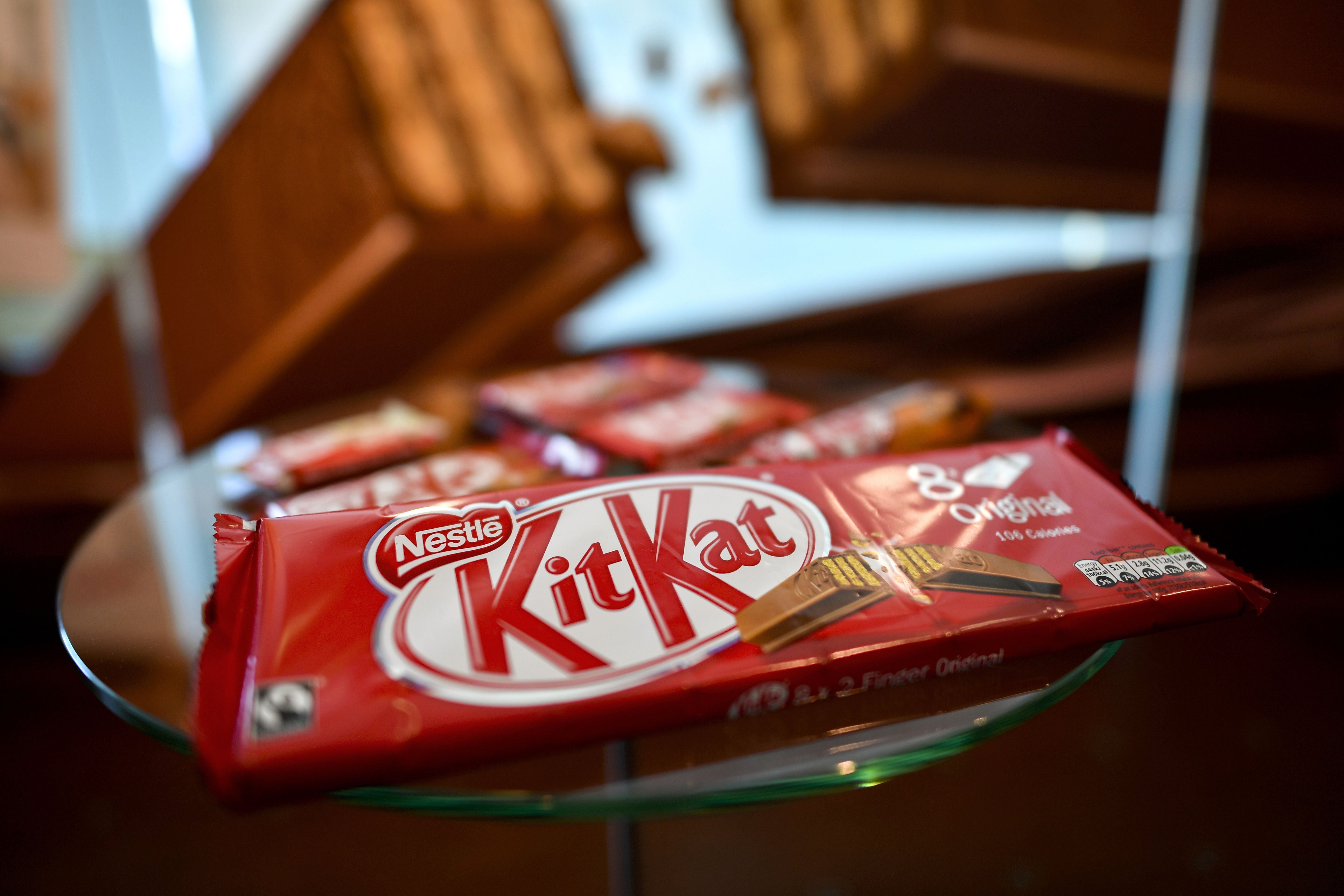
KitKats are now as much as 70 per cent more expensive than last year, while a 310g pack of Maltesers comes in at £1.67 more, according to data from Trolley.co.uk.
open image in gallery
KitKats are now as much as 70 per cent more expensive than last year, while a 310g pack of Maltesers comes in at £1.67 more, according to data from Trolley.co.uk (AFP via Getty Images)
A classic Terry’s Chocolate Orange has risen by 38 pence as several big brand manufactures have moved to using less cocoa in an attempt to offset the price increases.
Nestle have moved to reducing the quantities of cocoa and milk in favour of using a cheaper vegetable fat instead in some of their products.
This has led to their fan favourites, Toffee Crisp and Blue Riband bars, to no longer qualify for the chocolate status.
In order to be officially classified as “milk chocolate” in the UK, a product must contain at least 20 per cent cocoa solids and 20 per cent milk solids.
The products are now described as being “encased in a smooth milk chocolate flavour coating” rather than being covered in milk chocolate.

open image in gallery
Nestle have moved to reducing the quantities of cocoa and milk in favour of using a cheaper vegetable fat instead in some of their products. (© KEYSTONE / LAURENT GILLIERON)
A Nestle spokesperson said the food giant had seen “significant increases in the cost of cocoa over the past years, making it much more expensive to manufacture our products. We continue to be more efficient and absorb increasing costs where possible”.
McVitie’s similarly made recent reformulations in October to their Penguin and Club bars, which are now labelled as “chocolate flavour” due to the reduced cocoa quantities.
This was the result of their parent company Pladis choosing to use cheaper alternatives to the main chocolate ingredient.
Many ingredients such as cocoa and butter have become more expensive over the past three years, which has led to many food companies altering their recipes to use less expensive ingredients, as well as reducing serving sizes in a process sometimes referred to as “skimpflation”.
Although cocoa prices have recently eased slightly, a rise in costs over years due to poor harvest and droughts have made the price of chocolates soar, with chocolate prices up 18.4 per cent on this time last year.









Stay ahead of the curve with our weekly guide to the latest trends, fashion, relationships and more
Stay ahead of the curve with our weekly guide to the latest trends, fashion, relationships and more
Stay ahead of the curve with our weekly guide to the latest trends, fashion, relationships and more
There’s nothing quite like the unbridled thrill of waking up on Christmas morning to see a stocking that’s spilling over with presents in the corner of your room. Even those among us who’ve outgrown the ritual still feel the rush. Father Christmas has been! And he’s filled his boots with chocolate, face masks, socks, lip balms and supermarket candles!
Though most people experience stocking magic for the first time as children – when the contents sit roughly at 50 per cent plastic, 49 per cent sugar and one per cent clementine – the tradition has followed a significant chunk of the population into adulthood. A 2024 survey found that just over half of adults give a festive stocking to their partner at Christmas, at a cost of roughly £62 a pop. And the contents are grown-up too. Unlike the gifts under a tree, these little luxuries are simple, small and sought after. Or, if we’re using the official term, “bits and bobs” collected by the giver over the course of the year as an extra treat before the main event. You know, just a small something to make life a little nicer.
Top stocking gifts, according to one 2023 study, include gift cards, snacks, self-care items like lip balms and makeup. Or, on the lower end of the spectrum, 17 per cent reported receiving coal (classic), sardines, olives and toilet paper. Whatever floats Father Christmas’s boat…
“Somehow, I’m still receiving a stocking full of gifts from my parents at the age of 33,” says Katie from Liverpool, who lives in her family home. “As a kid, I always vaguely assumed that there would be a cut-off point, possibly around the time that I moved out and took on adult responsibilities, but this just never happened,” she reflects. “I feel a bit like it will maybe come to an end when all of us have partners and kids,” she adds of her siblings, “but for now, we’re all quite happy with this very ‘kidult’ set-up one day a year.”
It’s a similar story for Ellie from London, who is 32 and has received a stocking every year of her life without fail when returning to Mum and Dad’s for Christmas. “Mortifyingly, my parents still sneak into my room in the night to leave a stocking at the end of my bed,” she says. “Every year I think it’ll probably stop and it never does. I know Mum (let’s be honest, it’s not Dad or Father Christmas) really enjoys buying presents for stockings as it’s all the lower-stakes fun stuff you tend to pick up in the shops as you get closer to the till. So maybe it will continue for many years to come, for both her enjoyment and mine.”
One YouGov study found that, in the UK, 61 per cent of women purchase presents for their family compared to just eight per cent of men. As some children grow up and naivety falls away, they become aware and opt to relieve some of this labour – especially the daughters.
“For the past decade or so, my sisters and I have been buying stuff for each other’s stockings so the gift-buying burden doesn’t fall entirely on our mum,” Katie says. “We tend to be on a pretty similar wavelength: last year, they both bought me the same Pilates grippy socks without realising. For us, ‘stocking’ presents tend to be nice little extras… or weird in-jokes.”

open image in gallery
Footing the bill: We spend roughly £62 on each stocking for our loved ones in the UK (Getty/iStock)
But the women in Katie’s family are far from stopping when it comes to stockings: “Last year was the first time that my brother-in-law joined us for Christmas Day,” she says. “My mum decided that he needed a stocking of his own too, and got very concerned about whether his presents would be up to scratch. He was completely bemused by this, of course.”
When you look at it objectively, the concept of a stocking is pretty weird. According to legend, in the 4th century, Saint Nicholas heard about a man who couldn’t afford dowries for his three daughters and threw a purse of coins down the chimney of their house at night so the eldest daughter had enough money to get married. The purse fell into a stocking, which had been put by the fire to dry, and St Nicholas repeated the act until all three daughters could marry.
However, there’s no proper evidence of this ever happening, according to historian and author of Christmas: A Biography, Judith Flanders. “We have no real idea of when and where it came about,” she says. “The first mentions are in the 1810s in the US, where it appears in a little clutch of Christmas paraphernalia from one circle of friends, so our guess is that they invented it.”
This group of friends included The Nightmare Before Christmas author Clement Clarke Moore and short story writer Washington Irving, who penned The Knickerbocker’s History of New York, both of which included references to stockings. “It was supposed to be a history, but it was actually a comic satire,” Flanders says of the latter text.
“John Pintard, who was the founder of the New York Historical Society, gathered these people together, so it was presented as a history – all of these transitions – but they were all made up.”
The nice thing about there being no firm origin story for stockings is that nobody can tell you what rules to play by, meaning you can receive one until you’re 100 years old if you’ve got someone who’s willing to do all the wrapping. Age limits do not apply.
“You can do what you like,” confirms Flanders. “Hang your stocking on the fireplace. Give a stocking to your cat! No one can tell you otherwise.” That’s as good a reason as any. Kind of.
LIFESTYLE
Tobey Maguire’s ex-wife, Jennifer Meyer, is expecting her first child with Geoff Ogunlesi at 48

Stay ahead of the curve with our weekly guide to the latest trends, fashion, relationships and more
Stay ahead of the curve with our weekly guide to the latest trends, fashion, relationships and more
Stay ahead of the curve with our weekly guide to the latest trends, fashion, relationships and more
Jennifer Meyer, Tobey Maguire’s ex-wife, is pregnant with her third child.
The 48-year-old jewelry designer and daughter of Ronald Meyer, who co-founded prominent talent agency CAA, revealed in a Friday Instagram post that she is expecting her first child with her fiancé, Geoff Ogunlesi.
“Hey baby girl,” she captioned her social media post. “We love love love you!!”
The post showed three images, with the first two showing off her bump, as the last one showed Ogunlesi — who is the founder of the music and entertainment management company, the Ogunlesi Group, and the son of Nigerian billionaire Adebayo Ogunlesi — holding her bump and leaning into her.
According to a 2023 article from the Mayo Clinic, it becomes more difficult to get pregnant past the age of 35 due to a naturally lower quantity of eggs. Once a woman reaches her mid-40s, natural pregnancy becomes increasingly unlikely, with people around Meyer’s age often relying on either donor eggs or in vitro fertilization (IVF).

open image in gallery
Daughter of the CAA co-founder, Jennifer Meyer, announced that she was pregnant with her first child alongside her fiancée, Geoff Ogunlesi (Getty Images)
Many A-listers quickly commented on the post to congratulate the couple, with Jenna Dewan writing, “I am crying!!!!! So happy for you!!”
“So happy ahhhh!!!!” Sofia Richie-Grainge also gushed over the news. In addition to her child with Ogunlesi, Meyer also shares kids Ruby, 19, and Otis, 16, with Maguire.
The news of Meyer’s pregnancy comes over one year after she and Ogunlesi announced their engagement in an Instagram post in August 2024, after one year of dating. “YES!!!” she captioned the post at the time, wearing an emerald-cut diamond ring on her ring finger.
Meyer and Ogunlesi made their red carpet debut as a couple at the annual Baby2Baby Gala in November 2023, where Meyer serves as a board member for the Los Angeles-based nonprofit organization.
Prior to the start of her relationship with Ogunlesi, Meyer was married to the Spider-Man actor from 2007 to 2016. She didn’t officially file for divorce from Maguire until October 2020, requesting joint legal and physical custody of their two children.
The former couple have since maintained an amicable co-parenting relationship. In 2022, Meyer shared on an episode of The World’s First Podcast that her divorce from Maguire has been “the most beautiful experience of my life.”
“I would literally do anything in the world for Tobey. He is my brother. I love him to death, and we have the most beautiful family,” Meyer told podcast co-hosts Sara and Erin Foster at the time. “The work is a motherf***er. I’m not gonna lie. And we did a lot of work to stay on track to stay a family.
“It was a choice, and it was trusting in, like, the universe has got our back,” she said.
Maguire, who has designed jewelry for celebrities including Jennifer Aniston, and Ogunlesi have also bonded over the last few years, explaining earlier this month during an episode of The Inside Edit exactly how close they are.
“I’d come home at night, and Tobey and Geoff and his best friend would be watching a movie on the couch,” she said. “I’d be like, ‘How? This is a dream.’”

Sign up to our free Living Well email for advice on living a happier, healthier and longer life
Live your life healthier and happier with our free weekly Living Well newsletter
Live your life healthier and happier with our free weekly Living Well newsletter

Stiff knees, aching hips and the slow grind of chronic joint pain are often accepted as an unavoidable part of getting older. But while osteoarthritis is the world’s most common joint disease, experts say the way we treat and prevent it is badly out of step with the evidence.
The best medicine isn’t found in a pill bottle or an operating theatre – it’s movement. Yet across countries and health systems, too few patients are being guided toward the one therapy proven to protect their joints and ease their pain: exercise.
Exercise is one of the most effective treatments for chronic, disabling joint conditions such as osteoarthritis. Yet very few patients actually receive it.
Research across health systems in Ireland, the UK, Norway and the United States shows the same pattern: fewer than half of people with osteoarthritis are referred to exercise or physiotherapy by their primary care provider. More than 60% are given treatments that guidelines do not recommend, and around 40% are sent to a surgeon before non-surgical options have even been tried.
To understand why those figures are so troubling, it helps to understand what exercise does for joints. Osteoarthritis is by far the most common form of arthritis, already affecting more than 595 million people worldwide.
 Exercise is one of the most effective treatments for chronic, disabling joint conditions (Getty/iStock)
According to a global study in The Lancet, that number could approach one billion by 2050. Longer life expectancy, increasingly sedentary lifestyles and rising numbers of overweight or obese people are driving the trend.
Yet people who exercise regularly are physically and biologically protecting themselves from developing the disease and from suffering its worst effects.
The cartilage that covers the ends of our bones is a tough, protective layer with no blood supply of its own. It relies on movement.
Symptoms of osteoarthritis
NHS
The main symptoms of osteoarthritis are joint pain and stiffness, and problems moving the joint.
Some people also have symptoms such as:
- swelling
- tenderness
- grating or crackling sound when moving the affected joints
Like a sponge, cartilage is compressed when we walk or load a joint, squeezing fluid out and then drawing fresh nutrients back in. Each step allows nutrients and natural lubricants to circulate and maintain joint health.
That is why the old idea of osteoarthritis as simple “wear and tear” is misleading. Joints are not car tyres that inevitably grind down.
Osteoarthritis is better understood as a long process of wear and repair in which regular movement and exercise are critical to healing and to the health of the entire joint.
A disease of the whole joint
We now know osteoarthritis is a whole-joint disease. It affects the joint fluid, the underlying bone, the ligaments, the surrounding muscles and even the nerves that support movement.
Therapeutic exercise targets all these elements. Muscle weakness, for instance, is one of the earliest signs of osteoarthritis and can be improved with resistance training. There is strong evidence that muscle weakness increases the risk of both developing the disease and seeing it progress.
Nerve and muscle control can also be trained through neuromuscular exercise programmes such as GLA:D® (Good Life with osteoArthritis: Denmark) for hip and knee osteoarthritis. Usually delivered in supervised group sessions by physiotherapists, these programmes focus on movement quality, balance and strength to improve joint stability and rebuild confidence.
About the author
Clodagh Toomey is a Physiotherapist and Associate Professor in the School of Allied Health at the University of Limerick.
This article is republished from The Conversation under a Creative Commons license. Read the original article.
Significant improvements in pain, joint function and quality of life have been recorded for up to 12 months after completing the programme.
Exercise is good medicine for the whole body: it has documented benefits across more than 26 chronic diseases. In osteoarthritis, it helps not only by strengthening cartilage and muscle but also by tackling the inflammation, metabolic changes and hormonal shifts that drive the disease.
Obesity is a major risk factor for osteoarthritis, and not merely because of the extra mechanical load on joints. High levels of inflammatory molecules in the blood and in joint tissues can degrade cartilage and accelerate disease.
For osteoarthritis, regular activity can counter this at a molecular level, lowering inflammatory markers, limiting cell damage and even altering gene expression.
Exercise first, surgery later
Currently, there are no drugs that modify the course of osteoarthritis. Joint replacement surgery can be life-changing for some people, but it is a major surgery and does not succeed for everyone.
Exercise should be tried first and continued throughout every stage of the disease. It carries far fewer side effects and brings many additional health benefits.
Osteoarthritis is not simply a matter of “worn-out” joints. It is shaped by muscle strength, inflammation, metabolism and lifestyle.
Regular, targeted exercise addresses many of these factors at once – helping to protect cartilage, strengthen the whole joint and improve overall health. Before considering surgery, movement itself remains one of the most powerful treatments we have.

Stay ahead of the curve with our weekly guide to the latest trends, fashion, relationships and more
Stay ahead of the curve with our weekly guide to the latest trends, fashion, relationships and more
Stay ahead of the curve with our weekly guide to the latest trends, fashion, relationships and more
The winter solstice, a phenomenon revered by ancient civilisations, continues to hold profound significance today as it heralds the official start of winter.
This annual event marks the shortest day of the year, characterised by the fewest hours of daylight, and conversely, the longest night. It is also the precise moment when the sun reaches its lowest daily maximum elevation in the sky.
The term “solstice” itself is rooted in Latin, combining “sol,” meaning sun, with “sistere,” which translates to “to come to a stop” or “make stand.”
When is the winter solstice?
While the Southern Hemisphere embraces the onset of summer, those residing north of the equator will observe the opposite – the inaugural day of winter. This year, the celestial event is set to occur on Sunday 21 December at 3:03 pm.
Depending on where you are in the UK, the exact length of the day will differ. In London, there will be 7 hours 49 minutes and 42 seconds of daylight. That means it is 8 hours and 49 minutes shorter than the June solstice.
While that means that the day is likely to be dark and dreary, the good news is that it also means that the days will get progressively longer, with more hours of daylight until the climax of the summer solstice.
The variation happens because the Earth orbits the sun at an angle of 23.4 degrees on its axis, according to the Royal Museums of Greenwich.
Arriving on the same day across the globe, a solstice occurs when the sun reaches its lowest or highest point in the sky during the year as a result of the Earth’s axis tilting to or away from the sun.
For the Southern Hemisphere, it’s the opposite case, as 21 December marks the one day of the year with the longest period of sunlight.
What is the history of the winter solstice?
Historically, the winter solstice has been of great importance to many cultures, such as Ancient Egypt and Ancient Rome, often as a marker for the passing seasons, and a possible time of rebirth.
In northern Europe, from the Faroe Islands to Estonia, Germanic peoples have long celebrated the event, which became known as Yule.
While Yule dates back to the Norse people, who celebrated the sun’s rebirth for 12 days, it was also celebrated by Anglo-Saxon pagans.
According to Pliny the Elder, in Britain, druid priests would mark the important date by gathering mistletoe and sacrificing bulls – which was also likely a practical measure to limit the number of mouths to feed during months of famine.
What is the equinox?
During the equinox, the Earth’s axis and its orbit align so that both hemispheres get an equal amount of sunlight.
During the warmer periods, the North Pole is tilted towards the sun in the northern hemisphere, meaning longer daylight hours, while the southern hemisphere experiences the opposite. During winter the situation is reversed as the North Pole tilts away from the sun for the northern hemisphere.
The word equinox comes from two Latin words meaning equal and night. That’s because on the equinox, day and night last almost the same amount of time — though one may get a few extra minutes, depending on where you are on the planet.
The Northern Hemisphere’s fall — or autumnal — equinox can land between Sept. 21 and 24, depending on the year. Its spring — or vernal — equinox can land between March 19 and 21.
 People take part in the winter solstice celebrations during sunrise at Glastonbury Tor in Somerset. (PA Wire)
What’s the difference between meteorological and astronomical seasons?
These are just two different ways to carve up the year.
While astronomical seasons depend on how the Earth moves around the sun, meteorological seasons are defined by the weather. Meteorologists break down the year into three-month seasons based on annual temperature cycles. By that calendar, spring starts on March 1, summer on June 1, autumn on Sept. 1 and winter on Dec. 1.
Additional reporting by AP.


Photo Credit: Anthony Joshua/Instagram
Anthony Joshua returned to the ring with authority, defeating YouTuber-turned-boxer Jake Paul via a sixth-round stoppage in Miami. The two-time heavyweight world champion dropped Paul four times before landing the decisive right-hand jab that ended the fight.
Joshua admitted afterwards, “It wasn’t the best performance. But the end goal was to get Jake Paul, pin him down and hurt him. That was the request leading up, and that was on my mind. It took a bit longer than expected but the right hand finally found its destination.”
The early rounds were slow to ignite, with referee Chris Young stepping in to urge both fighters to engage. Joshua found his rhythm in the fifth round, landing clean shots that repeatedly sent Paul to his knees, whether from knockdowns or sheer fatigue. By the sixth, Joshua backed Paul into a corner and delivered the knockout blow, bringing the Miami crowd to their feet.
Joshua was quick to acknowledge his opponent’s resilience, saying, “I want to give him his props – he got up time and time again. It was difficult in there for him, but he kept on trying to find a way. It takes a real man to do that.”
For Paul, the fight was a test of endurance and determination. “That was fun. I gave it my all,” he said. “I had a blast. I think my jaw is broken by the way. But Anthony’s one of the best to ever do it, so. I’m gonna come back and get a world championship. I just got tired, to be honest – like it was so much handling his weight. I think with better cardio, I could have kept it up and kept on fighting. But he hits really hard.”
Under Florida Athletic Commission rules, Paul will serve a 60-day suspension after being knocked out, with the possibility of extension if officials judge the knockout to have been particularly severe
Watch the highlights of the match

If you’re looking for a fitness tracker to give you around-the-clock wellness insights, Whoop and the Oura ring are two of the best options out there. Both of these premium wearables track your activity, sleep, stress, and other biomarkers 24/7 to give an overall picture of your health and day-to-day wellness.
“They give you a simple way to notice patterns you might miss on your own,” says board-certified physician and sleep specialist Angela Holliday-Bell, MD, CCSH. “You can see how long you sleep, how consistent your schedule is, and how your habits or routines affect your nights.” Although she notes that the details aren’t perfect (particularly when it comes to sleep stages, which wearables notoriously struggle to detect), she feels both Whoop and Oura do a good job at showing trends over time.
But if they both track many of the same things, and both do a decent job at getting the numbers right, which is the better option? I tested both simultaneously, comparing them side by side to understand their differences and what makes each unique. Here’s what I found.
Read more: Best sleep trackers, tried and tested
How I tested
As a certified running coach and health and fitness writer who regularly covers fitness trackers, I’ve tested both Whoop (various models over the years) and the Oura ring multiple times. For this review, I compared the two directly. I wore both simultaneously so I could analyze and compare them. I slept, worked out, and even showered with them on. I assessed the apps at multiple points each day, starting from the moment I woke up and making a point to check in after every workout. I analyzed the data captured and compared the numbers across the two apps to note any discrepancies and any ongoing patterns around those differences. For context, I was tested Whoop’s MG with a life membership (the brand’s most comprehensive option) and an Oura ring 4.
Whoop vs Oura ring: Design
While you have to be wary of scratching it, the Oura ring is an undeniably elegant wearable (The Independent)
To an onlooker, the biggest difference between these two wearables is, well, where you wear them. The Oura ring, obviously, is a ring, while Whoop is typically worn on the wrist — though you can put it in compatible underwear, T-shirts, or shorts, or as an armband around your biceps.
The design you prefer is personal. The Oura ring is thicker than you might expect and can be uncomfortable when lifting heavy weights; otherwise, it’s pretty unobtrusive, and its elegant aesthetic doesn’t look out of place at formal events. The Oura ring 4 does get a little scratched with everyday wear; the brand’s ceramic option is apparently more scratch-resistant. Meanwhile, Whoop is probably the most comfortable wrist-based fitness tracker I’ve ever tried — it’s honestly the only one I’ve ever been able to forget is there — but I personally wouldn’t wear it to a black-tie event.
Whoop vs Oura ring: Data and coaching
Once you dive into each of these devices’ apps, much of the data collected is nearly identical. Yet the presentation is vastly different. To me, the Oura app felt like a gently encouraging yoga teacher who wants to motivate you to take care of yourself, while Whoop was more like a hardcore coach trying to maximize your potential with a Moneyball-style approach to all your stats.
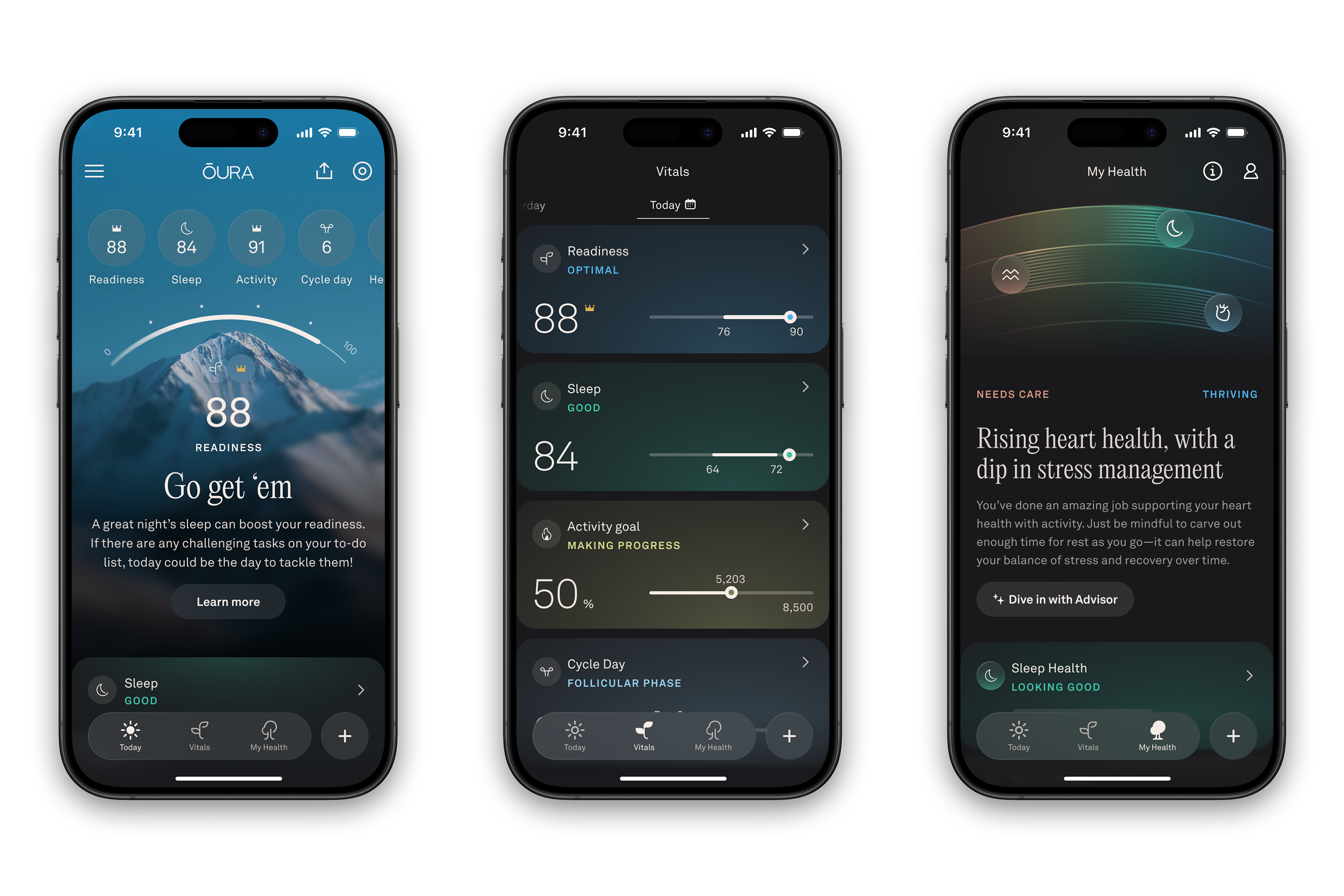 I found the language on the Oura’s app gave softer encouragement (Oura)
When you open the Oura app, you get an overview of the basics: readiness, sleep, and activity are given a score of one to 100. You can also see your heart rate as well as how many minutes you’ve spent stressed during the day. The app also displays short summaries of what the stats might mean and tips attached to each number. For instance, when I was stressed, I got a five-minute breathing exercise from Headspace. If you want to explore the exact metrics behind these summaries, you can open each one and dive further in, but what’s presented most prominently is just the high-level overview and accompanying suggestions.
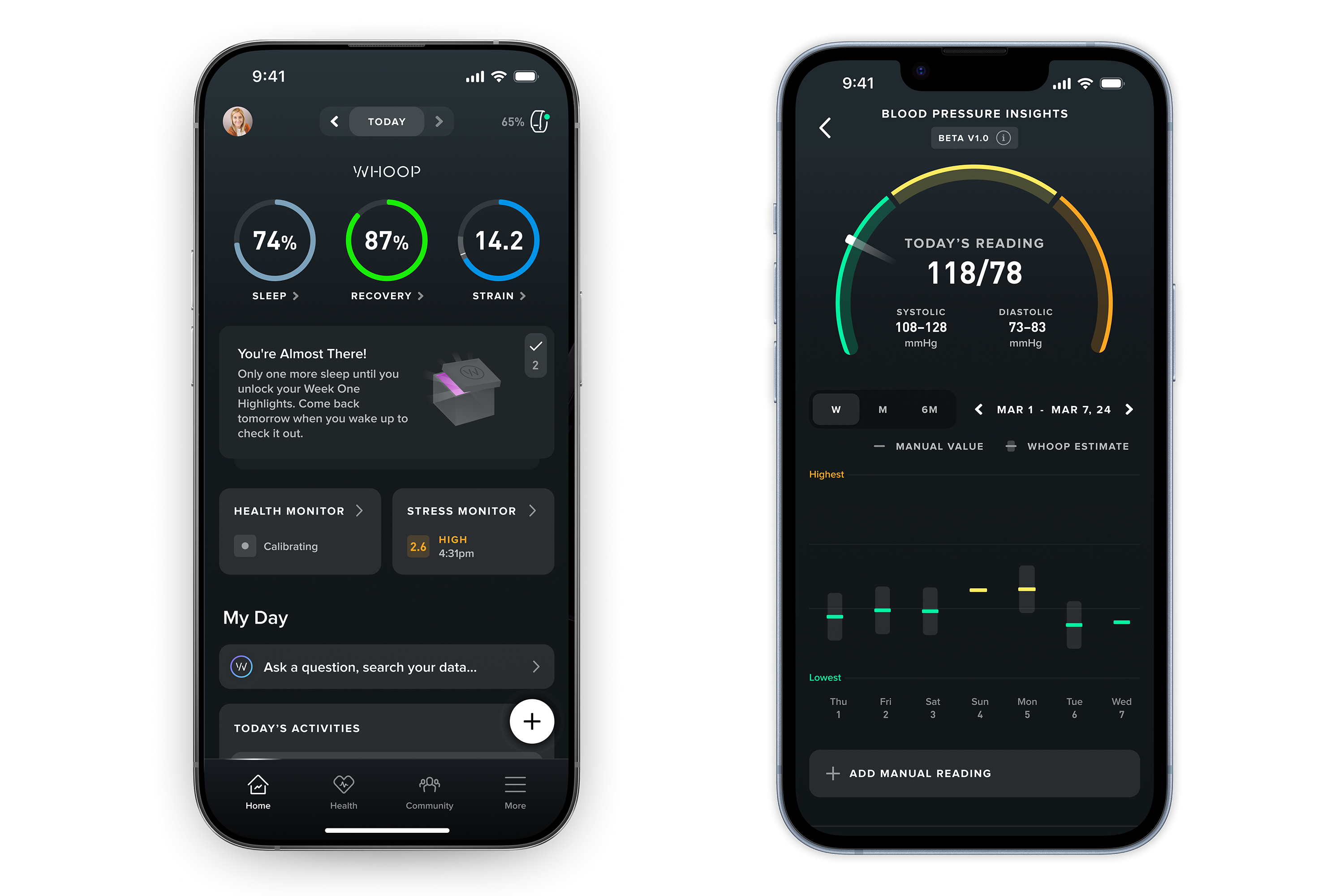 Whoop is a biohacker’s dream (Whoop)
Meanwhile, Whoop is a biohacking data nerd’s dream, with a seemingly endless amount of charts and graphs to click into, starting right from the main dashboard. There are plenty of detailed explanations of the science behind each metric and why they matter (in both written and video formats). There’s also a “daily outlook” that sums up what that day’s numbers might mean for my recovery and what to do about it. But rather than the advice being put front and center, the numbers themselves are given the priority placement. Whoop also provides more numbers, period. The high-end MG model in particular can take an ECG, estimate blood pressure, and even give an idea of “healthspan,” or how quickly you’re aging. I was able to measure nearly anything a wrist-based wearable could possibly track.
But back to the coaching comparisons. Another reason Oura is more like a yoga teacher is that the suggestions are far more mellow. Although it usually gives me a higher “readiness” score for the day than Whoop, it still suggests relatively light activity targets. I even customized my plan to set more challenging fitness goals, but still easily exceeded the recommendations. In contrast, even when Whoop recommends taking an easy day, the suggestions can be a little lofty. It once told me to go for a low-key run and do a 20- to 30-minute strength-training session as a way to keep things “light.” (Though to be fair, I made boosting fitness my primary goal in the app, so it might go easier if that’s not the case.)
Then there’s the language used. When Oura suggests more exercise, it emphasizes balancing that out by eating well and getting plenty of rest. Both apps told me to get more sleep — Oura’s wording phrased in a way of “giving your body a chance to recover,” while Whoop is about hitting “optimal” windows to “boost efficiency.” (You can customize the type of coaching given on Oura’s app to make it more straightforward, but I personally enjoy the compassionate approach.)
Read more: Amazfit’s $99 subscription-free tracker vs Whoop’s $200 a year band
Whoop vs Oura ring: Accuracy
When it comes to accuracy, both of these trackers are top of the line — I found Oura has the edge when it comes to sleep, while Whoop is better if heart rate data is your top priority. A 2022 study comparing six different fitness trackers found Whoop was the most reliable (99 percent accurate) for measuring heart rate and heart rate variability, while the Oura ring slightly outperformed Whoop for sleep tracking. The research was done on older generations of both devices, but Dr. Holliday-Bell believes this remains the case. “Both offer solid trend tracking, but the Oura Ring usually stands out for sleep because of the sensors it uses,” she says, explaining that Oura considers multiple signals. Personally, I found it usually gave me a slightly lower sleep score than Whoop (though never by more than half an hour), and it sometimes picked up short naps that Whoop missed.
Let’s put it this way: On days when I’m struggling and want some kindhearted encouragement, I tend to open up the Oura app first; when I feel like I need a little kick in the butt, I click on Whoop.
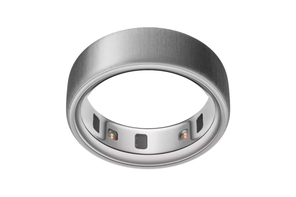
Oura ring 4
The Oura ring provides accessible feedback that didn’t make me feel guilty. I’d liken its soft approach to advice from a yoga teacher who wants to motivate you to take care of yourself, which certainly contrasts with Whoop, which offers a more no-nonsense approach. You can customize the type of coaching given on Oura’s app to make it more straightforward, but I personally enjoyed the compassionate approach. In terms of design, the Oura ring 4 is unobtrusive, and its elegant aesthetic means it doesn’t look out of place in a formal setting — just like a piece of jewelry.
Read the full Oura ring 4 review
What to know
- Dimensions: 7.9mm x 2.88mm
- Weight: 3.3g to 5.2g (depending on size)
- Battery life: 5-8 days
- Subscription required: Yes, $5.99 per month or $69.99 per year (on top of price of the ring, which is $349 or $499)
- Water resistance: Up to 100 meters
Why we love it
- Elegant design
- Prioritizes actionable takeaways
- Explains the data rather than just presenting numbers
- Customizable language
- Expert-recommended sleep tracking
Take note
- Ring is pretty thick, and gets a little scratched
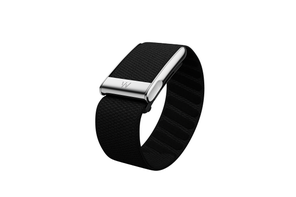
Whoop MG
Whoop is a biohacking data nerd’s dream, and promises to help you age backwards. It’s incredibly smart in the way it uses biometric data and provides you with a seemingly endless amount of charts and graphs to click into. The app offers personalized plans and advice from an AI coach, and takes a no-nonsense approach to health tracking. In terms of design, it is possibly the most comfortable wrist-based fitness tracker I’ve ever tried — it’s honestly the only one I’ve ever been able to forget is there.
What to know
- Dimensions: 34.7mm x 24mm x 10.6mm
- Weight: 27.3g
- Battery life: 14-plus days
- Subscription required: Yes, from $149 (on sale) to $359
- Water resistance: Up to 10 meters
Why we love it
- User-friendly app
- Tons of health and wellness metrics
- Can be worn in multiple places
- Comfortable, elegant strap
- Long battery life
Take note
- The amount of stats can be overwhelming
- Doesn’t always detect naps
Whoop vs Oura ring: Which tracker should you choose?
After testing them directly side-by-side, the choice between Whoop and Oura ring comes down to three main things: Do you want a tracker on your finger or wrist (or in Whoop-specific clothing)? Are you someone who loves diving into exact numbers, or do you just want a high-level overview? And do you thrive on more of a tough love or low-key approach? Either of these two premium trackers can get into the nitty-gritty of all your data, and both do a great job at getting that data right (most of the time). Whoop will appeal to those who crave all the specifics and a no-nonsense approach to motivation, while the Oura ring will be a better fit for people who mainly want the takeaways and some gentle encouragement.
Read more: Whoop 5.0 promises to help you age backwards — so I put it to the test
How were the Oura Ring and Whoop tested?
I wore both the Oura Ring and Whoop MG continuously for a month (after previous experiences using both trackers separately). During testing, I considered the following criteria:
- Health and fitness insights: I assessed all the data each device provided, including sleep statistics, steps, and heart rate variability. I compared recovery insights to how I physically felt and noted discrepancies between the reports in both apps. I also considered how helpful the AI suggestions were at optimizing my sleep or energy levels.
- Usability: I noted how easy it was to navigate the app and make sense of the data given — including how it translated into actionable changes I could make.
- Comfort and design: I paid attention to what the physical device felt and looked like, and whether it was something I’d actually want to wear long-term.
- Battery life: I carefully monitored battery life and how long it took to recharge.
Why you can trust Independent’s product reviews
Jennifer Heimlich has more than a decade of experience as a journalist within the wellness industry — and has written everything from the best fitness trackers to shoes for standing all day for IndyBest. But above all, she is a reliable and knowledgeable voice when it comes to fitness gear recommendations. When not writing, she’s a UESCA-certified running coach and hosts running tours, and has personally completed multiple ultramarathons and more than a dozen marathons, making her the perfect fit to review the Oura Ring and Whoop.
Read more: The best sleep trackers, according to a coach

Photo Credit: Fela Anikulapo Kuti/Instagram
Decades after his passing, Fela Anikulapo–Kuti is set to be honoured on one of music’s biggest stages. The legendary Afrobeat pioneer will receive a Special Merit Lifetime Achievement Award at the 2026 Grammy Awards, recognising the lasting impact of his work on global music.
The honour will be presented at the Recording Academy’s Special Merit Awards ceremony on January 31, 2026, during Grammy Week, a day before the main awards show. Fela will be celebrated alongside an impressive group of music greats including Whitney Houston, Chaka Khan, Cher and Paul Simon.
While Fela never won a Grammy during his lifetime, his influence has continued to resonate far beyond his era. In 2025, his 1976 album “Zombie” was inducted into the Grammy Hall of Fame, with the award accepted by his sons, Femi and Seun Kuti, a moment that reaffirmed just how far his music has travelled.
Announcing the honourees on Instagram, the Recording Academy described Fela as follows: “An architect of Afrobeat, honored for a lifetime of influence. Fela Kuti was a Nigerian musician, producer, arranger, political radical, activist, and the father of Afrobeat. In the 1960s, he created the genre by combining funk, jazz, salsa, calypso, and a blend of traditional Nigerian rhythms.”
The Academy also spoke about the reach of his legacy, noting: “His influence spans generations, shaping modern Nigerian Afrobeats and inspiring global artists such as Beyoncé, Paul McCartney, and Thom Yorke. His legacy continues to live on not only through music, but through his family and through the Kalakuta Museum and the New Afrika Shrine.”
With this recognition, Fela joins a distinguished list of past Special Merit Award recipients including Whitney Houston, Cher, Paul Simon, Chaka Khan, Carlos Santana, Sylvia Rhone, John Chowning, Eddie Palmieri and Bernie Taupin.
As the 2026 Grammy Awards approach, Nigerian stars are back in the mix. Burna Boy is up for Best African Music Performance with “Love” and Best Global Music Album with “No Sign of Weakness,” while Davido earns a nod for “With You” featuring Omah Lay in the Best African Music Performance category. Ayra Starr and Wizkid also make the list with “Gimme Dat.”
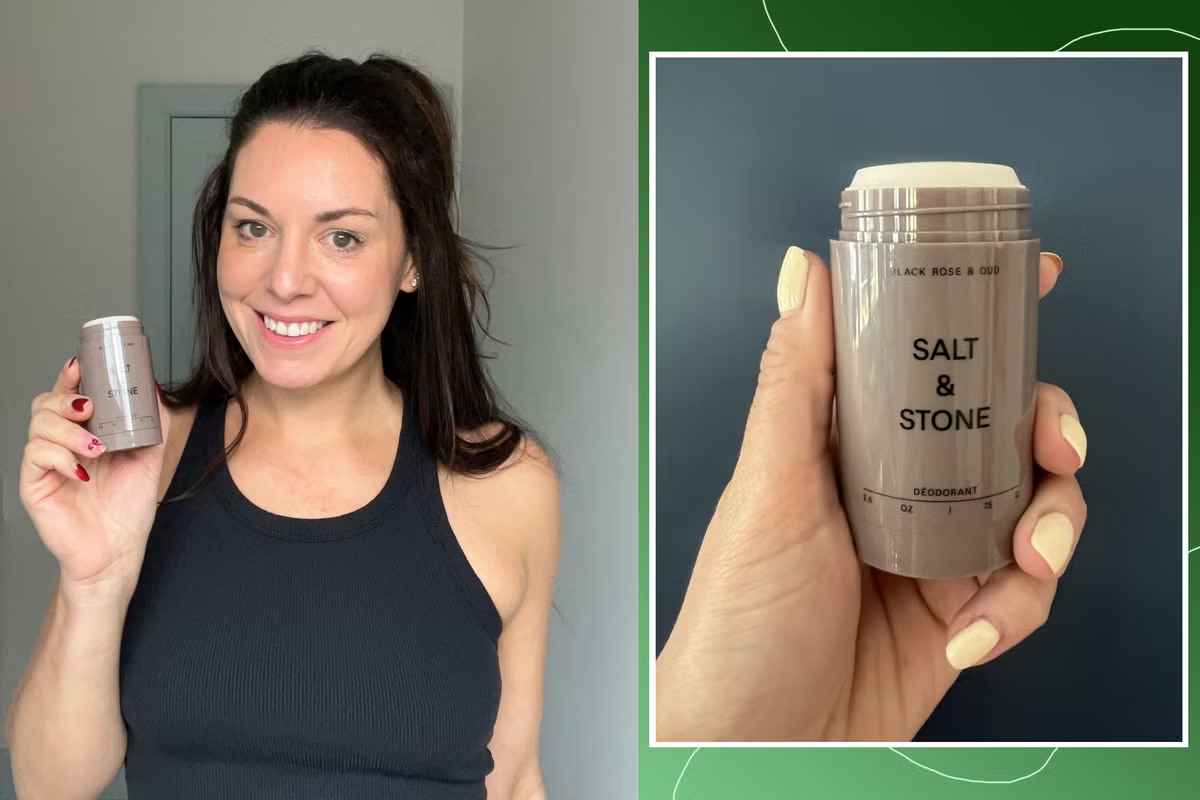
As someone who runs or lifts weights six days a week while managing a busy household and working full-time, I need a deodorant that can actually keep up with the paces I put it through. Over the years, I’ve been intrigued by natural deodorants — partly for their promise of being gentler on the body, partly because of the environmental angle — but I’ve also approached them with a healthy dose of skepticism. Many natural formulas smell nice but underperform when it comes to odor control, leaving you wondering if it’s worth the switch.
Over the past year, I set out to find a natural deodorant that could truly meet the demands of an active lifestyle. I’ve tested nearly a dozen formulas, and one has consistently risen to the top: Salt & Stone black rose and oud extra strength aluminum-free deodorant. I find myself reaching for it day after day, whether I’m hitting the gym, running errands, or juggling the chaos of family life.
With minimalist yet sophisticated packaging, elevated ingredients, and an alluring scent that’s practically replaced my perfume, this deodorant is everything you want it to be. The stick formula glides on smoothly, and the unisex fragrance is warm, woody, and fresh all at once. I love catching subtle whiffs throughout the day. It also manages to keep me largely dry and odor-free — something I can’t say about many other natural deodorants I’ve tried.
Read more: Best women’s deodorants, tried and tested
How I tested
To see how this deodorant held up in real life, I wore it during a mix of daily activities — running errands, chasing my kids, doing household chores — as well as during workouts, including weight sessions and long runs in 80- to 90-degree heat. I paid attention to how the stick applied to my skin, whether it left any residue on clothes, how the scent performed throughout the day, and how long it kept me dry and odor-free.
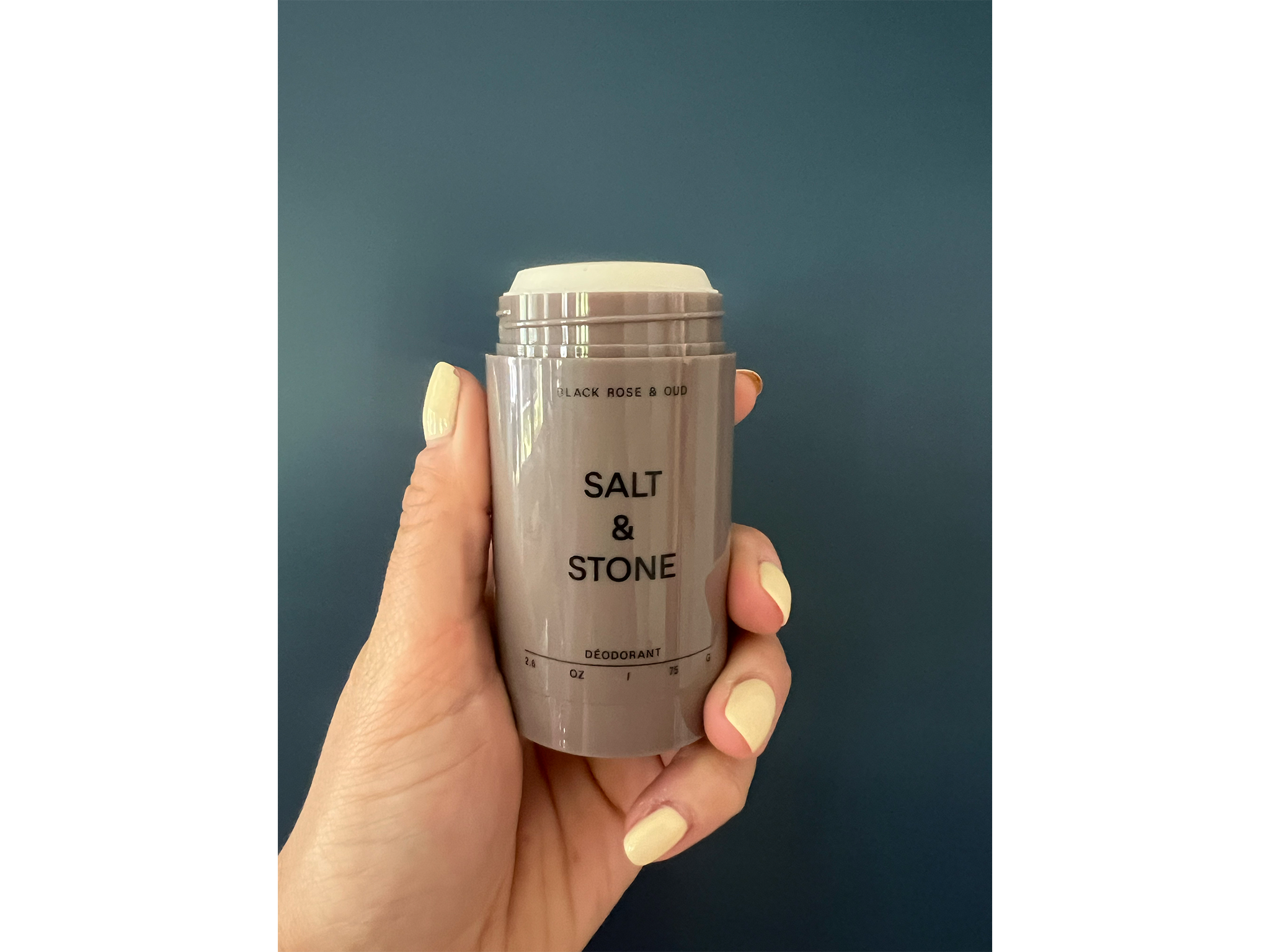 The packaging is minimalist yet sophisticated (Brigitt Earley/The Independent)
Rating: 4.5/5
Pros:
- Unisex fragrance
- Good at managing odor
- Didn’t irritate the skin
Cons:
- Didn’t keep me completely dry during high-heat workouts
One of the first things I noticed about Salt & Stone’s deodorant is how effortlessly it glides onto the skin. Unlike some stick deodorants that can feel dry and tug at the delicate underarm skin, this formula applies smoothly and evenly, leaving no sticky residue or chalky marks behind — a rarity in the natural deodorant world.
The scent is really where this formula stands out, though. The brand offers five different scents — santal and vetiver, bergamot and hinoki, black rose and oud, neroli and basil, and saffron and cedar — but my favorite is the black rose and oud. It’s warm, woody, and fresh all at once, and reads more like a perfume than a deodorant (so much so, I often don’t need to reach for my perfume at all). I love catching subtle whiffs throughout the day. And if you want even more fragrance or longevity, the brand also makes lotions, body mists, and other products you can layer.
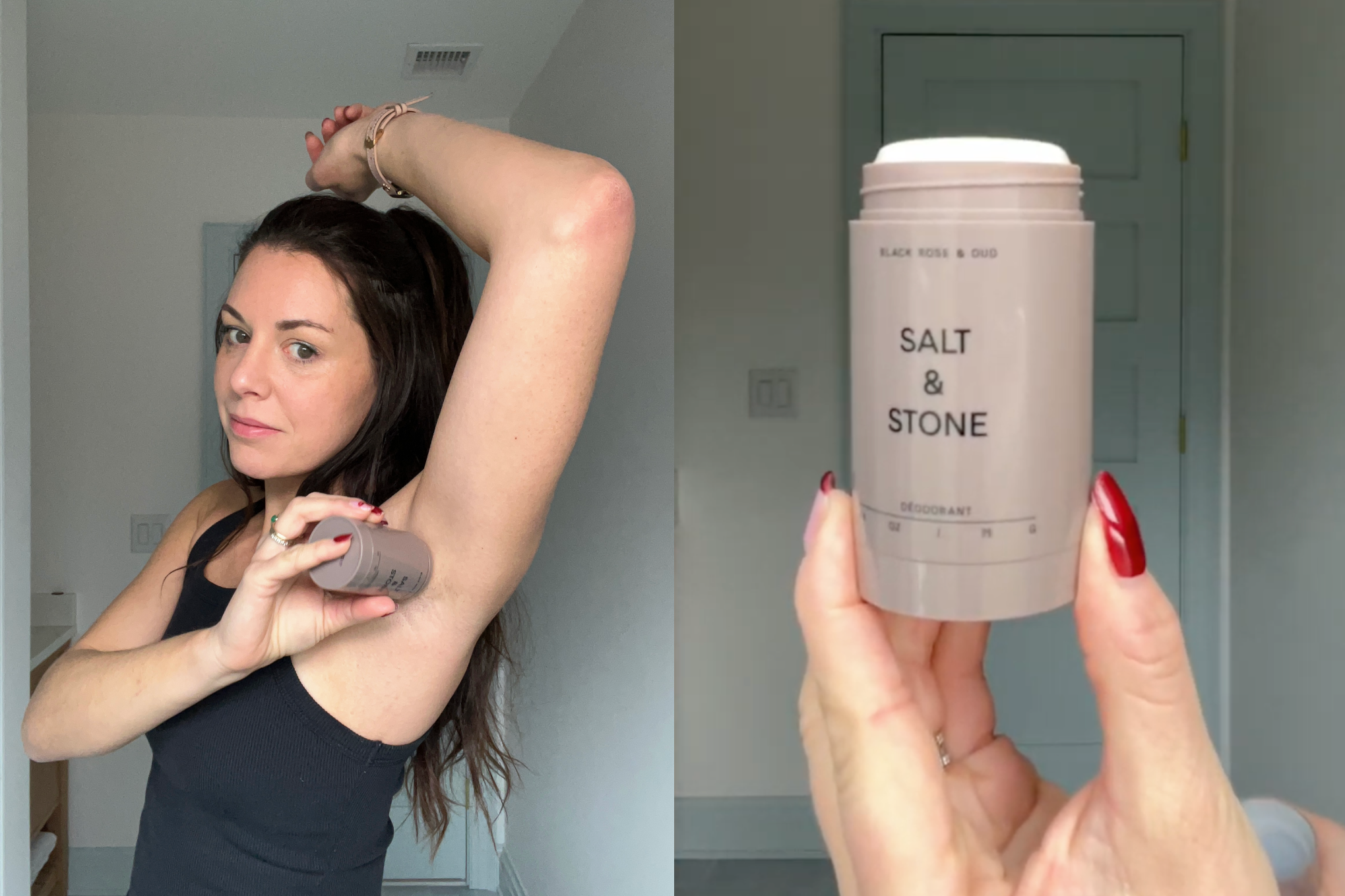 The aluminum-free deodorant doubles up as a subtle everyday fragrance (Brigitt Earley/The Independent)
Performance-wise, it manages odor impressively. I tested it on long runs in 90-degree weather in the summer, and while it didn’t keep me completely dry (a tall order!), it did control odor remarkably well. For everyday life, which is far less intense than a high-heat workout, I haven’t had any issues with sweat or smell, and rarely need to reapply midday. On marathon days that combine errands, work, childcare, and evening social events, a quick touch-up gives extra peace of mind.
Overall, Salt & Stone’s deodorant balances efficacy, wearability, and elevated scent in a way that few other deodorants do — natural or otherwise.
Is Salt & Stone extra strength aluminum-free deodorant worth it?
While $20 is a steeper price tag than a typical drugstore stick, this deodorant checks all of the boxes: smooth application, zero residue, and solid all-day odor protection. It holds up through workouts and busy days, rarely requiring a midday touch-up, and the elevated scent is a welcome bonus that helps justify the price. Even as someone who was once skeptical of natural deodorants, this one has earned a consistent spot in my everyday routine — and I’ve even converted friends. I also love that the scent doubles up as a perfume.
How I tested Salt & Stone’s aluminum-free deodorant
As a busy mom of four who also runs or lifts weights six days a week, I really put this deodorant to work. I wore it during everyday activities, including errands, household chores, time at my desk, playground hangs, and dinner dates. I also put it through the wringer during workouts, from strength training to logging three- to five-mile runs in 80- to 90-degree heat.
I’ve been testing the product for nearly a year now, and over time, I’ve paid close attention to:
- Application: I monitored how smoothly the stick glides onto the skin, whether it tugged or felt uncomfortable, and how easy it was to use overall.
- Scent: While fragrance is relatively subjective, I assessed its wearability, considering how strong it was, how long it lasted, and the variety of scent options available.
- Residue: I checked whether the deodorant left marks on clothes, felt sticky, or caused any chalky buildup on the skin.
- Efficacy: I monitored how long it kept me odor-free and whether I needed to reapply during the day.
Why you can trust Independent product reviews
Brigitt Earley has spent over 15 years reviewing beauty and personal-care products. She regularly combines advice from board-certified dermatologists with hands-on testing to find out what really works and is worth using. For a deodorant to earn her seal of approval, it has to glide on smoothly, leave no residue, and deliver on odor protection through both everyday life and intense workouts. She only recommends products she’d reach for herself day after day.

If you stumble on someone’s Instagram page and then, by some divine luck, run into them at a friend’s party, it should tell you that the universe is speaking to you. Thankfully, Kojo knew this when he eventually met Araba in person, and he definitely saw the signs the universe was throwing at him and took his chance.
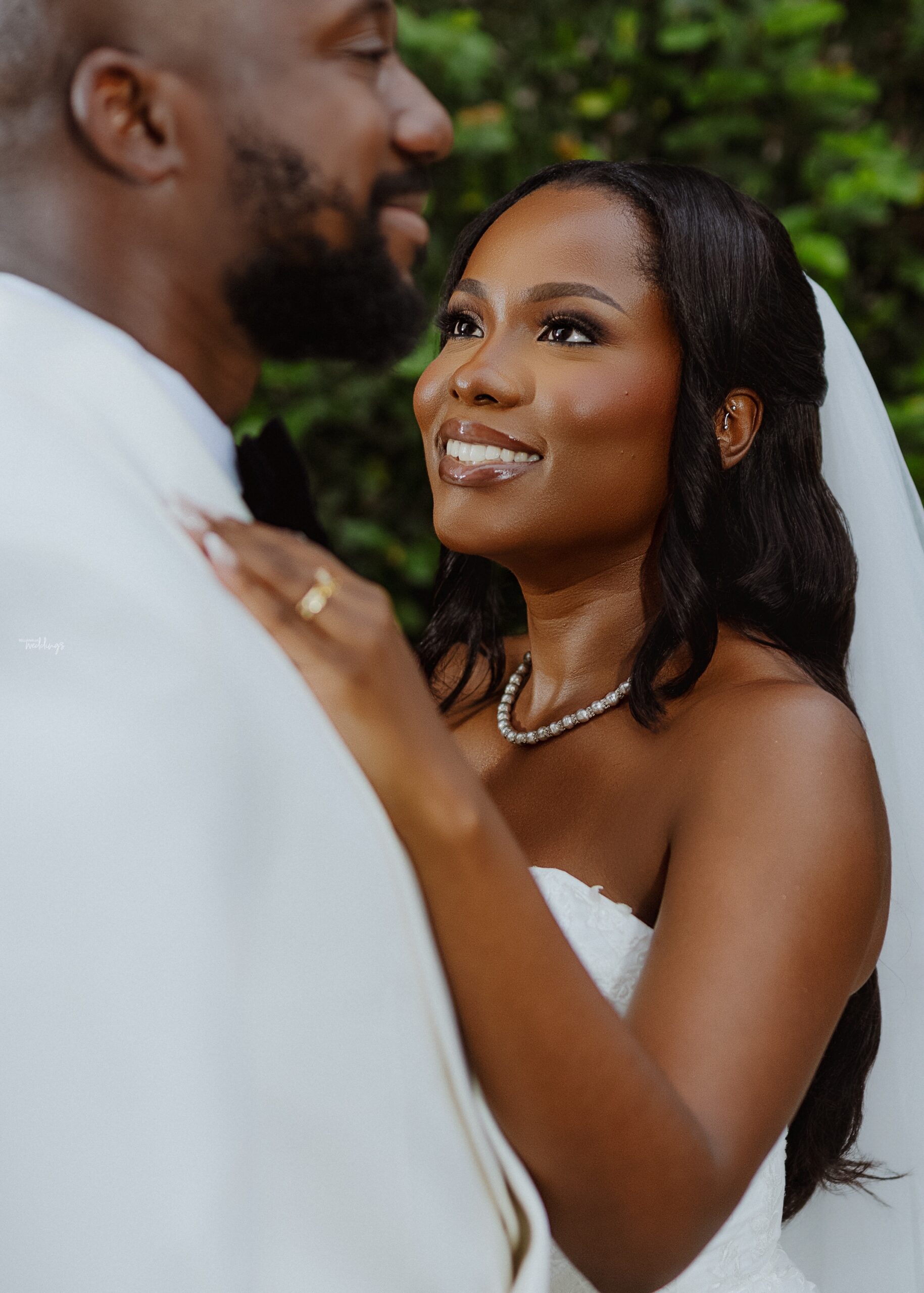
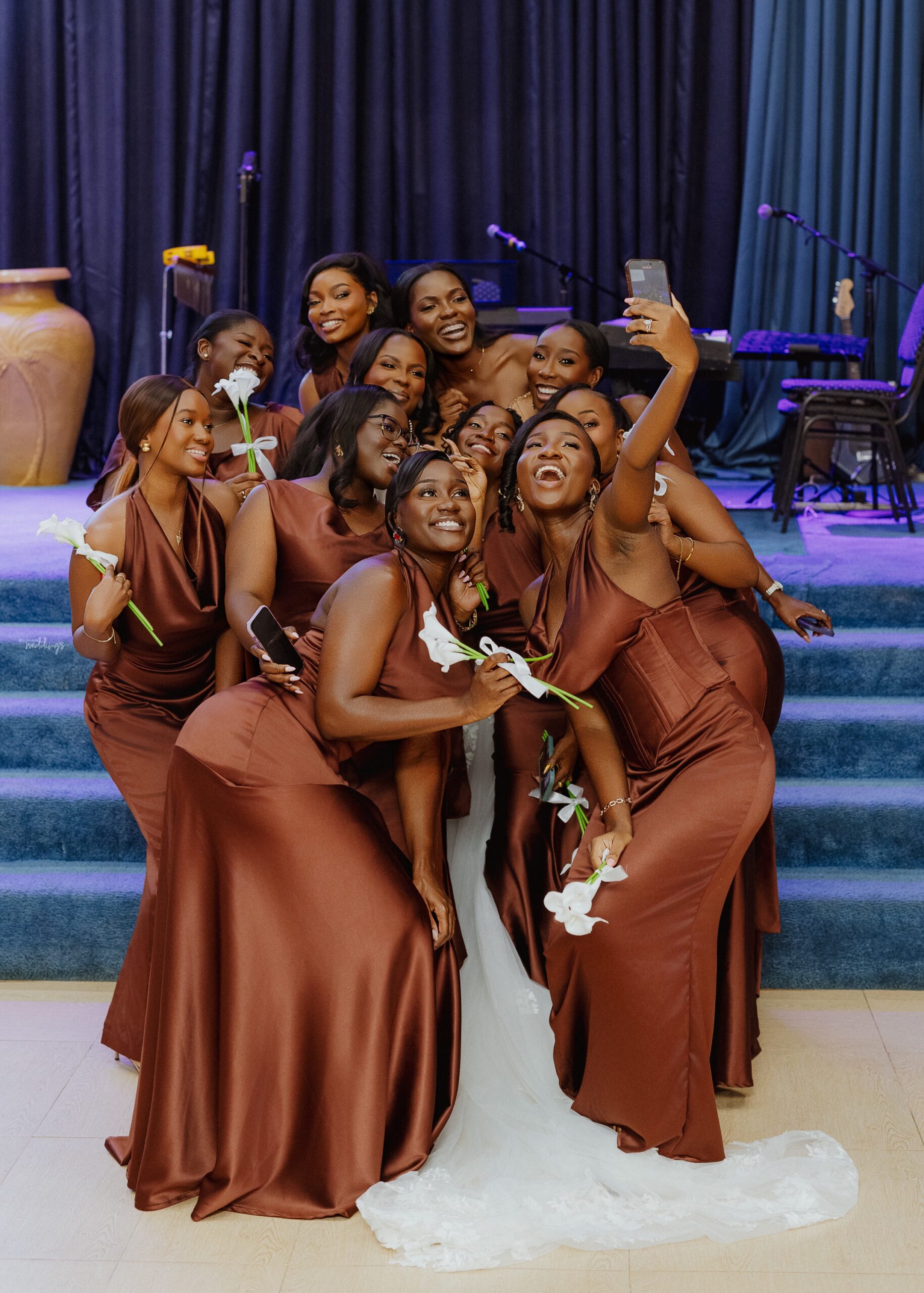
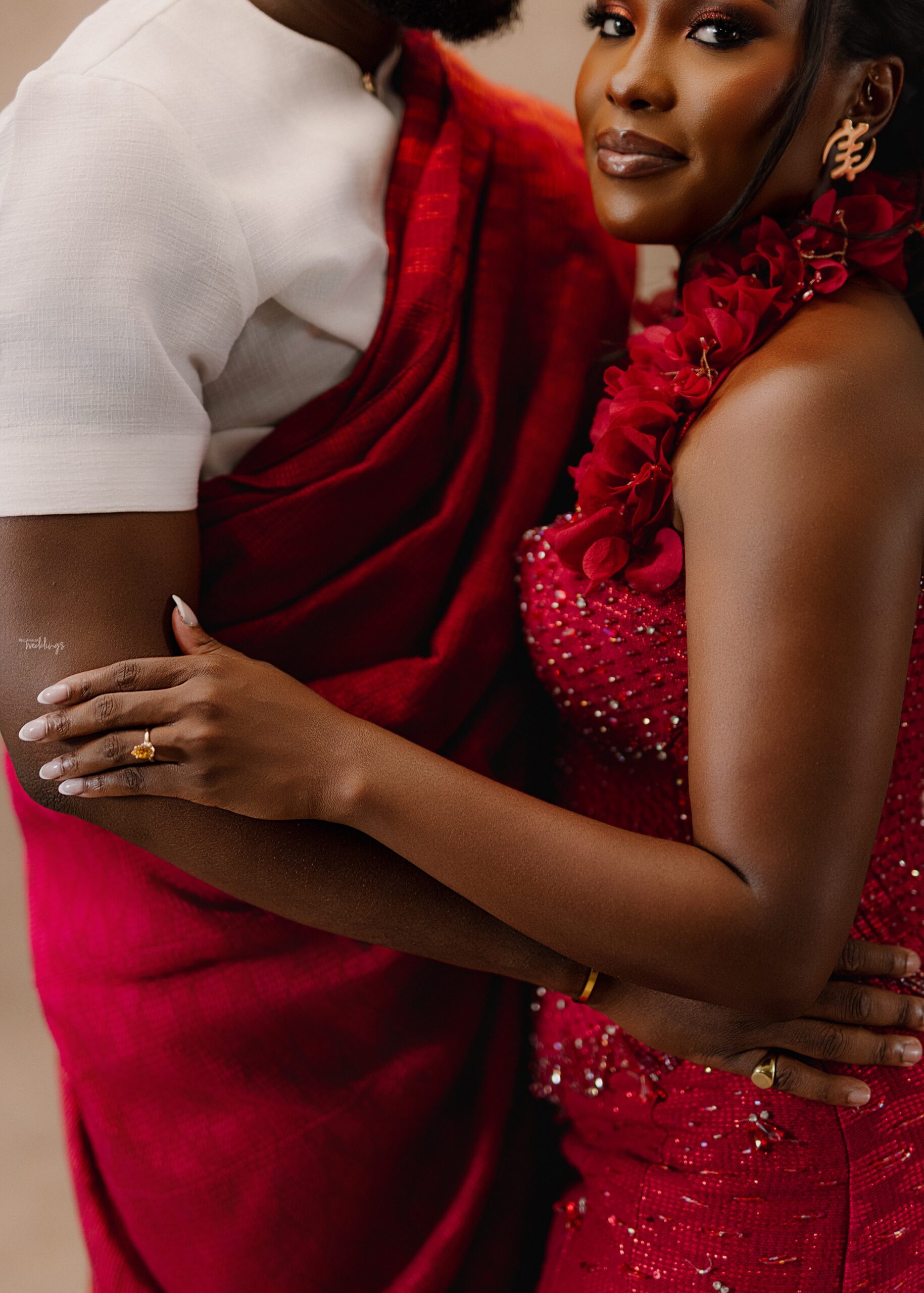
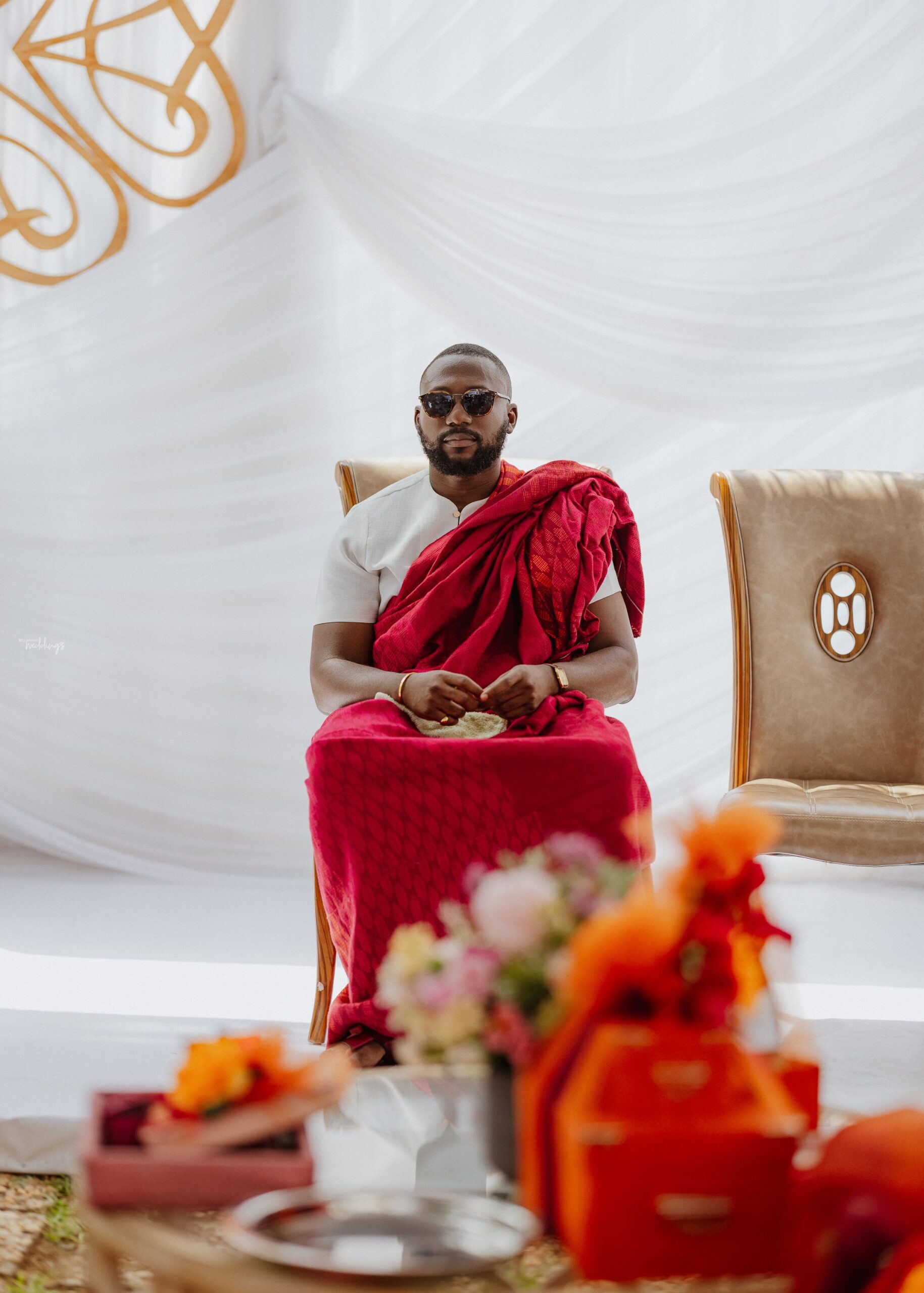
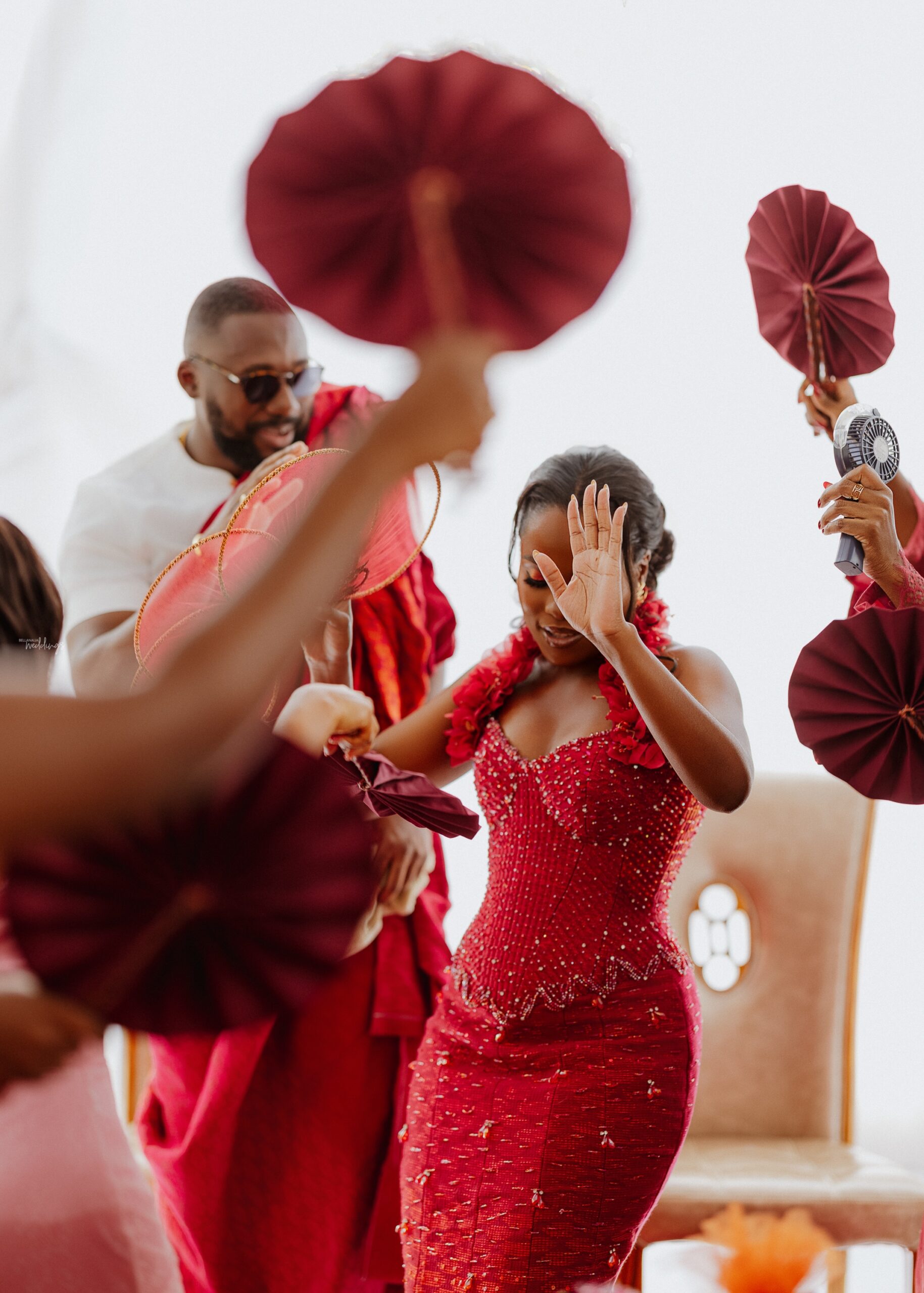
The connection was instant between them. It didn’t take long for them to start talking, and after getting to know each other, they realised how alike they were. Four years down the line, that chance encounter has led them down forever’s lane! The lovebirds sealed their love with a beautiful white wedding and a Ghanaian traditional wedding. Araba made a stunning bride in her radiant dresses, with Kojo looking effortlessly dapper in his crisp suit and vibrant traditional attire. They make a beautiful couple, and it’s in these lovely wedding photos that we get a glimpse into their sweet love. All in all, we must say that each frame absolutely warms our hearts. 😍
Enjoy their wedding photos and love story below:
How we met
By the bride, Araba:
He saw me on Instagram initially, but we met through a mutual friend. On a random Friday night, I was out with that mutual friend, and he turned up there (that was our first time meeting each other physically). We clicked instantly. We had so many things in common, we ended up just talking the whole night. He told me that evening he was going to marry me (which I couldn’t take seriously, because who says that the first time they meet someone?), but 4 years later, here we are, deeply in love and married . He was the first guy who saw all sides of me with no judgment, understood and loved me for who I was. That’s my best friend for life.









Araba and Kojo also had a Ghanaian traditional wedding, and here’s how it went!
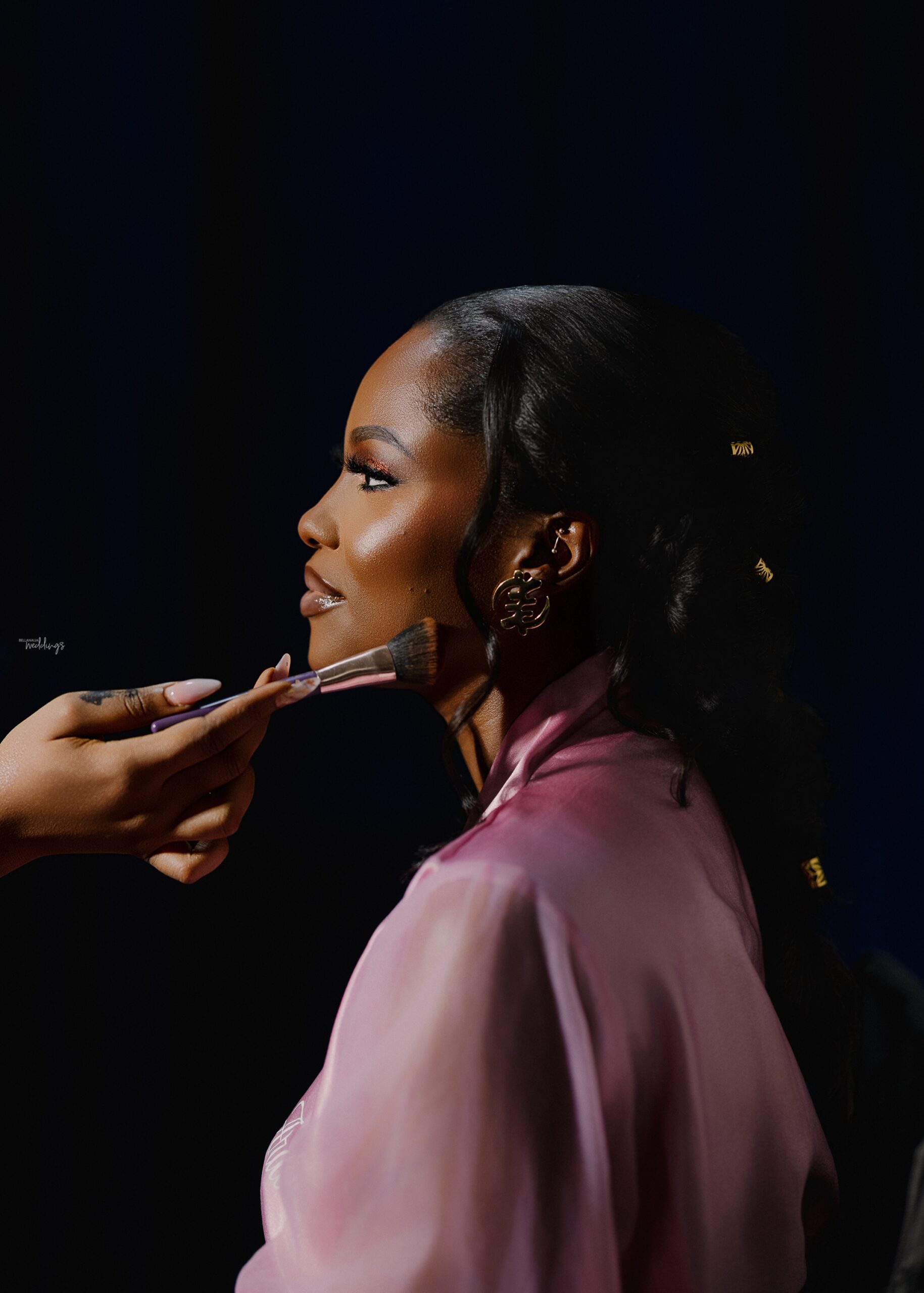












Credit
Bride @ara_bs
Makeup @polkadot_bl
Kente Dress @arabasimpsongh
Photography @jema_photography @jemaweddings

Are you planning on taking your children to visit Father Christmas this weekend?
The Independent sat down with Santa expert and founder of the UK’s only Father Christmas school, James Lovell, to find out more about what this important job entails
Mr Lovell, who created the UK’s only genuine training school for professional Father Christmases back in 1998, explained how it is vital to have the best suit, beard and of course, that sparkle in the eyes.
Mr Lovell said: “You’ve got to make sure that when you are teaching, you look at every aspect of the role.”
It is vital professional Santa’s not only look fantastic, but they also know the history of Saint Nicholas and the names and characteristics of all the reindeer.