
SCIENCE
According to Scientists, This Brazilian Plant Could Help Treat Arthritis


Alternanthera littoralis, commonly called Joseph’s Coat, is native to Brazil’s coastal regions and has a long history of use in treating microbial infections and parasitic diseases. Scientists in Brazil from the Federal University of Grande Dourados (UFGD), the State University of Campinas (UNICAMP), and São Paulo State University (UNESP) have carried out new research on […]
SOURCE PAGE












Netflix is one of the best streaming services available and Stranger Things is one of its flagship shows. So, to celebrate the final season coming to the small screen, and the holiday season too, we’ve rounded up the best Stranger Things gifts on the market.
Here, you’ll find a range of gifts from clothes to collectibles to trinkets, replicas and more. The holiday season is here and the final episodes of Stranger Things will air on Christmas Day and New Year’s Eve, so there’s never been a better time to search for the best Stranger Things gifts out there. While we haven’t reviewed any of the items we’ve highlighted, we wouldn’t include them if we didn’t recommend having them.
Best Stranger Things Gifts We Recommend
Why you can trust Space.com
Our expert reviewers spend hours testing and comparing products and services so you can choose the best for you. Find out more about how we test and review products.
Best Stranger Things merch
Best Stranger Things apparel
Best Stranger Things replicas

A paraplegic engineer from Germany blasted off on a dream-come-true rocket ride with five other passengers on Saturday, leaving her wheelchair behind to float in space while beholding Earth from on high.
Severely injured in a mountain bike accident seven years ago, Michaela Benthaus became the first wheelchair user in space, launching from west Texas with Jeff Bezos’s company Blue Origin. She was accompanied by a retired SpaceX executive also born in Germany, Hans Koenigsmann, who helped organize and, along with Blue Origin, sponsored her trip. Their ticket prices were not divulged.
An ecstatic Benthaus said she laughed all the way up – the capsule soared more than 65 miles (105km) – and tried to turn upside down once in space.
“It was the coolest experience,” she said shortly after landing.
The 10-minute space-skimming flight required only minor adjustments to accommodate Benthaus, according to the company. That’s because the autonomous New Shepard capsule was designed with accessibility in mind, “making it more accessible to a wider range of people than traditional spaceflight”, said Blue Origin’s Jake Mills, an engineer who trained the crew and assisted them on launch day.
Among Blue Origin’s previous space tourists: those with limited mobility and impaired sight or hearing, and a pair of 90-year-olds.
For Benthaus, Blue Origin added a patient transfer board so she could scoot between the capsule’s hatch and her seat. The recovery team also unrolled a carpet on the desert floor after touchdown, providing immediate access to her wheelchair, which she left behind at liftoff. She practiced in advance, with Koenigsmann taking part with the design and testing. An elevator was already in place at the launch pad to ascend the seven stories to the capsule perched atop the rocket.
Benthaus, 33, part of the European Space Agency’s graduate trainee program in the Netherlands, experienced snippets of weightlessness during a parabolic airplane flight out of Houston in 2022. Less than two years later, she took part in a two-week simulated space mission in Poland.
“I never really thought that going on a spaceflight would be a real option for me because even as like a super healthy person, it’s like so competitive, right?” she told the Associated Press ahead of the flight.
Her accident dashed whatever hope she had. “There is like no history of people with disabilities flying to space,” she said.
When Koenigsmann approached her last year about the possibility of flying on Blue Origin and experiencing more than three minutes of weightlessness on a space hop, Benthaus thought there might be a misunderstanding. But there wasn’t, and she immediately signed on.
It’s a private mission for Benthaus with no involvement by the European Space Agency (ESA), which this year cleared reserve astronaut John McFall, an amputee, for a future flight to the International Space Station. The former British Paralympian lost his right leg in a motorcycle accident when he was a teenager.
An injured spinal cord means Benthaus can’t walk at all, unlike McFall, who uses a prosthetic leg and could evacuate a space capsule in an emergency at touchdown by himself. Koenigsmann was designated before flight as her emergency helper; he and Mills lifted her out of the capsule and down the short flight of steps at flight’s end.
“You should never give up on your dreams, right?” Benthaus urged after touchdown.
Benthaus was adamant about doing as much as she could by herself. Her goal is to make not only space accessible to disabled people, but to improve accessibility on Earth too.
While getting lots of positive feedback within “my space bubble”, she said outsiders aren’t always as inclusive.
“I really hope it’s opening up for people like me, like I hope I’m only the start,” she said.
Besides Koenigsmann, Benthaus shared the ride with business executives and investors, and a computer scientist. They raised Blue Origin’s list of space travelers to 86.
Bezos, the billionaire founder of Amazon, created Blue Origin in 2000 and launched its first passenger spaceflight in 2021. The company has since delivered spacecraft to orbit from Cape Canaveral, Florida, using the bigger and more powerful New Glenn rocket, and is working to send landers to the moon.

A rare dinosaur discovery sheds new light on the evolution of flight. Fossils of dinosaurs found with well-preserved feathers suggest that some of these animals were no longer capable of flight. The researchers explain that even a detail as subtle as how feathers are replaced can dramatically reshape our understanding of how flight evolved, revealing […]
SOURCE PAGE

As Avatar: Fire and Ash hits cinemas worldwide, we figured now is the perfect time to step back and take a look at director James Cameron’s entire sci-fi slate, ranking them from worst to best.
The Canadian filmmaker has carved out an iconic status in the movie industry for his visual effects artistry, incredible research, and extraordinary storytelling – and while The Terminator might be the first sci-fi title that comes to mind, it actually wasn’t his debut.
You may like
We’re not adding Avatar: Fire & Ash to the list just yet — we need to stew on it before we can firmly slot it into the rankings — but otherwise, here’s every James Cameron sci-fi movie ranked, worst to best.
6. The Abyss
The Abyss | Remastered 4K In Theaters | Official Trailer – YouTube

Watch On
Release date: August 9, 1989 | Cast: Ed Harris, Mary Elizabeth Mastrantonio, Michael Biehn | Rotten Tomatoes: 76% on the Tomatometer
The deep sea is scary enough, but you know what makes it even scarier? Finding aliens down there. Unfortunately for Ed Harris and Mary Elizabeth Mastrantonio, — starring as estranged husband and wife, Bud and Lindsey — their passion for diving takes them on a horrifyingly claustrophobic adventure to the depths of the ocean.
When a nuclear submarine disappears, the crew of a civilian oil rig goes on a search and rescue mission with jaw-dropping consequences. For James Cameron, who’d already risen to fame with The Terminator and Aliens, it was a watery shift that no one saw coming. And, unfortunately, it wasn’t a massive hit at the time (though it still won an Oscar for best visual effects).
More recently, though, it’s become a well-loved sci-fi pick, with a revised (and extended to a hefty 171 minutes) version that viewers are even more eager to dive right into and experience the unexpected.
Cameron tells a fantastically tense sci-fi tale, gripping audiences with the heart-wrenching relationship of Bud and Lindsey, and the romantic tension that builds throughout is a welcome reprieve from the intense water-dwelling extraterrestrials. Nothing like a fear for human life to put your love into perspective, right?
You may like
5. Avatar: The Way of Water
Avatar: The Way of Water | Official Trailer – YouTube

Watch On
Release date: December 16, 2022 | Cast: Sam Worthington, Zoe Saldana, Sigourney Weaver, Stephen Lang | Rotten Tomatoes: 76% on the Tomatometer
13 years after Avatar stormed onto the big screen, the sequel arrived. And it says a lot about Cameron’s abilities as a director that it felt like no time had passed at all. Jake Sully has fully integrated himself into his life as a Na’vi, still with Neytiri, and now with a family to look after. Unfortunately, they don’t get their ‘happily ever after’ as humanity returns to Pandora. So instead, they get to star in another exhilarating action movie.
Once again, Cameron intertwines the pillars of his directorial work: outstanding visuals, epic storytelling, and an unwavering ability to create tension. VFX is the cornerstone of a movie like Avatar, transforming actors into their Na’vi form and formulating their lives in a whole new world. Cameron’s always had bigger plans for Avatar, though, telling Variety: “We were working on three scripts and then it turned into four.”
In fact, Avatar: Fire and Ash is the second half of the original The Way of Water script. With plans for another sequel, that kind of freedom and ability to plan ahead is something most directors can only dream of. For Cameron, it’s a well-deserved reality.
4. The Terminator
THE TERMINATOR (1984) | Official Trailer | MGM – YouTube

Watch On
Release date: October 26, 1984 | Cast: Arnold Schwarzenegger, Michael Biehn, Linda Hamilton | Rotten Tomatoes: 90% on the Tomatometer
We’ve been talking about The Terminator for years. I even ranked The Terminator movies back in 2022 – and it’s still an absolute pleasure to discuss. And yet, it’s in fourth place on this list, a testament to just how strong Cameron’s sci-fi chops are.
Arnold Schwarzenegger stars as The Terminator, a time-travelling cyborg on a mission to take out one Sarah Connor. Why? Well, because one day she’s destined to become the mother of humankind’s salvation, and as far as The Terminator is concerned, that can’t happen.
Not only is The Terminator a bona fide sci-fi classic, but it’s the first major work of Cameron’s career, and its success was the spark to sent him on the path to directorial superstardom. Up until this point, Cameron had been mainly working in visual effects, and he poured everything he’d learned up to this point into The Terminator, bringing the entire story to life in a way that’s still incredible to watch to this day.
3. Avatar
Avatar | Official Trailer (HD) | 20th Century FOX – YouTube

Watch On
Release date: December 18, 2009 | Cast: Sam Worthington, Zoe Saldaña, Sigourney Weaver, Michelle Rodriguez | Rotten Tomatoes: 81% on the Tomatometer
Cinematically breathtaking, deeply immersive, and the highest-grossing movie of all time, Avatar is a piece of cinematic history. It feels almost criminal to place it third, but perhaps Cameron shouldn’t be so good at directing sci-fi movies. Avatar is the first movie I saw in 3D in the cinema, and I distinctly remember feeling like if I just reached out, I could touch the falling leaves of Pandora.
Avatar sees Jake Sully, a paraplegic veteran, on a mission to the moon Pandora, in an entirely new form, adopting that of the Na’vi people. But while he’s there to gather a rare resource, he falls in love and vows to protect Pandora and the Na’vi as his own.
The groundbreaking use of 3D technology was one of the main reasons Avatar was such and is still such a huge success, but beyond that, it just tells such a compelling and relatable tale.
2. Terminator 2: Judgment Day
Terminator 2: Judgment Day (1991) Trailer #1 | Movieclips Classic Trailers – YouTube

Watch On
Release date: July 3, 1991 | Cast: Arnold Schwarzenegger, Linda Hamilton, Robert Patrick | Rotten Tomatoes: 91% on the Tomatometer
Terminator 2: Judgment Day holds the top spot amongst the best Terminator movies, and it’s also arguably one of the best sequels to any movie, ever. Acting as Cameron’s own conclusion to the Terminator franchise (disputes over rights saw his directorial ties severed after this), it’s a sequel that took everything about the first movie and made it even better.
In Terminator 2, Arnie returns as the T-800, but this time as a reprogrammed good cyborg protecting a young John Connor. That leaves a gap for a bad cyborg to take his place, and that’s where Robert Patrick’s T-1000 comes into play.
Action-packed and full of robotic terror, Terminator 2 is the T-800’s redemption arc perfectly translated onto the big screen with Cameron’s dedication to telling a perfectly paced story. And, by this point, Cameron has sci-fi thrills down to a tee, building on his work from the first Terminator movie. It’s not quite the best sci-fi movie he’s ever made, though; that title goes to…
1. Aliens
Aliens (1986) Trailer #1 | Movieclips Classic Trailers – YouTube

Watch On
Release date: July 18, 1986 | Cast: Sigourney Weaver, Michael Biehn, Carrie Henn, Bill Paxton | Rotten Tomatoes: 94% on the tomatometer
Stop your grinnin’ and drop your linen! You knew it was going to be Aliens.
Picking up a sequel when you didn’t direct the previous title is a hard task, but Cameron’s bold decision gave us a bigger and (arguably) better Alien movie than the original. In fact, between this and T2, Cameron might be the best sequel director out there.
For Aliens, the xenomorphs are back. We all knew it would happen, but none more so than Ellen Ripley (Sigourney Weaver), who returns after a deep freeze to find that big corporation Weyland-Yutani is very close to rattling their nest again.
And here comes Cameron’s absolute genius in the director’s chair, building on the sci-fi horror of the first with visually terrifying xenomorphs, suffocating tension, and world-building prowess that truly takes you away from reality. Ellen Ripley may have started as a character that Cameron didn’t have a say in, but he transformed her role into an Oscar nomination-worthy performance, cemented in a sci-fi world that you’d be primed to visit again and again.

Holiday Special 2025 – A Look Back at 2025 in Space! – YouTube

Watch On
On Episode 190 of This Week In Space, Rod Pyle and Tariq Malik look back at the past year in space — its ups, its downs, its all-arounds.
But there are a lot of other stories and we’ve done our best to stuff as many as we can into this virtual Christmas space stocking! Please join us for this year-end roundup!
You may like
Download or subscribe to this show at: https://twit.tv/shows/this-week-in-space.
Get episodes ad-free with Club TWiT at https://twit.tv/clubtwit
Space news of the week
Model Falcon 9!
Finally, did you know you can launch your own SpaceX rocket? Model rocket maker Estes’ stunning scale model of a Falcon 9 rocket that you can pick up now. The launchable model is a detailed recreation of the Falcon 9 and retails for $149.99. You can save 10% by using the code IN-COLLECTSPACE at checkout, courtesy of our partners collectSPACE.com.
About This Week In Space
Join Rod Pyle and Tariq Malik from Space.com as they tackle those questions and more each week on Friday afternoons. You can subscribe today on your favorite podcatcher.
Host of This Week In Space on TWiT Host of This Week In Space on TWiTRod Pyle
Social Links Navigation
Rod Pyle is an author, journalist, television producer and Editor-in-Chief of Ad Astra magazine. He has written 18 books on space history, exploration, and development, including Space 2.0, Innovation the NASA Way, Interplanetary Robots, Blueprint for a Battlestar, Amazing Stories of the Space Age, First On the Moon, and Destination Mars
In a previous life, Rod produced numerous documentaries and short films for The History Channel, Discovery Communications, and Disney. He also worked in visual effects on Star Trek: Deep Space Nine and the Battlestar Galactica reboot, as well as various sci-fi TV pilots. His most recent TV credit was with the NatGeo documentary on Tom Wolfe’s iconic book The Right Stuff.
This Week In Space co-host This Week In Space co-hostTariq Malik
Social Links Navigation
Responsible for Space.com’s editorial vision, Tariq Malik has been the Editor-in-Chief of Space.com since 2019 and has covered space news and science for 18 years. He joined the Space.com team in 2001, first as an intern and soon after as a full-time spaceflight reporter covering human spaceflight, exploration, astronomy and the night sky. He became Space.com’s managing editor in 2009. As on-air talent has presented space stories on CNN, Fox News, NPR and others.
Tariq is an Eagle Scout (yes, he earned the Space Exploration merit badge), a Space Camp veteran (4 times as a kid, once as an adult), and has taken the ultimate “vomit comet” ride while reporting on zero-gravity fires. Before joining Space.com, he served as a staff reporter for The Los Angeles Times covering city and education beats. He has journalism degrees from the University of Southern California and New York University.
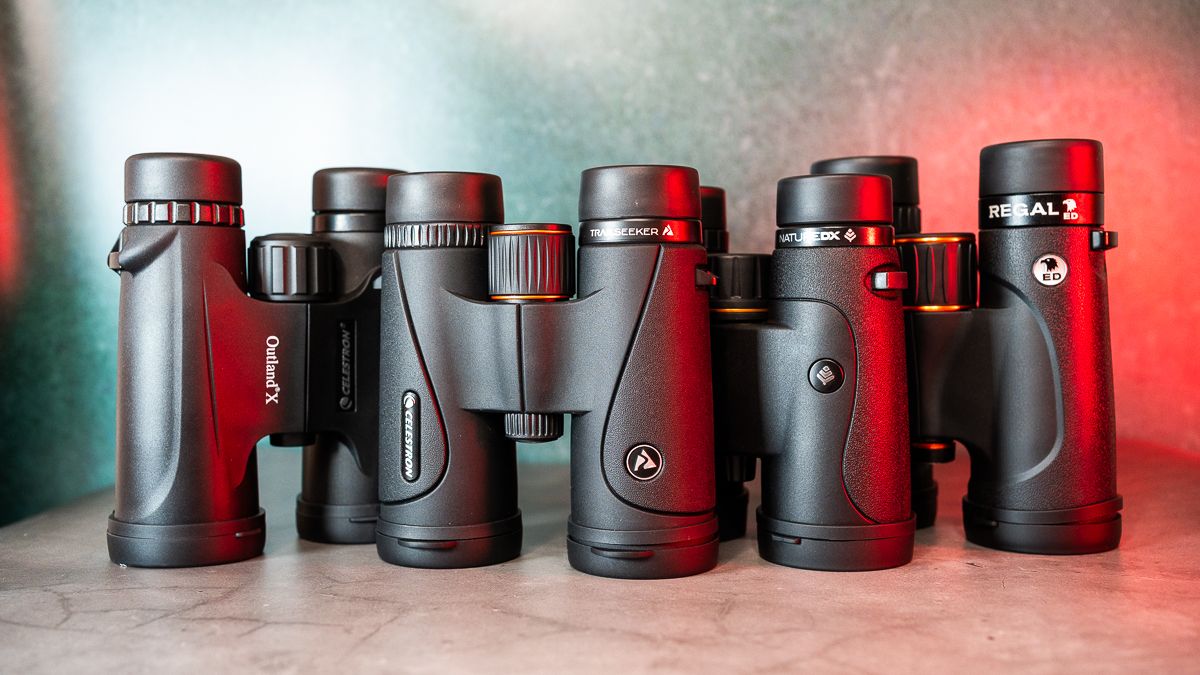
If you’ve ever shopped for binoculars as a beginner, you’ll have probably noticed that they all look similar, they’re packed full of jargon about coatings and prisms, and the price tags range from “that’s cheaper than going out for dinner” to “I could buy a used car for that”. This is particularly apparent in the world of 10×42 binoculars — the Goldilocks size that’s just right for just about everything, from spotting birds in the garden to sweeping across the night sky.
So why should you go for a 10×42? In short, it’s the jack-of-all-trades of binocular specs; ideal if you want to look at a variety of general subjects without necessarily specializing in a particular niche. The 10x magnification gets you close enough to see detail without resulting in too much shake, and the 42mm objective lenses gather plenty of light without weighing you down. It’s no surprise that this size is the best seller across almost every brand.
But here’s the catch: not all 10x42s are created equal. The glass, coatings and materials can be the difference between “hey look, there’s a bird” to “wow, I can see every feather”. Celestron offers six models across four different ranges in this size — Outland X, Nature DX (plus an ED version), TrailSeeker (plus an ED version) and Regal ED. These range from budget-friendly to “treat yourself,” with each step up adding a little more sophistication (and a little more strain on your wallet).
You may like
Meet the contenders
The budget model
The people’s favorite
The sweet spot
The middle child
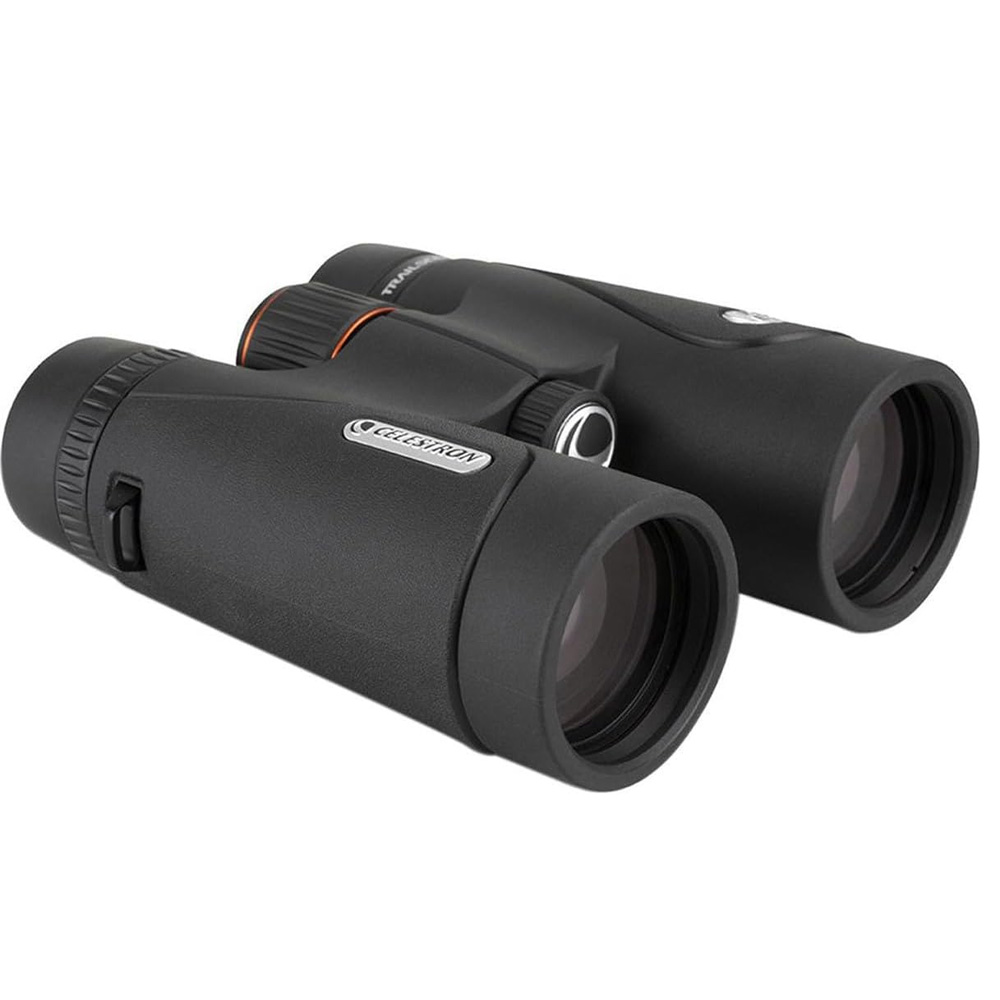
The awkward overachiever
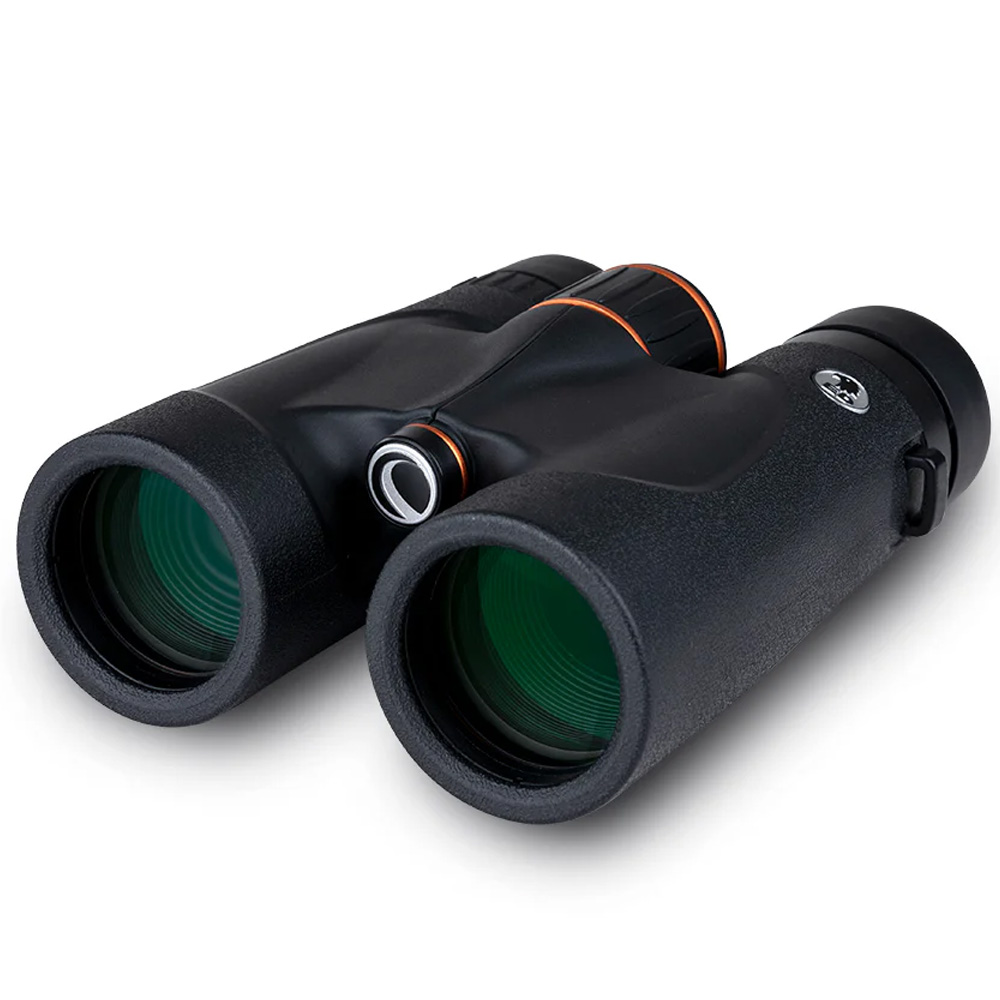
The one for serious birders
How the tech evolves as you spend more
Image 1 of 3
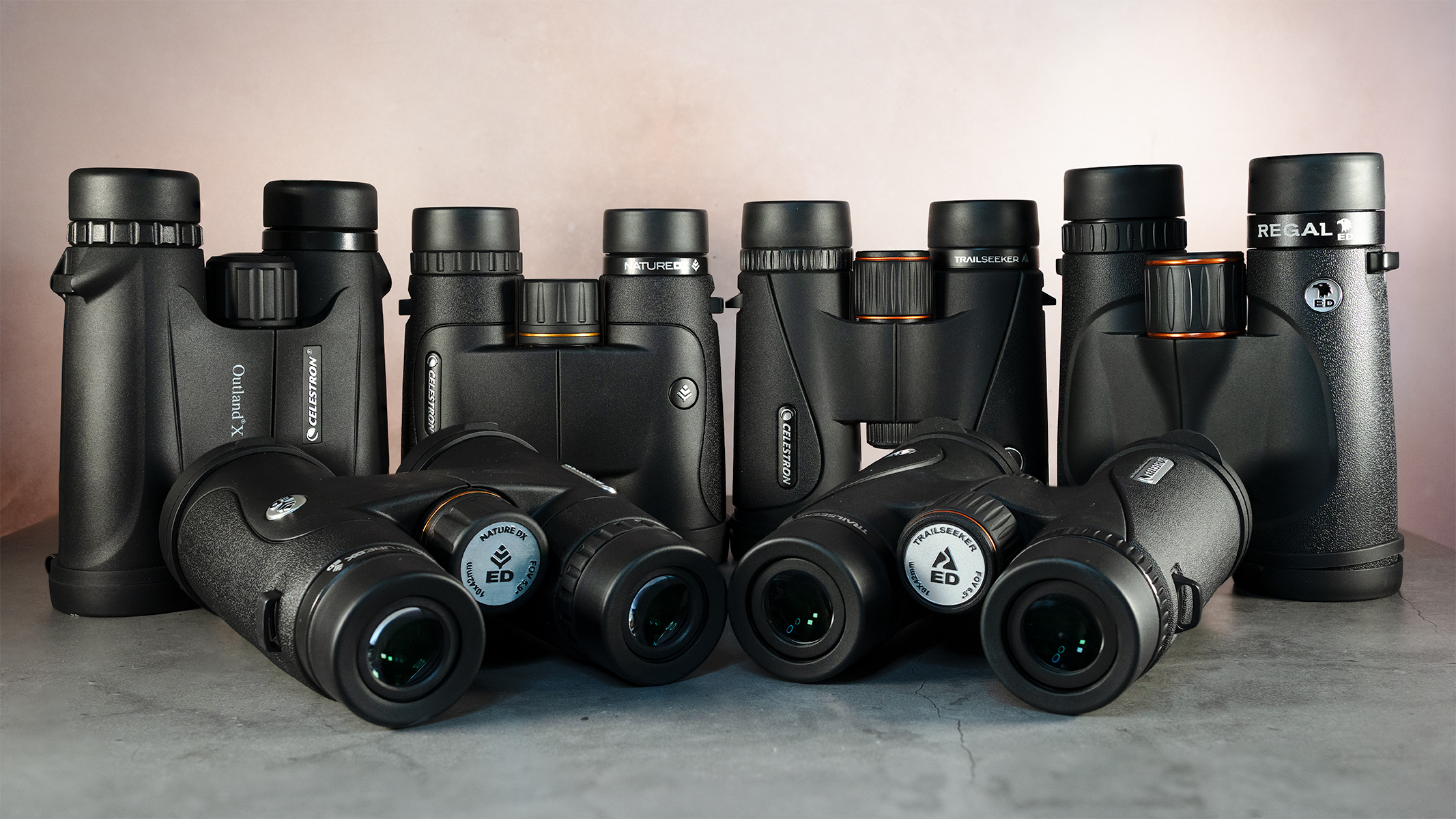 While all of Celestron’s 10×42’s are similar in size and weight, some are more comfortable than others.(Image credit: Kimberley Lane)
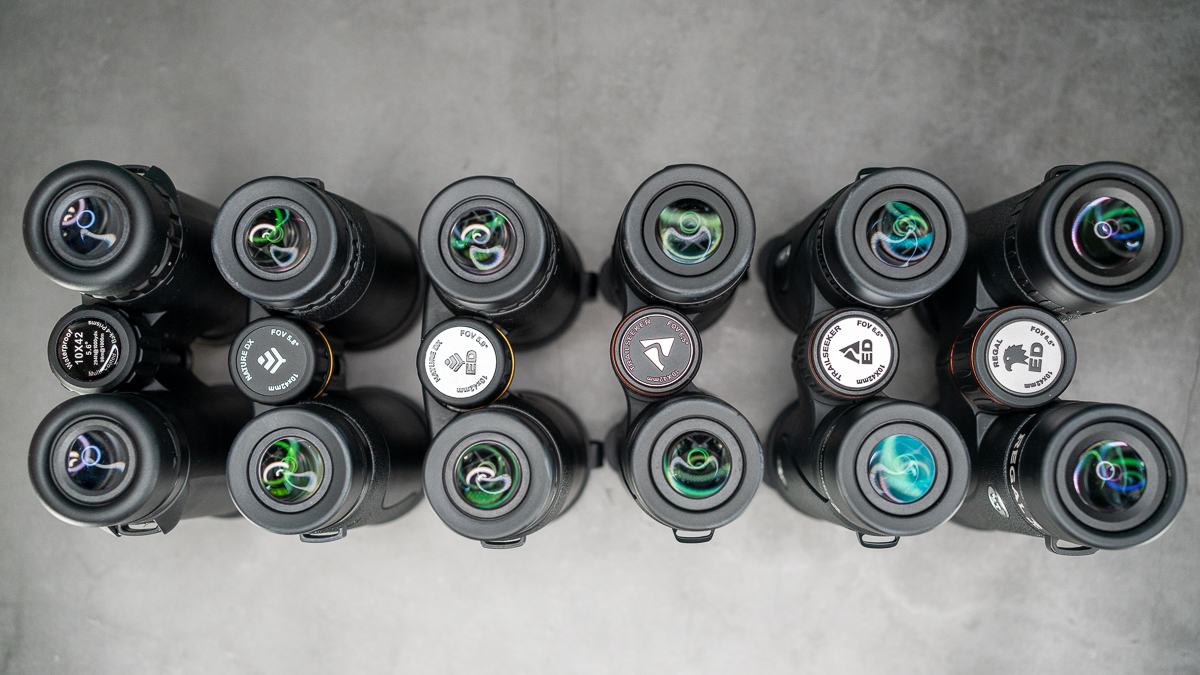 Three of the six models boast ED glass.(Image credit: Kimberley Lane)
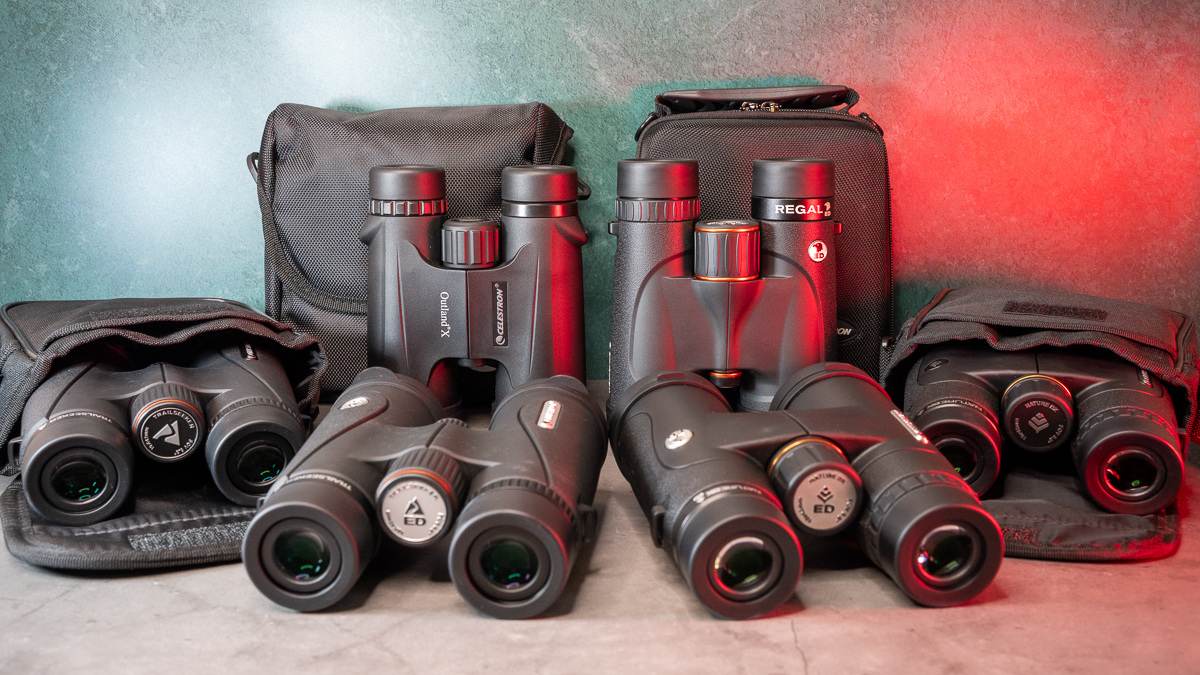 They’re the ideal size to slip into a bag or a coat pocket, or carry them in the included carry cases.(Image credit: Kimberley Lane)
We’ve all heard the saying “you get what you pay for.” This is particularly true when it comes to optics. At first glance, all of these models wear the same 10×42 badge. But binoculars are like cakes: it’s the same flour and sugar, but you get different results based on the quality of the ingredients.
Coatings
The Outland X makes do with basic multi-coated lenses, which are fine for daytime use but lacking after dark. Nature DX upgrades this to fully multi-coated optics with phase-coated prisms, which sharpen the contrast and reduce glare. TrailSeeker and Regal ED both combine phase and dielectric prism coatings with fully coated lenses, delivering the clearest, brightest view of the lot.

When testing the sharpness, we looked at the same set of houses to determine where the image started to soften out towards the edges of the frame. (Image credit: Kimberley Lane)
Glass
ED (Extra-low Dispersion) glass keeps different wavelengths of light focused together, reducing the purple or green fringing that appears around bright edges. The Outland X series has no ED option, while the Nature DX and TrailSeeker offer both standard and ED models. The Regal is only sold as an ED version, and its flat-field technology also maintains edge-to-edge sharpness.
Build quality and materials
The Outland X and Nature DX models are built with polycarbonate bodies clad in rubber armor — durable enough, but can feel a little plasticky. The TrailSeeker and Regal series upgrade to a magnesium chassis and rubber armor, which feels tougher yet lighter in extended use. However, all six models are waterproof and nitrogen-purged to prevent fogging.
Results
6th place: Celestron Outland X
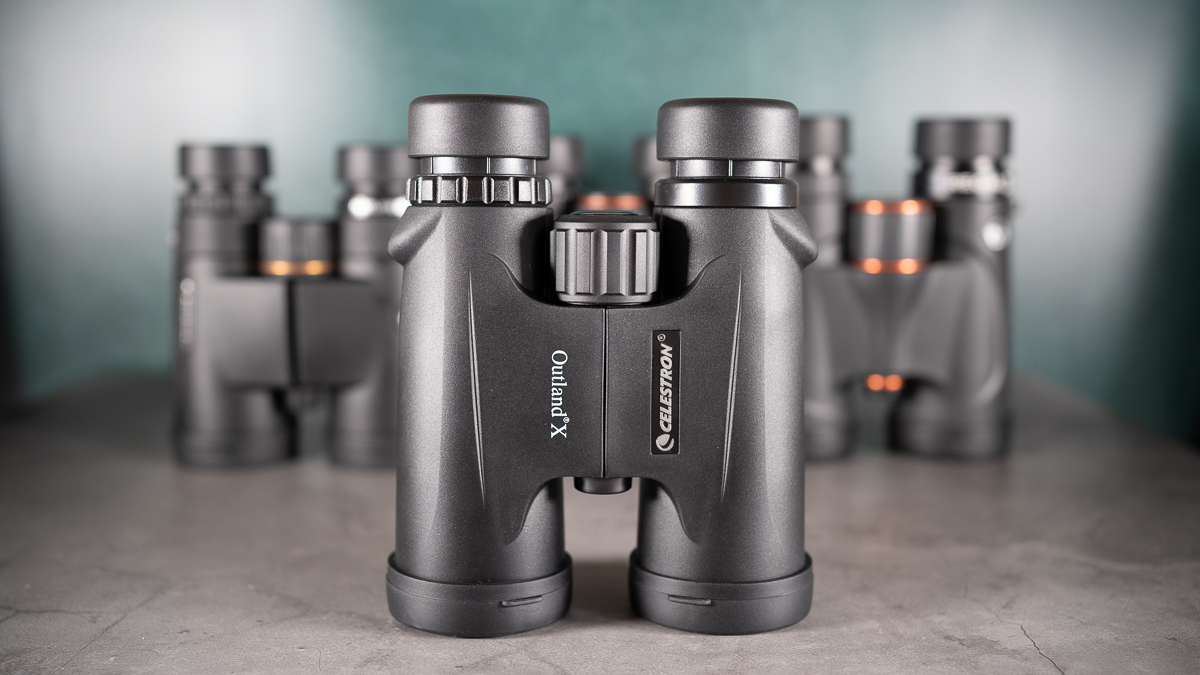
The Celestron Outland X is the most affordable of the six models. (Image credit: Kimberley Lane)
The Celestron Outland X series is designed for outdoor enthusiasts who want a rugged, durable pair of binoculars that won’t cost the earth. If you aren’t too bothered about having amazing detail, contrast or overall image quality, the Outland X will fit the bill if you absolutely cannot stretch your budget.
During our tests, they unsurprisingly performed the worst in most cases, but that’s to be expected in a budget pair of binoculars. If you were to look through them on their own, they appear to do the job at first glance, but when you compare them directly to the other 10×42 models, it becomes obvious where they fall short.
You may like
Image 1 of 2
 We found them satisfactory for casual use, but they fell short compared to the others.(Image credit: Kimberley Lane)
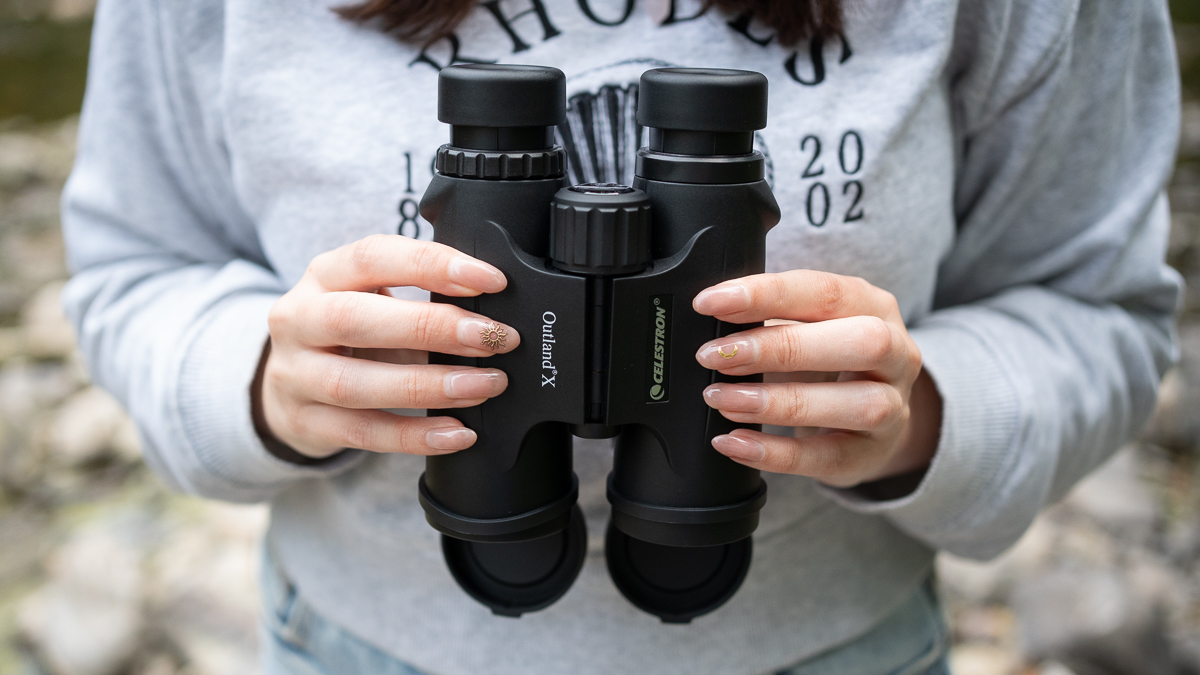 The addition of a textured grip would have been improved their handling, but overall, they were fine.(Image credit: Kimberley Lane)
There was noticeable chromatic aberration around high-contrast subjects, and the overall picture was softer and duller than the rest of the lineup. The build quality feels solid yet lightweight, although it lacks some of the premium features you’ll find on the more expensive models. Still, it’s waterproof and nitrogen-purged to prevent fogging, which is important for an outdoor binocular. The focus wheel is fairly smooth, although the diopter is noticeably stiffer than the other models.
Overall, we’d recommend the Outland X series if you just want to get a closer look at subjects without spending too much money, and you aren’t bothered about having highly detailed views. We’re not sure we’d pay $119 for the 10×42, so it might be worth waiting for Black Friday to take advantage of a deal, or downsizing to the 8×25 or 10×25 if you don’t need to use them in low light.
Would we buy them? No.
Today’s best Celestron Outland X 10×42 deals
5th place: TrailSeeker
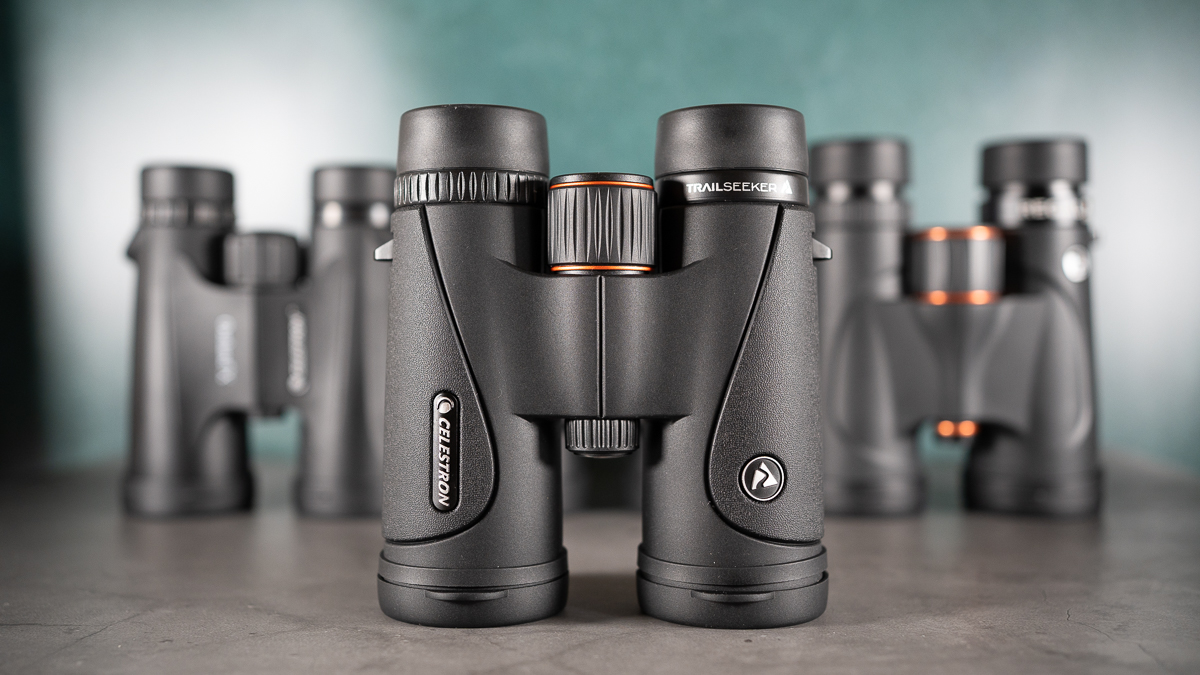
The TrailSeeker had lots of subtle improvements over the standard Nature DX, but the price was a dealbreaker. (Image credit: Kimberley Lane)
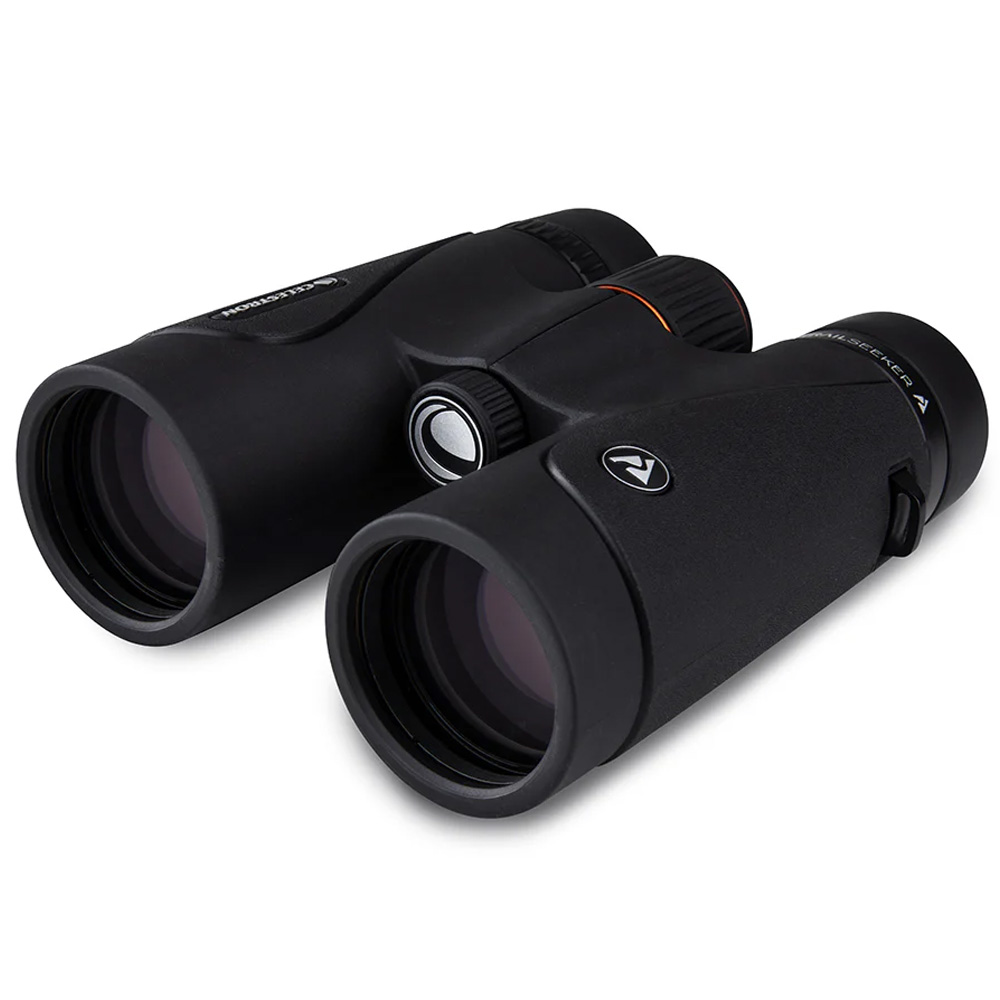
In the TrailSeeker, we see the introduction of phase and dielectric-coated prisms. The latter enables more light to be reflected off the prism, resulting in a brighter image than the Nature DX and Outland X, which only have phase coating. The combination of phase and dielectric maximizes light transmission, making this pair better suited for wildlife observation in low light and stargazing. The differences in brightness, sharper image quality and reduced glare compared to the Nature DX are small, but noticeable. The build has also been upgraded to lightweight and durable magnesium alloy.
When we tested them out at a nature reserve, we noticed a fair amount of chromatic aberration when observing ducks on a pond, which was completely eliminated once we switched to a pair with ED glass. There’s a bit of fringing around the moon, and we enjoyed using them for stargazing as they are comfortable to use for long periods.
Image 1 of 2
 We found the TrailSeeker one of the more comfortable pairs to use.(Image credit: Kimberley Lane)
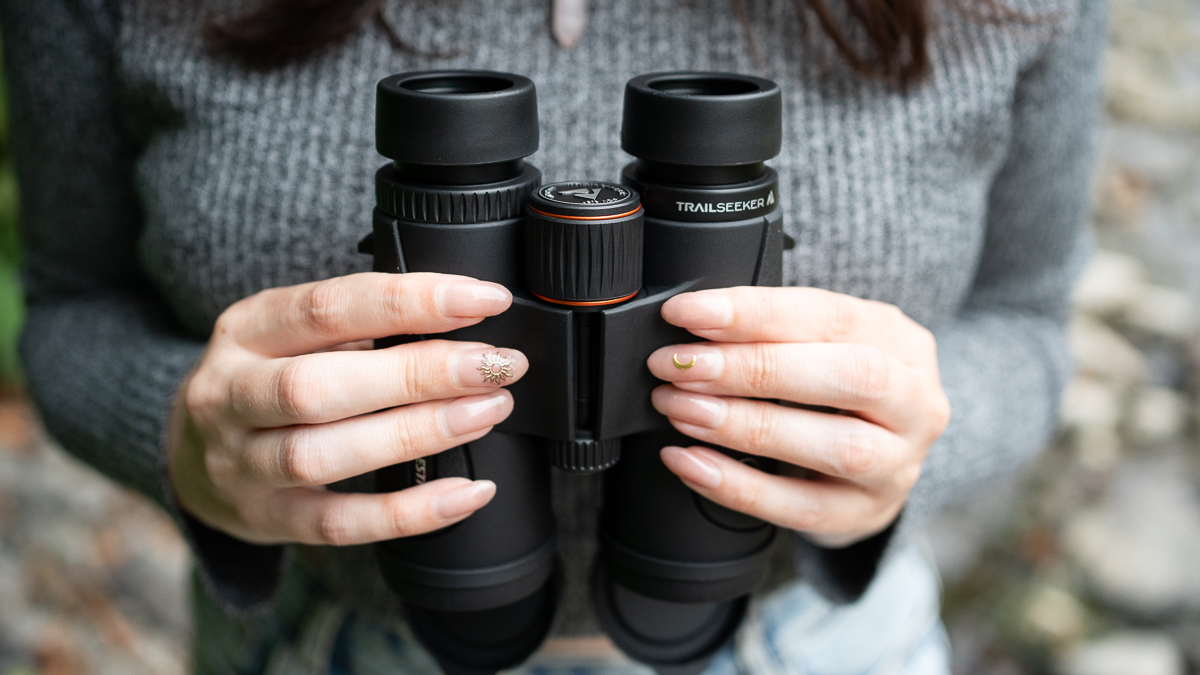 They’re lightweight with a good grip and comfortable eyecups — alongside excellent optics.(Image credit: Kimberley Lane)
Putting the TrailSeeker in fifth place does feel a bit harsh, because they are undoubtedly a fantastic pair of binoculars. Before we introduced the ED models into our group test, the TrailSeeker was initially our favorite. However, the addition of the Nature DX ED, in particular, has presented a better option for a lower price, so it’s hard to justify placing the TrailSeeker any higher.
Overall, the TrailSeeker performed very similarly to the Nature DX, and although they were slightly better in terms of sharpness, brightness and overall clarity, we didn’t notice enough of a difference to make the price jump worth it. At the end of it, it came down to value for money.
Would we buy them? No, but only because there are better options — not because there’s anything wrong with these ones.
Today’s best Celestron Trailseeker 10×42 deals
4th place: Celestron Nature DX
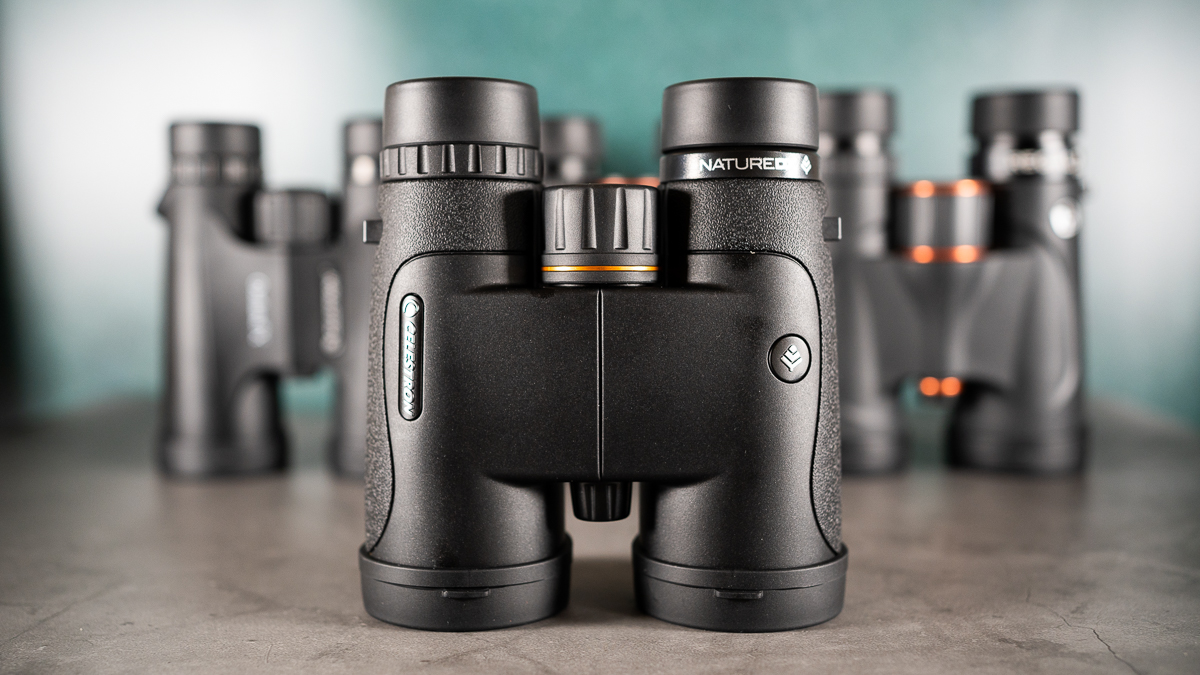
The Nature DX effortlessly combines performance with affordability. (Image credit: Kimberley Lane)
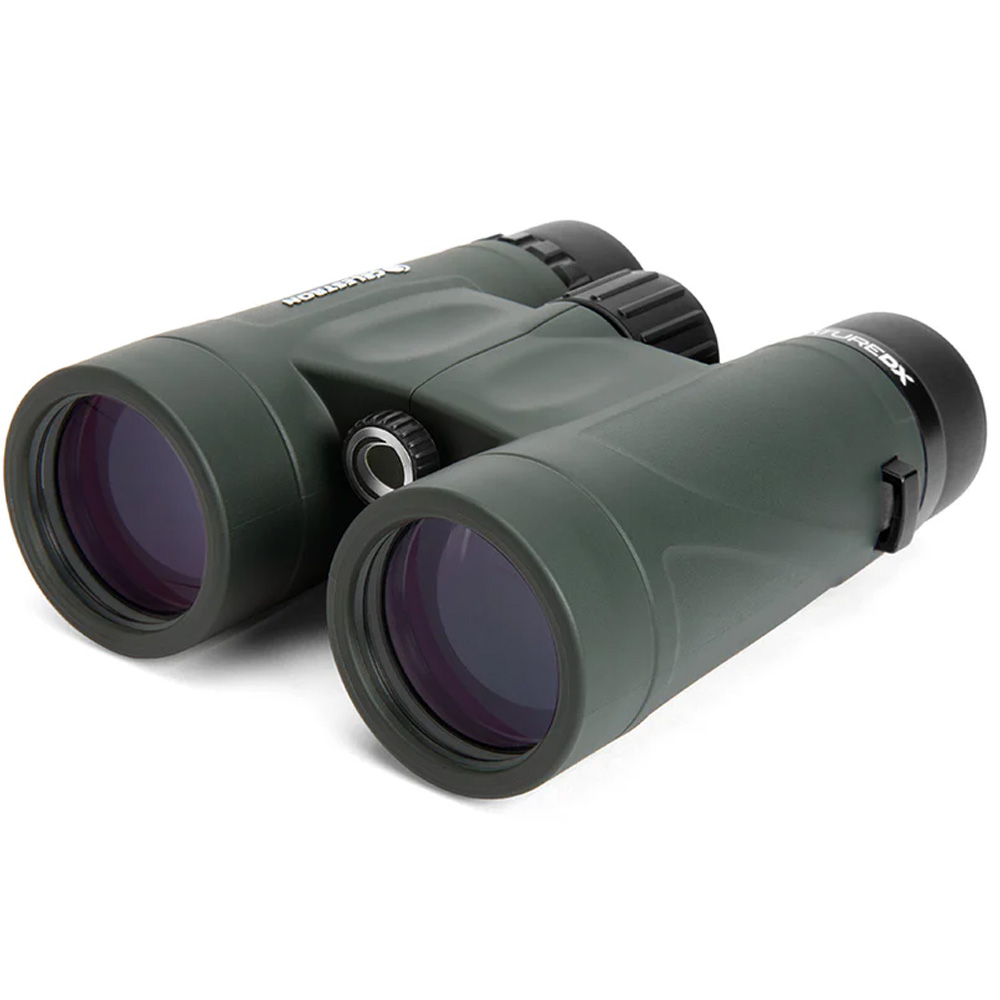
It’s easy to see why the Nature DX is a bestseller. They offer a great balance of decent performance and affordability, making them good for beginners and hobbyists who want to get their money’s worth without having to spend too much on exceptional optics.
We took them to our local nature reserve and struggled to make out finer details when observing waterfowl. There was also noticeable color fringing on birds and trees, both near and in the distance. For this reason, we wouldn’t recommend them for birdwatching, specifically, but they performed quite well for stargazing and general purpose viewing.
In many of our tests, the Nature DX actually performed very similarly to the more expensive TrailSeeker, with only a fraction of a difference in sharpness across the frame, chromatic aberration and overall brightness. For more casual users, these differences certainly won’t warrant spending the extra $100-$140 to upgrade to the TrailSeeker.
Image 1 of 2
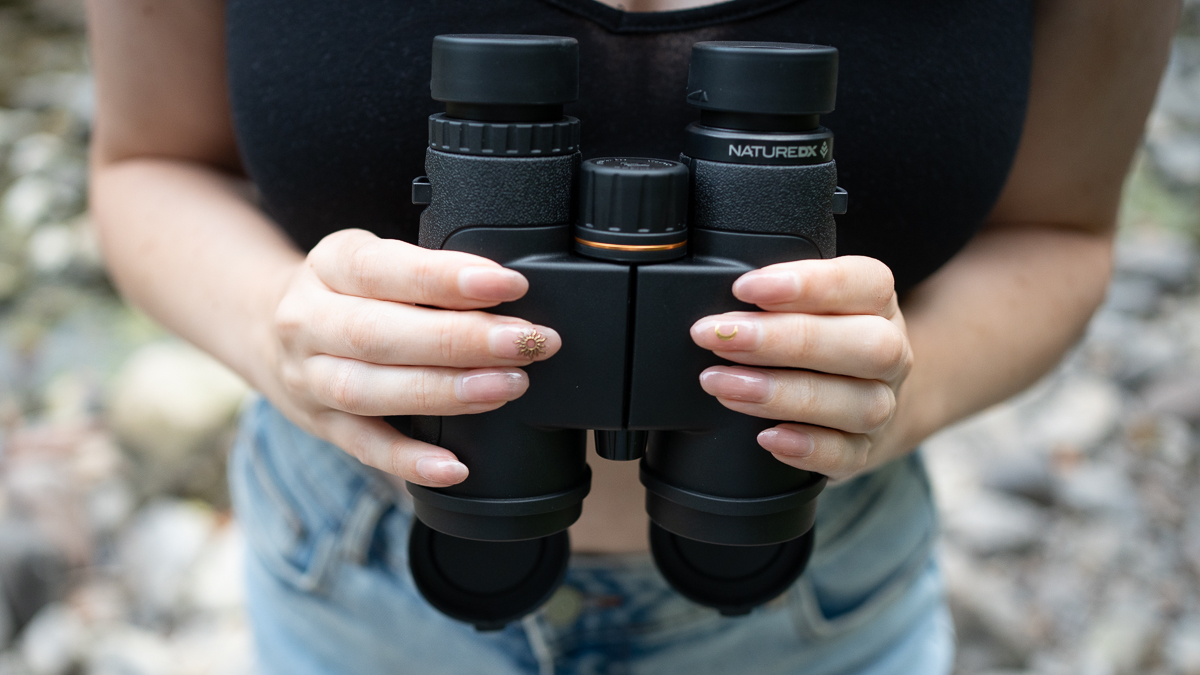 The Nature DX is the lightest of the six models we tested.(Image credit: Kimberley Lane)
 They’re great for beginner birders and casual stargazing.(Image credit: Kimberley Lane)
The Nature DX is the lightest of the six models, and the weight difference is particularly apparent when compared to the Regal. They’re perfectly suited to throwing in your bag on a hike or taking on camping trips where you’ll want to view a whole range of subjects, and we think they’re good value for money overall — but we would pay the extra to upgrade to the Nature DX ED.
Would we buy them? No, we’d pay the extra for the ED variant.
- Read our full reviews of the 8×42 and 12×56 variants
Today’s best Celestron Nature DX 10×42 deals
3rd place: TrailSeeker ED
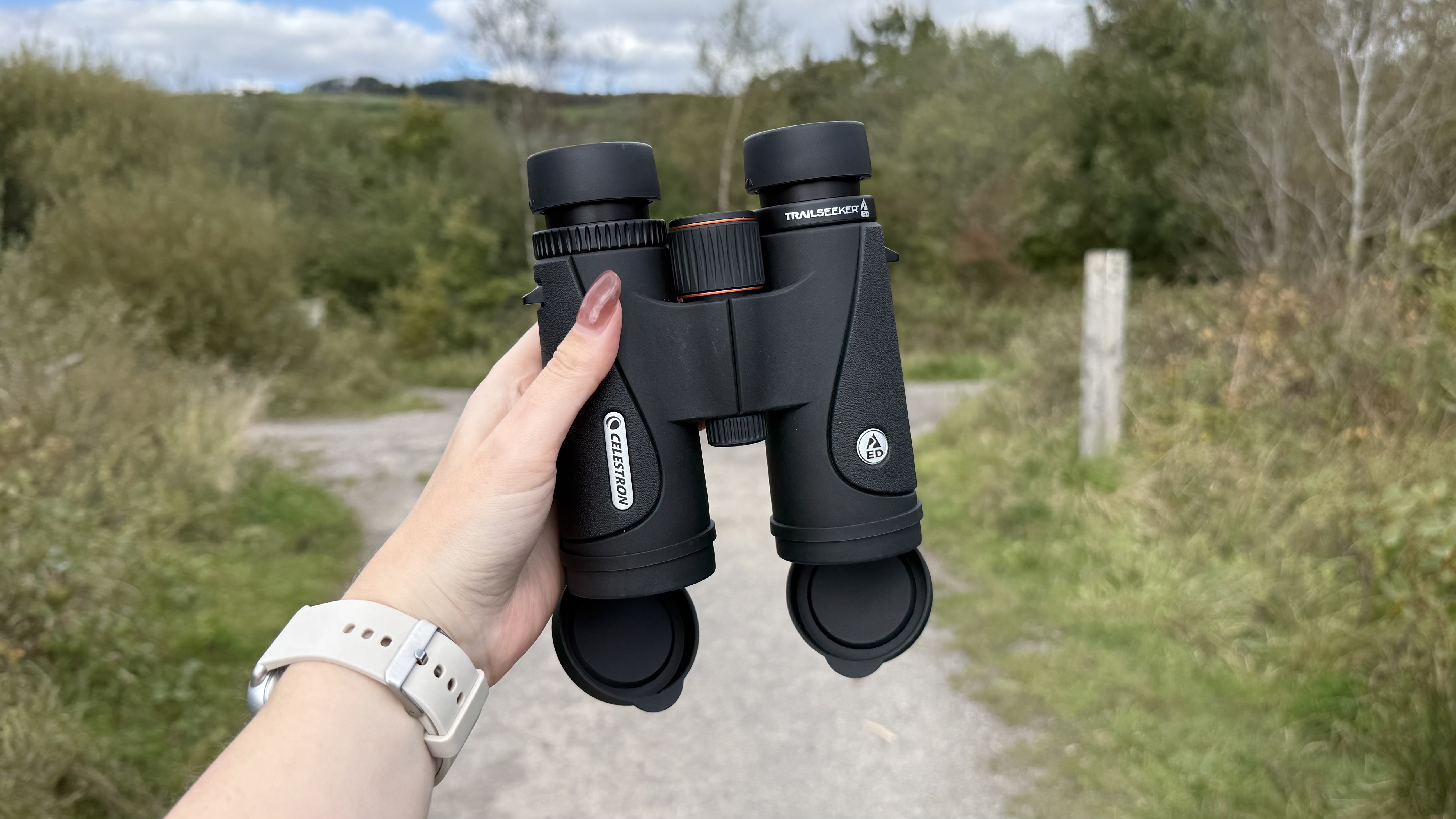
The TrailSeeker ED 10×42’s were brilliant, but we have trouble recommending them. (Image credit: Kimberley Lane)
This is where the fun starts. The TrailSeeker ED are bright, sharp and excellent in low light, and we have no complaints about them at all. So, why have we placed them third, you may ask? Well, the pricing makes them a bit redundant when the Nature DX ED and Regal ED are on the table. Although the TrailSeeker ED are slightly better than the Nature DX ED, we don’t think they’re worth the extra cost, so we’d recommend the Nature DX ED for beginners or anyone on a budget.
On the other end, the Regal ED has everything the TrailSeeker ED has, plus flat-field technology to improve edge-to-edge sharpness, but the TrailSeeker ED are more expensive, so it’s a no-brainer there as well.
The TrailSeeker ED is fantastic, but the problem is that the price prevents our being able to recommend them, as there’s always a more attractive option.
Image 1 of 2
 There is a big difference between the TrailSeeker and TrailSeeker ED when it comes to long-distance clarity.(Image credit: Kimberley Lane)
 They boast a solid, premium build.(Image credit: Kimberley Lane)
During our group test at the nature reserve, we noticed the TrailSeeker ED was definitely brighter, sharper and clearer than the Nature ED, but again, not by the kind of margin that might warrant such a huge price jump. The trees in the distance had more definition, so the TrailSeeker ED would be better for long-distance viewing, specifically, in addition to low-light observation. The TrailSeeker ED was also much more detailed than the standard TrailSeeker when we were looking at leaves on a pond. They’re fantastic for both birdwatching and stargazing, but we just wish they were priced better.
The TrailSeeker ED was one of two pairs where we felt truly immersed in the scene we were observing. With the other four pairs, it felt obvious that we were looking through binoculars.
Would we buy them? Currently, no. If they were cheaper, yes.
Today’s best Celestron TrailSeeker ED 10×42 deals
2nd place: Nature DX ED
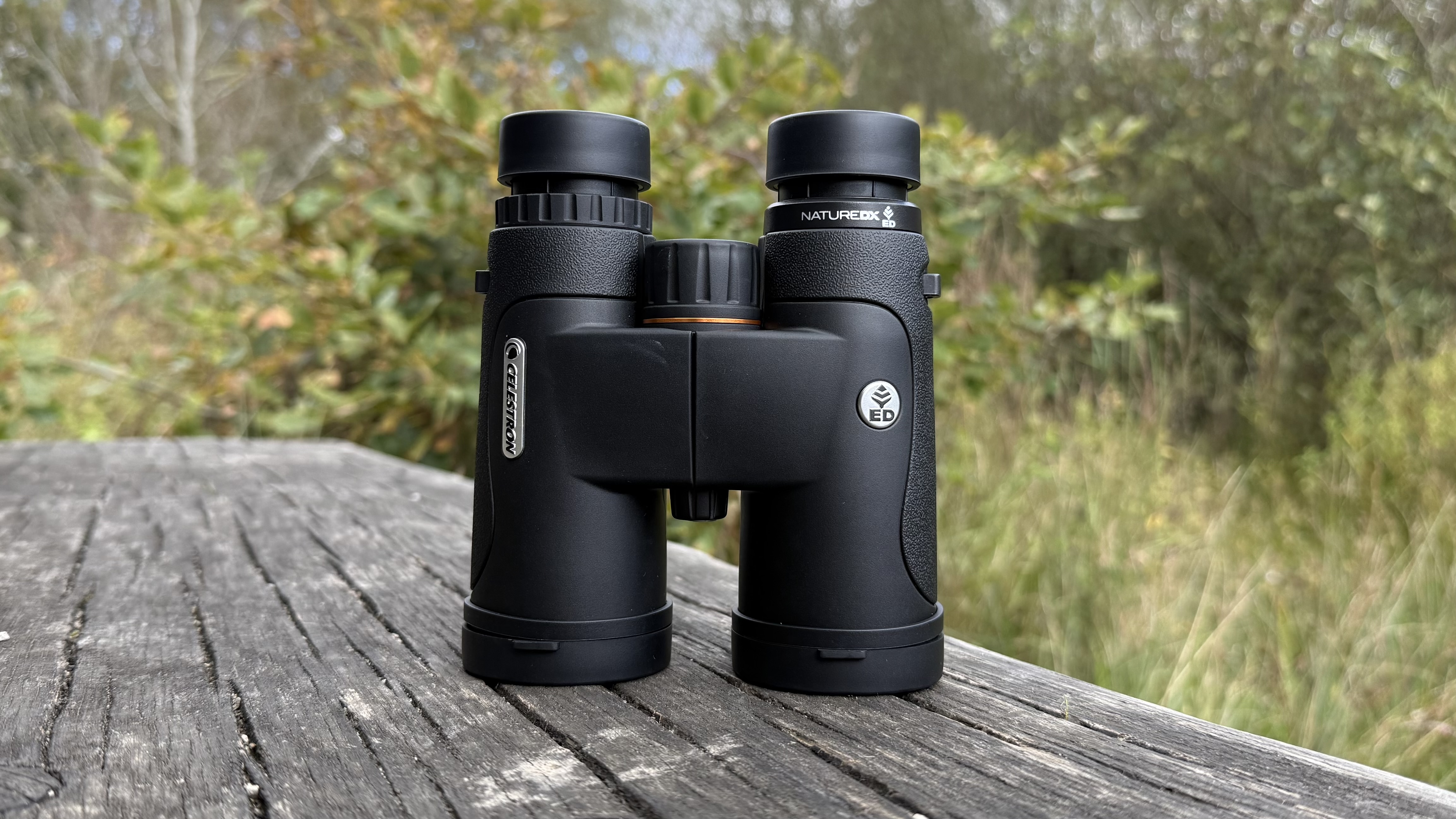
The Nature DX ED are a triumph for the price. (Image credit: Kimberley Lane)
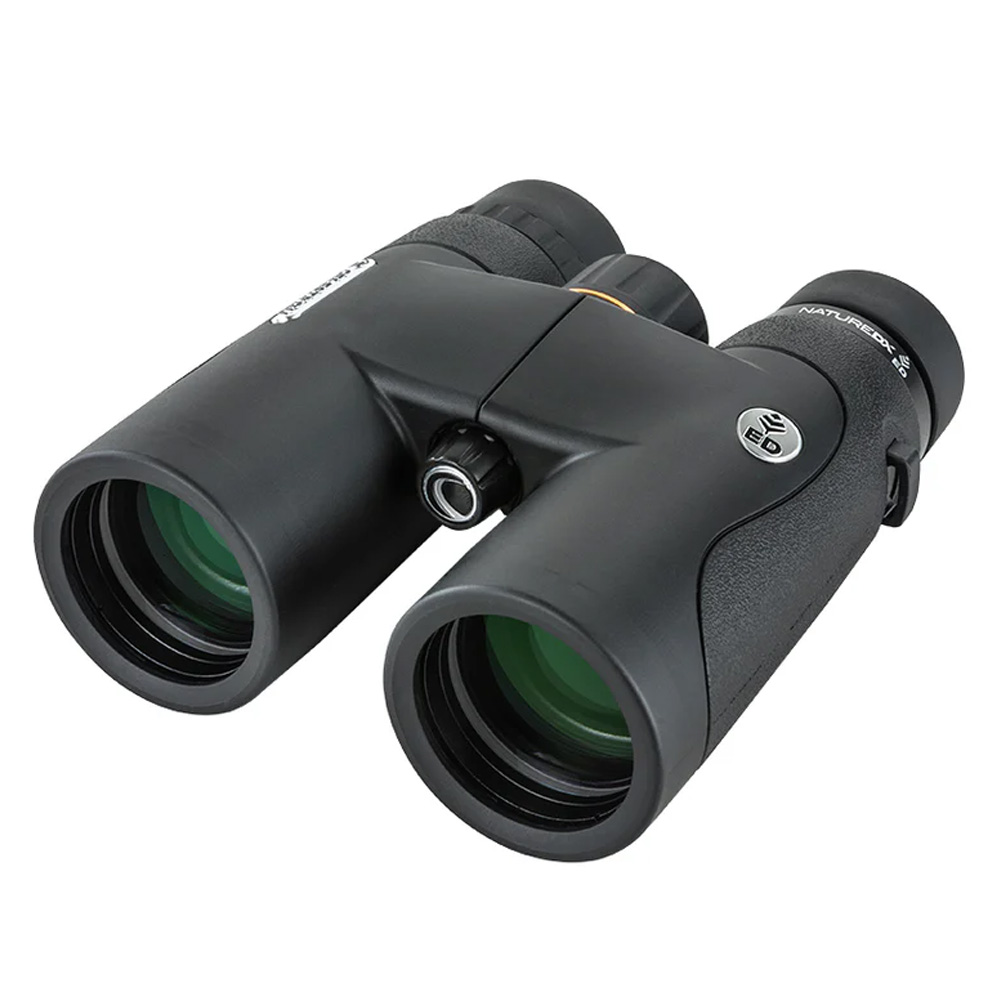
Financially, the Nature DX ED seems to make the most sense out of Celestron’s lineup. While they don’t quite have the optical power of the Regal ED, the Nature DX ED still excels in comparison to the Nature DX and TrailSeeker, and packs a lot of punch for the price.
We noticed a big reduction in chromatic aberration when comparing them against the normal Nature DX and TrailSeeker models, both for close-up viewing and objects in the distance. This was particularly apparent when observing birds in flight, and when peering at a bright moon, where we barely noticed any color fringing whatsoever.
Image 1 of 2
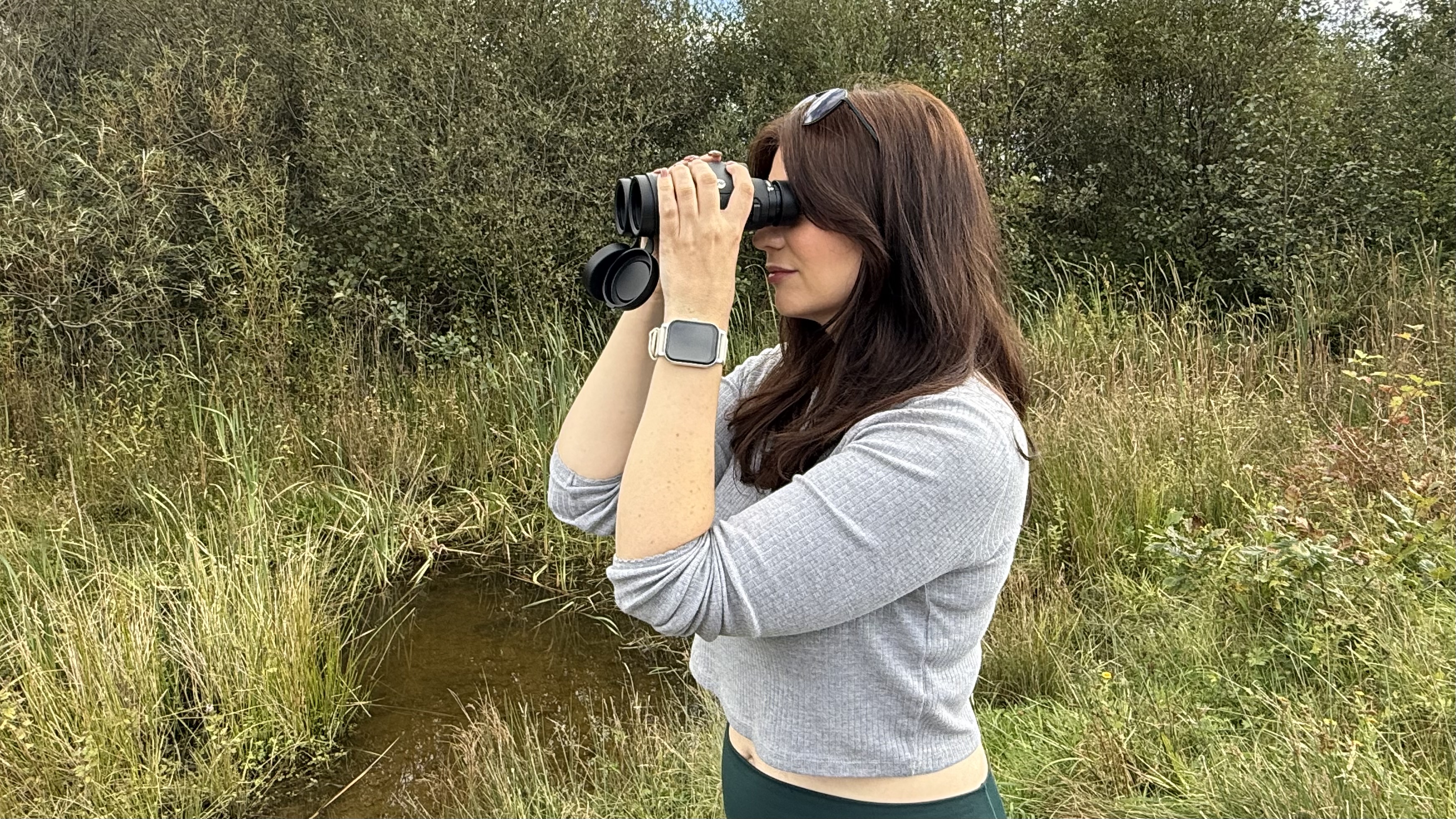 We had a hard time differentiating the Nature DX ED from the TrailSeeker ED.(Image credit: Kimberley Lane)
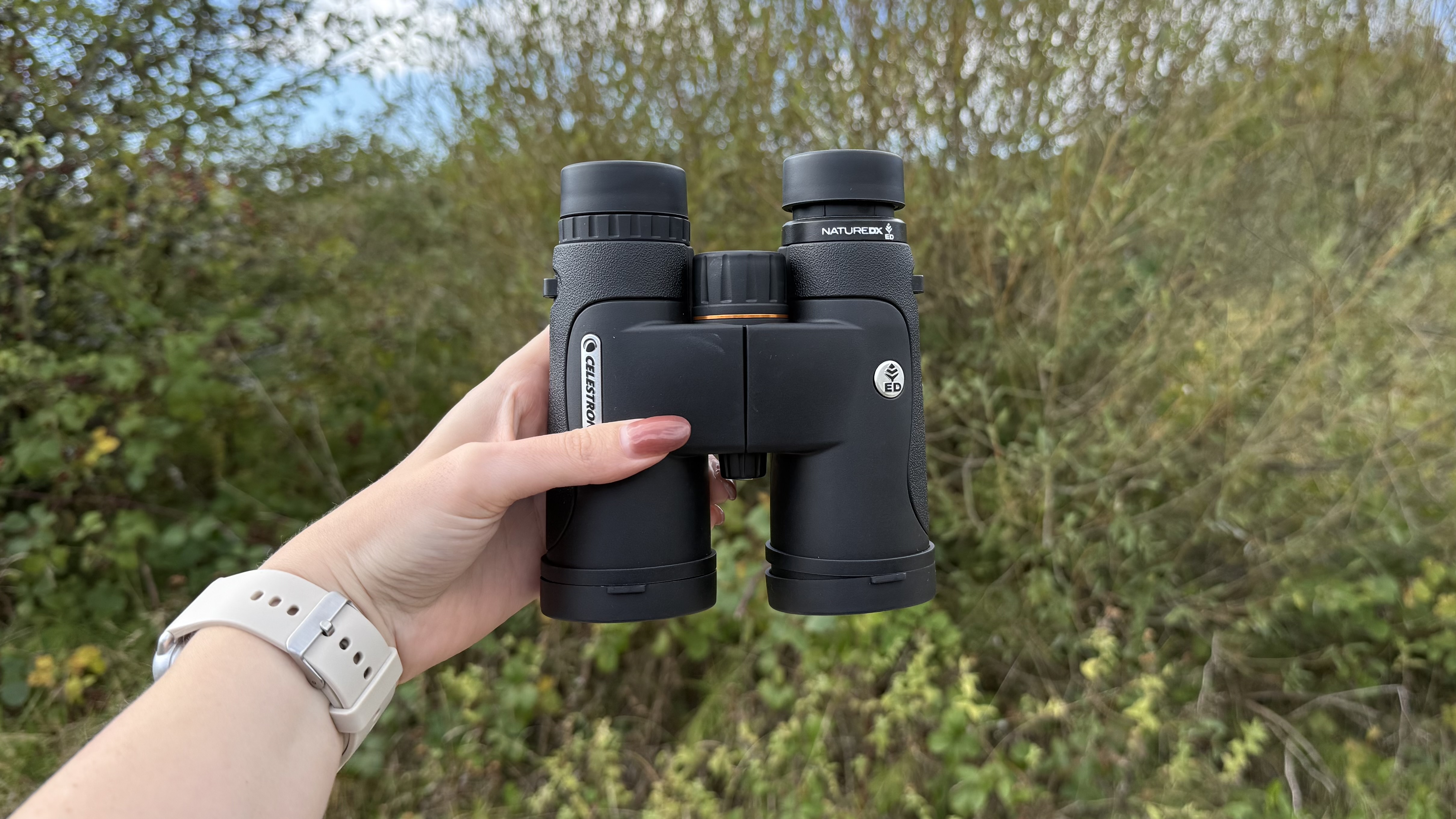 The Nature DX ED fit in the hand perfectly.(Image credit: Kimberley Lane)
For birdwatching, there wasn’t a huge amount of difference between the Nature DX ED and the TrailSeeker ED, despite the latter having dielectric coatings. While the TrailSeeker ED had the edge overall, the Nature DX ED give more bang for your buck and are fantastic overall.
Despite their polycarbonate build, we think they’re an excellent choice that combines substance with affordability.
Would we buy them? Yes.
Today’s best Celestron Nature DX ED 10×42 deals
Winner: Regal ED
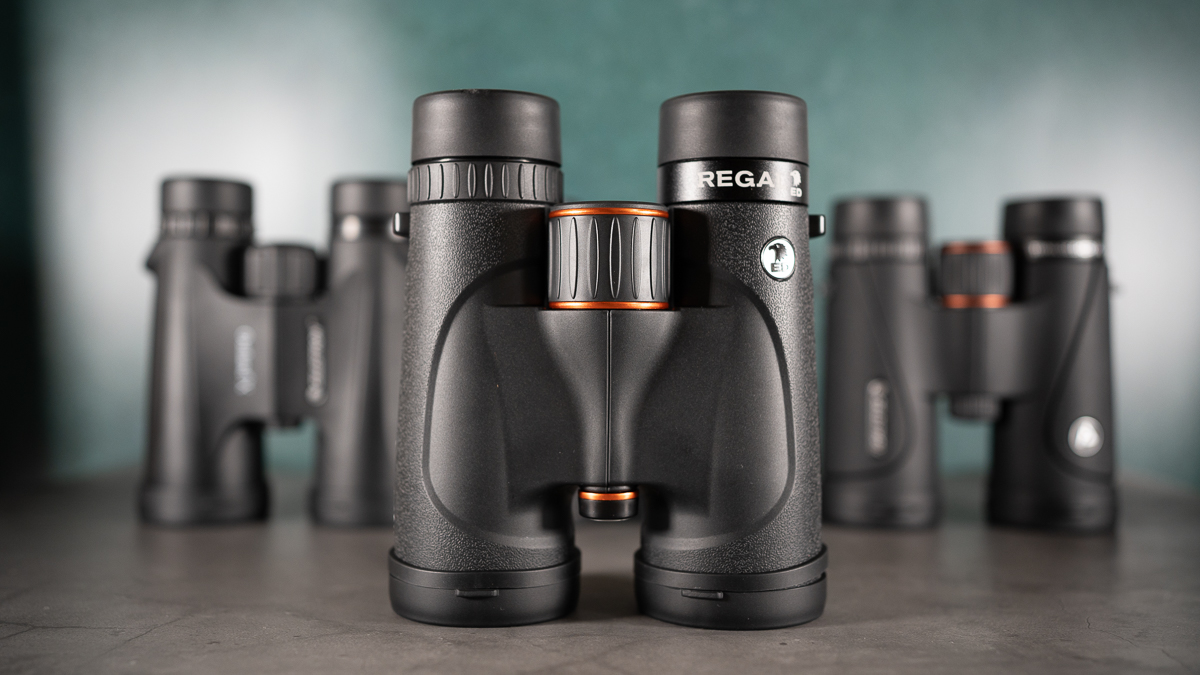
The Regal ED are the most premium of the models we tested. (Image credit: Kimberley Lane)
Regal by name, regal by nature. These powerful 10x42s seem to tick all the boxes, and after spending some time with them, we are impressed — particularly after we spent a couple of nights stargazing with them in the Bannau Brycheiniog National Park in Wales, enjoying sights of Andromeda, the Summer Triangle and the Coathanger asterism.
The feature that sets them apart from the other models, which could arguably make it a little unfair to compare them, is their flat-field technology. This eliminates the natural curvature that typically occurs with standard convex lenses, to ensure edge-to-edge sharpness across the entire field of view. As you can see from the graphic further up the page, we found these to be the sharpest binoculars by far.
Image 1 of 2
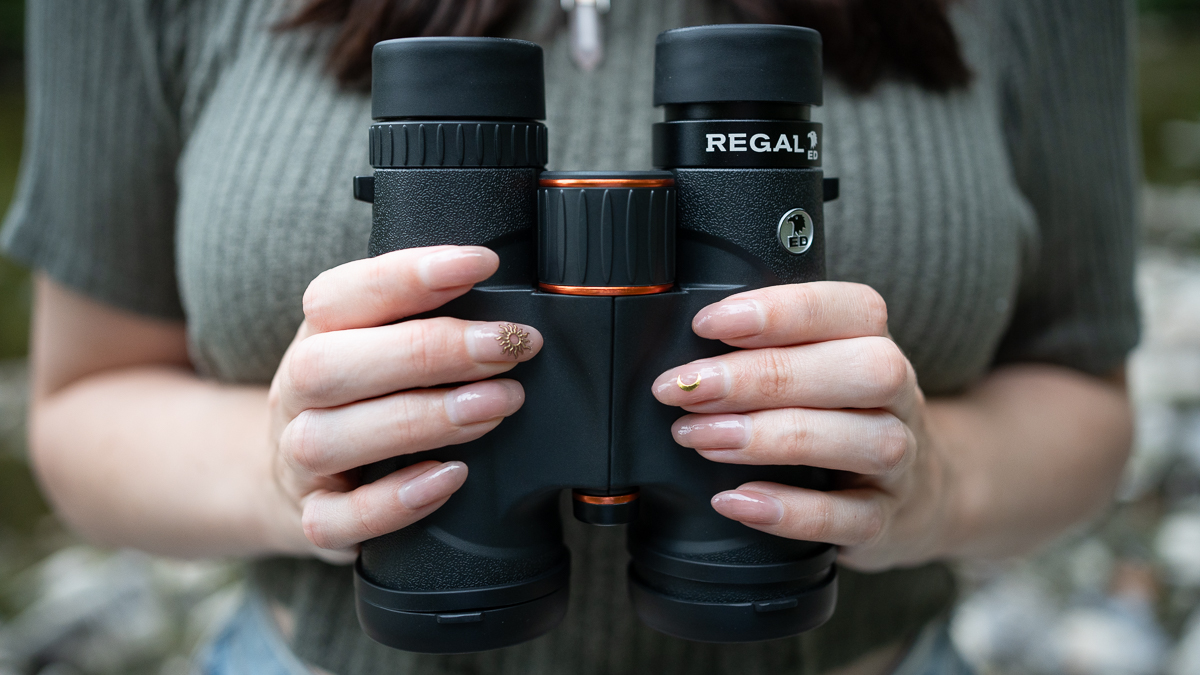 They’re the heaviest of the models we tested, although we were still able to use them comfortably for long periods.(Image credit: Kimberley Lane)
 The flat-field technology ensures razor sharp views across the entire frame.(Image credit: Kimberley Lane)
They also come with ED objective lenses as standard, whereas the other models don’t. They offer the same prism and lens coatings as the TrailSeeker models, along with the same field of view and body materials.
The views were tack-sharp throughout, with bright, contrasty views in any light. The moon looked perfect with no color fringing, and we could easily follow a Kingfisher dancing above a pond with no issues at all. Like the TrailSeeker ED, we felt truly immersed in the scene as opposed to feeling like we were looking through binoculars.
If we’re being picky, their weight could potentially deter users who are looking for a more lightweight and compact pair of binoculars. Not only is the Regal the heaviest of the lot, but the eyecups are the biggest, and we found them to be bigger than our eye sockets (yet another unrealistic beauty standard!). This meant we couldn’t, for lack of a better term, get our face in them properly without being a little uncomfortable.
This shouldn’t deter you, as this is just a personal preference, but it’s small details like this that can make a big difference in finding the right pair of binoculars for you.
Would we buy them? If we were serious about birding, yes.
Today’s best Celestron Regal ED 10×42 deals
SCIENCE
‘A potential treasure trove’: World Health Organization to explore benefits of traditional medicines | Global health


From herbalists in Africa gathering plants to use as poultices to acupuncturists in China using needles to cure migraines, or Indian yogis practising meditation, traditional remedies have increasingly being shown to work, and deserve more attention and research, according to a World Health Organization official.
A historical lack of evidence, which has seen traditional practices dismissed by many, could change with more investment and the use of modern technology, according to Dr Shyama Kuruvilla, who leads the WHO Global Traditional Medicine Centre.
Dr Shyama Kuruvilla, Director of the WHO Global Traditional Medicine Centre. Photograph: Lindsay Mackenzie/WHO
Earlier this year, countries agreed the WHO should adopt a new global traditional medicines strategy for the next decade that “seeks to harness the potential contribution of TCIM [traditional, complementary and integrative medicine] to health and wellbeing based on evidence”.
It includes plans to establish a robust evidence base for traditional medicine practices, develop regulation of treatments and practitioners and, where appropriate, integrate the practices into mainstream biomedical healthcare.
“It’s super-exciting,” says Kuruvilla. “I’m not saying we know what works and what doesn’t work at scale – but I think there’s this opportunity [to find out] right now.”
Traditional medicine, defined as systems for health and wellbeing that predate “biomedicine”, comes in many guises ranging from herbal tea to India’s Ayurvedic medical system.
Many of these centuries-old practices have “huge potential”, says Kuruvilla, and can now be explored in new ways by technologies including artificial intelligence, genomics and brain scans.
Kuruvilla says Thailand is a good example of a country embracing traditional medicine, with researchers observing and documenting traditional practice, and performing randomised trials to get herbal treatments on to the country’s essential medicines list. In May, Thailand’s health ministry recommended doctors switch from some biomedicines to traditional remedies for certain conditions including muscle pain and constipation.
Kratom (Mitragyna speciosa) on sale in Bangkok, Thailand. The plant has been used in traditional medicine for centuries and was legalised in 2021. Photograph: Narong Sangnak/EPA
There have been some concerns that the WHO strategy could create a backdoor for unscientific systems such as homeopathy to enter the mainstream but Kuruvilla points out that homeopathy does not fit the WHO’s definition of traditional medicine – it was only created in the late 18th century – and that there is not strong enough evidence for the practice.
But, she says: “With all of these – with biomedicine, homeopathy, traditional medicine – if the evidence changes, I think it’s our responsibility to be open to that.”
In some countries homeopathy is used as a complementary medicine “and that’s up to the countries”, Kuruvilla says. “We have to, as WHO, just stick to the evidence.
“So I think that’s our bottom line: is this supported by robust reliable evidence, especially on safety and efficacy? And if it’s not, WHO is not supporting it, whether it is biomedicine or traditional medicine.”
Not engaging wasn’t an option, because that would mean everything goes on without any safeguardsDr Shyama Kuruvilla
WHO surveys suggest that in most countries, the majority of traditional, complementary and integrative medicine services are not part of the formal health system and are paid for by patients. They are less likely to be subject to official quality checks but are hugely popular.
“Not engaging wasn’t an option, because that would mean everything goes on without any safeguards,” Kuruvilla says, pointing to a burgeoning trillion-dollar wellness industry ranging from yoga studios to “nutraceuticals”.
The opening ceremony of the second WHO global summit on traditional medicine in New Delhi, India, on 17 December. Photograph: CBAS Films/WHO
New methods let scientists study traditional medicine “in a way that wasn’t possible before”, Kuruvilla says. Genomics might prompt new understanding of the properties of a plant, while modern scanning equipment can pick up changes in the brains of people meditating.
“Meditation was all this ‘woo-woo stuff’ but now, seeing all these advances in neuroscience and showing changes in brain waves from functional magnetic resonance imaging, which we couldn’t do before – actually being able to trace the pathways that lead to changes in health measurements – I think this is really, really exciting,” she says.
A new WHO strategic technical advisory group for traditional medicine was launched this week at a global summit in India. “This is a pivotal moment for traditional medicine. It embodies cultural heritage and national health identities, and increasingly, it constitutes a vital component of primary health care strategies,” Dr Yukiko Nakatani, WHO’s assistant director-general for health system, access and data, told the summit.
The idea, Kuruvilla suggests, is to “build a bridge” between traditional medicine and biomedicine. It is important to “find commonalities”, she says. “Showing that the science can be robust is really, really important, and especially on the patient safety aspect.”
Traditional medicine has the potential to be a “treasure trove”, Kuruvilla says. The vast numbers of people working in the field – including university-educated professionals accredited to work in clinics in China and India – could ease global workforce shortages and make a “huge contribution” to universal health coverage, she says.
Staff prepare traditional herbal medicine at a hospital in Tongren, China. Photograph: CFOTO/Future Publishing/Getty Images
In the context of aid cuts forcing countries to rethink health provision, traditional medicine could be “a way for countries also to be more self-reliant and then share those resources with each other”.
The risk of failing to invest, she says, is leaving people unable to access their preferred type of healthcare in a safe way and “the world not being able to use our shared heritage here in a way that allows us to find new holistic solutions for health and wellbeing of people and planet”.


In the late 1970s, legendary physicist John Wheeler proposed a radical question: Exactly when does the universe notice that we’re paying attention to a quantum experiment? And does it really matter? The answer goes against everything we thought we knew.
Wheeler’s thought experiment, which eventually became a real experiment, involved the famous double-slit experiment. Let’s say you have a source of light and a screen with two thin, vertical slits. When you shine the light through the slits, the light acts like a wave. It interferes with itself, causing a ripple-like pattern on a far wall, with strips of brightness alternating with darkness. This is exactly how waves work, and if you ever find yourself in a harbor with two narrow openings, you’ll see the waves washing up onshore with a similar pattern.
Now, let’s say you make the light really weak — so weak that, eventually, only one photon at a time goes through the double slit. Amazingly, even though each individual photon acts like a particle — it hits the far wall in one specific spot — after enough photons arrive, the same interference pattern emerges. The usual conclusion is that the wave nature of a single photon interferes with itself to create the pattern.
You may like
Now, let’s add one more layer. Let’s say you introduce a detector to the slits, to figure out which slit the photon actually passed through on its way through the screen. When you do this, the wave nature of the photon goes away. You get to see which slit the photon passed through — but it only ever acts like a particle, and you never get an interference pattern on the far wall.
When we design a quantum experiment, we must choose to investigate either the wave nature or the particle nature of photons — but we can’t do both. OK, it’s weird. But so far, it’s the standard sort of quantum weirdness.
Wheeler upped the ante. He asked what would happen if you were to introduce a delay. What if you were to insert a detector at the slits after the photon had already passed through?
Wheeler proposed a helpful analogy. Imagine a distant light source, like a quasar, that sends light traveling for billions of light-years. Some of that light heads right for us, while some beams follow a curved path through a gravitational lens, like a massive cluster. Both beams arrive on Earth at the same time, and we can set up an experiment to interfere with those beams. In that experiment, we can choose to study either the wave nature or the particle nature of light.
Wheeler guessed the answer. He was right, and his correctness was later borne out by experiments. Even when we make a delayed choice, the photons somehow keep track of that and alter whether they’re going to make an interference pattern.
How does this work? We’re making our choice at the final leg of the light’s journey. How did the photons “know” what choice we were going to make ahead of time? It seems as if our choice in the future went back in time to alter how the photons behaved in the past.
An updated version of the experiment, known as the “delayed choice quantum eraser,” makes this even crazier. In this experiment, the photons pass through the slits. Then, the experiment decides whether to monitor the slits. Well after the photons have struck the screen, the experimenter decides to read the information. If the experimenter reads the information about which slit the photon passed through, there will never be an interference pattern. If the experiment throws away the information, an interference pattern emerges.
Remember, all of this is after the photon has already hit the screen.
Wheeler taught us how to think about this. He argued that it doesn’t make sense to talk about photons “in flight.” We only have measurements and observations — the final results of our experiments. The order of the events and what happened during the experiment itself don’t matter. Photons aren’t really in flight in the way we think of it, and the wave-particle duality of photons doesn’t make sense in the way we usually think about things.
What we get, whether particles or waves, is what we get. And it’s only once we make that measurement that nature reveals what aspect of reality to show us.
SCIENCE
Scientists build ‘most accurate’ quantum computing chip ever thanks to new silicon-based computing architecture


Physicists at Silicon Quantum Computing have developed what they say is the most accurate quantum computing chip ever engineered, after building a new kind of architecture.
Representatives from the Sydney-based startup say their silicon-based, atomic quantum computing chips give them an advantage over other kinds of quantum processing units (QPUs). This is because the chips are based on a new architecture, called “14/15,” that places phosphorus atoms in silicon (named as such because they are the 14th and 15th elements in the periodic table). They outlined their findings in a new study published Dec. 17 in the journal Nature.
SQC achieved fidelity rates between 99.5% to 99.99% in a quantum computer with nine nuclear qubits and two atomic qubits, resulting in the world’s first demonstration of atomic, silicon-based quantum computing across separate clusters.
You may like
Fidelity rates measure how well error-correction and mitigation techniques are working. Company representatives say they have achieved a state-of-the-art error rate on their bespoke architecture.
This might not sound as exciting as quantum computers with thousands of qubits, but the 14/15 architecture is massively scalable, the scientists said in the study. They added that demonstrating peak fidelity across multiple clusters serves as a proof-of-concept for what, theoretically, could lead to fault-tolerant QPUs with millions of functional qubits.
The secret sauce is silicon (with a side of phosphorous)
Quantum computing is performed using the same principle as binary computing — energy is used to perform computations. But instead of using electricity to flip switches, as is the case in traditional binary computers, quantum computing involves the creation and manipulation of qubits — the quantum equivalent of a classical computer’s bits.
Qubits come in numerous forms. Google and IBM scientists are building systems with superconducting qubits that use gated circuits, while some labs, such as PsiQuantum, have developed photonic qubits — qubits that are particles of light. Others, including IonQ, are working with trapped ions — capturing single atoms and holding them in a device referred to as laser tweezers.
The general idea is to use quantum mechanics to manipulate something very small in such a way as to conduct useful computations from its potential states. SQC representatives say their process for doing this is unique, in that QPUs are developed using the 14/15 architecture.
They create each chip by placing phosphorus atoms within pure silicon wafers.
“It’s the smallest kind of feature size in a silicon chip,” Michelle Simmons, CEO of SQC, told Live Science in an interview. “It is 0.13 nanometers, and it’s essentially the kind of bond length that you have in the vertical direction. It’s two orders of magnitude below typically what TSMC does as its standard. It’s quite a dramatic increase in the precision.”
You may like
Increasing tomorrow’s qubit counts
In order for scientists to achieve scaling in quantum computing, each platform has various obstacles to overcome or mitigate.
One universal obstacle for all quantum computing platforms is error correction (QEC). Quantum computations happen in extremely brittle environments, with qubits sensitive to electromagnetic waves, temperature fluctuations and other stimuli. This causes the superposition of many qubits to “collapse,” and they become unmeasurable — with quantum information lost during calculations.
To compensate, most quantum computing platforms dedicate a number of qubits to error mitigation. They function in a similar way to check or parity bits in a classical network. But as qubit counts increase, so too does the number of qubits required for QEC.
“We have these long coherence times of the nuclear spins and we have very little what we call “bit flip errors.” So, our error correction codes themselves are much more efficient. We’re not having to correct for a bit flip and phase for errors,” Simmons said.
In other silicon-based quantum systems, bit flip errors are more prominent because qubits tend to be less stable when manipulated with coarser accuracy. Because SQC’s chips are engineered with high precision, they’re able to mitigate certain occurrences of errors experienced in other platforms.
“We really only have to correct for those phase errors,” added Williams. “So, the error correction codes are much smaller, therefore the whole overhead that you do for error correction
is much, much reduced.”
The race to beat Grover’s algorithm
The standard for testing fidelity in a quantum computing system is a routine called Grover’s algorithm. It was designed by computer scientist Lov Grover in 1996 to demonstrate whether a quantum computer can demonstrate “advantage” over a classical computer at a specific search function.
Today, it’s used as a diagnostic tool to determine how efficiently quantum systems are operating. Essentially, if a lab can reach quantum computing fidelity rates in the range of 99.0% and above, it’s considered to have achieved error-corrected, fault-tolerant quantum computing.
In February 2025, SQC published a study in the journal Nature in which the team demonstrated a 98.9% fidelity rate on Grover’s algorithm with its 14/15 architecture.
SQC achieves world-leading accuracy of Grover’s algorithm – YouTube
In this regard, SQC has surpassed firms such as IBM and Google; although they have shown competitive results with dozens or even hundreds of qubits versus SQC’s four qubits.
IBM, Google and other prominent projects are still testing and iterating their respective roadmaps. As they scale up the qubit count, however, they’re forced to adapt their error mitigation techniques. QEC has proven to be among the most difficult to overcome bottlenecks.
But SQC scientists say their platform is so “error deficient” that it was able to break the record on Grover’s without running any error correction on top of the qubits..
“If you look at the Grover’s result that we produced at the beginning of the year, we’ve got the highest fidelity Grover album at 98.87% of the theoretical maximum and, on that, we’re not doing any error correction at all,” Simmons said.
Williams says the qubit “clusters” featured in the new 11-qubit system can be scaled to represent millions of qubits — although infrastructure bottlenecks may yet slow down progress..
“Obviously as we scale towards larger systems, we are going to be doing error correction,” said Simmons. “Every company has to do that. But the number of qubits we will need will be much smaller. Therefore, the physical system will be smaller. The power requirements will be smaller.”

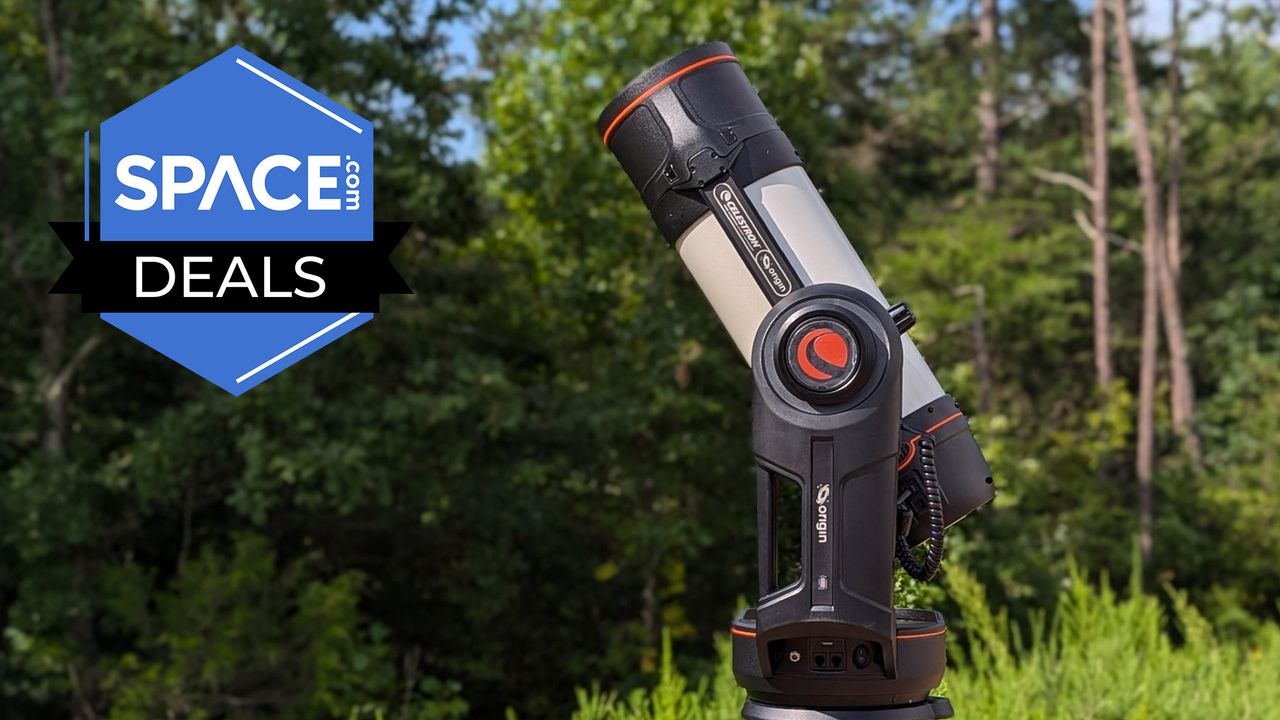
Are you looking to make the most of your money this Christmas? Are you shopping for a gift for a stargazer, or maybe looking to upgrade to one of the best telescopes or best binoculars? Then you can relax, because we have got you covered with our guide to the best last-minute deals on optical gear.
Yes, you’ve left it a little late, but that’s no cause for panic. Why? Because Amazon, Walmart and some other retailers offer expedited shipping. That means you can, in theory, order something as late as December 23 and get it in time for Christmas!
Telescope deals
Christmas is a great time to pick up a telescope. The nights are long, there are plenty of night sky sights and on the day itself, December 25, you can test out your new scope by training it on Sirius, the brightest star in the sky.
Our experts have rounded up the best last minute deals on telescopes, from super portable scopes to motorized telescopes that are a boon for any beginner. So read on to save on stargazing and nature watching, but don’t leave your shopping too late!
Smart telescope deals
The best smart telescopes are fantastic if you want to take the work out of stargazing. They are indeed a little pricier than ‘regular’ telescopes, but with a smart scope, there’s no need to spend minutes or even hours sweeping the heavens to find certain objects. Instead, they come with a built-in bank of objects of interest; press a couple of keys, or tap a button, and the scope will hone right in on that object. It really is that simple. It could be a real boon if you’ve got children who are easily bored.
On top of that, all the scopes in our guide allow you to take pictures through your smartphone, without the need to use one of the best dedicated astrophotography cameras. Here are the smart scopes you can save on.
Binocular deals
As stunning as the view from a telescope, smart or otherwise, can be, there’s plenty to be said for the power and portability of binoculars. The best binoculars can, in the right circumstances, actually be a better choice than telescopes, especially on the go.
Want stunning views of deep space, without light pollution? Just grab a pair of reasonably powerful binoculars, drive or walk away from civilization, and point them at the night sky.
The models we’ve selected are also excellent for nature watching or zooming in on sporting events. Some even boast image stabilization, which essentially eliminates handshake.
Monocular deals
Depending upon who you listen to, monoculars are either a mini-telescope, or half a binocular. But that’s no reason to overlook these optical devices; the best monoculars are even more portable than binoculars or telescopes, and can be popped into a pocket with ease.
If monoculars are new to you, here’s what you should look for in a monocular for stargazing. So, if you want to observe the skies on the go, take advantage of these last-minute monocular deals.