
NIGERIA NEWS
Controversy Rocks Army As Tinubu Approves Special Promotion For ADC To Brigadier General

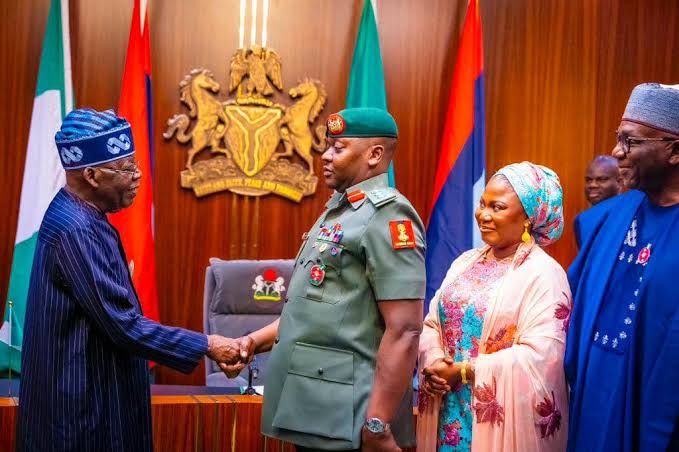
President Bola Ahmed Tinubu has approved the “special presidential promotion” of his Aide-de-Camp (ADC), Nurudeen Yusuf, from Colonel to the rank of Brigadier-General.
The decision, conveyed in a letter dated December 12, 2025, from the National Security Adviser, Nuhu Ribadu, to the Chief of Army Staff, Lt.-Gen. Wahid Shaibu, has reportedly sparked significant disquiet and discontent within the Nigerian Army.
The promotion has raised widespread concern in military circles because it marks the second elevation for Yusuf within a 12-month period, a move military sources describe as unprecedented and a violation of established promotion principles.
Mr. Yusuf was promoted and decorated as a Colonel in January 2025 (following his promotion in December 2024). He has now been elevated directly to Brigadier-General in December 2025.
According to army rules, a Colonel is typically expected to spend between four to five years in the rank and meet specific professional requirements, such as completing courses at a War College or the National Defence College, before becoming eligible for Brigadier-General.
Several officers, including some of his coursemates, reportedly expressed frustration over what they described as an unprecedented fast-tracking of his career, with critics accusing the President of favouritism.
An aggrieved senior officer told a Premium Times, “This beggars belief and defies all logic. Someone who was just promoted to colonel this year?”
While neither the Presidency nor the Nigerian Army has publicly offered an official explanation, an anonymous Presidency source justified the acceleration as necessary to maintain command hierarchy within the Presidential Villa’s security architecture.
The source explained that the President approved the promotion to align Yusuf’s rank with those of other senior security officials attached to the Villa who have also received recent promotions.
According to the source, the Nigeria Police Force in August promoted the President’s Chief Personal Security Officer, Usman Shugaba, from deputy commissioner of police to commissioner of police.
Similarly, the State Security Services (SSS) recently elevated the President’s Chief Security Officer, Adegboyega Fasasi, to the rank of director.
The source argued that without a corresponding promotion, Mr. Yusuf would remain subordinate in rank to his police and State Security Service (SSS) counterparts, a situation that could undermine esprit de corps among the presidential security team.
Mr. Yusuf, who was appointed ADC on May 1, 2023, initially held the rank of Lieutenant-Colonel. The NSA’s memo reportedly confirmed that Yusuf will be retained as the ADC despite his new rank.


- Former First Lady Aisha Buhari has disclosed that late President Muhammadu Buhari once began locking his room after rumours spread within Aso Rock that she was trying to poison him.
- In a new biography, she explained that Buhari’s prolonged illness in 2017 was caused by poor nutrition and missed meals rather than poisoning.
- According to her, fear and gossip disrupted his care routine, worsening his health and leading to extended medical treatment abroad, before he eventually recovered.
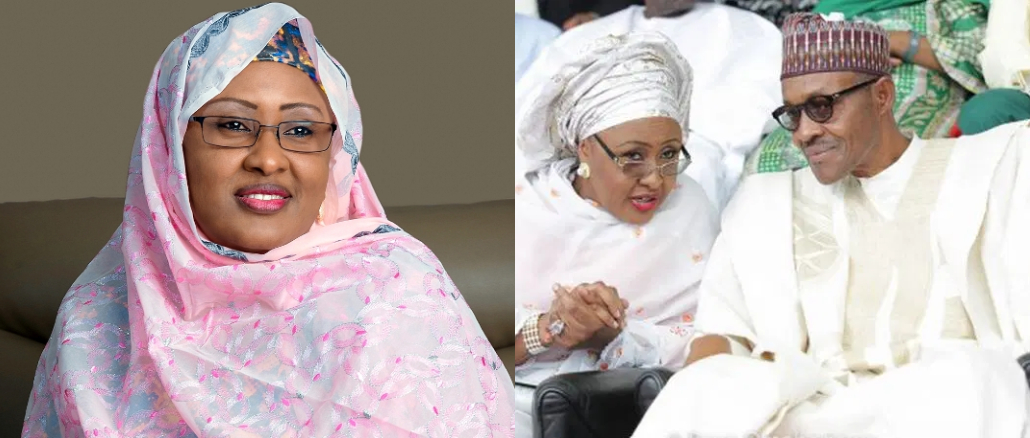
Former First Lady Aisha Buhari has revealed in a new biography that her late husband, former President Muhammadu Buhari, started locking his room after rumours spread inside Aso Rock that she was trying to kill him.
Her revelations are found in a new 600-page book called From Soldier to Statesman: The Legacy of Muhammadu Buhari.
The Real Reason for Illness
Aisha Buhari claimed her husband’s long illness in 2017 was not caused by poisoning, but by missed meals and poor nutrition after they moved to the Presidential Villa. She had managed a strict routine of meals and supplements for him, stressing that elderly care needs “gentle, consistent support”.
Gossip and Mistrust
She stated the care routine collapsed because of gossip and fear within the Presidency. She claimed, “Then came the gossip and the fearmongering. They said I wanted to kill him,”.
The President briefly believed the rumours and began locking his door. She said meals and supplements were stopped, noting, “For a year, he did not have lunch. They mismanaged his meals,”.
Recovery
The health decline led to his long medical trips to the UK. When he was afraid to take stronger supplements prescribed by London doctors, Aisha Buhari secretly mixed them into his juice.
She described a swift recovery, saying, “After just three days, he threw away the stick he was walking with,” and “After a week, he was receiving relatives,”. She dismissed the conspiracy theories, like the “Jibril of Sudan” story, blaming poor government communication for the spread of these rumors.
NIGERIA NEWS
Corruption: Timi Frank urges Tinubu to suspend, probe NMDPRA CEO, Farouk, lauds Dangote


Political activist and international affairs leader, Comrade Timi Frank has called on President Bola Ahmed Tinubu to immediately suspend the Chief Executive Officer of the Nigerian Midstream and Downstream Petroleum Regulatory Authority (NMDPRA), Engr. Farouk Ahmed, following corruption allegations raised by President of the Dangote Group, Alhaji Aliko Dangote.
Frank, a former Deputy National Publicity Secretary of the All Progressives Congress (APC) and currently ULMWP Ambassador to East Africa and the Middle East as well as Senior Advisor to the Global Friendship City Association (GFCA), USA, in a statement on Tuesday, Frank described the claim as “alarming and deeply disturbing,” stressing that it raises fundamental questions about accountability and integrity in public office.
He said the allegation, which suggests that about $5 million was spent on the secondary education of the NMDPRA boss’ children in Switzerland, was too serious to be ignored and must trigger an urgent investigation by anti-corruption agencies.
“Coming from Aliko Dangote, the richest man in Africa and a globally respected businessman, this allegation cannot be dismissed. It is weighty and should be treated with the seriousness it deserves,” Frank said.
He urged President Tinubu to break his silence on the matter, warning that failure to act decisively would cast doubt on the administration’s commitment to fighting corruption.
“The President must act immediately by suspending the NMDPRA CEO and ordering a transparent and independent investigation. Continued silence on this issue is unacceptable and sends a very dangerous signal to Nigerians,” he said.
Frank also called on the Economic and Financial Crimes Commission (EFCC) and the Independent Corrupt Practices and Other Related Offences Commission (ICPC) to commence an immediate probe, insisting that no public official should be shielded from scrutiny.
“Even though EFCC is handling former Governor of Kogi State, Yahaya Bello’s prosecution over alleged corruption with kid gloves, the fact remains that the issue at stake borders on payment of school fees for children allegedly using state funds.
According to him, the allegation comes at a time of severe economic hardship, making it morally troubling for any government appointee to be linked with extravagant personal spending.
“Nigerians are hungry and struggling to survive, yet we are confronted with allegations of obscene luxury by public officials. This is the same pattern we have seen in previous high-profile corruption cases,” Frank stated.
He warned that failure to investigate the matter could further erode public trust in government institutions and discourage investors already wary of corruption risks in Nigeria and further lend credence to President Donald Trump’s tag of ‘disgraced country.’
Frank commended Dangote for speaking out, describing his action as an act of patriotism and civic responsibility.
“He had no obligation to raise this issue, but he chose to stand with ordinary Nigerians. This is commendable and should encourage others to speak up against corruption,” he said.
He added that Dangote had reportedly expressed willingness to cooperate with investigators if invited, urging authorities to take advantage of the opportunity to establish the facts.
“I’ll like to use this opportunity to welcome Comrade Aliko Dangote as the newest comrade to join in the fight against corruption in Nigeria.
“Now that he has joined our ranks, we are optimistic that many will take the fight against corruption more seriously and deliberately.
“I hope Comrade Dangote will not stop here, but shall continue to join in the fight to expose more corrupt officials serving in government and public positions,” he added.
Frank insisted that if the NMDPRA CEO is innocent, he should resign and submit himself to investigation to clear his name.
“This issue must not be swept under the carpet. Accountability must prevail. Nigeria cannot afford silence or delay in the face of allegations of this magnitude,” he said.
NIGERIA NEWS
Scholarship in UK: University of Exeter Announces Fully-funded Masters For 10 English Teachers


- A fully-funded scholarship opportunity that could enable people to travel to study in the UK for free has been shared online
- The scholarship opportunity exists at the University of Exeter UK, and it is meant for English teachers interested in pursuing masters degrees
- The University of Exeter has released more details on the number of scholars to be accepted into the 2026 A.S. Hornby Educational Trust Scholarship
Applications are currently being accepted for the 2026 A.S. Hornby Educational Trust Scholarship program.
The scholarship opportunity exists at the University of Exeter, UK, and the school has released details of how to apply.
 The AS Hornby Educational Trust Scholarship is now accepting applications. Photo credit: Getty Images/Riska, blackCAT and Tamer Soliman.
Source: Getty Images
According to information posted on the website of the University of Exeter, the scholarship is open to prospective students from Least Developed, Low Income, Lower Middle Income, or Upper Middle Income countries.
The A.S. Hornby Educational Trust Scholarship is majorly for English language teachers who wish to study for their masters degree on the subject.
Read also
US embassy in Nigeria announces spring pre-departure orientation for prospective students
The school says:
“The A.S. Hornby Educational Trust prioritises capacity building for English language teaching in low- and middle-income countries. It awards Master’s degree scholarships to teachers and related professionals with relevant experience and evidenced potential to impact and enhance the field of English language teaching and learning in their home country.”
Up to 10 scholarship positions are available for the 2026/2027 academic year and applications are now being accepted.
“Up to ten (10) fully funded scholarships are available to students who meet the University of Exeter’s admission’s criteria for the MEd TESOL Programme for September 2026 entry. Scholarships will be awarded to academically talented and experienced applicants who are nationals of and work in countries as defined as Least Developed, Low Income, Lower Middle Income, or Upper Middle Income.”
Entry requirements for the 2026 A.S. Hornby Educational Trust Scholarship
The University of Exeter also released eligibility guidelines for prospective scholars wishing to be considered for the scholarship program.
Read also
Jubilation as Kano government announces plans to recruit 4,000 new teachers
It says:
“You must be a resident of, and work in a country, defined as Least Developed, Low Income, Lower Middle Income, or Upper Middle Income countries.You must have a minimum of three years’ full time TESOL teaching or related professional experience after your first degree.You must already hold an undergraduate degree (with grades equivalent to UK upper 2nd class honours or higher).You must not already be a holder of a doctoral degree in TESOL, applied linguistics, English, or related area.You must not already be a holder of a Master’s degree in TESOL, applied linguistics, English, or related area from a UK university.”
How to apply for A.S. Hornby Educational Trust Scholarship
Interested candidates are to first apply for the 2026 A.S. Hornby Educational Trust Scholarship before applying into the MEd TESOL program.
According to the school, candidates should visit the application portal to fill the form. Deadline for application is February 9, 2026.

Read also
United Nations announces opportunity for Nigerians, others
 Nigerians can also apply for the AS Hornby Scholarship in the UK. Photo credit: Getty Images/Riska and Aaron Foster.
Source: Getty Images
Applications open for NLNG scholarship
Earlier, Legit.ng reported that the Nigeria LNG Limited (NLNG) has opened applications for its 2025 Undergraduate Scholarship Scheme.
The programme is designed to support exceptional young Nigerians aged 16 to 25 in achieving academic excellence.
Applications must be submitted online by December 12th, 2025, with shortlisted candidates invited to an online proctored test.
Source: Legit.ng


Former First Lady Aisha Buhari has made fresh disclosures about the health struggles of her late husband, revealing how rumours inside Aso Rock disrupted his care.
Aisha Buhari revelations say former President Muhammadu Buhari began locking his room after claims spread that she was plotting to kill him.
Health crisis traced to broken routine
In Aisha Buhari revelations, she explained that Buhari’s 2017 illness was caused by missed meals and poor nutrition, not poisoning or a mysterious disease.
She said the former president’s 154-day medical leave in 2017 resulted from a disrupted feeding routine after they moved into Aso Villa.
Aisha Buhari revelations are contained in a new 600-page biography titled From Soldier to Statesman: The Legacy of Muhammadu Buhari.
The book, written by Dr Charles Omole, was launched on Monday at the State House.
From Daura to final days
The 22-chapter book traces Buhari’s life from his childhood in Daura, Katsina State, to his death in a London hospital in July 2025.
It states that Aisha Buhari personally supervised her husband’s meals and supplements for years, helping him stay healthy despite long-term malnutrition symptoms.
She stressed discipline in elderly care, saying, “Elderly bodies require gentle, consistent support,” and added, “He doesn’t have a chronic illness. Keep him on schedule.”
Aisha Buhari revelations say the crisis began after the loss of “my nutrition”, a routine she managed before moving to the Presidential Villa.
Rumours and mistrust in Aso Rock
She convened meetings with close aides, including the doctor, CSO, housekeeper and SSS chief, to explain the nutrition plan.
She said, “Daily, cups and bowls with tailored vitamin powders and oils, a touch of protein here, a change to cereals there.”
However, the routine later collapsed due to fear and gossip within the Presidency.
“Then came the gossip and the fearmongering. They said I wanted to kill him,” the book quoted her as saying.
Aisha Buhari revelations claim Buhari believed the rumours briefly and began locking his room.
She said meals were delayed, supplements stopped, and added, “For a year, he did not have lunch. They mismanaged his meals.”
UK treatment and recovery
The decline led to two long medical stays in the UK in 2017, lasting a total of 154 days.
During the period, Buhari transferred power to Vice President Yemi Osinbajo.
After returning, he admitted he had “never been so ill” and confirmed receiving blood transfusions.
Doctors in London prescribed stronger supplements, but Buhari was initially afraid to take them.
Aisha Buhari revelations say she secretly mixed the supplements into his juice and oats.
She described a quick recovery, saying, “After just three days, he threw away the stick he was walking with.”
“After a week, he was receiving relatives,” she added.
Conspiracies dismissed
The book notes that Buhari’s absence fuelled rumours and conspiracy theories nationwide.
Aisha Buhari revelations firmly dismiss claims of poisoning and say loss of routine caused the illness.
She also rejected the “Jibril of Sudan” body double story as absurd.
She blamed poor government communication for allowing simple issues to grow into major conspiracies.
The book further alleges surveillance in the Presidency, including bugging of offices and replaying private conversations.
Omole wrote that Buhari’s habit of handing power to his deputy showed respect for institutions, even during personal health crises.


Fresh revelation has emerged on why former President Muhammadu Buhari declined to publicly support a successor ahead of the 2022 presidential election.
The explanation is contained in a newly released book that explores Buhari’s leadership approach, security mindset, and management of power within the All Progressives Congress (APC).
Titled “From Soldier to Statesman: The Legacy of Muhammadu Buhari”, the book was unveiled in Abuja and provides behind-the-scenes accounts of critical decisions taken during Buhari’s presidency.
Authored by Dr Charles Omole, Director General of the Institute for Police and Security Policy Research (IPSPR), the 600-page work compiles reflections from senior officials who closely worked with the former president.
A key revelation came from the former Director General of the Department of State Services (DSS), Yusuf Bichi, who addressed the long-running debate over Buhari’s refusal to anoint a preferred candidate during the APC presidential primary.
According to Bichi, Buhari intentionally avoided endorsing any aspirant to safeguard lives and maintain internal party cohesion.
He disclosed that intelligence reports at the time indicated that openly backing a candidate could expose such an individual to grave security risks amid an intense and highly competitive political atmosphere.
Bichi noted that Buhari’s silence was often misinterpreted as a lack of interest, but it was actually a deliberate, security-driven strategy aimed at preventing internal crisis and possible disintegration within the ruling party.
He noted that the former president believed that publicly naming a successor would heighten rivalries, increase hostility, and potentially place the endorsed individual in physical danger.
“In those months, knives were out; politically and, as security professionals know too well, sometimes literally,” Bichi stated in the book.
He added that Buhari chose to absorb criticism rather than risk destabilising the party or endangering human life.
The former DSS chief said Buhari felt that allowing the primary process to play out freely helped distribute political risk among aspirants and prevented the concentration of hostility on one individual.
The book presentation which attracted a high-profile audience at the Presidential Villa, including President Bola Ahmed Tinubu, Gambian President Adama Barrow, governors, ministers, diplomats, traditional rulers, and members of Buhari’s family.

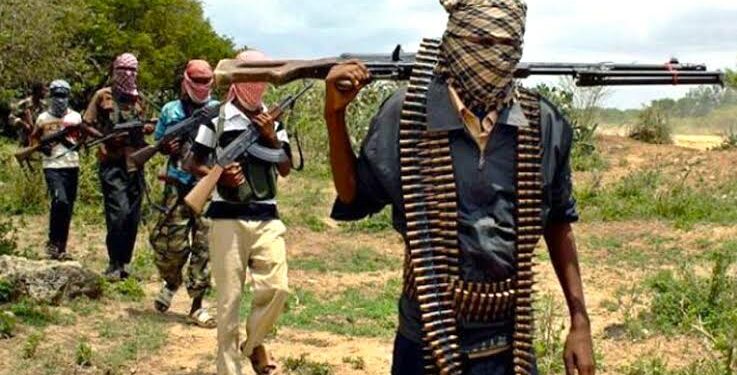
Residents were gripped by fear on Monday night as suspected bandits launched a deadly attack on Jege, a community in Yagba East Local Government Area of Kogi State.
According to local sources, the assailants struck under the cover of darkness, abducting an unconfirmed number of residents.
Details of the incident remain sketchy, and neither security agencies nor the state government have yet to issue any official statement.
Residents described the atmosphere as tense, expressing growing concern over the rising insecurity in parts of the local government area. Community members have called for increased patrols and urgent intervention to prevent further attacks.
Earlier on Monday, it was reported that the elder brother of Mr. Tosin Oluokun, the Chairman of Yagba West Local Government Area, was abducted. The victim was kidnapped while working on his farm within Yagba West LGA.
This latest attack underscores the persistent insecurity in the region, where farmers and other residents continue to face recurring cases of banditry and kidnappings.
Politics Nigeria earlier reported that gunmen stormed the First ECWA Church in Ayetoro Kiri, Kabba/Bunu Local Government Area, abducting at least 20 worshippers.
Local sources said the assailants opened fire during the service, causing panic and forcing many congregants to flee, while some were seized and taken away through nearby bush paths.
Residents described the church attack as chaotic, noting widespread fear and confusion as the community grappled with yet another violent episode.


Nigeria’s import bill for food and beverages rose to N5.27 trillion in the first nine months of 2025, according to an analysis of data from foreign trade statistics reports released by the National Bureau of Statistics (NBS).
This figure compares with N4.71 trillion recorded in the corresponding period of 2024, translating to an increase of N553.22 billion or 11.74% year on year.
The expansion was driven largely by a sharp rise in primary food imports, while processed food imports grew at a much slower pace.
Quarterly data also shows that import growth strengthened progressively through the year, with the highest values recorded in the third quarter.
Primary food imports power overall increase
Primary food and beverage imports climbed to N2.54 trillion between January and September 2025, up from N2.11 trillion in the same period of 2024. This represents an increase of N434.53 billion, equivalent to 20.63%, making primary products the main contributor to the overall rise in food imports.
Imports of primary food items mainly for industrial use reached N1.52 trillion in the first nine months of 2025, compared with N1.27 trillion a year earlier. The increase of N244.98 billion reflects a 19.25% year-on-year growth, highlighting stronger demand for raw food inputs by manufacturers and processors.
Primary food imports mainly for household consumption also rose sharply. The value increased from N833.52 billion in the first nine months of 2024 to N1.02 trillion in 2025. This represents an increase of N189.55 billion, or 22.74%, indicating a notable expansion in household demand for imported primary food items over the period.
Quarterly trends show how rapidly primary imports accelerated in 2025. In the first quarter, primary food imports stood at N730.01 billion, only slightly above N726.76 billion recorded in Q1 2024. Growth strengthened significantly in the second quarter, when imports rose to N929.77 billion, compared with N711.23 billion in Q2 2024.
By the third quarter, primary food imports amounted to N881.11 billion, up from N668.38 billion in Q3 2024, reflecting a year-on-year increase of N212.73 billion or 31.83%.
Within Q3 2025, primary items mainly for industry surged to N535.34 billion, compared with N303.63 billion a year earlier. This increase of N231.71 billion represents a 76.30% rise. In contrast, primary imports mainly for household consumption eased slightly to N345.77 billion, down from N364.75 billion in Q3 2024, a decline of 5.21%.
Processed food imports grow slowly, industry takes the lead
Processed food and beverage imports rose more modestly during the period under review. Nigeria imported processed food products worth N2.73 trillion in the first nine months of 2025, compared with N2.61 trillion in the same period of 2024. The increase of N118.68 billion translates to a 4.55% year-on-year growth.
The increase was driven entirely by industrial demand. Processed food imports mainly for industrial use rose to N1.69 trillion between January and September 2025, up from N1.49 trillion in the corresponding period of 2024. This represents an increase of N199.92 billion, or 13.38%.
By contrast, processed food imports mainly for household consumption declined. The value fell from N1.11 trillion in the first nine months of 2024 to N1.03 trillion in 2025, reflecting a decrease of N81.23 billion or 7.30%.
Quarterly data shows a mixed pattern for processed food imports. In Q1 2025, imports stood at N940.95 billion, up from N865.49 billion in Q1 2024. Imports dipped slightly in Q2 2025 to N801.63 billion, compared with N818.25 billion a year earlier. However, Q3 2025 recorded a rebound, with processed food imports rising to N983.45 billion, up from N923.61 billion in Q3 2024.
The Q3 increase was driven by processed items mainly for industry, which rose from N510.54 billion in Q3 2024 to N638.84 billion in Q3 2025, an increase of N128.30 billion or 25.13%. Meanwhile, processed food imports mainly for household consumption declined from N413.08 billion to N344.61 billion, representing a drop of N68.47 billion or 16.57%.
Overall, the NBS data shows that Nigeria’s food and beverage import growth in 2025 was led by primary food items and industrial demand, while household consumption of imported processed foods weakened over the nine-month period.
NIGERIA NEWS
President Not Empowered by Constitution to Suspend Governors, Legislators – THISDAYLIVE


•Says exercise of such powers subject to judicial review to prevent arbitrariness, abuse
•Strikes out PDP governors’ suit challenging emergency rule in Rivers
•Verdict an evil wind against democracy, opposition party declares
“Outside a validly declared state of emergency, the president possesses no power whatsoever to interfere with state executive or legislative institutions”
Chuks Okocha and Alex Enumah in Abuja
The Supreme Court, yesterday, stated that Section 305 of the Constitution did not confer power on the president to temporarily dissolve executive and legislative institutions of a state during emergency rule.
Alluding to the deliberate silence of the constitution on the spirit of the section 305, the Supreme Court added that the exercise of such powers remained subject to judicial review to prevent arbitrariness and abuse.
The apex court, which delivered judgement in a suit by Peoples Democratic Party (PDP) states against the declaration of a state of emergency in Rivers State by President Bola Tinubu, however, struck out the suit.
Tinubu had in March, citing threat to peace in Rivers State, declared a state of emergency, and, subsequently, suspended Governor Siminalayi Fubara, his deputy, as well as the entire Rivers State House of Assembly members for six months.
Tinubu, in addition, appointed a retired naval chief, Ibok-Ete Ibas, as sole administrator for the state, for the period of the emergency, which lasted six months.
While the emergency was in force, 11 PDP governors had through their states’ Attorneys-General approached the apex court to challenge the powers of the president to suspend elected public office holders, such as the governor of Rivers State and the state lawmakers.
The plaintiffs, in arguing their case, pointed out that they were not denying the president’s power to proclaim a state of emergency, but were challenging “the extent to which the proclamation can be made to affect the offices of the governor, deputy governor, and the State House of Assembly”.
Justice Mohammed Idris, who delivered the lead judgement and went into the merit of the suit, pointed out, “By virtue of sections 4-7 of the constitution, governmental powers divided among the Executive, Legislature and Judiciary, and distributed across the Federal, State, and Local Government tiers.
“No arm or tier of government is constitutionally superior to another, and none may lawfully usurp the powers expressly vested in another.”
While stating that Section 305 of the Nigerian Constitution was clear in its grant of power to proclaim a state of emergency, Idris remarked that the section was silent on the precise content of the “extraordinary measures” that might follow.
He said, “This silence is intentional. Emergencies are inherently situational, varying in scope, intensity, and threat. The constitution, therefore, entrusts the president with discretion to determine the measures required to restore peace and security, subject always to constitutional limits, proportionality, legislative oversight, and judicial review.”
The majority judgement cited the apex court decisions in the declaration of emergencies in 2004 and 2006 in Plateau and Ekiti states, respectively, and that of 2013 in Borno, Adamawa, and Yobe states, to show that emergency powers were not governed by a rigid formula.
It added that the constitutionally permissible response depended on the magnitude of the threat, the functionality of state institutions, and the necessity of intervention to restore constitutional order.
Idris added, “Nevertheless, the President’s discretion under Section 305 is not unfettered. Emergency measures must be temporary, corrective, and proportionate. They must be directed towards restoring constitutional governance, not extinguishing it. Any permanent displacement or abrogation of democratically elected institutions would constitute a constitutional aberration.
“Outside a validly declared state of emergency, the president possesses no power whatsoever to interfere with State executive or legislative institutions.
“On the whole, a proclamation of a state of emergency is constitutionally valid where it is issued under Section 305 of the 1999 Constitution of the Federal Republic of Nigeria (as amended), approved by not less than two-thirds majority of all the members of each House of the National Assembly in accordance with their Standing Orders, and implemented through measures that are temporary, proportionate, and directed at restoring constitutional order.
“The exercise of such powers remains subject to judicial review to prevent arbitrariness or abuse.
“Having clarified these constitutional principles, I reiterate that the instant suit failed to disclose any reasonable cause of action capable of invoking the original jurisdiction of this Court under Section 232 of the 1999 Constitution as amended.
“No justiciable dispute between the federation and any or all of the Plaintiffs’ states has been established.”
The apex court, in the split judgement of six-to-one, held that the court lacked the necessary jurisdiction to entertain the suit brought by the 11 PDP states, which were the plaintiffs in the matter.
According to the majority judgement, the plaintiffs could not establish any cause of action that would warrant the apex court to activate its original jurisdiction to hear the matter.
The apex court held that the court lacked the necessary jurisdiction to entertain the suit and subsequently struck it out.
Idris, who delivered the lead judgement, explained that the plaintiffs failed to show that there existed any actionable dispute between the plaintiffs and the federation to require the court to exercise its original jurisdiction.
According to the judgement, the emergency declaration was not declared in any of the states of the plaintiffs to clothe them with the necessary legal powers to initiate the suit, in the first place.
The apex court, in the majority judgement, having established that the plaintiffs lacked the necessary locus standi to challenge the action of the president in addition to the absence of a cause of action, proceeded to strike out the suit and subsequently dismissed it for want of jurisdiction.
Meanwhile, Justice Obande Ogbuinya, in a minority judgement, insisted that the president could not suspend elected public officials under a state of emergency.
According to Ogbuinya, although the president could declare a state of emergency, he could not use such power as a tool to suspend elected state officials, including governors, deputy governors, and members of legislature.
PDP: It’s an Evil Wind Against Democracy
Peoples Democratic Party (PDP) described the Supreme Court judgement as an evil wind against democracy and its principles.
PDP said though it had accepted the judgement, it was counterproductive to democracy and its principles.
The party said the judgement of the Supreme Court consciously promoted authoritarianism and entrenched tyranny.
In a statement by its National Publicity Secretary, Comrade Ini Ememobong, PDP said, ‘’While we respect the authority of the apex court and recognise its finality within our jurisdiction, we are, nevertheless, compelled to draw attention to the grave dangers that can emanate from the interpretation of the reasoning in this judgement on the political landscape of our country.
‘’Our concern is anchored on the age-long principle of law that the express mention of one thing excludes others (expressio unius est exclusio alterius), and the clear constitutional position that no person or institution (other than the State House of Assembly or a court of law) is empowered to remove a governor from office, even temporarily, during the subsistence of a constitutional term.
‘’To hold otherwise is to create a pathway by which a President, with the active support of the National Assembly, can compel political alignment or compliance through the instrumentality of emergency powers in ways not envisaged by the constitution.
‘’We submit that the interpretation of this judgement has the potential to reverse the hard-won democratic gains by unwittingly making state governments completely subservient to the Federal Government, forcing them to seek to ‘connect to the centre’ by joining the ruling party, as we are already witnessing.”
The statement added, “‘More troubling is the fact that the logical extension of this reasoning based on the provision of Section 305(3)(c) ‘extraordinary measures to restore peace and security’ could, in the future, be interpreted to justify the suspension of other constitutional institutions, including the judiciary itself.
‘’We cannot reconcile how in a federation (not a unitary state) an elected President can be empowered to dismantle the democratic structures of a federating unit, sack elected officials and appoint leaders there, without consciously promoting authoritarianism and entrenching tyranny.”
PDP said, ‘’As a political party wholly committed to the protection and consolidation of democracy in Nigeria, we hereby call on the National Assembly to urgently initiate constitutional and legislative safeguards that clearly define and limit the scope of emergency powers of the president, to prevent imminent abuse and preserve Nigeria’s federation.
‘’We also urge Nigerians, civil society organisations, the media, and the international democratic community to remain vigilant in the defence of constitutionalism, federalism, and the sanctity of the electoral mandate.
‘’We remain hopeful that, at the next opportunity, the Supreme Court will have cause to extensively clarify the constitutional boundaries of emergency powers, in the overriding interest of justice, democracy, and the long-term stability of our Republic.”


US President Donald Trump on Monday filed a lawsuit seeking at least $10 billion from the BBC over a documentary that edited his 2021 speech to supporters ahead of the US Capitol riot.
The lawsuit, filed in federal court in Miami, seeks “damages in an amount not less than $5,000,000,000” for each of two counts against the British broadcaster, for alleged defamation and violation of the Florida Deceptive and Unfair Trade Practices Act.
Trump, 79, had said earlier on Monday that the lawsuit was imminent, claiming the BBC had “put words in my mouth,” even positing that “they used AI or something.”
The documentary at issue aired last year before the 2024 election, on the BBC’s “Panorama” flagship current affairs program.
The video spliced together two separate sections of Trump’s speech on January 6, 2021 in a way that made it appear he explicitly urged supporters to attack the Capitol, where lawmakers were certifying Joe Biden’s 2020 election win.
“The formerly respected and now disgraced BBC defamed President Trump by intentionally, maliciously, and deceptively doctoring his speech in a brazen attempt to interfere in the 2024 Presidential Election,” a spokesperson for Trump’s legal team said in a statement to AFP.
“The BBC has a long pattern of deceiving its audience in coverage of President Trump, all in service of its own leftist political agenda,” the statement added.
The British Broadcasting Corporation, whose audience extends well beyond the United Kingdom, faced a period of turmoil last month after a media report brought renewed attention to the edited clip.
The scandal led the BBC director-general and the organization’s top news executive to resign.
Trump’s lawsuit accuses the edited speech in the documentary of being “fabricated and aired by the Defendants one week before the 2024 Presidential Election in a brazen attempt to interfere in and influence the Election’s outcome to President Trump’s detriment.”
The BBC has denied Trump’s claims of legal defamation, though BBC chairman Samir Shah has sent Trump a letter of apology.
Shah also told a UK parliamentary committee last month that the broadcaster should have acted sooner to acknowledge its mistake after the error was disclosed in a memo, which was leaked to The Daily Telegraph newspaper.
The BBC lawsuit is the latest in a string of legal action Trump has taken against media companies in recent years, several of which have led to multi-million-dollar settlements.
bur-jgc/des
The post Trump sues BBC for $10 billion over documentary speech edit appeared first on Vanguard News.


Operatives of the Anti-Kidnapping Squad of the Niger State Police Command have arraigned eight suspected child traffickers before Minna Chief Magistrate’s Court.
Head of the Squad, DSP Ahmed Sa’idu, led the team to arrest the suspects in Nasarawa State for being in possession of stolen children from various parts of Niger.
The defendants include Leo Ugochukwu, Ngozi Ugochukwu, Henrietta Obiako and Rosemary Ogbulogo. Others, according to police First Information Report (FIR), were Chiroma Onyaja, Vincent Emmanuel, Joy Ndife and Olusegun Isaiah, all of Nyanya in the Federal Capital Territory (FCT) and Nasarawa.
They were charged on eight counts bordering on criminal conspiracy, kidnapping, concealing or keeping kidnapped/abducted persons, dealing in human beings, child stealing, trafficking in persons, indecent treatment of children, wrongful confinement and wrongful confinement in secret.
The FIR marked MMC/CMC/74/25 Report (FIR), made available in court, noted that the eight charges were punishable under Section 60 (2),(a) (1), 211, 238 and 239 of the Niger State penal code.
The Police Prosecutor, Inspector Aliyu Kuta, told the court that on November 5, 2025, about 3.00pm, Victoria Ebunoha of Loko, Karu Local Council of Nasarawa, was arrested at Dikko Junction in possession of three male children suspected to be stolen.
During interrogation, she confessed to have stolen the children from Lambata in Gurara Local Council of Niger State, heading to Nyanya in FCT to sell them.
On further interrogation, she disclosed that she stole seven other children from their parents, namely, Mohammed Bala, Danlami Zhami, Bello Usman and others at Lambata and Sabon Wuse.”
The stolen children, according to the prosecutor, were sold to Leo Ugochukwu of Loko, at the rate of N1.1 million.
“On further interrogation, they all confessed to have intentionally purchased the children from Ebunoha, knowing fully that the children were stolen by her,” he stated.
When the charges were read to them by the presiding Chief Magistrate, Murtala Ibrahim, they all pleaded not guilty, while Kuta applied for a new date for further mention of the case.
He also prayed the court to remand them in Minna Old Correctional Centre till the next adjourned date. The Chief Magistrate remanded them and adjourned till January 5, 2026, for further mention.