
NIGERIA NEWS
Northern, Southern Nigerian Youths Unite to Sign Peace Accord Ahead of 2027

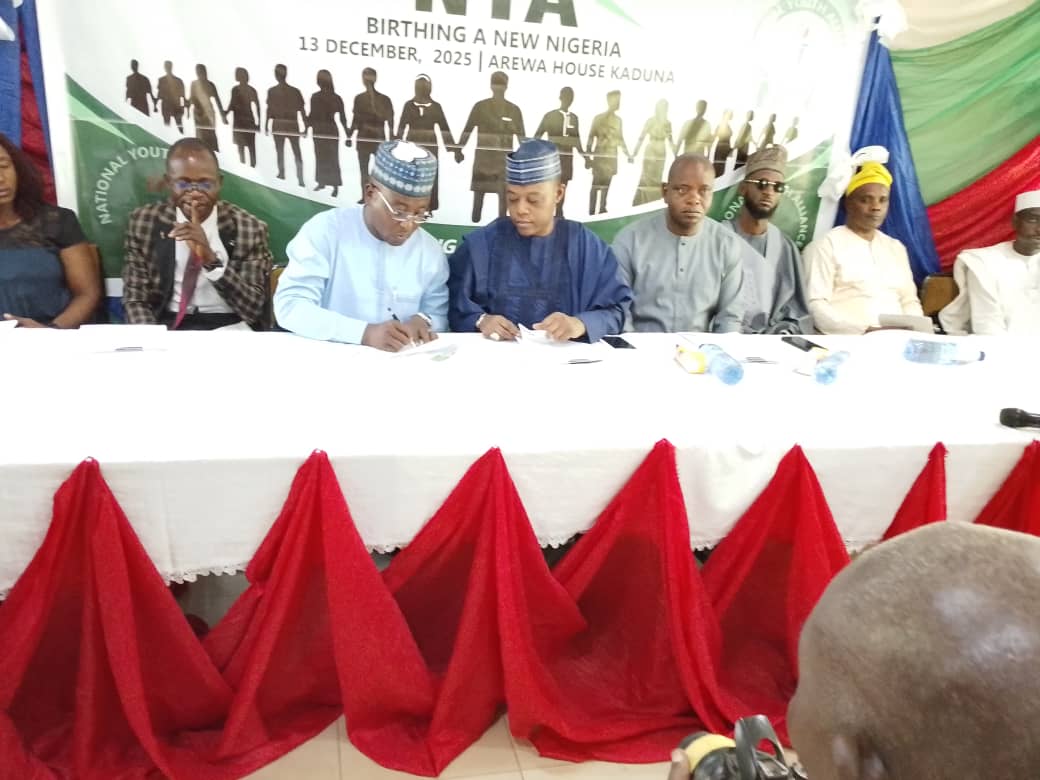
Youths from Northern and Southern Nigeria have come together in a rare show of unity, signing a peace accord aimed at strengthening national cohesion ahead of the 2027 general elections.
The agreement, reached in Kaduna, signals a joint resolve by young Nigerians to reject ethnic and religious divisions and to play a more coordinated role in the country’s political and economic future.
The gathering, which brought youths from across the North, South-East, South-South and South-West under one roof, took place at the historic Arewa House in Kaduna.
It was organised by the National Youth Alliance (NYA) and ended with the signing of a peace pact titled “The Birthing of a New Nigeria.”
Participants committed themselves to peaceful engagement, unity of purpose and collective action as Nigeria moves closer to another election cycle.
The accord comes at a time when tensions often rise along regional and religious lines as elections approach.
Over the years, Nigerian youths have frequently been mobilised as foot soldiers in political battles, with long-standing grievances such as unemployment, insecurity and poverty making them vulnerable to manipulation.
Speaking at the event, Vice-Chairman of the NYA (North), Abubakar Mohammed-General, criticised what he described as decades of exploitation of young people by political elites.
He said youths had been deliberately divided through misinformation and false narratives, turning them against one another instead of allowing them to contribute meaningfully to national development.
“For decades, politicians and elites have been using us to gain power and political relevance. They divided us along religious and ethnic lines. So much fake news and misinformation were dished out so that we would continue to see ourselves as sworn enemies,” General said.
On his part, Vice-Chairman of the NYA (South), Meshack Onyeche, stressed that the unity of Nigeria remains non-negotiable.
He said young people across the country had agreed to rise above divisive politics and reject attempts to pitch one region against another.
“Nigeria can never be divided. Nigeria is our country. Nobody can divide us,” Onyeche declared.
He added that youths have suffered the most from political instability and economic decline, noting that many have been used to serve narrow interests that do not improve their lives or communities.
Earlier, the Convener of the National Youth Alliance, Ambassador Aliyu Bin Abbas, reflected on the journey of the group. He explained that the alliance initially attempted to register as a political party but was turned down by the Independent National Electoral Commission at the time.
“Instead of being defeated, we continued our programmes and eventually metamorphosed into a movement,” Abbas said.
He accused political leaders of consistently misleading young Nigerians, arguing that many in positions of authority prioritise personal and family interests over the collective good of the country.
“The reality today is that our leaders have been misleading the youth for a very long time. They are only concerned about their families,” he said.
The Kaduna meeting highlighted growing efforts by youth groups to promote dialogue and national unity amid worsening insecurity, economic hardship and concerns about the future of Nigeria’s democracy.
Many youth leaders believe that building cross-regional cooperation is key to preventing violence and divisive rhetoric in the run-up to the 2027 polls.
Since its emergence as a movement, the National Youth Alliance has focused on advocacy, peacebuilding and political awareness, positioning itself as a bridge between young people in the North and South.
The peace accord signed in Kaduna reflects a broader determination among youths to speak with one voice and resist being used to fuel conflict during election periods.


A coalition of prominent opposition leaders has alleged that the Federal Government is using anti-corruption agencies to intimidate and persecute opposition figures, warning that such actions could undermine multi-party democracy in the country.
In a joint statement on Sunday, the coalition accused the administration of President Bola Tinubu of weaponising state institutions—particularly the Economic and Financial Crimes Commission, the Nigeria Police, and the Independent Corrupt Practices and Other Related Offences Commission—to target political opponents under the guise of fighting corruption.
DAILY POST reports that the statement was jointly signed by former Vice President Atiku Abubakar; former Senate President and National Chairman of the African Democratic Congress, ADC, Senator David Mark; former Labour Party presidential candidate Mr Peter Obi; former Governor of Edo State, Chief John Odigie-Oyegun; former Deputy National Chairman (South) of the Peoples Democratic Party, PDP, Chief Olabode George; and former Minister of State for Defence, Lawal Batagarawa.
“Nigerians have witnessed what many now describe as a covert, undemocratic agenda: to ensure that all state governments fall under the control of the President’s party – not through transparent electoral contests, but by secretly intimidating opposition governors via the anti-corruption apparatus until they succumb and defect.
“Recent defections of opposition governors into the ruling party have reinforced public suspicion that political pressure, not ideological or personal persuasion, is driving this realignment.
“This pattern forms part of a broader project that targets not only elected leaders but also key opposition figures perceived as architects of emerging coalitions ahead of the 2027 general election.
“We must warn that this project, if allowed to continue unchecked, poses a grave danger to Nigeria’s democratic future,” the statement read.


Prominent opposition leaders across party lines have accused the Economic and Financial Crimes Commission (EFCC) of abandoning its constitutional mandate and operating as a political instrument of the ruling All Progressives Congress (APC) to weaken opposition parties.
The allegation was contained in a joint statement issued on Sunday by former Vice President Atiku Abubakar, 2023 Labour Party presidential candidate Peter Obi, African Democratic Congress (ADC) National Chairman, Senator David Mark, former Deputy National Chairman of the Peoples Democratic Party (PDP), Chief Olabode George, and former APC National Chairman, Chief John Odigie-Oyegun.
The opposition leaders accused the EFCC of selective enforcement of anti-corruption laws, alleging a “discernible pattern of persecution of opposition figures” aimed at benefiting the ruling party.
According to the statement, allegations involving members of the APC are often ignored, while even unsubstantiated claims against opposition politicians are aggressively pursued and subjected to media trial.
They recalled a past remark by a former APC National Chairman, Adams Oshiomhole, that joining the ruling party amounts to having one’s sins forgiven, saying the statement has come to symbolise a troubling political reality.
“Whether intended as political rhetoric or not, that statement has come to reflect the current state of affairs,” the leaders said.
They cited cases involving two former APC ministers allegedly implicated in financial misconduct and certificate forgery, noting that while both resigned, neither has been prosecuted by the EFCC or the Federal Government.
“Such selective enforcement undermines the legitimacy of anti-corruption efforts and erodes public trust,” the statement added.
The opposition figures further accused the APC-led Federal Government of using anti-corruption agencies to intimidate opposition governors until they defect to the ruling party, claiming the recent wave of defections has strengthened public suspicion of political coercion.
They argued that the trend forms part of a broader strategy targeting opposition leaders perceived as central figures in emerging political coalitions ahead of the 2027 general election.
The leaders called for the EFCC to be insulated from political interference and urged that the agency should not operate at the behest of any president, party or political faction.
“The EFCC must recognise and exercise its functions without fear or favour, covering both pre- and post-expenditure oversight,” they said.
They also called for greater accountability within the commission and proposed an amendment to the EFCC Act to strengthen institutional independence and oversight.
The opposition leaders further pledged to defend Nigeria’s democracy, stating that they would, in the coming weeks, engage international partners and diplomatic missions, including those of the United States, United Kingdom, Canada, the European Union, the World Bank and the United Nations, to express concerns over what they described as the politicisation of Nigeria’s anti-graft agency.
“Nigeria’s democracy demands vigilance, courage and unity,” the statement concluded.
Please follow and like us:


Heads of State and Government of the Economic Community of West African States (ECOWAS) have agreed to forge a proactive and forceful united front to put an end to the spread of military coups, terrorism and other forms of insecurity across the region.
The decision taken in Abuja on Sunday at the 68th Ordinary Session of the Authority of ECOWAS leaders followed a series of successful military takeovers in the Sahel, with the bloc shifting from reactive sanctions to preemptive military and diplomatic intervention.
The most concrete evidence of a united front was the rapid response to stop the coup in the Republic of Benin on 7 December 2025, when, within hours of soldiers seizing the national broadcaster in Cotonou, President Bola Tinubu deployed Nigerian fighter jets and ground troops to support loyalist forces.
Immediate past Chairman of the ECOWAS Authority of Heads of State and Government, President Tinubu of Nigeria; the current Chairman, President Julius Maada Bio of Sierra Leone, and President of the ECOWAS Commission, Omar Touray, among others, who spoke at the 68th ordinary session hosted by Nigeria, maintained that a united front and solidarity are the way to go in order to halt military takeovers and violent extremism in the region.
Represented by his deputy, Vice President Kashim Shettima, at the session tagged, “Special Debate on the Future of the Community,” President Tinubu listed incessant coups, transnational organised crime, arms proliferation, cyber insecurity, climate shocks, food insecurity, and irregular migration as crises in the region that must be tackled collectively, saying these forms of criminality have no respect for borders.
The Nigerian leader, while speaking during the opening of the session, acknowledged that member states disagree just like all families contest ideas, and test one another’s patience, pointing out however that disagreements and sibling rivalry do not erase belonging or annul shared blood.
“Excellencies, the external threats confronting West Africa today demand nothing less than a united front. Terrorism, violent extremism, unconstitutional changes of government, transnational organised crime, arms proliferation, cyber insecurity, climate shocks, food insecurity, and irregular migration recognise no borders.
“No single Member State, regardless of size or strength, can achieve enduring stability in isolation. Our security, prosperity, and resilience are indivisible. We must sit at the same table, speak with one voice, and act with shared resolve,” he stated.
President Tinubu reafirmed what he described as Nigeria’s “proven fidelity” to the ideals of ECOWAS and the nation’s “unwavering commitment to collective action in defence of” the region’s common future.
The Nigerian leader said the position of Nigeria and his abiding conviction demonstrated by his actions have consistently signalled that the region’s “unity is not transactional, but foundational,” adding that “fraternity, not force, must define the future of” ECOWAS.
President Tinubu regretted the steep descent into internal disagreement within the ECOWAS region, which, according to him, has shaken the very foundation of the union, just as he noted that “a community is only as strong as the trust its members repose in one another.
“We are most vulnerable not when challenged from outside, but when weakened from within. Time and again, we have demonstrated that we are not threats to one another. Our shared challenge, therefore, is to ensure that internal divisions do not erode the collective strength we have built over decades,” he added.
The president thanked member states for their contributions toward restoring order, stability, and confidence in the region, saying, “Your efforts reaffirm that our shared geography is not a curse, but an opportunity to build a Community that serves our collective good and protects the dignity of our peoples.”
For his part, Chairman of the ECOWAS Authority of Heads of State and Government, President Bio of Sierra Leone, thanked his predecessor, Mr Tinubu, and the Federal Government of Nigeria for hosting the session, just as he applauded Nigeria’s win-win leadership across the region.
He specifically commended the regional bloc’s leadership and singled out Nigeria for “taking the lead in safeguarding constitutional order in the Benin Republic.”
President Bio described the ECOWAS 68th ordinary of session as a defining moment for ECOWAS and a turning point for over 400 million West Africans.
He also disclosed that beginning from January 2026, ECOWAS will implement a landmark measure to reduce the cost of air travel across West Africa.
Under this agreement, the ECOWAS Chairman said, member states will abolish air transport taxes, among other measures.
On his part, President of the ECOWAS Commission, Mr Touray, acknowledged the support of various foreign and continental partners to ECOWAS, emphasising however that events of the last few weeks in West Africa have demonstrated what regional solidarity can achieve.
He cited the instability in Guinea-Bissau and the attempted coup in Benin Republic, which, according to him, were addressed following a “swift response led by President Bola Tinubu.”
Mr Touray commended regional leaders for their strong commitment to the community, noting that for over five decades, the ECOWAS Authority has met consistently to engage issues confronting the region with wisdom, foresight, and respect.
He also announced that Africa’s richest man, Aliko Dangote, has accepted to serve as Chairman of the ECOWAS Business Council, a platform that will facilitate dialogue between the private sector and governments for the development of the region.
Also, the Chairperson of the African Union Commission, Mahmoud Youssouf, represented by the AU Commissioner for Political Affairs, Peace and Security, Bankole Adeoye, said the session provided an opportunity for stakeholders to scale up coordination and strategic dialogue in advancing democracy and regional stability.
He stressed that the attempted coup in Benin Republic and the associated instability in Guinea-Bissau remain regrettable and “unacceptable to the African Union.”
Stanley Nkwocha
Senior Special Assistant to The President on Media & Communications
(Office of The Vice President)
14th December, 2025

The Economic and Financial Crimes Commission (EFCC) has warned Nigerians against celebrating convicted corrupt individuals, saying the practice undermines the country’s anti-corruption efforts.
Nasir Salele, head of legal department, EFCC Kaduna zonal directorate, spoke at a one-day capacity-building workshop for media practitioners and civil society organisations in Kaduna.
Salele expressed concern that communities often glorify individuals convicted of corruption instead of condemning their actions.
He said he had “seen instances where local people from their villages come to court, and instead of supporting the prosecution, they do the opposite”.
Salele said some supporters even protest naked in favour of individuals facing corruption charges.
“There was a case in Nigeria well-known and on record where an individual was investigated, prosecuted, found guilty, convicted and sentenced to a term of imprisonment.
“After he completed the imprisonment, the entire community came out to celebrate and welcome him back as their son. Ideally, the community ought to have detested him,” Salele stated.
He described the situation as “the unfortunate reality in Nigeria,” where individuals in authority “amass money without explanation, and instead of being questioned, he is given a traditional title”.
Salele said the attitude often leaves prosecutors wrongly perceived as “enemies”.
Declaring the workshop open, Bawa Usman Kaltungo, acting zonal director, EFCC Kaduna directorate, spoke on behalf of the executive chairman.
Kaltungo said the media and civil society organisations are “critical drivers of change in the fight against the menace of corruption”.
Also speaking, Tony Orilade, head of public interface, EFCC headquarters, criticised the culture of glorifying corrupt individuals.
Orilade said some Nigerians “can even do asoebi in support of such individuals,” adding that Nigeria must be protected from corrupt individuals and fraudsters.


ARN Foods Limited is a Nigerian agro-commodity trading and food-processing company incorporated in 2019.
The company operates across the trading, logistics, and storage of key agricultural commodities, including rice, maize, sesame seeds, soya beans, cocoa, and sorghum, competing with established agro-traders such as Olam Nigeria and other regional grain aggregators.
Beyond commodity trading, the company is expanding food processing to support growth and margin improvement.
A key milestone is the development of a privately owned rice mill in Itunu City, Epe, Lagos, with a processing capacity of 192 tonnes of paddy per day. The facility is expected to strengthen value capture, support local employment, and enhance supply to the Lagos consumption market.
To fund working-capital needs, the company has launched a N7 billion Series 1 Commercial Paper under its N15 billion CP Programme, marking a return to the short-term debt market after the successful redemption of its debut paper.
The offer, which is open to eligible investors, is expected to close on Wednesday, December 17, 2025, according to the programme documents.
Key details of the issuance
- Tenor: 364 days
- Discount rate: 19.36 per cent
- Effective yield: 24.0 per cent
- Minimum subscription: N5 million and multiples of N1,000 thereafter
Based on a N5 million investment, an investor would earn about N1.2 million over the tenor, bringing the total maturity value to roughly N6.2 million.
Track record in the CP market
The new programme succeeds ARN Foods’ N5 billion CP Programme registered in 2024, under which the company raised N3.86 billion in its debut Series 1 issuance.
Although the original target was N3 billion, the offer was oversubscribed.
Notably, the company fully repaid investors on November 7, 2025, three days ahead of the scheduled maturity date of November 10, reflecting a repayment discipline and commitment to debt investors.
That repayment history sits alongside a balance sheet that has changed meaningfully over the past year.
- At the end of 2024, ARN Foods carried limited interest-bearing debt of N175 million, at a time when profits were rising and financing costs remained manageable.
- Earnings were more than sufficient to meet interest obligations, providing a comfortable buffer.
By the third quarter of 2025, borrowing had increased sharply to N2.31 billion.
This shift pushed interest costs higher and narrowed the margin of safety between earnings and finance charges.
While profits in the nine-month period were still adequate to cover interest payments several times over, the cushion was notably thinner than in the previous year.
Put simply, ARN Foods is now more leveraged than it was in 2024, introducing a different risk profile.
The company is no longer operating with excess balance sheet slack, but neither is it under immediate strain.
Its ability to service short-term obligations now depends more heavily on steady cash flows and smooth execution of its growth plans as a key consideration for the current commercial paper issuance.
Revenue, profit and cash flow trends
So far, the operating numbers suggest the business is still generating scale.
- Revenue grew from N3.62 billion in 2023 to N5.52 billion in 2024, reflecting strong demand across its agro-commodity trading and logistics activities.
- That momentum continued into 2025, with N4.29 billion recorded by the third quarter, keeping the company on pace for another high-revenue year.
Profitability has followed a similar path.
- Net profit rose to N746 million in 2024, up from N510 million a year earlier, while ₦697 million was recorded by Q3 2025, indicating that earnings have remained resilient despite higher financing costs and expansion-related pressures.
More importantly for short-term debt investors, cash generation has remained positive.
- Net cash flow from operating activities stood at N2.09 billion in 2024, before moderating to N658 million by Q3 2025.
- While the slowdown reflects heavier working-capital demands, operations are still producing cash.
Taken together, the picture is of a business that is still growing and profitable but now operating with less room for error than in the past.
Revenue momentum and operating cash flow provide support for the commercial paper, but the increased reliance on debt means sustained execution matters more than before.
For investors, the ARN Foods commercial paper ultimately comes down to a simple question: can the company keep cash flowing steadily over the next year, because that is what will pay for this paper?
Yield versus risk
On a 24.0% return, the ARN Foods commercial paper also stands out in today’s market.
- The yield is well above Nigeria’s inflation rate of 16.05 per cent and higher than the average return on Federal Government risk-free instruments, which are currently below 18%.
- In effect, investors are being paid a clear premium for taking on corporate risk over a short one-year period.
But is the risk worth taking? That depends on how investors weigh the higher return against the company’s credit standing.
ARN Foods is rated BBB+ on the long term and A2 on the short term by DataPro Limited, placing it in the investment-grade category for Nigerian corporate issuers.
- In practical terms, the rating agency views the company as having a reasonable capacity to meet its obligations, while also noting that its financial strength could be affected if operating conditions weaken or expansion plans fall behind schedule.
For commercial paper investors, the A2 short-term rating is particularly relevant.
It signals that, despite higher borrowing than in previous years, ARN Foods is still viewed as capable of meeting near-term payment obligations.
The rating does not remove risk, but it suggests that the 24 per cent yield is being paid on a business that remains creditworthy, rather than one under financial strain.
NIGERIA NEWS
Opposition Leaders Raise Alarm over Threat to Nigeria’s Multi-Party Democracy – THISDAYLIVE


• Accuse Tinubu government of plotting to annihilate opposition
• Demand independent review of all public accounts from 2015–2025 to show persecution
• Propose embedding anti-graft operatives into government payment systems
Prominent opposition leaders in Nigeria have raised serious concerns over what they described as a deliberate plot by the administration of President Bola Ahmed Tinubu to weaken and ultimately dismantle the country’s multi-party democracy through the politicisation of anti-corruption agencies.
In a strongly worded joint statement on Sunday, the leaders accused the Federal Government of weaponising state institutions, particularly the Economic and Financial Crimes Commission (EFCC), the Nigeria Police and the Independent Corrupt Practices and Other Related Offences Commission (ICPC), to persecute political opponents under the guise of fighting corruption.
The statement was jointly signed by former Vice President Atiku Abubakar; former Senate President and National Chairman of the African Democratic Congress (ADC), Senator David Mark; former presidential candidate of the Labour Party, Mr Peter Obi; former Governor of Edo State, Chief John Odigie-Oyegun; former Deputy National Chairman (South) of the Peoples Democratic Party (PDP), Chief Olabode George; and former Minister of State for Defence, Mallam Lawal Batagarawa.
According to the opposition leaders, Nigeria is witnessing a “dangerous and undemocratic agenda” aimed at forcing opposition-controlled states into the ruling All Progressives Congress (APC) through intimidation rather than credible elections.
They alleged that opposition governors and key political figures are being pressured by anti-graft agencies to defect to the ruling party, warning that recent defections have reinforced public suspicion that coercion, rather than ideology, is driving political realignments.
“State power is increasingly being deployed not for the prevention of economic crimes, but for the systematic persecution of perceived political adversaries, with the ultimate aim of weakening opposition voices ahead of the 2027 general election,” the statement said.
The leaders warned that if unchecked, the trend could push Nigeria towards a de facto one-party state and endanger the country’s democratic future.
The statement accused the EFCC of selective enforcement of anti-corruption laws, alleging that opposition figures are aggressively investigated and subjected to media trials, while allegations against members of the ruling party are either ignored or quietly dropped.
They cited past remarks by a former APC National Chairman, Adams Oshiomhole, that “once you have joined APC, all your sins are forgiven,” arguing that the statement has come to symbolise public perception of unequal justice.
The opposition leaders referenced recent cases involving former ministers accused of financial and credential-related scandals who, despite public outrage and resignations, have yet to be charged or arraigned, with some reportedly active in the President’s re-election efforts.
“This selective enforcement undermines the credibility of anti-corruption efforts and erodes public trust in national institutions,” the statement added.
As part of their demands, the opposition leaders called on the Attorney General of the Federation, in consultation with the National Assembly, to establish an independent review body to examine the public accounts of the federal, state and local governments from 2015 to 2025.
They said the proposed body should have unrestricted access to public financial records, publish its findings, and expose patterns of selective prosecution while recommending reforms to strengthen the EFCC.
The proposed review panel, they said, should be chaired by an eminent judge and include representatives from civil society organisations, the Nigerian Bar Association, the Institute of Chartered Accountants of Nigeria, the Institute of Chartered Bankers, the Nigerian Financial Intelligence Unit, the anti-graft agencies, the Police, the DSS, the Armed Forces, and all political parties represented in the National Assembly.
The opposition leaders also proposed embedding anti-corruption operatives directly into government payment and expenditure processes at all levels of government to prevent, rather than merely punish, financial crimes.
Relying on recent Supreme Court rulings affirming the EFCC’s oversight over public accounts, they argued that operatives should monitor expenditures both before and after payments are made and be held accountable for any unreported infractions.
They further called for amendments to the EFCC Act to strengthen its preventive mandate and institutional independence.
The opposition leaders urged Nigerians across party, ethnic and religious lines to remain vigilant and defend the country’s multi-party democracy, warning that political injustice could snowball into instability as the nation approaches another election cycle.
They also disclosed plans to engage Nigeria’s international partners, including the United States, United Kingdom, Canada, the European Union, the United Nations and the World Bank, to express concerns over what they described as the growing misuse of the EFCC for political purposes.
“Nigeria belongs to all of us, not to a single party or a single leader,” the statement concluded, calling on citizens to rise against silence and defend the nation’s democratic soul.

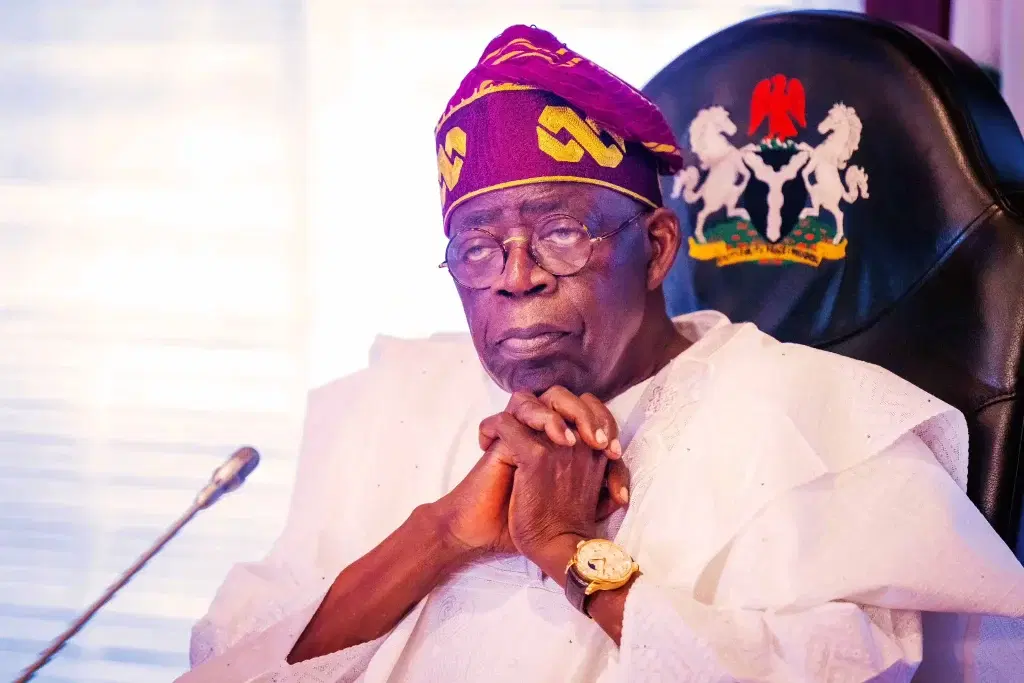
The All Progressives Congress (APC) says Nigerians should not doubt President Bola Tinubu’s genuine intentions for a safer, united and prosperous country.
The Lagos State APC Chairman, Pastor Cornelius Ojelabi, said this at the 3rd edition of the party ‘s “Christmas Carol and Nine Lessons” on Sunday evening.
The News Agency of Nigeria (NAN) reports that the programme, tagged “Prince of Peace (Omo Alade Alafia),” was held at the party’s secretariat in the Ogba area of the state.
Ojelabi, who urged Nigerians to reaffirm their unbreakable spirit in the face of challenges, said the President’s intentions remained genuine and beyond doubt.
“We acknowledge with gratitude and commend the good intentions of President Bola Tinubu to make Nigeria a safer and more prosperous place for everyone to live without fear and intimidation.
“We appreciate his commitment to national unity, economic revitalisation and the welfare of every Nigerian.
“His intentions truly inspire us to redouble our efforts for Lagos and the nation,” Ojelabi said.
He added that the Lagos APC leadership, led by Gov. Babajide Sanwo-Olu, is committed to the security of lives and property in the state.
“Lagos is safe and will continue to be safe, a safe haven for all residents, visitors and tourists,” Ojelabi said.
He urged citizens to play their part to make the country great, and reclaim its position in the comity of nations.
Speaking on the Christmas carol, Ojelabi said the theme “Prince of Peace, Omo Alade Alafia” recognised the special place of Jesus Christ in creation.
He described Jesus as “a true prince and an embodiment of peace.”
According to him, in the true spirit of devotion that Christmas embodies, the event was organised to celebrate Christ.
He said the carol was a reminder of the importance of religious leadership in the pursuit of peace and prosperity for communities, states and the nation.
“As we share in the joy and reflection of this season, I hope we can find a common ground in the universal messages of love, humility and service that the Christmas story inspires.
“Let us love one another more and show greater enthusiasm for our country. Let us eschew all forms of bitterness, hatred and violence.
“Let us collectively resolve to make Lagos and Nigeria brighter, safer and more prosperous,” he said.
Also speaking, Sanwo-Olu, who was represented by his deputy, Dr Obafemi Hamzat, noted that the state had enjoyed peace for the past 25 years, urging residents to prioritise peace above all.
Sanwo-Olu said: “APC stands as a shining star of progress. We must use this season to share love among ourselves.
“For us in Lagos and the APC, peace has always been our cornerstone, irrespective of political affiliations. Let us use the Christmas season to strengthen our unity.”
Expressing gratitude to President Bola Tinubu for his commitment to peace and unity, Sanwo-Olu called on Nigerians to renew their commitment to peaceful coexistence.
In his goodwill message, Sen. Opeyemi Bamidele, the Senate Leader, who read from John 11:39, urged Nigerians to remove anything capable of inhibiting their progress and that of the nation.
Bamidele said: “Carol is a time to come together and celebrate God. It is not just a ritual; it is a moment to appreciate God.
“As we celebrate Christmas, let us continue to remember the reason for the season, which is Jesus and what He stands for.
“Before you say or do anything, always ask yourself: what would Jesus do? Life will be better if we always ask ourselves this question.
“Jesus asked us to take away the stones, which represent sin and evil impeding our progress,” Bamidele said.
NAN reports that religious and political leaders, including Rev. Esther Ajayi, founder of the Love of Christ Generation Church (C&S), and the wife of the Lagos State Governor, Dr Ibikoke Sanwo-Olu, took turns to read the carol’s nine lessons.
Bishop Stephen Adegbite, Chairman of the Christian Association of Nigeria (CAN), Lagos State chapter, and Secretary of the Nigerian Christian Pilgrims Commission (NCPC), offered special prayers for Tinubu, Sanwo-Olu,Nigeria and the state.
The event drew a large crowd of APC members, leaders, as well as religious and traditional leaders.
Different church choirs and gospel artistes added spice the programme with thrilling performances.
Vanguard News
The post Tinubu has genuine intentions for Nigeria’s security, prosperity — APC appeared first on Vanguard News.


A mortuary attendant at Akugbe Mortuary in the Upper Sakponba area of Ikpoba-Okha Local Government Area of Edo State has been arrested by the police following allegations that vital organs were missing from a corpse deposited at the facility.
The incident, which occurred on Friday, reportedly sparked tension after relatives and friends of the deceased arrived at the mortuary to collect the body for burial and allegedly discovered that some organs were missing. The development led to accusations that the attendant had harvested organs from the corpse, triggering a near breakdown of law and order at the premises.
An eyewitness, Osaro Ivie, said the situation quickly became chaotic as tempers flared among family members of the deceased. “The relatives claimed that the chest cavity of the deceased had been emptied and stuffed with nylon,” Ivie said.
He added that the angry crowd threatened to lynch the mortuary attendant and set the facility on fire before police operatives intervened to restore calm.
Confirming the incident on Sunday, the Police Public Relations Officer of the Edo State Police Command, ASP Eno Ikoedem, said the command received a distress call indicating that a suspect was about to be lynched at the mortuary.
“The command received a distress call that someone at Akugbe Mortuary was about to be lynched, and the Divisional Police Officer, Ugbekun Division, was immediately mobilised to rescue a mortuary attendant alleged to have harvested organs of a corpse,” Ikoedem said.
She disclosed that the suspect was rescued from the mob and taken into custody, adding that he was currently being detained at the State Criminal Investigation Department, SCID.
According to her, investigations were ongoing to establish the circumstances surrounding the allegation. Ikoedem assured residents that the police would conduct a thorough investigation and urged the public to remain calm and allow due process to take its course.
Meanwhile, the police spokesperson also recalled a separate case earlier reported in the state, in which a 49-year-old man was arrested for allegedly killing his 15-year-old son and secretly burying the body within their family compound at Uhe Community in Igueben Local Government Area.
Ikoedem said the incident occurred on December 5, noting that the body was later exhumed for further investigation after the suspect’s mother, who is also the grandmother of the deceased, provided useful information to the police.

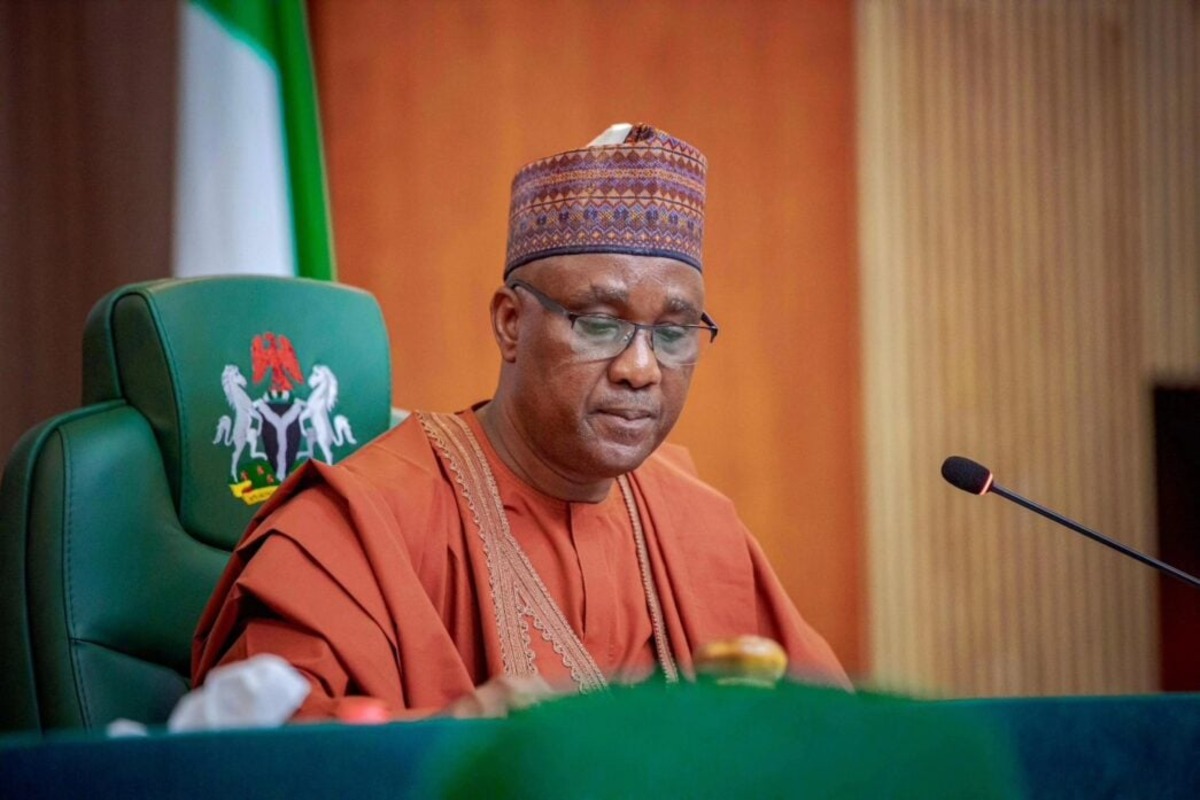
The Speaker of the House of Representatives, Hon. Abbas Tajudeen on Sunday emphasised the need for Africa to speak with one voice and respond with unity to the changing dynamics in global politics.
The Speaker gave the charge at the 3rd General Assembly of the Conference of Speakers and Presidents of African Legislatures (CoSPAL) in Rabat, Kingdom of Morocco.
Speaker Tajudeen also stated the critical role of African parliaments in advancing the continent’s interests and priorities in the changing world order.
While noting that the global order is “at an inflexion point,” Speaker Tajudeen said power is diffusing across old and emerging centres, while economic competition has intensified.
He also noted that new technologies are reshaping production, security, and social life, just as conflicts within and between states continue to displace communities and disrupt fragile regions.
He stressed that supply chains are shifting, climate pressures are increasing, non-state actors have become more agile, and institutions once considered stable are now under strain.
He said: “Africa stands within this shifting architecture, facing both risks and possibilities. Our continent is young, resource-rich, and strategically positioned. Yet we also face threats that exploit institutional fragility, weak regional coordination, and uneven global influence.
“For Africa to secure its interests, our parliaments must understand the changing order and respond with foresight. Legislative leadership must become a tool for resilience. Parliamentary diplomacy must evolve into a strategic instrument for advancing African priorities.”
He added: “This changing global landscape affects Africa in many ways. It shapes food systems, energy markets, and access to technology. It influences security cooperation, migration flows, and the ability of states to tackle terrorism and organised crime. It determines the extent to which African voices are heard in global debates on trade, health, and climate.
“More than ever, Africa must speak with coherence and act with unity. Our parliaments cannot be observers. We must be active participants in shaping outcomes.”
Speaker Tajudeen explained that legislative leadership in this context demands “strong institutions that hold the executive accountable, protect public finances, and drive inclusive growth.”
He also said it requires laws that give confidence to investors and create opportunities for youth, stressing that it calls for parliaments that reflect the aspirations of Citizens and defend constitutional values.
“The Nigerian Parliament has placed these obligations at the centre of its work and continues to strengthen the tools that enable oversight and reform.
“Parliamentary diplomacy has also become essential. It allows legislatures to engage peers, build alliances, and project national positions with credibility. It supports conflict prevention and regional stability. It enhances mutual understanding. It deepens economic and security partnerships.
“For Africa, parliamentary diplomacy is not optional. It is a strategic necessity. Nigeria’s approach reflects this conviction. Under President Bola Ahmed Tinubu, our government has pursued reforms intended to stabilise the economy, attract investments, and strengthen national security. These reforms require legislative backing and sustained cooperation with partners.
“Nigeria continues to work with ECOWAS, the African Union, and neighbouring countries to tackle security threats. We also support the strengthening of continental institutions so that Africa can negotiate from a position of clarity and unity.”
Within the House of Representatives, Speaker Tajudeen noted that the Nigerian parliament has taken deliberate steps to deepen legislative leadership and expand parliamentary diplomacy.
He also stated that Nigeria strongly supports CoSPAL and has worked with the secretariat to ensure its effective take-off, including the provision of office space and initial staffing.
While expressing appreciation to his predecessor, Hon. Femi Gbajabiamila for spearheading CoSPAL as its pioneer chairman, Speaker Abbas stressed that Nigeria considers the body as an essential platform for African parliamentary cooperation and a vehicle for strengthening collective voice.
The Speaker added: “Nigeria has also expanded its network of parliamentary friendship groups to promote engagement with strategic partners. These groups have enabled sustained dialogue with parliaments in Africa, Asia, Europe, and the Americas.”

An early morning fire on Sunday, gutted Umunnachi section of the age-long popular Aforigwe Market, Umudioka community, in Dunukofia Local Government Area of Anambra, destroying property worth millions of naira.
Mr Chukwudi Chiketa, the Fire Chief of the Anambra Fire Service, made this known on Sunday in Onitsha.
Chiketa said that the possible cause of the fire could be from an electric spark, resulting from restored power to the affected building.
He noted that the inferno started around 2 am but quick intervention of men of the fire service prevented it from spreading to adjourning buildings.
An eyewitness, who pleaded anonymity, said that officials of the Enugu Electricity Distribution Company, EEDC, also stormed the market that is located along the Old Onitsha-Awka road, to disconnect cables to avoid electrocution.
He listed the shops affected to include those for shoes, provisions, bread depots, and electrical appliances among others.