
SCIENCE
Geminid meteor shower 2025 thrills skywatchers with an end-of-year celestial firework show (photos)


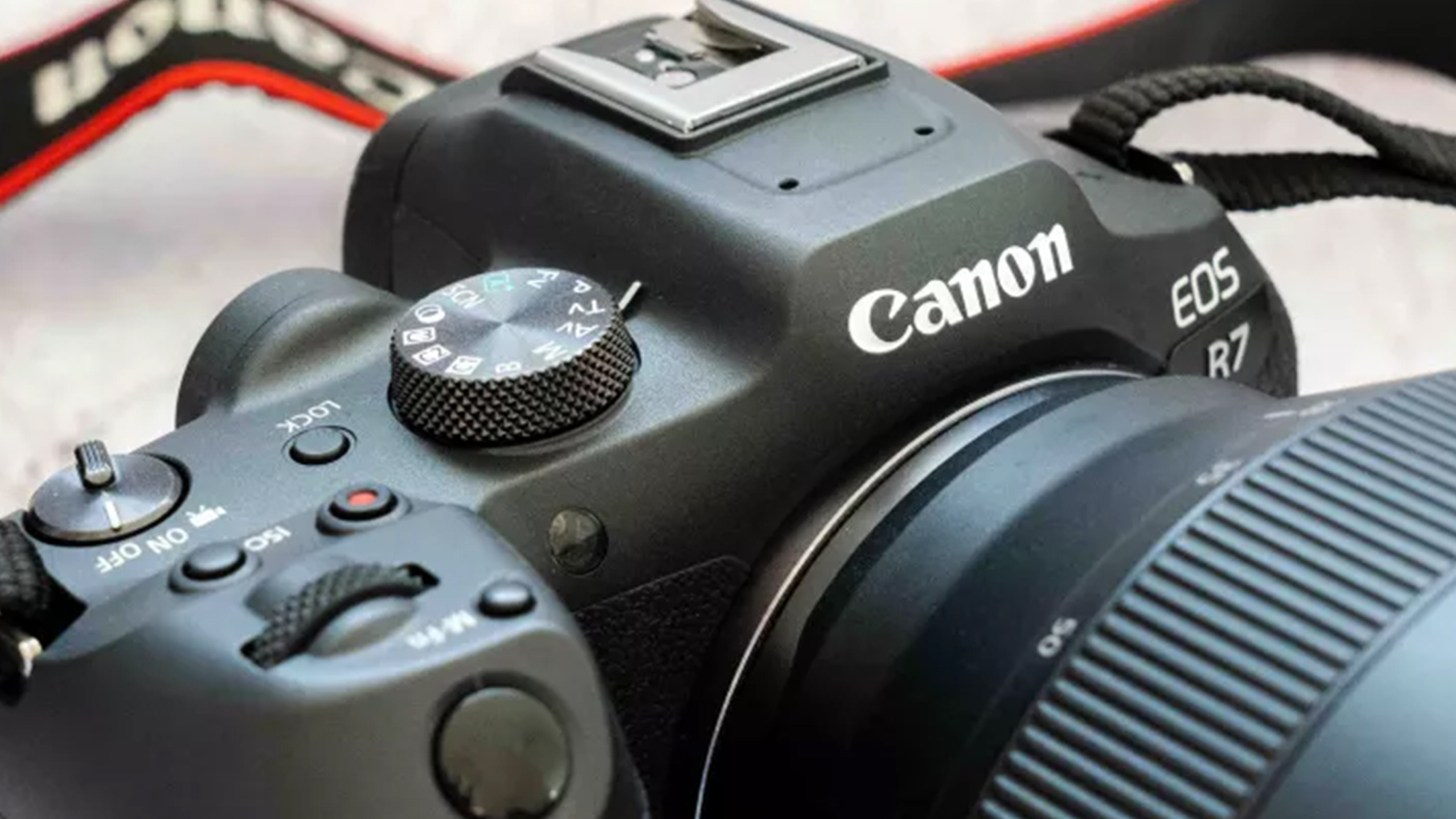
Canon EOS R7 camera
(Image credit: Future/Kimberley Lane)
Want to capture shooting stars? The Canon EOS R7 is the best camera for beginners, featuring all the tools to help a novice master photography. Read our full Canon EOS R7 review for more.
The Geminid meteor shower put on a dazzling cosmic firework show when it peaked overnight on Dec. 13 as shards of the solar system asteroid (3200) Phaethon collided with Earth’s atmosphere, forging fiery paths that illuminated the December night sky.
Read on to see a selection of gorgeous images revealing the splendour of the 2025 Geminid meteor shower as seen through the lenses of talented astrophotographers from around the world.
You may like
Want to capture your own images of shooting stars? Then be sure to check out our guide to photographing meteor showers, along with our picks of the best cameras and lenses for astrophotography to ensure that you’ll be ready for the next big skywatching event.
The 2025 Geminid meteor shower in pictures
Photographer Tayfun Coskun captured a stunning shot of a Geminid streaking through the starry sky above the Yosemite National Park in California on Dec. 14, as the Hyades and Pleiades open star clusters shone above a glowing tunnel embedded in the tree-lined hillside.

A Geminid shooting star caught in the skies over the Yosemite National Park in California. (Image credit: Photo by Tayfun Coskun/Anadolu via Getty Images)
Coskun was able to grab another view of a shooting star running parallel to the dense starfield of the Milky Way that same night, while also capturing the ancient light of the Andromeda Galaxy close to a tree near the silhouetted horizon. Two dense collections of stars known as the Perseus Double Cluster are also visible in the center of the shot, representing a population of stars that are far younger and hotter than the sun.
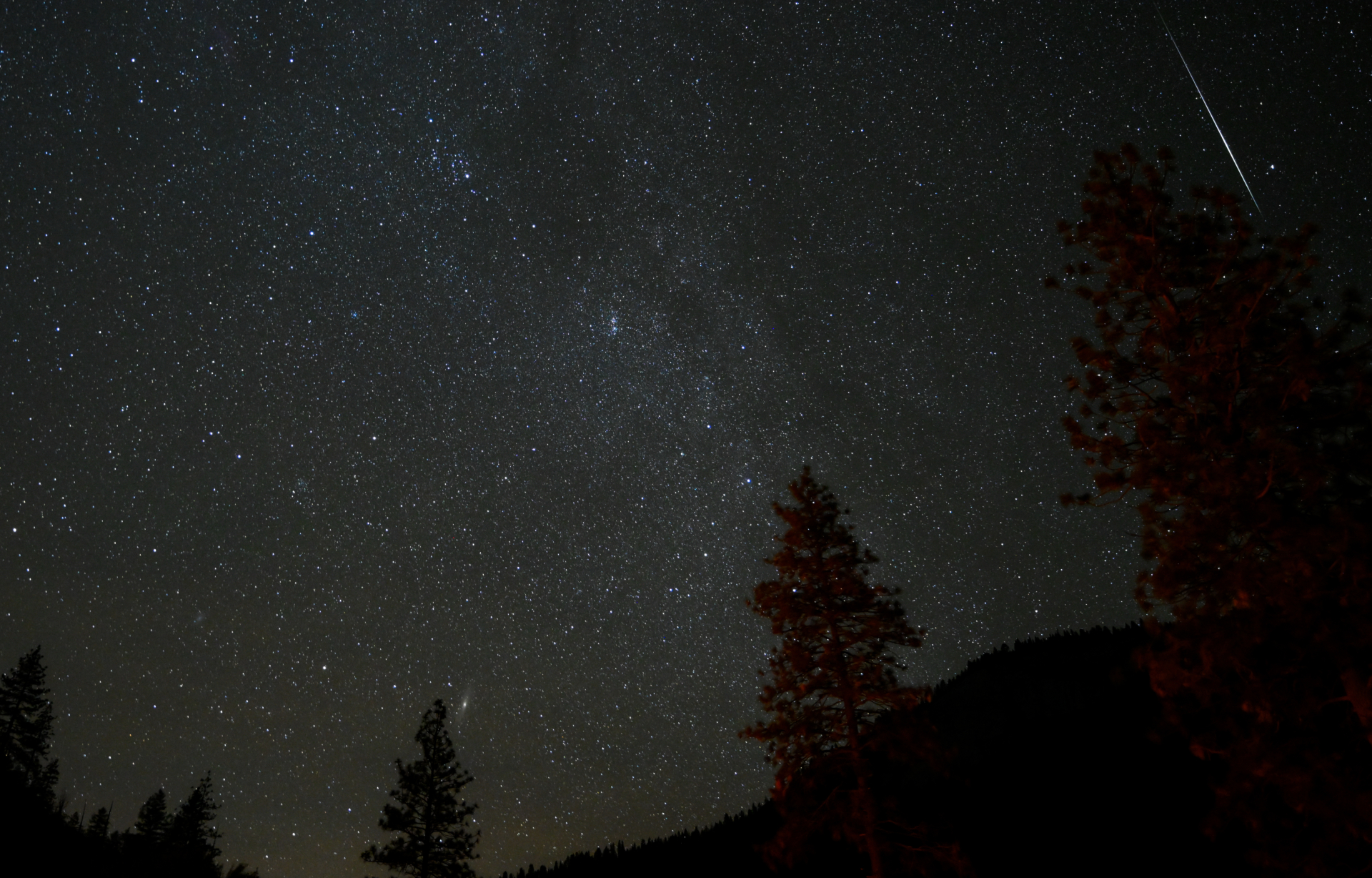
A Geminid shooting star blazes a path alongside the Milky Way. (Image credit: Photo by Tayfun Coskun/Anadolu via Getty Images)
This shot of a Geminid blazing a trail below the three stars of Orion’s Belt was captured on Dec. 13 in the skies over the Shandong province of China, a moment before it pierced the glowing patch of light representing the Orion Nebula — one of the closest stellar nurseries to Earth.

A Geminid captured moments before piercing the Orion Nebula. (Image credit: Photo by VCG/VCG via Getty Images)
A meteor was also captured brightening the sky over the snowy landscape of Ulanqab, in the Inner Mongolia Autonomous Region of China, on that same night.
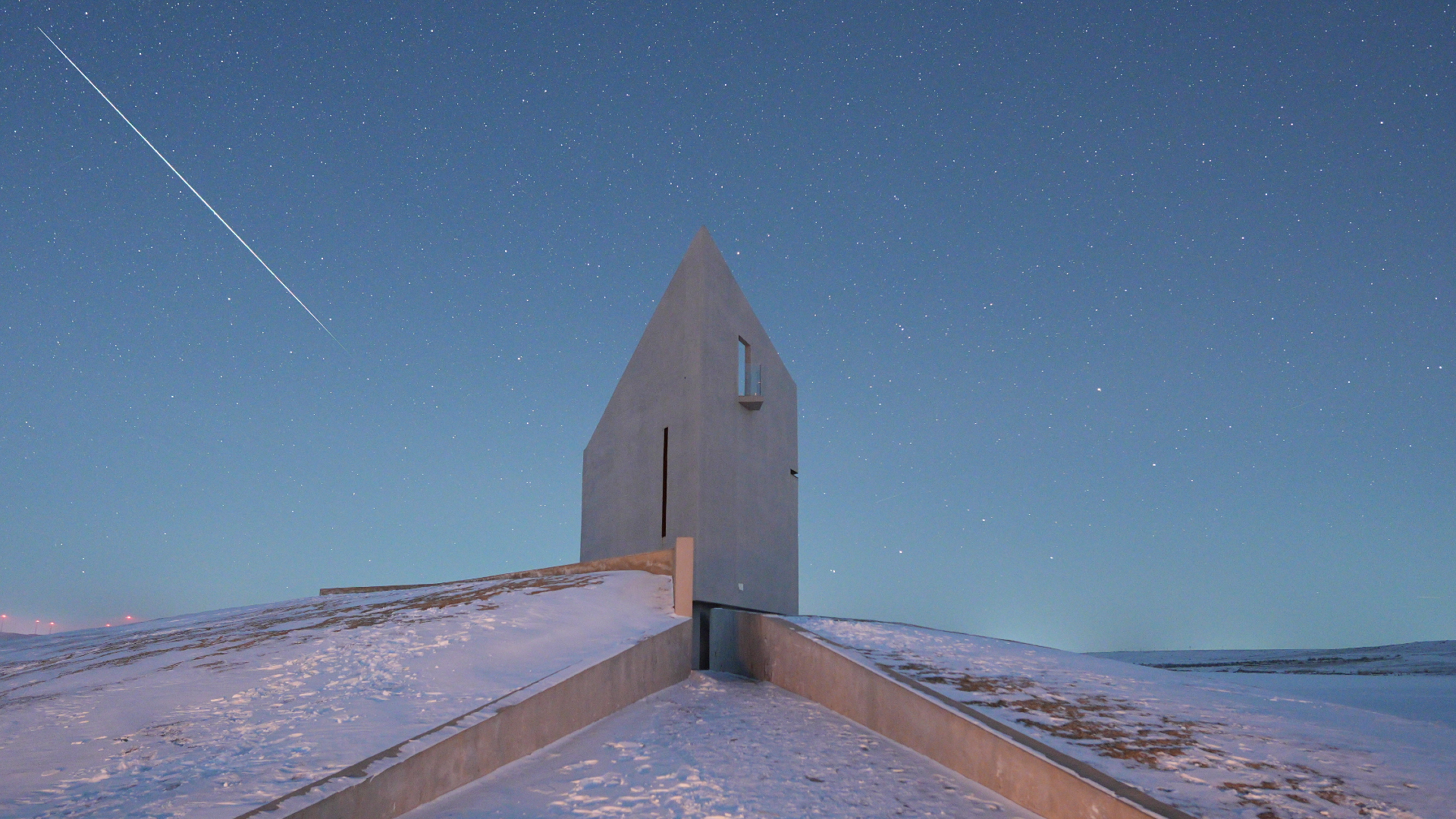
A Geminid meteor shines above a solitary structure in the Inner Mongolia Autonomous Region of China. (Image credit: Photo by VCG/VCG via Getty Images)
Photographer Fu Yujianglin immortalized a different shooting star as it speared Earthwards through the night sky, towards the snow-peaked mountains of the Garzê Tibetan Autonomous Prefecture in Sichuan Province, China.
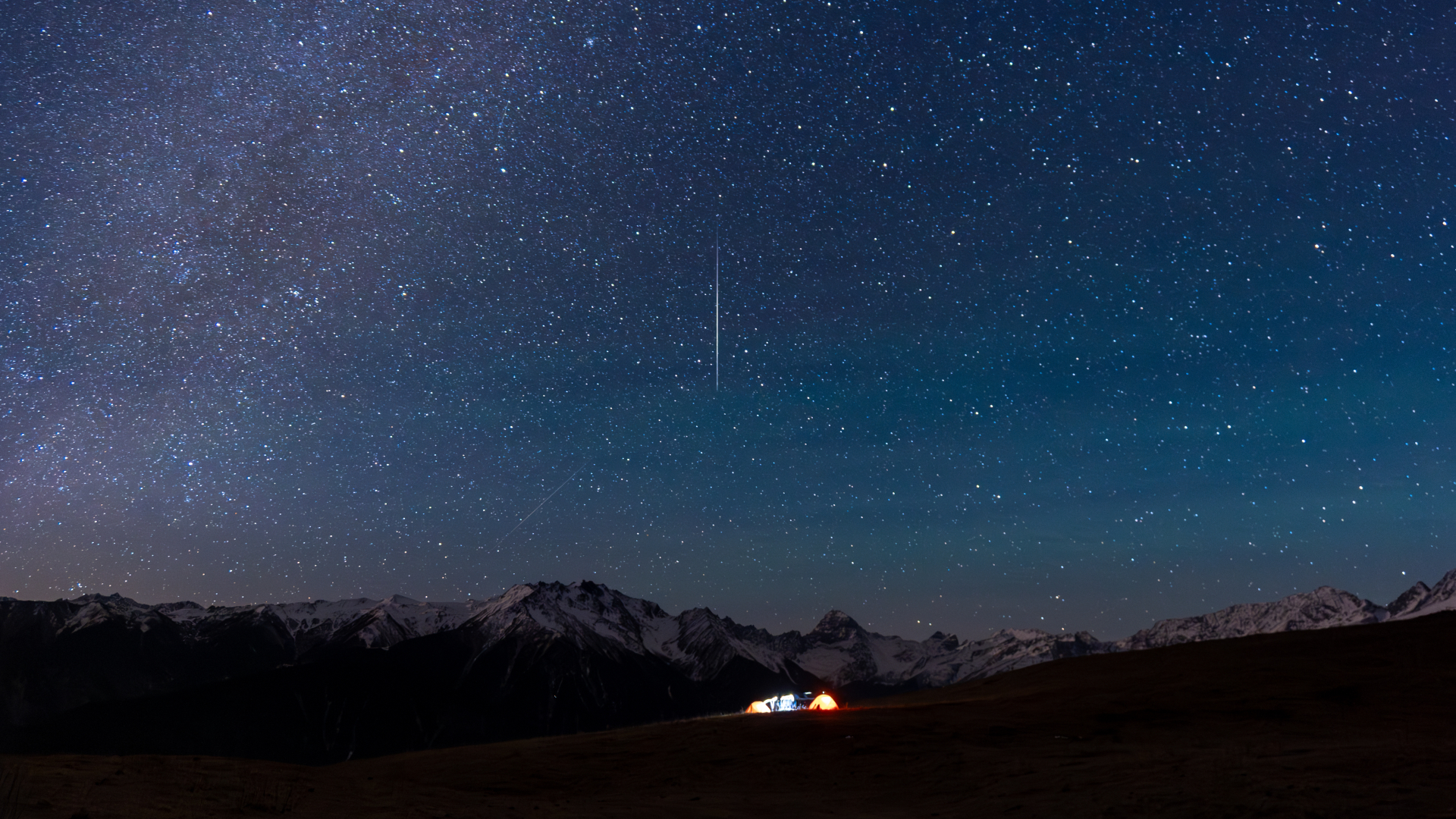
A meteor streaks towards a snowy mountain range in the Garzê Tibetan Autonomous Prefecture in Sichuan Province, China. (Image credit: Photo by Fu Yujianglin/VCG via Getty Images)
Storm photographer and X user LoriGraceWX captured another spectacular meteor image as a shooting star tore through the sky over the Organ Mountains in New Mexico using a 24 mm lens.
You may like
The brightest Geminid meteorite I captured last night thankfully ffamed itself nicely over the top of the Organ Mountains east of Las Cruces, New Mexico. At least 45 captured on this 24mm lens, still have to go through the other 700 images with the wider 16mm angle. #Geminids pic.twitter.com/yJ8fzrxBgODecember 14, 2025
Wouter van Bernebeek, meanwhile, took a breathtaking composite image from an altitude of 1,140 meters (3,740 feet) atop the Brocken Mountain in Germany, as shooting stars brightened the night sky alongside the glowing band of the Milky Way.
☄️ Het was een weergaloos weekend met de meteorenzwerm #Geminiden! Vanaf de Brocken (1140m) in het midden van Duitsland, stonden we de hele nacht bóven alle wolken en mist. Hier mijn eerste plaatje van de vele honderden vallende sterren die we mochten zien. Een unieke ervaring… pic.twitter.com/XinKMVUm9cDecember 15, 2025
Photographer Matt Lantz combined 9 separate shots to reveal Geminid meteors streaking away from Jupiter and the bright stars Castor and Pollux in the sky above a picturesque church near Seymour, Texas, on the night of the peak.
Last night’s Geminid Meteor shower as seen near Seymour, Texas. DFW was clouded over, so it was worth a couple hours drive northeast to clear skies. This image is 9 photos merged into one. #GeminidMeteorShower #txwx pic.twitter.com/l2mRQug5aPDecember 14, 2025
Finally, northern lights chaser Jeremy Rand captured several Geminid shooting stars as they raced through the constellation Orion, which rested approximately 40 degrees away from the shower’s radiant, where meteor trails were at their longest.
Feeling inspired to explore the night sky? Then why not browse our picks of the best telescopes and binoculars for imaging the night sky and be sure to check out our guide featuring expert advice for new stargazers if you’re taking the first steps in your astronomy journey this winter!
Editor’s Note: If you would like to share your meteor photos with Space.com’s readers, then please send your photo(s), comments, and your name and location to spacephotos@space.com.

QUICK FACTS
Where is it? Yellowstone National Park, Wyoming [44.46284445, -110.3628428]
What’s in the photo? A perfectly white blanket of snow covering Yellowstone Lake
Who took the photo? An unnamed astronaut on board the International Space Station (ISS)
When was it taken? Jan. 26, 2022
This eye-catching astronaut photo shows Yellowstone’s eponymous lake covered in a thick blanket of snow, making it look like a colorless, featureless void in the surrounding landscape. But below this freezing, blank expanse lies some of the most active and hottest hydrothermal vents anywhere on Earth.
The lake freezes over every winter, around late December or early January, with an ice sheet that ranges from a few inches to around 2 feet (0.6 m) thick. But the blanket of snow on top of this ice can reach up to 3.5 feet (1.1 m) deep by March, according to NASA’s Earth Observatory. The lake is usually snow- and ice-free by late May or early June.
You may like
The thick covering of snow means Yellowstone Lake is remarkably resilient to human-caused climate change, maintaining its surface ice thickness despite rising atmospheric temperatures. This makes it a major outlier among high-altitude lakes across the globe.
This astronaut photo shows one of these deep snowdrifts, mostly undisturbed aside from a few islands, the largest of which is Stevenson Island.
The snow covering Yellowstone Lake can reach up to 3.5 feet (1.1 m) deep. This photo of the lake was taken in February 2014. (Image credit: Smith Collection/Gado/Getty Images)
While the surface of Yellowstone Lake may seem cold and lifeless during the winter months, the water below remains surprisingly mild thanks to a series of hydrothermal vents across its floor. This enables aquatic animals, including the lake’s cutthroat trout (Oncorhynchus clarkii) population — the largest of its kind anywhere in North America — to survive the long months under the ice, according to NPS.
One of the vents, right next to Stevenson Island, releases water that’s a remarkable 345 degrees Fahrenheit (174 degrees Celsius), making it hotter than Old Faithful and every other geyser or hot spring in Yellowstone National Park.
“This is much hotter than any surface hot spring at Yellowstone because the weight from the overlying lake water acts like a pressure cooker lid and allows temperatures higher than boiling to be reached,” representatives from the U.S. Geological Survey wrote in an article about the lake’s vents. “These are the hottest hydrothermal vents measured in a lake anywhere in the world.”
The vents are powered by a giant blob of magma, around 2.6 miles (3.8 km) beneath Yellowstone National Park, which contains a surprising amount of molten rock. This magma blob acts like the cap on a gigantic volcanic bottle and will one day explode, unleashing a “supervolcanic” eruption that could be felt across the continent.
Yellowstone Lake was formed shortly after a similar eruption 640,000 years ago, which carved out the 1,500-square-mile (3,900 square kilometers) caldera that the lake currently sits within. Around 130,000 years ago, a smaller eruption then carved out the doorknob-shaped handle of the lake, dubbed West Thumb (visible near the top of the astronaut photo).
For more incredible satellite photos and astronaut images, check out our Earth from space archives.

The timing is brutal. Just as the world celebrates the 10th anniversary of the adoption of the Paris climate agreement this month, new evidence shows that the world is crashing through the main defence that was constructed against climate catastrophe.
The three-year temperature average is – for the first time – set to exceed the Paris guardrail of 1.5C above preindustrial levels. According to the Copernicus Climate Change Service, 2025 will join 2023 and 2024 as the three warmest since the Industrial Revolution, reflecting the accelerating pace of the climate crisis.
As temperatures continue to rise – including in the oceans, where the extra heat fuels more powerful hurricanes – far greater catastrophes lie ahead as feedback loops push the planet past irreversible tipping points.
We have already passed our first tipping point, the progressive loss of warm-water coral reefs, on which nearly a billion people and a quarter of marine life depend; a development particularly relevant to island countries like Barbados. We are on the brink of several more, including the death of the Amazon rainforest, the collapse of key ocean currents, and the loss of ice sheets leading to metres of sea level rise.
Cutting methane emissions is the fastest and simplest way to slow near-term warming and prevent triggering more tipping points. We must also reduce carbon-dioxide emissions as quickly as possible, although much of the impact on climate will take effect in the medium to long term. In contrast, we could avoid up to nearly 0.3C of warming by the 2040s by eliminating the easily avoidable methane emissions, starting with those of the oil and gas sector. Combined with a tripling of renewables and doubling of energy efficiency, this could cut the rate of warming by a third in 10 years and halve it by 2040, keeping the 1.5C goal in sight.
Flaring, burning natural gas from oil production, in North Dakota. Photograph: Matt Brown/AP
The European Commission helped launch the global methane pledge at Glasgow’s Cop26 in 2021, where today it and 159 other countries are supporting emission cuts of 30% by 2030 from 2020 levels. However, this is voluntary, and the UN has reported that current measures, even if fully implemented, would only reduce emissions by 8% by 2030 from 2020 levels. The urgency of the climate demands mandatory measures.
It is time for a binding agreement for methane, starting in the oil and gas sector. Other leaders have joined this call, including Wesley Simina, president of the Federated States of Micronesia, and Feleti Teo, prime minister of Tuvalu. The French president, Emmanuel Macron, also voiced support for a binding framework and called for a global alliance dedicated to action on methane.
Despite many past promises and pledges, methane emissions from the energy sector continue to grow, making a binding agreement essential. Many of the pieces for an agreement are moving into place. Companies representing nearly 40% of global oil and gas production promised at Cop28 in 2023 to ban routine gas flaring by 2030 and limit leaks to “near zero” by 2030. They include 34 national oil companies, suggesting that their governments should be ready to join an agreement that ensures their promises are honoured. The binding EU methane regulation bans flaring – and soon will ban leaks – and requires robust measuring, monitoring, reporting and verification, both for domestic fossil fuel production and for imports.
The Brazilian president, Lula Inácio Lula da Silva, and leaders of more than 80 other countries will be developing a roadmap to phase out fossil fuels, which should have as a first step eliminating methane waste through a binding agreement among willing nations.
The Montreal protocol, signed in 1987, can provide the inspiration. Besides putting the protective ozone layer on the road to recovery, that binding agreement has done more than any other to combat the climate crisis, mainly because the ozone-depleting chemicals it reduces are also powerful warmers. The protocol is on course to avoid 2.5C of warming by the end of the century, a massive contribution. It was negotiated by a small coalition of willing countries, and concluded in less than a year after formal diplomatic negotiations opened.
The next step is to convene heads of state of willing nations to develop a roadmap in 2026 for binding measures for the oil and gas industry. An ambitious but challenging timeline would be to start negotiations among this coalition of the willing in early 2027, and adopt an agreement as soon as possible thereafter. As shown by the Montreal protocol, transformative change can begin with just a handful of pioneering nations, before spreading worldwide.
A legally binding methane agreement for the oil and gas sector can prevent energy waste, while buying time over the next 15 to 20 years to build resilience as research to scale up decarbonising technologies to commercial level builds pace. This will give countries in the south with oil and gas assets the opportunity to use the one thing that can finance their way to net zero.
Preventing methane energy waste makes sense for industry, and it makes sense for people and the planet. As Aristotle taught us, waste is a form of injustice. Preventing it is not too much to ask.
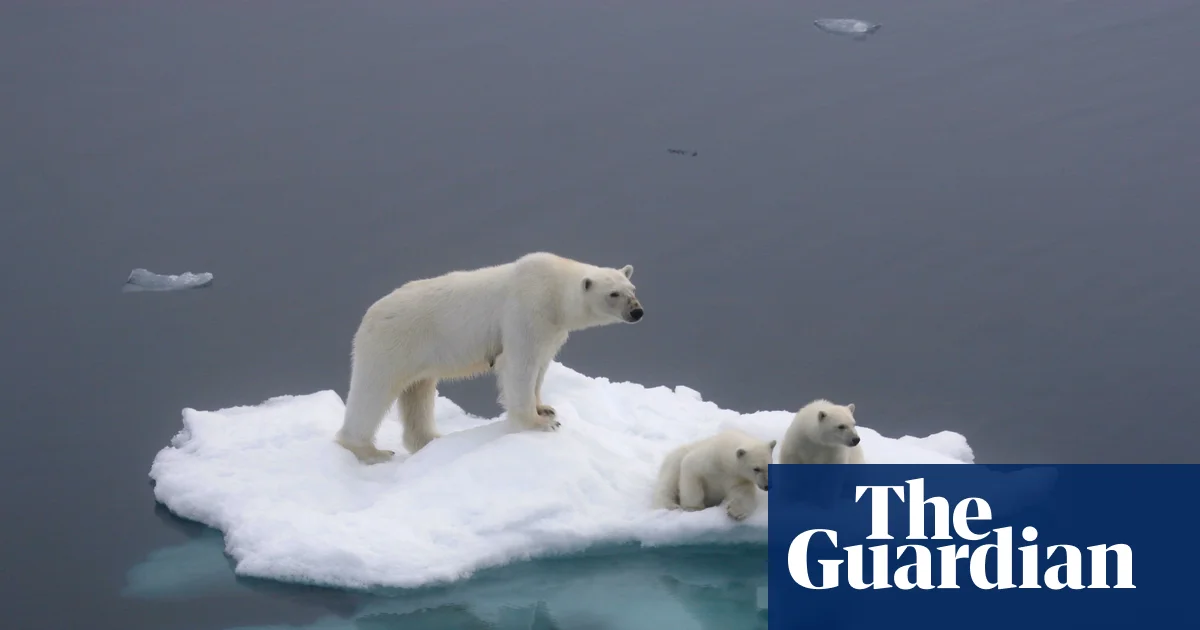
Good morning. Amid the constant drumbeat of bleak news about the planet’s environment and the accelerating climate emergency, the occasional bright spot still emerges. One example came last week, when researchers published the first statistical evidence that polar bears are changing their DNA in response to a warming Arctic.
But is it really good news that human activity – the burning of fossil fuels and the destruction of habitats – is forcing animals to alter their genetic makeup? The picture, as ever, is complicated.
For today’s newsletter, I spoke to the Guardian’s environment reporter Helena Horton about what the polar bear study tells us and whether almost a decade spent reporting on biodiversity loss and the climate crisis has left her feeling more or less optimistic about the planet’s future. Here are the headlines.
Five big stories
-
Donald Trump | Donald Trump has filed a lawsuit against the BBC over its editing of a speech he made to supporters in Washington before they stormed the US Capitol in 2021, requesting at least $5bn in damages.
-
Australia | Australia’s national security agency Asio investigated one of the alleged Bondi shooters in 2019 over potential extremist links but decided he was not “a person of interest”, prime minister Anthony Albanese has revealed, despite two of the man’s associates being jailed.
-
International trade | The US has paused its promised multi-billion-pound investment into British tech over trade disagreements, marking a serious setback in US-UK relations.
-
Health | Resident doctors in England will go on strike as planned this Wednesday for five days, after they voted to reject the government’s latest offer to end the long running pay and jobs dispute.
-
Ukraine | Europe is ready to lead a “multinational force” in Ukraine as part of a US proposal for a peace agreement between Russia and Ukraine, European leaders have said.
In depth: What counts as good news in a climate emergency?
A polar bear in an abandoned Soviet-era research station on Kolyuchin Island in the Chukchi Sea, in September 2025. Photograph: Vadim Makhorov/Reuters
For decades, polar bears have been among the most recognisable victims of climate change. Long before charts, models and emission targets entered the public conversation, images of stranded bears offered a stark visual shorthand for what a heating planet looks like.
That is what makes new research suggesting polar bears may be changing their DNA to adapt to warmer climates so striking – and potentially unsettling. “It is a small piece of hopeful news,” Helena Horton says, “that animals are adapting. But this shouldn’t be happening. DNA only changes so rapidly under extreme environmental stress.”
Has reporting on the climate crisis made you more or less optimistic about the future?
“It’s a mix,” Helena tells me. “There are moments of good news,” she says, citing countries working together to reduce emissions, major leaps in renewable technology, and electric cars becoming more popular than expected. But there is a caveat. “You have people elected who might roll back on a lot of those commitments,” she says. “And we see coal use spiking a lot more than we thought it would.”
Over the years, Helena has closely watched biodiversity indicators in the UK, and she says they provide a mixed picture. For every story like a mystery wild beaver turning up in Norfolk, the first sighting of one there for 500 years, or red squirrels thriving again in the Highlands after a decade of a reintroduction programme, there are many more that are less hopeful.
“The indicators came out again last week, – species continue to decline,” she says. “The stats on wild birds in particular are very distressing, and if they keep declining in this way, we’re going to see extinctions in the UK.”
What made this polar bear DNA story stand out?
Scientific studies are published all the time, but some are more meaningful than others. Part of the work of science reporters is deciding which make the publishing cut. “What made this one stand out was that it’s the first time a statistically significant link has been found between rising temperatures and DNA changes in a wild mammal,” Helena says. “That’s genuinely new.”
That polar bears are the focus of the research is notable. They have become one of the most powerful symbols of the climate crisis, because they were among the first animals whose habitats were visibly and dramatically destroyed. “The Arctic, where they live, is warming at a higher rate than the rest of the planet. It’s also a habitat that’s more susceptible to visible warming, because it melts. We’ve all seen those horrible images of polar bears stranded on shrinking ice.”
Photographs of polar bears in snow-free environments feel inherently powerful in conveying just how fast their habitat is changing, as the bears filmed living in an abandoned Soviet research station on Kolyuchin Island in the Chukchi Sea (pictured above) demonstrate.
How is the climate crisis changing animals?
Helena says we are already seeing animals move locations, change their behaviour, and even change their bodies. More octopuses in Britain’s seas, tiger moths in Jersey, birds developing larger beaks in Australia or bats developing bigger ears to allow more efficient heat exchange are all examples she lists.
“So we’re making animals move around the planet, we’re forcing them to change their physiology – and now, as this research shows, we’re even pushing them to change their DNA,” Helena says.
Habitat destruction is also a factor in changing animal behaviours, and bringing them into more conflict with humans.
“You see this with elephants in Africa and with the great apes,” Helena says, reminding me that last week the Guardian carried a depressing report on the plight of the rare Tapanuli orangutans. Their Indonesian habitat is under threat from an expansion of gold mining, and the population has suffered a dramatic loss due to recent flooding which was exacerbated by the climate crisis.
How do you balance hope and honesty in climate reporting?
“I try to let the scientists speak for themselves,” Helena says.
“With the polar bears, the lead researcher was very measured. She said it offers some hope, but it’s not a magic bullet – and we still need to stop burning fossil fuels. This isn’t something that should be happening. It’s happening because we’re putting enormous pressure on ecosystems.”
The real question, Helena explains, is whether animals can adapt fast enough to keep up with how quickly humans are changing the planet. At the moment, she says, that seems very unlikely.
What else we’ve been reading
Salvador Dalí at Coco Chanel’s La Pausa in the 1930s. Photograph: Wolfgang Vennemann/ Fundació Gala–Salvador Dalí/ADAGP, Paris
-
The Mediterranean villa once owned by Gabriele “Coco” Chanel was once frequented by artists from Salvador Dalí to Igor Stravinsky. Kate Hessel unlocks the secrets of Chanel’s newly refurbished house, back in the hands of the fashion label. Karen
-
After the killing of Rob Reiner alongside his wife, Michele, Ryan Gilbey remembers the director’s eight-year “golden run” – from This Is Spın̈al Tap to A Few Good Men via Stand By Me, The Princess Bride and When Harry Met Sally. He was in that stretch, Ryan writes, “a film-maker who beat the algorithm in the days before there was even one to beat”. Charlie Lindlar, newsletters team
-
Andrew Pulver has an enthusiastic assessment of Marty Supreme, the screwball tale of a ping pong champion played by Timothée Chalamet, which is No 5 on the Guardian film critics best movies of 2025. Follow the countdown to No 1 here. Karen
-
Sunday evening saw Philip Rivers, a 44-year-old with 10 kids and one grandchild, unretire and strap on his helmet to play quarterback for the injury-stricken Indianapolis Colts. What compelled Rivers to return to the game after 1,800 days away, in one of the NFL’s all-time comebacks? Doug Farrar explores that in this wonderful piece. Charlie
-
Is it superflu? Do vaccines offer protection against the new strain? Is it too late to get jabbed before the festivities? Prof Devi Sridhar, chair of public health at the University of Edinburgh, answers these questions and more. Karen
Sport
The England captain Ben Stokes bowls during a net session at Adelaide Oval, the venue for Wednesday’s third Ashes Test. Photograph: Gareth Copley/Getty Images
Cricket | Ben Stokes (pictured above) has called on England to “show some dog” as they had against India in the summer, to keep their slim Ashes hopes alive.
Football | England’s Lionesses are up against their rugby union counterparts, the Red Roses and Europe’s winning Ryder cup side in being shortlisted for team of the year in what will be a public vote, with the winners announced at a ceremony live on the 18 December as part of the BBC Sport Personality of the Year award.
Premier League | Manchester United manager Ruben Amorim conceded that repeated lapses in concentration are undermining his team’s progress, after a chaotic 4-4 draw with Bournemouth. Matheus Cunha scored in the 79th minute for a 4-3 lead. But 19-year-old Bournemouth substitute Eli Junior Kroupi equalised in the 84th minute.
The front pages
Photograph: Guardian front page
The Guardian leads with “Tears, flowers and silence: Sydney unites in grief after Bondi horror”. The Sun reports on one of the victims of the attack, with “Minutes later, Matilda was dead”. The i headlines “MI6 chief: globe’s tech giants are seizing power from politicians”. The Financial Times reports “Mortgage rules poised for easing in bid to widen access and boost growth”.
The Telegraph leads with “Trump kicks off BBC court battle”. The Times has “Doctors strike despite flu fears”. The Mail says “Drivers wrongly fined in speed camera scandal”.
Today in Focus
Photograph: Duncan Elliott/The Guardian
What happened when Reform took power
When Reform took over 10 local councils in England this summer, it offered the first glimpse of how the party might govern if it were to get into No 10. Helen Pidd reports.
Cartoon of the day | Ben Jennings
Illustration: Ben Jennings/The Guardian
The Upside
A bit of good news to remind you that the world’s not all bad
‘He was a handful and required constant care.’ Elio, right, and Yannis Baladi at the Chimpanzee Conservation Centre in Guinea. Photograph: Roberto Garcia Roa
When he was 26, Yannis Baladi quit his job selling expensive flats in Paris and took up looking after chimpanzees at a conservation centre in the jungle of Guinea, west Africa, a five-hour drive from the nearest town. He loved it so much that his three-month stay turned into 11. Baladi was fascinated by their behaviour, including the way the chimpanzees processed anger. After fighting really hard, hitting each other and stealing each other’s food, they always made peace with each other five minutes later, he said. “I learned from these primates there was no point being angry or living in the past,” he recounts in this story from the Guardian’s Age of extinction series.
A baby sooty mangabey called Elio – who was possibly abandoned by poachers and whose species is endangered – taught him the most. They would spend whole days together, Baladi reading books or playing sudoku, and Elio jumping from tree to tree. By the time he left the Chimpanzee Conservation Center, both had matured.
“I learned I could be patient. He taught me that I’m ready to be a dad – and this meant a lot to me because I always had a difficult relationship with my own father.” Most poignantly, Baladi learned to say goodbye to the tiny monkey he considered “my first son”.
Sign up here for a weekly roundup of The Upside, sent to you every Sunday
Bored at work?
And finally, the Guardian’s puzzles are here to keep you entertained throughout the day. Until tomorrow.
SCIENCE
New antibiotics hailed as ‘turning point’ in treating drug-resistant gonorrhoea | Global health


The first new treatments for gonorrhoea in decades could be a “huge turning point” in efforts to combat the rise of superbug strains of the bacteria, researchers have said.
Gonorrhoea is on the rise around the world, with more than 82m infections globally each year and particularly high rates in Africa and countries in the World Health Organization’s Western Pacific region, which reaches from Mongolia and China to New Zealand. Cases in England are at a record high, and rates in Europe were three times higher in 2023 than in 2014.
Health officials are concerned about an increase in drug-resistant strains of the bacterium, with the WHO designating it a “priority pathogen”. A WHO surveillance programme found resistance to the primary antibiotics used to treat gonorrhoea, ceftriaxone and cefixime, had risen sharply from 0.8% to 5% and from 1.7% to 11% respectively between 2022 and 2024.
Zoliflodacin is one of two new treatments for the sexually transmitted infection to receive regulatory approval in the past week.
Dr Tereza Kasaeva, director of the WHO’s sexually transmitted infections department, said: “The approval of new treatments for gonorrhoea is an important and timely development in the context of rising global incidence, increasing antimicrobial resistance and the very limited therapeutic options currently available.”
Zoliflodacin, also known by the brand name Nuzolvence, was approved by the US Food and Drug Administration on 12 December for use against gonorrhoea, which can cause serious health problems, including infertility. Scientists hope that targeted use against the infection will slow the development of resistance.
The US Food and Drug Administration approved two new drugs to tackle gonorrhoea last week. Photograph: Sarah Silbiger/Getty Images
Gepotidacin, an antibiotic developed by the pharmaceutical company GSK that is also used to treat urinary tract infections, was also approved on 11 December after it was shown in trials to work against drug-resistant strains of gonorrhoea.
Zoliflodacin emerged from a new, not-for-profit approach for antibiotic development, in which the non-profit organisation Global Antibiotic Research & Development Partnership (GARDP) collaborated with the pharmaceutical company Innoviva.
Dr Manica Balasegaram, executive director of GARDP, said: “This approval marks a huge turning point in the treatment of multidrug-resistant gonorrhoea, which until now has been outpacing antibiotic development.”
In results published in the Lancet last week, zoliflodacin cured more than 90% of genital gonorrhoea infections, putting it on an equal footing with current standard treatment, which combines two antibiotics: an injection of ceftriaxone followed by an oral dose of azithromycin. No serious safety issues were reported.
The trial of the drug, which is part of a new class of antibiotics called spiropyrimidinetriones, involved 930 participants from Belgium, the Netherlands, South Africa, Thailand and the US.
Under the terms of its partnership, GARDP has the right to register and commercialise it in all low-income countries, most middle-income countries, and several high-income countries.
Dr Rossaphorn Kittiyaowamarn, principal investigator of the trial in Thailand, said: “As clinicians, we see the devastating impact drug-resistant gonorrhoea can have on people’s lives in Thailand.
Having a single-dose, oral treatment like this will be a game-changer for gonorrhoea control. This is essential to reduce the burden of disease for individuals and to prevent the spread of highly drug-resistant gonorrhoea globally.”

When it comes to greenhouse gas emissions, carbon dioxide gets the lion’s share of global attention.
But methane is the second-largest contributor to human-caused global warming. A high proportion of methane emissions comes from the energy sector, often from concentrated “point sources” such as flare stacks, coal vents and open-pit mines. To help reduce those emissions, we must first identify the major culprits — and new satellite data is helping us do just that.
You may like
“This is the first global gridded estimate of annual methane emissions from facility-scale measurements, an advancement in measurement-based accounting that is due to the comprehensive scale of GHGSat’s satellite constellation to measure methane worldwide,” said Dylan Jervis of GHGSat Inc., lead author of a new study on the findings published Dec. 11 in the journal Science.
“This information will be useful to improve understanding and predictions of methane emissions, and, therefore, provide information that is useful to direct mitigation efforts,” Jervis told Space.com.
Traditionally, scientists have measured methane emissions with a mix of bottom-up inventories, which estimate emissions based on industry activity but can miss short-term fluctuations like leaks, and top-down atmospheric measurements, which detect methane concentrations directly but lack the resolution to pinpoint specific sources. Neither can paint a very precise picture of global methane emissions from the energy sector. But the GHGSat constellation, run by the Canadian company GHGSat, bridges that gap by combining meter-scale spatial resolution with global coverage.
Analyzing GHGSat observations of methane plumes collected in 2023, the team estimated annual methane emissions from 3,114 oil, gas and coal facilities worldwide that totaled about 9 million tons (8.3 million metric tons) per year.
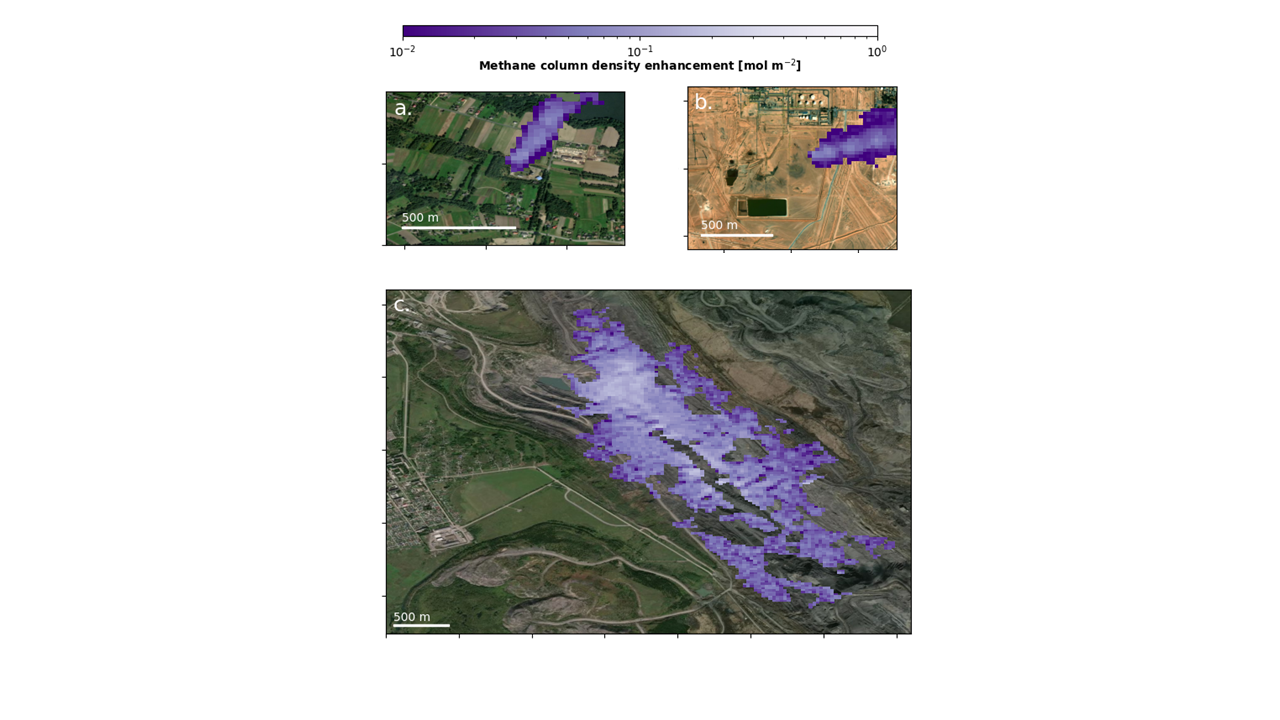
Example GHGSat methane plumes, detected from a coal vent, oil & gas flare stack, and open-pit coal mine. (Image credit: GHGSat)
Geographically, the biggest emitters stood out clearly in the satellite data. “The countries where we measure the largest oil and gas methane emissions are Turkmenistan, the U.S., Russia, Mexico and Kazakhstan,” said Jervis. “The countries where we measure the large coal emissions are China and Russia.”
While bottom-up inventories are fairly good at estimating methane emissions on such large scales as countries, they aren’t nearly as precise when you zoom in. “We found moderate agreement between GHGSat-measured emission estimates and bottom-up inventory predictions at the country level, but very little agreement at 0.2 degree x 0.2 degree [about 20 by 20 kilometers] spatial resolution,” Jervis said. Thus, effective change may need to happen at the facility level, not at the country level.
The researchers tracked how often individual facilities emitted detectable methane plumes, a metric they call persistence.
“Persistence of emissions depends more on sector than region,” said Jervis. For coal facilities, methane plumes were detected about half the time on average. Oil and gas sites, by contrast, were far more intermittent, emitting detectable methane in only about 16% of satellite observations on average. That variability makes oil and gas emissions especially difficult to capture with infrequent monitoring.
For the most accurate and actionable methane estimates, detailed surveys like the ones provided by GHGSat are crucial — which is why GHGSat is growing its constellation. Two new satellites were launched in June, and two more in November, bringing the company’s total to 14 satellites. “This will enable better coverage, both spatially and temporally, allowing us to detect more emissions and monitor them more frequently,” said Jervis.
SCIENCE
30 models of the universe proved wrong by final data from groundbreaking cosmology telescope

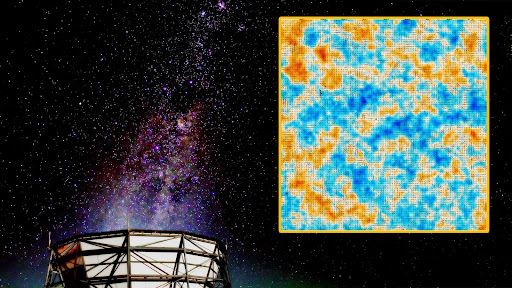
After a multi-decade-year mission to understand the nature of the universe, a telescope perched in the mountain plateaus of northern Chile said goodbye in 2022. Now, its final data release is revealing the telescope’s legacy: a field in tension.
In October 2007, the Atacama Cosmology Telescope (ACT) saw its first light. But it was not light from a star, or even a distant galaxy. Instead, ACT was designed to hunt for microwaves, especially the kind of microwaves left over from some of the earliest epochs of the universe. This “fossil” light, known as the cosmic microwave background (CMB), was emitted when the universe was just 380,000 years old.
You may like
ACT was especially good at looking at the CMB’s polarization, which tells us a lot about the state of the early universe. If you change the amount of dark matter in the cosmos, how it’s distributed, how many neutrinos there are, or any of another dozen or so properties of the cosmos, you change what the CMB’s light looks like.
Final ACT
In November, the ACT team released their sixth and final public dataset as three articles published in the Journal of Cosmology and Astroparticle Physics. While cosmologists will continue to mine the data for many years to come, the core team also provided their final suite of analyses and studies before saying farewell for good.
Their findings matched what surveys like Planck had already identified: that something funny is going on with the expansion of the universe. Measurements of the present-day expansion rate, known as the Hubble rate or Hubble constant, taken with early-universe probes like Planck and ACT, reveal a number that is quite a bit slower than estimates based on nearby measurements, like supernova dimming.
This discrepancy has come to be known as the Hubble tension, and it is perhaps the greatest unsolved mystery in modern cosmology. But ACT didn’t just confirm the existence of the tension; it also destroyed some very good ideas.
A map of microwave intensity (orange to blue) overlaid with the direction of magnetic polarization in those microwave emissions. Studying the cosmic microwave background (CMB) is helping astronomers fine tune measurements of the universe’s expansion. (Image credit: The Atacama Cosmology Telescope collaboration)
ACT axes 30 cosmic models
Cosmologists have been busy concocting many theoretical explanations for the Hubble tension. Many of these are called “extended” cosmological models, since they take the standard cosmological picture and add a few extra ingredients or forces to the universe.
But these ingredients and forces don’t just exist today; they also must have existed when the CMB was first emitted. So ACT’s exquisite view of the CMB allowed the team to put many of these models — around 30, in fact — to the test.
All of them failed.
But in science, you only lose if you don’t learn anything, and ACT’s negative results help cosmologists in their search. In other words, you can only know the right answer once you’ve crossed off all the wrong answers.
SCIENCE
Ghosts, sharks and Norse mythology: US Space Force unveils new names for satellites and space weapons

The U.S. Space Force is turning to some unlikely sources of inspiration for naming its spacecraft and space weaponry.
At the 3rd Annual Spacepower Conference, held in Orlando, Florida from Dec. 10 to Dec. 12, Chief of Space Operations Gen. Chance Saltzman told attendees that Space Force is adopting new naming schemes for each of its different mission areas that will “cement the identities of space weapon systems” much like the names of iconic aircraft, such as the A-10 Thunderbolt II or F-22 Raptor, have done for the U.S. Air Force.
You may like
Seven different naming categories were chosen, one for each of Space Force’s mission areas:
After announcing the new naming scheme, Saltzman explained two specific names that had been chosen for specific spacecraft. The first, a communications satellite in geostationary orbit previously known as the Ultra-High Frequency Follow-On system, will now be known as as Ursa Major.
“The Big Dipper — as you all know, part of the Ursa Major constellation — famously points to Polaris, our north star, always linking us to our most important missions,” Saltzman said.

An illustration of a constellation in the shape of the Space Force Delta, the official logo of the U.S. Space Force. (Image credit: US Space Force/Airman 1st Class Chauncey Glenn)
Another spacecraft operated by Space Force’s 1st Space Operations Squadron (1 SOPS) used to track satellites in high orbits will now be taking a name from Norse mythology: Bifrost.
“Bifrost is a bridge between Earth and the realm of the gods,” Saltzman explained, “just as the Bifrost system in low Earth orbit bridges the divide between the Earth and the higher geostationary orbit of the other 1 SOPS systems.”

An illustration of a Valkyrie, a powerful being in Norse mythology that guides the souls of slain warriors to Valhalla. The U.S. Space Force will now use the names of figures from Norse myths for its orbital warfare platforms. (Image credit: US Space Force/Airman 1st Class Charlotte Taylor)
Saltzman stressed that the new naming scheme will help the newest branch of the U.S. military establish its own identity. “These symbols conjure the character of the systems, the importance of their mission, and the identity of the Guardians who employ them,” Saltzman said. The new names will serve as “a way to own the identity of our space systems as they enter the joint fight,” he added.
Unlike the U.S. Air Force’s iconic aircraft or the U.S. Army’s ground vehicles such as tanks, the public rarely gets a glimpse at Space Force’s assets in orbit. This is partly by design; many of Space Force’s spacecraft are highly classified, which can make it difficult for the service to communicate its missions and capabilities both to the public and throughout the U.S. armed services.

A sea raiders’ boat that sank off the coast of Denmark 2,400 years ago has been hiding a fingerprint, as well as several chemical clues that are now helping researchers uncover just where these raiders came from millennia ago, a new study finds.
The vessel, known as the Hjortspring boat, is the oldest known wooden plank boat in Scandinavia, and is currently on display at the National Museum of Denmark. But its origins have long been an enigma.
You may like
About 2,400 years ago, about 80 sea raiders on an armada including this boat and three others attacked the island of Als, off the coast of what is now Denmark. But the raiders lost. In giving thanks for their victory, the people on Als sank the boat as an offering along with the attackers’ weapons and shields.
The sinking of the boat in the fourth century B.C. helped preserve it over the centuries, as water is a low-oxygen environment. After its discovery in the 1880s, the boat was later excavated from the bog of Hjortspring Mose in the 1920s (earning the ship its name).
“But at the time, we lacked the modern scientific methods that we needed to answer the mystery of where these attackers came from,” Fauvelle said in a video about the research.
Recently, the researchers decided to take a fresh look at the boat. Before it was put on display in the museum, the boat had been chemically preserved. So, the team sifted through archives and old records in multiple museums in an effort to uncover parts of the boat that had been left untouched.
Finally, they found several fragments of caulking tar and rope, including a piece of tar that had the ancient fingerprint of someone who likely helped repair the vessel, a finding that Fauvelle called “really fantastic.”
“This remarkable fingerprint provides a direct link to the ancient seafarers who used this boat,” the researchers wrote in the study, which was published on Dec. 10 in the Journal PLOS One.
A caulking fragment (left) from Hjortspring boat that shows a fingerprint, and the high-resolution x-ray tomography scan (right) of the fingerprint region. (Image credit: Photography by Erik Johansson; 3D model by Sahel Ganji; CC BY 4.0)
To study the caulking tar, the researchers used gas chromatography and mass spectrometry, techniques that examine the chemical makeup of samples. They found that the waterproof tar was a mixture of animal fat (likely tallow) and pine pitch, a sticky and stretchy substance also known as resin.
You may like
“This suggests the boat was built somewhere with abundant pine forests,” Fauvelle said in the statement.
The new finding throws cold water on an old idea that the boat originated near modern-day Hamburg, Germany, as previous analyses had found that the vessel carried wood containers that looked like ceramics from the Hamburg region. It now appears that the boat may have come from much farther away in the Baltic Sea region, which has pine forests.
“Pine forests only existed in certain parts of northern Europe at this time,” Fauvelle said in the video, adding “we suggest that they came from somewhere along the coast of the Baltic to the east of the modern day island of Rügen [in Germany].”
If this idea is accurate, it suggests that the attackers sailed a great distance over open sea for the raid, Fauvelle said.

Cordage, or rope fragments from the Hjortspring boat. (Image credit: Mikael Fauvelle; CC BY 4.0)
Researchers also used carbon dating to study rope from the boat. Analyzing the lime bast cordage, which comes from the inner bark of trees, the team confirmed the boat’s previously determined timeline of between 400 B.C. and 101 B.C., which falls in the pre-Roman Iron Age of Scandinavia. The researchers carbon dated the boat to between 381 and 161 B.C., which is the first direct date from the boat’s material. The researchers also worked with rope makers to create replicas of the cordage and study the rope-making process.
Using X-ray tomography to scan the caulking and cordage in sections, the team made digital 3D models, which enabled them to study the fingerprint. Analyzing the print’s ridges didn’t narrow down the sex or identity of who made the print, however.
Going forward, Fauvelle hopes to extract human DNA from the tar to learn more about the people who made and used the boat. Understanding faraway raids such as this one could help explain ancient maritime warfare and Iron Age trading systems.
Fingerprint of ancient seafarer found on Scandinavia’s oldest plank boat – YouTube



An entomologist at Anglia Ruskin University has discovered seven new species of leafhopper. A researcher at Anglia Ruskin University (ARU) in Cambridge, England has identified seven previously unknown species of a frog-like insect. The newly described insects are leafhoppers belonging to the genus Batracomorphus and were discovered by Dr. Alvin Helden during field research in […]
SOURCE PAGE

Fallout Season 2 is almost here, so now is the perfect time to start a little online nuclear war of our own by ranking all the Fallout games from worst to best. Not even Vault-Tec can save you from this one.
Sure, you could just — and maybe should just — play through all the Fallout games in order, but that’s a tall order given that your average Fallout game takes around 30 hours minimum, and closer to 100 hours if you want to complete everything. So, we’re here to help you prioritize, while also throwing some of our spicy opinions out into the wasteland.
You may like
8. Fallout Tactics: Brotherhood of Steel

(Image credit: Bethesda Softworks)
Release date: March 15, 2001 | Platforms: PC | Developer: Micro Forté, 14 Degrees East
As the name implies, Fallout Tactics: Brotherhood of Steel was a tactical combat game that played more like X-COM than the other Fallout games. While we appreciate them trying something new, developers Micro Forté didn’t quite stick the landing.
Don’t get us wrong, it’s a solid game that reviewed well at the time, but the linearity of the experience and the attempts to mimic the classic Fallout experience with RPG-lite elements left it feeling odd. Honestly, it felt more like a mod for Fallout 2 than a bold new strategy game.
Neither the strategy nor the RPG systems were meaty enough to leave a lasting impression. Add a razor-thin Brotherhood of Steel-centric narrative (that has since been contradicted by mainline entries), and you’re left with a curiosity that only the most eager of diehard Fallout fans should unearth.
7. Fallout Shelter

(Image credit: Bethesda Softworks)
Release date: June 14, 2015 | Platforms: PC, iOS, Android, PS4, Xbox One, Nintendo Switch | Developer: Bethesda Game Studios
You may like
It might look like another mobile gaming money-grabber — and that’s not entirely wrong — but Fallout Shelter is also far better than it has any right to be.
Mobile spin-offs of massive console/PC video games are often terrible, but Fallout Shelter gets the satisfying strategy and management sim gameplay loop right from the get-go. Moreover, it never feels overly impaired by the progression limits and microtransactions. It’s not even tied to mobile platforms either, as you can also play it on consoles and PC too.
At first, you’re limited to your underground shelter, but the game soon expands and takes your dwellers topside, shaking things up with tense encounters and shiny loot, slowly turning your naïve vault dwellers into hardened survivors.
Back home, things are cozy most of the time, but keeping everyone in check is harder than it looks, especially when mutant horrors and other menaces come knocking on the door. Even in its more relaxed and bite-sized form, the Fallout universe is rough and unpredictable.
6. Fallout 76
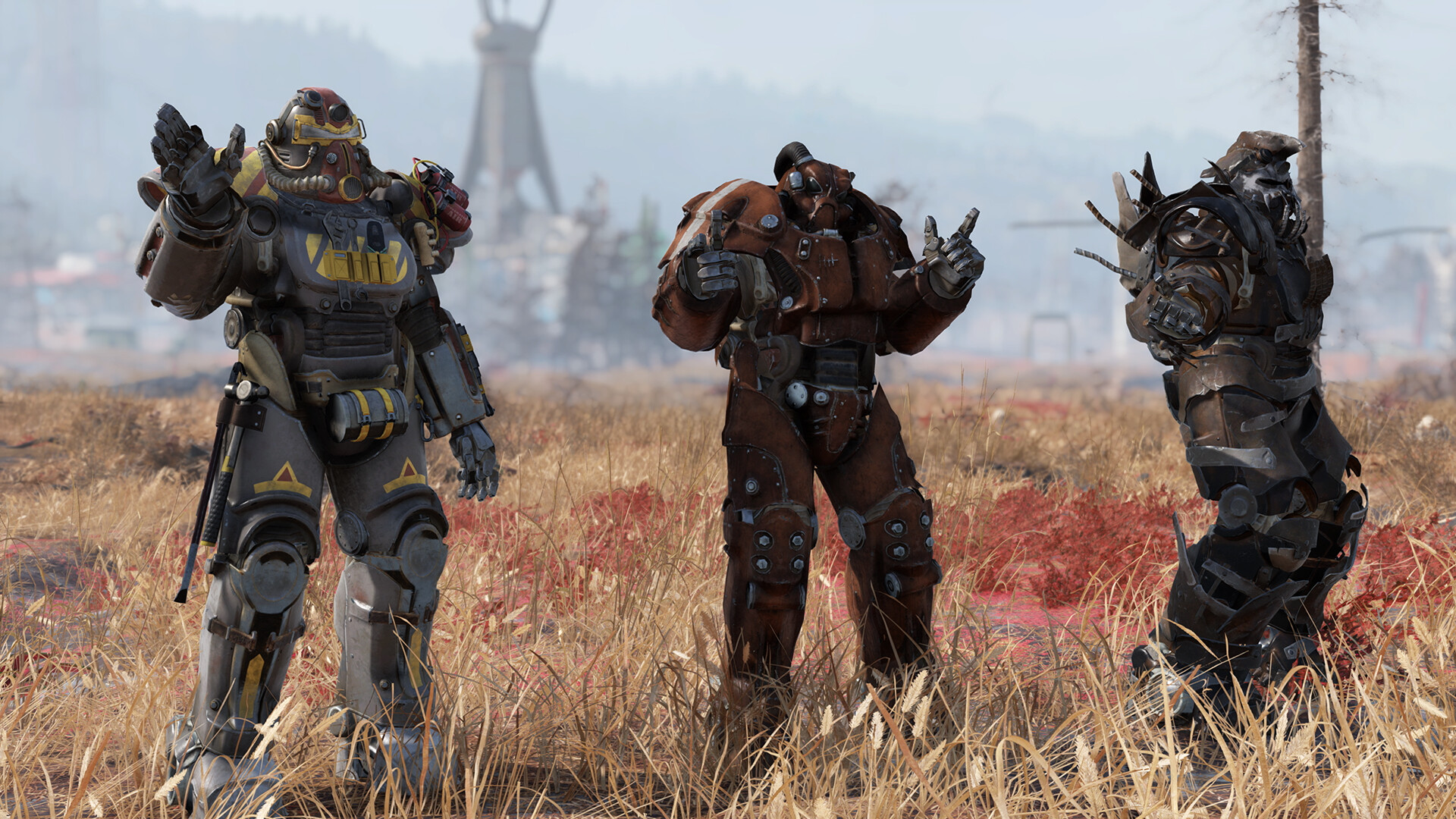
(Image credit: Bethesda Softworks)
Release date: November 14, 2018 | Platforms: PC, PS4, Xbox One | Developer: Bethesda Game Studios
After an admittedly weak launch in 2018, it’s hard to stay mad at Bethesda Game Studios for Fallout 76, considering how much the game has improved. How did they fix it? By dropping most of its ‘survival-crafting online game’ pretense and embracing the ‘Fallout online’ angle fans wanted in the first place.
Nowadays, Fallout 76 is still trucking along as a radically different online experience. It’s still an MMO, sure, but it’s casual and even solo-friendly, all while packing a whole lot of endgame content and seasonal challenges for those looking to really get into it.
After a bleak early life devoid of interactable non-player characters, Bethesda added a proper main quest and plenty of side missions built around settlers, bandits, and colorful groups that have been expanded with each content update. Still, Fallout 76’s cracks show the more time you spend with it; the central narrative and traditional RPG systems feel a bit tacked-on (because they were), and the Creation Engine clearly wasn’t built for an ambitious MMO-ish world.
It’s a solid game, but it could have been so much more.
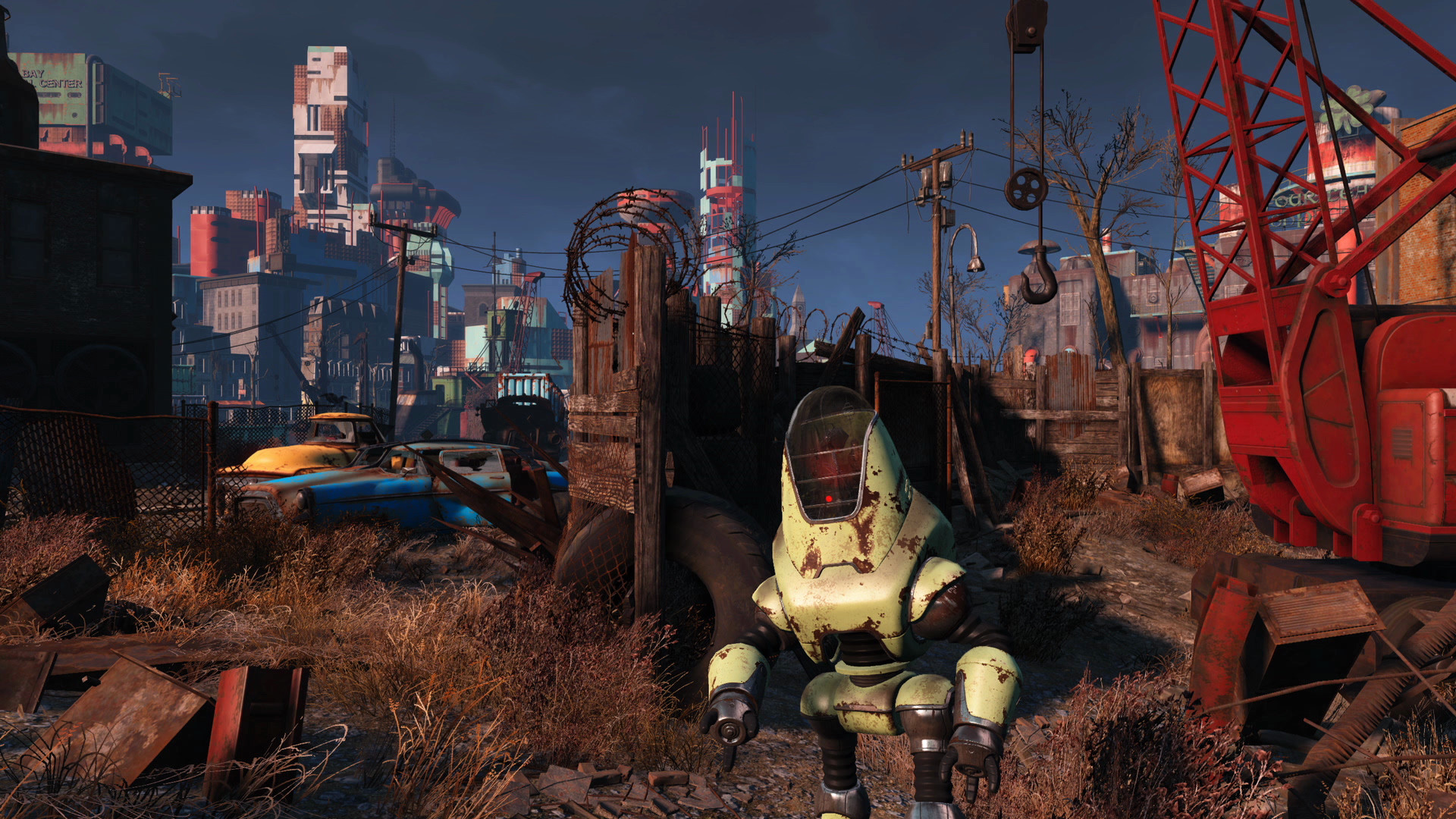
5. Fallout 4
(Image credit: Bethesda Softworks)
Release date: November 10, 2015 | Platforms: PC, PS4/5, Xbox One/Series X|S | Developer: Bethesda Game Studios
The most recent mainline Fallout game, Fallout 4, was a big hit when it dropped in 2015, and it’s still receiving support from the devs — and modders — to this day. It also marked Bethesda’s first move towards putting user-friendly creative tools into its games. When we think about Fallout 4, our mind instantly goes to all the NPC-filled settlements you can build and develop into flourishing communities.
But what about the main questline, secondary quests, factions, and the Commonwealth as another giant map to explore and conquer? Well… It’s alright.
Bethesda Game Studios catches some deserved flak for narrative shortcomings of Fallout 4, which really wants its central narrative (Find and save your son!) to be urgent, but that clashes with almost everything else in the game.
In a toybox full of diversions and engaging side systems, the main quest largely falls flat, and the payoffs don’t really live up to all the early promise. The Mass Effect-like wheel for dialogue and RPG choices also felt like a step down, taking away much of the nuance and fun found in earlier games. Fallout 4 is a fine game we love to return to, but it’s a shallow RPG experience overall.
4. Fallout 2

(Image credit: Bethesda Softworks)
Release date: September 30, 1998 | Platforms: PC, macOS | Developer: Black Isle Studios
OK, things are going to get tense from here on in. Any of our top four Fallout games could top this list — it largely depends on your preference for the new or older style — but we’re putting Fallout 2 at the bottom of the unqualified “good” Fallout games.
There are plenty of reasons to choose 2 over 1; we’ll admit that. It’s bigger and far more refined as an isometric RPG, and the jump in the timeline allowed it to establish a legacy built on top of the first game’s story.
At the same time, it often loses the plot and, even if you stick to the main questline, runs in circles. Since the second game also kicked things off with urgency (like 1 and 4), the loose structure and overcrowded plot end up ruining the pacing for us, which brings the final result down a notch.
3. Fallout

(Image credit: Bethesda Softworks)
Release date: October 10, 1997 | Platforms: PC, MS-DOS, macOS | Developer: Interplay Productions
The original Fallout made waves when it launched, and even after 28 years, you can see why: Its post-apocalyptic world felt unlike anything else in the market, and it offered innovative character creation and skill systems that weren’t too interested in paying homage to previous RPG classics. Instead, Tim Cain and the Interplay team focused on their own ideas to create a gritty and nuanced world that still had a satirical sense of humor.
What sets it apart from the sequel — and gives it a small advantage in our eyes — is how welcoming to newcomers the setup and narrative hook are. An underground nuclear shelter in the far future is running out of drinkable water, and you’re tasked with finding the part that can fix the water supply system. No more knowledge of the world is needed, and even as the plot develops, Fallout stays on target, while offering side possibilities that don’t take away from the core experience.
Sure, it’s an old ass game, and admittedly obtuse in ways that follow-up fixed, but there’s a magic to Fallout that few other games can match. It’s unforgiving until you do all of your homework, but it’s well worth the effort.
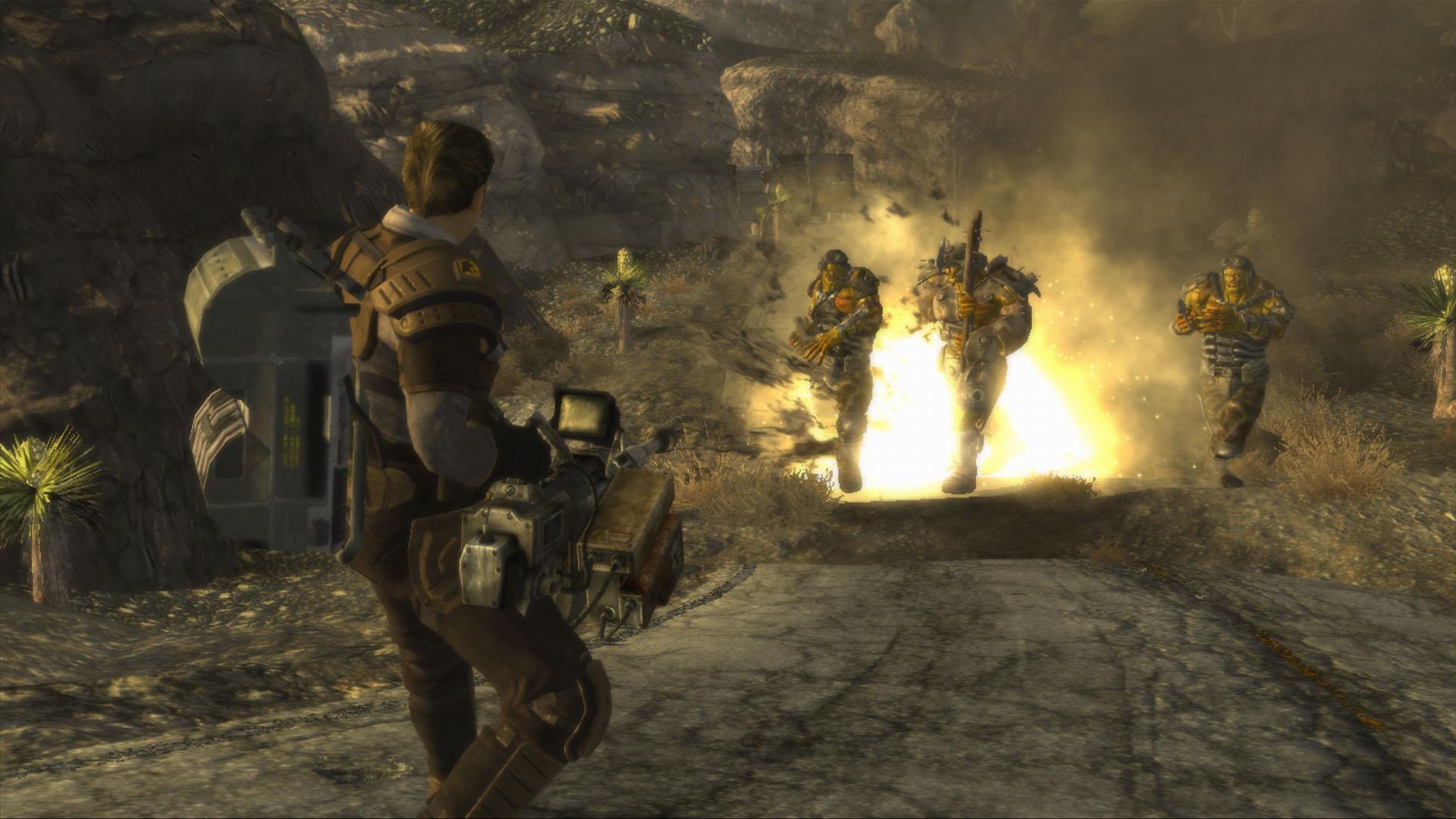
2. Fallout: New Vegas
(Image credit: Bethesda Softworks)
Release date: October 19, 2010 | Platforms: PC, PS3, Xbox 360 | Developer: Obsidian Entertainment
On paper, Fallout: New Vegas has it all. New Vegas itself is the series’ most iconic setting (so much so that Fallout Season 2 is going to be set there), it offers tons of freedom to the player, and the actual roleplaying and factions are the best-written in the entire series. So, why isn’t it at the top of our list?
Well, for starters, it was a buggy, unfinished mess when it launched, and even the modern, fully patched-up version of the game shows signs of a game rushed over the finish line. Despite all its strengths, we can’t shake the feeling that New Vegas is an excellent 80% of a game.
A lot of the appeal of the Fallout games is the open world, where you’re free to go anywhere and do anything. While Obsidian made New Vegas, it was built with Fallout 3’s structural bones and technology, and that structure was all about exploring and player freedom. New Vegas still follows that ethos on paper, but stray away from its excellent scripted content, and the open world it presents feels a little lacking compared to our top pick. It’s still an all-timer and one of the best RPGs ever made, but there’s one more game that we prefer (just a little bit).
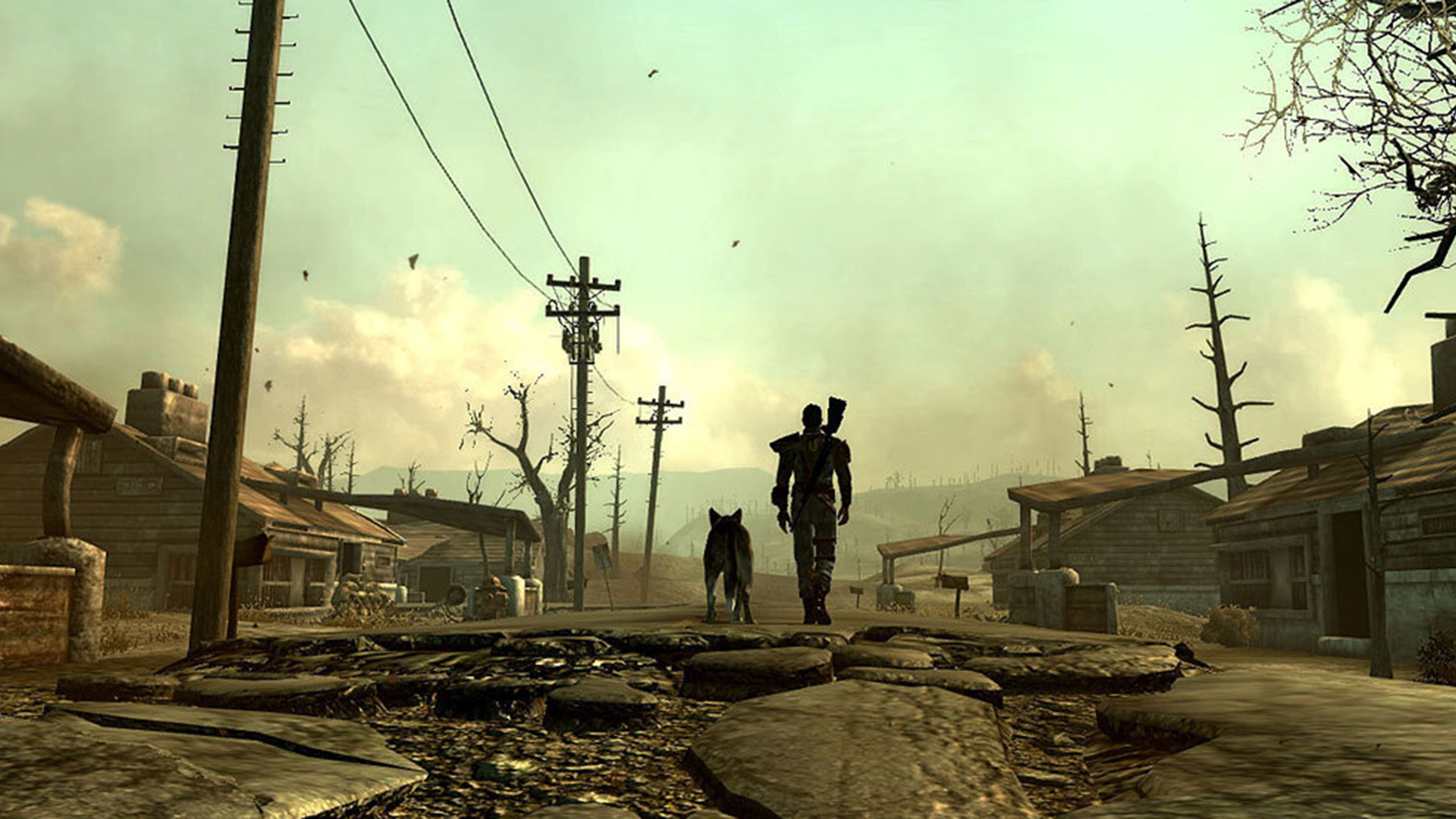
1. Fallout 3
(Image credit: Bethesda Softworks)
Release date: November 14, 2018 | Platforms: PC, PS4, Xbox One | Developer: Bethesda Game Studios
It might not have been for diehard fans of the first two games, but in our humble opinion, Fallout 3 was a masterpiece. It was a near-perfect entry point into the franchise, while also respecting and expanding upon the already-established world. Bethesda could have easily rebooted everything when they took the reins, but instead, they chose to bridge the gap, and it paid off big time.
Built on the technological and game design foundations of The Elder Scrolls IV: Oblivion, Fallout 3’s shift to first-person and streamlined mechanics opened the series up to a mainstream crowd, while keeping most of the core RPG elements that the original games were known for. Was it as deep and layered as Fallout 1 or 2? No, but that didn’t matter because of how memorable and fun the Capital Wasteland was — and still is — to explore.
From its irradiated shores to hidden valleys to many underground labyrinths, Fallout 3 showed us how a dense but believable post-apocalyptic open world could be as exciting as Tamriel‘s fantasy lands. Sure, the main quest was short, and most role-played choices were too morally black-and-white, but it was a rip-roaring adventure that blasted the Fallout series into the mainstream.