
SCIENCE
Starwatch: shortest day in reach as astronomical winter begins | Winter


Astronomical winter begins this week for the northern hemisphere, with the winter solstice taking place on 21 December. This is the shortest day of the year, and therefore the longest night. It has been greeted with many cultural celebrations through the ages. Ancient Rome’s Saturnalia, for example, involved a week of feasting and gift-giving in which the masters served their slaves.
The winter solstice marks the moment when Earth’s north pole is tilted as far away from the sun as possible. This means that the sun appears at its most southerly position in the sky, and rises only to its lowest noon altitude, as seen from the northern hemisphere.
In the southern hemisphere, the situation is reversed. The south pole is tilted as close to the sun as possible, and people there experience their summer solstice with the longest day and shortest night.
Although the winter solstice is used to mark the beginning of astronomical winter, meteorological or calendrical winter is said to begin on 1 December.
The good news for those in the north is that from this moment onward, the sun will become progressively higher at noon, and so the length of the days will start to increase.
SCIENCE
Mysterious bright blue cosmic blasts triggered by black holes shredding stars, scientists say. ‘It’s definitely not just an exploding star.’


The brightest cosmic object of its kind ever detected may have helped astronomers solve the mystery of powerful, bright blue cosmic explosions.
At the heart of the discovery is a signal from a so-called Luminous Fast Blue Optical Transient (LFBOT), designated AT 2024wpp, first spotted in 2024. The signal revealed to a team of scientists that LFBOTs are the result of extreme Tidal Disruption Events (TDEs), in which a black hole with a mass up to 100 times that of the sun, completely shreds a companion star in just a matter of days.
You may like
LFBOTs are so named because they are incredibly bright, visible at distances up to billions of light-years, shining high-energy light ranging from the blue end of the optical region of the electromagnetic spectrum through ultraviolet and X-ray wavelengths, and only last a few days. While the first LFBOT was spotted in 2014, it wasn’t until four years later that astronomers caught one in enough detail to properly analyse.
This 2018 event was designated AT 2018cow, leading to its nickname Tthe Cow,” with LFBOT that followed also getting zoological nicknames: the Koala (ZTF18abvkwla), the Tasmanian devil (AT 2022tsd), and the Finch (AT 2023fhn). AT 2024wpp doesn’t have its nickname yet, but the Wasp is a fairly good bet.
No ordinary Tidal Disruption Event
When researchers assessed AT 2024wpp, they found that it emitted around 100 times as much energy as the average supernova, seemingly ruling exploding stars out as a potential cause. In fact, to produce this much energy, an exploding star would have to convert around 10% of its mass instantly into energy via Einstein’s energy/mass relation E=mc^2 over the course of just a few weeks.
The team’s observations, using the Gemini South observatory, revealed an excess of near-infrared light from the source of AT 2024wpp, something only seen before around AT 2018cow, which is not associated with normal supernovas.
“The sheer amount of radiated energy from these bursts is so large that you can’t power them with a core collapse stellar explosion — or any other type of normal stellar explosion,” team member Natalie LeBaron of the University of California, Berkeley said in a statement. “The main message from AT 2024wpp is that the model that we started off with is wrong. It’s definitely not just an exploding star.”
TDEs are fairly common occurrences across the cosmos, happening when stars venture too close to ravenous black holes and are “spaghettified,” creating a noodle of stellar pasta that wraps around the culprit black hole like linguine around a fork. However, not all TDEs create an LFBOT, so the question is: what is so special about these particular TDEs?

This infographic depicts AT 2024wpp, the brightest fast blue optical transient (FBOT) ever seen, and the likely mechanism behind its extreme power output. (Image credit: NOIRLab/NSF/AURA/R. Margutti/P. Marenfeld)
The team theorizes that in the case of the TDE behind AT 2024wpp, the black hole has been parasitically feeding from a companion star for a long time. This resulted in the black hole being completely encased in a spherical shell of material. However, this shell is too far away from the black hole to be devoured by it.
However, the companion star eventually spirals close enough to the black hole to be spaghettified by its immense gravitational influence. This results in new stellar material slamming into the matter that the black hole has been stealing throughout the system’s history. This generated X-ray, ultraviolet, and optical blue light, seen as AT 2024wpp. Radio waves are generated when material from around the black hole is channelled to its poles, where it is accelerated to around 40% the speed of light and blasted out as jets. The team estimated that the star shredded in the event that launched AT 2024wpp has a mass around 10 times that of the sun and was a highly evolved star nearing the end of its life, called a Wolf-Rayet star, explaining the weak hydrogen emission seen around AT 2024wpp. Stars like this are thought to be common in actively star-forming galaxies like the one 1.1 billion light-years away from which AT 2024wpp erupted.
The team’s research has been accepted for publication in The Astrophysical Journal Letters and is currently available as a pre-peer-review paper on arXiv.

A pair of companies are teaming up to provide customers with pioneering insurance for spacecraft specifically to cover space debris collision events.
Space insurance underwriters typically offer premiums that are mission-wide and include possible satellite replacement and can therefore be very expensive. California on-orbit services startup Arkisys is now teaming up with London-based Odin Space to offer its customers specific collision insurance, based on verified debris impact data from Odin Space’s sensors.
You may like
Cutter is designed to host payloads or provide “last mile” transportation after launch, such as delivery to Arkisys Port modules in orbit. The new move aims to provide assurance to customers in an evolving and innovative space ecosystem amid the growing threat of space debris, without being prohibitively expensive.
“By enabling insurance for the Arkisys Port Architecture flight elements (Cutter and Port Modules) in orbit, this partnership offers customers not just a new on-orbit commercial logistics domain but a proven method to safeguard their business investments and operations,” David Barnhart, CEO and co-founder of Arkisys, said in a statement.
“We see this partnership as one of the key enablers for the new in-space circular economy to enable thousands of new customers to develop new commercial innovations in space,” he added. “We are proud to host Odin’s unique new technology that enables this next step in space commercialization.”
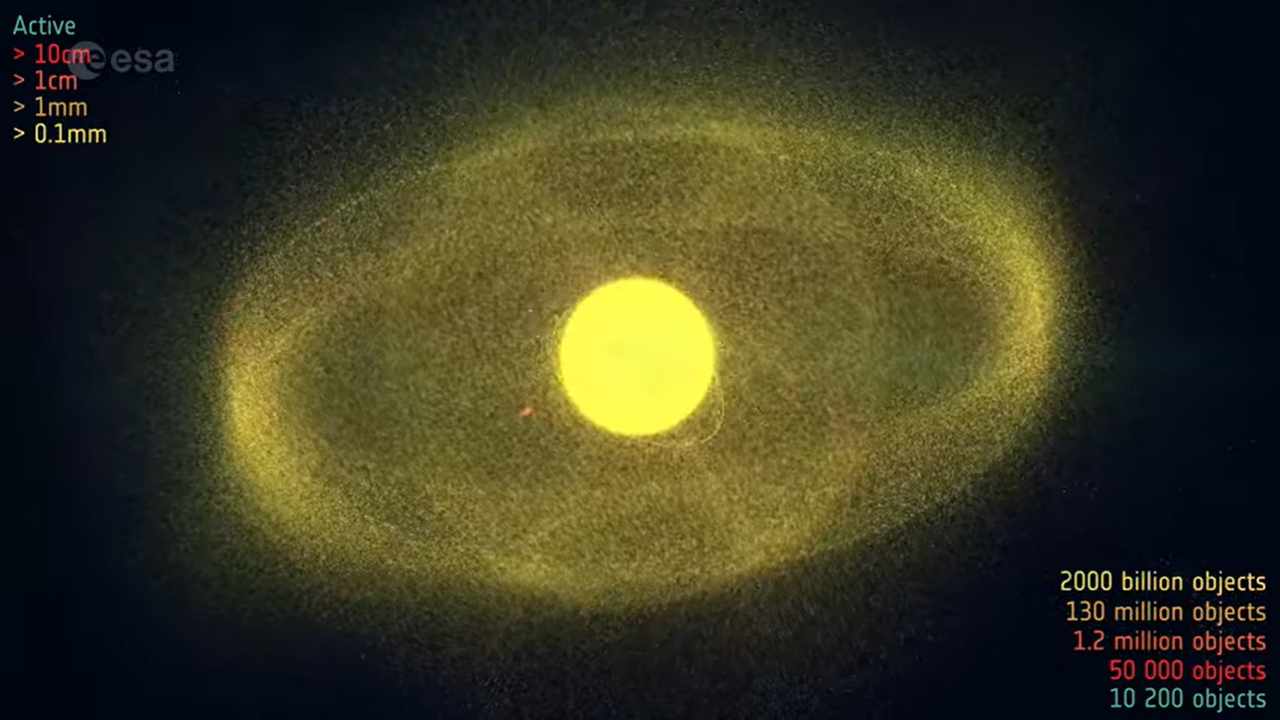
Odin Space is working to predict and monitor dangerous sub-centimeter orbital debris, which can’t be tracked from the ground. Even such tiny pieces can do serious damage: Space debris travels at orbital speeds of roughly 4.5 to 5 miles per second (7 to 8 kilometers per second), with relative collision velocities of up to 9.3 miles per second (15 km per second), meaning any impact with a spacecraft will be highly energetic and potentially mission-ending. Earlier this month. the company secured seed funding of $3 million from investors, boosting its plans to track and map debris threats with its Nano Sensors and Scout Satellites.
“Our partnership with Arkisys marks a pivotal shift in how the industry tackles the rising threat of lethal, non-trackable debris,” James New, CEO and Co-founder of Odin Space, said in the same statement. “Equipping Arkisys spacecraft with Odin’s Nano Sensors is the first move in a new era of safer, smarter, more sustainable space activity.”
Odin Space carried out its first orbital space junk tracking system test in 2023, hitching a ride on SpaceX’s Transporter 8 mission.
SCIENCE
As Avatar returns to theaters, there’s never been a better time to check out ‘Avatar: Frontiers of Pandora’

There’s no doubt that James Cameron’s Avatar franchise has become bigger than anyone anticipated before Christmas 2009. The ‘cultural relevance‘ discussion has repeatedly been rendered moot, with The Way of Water and re-releases of the original ruling the box office. Now, as Avatar: Fire and Ash goes for broke, Pandora is getting a massive refresh in video games with Avatar: Frontier of Pandora’s latest update and expansive story DLC.
Even two years ago, right as it launched, we thought Frontiers of Pandora was a great game — not just worthy of the IP — but also a much-needed expansion of its themes and the rich, vibrant world. By putting the Na’vi at the very center of the story and exploring the matters of colonialism and cultural erasure up close (and without the many limits which come with a movie’s runtime), Cameron’s sci-fi universe gained an edge which the more demanding moviegoers had been looking for since 2009.
You may like

(Image credit: Ubisoft / Massive Entertainment)
There was, however, little hope that support would continue once its original roadmap was done, which is why the announcement of a much-requested third-person mode and an even bigger (paid) story DLC focusing on the Ash People came as a shock. The game was in pretty good shape, but after not quite finding an Avatar-sized audience, it was safe to assume no more Frontiers of Pandora was happening. Well, we’re glad to be proven wrong on that one.
At its core, Massive Entertainment’s (The Division, Star Wars Outlaws) game has all the key traits of Ubisoft’s much-loved/derided open-world output: Massive maps, tons of side content to go through, a stunning level of attention to detail, and often disjointed (due to its sheer size) storytelling. Players who are all about more contained and linear experiences won’t change their mind because of the setting, but if you love massive digital worlds where you can just get lost for hours and hours, it’s a perfect fit.
What made (and still makes) Fronters of Pandora special is how it takes advantage of the property’s uniqueness better than other big-budget video game adaptations. Na’vi don’t control like beefier humans in similar games. Their strength, weight, agility, and even heightened perception are perfectly recreated, making the moment-to-moment fun of this blue power fantasy stand out even if you’ve spent time in Ubisoft’s Far Cry and Assassin’s Creed titles.

(Image credit: Ubisoft / Massive Entertainment)
Pandora’s dense jungles and wide plains, even after two years of remarkably beautiful AAA video games, still hold up as one of the top tech showcases of this game generation so far. By eschewing dull photorealism for highly detailed and otherworldly vistas that are even more saturated than their movie counterparts, Massive’s work on Frontiers of Pandora is transportive on a level that few (if any) big-budget video game productions have been able to capture. Far too often, video game adaptations of dense sci-fi worlds on the big screen have only produced fancy set dressings for one-note adventures. Frontiers of Pandora, on the other hand, stands shoulder to shoulder with the best of them.
The conflict disrupting the peace of such soothing locales doesn’t disappoint either. As the RDA’s all-out invasion effort begins to take shape — and while Jake Sully and his family fight their own battle elsewhere — the Na’vi are facing trouble across several regions. It doesn’t take long to see this is a war. A scattered one, sure, but an ongoing conflict that will reshape Pandora.
As the plot (no spoilers here) progresses, it becomes clearer that ignoring an existential threat doesn’t make it go away. The Sullys learned this the hard way in The Way of Water, and this story doesn’t shy away from the necessity of an armed revolution when an ontological evil comes knocking.

(Image credit: Ubisoft / Massive Entertainment)
Video games have made a habit of presenting violence as the answer to all conflicts, as it translates so well into the medium. This can make it hard not to feel icky when you’re playing a realistic rendition of modern (or past) war scenarios. However, gunning down hordes of zombies, Nazis, demons, and whatnot with prejudice? Perfectly okay. The evil must be cleansed. In Avatar: Frontiers of Pandora – much like in Cameron’s anti-imperialist flicks – the same applies. Is humanity worth saving when it’s turned against nature and would rather repeat past cycles of violence on a distant moon than learn from its mistakes? Probably, as the Na’vi clearly believe in redemption and empathy, but those who refuse to abandon their path of destruction and suffering must be dealt with.
You may like
The Na’vi are peaceful people – okay, maybe not the Eywa-hating Mangkwan – but they also know skewering Terran fascists with two-meter arrows could save Pandora. As for human rebels, they’re probably even more okay with the idea of removing the RDA from the equation. After all, violence is historically one of our biggest exports. Unlike in other video games, the narrative and gameplay beats aren’t at odds with themselves. Yes, Pandora is a pretty place, and living in harmony with nature rocks. But puny xenophobic humans won’t ever see the light of Eywa? Also yes.
Avatar: Frontiers of Pandora – From the Ashes: LAUNCH TRAILER – YouTube

Watch On
Ultimately, it all circles back to the earnestness of James Cameron’s movies. While it’s common to talk of (or dismiss) them as cheesy and tree-hugging to a fault, the reality is there’s a dark side to all the colorful and family-friendly adventure.
Avatar: Frontiers of Pandora understands this quite well, and with the From the Ashes expansion promising to introduce Pandora’s own gloomy people as the third movie does the same, things are only getting more serious and weighty for the blue humanoids.
Avatar: Frontiers of Pandora is available for PC, PS5, and Xbox Series X|S. The new ‘From the Ashes’ DLC arrives today (December 19, 2025).
SCIENCE
Interstellar comet 3I/ATLAS is rapidly moving away from us. Can we ‘intercept’ it before it leaves us forever?

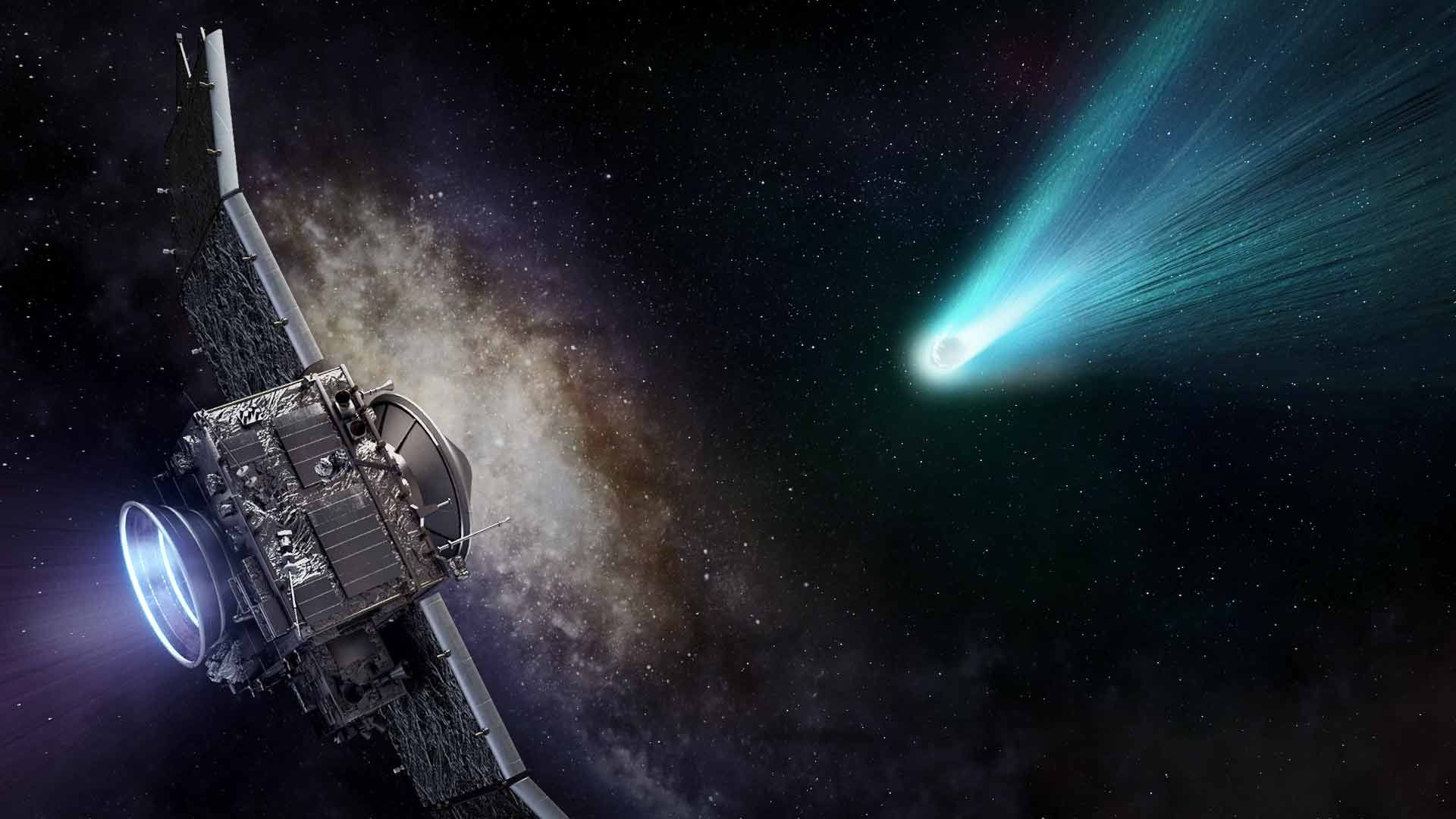
We’ve watched it speed through the solar system using the most powerful telescopes in human history. We’ve studied its light with probes whipping around the sun and robots marooned on Mars. Countless eyes watched it make its closest approach to Earth on Dec. 19 — and yet, for all of this, the interstellar comet 3I/ATLAS remains little more than a blur of gas, shrouded in mystery.
Since its discovery in early July, 3I/ATLAS has been studied more enthusiastically than practically any other celestial object in recent memory. Still, for all its fame, much remains unknown about it. The comet’s origins, from somewhere far across our galaxy, may never be known. Its true age, size, composition, and shape are also poorly constrained.
But how can we learn more about this alien interloper — or indeed, the next one — when we’re already studying it with everything we’ve got?
You may like
Alien interlopers
On July 1, astronomers at the Asteroid Terrestrial-impact Last Alert System (ATLAS) revealed they had spotted a mysterious object traveling toward us from beyond Jupiter, at more than 130,000 mph (210,000 km/h). ATLAS, which automatically scans the skies using telescopes in Hawaii, Chile and South Africa, was hunting for potential threats to Earth. It found something else entirely.
ATLAS astronomers first announced the discovery of a potential interstellar object on July 1, releasing this photo of an object headed toward the sun from beyond Jupiter. (Image credit: ATLAS/University of Hawaii/NASA)
Less than 24 hours later, NASA confirmed that the speeding blur of light was an interstellar object — an alien asteroid or comet that originated outside the solar system — and named it 3I/ATLAS. It was only the third-ever detection of an interstellar object in our solar system, after the anomalous space rock ‘Oumuamua in 2017 and Comet 2I/Borisov in 2019.
Despite the rapid spread of unfounded theories that the object could be an alien probe, early observations confirmed that 3I/ATLAS is a comet — potentially the oldest of its kind ever seen — that likely originated from the Milky Way’s “frontier” region.
Interstellar visitors like this are exciting to astronomers because they are one of the few opportunities we have to explore neighboring star systems, which would take generations and the invention of sci-fi technology to reach aboard a spacecraft.
You may like
“ISOs are relics from planetary formation, so studying these objects and comparing them to what we have closer to us [could] lead to an interesting view of how other planetary systems in the galaxy formed,” Pedro Bernardinelli, a planetary scientist at the University of Washington’s DiRAC Institute, told Live Science in an email.

Science Spotlight takes a deeper look at emerging science and gives you, our readers, the perspective you need on these advances. Our stories highlight trends in different fields, how new research is changing old ideas, and how the picture of the world we live in is being transformed thanks to science.
But our Earth-based observatories, and even orbiting spacecraft such as the James Webb Space Telescope (JWST), can only tell us very rough information like general size, shape and composition. To really reveal ISO secrets, we will need to get much, much closer — possibly even close enough to grab a fragment.
Doing so won’t be easy, but given the valuable insights it could reveal about the star systems beyond our own, it would be well worth the effort, experts say.
“Each one of these ISOs is a little piece of low-hanging fruit from a tree that can tell us a great deal about the trees growing in some other neighborhood,” Wesley Fraser, an astronomer with the National Research Council Canada, previously told Live Science.
Giving chase
But the time to catch this speeding comet is fast approaching. 3I/ATLAS is now reaching its closest point to Earth, around 168 million miles (270 million km) miles away. From there it will move quickly away from us and will likely be beyond Neptune within another year.
Because it is now too late to intercept 3I/ATLAS within the inner solar system, most researchers agree that there is now only one viable option to study this object: to chase it down as it leaves the solar system.
This would require the spacecraft to carry out what researchers call “Oberth maneuvers,” where a probe is gravitationally slingshotted around massive objects, such as the sun, to pick up enough speed to allow it to catch up to and intercept an ISO at a specific point along its predicted trajectory.
This idea was first proposed in 2022 to catch up with the first known interstellar object, ‘Oumuamua. The plan, dubbed Project Lyra, was to launch a probe in 2028 that would intercept and investigate that object, after completing an Oberth maneuver around Jupiter.

3I/ATLAS has displayed multiple anomalous characteristics on its one-way trip through the solar system, including growing a puzzling “anti-tail” jet shortly before reaching its closest point to the sun. (Image credit: Comet photograph: International Gemini Observatory/NOIRLab/NSF/AURA/Shadow the ScientistImage Processing: J. Miller & M. Rodriguez (International Gemini Observatory/NSF NOIRLab), T.A. Rector (University of Alaska Anchorage/NSF NOIRLab), M. Zamani (NSF NOIRLab); Inset: Teide Observatory, M. Serra-Ricart, Light Bridges)
But this chaser method has a huge limitation: Scientists would need to wait decades for data to come back. For example, if Project Lyra launched a spacecraft in 2030, it would not intercept ‘Oumuamua until 2052 at the earliest, Adam Hibberd, a researcher with the U.K.-based nonprofit Initiative for Interstellar Studies (I4IS) who worked on Project Lyra, told Live Science.
So far, Project Lyra has not moved past the planning stage — making a 2028 launch highly unlikely — but the project could still reach ‘Oumuamua if launched in 2030 or 2033, Hibberd said. This means we would likely still have plenty of time to chase down 3I/ATLAS, if we want to.
Future propulsion methods, such as a solar sail, could drastically cut the travel time of missions like this from decades down to just a few years, he added. But these technologies are decades away from becoming a reality themselves.
Playing “hide-and-seek”
But given that 3I/ATLAS will be very hard to chase down, some astronomers argue that we shouldn’t bother hunting it. Rather we should prepare to intercept the next interesting ISO.
By launching an interceptor spacecraft and parking it in a gravitationally stable position around Earth, known as a Lagrange point, we could, in theory, be ready to quickly intercept a passing object, they argue.
This idea, also first proposed in 2022, has been dubbed the “hide-and-seek” approach. However, unlike Project Lyra, it is much closer to becoming a reality.
The European Space Agency (ESA) is preparing the Comet Interceptor mission, which is currently scheduled to launch in 2029, on board the same rocket as ESA’s Ariel space telescope, said Colin Snodgrass, an astronomer at the University of Edinburgh in Scotland who specializes in comets and was the deputy project investigator on the proposal for this mission.

NASA has been keeping a close eye on 3I/ATLAS since it was discovered. The agency released these six photos of the comet, taken by various spacecraft across the solar system, at a press briefing in November. (Image credit: NASA/Goddard/LASP/CU Boulder/JPL-Caltech/University of Arizona/Southwest Research Institute/Lowell Observatory/Qicheng Zhang/ASU/MSSS)
The Comet Interceptor probe isn’t specifically aimed at interstellar visitors. Instead, it’s designed to hunt nonperiodic comets like Comet Lemmon, which has been visible in the night sky, alongside 3I/ATLAS, in recent months. These comets drift toward the sun every few hundred or thousand years and have poorly defined orbital pathways around the sun.
When ESA researchers spot a comet they can reach, they will “fire the rockets, get to the right place in space to cross the path of the comet and have this fast flyby encounter, where we go shooting past the comet, getting as much data as we can,” Snodgrass told Live Science.
And while the mission is not designed to study interstellar objects, the project will be perfectly placed to intercept them.
“The whole science team is very much in agreement that if an interstellar object was to pop up, we wouldn’t let that opportunity go by,” Snodgrass said.
The main advantage of the hide-and-seek approach is that we wouldn’t have to wait decades for a probe to catch up to its target. Additionally, we’d be reaching it at the best time to study it. That’s because interstellar comets, like 3I/ATLAS, soak up more solar radiation when in the inner solar system — which, in turn, means they give off more light, gas and dust, giving us a better chance to learn about their composition.
However, a hide-and-seek mission might not be able to catch all the objects we care about. For example, ESA’s Comet Interceptor probe would have been unlikely to reach 3I/ATLAS, had it been in orbit when the ISO was first discovered, because the comet was too far away from us, a recent study from Snodgrass and others found.
Collision course
A major limitation of both the chaser and hide-and-seek missions is that ISOs travel too fast for their respective spacecraft to travel alongside, or rendezvous with, these objects.
This makes it “almost impossible” for the probes to directly obtain samples from the objects’ surfaces as NASA did during its OSIRIS-REx mission, which successfully landed a probe on the asteroid Bennu in 2020 and collected samples that were later returned to Earth, Hibberd said. Due to fuel limitations, it is also unlikely that these samples could be easily returned to Earth, especially during a chaser mission, he added.
However, there is a third option that could yield valuable interstellar samples: the “impactor” method.
Similar to NASA’s Double Asteroid Redirection Test (DART) mission, which successfully deflected the asteroid Dimorphos after smashing into the space rock in 2022, an interceptor probe could also be sent to crash into an ISO, Hibberd suggested. While this probe would be destroyed, a second spacecraft could be deployed to analyze the debris field and potentially even collect leftover fragments of the alien object, he added.
But an impactor mission would need to overcome serious technical challenges. First, ISOs travel much faster than solar system objects, like Dimorphos, meaning it’s more difficult to smash them apart. Second, this method would likely work only on an asteroid, not on comets, which have hard, icy shells. And third, a collision could accidentally send chunks of debris on a collision course with Earth, like DART did. As a result, most of the experts who talked to Live Science, including Hibberd, agreed that it is probably too risky to attempt an impactor mission until more research has been done on the subject.
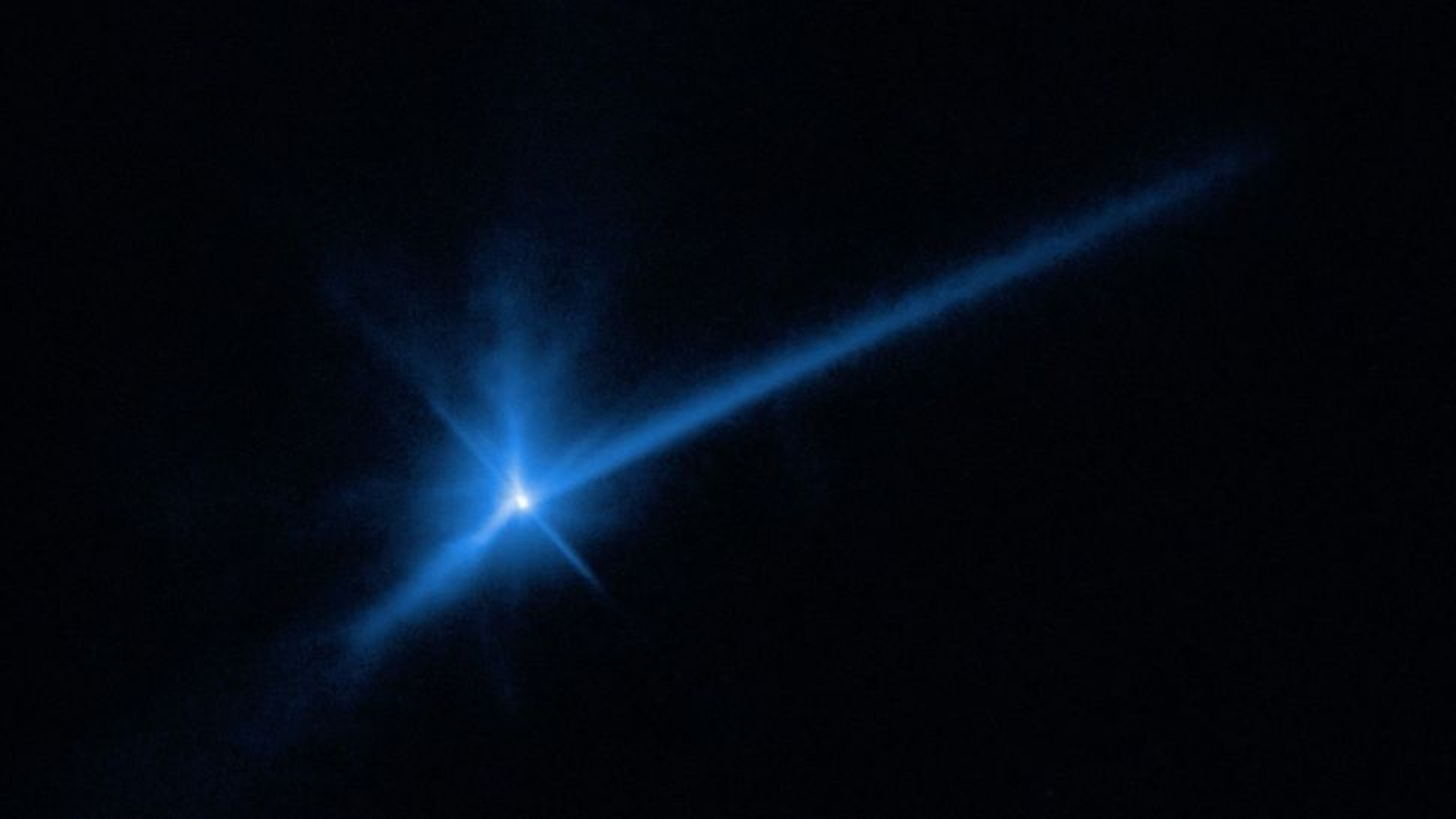
NASA’s DART mission smashed into the asteroid Dimorphos in 2022 to test our planetary defence capabilities. Some researchers have proposed doing the same to 3I/ATLAS to help us better study the ISO. (Image credit: NASA, ESA, STScI, Jian-Yang Li (PSI) IMAGE PROCESSING: Joseph DePasquale (STScI))
The perfect mission
If money were no object, we could pursue all of these options. But if an agency like NASA has the budget for only one such mission, which one should be selected?
A chaser mission would allow astronomers to target a specific object they know they want to study, while a hide-and-seek mission would be limited to objects that happened to pass nearby. On the other hand, the hide-and-seek mission could reliably predict objects’ locations in the inner solar system, whereas the chaser method would target objects in the dark, more chaotic outer solar system, where it would be harder to find and photograph them, Snodgrass said.
Another issue is that signals from a more distant chaser mission would take longer to send and receive, so mission operators would be unable to monitor and adjust an ISO flyby in real time or fix technical difficulties easily — a difficulty NASA faces with its distant Voyager probes, Snodgrass said.
There is also the matter of money. Project Lyra would likely cost the same as NASA’s New Horizons mission, which flew by Pluto in 2015 and cost at least $700 million, Hibberd said. Meanwhile, ESA’s Comet Interceptor mission has a budget of around $150 million, Snodgrass said.
As a result, most researchers who spoke to Live Science agreed that a hide-and-seek interceptor would likely be the best way of studying an ISO up close.
But if this is the method we end up using, how should we design the resulting spacecraft to maximize its chances of collecting useful data?
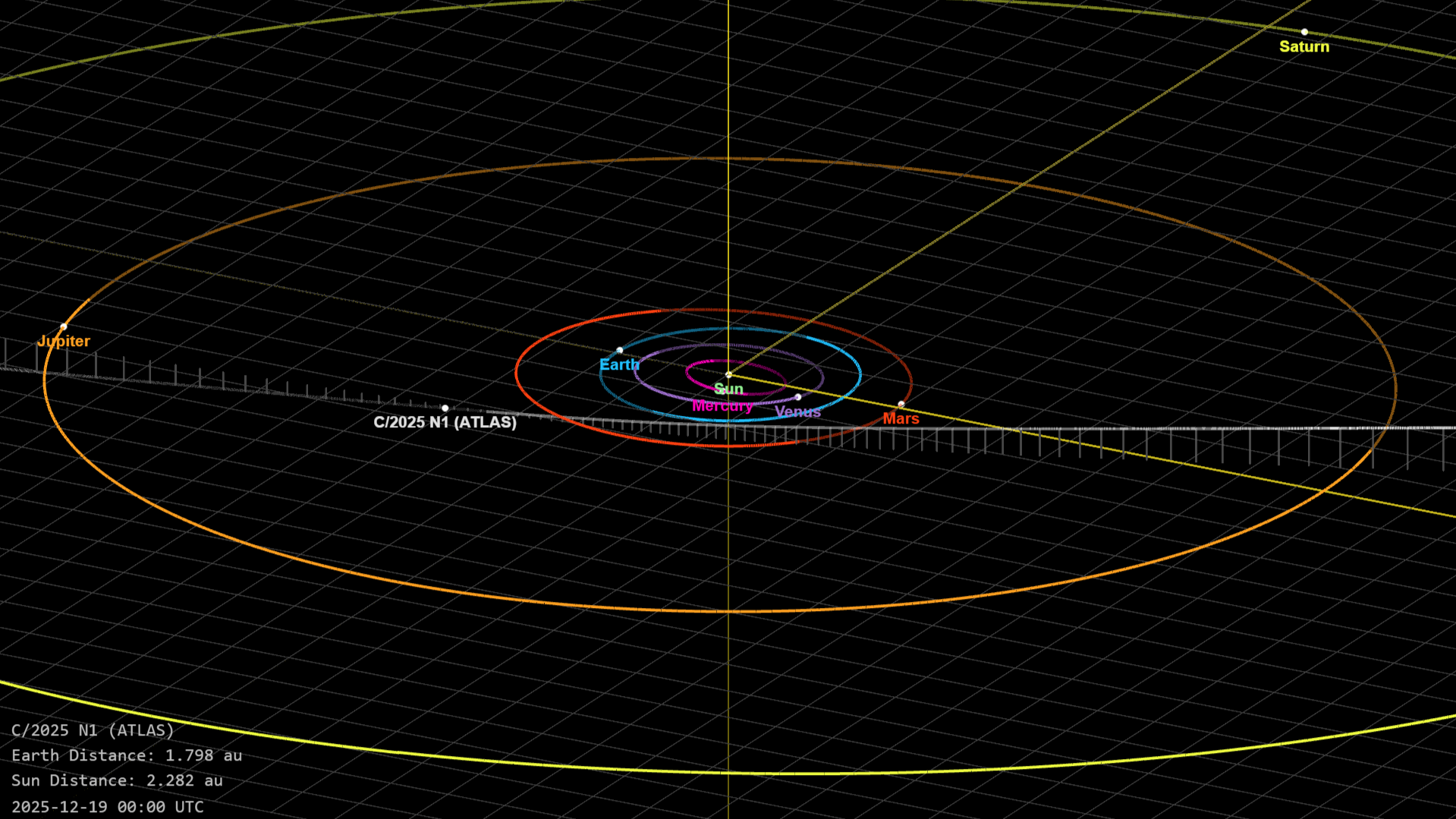
3I/ATLAS, also known as C/2025 N1 (ATLAS), reached its closest point to Earth in the early hours of Dec. 19 on its journey back out of the solar system. (Image credit: NASA/JPL)
While ESA’s Comet Interceptor is relatively inexpensive, a dedicated ISO interceptor mission — with a bigger budget — would allow us to launch a faster probe that could carry more fuel and thus travel farther. However, the craft doesn’t need to be fancy.
A “fairly stripped-back” probe with a decent camera and a few spectrographs, capable of analyzing the light given off by the different gases, would be more than enough to collect sufficient data from any flyby, Snodgrass said.
If the probe were intercepting a comet, and not an asteroid, it could also be fitted with a device to catch specks of dust from the comet’s coma or tail during a superclose approach, just as NASA’s Stardust probe did with “Comet Wild 2” in 2004.
Assuming that the interceptor hasn’t depleted its fuel reserves and can be returned to Earth, this may be the only reliable way of actually getting our hands on interstellar samples, Snodgrass said.
To intercept or not to intercept
Once the “perfect” interceptor is in position around Earth, researchers will have to choose which ISO to go after. And because any spacecraft is unlikely to be reusable, it may get only one shot at picking the right target.
We may soon be spoiled for choice. ISOs may be far more common than we realize. “There are likely thousands of other ISOs in the solar system right now,” Fraser said. “We just can’t see them because they are too faint, too far and too fast.”

The newly operational Vera C. Rubin Observatory, located in Chile’s Atacama desert, is expected to find many more ISOs in the coming decades. (Image credit: Hernan Stockebrand)
But thanks to the newly operational Vera C. Rubin Observatory in Chile, which is designed to spot more small and dim objects in the outer solar system, we are likely to find many more ISOs in the coming decades and, more importantly, spot them much earlier on their journey toward us, which would give us a better chance of studying them.
The first thing to consider is whether to go after an asteroid or a comet. Because comets become more active near the sun and present the most likely route for collecting interstellar samples, they would likely take priority, Snodgrass said.
The next consideration would be the target’s distance from Earth. As we have already seen, ESA’s Comet Interceptor may have struggled to reach 3I/ATLAS on its journey through the inner solar system. Therefore, it might pay to wait for an ISO that is on a favorable trajectory relative to Earth.
SCIENCE
James Webb Space Telescope watches ‘Jekyll and Hyde’ galaxy shapeshift into a cosmic monster

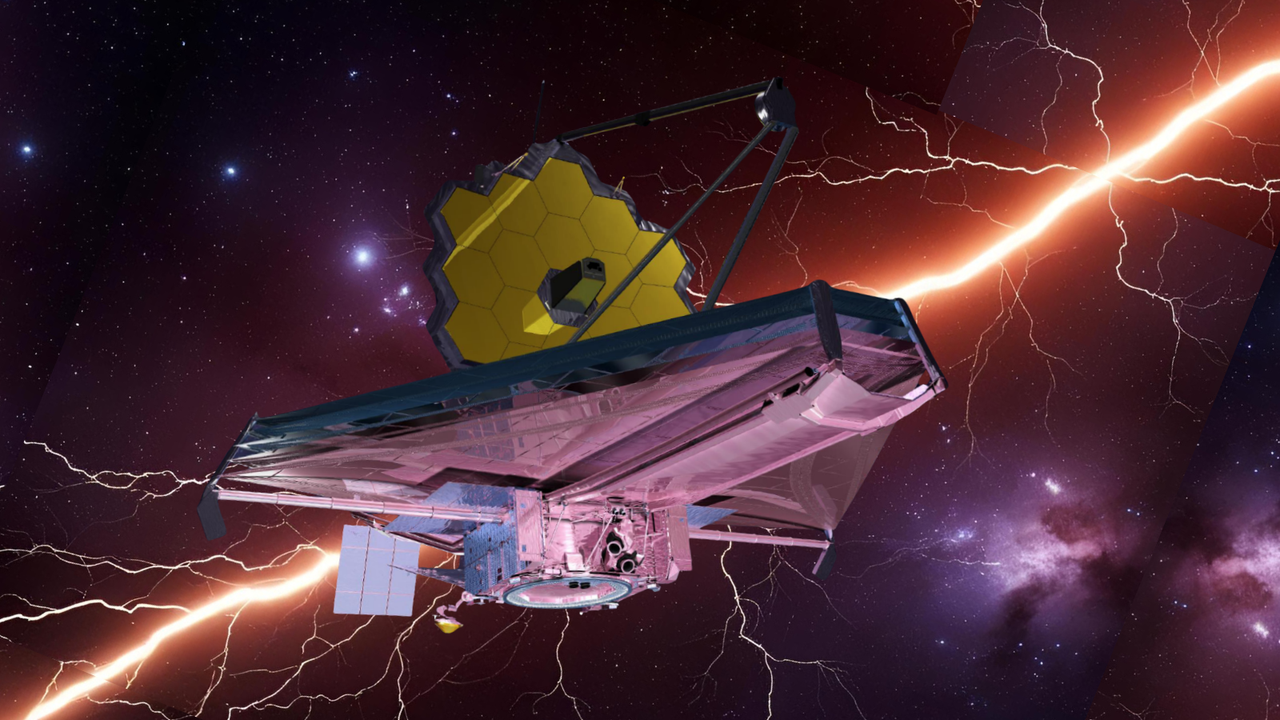
Jekyll and Hyde and the Wolfman better watch out. They have stiff new competition for the most fearsome and beastly transformation from mild-mannered to raging beast from the galaxy known, rather unintimidatingly, as “Virgil.”
Using the James Webb Space Telescope (JWST), astronomers watched as the Virgil transformed before their eyes, revealing its monstrous nature and a supermassive black hole at its heart that is feeding on matter at an incredible rate. The black hole now appears far too massive for its host galaxy to support, placing it in a rare category of “overmassive” black holes that challenge leading models of how galaxies first formed and of how they nurture supermassive black holes at their cores, growing in lock step.
You may like
Virgil belongs to a mysterious class of objects known as “Little Red Dots,” galaxies that JWST has been discovering in large numbers around 600 million years after the Big Bang. These objects seem to disappear by the time the universe reaches an age of around 2 billion years. Quite what these galaxies are is a mystery, but the more puzzling question is why they disappeared around 1.6 billion years after they reached their largest population.
The study of Virgil could solve this twin dilemma by suggesting what form Little Red Dots may have transformed into, allowing us to identify their descendants in the modern universe.
The research also suggests that some terrifying cosmic monsters may be out in the universe, hiding in plain sight.
An infrared monster
Light comes in multiple wavelengths, which astronomers often use to reveal different characteristics about the same objects. The true nature of Virgil was only revealed when astronomers studied this galaxy in infrared light, invisible to the human eye, using the JWST’s Mid-infrared Instrument (MIRI).
“Virgil has two personalities,” Rieke explained. “The UV and optical show its ‘good’ side – a typical young galaxy quietly forming stars. But when MIRI data are added, Virgil transforms into the host of a heavily obscured supermassive black hole pouring out immense quantities of energy.”
This violent side of Virgil had remained hidden in other wavelengths of light because its heart, where the ravenous supermassive black hole dwells, is shrouded in thick clouds of dust. This dust is very good at absorbing ultraviolet and visible light, but infrared light is able to give it the slip. That means viewing Virgil in infrared gives a more complete picture of what is happening at its core.
“MIRI basically lets us observe beyond what UV and optical wavelengths allow us to detect,” team co-leader Pierluigi Rinaldi of the Space Telescope Science Institute said. “It’s easy to observe stars because they light up and catch our attention. But there’s something more than just stars, something that only MIRI can unveil.”
You may like
The research may have wider implications for astronomers, suggesting there could be a whole population of dust-obscured supermassive black hole monsters out in the cosmos, which may have played a significant early role in the evolution of the universe.
As of yet, scientists aren’t aware of any other cosmic monsters like Virgil roaming the early universe, but that could be because the way we study the cosmos allows them to fool us with their mild-mannered alter egos.
“Are we simply blind to its siblings because equally deep MIRI data have not yet been obtained over larger regions of the sky?” Rinaldi said. “JWST will have a fascinating tale to tell as it slowly strips away the disguises into a common narrative.”
The team’s research was published on Dec. 8 in the journal Nature Astronomy.

Comet 3I/ATLAS whizzed past Earth last night as astronomers worldwide continue to gather data on the interstellar visitor.
The comet made its closest approach at around 1 a.m. EST on Friday (Dec. 19), coming within about 168 million miles (270 million kilometers) of our planet.
You may like
Comet 3I/ATLAS is up to a few miles wide and didn’t get close enough to be visible to the naked eye. However, skywatchers observed it using telescopes.
And last night was far from our last chance to see the comet. It will remain observable in the pre-dawn sky with a small telescope until spring, according to NASA. If you don’t have a telescope, then the best way to see comet 3I/ATLAS is online.
The Virtual Telescope Project in Italy is hosting a livestream of the comet passing Earth at 11 p.m. EST on Friday. The livestream, which was scheduled for last night but postponed due to rain, will feature real-time images of the comet as it zooms toward Jupiter.
Comet 3I/ATLAS is worth checking out because it’s a rare example of an interstellar object from outside of our solar system. This is only the third interstellar visitor ever detected and could be the oldest comet ever seen.
The comet’s origins have been the subject of considerable speculation, most notoriously the repeated suggestions that it could be an alien spacecraft. However, nearly all astronomers are confident that 3I/ATLAS is a comet from another star system.
Researchers discovered comet 3I/ATLAS in July, when they spotted an unknown object racing along at around 137,000 mph (221,000 km/h) within the orbit of Jupiter. Having swung past the sun, reaching the closest point to our star (perihelion) at the end of October, the comet is now making its way out of our solar system.
After getting daily requests for literally months- I’m pleased to share with you 3i/Atlas. The “Alien” comet, captured entirely with my own equipment. What do I think about it? I’ll share my observations in the replies. pic.twitter.com/XfPDhosoJNDecember 17, 2025
What’s next for comet 3I/ATLAS?
Comet 3I/ATLAS will pass Jupiter next, where it is expected to make its closest approach on March 15, 2026, according to NASA. The comet will get much closer to Jupiter than it did to Earth, coming within about 33 million miles (54 million km) of the gas giant. Spacecraft stationed at Jupiter, like Juno, might be able to observe the comet as it approaches.
The interstellar interloper will then cross Saturn’s orbit in July 2026; Uranus’ orbit in April 2027; and Neptune’s orbit in March 2028. However, it won’t get close to any of these planets. You can track comet 3I/ATLAS for yourself using NASA’s Eyes on the Solar System simulation of the comet’s trajectory.
Researchers will keep an eye on comet 3I/ATLAS while it remains in our cosmic neighborhood. After all, there’s a lot they still don’t know about its properties. For example, the size of the comet is uncertain. Hubble Space Telescope observations suggest that it’s somewhere between 1,440 feet (440 meters) and 3.5 miles (5.6 km) wide.
Researchers also don’t know which star system forged comet 3I/ATLAS, and they may never find out. The comet travelled a very long way and could have been hurtling through space for billions of years before visiting our solar system.

 Lego Avatar — Toruk Makto & Tree of Souls
Aesthetically stunningRead more▼ Lego Avatar: The Way of Water — Payakan the Tulkun & Crabsuit
Payakan looks greatRead more▼ The Way of Water — Metkayina Reef Home
Fun buildRead more▼ Lego Avatar — Neytiri & Thanator vs. AMP Suit Quaritch
Great for playRead more▼ Lego Avatar — Jake & Neytiri’s First Banshee Flight
Two gorgeous creature figuresRead more▼
We’re readying ourselves for Avatar: Fire and Ash and going blue for a while, which means it’s time to rewatch the previous Avatar movies and scout the best Lego Avatar sets released so far.
At the time of writing, we haven’t seen what The Lego Group and other toymakers have prepared for Avatar: Fire and Ash, but we aim to update this list of our favorite Lego Avatar sets with the latest as they’re announced and set to hit the market. Mind you, there are plenty of stunning scenes from the first two movies worth recreating in detail with colorful bricks and cute minifigures. Even Col. Miles Quaritch is adorable when turned into a Lego.
Lego Avatar — Toruk Makto & Tree of Souls
Image 1 of 2
 The Tree of Souls is one of the most colorful Lego Avatar sets out there.(Image credit: Lego)
 The Tree of Souls is one of the most colorful Lego Avatar sets out there.(Image credit: Lego)
Lego Avatar — Toruk Makto & Tree of Souls
The best overall, this set would probably be the centerpiece of any Lego Avatar collection.
Specifications
Piece count: 1212
Dimensions: Toruk — 9.5 x 15 inches (height x width), Tree of Souls — 8.5 x 9 inches (height x width)
Recommended age: 12+
Price: $135.66
Reasons to buy
+
Aesthetically stunning
+
One for older builders
The only flying creature on Pandora (that we know of) that banshees fear is the great leonopteryx (Toruk), and that rare aerial predator translates into a beautiful figure that also comes with an excellent diorama of a Na’vi congregation around the mighty Tree of Souls. Of course, Jake is riding the Toruk, thus becoming the Toruk Makto, who can bring the Na’vi peoples together against the human invaders.
If we had to pick a single Avatar set to gift to a huge fan of James Cameron’s movies, it’d be this one. It packs everything you’d want out of a Lego Avatar box: iconic fauna and flora (there’s even a direhorse), plenty of Na’vi and enough environmental chunks to display the whole thing in a satisfactory manner without the need for extra sets.
The two highlights are how flexible and intricate the Toruk build is, and how gorgeous the Tree of Souls ends up being (especially if you use adequate lighting to make it pop) thanks to the glow-in-the-dark elements. The substantially higher piece count and age recommendation underlines how this one’s aimed at older fans, but if your children enjoy a good challenge, why shouldn’t you dive into it with them?
Today’s best Lego Avatar Tree of Souls deals
Lego Avatar: The Way of Water — Payakan the Tulkun & Crabsuit
Image 1 of 2
Payakan the Tulkun is one of the most striking builds in the Lego Avatar range.(Image credit: Lego) Payakan the Tulkun is one of the most striking builds in the Lego Avatar range.(Image credit: Lego)
Lego Avatar: The Way of Water — Payakan the Tulkun & Crabsuit
Payakan the Tulkun steals the show here.
Specifications
Piece count: 761
Dimensions: Tulkun (without display stand) 3 x 15 x 12.5 inches (height x width x length)
Recommended age: 10+
Price: $129.89
Reasons to buy
+
Payakan looks great
+
The RDA vehicle is neat
Reasons to avoid
–
Not a diorama
–
More expensive now
Though the Payakan the Tulkun & Crabsuit Lego set, which brings to life some of the main players of Avatar: The Way of Water’s final act, isn’t the most complex or cheap build (it’s technically retired, but stock is still being sold by some stores), it’s clearly a must for Tulkun fans. Kids who loved the surprising side character that Payakan turned out to be won’t let go of the completed figure either.
The set also includes a human Crabsuit driver inside the mech-like build, and Lo’ak and Tsireya complete the recreation of one of the movie’s latter scenes. Though they didn’t take advantage of the opportunity to craft a cohesive diorama with this one, the two bits of underwater terrain and flora that come with it work well if used alongside other Way of Water sets we’re about to recommend.
Of course, the main reason anyone will grab this one is Payakan, and the whale-like alien doesn’t disappoint in its brickified form. The main twist here is that he’s fully posable and can be elegantly displayed with a custom stand, so this isn’t a rushed package designed only for the youngest fans.
Today’s best Lego Avatar Payakan the Tulkun & Crabsuit deals


The Way of Water — Metkayina Reef Home
Image 1 of 2
The Reef Home set is the best for those who love dioramas.(Image credit: Lego) The Reef Home set is the best for those who love dioramas.(Image credit: Lego)
The Way of Water — Metkayina Reef Home
The most diorama-like set, this is suitable for display purposes.
Specifications
Piece count: 528
Dimensions: 7.5 x 16 x 9.5 inches (height x width x depth)
Recommended age: 9+
Price: $79.99
Reasons to buy
+
Fun build
+
Great for those that love dioramas
+
Looks great with other sets
Reasons to avoid
–
Expensive given piece count
–
Could have used a creature
A perfect set to pair with the Payakan one is the Metkayina Reef Home box, which includes four Na’vi characters — Neytiri, Kiri, Ronal and Tonowari — a striking Metkayina clan dwelling, a canoe and the flora and terrain that elevate it above the water. This one’s heavy on little accessories and small details, too; those objects and Pandora’s fish are perfect for more complex custom builds.
While the official description doesn’t shy away from the fact that it’s primarily targeted at kids who want to relive scenes from the first Avatar sequel, it also states it was really designed with ‘play and display’ in mind. Considering how rickety these smaller and more detailed Lego sets can be, it feels like a perfect candidate to carefully set up and embellish alongside other oceanic sets, like the Payakan one we just recommended.
Notice the piece count is also lower, which makes it an easier recommendation for children who haven’t crossed the 10-year barrier, as long as you’re happy to help assemble the more delicate parts. In our experience, these mid-sized sets can be very deceiving. Regardless, the guide that comes with it and the digital LEGO Builder app will put anyone on the right track.
Today’s best Lego Avatar Metkayina Reef Home deals
Lego Avatar — Neytiri & Thanator vs. AMP Suit Quaritch
Image 1 of 2
Neytiri and Thanator Vs. AMP Suit Quaritch is a great set for both display and play.(Image credit: Lego) Neytiri and Thanator Vs. AMP Suit Quaritch is a great set for both display and play.(Image credit: Lego)
Lego Avatar — Neytiri & Thanator vs. AMP Suit Quaritch
This set has multiple builds and offers great playability
Specifications
Piece count: 560
Dimensions: AMP suit – 5 x 2.5 x 4 inches (height x width x depth)
Recommended age: 9+
Price: $59.99
Reasons to buy
+
Great for play
+
Multiple builds
Reasons to avoid
–
Light on detail
–
Not the best for display
As part of Avatar’s first push into Lego, we also received the Neytiri & Thanator vs. AMP Suit Quaritch set, which focused on letting kids and fans build and display (or play with) the main players of the final duel of the original movie.
The Thanator is among everyone’s favorite creature designs from Avatar, so it came as no surprise that creators approached it with reverence to craft a pretty sweet posable figure.
Neytiri can also be used alongside or on top of the Thanator. She has her lethal bow and is ready to strike down villain Col. Miles Quaritch, who’s still a human at this point, but has jumped into an imposing mech (AMP) suit with weapons of its own. In a way, this Lego set perfectly captures the two colliding aesthetics of the Avatar movies: Pandora’s colorful but deadly organisms and the RDA’s striking, advanced and chunky technology.
The downside is that the set is light on environmental extras that can enhance the scene if you’re going for a diorama build. We like the design on those colorful plants, but we would’ve celebrated something more ambitious when it comes to representing the location of the scene.
Today’s best Lego Avatar Neytiri & Thanator Vs. Amp Suit Quaritch deals
Lego Avatar — Jake & Neytiri’s First Banshee Flight
Image 1 of 2
The first Banshee fight set is a great reminder of the awe that was felt when the first movie came to theaters.(Image credit: Lego) The first Banshee fight set is a great reminder of the awe that was felt when the first movie came to theaters.(Image credit: Lego)
Lego Avatar — Jake & Neytiri’s First Banshee Flight
This set offers two awesome-looking Banshees, which reminds you of seeing them for the first time on the big screen.
Specifications
Piece count: 572
Dimensions: Banshees – 2 x 10.5 x 12.5 inches (height x length x width)
Recommended age: 9+
Price: $74.95
Reasons to buy
+
Two gorgeous creature figures
+
The entire scene is posable
There’s something that’s particularly enchanting about the Ikran (banshees) across all the Avatar movies. The wyvern-like flying reptiles sport eye-catching colors and Na’vi use them as their go-to air mounts. The bond between a rider and their banshee doesn’t break, and chances are your bond with this two-figure set won’t either.
Jake’s first flight remains one of the most memorable scenes of the movie series, full of epic thrills and some hints of the approaching romance. Traditional Sci-Fi moviemaking at its finest. This set perfectly captures that freeing sense of wonder with two Ikrans, the accompanying riders (Jake and Neytiri) and a big-enough rock formation to place both of the creatures on. The full thing can be assembled together, perfect to be displayed out of the box (once you’re done building it).
At the same time, given the completed banshees’ size and the pterodactyl-like features, this set is an easy win with young ones, who will no doubt spend hours running around the house, recreating Jake and Neytiri’s first flight together. This is what Lego has always been all about.
Today’s best Lego Avatar First Banshee Fight deals
Lego Avatar — Floating Mountains: Site 26 & RDA Samson
Image 1 of 2
 The Floating Mountains: Site 26 and RDA Samson set has a lot going on and is great for kids who love building.(Image credit: Lego)
 The Floating Mountains: Site 26 and RDA Samson set has a lot going on and is great for kids who love building.(Image credit: Lego)
Lego Avatar — Floating Mountains: Site 26 & RDA Samson
This set offers plenty of building as there are different structures in this set.
Specifications
Piece count: 887
Dimensions: Helicopter: 4.5 x 10.5 x 9.5 inches (height x width x length)
Recommended age: 9+
Price: $112.99
Reasons to buy
+
Great build variety
+
Looks great among other sets
Reasons to avoid
–
Expensive
–
Not the most aesthetic on its own
Last but not least, we’re wrapping the list up (for now) with the Site 26 & RDA Samson set, which works perfectly in tandem with the Neytiri & Thanator vs. AMP Suit one we also recommend. If you remember (time to rewatch the original movie if not), the final duel in Avatar took place right next to the Site 26 mobile link station, with Jake Sully’s human form also in the mix. We think the other (otherwise excellent) set was a bit dry when it came to environmental extras, so this one’s the perfect companion if you have the extra money.
But of course, you’ll be eyeing this one because of its unambitious but perfect rendition of the iconic SA-2 Samson helicopter, taken away from the RDA by Jake’s allies. It can also be placed on a natural-looking build with glow-in-the-dark elements, so you don’t have to just leave it placed on a flat surface next to Site 26 and the minifigures. Overall, this unassuming but varied package works well on its own, but also adds to the Neytiri vs. Quaritch set, making them an ideal combo pick, especially if you manage to catch a good deal.
Looking at other Lego Avatar sets, this one also hits a sweet spot between the complex build process of the top-notch ones and the more kid-friendly boxes that may not be as enticing on their own. We know it’s light on Pandoran flora and fauna, but don’t let it fly under your radar.
Today’s best Lego Avatar Floating Mountains Site 26 & RDA Samson deals
Round up of today’s best deals
SCIENCE
1,400 years ago, Nubians tattooed their toddlers. Archaeologists are trying to figure out why.

Kids as young as 18 months old were given facial tattoos in the Nile Valley region 1,400 years ago, archaeologists discovered while studying mummified bodies in Sudan. What’s more, the practice coincided with the introduction of Christianity to the region known as Nubia.
“If the tattoos were a symbol of the wearer’s Christian faith, then it might have been important for parents to create permanent ways to mark their children as Christian,” study lead author Anne Austin, an archaeologist at the University of Missouri–St. Louis, told Live Science.
You may like
Tattooing is a long-standing human practice. Some of the oldest archaeological evidence of tattoos can be found on Ötzi the “Iceman,” whose well-preserved 5,300-year-old body discovered in the Alps was decorated with 61 of them. Other early tattoos have been found on Egyptian mummies from 5,000 years ago, Siberian mummies from 2,300 years ago, and Peruvian mummies from 1,200 years ago. All of these examples were tattoos on adults, though; tattooed children are discovered much less commonly.
In the new study, the researchers identified extensive examples of tattooing at the Christian-era site of Kulubnarti in northern Sudan. Two cemeteries at the site were in use between A.D. 650 and 1000. Using microscopy with infrared lighting, which can penetrate skin to reveal tattoos barely visible to the naked eye, the researchers identified 17 people with definite tattoos and six people with possible faded tattoos.
While investigating exactly where on the body the people buried at Kulubnarti sported tattoos, the researchers noticed an unusual pattern: Two people had back tattoos, but the rest had designs on their foreheads, temples, cheeks or eyebrows. Facial tattoos are already relatively uncommon in the archaeological record, but the researchers found an even rarer practice: the tattooing of children.
Most of the Kulubnarti people with tattoos were children under age 11, the researchers wrote in the study, while the youngest person with definite tattoos was 18 months old. A 3-year-old girl was even found to have had one tattoo positioned directly over another tattoo, suggesting that young children were repeatedly tattooed.
Artist’s reconstruction of the geometric tattoos on the right hand of a woman buried at the archaeological site of Semna South. (Image credit: Mary Nguyen/UMSL)
The tattoos consisted of clustered dots and dashes. The most frequent design was four dots tattooed in a diamond pattern on the person’s forehead, which could represent a Christian cross, according to Austin. “It’s entirely plausible that tattooing was part of a form of baptism if it was used as a sign of Christianity at Kulubnarti,” she said.
But the researchers are also investigating another theory for the widespread tattooing of children found in the cemetery.
“If parents tattooed their children in order to protect them or for medical reasons, then maybe the high rate of tattooing in young children shows us that people at Kulubnarti were facing unusually high amounts of health issues,” Austin said.
You may like
Forehead tattoos may represent parents’ attempts to protect their kids from headaches or high fevers, both of which are commonly experienced in bouts of malaria, a disease with a long history in the Nile Valley, according to the study.
The team also found that the Nubians likely used knives, not needles, to make the tattoos, based on the shape of the tattoo markings.
Even if the tattoos were simply decorative, Austin said, we should not be quick to judge past people for the practice.
“The form of tattooing at Kulubnarti — which could have been done fairly quickly — doesn’t seem any more extreme than piercing a toddler’s ears or circumcising newborn babies,” she said.
Mummy quiz: Can you unwrap these ancient Egyptian mysteries?
SCIENCE
Interstellar comet 3I/ATLAS heads for the outer solar system after its closest approach to Earth

On Friday (Dec. 19), the interstellar invader, comet 3I/ATLAS, made its closest approach to Earth, coming to within 168 million miles (270 million kilometers) of our planet at 1 a.m. EST (0600 GMT).
Following this close approach and the opportunity it offers to investigate this interloper from beyond the solar system, 3I/ATLAS will begin to move back out to the outer regions of the solar system, before leaving altogether to continue its voyage through the Milky Way.
You may like
First spotted by NASA’s Asteroid Terrestrial-impact Last Alert System (ATLAS) on July 1, 2025, with its trajectory indicating its origin lies elsewhere in the Milky Way.
In fact, its path through space suggests that this interstellar comet comes from a region of our galaxy that is much older than the 4.6 billion-year-old solar system.
The water-rich comet seems to originate from the Milky Way’s “thick disk” of stars, rather than the thin stellar disk of which the sun is a member. The thick disk formed earlier than the thin disk, meaning 3I/ATLAS could be up to 7 billion years old.
“All non-interstellar comets, such as Halley’s comet, formed at the same time as our solar system, so they are up to 4.5 billion years old,” University of Oxford astronomer Matthew Hopkins said in a statement back in July. “But interstellar visitors have the potential to be far older, and of those known about so far, our statistical method suggests that 3I/ATLAS is very likely to be the oldest comet we have ever seen.”
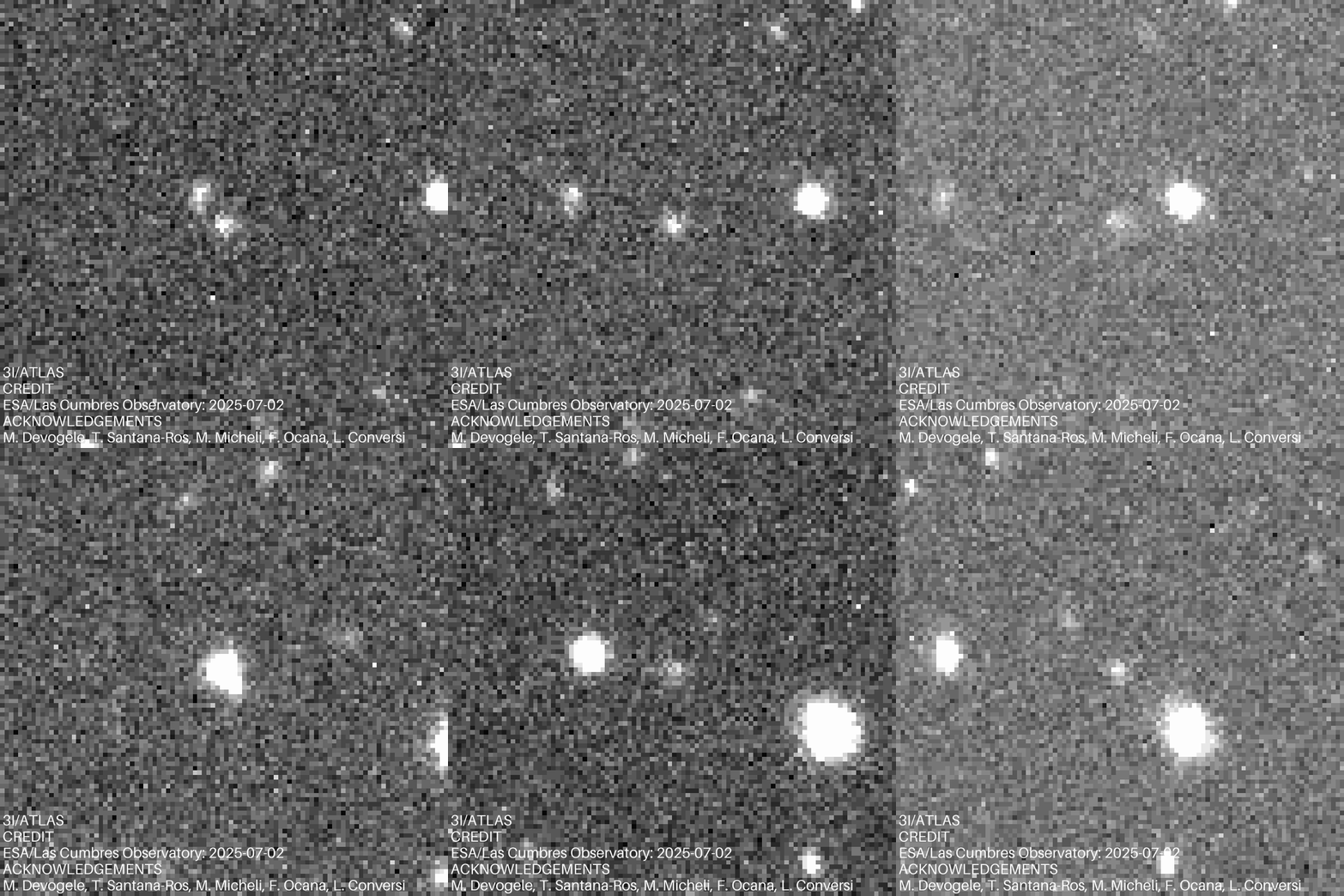
The comet 3I/ATLAS as it streaks through the solar system. (Image credit: ESA/M. Devogele, T. Santana Ros, M. Michell, F. Ocana and L. Conversi)
During its time within the solar system, 3I/ATLAS has continued to surprise astronomers. As it began to make its closest approach to the sun, or its perihelion, on Oct. 29, the comet brightened more than scientists had expected.
Comets tend to brighten as they approach our star due to solar radiation heating their icy cores and causing solid ice to transform straight into vapor, which erupts from the comet, growing its halo or “coma” and its characteristic glowing tail.
Quite why 3I/ATLAS brightened more than expected as observed by STEREO-A and STEREO-B, the twin spacecraft that make up Solar Terrestrial Relations Observatory (STEREO), the sun observing Solar and Heliospheric Observatory (SOHO), and the weather satellite GOES-19, is still unknown.

The trajectory of 3I/ATLAS through the solar system (Image credit: NASA Scientific Visualization Studio)
“The reason for 3I’s rapid brightening, which far exceeds the brightening rate of most Oort cloud comets at similar r [radial distance], remains unclear,” the scientists behind the research, Qicheng Zhang of Lowell Observatory in Flagstaff, Arizona, and Karl Battams, an astrophysicist at the Naval Research Laboratory (NRL) in Washington DC, wrote in a paper discussing the observation published on the research repository site arXiv.
Though 3I/ATLAS is now in the final stage of its occupation of the solar system, the data collected from it will likely inform scientists for some time to come, continuing to paint a more intricate picture of the Milky Way beyond the solar system.
Using NASA’s Eyes on the Solar System interactive app, you can track comet 3I/ATLAS through the solar system and see where it’s headed next.

There are few better sights in nature than December’s night sky. Bright stars like Betelgeuse, Capella, Aldebaran, Sirius and the stars of Orion’s Belt dominate the night sky after dark, but over the two weeks from Dec. 20, 2025 to Jan. 4, 2026, you can follow some unique astronomical events.
As seen from the Northern Hemisphere this year, a crescent moon will curl up in the western sky just before Christmas Day, before gliding past Saturn and the Pleiades. Meanwhile, Jupiter shines as a bright “Christmas Star” in the east right after dark.
Add two meteor showers and a full “Wolf Supermoon”, and ’tis the season to be outside looking up! Here’s how to follow the show night by night…
You may like
1. Jupiter shines as the ‘Christmas Star’
See Jupiter as bright as it ever gets this Christmas. (Image credit: Stellarium)
When to see: Dec. 25, 2025–Jan. 10, 2026
Head outside about 90 minutes after sunset and look east. The brightest “star” climbing into the sky is Jupiter, shining with a steady light. It will be your planetary companion for the rest of the year — a seasonal lantern that gets higher and more obvious each night.
If it looks like the “Star of Bethlehem” or “Christmas Star,” that’s because it’s closest to its opposition — the brightest it ever gets — on Jan. 10, 2026.
2. Ursids meteor shower
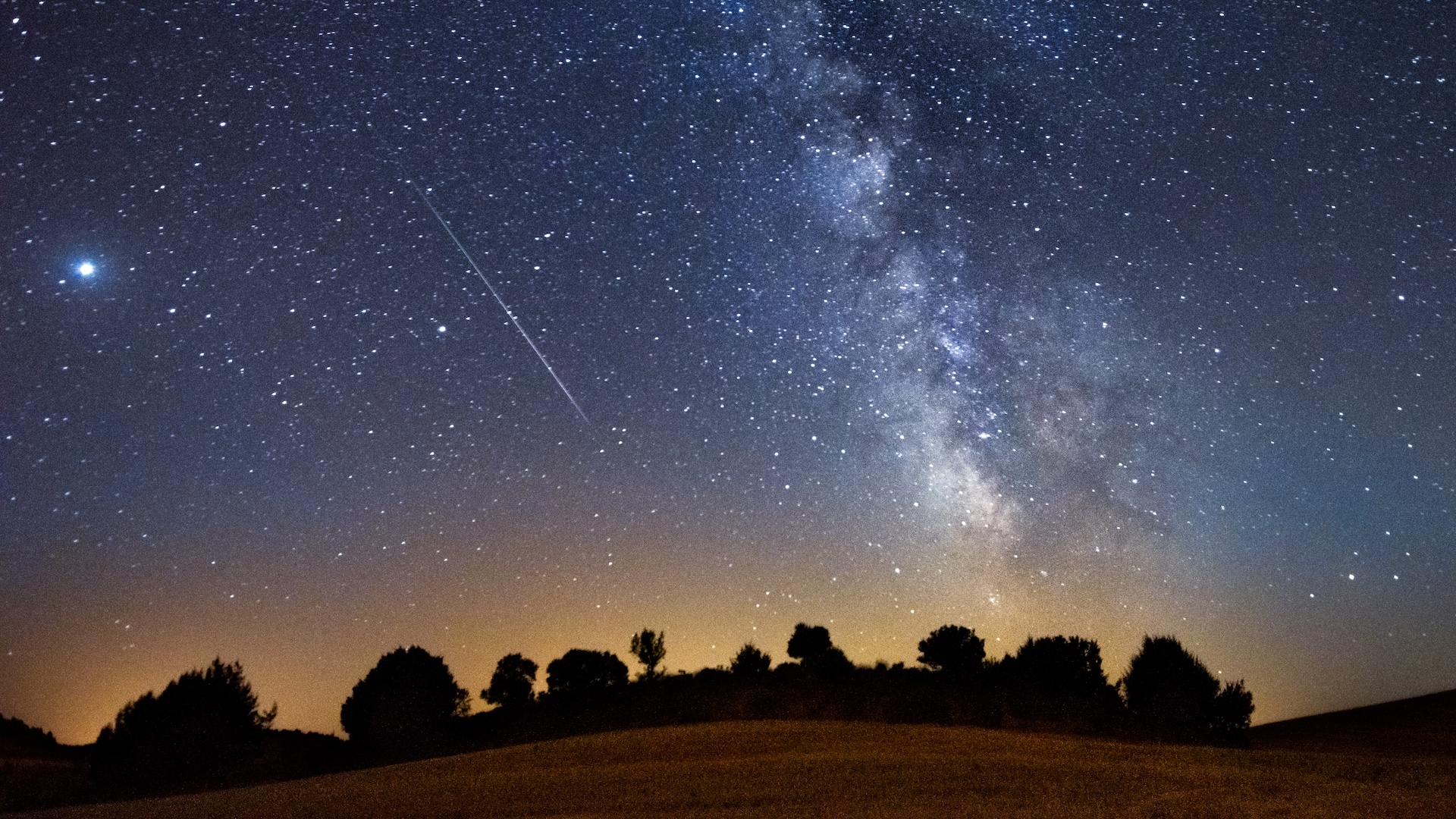
The Ursids peak on Dec. 21-22, 2025. (Image credit: Tito Garcia / 500px via Getty Images)
When to see: Dec. 21-22, 2025
Today marks the winter solstice in the Northern Hemisphere — the shortest day and the longest, darkest night of the year. After dusk, a 3%-lit waxing crescent moon hangs low in the southwest in twilight, sinking below the horizon soon after to leave the sky wonderfully dark for the peak of the Ursids.
It’s not a particularly strong meteor shower, but the chance of about 10 “shooting stars” per hour in moonless night skies makes it a good opportunity to go stargazing, or to head out with your astrophotography camera if the skies are clear. Wrap up well, head out after about 11 p.m., and stay for an hour or two if you can.
3. ‘Earthshine’ on a crescent moon

A crescent moon will grace the skies from Dec. 22-24, 2025. (Image credit: Jeff Schneiderman via Getty Images)
When to see: After sunset, Dec. 22-24, 2025.
You may like
The highlight in the few evenings between the winter solstice and Christmas Day is a waxing crescent moon in the western sky shortly after sunset. On Dec. 22, a 7%-illuminated crescent moon will display “Earthshine,” sunlight reflecting off Earth’s clouds and oceans and gently lighting up the moon’s night side.
On Dec. 23, it will be 13%-illuminated and shine close to the star Fomalhaut, the brightest star in the constellation Piscis Austrinus, the Southern Fish. Christmas Eve brings a now 21%-illuminated waxing crescent moon forming a lopsided triangle with Fomalhaut to its lower-left and Saturn to its upper-left.
4. ‘Santa’s sleigh’ on Christmas Eve

See the ISS crossing the sky this Christmas. (Image credit: Christophe Lehenaff via Getty Images)
When to see: Dec. 24-25, 2025
Check NASA’s Spot The Station page or apps to see if a pass of the International Space Station is visible from your location. If you get lucky, it will appear in the west as a brilliant, steady point of light that glides across the sky in just a few minutes, brighter than almost any star. To younger observers, it makes a perfect “Santa’s sleigh”, racing around Earth every 90 minutes while stockings are being hung and presents wrapped.
So the kids can get a closer look
5. The Christmas Tree Cluster
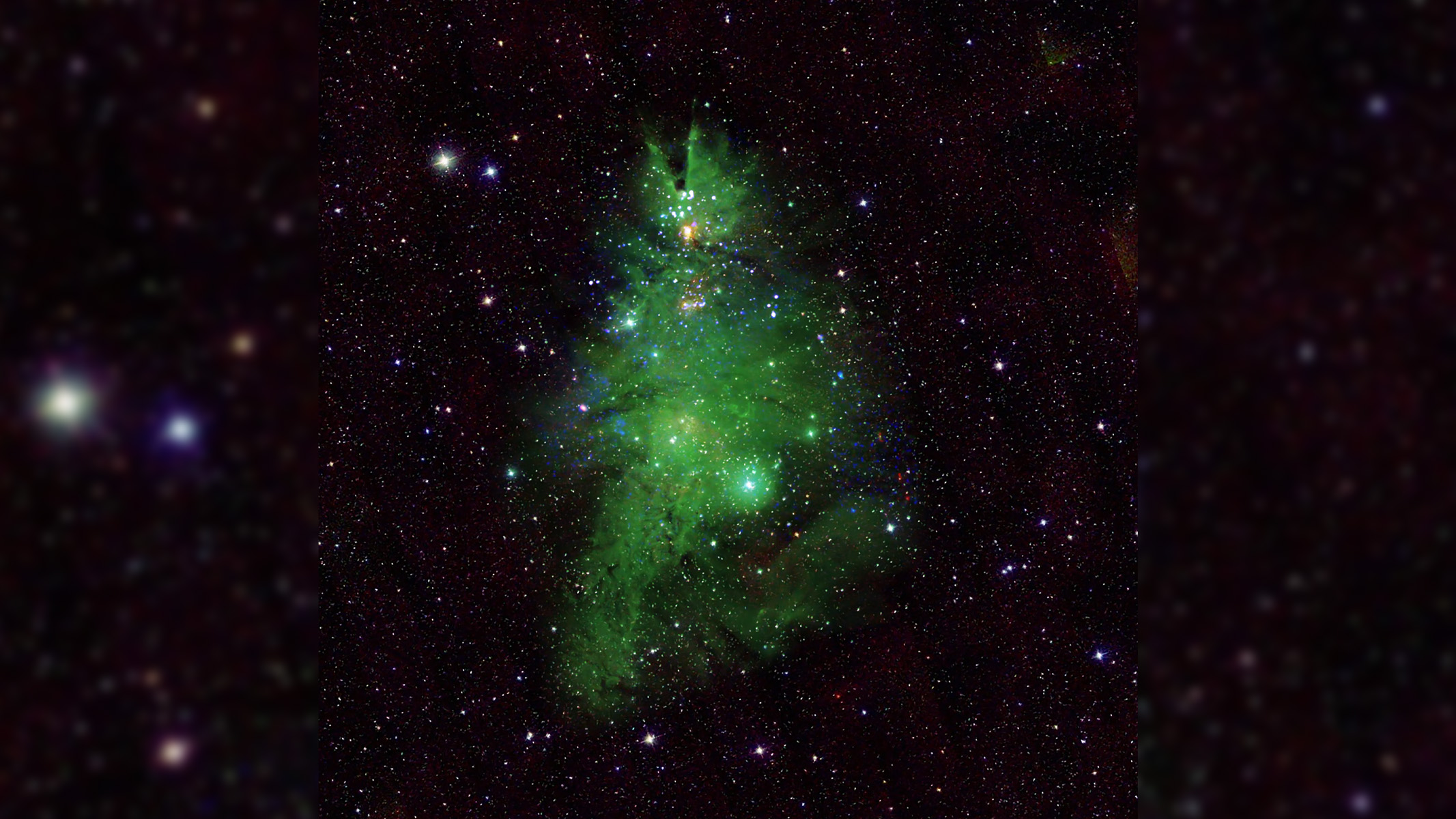
NGC 2264, also known as the “Christmas Tree Cluster.” (Image credit: X-ray: NASA/CXC/SAO; Optical: T.A. Rector (NRAO/AUI/NSF and NOIRLab/NSF/AURA) and B.A. Wolpa (NOIRLab/NSF/AURA); Infrared: NASA/NSF/IPAC/CalTech/Univ. of Massachusetts; Image Processing: NASA/CXC/SAO/L. Frattare & J.Major))
When to see: After dark, any time in December and January
It’s not visible to the naked eye, but if you’re under dark skies and have binoculars or a small telescope, you can hunt for the small triangular patch of stars that give this region its festive nickname. This young star cluster is about 2,500 light-years from the solar system.
6. Saturn and the moon in conjunction

The moon meets Saturn on Dec. 26, 2025. (Image credit: Stellarium)
When to see: Dec. 26, 2025
Boxing Day brings a beautiful pairing of the moon and Saturn. As darkness falls, look high in the south to find the bright moon, which is now at first-quarter phase and so about half illuminated. Close by, within a few finger-widths at arm’s length, sits Saturn as a steady, golden point of light.
7. Orion
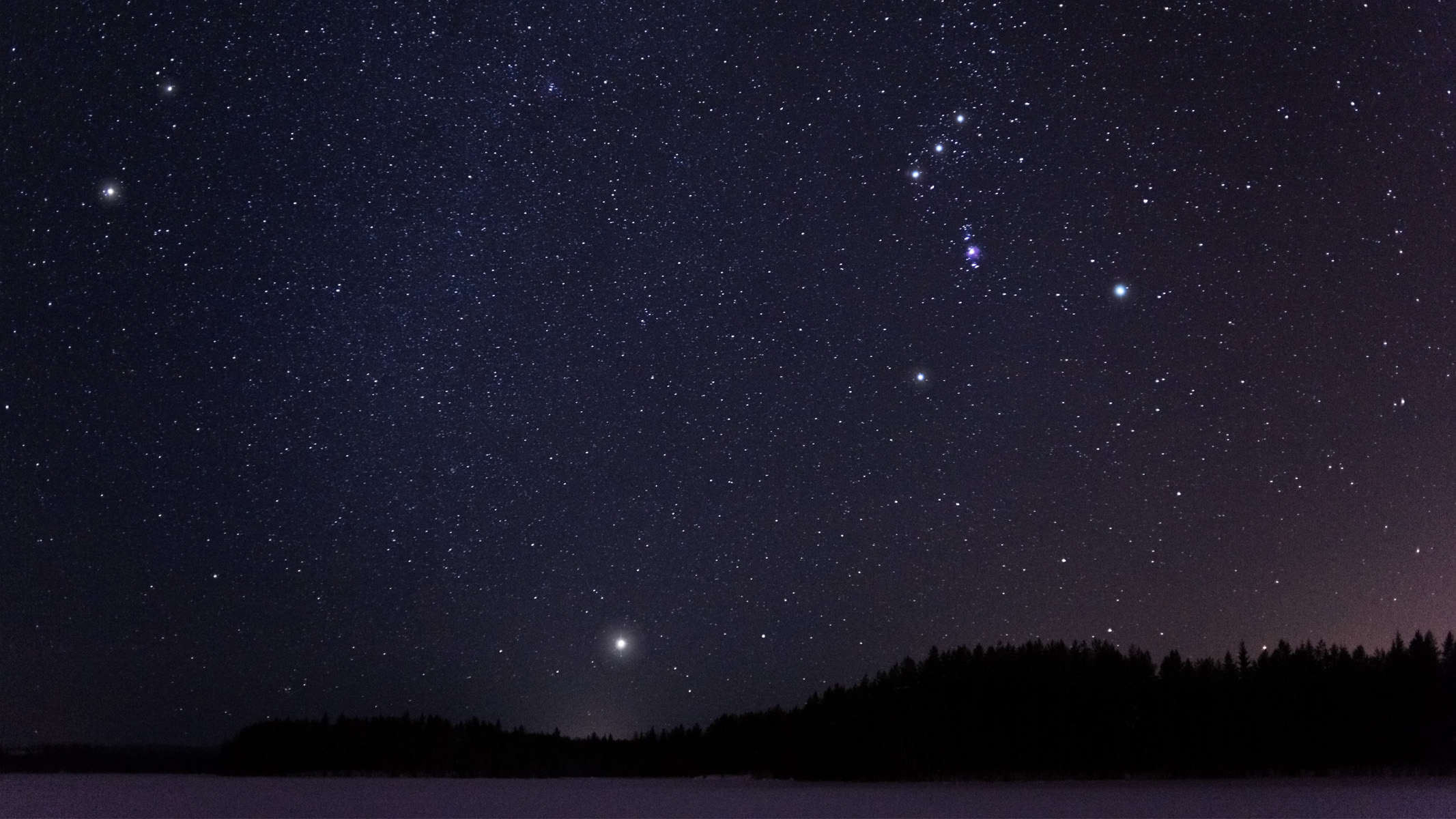
Orion will dominate the winter night sky all December and January. (Image credit: Getty Images)
When to see: After dark, any time in December and January
It’s one of the most famous constellations in the night sky, but only in winter is Orion at its best. Best known for Orion’s Belt — also called the “Three Kings” — there’s more to find besides Alnitak, Alnilam and Mintaka. Either side has four stars ranged in a loose rectangle around the belt stars — Saiph and reddish Betelgeuse on one side and Bellatrix and bluish Rigel on the other.
Get a closer look at Orion
8. The Pleiades and the moon

The Pleiades and the moon will be close on New Year’s Eve. (Image credit: Stellarium)
When to see: Dec. 31, 2025–Jan. 1, 2026
New Year’s Eve brings a close encounter between the most beautiful cluster of stars in the night sky and an almost-full moon. As darkness falls, look east to see a nearly full Moon rising in Taurus, with the Pleiades — also known as the Seven Sisters — nestling just to one side.
From mid-northern latitudes, the moon may appear to skim past the cluster during the evening, its bright halo almost wrapping around the tiny glitter of stars, although moonlight will wash out the fainter members of the Pleiades.
9. A full Wolf Supermoon rising

The fourth supermoon in a row will rise on Jan. 3, 2026. (Image credit: Hal Bergman via Getty images)
When to see: Saturday, Jan. 3
Tonight’s full Wolf Moon is the fourth and final supermoon in a row. Best seen rising in the east around sunset, this full moon coincides with perigee, when the moon is at its closest point to Earth in its monthly orbit.
About 30% brighter than the average full moon, it will dominate the sky all night and appear slightly larger than normal, especially when it’s low on the horizon and framed by trees, rooftops or distant hills. The time to catch it is when the moon rises where you are.
While the best astrophotography lenses are ideal for wide-angle shots of the Milky Way, the best lenses for moon photography are actually big zoom telephoto lenses that are typically used more for wildlife photography.
10. Quadrantids meteor shower
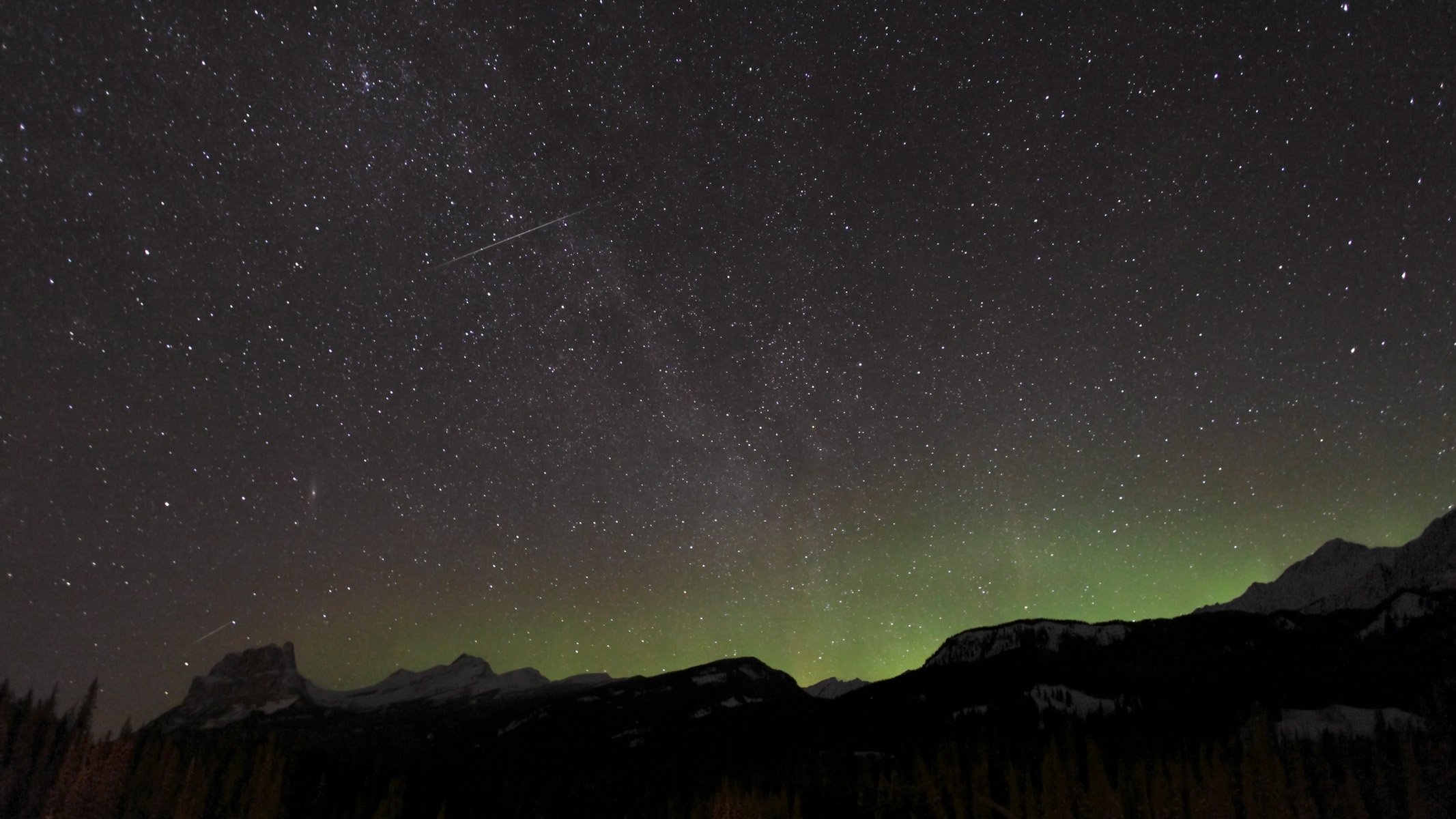
See Quadrantids on Jan. 2-3, 2026. (Image credit: Stocktrek Images via Getty Images)
When to see: overnight on Jan. 3-4, 2026
In the pre-dawn hours of Jan. 4, the Quadrantids meteor shower reaches its official peak. Conditions are not ideal this year because the moon will be very bright, but if you’re awake before dawn and the sky is clear, it’s worth giving the shower a short watch.
Find a place to observe where you can keep your back to the moon, or where it’s hidden behind a roofline or trees, then look overhead and toward the northeast. Even with the glare, a few bright meteors may slash across the sky every so often, appearing to radiate from a point near the constellation Boötes.