
LIFESTYLE
Nissan puts spark into an electric future for cars


Get our weekly Drive Smart newsletter for motoring news, reviews and advice from EV editor Steve Fowler
Get motoring news, reviews and advice from EV editor Steve Fowler
Get our EV editor’s weekly Drive Smart newsletter

To the futuristic strains of The Human League’s “Electric Dreams”, the first of a new generation of Nissan electric cars is revealed to the world’s media on Line 2 of the company’s huge Sunderland plant.
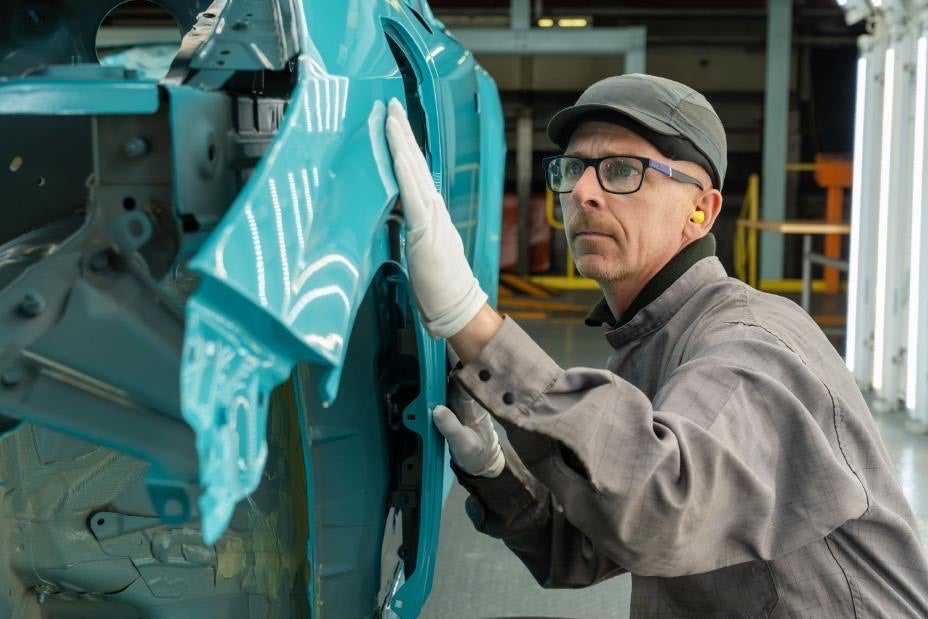
A teal blue third-generation Nissan Leaf is to be built in significant numbers for British and European markets, with the only other production centre being at Tochigi, Japan which supply Asian, American and other markets.
A new electric battery plant will be running alongside, operated by AESC., a subsidiary of Chinese giant Envision. It is the largest such “gigafactory” in the UK. Taken together they represent one of the biggest investments in British manufacturing in recent years. UK sales of the strikingly styled model will begin in late 2026.
Further new Nissan electric products will follow, including an all-new Juke, also to be built in Sunderland. Although much of the engineering for the new Leaf took place in Japan, it should help protect the 6,000 jobs in the UK factory, plus many more in the UK supply chain.
open image in gallery
The Nissan Leaf comes in teal blue (Supplied)
Indeed, according to Shunsuke Shigemoto, Nissan’s Vice President for Powertrains and Advanced Engineering, the workforce at Sunderland Is “key” to their decision to transition the factory and associated battery plant into an EV hub – praising its efficiency and flexibility to produce various electric, hybrid and petrol variants according to consumer demand.
Mr Shigemoto suggests the new model will help raise production in Sunderland back up to near its capacity of half a million vehicles per annum.

open image in gallery
Nissan’s vice president hopes the new model will help raise production back up to capacity in Sunderland (Supplied)
However, the political uncertainty has left a bit of a cloud over the start of production ceremonials in the North East. In the past few days the Conservative leader, Kemi Badenoch, has said that she would scrap the zero emission mandate and the plan to end sales of new petrol cars by 2030 and hybrids by 2035.
An even greater degree of scepticism about electric cars is on display at Reform UK, and there are heavy hints emerging from the EU that it too may well push the zero emission target down to 90 per cent of new cars to be green – and postpone the deadline to 2040.
Although the Sunderland operation is agile enough to cope with such disruption, it would certainly make the half a billion pounds spent on an electric future look unfortunate.
Friederike Kienz, vice president for sustainability said of rumours about a future UK government scrapping the EV target: “Regulation is only one element in uptake and transformation…will it lower the pace? Yes. Policy is a factor, and seen very, very clearly in Norway” (where heavy invectives have succeeded in mass EV conversion).
She stressed that it was most important that an electric future remains the “endgame” even if the pace of change varies. In Sunderland, they are hoping the electric dream really does come true.

Sign up to our free Living Well email for advice on living a happier, healthier and longer life
Live your life healthier and happier with our free weekly Living Well newsletter
Live your life healthier and happier with our free weekly Living Well newsletter
Halloumi is a salty, chewy cheese that’s mouth-watering when grilled, seared, baked or fried – but it comes with a risk.
The staple in salads and Mediterranean side dishes could be sneakily raising your blood pressure, according to experts. That’s because of the cheese’s high sodium content.
“One ounce of halloumi cheese provides 90 calories, seven grams of total fat, four grams of saturated fat, six grams of protein, and 669 milligrams of sodium, which is 28 percent of the recommended daily maximum, registered dietitian Toby Amidor recently told Parade.
That’s around the same amount of sodium you get from eating a slice of pizza.
open image in gallery
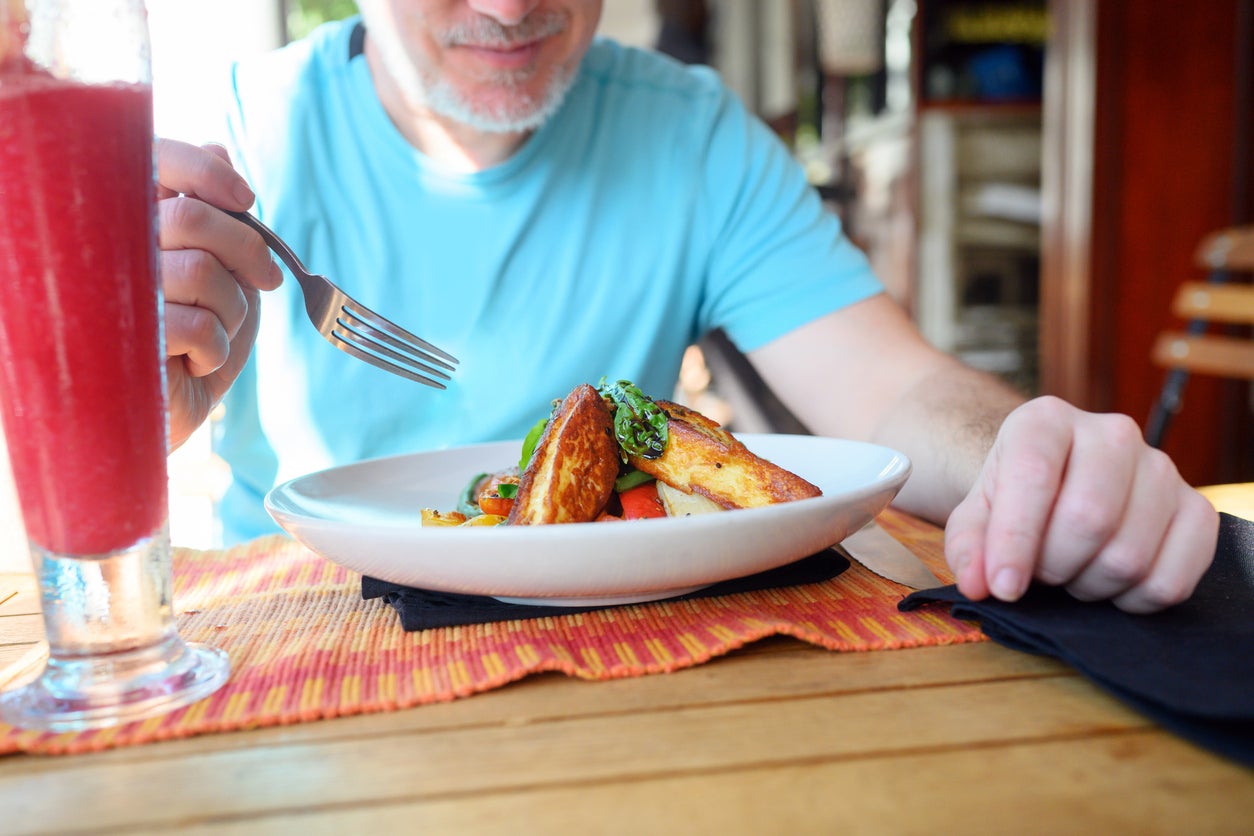
Eating halloumi cheese could be spiking your blood pressure and leaving you at risk for poor heart health, experts say. (Getty Images/iStock)
What’s the damage?
Eating excess sodium leads to an increase in how much blood has to move through the blood vessels that connect to the heart, as well as shrinks those vessels.
The result is strain on your heart within just 30 minutes, according to the American Heart Association.
Still, most Americans consume more sodium than they should.
The recommended daily amount is 2,300 milligrams, but the average American consumes 3,400 milligrams of sodium a day. That’s the equivalent of about one and a half teaspoons of salt per day, Harvard Medical School notes.
As a result of that and other factors, nearly half of all American adults live with high blood pressure.
The cost of salt
High blood pressure puts people at a greater risk for life-threatening cardiac events, such as stroke and a heart attack.
Nearly 800,000 Americans suffer a stroke each year, according to the Centers for Disease Control and Prevention, and one in six deaths from heart disease were due to stroke in 2022 in the U.S.
Approximately 805,000 people have a heart attack in the U.S. annually, and there are more than 919,000 deaths related to cardiovascular disease each year.
open image in gallery
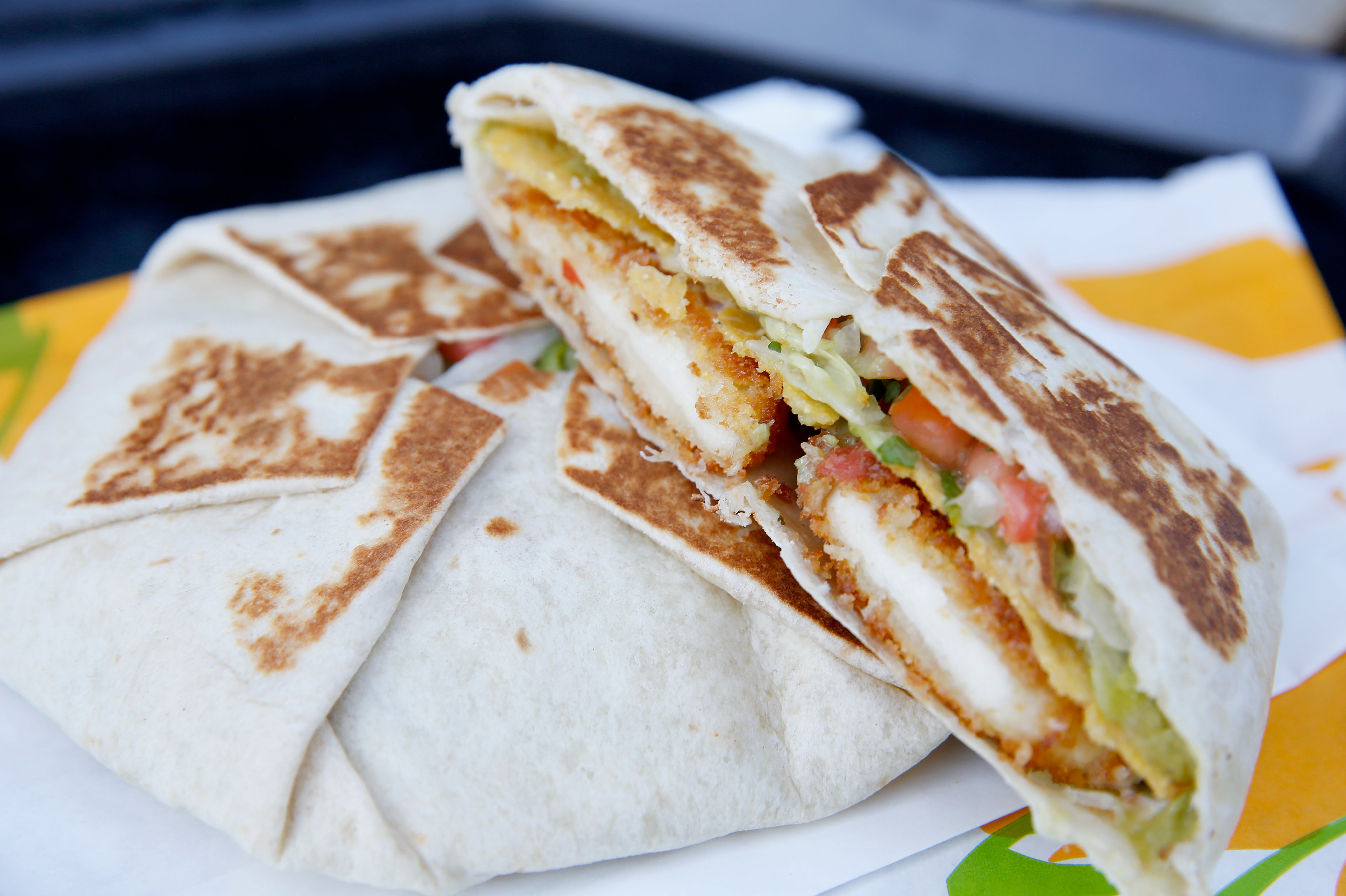
Halloumi is incredibly versatile and experts say it’s not that bad for you – in small amounts (Getty Images for Taco Bell)
So, what’s a halloumi-obsessed foodie to do?
Well, in small quantities, the cheese isn’t actually that bad for you.
“On most packs of halloumi, the recommended serving size is only 30 grams (so is the nutritional value), which is good to bear in mind when cooking,” Ellie Bain, Gousto’s registered nutritionist and dietician, told Men’s Health.
A serving of 30 grams has 330 milligrams of sodium, according to the American University of Beirut Medical Center.
Made of sheep’s and goat’s milk, halloumi contains critical nutrients such as protein and 20 percent of the daily recommended amount of calcium in an ounce, said Amidor.
It has zinc and vitamin A, as well, which both have immune health benefits. Vitamin A is crucial for vision and zinc helps the immune system.

Stay ahead of the curve with our weekly guide to the latest trends, fashion, relationships and more
Stay ahead of the curve with our weekly guide to the latest trends, fashion, relationships and more
Stay ahead of the curve with our weekly guide to the latest trends, fashion, relationships and more

Is it too late to reconnect the cord?
For the first time in eight years, traditional cable providers saw an increase in subscribers. The rise came during third quarter of 2025 amid soaring streaming service fees.
Over 303,000 subscribers returned to traditional cable providers in Q3, Light Reading reports, citing MoffettNathanson’s latest Cord‑Cutting Monitor report.
Industry analysts attributed the increase to a combination of factors, most notably reduced subscriber losses among traditional providers and strong performance from internet‑based services known as virtual multichannel video programming distributors (vMVPD).
Despite the encouraging figures, analysts warned that the gain may be temporary.
.png)
open image in gallery
For the first time in almost a decade, cable providers saw a bump in subscribers. (Getty Images)
Much of the growth was concentrated in the period coinciding with the start of the NFL regular season, a historically strong quarter for pay TV as millions of sports fans subscribe to access live games, and those trends could abate once the football season ends.
The overall subscriber count for pay TV, which encompasses cable, satellite, telco and vMVPD services, rose to an estimated 64.77 million in Q3, reversing a year‑on-year loss of 274,000 and marking a notable improvement in an industry long beset by cord‑cutting.
The annual rate of subscriber decline also eased, improving from ‑6.4 percent to ‑5.8 percent.
Within the traditional segment, cable and satellite providers still saw net losses, but at significantly reduced rates compared with the previous year. vMVPDs, led by services such as YouTube TV, contributed the bulk of the industry’s net growth, adding roughly 750,000 subscribers and pushing their total to more than 21 million.
Streaming services, once cheaper than cable, are getting more expensive. On average, U.S. viewers pay for four streaming services, spending $69 a month, up 13 percent from last year, according to Deloitte’s 19th annual Digital Media Trends report, published in March.

open image in gallery
The rise coincides with the start of the NFL regular season. (Copyright 2021 The Associated Press. All rights reserved.)
Cable or satellite TV costs about $125 per month, but many streaming subscribers are frustrated by extra fees for new movies and regional sports blackouts.
Streaming blackouts happen because certain networks or channels have exclusive rights to show games in a team’s local area. This means other streaming services can’t show those live games in that region, often meaning subscribers must additionally pay for add-on services to watch their home teams.
Nearly half of streaming subscribers feel they pay too much, and 41 percent think the content isn’t worth the cost, according to the Digital Media Trends report.
Additionally, 60 percent said they would cancel if their favorite service raised its price by $5 per month.
One X user posted about the sky-high costs of streaming in October, asking if it was worth it to switch to cable after they claimed to be paying a monthly fee of $91 forYouTubeTV, $12 for Netflix. $15 for HBO Max and $10 for Peacock.
“Like the whole point of streaming was to cut down on cable costs. They became the evil they sought to destroy,” they wrote.
One person replied, saying that they valued cable for its “consistency of channel lineup and no service interruptions. “
“I never cut the cord bc in the end it was never truly much of a cost saver once you add back all the rest of the streamers and premium channels you want,” they responded.
Someone else, however, noted about the enticing variety of content across streaming services,” The problem with cable is that there’s nothing on it now, so what are you even paying for?”
LIFESTYLE
Princess Jecoco Talks Representing Abuja, Sisterhood, and Emotional Moments on RHUGT: Africa


The Showmax Original reality series, The Real Housewives Ultimate Girls Trip: Africa, brings together women from across the continent for a once-in-a-lifetime adventure in Brazil. This spin-off follows the success of The Real Housewives Ultimate Girls Trip: South Africa. Now, housewives from Kenya, Nigeria, and South Africa embark on a new chapter under the Brazilian sun, bringing drama, glamour and sisterhood to new heights.
The Real Housewives Ultimate Girls Trip: Africa premiered on Showmax on Friday, November 28, 2025, and joining this spin-off is Princess Jecoco from The Real Housewives of Abuja.
In this exclusive interview, Princess shares her emotions when she received the call to be on the Ultimate Girls Trip, what she enjoyed, what viewers can look forward to, and the friendships she formed on the journey.
Enjoy the conversation!
Hey Princess. How are you feeling?
Hello BN. I feel good and fine. Thank you.
What was your first reaction when you got the call to join the cast of The Real Housewives Ultimate Girls Trip: Africa?
Honestly, I was so excited and a little shocked. It felt like such a huge honour being invited to represent Nigeria, Abuja specifically, on a continental trip is no small thing. I knew it could be a powerful moment for me, but also for my city. I felt a little nervous, because I wanted to make sure I showed up as my authentic self. I accepted because at the end of the day, it’s a vacation.
Having been away from the reality TV scene, how were you able to prepare yourself to be back in the spotlight?
Over the past couple of years, I focused on self-work, on balancing my businesses and my family life. Mentally, I journaled, prayed and really reaffirmed who Princess Jecoco is, not just the housewife version, but as a lawyer, a mother, a cultural ambassador. When the call came, I felt stronger and more grounded than before.
Did you feel the need to assert yourself early, or did the group naturally make room for your presence?
It was a mix of both. I think my energy tends to be big, so there wasn’t a shortage of me making my presence felt. But I also respected the fact that this was a girls’ trip: it’s about camaraderie, laughter and real conversations. I didn’t walk in with the intention of dominating, but I also wasn’t going to shrink. I made space with confidence, not aggression. So yeah, they definitely made room for my presence.
How did this trip differ from The Real Housewives of Abuja, and what did it, if at all, reveal about your personality in navigating dynamic relationships?
On RHOAbuja, you’re more rooted in your day-to-day business, family, and local power dynamics. On Ultimate Girls Trip, there’s vacation energy, which brings out a different side of people who are more relaxed, more spontaneous. For me, it revealed how adaptable I am, how I could hold my thoughts in deep conversations, but also be goofy, playful and vulnerable. It showed how I navigate when things are less structured.
It revealed that I’m a very emotional person. See, I cried a lot on this trip. That very bold and feisty Jecoco got overly emotional on this trip.
How important was it for you to represent your city and culture in a way that felt real and not performative?
So important. Being from Abuja and being deeply invested in my Igbo heritage (as president of Umu Asa Cultural Association), I feel a responsibility. When I go on a global (or continental) stage, I want people to see me, not a caricature. I made sure to bring my culture, my values, even my accent, my humour, everything that makes me who I am.
Did anyone reveal a different side of themselves off-camera that viewers won’t immediately expect?
Yes, and I think that’s the beauty of filming a trip like this. There were moments when people let their guards down. Someone who seemed very poised could suddenly get emotional, or someone who seemed reserved could be the loudest in laughter off camera. Those quieter, more human moments are what I hope people will notice more than the dramatics.
However, there is one cast member who was just too much on camera. She’s cool off camera but always does the most as soon as the camera comes on. It was really annoying because we all wanted to have fun, but she was like the bad egg that still wanted to be in the pack. Almost everyone had fights with her. I’ve never seen anything like it.

Share one behind-the-scenes moment in Brazil that captured the true Girls Trip chaos
There was one night when a few of us just stayed up talking under the stars, wine in hand, after eating, and we had a spontaneous dance party outside, music blasting, and the next thing you know, we’re all dancing barefoot to Brazilian beats. That was real, unfiltered, joyful chaos.
Who gave you the best banter or back-and-forth energy on the trip?
Honestly, there were a few. But I think the best was with someone who wasn’t afraid to call me out in a funny way. That kind of banter keeps things genuine. It’s not just shade; it’s playful, witty, and rooted in knowing each other enough to push and pull. That’s the kind of energy I love.
Ultimately, my girl, Mariam. We understand each other mostly because we are Naija babes, so it was really easy. My girl Annie, too, we are so similar in so many ways, so banter was nice.

Did you form any new friendships on the trip?
Absolutely. That’s the most magical part of something like Girls Trip. Beyond the cameras, I connected with women from different parts of Africa. We laughed, we cried, we shared stories about home, beauty, motherhood, and business. Some of those relationships, I believe, will outlast the show.
What should fans brace themselves for in this season, without giving out spoilers?
Get ready for high energy, big laughs, and some real talk. There will be moments of tension, but also genuine sisterhood. I think fans will see me outside of my comfort zones emotionally and socially, but also more grounded than ever. And yes, there will be surprises: things that will make you gasp, but also things that will make you smile.
New episodes of RHUGT Africa will drop every Friday.

Stay ahead of the curve with our weekly guide to the latest trends, fashion, relationships and more
Stay ahead of the curve with our weekly guide to the latest trends, fashion, relationships and more
Stay ahead of the curve with our weekly guide to the latest trends, fashion, relationships and more
Multiple popular salad dressings have been recalled due to contamination concerns.
Ventura Foods recalled 3,556 cases of its salad dressings last month, according to an enforcement report from the U.S. Food and Drug Administration. The recall was issued because of a potential foreign object, specifically black plastic planting material, in the dressings’ granulated onion.
The recall was upgraded to a Class II, meaning that consuming the product could cause significant health consequences, as of December 4.
Affected salad dressings were distributed to seven different retailers and food courts across 42 states.
The recalled items, manufactured by Ventura Foods, include Hidden Valley Buttermilk Ranch, Caesar Dressing from Costco Service Deli and Costco Food Court, Pepper Mill Creamy Caesar Dressing, Pepper Mill Regal Caesar Dressing, Italian Salad Dressing, and Creamy Poblano Avocado Ranch Dressing and Dip, and Ventura Caesar Dressing.
 Salad dressings sent to retailers and food courts across 42 states have been recalled (Getty/iStock)
Specific products can be identified by their SKU numbers here.
While there haven’t been any illness reported to date, consumers with the affected dressings are urged to throw them away immediately or return them to the place of purchase.
The dressing recall comes a month after Costco removed two Caesar salad products, which were supplied by Ventura Foods, from shelves. In November, the retailer issued a notice to shoppers about a Caesar Salad and a Chicken Sandwich with Caesar Salad, which were being recalled due to the “presence of plastic foreign material in the salad dressing of these items.”
The affected products have the Sell By Dates between October 17, 2025, and November 9, 2025. The Chicken Sandwich with Caesar Salad can be identified by Item Number 11444, while the Caesar Salad can be identified by Item Number 19927.
Meanwhile, in October, Coca-Cola voluntarily recalled three packages of Coca-Cola, Coca-Cola Zero Sugar, and Sprite that were produced and distributed in Texas by Coca-Cola Southwest Beverages, LLC—a subsidiary of global bottler Arca Continental. The recall was issued because some of those cans may contain small metal fragments that could cause internal injury if swallowed.
However, the recall was limited to products distributed in Texas, specifically in the McAllen/Rio Grande Valley and San Antonio areas. A Coca-Cola spokesperson also said that all affected products were removed from store shelves by October 10 “out of an abundance of caution.”

Stay ahead of the curve with our weekly guide to the latest trends, fashion, relationships and more
Stay ahead of the curve with our weekly guide to the latest trends, fashion, relationships and more
Stay ahead of the curve with our weekly guide to the latest trends, fashion, relationships and more
Children who have difficulty separating themselves from their parents are sometimes referred to as “Velcro kids” – a reference to the company that makes the fastener famous for its temporary adherence.
On social media, parents have used the term to share frustrating – and sometimes endearing – moments of clinginess. Examples include when a toddler attempts to break into the bathroom to try to reach a parent or when a child attaches themselves to a parent’s leg while walking around a shopping center.
Even teenagers can express similar “Velcro” behaviors – in one video shared online, a teenager gently uses his foot to touch a parent while lounging on the couch.
But children who have a habit of following their parents around, touching them constantly or becoming upset when they’re apart can provoke some to ask: Is this a phase or an unhealthy attachment style?
Psychological research indicates it’s normal for infants and toddlers to attach themselves to a parent and become upset when they’re apart because they rely on parents for food, comfort, safety, cleanliness and other basic needs.

open image in gallery
At the height of the pandemic, many parents reported being emotionally exhausted by their children’s constant presence and demand for attention (Getty Images/iStockphoto)
Studies also suggest that a baby’s lack of object permanence, or the understanding that objects continue to exist even when they’re not directly seen or felt, contributes to their negative emotions when a parent walks away – even for a second.
But research has not found a correlation between a baby’s attachment style and their clinginess as a toddler or child.
Separation anxiety can increase throughout childhood as children go through environmental and lifestyle changes.
“A baby who seemed content to explore independently or was not in distress when separated from a parent may become clingy later due to developmental changes or life stressors such as starting school, adjusting to a move, or a family change,” Dr. Danika Perry, a pediatric psychologist at Nemours Children’s Health, told Parents.com.
Even as they grow into adolescence, children may seek out their parents’ reassurance or comfort, resulting in “Velcro” behaviors such as wanting to stay in constant communication or following parents around the house.

open image in gallery
Children who have a habit of following their parents around, touching them constantly or becoming upset when they’re apart can provoke some to ask: Is this a phase or an unhealthy attachment style? (Getty Images)
While most children’s clingy patterns are temporary, being in the throes of it can cause parents emotional exhaustion.
“Over time, the constant lack of personal space can contribute to burnout, anxiety, or feelings of guilt. This can also affect relationships with partners or other children,” Perry said.
So what can parents do?
Parents who are emotionally exhausted due to their child’s clinginess can set boundaries by enlisting the help of a partner or other adults they trust, according to the Child Mind Institute. Setting expectations for a child to say “goodbye” to the parent and then allowing another person to take over can give some reprieve and help children practice
Clinical experts suggest that other caretakers can redirect children’s attention away from missing a parent by giving children a task, setting up a fun activity and rewarding them for separating.
There are some situations where “Velcro” behavior can be a symptom of separation anxiety disorder, a type of anxiety disorder diagnosed by a doctor. But those behaviors are more intense than traditional clinginess, interfering with daily activities and mood.
Children with separation anxiety disorder have a constant fear of separation that can manifest in nightmares, intense tantrums, constant worry about something bad happening to a parent, refusal to participate in activities or attend school, headaches, and stomach aches, according to Mayo Clinic.
Medical professionals determine a child has separation anxiety disorder by looking at the intensity of a child’s reaction and the frequency they occur when separating or potentially separating from a parent.
Once diagnosed, doctors can provide a treatment plan that could include therapy to help a child learn coping mechanisms and understand the root of the fear, lifestyle changes to make a child more comfortable with separating, and, in some cases, medication.
LIFESTYLE
Martell On The Move: Audacity Takes Flight Across Lagos With The Swift Ascendant And Martell Voyager

The international prestige cognac, Martell, continues its legacy of audacity with the unveiling of two monumental experiences, The Swift Ascendant and The Martell Voyager, under its bold new campaign, Martell On The Move.
Together, these unveilings mark a defining moment for Martell, a celebration of audacity in constant motion, where art meets exploration. From the Martell Box to the Martell Tower, the journey now continues with Martell On The Move.
The Swift Ascendant: Experience the Wings of Audacity



Standing14 feet tall, The Swift Ascendant, a monumental sculpture created in collaboration with renowned Nigerian contemporary artist Dotun Popoola, featured by CNN in 2024, represents the next evolution of Martell’s audacious journey.
Created entirely from recycled metal, the piece transforms discarded materials into a soaring emblem of renewal. It’s a striking fusion of art, sustainability, and cultural expression, symbolizing Martell’s belief that true refinement comes from reinvention, and that luxury today must be both bold and responsible.
Evane Chenuet, Marketing Director, Pernod Ricard Nigeria, shared:
“The Swift Ascendant is a living expression of Martell’s audacious spirit, a reminder that purpose and creativity can move together. In partnering with Dotun Popoola, we’ve transformed waste into wonder, showing that meaning and mastery define the new language of luxury.”
Michael Ehindero, Managing Director, Pernod Ricard Nigeria, commented:
“The Swift Ascendant and The Martell Voyager together symbolize motion, Martell’s relentless pursuit of new horizons. As a brand, we’ve owned the land and the sky; now, we take to the land and sea. This is Martell’s audacious evolution, one that connects art, culture, and creativity in powerful, meaningful ways.”
Dotun Popoola, artist and creator of The Swift Ascendant, added:
“Every piece of metal in this sculpture has lived another life before this one. It’s a story of rebirth, proof that creativity and sustainability can coexist beautifully. Seeing it unveiled alongside The Martell Voyager is witnessing audacity in motion.”
The Martell Voyager: Make Waves with Audacity


On the same evening, Martell extended its audacity beyond land to the seas with the unveiling of The Martell Voyager, a first-of-its-kind floating experience designed to bring Martell’s sophistication to Lagos’ waterways. Illuminated against the night sky, Martell Voyager invites Nigerians to “Make Waves with Audacity,” a bold expression of discovery, craftsmanship, and celebration that reflects Martell’s drive to push boundaries and reimagine luxury experiences.
As the Swift Ascendant begins its journey across cities, audiences are encouraged to spot the installation when it appears and share their sightings online as it continues its bold artistic path through Abuja, Port Harcourt, and additional destinations yet to be revealed.
The Martell Voyager made its first sightings at Lulu and Mako which started from 22nd November and will continue with the 30-day journey across Lagos until the 31st December 2025, sailing through Lagos Motor Boat Club, King Fisher and Terra Foam.
From 22nd November to 31st December 2025, the Martell Voyager will embark on a 30-day journey across Lagos, sailing through Lulu,Mako, Lagos Motor Boat Club, King Fisher and Terra Foam.
From land to sea, Martell On The Move is a tribute to those who dare to look higher, think deeper, and live audaciously.
Join the journey. Spot and share images of The Swift Ascendant and the Martell Voyager when you see them. Follow the Wings of Audacity. Make Waves with Audacity.
About Pernod Ricard Nigeria
Pernod Ricard Nigeria is the local affiliate of Pernod Ricard, a global leader in wines and spirits.
Pernod Ricard holds a comprehensive portfolio of premium and luxury brands, with 16 out of the top 100 spirit brands in the world, including Jameson Irish Whiskey, Beefeater Gin, Martell Cognac, Seagram’s Imperial Blue Whisky, Imperial Black Whisky, Absolut Vodka, Ballantine’s Blended Scotch Whisky, Chivas Regal, The Glenlivet Scotch Whisky, Inverroche Gin, Olmeca Tequila, Malibu Liqueur, and GH Mumm Champagne.
About Martell
Founded in 1715 by Jean Martell, the House of Martell is the oldest of the great cognac houses and a symbol of audacity, mastery, and refinement. For over three centuries, Martell has celebrated those who dare to move differently, guided by curiosity, courage, and the pursuit of excellence. At the heart of the House stands The Swift, Martell’s timeless emblem of freedom, vision, and forward motion. It represents a spirit that never stands still, a commitment to rise above convention and redefine what refinement means in every era.
From the iconic Martell XO to the boundary-breaking Martell Blue Swift, every creation reflects a legacy of craftsmanship and an invitation to live boldly, purposefully, and with audacity. For more information, visit martell.com or follow @martellnigeria






Sponsored Content
Sign up to our free Living Well email for advice on living a happier, healthier and longer life
Live your life healthier and happier with our free weekly Living Well newsletter
Live your life healthier and happier with our free weekly Living Well newsletter
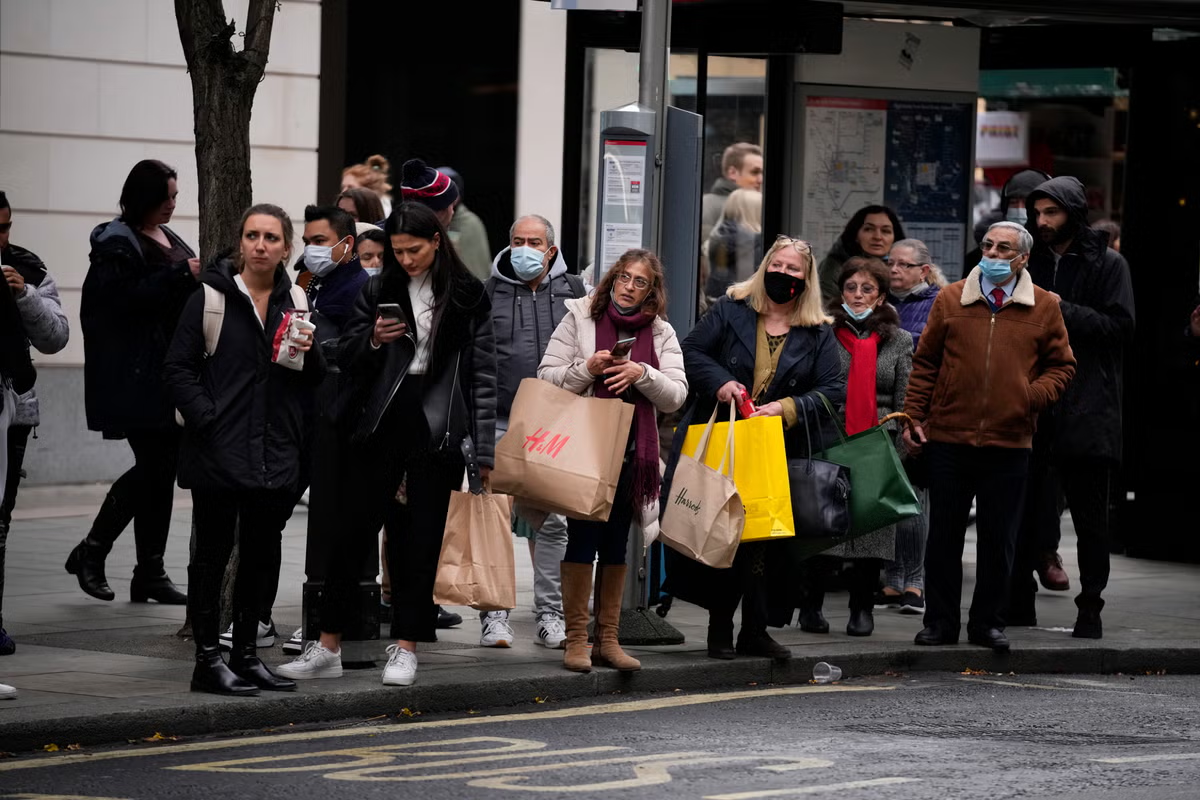
With flu season arriving early and NHS leaders encouraging people with symptoms to wear masks in public, a question arises: do masks actually work against the flu?
The short answer is that the evidence remains surprisingly weak. Studies conducted before the COVID pandemic generally found that masks made little to no difference in the spread of flu in everyday settings. There is little reason to think this has changed, although the COVID pandemic has taught us more about when masks can be helpful in reducing the spread of respiratory diseases.
This matters because flu cases began rising earlier than usual this year and are higher than we would normally expect at this point in the season.
While the number of people being admitted to hospital with a diagnosis of flu is still at moderate levels, the number of daily admissions is increasing. There are real concerns that we are heading towards an especially bad winter. This year, Australia suffered its worst flu season in at least 20 years.
The main flu strain currently circulating in the UK is a type of influenza A known as H3N2–subclade K. This strain probably appeared first in the US, from where it has spread globally, extending the flu season in Australia and New Zealand and causing the early start of the flu season in Europe.
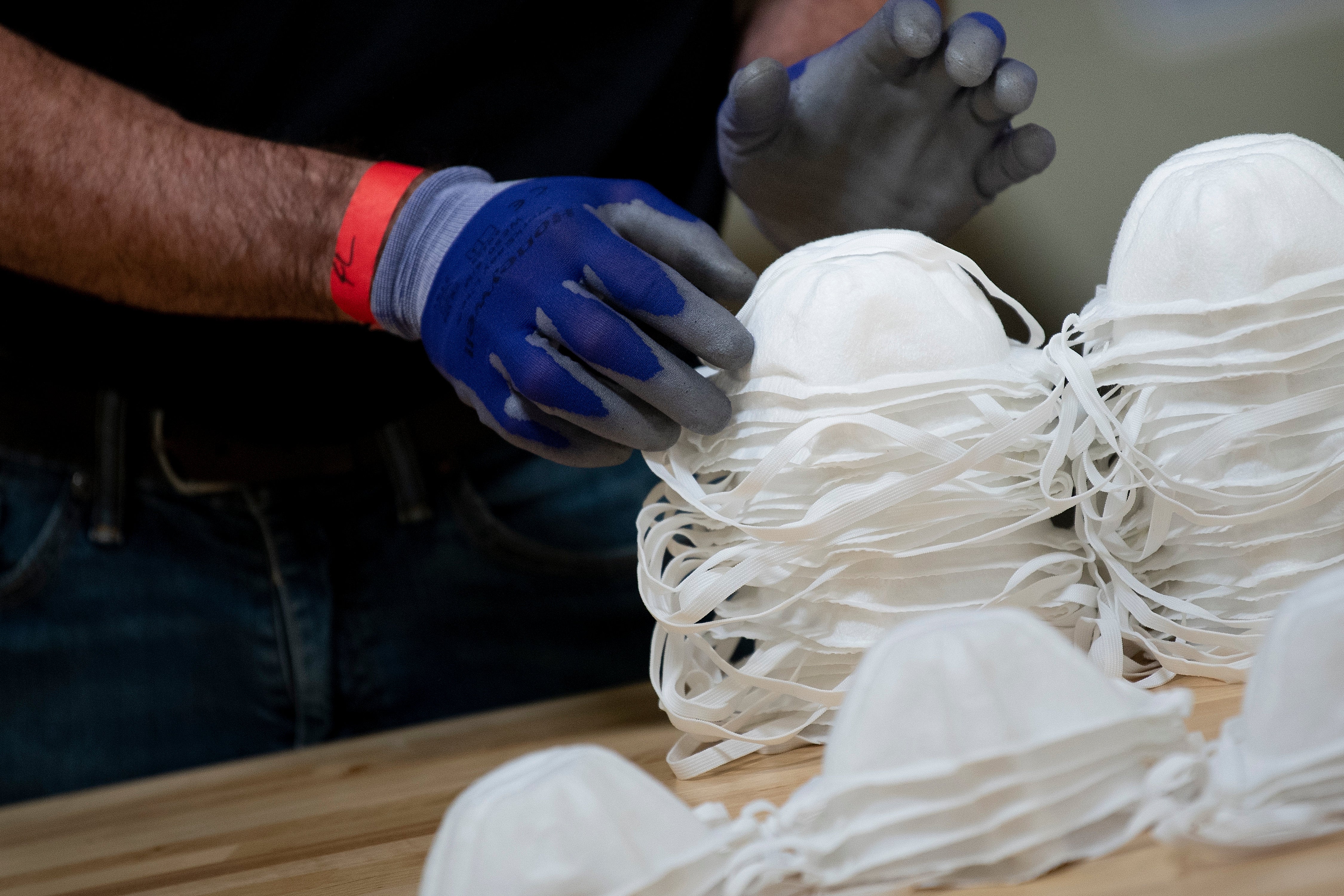 In real-world studies, N95 masks perform no better than surgical masks (AFP via Getty)
Crucially, this strain is quite different from the one used in this year’s vaccine. This means the vaccine may be less effective at preventing infection, although it should still help protect against severe illness.
Against this backdrop, Daniel Elkeles, the chief executive of NHS Providers, told Times Radio that if you’re coughing and sneezing “then you must wear a mask when you’re in public spaces, including on public transport, to stop the chances of you giving your virus to somebody else”.
The government guidance is less forthright, with a government spokesperson stating that people should consider wearing a mask in such circumstances, not that they must wear one.
Before the COVID pandemic, there had been several studies investigating the benefits of face coverings for respiratory viruses, including influenza. The most thorough of those reviews concluded that overall, masks made little or no difference to the spread of flu, either in the home or in public places.
They also concluded that N95 masks (tight-fitting, high-filtration masks) were no better than surgical masks in everyday settings. However, the authors were only able to identify a single low-quality study to support this finding.
In a review my colleagues and I conducted on the effectiveness of masks on the spread of respiratory infections prior to COVID, we found a similar poor effect overall. But individual studies in the review often gave very different results from each other.
Weaker studies were more likely to suggest masks work
Some studies suggested a strong protective effect, while others showed greater infection risk when people wore masks. Better-quality studies, such as randomised trials, generally found little or no benefit. In contrast, weaker study designs were more likely to suggest that masks worked.
The COVID pandemic added new evidence. The most robust recent review of masks and COVID in the community concluded that mask wearing was associated with a reduced risk of COVID transmission outside of healthcare settings. There was insufficient evidence to comment on the relative effectiveness of N95 respirator masks compared to standard surgical masks in public spaces, but in hospitals the balance of evidence was that there was little difference between the two types of mask.
About the author
Paul Hunter is a Professor of Medicine at the University of East Anglia.
This article is republished from The Conversation under a Creative Commons licence. Read the original article.
These real-world studies contrast sharply with laboratory studies, which have generally found masks to be highly effective at reducing the amount of virus people release into the air and showing that properly fitted N95 masks are more effective than surgical masks for COVID and flu.
In the flu study, the researchers reported that a properly fitted N95 mask reduced the amount of flu virus released into the air by more than 94%. However, a poorly fitting N95 mask performed no better than an ordinary surgical mask – a crucial finding that suggests the gap between laboratory and real-world effectiveness may come down to how people actually wear masks.
The COVID lesson
Some of the most convincing evidence for the effectiveness of masks at preventing COVID was the UK’s Office for National Statistics (ONS) COVID infection survey. In this survey, up to 150,000 people were screened every two weeks for the virus, whether or not they had symptoms. For part of the time, the survey also collected data on mask-wearing.
My colleagues and I analysed data from the ONS survey and concluded that, in adults, always wearing a mask at work or in enclosed spaces – or both – was associated with about a 20% reduction in the risk of catching COVID during the time the delta variant was the dominant strain of the virus. But after the appearance of the omicron variant, there was little if any reduced risk in mask wearers.
In children, mask wearing was associated with less of a reduction in risk of testing positive for COVID, and during the omicron period there was even a small increased risk.
Evidence for the value of masks for flu remains less clear, suggesting little if any benefit. Nevertheless, I would still encourage people who are at risk of severe disease if they catch the flu to wear a mask in crowded indoor environments – especially if they have not yet received the vaccine.
If someone is ill with the flu, it is best that they stay at home. If they have to go out into crowded indoor environments, then I would also encourage them to wear a mask. I would not encourage mask wearing in children, given the lack of clear benefit and potential for improper use.
For most people, the overall evidence does not support routine mask wearing. I would also not encourage the general public to wear N95 masks because these masks need to be properly fitted for them to be effective. Nevertheless, wearing a mask is a personal decision, and people should be free to decide on what makes them feel most comfortable.
LIFESTYLE
Nigeria’s Smartgenix Crowned Grand Prize Winner of the 15th JA Africa Company Of The Year (COY) Competition in Abuja

December 9, 2025 Junior Achievement (JA) Africa successfully concluded the 15th edition of the JA Africa COY Competition, held from December 3–5, 2025, in Abuja, Nigeria. Bringing together Africa’s brightest young entrepreneurs to showcase innovative business solutions aligned with the theme “ACT! Action for Climate Transformation.” The continental finals convened student companies from across Africa who had progressed through national JA Company Program competitions to compete across six innovation tracks: Innovation & Technology, Artificial Intelligence (AI), Financial Technology (FinTech), Digital Media & Creation, Renewable Energy and Circular Economy & Sustainability.
Following three days of dynamic pitching, mentorship engagement, exhibitions, and rigorous judging, Nigeria’s Smartgenix was crowned the overall Company of the Year 2025 for demonstrating exceptional innovation, execution strength, and high-impact potential. Mauritius’ Plantura claimed Second Place, while Uganda’s Renewablock secured Third Place, rounding out the podium with solutions focused on sustainability and inclusive development. As the continental champion, Smartgenix will proceed to represent Africa at the global finals of the De La Vega Global Entrepreneurship Award, where it will compete against winning teams from other regions for a grand prize of US $15,000.
Additional recognitions were distributed among other deserving teams, thanks to the generous support of various sponsors, including FedEx, PMIEF, FirstBank Nigeria, Delta Air Lines, Bank of America, Kuda Microfinance Bank, Boeing, and Entrepreneurs’ Organization.
Summary of Signature Award Winners:
- FedEx Global Possibilities Award: XeroLabs, Ghana
- PMIEF Best Application of Project Management Award: Kwakhanya PlantIQ, Eswatini
- FirstBank Nigeria CEO Entrepreneurship Award: Plantura, Mauritius
Summary of Branded Award Winners:
- Delta Air Lines Girls LEAD! Award: 16 girls awarded: Matse Takitsi, Fakudze Temantolo Siphesihle, Dlamini Gcinile Lenhle, Dhristi Gooroochurn, Ameydee Shalinee Chocken, Yezhilly Gopaulen, Lashna Gungabissoon, Ihimbazwe Niyikora Kevine, Uwayo Ange Kevine, Abarurema Hirwa Emma Reponse, Kendy Neilla Gisa, Atuhaire Gabriella Kusiima, Comfort Musukuma, Grace Chilinda, Ndanji Nanyangwe, and Wana Sanyikosa
- Bank of America Best Financial Performance Award: Renewablock, Uganda
- Kuda Young Entrepreneurs Award: Kwakhanya PlantIQ, Eswatini
- Boeing Sustainable Innovation Award: XeroLabs, Ghana
- Entrepreneurs’ Organizations Rising Leader Award: Ameydee Chocken, CEO of Plantura, Mauritius
Reflecting on the success of COY 2025, Simi Nwogugu, President and CEO of JA Africa, said,
“The creativity, courage, and solution-driven mindset we witnessed at COY 2025 remind us why Africa’s youth are our greatest asset. Through entrepreneurship education, we are not just preparing young people for the future of work; we are empowering them to lead climate action, create jobs, and build resilient communities across the continent.”
The competition concluded with the JA Africa Stakeholder Convening held on December 5 in Abuja under the theme “Unlocking Africa’s Youth Dividend: Radical Pathways for Inclusive Skills, Entrepreneurship, and Employment Systems.” The high-level gathering brought together policymakers, educators, private sector leaders, philanthropic institutions, and development partners to catalyze strategic collaborations aimed at strengthening entrepreneurship education, expanding skills pathways, and scaling youth employment systems across Africa.
COY is anchored in the JA Company Program, which equips young people aged 14–17 with hands-on experience in business creation, financial management, teamwork, leadership, and venture pitching. As youth unemployment continues to pose a major development challenge across the continent, programs such as COY remain essential in bridging education to enterprise creation, equipping young people not only to seek employment but to become job creators and innovators within their communities. Alumni of the program across Africa have gone on to establish registered businesses, secure international scholarships and fellowships, and lead social and technology ventures.
The 15th edition of the JA Africa COY was made possible through the generous support of its partners:
- Headline Sponsors: FedEx, Project Management Institute Educational Foundation (PMIEF), and FirstBank Nigeria
- Platinum Sponsors: Delta Air Lines, Bank of America, and Kuda Microfinance Bank
- Gold Sponsors: Boeing and the Entrepreneurs’ Organization (EO)
- Media Partner: What Media Group.

JA Africa
Junior Achievement (JA) Africa is one of the largest and most impactful youth-serving NGOs on the continent, reaching over 1.5 million young people annually across 23 countries. Through hands-on learning experiences in entrepreneurship, work readiness, financial literacy, and STEM education, JA Africa equips young people with the skills and mindset to thrive in a rapidly evolving global economy. JA Africa’s mission is to prepare and inspire Africa’s youth to become ethical leaders, job creators, and agents of change who drive sustainable development across the continent.
FedEx Corp
FedEx Corp. (NYSE: FDX) provides customers and businesses worldwide with a broad portfolio of transportation, e-commerce, and business services. With annual revenue of $89 billion, the company offers integrated business solutions utilizing its flexible, efficient, and intelligent global network. Consistently ranked among the world’s most admired and trusted employers, FedEx inspires its more than 500,000 employees to remain focused on safety, the highest ethical and professional standards, and the needs of their customers and communities. FedEx is committed to connecting people and possibilities around the world responsibly and resourcefully, with a goal to achieve carbon-neutral operations by 2040.
PMIEF (Project Management Institute Educational Foundation)
For 35 years, PMIEF has helped put youth on the path to success by incorporating project management skills into their daily lives. Our goal is to forge partnerships with nonprofit organizations that support and prepare youth for success by offering project management expertise, resources, and volunteers to aid them in making their dreams a reality.
Delta Air Lines
Delta Air Lines is a major United States airline headquartered in Atlanta, Georgia, operating nine hubs, with Hartsfield–Jackson Atlanta International Airport serving as its largest. Together with its regional subsidiaries under the Delta Connection brand, the airline operates more than 5,400 flights daily and serves 325 destinations in 52 countries across six continents. Delta is a founding member of the SkyTeam alliance, expanding its global network, and is the second‑oldest operating commercial airline in the U.S. The airline ranks first globally in revenue and brand value among major airlines and consistently leads industry performance rankings, including The Wall Street Journal’s 2022–2024 airline rankings and Condé Nast Traveler’s 2024 Readers’ Choice Awards for Best Airlines in the U.S.
Delta Air Lines is committed to empowering young people around the world through education and global citizenship programs. Its long-standing partnership with JA Africa expands access to STEM learning, leadership development, and real-world career exposure for Africa’s youth.
First Bank Nigeria
FirstBank of Nigeria Limited is the premier commercial bank in Nigeria, with a history of over 130 years of providing dependable and reliable financial services. As a leading financial services provider in Sub-Saharan Africa, FirstBank has consistently supported inclusive economic development by enabling individuals, businesses, and communities to achieve their financial goals. It offers a comprehensive range of retail and corporate banking services, backed by an extensive network of branches and digital channels that ensure seamless banking experiences for millions of customers across Africa and beyond. FirstBank is a member of the FBN Holdings Plc group. www.firstbanknigeria.com/
Bank of America
Bank of America is one of the world’s leading financial institutions, serving individual consumers, small and middle-market businesses and large corporations with a full range of banking, investing, asset management and other financial and risk management products and services.
Bank of America is a global leader in wealth management, corporate and investment banking and trading across a broad range of asset classes, serving corporations, governments, institutions and individuals around the world. The company serves clients through operations across the United States, its territories and more than 35 countries. Bank of America Corporation stock (NYSE: BAC) is listed on the New York Stock Exchange.
Visit BofA Fast Facts for more information about the company.
Kuda Microfinance Bank
Kuda Microfinance Bank is a CBN-licensed subsidiary of Kuda Technologies, a fintech company on a mission to make financial services accessible, affordable, and rewarding for every African on the planet.
Founded in 2019 by Babs Ogundeyi and Musty Mustapha, Kuda offers a modern alternative to traditional finance by delivering free money transfers, instant credit, savings tools, and business banking through digital channels.
The company has raised over $90 million from institutional investors, including Valar Ventures and Target Global, and it serves more than 7 million customers across Nigeria.
Boeing
As a leading global aerospace company, Boeing develops, manufactures and services commercial airplanes, defense products and space systems for customers in more than 150 countries. As a top U.S. exporter, the company leverages the talents of a global supplier base to advance economic opportunity, sustainability and community impact. Boeing’s diverse team is committed to innovating for the future and living the company’s core values of safety, quality and integrity.
Boeing’s relationship with the Middle East extends back to 1945. Since then, Boeing has established a number of offices across the region, first in Riyadh in 1982, then a dedicated Boeing Defense, Space and Security office in Abu Dhabi in 1999, a regional headquarters in Dubai in 2005, an office in Doha in 2010, and a new office in Kuwait City in 2021. In addition, Boeing has field service teams across the region and two distribution centers for airplane spare parts in Dubai.
Sponsored Content

Sign up to IndyEat’s free newsletter for weekly recipes, foodie features and cookbook releases
Get our food and drink newsletter for free
Get our food and drink newsletter for free

People with allergies should avoid Dubai-style chocolate, the food safety watchdog has cautioned, after several products failed to meet UK food standards.
These popular chocolate bars, typically filled with pistachio, tahini, and shredded filo pastry, have become increasingly sought after over the past year.
However, the Food Standards Agency (FSA) has discovered “several” of these items in the UK that do not comply with crucial safety and labelling regulations.
Rebecca Sudworth, the FSA’s director of policy, confirmed: “we’ve found that some products contain peanut and sesame that aren’t declared on the label.”
The organisation emphasised that purchasing these bars would be “dangerous” for consumers with allergies.
The watchdog is now reviewing sampling data from products currently on sale to verify they meet food safety standards.
 Dubai-style chocolate, which typically contain a filling made of pistachio, tahini and shredded filo pastry, have soared in popularity over the past year
It added that it is advising consumers with allergies to avoid the Dubai-style chocolate as a precaution until its full results are known.
Ms Sudworth added: “People with an allergy should not eat Dubai-style chocolate.
“If you’re buying a gift for someone who lives with allergies, our advice is to avoid buying these products. This includes all allergies, not just peanut and sesame.
“People without allergies can consume these products, especially where they are supplied by reputable brands and retailers.”
Jessica Merryfield, head of policy and campaigns at the Chartered Trading Standards Institute (CTSI), said: “The legal requirements on this are clear – any food containing allergens needs to be clearly identified and labelled as such to allow consumers to make informed and safe choices.
“To not do this is illegal and also highly dangerous as it makes such foods unsafe to those with food allergies.
“We urge all food businesses, including retailers and importers, to take immediate steps to comply.”
LIFESTYLE
itel SUPER 26 Ultra Wins “Best Curved Display and AI-Powered Smartphone of the Year” at NiTA 2025

itel has once again reinforced its leadership with the itel SUPER 26 Ultra winning the prestigious “Best Curved Display and AI-Powered Smartphone of the Year” at the 2025 Nigeria Technology Awards (NiTA).
The awards ceremony organised by Beta Media Group, held on December 6, 2025, at the VirginRose Resort, Victoria Island, Lagos, brought together top players in Nigeria’s tech ecosystem to celebrate excellence, creativity, and industry growth.
This recognition highlights the SUPER 26 Ultra’s groundbreaking curved display design and its next-generation AI capabilities, which elevate the smartphone experience across photography, performance, personalisation, and security. As consumer expectations continue to rise, the SUPER 26 Ultra stands out for delivering premium, flagship-level features at an accessible price point, strengthening itel’s position as a trusted technology empowerment brand.
Winning at NiTA is said to align with itel’s strategic ambition to sustain consumer interest, increase brand visibility, and enhance credibility in the market. It also reinforces the brand’s commitment to designing high-quality devices that suit the lifestyle and aspirations of young, dynamic, and value-driven consumers.
Speaking about the achievement, Dolapo Olorun-nimbe, ATL Marketing Manager at itel Mobile Nigeria, expressed excitement and appreciation:
“This award is a testament to itel’s dedication to making cutting-edge technology available to everyone. The SUPER 26 Ultra, with its stunning curved display and intelligent features, reflects our commitment to blending style, innovation, and affordability. We are grateful to consumers who believe in our vision, and this recognition motivates us to keep raising the bar in design and user experience.”
Also reflecting on the milestone, Terngu Simeon Shagba, PR Supervisor at itel Mobile Nigeria, emphasised the significance of the recognition of brand trust and market positioning:
“Winning at NiTA is not just an award for us; it is proof that our efforts to stay ahead in innovation and deliver value-driven smartphones are being acknowledged at the highest level. This achievement strengthens our credibility, energises our brand presence, and reaffirms our promise to help consumers enjoy a better life through technology.”
With this milestone, itel is set to push boundaries within Africa’s tech landscape. The SUPER 26 Ultra represents the brand’s continuous drive to enhance the digital experience for millions through devices that combine top-tier design, intelligent features, and reliability.
On November 13, 2025, the itel SUPER 26 Ultra received the prestigious award for “The Best Curved Display Phone Under ₦260,000 (Top 1 Recommended Curved Display Phone Under ₦260,000)” at the Africa Tech Alliance Excellence (ATAEx) Awards 2025.
As itel celebrates this major win, the brand remains focused on future-forward innovation and delivering products that empower individuals, connect communities, and accelerate technological advancement across emerging markets as a Tech Empowerment Brand. For itel, the NiTA 2025 award is said to be not just an accolade but a beacon for even greater breakthroughs ahead.
Sponsored Content