
SCIENCE
Strange structures of space: a weird quiz


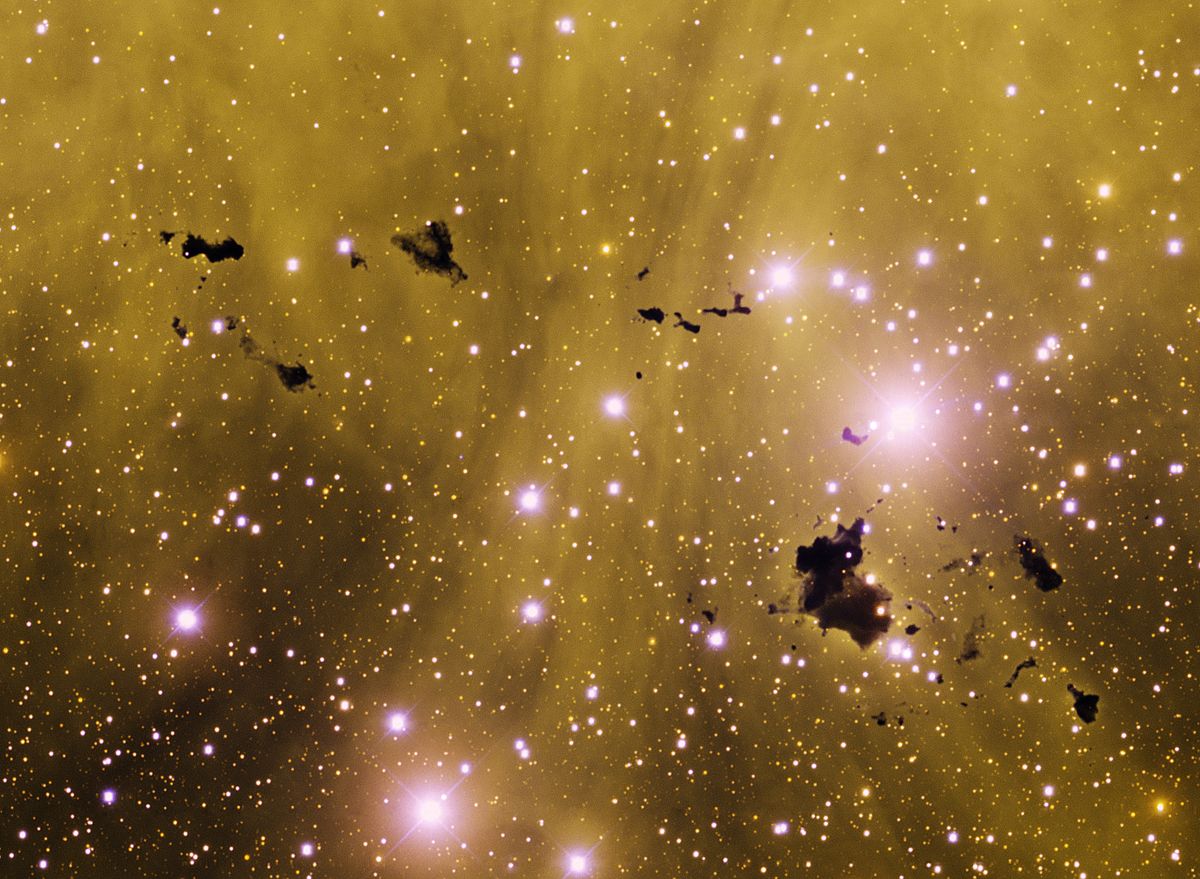
Space is full of wonders, but some celestial structures defy explanation. From vast rings that encircle stars to mysterious voids that seem to swallow light, the cosmos is a playground for the bizarre.
Scientists have spotted formations that challenge our understanding of physics, and theorists have dreamed up megastructures that could power entire civilizations.
You may like
Whether it’s a hexagon on Saturn or a star that dims like clockwork, each clue will test your knowledge of the universe’s strangest sights.
Try it out below and see how well you score!

準天頂衛星システム「みちびき5号機」 /H3ロケット8号機打上げライブ中継 – YouTube

Watch On
Japan will launch a new navigation satellite to orbit tonight (Dec. 16), and you can watch the action live.
You may like

A Japanese H3 rocket launches the Michibiki 6 navigation satellite from Tanegashima Space Center on Feb. 2, 2025. (Image credit: JAXA)
The 10,580-pound (4,800-kilogram) Michibiki 5 will be part of the Quasi-Zenith Satellite System (QZSS), Japan’s homegrown navigation network in geosynchronous orbit.
“This system is compatible with GPS satellites and can be utilized with them in an integrated fashion,” Japanese officials wrote in a description of the QZSS project.
“QZSW can be used even in the Asia-Oceania regions with longitudes close to Japan, so its usage will be expanded to other countries in these regions as well,” they added.
Five QZSS satellites have reached orbit to date, starting with a pathfinder that launched in September 2010. That spacecraft, called Michibiki 1, was replaced by Michibiki 1R, which flew in October 2021.
Michibiki 5 will make QZSS a five-satellite system. But the launches won’t end there: The constellation will eventually consist of 11 spacecraft, if all goes to plan.
Tonight’s launch will be the seventh to date for the two-stage H3, the successor to Japan’s workhorse H-2A, which retired this past June after 24 years of service.
The H3 failed during its debut launch in March 2023, resulting in the loss of the ALOS-3 Earth-observing satellite. But the medium-lift rocket bounced back strong, acing its next five missions, including a February 2025 launch that sent another Michibiki satellite to orbit.
SCIENCE
Ancient Egyptian valley temple excavated — and it’s connected to a massive upper temple dedicated to the sun god, Ra


Archaeologists in Egypt have uncovered the remains of a 4,500-year-old valley temple. The structure is part of a sun temple that ancient Egyptians built in honor of the sun god Ra, the Egyptian Ministry of Tourism and Antiquities said in a translated statement.
The temple is located at Abu Ghurab, about 10 miles (16 kilometers) southwest of Cairo. The sun temple has two parts: an upper temple, which the archaeologists excavated several years ago, and the newly excavated valley temple, which the team started working on in 2024. The valley temple is positioned near the Nile River, and two temple parts are connected through a causeway.
You may like
The recent excavations have led to several discoveries, including the remains of a columned entrance portico, a public calendar of religious events carved into blocks, and dozens of decorated blocks with inscriptions that mention Pharaoh Niuserre (reign circa 2420 B.C. to 2389 B.C.), the ruler who had the temple built.
The upper temple was the main place of worship, but the valley temple made it easier for people to reach. The valley temple “was used as a landing stage for the boats approaching it from the Nile or, more likely, from one of its side channels,” Nuzzolo told Live Science in an email. The “most convenient way to reach the upper temple was to enter the valley temple and go up on the hill where the upper temple was located through a ramp [the causeway].”
Part of the valley temple from an overhead view. (Image credit: Courtesy of the Egyptian Ministry of Tourism and Antiquities)
Public calendar
The valley temple had a calendar of religious events inscribed on decorated blocks. Borchardt found part of the calendar in 1901, and more of it was uncovered by the modern-day archaeological team. The events mentioned include the feasts of Sokar, a falcon-headed god associated with the Egyptian city of Memphis — a capital during the Old Kingdom. The blocks also mention the festival of Min, a god associated with fertility, and the procession of Ra.
“What is really important here is however the location of these blocks,” Nuzzolo said. “They were all found in the area of the entrance portico and this seems to indicate that the façade of the temple, on the outside, was inscribed with this long calendar of feasts, possibly one of the first [examples] of ‘public calendars’ known so far to us.”

Inscriptions found in the valley temple, which include a “public calendar” telling of religious events. (Image credit: Courtesy of the Egyptian Ministry of Tourism and Antiquities)
Stars and games
The team also found a staircase that went up to the roof of the valley temple, the ministry statement said. Ancient Egyptians likely accessed the roof to observe the sky.
“The roof of the valley temple was probably used for astronomical observations but not for the celebration of the festivals,” Nuzzolo said.
After about a century of use, the valley temple was turned into a residential area, the researchers found. They discovered two wooden pieces dating to this time that were used to play a board game known as “senet.” Many senet pieces have been found at other sites in Egypt, including in the tomb of King Tutankhamun, but the exact rules of the game are unclear.
“The sanctuary thus became a dwelling and one of the favourite local [games] was probably playing senet,” Nuzzolo said.
Ancient Egypt quiz: Test your smarts about pyramids, hieroglyphs and King Tut
SCIENCE
James Webb Space Telescope discovers a lemon-shaped exoplanet unlike anything seen before: ‘What the heck is this?’

Since astronomers discovered the first world outside the solar system in the mid-1990s, these extra-solar planets or “exoplanets” have astounded us with their strange characteristics.
A new discovery, made using the James Webb Space Telescope (JWST), may just be the weirdest exoplanet yet, possessing an atmosphere unlike any we’ve ever seen on an exoplanet. Currently, the team behind this discovery can’t explain how such a planet came to be.
You may like
That isn’t in itself so strange. The first planets beyond the solar system ever confirmed, Poltergeist (PSR B1257+12 B) and Phobetor (PSR B1257+12 C), spotted in 1992, also orbit pulsars, a young, rapidly spinning form of neutron star.
However, what sets PSR J2322-2650b apart are the facts that it has an ellipsoid shape, like a planetary lemon or football, and that it has an atmosphere like none scientists have ever seen before.
“This was an absolute surprise,” team member Peter Gao of the Carnegie Earth and Planets Laboratory said in a statement. “I remember after we got the data down, our collective reaction was ‘What the heck is this?’ It’s extremely different from what we expected.”
The atmosphere of PSR J2322-2650b is dominated by helium and carbon, and likely has clouds of carbon soot that condense to create diamonds that rain down onto the planet.
At just around 1 million miles (1.6 million km) from its pulsar parent star (the Earth is around 100 times as distant from the sun), PSR J2322-2650b completes an orbit once every 8 hours or so. Its lemon-like shape emerges from tidal forces generated within the planet by the powerful gravity of the dead star it clings to.

This artist’s concept shows what the exoplanet called PSR J2322-2650b (left) may look like as it orbits a rapidly spinning neutron star called a pulsar (right). Two radio beams are emitted from the pulsar’s magnetic poles, whipping around like a beam from a lighthouse. Gravitational forces from the much heavier pulsar are pulling the Jupiter-mass world into the shape of a lemon. This planet, studied with NASA’s James Webb Space Telescope, appears to have an exotic atmosphere unlike any ever seen before. How the planet came to be is a mystery. (Image credit: NASA, ESA, CSA, Ralf Crawford (STScI))
“A new type of planet atmosphere that nobody has ever seen before”
Like all neutron stars, pulsars are born when massive stars at least 10 times the size of the sun exhaust the fuel for nuclear fusion. This results in the star’s outer layers, and most of its mass, being blown away in a supernova explosion.
Left behind is a core with between 1 and 2 times the mass of the sun that crushes down to a width of around 12 miles (20 kilometers), and because it retains angular momentum, it can spin as fast as 700 times per second!
You may like
The parent star of PSR J2322-2650b is just such a so-called millisecond pulsar, but while it blasts out intense gamma-ray radiation, it doesn’t emit very much infrared light. Because the JWST has been designed to see the cosmos in infrared, that means this powerful dead star doesn’t block the $10 billion space telescope’s view of PSR J2322-2650b.
This allowed the team to investigate the atmosphere of PSR J2322-2650b in detail and uncover its unique composition.
“This is a new type of planet atmosphere that nobody has ever seen before,” team leader Michael Zhang of the University of Chicago said. “Instead of finding the normal molecules we expect to see on an exoplanet — like water, methane, and carbon dioxide — we saw molecular carbon, specifically carbon-3 and carbon-2.”

An illustration of a “traditional” black widow pulsar, consisting of a neutron star stripping away mass from its stellar companion. (Image credit: NASA’s Goddard Space Flight Center)
PSR J2322-2650b is tidally locked to its star, which means one side permanently faces the neutron star, the planet’s dayside, while the other faces out into space in perpetuity, its nightside.
The dayside of PSR J2322-2650b has a maximum temperature of 3,700 degrees Fahrenheit (2,040 degrees Celsius), while the nightside has a minimum temperature of 1,200 degrees Fahrenheit (650 degrees Celsius).
At these temperatures, molecular carbon should bind with other types of atoms, only becoming dominant if there is almost no oxygen or nitrogen in the planet’s atmosphere. Of the 150 or so exoplanet atmospheres studied to date, no others have possessed detectable molecular carbon.
“Did this thing form like a normal planet? No, because the composition is entirely different,” Zhang said. “Did it form by stripping the outside of a star, like ‘normal’ black widow systems are formed?
“Probably not, because nuclear physics does not make pure carbon. It’s very hard to imagine how you get this extremely carbon-enriched composition. It seems to rule out every known formation mechanism.”
There is one possible route of the creation of this planet, hinging on a unique phenomenon occurring in the bizarre atmosphere of PSR J2322-2650b.
“As the companion cools down, the mixture of carbon and oxygen in the interior starts to crystallize. Pure carbon crystals float to the top and get mixed into the helium, and that’s what we see,” team member and Stanford University researcher Roger Romani said. “But then something has to happen to keep the oxygen and nitrogen away. And that’s where the mystery comes in.
“But it’s nice not to know everything. I’m looking forward to learning more about the weirdness of this atmosphere. It’s great to have a puzzle to go after.”

Earth might be under pressure, but the Queen guitarist Sir Brian May is hopeful a new award from the science, music and arts festival he co-founded will encourage people to take action.
The Starmus Jane Goodall Earth medal is in honour of the British primatologist who died this year and will recognise those who champion life on Earth.
The first recipients are expected to be announced at the Starmus VIII festival in Tenerife and La Palma, which will run from 17–22 October next year.
May told the Guardian that Goodall, who was an advisory board member of Starmus, had supported its creation. “The idea of having this medal, and Starmus being entrusted to organising it, is Jane’s. Jane said she would like this to happen. And I think it’s because of the very special relationship she had with us,” he said.
Goodall’s grandson, Merlin van Lawick, welcomed the award. “The Starmus Jane Goodall Earth medal will acknowledge sustainable programmes undertaken to make our world a better place for people, animals and the environment and provide encouragement for the continuation of that work,” he said.
Starmus’s co-founder, Garik Israelian, said the medal – which was announced at the Royal Society – will probably have multiple categories.
“It’s going to be very much similar to Stephen Hawking medal for science communication that we created exactly 10 years ago,” he said. Goodall was a recipient of that award.
May said that it was difficult to be sanguine about the future of the planet. “Honestly it’s very hard to be optimistic,” he said. “The present government in America is conducting a war on science and knowledge. So this really cripples the world’s efforts in my opinion.
“To be honest, things don’t look very good so we have to really start thinking again, I would say, much more seriously about the consequences of our actions. And that’s not just global warming, that’s the whole way that we treat the natural world.”
As a result, May said, it was a good time to follow Goodall’s example. “I think that when we’re awarding the prize, we will be considering this essential spirit of Jane’s – that was her priority, to change the way we treat the the other animals around us.”
Israelian said an important issue at present was the proliferation of misinformation. The focus of next year’s Starmus festival will be “the search for truth”.
“We realised that truth is becoming a subject of discussion when politics is involved. And it’s a very dangerous thing,” he said. “The climate science is a science – you cannot have any influence from politics in climate science.”
May hopes the medal will inspire action. “It’s about encouraging people to get involved and to care and to work in that direction, really. Whether or not we’re optimistic we have to look at working the best we can,” he said. “Be prepared for failure, but you still have to work towards succeeding.”
Van Lawick, who is involved in conservation work, said he was optimistic that “with guidance and when empowered, humans can be responsible caretakers of our planet”, pointing to the work of the Jane Goodall Institute which, among other activities, helps young people get involved with their community, animals and environment.
“As my late grandmother Jane Goodall constantly reminded us all, our daily actions make a difference and it is up to us the kind of difference we make,” he said. “It is not too late and the Starmus Jane Goodall Earth medal will give encouragement and raise awareness about the positive actions that are being undertaken.”
SCIENCE
Record-breaking feat means information lasts 15 times longer in new kind of quantum processor than those used by Google and IBM

Scientists have developed a new fabrication method for creating superconducting quantum bits (qubits) that could remain coherent for three times longer than current state-of-the-art systems in labs — allowing them to conduct more powerful quantum computing operations.
The new technique, described in a study published Nov. 5 in the journal Nature, relies on the use of a rare earth element called tantalum. This belongs to the “transition metals” group of the periodic table and is “grown” on minerals such as tantalite and silicon by building up a metallic film atom-by-atom.
You may like
“The real challenge, the thing that stops us from having useful quantum computers today, is that you build a qubit and the information just doesn’t last very long,” said Andrew Houck, Princeton’s dean of engineering and co-principal investigator of the study, in the study. “This is the next big jump forward.”
Decoherence and imperfection
Coherence in quantum computing is a measure of how long a qubit can maintain its wave state. When qubits decohere, they lose information. This makes maintaining coherence one of the biggest challenges in quantum computing.
Scientists have spent some years trying to harness tantalum as a material to develop qubits. When a superconducting material such as tantalum is cooled to near absolute zero, circuits built within the material can operate with close to no resistance. This allows for faster quantum operations, but the speed and number of operations are fundamentally limited by how long qubits can maintain their information states.
An advantage of tantalum is that it’s easier to scrub free of contaminants that can lead to imperfections in the manufacturing process, where any irregularity can cause affected qubits to decohere faster. Tantalum’s inert resilience protects it from certain state changes related to corrosion and molecular displacement; it won’t even absorb acid when immersed. This makes it a perfect candidate for use as a superconducting material for quantum computing, the scientists said in the study.
But keeping the qubit material free from defects is only half the battle. The manufacture of a quantum processor requires both a base layer material and a substrate. In previous experiments, scientists achieved state-of-the-art quantum computing results using processors built with a tantalum base layer and a sapphire substrate. These experiments were successful, but coherence rates were still under one millisecond.
The Princeton team replaced the sapphire substrate used in those experiments with a high-resistivity silicon developed using proprietary techniques. According to the study, they achieved coherency rates as high as 1.68 milliseconds on systems as large as 48 qubits — marking an all-time best for superconducting qubits.
The new qubit design is similar to those used in superconducting quantum processors developed by leading companies such as Google and IBM. Houck even added that “swapping Princeton’s components into Google’s best quantum processor, called Willow, would enable it to work 1,000 times better.”
What this means for the quantum computing industry remains unclear. While the scientists have progressed the coherence rates of qubits significantly, challenges remain. Chief among them is the availability of tantalum. As of 2025, tantalum is considered a scarce metal with most mining taking place in Africa.
While the new qubits significantly increase coherence, they still need to be tested at larger sizes using wafer-scale chipsets before they can be integrated with today’s commercially deployed quantum computers.

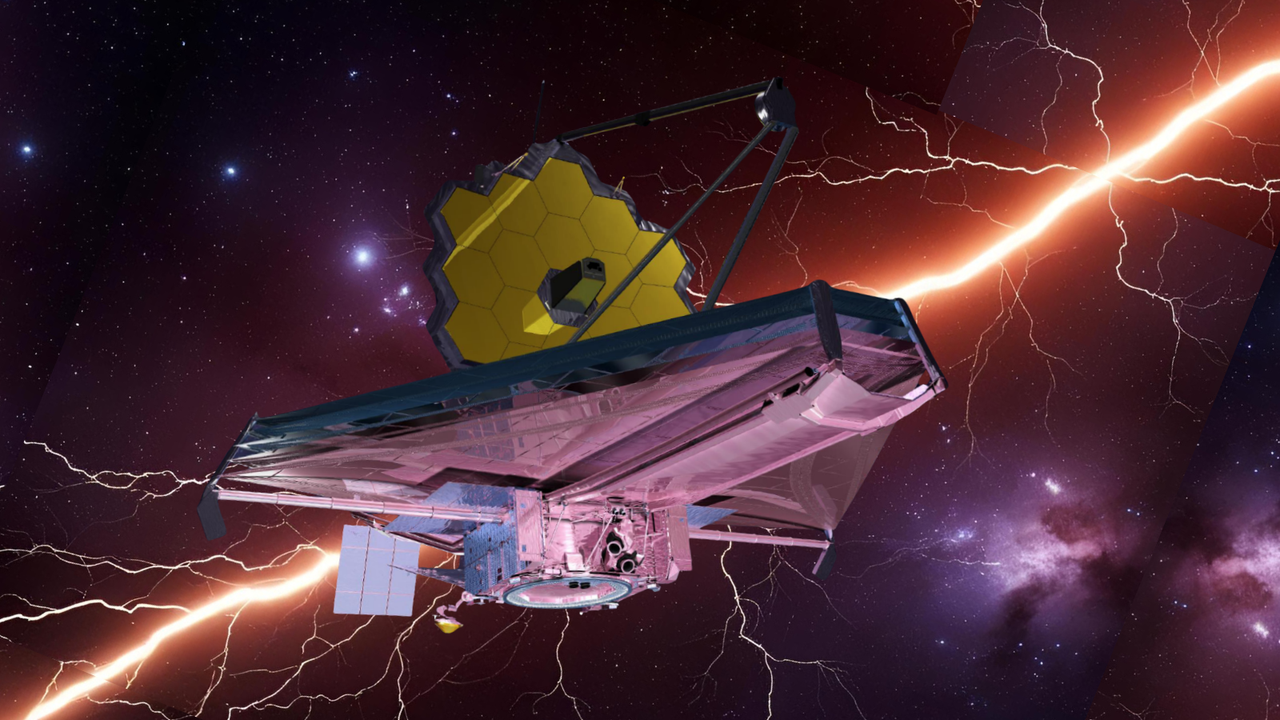
Since it began operations in 2022, the James Webb Space Telescope (JWST) has allowed scientists to make incredible strides in our understanding of the cosmos — especially its early epoch. However, one lingering cosmological mystery that the JWST hasn’t had a major impact on is the nature of dark matter. Now, new research suggests that this is something that may soon change.
While dark matter is estimated to account for 85% of the matter in the universe, it is difficult to investigate because it doesn’t interact with electromagnetic radiation (light) or it interacts so weakly that we can’t directly detect it. As well as making dark matter effectively invisible, this lack of interaction with light tells scientists that the particles making up dark matter aren’t the protons, neutrons, and electrons that comprise the everyday stuff we see around us on a day-to-day basis, ranging from the most massive stars to the viruses that make our lives miserable every winter. The search for a potential dark matter particle has delivered many suspects, but they’ve all remained frustratingly hypothetical.
You may like
Studying these elongated galaxies with the JWST might help reveal the presence of dark matter, scientists say. “In the expanding universe defined by Einstein’s theory of general relativity, galaxies grow over time from small clumps of dark matter that form the first star clusters and assemble into larger galaxies via their collective gravity,” team member Rogier Windhorst, of Arizona State University, said in a statement.
“But now the JWST suggests that the earliest galaxies may be embedded in marked filamentary structures, which — unlike cold, dark matter — smoothly join the star-forming regions together, more akin to what is expected if dark matter is an ultralight particle that also shows quantum behavior.”
Understanding dark matter is a stretch
When using simulations to recreate how the first galaxies formed in the early universe, allowing cool gas to gather along the threads in a web of dark matter is able to quite nicely recreate the mostly spheroid galaxies we see in the modern universe.
However, as the JWST has been allowing astronomers to look back at galaxies that existed in the very early stages of the universe, they have increasingly been finding filamentary elongated galaxies that aren’t as easily recreated in simulations that stick to the standard mechanism of gas gathering to birth stars and grow galaxies.
To investigate this, Windhorst and colleagues looked at simulations of the universe involving different types of dark matter other than that found in the most accepted model of cosmology, the Lambda Cold Dark Matter (LCDM) model; “cold” dark matter, which doesn’t refer to temperature but instead to the speed at which particles move.
This revealed that the wave-like behavior of “fuzzy dark matter” or ultralight axion particles could account for the elongated morphology of early galaxies seen by the JWST.
“If ultralight axion particles make up the dark matter, their quantum wave-like behavior would prevent physical scales smaller than a few light-years from forming for a while, contributing to the smooth filamentary behavior that JWST now sees at very large distances,” team leader Álvaro Pozo of the Donostia International Physics Center said.
The team’s modelling also indicated that faster-moving “warm dark matter” particles, like sterile neutrinos, could also give rise to early filamentary galaxies. In both the wave dark matter and warm dark matter scenarios, this is because these particles give rise to smoother filaments than cold dark matter. As gas and stars slowly flow down these filaments, elongated galaxies begin to form.
The JWST will continue to investigate oddly shaped galaxies in the early universe, while researchers here on Earth continue to evolve simulations of the early universe. Bringing these together could eventually help solve the mystery of dark matter.
The team’s research was published on Dec. 8 in the journal Nature Astronomy.

QUICK FACTS
Where is it? Yellowstone National Park, Wyoming [44.46284445, -110.3628428]
What’s in the photo? A perfectly white blanket of snow covering Yellowstone Lake
Who took the photo? An unnamed astronaut on board the International Space Station (ISS)
When was it taken? Jan. 26, 2022
This eye-catching astronaut photo shows Yellowstone’s eponymous lake covered in a thick blanket of snow, making it look like a colorless, featureless void in the surrounding landscape. But below this freezing, blank expanse lies some of the most active and hottest hydrothermal vents anywhere on Earth.
The lake freezes over every winter, around late December or early January, with an ice sheet that ranges from a few inches to around 2 feet (0.6 m) thick. But the blanket of snow on top of this ice can reach up to 3.5 feet (1.1 m) deep by March, according to NASA’s Earth Observatory. The lake is usually snow- and ice-free by late May or early June.
You may like
The thick covering of snow means Yellowstone Lake is remarkably resilient to human-caused climate change, maintaining its surface ice thickness despite rising atmospheric temperatures. This makes it a major outlier among high-altitude lakes across the globe.
This astronaut photo shows one of these deep snowdrifts, mostly undisturbed aside from a few islands, the largest of which is Stevenson Island.
The snow covering Yellowstone Lake can reach up to 3.5 feet (1.1 m) deep. This photo of the lake was taken in February 2014. (Image credit: Smith Collection/Gado/Getty Images)
While the surface of Yellowstone Lake may seem cold and lifeless during the winter months, the water below remains surprisingly mild thanks to a series of hydrothermal vents across its floor. This enables aquatic animals, including the lake’s cutthroat trout (Oncorhynchus clarkii) population — the largest of its kind anywhere in North America — to survive the long months under the ice, according to NPS.
One of the vents, right next to Stevenson Island, releases water that’s a remarkable 345 degrees Fahrenheit (174 degrees Celsius), making it hotter than Old Faithful and every other geyser or hot spring in Yellowstone National Park.
“This is much hotter than any surface hot spring at Yellowstone because the weight from the overlying lake water acts like a pressure cooker lid and allows temperatures higher than boiling to be reached,” representatives from the U.S. Geological Survey wrote in an article about the lake’s vents. “These are the hottest hydrothermal vents measured in a lake anywhere in the world.”
The vents are powered by a giant blob of magma, around 2.6 miles (3.8 km) beneath Yellowstone National Park, which contains a surprising amount of molten rock. This magma blob acts like the cap on a gigantic volcanic bottle and will one day explode, unleashing a “supervolcanic” eruption that could be felt across the continent.
Yellowstone Lake was formed shortly after a similar eruption 640,000 years ago, which carved out the 1,500-square-mile (3,900 square kilometers) caldera that the lake currently sits within. Around 130,000 years ago, a smaller eruption then carved out the doorknob-shaped handle of the lake, dubbed West Thumb (visible near the top of the astronaut photo).
For more incredible satellite photos and astronaut images, check out our Earth from space archives.

The timing is brutal. Just as the world celebrates the 10th anniversary of the adoption of the Paris climate agreement this month, new evidence shows that the world is crashing through the main defence that was constructed against climate catastrophe.
The three-year temperature average is – for the first time – set to exceed the Paris guardrail of 1.5C above preindustrial levels. According to the Copernicus Climate Change Service, 2025 will join 2023 and 2024 as the three warmest since the Industrial Revolution, reflecting the accelerating pace of the climate crisis.
As temperatures continue to rise – including in the oceans, where the extra heat fuels more powerful hurricanes – far greater catastrophes lie ahead as feedback loops push the planet past irreversible tipping points.
We have already passed our first tipping point, the progressive loss of warm-water coral reefs, on which nearly a billion people and a quarter of marine life depend; a development particularly relevant to island countries like Barbados. We are on the brink of several more, including the death of the Amazon rainforest, the collapse of key ocean currents, and the loss of ice sheets leading to metres of sea level rise.
Cutting methane emissions is the fastest and simplest way to slow near-term warming and prevent triggering more tipping points. We must also reduce carbon-dioxide emissions as quickly as possible, although much of the impact on climate will take effect in the medium to long term. In contrast, we could avoid up to nearly 0.3C of warming by the 2040s by eliminating the easily avoidable methane emissions, starting with those of the oil and gas sector. Combined with a tripling of renewables and doubling of energy efficiency, this could cut the rate of warming by a third in 10 years and halve it by 2040, keeping the 1.5C goal in sight.
Flaring, burning natural gas from oil production, in North Dakota. Photograph: Matt Brown/AP
The European Commission helped launch the global methane pledge at Glasgow’s Cop26 in 2021, where today it and 159 other countries are supporting emission cuts of 30% by 2030 from 2020 levels. However, this is voluntary, and the UN has reported that current measures, even if fully implemented, would only reduce emissions by 8% by 2030 from 2020 levels. The urgency of the climate demands mandatory measures.
It is time for a binding agreement for methane, starting in the oil and gas sector. Other leaders have joined this call, including Wesley Simina, president of the Federated States of Micronesia, and Feleti Teo, prime minister of Tuvalu. The French president, Emmanuel Macron, also voiced support for a binding framework and called for a global alliance dedicated to action on methane.
Despite many past promises and pledges, methane emissions from the energy sector continue to grow, making a binding agreement essential. Many of the pieces for an agreement are moving into place. Companies representing nearly 40% of global oil and gas production promised at Cop28 in 2023 to ban routine gas flaring by 2030 and limit leaks to “near zero” by 2030. They include 34 national oil companies, suggesting that their governments should be ready to join an agreement that ensures their promises are honoured. The binding EU methane regulation bans flaring – and soon will ban leaks – and requires robust measuring, monitoring, reporting and verification, both for domestic fossil fuel production and for imports.
The Brazilian president, Lula Inácio Lula da Silva, and leaders of more than 80 other countries will be developing a roadmap to phase out fossil fuels, which should have as a first step eliminating methane waste through a binding agreement among willing nations.
The Montreal protocol, signed in 1987, can provide the inspiration. Besides putting the protective ozone layer on the road to recovery, that binding agreement has done more than any other to combat the climate crisis, mainly because the ozone-depleting chemicals it reduces are also powerful warmers. The protocol is on course to avoid 2.5C of warming by the end of the century, a massive contribution. It was negotiated by a small coalition of willing countries, and concluded in less than a year after formal diplomatic negotiations opened.
The next step is to convene heads of state of willing nations to develop a roadmap in 2026 for binding measures for the oil and gas industry. An ambitious but challenging timeline would be to start negotiations among this coalition of the willing in early 2027, and adopt an agreement as soon as possible thereafter. As shown by the Montreal protocol, transformative change can begin with just a handful of pioneering nations, before spreading worldwide.
A legally binding methane agreement for the oil and gas sector can prevent energy waste, while buying time over the next 15 to 20 years to build resilience as research to scale up decarbonising technologies to commercial level builds pace. This will give countries in the south with oil and gas assets the opportunity to use the one thing that can finance their way to net zero.
Preventing methane energy waste makes sense for industry, and it makes sense for people and the planet. As Aristotle taught us, waste is a form of injustice. Preventing it is not too much to ask.
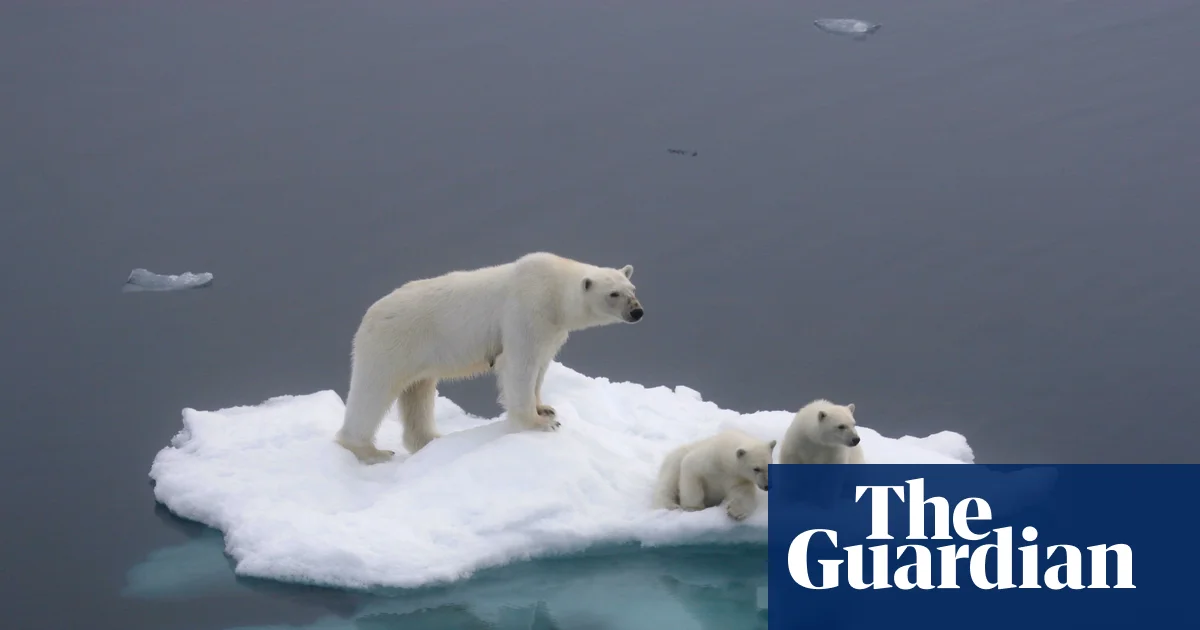
Good morning. Amid the constant drumbeat of bleak news about the planet’s environment and the accelerating climate emergency, the occasional bright spot still emerges. One example came last week, when researchers published the first statistical evidence that polar bears are changing their DNA in response to a warming Arctic.
But is it really good news that human activity – the burning of fossil fuels and the destruction of habitats – is forcing animals to alter their genetic makeup? The picture, as ever, is complicated.
For today’s newsletter, I spoke to the Guardian’s environment reporter Helena Horton about what the polar bear study tells us and whether almost a decade spent reporting on biodiversity loss and the climate crisis has left her feeling more or less optimistic about the planet’s future. Here are the headlines.
Five big stories
-
Donald Trump | Donald Trump has filed a lawsuit against the BBC over its editing of a speech he made to supporters in Washington before they stormed the US Capitol in 2021, requesting at least $5bn in damages.
-
Australia | Australia’s national security agency Asio investigated one of the alleged Bondi shooters in 2019 over potential extremist links but decided he was not “a person of interest”, prime minister Anthony Albanese has revealed, despite two of the man’s associates being jailed.
-
International trade | The US has paused its promised multi-billion-pound investment into British tech over trade disagreements, marking a serious setback in US-UK relations.
-
Health | Resident doctors in England will go on strike as planned this Wednesday for five days, after they voted to reject the government’s latest offer to end the long running pay and jobs dispute.
-
Ukraine | Europe is ready to lead a “multinational force” in Ukraine as part of a US proposal for a peace agreement between Russia and Ukraine, European leaders have said.
In depth: What counts as good news in a climate emergency?
A polar bear in an abandoned Soviet-era research station on Kolyuchin Island in the Chukchi Sea, in September 2025. Photograph: Vadim Makhorov/Reuters
For decades, polar bears have been among the most recognisable victims of climate change. Long before charts, models and emission targets entered the public conversation, images of stranded bears offered a stark visual shorthand for what a heating planet looks like.
That is what makes new research suggesting polar bears may be changing their DNA to adapt to warmer climates so striking – and potentially unsettling. “It is a small piece of hopeful news,” Helena Horton says, “that animals are adapting. But this shouldn’t be happening. DNA only changes so rapidly under extreme environmental stress.”
Has reporting on the climate crisis made you more or less optimistic about the future?
“It’s a mix,” Helena tells me. “There are moments of good news,” she says, citing countries working together to reduce emissions, major leaps in renewable technology, and electric cars becoming more popular than expected. But there is a caveat. “You have people elected who might roll back on a lot of those commitments,” she says. “And we see coal use spiking a lot more than we thought it would.”
Over the years, Helena has closely watched biodiversity indicators in the UK, and she says they provide a mixed picture. For every story like a mystery wild beaver turning up in Norfolk, the first sighting of one there for 500 years, or red squirrels thriving again in the Highlands after a decade of a reintroduction programme, there are many more that are less hopeful.
“The indicators came out again last week, – species continue to decline,” she says. “The stats on wild birds in particular are very distressing, and if they keep declining in this way, we’re going to see extinctions in the UK.”
What made this polar bear DNA story stand out?
Scientific studies are published all the time, but some are more meaningful than others. Part of the work of science reporters is deciding which make the publishing cut. “What made this one stand out was that it’s the first time a statistically significant link has been found between rising temperatures and DNA changes in a wild mammal,” Helena says. “That’s genuinely new.”
That polar bears are the focus of the research is notable. They have become one of the most powerful symbols of the climate crisis, because they were among the first animals whose habitats were visibly and dramatically destroyed. “The Arctic, where they live, is warming at a higher rate than the rest of the planet. It’s also a habitat that’s more susceptible to visible warming, because it melts. We’ve all seen those horrible images of polar bears stranded on shrinking ice.”
Photographs of polar bears in snow-free environments feel inherently powerful in conveying just how fast their habitat is changing, as the bears filmed living in an abandoned Soviet research station on Kolyuchin Island in the Chukchi Sea (pictured above) demonstrate.
How is the climate crisis changing animals?
Helena says we are already seeing animals move locations, change their behaviour, and even change their bodies. More octopuses in Britain’s seas, tiger moths in Jersey, birds developing larger beaks in Australia or bats developing bigger ears to allow more efficient heat exchange are all examples she lists.
“So we’re making animals move around the planet, we’re forcing them to change their physiology – and now, as this research shows, we’re even pushing them to change their DNA,” Helena says.
Habitat destruction is also a factor in changing animal behaviours, and bringing them into more conflict with humans.
“You see this with elephants in Africa and with the great apes,” Helena says, reminding me that last week the Guardian carried a depressing report on the plight of the rare Tapanuli orangutans. Their Indonesian habitat is under threat from an expansion of gold mining, and the population has suffered a dramatic loss due to recent flooding which was exacerbated by the climate crisis.
How do you balance hope and honesty in climate reporting?
“I try to let the scientists speak for themselves,” Helena says.
“With the polar bears, the lead researcher was very measured. She said it offers some hope, but it’s not a magic bullet – and we still need to stop burning fossil fuels. This isn’t something that should be happening. It’s happening because we’re putting enormous pressure on ecosystems.”
The real question, Helena explains, is whether animals can adapt fast enough to keep up with how quickly humans are changing the planet. At the moment, she says, that seems very unlikely.
What else we’ve been reading
Salvador Dalí at Coco Chanel’s La Pausa in the 1930s. Photograph: Wolfgang Vennemann/ Fundació Gala–Salvador Dalí/ADAGP, Paris
-
The Mediterranean villa once owned by Gabriele “Coco” Chanel was once frequented by artists from Salvador Dalí to Igor Stravinsky. Kate Hessel unlocks the secrets of Chanel’s newly refurbished house, back in the hands of the fashion label. Karen
-
After the killing of Rob Reiner alongside his wife, Michele, Ryan Gilbey remembers the director’s eight-year “golden run” – from This Is Spın̈al Tap to A Few Good Men via Stand By Me, The Princess Bride and When Harry Met Sally. He was in that stretch, Ryan writes, “a film-maker who beat the algorithm in the days before there was even one to beat”. Charlie Lindlar, newsletters team
-
Andrew Pulver has an enthusiastic assessment of Marty Supreme, the screwball tale of a ping pong champion played by Timothée Chalamet, which is No 5 on the Guardian film critics best movies of 2025. Follow the countdown to No 1 here. Karen
-
Sunday evening saw Philip Rivers, a 44-year-old with 10 kids and one grandchild, unretire and strap on his helmet to play quarterback for the injury-stricken Indianapolis Colts. What compelled Rivers to return to the game after 1,800 days away, in one of the NFL’s all-time comebacks? Doug Farrar explores that in this wonderful piece. Charlie
-
Is it superflu? Do vaccines offer protection against the new strain? Is it too late to get jabbed before the festivities? Prof Devi Sridhar, chair of public health at the University of Edinburgh, answers these questions and more. Karen
Sport
The England captain Ben Stokes bowls during a net session at Adelaide Oval, the venue for Wednesday’s third Ashes Test. Photograph: Gareth Copley/Getty Images
Cricket | Ben Stokes (pictured above) has called on England to “show some dog” as they had against India in the summer, to keep their slim Ashes hopes alive.
Football | England’s Lionesses are up against their rugby union counterparts, the Red Roses and Europe’s winning Ryder cup side in being shortlisted for team of the year in what will be a public vote, with the winners announced at a ceremony live on the 18 December as part of the BBC Sport Personality of the Year award.
Premier League | Manchester United manager Ruben Amorim conceded that repeated lapses in concentration are undermining his team’s progress, after a chaotic 4-4 draw with Bournemouth. Matheus Cunha scored in the 79th minute for a 4-3 lead. But 19-year-old Bournemouth substitute Eli Junior Kroupi equalised in the 84th minute.
The front pages
Photograph: Guardian front page
The Guardian leads with “Tears, flowers and silence: Sydney unites in grief after Bondi horror”. The Sun reports on one of the victims of the attack, with “Minutes later, Matilda was dead”. The i headlines “MI6 chief: globe’s tech giants are seizing power from politicians”. The Financial Times reports “Mortgage rules poised for easing in bid to widen access and boost growth”.
The Telegraph leads with “Trump kicks off BBC court battle”. The Times has “Doctors strike despite flu fears”. The Mail says “Drivers wrongly fined in speed camera scandal”.
Today in Focus
Photograph: Duncan Elliott/The Guardian
What happened when Reform took power
When Reform took over 10 local councils in England this summer, it offered the first glimpse of how the party might govern if it were to get into No 10. Helen Pidd reports.
Cartoon of the day | Ben Jennings
Illustration: Ben Jennings/The Guardian
The Upside
A bit of good news to remind you that the world’s not all bad
‘He was a handful and required constant care.’ Elio, right, and Yannis Baladi at the Chimpanzee Conservation Centre in Guinea. Photograph: Roberto Garcia Roa
When he was 26, Yannis Baladi quit his job selling expensive flats in Paris and took up looking after chimpanzees at a conservation centre in the jungle of Guinea, west Africa, a five-hour drive from the nearest town. He loved it so much that his three-month stay turned into 11. Baladi was fascinated by their behaviour, including the way the chimpanzees processed anger. After fighting really hard, hitting each other and stealing each other’s food, they always made peace with each other five minutes later, he said. “I learned from these primates there was no point being angry or living in the past,” he recounts in this story from the Guardian’s Age of extinction series.
A baby sooty mangabey called Elio – who was possibly abandoned by poachers and whose species is endangered – taught him the most. They would spend whole days together, Baladi reading books or playing sudoku, and Elio jumping from tree to tree. By the time he left the Chimpanzee Conservation Center, both had matured.
“I learned I could be patient. He taught me that I’m ready to be a dad – and this meant a lot to me because I always had a difficult relationship with my own father.” Most poignantly, Baladi learned to say goodbye to the tiny monkey he considered “my first son”.
Sign up here for a weekly roundup of The Upside, sent to you every Sunday
Bored at work?
And finally, the Guardian’s puzzles are here to keep you entertained throughout the day. Until tomorrow.
SCIENCE
New antibiotics hailed as ‘turning point’ in treating drug-resistant gonorrhoea | Global health


The first new treatments for gonorrhoea in decades could be a “huge turning point” in efforts to combat the rise of superbug strains of the bacteria, researchers have said.
Gonorrhoea is on the rise around the world, with more than 82m infections globally each year and particularly high rates in Africa and countries in the World Health Organization’s Western Pacific region, which reaches from Mongolia and China to New Zealand. Cases in England are at a record high, and rates in Europe were three times higher in 2023 than in 2014.
Health officials are concerned about an increase in drug-resistant strains of the bacterium, with the WHO designating it a “priority pathogen”. A WHO surveillance programme found resistance to the primary antibiotics used to treat gonorrhoea, ceftriaxone and cefixime, had risen sharply from 0.8% to 5% and from 1.7% to 11% respectively between 2022 and 2024.
Zoliflodacin is one of two new treatments for the sexually transmitted infection to receive regulatory approval in the past week.
Dr Tereza Kasaeva, director of the WHO’s sexually transmitted infections department, said: “The approval of new treatments for gonorrhoea is an important and timely development in the context of rising global incidence, increasing antimicrobial resistance and the very limited therapeutic options currently available.”
Zoliflodacin, also known by the brand name Nuzolvence, was approved by the US Food and Drug Administration on 12 December for use against gonorrhoea, which can cause serious health problems, including infertility. Scientists hope that targeted use against the infection will slow the development of resistance.
The US Food and Drug Administration approved two new drugs to tackle gonorrhoea last week. Photograph: Sarah Silbiger/Getty Images
Gepotidacin, an antibiotic developed by the pharmaceutical company GSK that is also used to treat urinary tract infections, was also approved on 11 December after it was shown in trials to work against drug-resistant strains of gonorrhoea.
Zoliflodacin emerged from a new, not-for-profit approach for antibiotic development, in which the non-profit organisation Global Antibiotic Research & Development Partnership (GARDP) collaborated with the pharmaceutical company Innoviva.
Dr Manica Balasegaram, executive director of GARDP, said: “This approval marks a huge turning point in the treatment of multidrug-resistant gonorrhoea, which until now has been outpacing antibiotic development.”
In results published in the Lancet last week, zoliflodacin cured more than 90% of genital gonorrhoea infections, putting it on an equal footing with current standard treatment, which combines two antibiotics: an injection of ceftriaxone followed by an oral dose of azithromycin. No serious safety issues were reported.
The trial of the drug, which is part of a new class of antibiotics called spiropyrimidinetriones, involved 930 participants from Belgium, the Netherlands, South Africa, Thailand and the US.
Under the terms of its partnership, GARDP has the right to register and commercialise it in all low-income countries, most middle-income countries, and several high-income countries.
Dr Rossaphorn Kittiyaowamarn, principal investigator of the trial in Thailand, said: “As clinicians, we see the devastating impact drug-resistant gonorrhoea can have on people’s lives in Thailand.
Having a single-dose, oral treatment like this will be a game-changer for gonorrhoea control. This is essential to reduce the burden of disease for individuals and to prevent the spread of highly drug-resistant gonorrhoea globally.”