
SCIENCE
Watch Japanese H3 rocket launch Michibiki 5 navigation satellite tonight


準天頂衛星システム「みちびき5号機」 /H3ロケット8号機打上げライブ中継 – YouTube

Watch On
Japan will launch a new navigation satellite to orbit tonight (Dec. 16), and you can watch the action live.
You may like

A Japanese H3 rocket launches the Michibiki 6 navigation satellite from Tanegashima Space Center on Feb. 2, 2025. (Image credit: JAXA)
The 10,580-pound (4,800-kilogram) Michibiki 5 will be part of the Quasi-Zenith Satellite System (QZSS), Japan’s homegrown navigation network in geosynchronous orbit.
“This system is compatible with GPS satellites and can be utilized with them in an integrated fashion,” Japanese officials wrote in a description of the QZSS project.
“QZSW can be used even in the Asia-Oceania regions with longitudes close to Japan, so its usage will be expanded to other countries in these regions as well,” they added.
Five QZSS satellites have reached orbit to date, starting with a pathfinder that launched in September 2010. That spacecraft, called Michibiki 1, was replaced by Michibiki 1R, which flew in October 2021.
Michibiki 5 will make QZSS a five-satellite system. But the launches won’t end there: The constellation will eventually consist of 11 spacecraft, if all goes to plan.
Tonight’s launch will be the seventh to date for the two-stage H3, the successor to Japan’s workhorse H-2A, which retired this past June after 24 years of service.
The H3 failed during its debut launch in March 2023, resulting in the loss of the ALOS-3 Earth-observing satellite. But the medium-lift rocket bounced back strong, acing its next five missions, including a February 2025 launch that sent another Michibiki satellite to orbit.


Wildfires don’t just scorch landscapes. Some are so intense that they create their own weather systems, such as pyrocumulonimbus thunderstorms that loft smoke up to 10 miles (16 kilometers) into the atmosphere. While it’s long been known that this high-altitude smoke can persist in the atmosphere for weeks or months, their effect on climate has been hard to measure, due to the difficulties in collecting samples. That is, until now.
Atmospheric scientists at the Harvard John A. Paulson School of Engineering and Applied Sciences report the first direct measurements of five-day-old wildfire smoke in the upper troposphere, about nine miles (14.5 kilometers) above Earth’s surface. They discovered large smoke particles that aren’t represented in current climate models, and these particles appear to actually cool the atmosphere.
You may like
Inside the smoke cloud, researchers detected aerosols roughly 500 nanometers wide — about twice the size of typical wildfire aerosols at lower altitudes. The team suggests the large size can be attributed to efficient coagulation.
“Particles can coagulate at any place in the atmosphere,” Yaowei Li, the lead author of a study on the research, said in a statement. “But in that specific region, the air mixes very slowly. That allows wildfire smoke particles to remain concentrated and collide more often, making coagulation much more efficient.”
Such aerosols play a role in changing the amount of radiation that gets to the Earth’s surface, whether by absorbing sunlight or reflecting back toward space. In this study, the larger particles had a striking effect: They increased outgoing radiation by 30% to 36 compared to lower-altitude particles, producing a measurable cooling effect that current climate models don’t account for.
More research is needed to determine further effects of such high-altitude wildfire smoke on both weather and climate. Study co-author and project scientist John Dykema suggests that the large coagulated smoke particles could affect atmospheric circulation through local heating, potentially shifting jet streams. “I think all of these things are possible, and we don’t currently have enough information to say which way they could go,” he said.
The study was published on Dec. 10 in the journal Science Advances.
Join our Space Forums to keep talking space on the latest missions, night sky and more! And if you have a news tip, correction or comment, let us know at: community@space.com.

The sun may not be green, but it turns out to be adept at recycling.
NASA’s Parker Solar Probe has captured the clearest view yet of solar material billowing away from the sun before some of it makes a “U-turn,” falling back toward the star after an eruption.
The snapshots reveal how the sun recycles its magnetic energy — a process that helps shape the next solar storm and could allow scientists to forecast space weather farther in advance.
You may like
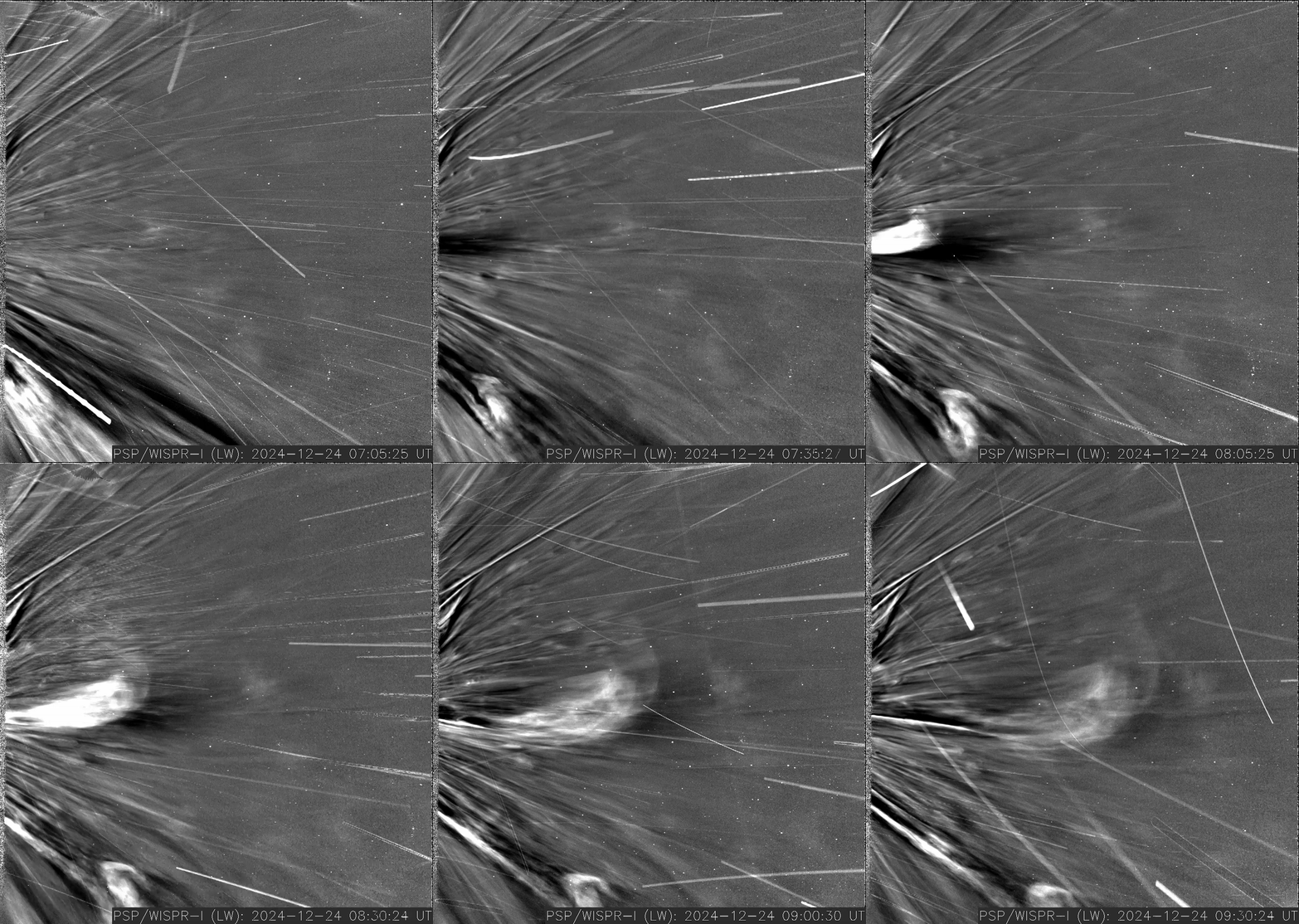
A gif from the NASA Parker Solar Probe showing the solar material changing directions. (Image credit: NASA)
Like a puff of breath on a cold winter day, the cloud of solar material can be seen coasting outward from the sun before thinning, with some of it curling back inward. That returning material was pulled back by powerful magnetic field lines that snap and rapidly realign into looping structures, some of which continue outward into space, while others stitch back to the sun, according to a NASA statement.
“We’ve previously seen hints that material can fall back into the sun this way, but to see it with this clarity is amazing,” Nour Rawafi, the project scientist for Parker Solar Probe at the Johns Hopkins Applied Physics Laboratory in Maryland, said in the statement.
“This is a really fascinating, eye-opening glimpse into how the sun continuously recycles its coronal magnetic fields and material.”
What Parker observed was a coronal mass ejection, or CME, which is an eruption of superheated plasma from the sun that, if directed toward Earth, can trigger powerful geomagnetic storms capable of disrupting power grids, radio communications and satellite navigation systems, while also igniting breathtaking auroras.
In the video above, as the CME expanded outward from the sun, nearby magnetic field lines stretched until they snapped apart “like the threads of an old piece of cloth pulled too tight,” the NASA statement read. The torn magnetic fields quickly reconnected, forming giant loops, some of which continued traveling outward while others retracted back toward the sun, dragging blobs of solar material along in a process known as inflows.
As that material falls back, it interacts with and reshapes the magnetic fields closer to the sun’s surface — changes that potentially alter the paths of future CMEs emerging from that region.
You may like
“That’s enough to be the difference between a CME crashing into Mars versus sweeping by the planet with no or little effects,” Angelos Vourlidas, who is the project scientist for WISPR, the instrument onboard Parker that captured the snapshots, and a researcher at Johns Hopkins Applied Physics Laboratory, said in the same statement.
Such inflows have previously been observed before from a distance by missions, including the sun-watching SOHO observatory. But Parker’s close-up close-up images revealed the returning material on scales never seen before, scientists say.
For the first time, scientists were able to directly measure the speed and size of the blobs falling back toward the sun, findings that they are currently using to refine models of space weather and the sun’s complex magnetic environment, the statement read.
“Ultimately, this work may help scientists better predict the impact of space weather across the solar system on longer timescales than currently possible.”

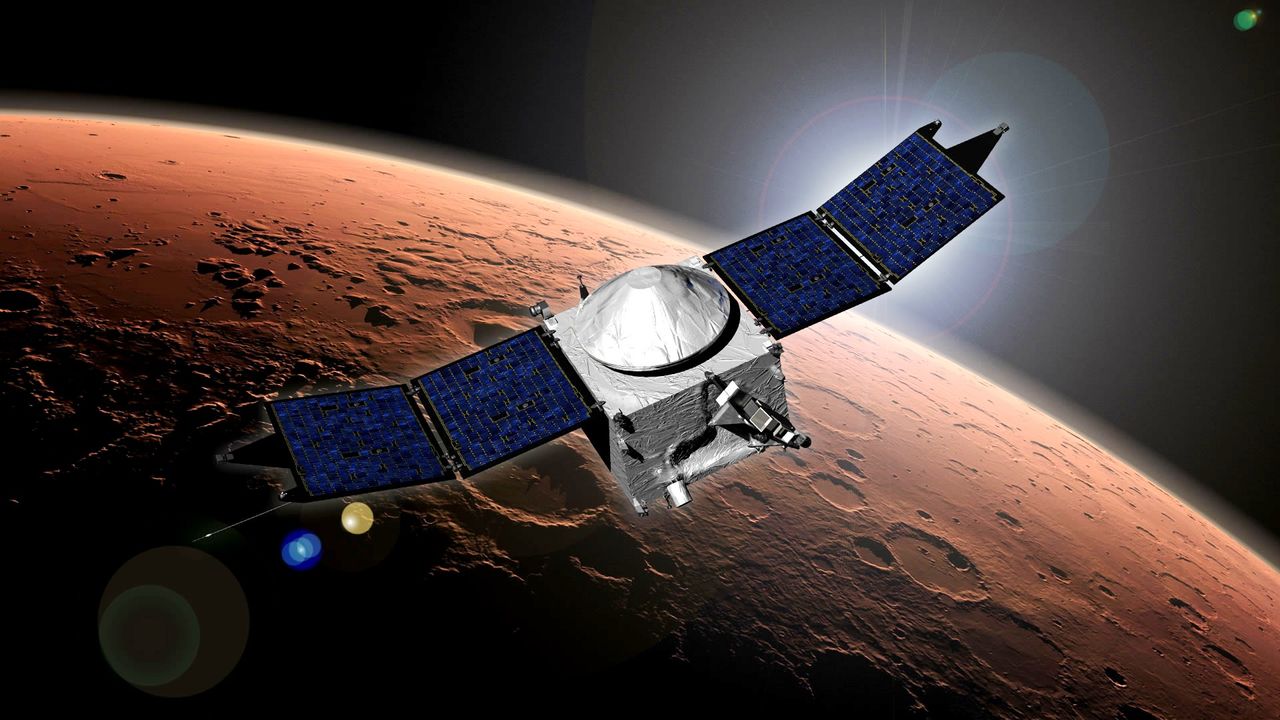
Things aren’t looking good for one of NASA’s Mars orbiters.
MAVEN (short for “Mars Atmosphere and Volatile Evolution”) has been silent since Dec. 4, despite repeated efforts to hail the spacecraft, NASA announced in an update on Monday (Dec. 15). And a fragment of tracking data recovered on Dec. 6 delivered a bit of additional bad news.
You may like
MAVEN launched in November 2013 and arrived in Mars orbit 10 months later, tasked with studying Mars’ atmosphere and how it interacts with the solar wind, the stream of charged particles flowing from the sun.
MAVEN’s prime mission lasted one Earth year, and the spacecraft delivered in that time. Its data helped scientists understand how (and when) the Red Planet lost its once-thick atmosphere, which allowed liquid water to flow on Mars billions of years ago.
The orbiter just kept going after that, gathering loads of information about the Red Planet — for example, its dust storms, winds and auroras, for example.
MAVEN also serves as a communications link between mission control and NASA robots on the Martian surface — at the moment, the Curiosity and Perseverance rovers.
But MAVEN isn’t the only orbiter that plays this relay role; NASA’s Mars Reconnaissance Orbiter and Mars Odyssey do as well, along with the European Space Agency’s Mars Express probe and ExoMars Trace Gas Orbiter. And those four other spacecraft are still going strong.
“For the next two weeks of scheduled surface operations, NASA is arranging additional passes from the remaining orbiters, and the Perseverance and Curiosity teams have adjusted their daily planning activities to continue their science missions,” NASA officials wrote in the update.

For decades, cardiologists have observed that heart attacks cause more damage when they occur during the day than when they happen at night — and understanding why could be key to treating the condition, a new study finds.
There are many theories as to why daytime heart attacks are more harmful; some point to daily fluctuations in stress hormones and blood pressure as possible culprits. But the role of the immune system has remained less clear.
You may like
More damaging by day
By analyzing clinical records from more than 2,000 heart attack patients, the team found that patients admitted during daytime hours showed higher neutrophil counts and greater heart damage, suggesting neutrophils themselves might play a role in worsening the injury. They then confirmed the same pattern in experiments with mice.
The researchers split their lab mice into two groups: one with normal neutrophil levels and one whose neutrophil levels were depleted with an antibody treatment. Then, they induced heart attack in the mice at different times of the day and night.
In the first set of mice, they observed a pronounced rhythm of greater heart injury in the morning than at night, similar to what was seen in the human data. However, in the mice with low neutrophil counts, this rhythm disappeared and the heart attacks caused less damage overall.
To test the idea further, the researchers genetically disabled a gene that helps control the circadian clock, a regulator of 24-hour cycles in the body. As they expected, the rhythm again disappeared and the overall heart damage was reduced in these modified mice.
Importantly, although depleting neutrophils hobbles the immune system, deleting just the clock gene didn’t impair the mice’s ability to fight infections, the scientists found.
“This makes the study really interesting,” Tim Lammermann, an immunologist at the University of Münster in Germany who was not involved in the work, told Live Science. That’s because it was always believed that immune protection and inflammatory damage caused by neutrophils “cannot be disconnected from each other.”
You may like
Putting neutrophils in ‘night mode’
Next, the scientists wanted to test whether there might be another way to control this gene and mimic the body’s natural nighttime calming of neutrophils without diminishing the cells’ numbers. They focused on a receptor on neutrophils called CXCR4, which typically responds to signals that slow down neutrophil activity at night.
They genetically engineered mice to carry really high concentrations of this receptor. This calmed the cells down even during the daytime, so the heart injury was again alleviated and the rhythmic pattern disappeared.
Finally, using a drug that activates this receptor, the researchers toned down neutrophil activity during the day, pushing the cells into their nighttime state. Treatment with this drug prior to heart attack reduced tissue damage and improved heart function weeks after the event, they found.
What’s more, in mouse models of sickle cell disease, in which neutrophils clog blood vessels and trigger rampant inflammation, the drug reduced blockages and improved blood flow.
It’s surprising that controlling just one type of immune cell offered significant protection against these inflammatory injuries, senior study author Andrés Hidalgo, an immunologist at Yale University, told Live Science.
Lammermann noted that the experiments with the drug were particularly significant, providing evidence that the compound reduced the inflammatory response of neutrophils while keeping their defense mechanisms intact.
The researchers also uncovered an interesting pattern behind the neutrophil action: In skin wounds and heart tissue alike, daytime neutrophils tend to spread into neighboring uninjured areas, enlarging the injury site, Hidalgo explained. Calmer, nighttime neutrophils, on the other hand, stay confined to the center of the damaged zone.
The findings suggest there could be ways to fine-tune neutrophils and tone down their aggressiveness without compromising their defense capability. However, translating this approach to humans will require careful study. The ways in which CXCR4 signaling affects other types of cells would also need to be carefully considered, Lammermann cautioned.
A drug that calms down inflammation without compromising immunity would be the holy grail of immune therapy. However, human trials for such a drug would need to assess many factors, such as the timing of when it should be given in the event of a heart attack, and if there are any potential risks involved, he added.
This article is for informational purposes only and is not meant to offer medical advice.
SCIENCE
Ancient Egyptian valley temple excavated — and it’s connected to a massive upper temple dedicated to the sun god, Ra


Archaeologists in Egypt have uncovered the remains of a 4,500-year-old valley temple. The structure is part of a sun temple that ancient Egyptians built in honor of the sun god Ra, the Egyptian Ministry of Tourism and Antiquities said in a translated statement.
The temple is located at Abu Ghurab, about 10 miles (16 kilometers) southwest of Cairo. The sun temple has two parts: an upper temple, which the archaeologists excavated several years ago, and the newly excavated valley temple, which the team started working on in 2024. The valley temple is positioned near the Nile River, and two temple parts are connected through a causeway.
You may like
The recent excavations have led to several discoveries, including the remains of a columned entrance portico, a public calendar of religious events carved into blocks, and dozens of decorated blocks with inscriptions that mention Pharaoh Niuserre (reign circa 2420 B.C. to 2389 B.C.), the ruler who had the temple built.
The upper temple was the main place of worship, but the valley temple made it easier for people to reach. The valley temple “was used as a landing stage for the boats approaching it from the Nile or, more likely, from one of its side channels,” Nuzzolo told Live Science in an email. The “most convenient way to reach the upper temple was to enter the valley temple and go up on the hill where the upper temple was located through a ramp [the causeway].”
Part of the valley temple from an overhead view. (Image credit: Courtesy of the Egyptian Ministry of Tourism and Antiquities)
Public calendar
The valley temple had a calendar of religious events inscribed on decorated blocks. Borchardt found part of the calendar in 1901, and more of it was uncovered by the modern-day archaeological team. The events mentioned include the feasts of Sokar, a falcon-headed god associated with the Egyptian city of Memphis — a capital during the Old Kingdom. The blocks also mention the festival of Min, a god associated with fertility, and the procession of Ra.
“What is really important here is however the location of these blocks,” Nuzzolo said. “They were all found in the area of the entrance portico and this seems to indicate that the façade of the temple, on the outside, was inscribed with this long calendar of feasts, possibly one of the first [examples] of ‘public calendars’ known so far to us.”

Inscriptions found in the valley temple, which include a “public calendar” telling of religious events. (Image credit: Courtesy of the Egyptian Ministry of Tourism and Antiquities)
Stars and games
The team also found a staircase that went up to the roof of the valley temple, the ministry statement said. Ancient Egyptians likely accessed the roof to observe the sky.
“The roof of the valley temple was probably used for astronomical observations but not for the celebration of the festivals,” Nuzzolo said.
After about a century of use, the valley temple was turned into a residential area, the researchers found. They discovered two wooden pieces dating to this time that were used to play a board game known as “senet.” Many senet pieces have been found at other sites in Egypt, including in the tomb of King Tutankhamun, but the exact rules of the game are unclear.
“The sanctuary thus became a dwelling and one of the favourite local [games] was probably playing senet,” Nuzzolo said.
Ancient Egypt quiz: Test your smarts about pyramids, hieroglyphs and King Tut
SCIENCE
James Webb Space Telescope discovers a lemon-shaped exoplanet unlike anything seen before: ‘What the heck is this?’

Since astronomers discovered the first world outside the solar system in the mid-1990s, these extra-solar planets or “exoplanets” have astounded us with their strange characteristics.
A new discovery, made using the James Webb Space Telescope (JWST), may just be the weirdest exoplanet yet, possessing an atmosphere unlike any we’ve ever seen on an exoplanet. Currently, the team behind this discovery can’t explain how such a planet came to be.
You may like
That isn’t in itself so strange. The first planets beyond the solar system ever confirmed, Poltergeist (PSR B1257+12 B) and Phobetor (PSR B1257+12 C), spotted in 1992, also orbit pulsars, a young, rapidly spinning form of neutron star.
However, what sets PSR J2322-2650b apart are the facts that it has an ellipsoid shape, like a planetary lemon or football, and that it has an atmosphere like none scientists have ever seen before.
“This was an absolute surprise,” team member Peter Gao of the Carnegie Earth and Planets Laboratory said in a statement. “I remember after we got the data down, our collective reaction was ‘What the heck is this?’ It’s extremely different from what we expected.”
The atmosphere of PSR J2322-2650b is dominated by helium and carbon, and likely has clouds of carbon soot that condense to create diamonds that rain down onto the planet.
At just around 1 million miles (1.6 million km) from its pulsar parent star (the Earth is around 100 times as distant from the sun), PSR J2322-2650b completes an orbit once every 8 hours or so. Its lemon-like shape emerges from tidal forces generated within the planet by the powerful gravity of the dead star it clings to.
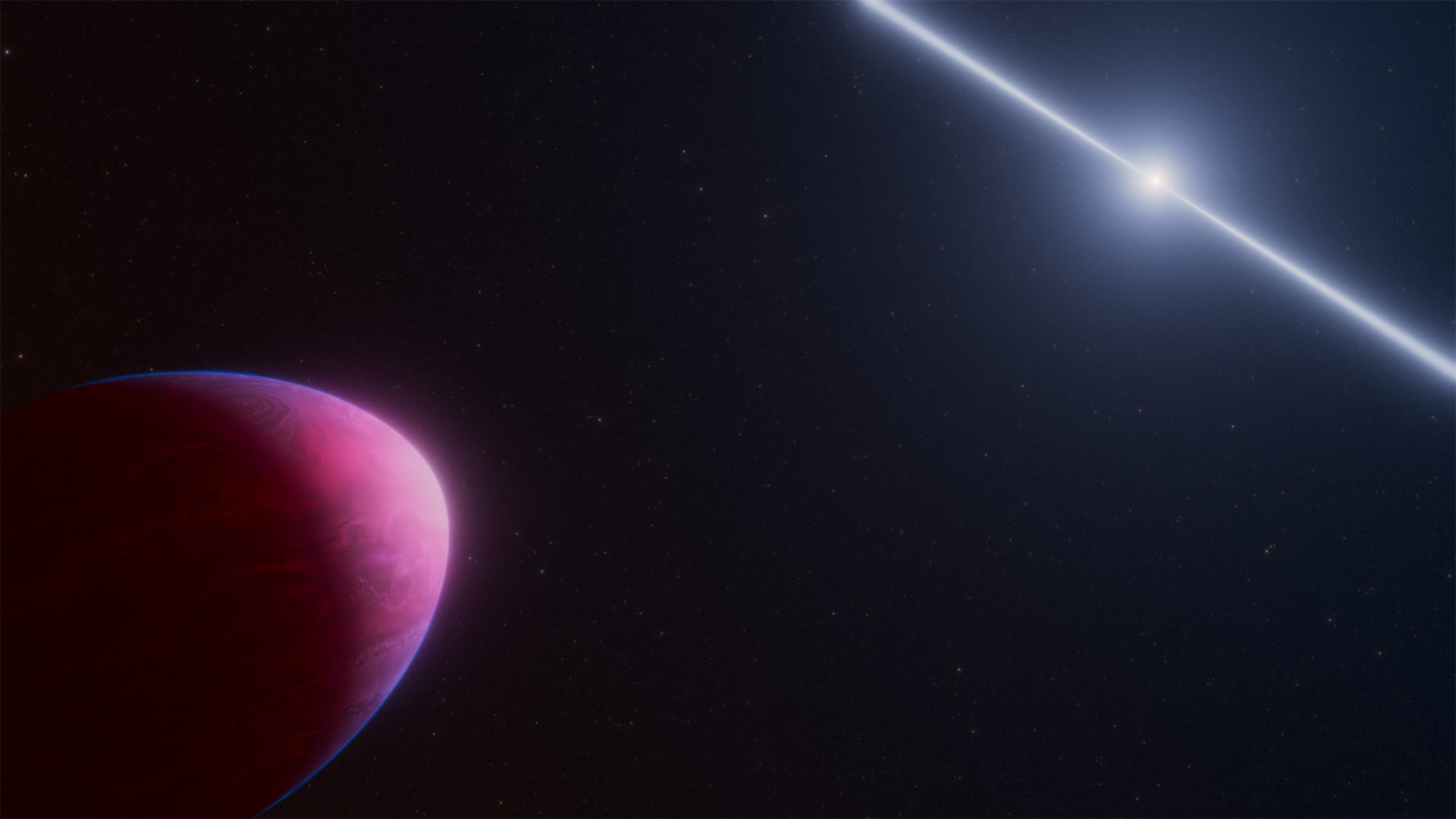
This artist’s concept shows what the exoplanet called PSR J2322-2650b (left) may look like as it orbits a rapidly spinning neutron star called a pulsar (right). Two radio beams are emitted from the pulsar’s magnetic poles, whipping around like a beam from a lighthouse. Gravitational forces from the much heavier pulsar are pulling the Jupiter-mass world into the shape of a lemon. This planet, studied with NASA’s James Webb Space Telescope, appears to have an exotic atmosphere unlike any ever seen before. How the planet came to be is a mystery. (Image credit: NASA, ESA, CSA, Ralf Crawford (STScI))
“A new type of planet atmosphere that nobody has ever seen before”
Like all neutron stars, pulsars are born when massive stars at least 10 times the size of the sun exhaust the fuel for nuclear fusion. This results in the star’s outer layers, and most of its mass, being blown away in a supernova explosion.
Left behind is a core with between 1 and 2 times the mass of the sun that crushes down to a width of around 12 miles (20 kilometers), and because it retains angular momentum, it can spin as fast as 700 times per second!
You may like
The parent star of PSR J2322-2650b is just such a so-called millisecond pulsar, but while it blasts out intense gamma-ray radiation, it doesn’t emit very much infrared light. Because the JWST has been designed to see the cosmos in infrared, that means this powerful dead star doesn’t block the $10 billion space telescope’s view of PSR J2322-2650b.
This allowed the team to investigate the atmosphere of PSR J2322-2650b in detail and uncover its unique composition.
“This is a new type of planet atmosphere that nobody has ever seen before,” team leader Michael Zhang of the University of Chicago said. “Instead of finding the normal molecules we expect to see on an exoplanet — like water, methane, and carbon dioxide — we saw molecular carbon, specifically carbon-3 and carbon-2.”

An illustration of a “traditional” black widow pulsar, consisting of a neutron star stripping away mass from its stellar companion. (Image credit: NASA’s Goddard Space Flight Center)
PSR J2322-2650b is tidally locked to its star, which means one side permanently faces the neutron star, the planet’s dayside, while the other faces out into space in perpetuity, its nightside.
The dayside of PSR J2322-2650b has a maximum temperature of 3,700 degrees Fahrenheit (2,040 degrees Celsius), while the nightside has a minimum temperature of 1,200 degrees Fahrenheit (650 degrees Celsius).
At these temperatures, molecular carbon should bind with other types of atoms, only becoming dominant if there is almost no oxygen or nitrogen in the planet’s atmosphere. Of the 150 or so exoplanet atmospheres studied to date, no others have possessed detectable molecular carbon.
“Did this thing form like a normal planet? No, because the composition is entirely different,” Zhang said. “Did it form by stripping the outside of a star, like ‘normal’ black widow systems are formed?
“Probably not, because nuclear physics does not make pure carbon. It’s very hard to imagine how you get this extremely carbon-enriched composition. It seems to rule out every known formation mechanism.”
There is one possible route of the creation of this planet, hinging on a unique phenomenon occurring in the bizarre atmosphere of PSR J2322-2650b.
“As the companion cools down, the mixture of carbon and oxygen in the interior starts to crystallize. Pure carbon crystals float to the top and get mixed into the helium, and that’s what we see,” team member and Stanford University researcher Roger Romani said. “But then something has to happen to keep the oxygen and nitrogen away. And that’s where the mystery comes in.
“But it’s nice not to know everything. I’m looking forward to learning more about the weirdness of this atmosphere. It’s great to have a puzzle to go after.”


Earth might be under pressure, but the Queen guitarist Sir Brian May is hopeful a new award from the science, music and arts festival he co-founded will encourage people to take action.
The Starmus Jane Goodall Earth medal is in honour of the British primatologist who died this year and will recognise those who champion life on Earth.
The first recipients are expected to be announced at the Starmus VIII festival in Tenerife and La Palma, which will run from 17–22 October next year.
May told the Guardian that Goodall, who was an advisory board member of Starmus, had supported its creation. “The idea of having this medal, and Starmus being entrusted to organising it, is Jane’s. Jane said she would like this to happen. And I think it’s because of the very special relationship she had with us,” he said.
Goodall’s grandson, Merlin van Lawick, welcomed the award. “The Starmus Jane Goodall Earth medal will acknowledge sustainable programmes undertaken to make our world a better place for people, animals and the environment and provide encouragement for the continuation of that work,” he said.
Starmus’s co-founder, Garik Israelian, said the medal – which was announced at the Royal Society – will probably have multiple categories.
“It’s going to be very much similar to Stephen Hawking medal for science communication that we created exactly 10 years ago,” he said. Goodall was a recipient of that award.
May said that it was difficult to be sanguine about the future of the planet. “Honestly it’s very hard to be optimistic,” he said. “The present government in America is conducting a war on science and knowledge. So this really cripples the world’s efforts in my opinion.
“To be honest, things don’t look very good so we have to really start thinking again, I would say, much more seriously about the consequences of our actions. And that’s not just global warming, that’s the whole way that we treat the natural world.”
As a result, May said, it was a good time to follow Goodall’s example. “I think that when we’re awarding the prize, we will be considering this essential spirit of Jane’s – that was her priority, to change the way we treat the the other animals around us.”
Israelian said an important issue at present was the proliferation of misinformation. The focus of next year’s Starmus festival will be “the search for truth”.
“We realised that truth is becoming a subject of discussion when politics is involved. And it’s a very dangerous thing,” he said. “The climate science is a science – you cannot have any influence from politics in climate science.”
May hopes the medal will inspire action. “It’s about encouraging people to get involved and to care and to work in that direction, really. Whether or not we’re optimistic we have to look at working the best we can,” he said. “Be prepared for failure, but you still have to work towards succeeding.”
Van Lawick, who is involved in conservation work, said he was optimistic that “with guidance and when empowered, humans can be responsible caretakers of our planet”, pointing to the work of the Jane Goodall Institute which, among other activities, helps young people get involved with their community, animals and environment.
“As my late grandmother Jane Goodall constantly reminded us all, our daily actions make a difference and it is up to us the kind of difference we make,” he said. “It is not too late and the Starmus Jane Goodall Earth medal will give encouragement and raise awareness about the positive actions that are being undertaken.”

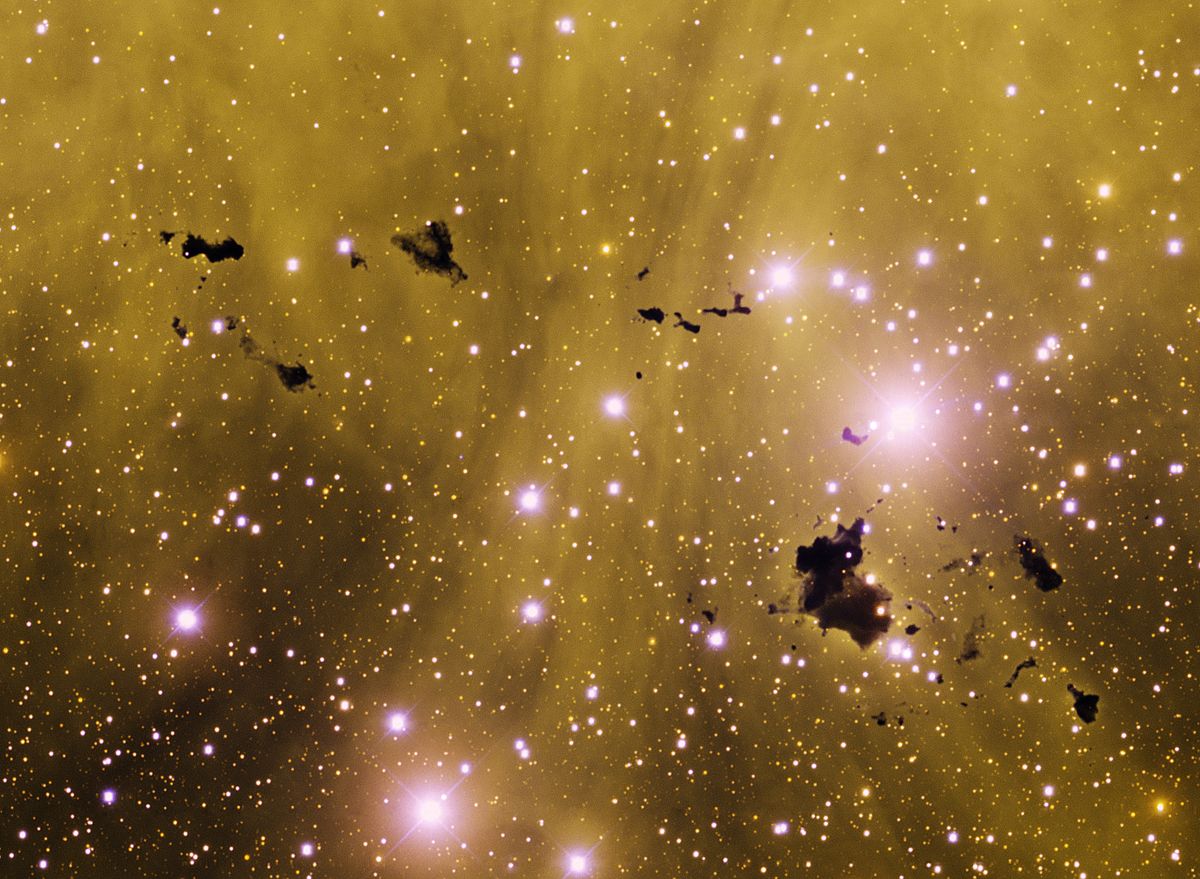
Space is full of wonders, but some celestial structures defy explanation. From vast rings that encircle stars to mysterious voids that seem to swallow light, the cosmos is a playground for the bizarre.
Scientists have spotted formations that challenge our understanding of physics, and theorists have dreamed up megastructures that could power entire civilizations.
You may like
Whether it’s a hexagon on Saturn or a star that dims like clockwork, each clue will test your knowledge of the universe’s strangest sights.
Try it out below and see how well you score!
SCIENCE
Record-breaking feat means information lasts 15 times longer in new kind of quantum processor than those used by Google and IBM

Scientists have developed a new fabrication method for creating superconducting quantum bits (qubits) that could remain coherent for three times longer than current state-of-the-art systems in labs — allowing them to conduct more powerful quantum computing operations.
The new technique, described in a study published Nov. 5 in the journal Nature, relies on the use of a rare earth element called tantalum. This belongs to the “transition metals” group of the periodic table and is “grown” on minerals such as tantalite and silicon by building up a metallic film atom-by-atom.
You may like
“The real challenge, the thing that stops us from having useful quantum computers today, is that you build a qubit and the information just doesn’t last very long,” said Andrew Houck, Princeton’s dean of engineering and co-principal investigator of the study, in the study. “This is the next big jump forward.”
Decoherence and imperfection
Coherence in quantum computing is a measure of how long a qubit can maintain its wave state. When qubits decohere, they lose information. This makes maintaining coherence one of the biggest challenges in quantum computing.
Scientists have spent some years trying to harness tantalum as a material to develop qubits. When a superconducting material such as tantalum is cooled to near absolute zero, circuits built within the material can operate with close to no resistance. This allows for faster quantum operations, but the speed and number of operations are fundamentally limited by how long qubits can maintain their information states.
An advantage of tantalum is that it’s easier to scrub free of contaminants that can lead to imperfections in the manufacturing process, where any irregularity can cause affected qubits to decohere faster. Tantalum’s inert resilience protects it from certain state changes related to corrosion and molecular displacement; it won’t even absorb acid when immersed. This makes it a perfect candidate for use as a superconducting material for quantum computing, the scientists said in the study.
But keeping the qubit material free from defects is only half the battle. The manufacture of a quantum processor requires both a base layer material and a substrate. In previous experiments, scientists achieved state-of-the-art quantum computing results using processors built with a tantalum base layer and a sapphire substrate. These experiments were successful, but coherence rates were still under one millisecond.
The Princeton team replaced the sapphire substrate used in those experiments with a high-resistivity silicon developed using proprietary techniques. According to the study, they achieved coherency rates as high as 1.68 milliseconds on systems as large as 48 qubits — marking an all-time best for superconducting qubits.
The new qubit design is similar to those used in superconducting quantum processors developed by leading companies such as Google and IBM. Houck even added that “swapping Princeton’s components into Google’s best quantum processor, called Willow, would enable it to work 1,000 times better.”
What this means for the quantum computing industry remains unclear. While the scientists have progressed the coherence rates of qubits significantly, challenges remain. Chief among them is the availability of tantalum. As of 2025, tantalum is considered a scarce metal with most mining taking place in Africa.
While the new qubits significantly increase coherence, they still need to be tested at larger sizes using wafer-scale chipsets before they can be integrated with today’s commercially deployed quantum computers.

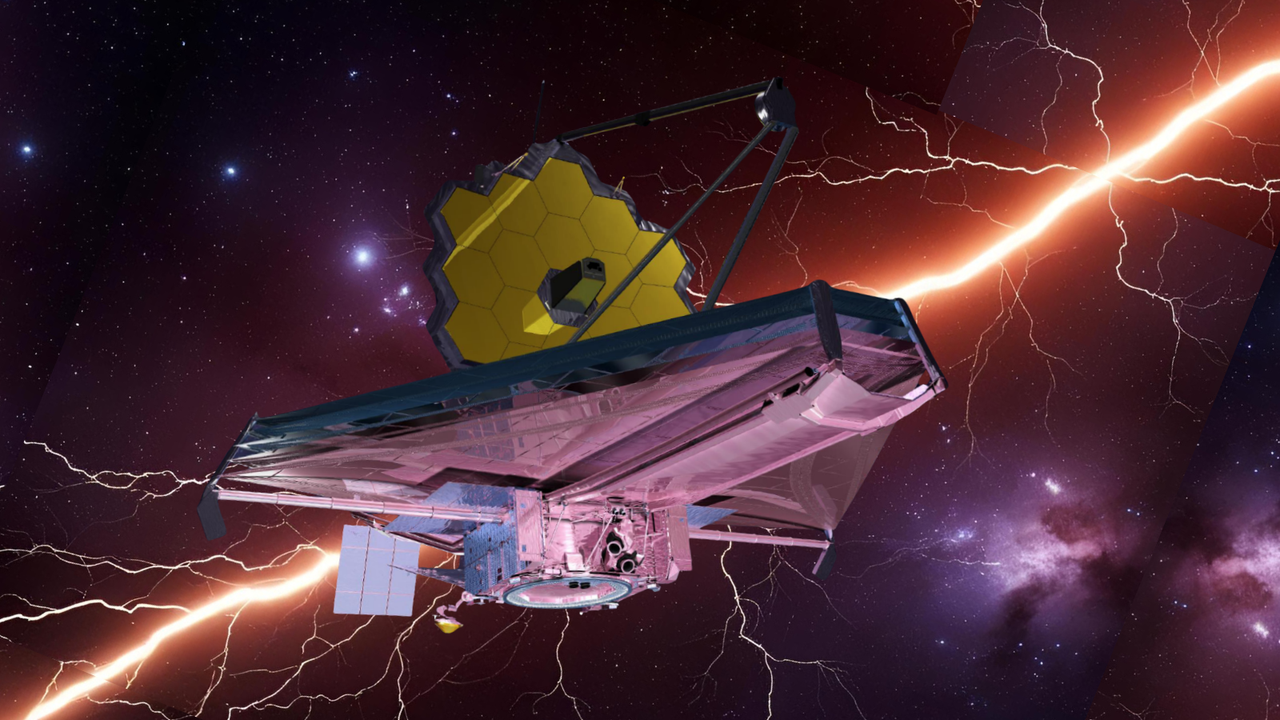
Since it began operations in 2022, the James Webb Space Telescope (JWST) has allowed scientists to make incredible strides in our understanding of the cosmos — especially its early epoch. However, one lingering cosmological mystery that the JWST hasn’t had a major impact on is the nature of dark matter. Now, new research suggests that this is something that may soon change.
While dark matter is estimated to account for 85% of the matter in the universe, it is difficult to investigate because it doesn’t interact with electromagnetic radiation (light) or it interacts so weakly that we can’t directly detect it. As well as making dark matter effectively invisible, this lack of interaction with light tells scientists that the particles making up dark matter aren’t the protons, neutrons, and electrons that comprise the everyday stuff we see around us on a day-to-day basis, ranging from the most massive stars to the viruses that make our lives miserable every winter. The search for a potential dark matter particle has delivered many suspects, but they’ve all remained frustratingly hypothetical.
You may like
Studying these elongated galaxies with the JWST might help reveal the presence of dark matter, scientists say. “In the expanding universe defined by Einstein’s theory of general relativity, galaxies grow over time from small clumps of dark matter that form the first star clusters and assemble into larger galaxies via their collective gravity,” team member Rogier Windhorst, of Arizona State University, said in a statement.
“But now the JWST suggests that the earliest galaxies may be embedded in marked filamentary structures, which — unlike cold, dark matter — smoothly join the star-forming regions together, more akin to what is expected if dark matter is an ultralight particle that also shows quantum behavior.”
Understanding dark matter is a stretch
When using simulations to recreate how the first galaxies formed in the early universe, allowing cool gas to gather along the threads in a web of dark matter is able to quite nicely recreate the mostly spheroid galaxies we see in the modern universe.
However, as the JWST has been allowing astronomers to look back at galaxies that existed in the very early stages of the universe, they have increasingly been finding filamentary elongated galaxies that aren’t as easily recreated in simulations that stick to the standard mechanism of gas gathering to birth stars and grow galaxies.
To investigate this, Windhorst and colleagues looked at simulations of the universe involving different types of dark matter other than that found in the most accepted model of cosmology, the Lambda Cold Dark Matter (LCDM) model; “cold” dark matter, which doesn’t refer to temperature but instead to the speed at which particles move.
This revealed that the wave-like behavior of “fuzzy dark matter” or ultralight axion particles could account for the elongated morphology of early galaxies seen by the JWST.
“If ultralight axion particles make up the dark matter, their quantum wave-like behavior would prevent physical scales smaller than a few light-years from forming for a while, contributing to the smooth filamentary behavior that JWST now sees at very large distances,” team leader Álvaro Pozo of the Donostia International Physics Center said.
The team’s modelling also indicated that faster-moving “warm dark matter” particles, like sterile neutrinos, could also give rise to early filamentary galaxies. In both the wave dark matter and warm dark matter scenarios, this is because these particles give rise to smoother filaments than cold dark matter. As gas and stars slowly flow down these filaments, elongated galaxies begin to form.
The JWST will continue to investigate oddly shaped galaxies in the early universe, while researchers here on Earth continue to evolve simulations of the early universe. Bringing these together could eventually help solve the mystery of dark matter.
The team’s research was published on Dec. 8 in the journal Nature Astronomy.