
TECHNOLOGY
Expert worry over Nigeria trading data sovereignty


When the Federal Inland Revenue Service (FIRS) signed a Memorandum of Understanding with France’s tax authority on December 10, 2025, officials assured Nigerians that data sovereignty is assured. But according to expert lawyer Oladipupo Ige, that assurance may be technically correct yet substantively misleading.
“The statement may be formally correct but might be substantively inaccurate,” Ige explains. “We do not have access to the MoU, so whatever we state is subject to getting a copy and subjecting it to analysis.”
His concern centres on a critical distinction many Nigerians may miss, that is, the difference between granting formal access to Nigerian information and the functional exposure that technical assistance inevitably requires.
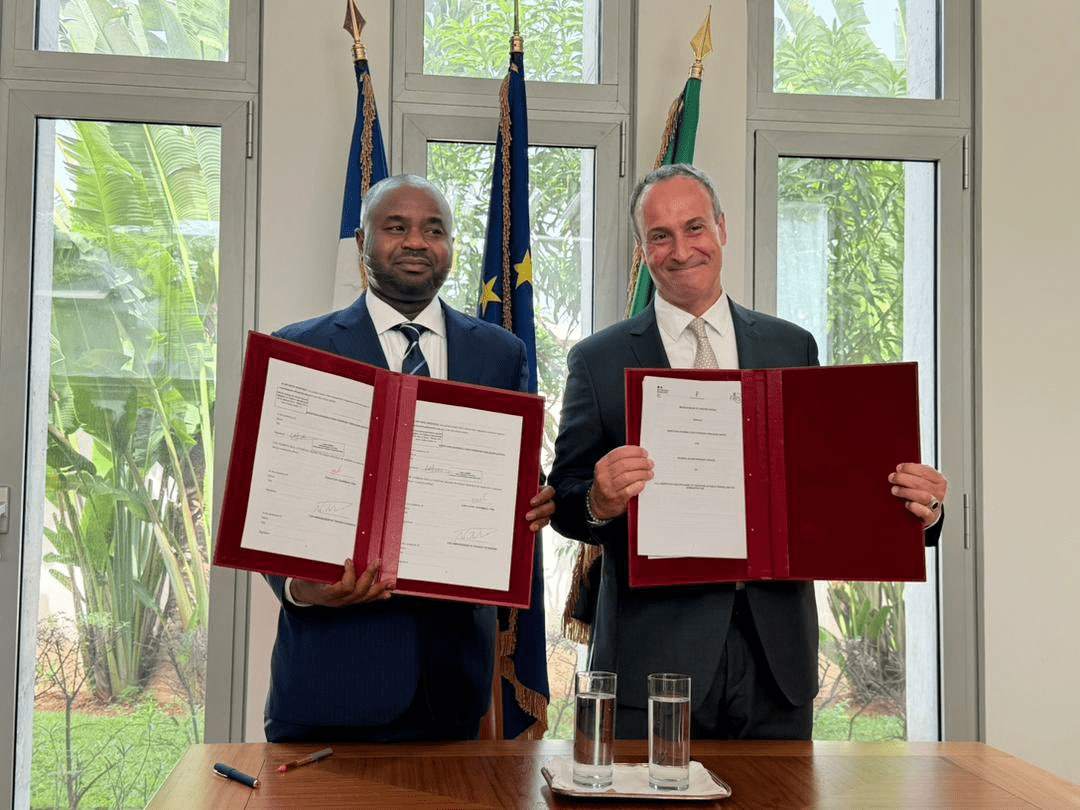
Data sovereignty concerns mount over the FIRS + France partnership
From his experience with international technical assistance agreements, Ige notes that while France may not be granted custody or operational control over Nigerian tax systems, access to the information can still occur through system demonstrations, dataset gathering, joint audit simulations, and advisory roles requiring system visibility.
“The point is, how do they advise without access to the data to inform the advice?” he asks. “Therefore, Nigerians should understand that ‘no access’ does not necessarily mean ‘no exposure.’”
The nature of the data at stake heightens these concerns. FIRS processes sensitive personal information of individual taxpayers and financial data of companies and their employees. “From the angle of personal data, data in their custody are at high risk. From the angle of economic data, financial data of companies is high risk,” Ige states.
He argues that the level of access French advisers would need for meaningful technical assistance would necessarily be high, given tasks like AI-powered tax audits, system optimisation, and compliance analytics.
Read also: Tax: FG partners US, UK, Canada, others to track remote workers earning dollars
“Setting all these up would typically require understanding the system architecture, training the AI with datasets of Nigerians, reviewing data flows, testing models on real datasets, and evaluating enforcement thresholds,” he explains.
Even without direct implementation, these advisory functions require substantial exposure. “The advisory label alone does not sufficiently safeguard sovereignty,” Ige warns.
Under the Nigeria Data Protection Act 2023, such processing requires a lawful basis, purpose limitation, data minimisation, and adequate safeguards. While the Act permits data processing in the public interest, Ige emphasises a crucial gap: “We do not know the level of exposure, actual details about the processing, risks involved, as well as the type of security systems in place to protect data subjects.”
He insists that FIRS should conduct a Data Protection Impact Assessment before implementing the MoU and inform all data subjects about the processing modalities.

Beyond individual privacy, Ige sees broader economic intelligence risks. Even aggregated or anonymised tax data carries re-identification risks when combined with other datasets. “Such aggregate data can reveal our strategic economic vulnerabilities, our industry-specific compliance gaps, our revenue dependencies, our enforcement weaknesses, and the persons or companies used as the data sources,” he notes.
The asymmetry troubles him most. France maintains strict digital protectionism through policies like SecNumCloud and strong data localisation requirements, resisting foreign access to French public sector data. “France protects its data as a matter of sovereignty yet engages in agreements that expose developing partners’ digital governance structures,” Ige observes.
Yet the partnership offers potential benefits. Nigeria could gain access to advanced tax enforcement experience, exposure to mature AI-assisted compliance models, and international credibility signals to donors and investors.
For FIRS, the path forward requires careful balancing. The agency maintains that all Nigerian data protection laws remain applicable and that the partnership is purely advisory. They emphasise that France’s Direction Générale des Finances Publiques brings decades of tax modernisation expertise that could transform Nigeria’s revenue collection.
Public Notice 📢📢
CLARIFICATION ON THE FIRS-DGFIP MEMORANDUM OF UNDERSTANDING
See post below ⬇️ for more details pic.twitter.com/WxzecNSZTw
— Federal Inland Revenue Service NG (@FIRSNigeria) December 13, 2025
The Nigeria Data Protection Commission should play a central oversight role, Ige suggests, reviewing the MoU for compliance, approving or rejecting exposure frameworks, and monitoring implementation.
“The issue is not whether France will own the Nigerian tax data,” Ige concludes, “but whether Nigeria is ceding strategic informational advantage without commensurate safeguards, transparency, or long-term capacity gains.”
TECHNOLOGY
Investment in data centers worldwide hit record $61bn in 2025, report finds | Artificial intelligence (AI)


A new report finds that investment in the worldwide data center market reached $61bn this year, setting a new record atop the wave of the artificial intelligence boom.
The analysis by S&P Global, first reported by CNBC, documented what the market intelligence firm called a “global construction frenzy that shows no signs of slowing”, to build out the massive real estate, hardware, and energy requirements driven by insatiable demand from AI companies. S&P pegged 2024’s investment in the data center market at $60.8bn, just below the 2025 number.
“Unable to buy, many investors are turning to new builds,” wrote Iuri Struta, an analyst for S&P Global.
There are approximately 500 data centers in the United Kingdom, compared with about 4,000 in the United States, according to Data Center Map, which tracks the facilities globally.
Struta, the S&P Global analyst, said he does not see the demand for data centers slowing.
“The global data center footprint is projected to expand at a faster rate over the next five years than it did in the previous five, spurred by demand for energy- and computer-intensive AI workloads,” said Struta.
S&P Global’s report comes at a time when some investors worry that the entire artificial intelligence sector may be in the midst of huge overspending for unproven ongoing returns.
Last week, Oracle’s shares dropped 11% after it reported lower quarterly earnings than analysts had expected, which in turn dragged the stock prices on some other major companies in AI. Some companies such as Oracle, along with Nvidia and OpenAI, have been criticized recently for making deals with one another that seem circular to many investors.
Earlier this year, the International Energy Agency noted in a lengthy report that, globally, “electricity demand for data centres more than doubles by 2030”, reaching 945 terawatt hours (TWh), or just more than “Japan’s total electricity consumption today”.
This month, a trio of analysts from Deutsche Bank put out a staggering chart indicating that OpenAI alone will burn through $143bn between 2024 and 2029, the year before the company claims it will turn a profit. That chart shows how much more the ChatGPT maker, seen as a bellwether of the AI industry, plans to spend relative to other tech giants of the last two decades, including Amazon, Tesla and Uber, reached profitability.
“Of course, OpenAI may continue to attract significant funding and could ultimately develop products that generate substantial profits and revolutionise the world,” Jim Reid, managing director, global head of macro research and thematic strategy at Deutsche Bank, wrote.
“But at present, no startup in history has operated with losses on anything approaching this scale. We are firmly in uncharted territory.”


Sequoia Capital partner Shaun Maguire is once again drawing unwanted attention to the prominent venture firm after falsely accusing a Palestinian student of being behind the December 13 Brown University mass shooting and the subsequent murder of an MIT professor.
In since-deleted posts on X, Maguire speculated that “it seems very likely” the student was the perpetrator, pointing to Brown “actively scrubbing his online presence.” In reality, authorities identified the shooter as Claudio Manuel Neves Valente, a 48-year-old Portuguese national who was later found dead in a New Hampshire storage facility. Brown officials said they removed the student’s digital footprint as a protective measure against dangerous speculation.
Fast Company republished two of Maguire’s deleted posts on Friday (he has previously left inflammatory content online and did not delete comments he made proposing that the MIT professor was targeted for being Jewish). The incident follows months of controversial posts targeting Muslims and pro-Palestine activists, including calling New York City Mayor-elect Zohran Mamdani an “Islamist” in July. That post led to a swift online backlash, with nearly 1,200 founders and tech industry professionals signing an open letter urging Sequoia to take action. An open letter later surfaced supporting Maguire.
The newest episode raises questions about whether Sequoia’s new leadership — managing partners Alfred Lin and Pat Grady, who took over last month — can or will rein in Maguire’s social media activity. Chief operating officer Sumaiya Balbale left the firm in August over Sequoia’s inaction on Maguire’s anti-Muslim comments, according to earlier reporting by the Financial Times. Former managing partner Roelof Botha, who stepped down in November, defended Maguire’s behavior during an interview at TechCrunch Disrupt in October, calling Sequoia a believer in its partners’ right to “free speech.”
“Internally, we celebrate diversity of opinions, and we need ‘spiky’ people inside Sequoia,” Botha said, referring to Maguire. He offered that Maguire had a “specific profile” that appeals to certain founders. Maguire has led investments in numerous defense tech and AI startups, and reportedly has deep connections with Elon Musk’s companies, managing Sequoia’s investments in Neuralink, SpaceX, The Boring Company, X, and xAI.
However, Botha acknowledged trade-offs to Maguire’s outspokenness. “Does it come with trade-offs? Yes, it does,” he said.
Lin and Grady have not publicly addressed Maguire’s conduct since taking over leadership.
Techcrunch event
San Francisco
|
October 13-15, 2026
The Council on American-Islamic Relations has called for Maguire’s firing, telling Fast Company that his accusations are “deeply irresponsible and incredibly dangerous.”
TechCrunch has reached out to Sequoia for comment.

Resolve AI, a startup developing an autonomous site reliability engineer (SRE), a tool that automatically maintains software systems, has raised a Series A led by Lightspeed Venture Partners, according to three people familiar with the deal.
The headline valuation for the fresh round is $1 billion, sources said. However, the company’s actual blended valuation was lower because of a multi-tranched structure. In this setup, investors purchased some equity at a $1 billion valuation but acquired the remainder — likely a larger percentage of the round — at a lower price. This novel investment approach has recently become popular for the most sought-after AI startups, investors say.
The startup’s annual recurring revenue (ARR) is approximately $4 million, two of the people said. The size of the funding round couldn’t be learned.
Resolve AI and Lightspeed didn’t respond to our request for comment.
Founded less than two years ago, the startup is led by former Splunk executive Spiros Xanthos and Mayank Agarwal, Splunk’s former chief architect for observability. The duo’s partnership dates back 20 years to their graduate studies at the University of Illinois Urbana-Champaign. This isn’t their first collaboration; they previously co-founded Omnition, a startup that was acquired by Splunk in 2019.
While human SREs are traditionally responsible for manually troubleshooting and resolving system failures, Resolve AI automates this process by autonomously identifying, diagnosing, and resolving production issues in real time.
The automation addresses a growing challenge for companies. As software systems become more complex and distributed across cloud infrastructure, outfits often struggle to find and retain enough skilled SREs to keep systems running smoothly. Automating these tasks can reduce downtime, lower operational costs, and free up engineering teams to focus on building new features rather than trying to constantly stomp out production issues.
Techcrunch event
San Francisco
|
October 13-15, 2026
Last October, Resolve AI raised a $35 million seed round led by Greylock with participation from World Labs founder Fei-Fei Li and Google DeepMind scientist Jeff Dean.
Resolve AI competes with Traversal, an AI SRE startup that raised a $48 million Series A led by Kleiner Perkins, with participation from Sequoia.

Rocket Lab has won an $816 million contract — its largest to date — with the U.S. Space Development Agency as the company continues to diversify beyond its “rocket company” label.
The company said Friday that its subsidiary, Rocket Lab USA, was awarded a prime contract by the Space Development Agency (SDA) to design and manufacture 18 satellites. The satellites will be equipped with advanced missile warning, tracking, and defense sensors for the agency’s Tracking Layer Tranche 3 program.
This contract is separate from an existing $515 million award to deliver satellites for the SDA’s Transport Layer-Beta Tranche 2 program. That program aims to provide a satellite communications network in low Earth orbit that sends encrypted, low-latency data to the military.
Together, Rocket Lab has SDA contracts valued at more than $1.3 billion.
Rocket Lab has expanded into defense and has more recently said it would bid for multibillion-dollar Department of Defense initiatives like Golden Dome.

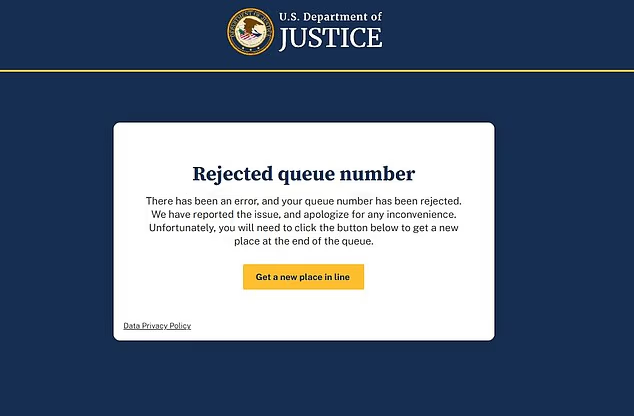
The Department of Justice has released a large number of the Epstein files, but Americans have already been blocked from accessing them because of network issues.
The files the DOJ released Friday afternoon were made public following a roughly hour-long delay in the court-mandated deadline to unseal all of the documents connected to the 2019 Jeffrey Epstein sex trafficking investigation.
However, countless Americans attempting to download the newly released files from the DOJ’s website were taken to an online queue which immediately rejected their attempt to wait in line.
Any attempt to refresh the page led to a message from DOJ stating: ‘Your queue number is no longer valid.’
The Daily Mail has gained access to the trove of documents connected to the Epstein case is currently reviewing them.
Among a collection of photos released Friday, former President Bill Clinton was pictured spending time with Epstein and convicted sex trafficker Ghislaine Maxwell. Clinton was also pictured frolicking in a hot tub with Maxwell.
Additionally, an image of President Donald Trump’s name was listed in a redacted version of Epstein’s ‘contact book’ released in the latest file dump.

An image of the technical problems encountered when Americans try to access the Epstein files on the Department of Justice website

Images released by the US Department of Justice Friday revealed Jeffrey Epstein meeting with former President Bill Clinton
Dozens of the released photos contained nude images of young women, which were blocked out by federal officials.
Hundreds of images were completely redacted to conceal the identities of the alleged victims.
Many of the images featured Maxwell in various states of undress or in costumes at Epstein’s parties.
She was also seen posing with Clinton and actor Kevin Spacey, who was acquitted of criminal sexual assault charges in the UK in 2023 and in a civil case in the US in 2022. Spacey has denied all allegations of wrongdoing.
Also seen in the thousands of documents were pictures of celebrities Michael Jackson and Mick Jagger posing with Epstein and Clinton.
The newest file dump contained hundreds of records from Epstein’s trips around the world, including stops in Moscow, Copenhagen, and Paris.

The files also contained photos of Epstein with celebrities Mick Jagger (Pictured) and Michael Jackson

Multiple photos seen the Friday release included Jeffrey Epstein (Left) and the late singer Michael Jackson (Right)
Share or comment on this article:
Americans blocked from Epstein files moments after secret documents are released

Anonymous messaging app NGL announced on Friday that it has been acquired by Mode Mobile, a smartphone rewards company that makes money by flooding its users with ads.
NGL quickly climbed the App Store charts after its launch in late 2021, joining a group of similar apps popular among teens that allow users to send and receive anonymous questions and messages. But it’s been embroiled in controversy for most of its existence.
Anonymous messaging apps are problematic because they can encourage bullying among teens — Snapchat banned third-party apps like NGL, LMK, Sendit, and YOLO from its platform in 2022 after a parent sued the company for its alleged role in her teenage son’s suicide.
NGL also came under fire for its shady growth hacking tactics, like sending fake messages to users that seemed like they were from real people but were actually automated by the app. Some users were tricked into paying a $9.99 monthly subscription to get hints about who sent the messages, which were fake.
After a two-year investigation, the FTC announced in 2024 that it would ban NGL from offering its app to minors — one of its most drastic interventions to protect minors from harmful social media experiences.
“NGL’s bait-and-switch tactic prompted many consumers to complain, which NGL executives laughed off, dismissing such users as ‘suckers’,” the FTC said in a statement at the time. NGL paid a $5 million fine to the FTC and complied with its demands.
NGL’s two founders, Raj Vir and João Figueiredo, are moving on from the app, according to Business Insider. The remaining three employees of the app will work for Mode Mobile.
Techcrunch event
San Francisco
|
October 13-15, 2026
Given NGL’s track record of dubious growth hacking, this partnership with Mode Mobile seems like a good match.
Mode Mobile makes a smartphone, which it calls the “EarnPhone,” that has “built-in earning features.” The company claims that users can make money by performing everyday tasks on their phone, like listening to music, playing games, and browsing the web. According to the company’s investor materials, Mode Mobile generates revenue from “digital advertising partners” that “pay for user attention and engagement.” Basically, your phone is constantly flooded with ads, but you might make enough money to buy a round of beers at a dive bar.
The terms of the sale were not disclosed.

Sending money to Africa has become easier over the past decade, but the cost difference between services remains significant. The cheapest option for your specific transfer depends on where you’re sending from, where the money is going, how much you’re moving, and how quickly it needs to arrive.
Understanding how these services make money helps you avoid overpaying. Some charge upfront fees with transparent exchange rates. Others advertise zero fees but mark up the exchange rate. The total amount your recipient receives matters more than how the costs are structured.
This guide breaks down the services by category and explains what to look for when comparing options.
Digital-first remittance platforms
These companies operate primarily online and through mobile apps. They tend to have lower costs than traditional services because they don’t maintain physical locations.
Africhange
Africhange operates across key remittance corridors from Canada, the UK, and Australia into West and East Africa, with a focus on cost efficiency and speed. Part of Africhange’s appeal lies in its regulatory footing. Its Nigerian subsidiary holds an International Money Transfer Operator licence from the Central Bank of Nigeria, which allows the company to process remittances directly rather than through third-party intermediaries. This structure shortens settlement timelines and reduces avoidable costs once funds are received in Nigeria.
Africhange currently supports transfers from Canada to Nigeria, as well as to other markets including Ghana, Kenya, Benin, Togo, and Senegal. The platform also supports multiple currencies on both the sending and receiving sides, which makes it easier to manage cross-border payments without constant conversion headaches.
Read. also: Africhange launches UK bank accounts and Achieves Bank of Canada registration
LemFi
LemFi has emerged as one of the fastest‑growing platforms for remittances to Africa. It combines low cost with a smooth app experience that works well for people sending money from North America, the UK, and Europe. Users open an account, verify their identity, and then send money directly to bank accounts or mobile wallets in countries like Nigeria, Ghana, Kenya, Cameroon, Senegal, and others. Most corridors carry zero transfer fees, and many transfers arrive within minutes.
You can hold balances in US dollars, British pounds, Canadian dollars, and other major currencies, then convert and send at competitive exchange rates. The platform is regulated in the UK and Canada and holds licences to operate remittances into key African markets. Funds typically reach a recipient’s bank or mobile wallet in minutes.
A loyalty or rewards component may appear, providing additional value for frequent senders.
Remitly
Remitly is one of the long‑standing players in cross‑border money transfers. It operates through a simple app and web interface that walks you through sending money step by step. When you use Remitly, you choose between two ways to send.
One option keeps fees low but takes a little longer. The other delivers faster if timing matters more than cost. You can fund transfers with a bank debit or credit card, and your recipient can get money straight into a bank account or popular mobile money wallets used in many African countries.
WorldRemit
WorldRemit is similar to Remitly but supports a wider range of payout methods in many countries across Africa. In addition to bank deposits and mobile money, WorldRemit sometimes offers cash pick‑up options at local partners if the recipient prefers that.
The interface is straightforward. You enter the amount, pick where you are sending it, choose how the recipient will collect the cash, and the app shows fees and delivery times before you confirm.
WorldRemit tends to settle transfers within a few hours for most corridors, though it can vary by country and bank processing times.
Wise
Wise focuses on transparency and cost efficiency. Unlike many banks or money transfer services, it uses the real mid‑market exchange rate and charges a single, upfront fee. This means the recipient gets the exact amount shown before you confirm the transfer, without hidden markups.
Wise is particularly suitable if keeping costs low is your priority, and you can wait for the transfer to process. Delivery times vary depending on the destination bank, but most transfers arrive within a few hours to a couple of days. The platform supports multiple currencies and countries, making it convenient for repeat transfers with predictable pricing.
Traditional networks
These established services have extensive physical networks across Africa. They’re useful when recipients need cash pickup or live in areas without reliable banking infrastructure.
Western Union
Western Union has one of the largest agent networks in Africa, making it a reliable option for recipients who may not have access to a bank or mobile money account. The service supports cash pickup, bank transfers, and mobile money in many countries.
Cash pickup is fast, often available within minutes, but it is more expensive than other payout methods. Bank transfers and mobile money can be cheaper, though delivery times may vary depending on the destination and local partners. Fees are generally higher than those of digital-first platforms, and exchange rates include a markup.
You can send money through the Western Union website, mobile app, or at a physical agent location. Online bank transfers are typically less costly than cash pickup, making them the better option when speed is not the top priority.
MoneyGram
MoneyGram operates across Africa with a large agent network, covering many urban and semi‑urban areas. The service allows recipients to collect cash quickly, often within minutes or a few hours, though timing can vary depending on the location.
Transfers can be sent online, via the MoneyGram app, or at agent locations, including major retailers. In addition to cash pickup, the platform supports bank transfers and mobile money in many countries. Fees for cash pickup are sometimes slightly lower than Western Union, but the cost depends on the sending corridor and payment method.
MoneyGram provides a reliable alternative for recipients without bank accounts or mobile wallets, while also offering multiple ways to receive funds for those who prefer digital options.
Mobile Money and regional platforms
Mobile money has transformed how people send and receive money in Africa. In several countries, more adults now have mobile money accounts than traditional bank accounts. This widespread adoption has made it easier to move money quickly, securely, and without relying on banks.
Mobile Money overview
Mobile money lets people receive, store, and spend money using just a mobile phone, without needing a bank account. Major providers include M‑Pesa in Kenya and Tanzania, MTN Mobile Money across several countries, Orange Money in West Africa, and Airtel Money in multiple markets.
Most international transfer services now support sending money directly to mobile money accounts. This method is often faster and cheaper than using bank transfers or cash pickup, making it a popular choice for both senders and recipients in some countries.
Wave
Wave is a mobile money platform that operates in Senegal, Côte d’Ivoire, Burkina Faso, Mali, and Benin. Transfers from the US to Wave accounts typically carry no transfer fees. The exchange rate is the main cost for the sender.
Recipients need a Wave account to receive funds, and creating one is straightforward. Wave functions as both a transfer service and a mobile money wallet, allowing users to send, receive, and spend money through the app.
Coverage is currently limited to the West African countries where Wave operates, but within those markets, the platform is fast, simple, and easy to use.
Sending money to Africa is more efficient now than it was years ago. Digital platforms are driving down costs and forcing greater clarity in pricing. Whether you prioritise cost, speed, or convenience, some options fit your needs. Check fees and exchange rates before you hit send, and choose the right tool for your corridor and frequency.

Joe Rogan invoked three words that still haunt Americans more than two decades later while discussing how the country might react to an alien threat.
Speaking on his podcast, Rogan said such a world-changing event could evoke reactions similar to those seen ‘after September 11th.’
‘It was a horrible tragedy, but there was a beautiful result temporarily, where everybody was really united,’ he said on Thursday.
‘There were American flags on everybody’s cars in Los Angeles. In New York, everyone was friendly.’
Rogan added that Americans had all decided that we were together and that we were faced with a real threat and that we had to be united, suggesting a similar reaction would unfold in the event of visitors from another world.
Along with the widespread displays of American flags, there were spontaneous memorial vigils, national unity under the ‘United We Stand’ theme, lawmakers singing ‘God Bless America,’ and a surge in support for military and first responders.
The discussion was sparked when Rogan referenced a famous moment from history, recalling Ronald Reagan’s speech at the United Nations.
‘Imagine how united we would be if faced with an alien threat from another world,’ he said. ‘We’d forget our differences and realize that, at the core, we’re all connected.’

Joe Rogan released a new podcast on Thursday, where he shared his feelings about how Americans could react to an alien threat

Rogan said such a world-changing event could evoke reactions similar to those seen ‘after September 11th’
Rogan’s guest, Michael P. Masters, a professor of biological anthropology at Montana Tech, agreed, expanding on the idea by suggesting humanity may be linked by a deeper, shared consciousness, an idea he said some researchers associate with the UFO phenomenon.
‘If we recognize that we are just fingerprints on the same hand, then we’re all iterations of the same overarching consciousness,’ Masters said.
‘And there may be aspects of that reflected in the UFO phenomenon.’
Rogan has a long-standing obsession with the topic of extraterrestrial life and UFOs, and in his stand-up comedy.
He often expresses the view that aliens ‘are out there’ and that the government might be covering up the truth.
The podcaster also believes that, given the ‘hundreds of billions of galaxies’ and stars in the universe, it is mathematically certain that ‘for sure there’s something else out here.’
While often focusing on the physical evidence, he has also explored alternative theories with guests, such as the idea that aliens might be interdimensional beings or human time travelers from the future, which aligns with Masters’ theories.
Masters, who holds a PhD in anthropology from The Ohio State University, has gained attention beyond academia for his unconventional theories about UFOs.

‘Imagine how united we would be if faced with an alien threat from another world,’ he said. ‘We’d forget our differences and realize that, at the core, we’re all connected.’

Rogan’s guest, Michael P. Masters, a professor of biological anthropology at Montana Tech, agreed, expanding on the idea by suggesting humanity may be linked by a deeper, shared consciousness, an idea he said some researchers associate with the UFO phenomenon
In his books, including Identified Flying Objects and The Extratempestrial Model, he argues that some UFO encounters may not involve extraterrestrials at all.
Instead, Masters has proposed that the beings described in many sightings could be future human descendants traveling back through time, a hypothesis he has publicly discussed for years.
‘The phenomenon may be our own distant descendants coming back through time to study us in their own evolutionary past,’ he said in a 2019 interview.
While Rogan expressed confidence that something unexplained is occurring, Masters emphasized caution, noting that many claims surrounding UFOs and alien encounters require further study as stigma around the topic continues to fade.
Masters also argued the ‘gray’ alien archetype, large heads, big eyes, thin bodies, mirrors projected human evolution amid declining robustness, fertility issues and genetic engineering.
He linked abductions involving reproductive material extraction to future humans addressing fertility crises, citing cases like Jim Penniston’s Rendlesham Forest message, claiming the need for genetic material.
Rogan and Masters touched on government reverse-engineering, whistleblowers like Bob Lazar, transmedium craft, and Peruvian tridactyl mummies resembling grays, with Masters cautious pending further study.
Rogan expressed conviction in the phenomenon, while Masters shared a personal sighting and childhood ‘tasking’ inspiring his research.
The episode framed UFOs as potentially intratemporal, urging discernment of encounter reports amid diminishing stigma.

Renowned AI scientist Yann LeCun confirmed on Thursday that he had launched a new startup — the worst-kept secret in the tech world — though he said he will not be running the new company as its CEO.
His startup is called Advanced Machine Intelligence (or AMI) and has hired Alex LeBrun, co-founder and CEO of medical transcription AI startup darling Nabla, as its CEO. Nabla disclosed LeBrun’s new job in a press release and LeCun confirmed it in a brief post on LinkedIn.
“Yes, AMI Labs is my new startup. I’m the Executive Chairman. And Alex LeBrun is transitioning from CEO of Nabla to CEO of AMI Labs!” LeCun wrote.
AMI Labs is also reportedly seeking to raise €500 million (about $586 million) at a €3 billion valuation (about $3.5 billion) right out of the gate, before even launching, the Financial Times reported, citing people familiar with the dealmaking. Given the kind of money that VCs are throwing at AI startups founded by world-recognized AI scientists these days, that’s not even an comparatively outrageous ask.
For instance, former OpenAI CTO Mira Murati’s startup, Thinking Machines Lab, was valued at $12 billion for its seed round last year. And Murati doesn’t have the same kind of street cred as LeCun.
LeCun, a professor at New York University who was formerly VP and Chief AI Scientist Meta, won the prestigious A.M. Turing Award, for his work on reinforcement learning.
The press release also confirms what everyone knew as well: that AMI Labs is working on world model AI. This is an alternative to LLMs where the AI attempts to understand its environment (aka the world) so it can simulate cause-and-effect and what-if scenarios to predict outcomes. World model creators believe it’s the answer to LLMs’ structural hallucination problems. LLMs can’t be trusted never to fabricate info because it is their very nature to be “non-deterministic,” aka creative.
Techcrunch event
San Francisco
|
October 13-15, 2026
Top labs and startups like Google DeepMind and Fei-Fei Li’s startup, World Labs, are also developing world models. By that comparison, the fundraising aspirations of AMI might appear a bit more audacious. When World Labs debuted, Li raised $230 million at a $1 billion valuation right out of the gate, which was considered a lot at the time. But that was way back in August 2024, or about 100 AI years ago.
Meanwhile, Nabla says the company will be searching for a new CEO and will be, for now, run by its co-founder and COO, Delphine Groll, who has not been handed the permanent reins yet. Nabla also says it has signed a partnership to use AMI’s models as they are developed.
Nabla has raised $120 million in total from an all-star list of backers, including a $70 million Series C in June. LeCun is one of Nabla’s investors, as is Tony Fadell’s Build Collective, HV Capital, Highland Europe, and Cathay Innovation.
Nabla’s LeBrun could be a good choice for CEO. He’s been building multi-modal AI since before anyone called it that, working at Nuance Communications in the early 2010s, which originally powered Apple’s Siri in those long-ago years when Siri was wow technology. (Microsoft eventually acquired Nuance.) He founded and sold a couple of natural language startups, including one to Facebook. Then he ran Facebook’s AI division before founding Nabla in 2018, according to his LinkedIn.
LeBrun said that Nabla, a darling of the Paris-based AI startup community, is still growing well.
“We have more than tripled our live ARR this year. Up next to $1B!” LeBrun wrote as he announced his departure as CEO. The founder says he will remain on at Nabla as chairman and Chief AI Scientist. Nabla declined further comment and AMI did not immediately respond to our request for comment.
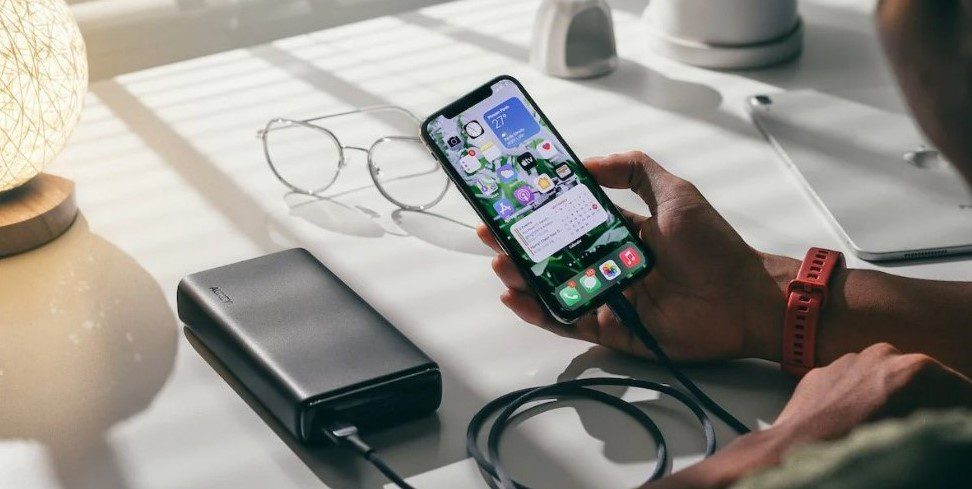
Recently, Juice Jacking, a ‘renewed’ wave of cyberattack, has been the centre of conversation across social media platforms.
While the way Juice Jacking operates creates chances to compromise files and sensitive digital materials, it reminds us of how fraudsters continue to deploy new tactics.
There have been debates about its modus operandi: how it steals data using a ‘disguised’ power bank, and the type of file it can access. Most importantly, there were concerns about whether it’s possible that the device can unlock a phone or system.
With the guidance of two resource individuals, Jude Ozinegbe, Founder of Cyberchain and Mukaila Temitope Olajumoke, a cybersecurity practitioner, this article will provide a comprehensive explainer on all you should know about Juice Jacking.
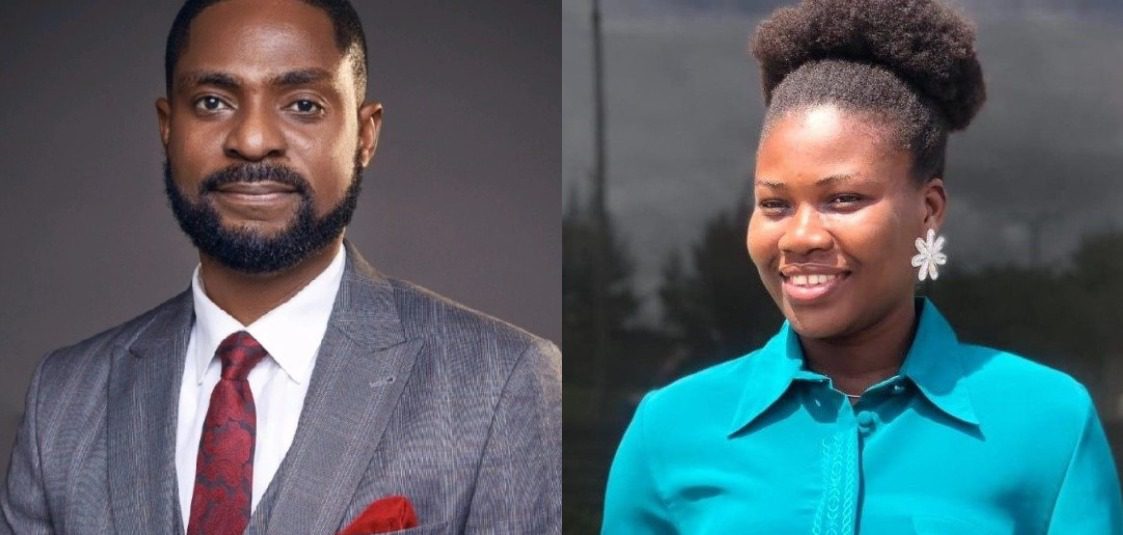 Jude Ozinegbe, Founder of Cyberchain and Mukaila Temitope Olajumoke, a cybersecurity practitioner
Juice Jacking: not new
Juice jacking is a potential attack where a malicious charging station, usually a port cable or USB device, is used to compromise data. Fraudsters simply compromise data by installing malware via the charging. While a phone displays charging, Juice Jacking operates beyond mere charging.
“It happens when a charger, power bank, or cable has been tampered with. Instead of just giving your phone power, it also opens a data connection. And if your phone allows it, information can move from your phone to someone else quietly—no noise, no warning,” Jude said.
He pointed out that Juice Jacking can easily occur in Nigeria as people charge phones anywhere (most especially in public places) due to the epileptic power supply.
Notably, the suspicious power bank cannot be easily detected, they are like a normal power bank. Both experts said the power bank looks clean, and nothing outside will tell you it’s bad.
While the attacks seem to be gaining attention lately, Temitope noted that Juice Jacking is not a new attack. She explained that the attack became prominent recently due to the widespread use of Android smartphones and Type-C charging ports.
“It’s not new now, it’s becoming rampant. People are getting to know about it recently, but it has been out for a while. And the adoption of type C cord makes it more vulnerable,” she added.

The user is in control
Addressing concerns over who is in control of how Juice Jacking works and accessing data on the phone, Temitope noted that the phone owner is still in control. And that control comes into effect when a user decides whether to ‘charge only’ or ‘allow transfer of files.’
“When you connect your phone, a prompt displays to select charging or to transfer the file. So you’ll be the one to make the decision,” she added.
A prominent concern is whether the charger (connected to the ‘disguised’ power bank or charger) can really unlock a phone itself. Both experts noted that this is impossible.
Jude described the expression as a plain exaggeration. He said the attack does occur with given permission and is a normal human behaviour process. He emphasised that the risk is not that the charger or attacker is smart, it’s that we’re often in a hurry.
“The problem starts when you unlock the phone yourself. You’re charging, you unlock to reply to a WhatsApp message, check your account balance, and scroll through Instagram. Then one message pops up: “Allow data access?” You don’t read it. You just tap “OK.” Jude noted.
Juice Jacking is not about fear. It’s about sensible practice. Your phone is your wallet, your office, your business, your identity—everything. So treat charging like handling cash. It’s better to have a low battery than an empty account.
Temitope also mentioned that the attack works based on access. And without giving it access, it can not do the work on its own.
“The attack itself needs a host, which is you. You need to give it access to your data. So it cannot work on its own.” She added that “it cannot unlock the phone unless you unlock your phone.”
Also Read: Here are 7 habits that compromise your personal and data safety online.
What type of data can Juice Jacking compromise?
Once a phone is unlocked and access is gained, the attacker can access contacts, photos, documents, phone information, and other non-encrypted files. In some extra cases, the attacker can install spying software on the phone.
Jude noted that fraudsters’ main gain is to access financial information, especially in a country like Nigeria.
“Banking apps, fintech wallets, crypto, email, OTP alerts—everything is on one phone. Once that phone is compromised, your money and accounts can be at risk.”
“That’s when stories start like, ‘I just woke up, and money was gone.’ starts flooding everywhere, but you forgot when you plugged in an unsuspecting rogue charger, power bank, or cable to your phone,” he added.
 Free electricity plug and USB plug, Battery charging station in the airport.
In addition, Temitope explained that the risk of Juice Jacking is very low because it needs a user to unlock the phone and also allow access beyond mere charging. She said it is also very low for people using the latest Android OS version and iOS.
Preventive measures
Instead of trying to inspect chargers, experts highlighted the following preventive tips to avoid falling victim to Juice Jacking.
- Avoid public USB charging ports when you can.
- Plug into wall sockets with your own charger head.
- Carry your own power bank.
- Use charge-only cables (they don’t pass data), carry a spare cable.
- Avoid public charging ports such as bus terminals or trains.
- Disable auto-unlock features. If there are features that, once they are on, your device will unlock itself, turn them off.
- Keep your phone locked while charging
- Stop tapping “Allow” without reading
- If you’re not sure about the charger, just say, “I’ll charge later,” and put your phone on the battery saver.
While Juice jacking is not yet a rampant attack, it’s gaining prominence. The preventive measures are essential. Think of it like ATM rules. You don’t collect an ATM card from a stranger just because you’re in a hurry.