
TECHNOLOGY
What Trump’s travel ban means for Africa’s tech talent


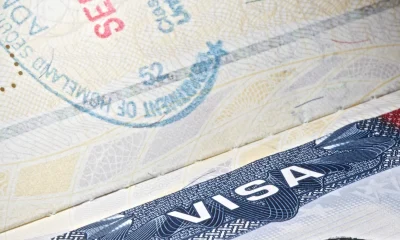
On Tuesday, December 16, US President Donald Trump expanded travel and visa restrictions on nationals from more than 30 countries, many of them in Africa, reviving and widening a policy first introduced during his first term.
The order imposes full or partial entry restrictions based on visa overstay data, terrorism risk assessments, and failures in identity management and information sharing. For Africa’s fast-growing tech ecosystem, the move creates an entry barrier to one of the most important corridors for founders and operators trying to access the US market.
Trump’s decision followed a months-long bureaucratic process rooted in legal precedent, immigration data, and national security doctrine that has already survived Supreme Court review.
What led to the blanket ban
The current expansion traces back to June 2025, when Trump restored the travel restrictions from his first term shortly after returning to office. Rather than introducing a new framework, the administration reinstated Executive Order 14161 and Proclamation 10949, relying on an earlier Supreme Court ruling that upheld the president’s authority to restrict entry on national security grounds.
This time, the administration leaned heavily on data from the Department of Homeland Security’s FY 2024 Entry and Exit Overstay Report. Countries whose citizens overstayed US visas at high rates were flagged for sanctions, ranging from partial suspensions of business and student visas to full bans on entry.
According to that report, several countries’ citizens defaulted at notable rates. F, M, and J student and exchange visa holders were flagged as compliance risks due to overstays. Cote d’Ivoire recorded a 19.09% overstay rate among students and exchange visitors, while Tanzania and Senegal posted rates of 13.97% and 13.07%, respectively.
Nigeria, one of Africa’s largest tech hubs, recorded a student and exchange visa overstay rate of 11.90%, even as business visa defaults on B-1 and B-2 visas remained just above 5%. The Gambia, Benin, and Sierra Leone stood out with the highest student visa overstay rates, each exceeding 35%, placing them among the most heavily penalised countries in the proclamation.
High overstay rates in any major category are treated as evidence of systemic non-compliance, triggering broad restrictions that hit African talent.
Several African countries now face full US entry bans, including Burkina Faso, Chad, the Republic of the Congo, Equatorial Guinea, Eritrea, Libya, Mali, Niger, Sierra Leone, Somalia, South Sudan, and Sudan. Sierra Leone was upgraded from partial to full restrictions under the new order, reflecting a sharp tightening of enforcement.
Other African countries were partially restricted. Nigeria, Senegal, Tanzania, Zambia, Zimbabwe, Angola, Benin, Burundi, Togo, Cote d’Ivoire, The Gambia, Malawi, Mauritania, and Gabon are subject to limits that primarily affect business, tourism, and student visas, while leaving some immigrant pathways technically open but more difficult to access.
Partial restrictions suspend the issuance of B-1 and B-2 visas used for business and tourism, as well as F, M, and J visas for students and exchange visitors. Some immigrant visa categories remain open, but applicants should expect slower processing and tougher reviews at US embassies.
“This is not a blanket ban on all immigrant visas,” said Oluyomi Ojo, founder of immigration consulting firm AgoraVisa. “It does not automatically shut down EB-1A and EB-2 visas. EB immigrant visas are affected at the consular level—embassies will not adjudicate or will effectively pause issuance—there will be no exceptions. EB migrations will continue as the ban does not affect approvals at the USCIS. The USCIS continues to adjudicate EB petitions inside the United States for all. The disruption happens at embassies, where visa issuance may be paused or delayed, even after approvals.”
Yet for Nigeria and several Sahel countries, the proclamation adds another complication. Trump explicitly cited the presence of groups such as Boko Haram and the Islamic State, arguing that terrorist activity “creates screening and vetting difficulties.” This could trigger enhanced security checks and reviews that slow immigration processes.
Those two factors combine to raise the burden of proof for Nigerian applicants across nearly all non-immigrant categories.
What does this mean for African tech talent?
The most immediate impact falls on global mobility. New B-1 and B-2 visas will largely stop flowing from affected countries, cutting off US access. Student and exchange routes, which were viable immigration routes into the US tech ecosystem, will also narrow sharply.
As visiting routes close, African tech talent is likely to seek out immigration pathways that remain unaffected by the proclamation. Employment-based visas such as O-1, L-1, and H-1B remain legally open, but they are far harder to obtain. These categories require employer sponsorship, exceptional-ability thresholds, or intracompany transfers that many early-stage founders and independent operators cannot meet.
“Tech workers already on O-1, L1, H-1B [visas] from [affected] countries are not impacted, and can still file for EB-1 and EB-2 in the US and get approval,” said Ojo. “Those with visas approved before January 1 face fewer issues.”
The deeper shift lies in how applications will now be judged. High overstay rates push consular interviews toward suspicion rather than validation. Immigration interviews will focus more on reasons an applicant might stay than on the purpose of the trip. African tech workers could face pressure proving they have reasons to return home, such as property ownership back home or long-term local employment, with no incentives to overstay their welcome. This creates a structural mismatch; for those without clear proof, it could weaken their ability to demonstrate ties to home countries.
Founders already inside the US system remain shielded from the executive order. But first-time entrants will face a wall built from data, security logic, and bureaucracy that hamper migration opportunities for African talent. This could encourage a shift toward alternative hubs in Europe, the Middle East, and Asia, where visa access is predictable.









The world’s smartest human has admitted that God not only exists, but he can prove it through math.
South Korean scientist YoungHoon Kim, 36, said he holds the current record for the world’s highest IQ at 276, an achievement recognized by the World Mind Sports Council.
Any IQ score over 140 is considered ‘genius’ level intelligence, with great thinkers such as Albert Einstein and Professor Stephen Hawking reportedly having IQs around 160.
Kim, an AI researcher and entrepreneur who holds a theology degree from Seoul’s Yonsei University, regularly posts on social media that science can prove God exists and was the starting point of our universe.
On December 11, his latest viral post on Instagram gave a simple message about the existence of God, stating: ‘God is real 100 percent and Jesus is God.’
Kim has also claimed that faith in Jesus has a direct connection to how intelligent, creative, and successful someone can become.
However, the ‘world’s highest IQ person’ has also made some controversial remarks, including that Jesus will return in 10 years and claiming homosexuality is a sin.
In one of his most viewed social media posts, Kim released a three-minute video on YouTube claiming that the existence of God could be proven mathematically with three simple facts.

YoungHoon Kim (Pictured) is allegedly the world’s smartest person, with an IQ of 276. Any score over 140 is considered ‘genius’ level intelligence
‘A line cannot start without a first point. Think about drawing a line on a piece of paper. In geometry, every line has to begin with at least one point. Without that first point, there is no line at all,’ Kim said in a September 4 video.
‘The same is true with existence. If there was never a starting point, then nothing could have ever begun. But we clearly see that life and the universe exist. So, there must have been a first point, the starting point that set everything in motion,’ Kim continued.
Kim then explained that you cannot cross an endless past, meaning that if time had no beginning and went backwards forever, we could never have reached ‘today.’
He compared it to never being able to finish counting down to zero if you started from negative infinity with no first number.
The world’s smartest man concluded by revealing that multiplication shows power must come from somewhere, meaning that if you keep multiplying by one forever, you always stay at just one and nothing new or bigger ever appears.
So, for the universe to start and grow into everything we see, a greater power must have stepped in from outside to create and multiply it all.
‘The only explanation that fits all three is a first cause starting point. Necessary, powerful, timeless, and intelligent. And this is exactly what we mean when we say God exists,’ Kim said in the video that’s been viewed over 218,000 times.
As for his latest post claiming Jesus is God, Kim has repeatedly posted that Jesus is not only God transformed into a man, but was also more intelligent than anyone else who has ever lived.

Kim has claimed that God not only exists, but Jesus is God in human form and his existence can be proven through mathematics (Stock Image)
‘No Einstein. No Newton. Only Jesus is the Smartest Man in the History of the World,’ he posted in November.
Kim was not the first highly intelligent person to claim to have knowledge of the divine.
Chris Langan, an American horse rancher who allegedly has an IQ between 190 and 210, has claimed to know what happens after we die.
The 73-year-old said created a hypothesis called the Cognitive-Theoretic Model of the Universe (CTMU), which allegedly ‘explains the connection between mind and reality.’
He believed that when people die, they transition from one form of existence to another within the computational structure of reality, meaning the consciousness, or ‘soul,’ moves to another dimension that we cannot access while living on Earth.
It’s not clear what that new dimension would look like, or what happens to the ‘soul’ once it arrives there. However, Langan said traditional views of heaven and hell were too simplistic and that the afterlife was more like a new state of being.
Kim has echoed these comments, stating that: ‘If reality is part of something bigger, then death is not the end, but a transition.’
He added that while traditional science believes the brain stops when consciousness disappears, quantum physics has suggested that information never disappears and changes in form.
‘If our consciousness is quantum information it may continue after the body is gone.’


Law firms representing Google and Apple have warned that employees who need a visa stamp to re-enter the United States should avoid leaving the country due to longer-than-usual visa processing times, according to Business Insider.
BI says it has viewed memos from BAL Immigration Law (which represents Google) and Fragomen (which represents Apple).
“Given the recent updates and the possibility of unpredictable, extended delays when returning to the U.S., we strongly recommend that employees without a valid H-1B visa stamp avoid international travel for now,” the Fragomen memo reportedly said.
A State Department spokesperson told BI that embassies are “now prioritizing thoroughly vetting each visa case above all else.”
Salon also reports that “hundreds” of Indian professionals who traveled home to renew their U.S. work visas in December have had their U.S. embassy appointments canceled or rescheduled due to new requirements for social media vetting.
TechCrunch has reached out to Google and Apple for comment. Both companies, along with other large tech employers, issued similar warnings in September when the White House announced that employers would have to pay a $100,000 fee for H-1B visa applications.

Governor Kathy Hochul has signed the RAISE Act, positioning New York as the second U.S. state to enact major AI safety legislation.
State lawmakers passed RAISE Act in June, but following lobbying from the tech industry, Hochul proposed changes to scale the bill back. The New York Times reports that Hochul ultimately agreed to sign the original bill, while lawmakers agreed to make her requested changes next year.
The bill will require large AI developers to publish information about their safety protocols and report safety incidents to the state within 72 hours. It will also create a new office within the Department of Financial Services to monitor AI development.
If companies fail to submit safety reports or make false statements, they can be fined up to $1 million ($3 million for subsequent violations).
California Governor Gavin Newsom signed a similar safety bill in September, which Hochul referenced in her announcement.
“This law builds on California’s recently adopted framework, creating a unified benchmark among the country’s leading tech states as the federal government lags behind, failing to implement common-sense regulations that protect the public,” Hochul said.
State Senator Andrew Gounardes, one of the bill’s sponsors, posted, “Big Tech thought they could weasel their way into killing our bill. We shut them down and passed the strongest AI safety law in the country.”
Techcrunch event
San Francisco
|
October 13-15, 2026
Both OpenAI and Anthropic expressed support for New York’s bill while also calling for federal legislation, with Anthropic’s head of external affairs Sarah Heck telling the NYT, “The fact that two of the largest states in the country have now enacted AI transparency legislation signals the critical importance of safety and should inspire Congress to build on them.”
Not everyone in the tech industry has been so supportive. In fact, a super PAC backed by Andreessen Horowitz and OpenAI President Greg Brockman is looking to challenge Assemblyman Alex Bores, who co-sponsored the bill with Gounardes. (Bores told journalists, “I appreciate how straightforward they’re being about it.”)
This comes after President Donald Trump signed an executive order that directs federal agencies to challenge state AI laws. The order — backed by Trump’s AI czar David Sacks — is the latest attempt by the Trump Administration to curtail states’ ability to regulate AI, and will likely be challenged in court.
We also discussed Trump’s executive order, and the role that Sacks and a16z have played in opposing state AI regulation, on the latest episode of the Equity podcast.


TechCabal, Africa’s leading technology publication, has released the inaugural Builders List, its annual index of the 50 most consequential individuals shaping the direction of the continent’s technology ecosystem.
In an ecosystem often dominated by funding announcements and short-lived hype cycles, the TechCabal’s Builders List is built around substance. It is not a popularity contest or a vanity ranking. Instead, the list serves as a rigorous record of momentum, recognising individuals whose work in 2025 delivered measurable, verifiable impact, whether they are founders appearing in the headlines or operators working quietly behind the scenes.
The Builders List spotlights both the highly visible and the quietly influential: founders scaling companies in public view, and operators, investors, and ecosystem architects whose work often happens behind the scenes but is no less critical.
The 2025 cohort reflects the growing complexity and maturity of Africa’s tech ecosystem. Moving beyond a founder-only lens, the TechCabal recognises builders across five categories:
- The Operators — leaders executing strategy and running companies at scale
- The Enablers — investors and ecosystem architects making growth possible
- The Innovators — visionaries expanding the boundaries of product and technology
- The Connectors — organisers linking talent, capital, and ideas across markets
- The Keepers — stewards of institutional memory, policy, and long-term continuity
The Builders List tries to be continental in scope. The 2025 list achieves a sense of Pan-African distribution, featuring builders from across the continent.
Honourees were selected through a multi-stage vetting process combining deep newsroom research with independent validation by an advisory panel of ecosystem leaders.
Candidates were assessed against a strict rubric that included: a clearly defined 2025 milestone, quantifiable impact, innovation, resilience in the face of macroeconomic headwinds, and broader ecosystem influence.

It’s not just Santa people should be looking out for next week as experts say you’re more likely to see an ‘alien’ over Christmas.
In December, the UFO Reporting Centre see a huge surge in UFO sightings with a massive spike on Christmas Day.
Christian Stepien, technical director at the centre in America said the reason for the increased reporting could be due to festive firework and light displays.
Ron James from the Mutual UFO Network told The Daily Beast: ‘We do have a slight uptick twice a year in the summer and around the holidays.
‘There are a few reasons why people might be paying more attention: they might be off work, they’re doing family activities and things they don’t normally do, so there are more possibilities for people to encounter things. Then, of course, there’s always Santa Claus and the reindeer.
‘If there is an uptick, I can understand that because there’s a lot of people out during time shopping and doing things.
‘They might be looking up in the air so I can understand it if there is.’
In 2021, there were a whopping 75 sightings reported on December 25.

File image: In December, the UFO Reporting Centre see a huge surge in UFO sightings with a massive spike on Christmas Day
Accounts of UFOs peaking during the festive period go all the way back to Christmas 1965.
Astronaut Wally Schirra Jr. was aboard Gemini 6 when he spotted an usual ‘object’.
At the time, he stated: ‘We have an object, looks like a satellite going from north to south, probably in polar orbit. Looks like he might be going to re-enter soon.You just might let me pick up that thing.’
Adding to his report, fellow astronaut Thomas Stafford noted: ‘I see a command module and eight smaller modules in front. The pilot of the command module is wearing a red suit.’
Mission control was sent into hysteria until Wally began to play Jingle Bells on the harmonica and revealed it was all a joke.
Share or comment on this article:
UFO expert reveals why you’re more likely to see an ‘alien’ over Christmas

Tinsel, DIY tree decorations, deep burgundy drapes – and Home Alone on VHS. Christmas has gone retro on TikTok, and in people’s living rooms.
The app has reported a surge in Christmas decor videos, with an emphasis on nostalgia as users embrace festive looks from bygone eras. For younger TikTokers, that means the 90s.
More than 8,000 videos have been posted under the hashtag #90sChristmas, celebrating a look that includes multicoloured tree lights, homemade felt ornaments and – in a post with nearly 4m views – VHS tapes of Christmas classics such as the Macaulay Culkin caper.
Macaulay Culkin and Joe Pesci in Home Alone (1990). Photograph: 20th Century Fox/Kobal/Shutterstock
TikTok said Christmas decor videos had increased by 100% over the past 12 months, with commentators saying the emphasis on nostalgia reflects a need for stability in uncertain times.
“There is a sense of inherent nostalgia in these trends,” says Hugh Metcalf, editor of the interior decor website Livingetc.com. “These are not super-contemporary looks. It’s a search for comfort from yesteryear when things right now are a bit more uncertain.”
WGSN, a consumer trend forecasting firm, says the 90s Christmas trend indicates a general rising nostalgia for that decade, which also came across during Halloween as an embrace of “tacky decor” pushed at notions of what constitutes good taste.
Metcalf says TikTok is “super influential” for Christmas aesthetics across all generations, with online influencers having greater sway over festive aesthetics than they do over interior decor trends across the rest of the year, which tend to be the province of design professionals.
“These Christmas trends are for things people have seen and experienced before,” Metcalf adds. “It’s appealing to personal histories and our sense of emotion, a bit of relief from trying to get the newest, most interesting interior design idea.”
A Christmas tree outside the Ralph Lauren store in New Bond Street, London. Photograph: Amer Ghazzal/Shutterstock
Even more popular than the 90s take this year is Ralph Lauren Christmas, riffing on the American designer’s signature looks with deep colours, rich wooden panelling and green tartan prints. TikTokers has also offered tips on how to afford a festive take on the luxury brand if you’re on a budget.
WGSN says the Ralph Lauren yuletide aesthetic represents a broader push for “new classic iterations and traditional vibes” over the Christmas season. Describing the trend as “cross-generational nostalgia”, WGSM says it is manifesting itself in looks like cosy knits, windowsill candles and bannister garlands.
“Explorations of these classic looks are gaining strength even among younger consumers,” says Cassandra Gagnon, a WGSN strategist.
If the late 20th century isn’t distant enough as we peer through the retro tinsel from our 2025 vantage point, then WGSN also reports interest in “opulent antiquity”, including velvet Christmas stockings and tree skirts. It means terms such as “Little Women Christmas” – inspired by the Louisa May Alcott classic – are also trending on the platform.
The Holiday (2006) has also become a decor influence. Photograph: Photo 12/Alamy
Time has also been kinder to The Holiday, a romantic comedy film which received some negative reviews on its release nearly two decades ago but has become a decor influence on TikTok this year as well. Named after the film’s director, the #NancyMeyersAesthetic hashtag has more than 35,000 videos – Meyers also directed Father of the Bride and The Parent Trap – with the Christmas iteration focusing on warm interiors and the traditional festive look seen elsewhere on the app.
But in terms of the soundtrack for the season, another decade wins: the 80s. Last Christmas by Wham! is the most searched Christmas song on TikTok so far this month.
TECHNOLOGY
‘What are they hiding?’ Bermuda Triangle conspiracy theories reignite online after scientists discover a giant structure hidden beneath Bermuda that is ‘unlike anything else on Earth’

Bermuda Triangle conspiracy theories have reignited online after scientists announced a startling discovery.
Geologists revealed they had found a vast stone structure beneath Bermuda that is ‘unlike anything else on Earth’.
The researchers say there is a simple, natural explanation – but that hasn’t satisfied the internet–dwelling conspiracy theorists who have flooded social media.
One X user said: ‘Are we finally gonna stop pretending the city of Atlantis vanished ‘without a trace’?’
Another added: ‘The Bermuda triangle is the gate to Atlantis.’
And one imaginative social media user asked: ‘Is that where all the aliens live that take all the planes and humans that fly over to study them?’
Although many of the theories are bizarre, psychologists say these intense reactions are part of how some people are driven to respond to unfamiliar information.
Dr Daniel Jolley, an expert on conspiracy theories from the University of Nottingham, told Daily Mail: ‘The Bermuda Triangle is a perfect recipe for conspiracy–style thinking because it taps directly into core psychological needs.’

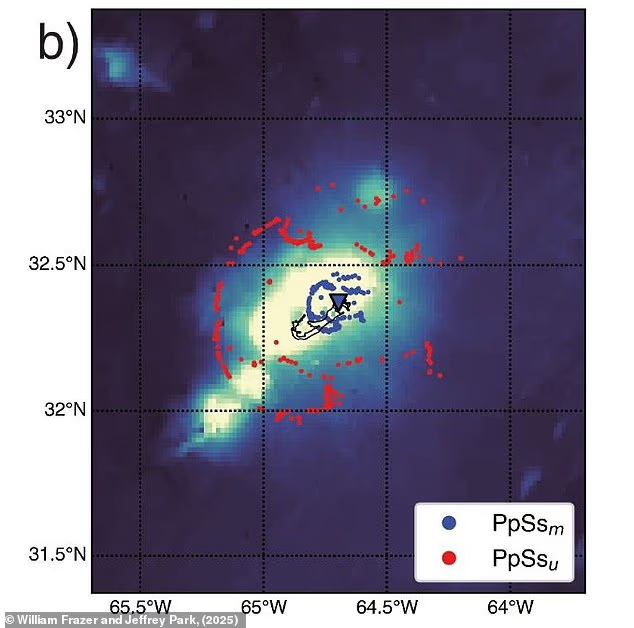
Conspiracy theories have been reignited online after scientists discovered a 12.4–mile–thick (20km) layer of rock beneath Bermuda that is ‘unlike anything else on Earth’ using seismic studies (illustrated)

While the science is clear that the rocky structure beneath Bermuda is natural, conspiracy theorists have been quick to offer their own wild suggestions

Meanwhile, some internet–dwelling conspiracy theorists have seen the discovery of the rocky structure as evidence for the existence of a lost civilisation like Atlantis
The Bermuda Triangle has long been surrounded by mystery and speculation thanks to stories of disappearing ships and planes.
Some believe that a mysterious force in the water between Florida, Puerto Rico and Bermuda causes navigation systems to fail and vessels to sink without a trace.
Although scientists point out that there’s no evidence this is the case, famous shipwrecks like that of the USS Cyclops have cemented this idea in the public imagination.
Conspiracy theorists have tied the supposed mystery of the triangle to all manner of bizarre theories.
So, as researchers announced their geological discovery, these wild theories have once again flared back to life.
For many, the discovery of the rock structure was clear evidence for the existence of an advanced lost civilisation like the city of Atlantis.
On X, one commenter wrote: ‘What if a highly advanced civilization that is many millions of years old built an underground centre of the earth lair to live and survive and they are still there? It explains them poaching people that enter the Bermuda triangle as well.’
While another joked: ‘Babe wake up, they found Atlantis.’

On social media, commenters reignited old conspiracy theories that the Bermuda Triangle hides the gateway to Atlantis

One commenter even joked that scientists had ‘found’ Atlantis at last
What did scientists find beneath Bermuda?
Researchers discovered a 2.4–mile–thick (20km) layer of rock beneath Bermuda.
They found that seismic waves from distant earthquakes were being deflected by this lower density rock.
This explains why Bermuda sits on a raised area of ocean crust known as an ‘oceanic swell’, which lifts it above the surrounding area.
Lead researcher Dr William Frazer, a seismologist at Carnegie Science, told Daily Mail: ‘Typically these types of swells, like Hawaii or Iceland, are associated with active volcanism and an active upwelling from the deep mantle. Bermuda is strange because there is evidence from rocks at the surface that suggest it has stayed relatively stagnant.’
Meanwhile, other conspiracy theorists speculated that the rocky plate must have something to do with aliens, with one writing: ‘That’s where the mothership is’.
Some online theorists took the opportunity to launch into even wilder speculation.
One enthusiastic commenter suggested: ‘It’s a portal to hell, protected by demonic principalities, witches and wizards. There are cities beneath the oceans run by evil demons.’
Some people even connected the discovery to a bizarre theory that every NASA rocket actually lands in the Bermuda Triangle to avoid revealing that the Earth is really flat.
A flat Earther wrote on X: ‘Oh look, the mysterious triangle where they land all the space shuttles as they don’t go into space as they would hit the glass ceiling’
‘NASA – specializing in one–way trips to the Bermuda Triangle since 1958,’ another chimed in.
Speaking to the Daily Mail, Dr Jolley explained why the Bermuda Triangle has attracted so many conspiracy theories throughout the years.
‘When events feel random or chaotic, people want to feel that someone or something is in control. Even a malevolent force is more comforting than randomness,’ he explained.

Some social media users even tied the discovery into a bizarre theory that NASA’s rockets are fired into the Bermuda Triangle to hide the fact that the world is flat

Scientists say that the Bermuda Triangle’s history of mysterious shipwrecks makes it a natural target for conspiracy theorists
‘And socially, being part of a group that “knows the truth” about the Triangle offers a distinct identity: insiders versus the naïve majority.’
However, as speculation about the discovery beneath Bermuda spread online, an entirely new conspiracy theory appears to have emerged.
On social media, many conspiracy theorists have started to speculate that the discovery of an unusually thick rock slab was somehow concocted to ‘distract’ the public from the release of the ‘Epstein files’.
The so–called Epstein files are a massive trove of investigative documents related to the billionaire sex offender Jeffrey Epstein, which are due to be released by the US Justice Department by Friday.
A commenter wrote: ‘Bringing up 30 year old conspiracies. How bad are the Epstein files.’
‘The Epstein files are so bad they are bringing the Bermuda Triangle back,’ suggested another.
One social media user even joked: ‘Bermuda Triangle must be hiding the Epstein files.’
According to Dr Jolley, this habit of seeing connections between unrelated events is a common feature of the conspiracy theorist psychology.

The discovery even prompted some social media users to suggest a new conspiracy theory. Claiming that the geological discovery was somehow intended to be a distraction from the release of the so–called Epstein files

One commenter even suggested that the Epstein files might be ‘hiding’ in the Bermuda Triangle

According to psychologists, conspiracy theories tend to be drawn into a cohesive ‘worldview’, making it seem natural to connect the fictional mystery of the Bermuda Triangle to the real crimes of sex offender Jeffrey Epstein (pictured)
He says: ‘Conspiracy beliefs tend to merge into a broader worldview. When someone adopts a lens that says, “elites lie” or “official accounts are fake,” unrelated theories suddenly feel coherent.
‘The specific subject matters less than the common structure: secretive agents, hidden truth, suppressed evidence.’
This is what makes conspiracy theories so difficult to challenge and enables them to spread so rapidly on social media.
Professor Karen Douglas, an expert on beliefs in conspiracy theories from the University of Kent, told Daily Mail: ‘It is easy to find and share conspiracy theories on social media. People who are interested in conspiracy theories can find them almost immediately, and they can spread rapidly.
‘Once conspiracy theories are out there, they are difficult to quell, especially when some of the facts are still unknown.
‘Even after that, once people believe in a conspiracy theory, it is often difficult to convince them otherwise.’
THE BERMUDA TRIANGLE
The Bermuda Triangle is a section of the Atlantic Ocean roughly bounded by Miami, Bermuda and Puerto Rico where dozens of ships and airplanes have disappeared.
Unexplained circumstances surround some of these accidents.
Although a range of strange theories have been proposed regarding the Bermuda Triangle, none of them prove that mysterious disappearances occur more frequently there than in other well–travelled sections of the ocean.
Many people navigate the area every day without incident.


Moses Ogunranti knew when the Nigerian logistics system stopped making sense for him. In 2016, after partnering with GreenLab Microfactory, an electronics distributor, to build robotic kits for kids, delivering these same kits across the nation was impractical. For kits built on the premise of affordability, domestic shipping was costly and digging deep into his profit margins. Even sourcing components from local suppliers as a small business had challenges of its own. “We would buy components from Lagos for about ₦1,500 ($1.03)…and then we end up delivering it to our office for ₦4,500 ($3.08).”
The problem was, no one was truly solving it. Not the key players in the logistics industry offering high prices with slow delivery times, or bus drivers with swift delivery and no way to be held accountable. For Ogunranti, it certainly wasn’t logistics and transportation startups that aggregated delivery prices of more popular logistics companies to determine theirs.
By 2018, a light bulb went off in his head. What if travellers picked up packages as they commuted across states, and earned money while they did? He did not know it yet, but that was the beginning of Travella, a consumer-driven logistics company, redefining the status quo of logistics in Nigeria.
Day 1: Where the journey begins
Ogunranti and his co-founder, Olufemi Christopher Agboola, launched Travella in January 2021. “We allow everybody to be able to get involved in the delivery process,” Ogunranti says of the company’s operations. “That means, if you’re travelling, you can pick a package, whether you’re going as a passenger in a public transport system or you own your own vehicle,” Ogunranti says.
Travellers can pick up a maximum of five parcels less than 3kg each and make, on average, ₦10,000 per trip. To determine what each parcel weighs, senders declare the weight and value of the parcels they want delivered.
Hundred users and three months later, Ogunranti wanted to scale. He signed up for Lion’s Den, a pan-African pitching show modelled after the American TV series, Shark Tank. The then 23-year-old student of the Federal University of Technology, Akure (FUTA), secured funding for his ‘peer-to-peer’ logistics company with the buy-in of three investors.
A critical challenge with the peer-to-peer logistics system that Ogunranti was building was trust. On the pitch show, investors said as much. He recalls, “One popular question asked on the show was, how are you guys going to handle trust?”
Just like drivers on ride-hailing apps, Travella approached its travellers as independent contractors: conducting background checks and appraising them with a rating system. Every traveller is registered on Travella’s system and verified by their Bank Verification Number (BVN), which allows Travella to know their name, state of origin and other important details.
Travella implemented geo-tracking to know where travellers were at all points during their commute times. The company makes sure all items are covered in case of an unforeseen loss financially protecting its customers. But verifying the travellers and tracking their journey was half the problem solved—how do the senders know to reach travellers delivering packages for them?
Day 300: The voyage for better visibility
Lion’s Den aired in January 2022, and leveraging social media, word began to spread about Travella. For many businesses who were “looking for the cheapest, the fastest system,” Travella began to spread through word of mouth advertising. And so, capturing the B2B market became easier.
It was truly logistics for the people, by the people. Ogunranti says.
“We sell to clients, affordability and 24-hour service delivery, which is hard for centralised delivery services to do. Affordability and speed don’t often come together in the same scope.”
To determine the pricing for goods sent, Travella operated under a negotiation-based pricing system, where customers set prices that were comfortable for them. But as time passed, this became impractical.
Get The Best African Tech Newsletters In Your Inbox
Day 700: Stop signs and sour negotiations
By late 2023, Ogunranti and his team realised that consumer-driven pricing came with challenges they could not look away from. What was once a unique value proposition started to raise friction between the senders and the travellers. “We figured the bargaining wouldn’t work.” Ogunranti says, “It was…stressful. [One person] charging a lot, and then [another] debating and debating. It wasn’t going to work, so we scrapped it.”
Ogunranti particularly considered that for the small businesses who comprised a large portion of his client base, running a business and having to constantly bargain logistics prices at a car park was unnecessarily complicated.
By early 2024, Travella transitioned from a negotiation pricing model to a standard pricing model, charging a flat rate of ₦ 4,500 ($3.08) for packages up to 3 kg, a percentage of which the company earns as revenue.
DAY 1000 and the miles after: Coverage, expansion and security
With 10,000 successful deliveries across Nigeria, Travella is inching closer to its operational sweet spot and earning invaluable trust from its customers. Ogunranti’s promise is that Travella will always deliver: Customers will receive their packages in 36 hours. And if the time elapses, Travella’s recovery team steps in to speed up the process, issuing the sender a full refund while still delivering their package as agreed.
This is the last mile hurdle that remains in Travella’s operations. On Lion’s Den, as a young founder, Ogunranti had shared plans to have Travella’s staff situated at every park to handle hand-offs to the last mile.
Travella established offices in key locations within its operational routes (Ibadan-Lagos, Abuja-Lagos, Ondo-Lagos, and within Lagos), so travellers could drop the items off once they arrived in their destination cities. “We had offices at almost every general interstate motor park, where [we operate]. When you arrive at a particular state, you could just drop your packages in our office, and then we’ll deal with the last-mile delivery based on the options selected by the customer.”
Demands for more flexible, customer-convenient delivery options, however, will see the operational model upgraded come 2026.
According to Ogunranti, these alternative drop-off are currently in the works with plans to go live early in 2026. A wider national reach and groundwork for international logistics are in the pipeline, too.
The goal for Travella remains simple yet ambitious: to become the world’s largest alternative and decentralised delivery system.
*Exchange rate calculated at ₦ 1459.45 per $1 as of the time of publishing.
TECHNOLOGY
Investment in data centers worldwide hit record $61bn in 2025, report finds | Artificial intelligence (AI)


A new report finds that investment in the worldwide data center market reached $61bn this year, setting a new record atop the wave of the artificial intelligence boom.
The analysis by S&P Global, first reported by CNBC, documented what the market intelligence firm called a “global construction frenzy that shows no signs of slowing”, to build out the massive real estate, hardware, and energy requirements driven by insatiable demand from AI companies. S&P pegged 2024’s investment in the data center market at $60.8bn, just below the 2025 number.
“Unable to buy, many investors are turning to new builds,” wrote Iuri Struta, an analyst for S&P Global.
There are approximately 500 data centers in the United Kingdom, compared with about 4,000 in the United States, according to Data Center Map, which tracks the facilities globally.
Struta, the S&P Global analyst, said he does not see the demand for data centers slowing.
“The global data center footprint is projected to expand at a faster rate over the next five years than it did in the previous five, spurred by demand for energy- and computer-intensive AI workloads,” said Struta.
S&P Global’s report comes at a time when some investors worry that the entire artificial intelligence sector may be in the midst of huge overspending for unproven ongoing returns.
Last week, Oracle’s shares dropped 11% after it reported lower quarterly earnings than analysts had expected, which in turn dragged the stock prices on some other major companies in AI. Some companies such as Oracle, along with Nvidia and OpenAI, have been criticized recently for making deals with one another that seem circular to many investors.
Earlier this year, the International Energy Agency noted in a lengthy report that, globally, “electricity demand for data centres more than doubles by 2030”, reaching 945 terawatt hours (TWh), or just more than “Japan’s total electricity consumption today”.
This month, a trio of analysts from Deutsche Bank put out a staggering chart indicating that OpenAI alone will burn through $143bn between 2024 and 2029, the year before the company claims it will turn a profit. That chart shows how much more the ChatGPT maker, seen as a bellwether of the AI industry, plans to spend relative to other tech giants of the last two decades, including Amazon, Tesla and Uber, reached profitability.
“Of course, OpenAI may continue to attract significant funding and could ultimately develop products that generate substantial profits and revolutionise the world,” Jim Reid, managing director, global head of macro research and thematic strategy at Deutsche Bank, wrote.
“But at present, no startup in history has operated with losses on anything approaching this scale. We are firmly in uncharted territory.”

Sequoia Capital partner Shaun Maguire is once again drawing unwanted attention to the prominent venture firm after falsely accusing a Palestinian student of being behind the December 13 Brown University mass shooting and the subsequent murder of an MIT professor.
In since-deleted posts on X, Maguire speculated that “it seems very likely” the student was the perpetrator, pointing to Brown “actively scrubbing his online presence.” In reality, authorities identified the shooter as Claudio Manuel Neves Valente, a 48-year-old Portuguese national who was later found dead in a New Hampshire storage facility. Brown officials said they removed the student’s digital footprint as a protective measure against dangerous speculation.
Fast Company republished two of Maguire’s deleted posts on Friday (he has previously left inflammatory content online and did not delete comments he made proposing that the MIT professor was targeted for being Jewish). The incident follows months of controversial posts targeting Muslims and pro-Palestine activists, including calling New York City Mayor-elect Zohran Mamdani an “Islamist” in July. That post led to a swift online backlash, with nearly 1,200 founders and tech industry professionals signing an open letter urging Sequoia to take action. An open letter later surfaced supporting Maguire.
The newest episode raises questions about whether Sequoia’s new leadership — managing partners Alfred Lin and Pat Grady, who took over last month — can or will rein in Maguire’s social media activity. Chief operating officer Sumaiya Balbale left the firm in August over Sequoia’s inaction on Maguire’s anti-Muslim comments, according to earlier reporting by the Financial Times. Former managing partner Roelof Botha, who stepped down in November, defended Maguire’s behavior during an interview at TechCrunch Disrupt in October, calling Sequoia a believer in its partners’ right to “free speech.”
“Internally, we celebrate diversity of opinions, and we need ‘spiky’ people inside Sequoia,” Botha said, referring to Maguire. He offered that Maguire had a “specific profile” that appeals to certain founders. Maguire has led investments in numerous defense tech and AI startups, and reportedly has deep connections with Elon Musk’s companies, managing Sequoia’s investments in Neuralink, SpaceX, The Boring Company, X, and xAI.
However, Botha acknowledged trade-offs to Maguire’s outspokenness. “Does it come with trade-offs? Yes, it does,” he said.
Lin and Grady have not publicly addressed Maguire’s conduct since taking over leadership.
Techcrunch event
San Francisco
|
October 13-15, 2026
The Council on American-Islamic Relations has called for Maguire’s firing, telling Fast Company that his accusations are “deeply irresponsible and incredibly dangerous.”
TechCrunch has reached out to Sequoia for comment.