
NIGERIA NEWS
FBRA hosts Christmas buyback, recovers recyclable waste for cleaner Lagos


The Food and Beverage Recycling Alliance (FBRA) has once again demonstrated its leadership in advancing Nigeria’s circular economy with the successful completion of the 2025 Christmas Buyback Program in Somolu Local Government.
The event recorded strong community participation, significant recovery of post-consumer packaging waste, and heightened public awareness of responsible disposal.
The exercise, which was held at 20 Anifowoshe Street, Somolu, brought together over 240 residents, including youth groups, women, artisans, and local business owners.
Dignitaries and institutional stakeholders were also present, including the Special Adviser to the Governor on Climate Change and Circular Economy, Mrs. Titilayo Oshodi, representatives of the Federal Ministry of Environment, NESREA, LAWMA, the Department of Environment, Somolu Local Government and Community Development Council, FBRA member companies, and volunteers.
Following the formal welcome and stakeholder remarks, FBRA led attendees on a one-hour environmental awareness walk, engaging members of the community and sensitising households on the economic and environmental value of recycling.
By the close of the buyback session, FBRA had collected an impressive 1.8 metric tons of recyclable waste, including PET bottles, glass bottles, aluminium cans, used beverage cartons, and other post-consumer packaging materials.
These materials will be processed through Trashusers, FBRA’s collection partner for the exercise, ensuring they are channelled back into productive use within the circular economy rather than ending up in landfills or drainage systems.
The Somolu Christmas Buyback underscores FBRA’s commitment to supporting member companies in fulfilling their Extended Producer Responsibility (EPR) mandate, as highlighted by the Executive Director, Agharese Lucia Onaghise.
Through sustained grassroots engagement and community-driven initiatives, FBRA continues to champion responsible waste management practices and strengthen national recycling systems.
FBRA expressed appreciation to Somolu Local Government, community leaders, partners, and residents for their cooperation and enthusiasm, affirming its commitment to expanding environmental impact across more communities in Lagos and beyond.

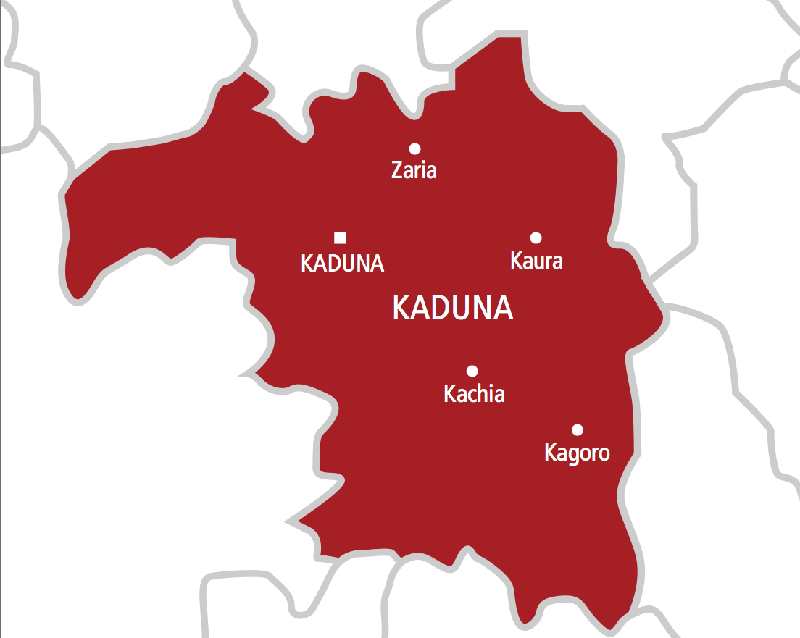
The Southern Kaduna people have stated that the region was completely marginalized from the federal to the state governments from 2015 to 2023 during the reigns of former President Muhammadu Buhari and former Governor Nasir El-Rufai.
Speaking to newsmen in Kaduna on Wednesday by the committee set up by the Southern Kaduna Leadership Council (SKLC) to assess the sustainability and timing of their annual cultural event, its chairman, Real Admiral Ferguson Bobai (Rtd) said, “During the reign of former governor Nasir El-Rufai, he did not hide his hatred for the our people.
“We never had anything. We mounted prayers begging God to intervene on the issues of the area. God in His infinite mercy answered our prayers and by January 2026, we are going to give a thanksgiving prayer to the Almighty.”
He explained that today, the area witnessed stability and the people, who are agrarian, have all gone to farm, adding that those displaced following the violence that took place in the area have also returned to their ancestral homes.
He added, “The people of Southern Kaduna have every reason to thank the present governments, from the federal to the state where we have witnessed a government of inclusiveness with the provision of the Federal University of Applied Science, a federal medical center and other social amenities that have been provided in the area.”
Real Admiral Bobai stated that the area, which the previous administrations denied them a Minister has been given a Minister by the President Bola Tinubu-led administration, stressing that the people have no reason whatsoever not to thank the present administrations.
According to him, “From 2015 to 2023, we kept on praying asking for God’s intervention especially in the security challenges in the area and the marginalization of the area. today we are thanking the Almighty for the answered prayers.
“I want to sincerely thank President Bola Tinubu for looking to the people of Southern Kaduna by appointing their son as Chief of Defence Staff and later approving his appointment as Minister of Defense.
“We pray that the Almighty will lead him in the current assignment given to him to be able to bring the security challenges of the country to the nearest minimum.”
He stated that the Southern Kaduna Festival (SKFEST) would no longer hold in December following the recommendations of a review committee set up by the Southern Kaduna Leadership Council (SKLC) to assess the sustainability and timing of the annual cultural event.


The Nigerian Bar Association (NBA) has called for an investigation into the allegations of corruption against the former Managing Director of the Nigerian Midstream and Downstream Petroleum Regulatory Authority (NMDPRA), Ahmed Farouk.
Naija News reports that Farouk recently resigned amidst accusations of corruption and economic sabotage made by Africa’s richest man, Aliko Dangote.
Dangote alleged that Farouk had spent “taxpayers’” funds amounting to millions of dollars on the secondary school education of his children in Switzerland.
Farouk tendered his resignation after a brief meeting with President Bola Tinubu.
Reacting to the development in an appearance on Channels Television, the NBA President stated that an investigation is necessary despite Ahmed’s resignation.
He argued that a proper investigation would be the right step to take, or the allegation would be seen as a ploy to get rid of the former NMDPRA boss
Osigwe said, “It will be unfair for me to take sides with any of the sides.
“The matter has become embarrassing for public officials and the government. The ICPC indicated that they will investigate the allegation. Let it not be that these allegations were used to get rid of a person.
“Let there be a proper investigation so that the man clears his name, or it is proved that he was actually corrupt or guilty of the allegations against him.”
NIGERIA NEWS
Nigeria bans mineral processing plants in residential areas, mandates plastic producers to clean up


Nigeria has ordered mineral processing companies to cease operations within residential and restricted areas. The government also mandated plastic manufacturers and bottling companies to take responsibility for the plastic waste generated from their products nationwide.
The directives form part of resolutions adopted at the 18th meeting of the National Council on Environment (NCE), Nigeria’s highest advisory body on environmental matters, which was held in Katsina State from 15 to 17 December.
The council, chaired by the Minister of Environment, Balarabe Lawal, approved the measures after reviewing environmental risks associated with mining activities, plastic pollution and public health hazards across the country.
Mining, pollution and public safety
According to the communiqué issued at the end of the meeting, the council approved that legal and regulatory bodies should restrict the establishment of mineral processing companies within residential and restricted areas in all states and the Federal Capital Territory.
The council also mandated that plastic manufacturers and plastic bottling companies adopt the Extended Producer Responsibility (EPR) framework, requiring them to take responsibility for the collection and management of plastic waste arising from their products.
Environmental experts at the meeting warned that unregulated mineral processing and plastic waste pollution continue to pose serious threats to human health, ecosystems and urban safety, particularly in densely populated communities.
Strengthening environmental regulation
The council further ordered that Environmental Impact Assessment (EIA) structures be established in all state ministries of environment. It, however, stated that the federal government would retain the authority to issue EIA certificates.
States were directed to nominate EIA focal officers and formally communicate their nominations to the Federal Ministry of Environment to strengthen coordination and compliance.
In response to environmental and health concerns in extractive communities, the council noted the need to introduce public health screening protocols in mining communities and to require livelihood restoration plans as part of mine closure processes.
Sanitation, air quality and toxic substances
As part of efforts to improve sanitation and environmental health, the council approved that all state governments establish faecal sludge management plants, aimed at accelerating progress toward Sustainable Development Goal 6 on clean water and sanitation.
It also approved increased collaboration between state governments and the Federal Ministry of Environment on the National Clean Air Programme. It endorsed the deployment of robust air and water quality monitoring systems in industrial zones.
As part of broader efforts to curb toxic pollution, the council also approved the substitution of mercury, cyanide and other poisonous chemicals used in gold extraction, citing their harmful effects on humans, animals and the natural environment.
Climate action and waste management
The council ordered the integration of climate change assessments into the Environmental Impact Assessment process, with particular emphasis on the Niger Delta region.
It also approved the development of a National Framework for the Environmentally Sound Management of Used Tyres in Nigeria, alongside the establishment of a certification scheme for refrigeration and air-conditioning practitioners.
ALSO READ: Nigeria govt inaugurates committee to enforce ban on single-use plastics
To support Nigeria’s climate commitments, the council approved measures to provide technical and regulatory support to states to maximise economic benefits from carbon credit opportunities.
Katsina meeting
The 18th NCE meeting, themed “Tackling the Triple Planetary Crisis of Climate Change, Biodiversity Loss, and Pollution for Sustainable Development in Nigeria,” attracted 312 participants, including commissioners responsible for the environment from the 36 states, permanent secretaries, heads of environment-related agencies, development partners, civil society organisations, academics and journalists.
Katsina State Governor Dikko Radda was represented by the Deputy Governor, Faruk Lawal, who served as the chief host of the meeting.
The communiqué was unanimously adopted at the close of proceedings on Wednesday.
Gombe State’s 2023 Peoples Democratic Party, PDP, gubernatorial candidate, Mohammad Barde, has formally joined the African Democratic Congress, ADC.
Barde, who came second in Gombe State’s 2023 governorship election behind Governor Inuwa Yahaya, said he joined the ADC as part of his preparations for the 2027 general elections.
In an interview after validating his ADC membership, Barde criticised the current state of insecurity and poor infrastructure in Gombe and across the country, asserting that the ADC is committed to addressing these challenges.
He expressed confidence in the party’s ability to bring positive change, highlighting its focus on inclusive leadership and equal opportunities for all.
Barde also outlined ADC’s plan to hold state congresses and a national convention in February 2026, urging members to participate in membership revalidation and mobilise new supporters ahead of the events.


The moment the video surfaced, Nigerians instinctively reached for the language of shock. Some saw a convoy so bloated it felt like a nation trembling beneath its weight. Many simply recognised a procession of priviledge that turned an ordinary Ikoyi street in Lagos into a stage for power. In all of it, Nigeria witnessed a spectacle that refused to pass quietly, a spectacle that demanded to be named, examined and confronted. Adedayo Adejobi writes.
The video opens in the sort of way modern scandals often do, without ceremony, without buildup, without a narrator to warn that one is stepping into the theatre of the absurd. The camera’s lens settles on an Ikoyi street in Lagos that should by all logic be uneventful. A few cars idle, with passers-bye and their usual Lagosian indifference. Then a convoy lumbers into view, a procession so swollen with muscle and firepower that it resembles a travelling fortress rather than the movement of a private citizen.
The atmosphere vibrates with the sort of swagger that only raw, unexamined privilege can produce. In that moment a calm street becomes a stage, and the actors arrive armed to the teeth.
Anyone watching the clip is struck not merely by the size of the security contingent but by the audacity of the choreography. The armed officers fan out with the confidence of a military presence that has long forgotten the concept of proportion. Their gait is purposeful. Their weapons gleam with the suggestion that this exercise is something they have rehearsed many times. The viewer, regardless of political persuasion, is left with a single, uncomfortable realisation. Something here is not simply unnecessary, it is fundamentally wrong.
The figure at the centre of this theatre is a private individual whose public lineage apparently grants access to something that looks very much like a personal battalion.
It is not the identity that alarms, it is the scale. It is the peculiar arrogance of a security convoy that behaves as though the pavement belongs exclusively to it. It is the sense that the state’s monopoly on force has been quietly repurposed into a family heirloom.
It takes no expert in Nigerian history to understand why this struck a nerve in a country long scarred by the excesses of the powerful. Yet what sharpened the public reaction was the involvement, however incidental, of Wole Soyinka. The Nobel laureate has built a life on confronting power, on challenging its pretensions, on refusing to bow even when the stakes were mortal.
For decades he has been the nation’s moral barometer, a restless conscience in human form. In the viral moment, he saw what many Nigerians saw, but he felt compelled to comment with a clarity that only someone who has lived through the grim consequences of unrestrained force can muster.
From Soyinka’s vantage, the incident is not amusing or outlandish. It is symptomatic. It fits into a worrying pattern that he has spent half a century warning against. There is a familiar cadence to the spectacle. Power draped in the garments of excess. Public institutions bent into improbable shapes to serve private comfort. Security personnel behaving as though they owe loyalty to bloodlines rather than constitutions. Soyinka’s reaction in the aftermath was a mixture of shock and civic irritation, the sort one reserves for a leak in a dam that everyone else insists is merely a decorative fountain.
The video itself plays like satire, but unfortunately it is non-fiction. The sheer density of armed men patrolling around a single civilian is almost comical until one remembers that weapons in Nigeria rarely appear without consequence. In a country where ordinary citizens plead for better policing, better response to kidnappings, better community safety, the parade of rifles and body armour around one young man reads like a provocation. It reads as a message that security is a commodity with a premium price tag, and the rest of the country must make do with whatever crumbs remain.
The implications of this moment ripple far beyond that Lagos street. What the viewer witnesses is no less than the distortion of democratic architecture. When state security is seen to be deployed around private individuals on a scale that rivals official presidential protection, it signals a breakdown in the chain of accountability.
It also suggests a political culture in which proximity to power becomes a substitute for legitimate entitlement. The state becomes a family estate and the machinery of coercion becomes an ornament.
Soyinka’s reaction captures the gravity of the moment. He is not speaking merely as a cultural icon, nor as a renowned intellectual. He is speaking as a citizen disturbed by the visible betrayal of a principle he regards as foundational. In his world, there is a sacred boundary between public force and private indulgence. The video suggests that this boundary is eroding, and eroding publicly.
Watching the clip, one observes the theatricality of the convoy. Cars glide in a tightly controlled formation. Officers step with practised swagger. It feels less like a security deployment and more like a monarch’s parade. The absurdity becomes clear when one stops to ask why such firepower is necessary for a simple movement through a metropolitan area. There is no threat assessment provided.
No context that rationalises this militarised procession. What remains is the inescapable sense of overcompensation, the peculiar insecurity of priviledge that demands attention at the end of a rifle barrel.
The video also becomes a cultural lens. It reveals how political power in Nigeria often expresses itself through physical intimidation. The desire to project importance through a mass of armed escorts is neither new nor unique, but in the era of viral evidence it is becoming increasingly indefensible. Every camera phone in the hands of an ordinary citizen is now a witness to excess, and every upload is an instant indictment. This convoy, in all its theatrical splendour, is now a permanent digital artefact. It will resurface again and again whenever the country debates the balance of power and entitlement.
In the broader national psyche, this sort of spectacle cultivates resentment. Nigerians do not object to legitimate security for genuine threats. They object to the weaponisation of public resources for the exclusive benefit of individuals who already sit at the pinnacle of priviledge. They object because they see neighbours kidnapped without response, communities terrorised without rescue, and families mourning victims of violent crime that an overstretched police force struggles to solve. Against this reality, the sight of a convoy overflowing with armed men feels obscene.
Viewed in this context, Soyinka’s irritation becomes almost prophetic. He has lived long enough to recognise that societies do not collapse overnight. They crumble through small erosions of public trust, through the normalisation of impunity, through the casual acceptance of inequality that becomes embedded in daily life. If this kind of convoy is allowed to become routine, it signals a nation drifting into a future where power answers only to itself.
The video also prompts a question that few in the corridors of influence seem willing to ask. Who authorised that level of force. On what grounds. Under what legal provision.
If such resources can be allocated so casually to private individuals, what assurance do citizens have that the state will not reserve all meaningful protection for a select few while the rest are left to bargain with fate. The absence of an official explanation creates a vacuum filled with suspicion, and suspicion is the quiet enemy of national cohesion.
What gives the moment its cinematic quality is the contrast between the violence implied by the convoy and the absurdly ordinary environment into which it intrudes. There is no emergency. No hostile presence. No obvious need for armoured theatrics. The weapons glint in the sun as if they are props in a film that forgot to hire a script supervisor. Yet every weapon is real and every uniform carries the weight of institutional authority. The absurdity is not entertaining. It is tragic.
It is also revealing that the convoy does not appear to care how it is perceived. That indifference is the heart of the problem. Power that fears scrutiny behaves with restraint. Power that assumes impunity behaves with abandon. The video shows a convoy so self assured that it moves through a busy neighbourhood as though the citizens watching from pavements and balconies do not exist. In a democratic society, that should trouble everyone.
The far reaching effect of this incident is not limited to scandal. It forces a national conversation about the role of security institutions. It compels Nigerians to ask whether the state is fulfilling its constitutional duty or merely functioning as a private contractor for the elite. It exposes the widening gap between the protected and the unprotected. It invites journalists, civil society and ordinary citizens to demand accountability. More importantly, it exposes the fragility of a system that relies on the goodwill of the powerful rather than the strength of institutions.
This incident may not lead to immediate reform. Nigeria’s political culture rarely moves with speed. Yet the video has carved a lasting mark. It will be referenced in public debates, mocked in sarcasm, dissected in universities, and remembered by voters who are tired of being told that security is a privilege rather than a right. It has already entered the country’s political consciousness.
Soyinka’s voice adds gravitas not because he is a celebrity but because he is a witness with moral authority. His vantage lends seriousness to what might otherwise be dismissed as social media noise. When he expresses alarm, people pay attention. When he questions the legitimacy of such a deployment, he gives the public permission to demand answers.
The video captures more than a convoy. It captures a national tension, a society negotiating the boundaries of authority, and a moment where citizens recognise that silence is complicity. It captures truth that should unsettle every Nigerian. Excess becomes normal only when no one objects.
If this moment provokes discomfort in the corridors of power, then it has already served a purpose. If it sparks reform, even better.
If it simply reminds the nation that the camera does not lie, that too is progress.
The street in Ikoyi has returned to its usual rhythm, but the echo of that convoy remains. It lives in every conversation that questions how far priviledge can stretch before it snaps the social contract. It lives in the minds of viewers who replay the clip and wonder how Nigeria can tolerate such excess. It lives in the quiet resolve of citizens who refuse to be intimidated by spectacle.
The country has witnessed something revealing. It cannot unsee it. And now that it has been seen, it must be confronted.

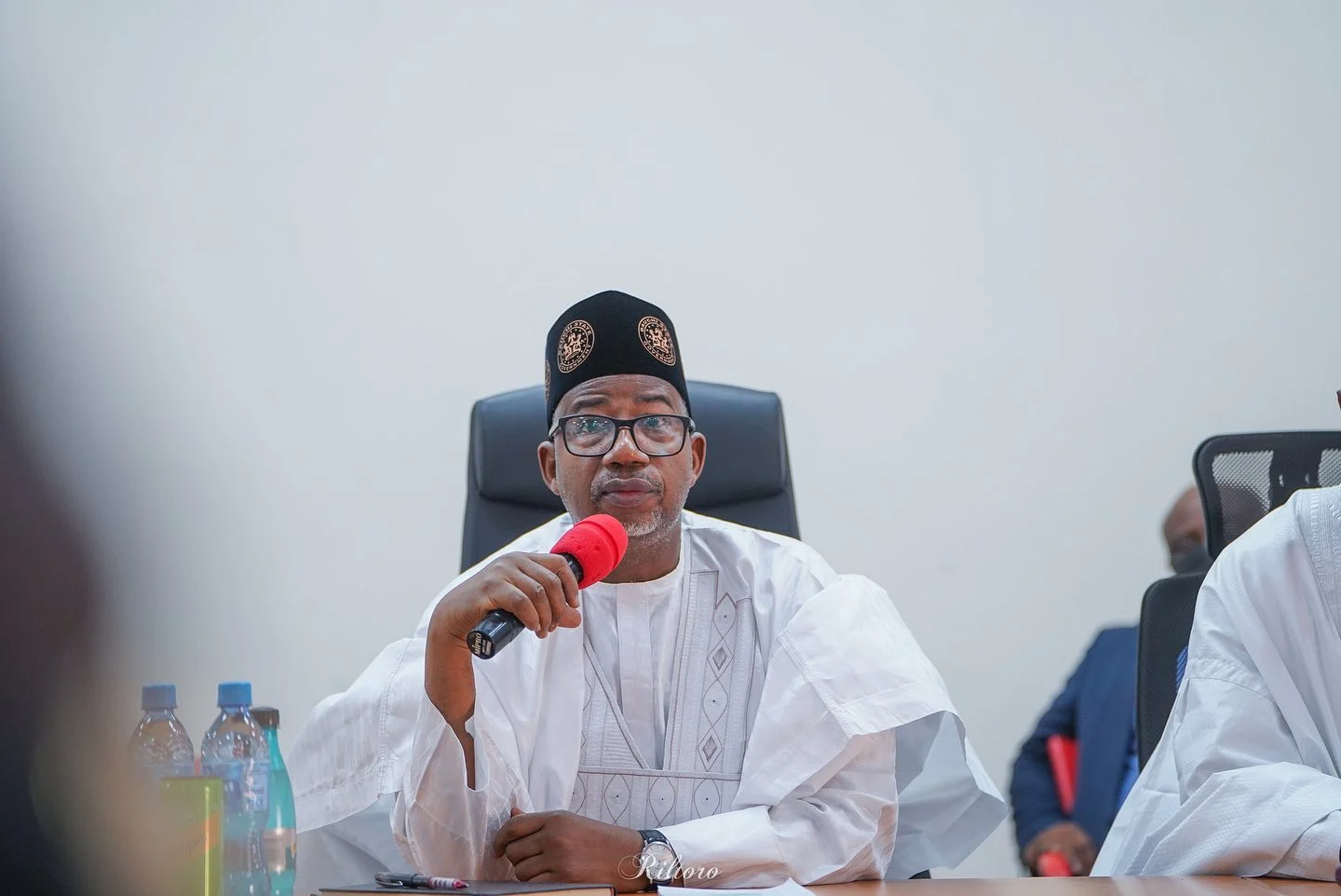
The Bauchi State Peoples’ Democratic Party (PDP) Caretaker Committee, loyal to Federal Capital Territory (FCT), minister Nyesom Wike, has directed members of Governor Bala Mohammed’s camp, who currently occupy PDP secretariats across the state, to remove their personal belongings and vacate the premises within 14 days.
The state chairman of the Caretaker Committee, Hon. Jungudo Haruna Mohammed, issued the directive during a press conference on Wednesday, warning that failure to comply would attract lawful consequences.
He emphasised the committee’s commitment to restoring unity, discipline, and order within the party and urged all loyal members to cooperate fully in the collective interest of the party and the people of Bauchi State.
“The Committee is grateful to the National Working Committee (NWC) under Alhaji Abdulrahman Mohammed for approving its appointment to oversee PDP affairs in Bauchi State.
“We accept this responsibility and pledge to discharge it diligently in accordance with the party constitution and directives of the national leadership,” Jungudo said.
The Committee reaffirmed its loyalty to the party’s national leader, Minister Nyesom Wike, and other key party officials, highlighting their ongoing commitment to stability, constitutionalism, and the rule of law within the party.
He said “The Committee finds it necessary to extend its unreserved apology, on behalf of the good people of Bauchi State, to an elder statesman and founding member of the Peoples’ Democratic Party (PDP), His Excellency, former Governor Sule Lamido, for the embarrassment and inconvenience occasioned by the deliberate actions of Governor Bala Mohammed, (Former Chairman PDP Governors Forum) who orchestrated the refusal to sell nomination forms to him ahead of the party’s aborted National Convention.”
Jungudo stressed that the committee will act within the law, warning that any harm to party members or supporters would be the responsibility of Governor Bala Mohammed.
The committee also dismissed claims by individuals posing as members of the National Working Committee, citing that their purported convention in Ibadan ignored valid court judgments and lacked INEC supervision, rendering it illegitimate.
“The public should not be misled by these activities. Legitimacy is derived from strict compliance with party laws, court orders, and the constitution, not by meetings with former governors or lawmakers,” he added.
He further highlighted that ongoing legal disputes involving INEC and the purported convention cannot confer recognition or authority on these individuals. Following the NEC’s expulsion of Governor Bala Mohammed and the dissolution of state party executive committees during its 103rd meeting on November 18, 2025, the public is advised to recognize this decision and act accordingly.
“Similarly, The Committee hereby advises all illegal occupants of the PDP Secretariats across the state to immediately remove their personal belongings and vacate the premises within 14 days. Failure to comply with this directive will attract lawful consequences.
“The Committee reiterates its firm commitment to restoring unity, discipline, and order within the party and calls on all loyal members to cooperate fully with the Committee in the collective interest of the party and the people of Bauchi State,” he emphasised.
Jungudo appealed to members considering leaving the party to reconsider, reaffirming the Committee’s commitment to fairness, inclusiveness, and unity.

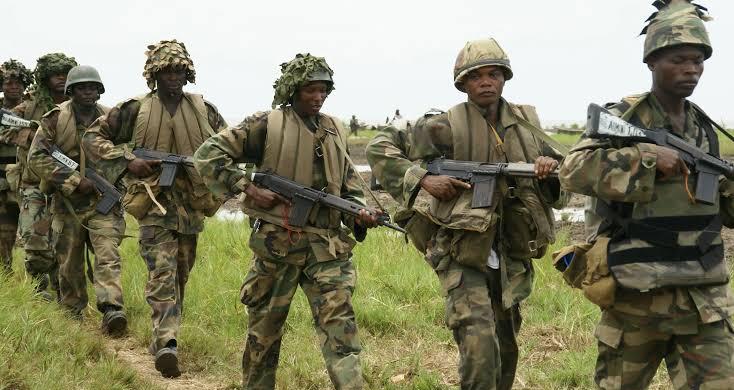
Troops of the Nigerian Army under Operation Hadin Kai (OPHK) have repelled a terrorist drone attack on their position at Forward Operating Base Molai in Delwa village, Konduga Local Government Area of Borno State.
A credible source at Army Headquarters confirmed that the incident occurred on December 16.
According to the source, the terrorists deployed four armed drones loaded with explosives, but the troops neutralised all. Efforts are reportedly underway to trace the launch site and apprehend those responsible.
The source added that troops across Sectors 2, 3 and 4 of OPHK are sustaining offensive operations under Desert Sanity IV.
In a related development, troops conducting Operation Safe Haven raided criminal hideouts and an illegal mining site at Rafin Bauna and the Gero mountains in Plateau State on 16 December, arresting three suspects.
Recovered items included a fabricated rifle, a round of 7.62mm special ammunition, a generator, three shovels and water pipes. The suspects and the exhibits are currently in custody.
The source also disclosed that troops under Operation Whirl Stroke rescued a kidnap victim at Yelewata in Guma Local Government Area of Benue State.
The victim, abducted from his shop in Gidan Waya, Obi Local Government Area of Nasarawa State on 14 December, was abandoned by the kidnappers after they sighted the approaching troops.
He reaffirmed the Army’s commitment to sustained operations against terrorists, bandits, and other criminal elements across the country.

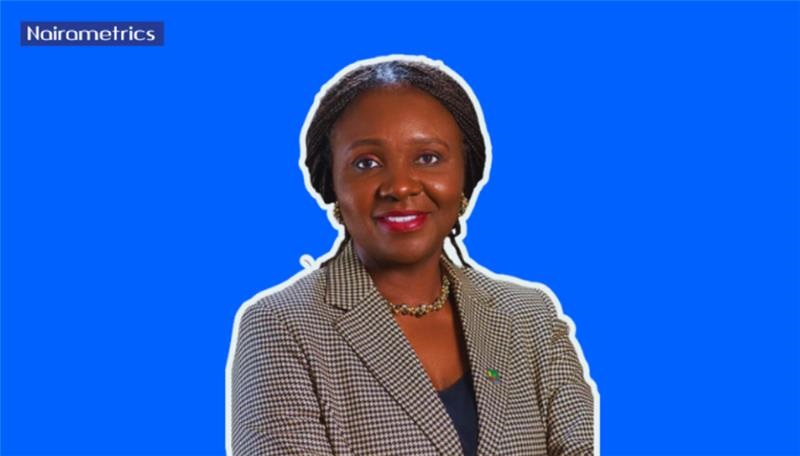
On Wednesday, President Bola Tinubu announced the nomination of Oritsemeyiwa Amanorisewo Eyesan as the new chief executive officer of the Nigerian Upstream Petroleum Regulatory Commission (NUPRC), subject to confirmation by the Senate.
The nomination follows the resignation of Gbenga Komolafe, who previously led the upstream regulator, and comes as the federal government moves to ensure leadership continuity in Nigeria’s oil and gas regulatory institutions.
The president had written to the Senate requesting an expedited confirmation process.
This shows the administration’s focus on stabilising the upstream petroleum sector at a time of declining crude oil output, tightening fiscal conditions and renewed efforts to attract investment.
The NUPRC is a key institution under the Petroleum Industry Act (PIA), responsible for regulating exploration and production activities and enforcing compliance across Nigeria’s upstream value chain.
Oritsemeyiwa Eyesan’s education
Eyesan is a veteran energy executive with more than 30 years of professional experience spanning banking, public service and the oil and gas industry.
She is a graduate of Economics from the University of Benin and began her career in the financial sector, working at People’s Bank of Nigeria and later Gulf Bank of Nigeria, before transitioning into the petroleum industry.
She spent nearly 33 years at the Nigerian National Petroleum Corporation and its successor, NNPC Ltd., rising through the ranks to occupy some of the most senior positions within the organisation.
Eyesan retired from NNPC Ltd. in 2024 as Executive Vice President, Upstream, a role she held between September 2023 and November 2024, overseeing the company’s upstream portfolio during a period of structural reform and heightened regulatory change.
Her early career experience
Prior to that, she served as NNPC’s pioneer Chief Strategy and Sustainability Officer from 2022 to 2023. In that capacity, she led the development of the company’s sustainability framework, institutionalised enterprise-wide data governance and supported the transformation of NNPC into a fully commercial entity in line with the Petroleum Industry Act.
Between 2019 and 2022, Eyesan was Group General Manager, Corporate Planning and Strategy, where she coordinated long-term corporate strategy, budgeting and capital allocation, while also engaging government ministries and agencies on national development plans. Her work during this period included supporting negotiations that led to the renewal of Nigeria’s deepwater production-sharing contracts, unlocking billions of dollars in potential investments.
Eyesan’s career also intersects with several landmark developments in Nigeria’s energy sector, including strategic and regulatory engagements that supported the passage of the Petroleum Industry Act and initiatives aimed at strengthening energy security and investor confidence.
Follow us for Breaking News and Market Intelligence.




SOURCE PAGE
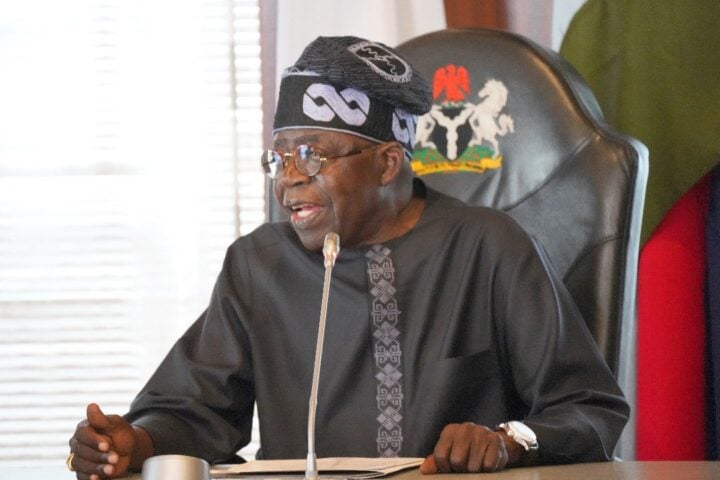
•Saidu Mohammed heads downstream/midstream, Oritsemeyiwa Eyesan leads upstream
• Tinubu seeks Senate’s confirmation for new picks
•NBA demands probe despite Ahmed’s resignation
Deji Elumoye and Emmanuel Addeh in Abuja and Wale Igbintade in Lagos
In an unexpected turn of events, the Presidency yesterday announced the resignation of the Chief Executive Officer of the Nigerian Midstream and Downstream Petroleum Regulatory Authority (NMDPRA), Farouk Ahmed, as well as the his counterpart at the Nigerian Upstream Petroleum Regulatory Commission (NUPRC), Gbenga Komolafe.
In their place, President Bola Tinubu asked the Senate to approve the nominations of two new chief executives for the NMDPRA and the NUPRC, namely: Saidu Aliyu Mohammed and Oritsemeyiwa Eyesan respectively.
Both officials who ‘resigned’ left their positions ahead of the expiry of their tenures next year, having been appointed in 2021 by former President Muhammadu Buhari to lead the two regulatory agencies created by the Petroleum Industry Act (PIA).
Specifically, the Presidency made the announcement shortly after meeting behind closed doors with the embattled erstwhile CEO of the NMDPRA, Ahmed, at the State House, Abuja.
The meeting took place against the backdrop of mounting allegations against the former petroleum regulator, Ahmed, by renowned industrialist and President of Dangote Group, Alhaji Aliko Dangote.
Ahmed who arrived at the State House at about 5:30pm left the President’s first floor office in less than 30 minutes at about 5.55 pm and refused to speak with newsmen as he exited the Villa offering no comment on the allegations or the outcome of his meeting with the President, THISDAY observed.
Dangote in recent times has been locked in a public dispute over Nigeria’s downstream petroleum regulator and the future of domestic refining, with Africa’s richest person accusing him of sleaze and economic sabotage as well as undermining local refining capacity in Nigeria.
Dangote maintained that the continued issuance of import licences for petroleum products, despite in-country capacity was frustrating domestic refiners and entrenching dependence on imports.
He further alleged that the NMDPRA was colluding with international traders and oil importers to the detriment of local operators, a charge the regulatory chief had yet to publicly address before his removal, and for which he had been invited by federal lawmakers.
Besides, the billionaire businessman raised personal allegations against the NMDPRA chief, claiming that Ahmed was living beyond his legitimate means and claiming that four of his children attend secondary schools in Switzerland at a cost running into about $7 million.
Dangote argued that such expenditure raised questions about potential conflicts of interest and the integrity of regulatory oversight in the downstream petroleum sector, and eventually submitted a petition to the Independent Corrupt Practices and Other Related Offences Commission (ICPC), calling for Ahmed’s arrest, investigation and prosecution.
Perhaps, even more shocking was the ‘resignation’ of the NUPRC chief, Komolafe, the pioneer head of the upstream commission since 2021, with an initial term of five years, which was expected to run out next year.
Komolafe’s tenure has been marked by a series of reforms, touching on regulatory transparency, industry performance, investment confidence, community development, and international engagement.
Under him, Nigeria’s active drilling rig counts surged from just eight in 2021 to almost 70 by October 2025, reflecting renewed exploration and production interest. The regulatory environment has fostered investment approval and capital inflows, with dozens of Field Development Plans (FDPs) worth billions of dollars sanctioned, boosting Nigeria’s energy infrastructure and production potential.
He also oversaw the development and implementation of key regulatory frameworks, leading to the reduction of crude theft as well as expansion of the Host Community Development Trust framework, channeling funds into community infrastructure and social services.
However, a statement by the Special Adviser to the President on Information and Strategy, Bayo Onanuga, stated that the two new nominees are seasoned professionals in the oil and gas industry.
Following the ‘resignations’ the President has, therefore, asked the Senate to confirm the nominations of the two new chief executives to fill the positions, requesting expedited confirmation of Eyesan as CEO of NUPRC and Mohammed as head of the NMDPRA.
Oritsemeyiwa Eyesan, a graduate of Economics from the University of Benin, spent nearly 33 years with the Nigerian National Petroleum Company Limited (NNPC) and its subsidiaries. She retired as Executive Vice President, Upstream between 2023 and 2024, and previously served as Group General Manager, Corporate Planning and Strategy at NNPC from 2019 to 2023.
On the other hand, Saidu Mohammed, born in 1957 in Gombe, graduated from Ahmadu Bello University in 1981 with a Bachelor’s in Chemical Engineering. Coincidentally, he was also announced yesterday as an independent non-executive director at Seplat Energy.
His prior roles include Managing Director of Kaduna Refining and Petrochemical Company and Nigerian Gas Company, as well as Chair of the boards of West African Gas Pipeline Company, Nigeria LNG subsidiaries, and NNPC Retail.
He also served as Group Executive Director/Chief Operating Officer, Gas & Power Directorate, where, according to the Presidency, he provided strategic leadership for major gas projects and policy frameworks, including the Gas Masterplan, Gas Network Code, and contributions to the Petroleum Industry Act (PIA).
Mohammed, the statement said, played a pivotal role in delivering key projects such as the Escravos–Lagos Pipeline Expansion, the Ajaokuta–Kaduna–Kano (AKK) Gas Pipeline, and Nigeria LNG Train, the statement stressed.
NBA Demands Probe Despite Ahmed’s Resignation
Also yesterday, the President of the Nigerian Bar Association (NBA), Afam Osigwe (SAN), insisted that serious allegations, including forgery and false asset declarations, must be thoroughly investigated and should not be allowed to end with the resignation or removal of a public officer.
Osigwe made the remarks in the wake of the resignation of Ahmed, following corruption allegations levelled against him by the Chairman of the Dangote Group, Dangote.
Speaking during on Channels TV Politics Today, the NBA president warned that allowing high-profile officials to quietly leave office without accountability weakens institutions and entrenches a culture of impunity. He stressed that resignation does not amount to exoneration and must not be treated as closure.
“Allegations of this nature are too weighty to be used merely as tools for political expediency or administrative convenience. Once such claims are made, there is a public duty to investigate them to their logical conclusion, either to clear the individual’s name or to establish guilt based on credible evidence,” Osigwe said.
He added: “We have said this before in similar cases. When weighty allegations such as forgery or false declarations are raised, there ought to be an investigation. People should present documents, and where others are complicit, they too should be held accountable.”
Osigwe cautioned against a pattern in which allegations surface, a resignation follows, and public interest fades without any transparent inquiry. Such an approach, he noted, creates the impression that allegations are weaponised simply to remove someone from office, after which no one genuinely seeks the truth.
He emphasised that accountability processes must be driven by a sincere desire to uphold the rule of law, not by political manoeuvring or attempts to give one party an advantage in regulatory or commercial disputes.
Politicising serious accusations, he warned, reduces them to power plays and undermines public confidence in governance and justice.
While declining to take sides in the specific controversy, Osigwe said perceptions of corruption can sometimes be as damaging as proven misconduct, making it all the more important for allegations to be properly examined.
Failure to investigate, he added, harms not only the individuals involved but also the credibility of public institutions. “Building strong institutions requires consistency, transparency, and follow-through in handling allegations against public officers. This is how institutions are built and how we prevent such issues from recurring,” he said.
Osigwe maintained that Nigeria’s anti-corruption efforts would remain superficial unless allegations are followed by credible investigations and, where necessary, prosecution. He stressed that accountability must go beyond symbolic gestures to demonstrable outcomes.
Dispute Threatens Nigeria’s Economic Sovereignty, Agbakoba Warns
Meanwhile, a former NBA President, Olisa Agbakoba (SAN), has warned that the ongoing dispute between Dangote Petroleum Refinery and the NMDPRA goes beyond a commercial or regulatory disagreement, raising fundamental questions about Nigeria’s economic sovereignty and constitutional management of its hydrocarbon resources.
In a press statement issued yesterday, titled: “The Dangote Refinery–NMDPRA Dispute: Beyond Commercial Disagreement to Questions of Economic Sovereignty”, Agbakoba said the impasse highlights deeper contradictions in Nigeria’s petroleum governance framework.
According to the statement, the controversy surrounding Africa’s largest refinery, built at an estimated cost of $20 billion—reveals a striking paradox: Nigeria now has world-class refining capacity yet remains heavily dependent on imported petroleum products.
He noted that a private investor has delivered infrastructure long absent in the country but now faces regulatory obstacles from an authority whose mandate includes promoting efficiency, investment, and growth in the downstream sector.
“The issue at stake transcends commercial disagreement,” the statement said, describing the situation as one that strikes “at the heart of a fundamental development question: the sovereignty of Nigeria’s governance process over its hydrocarbon resources.”
Agbakoba criticised policy inconsistencies, particularly the reported difficulty domestic refineries face in securing crude oil feedstock while licenses for imported refined products continue to be issued.
He argued that such outcomes undermine local value addition, sustain foreign exchange pressures, and entrench Nigeria’s long-standing dependence on fuel imports. He warned that the dispute reflects a broader structural problem in Nigeria’s oil sector, described as continued reliance on a “Contract Oil” model.
Under this system, crude oil is largely treated as an export commodity, while refining, job creation, and industrial development are outsourced to foreign economies. As a result, Nigeria exports raw crude only to import refined products at premium prices, perpetuating economic dependency and denying the country the full benefits of its natural resources.
This approach, the statement argued, has contributed to decades of underdevelopment and vulnerability to global energy market shocks. In contrast, Agbakoba highlighted Saudi Arabia’s petroleum governance model, described as “Development Oil.”
Saudi Arabia, he said, prioritises domestic refining, downstream integration, and control of the petroleum value chain, avoiding policies that undermine local capacity. By comparison, Nigeria, despite being Africa’s largest oil producer, lacks similar downstream control, including ownership of a national tanker fleet.
Agbakoba cited Section 44(3) of the 1999 Constitution, which vests ownership and control of oil and gas resources in the federal government to be managed for the welfare and security of Nigerian citizens.
He argued that regulatory actions that frustrate investments capable of creating jobs, reducing import dependence, and strengthening local capacity may amount to a breach of this constitutional obligation.


The Alaafin of Oyo, Oba Abimbola Akeem Owoade, will on Sunday confer chieftaincy titles on the son of President Bola Tinubu, Seyi and a former governor of Zamfara State, Abubakar Yari.
This was confirmed in a statement by the Director of Media and Publicity to the Alaafin, Bode Durojaiye.
According to the statement, Senator Yari will receive the chieftaincy title of Obaloyin of Yorubaland, representing love, compassion, justice and a bridge between physical and spiritual realms, while Seyi Tinubu, a business magnate, will receive Okanlomo of Yorubaland title, symbolising a custodian of Yoruba values, unity and cultural heritage.
The statement concluded that both titles come with responsibilities such as promoting Yoruba culture, advising the Alaafin, fostering unity and advancing education and social welfare.