
WORLD NEWS
Gaza flood deaths ‘utterly preventable,’ Amnesty says – DW – 12/18/2025

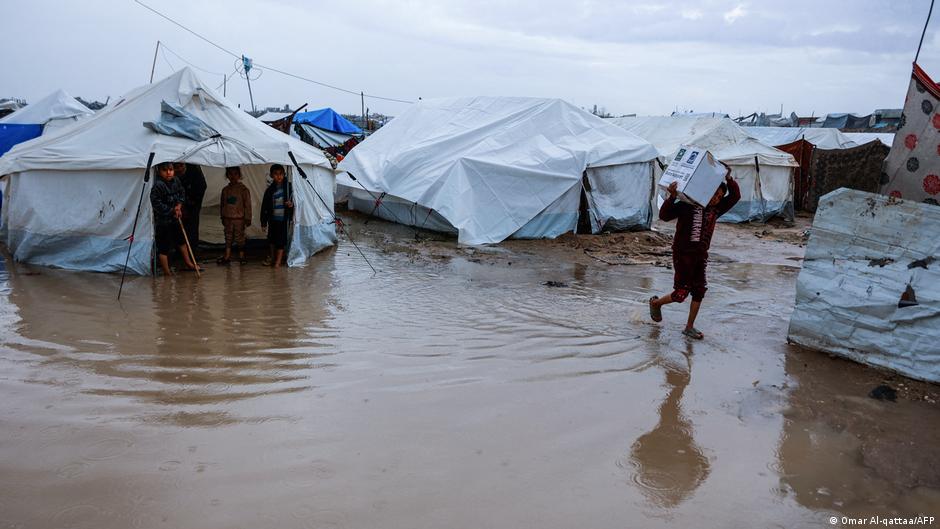
On Thursday, UK-based human rights organization Amnesty International said the devastation from torrential rains in the Gaza strip was ”utterly preventable” and ”was fueled by Israel’s ongoing restrictions on the entry of critical supplies to repair vital infrastructure.”
“The writing was on the wall; this was no accident, it was an utterly preventable tragedy. The devastating scenes of flooded tents and collapsed buildings in Gaza that have emerged in recent days cannot be blamed solely on ‘bad weather’,” Amnesty International’s senior director for research, advocacy, policy and campaigns, Erika Guevara Rosas, said in a statement.
”They are the foreseeable consequences of Israel’s ongoing genocide and deliberate policy of blocking the entry of shelter and repair materials for the displaced,” she added.
At least 12 people have died in Gaza because of the torrential rains and floodingImage: Omar Al-qattaa/AFP/Getty Images
Condemning the Israeli army’s actions in the Gaza Strip, Amnesty said:”Israel must immediately lift its cruel blockade on Gaza and ensure unfettered access for essential goods, repair materials and humanitarian supplies.”
Rain wreaks havoc in Gaza
Incessant rains battered the Gaza Strip for days, flooding camps for the displaced, and collapsing buildings that were already damaged in the two-year war.
At least 12 people, including a 2-week-old baby, were reported dead on December 16.
The Gaza Health Ministry reported that the 2-week-old died of hypothermia as a result of the weather.
The majority of the 2 million people in Gaza are taking shelter in tents. The Strip saw more than 150 milliliters (9 inches) of rain in some parts over the past week, causing flooding in camps for displaced people.
Several already damaged buildings have collpased due to heavy rains in GazaImage: Mahmoud Issa/REUTERS
International aid groups have demanded that more aid supplies be allowed to enter Gaza.
Israel has continued to block most essential aid from entering the Strip. Recently released Israeli military figures suggest that the government hasn’t met the ceasefire stipulation of allowing 600 trucks of aid into Gaza a day. Israel has refuted that finding.
Despite a ceasefire agreement that took effect on October 10, Israel and Hamas have accused each other of repeated violations.
Since the truce, more than 370 deaths have been reported in Gaza by the Palestinian health officials.
Edited by: Elizabeth Schumacher
WORLD NEWS
Dramatic moment heavily-armed police in camouflage swarm a group of men travelling to Bondi Beach as part of mystery counter-terrorism operation


Heavily-armed tactical officers dressed in camouflage were seen arresting a group of males in southwest Sydney, as part of a dramatic counter-terrorism operation.
Images showed several officers standing over the group of five men at the intersection of George and Campbell streets, in Liverpool, at about 5pm on Thursday.
It’s understood the group were travelling to Bondi Beach when their vehicle was rammed and stopped by officers from the NSW Counter Terrorism unit and the Police Public Order and Riot Squad.
‘A police operation is underway on George Street, Liverpool,’ NSW Police said in a statement.
‘There is no ongoing risk to the community.
‘Further information will be available later today.’
A pair of 4WDs at the scene appeared to have crashed into the front of a white hatchback.
Stunned witnesses reported seeing a police LandCruiser ram a white Hyundai with Victorian number plates, which was carrying the men.
Tactical officers arrested a group of men in Liverpool

NSW Police issued an alert to stay out of the area at about 5pm on Thursday

A white hatchback was rammed by undercover police 4WD vehicles

Five men were arrested at intersection of George and Campbell streets

Heavily armed officers at the scene

It’s understood Counter Terrorism, NSW Police Public Order and Riot Squad officers were present

One of the men was taken from the scene in a gurney
One of the men was taken from the scene on a gurney.
A sixth man was arrested by police in a nearby laneway.
Businesses surrounding the incident, including a medical centre, have been locked down.
More to come…
Share or comment on this article:
Dramatic moment heavily-armed police in camouflage swarm a group of men travelling to Bondi Beach as part of mystery counter-terrorism operation

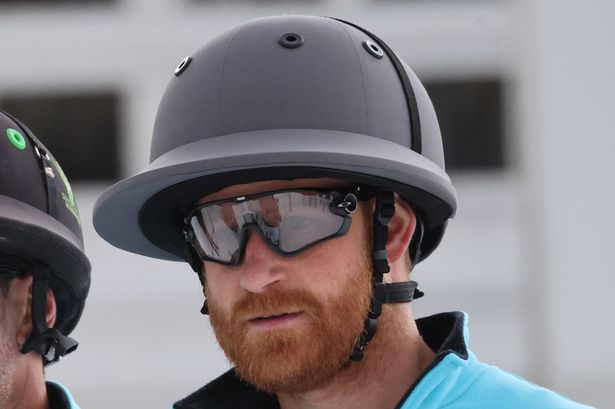
Meghan Markle took to Instagram to share a picture of her husband Prince Harry playing polo in the snow in Aspen – and captioned the snap with a three-word remark
SOURCE PAGE


Australia has announced tougher laws on hate speech in the wake of the Bondi Beach terror attack.
Naveed Akram, 24, and his father, Sajid Akram, are suspected of opening fire on crowds of more than 1,000 people as they celebrated Hanukkah in the Archer Park area of Bondi Beach on Sunday.
Naveed Akram has been charged with 59 offences over the attack that killed 15 people in the nation’s worst massacre in almost three decades.
Australian Federal Police (AFP) commissioner Krissy Barrett also confirmed further searches would take place in the coming days.
Gunmen ‘must never have had love’
The proposed measures include increased penalties for promoting violence, the creation of a new aggravated hate-speech offence for preachers and leaders who promote violence, and the development of a regime to list organisations whose leaders engage in hate speech that promotes violence or racial hatred.
Sajid Akram, 50, was shot dead by police at the scene, while two police officers were also non-fatally wounded during an exchange of gunfire.
Read more:
Inside Philippines hotel used by gunmen before mass shooting
Relative of youngest victim of shooting hits out at attackers
The first funerals of the Bondi Beach victims took place on Wednesday, including that of London-born rabbi Eli Schlanger.
On Thursday, hundreds of mourners bearing bright bouquets gathered in Sydney for the funeral of 10-year-old Matilda, who was enjoying a petting zoo at the festivities on Sunday just before she was gunned down.

People add to a floral tribute outside Bondi Pavilion on 18 December Pic: AP
Ms Barrett said at a press conference on Thursday the New South Wales Joint Counter Terrorism Team would execute further search warrants to support the investigation.
“There is a lot of material to be examined, and the AFP continues to work with both domestic and international partners to build a more complete picture of the movements and who the alleged offenders had contact with, both in Australia and offshore,” she said.
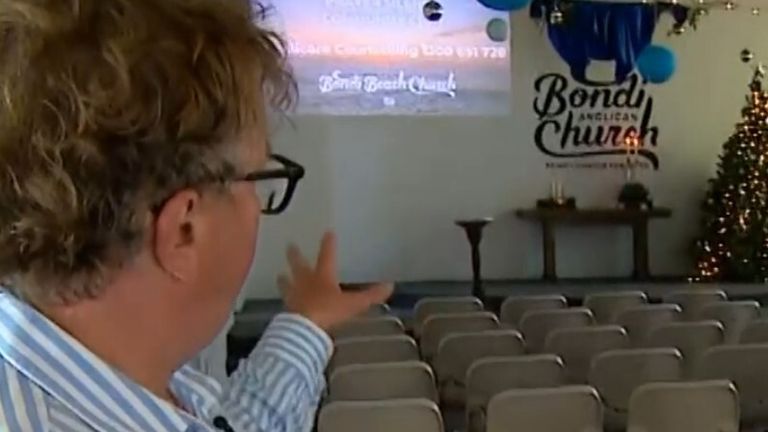
Bondi: How people hid in a church
Prime minister Anthony Albanese announced his government would work on a series of legislative reforms in a bid to clamp down on those who “spread hate, division and radicalisation”, adding there was “no place in Australia for antisemitism”.
“We have seen a series of appalling attacks targeting Australia’s Jewish community,” he said.
“That culminated, on Sunday, in one of the worst acts of mass murder that this country has ever seen.”
“It is clear we need to do more to combat this evil scourge, much more,” Mr Albanese added.
Ms Barrett also confirmed the Australian Federal Police would continue to investigate “hate preachers”.
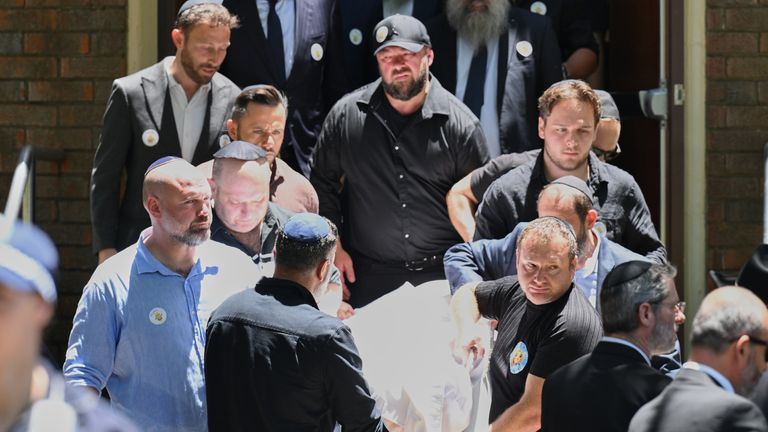
Family carry the coffin following a service for Bondi Beach mass shooting victim 10-year-old Matilda, on 18 December: Pic: AP
It comes after Mr Albanese vowed to introduce tougher gun-control measures following the attack.
Naveed Akram remains under armed guard in hospital, having emerged from his coma on Tuesday afternoon.
Along with the murders, he is accused of 40 counts of causing wounding/grievous bodily harm to a person with intent to murder, discharging a firearm intending to cause grievous bodily harm, a public display of a prohibited terrorist organisation symbol and placing an explosive in/near a building with the intent to cause harm.
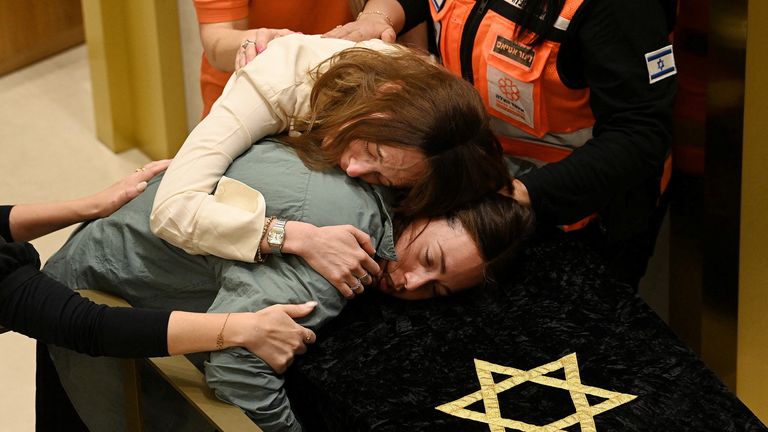
Funerals begin for Bondi victims
Mr Albanese said a special 12-month taskforce would be set up, and the nation’s home affairs minister would be granted new powers to cancel or refuse visas for people who spread hate and division in Australia, or who would do so if permitted to enter the country.
NSW Health confirmed 16 people were still receiving care in the wake of the attack on Thursday afternoon local time.
Two people are still in a critical condition, while three people have been listed as “critical but stable”.
WORLD NEWS
Cambodia says Thailand bombed casino hub on border, with no truce in sight | Conflict News


Despite Trump claim of ceasefire, no end on horizon to latest round of conflict recently reignited by border skirmish.
Published On 18 Dec 2025
Click here to share on social media
share2
Cambodia’s defence ministry has accused Thailand’s military of bombing the casino hub of Poipet, a major land crossing between the two nations, which are engaged in renewed clashes along their border.
The ministry said in a statement on Thursday that Thai forces had “dropped 2 bombs” in the municipality of Poipet, located in the northwestern province of Banteay Meanchey, at about 11am (04:00 GMT) that morning.
Recommended Stories
list of 3 itemsend of list
At the time of reporting, Thailand had not yet confirmed the strike on the bustling casino hub, which is popular with Thai gamblers.
The interior ministry said this week that at least four casinos in Cambodia have been damaged by Thai strikes.
Renewed fighting between the Southeast Asian neighbours this month has killed at least 21 people in Thailand and 17 in Cambodia, while displacing about 800,000, officials said.
Thailand said on Tuesday that between 5,000 and 6,000 Thai nationals remained stranded in Poipet after Cambodia closed its land border crossings with its neighbour.
Cambodia’s interior ministry said the border closures were a “necessary measure” to reduce risks to civilians amid the ongoing combat, adding that air travel remained an option for those seeking to leave.
Truce denial
Five days of fighting between Cambodia and Thailand in July killed dozens of people before a truce was brokered by the United States, China and Malaysia, and then broken within months.
United States President Donald Trump, who has repeatedly intervened in the longstanding conflict this year, claimed last week that the two countries had agreed to a new ceasefire.
But Bangkok denied any truce had been agreed upon, and fighting with artillery, tanks, drones and jets has continued daily since a border skirmish earlier this month caused the latest round of conflict.
The conflict stems from a territorial dispute over the colonial-era demarcation of their 800km (500-mile) border and a smattering of ancient temple ruins situated on the frontier.
Each side has blamed the other for instigating the renewed fighting, claiming self-defence, while trading accusations of attacks on civilians.
China said it was sending its special envoy for Asian affairs to Cambodia and Thailand on Thursday for a “shuttle-diplomacy trip” to help bridge the gaps and “rebuild peace”.

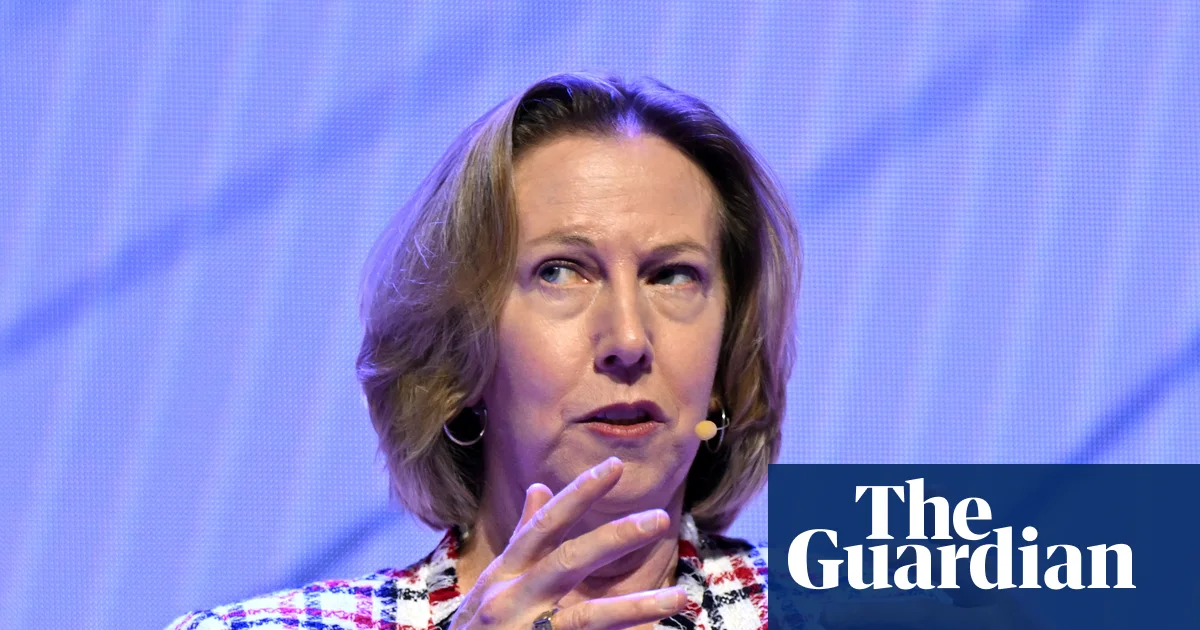
BP’s board has appointed its first female chief executive in a move to revive the oil company’s fortunes, after ousting Murray Auchincloss less than two years into his role.
In an unexpected leadership shake-up, Auchincloss will step down as chief executive with immediate effect, but remain in an advisory role until the end of next year.
Auchincloss will be succeeded by Meg O’Neill, a former ExxonMobil executive and the head of the Australian oil company Woodside Energy. Carol Howle, BP’s head of trading, will run the firm until O’Neill takes up the top job in April.
The incoming oil boss will be BP’s first female chief executive in its 116-year history, and the first woman to head any of the world’s top five oil companies. Her appointment also marks the first time BP has hired an outsider for the top job.
The surprise appointment of BP’s third chief executive in five years emerged just weeks after BP appointed Albert Manifold to chair the board. Manifold replaced Helge Lund who presided over the oil company’s failed attempt to adopt a green energy agenda.
The shake-up will be taken as a sign that the British oil firm is seeking a renewed push to improve its business, with its shares and earnings lagging behind competitors such as ExxonMobil and Shell for years as it pursued green energy projects at the expense of growing its oil and gas production.
BP’s green strategy was set by its previous boss, Bernard Looney, who was appointed by Lund in 2020 to transform the business into an integrated energy company. However, the transition was undermined by a rise in global oil and gas prices, as well as the shock departure of Looney in 2023.
Looney was dismissed and denied more than £32m in pay and share awards after admitting he had failed to fully disclose to the board a series of personal relationships with his colleagues.
Auchincloss blamed the company’s “misplaced” optimism over the speed of the energy transition earlier this year and promised shareholders he would “fundamentally reset” BP by slashing billions in planned renewable energy initiatives and shifting its focus back to traditional oil and gas.
He had been under pressure since the feared New York hedge fund Elliott Investment Management took a stake in the company earlier this year. Elliott was pleased with O’Neill’s appointment, according to a source familiar with its thinking cited by the Financial Times.
Auchincloss will leave the company on Thursday. BP had not publicly announced a search process for his successor before it announced his departure late on Wednesday evening.
Manifold said: “Progress has been made in recent years, but increased rigour and diligence are required to make the necessary transformative changes to maximise value for our shareholders.”
O’Neill, who has headed Woodside since 2021, previously spent 23 years at ExxonMobil. Under her leadership, Woodside merged with BHP Group’s petroleum arm to create a top 10 global independent oil and gas producer valued at $40bn (£30bn) and doubled Woodside’s oil and gas production.
“With an extraordinary portfolio of assets, BP has significant potential to re-establish market leadership and grow shareholder value,” said O’Neill.
“This is clearly a high-profile hire, and probably some of the change that BP shareholders have been looking for,” said Dan Pickering, chief investment officer at Pickering Energy Partners.
Biraj Borkhataria, an analyst at RBC, said: “It is a little surprising to see the chairman willing to make a major change in such a short period of time, given he has little direct oil and gas experience. That said, with the activist in the shares, it felt like this move was more of a ‘when, not if’.”
Derren Nathan, head of equity research at Hargreaves Lansdown, said: “With the sector facing pressure, consolidation is the talk of the town, but BP is most frequently seen as prey rather than the hunter.
“Rival Shell has distanced itself from takeover speculation, but there are other potential suitors. O’Neill may have a fight on her hands to ensure BP’s not sold for a song, and to keep a seat at the table if it were to join forces with a competitor.”
Earlier this year, O’Neill suggested at a gas industry conference that young people who take an ideological stand against fossil fuels are hypocrites for ordering cheap online consumer goods “without any sort of recognition of the energy and carbon impact of their actions”.
Liz Westcott, who leads Woodside’s Australian operations, has taken over as its acting chief executive.
BP shares rose 1% in early trading on Thursday morning.

Paul KirbyEurope digital editor
 Ukrinform/NurPhoto
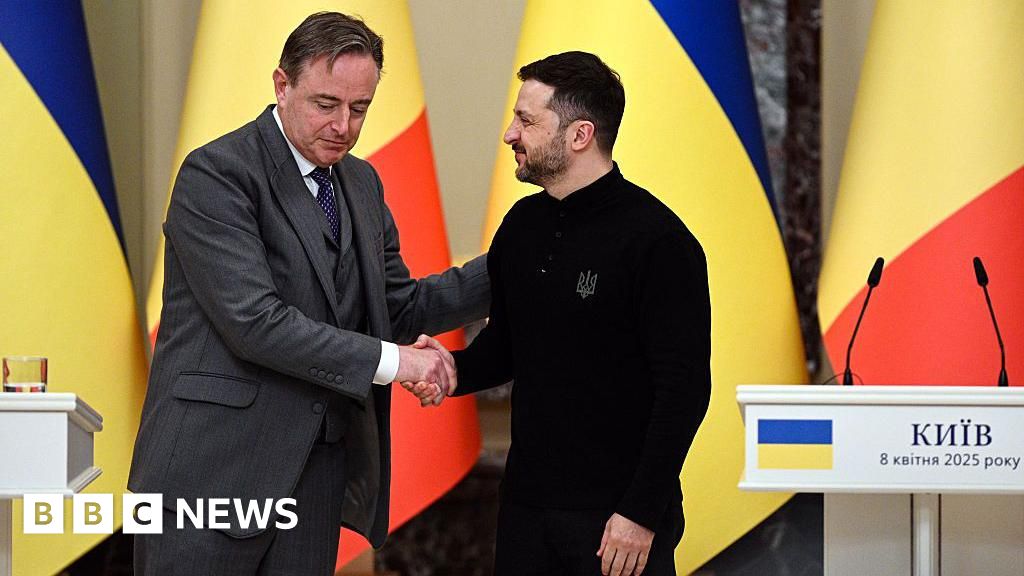
Belgian Prime Minister Bart De Wever is yet to be convinced that the money held in Belgium should be loaned to Ukraine (file pic)
European Union leaders are gathering for a Brussels summit where a momentous decision will be taken on whether to loan Ukraine tens of billions of euros in frozen Russian assets to fund its military and economic needs.
Most of Russia’s €210bn (£185bn; $245bn) worth of assets in the EU are held by Belgium-based organisation Euroclear, and so far Belgium and some other members of the bloc have said they are opposed to using the cash.
Without a boost in funding, Ukraine’s finances are set to run dry in a matter of months.
One European government official described being “cautiously optimistic, not overly optimistic” that a deal would be agreed. Russia has warned the EU against using its money.
It has filed a lawsuit against Euroclear in a Moscow court in a bid to get its money back.
The Brussels summit comes at a pivotal moment in the war and and all eyes are on Belgian Prime Minister Bart De Wever, who told the Belgian parliament on Thursday: “I haven’t yet seen any text that would persuade me to change Belgium’s position”.
US President Donald Trump has said a deal is closer than ever to end the war – which began with Russia’s full-scale invasion of Ukraine in February 2022.
US and Russian officials are due to meet in Miami this weekend for further talks on a peace plan, a White House official told the AFP news agency. It is thought Kremlin envoy Kirill Dmitriev will talk to Trump envoys Steve Witkoff and Jared Kushner, days after they met Ukrainian and European leaders in Berlin.
Russia has not yet responded to the latest peace proposals, but the Kremlin has stressed that plans for a European-led multinational force for Ukraine supported by the US would not be acceptable.
President Vladimir Putin made his feelings towards Europe clear on Wednesday, when he said the continent was in a state of “total degradation” and that “European piglets” – a derogatory description of Ukraine’s European allies – were hoping to profit from Russia’s collapse.
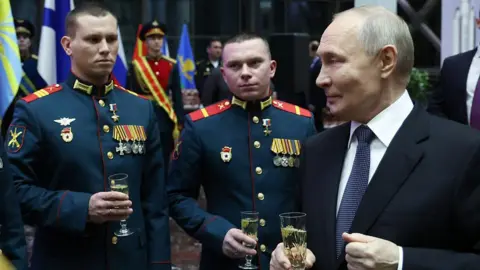 Alexander KAZAKOV/POOL/AFP

Those in favour of loaning Ukraine the money believe it will help deter Putin from continuing the war
The European Commission – the EU’s executive arm – has proposed loaning Kyiv about €90bn (£79bn) over the next two years – out of the €210bn of Russian assets sitting in Europe.
That is about two-thirds of the €137bn that Kyiv is thought to need to get through 2026 and 2027.
Until now the EU has handed Ukraine the interest generated by the cash but not the cash itself.
“This is a crunch time for Ukraine to keep fighting for the next year,” a Finnish government official told the BBC. “There are of course peace negotiations but this gives Ukraine leverage to say ‘we’re not desperate and we have the funds to continue fighting’.”
Commission chief Ursula von der Leyen says it will also ramp up the cost of war for Russia.
Russia’s frozen assets are not the only option on the table for EU leaders. Another idea, backed by Belgium, is based on the EU borrowing the money on the international markets, using the EU budget as a guarantee.
However, that would require a unanimous vote and Hungary’s Viktor Orban has made it clear he will not allow any more EU money to help Ukraine.
For Ukraine, the hours ahead are significant and President Volodymyr Zelensky is expected to attend the EU summit.
Ahead of the Brussels meeting, EU leaders were keen to stress the momentous nature of the decision.
“We know the urgency. It is acute. We all feel it. We all see it,” von der Leyen told the European Parliament.
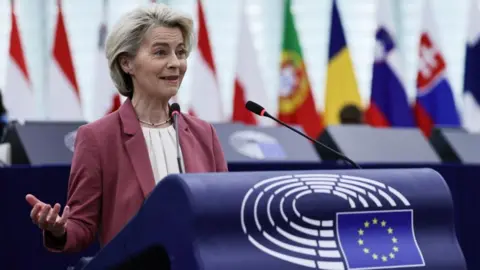 EPA
EPA
Ursula von der Leyen told the European Parliament that two choices were on the table for EU leaders
German Chancellor Friedrich Merz has played a leading role in pushing for the Russian assets to be used, telling the Bundestag on the eve of the summit it was about sending a “clear signal” to Moscow that continuing the war was pointless.
EU officials are confident they have a sound legal basis to use the frozen Russian assets, but so far the Belgian prime minister remains unconvinced. His defence minister Theo Francken warned ahead of the talks that it would be a big mistake to loan the Euroclear cash.
Hungary is seen as the biggest opponent of the move and, ahead of the summit, Prime Minister Orban and his entourage even suggested that the frozen assets plan had been removed from the summit agenda. A European Commission official stressed that was not the case and it would be a matter for the 27 member states at the summit.
Slovakia’s Robert Fico has also opposed using the Russian assets, if it means the money being used to procure weapons rather than for reconstruction needs.
When the pivotal vote does finally take place, it will require a majority of about two-thirds of member states to go through. Whatever happens, European Council President António Costa has promised not to go over the heads of the Belgians.
“We’re not going to vote against Belgium,” he told Belgian public broadcaster RTBF. “We’ll continue to work very intensively with the Belgian government because we don’t want to approve something that might not be acceptable for Belgium.”
Belgium will also be aware that ratings agency Fitch has placed Euroclear on a negative watch, partly because of “low” legal risks to its balance sheet from the European Commission’s plans to use the Russian assets. Euroclear’s chief executive has also warned against the plan.
“There are many hiccups and obstacles of course still on the way. We have to find a way to respond to Belgium’s worries,” the Finnish official added. “We are on the same side as Belgium. We will find a solution together to make sure all the risks are checked as much as they can be checked.”
However, Belgium is not the only country to have doubts, and a majority is not guaranteed.
Italian Prime Minister Giorgia Meloni has told Italian MPs she will endorse the deal “if the legal basis is solid”.
“If the legal basis for this initiative were not solid, we would be handing Russia its first real victory since the beginning of this conflict.”
Malta, Bulgaria and the Czech Republic are also said to be unconvinced by the controversial proposals.
If the deal is passed and the Russian assets are given to Ukraine, the worst-case scenario for Belgium would be one in which a court would order it to hand the money back to Russia.
Some countries have said they would be prepared to provide billions of euros in financial guarantees, but Belgium will want to see the numbers add up.
At any rate, Commission officials are confident that the only way for Russia to get it back would be by paying reparations to Ukraine – at which point Ukraine would hand its “reparations loan” back to the EU.


On The Ground newsletter: Get a weekly dispatch from our international correspondents
Get a weekly dispatch from our international correspondents
Get a weekly international news dispatch

Anthony Albanese has announced a significant expansion of Australia’s hate speech laws following the deadly terrorist attack on Sydney’s Jewish community at Bondi Beach on Sunday.
Speaking after a meeting of the National Security Committee, the Australian prime minister outlined a suite of legislative and policy changes aimed at lowering the threshold for prosecuting hate speech, particularly targeting religious preachers and organisational leaders who incite violence or racial hatred.
The reforms come amid mounting criticism that the government failed to act decisively as antisemitism surged in Australia after the 7 October 2023 Hamas attack on Israel, and Israel’s subsequent ground invasion of Gaza.
“Governments aren’t perfect. I’m not perfect,” Mr Albanese said when a reporter asked why his government didn’t do more to combat antisemitism. “Look, of course more could have always been done,” he added.
“I have done my best to respond… Anyone in this position would regret not doing more, and any inadequacies which are there.
“But what we need to do is to move forward.”
The proposed changes would introduce new federal offences for “aggravated hate speech”, increase penalties for speech that promotes violence, and make hatred an aggravating factor in sentencing for crimes involving online threats or harassment.
The federal government had already tightened its hate speech laws in February to address rising antisemitic and Islamophobic sentiment, but stopped short of criminalising vilification.
A separate framework would allow authorities to formally list organisations whose leaders promote violence or racial supremacy, expanding the government’s ability to disrupt extremist networks operating at the margins of the law, the Australian Broadcasting Corporation reported on Thursday.
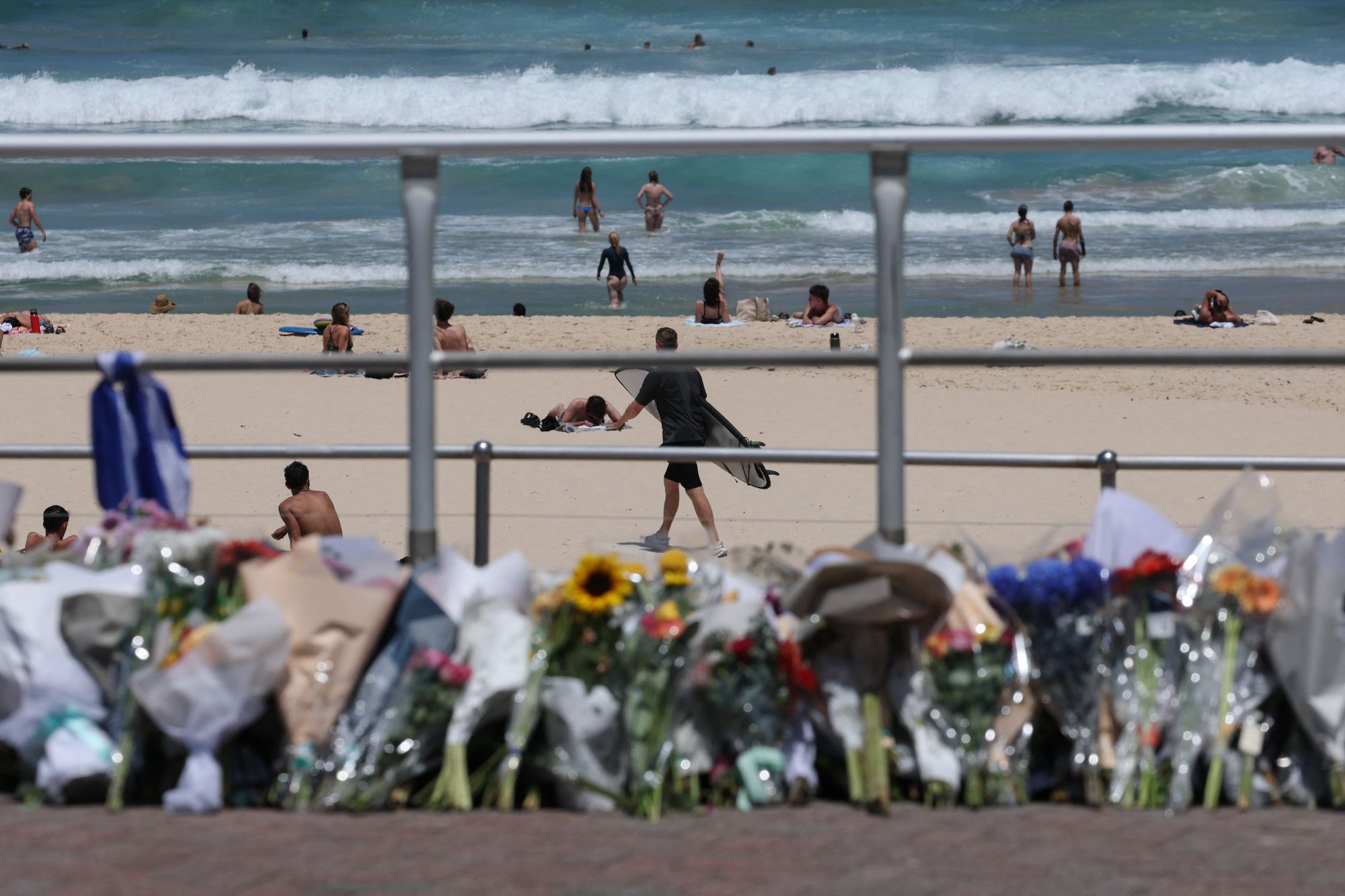 Floral tributes left for victims of the Bondi Beach shooting on Sunday (AFP/Getty)
The country’s home affairs minister Tony Burke said existing legislation had allowed individuals and groups to skirt legal consequences while spreading dehumanising rhetoric.
“There have been individuals who have managed to exploit a nation that had different principles of freedom of speech and have gone right to the limits of language that is clearly dehumanising, unacceptable, having no place in Australia, but have not quite crossed the threshold to violence,” he said.
“Today, we’re announcing that we’re shifting the threshold. We have no time for organisations where their mission is to hate Australia and to hate fellow Australians.”
The reforms also include expanded powers to cancel or deny visas to non-citizens who spread hate and division, alongside enhanced online safety measures to address antisemitic content.
And they will create a task force to ensure the country’s education system “prevents, tackles and properly responds” to antisemitism.
“Children aren’t born antisemitic. Children aren’t born racist. Children aren’t born with hate in their hearts. This is something that’s taught. This is something that’s learned,” education minister Jason Clare said.
The eSafety commissioner and the communications department will develop new guidance to tackle digital abuse and extremist messaging.
Announcing the reforms, Mr Albanese added: “It was an attack on our Jewish community – but it was also an attack on the Australian way of life. It is clear we need to do more to combat this evil scourge, much more.”


NEED TO KNOW
- Meghan Markle shared a photo from Prince Harry’s appearance at the St. Regis World Snow Polo Championship in Aspen, Colorado, on Wednesday, Dec. 17
- Meghan remained home in California with the couple’s children during the polo match
- A spokesperson for the Duke of Sussex confirmed to PEOPLE earlier on Wednesday that he was standing in for a friend at the polo tournament
Meghan Markle is reacting to Prince Harry’s surprise appearance at the St. Regis World Snow Polo Championship in Aspen, Colorado, on Wednesday, Dec. 17.
In a post to her Instagram Stories, the Duchess of Sussex, 44, shared a photo of the Duke of Sussex, 41, on horseback during the match.
“Oh, hello there,” Meghan wrote.
A spokesperson for the Duke of Sussex confirmed to PEOPLE earlier on Wednesday that he was standing in for a friend at the polo tournament.
According to Aspen Snow Polo’s Instagram page, he competed on the Aspen Valley team. Meanwhile, his friend and former professional polo player Nacho Figueras joined the St. Regis team alongside sons, Artemo and Hilario.
Meghan remained at home with their children, Prince Archie, 6, and Princess Lilibet, 4, as they gear up to celebrate Christmas at home in Montecito, Calif., Hello! reports.
Meghan responding to Prince Harry’s polo appearance.
Meghan Markle/Instagram; LaGOSSIPTV/The Daily stardust/BACKGRID
The snow polo event drew some famous faces last year, including Anna Kendrick, Nicky Hilton, Billie Lourd and Riley Keough.
Prince Harry is known to saddle up for charity matches throughout the years, even competing against his brother, Prince William, before stepping back from his royal role in 2020.
Can’t get enough of PEOPLE’s Royals coverage? Sign up for our free Royals newsletter to get the latest updates on Kate Middleton, Meghan Markle and more!
Last year, he rode at the Royal Salute Polo Challenge in Florida, where Meghan supported her husband and Netflix cameras captured content for their documentary series Polo, which premiered in 2024.
The outing wasn’t the Duke of Sussex and Figueras’ first time taking the polo field in Aspen. Harry and his friend previously competed together there in the Sentebale Polo Cup at the Aspen Valley Polo Club in August 2022.
WORLD NEWS
Bondi terror suspects’ red light district bolthole: Father and son’s month in seedy Philippines hotel favoured by sex tourists

The father and son accused of carrying out the Bondi Beach massacre spent a month staying in this shabby £11-a-night (AU$22) one-star hotel in a red-light district in the Philippines in the weeks before the atrocity, the Daily Mail can reveal.
Sajid Akram, 50, and his son Naveed Akram, 24, travelled to the south-east Asian country in November for a break, before allegedly carrying out their atrocity at a Hanukkah event on Sunday which killed 15.
The pair stayed in a cramped twin room in the GV Hotel in Davao City, the country’s second biggest city, in an area filled with neon-lit massage parlours and go-go bars that is frequented by western sex tourists on the island of Mindanao.
Opposite the hotel is a spa called ‘Spring Valley’ which advertises a ‘happy hour’ from 10am to 5pm.
And just yards away is a bar called ‘Ladiestar’ which offers karaoke and ‘massage’.
Along from that, in a poignant coincidence, is a cocktail bar and restaurant named Bondi & Bourke, after the famous beach where the attack took place.
Davao City is a five-hour drive from the Islamic city of Marawi – which is where ISIS sympathisers have been waging a decade-long fight against the Catholic-dominated government.
Security experts have said they believe Sajid and Naveed travelled to the Philippines to undergo military style training, a claim which has been refuted by the troubled nation’s President Marcos.
The father and son accused of carrying out the Bondi Beach massacre spent a month staying in this shabby £11-a-night one-star hotel in a red-light district in the Philippines

The pair stayed in a cramped twin room in the GV Hotel in Davao City, the country’s second biggest city

Opposite the hotel is a spa called ‘Spring Valley’ which advertises a ‘happy hour’ from 10am to 5pm. And just yards away is a bar called ‘Ladiestar’ which offers karaoke and ‘massage’

Sajid Akram and his son Naveed Akram, pictured, allegedly carried out their atrocity at a Hanukkah event on Sunday which killed 15

The 50-year-old father, pictured, from Sydney’s west, was shot dead at the scene by police
Hotel staff showed the Daily Mail their ‘lair’ – room number 315 – on the third floor of the hotel where the men stayed throughout, living on takeaways.
Sparsely furnished with two single beds, an old television and an en-suite bathroom, it is here where they claimed the Akrams spent almost all their time holed up – and would only leave each day to buy food.
Jenelyn Sayson, who works at the hotel, said they ‘arrived with one big piece of luggage and a backpack each’ and cleaners would remove fast-food wrappers from their room.
She said they ate at the popular Jollibee chicken restaurant which is also famous for its spaghetti bolognese.
Unlike other guests, who are friendly and interact with staff as well as other tourists, the men were said to keep to themselves.
When they left the hotel they would walk over to the next street or walk towards the next block of hotels. Staff never saw them catch a cab or get picked up from the hotel.
‘We thought they probably had business here in the city since they would go out and just come back again,’ she added.
‘The longest that they would be outside would be around an hour and they would be just back here in the hotel.’
‘On December 16 officers from the Task Force based in Davao arrived at the hotel and asked if the two suspects checked into the hotel.
‘I was to confirm if I recognised the two men from the photos officers had of them.
‘CCTV at the hotel only remains on the system for a week but military officers came and took the hard drive anyways.
‘When they did leave, the father always wore sunglasses. The son had a big build, fair skinned and had a mole while his father was darker.
‘From the time they arrived to the time they checked out they never left the city because we saw them every day.’

When they left the hotel, pictured, they would walk over to the next street or walk towards the next block of hotels

Pictured: The inside of the GV Hotel. Hotel staff showed the Daily Mail their ‘lair’ – room number 315 – on the third floor of the hotel where the men stayed throughout, living on takeaways

Sparsely furnished with two single beds, an old television and an en-suite bathroom, it is here where they claimed the Akrams spent almost all their time holed up

Jenelyn Sayson, who works at the hotel, said they ‘arrived with one big piece of luggage and a backpack each’
On one occasion, Naveed asked a staff member where he could buy durian, a type of fruit known for its pungent aroma and sweet taste. They were told to go to the Magsaysay Park and the Bankerohan market but are said to have returned with nothing.
The downmarket hotel is located in the city’s Poblacion District – known for its nightlife surrounded by several ‘bikini bars’ – strip clubs which proliferate in the city’s red-light district, where most bars have private rooms at the back that men can rent for just £25 (AU$50).
No documents or further evidence is said to have been found when authorities searched the room.
Sajid and Naveed flew at 11am from Sydney to Manila on November 1, arriving in the capital in the early hours of the morning.
They then took an internal flight to Davao where they checked into the budget GV Hotel around noon that day where they apparently stayed until November 28.
Philippines authorities have shut down the claims that the pair came to the country for terror training.
Armed forces there insist that there was no indication the alleged Bondi killers had trained with terror groups while in the country.
Col Francel Margareth Padilla said: ‘From the field units, the data states that there are no foreign terrorist activities in the area. There are no trainings that are being conducted in the area.’

No documents or further evidence is said to have been found when authorities searched the room

Pictured: A bar near the GV Hotel. Investigations into what the men were indeed doing during their month-long stay in the country continue
However, investigations into what the men were indeed doing during their month-long stay in the country continue.
The initial police investigation showing that they stayed exclusively in the city of Davao and did not leave would be a version of events the Philippine government would be happy with.
The country’s national security advisor Eduardo Año told journalists the country is working with Australia to gather intelligence on the two men and establish their reason for travelling to the Philippines.
Mr Año confirmed the dates of entry into the country, adding that Sajid had travelled on an Indian passport while his son Naveed travelled on an Australian passport.
It is understood detectives are now tracing the men’s credit cards and local SIM cards to track down their exact movements.
It has been suggested that they used Davao as an entry point to then access by car the city of Cagayan de Oro and later Marawi.
Marawi is widely known as a no-go-zone for tourists and locals alike with the Filipino government even issuing a category four warning to its civilians to not travel to the region under any circumstances.
Civilians travelling there face risk of death due to the ongoing violent clashes between terrorist groups and the Filipino armed forces.
The area was taken over by an offshoot of IS – called the Maute Group – in 2017 which led to the displacement of 350,000 from the area of the country, which is predominantly Catholic.
Following the attack on Sunday, in which Jews were shot dead in Sydney who had been celebrating the beginning of Hannukah, officers in Australia uncovered two homemade ISIS flags from Naveed’s vehicle. Two bombs were also found in the car.
New South Wales police commissioner Mal Lanyon confirmed on Tuesday that both men had travelled to the Philippines but said at this time the reason is still unknown.

Davao City, pictured, is five hours from the Islamic city of Marawi – where ISIS sympathisers are waging a fight against the Catholic-dominated government
Meanwhile immigration spokeswoman Dana Sandoval told The Australian: ‘Sajid Akram, 50, an Indian national (Australian resident) and Naveed Akram, 24, Australian national, arrived in the Philippines together last November 1, 2025, from Sydney Australia.
‘Both reported Davao as their final destination. They left the country on November 28, 2025, on a connecting flight from Davao to Manila, with Sydney as their final destination.’
Sajid was shot after the attack on Sunday, which also injured 42 other people.
Meanwhile his son, a bricklayer who survived the police shootout and was taken to hospital, has been charged with 59 offences, including 15 counts of murder and one count of committing a terrorist act in what investigators allege may have been ‘inspired by Isis’.

Thames Valley Police have launched an urgent search for a 33-year-old High Wycombe woman who has vanished from her home late at night
SOURCE PAGE