
TECHNOLOGY
LinkedIn’s profile verification push is accelerating — and India is leading the charge in 2025

As online platforms grapple with how to establish trust at a global scale and address growing concerns about authenticity, the adoption of profile verification on LinkedIn is picking up pace in 2025. India is emerging as the fastest-growing market for profile verification, highlighting the country’s expanding influence on how digital work networks operate.
LinkedIn members are adding around 30 million verifications to their profiles each year, with adoption up more than 38% year-over-year in 2025, according to Oscar Rodriguez, LinkedIn’s vice president of trust products. The increase follows the company’s announcement last week that more than 100 million users have added at least one verification.
In 2022, LinkedIn began rolling out profile verification to provide clearer signals of authenticity on the platform. It initially focused on confirming members’ workplace or identity, including through company email addresses, before expanding to government-issued ID checks, and has since been extended to company pages and job listings.
Most LinkedIn members who have added a verification to their profile have done so by confirming their association with a workplace, typically using a company email address or similar credentials, rather than verifying their personal identity.
About 60% of verified members have confirmed a workplace affiliation, typically using a company email address, while roughly 27% have verified their identity using a government-issued ID, Rodriguez said.
The pace of India growth
Geographically, the U.S. accounts for the largest share of verified users, representing about 40% of the more than 100 million members who have added at least one verification, the company said. India follows closely, alongside other major markets, including the U.K., Canada, Brazil, and France.
While the U.S. continues to account for the largest overall share of verified users, India has emerged as LinkedIn’s fastest-growing market for profile verification, Rodriguez said, with adoption rising about 80% over the past 12 months.
Techcrunch event
San Francisco
|
October 13-15, 2026
India is already one of LinkedIn’s largest and fastest-growing user markets globally, with more than 160 million users, and the pace of verification adoption there is unfolding alongside broader growth in professional networking, hiring, and remote work on the platform. This underscores how shifts in India’s workforce are increasingly shaping LinkedIn’s global usage patterns.
As verification adoption has grown, LinkedIn has also begun extending those signals beyond its own platform.
Earlier this year, the Microsoft-owned company launched its “Verified on LinkedIn” program, allowing partner platforms to display LinkedIn verification badges. Zoom is the most recent partner for this move, joining companies such as Adobe and G2. The company also recently introduced a self-serve API to make it easier for other organizations to integrate verification into their own services.
LinkedIn says profile verification is associated with higher engagement on the platform, with verified members seeing up to 60% more profile views and around 50% more interaction on their posts compared with unverified users. Verified company pages also tend to attract more attention, recording significantly higher views and follower growth, the company stated.
“Verifications provide a powerful signal of authenticity on LinkedIn, helping to support authenticity and trust,” said Rodriguez. “Members with verifications are far more likely to represent real people, and jobs with verifications of the page, and hirer maintain significantly higher integrity and safety standards.”

TikTok’s Chinese owner has signed a deal to sell the company’s US arm to American investors – ensuring the video platform can continue operating in the United States.
The deal is expected to close on 22 January 2026, according to an internal memo seen by Sky News’ US partner, NBC News.
It will end years of uncertainty over the app’s future in the States, after Joe Biden signed a law last year that required TikTok’s Chinese owners to sell up – or else it would be blocked.
The law was introduced amid concerns from some US politicians that ByteDance might share user data with the Chinese government, despite repeated assurances from the firm that it would not.
Critics also expressed fears that Chinese authorities may be able to manipulate TikTok’s algorithms and shape what content users see and are influenced by. This claim was also denied.
Mr Biden set a January 2025 deadline for the sale and when ByteDance failed to comply, TikTok went dark for several hours.
It returned after Donald Trump signed an executive order to keep it running on his first day in office.
Trump: ‘Tremendous value’ with TikTok
Who’s taking over?
The internal memo sent to employees on Thursday said the deal allows “over 170 million Americans to continue discovering a world of endless possibilities as part of a vital global community.”
TikTok owner ByteDance will sell just over 80% of the company’s US assets to three major investors, Reuters news agency reports.
The investors – Oracle, Silver Lake and MGX – will form a new venture, named TikTok USDS Joint Venture LLC.
Read more from Sky News:
Ex-footballer wins court case
Starmer’s radical pre-Xmas shake-up

TikTok whistleblowers expose safety concerns
The venture will be 50% held by the consortium of US investors, Reuters added, with affiliates of certain existing ByteDance investors holding 30.1% and ByteDance itself retaining 19.9%.
It will have a new, seven-member majority-American board of directors and be subject to terms that “protect Americans’ data and US national security”, the memo said.
Data from users in the US will be stored locally.

TikTok has reached a deal to cede a substantial portion of its U.S. operation to a group of American investors, thus ending a years-long tussle in which the federal government has sought to force the platform to do just that.
The new partnership is described as a “new TikTok U.S. joint venture” in an internal memo from ByteDance CEO Shou Chew, which was viewed by TechCrunch.
That arrangement will see major American investors take over significant control of the U.S.-based business. The newly formed investor group includes cloud giant Oracle, the tech-focused private equity firm Silverlake, and MGX, an Abu Dhabi-based investment firm focused on AI. Together, those companies will own 45% of the U.S. operation, while ByteDance retains a nearly 20% share, the memo states. The new entity formed by this partnership has been dubbed “TikTok USDS Joint Venture LLC.”
That new entity will be responsible for overseeing the app, including data protection, algorithm security, content moderation, and software assurance, the memo states. “A trusted security partner will be responsible for auditing and validating compliance with the agreed upon National Security Terms, and Oracle will be the trusted security partner upon completion of the transaction,” the document says.
The closing date for the deal is listed as January 22, 2026. The news was originally reported by Axios.
Much of the deal, as it has been described in the memo, parallels the language in an executive order signed by President Trump in September. That memo similarly approved the sale of TikTok’s U.S. operations to an American investor group. CNBC previously reported that Oracle, Silverlake, and MGX would be the primary investors in the deal. Until now, ByteDance had not divulged details of such a deal, except to say that it would abide by U.S. law to ensure that TikTok remained available to U.S. users.
The U.S. government has long sought to cleave TikTok’s U.S.-based business away from its Chinese parent company, espousing national security concerns as the rationale.
Techcrunch event
San Francisco
|
October 13-15, 2026
TECHNOLOGY
Terrifying maps break down exactly who is at risk of new ‘super flu’ exploding across America… as doctors reveal symptoms you should really worry about


The holidays are a time for travel and gathering in close quarters with loved ones.
All of which means that, amid a season of cheer, winter illnesses such as the flu, RSV and norovirus are surging across the country – as federal data shows.
A new and dangerous strain of ‘super flu,’ H3N2 subclade K, has driven an unprecedented rise in influenza cases weeks ahead of when surges are typically expected each year.
Earlier this month, the US had its first flu-related pediatric death of the 2025-26 season, according to reports from both the CDC and Colorado health officials. While it is not known whether the Colorado child is the same person in the CDC report, the state’s officials said their case involved an elementary school-aged child who died last week.
While the Mountain State may have clocked the first death, other regions might soon follow. And the latest CDC figures show people living in and traveling to New York City may be at the highest risk of developing the flu this holiday season, with the city recording ‘very high’ flu activity as of December 6.
And with subclade K strain climbing nationwide, actual figures could be significantly higher. Respiratory syncytial virus (RSV), which is particularly dangerous for young babies and the elderly, is also rising alongside Covid.
CDC epidemic trends data shows, too, that the surges are going to worsen in nearly 36 states in the coming weeks.
In many cases of these viruses, people will recover with little more than over-the-counter flu and cold medicine.

The latest CDC data shows states where COVID, the flu and RSV are on the rise this holiday season (stock image)
However, Dr Neal Shipley, medical director of Northwell Health-GoHealth Urgent Care, told Daily Mail it is important to recognize the symptoms that ring alarm bells so you know when to seek expert help.
‘If your symptoms worsen quickly, or you have trouble breathing, weakness, dehydration or symptoms that don’t improve after a few days, you should find your nearest urgent care,’ he said.
Now, based on laboratory tests and federal wastewater data, which tracks larger community spread, the Daily Mail can reveal where you have the highest risk of getting sick this winter.
The latest CDC data, which was updated on December 6, shows virtually no corner of the US is safe from infection with one of the viruses.
Flu
New York City is recording the highest levels of the flu, and those headed to the Big Apple might feel sick after their trip.
The greater New York state, New Jersey, Colorado and Louisiana all recorded ‘high’ flu activity.
Idaho, Texas, Georgia, South Carolina, Michigan and Massachusetts reported ‘moderate’ influenza A activity, while the rest of the country had ‘low’ or ‘minimal’ activity.
Influenza A makes up three in four flu cases in the US. It is also on the rise, largely due to the increased prevalence of H3N2 subclade K.
CDC data released on December 12 shows an eight percent increase in Americans testing positive for the flu virus compared to the week prior, and about 3 million have contracted it so far. There have been 1,200 recorded deaths from the flu this season.
Typical flu symptoms usually come on abruptly and include fever, fatigue, chills, headache, cough, body aches, congestion, runny nose and coughing. Experts have noted that while H3N2 subclade K’s symptoms are not different from other flu variants, they may be more severe.
Shipley told the Daily Mail that in children, the flu comes on suddenly and may also cause vomiting and diarrhea. He also said people over the age of 65 are at the highest risk of complications, including hospitalization and death.
Influenza A can best be prevented with the seasonal flu vaccine, which tends to be about 30 to 75 percent effective.
RSV
For RSV, wastewater data shows ‘very high’ activity levels in Wyoming and Louisiana, and ‘high’ levels in Kentucky.
Alabama and Florida each had ‘moderate’ activity. California, Nevada, Texas, Arkansas, Tennessee, Georgia, Maryland and Connecticut all reported ‘low’ RSV activity, while the rest of the country had ‘very low’ levels.
There was no data available for Montana, North Dakota or Arizona.
RSV is a particularly dangerous infection for young children because it can cause inflammation that may block their small airways, potentially leading to death.
About 58,000 to 80,000 children younger than five years old are hospitalized every year due to RSV, and 100 to 500 children die from the infection.
It spreads via respiratory droplets often from coughs and sneezes, and causes symptoms including a sore throat, runny or stuffy nose and exhaustion. In severe cases, patients can start wheezing.
The disease can also be fatal for older adults who are more prone to complications such as pneumonia.
RSV can be prevented with a single-dose vaccine given to pregnant mothers, newborn babies and adults over age 65. Experts estimate the vaccine is 80 percent effective.
COVID-19
Connecticut, Nebraska and Vermont all reported ‘high’ levels of COVID-19, which are likely fueled by the rise of the XFG ‘stratus’ variant that patients claim feels like ‘razor blades’ in their throats.
Indiana was the only state to report ‘very high’ COVID activity levels in wastewater based on reporting from 27 sites.
Kansas, Minnesota, Oklahoma, Alabama, Tennessee, Kentucky, Ohio, Pennsylvania, New York, New Hampshire and Maine all had ‘moderate’ COVID activity.
The remainder of the US reported ‘very low’ levels except for New Mexico, which had ‘low’ activity.
There was no COVID wastewater data for Montana or North Dakota.
CDC data suggests the dominant COVID variant right now is XFG. Patients report this variant has caused a painful sore throat that feels like it is being cut with a razor blade, which has been dubbed a symptom of this new mutant strain.
Other symptoms are similar to previous variants and include fever, chills, cough, shortness of breath, sore throat, congestion, runny nose, loss of taste or smell, fatigue, body aches, headache, nausea, vomiting and diarrhea.
Like other winter illnesses, COVID tends to peak in late December and January. The CDC has not tracked COVID test positivity, deaths or hospitalizations since September 27.

Instacart will pay $60 million in refunds to settle allegations by the U.S. Federal Trade Commission that it deceived consumers with false advertising. The federal agency alleged Instacart misled consumers with unlawful tactics, causing them to pay higher fees while also denying refunds.
The Federal Trade Commission (FTC) stated Instacart’s ‘free delivery’ claims are misleading because customers are still required to pay a mandatory service fee, which can add up to 15% to their total order.
The agency also said the delivery platform’s “100% satisfaction guarantee” promise is false because it implies it will provide full refunds when consumers are not fully satisfied with their orders, which is typically not the case when people receive late deliveries or unprofessional service.
Additionally, Instacart hid the refund option from the “self-service” menu that consumers use to report problems with their orders, making people believe they could only get a credit toward a future order rather than a refund, the FTC claimed.
Instacart also failed to clearly disclose terms relating to the Instacart+ membership enrollment process, the agency said. The sign-up process for the free trial of the subscription service did not disclose consumers would be charged once the trial ended, which allowed Instacart to charge people without their informed consent. These consumers will be receiving refunds as a result of the settlement, the FTC said.
“The FTC is focused on monitoring online delivery services to ensure that competitors are transparently competing on price and delivery terms,” said Christopher Mufarrige, Director of the FTC’s Bureau of Consumer Protection, in a statement.
Instacart acknowledged the settlement in a blog post and denied “any allegations of wrongdoing.” The company also said it believes “the foundation of the FTC’s inquiry was fundamentally flawed.”
Techcrunch event
San Francisco
|
October 13-15, 2026
The settlement comes as Instacart is currently under fire over a recent study that revealed its AI-powered pricing tool is causing some customers to receive different prices for the same items at the same stores. Instacart responded to the controversy by stating that retailers determine their own prices, and any pricing tests conducted through its AI tool are random and not influenced by user data. Reuters reported on Wednesday the FTC has begun an investigation into the delivery platform’s AI pricing tool.

Scientists have found that the risk of shingles may rise slightly in the weeks following a Covid booster shot.
The discovery comes from researchers at the University of Groningen in the Netherlands, who analyzed electronic health records from more than two million people aged 12 and older who had received at least one Covid vaccine.
The study found that the risk of developing shingles within 28 days of vaccination increased by seven percent when all doses were combined and by 21 percent after the third, or booster, dose of an mRNA vaccine.
Shingles, which appears as a painful, blistering rash, is caused by the varicella-zoster virus, which most people first encounter in childhood as chickenpox.
Separate research found that adults aged 50 and over who were hospitalized with shingles were seven times more likely to develop dementia.
Among men of all ages, researchers found a significantly higher risk of shingles after receiving a vector-based vaccine, with a 38 percent increase.
The authors noted that the increase in shingles risk after a booster mRNA dose is small, temporary, and limited to certain subgroups, and most cases are treated in general practice rather than requiring hospitalization.
The study comes as the FDA is drawing up plans to put a ‘black box’ warning on Covid vaccines, the agency’s most serious warning over potential side effects, reports suggested.

Shingles, which appears as a painful, blistering rash, is caused by the varicella-zoster virus, which most people first encounter in childhood as chickenpox
A black box warning, which appears at the top of prescribing information, is placed on drugs or vaccines to highlight major risks such as serious side effects or restrictions.
The move by the FDA was revealed to CNN by two people familiar with the matter, who spoke on condition of anonymity because they were not authorized to speak to the media.
The new study, published in the peer‑reviewed journal Drug Safety on December 11, suggested that shingles might occur after a Covid booster because important immune cells, called lymphocytes, can be temporarily depleted after vaccination, which may allow the virus that causes shingles to wake up.
Repeated vaccine doses, especially a third booster, might also make T-cells less active for a short time, and T-cells help control viruses that hide in the body.
The researchers emphasized that this does not prove the vaccine causes shingles, only that there is a small, temporary link in some people.
The study noted that Hong Kong reported a sharp increase in hospitalizations for shingles shortly after Pfizer/BioNTech vaccination.
However, a US study using healthcare claims data found no increased risk after Covid vaccination, and vaccination was not linked to a higher risk than flu shots.
The team conducted the study in three steps, including analyzing all available Covid vaccines, including unknown brands.
Join the debate
Should the public be better warned about vaccine side effects?

The study found that the risk of developing shingles within 28 days of vaccination increased by seven percent when all doses were combined and by 21 percent after the third, or booster, dose of an mRNA vaccine
Second, vaccines were separated by type, mRNA versus vector.
mRNA vaccines, like Pfizer/BioNTech and Moderna, use genetic material in the form of mRNA to instruct cells directly to make the spike protein.
Vector vaccines, like AstraZeneca or Johnson & Johnson, use a different virus, modified so it can’t replicate, to carry the instructions into cells. Then the team analyzed the vaccines by brand.
For individuals who received two doses less than 28 days apart, it was difficult to determine which vaccine caused shingles, so only those with a consistent vaccination regimen were included in the type- and brand-specific analyses, according to the study.
The median age of the participants was 51 years, with most people falling within an age range of 32 years around the median.
The two most common health conditions were cardiovascular disease, affecting 539,134 people (25.7%) and chronic lung disease, affecting 341,747 people (16.3%).
Most participants, 1,145,212 people (54.6%), received two vaccine doses.
The most commonly given vaccine was Pfizer/BioNTech, which made up 69.2 percent of all doses, followed by Moderna at 18.6 percent.
A study published in April, which spanned for more than two decades, found shingles could trigger early-onset dementia.
Crucially, the greatest risk was seen in those aged 50 to 65, which is younger than the typical age of dementia patients.
In the new study, the Italian researchers recruited 132,986 adults aged 50 and older.
Of these, 12,088 were hospitalized with a diagnosis of shingles, termed ‘herpes zoster disease’ in the study.
After just one year, there was a two-fold increase in early dementia seen in the severe shingles group, compared to those in the other two groups.


Liv McMahonTechnology reporter
 Getty Images

The UK government says it will ban so-called “nudification” apps as part of efforts to tackle misogyny online.
New laws – announced on Thursday as part of a wider strategy to halve violence against women and girls – will make it illegal to create and supply AI tools letting users edit images to seemingly remove someone’s clothing.
The new offences would build on existing rules around sexually explicit deepfakes and intimate image abuse, the government said.
“Women and girls deserve to be safe online as well as offline,” said Technology Secretary Liz Kendall.
“We will not stand by while technology is weaponised to abuse, humiliate and exploit them through the creation of non-consensual sexually explicit deepfakes.”
Creating deepfake explicit images of someone without their consent is already a criminal offence under the Online Safety Act.
Ms Kendall said the new offence – which makes it illegal to create or distribute nudifying apps – would mean “those who profit from them or enable their use will feel the full force of the law”.
Nudification or “de-clothing” apps use generative AI to realistically make it look like a person has been stripped of their clothing in an image or video.
Experts have issued warnings about the rise of such apps and the potential for fake nude imagery to inflict serious harm on victims – particularly when used to create child sexual abuse material (CSAM).
In April, the Children’s Commissioner for England Dame Rachel de Souza called for a total ban on nudification apps.
“The act of making such an image is rightly illegal – the technology enabling it should also be,” she said in a report.
The government said on Thursday it would “join forces with tech companies” to develop methods to combat intimate image abuse.
This would include continuing its work with UK safety tech firm SafeToNet, it said.
The UK company developed AI software it claimed could identify and block sexual content, as well as block cameras when they detect sexual content is being captured.
Such tech builds on existing filters implemented by platforms such as Meta to detect and flag potential nudity in imagery, often with the aim of stopping children taking or sharing intimate images of themselves.
‘No reason to exist’
Plans to ban nudifying apps come after previous calls from child protection charities for the government to crack down on the tech.
The Internet Watch Foundation (IWF) – whose Report Remove helpline allows under-18s to confidentially report explicit images of themselves online – said 19% of confirmed reporters had said some or all of their imagery had been manipulated.
Its chief executive Kerry Smith welcomed the measures.
“We are also glad to see concrete steps to ban these so-called nudification apps which have no reason to exist as a product,” she said.
“Apps like this put real children at even greater risk of harm, and we see the imagery produced being harvested in some of the darkest corners of the internet.”
However while children’s charity the NSPCC welcomed the news, its director of strategy Dr Maria Neophytou said it was “disappointed” to not see similar “ambition” to introduce mandatory device-level protections.
The charity is among organisations calling on the government to make tech firms find easier ways to identify and prevent spread of CSAM on their services, such as in private messages.
The government said on Thursday it would make it “impossible” for children to take, share or view a nude image on their phones.
It is also seeking to outlaw AI tools designed to create or distribute CSAM.


A whistleblower has leaked horrifying footage showing slaughterhouse workers shooting, beating, stabbing, and urinating on cows.
The videos were recorded at Georgia’s Best Processing in Fort Valley, Georgia, and reportedly shared among workers for amusement, according to PETA.
The clips, which PETA said were recorded in the Fall, show workers urinating on cows’ faces, striking them with pipes and stabbing them while the animals struggled to stand.
One video appears to show a worker shooting a cow and stabbing her in the neck, edited with music, hearts and other graphic overlays.
PETA spokesperson Moira Colley told Daily Mail: ‘It appears at least three workers are depicted in the videos. At least one is a student of a local school, but all appear to be young.’
Georgia’s Best Processing acknowledged the videos on Facebook, saying it was unaware of the actions until the leak.
‘Upon learning of the situation, we took immediate disciplinary action and fully cooperated with the Georgia Department of Agriculture,’ the statement reads.
‘The individuals were immediately terminated. The humane treatment of animals entrusted to our care is a responsibility we take very seriously, and we are deeply concerned by what occurred.’

The videos were allegedly recorded by high school students employed at Georgia’s Best Processing in Fort Valley, Georgia, and reportedly shared among workers for amusement, according to PETA
PETA warned that ignoring such acts of cruelty endangers animals and can have serious consequences for communities if violent behaviors escalate. The nonprofit has contacted the students’ school, urging the superintendent to take swift action.
Studies show childhood animal cruelty is a serious warning sign, often linked to family violence, trauma, and later violence against humans, but it can stem from curiosity, learned behavior, or emotional issues, with persistent or escalating cruelty and lack of empathy.
Daily Mail has contacted Georgia’s Best Processing for comment.
‘It appears at least three workers are depicted in the videos. At least one is a student of a local school, but all appear to be young,’ Colley said.
‘Cows in the meat industry are killed at a fraction of their natural lifespan and don’t receive a bit of kindness during their entire lives, but workers filming themselves stabbing conscious animals in the neck, and even urinating in the face of one, is especially horrific.
‘These sadistic acts and the callous way in which workers allegedly shared videos of their torment to laugh at are a chilling wake-up call for this community.’
The whistleblower alleged the videos were shared on the social media platform Snapchat.
She added that while the videos only show short moments of the cow’s struggling, Georgia law requires that animals be rendered unconscious with a single stunning attempt before slaughter.

The whistleblower alleged the videos were shared on the social media platform Snapchat
‘Stabbing the throat of a conscious animal would constitute a violation of the anti-cruelty statute O.C.G.A. § 16-12-4(b)(1), which prohibits causing an animal physical pain, suffering, or death by any unjustifiable act,’ said Colley.
‘The Georgia Department of Agriculture could suspend its inspections of the facility, which would prevent them from slaughtering animals.
‘The individuals would likely be charged with a misdemeanor, which typically results in a fine of $1,000 or less and/or a sentence of less than 12 months.’
The videos have also surfaced on X, where users have been left outraged.
‘Animal processing plants have a moral and professional responsibility to treat animals humanely by minimizing pain, stress, and fear at every stage of handling and processing. This is sick,’ one user shared.
In November 2024, PETA released even more shocking videos of workers at a Butterball factory, the largest producer of turkey products in the US, smacking, humping and sexually abusing the birds at the Ozark, Arkansas plant in 2006.
That was years before Butterball was privatized and certified by the American Humane.
‘We are aware of a video from nearly 20 years ago, which is being reshared across social media,’ a spokesperson for the company told Scripps News.
‘The video is not current and was taken prior to Butterball becoming a private company and prior to engagement certification through American Humane.’
‘Animal care and well-being is central to who we are as a company, and we are committed to the ethical and responsible care of our flocks,’ the spokesperson insisted.
‘Eleven years ago, Butterball was the first, and remains the only, turkey company to be American Humane certified,’ they noted.
‘That means we have yearly audits conducted by a third-party to ensure compliance with our 200-plus science-based standards or best practices for care of turkeys, well exceeding industry best practices.

In November 2024, PETA released even more shocking videos of workers at a Butterball factory, the largest producer of turkey products in the US, smacking, humping and sexually abusing the birds at the Ozark, Arkansas plant in 2006
‘We are proud of this designation that no other turkey company can claim, and have a zero tolerance policy for animal mistreatment.’
But in the disturbing footage, an undercover investigator claimed he saw a Butterball employee shoving his finger up a turkey’s cloaca, or vagina, for ‘fun’ and witnessed another worker humping a turkey while it was restrained, according to the animal rights group.
He also recalled seeing a ‘worker… taunting another worker by holding a bird by the legs and jerking her back and forth.’
Footage included in the video also showed employees manhandling multiple birds – striking, throwing and hanging them to death.
‘Do you know what happened to your Butterball turkey before it was killed?’ PETA wrote in the caption, without specifying that the content was filmed 18 years ago.
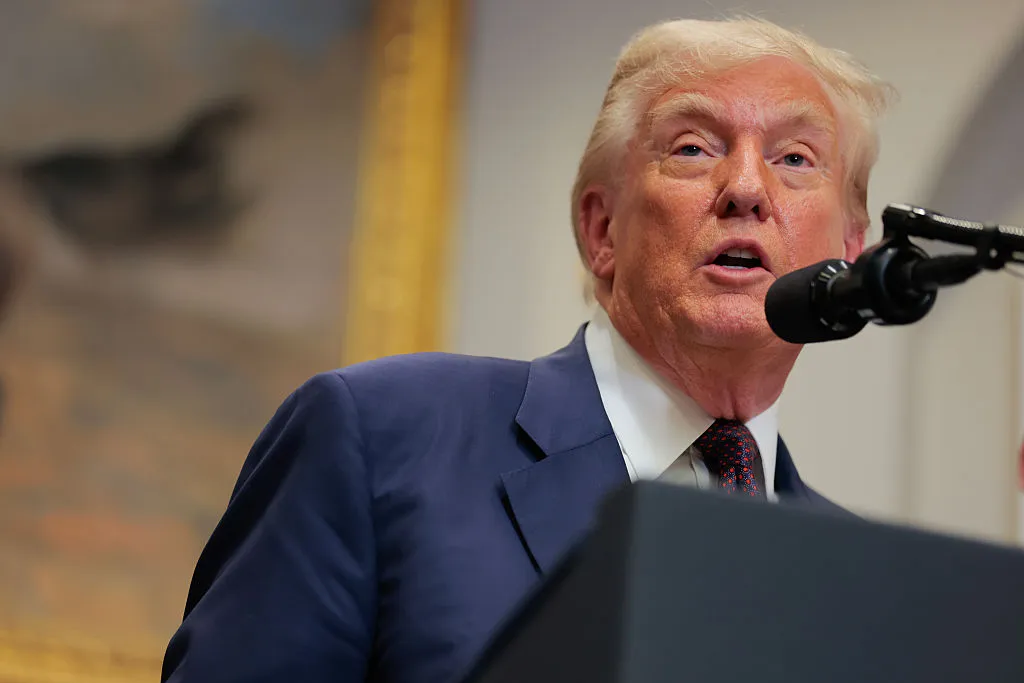
President Donald Trump’s social media company, Trump Media & Technology Group (TMTG), said on Thursday that it’s merging with TAE Technologies, a Southern California-based company that has been chasing the dream of fusion power for nearly 30 years.
The all-stock transaction, valued at more than $6 billion, would expand Trump Media’s presence into the nascent fusion power space while data centers clamor for more electricity amid the ongoing AI boom.
Fusion industry insiders expressed curiosity over the deal and voiced concerns about potential conflicts of interest with the U.S. Department of Energy. Last week, industry representatives met with Energy Department officials, urging them to help direct billions of dollars toward fusion projects, and earlier this year, the DOE announced a new roadmap to guide commercial efforts in the sector, though it didn’t commit any new funds alongside the announcement.
TMTG is the parent company of Truth Social, the microblogging platform that the president spun up after he was banned from platforms like YouTube, Twitter, and Facebook in the wake of the January 6 attacks on the U.S. Capitol. At launch, the president called it “a rival to the liberal media consortium,” and said he wanted to “fight back against the Big Tech companies.”
TMTG went public last year via a merger with a special-purpose acquisition company (SPAC), a technique used to go public by private companies that want to raise money quickly but aren’t yet mature enough to take the traditional IPO route. In the quarter ended September 30, 2025, TMTG reported that it recorded a loss of $54.8 million on revenue of $972,900.
Truth Social and the company’s streaming platform have failed to generate much revenue, but TMTG has nevertheless managed to amass $3.1 billion in assets, largely through its cryptocurrency investments and partnerships.
TMTG CEO Devin Nunes, formerly a Republican congressman, stated that the company’s acquisition of TAE would “cement America’s global energy dominance for generations.” The companies said they plan to site and begin construction on “the world’s first utility-scale fusion power plant (50 MWe)” next year, and have plans for more fusion plants that are expected to generate between 350 megawatts to 500 megawatts of electricity.
Techcrunch event
San Francisco
|
October 13-15, 2026
But the path forward for fusion power remains uncertain.
Currently, only one experimental device has proven that controlled fusion reactions can generate more power than they consume. Several other companies, including Bill Gates-backed Commonwealth Fusion Systems and Sam Altman-backed Helion, are in the race to put fusion power on the grid sometime in the early 2030s.
If one or more fusion startups succeed, they could deliver gigawatts of clean, continuous power to the grid using nothing more than hydrogen isotopes filtered from seawater. Inside a fusion reactor, those isotopes are heated and compressed until they turn into a plasma. When particles in the plasma collide, they merge to form a new, heavier atom while releasing tremendous amounts of heat, which can be harvested to generate electricity.
TAE has been working on a range of fusion devices since the late 1990s. The company has raised nearly $2 billion in total, including a recent $150 million round from existing investors including Google, Chevron Technology Ventures, and New Enterprise. The company has been valued at about $1.8 billion, according to PitchBook.
Over the years, TAE has struggled to make its various designs work. Its latest effort uses magnetic fields generated by rotating plasma to stabilize the plasma itself. Particle beams bombard the outside of the plasma cloud, helping it to spin.
In the meantime, TAE has also created a new division focused on the life sciences. It is selling a version of its particle accelerator as a radiation treatment for cancer.
After the merger, Nunes and TAE CEO Dr. Michl Binderbauer will serve as co-CEOs of the combined company.
Update 12:05 p.m. ET: Added comments from fusion industry insiders.


Instagram’s gotten trickier. What crushed it last year? Totally dead now. The platform keeps switching things up – new features pop up, the algorithm does its thing differently every few months, and people’s scrolling habits change constantly.
Getting likes feels like pulling teeth sometimes. But some stuff still works crazy well. Not those sketchy tricks that fizzle out in a week. Real methods to get more Instagram likes that keep delivering.
Likes Haven’t Gone Anywhere
People keep saying likes are dead. Nope. Not even close. Likes tell Instagram that people actually care about the content. The algorithm uses that signal to decide who else should see it.
More likes mean:
- Posts show up in more feeds and explore pages
- New visitors trust the account more
- Content hits trending spots more easily
- Brands notice and reach out
- Standing out gets way simpler
Sure, likes aren’t the whole game. But anyone saying they’re useless is completely wrong.
How Instagram Actually Works Now
The algorithm got pickier this year. It’s watching way more things:
Who Talks to Who: Posts from people someone chats with regularly? Those get pushed first. Instagram tracks DMs, comments back and forth, profile visits – all of it.
How Fresh It Is: Brand-new posts get a shot at going viral right away. That first hour decides everything basically.
How Long People Stick Around: Content that keeps someone scrolling on Instagram longer wins big. Videos and multiple-image posts beat single photos almost every time.
What Someone Likes Already: Instagram shows people more of what they already engage with. Stay consistent with the niche.
Make Stuff People Can’t Scroll Past
Three seconds. That’s it. Content either hooks someone in three seconds or they’re gone. Scroll, scroll, gone.
What stops the scroll right now:
- Big bold text slapped on the image
- Weird angles nobody expects
- Colors so bright they almost hurt
- Real faces with actual emotions showing
- Questions that make someone stop and think
Carousels Are Cheat Codes
Carousels get more action than regular posts. The reason? People keep swiping through them. Every swipe tells Instagram, Hey, this is good stuff. More swipes equal more reach.
Making carousels that hit:
- Put the best image up front, always
- Make each slide flow into the next one
- The last slide needs a clear next step
- Seven to ten slides work best, usually
- Mix teaching something with keeping it fun
Video Beats Everything Else
Reels get pushed harder than anything right now. Instagram wants video content. Even a quick five-second video clip gets more eyes than a regular photo.
Best length? Seven to fifteen seconds. Hook them in literally one second. Give them something useful or entertaining fast. End with something they’ll remember.
When and How Often to Post
Throwing up posts randomly wastes perfectly good content. Check when followers are actually online. Most accounts see better numbers during:
- Work days: late morning around 11 to 1, then evening 7 to 9
- Weekends: mid-morning between 9 and 11
Try different times for a couple of weeks. See what hits.
Show Up Regularly
Being consistent matters more than anything else. The algorithm learns patterns. Followers learn patterns. Accounts that post regularly get shown to more people than accounts that vanish, then dump a bunch of posts at once.
What actually works:
- Bare minimum: three to four times weekly
- Better: five to seven times weekly
- Reels separately: three to four weekly
Good content matters obviously. But showing up matters even more.
Get People Talking
First hour after posting? Critical. Answering comments fast tells Instagram people are engaged. That pushes the post further.
Try hitting every comment within 30 to 60 minutes. Real responses, though – not just heart emojis or “thanks so much!”
Hashtags That Make Sense
Hashtags work still, just differently now. Those massive ones like #instagood? Pointless. Focus on:
- Medium ones – 10,000 to 500,000 posts range
- Tags specific to the niche
- Eight to fifteen per post tops
- Stick them in the first comment or way at the bottom
Tag Others Smart
Tagging brings in more eyes if done right. Tag brands when showing their stuff, locations for travel posts, and other creators for collabs. Random spam tagging? Instagram punishes that hard.
Use Instagram’s Own Tools
Weird but true – posting stories regularly makes feed posts do better. Instagram likes accounts using everything they built. Three to five stories daily with:
- What’s happening behind the scenes
- Polls and question boxes
- Countdowns for what’s coming
- Reposting what followers make
- Sneak peeks of feed content
Go Live Sometimes
Live videos get a major push. Instagram actually notifies people when going live. Even ten minutes makes the whole account more visible for days after.
Live ideas that work:
- Quick question and answer sessions
- Showing how something’s made
- Testing products or trying things
- Just talking about the niche casually
Growing Faster Without Looking Fake
Find accounts doing similar stuff but not competing directly. Do shoutouts together, go live together, make content together. Gets shown to people already interested in that type of stuff.
Look for:
- Similar follower numbers
- About the same engagement
- Audiences that overlap without being identical
Get a Smart Boost When Needed
Sometimes growth just needs a push to get going. Services like BuzzVoice help get more Instagram likes from actual, real people. That initial bump gets the algorithm moving. Content reaches more people naturally after that.
The trick? Use it to help already good content, not fix bad content. It’s like lighter fluid on a fire that’s already lit.
Make Every Part Count
Captions do more than most people realize. Good captions keep someone reading instead of scrolling. That extra time on the post signals quality to Instagram.
Captions that work:
- First line grabs attention hard
- The next couple of sentences give value
- Clear instructions on what to do next
- Tags at the end
Tell People What to Do
Say it straight. Double-tap if you agree, or Save this for later gives clear direction. Posts telling people exactly what to do get way more engagement than posts that just sit there.
Getting more likes:
- Hit like if this helped you
- Double-tap for the second part
- Show love if you relate
- I like to save this for later
Check the Numbers and Do More of What Works
Look at the stats every week:
- Which posts got the most likes
- What times worked best
- Which format crushed it
- What captions did people respond to
- Which tags brought people in
Do way more of whatever’s working. Cut whatever’s flopping. Pretty straightforward.
Conclusion
Want to get more Instagram likes in 2026? No shortcuts exist. These methods work fine, but they take actual effort and showing up consistently. Accounts winning right now mix everything: solid content, smart timing, talking to people for real, and yeah, sometimes a strategic boost from something reliable like BuzzVoice.
Instagram gives more reach to accounts that follow the rules while giving people something actually worth seeing. Make content people genuinely want to look at. Talk to the community like a real person. Use growth tools when it makes sense. Likes come after that.
Overthinking kills momentum. Just start doing this stuff today. Watch what happens. Adjust based on results. Growth builds on itself over time.
The accounts blowing up aren’t doing anything magical. They’re just consistent with content that doesn’t suck, they engage like humans, and they track what actually moves the needle. Do that enough, and the numbers climb.


Actors have voted to refuse digital scanning to prevent their likeness being used by artificial intelligence in a pushback against AI in the arts.
Members of the performing arts union Equity were asked if they would refuse to be scanned while on set, a common practice in which actors’ likeness is captured for future use – with 99% voting in favour of the move.
The general secretary, Paul Fleming, said: “Artificial intelligence is a generation-defining challenge. And for the first time in a generation, Equity’s film and TV members have shown that they are willing to take industrial action.
“Ninety per cent of TV and film is made on these agreements. Over three-quarters of artists working on them are union members. This shows that the workforce is willing to significantly disrupt production unless they are respected, and [if] decades of erosion in terms and conditions begins to be reversed.”
The vote was an indicative ballot designed to demonstrate the strength of feeling on the issue, with more than 7,000 members polled on a 75% turnout. However, actors would not be legally protected if they refused to be scanned.
The union said it would write to Pact, the trade body representing the majority of producers and production companies in the UK, to negotiate new minimum standards for pay, as well as terms and conditions for actors working in film and TV.
Equity said it may hold a formal ballot depending on the outcome of the negotiations, which, if backed, would give actors legal protection if they were being pressed to accept digital scanning on set.
The decision comes after months of debate and growing concern about performers’ rights as AI becomes embedded in the creative industries, with high-profile actors urging Equity members to support the push to stop digital scanning.
Adrian Lester, Hugh Bonneville and Harriet Walter have backed the union’s campaign to ensure AI protections for performers are written into union agreements.
Bonneville said actors’ likenesses and voices should not be “exploited for the benefit of others without licence or consent”, while Lester said actors at the start of their careers often found it difficult to push back against body scanning.
In October, Olivia Williams told the Guardian that performers were routinely pressed to have their bodies scanned on set without having a say over how the data was later used.
The Dune star argued that actors should have as much control over data harvested from body scans as they do over nudity scenes. She said some contracts included clauses that appeared to give studios carte blanche over a performer’s likeness “on all platforms now existing or yet to be devised throughout the universe in perpetuity”.
The arrival of the first AI “actor”, Tilly Norwood, further heightened concerns and demands for formal agreements on what is and is not permissible.
In 2023, concerns over AI were at the heart of the Hollywood writers’ strike, with writers and actors warning that unchecked use of the technology could radically reshape the industry and undermine their roles.