
NIGERIA NEWS
Sokoto PDP Deputy Governorship Candidate, Bafarawa, Defects To APC

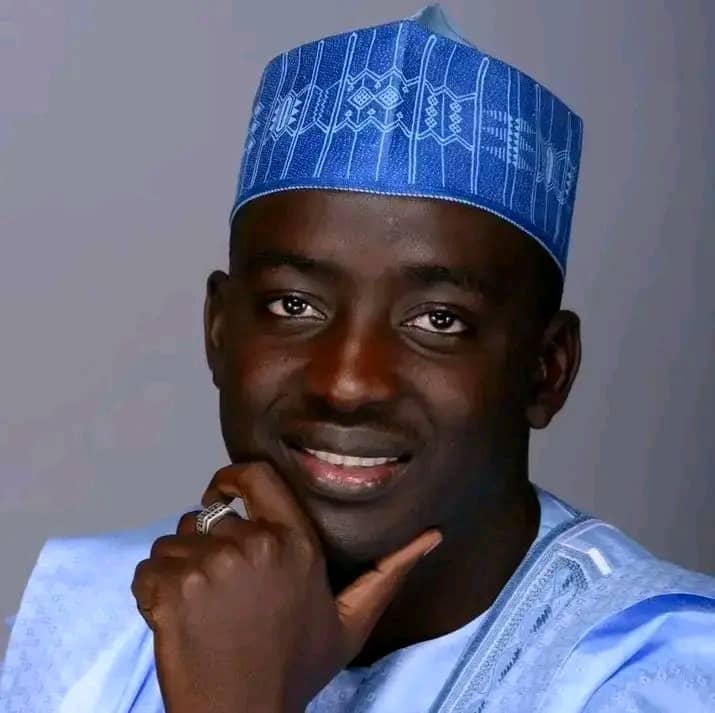
The Peoples Democratic Party (PDP) deputy governorship candidate in the 2023 elections in Sokoto State, Sagir Bafarawa, has defected to the All Progressives Congress (APC), alongside his supporters under the platform of the Bafarawa Akida Movement.
Bafarawa, who was the running mate to Sa’idu Ubandoman on the PDP ticket during the 2023 governorship election, announced his defection with a declaration of support for the administration of Governor Ahmed Aliyu.
Speaking on behalf of the movement, its Chairman, Prof. Muhammad Hamza Maishanu Yabo, said the decision followed wide consultations among stakeholders and loyalists of former Sokoto State Governor, Alhaji Attahiru Dalhatu Bafarawa.
According to him, the group resolved to align with the APC-led government in the state in recognition of Governor Aliyu’s leadership style and respect for their political mentor.
However, former Governor Attahiru Dalhatu Bafarawa dismissed reports suggesting that he had also joined the APC, clarifying that he had retired from active politics and now operates strictly as an elder statesman.
He stated that while he supports the decision of his followers to defect to the APC, he would personally remain non-partisan.
Bafarawa expressed his willingness to support Governor Aliyu’s administration, describing the governor as loyal, respectful, and committed to the development of Sokoto State.
He also reflected on his political journey, noting his role in mentoring several prominent politicians in the state, and reiterated his commitment to the unity and progress of Nigeria.
Please follow and like us:

NIGERIA NEWS
Zamfara lawmaker escapes death as constituents attack him over poor performance [VIDEO]

![Zamfara lawmaker escapes death as constituents attack him over poor performance [VIDEO]](https://informationhub.com.ng/wp-content/uploads/2025/12/Kabiru-Mikailu.jpg "Zamfara lawmaker escapes death as constituents attack him over poor performance [VIDEO]")
Residents of Dansadau town, Maru Local Government Area of Zamfara State, on Tuesday physically assaulted a member of the State House of Assembly, Kabiru Mikailu, over alleged poor performance and neglect.
In a viral video, the lawmaker could be seen struggling to escape from the crowd while the mob viciously attacked him.
Reports indicate that the lawmaker was attacked by residents when he accompanied the state governor, Dauda Lawal, on a visit to the troubled community.
The governor was in the community to flag off some key projects in the area.
Mikailu was accused of neglecting the community since he was elected into the office.
They residents further alleged that the lawmaker has not visited the community or engaged with constituents during major events.
In the video, the enraged residents could be heard shouting “bamayi” in Hausa, a term often used to express rejection or anger.
Watch video


The Nigeria Civil Aviation Authority (NCAA) has approved the commencement of scheduled flight operations at the Samuel Ladoke Akintola Airport, Ibadan.
The approval was conveyed in a letter dated December 16, 2025, and addressed to the Managing Director and Chief Executive Officer of the Federal Airports Authority of Nigeria.
According to the letter, the aviation regulator granted the airport a provisional interim operational permit to begin scheduled commercial flight operations.
The approval came on the back of extensive efforts by the Oyo State Government to upgrade the Samuel Ladoke Akintola Airport, Alakia, Ibadan, in line with its plan to transform the facility into an international airport.
The upgrade projects include the extension and widening of the runway, improvement of airfield lighting, construction of a 500,000-litre aviation fuel storage facility, and the building of a new Protocol Lounge, among other critical infrastructure.
According to the letter sighted by journalists, the NCAA said the decision was taken after it reviewed the updated status of safety-critical facilities, operational arrangements, and mitigation measures at the aerodrome.
The authority noted that the review followed recent developments at the airport and additional information provided by FAAN.
It also recalled that approval had earlier been granted for non-scheduled operations at the facility.
The letter read in part, “The Authority refers to its earlier correspondence Ref. No: NCAA/DAAS/TECH/008/VOL 1/173 dated 12th December, 2025, regarding the operational status of Samuel Ladoke Akintola Airport (SLAA), Ibadan, and the temporary approval granted for non-scheduled operations.
“Following recent developments at the aerodrome and the additional information provided by FAAN subsequent to the issuance of the above referenced letter, the Authority has reviewed the updated status of safety-critical facilities, operational arrangements, and mitigation measures currently in place.”
The NCAA added that the approval was granted in line with the provisions of the Nigerian Civil Aviation Regulations.
“In view of the above, and pursuant to the provisions of Nig.CARs Part 12, Volume I (2023), I am directed to convey the Authority’s approval for the issuance of provisional interim operational permit for the commencement of scheduled flight operations at Samuel Ladoke Akintola Airport, Ibadan,” the letter stated.
The authority, however, stressed that the provisional interim permit would be subject to strict compliance with salient work plan conditions, including the full operationalisation of emergency response arrangements at the airport.

In a major political development in Zamfara State, the Peoples Democratic Party (PDP) Chairman of Maradun Local Government Area, Alhaji Muttaka Dalhatu, has officially defected to the All Progressives Congress (APC), bringing along his executive members and ward chairmen.
The defection was formalized at the residence of Minister of State for Defence, Bello Mohammed Matawalle, in Abuja.
Speaking during the declaration, Dalhatu cited dissatisfaction with the PDP-led administration under Dauda Lawal, particularly over unfulfilled campaign promises on security and governance.
He stated, “The person we voted for to address insecurity has neglected us and instead focused on undermining Matawalle, a course we cannot support.”
Dalhatu added that the Maradun local government structure collapsed in favor of the APC because “Matawalle is more politically mature and reliable than Dauda Lawal, who continues to mislead party executives and supporters.”
He emphasized that as indigenes of Maradun, they would not participate in efforts to tarnish the reputation of Minister Matawalle or the APC.
The PDP officials who joined him included Alhaji Sani Ibrahim JB Danbaza, Hon. Bashar Muhammad Danbaza, Mallam Umar Attahiru, and Hon. Zayyanu Yakubu. Dalhatu also noted that arrangements are underway to integrate additional PDP executives from Maradun into the APC.
Welcoming the defectors, Minister Matawalle congratulated them for joining a party “where people are valued, respected, and provided equal opportunities.” He assured them of the APC’s commitment to member welfare and encouraged them to actively contribute to the party’s growth and success.
Matawalle expressed gratitude for their support, stating, “I am very much happy with your brotherhood support, although words alone cannot fully express my appreciation.”
This defection marks another significant shift in Zamfara’s political landscape ahead of future elections, further strengthening the APC’s position in the state.
Please follow and like us:


The abduction last month of more than 300 children and staff by gunmen from an elementary and secondary school in Nigeria’s north-central Niger State was dramatic in scale, but it represents just one more incident in the country’s tragic history of rural insecurity.
That there has been no public explanation by the authorities over who exactly the kidnappers are – and why they are still at large – is symptomatic of a security system that is failing woefully to protect its citizens, analysts suggest.
The abduction of the students from Saint Mary’s Catholic School in Papiri, in Niger State’s Agwara district, is the single largest kidnapping to date. Since January 2023, at least 816 pupils have been kidnapped in 22 school attacks – part of a far broader multi-million dollar kidnapping industry terrorising Nigeria.
The good news is that 100 of those kidnapped – 99 Saint Mary’s students and one teacher – were released unharmed on 7 December following negotiations between the authorities and their captors. About 50 of the students had earlier escaped from their abductors, a day after the 21 November kidnapping.
It remains unclear whether any ransom was paid for the freed students, but that would seem likely: Such payments are illegal, but the authorities generally prefer a payoff rather than the harder task of assembling the intelligence, then finding and prosecuting the culprits.
“One of the major reasons for the continued rise in mass abductions, especially school abductions, is the government’s ransom response to the problem,” said Malik Samuel, senior researcher with the Good Governance Africa think tank. ”But paying ransoms only increases the likelihood that the actors will do it again.”
This month, The New Humanitarian/PREMIUM TIMES visited Papiri to document what actually happened during the school attack and, if possible, to identify who was behind the incident and determine if they could strike again.
What we discovered was that two jihadist groups have established themselves in the area; both operating out of the now-abandoned Kainji Lake National Park, which borders a string of isolated villages around Papiri.
Despite army and air force bases roughly 150 kilometres away in the towns of Wawa and New Bussa, the insurgents have launched repeated attacks on the local communities for the past five years. The security forces seem unable to identify the security threats, much less contain them.
Timetable of a tragedy
Monita Anthony is still waiting for the release of her 12-year-old daughter, Charity*, who was kidnapped along with the other children from Saint Mary’s on 21 November. The authorities have asked her to be patient, but that’s especially hard as she is struggling with a double tragedy.
Three days after the abduction, she also lost her husband, who died of his injuries following an earlier motorbike accident. “We were still treating his wounds when the news of the abduction broke,” Mrs Anthony, 26, told The New Humanitarian/PREMIUM TIMES, struggling to pick her words.
The deceased’s wife, Monita.
Despite her husband’s condition, the couple rushed to the school, 20 kilometres from their village of Demo, in the hope of hearing any news. They joined a throng of other shocked and bemused parents waiting at the school gates.
Saint Mary’s is a private day/boarding school managed by the Catholic Diocese of Kontagora. The boarders range in age from 8 to 17. Gunshots at around 1 a.m. announced the beginning of the attack, jolting everyone awake.
The students were rounded up, along with the staff living on the campus. Everyone was marched outside at gunpoint. In the confusion, 50 students managed to escape, but the lack of cellphone coverage meant the security forces could not be alerted.
The operation lasted around an hour, according to multiple witnesses. The fighters, led by a commander identified simply as “Baba”, had arrived on a fleet of about 60 motorbikes, one eyewitness said. The students were loaded pillion-style onto the bikes, and those who couldn’t be carried were forced to walk.
It took two days for the whole group to finally reach the Kainji forest, passing through seven villages on their way, according to some of the released children. Throughout the journey, no police or security forces were encountered.
The group made their first stop at Sabon Kwa, where they stole a Toyota Corolla to carry some of the students. They also paused at a petrol station and forced the attendant to fuel the car and their motorcycles. They looted more fuel in Demo – where Charity’s parents live – and stole another vehicle, a Mazda pick-up.
Both vehicles broke down and were abandoned, and another vehicle was hijacked, along with the driver.
Audu Fari was the last village before the group entered the forest. There, they were split up. The staff and older students were blindfolded, tied up, and taken to a different part of the forest. “They took the rest of us to another location, near a river,” recalled freed student Godiya Yawa*. “We slept on a big tarpaulin under some trees.”
The students said they weren’t ill-treated and were fed regularly, but the food was never really enough. At night, their captors used solar lamps, which they quickly extinguished at the sound of an approaching plane. Nigerian military surveillance aircraft were searching for the group, reportedly assisted by the US Air Force.
Asked if any of the abductors mentioned what group they belonged to, 15-year-old Marcus Yesumiya* – one of the freed children – said one of the kidnappers said they were Boko Haram.
So, who were the captors?
One of the jihadist groups operating in the Kainji Lake National Park is Ansaru, which split from Boko Haram in 2012 in an ideological dispute over the wider group’s indiscriminate attacks against Muslim civilians, aligning itself instead with al-Qaeda insurgents in the Sahel.
Ansaru was based in the heavily forested Birnin Gwari area of Kaduna State before some of its fighters set up in the Kainji reserve, where it had free rein after the National Park Service quit in 2021 over the security threat.
Ansaru fighters have regularly attacked communities and kidnapped motorists along the roads close to the forest – apparently abandoning the group’s earlier injunction against targeting civilians.
But Ansaru suffered a serious setback in August. In a rare security success, its two leaders – Mahmud Usman and Mahmud al-Nigeri – were captured by the authorities. The group still operates but is believed to have been significantly weakened.
A franchise of Boko Haram known as “Sadiku” is the other group active in the area. Before the death of Boko Haram’s volatile leader Abubakar Shekau in 2021, he had sent Abubakar Saidu – popularly known as Mallam Sadiku – to develop new fronts outside of the group’s northeast home region. Sadiku has since sworn allegiance to Boko Haram’s new leader, Bakura Doro.
Sadiku had initially operated around the Allawa forest in Shiroro, Niger State, before moving to the Borgu area of the Kainji national park. His fighters have raided multiple villages and forced hundreds of people to flee their homes.
The New Humanitarian/PREMIUM TIMES asked respected security analysts which of the two groups they believed was behind the school kidnapping. Due to the weakening of Ansaru and the analysis below, the consensus was Sadiku.
Sadiku is best known for the audacious hijacking of an Abuja-bound train carrying 970 passengers in 2022, in collaboration with a notorious bandit leader called Dogo Gide. The two men have since fallen out, and their fighters clashed at the beginning of the year. The Nigerian air force also found and repeatedly bombed Sadiku’s Shiroro base.
As a result, Sadiku began a move into western Kwara State, which shares a border with the Kainji forest, and northwest into Kebbi State. Part of the plan seemed to revolve around an alliance with Lakurawa, another jihadist group affiliated with the Sahelian-based Jama’at Nusrat al-Islam wal-Muslimin (JNIM), which has established itself in Kebbi.
Vincent Foucher, a West African jihadism expert and senior research fellow at the National Centre for Scientific Research in France, believes Sadiku’s motives for the school attack included the need to finance the group’s relocation.
“Sadiku’s men seem to have been on the move since the breakdown between them and Dogo Gide,” noted Mr Foucher. “Apparently, they are trying to settle down in new areas, to the north of Niger State. And for this, they need cash.”
Mr Foucher said the Abuja-Kaduna train attack may well have been a turning point for Sadiku. He reportedly netted an estimated N6 billion ($4.1 million) as a ransom payment, in addition to securing the release of family members and associates that had been detained by the authorities in 2020 when a weapons store was raided in northern Nasarawa State.
The journey home
While official information about who was behind the latest kidnapping has been scant, the release of some of the abductees after two weeks in captivity was also marred by confusion.
The 99 students and one staff member were initially due to be set free on 6 December. However, they were on their way to the rendezvous point when they were suddenly called back and told that government officials weren’t at the agreed location.
“Baba, the commander, pleaded with us not to be angry,” recounted Yesumiya. “He said everything is done by the will of God.” Yesumiya said he couldn’t help but cry when they returned to the camp.
The group was finally released at one of the entrances to the national park the following day after an eight-hour motorbike journey. There, they were met by government buses and taken under military escort to the state capital, Minna, with just two stops for food and to be outfitted with new clothes.
Despite the official policy against paying ransoms, the government is believed to have handed over N1 billion ($688,000) for their release, said a source in the Office of the National Security Advisor who spoke on condition of anonymity.
The Nigerian government has rightfully celebrated the return of the students, but the majority of their classmates are still being held in the bush.
The remaining 153 pupils and 11 staff members are believed to have been split into two groups to be held by separate Sadiku commanders. The location of both groups is thought to be a forested zone near Ilorin, in Kwara State, according to one analyst, who asked not to be named so they could speak freely.
While Mrs Anthony’s niece regained her freedom on 7 December, she is still waiting for the return of her daughter, Charity. It’s a pain felt by all the parents and the wider Papiri community.
READ ALSO: Parents of abducted Niger schoolchildren protest, accuse government of slow response
Ayuba Emmanuel has two daughters who have not come home. Yesumiya knows them both.
“Jane* and Evelynne* are my friends. They are sisters. Jane refused to eat, and Evelynne was sick even before I was released,” he said. “Those people gave her medicine, but I pray she is allowed to come home [for better treatment].”
While parents and friends anxiously await the return of their loved ones, the broader tragedy is what the kidnapping reveals about the systemic failure of Nigeria’s security system. The country is underpoliced, the local administrative layer is weak, under-resourced, and all-to-frequently intimidated by a powerful criminal class.
Multiple insurgent groups – and scores more bandit gangs – have entrenched themselves in Nigeria’s countryside, preying on communities. It is a crisis that has existed for years, and which the authorities seem incapable of tackling.
“Different violent actors have taken the lead, with our security forces playing catch-up,” said Mr Samuel, the researcher. “The problem is also that instead of an effective strategy, where we could see some light at the end of the tunnel, we only get pronouncements and presidential directives issued after each major attack.”
* Names have been changed to protect the identities of the students.
For this in-depth analysis, The New Humanitarian teamed up with PREMIUM TIMES, one of Nigeria’s leading newspapers, and its investigative reporter, Yakubu Mohammed. Edited by Obi Anyadike.
NIGERIA NEWS
Nigerian Woman Selling Cold Drinks Installs Solar Panels on Old Roof to Power her Chest Freezer


- A businesswoman who spent more than half a million naira to install solar for her venture has attracted attention online
- Many people who watched the video of her solar installation wondered why she did not use the same amount to plaster her house
- The woman had some solar panels installed on her roof to power her chest freezer that housed her assorted drinks for sale
A Nigerian woman who wanted reliable electricity for her home has spent over N600k to install solar power.
Her installer, who worked on her project, shared a video capturing the moment he affixed her panels to the house roof.
 A woman spends over N500k on solar energy to get constant power for her business.
Photo source: @teextratechnology
Source: TikTok
Why use solar on old roof?
While he (@teextratechnology) said the woman installation put an end to her struggle with a fuel generator, people noticed other things from the clip.
The woman’s house looked old, with wood and roofing sheets used as a makeshift window. Her roof was also rusty.

Read also
Nigerian lady shares how new tenant in her house washed entire compound, video causes buzz
People wondered why she would spend N650k on a solar when she could use the same money to improve her house.
 An installer says a woman got a solar system to power her freezer.
Photo source: @teextratechnology
Source: TikTok
Is solar energy good for business?
Towards the end of the video, the installer showed that the woman would be using the solar system to power her freezer with cold drinks for sale.
There were people who believed the woman made the best decision to improve her business first, rather than spending such an amount to upgrade the old building.
Watch the video below:
Legit.ng compiled some of the reactions below:
HAREMU said:
“Them use 650k buy solar ontop this kain house.”
Mr Cruise noted:
“No insulator for panel You just mount am like that.”
Adegoke Olanrewaju olax said:
“Owo to ye kie fi tunlese efin ra solar.” (Money you ought to use to repair the house, you used the same to get solar)
@Mj_gadgetz replied:
“They need light first! How do you want them to be charging thier phones and other appliances ? and do you think 650k will cover the complement of the house?”
Read also
Nigerian man who went to install solar panels breaks owner’s roof, pays damage cost
whitemoney089 said:
“No be Generator dey suffer oo, nah the house dey suffer.”
Ishorlaade said:
“The right decision I made this year is closing my eye and doing solar inverter. I use 17k worth of fuel every week to power my Gen just so I can work but it all ended the very day I did my Inverter. If you are working from home and still using generator, then you are sleeping on it. I did mine for 1.3m and it carries everything at home including washing machine. It is worth it if you have the funds to run it.”
jooda and associates said:
“I am very sure is one mama that is selling cold something in the whole community that did it for her own business.”
The installer replied:
“Yes ooo, she took smart move.”
Man uses solar energy to cook
Meanwhile, Legit.ng earlier reported that a Nigerian man who installed a 16kva solar system in his house and even exported excess power to the national grid gave an update about his setup.

Read also
Lady in tears as theives break into new shop weeks after taking loan to launch it: “Cruel world”
As gas scarcity hit Nigerians months ago, the man said that he was using the induction cooker he bought months ago for cooking. The cooker is powered by solar energy.
Source: Legit.ng


Tension erupted in Zamfara State after a viral video showed a House of Representatives member being attacked by angry youths who accused him of poor performance and neglecting his constituents.
The incident reportedly occurred in Dansadau during what was believed to be a public outing or official visit.
In the footage circulating online, the lawmaker, Kabiru Mikailu, was seen being dragged, shoved, and pelted with stones by a crowd of visibly angry residents on a historic visit to the troubled community.
According to a report obtained from Channels Television, the angry youths accused the legislator of neglecting the community since his election, alleging he failed to attend major events or engage with constituents.
Some residents claimed Mikailu neither participated in Sallah festivities nor visited families affected by repeated bandit attacks in the area.
Despite the presence of security personnel, the situation quickly spiraled out of control as the crowd overwhelmed efforts to calm the unrest.
The lawmaker was eventually rescued and escorted away from the scene, though he sustained physical and emotional distress.
As of filing this report, neither the Nigeria Police Force nor the Zamfara State Government has released an official statement on the incident or confirmed whether any arrests were made.
The video has sparked widespread reactions online. While some Nigerians condemned the attack and warned against mob justice, others argued it reflects growing anger among citizens who feel abandoned by their elected representatives.
Watch video below…
Angry youths in Zamfara State stoned a House of Representatives member over poor performance! pic.twitter.com/vvPL6PYXNy
— Abdul-Aziz Na'ibi Abubakar (@jrnaib2) December 17, 2025

Governor Siminalayi Fubara of Rivers State says joining the ruling All Progressives Congress, APC, was an easy choice he made.
The governor said this on Thursday while addressing newsmen at the APC headquarters in Abuja.
Recall that the Minister of the Federal Capital Territory, FCT, Nyesom Wike, had engaged in a prolonged political battle with Fubara over the control of the PDP structure and party affairs in the oil-rich state.
DAILY POST reports that in a bid to ease tensions, President Bola Tinubu suspended both the governor and the Rivers State House of Assembly for six months.
Reinstated in September, Fubara formally defected from the PDP to the ruling APC on Tuesday, December 9, 2025—a move widely seen as a major political realignment ahead of the 2027 general elections.
According to the governor, he had always been a progressive at heart and pledged to foster unity within the APC to drive development in Rivers State and Nigeria as a whole.
“When you say I am a new member of the progressive family, that is correct, but I have always been a progressive at heart. We now have a direction.
“I think my transition was one of the easiest things I have done in my life. I call it easy because saying thank you is very simple. Showing appreciation and gratitude is easy. My joining the All Progressives Congress is to say thank you to Mr President and to join hands with other progressives to develop my state and Nigeria at large,” he said.

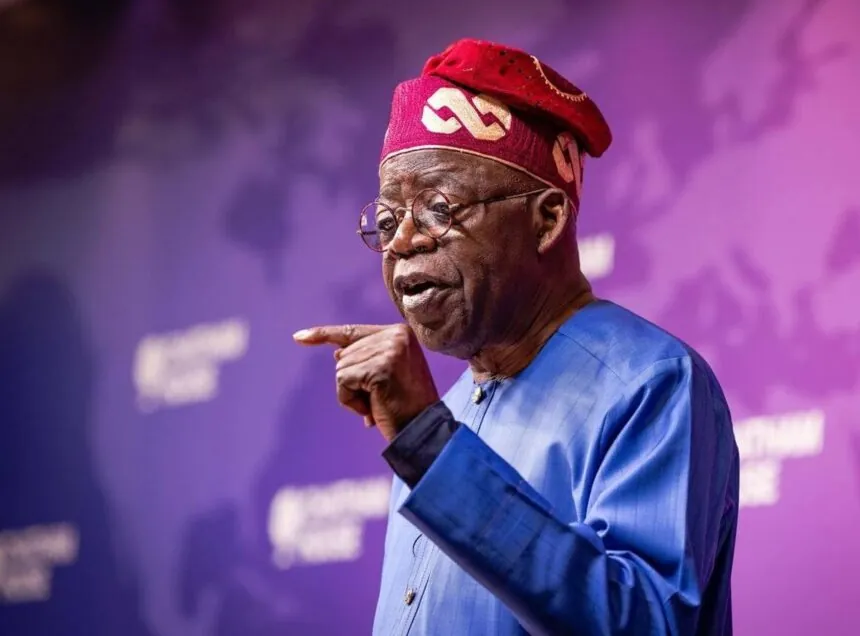
The Presidency has stated that President Bola Tinubu will not interfere in the activities of anti-corruption agencies following allegations of corruption against Farouk Ahmed, the former Chief Executive Officer of the Nigerian Midstream and Downstream Petroleum Regulatory Authority (NMDPRA).
Ahmed resigned from his position amid claims of corruption levelled against him by Aliko Dangote, President and CEO of Dangote Industries Limited.
Presidential spokesman Bayo Onanuga, in a post on X on Thursday, emphasised that the Economic and Financial Crimes Commission (EFCC) and the Independent Corrupt Practices and Other Related Offences Commission (ICPC) are autonomous bodies and will act in line with their statutory mandates.
Onanuga’s remarks were made in response to public criticism over the absence of arrests or formal investigations following Ahmed’s resignation.
An X user, @OurFavOnlineDoc, had questioned the lack of accountability, writing:
“No prosecution. No arrest. No investigation. No proper accountability.
Just allegation of stealing public funds, followed by a quiet resignation, and everybody can move on.
This is not how to build a sane country with trust, integrity, and respect before the world. What a shame.”
However, Onanuga dismissed the criticism as uninformed, stressing that the President cannot dictate how the EFCC or ICPC handle such matters.
“This is how we get things wrong through uninformed criticism. ICPC and EFCC are autonomous institutions.
“The ball is now in their courts to carry out their mandates. Mr President will not tell them what to do,” he said.


- AidaPayhas introduced ScanPay a computer vision-powered feature that eliminates manual entry of bank account numbers enabling transfers in just two to three seconds
- The technology scans and verifies bank details from screenshots handwritten notes or printed signs ensuring accuracy and reducing failed transactions even under poor lighting or distorted images
- Nigerians can access ScanPay through AidaPay’s EarlyBird program with free transfers and one percent cashback during the beta phase by downloading the app or visiting www.aidapay.ng/scanpay
Nigeria has rapidly embraced digital finance, but a persistent and frustrating bottleneck remains in daily transactions: the manual entry of bank account numbers.
The process is time-consuming, slowing down purchases at markets, extending supermarket queues, and turning simple online payments into irritating delays. It also introduces a significant risk of human error – even a minor typo could result in misdirected or failed transfers.
Existing solutions, such as alternative payment systems or QR codes, have failed to gain real traction in solving this issue because they often require merchants to overhaul their existing setup or force customers to adopt entirely new payment habits.
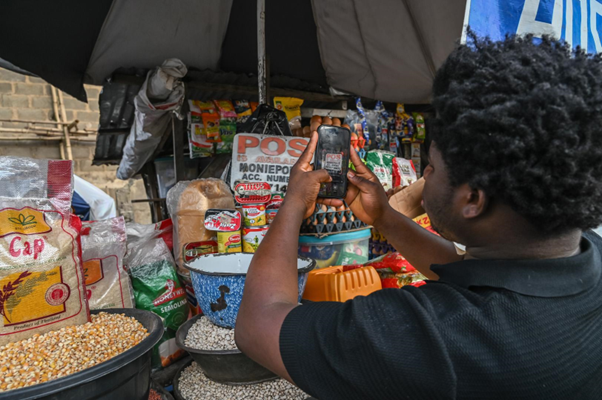
But AidaPay chose a different path. What Nigeria needs isn’t a drastic change – it’s a smarter way to smooth and strengthen the system we already use.
Musefiu Agbeniga, AidaPay’s founder and lead software engineer, identified the core problem as the act of entering the account number. By removing this single, error-prone action, he realized he could fundamentally improve the speed and accuracy of every digital transfer. This focus led to the development of ScanPay, a revolutionary Computer Vision for African Finance integrated directly into the AidaPay app.
The Mechanics of ScanPay
ScanPay completely eliminates manual data entry. Users can now initiate a transfer by simply aiming their phone camera at any display of bank details – be it a screenshot, a handwritten note, or a printed sign.
The tool’s sophisticated engine instantly scans and recognizes the numbers and corresponding bank, and automatically populates the transfer form. Crucially, it goes a step further by verifying the details and filling in the recipient’s account name, ensuring accuracy before the transfer is even confirmed.
The entire process is reduced to three quick steps: scan, input the amount, and send. What used to take 30 to 45 seconds of careful, often frustrating, typing, is now typically completed in 2 to 3 seconds. This dramatic reduction in human intervention also slashes the rate of failed transfers and misdirected funds.
The technology is robust, designed specifically to handle the “messy” reality of real-world data. It functions reliably even under poor lighting conditions and can process distorted data like compressed social media images or messy handwriting. This reliability stems from a proprietary code model meticulously trained on specific Nigerian banking formats, complemented by a powerful, highly-trained AI that can discern an account number from other strings of digits and understand different bank formatting conventions.
Nationwide Rollout and Early User Perks
AidaPay is now inviting users to test the technology through the EarlyBird Access program, the beta phase preceding its full public release. To incentivize testing, early users will receive free transfers and a 1% cashback reward on every transaction made during this launch period.
Nigerian users can begin using the feature immediately by downloading the AidaPay app and signing up for EarlyBird Access, or by visiting www.aidapay.ng/scanpay.
Follow us for Breaking News and Market Intelligence.




SOURCE PAGE
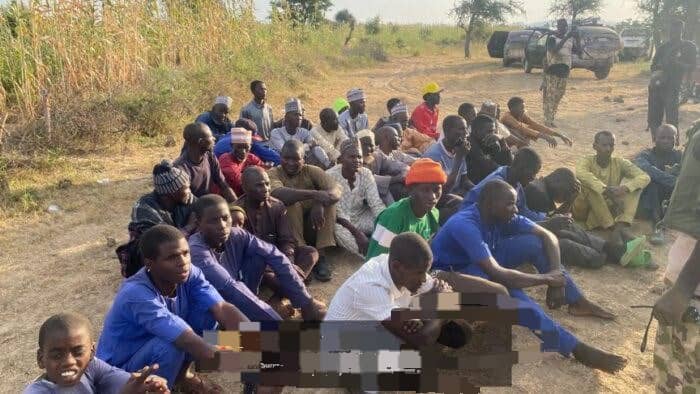
Suspected terrorists abducted the newly elected Vice Chairman of Biu Local Government Area, Alhaji Saidu, along with two councillors representing Zarawuyaku and Miringa wards.
Several unidentified passengers traveling in a separate Hisbah vehicle were also kidnapped.
The incident reportedly occurred on Wednesday evening as the officials were traveling from Biu to Maiduguri.
Details of the Incident
According to credible sources, the abductions took place between Kamuya village and the Buni Yadi road, carried out by suspected Boko Haram/ISWAP terrorists.
The passengers were in a Hisbah vehicle traveling from Potiskum in Yobe State to Biu. One of the abducted councillors is noted as the immediate past Vice Chairman of Biu Local Government.
A senior politician, speaking anonymously, confirmed: “Yes, our newly elected Vice Chairman in the last Saturday local government polls, Alhaji Saidu, and two Councillors representing Zarawuyaku and Miringa Wards of Biu local government area in Borno state were abducted by suspected Boko Haram/ISWAP terrorists between Kamuya village and Buni Yadi road.
“They were abducted alongside some unidentified passengers travelling in a Hizbah vehicle en route from Potiskum town of Yobe state to Biu.
“One of the councillors abducted was the immediate past vice chairman of Biu local government.
“We are appealing to the government and our security agencies to intensify efforts in rescuing them and other captives safely.”
Notorious Road Remains a Security Concern
The approximately 120 km road stretching from Biu through Buratai and Kamuya to Buni Yadi and Damaturu “has remained a death trap,” with numerous reports of killings and abductions over the years.
Travelers on this route continue to face high risks from insurgent activities.