
SPORT
UNTOLD UNITED: THE DOWNFALL OF BRITAIN’S BIGGEST CLUB. Volume 3 – How the new-age ‘experts’ blew £2billion on a ruinous transfer policy that left United for dead


For Cristiano Ronaldo, it was the loose, chipped tiles in the players’ swimming pool at Carrington. For Zlatan Ibrahimovic, evidence that Manchester United were no longer the big club he had imagined came in the form of a £1 deduction from his salary for drinking fruit juice from a hotel minibar on a club trip.
‘Everyone thinks of United as a top club, one of the most powerful in the world,’ Ibrahimovic wrote in his autobiography. ‘But once I was there, I found a small, closed mentality.’
The penny dropped for Alexis Sanchez after just one training session. The Chilean, one of the worst and most costly signings of United’s grisly recent history, called his agent to see if he could abort his move from Arsenal, having had the briefest of glimpses behind the Old Trafford curtains.
‘I would have loved to play, win everything, and make the fans happy,’ Sanchez said later. ‘It didn’t happen because of things at the time that weren’t suited for a team of United’s size.’
Two of United’s biggest signings of the past decade quickly realised that the empire Sir Alex Ferguson built had fallen into a state of decay since his retirement in 2013. They were right. And nowhere has all that manifested itself more than in the playing squads that have dragged United towards the bottom of the ocean over the past decade.
Around the modern United, there is always going to be one bad guy, or bad family: the Glazers. Absentee owners for the vast majority of their time at the club, the Americans and those doing their bidding tend to get the blame for everything. It’s understandable. A fish rots from the head and all that.

Sir Alex Ferguson brought the greats to Manchester United, such as 2013 title winner Robin van Persie – when Fergie left the recruitment began to rapidly go downhill
But what about everybody else? United have flatlined because of years of underperformance on the field and that is on the players – and the ‘experts’ who bought them.
It’s also on Ed Woodward, in thrall to star names and flashy agents and far too interested in social media metrics. It’s on Richard Arnold, who followed him into the CEO’s office. And on the numerous faceless men who United have asked to do their work for them in the market all these years and have failed. Men such as John Murtough, now at Atalanta after a disastrous spell as United football director.
Squad-building is nuanced and complicated. Mistakes get made. But the truth is that United have been getting it wrong for years on a very basic level: Too much money on too many bad players.
How have so many dismal and destructive patterns been allowed to repeat? From Angel Di Maria in 2014 to Rasmus Hojlund in 2023, United’s cack-handed strategies have left a money trail so deep and unseemly, you can almost smell it.
Over the course of 12 years, United have spent close to £2billion on 75 players. And how many of those players can be considered successful acquisitions? Apart from Bruno Fernandes – signed five years ago – can you name another?
And what has been the strategy linking United’s recruitment over the past decade? Has there even been one?
While clubs such as Manchester City and Liverpool have surged forwards on heavy spending and smart work in the market, more modest outfits such as Bournemouth, Brighton and Brentford have embarrassed United by using modern data and AI models with considerable success.
United have made a profit on one first-team player – not including homegrown talent – in the past decade. Dan James was bought from Swansea for £15million in 2019 and joined Leeds for £25m two years later.

United have made a profit on one first-team player in the past decade. Dan James was bought from Swansea for £15million in 2019 and joined Leeds for £25m two years later
Few people leave Old Trafford a better footballer these days. United have become a graveyard for big stars and the cream of the club’s famed youth academy. Marcus Rashford, Jesse Lingard, Alejandro Garnacho and Scott McTominay have all come through the ranks at United and moved on. The talented Kobbie Mainoo could be next.
Rashford and McTominay have thrived after moving elsewhere, another worrying sign about the debilitating, demoralising environment that has grown up around United, unable to develop and care for talented young footballers.
United had been buying poor players even before Ferguson left the club. He won his valedictory title in 2013 after picking City’s pocket to sign talismanic forward Robin van Persie. But that season disguised a malaise that had already set in.
In the summer of 2012, for example, Van Persie joined alongside Shinji Kagawa, Nick Powell, Alexander Buttner and Angelo Henriquez. A deal for Wilfried Zaha was then done in January 2013. David Moyes had to clean up the mess of that one.
Back in 2009, meanwhile, United had waved Ronaldo off to Real Madrid, watched City take Carlos Tevez from them and spent just £24m on Antonio Valencia, Gabriel Obertan and Mame Biram Diouf.
A year later City shelled out £125m on a squad that would go on to topple United from the pinnacle of English football, while their neighbours spent £39m on four players including Bebe, an unknown Portuguese player who came to prominence playing for a homeless charity.
In many ways the die was cast. The Blue Moon was rising. But the manner in which errors at the end of the Ferguson era were allowed to snowball into a decade or more of catastrophic misjudgments in the transfer market is even more astounding.
Things changed dramatically after Ferguson and United got it terribly wrong. They admit it now. Woodward – United’s all-too-visible executive vice-chair from 2012 to 2022 – has copped a lot of the blame. Some insiders believe he was starstruck, others describe him as being ‘like a kid in a candy store’.

Ed Woodward (left), United’s all-too-visible executive vice-chair from 2012-22, took a lot of the blame. Some insiders believe he was starstruck, others say he was ‘like a kid in a candy store’
He pushes back against some of that, but not all. ‘People say I was signing players but I wasn’t,’ he told a confidant. ‘I put people in place to do that.
‘In the first three years post-Ferguson we made poor recruitment decisions. You need seven out of 10 signings to be successful. We were three out of 10.
‘Ferguson was even more of a genius than we realised. He was the Pied Piper. We actually needed to evolve and we didn’t. Then we made multiple mistakes around recruitment. It really hurt us for a long time.’
Ferguson had preferred to work closely with his chief scout Jim Lawlor and his brother Martin, relying on their insight and his own evaluations of players. The genius lived inside Ferguson’s head. There were no reference points left behind for those who followed. It had all been utterly intuitive and old school and as such utterly alien to his successor.
Moyes’ reputation as a shrewd operator in the transfer market was built upon the forensically-detailed systems in his ‘secret room’ at Everton’s Finch Farm training base where the whiteboards had colour-coded annotations.
At United the tactical analysis office was enhanced with whiteboards, touchscreens, iPads and a central database of targets, but it was all painfully rudimentary. Only months after Ferguson’s decision to go, United were already struggling.
‘All of a sudden there’s a huge power vacuum,’ says one ex-employee. ‘We started to bring in “experts”. Analysts all over the place. The club did need to move on, but it went from one extreme to the other and for all the new additions we didn’t replace the authority or the power that we had lost with Sir Alex.’
The only summer transfer window Moyes oversaw was a disaster. He pulled the plug on a move for Thiago Alcantara as United pursued deals for Gareth Bale, Cesc Fabregas and a return for Ronaldo.
None got off the ground, and United’s only summer signing ended up being Marouane Fellaini from Moyes’s old club Everton. The fee on deadline day was £27.5m – £4m more than Fellaini’s buyout clause, which had just expired.

David Moyes wanted Gareth Bale (right). In the end he only got Marouane Fellaini (left)

Cesc Fabregas (right) was another that Moyes coveted, but he ended up at Chelsea instead
Woodward accepts now that the club failed Moyes. Back then a disconnect between the men was clear – ‘either he’s a genius, or a f***ing clown,’ said Moyes privately.
Woodward had no compunction in sacking Moyes in April 2014 but it was what happened next that shaped so much of what has gone wrong at Old Trafford.
A one-season mistake should have been quickly corrected. Instead, United simply threw money at a problem and threw much of it the wrong way.
For more than a decade, players with global profiles and glowing reputations would arrive at Old Trafford and be spat out – their reputations and output vastly diminished.
In the four-and-a-half years that Louis van Gaal and Jose Mourinho were in office at United, tens of millions were lavished on transfer fees and wages for Galacticos such as Di Maria, Radamel Falcao, Memphis Depay, Bastian Schweinsteiger, Anthony Martial, Ibrahimovic, Paul Pogba, Romelu Lukaku, Nemanja Matic and Sanchez.
Amid United’s many missteps in the transfer market, the club would occasionally comfort themselves – and indeed their shareholders on quarterly investor calls – by looking at the social media and brand optics.
Never was that more apparent than in the summer of 2016 when, having countered Pep Guardiola’s appointment at Manchester City by installing his old nemesis Mourinho in the Old Trafford hotseat, Woodward’s United signed Pogba and Ibrahimovic.
Rather than embarrassment at paying Juventus £89.3m for a former academy player who had left Manchester for Turin four years earlier for £1.5m, Woodward was cock-a-hoop that the world-record fee had put United firmly back on the map.

Rather than embarrassment at paying Juventus £89.3m for Pogba, who had left Manchester four years earlier for £1.5m, Woodward was cock-a-hoop at the world-record fee

Zlatan Ibrahimovic was another on a big salary who came to regret his time at Old Trafford
With Ferguson’s hatred of social media no longer holding United back, the Frenchman’s return was trumpeted in an adidas-sponsored video of him dancing to a Stormzy rap with the hashtag #PogBACK.
For Ibrahimovic, having quickly realised United were not the force he expected them to be, he began to grow exasperated at what he encountered on a daily basis, not least at Carrington.
He recalled: ‘I’d lower my window and say to the person at the gate, “Listen my friend, I’ve been coming here every day for a month, I’m the best player in the world – if you still don’t recognise me, you’re in the wrong job”.’
Ibrahimovic was very, very far from being the best player in the world by then. He had never been, but that was not what his ego told him. And that made him another perfect fit in United’s arc of dysfunction.
Pogba’s antics were a distraction for Mourinho, Solskjaer and interim boss Ralf Rangnick, before he returned to Juventus on a free transfer. His relationship with academy product Lingard also rubbed people up the wrong way, particularly their habit of posting light-hearted dressing room videos when things were going badly.
‘It’s obviously knowing the right time to do things like that,’ Lingard tells us now. ‘But ruining culture? We only tried to make it stronger.’
Henrikh Mkhitaryan also fell out with Mourinho but the significance of his otherwise forgettable time at the club lies in the fact he was used as a makeweight in the ruinous Sanchez deal.
The swap valued Sanchez at £35m even though he only had five months left on his Arsenal contract. Wikileaks subsequently revealed that United, desperate to fend off interest from City, agreed to pay Sanchez a £20.35m-a-year salary, plus £75,000 for every game started and a £1.1m annual signing on fee.

Jesse Lingard (left) and Pogba (6) rubbed some of the more old-school pundits up the wrong way – but as far as they saw it they were bringing energy back to the dressing room

Henrikh Mkhitaryan (left) and Alexis Sanchez (right) swapped clubs in January 2018 – neither side got a good deal but United were definitely worse off
Everybody in football could see Sanchez was signing for the money but United, in thrall by then to the cult of footballing celebrity, seemed utterly blind to the dangers.
His unveiling was an extravagant production, filmed playing Glory, Glory Man United on the piano in his new kit. The Chile star probably thought he had joined a footballing orchestra but he was now part of a circus. He went on to score just five goals in 45 games for the club and left 19 months later.
As the United malaise has deepened, the club has attempted to modernise. Woodward was happy with changes put in place by the time he stepped away in January 2022, even if an uptick in recruitment patterns and standards was not immediately apparent.
Today, United are making some progress with signings such as Matheus Cunha and Bryan Mbeumo. Director of football Jason Wilcox recorded a club podcast recently in which he outlined the art of a transfer deal. Confidence appears to be growing.
As always, it has been impossible to please everyone along the way. Mourinho, for example, was scornful of the club’s recruitment policy, mocking the fact they had three options for every target position.
The Portuguese – a control freak to this day – was also opposed to the idea of a football director and was known to be bemused by the size of a scouting network that had ballooned to 58 around the world since the days of Ferguson’s black box.
United’s drive for expertise and their attempts to embrace modern player tracking and transfer strategy had led to some departments becoming rather bloated. From one extreme to the other in just a few years.
The Ferguson inner circle had been replaced by an army of experts. When Erik ten Hag took over, the number of scouts had risen to 140 – 90 full-time scouts and 50 casual weekend observers – feeding into an extensive database called TrackerMan.

Matheus Cunha and Bryan Mbeumo have been two of the more successful signings in recent years

Jason Wilcox (left) has got a grip on recruitment now and things are looking more promising for Sir Jim Ratcliffe and Co
In the summer of 2019, when United signed Aaron Wan-Bissaka from Crystal Palace, Woodward boasted that the defender had been singled out from a long list of 804 right backs. Sceptics wondered why – after such intensive scouting – United had ultimately settled on a bloke they could just have watched on Match of the Day.
Palace chairman Steve Parrish, meanwhile, is said to have nearly fallen off his chair when United agreed to pay £50m. Wan-Bissaka is now playing his football at West Ham, which is probably his level.
United have for too long lagged behind many of their rivals partly because, despite the growing numbers of staff and a willingness to embrace latest technology and methods, there was too often a palpable vacuum where there should have been football expertise. It’s no good having the gear if you can’t use it.
Murtough, one of two men behind TrackerMan along with then head of recruitment Steve Brown, was not appointed as the club’s first director of football until March 2021. That came at the same time as Matt Judge became head of football negotiations, having been doing the job for a number of years under the incongruous title of head of corporate development.
United were, belatedly, turning to numbers and technology when they went after players rather than just sloshing cash around European football. In October 2021, Dominic Jordan was hired as the club’s first director of data science.
Still, there have been obvious mistakes. United spent the summer of 2022 waiting for Barcelona midfielder Frenkie de Jong to join them. He never did. So, at the last moment, they plumped for Real Madrid’s veteran midfielder Casemiro – whose parting shot at the Bernabeu was to tell team-mates he couldn’t believe how much his new club were about to pay him.
Casemiro, who cost £60m and earns £300,000 a week, is 33 now and still in United’s midfield. He has had moments of excellence but mostly, he has looked like a player who gave his best years to another club. It’s a familiar theme at Old Trafford.
After a poor start under Ten Hag in 2022-23, meanwhile, United once again made what appeared a panicked signing, paying £86m for the Brazilian winger Antony, even though he had been available for £60m two months earlier. He has been moved on at a huge loss.

Casemiro and Antony have been two hugely expensive errors at United, coming in at close to a combined £150million

United had wanted Frenkie de Jong (left) in the summer of 2022, but he never gave any indication he was up for making the move from Barcelona – so Casemiro came in instead
At one point it even looked like the supporters were in charge of recruitment, as a move for Marko Arnautovic was abandoned amid protests from fans over signing the former Stoke and West Ham striker.
Too many of the incomings during Ten Hag’s uncertain tenure seemed to be linked to his own agent Kees Vos, had played for him before or in leagues with which he was familiar.
When Ten Hag was told Matthijs de Ligt would not be a natural fit for United – the recruitment team labelled him ‘a Dutch Harry Maguire’ – the manager put his foot down and the club paid £42m for him.
United’s academy recruitment has also dipped, which led to two overhauls in eight years to try to compete with City and Chelsea.
Murtough had become an increasingly prominent figure until being swept aside by Sir Jim Ratcliffe’s new broom. He was at least credited with ensuring there was more focus on player care. Claire Robson, daughter of United legend Bryan, was handed a key role ensuring those at the club were well looked-after off the pitch.
‘You’d get kids coming here who had no idea about Manchester,’ an insider revealed. ‘Back in the day someone like Rio Ferdinand or Wayne Rooney would tell them about the area and the best places to live.
‘There was one young lad who bought a mansion in the middle of nowhere and quite quickly became isolated. When his form dropped off, he didn’t really have anyone to speak to.’
United’s academy conveyor belt had been failing for some time pre-Ineos. Despite the overhauls, United are not always considered by the best young players, who often go to Chelsea or City.

Erik ten Hag was told Matthijs de Ligt (right) would not be a natural fit for United, but the manager put his foot down and the club paid £42m for his old Ajax student

Several of Ten Hag’s United signings were also represented by his trusted agent Kees Vos
Ole Gunnar Solskjaer wanted Erling Haaland, Declan Rice and Jude Bellingham. He got Jadon Sancho, Donny van de Beek and a 36-year-old Ronaldo.
United paid £73m for Sancho in 2021 and, currently on loan at Aston Villa after a spell at Chelsea, he will leave as a free agent when his £250,000-a-week contract runs out next summer. He has not played for United for two years.
Ronaldo, on the other hand, was different and the parallels to the misguided and costly signing of Sanchez three years previously were clear but also ignored. The deal was a masterstroke by super-agent Jorge Mendes, who put the fear of God into United that Ronaldo ‘had the pen in his hand’ and was set to sign for City.
‘It created a panic,’ says one source. ‘The idea of him scoring for City against United was too much for them. They were frightened to death about how the fans would react when the reality was that signing him would go against everything that Ole was trying to do.’
Buying one of the world’s best players for £19.8m can rarely be seen as a bad thing, but Ronaldo was a disruptive presence from the moment he walked back into the club on more than £500,000 a week. A split is believed to have been created by his desire to take the captaincy off Maguire. Years later, Solskjaer said: ‘Maybe it affected the whole dressing room, the dynamic. He was top scorer that year, but I was out of the job 10 weeks in!’
Solskjaer needed to be braver over the issue of Ronaldo’s return. Could you imagine Guardiola at City or Jurgen Klopp at Liverpool being dictated to in this way? Having made so much of a return to the principles of Ferguson – unity and meritocracy – Solskjaer allowed all that to be undermined by the return of the one player in Europe who was arguably bigger than the club itself.
In 2023, United abandoned a bid to sign Harry Kane partly due to the cost but then paid £72m for Hojlund, who was valued at a third of that price by other clubs.
Hojlund joined Napoli on loan last summer with a view to a permanent £38m move. Antony has been sold to Real Betis at a loss of around £60m. Manuel Ugarte – signed from Paris Saint-Germain for an initial £40m in the summer of 2024 – sits on the bench while Fernandes – a naturally attacking player – occupies his berth in the centre of midfield. And so the vague sense of make-do-and-mend rolls on.

In 2023, United abandoned a bid to sign Harry Kane partly due to the cost but then paid £72m for Rasmus Hojlund, who was valued at a third of that price by other clubs

Manuel Ugarte (centre) was signed for £40m to play with Bruno Fernandes (right) but has been rooted to the bench instead
Overspending was one of the many issues highlighted by Ineos during Ratcliffe’s £1.3bn investment in the club last year.
The due diligence concluded that United didn’t move quickly enough to sign players and were too ready to extend existing contracts to protect their assets when it would make more sense to let them leave.
Whereas Woodward relished his blockbuster deals, Ratcliffe aspires to unearthing ‘the next Kylian Mbappe’. He wants to drive down the wage bill and make a profit from the academy by selling off homegrown players, something only encouraged by Premier League profit and sustainability rules.
The hierarchy has been completely overhauled once more and it now carries a strong Manchester City influence – chief executive Omar Berrada, director of football Wilcox, who stepped up following the rather embarrassing decision to sack Dan Ashworth after 159 days, director of performance Sam Erith and new academy head Stephen Torpey all have a City background.
Christopher Vivell is director of recruitment and Ratcliffe brought in Mike Sansoni from the Mercedes F1 team to improve United’s ‘last-century’ data operation.
The aim is to improve the culture and recruitment at the club with a ‘no d***heads’ policy after 12 years of expensive mistakes. Moving Garnacho on to Chelsea was, at least, a step in the right direction from that point of view.
Not only has the quality of player been allowed to plummet post-Ferguson, so too have standards. One first-teamer, who was not well liked, secured a move away but left his mark. ‘He had a ridiculous supercar,’ a source explained. ‘When he left, he just abandoned it in the car park at Carrington. It was there for about six months. That was how little he cared.
‘There’s a strip of grass next to the players’ car park in between two buildings. One player appeared to be too lazy to reverse out and instead started driving over the grass to turn around instead.

Chief executive Omar Berrada is one of a number of new United employees who have experience of building winning teams across town with Manchester City

Stephen Torpey (right) has been brought in to run the academy and produce high-quality talent
‘One of the players left from Sir Alex’s time pulled him up on it, to be fair, and told him that it was a fancy car he was driving and it was surprising that it didn’t have a reverse gear.’
We can assume it didn’t belong to defender Eric Bailly, whose modest choice of vehicle was mocked by his team-mates. They took to jumping on the roof and bonnet when it was parked at Carrington and, on one occasion, were joined by manager Mourinho.
There is a widespread view that a complacent United have traded off their illustrious name for too long, and the harsh reality identified by Ibrahimovic, Ronaldo and others has been allowed to erode the club from within.
As we approach the 13th anniversary of Ferguson’s departure, and after numerous attempts at a cultural reset, it feels like a long way back. The legacy of years of United’s malfunction in the market goes on.
SPORT
Revealed: The high-profile ring girls for Anthony Joshua and Jake Paul’s controversial fight – including one with more TikTok followers than AJ!

The trio of ring girls for Anthony Joshua’s clash with Jake Paul in Miami on Friday night has been confirmed.
Joshua and YouTube star Paul face off in a highly controversial clash which, according to our previous reporting, is worth just shy of £140million.
The boxing world has been divided over the showdown, with many fearing it could be dangerous for Paul. AJ, a two-time unified world heavyweight champion, has insisted he has a ‘licence to kill’. Paul remains undeterred. ‘Let’s kill each other,’ he said.
Some people hoping to lower the animosity slightly will be the ring girls, who have been confirmed as Raphaela Milagres, Marissa Ayers, and Journi Carr.
The first two were announced at the end of November and Carr revealed her involvement this week to her fleet of 406,000 Instagram followers.
Carr, 25, an influencer and model from Texas, said she was ‘beyond excited’ to join the crew after boxing chiefs launched a search for a UK-based model – but landed on her anyway.

The trio of ring girls for Anthony Joshua’s fight with Jake Paul has been revealed (pictured: Raphaela Milagres)

Journi Carr announed that she is the final ring girl and will make her debut in Miami

Marissa Ayers has more followers on TikTok than Joshua does, with 1.5 million fans

The three shared their excitement as they posed at the press conference ahead of Friday

Carr said she was ‘beyond excited’ to be joining her more experienced colleagues for the bout


Milagres (left) has been a ring girl for Paul before while Ayers has worked on fights
It appears that she is a debutant alongside her more experienced colleagues, Milagres and Ayers.
Milagres, a 30-year-old model from Brazil with 181,000 Instatram followers, has worked as a ring girl at Paul’s fights before.
For example, she was holding the cards at his win over Mike Tyson in November last year and she was also involved for his victory against Julio Cesar Chavez Jr in June.
Then there’s Ayers, a 22-year-old former gymnast and University of Alabama graduate.
She gained recognition as a ring girl at the Katie Taylor vs Amanda Serrano bout earlier this year, which Milagres was also a part of.
Like Carr, she has 406,000 Instagram fans and around 1.5 million on TikTok. That’s more than the 1.1 million that Joshua boasts.
Carr revealed in an Instagram video how the trident of ring girls were getting on as they smiled and posed at the pre-fight press conference.
The eyes of the world will be on this fight and the three of them have an important job helping the millions of viewers to keep track of the rounds – if, indeed, Paul survives any.
Share or comment on this article:
Revealed: The high-profile ring girls for Anthony Joshua and Jake Paul’s controversial fight – including one with more TikTok followers than AJ!

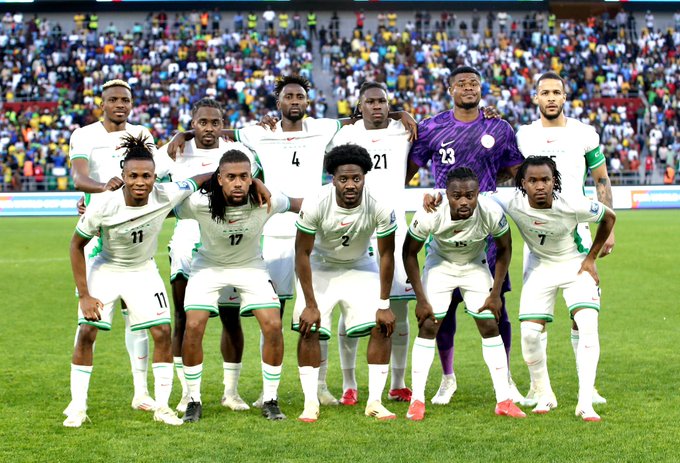
The Super Eagles of Nigeria have been drawn in Group C of the 2025 Africa Cup of Nations (AFCON) in Morocco, alongside Tunisia, Tanzania, and Uganda.
Naija News reports that with a rich AFCON history, including three previous titles, Nigeria enters the tournament as one of the favourites to lift the coveted trophy.
Nigeria came agonisingly close to glory in the last edition, losing 2-1 to hosts Côte d’Ivoire in the final after initially taking the lead. As they gear up for Morocco, the focus is clear: go one step further and claim the continental crown in North Africa.
The Super Eagles will kick off their campaign against the Taifa Stars of Tanzania on December 23 at 6:30 pm (WAT) at the Fez Stadium in Fes.
Nigeria’s second group match promises fireworks as they face the Carthage Eagles of Tunisia on December 27 at 9:00 pm. This North African rivalry is always intense, with both sides looking to assert dominance early in the tournament.
The group stage will conclude with the Super Eagles taking on the Cranes of Uganda on December 30 at 5:00 pm. The top two teams from each group will automatically progress to the round of 16, while four additional teams will qualify as the best third-placed finishers.
Super Eagles Group Stage Fixtures – Morocco 2025
Dec 23: Nigeria vs Tanzania – 6:30 pm (WAT)
Dec 27: Nigeria vs Tunisia – 9:00 pm
Dec 30: Uganda vs Nigeria – 5:00 pm
With history on their side and expectations high, the Super Eagles will be looking to soar above their group rivals and set the stage for an AFCON triumph in Morocco.

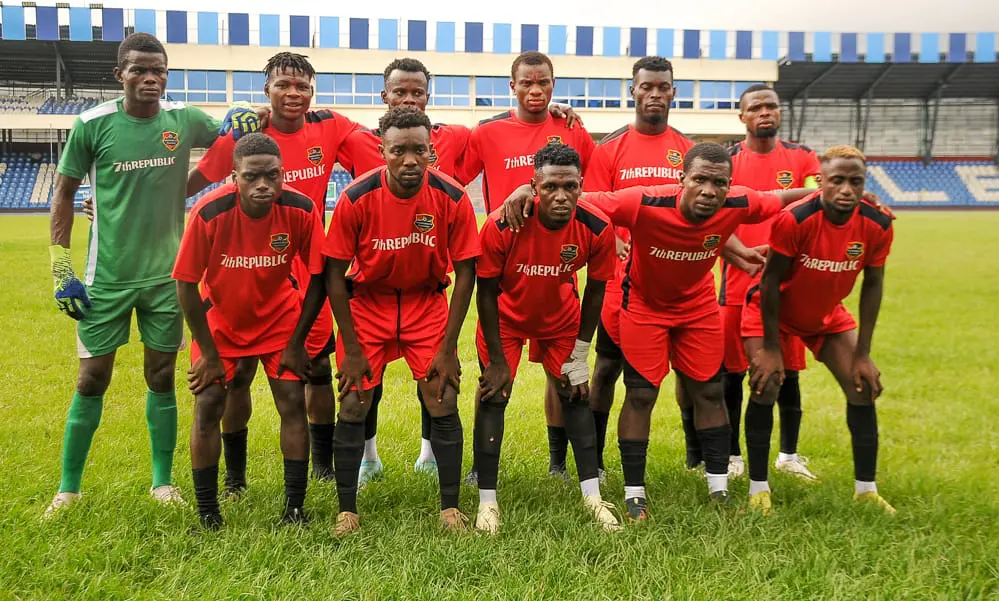
Kun Khalifat FC head coach, Emmanuel Osigwe, has revealed plans to add experiences players to the team during the mid-season transfer window.
Osigwe said that the experienced players will help improve the level of performance among the young players.
He pointed that the Umuahia-based club struggled in their last home defeat to Abia Warriors.
Kun Khalifat lost by 1-0 to Abia Warriors at the Dan Anyiam Stadium on Sunday.
“Will talk to the proprietor of Kun Khalifat FC, we need good players not amateur players,” Osigwe told Puyaka.
“We need professional players who played the league two or three of them.”


Former Ivory Coast forward Salomon Kalou has named the Super Eagles his favourites to win the title at the 2025 Africa Cup of Nations.
Nigeria came close to winning a fourth title at the last edition of the AFCON, but lost 2-1 to hosts Cote d’Ivoire in a keenly contested final.
Kalou insisted that they have the quality to go all the way this time around.
Kalou Tips Nigeria For Title
“Nigeria look very strong this year. With Victor Osimhen leading the line, they have one of the most feared strikers in world football,” Kalou wrote in his weekly blog in the Tribuna.
Read Also:AFCON 2025: Eagles Need A Winning Start Vs Tanzania –Lawal
“Add in the pace and creativity of Ademola Lookman and Samuel Chukwueze, plus Wilfred Ndidi’s stability in midfield, and you see a team with balance and depth.
“Nigeria were runners-up last time, and with this mix of stars they’ll believe they can go all the way.”
Eric Chelle’s side are drawn in Group C with Taifa Stars of Tanzania, Carthage Eagles of Tunisia and Cranes of Uganda.
The West Africans will open their campaign against Tanzania in Fèz on Tuesday, 23 December.
By Adeboye Amosu

The Africa Cup of Nations (AFCON) remains the ultimate prize in African football, a tournament that defines legacies and crowns continental kings.
Organised by the Confederation of African Football, Naija News reports that AFCON is one of the most-watched football competitions globally, producing unforgettable moments and national heroes.
Egypt remain the most successful nation with seven titles, followed by Cameroon with five, Ghana with four and Nigeria with three.
As preparations build towards the 35th edition of the tournament, scheduled to be held in Morocco from December 21, 2025, to January 18, 2026, attention has again turned to individual legacies.
Despite their brilliance, influence and global acclaim, some of Africa’s greatest footballers never lifted the coveted AFCON trophy.
BBC Sport Africa recently highlighted five iconic players whose international careers were marked by near misses, heartbreak and cruel twists of fate.
Mo Salah’s Unfinished Business With AFCON
At 33, Egypt captain and Liverpool star player, Mohamed Salah, remains one of Africa’s most decorated footballers at club level, but AFCON success continues to elude him.
Salah has come agonisingly close twice, finishing runner-up in 2017 and again in 2021. Egypt, the tournament’s most successful nation with seven titles, last won AFCON in 2010, before Salah had fully established himself on the international stage.
The Pharaohs’ failure to qualify for three consecutive tournaments between 2012 and 2015 delayed his AFCON debut until 2017.
That maiden appearance ended in heartbreak, as Egypt lost the final to Cameroon.
Four years later, the story repeated itself. Egypt reached the final again, only to lose on penalties to Senegal. Salah, held back to take a potentially decisive fifth kick, never got the opportunity as the shootout ended early.
Injured during AFCON 2023, he watched helplessly from the sidelines as Egypt exited in the last 16. With time no longer on his side, AFCON 2025 may represent Salah’s final chance to complete his international legacy.
Few African players thrived under pressure like Didier Drogba. Renowned for delivering on the biggest stages with Chelsea, AFCON finals, however, brought nothing but frustration.
Drogba captained the Ivory Coast in two AFCON finals, in 2006 and 2012, and penalties proved decisive on both occasions.
Against Egypt in 2006, he missed in the shootout as the hosts emerged champions. Six years later, facing Zambia, Drogba suffered fresh agony. He blasted a late penalty over the bar in normal time before Ivory Coast once again lost on spot kicks.
Despite multiple semi-final and quarter-final appearances, AFCON glory always slipped through his fingers. In a cruel twist of fate, the Elephants finally won the tournament in 2015, just months after Drogba retired from international football.
Weah’s Brilliance Beyond Trophies
George Weah occupies a unique place in African football history as the continent’s only Ballon d’Or winner, claiming the prestigious award in 1995.
While he dazzled at club level with Paris Saint-Germain and AC Milan, international success was limited by Liberia’s modest football pedigree.
Liberia qualified for AFCON only twice during Weah’s career, in 1996 and 2002, and on both occasions failed to progress beyond the group stage. Weah scored just once at the tournament, finding the net in a 2002 draw against Mali.
Although AFCON glory never came, Weah later served his country in another historic role, becoming Liberia’s president from 2018 to 2024.
Kanu’s near miss on home soil
Elegant and intelligent, Nwankwo Kanu enjoyed a glittering career, winning the UEFA Champions League with Ajax and domestic honours with Arsenal. He also famously claimed Olympic gold with Nigeria in 1996.
AFCON, however, proved less forgiving. His closest brush with the title came in 2000, when Nigeria reached the final on home soil.
The Super Eagles faced Cameroon, with the match going to penalties. Kanu missed his kick, and Nigeria were beaten.
Nigeria reached four semi-finals during Kanu’s international career but never returned to the final. He retired with silver and bronze medal, but no AFCON winner’s medal.
Essien And Injury Curse
Michael Essien was the engine room of a gifted Ghanaian generation that followed the country’s last AFCON triumph in 1982.
Powerful, disciplined and technically refined, Essien became a leader for the Black Stars, mirroring his club success with Chelsea. Yet injuries repeatedly struck at the worst possible times.
He missed AFCON 2006 entirely, captained Ghana to a third-place finish in 2008, and was sidelined midway through the 2010 tournament as Ghana reached the final, only to lose to Egypt.
Persistent fitness issues eventually curtailed his international career, leaving Essien as another African great whose brilliance was never rewarded with AFCON gold.
As AFCON 2025 approaches, these stories serve as reminders that greatness is not always defined by medals, but by impact, legacy and moments that live far beyond silverware.
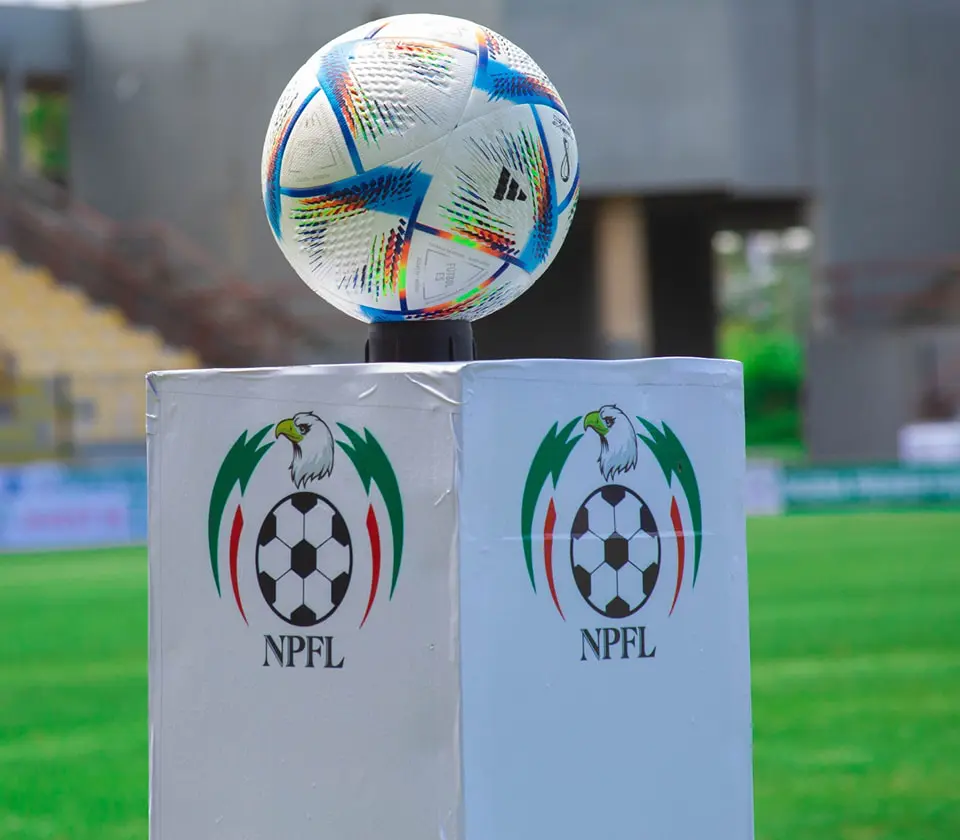
The Nigeria Premier Football League, has rescheduled the matchday 18 encounter between Nasarawa United versus Barau FC.
The match which was earlier fixed for Sunday, 21st December will now hold on Tuesday 23rd December, 2025.
The encounter will be staged at the Lafia City Stadium.
Nasarawa United will be facing Barau FC for the first time in the NPFL.
The Solid Miners are yet to taste defeat in their last two NPFL matches.
Nasarawa United occupy second position on the NPFL table with 31 points , while Barau FC are in the relegation zone with 19 points.
SPORT
Dundee United 2-1 Celtic: No-wins Nancy is now reaching the point of no return after a fourth-straight defeat – with Wilfried withering fans are demanding the return of Martin O’Neill, writes STEPHEN HALLIDAY
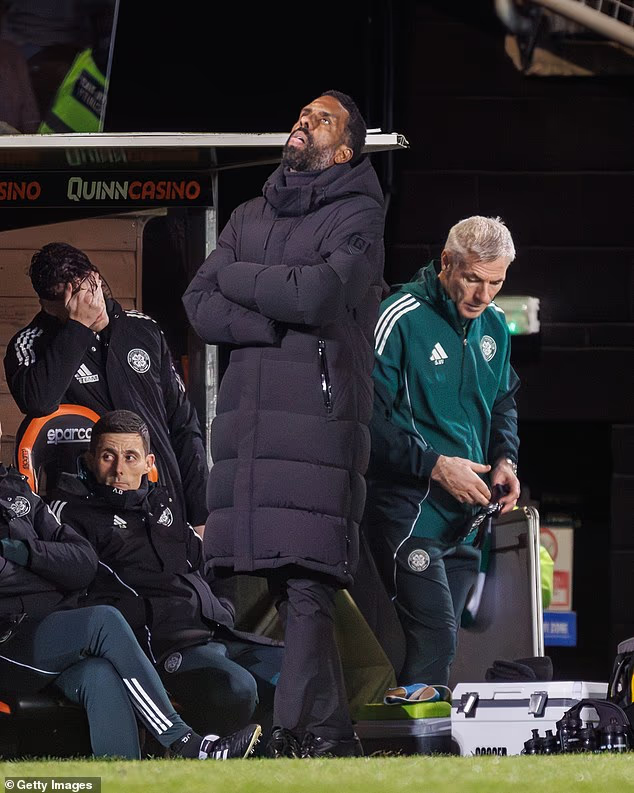
On another extraordinary day in this soap opera of a season for Celtic, Wilfried Nancy may just have reached the point of no return in record time.
As profane chants telling him where to go in no uncertain terms filled the air at Tannadice, alongside serenades for his interim predecessor Martin O’Neill, there could be no doubt the travelling fans have made their minds up about their new manager.
Already the first man to lose his first three games in the job, Nancy set another gruesome landmark as Dundee United made it four. It’s the first time since 1977-78 that Celtic have suffered such a sequence of defeats.
Bizarrely, Nancy’s latest calamity came just a few hours after chief executive Michael Nicholson had felt the need to give him a vote of confidence in a club TV interview occasioned by the announcement Peter Lawwell is stepping down as chairman at the end of the month.
Events on the pitch are simply inflaming the discontent among Celtic fans which has seen Lawwell decide he and his family can no longer cope with the level of vitriol coming their way.
It was a memorable evening for United who ended a seven-game winless run in the Premiership and savoured their first victory over Celtic in all competitions since 2014.

Wilfried Nancy can’t believe it after his Celtic side lost for the fourth time in a row

Celtic had taken the lead against Dundee United with Daizen Maeda slotting home

Maeda’s goal had looked to calm Celtic nerves but they then capitulated in the second half
They were good value for it after a stirring second-half display saw Krisztian Keresztes and Zac Sapsford cancel out Daizen Maeda’s early opener for Celtic.
Nancy’s side, after a promising start, ended the night as a shapeless, aimless mess and still six points behind leaders Hearts in the title race.
For the Celtic directors, there was simply no escaping the toxicity of the situation which has engulfed their club this season. The experiment of appointing an unheralded coach from the MLS is blowing up in their face.
Seated high in a section of the Eddie Thompson Stand, they were greeted even before kick-off by a giant banner with an arrow pointing towards them and the words ‘Celtic’s Shame’ unveiled by visiting supporters in the adjacent corner of the stadium. Just underneath, it read ‘One down, more to go’ in reference to Lawwell’s imminent departure.
As they shifted uncomfortably in their seats, they badly needed Nancy to put his horrendous start behind him and start generating at least a sliver of positivity about his tenure.
The Frenchman’s team selection and formation were very much a case of doubling down rather than backing down in the wake of the early scorn and scepticism which had greeted his strategy in the three previous defeats.
Two of his four changes were forced upon him as Sebastian Tounekti and Kelechi Iheanacho missed out due to Africa Cup of Nations duty and a hamstring injury, respectively.
Dropping central defensive regular Liam Scales and club record £11million signing Arne Engels to the bench was more of an eye-raiser.
Celtic fielding a back three of Tony Ralston, Auston Trusty and Kieran Tierney at any stage this season wouldn’t have been on anyone’s bingo card.

Celtic fans had already vented their anger at the Parkhead board who were in attendance
Hyun-jun Yang and Luke McCowan were handed the wide midfield roles as he stuck to his favoured 3-4-3 set-up with Reo Hatate and Maeda either side of Johnny Kenny up front.
The early signs were not short of encouragement for Nancy as Celtic showed pace and purpose to hem United into their own half.
Maeda looked far happier to find himself on the left and he began his torment of the home defence with an inviting low ball across the face of the six-yard box in the fourth minute which the stretching Yang was unable to convert at the back post.
United simply couldn’t contain the Japanese forward who quickly found space again to set up another good chance for Kenny who clumsily screwed a shot over when a headed attempt looked a better option.
Kenny’s wastefulness continued when he could only shoot straight at Dave Richards after breaking clear.
Maeda took matters into his own hands with a deadly finish to give Celtic their fully merited 13th-minute breakthrough. United were carved open yet again after giving the ball away cheaply in midfield and Kenny slipped the ball to Maeda who turned inside the floundering Bert Esselink and drilled a low shot beyond Richards.
Celtic’s domination at this stage was total but their profligacy allowed United to remain in contention. Kenny had the Celtic fans holding their heads in frustration again when he delayed a shot far too long after breaking free, allowing Keresztes time to make a saving challenge inside the penalty area.
Goodwin’s side gradually managed to secure some kind of foothold in the contest and striker Max Watters began to threaten a Celtic defence who looked uncertain at times.
The Barnsley loanee might have done better than scoop a shot over from the edge of the box after being picked out by Will Ferry, then he completely miscued an effort when left unmarked from closer range.
Celtic only had themselves to blame for the match remaining in the balance. Kenny was the guilty party yet again in the 34th minute when Maeda raced onto Paulo Bernardo’s pass down the left and whipped over another fine low cross.
It looked harder to miss but that’s just what Kenny did, the Irish striker posting a contender for sitter of the season as he dragged his shot wide from inside the six-yard box.
United were being let off the hook and Goodwin tried to make the most of it. He changed shape at the start of the second half, switching to a back four as the toiling Esselink was replaced by Vicko Sevelj.
His team made as bright an opening to the second 45 minutes as Celtic had in the first. It required a superb block from Trusty to stop a Sapsford effort from troubling Kasper Schmeichel.
United’s Australian striker was soon testing the Celtic keeper, however, with a snapshot which Schmeichel reacted well to keep out.
The warning signs were flashing ever louder for Nancy’s side but weren’t heeded. Celtic were left reeling as United scored twice in the space of six minutes to turn the match on its head.

Chairman Peter Lawwell had announced his departure earlier in the day but that couldn’t quell the Celtic support’s fury
Celtic were unable to clear Ferry’s 55th-minute cross from the right, allowing Sevelj time to cushion a pass into the path of Keresztes who swept a finish any striker would have been proud of beyond Schmeichel.
The sense of anxiety spreading through the Celtic ranks was almost palpable and United feasted on it as they went 2-1 up. Again, the visitors were unable to deal with a straightforward ball into their penalty area. United were quickest to react as Amar Fatah teed up Sapsford who bent a magnificent right-foot shot beyond Schmeichel’s left hand.
Nancy desperately turned to his bench in the closing stages and Shin Yamada, a reminder of the underwhelming summer recruitment which led to Brendan Rodgers’ exit as manager, made a rare outing.
Predictably enough, he missed two excellent chances. When Maeda headed against a post from close range, the game was up for Celtic. For Nancy, it may already be game over.

Manchester City have been paired with holders Newcastle United in the semi-finals of the Carabao Cup, following a late-night draw released by the English Football League on Wednesday.
The Carabao Cup draw, published on the EFL’s official website, came after a busy midweek of quarter-final action that confirmed City and Newcastle as two of the last four teams standing.
City sealed their passage with a composed 2-0 win over Brentford, while Newcastle left it late against Fulham, booking their spot thanks to a stoppage-time header from Lewis Miley.
Chelsea’s path to the semi-finals is already secure, but their next opponents are yet to be decided.
The Blues will face the winners of the quarter-final clash between Arsenal and Crystal Palace, scheduled for Tuesday, December 23 at the Emirates Stadium.
Earlier in the week, Chelsea edged past Cardiff City in a tense away tie, winning 3-1 to progress. The match carried extra intrigue as it saw the Blues come up against club legend Frank Lampard, now in charge of the Welsh side.
In a statement accompanying the draw, the EFL said: “Chelsea will learn their semi-final opponents following the Arsenal versus Crystal Palace encounter at the Emirates Stadium.
“The EFL said the first legs of the semi-final ties will be played in the week commencing January 12, 2026, while the second legs are scheduled for the week commencing February 2, 2026.”

FIFA have confirmed that the total prize money for the 2026 World Cup will be $727 million.
The 48 participating nations will share from a $655million pot.
The country that emerges as champions will be awarded $50million – the biggest payout ever.
The losing finalists will receive $33million, while the third and fourth-placed teams will be paid $29million and $27million, respectively.
Teams that finish between fifth and eighth place will earn $19million each.
The countries eliminated in the last 16 will receive $15million, while those that crash out in the group stages will get $9million.
Every team that qualified will be reimbursed $1.5million to cover costs of preparation.

Nigeria’s Super Eagles will land in Fèz, Morocco on Thursday (today) to continue their preparation for the 2025 Africa Cup of Nations, reports Completesports.com.
The players and their officials will depart Cairo, for Fez this afternoon, according to the team’s officer, Promise Efoghe.
They will hold their first training in Fèz at 6pm local time.
Nigeria started preparation for AFCON 2025 in Cairo on Monday.
Read Also:EXCLUSIVE: Super Eagles Can Win AFCON 2025 Title in Morocco — Agbim
The Super Eagles lost 2-1 to the Pharaohs of Egypt in a friendly at the Cairo International Stadium on Tuesday.
The three-time African champions are drawn in Group C with Tanzania, Tunisia and Uganda.
Eric Chelle’s men will face the Taifa Stars of Tanzania in their opening fixture next week Tuesday, before taking on Tunisia’s Carthage Eagles on December 27, and Uganda’s Cranes on December 30.
The Super Eagles will play all their group games at the Grand Stade de Fèz.
By Adeboye Amosu