
NIGERIA NEWS
Wike Group Tells Bala-backed Executives To Vacate Party Office

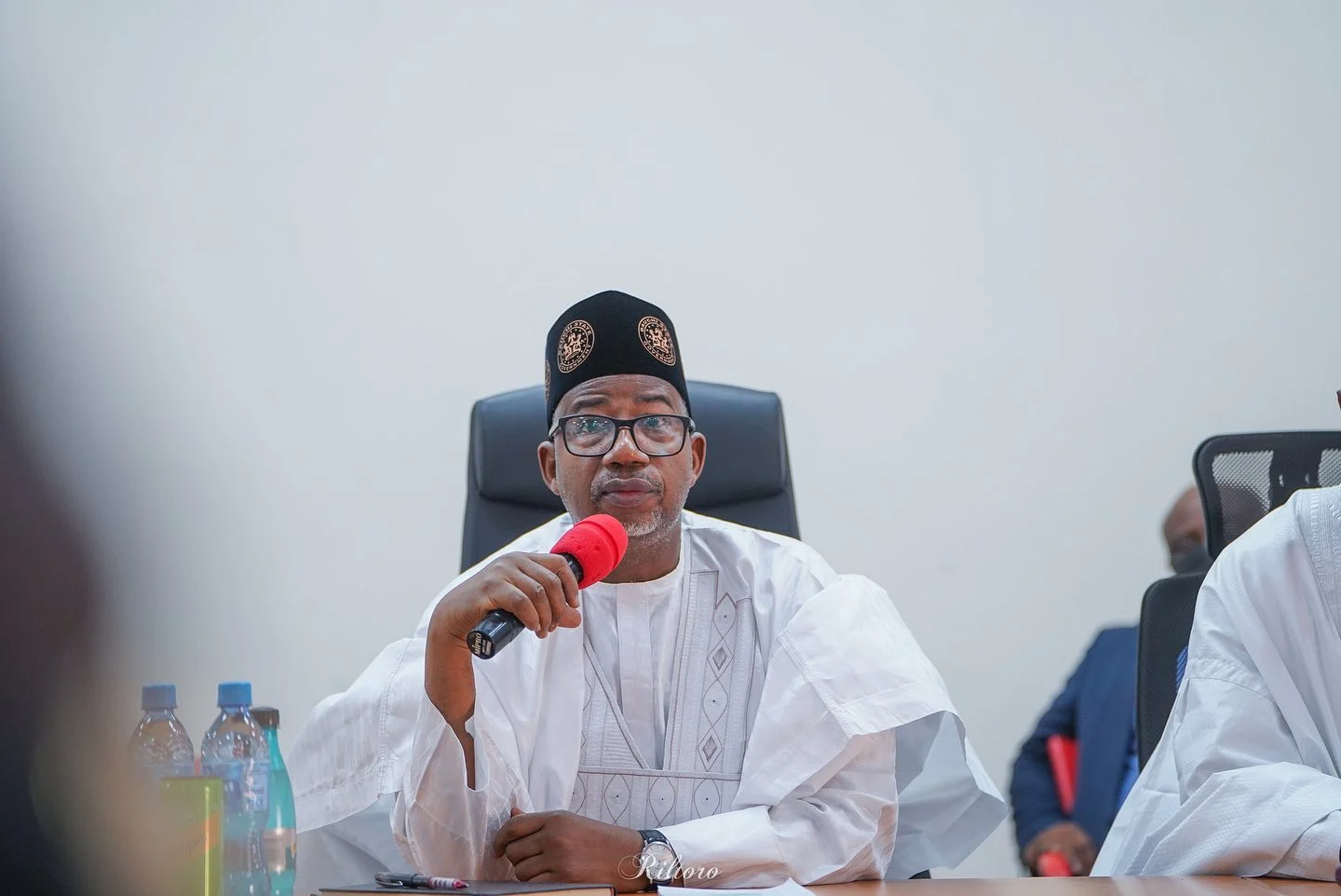
The Bauchi State Peoples’ Democratic Party (PDP) Caretaker Committee, loyal to Federal Capital Territory (FCT), minister Nyesom Wike, has directed members of Governor Bala Mohammed’s camp, who currently occupy PDP secretariats across the state, to remove their personal belongings and vacate the premises within 14 days.
The state chairman of the Caretaker Committee, Hon. Jungudo Haruna Mohammed, issued the directive during a press conference on Wednesday, warning that failure to comply would attract lawful consequences.
He emphasised the committee’s commitment to restoring unity, discipline, and order within the party and urged all loyal members to cooperate fully in the collective interest of the party and the people of Bauchi State.
“The Committee is grateful to the National Working Committee (NWC) under Alhaji Abdulrahman Mohammed for approving its appointment to oversee PDP affairs in Bauchi State.
“We accept this responsibility and pledge to discharge it diligently in accordance with the party constitution and directives of the national leadership,” Jungudo said.
The Committee reaffirmed its loyalty to the party’s national leader, Minister Nyesom Wike, and other key party officials, highlighting their ongoing commitment to stability, constitutionalism, and the rule of law within the party.
He said “The Committee finds it necessary to extend its unreserved apology, on behalf of the good people of Bauchi State, to an elder statesman and founding member of the Peoples’ Democratic Party (PDP), His Excellency, former Governor Sule Lamido, for the embarrassment and inconvenience occasioned by the deliberate actions of Governor Bala Mohammed, (Former Chairman PDP Governors Forum) who orchestrated the refusal to sell nomination forms to him ahead of the party’s aborted National Convention.”
Jungudo stressed that the committee will act within the law, warning that any harm to party members or supporters would be the responsibility of Governor Bala Mohammed.
The committee also dismissed claims by individuals posing as members of the National Working Committee, citing that their purported convention in Ibadan ignored valid court judgments and lacked INEC supervision, rendering it illegitimate.
“The public should not be misled by these activities. Legitimacy is derived from strict compliance with party laws, court orders, and the constitution, not by meetings with former governors or lawmakers,” he added.
He further highlighted that ongoing legal disputes involving INEC and the purported convention cannot confer recognition or authority on these individuals. Following the NEC’s expulsion of Governor Bala Mohammed and the dissolution of state party executive committees during its 103rd meeting on November 18, 2025, the public is advised to recognize this decision and act accordingly.
“Similarly, The Committee hereby advises all illegal occupants of the PDP Secretariats across the state to immediately remove their personal belongings and vacate the premises within 14 days. Failure to comply with this directive will attract lawful consequences.
“The Committee reiterates its firm commitment to restoring unity, discipline, and order within the party and calls on all loyal members to cooperate fully with the Committee in the collective interest of the party and the people of Bauchi State,” he emphasised.
Jungudo appealed to members considering leaving the party to reconsider, reaffirming the Committee’s commitment to fairness, inclusiveness, and unity.


Former presidential candidate Dr. Gbenga Hashim has declared that he remains undaunted by legal or political manoeuvres aimed at weakening the Peoples Democratic Party (PDP), insisting that Nigeria’s multiparty democracy is too deeply rooted to be undermined.
In a strongly worded statement, Hashim said he was unfazed by what he described as legal and political subterfuges allegedly sponsored by the ruling All Progressives Congress (APC), stressing that no individual or party can monopolise power in Nigeria.
“Nigeria has always been committed to multiparty democracy,” Hashim said. “Even in the First Republic, political power was never concentrated in the hands of one man or one party.”
He recalled that despite the towering influence of Sir Ahmadu Bello, leader of the Northern People’s Congress, other political forces such as Aminu Kano’s NEPU, J.S. Tarka’s Middle Belt Congress, and Sir Kashim Ibrahim’s Borno People’s Union coexisted with significant influence and representation.
Hashim also highlighted the political diversity in the South West, where the Action Group competed with the NCNC alongside regional parties like the Ibadan People’s Party.
“Our democracy has never been a system with a single star shining in its firmament,” he said. “In our sky, there are thousands of stars.”
Drawing lessons from history, Hashim compared the current political climate to the failed self-succession agenda of late military ruler General Sani Abacha, who attempted to impose himself as the sole presidential candidate across all five registered parties at the time.
“We are living witnesses to the failure of that plot,” he said, warning that although today’s situation carries “a more sinister twist,” the outcome would be no different.
Expressing confidence that such efforts would collapse, he added: “Just as the Abacha plot ended unrealised, this infantile machination will end in disaster for its authors, by the grace of God.”
Hashim also recalled his personal role in the struggle against military rule, emphasising that the resistance was led from within Nigeria, not from exile.
“We fought the self-succession plot here at home, not as self-styled exiled democrats sipping expensive drinks in foreign embassies,” he said.
He revealed that he was part of the internal resistance delegation present at Fort IBB on 8 June 1998, during a critical moment in Nigeria’s history, even as heavy military movements threatened the nation’s future.
Concluding, Hashim expressed firm belief that history would repeat itself.
“The same God who granted us the grace to witness the collapse of the Abacha plot will also help us see the end of the APC-or-no-other-party agenda,” he said.
NIGERIA NEWS
Upwork earnings in under one hour: Raenest introduces FastTrack to cut Upwork Payment wait times


- Raenesthas launched FastTrack, a payment feature that enables freelancers to access Upwork earnings in under one hour compared to the traditional 48 to 72-hour payout period
- The service operates seven days a week with predefined daily limits of $1,500 on weekdays and $500 on weekends offering faster access to funds at no extra cost
- Users can activate FastTrack by linking their Upwork account to Raenest and withdrawing earnings to their Raenest bank account supporting Africa’s growing demand for reliable cross-border financial tools
African fintech company Raenest has unveiled FastTrack, a new payment feature designed to help freelancers access earnings from Upwork in under one hour.
The feature shortens the traditional 48-72 hour payout period, offering faster access to funds for freelancers who rely on timely payments to manage expenses, reinvest in their work, and stabilise cash flow.
FastTrack operates seven days a week and allows eligible users to receive expedited payments within predefined daily limits at no extra cost.
“We’re proud to be the first fintech company to offer this level of speed and reliability to the freelance community,” said Victor Alade, CEO and co-founder of Raenest, during the announcement at Raenest Exchange, the company’s first tech, money, and business conference. “Raenest FastTrack reflects our vision of breaking down barriers to getting paid, managing money, and building wealth, giving people the freedom to work and earn globally.”
Key Details of Raenest FastTrack
- Payments are processed in under one hour once withdrawals are initiated from Upwork to their Raenest bank account
- Available on weekends
- $1,500 weekday limit and $500 weekend limit
- Higher amounts are processed within Raenest’s standard timelines, typically 24 hours
To use FastTrack, users must connect their Upwork account to Raenest and withdraw earnings to their Raenest bank account. New users can sign up, create global accounts in USD, GBP, or EUR, and begin using the feature immediately after integration.
With more professionals across Africa earning through global platforms, Raenest says FastTrack supports the growing demand for faster, more reliable cross-border financial tools.
About Raenest
Raenest is a global financial platform built for individuals and businesses to manage money without borders. With Raenest, you can open multi-currency accounts (USD, GBP, EUR, USDC and USDT), send and receive international payments, grow your wealth, access virtual and physical dollar cards, and pay for services worldwide with ease. Our mission is to put you in control of your finances wherever life takes you, enabling you to manage money across borders securely, affordably, and faster.
For more information, visit www.raenest.com. Raenest is available on the iOS App Store and Google Play Store.
Follow us for Breaking News and Market Intelligence.




SOURCE PAGE

Onuminya Innocent in Sokoto
Sokoto State Governor, Dr Ahmed Aliyu, yesterday presented the state’s 2026 budget proposal to the state House of Assembly.
Governor Aliyu expressed gratitude to Allah for another milestone in the state’s quest for a stronger, united and prosperous state. He extended thanks to the Speaker, honourable members, and the people of Sokoto State for their support, which he credited with achieving over 65 percent implementation of the 2025 budget.
He highlighted the administration’s achieve-ments over the past year, saying that security is gradually improving, with formerly inaccessible areas now open for agricultural and commercial activity.
“The state procured and distributed more than 270 patrol vehicles and 500 motorcycles to security agencies, established the Sokoto State Community Guard Corps with 40 Hilux vans and 700 motorcycles.
Built a military base in Illela, and fully operationalised the Air Force base in Sokoto.
“Monthly allowances for security personnel in volatile areas were restored and increased after being cancelled by the previous PDP administration. A brand‑new tracker vehicle upgraded from 4G to 5G was also acquired for the DSS, and numerous FOBs were provided to volatile locations. Financial support to security agencies has been resuscitated and sustained,” he stated.
Promoting Islamic affairs is the second pillar of the nine‑point smart agenda of the state.
The governor reported that 33 Jumuat mosques have been constructed, remodelled and inaugurated across the state.
According to him, “Monthly allowances for Imams, their deputies and Mu’azzams have been restored, and for the first time a monthly cash allocation ranging from N300,000 to N500,000 has been earmarked for mosque maintenance. Stipends for the physically challenged were raised from N6,500 to N10,000, and Islamiyya schools and Qur’anic teachers received increased financial support.
“In agriculture and empowerment, the administration supplied fertilizer and other farm inputs free of charge on three occasions and sold fertilizer at subsidised rates during the rainy season. Billions of naira were disbursed as grants to small and medium entrepreneurs through SOSMEDA, while thousands of unemployed youths were trained in various trades and equipped with tools and capital.
“Infrastructure development saw 167 township roads constructed and unveiled with 120 more under construction. Sixteen rural roads were completed, including two major tarred routes, and 17 others are at various stages of completion. The main water intake at the state water board was replaced, and two of the six major water works inherited from the previous administration at Mana and Old Airport were completed and launched.”
On civil‑service welfare, the governor said over N15 billion of unpaid gratuities from the previous PDP administration have been settled. He announced that N500 million would be set aside monthly to clear gratuities for retirees from 2016‑2021, and an additional N300 million monthly for those retiring from 2023 onward.
While acknowledging that insecurity, weak institutional capacity and bureaucratic delays remain obstacles, he said the administration has engaged security stakeholders to open affected areas for reconstruction. He revealed that the 2026 budget was shaped by a series of town‑hall meetings across the three senatorial zones Tambuwal, Tangaza and Gwadabawa involving over 900 registered participants from all 23 LGAs and 244 wards, marking the first time citizens have been invited to contribute directly to the budget.
The proposed 2026 budget, christened ‘Budget of Socio‑Economic Expansion’, totals N758,700,526,537.89. Revenue sources include FAAC share – N389,318,830,194.99; internally generated revenue – N74,515,015,322.00; opening balance – N61,052,740,233.10; aids and grants – N78,919,413,459.96; capital development funds – N154,894,527,327.84. Expenditure is split between recurrent – N207,206,934,434.43 (personnel N70,621,647,882.76 and overheads N136,585,286,551.67) – and capital – N551,493,592,103.46.
Sector allocations reflect the administration’s priorities. Security receives N45,261,136,094.76; health N122,727,992,994.59 (16 percent of the budget); education, N115,948,091,431.85; agriculture, N18,742,497,182.59; water resources, N41,139,037,879.71; religious affairs, N17,479,061,716.35; works and transportation, N109,128,752,746.30; and humanitarian, poverty reduction and youth empowerment N33,908,954,343.70.
The governor stressed that 72 percent of the budget is earmarked for capital projects, with only 28 percent for recurrent costs, in line with IMF and World Bank recommendations. The economic sector receives the largest share (41 percent), followed by the social sector (37 percent).
“All projects will be financed solely from the Federation Account and internally generated revenue. We have not borrowed a single kobo from any financial institution. Likewise, we do not owe any contractor,” the governor declared.
In his closing remarks, Governor Aliyu thanked the people of the state, his mentor Senator Aliyu Magatakarda Wamakko, the Sultanate Council, and President Bola Ahmed Tinubu for their support.
He expressed confidence that the 2026 budget, once passed, would translate the administration’s nine‑point smart agenda into tangible socio‑economic gains.


The Christian Association of Nigeria (CAN) has described the Nollywood film titled ‘A Very Dirty Christmas’ as offensive and disrespectful to the Christian faith.
This position was contained in a statement signed by the President of CAN, Archbishop Daniel Okoh, and made available to newsmen yesterday.
A Very Dirty Christmas is a new Nigerian drama/thriller produced by Ini Edo and directed by Akay Mason.
The film was released in cinemas on December 16, 2025.
CAN stated that Christmas is a sacred season that commemorates the birth of Jesus Christ and symbolises purity, peace, love, and redemption.
According to the association, associating such a holy celebration with the word “dirty” undermines its spiritual significance and reduces a solemn religious observance to something crude and sensational.
While acknowledging the importance of creative freedom and artistic expression, CAN stressed that such freedom must be exercised with responsibility and sensitivity, particularly in a religiously diverse society like Nigeria.
The association noted that creativity should promote understanding and unity, not provoke or offend deeply held religious beliefs.
The Christian body also expressed concern that a film with such a title passed through regulatory and professional channels without adequate scrutiny. It therefore called on the National Film and Video Censors Board (NFVCB) to explain how the title was approved for public exhibition, especially during the Christmas season.
CAN further urged industry bodies, including the Actors Guild of Nigeria (AGN) and other Nollywood stakeholders, to take a firm stand on the use of religious themes and symbols in ways that may offend faith communities.
The association called on the producers and promoters of the film to reconsider the title, issue a public apology, and take deliberate steps to ensure that religious symbols and sacred seasons are treated with dignity.
CAN appealed to the film’s producer, Ini Edo, to show sensitivity and address the concerns raised by the Christian community.
CAN added that Nigeria is already grappling with serious moral and social challenges, warning that such a movie title could further deepen divisions and erode mutual respect among citizens.

By Denis Agbo
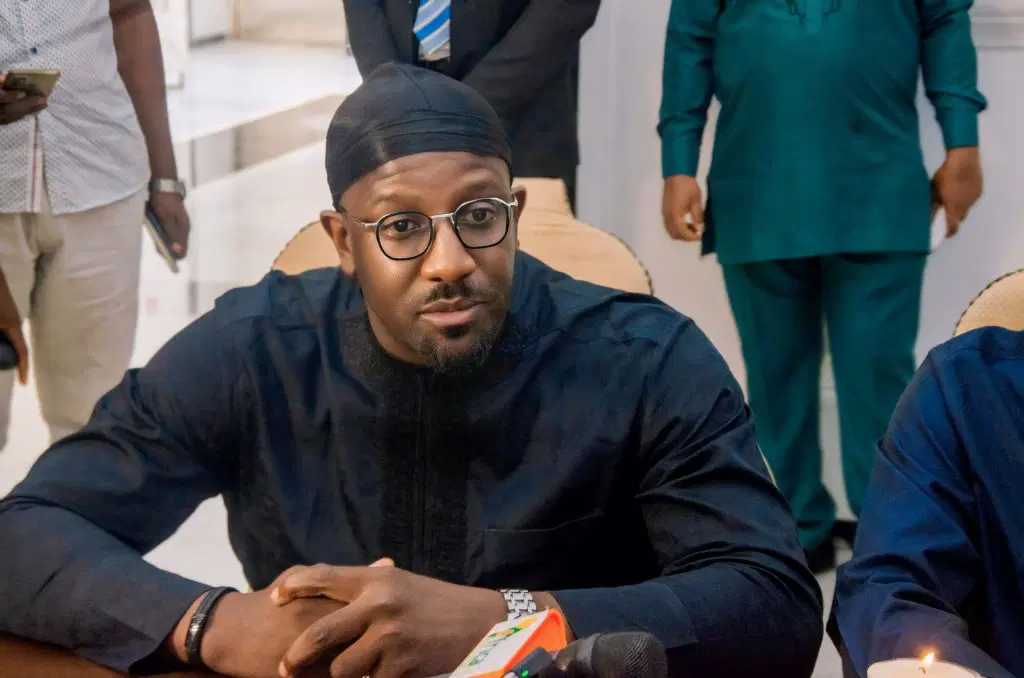
Former spokesman for the South-East to President Bola Tinubu and Chairman of the Forum of Former Members of the Enugu State House of Assembly (FOF-MEHA), Mr. Josef Onoh, has accused former Attorney-General of the Federation (AGF), Abubakar Malami (SAN), of hypocrisy and disregard for the rule of law during his time in office.
Onoh, in a statement issued from Paris, France, urged Malami to stop what he described as attempts to blackmail and intimidate the Chairman of the Economic and Financial Crimes Commission (EFCC), Mr. Ola Olukoyede, and instead submit himself to ongoing investigations.
The former presidential spokesman was reacting to Malami’s recent call for Olukoyede to recuse himself from investigations involving him, citing alleged conflicts of interest arising from Chapter Nine of the Justice Ayo Salami Judicial Commission of Inquiry report.
According to Onoh, Malami’s claims of “personal vendetta” and “political persecution” against the EFCC were ironic, given what he described as Malami’s own record as AGF.
“It is particularly revealing that Mr. Malami now cries vendetta and persecution,” Onoh said, alleging that during Malami’s tenure as Attorney-General, several high-profile prosecutions were widely criticised as politically motivated, with repeated instances of disobedience to court orders and prolonged detentions.
Onoh recalled the removal of former EFCC Acting Chairman, Ibrahim Magu, in 2020, alleging that Malami spearheaded the process by forwarding multiple allegations against Magu to then President Muhammadu Buhari. He said Magu was arrested, suspended and investigated by the Justice Ayo Salami Panel, which, according to critics at the time, was seen as the outcome of a power struggle within government.
He further alleged that Malami failed to honour a subpoena to appear before the Salami Panel, adding that although Magu was never prosecuted or convicted, his career was effectively ended.
The former South-East spokesman also cited other cases during Malami’s tenure, including the prolonged detention of former National Security Adviser, Col. Sambo Dasuki (retd.), despite multiple court orders granting him bail, as well as the prosecution of former PDP National Publicity Secretary, Olisa Metuh.
On the handling of the Indigenous People of Biafra (IPOB) and its leader, Nnamdi Kanu, Onoh alleged that actions taken under Malami’s watch were widely condemned as suppressing dissent and disregarding court orders.
“These actions exemplified the weaponisation of prosecutorial powers that Malami now decries when the tables are turned,” Onoh stated.
He insisted that the EFCC’s investigation into Malami should proceed without interference, stressing that no former public office holder is immune from scrutiny.
Onoh also dismissed Malami’s reliance on the Justice Ayo Salami Panel report as a basis for demanding Olukoyede’s recusal, arguing that the report did not bar the EFCC from investigating former officials.
“The prior role of the EFCC Chairman as Secretary to the Salami Panel does not create any legal or ethical conflict,” he said, adding that the law on recusal applies to judicial or quasi-judicial proceedings, not routine law enforcement investigations.
He challenged Malami to submit himself to investigation and, if confident of his innocence, defend himself in court rather than resort to public statements.
Onoh further called on Malami to publicly declare his assets as of 2010, before assuming high office, to enable Nigerians compare them with his current holdings.
“The EFCC and its Chairman must remain undeterred. Nigerians demand justice without selective application,” Onoh said, assuring that under President Bola Tinubu’s administration, attempts to undermine anti-corruption institutions would not succeed.
The post You never obeyed court orders as AGF, Onoh tells Malami appeared first on Vanguard News.

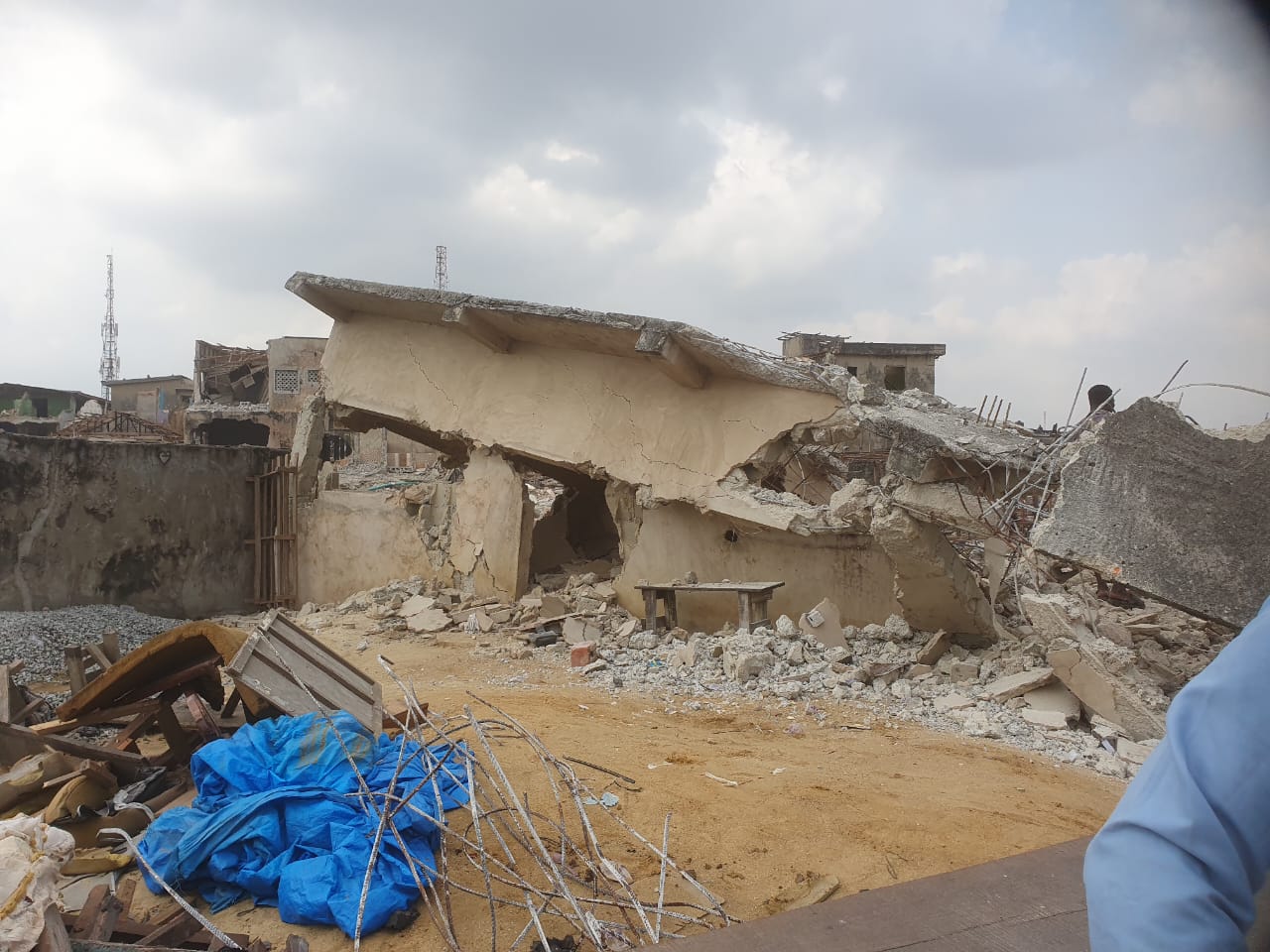
Mile 12, a town in Nigeria’s commercial centre, Lagos State, has always been a beehive—bustling with activities. It houses one of the biggest food markets in the country and, some may say, peoples from every tribe, state in Nigeria. This week, residents in the area were united in tears as the Lagos State government continued its massive wave of demolition exercises that reduced once-vibrant communities in the state to rubble, leaving the families who occupied them homeless to make way for something they call progress. David Meshioye was on the ground to report the devastating impact.
Inusa Baba Saara (as he is fondly called) was not prepared for what was to come upon him and his household on the fateful day of December 16th, 2025. His name translates to mean ”free giver” in the Hausa language, but sadly, little did he realise that fate was about to deliver a big blow. He had woken up in the morning believing that his kindness and self-built image, dating back 50 years, would be more than enough to save him from impending homelessness. Having said his early morning prayers, nature took its toll, and he fell back to sleep. But a few minutes later, he was jolted back to life by his neighbours as a bulldozer tore through buildings. His four plots of homes were not spared either.
Having emigrated to the community in 1973, fate had smiled on him as he raked in millions from his onion business. According to him, he toiled day and night to build what would become an empire where homeless children and orphans called home. But his world came crashing down when the jarring noise of massive excavators demolished his buildings.
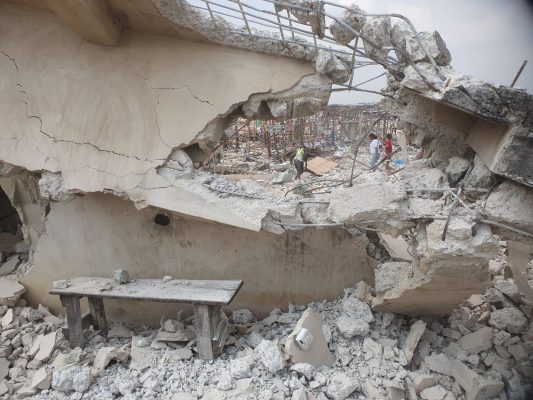 A close shot of Inusa Babasaara house
The terrifying sound of residents in the area can be heard miles away as they stood helplessly, watching their decades-old homes being turned to rubble. Home to nearly 50,000 Yoruba and Hausa migrant families who cohabitate in peace (and at times mayhem), the decades-old cluster was demolished within hours, following a Lagos State order to remove what it described as “encroachments” and ongoing demolition plans to get the city ready for its predicted population of 40 million people.
For over four decades, Mile 12 residents have lived and worked, contributing to its economy through various trades: buying and selling, grocery business, sanitation, domestic work, and construction. Among them is 68-year-old Inusa Baba Saara, who migrated from Sokoto. He met his wife, Hanatu, during one of his trips back home. The couple married in their native village before returning to Mile 12 to build a life together. Baba Saara spent the next several decades raising a family in the settlement, which, in a discussion with The Guardian and tears streaming down his face, he described as “my home ever since I migrated from Sokoto. We celebrated Sallah here, and the children were able to go to school, but everything is gone now.”
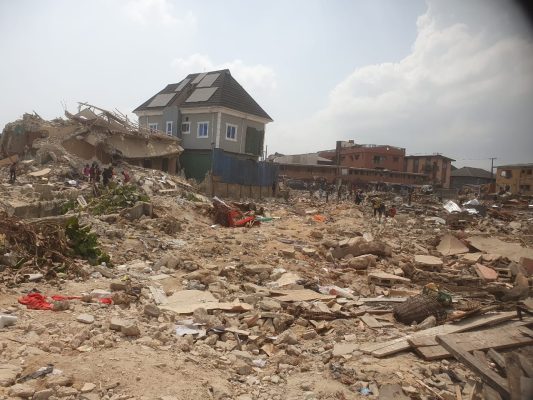 Another building waiting for demolition
Ten footsteps away from Inusa’s rubble, Mrs Serifat Abdulahi was seen picking her pieces from the rubble. All she could gather were pieces of wood from her demolished wooden abode, which she rented. Having stayed in the house for over seven years despite a series of fire incidents, she endured her agony in silence, appealing to the Lagos State government to come to her rescue. Around her, while residents wallowed in regrets, opportunists slammed sledgehammers on rubble, trying to separate iron rods from bricks, as miscreants carted away valuables unabated.
“It came as a rude shock to all of us living here. This was recently rehabilitated after it was gutted by fire, but there is no place to call home at the moment,“ she said, wiping sweat with her wrapper.
A doctor’s nightmare
Perhaps the most pathetic event was the demolition of Al-Sadiq Hospital by the Lagos Ministry of Physical Planning and Urban Development on Wednesday afternoon. Nestled at the intersection where Alhaja Aiyastu and Ayodele Awodeyi streets meet, the hospital, residents say, has provided healthcare for the community for almost two decades. Dr Sadiq was said to have started his practice in a small rented apartment before saving up (some said he took a loan) to acquire a building in the area, demolish it and build a two-storey building, which served as his source of livelihood before the bulldozer roared.
Unapologetically, the bulldozer also tore into a school right beside what remained of Dr Sadiq’s hospital. The doctor reached out for chilled bottled water and took a long drink before barking out orders to his workers, who were scrambling to save whatever they could.
‘This is injustice begins, Dr Sodiq. I thought my building would be spared, being a hospital, but I was shocked when I was given one hour to pack whatever I could before the demolition began,” he told the Guardian
No notice
Contrary to the general rumour that the demolition was triggered by constant demands by land grabbers and Omo Onile that residents repurchase the land which they bought for as low as 2,000 naira in the 70’s, a staff member of the Lagos Ministry of Physical Planning and Urban Development, who pleaded anonymity, revealed that the ministry had issued warning, quit and demolition notices to residents who, instead, turned a blind eye. ‘
‘We have issued all necessary notices to residents that these houses will be demolished,’ she said.
“They did not send any notice. Nobody knew what was happening, ” a passerby screamed. “They just came one morning unannounced and started destroying everything. We just could not believe what our eyes were seeing.”
Residents said that the demolition not only removed physical structures but also disrupted long-standing networks of support, family, and shared identity.
“We had mosques, shared kitchens, festivals together,” said Baba Saara. “We built our homes slowly, bit by bit, whenever we had savings.” I just bought granite and sand to commence another construction before the demolition begins.”
To the Lagos State government, the shanty town constituted an “environmental nuisance, security risk and an impediment to the economic and gainful utilisation of the area” and undermined the “megacity status” of Lagos.
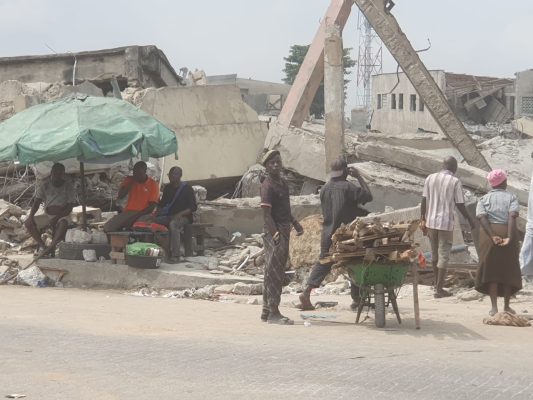 A resident wheeled away his wooden leftover from the rubble. PHOTO: David Meshioye
Mass demolition, the new trend
Demolition activities in Mile 12 are just one example among many settlements in Lagos where families have been left homeless. The state has witnessed a new wave of demolitions targeting the urban poor. The demolition in Makoko, for instance, was anticipated by many who believe the residents have been sitting on a keg of gunpowder, and the explosion is just a matter of time. National Public Radio’s international correspondent, Emmanuel Akinwotu, reports that nearly 10,000 people were forcibly evicted from a riverside community in Lagos over the past month. Mass evictions have become a recurring issue in Africa’s most populous city, and it won’t end anytime soon.
Another area affected by this trend is Oworonsoki, which experienced significant demolition efforts. The Oko-Baba area of Ebute-Metta also suffered, with residents facing devastating losses as millions in property were destroyed, and thousands displaced. Reports indicate that massive violations of housing rights have intensified throughout the capital. According to data compiled by a coalition of activists and civil society organisations advocating for housing rights, over 3,000 homes have been demolished across 23 settlements, leaving around 30,000 people homeless in just a few months.
Conclusion
This surge in demolitions appears to confirm a warning issued before this administration came into power that the Lagos State government is bent on developing the state into a megacity. The state plans to clear every slum cluster in the city within five years, and like a moving train, it is determined to crush anything obstructing its vision. As landlords turned to tenants elsewhere, no provision has been made by the state government to relocate residents to a safe abode, as practised in advanced nations.
As the dust settled yesterday, other houses were waiting to be demolished.
NIGERIA NEWS
Stakeholders Advocate Technology, Innovation To Drive Inclusion Of Persons With Disabilities

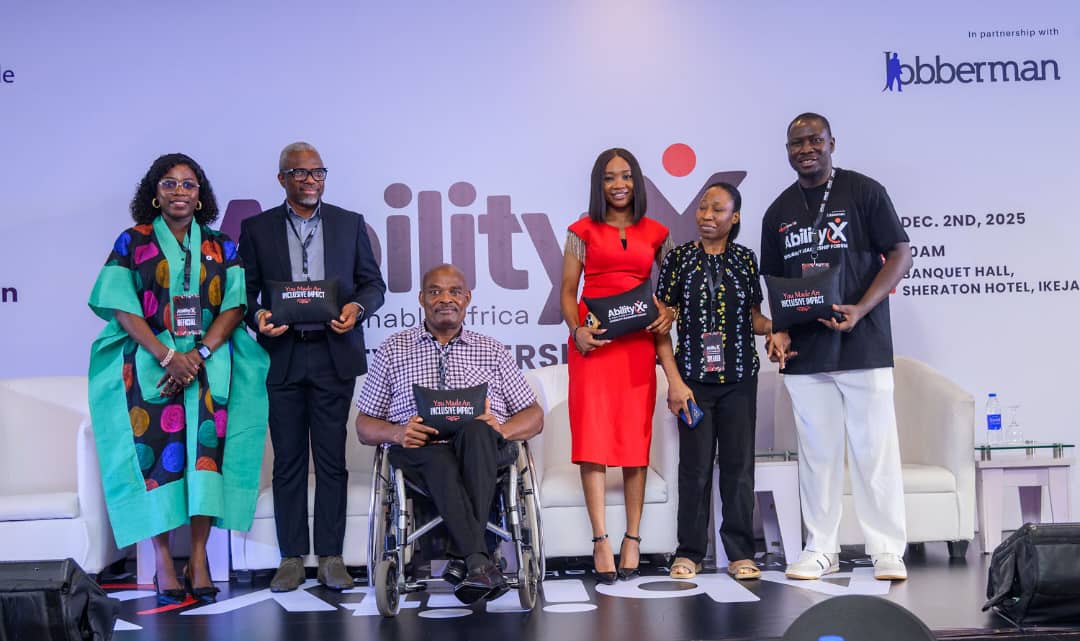
Stakeholders across public and private sectors have called for increased adoption of technology, data-driven policies and innovation to promote sustainable inclusion for Persons With Disabilities (PWDs) in Nigeria.
The call was made at the AbilityX 2025 Conference organised by Project Enable Africa in partnership with Jobberman Nigeria and other strategic partners. The conference, themed “The Future of Disability Inclusion in Nigeria,” was held in Lagos and attracted over 300 participants, including policymakers, private-sector leaders, innovators, development partners and disability advocates.
Participants at the event highlighted persistent gaps in policy implementation, employment opportunities, healthcare access, infrastructure development and representation of PWDs, while also showcasing practical and scalable solutions that can be adopted across different sectors.
In his opening remarks, the Board Co-Chairman of Project Enable Africa, Dr. Kola Olugbodi, noted that Nigeria’s estimated 30 million persons living with disabilities constitute a vast but largely underutilised talent pool. He stressed the need for deliberate policy reforms, empowerment initiatives and greater representation to unlock the economic and social potential of PWDs.
The conference featured plenary sessions, breakout discussions and fireside chats focused on inclusive data and budgeting, healthcare, finance, media, hospitality, employability and workplace inclusion.
Jobberman Nigeria led two key sessions centred on inclusive employment and service excellence. Speaking during the employment session, Esther Obele emphasised that workplace inclusion is a right rather than a favour, urging employers and policymakers to integrate accessibility and equity into recruitment processes and organisational culture.
In another session on customer service, Oluwajuwonlo Esho highlighted the role of positive customer experience in driving loyalty and long-term business sustainability, describing excellent service as a critical tool for growth and retention.
Delivering the keynote address, Group Executive at Sterling Financial Holdings, Temi Dalley, challenged existing perceptions around disability, stating that inclusion should be seen as a strategic advantage rather than an obligation. She called on stakeholders to move beyond awareness campaigns and commit to concrete actions that produce measurable impact.
A major highlight of the event was the AbilityX Impact Awards, which recognised organisations and individuals making significant contributions to disability inclusion. Award recipients included Access Tech Innovation and Research Centre, MTN Nigeria and Adejobi Adewoye.
Speaking at the close of the conference, Executive Director of Project Enable Africa, Olalekan Owonikoko, reaffirmed the organisation’s commitment to ensuring that discussions from AbilityX 2025 translate into sustained action.
He noted that genuine inclusion requires strong implementation frameworks, accountability and collaboration among stakeholders.
Please follow and like us:

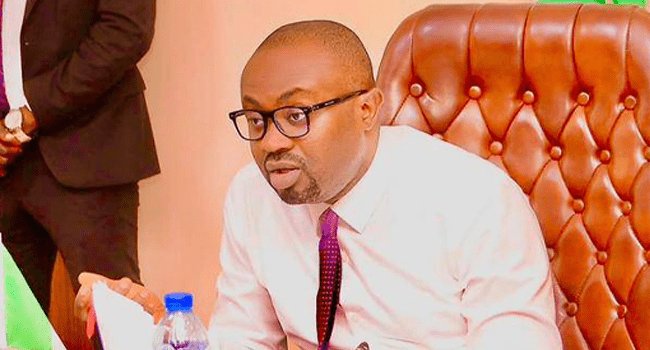
The National Association of Nigerian Students (NANS) has lauded the Minister of Interior, Olubunmi Tunji-Ojo, for initiatives that have significantly improved passport processing for Nigerian students studying abroad.
The commendation was contained in a statement signed by the President of the Senate, NANS, Comrade Usman Adamu Nagwaza, in which the association described the reforms as a major relief to students in the diaspora who had previously endured prolonged delays and administrative bottlenecks in obtaining Nigerian passports.
According to NANS, the streamlined passport processing system has eased travel and residency challenges for Nigerian students overseas, allowing them to focus more on their academic and professional pursuits without unnecessary disruptions.
The association praised the minister’s commitment to service delivery, noting that the intervention came at a critical time when many Nigerian students abroad are confronted with travel restrictions, visa complications and other logistical difficulties.
“As the umbrella student body in Nigeria, we are proud to acknowledge that this development has restored hope and confidence among Nigerian students in the diaspora. The minister’s actions demonstrate responsiveness to the real challenges facing citizens abroad,” the statement said.
NANS further appealed to President Bola Ahmed Tinubu to provide sustained institutional support and backing to the Minister of Interior to enable him to consolidate and expand the ongoing reforms in passport administration.
The association expressed confidence that with strong presidential support, the reforms would further enhance efficiency in service delivery and set a positive example for other public office holders across the country.
“We proudly associate with Hon. Olubunmi Tunji-Ojo and salute his functionality. His dedication to service and the positive impact on Nigerians, especially students, reinforce our confidence in his leadership,” NANS stated.
The student body also reaffirmed its readiness to collaborate with the Ministry of Interior and the Federal Government in advancing the welfare of Nigerian students and citizens, both at home and in the diaspora.
NANS encouraged Nigerian students abroad to fully utilise the improved passport processing system to pursue their academic and professional goals without undue hindrance.
Please follow and like us:

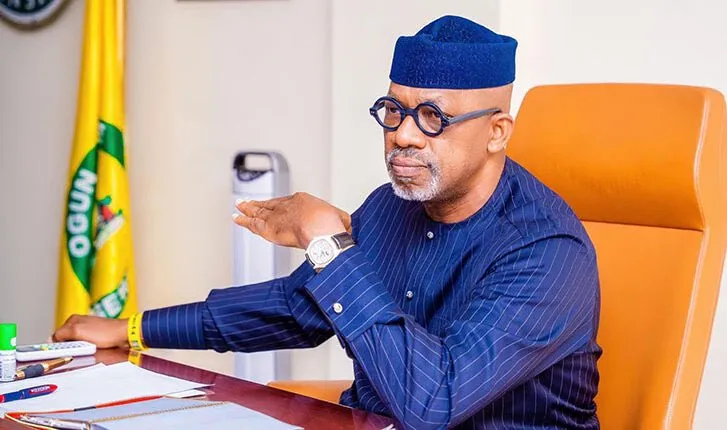
Ogun State Government has nullified the ongoing selection process for the vacant Awujale stool, directing the Fusengbuwa ruling house to recommence the exercise in line with extant laws.
Vice Chairman of the Fusengbuwa ruling house, Prof. Fassy Yusuf, confirmed the development, explaining that the decision followed a meeting convened by the state government to address procedural lapses in the process.
The meeting, held on Tuesday, involved representatives of the ruling house, the Ijebu Ode Local Government and the Awujale Interregnum Administration Committee and was presided over by the Commissioner for Local Government and Chieftaincy Affairs, Hon. Ganiyu Hamzat.
Earlier, in a letter dated December 2, 2025, the Ijebu Ode Local Government had asked the Fusengbuwa ruling house; whose turn it is to produce the next Awujale, to commence the selection process and submit names of candidates within 14 days.
The ruling house subsequently began the process, with over 60 princes reportedly indicating interest, and fixed December 15 for the selection meeting.
However, Prof. Yusuf said the state government ordered a restart of the process after identifying procedural errors that could result in protracted litigation.
Speaking with Vanguard in a telephone conversation, the State Commissioner for Local Government and Chieftaincy Affairs, Hon. Ganiyu Hamzat, confirmed that the selection process had been halted, stressing that the move was not an interference, but a corrective measure.
He explained that the local government had not followed due process as stipulated by law. “The ruling house is required to first notify the local government of its readiness to begin the process. The local government will then inform the Ministry of Local Government and Chieftaincy Affairs, which will authorise the commencement of the exercise,” the source said.
He noted that the identified errors were understandable, given that the Awujale stool had not been vacant for over six decades, unlike other communities with more frequent royal successions
Related

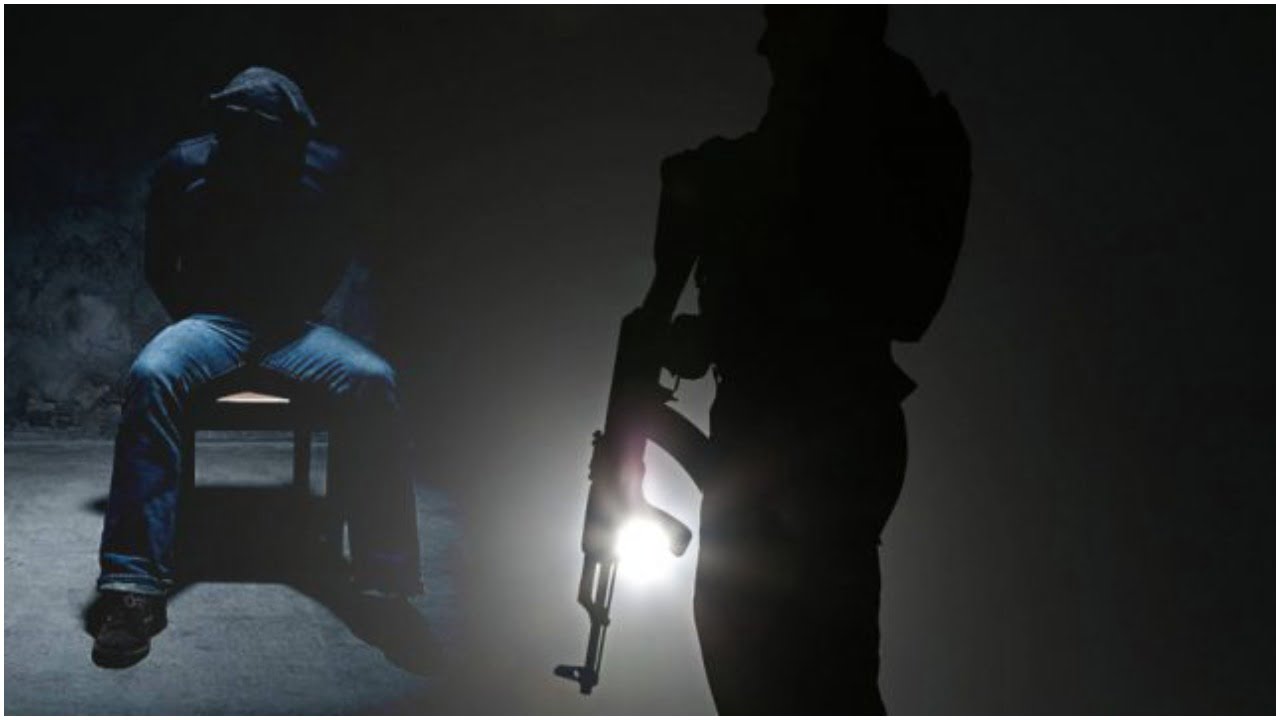
Mr Tartenger Terdue James, who was abducted days before his traditional marriage, has regained his freedom after his family paid a ransom to his captors in Benue State.
James was kidnapped last Tuesday while travelling to Cross River State to purchase palm oil for his traditional wedding scheduled for Saturday, December 13, 2025.
What was meant to be a joyful pre-wedding trip quickly plunged his family into fear, sleepless nights, and desperate prayers.
Relief came in the early hours of Tuesday when James reunited with his family at about 4:00 a.m.
He reportedly told relatives that his abductors released him around 2:00 a.m.
Family sources confirmed that the kidnappers initially demanded N3 million but released him after receiving about N1.5 million.
“We tried our best and sent part of the money they asked for. It was not complete, but they released him,” a family member said.
James was dropped off at Kone, Tse-Ken, in Vandeikya Local Government Area of Benue State, ending a week-long ordeal and restoring hope to a family that had stood on the edge of despair.
The Spokesperson of the Benue State Police Command,DSP, Udeme Edet could not be reached to confirm the development as of the time of filling this report as calls to her mobile telephone were not answered.