
NIGERIA NEWS
President Tinubu arrives National Assembly to present 2026 Budget


President Bola Tinubu has arrived at the National Assembly to present the 2026 appropriation bill.
Tinubu walked into the chamber of the house of representatives at exactly 3:00pm.
The president was received by Rt Hon. Tajudeen Abbas, Speaker of the House of Representatives, Senator Godswill Akpabio, Senate President, and other principal officers of the National Assembly.
Lawmakers from both chambers were seated as the president prepared to lay the 2026 spending proposal before a joint sitting of the Senate and the House.
Security around the National Assembly complex was heightened ahead of the president’s arrival.
The presentation of the 2026 appropriation bill marks the formal commencement of the legislative process for the consideration of the federal government’s spending plan for the fiscal year.
After the presentation, the budget estimates are expected to be referred to the Senate and House committees on appropriations for detailed scrutiny.
The committees are expected to engage ministries, departments, and agencies during budget defence sessions before submitting their reports to the National Assembly.


The Gombe State Police Command has announced the deployment of CP Umar Ahmed Chuso as the new Commissioner of Police for the state.
Confirming the development, the Police Public Relations Officer, DSP Buhari Abdullahi, said the deployment was approved by the Inspector-General of Police.
“The Inspector-General of Police has approved the posting of CP Umar Ahmed Chuso to Gombe State as the new Commissioner of Police,” Abdullahi said.
He disclosed that CP Chuso has already assumed duty and is now the 24th Commissioner of Police to serve in the state.
According to the statement, the new commissioner takes over at a time the command is working to strengthen security and enhance collaboration with other security agencies and the people of the state.
“The new Commissioner of Police assumes office at a critical period when the command is intensifying efforts to improve public safety and deepen partnership with stakeholders across the state,” the police spokesman said.
Describing CP Chuso as a seasoned officer, Abdullahi said he brings vast experience in policing and security management.
“He is a highly experienced officer and is expected to sustain ongoing security operations while introducing fresh strategies aimed at crime prevention, intelligence-led policing, and community engagement,” he added.
The police command appealed to residents of Gombe State to support the new commissioner by providing timely and credible information to security agencies.
“We urge members of the public to cooperate with the police by giving useful and timely information that will assist in maintaining peace and security,” Abdullahi said.
He further assured residents that CP Chuso is committed to professionalism, integrity, and accountability in the discharge of his duties.
“The Commissioner of Police is determined to work with honesty, professionalism, and dedication to protect lives and property in Gombe State,” the statement concluded.
The command reaffirmed its commitment to ensuring sustained peace and security across the state.

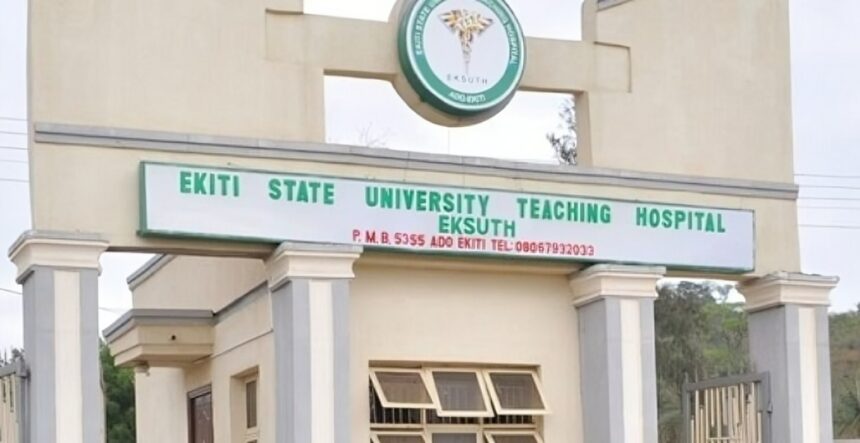
The Ekiti State government has sacked a surgeon at the State’s University Teaching Hospital (EKSUTH) following the outcome of the investigation by the Panel of Enquiry into the removal of a patient’s kidney.
Naija News reports that the seven-member panel, chaired by Professor Francis Faduyile, was constituted about two weeks ago after a claim by a patient identified as Joshua Afolayan, who underwent a surgical procedure at the state Teaching Hospital.
Reacting to details of the investigation submitted by the panel, the Commissioner for Health and Human Services, Oyebanji Filani, in a statement on Friday, announced that the surgeon has been dismissed with immediate effect.
Filani noted that the Ekiti State government will cover Joshua Afolayan’s transplant expenses.
The statement reads, “The surgeon who had primary responsibility for the surgery is to be dismissed EKSUTH with immediate effect. All members of the surgical team present in the theatre on the day of the operation are to be suspended for one month, pending further administrative review.
“The Ekiti State Government will bear full cost of a new kidney transplant for Mr Joshua Afolayan and also take responsibility for his post-transplant care and transplant related medical maintenance for two years.
“In line with the recommendations of the Panel, a comprehensive reorganisation of relevant departments within EKSUTH will be undertaken to strengthen clinical governance, accountability, and patient safety.”

Former Senator Peter Nwaoboshi, who represented Delta North Senatorial District at the National Assembly, is dead.
Nwaoboshi reportedly died after battling a prolonged illness.
His death was confirmed on Friday in a statement issued by the Chief Press Secretary to the Delta State Governor, Mr Festus Ahon.
Reacting to the development, Delta State Governor, Sheriff Oborevwori, expressed deep sorrow over the loss, describing the late senator’s passing as a significant blow to Delta State, the Anioma people and the country at large.
The governor said Nwaoboshi was a prominent and courageous voice for Anioma interests and a respected leader whose contributions to national development would remain enduring.
“On behalf of the government and people of Delta State, I mourn the loss of my dear friend, Senator Peter Onyelukachukwu Nwaoboshi,” Oborevwori said.
“I extend my sincere condolences to his immediate family, the Anioma nation, members of our great party, the All Progressives Congress, APC, and all those who were touched by his life and service.”
Governor Oborevwori recalled Nwaoboshi’s active and influential role in the National Assembly, particularly during his tenure as Chairman of the Senate Committee on Niger Delta Affairs, where he consistently advocated for the growth and development of the Niger Delta region and Delta State.
He noted that the late lawmaker’s political career was shaped by a strong political lineage, selfless leadership and an unwavering commitment to democratic principles, which also saw him serve two terms as Chairman of the Peoples Democratic Party, PDP, in Delta State.
Describing him as a dedicated public servant, the governor said Nwaoboshi devoted his life to the service of his people, his political party and the nation, leaving behind a legacy defined by courage, loyalty and steadfast commitment to public service.
Senator Nwaoboshi served in the National Assembly from 2015 to 2023.

President Bola Ahmed Tinubu on Friday presented the 2026 appropriation bill to a joint sitting of the National Assembly.
Read Tinubu’s full speech below:
2026 BUDGET SPEECH
“BUDGET OF CONSOLIDATION, RENEWED RESILIENCE AND SHARED PROSPERITY”
Presented by:
His Excellency, Asiwaju Bola Ahmed Tinubu, GCFR President, Federal Republic of Nigeria, At the Joint Session of the National Assembly, Abuja, Friday, 19 December 2025
PROTOCOLS
o Distinguished Senate President,
o Rt. Honourable Speaker and Honourable Members of the House of Representatives,
o Distinguished Senators and Honourable Members of the National Assembly,
o Fellow Nigerians,
1. I am here today to fulfil an essential constitutional obligation by presenting the 2026 Appropriation Bill to this esteemed Joint Session of the National Assembly for your consideration.
2. This budget represents a defining moment in our national journey of reform and transformation. Over the last two and a half years, my government has methodically confronted long‑standing structural weaknesses, stabilised our economy, rebuilt confidence, and laid a durable foundation for the construction of a more resilient, inclusive, and dynamic Nigeria.
3. Though necessary, the reforms have not been painless. Families and businesses have faced pressure; established systems have been disrupted; and budget execution has been tested. I acknowledge these difficulties plainly. Yet, I am here, today, to assure Nigerians that their sacrifices are not in vain. The path of reform is seldom smooth, but it is the surest route to lasting stability and shared prosperity.
4. Today, I present a Budget that consolidates our gains, strengthens our resilience, and takes this country from out of the dark tunnel of hopelessness, from survival to growth.
5. The 2026 Budget is themed: “Budget of Consolidation, Renewed Resilience and Shared Prosperity”. It reflects our determination to lock in macroeconomic stability, deepen competitiveness, and ensure that growth translates into decent jobs, rising incomes, and a better quality of life across for every Nigerian.
6. Mr. Chairman, Leaders of the National Assembly, while the global outlook continues to improve, this Budget aims to further strengthen our Nigerian economy to benefit all our citizens.
7. I am encouraged that our reform efforts are already yielding measurable results:
1) Our economy grew by 3.98 per cent in Q3 2025, up from 3.86 per cent in Q3 2024.
2) Inflation has moderated for eight consecutive months, with headline inflation declining to 14.45 per cent in November 2025, from 24.23 per cent in March 2025. With stabilising food and energy prices, tighter monetary conditions, and improving supply responses, we expect the deflationary trend to persist over the 2026 horizon, barring major supply shocks.
3) Oil production has improved, supported by enhanced security, technology deployment, and sector reforms.
4) Non‑oil revenues have expanded significantly through better tax administration.
5) Investor confidence is returning, reflected in capital inflows, renewed project financing, and stronger private‑sector participation.
6) Our external reserves rose to a 7‑year high of about US47 billion dollars as of last month, providing over 10 months of import cover and a more substantial buffer against shocks.
8. These outcomes are not accidental or lucky. They are the consequence of our difficult policy choices. Our next objective is to deepen our gains in pursuit of enduring and inclusive prosperity.
9. Mr. Chairman, Distinguished Members, our 2025 budget implementation faced the realities of transition and competing execution demands. As of Q3 2025, we recorded:
• 18.6 trillion naira in revenue — representing 61% of our target; and
• 24.66 trillion naira in expenditure — representing 60% of our target.
10. Following the extension of the 2024 capital budget execution to December 2025, a total of 2.23 trillion naira was released for the implementation of 2024 capital projects as of June 2025.
11. While fiscal challenges persisted, the government met its key obligations. However, only 3.10 trillion naira — about 17.7% of the 2025 capital budget — was released as of Q3, reflecting the emphasis on completing priority 2024 capital projects during the transition period.
12. Let me be clear: 2026 will be a year of stronger discipline in budget execution. I have issued directives to the Honourable Minister of Finance and Coordinating Minister of the Economy, the Honourable Minister of Budget and Economic Planning, the Accountant‑General of the Federation, and the Director‑General of the Budget Office of the Federation to ensure that the 2026 Budget is implemented strictly in line with the appropriated details and timelines.
13. We expect improved revenue performance through the new National Tax Acts and the ongoing reforms in the oil and gas sector — reforms designed not merely to raise revenue, but to drive transparency, efficiency, fairness, and long‑term value in our fiscal architecture.
14. I have also provided clear and direct guidance regarding Government‑Owned Enterprises. Heads of all agencies have been directed to meet their assigned revenue targets. To support this, we will deploy end‑to‑end digitisation of revenue mobilisation — standardised e‑collections, interoperable payment rails, automated reconciliation, data‑driven risk profiling, and real‑time performance dashboards — so leakages are sealed, compliance is verifiable, and remittances are prompt. These targets will form core components of performance evaluations and institutional scorecards. Nigeria can no longer afford leakages, inefficiencies, or underperformance in strategic agencies. Every institution must play its part.
15. Mr Chairman and fellow Nigerians, the 2026 Budget is guided by four clear objectives:
1) Consolidate macroeconomic stability;
2) Improve the business and investment environment;
3) Promote job‑rich growth and reduce poverty; and
4) Strengthen human capital development while protecting the vulnerable.
16. In short: we will spend with purpose, manage debt with discipline, and pursue broad-based, sustainable growth.
17. Distinguished Members, the 2026 Federal Budget is anchored on realism, prudence, and growth.
18. The key aggregates are as follows:
1) Expected total revenue is 34.33 trillion naira.
2) Projected total expenditure is 58.18 trillion naira, including 15.52 trillion naira for debt servicing.
3) Recurrent (non‑debt) expenditure is 15.25 trillion naira.
4) Capital expenditure will be 26.08 trillion.
5) The Budget deficit is expected to be 23.85 trillion naira, representing 4.28% of GDP.
19. These numbers are not mere accounting lines. They are a statement of national priorities. We remain firmly committed to fiscal sustainability, debt transparency, and value‑for‑money spending.
20. The 2026–2028 Medium‑Term Expenditure Framework and Fiscal Strategy Paper sets the parameters for this Budget. Our projections are based on:
1) a conservative crude oil benchmark of US64.85 dollars per barrel;
2) crude oil production of 1.84 million barrels per day; and
3) an average exchange rate of 1,400 naira to the US Dollar for the 2026 fiscal year.
21. We will continue to reduce waste, strengthen controls, and ensure that every naira borrowed or spent delivers measurable public value.
22. Our allocations reflect the Renewed Hope Agenda and the practical needs of Nigerians. Key sectoral provisions include:
1) Defence and security: 5.41 trillion naira
2) Infrastructure: 3.56 trillion naira
3) Education: 3.52 trillion naira
4) Health: 2.48 trillion naira
23. These priorities are interlinked. Without security, investment will not thrive. Without educated and healthy citizens, productivity will not rise. Without infrastructure, jobs and enterprises will not scale. This Budget is, therefore, designed to provide a single, coherent programme of national renewal.
A. National Security and Peacebuilding
24. National Security remains the foundation of development. The 2026 Budget strengthens support for:
• modernisation of the Armed Forces;
• intelligence‑driven policing and joint operations;
• border security and technology‑enabled surveillance; and
• community‑based peacebuilding and conflict prevention.
25. We will invest in security with clear accountability for outcomes — because security spending must deliver results. To secure our country, our priority will remain on increasing the fighting capability of our armed forces and other security agencies and boosting the effectiveness of our fighting forces with cutting-edge equipment and other hardware.
26. We will usher in a new era of criminal justice. We will show no mercy to those who commit or support acts of terrorism, banditry, kidnapping for ransom and other violent crimes.
27. Our administration is resetting the national security architecture and establishing a new national counterterrorism doctrine — a holistic redesign anchored on unified command, intelligence gathering, community stability, and counter – insurgency. This new doctrine will fundamentally change how we confront terrorism and other violent crimes.
28. Under this new architecture, any armed group or gun-wielding non-state actors operating outside state authority will be regarded as terrorists.
29. Bandits, militias, armed gangs, armed robbers, violent cults, forest-based armed groups and foreign-linked mercenaries will all be targeted. We will go after all those who perpetrate violence for political or sectarian ends, along with those who finance and facilitate their evil schemes.
B. Human Capital Development: Education and Health
30. No nation can grow beyond the quality of its people. The 2026 Budget strengthens investments in education, skills, healthcare, and social protection.
31. In education, we are expanding access to higher education through the Nigerian Education Loan Fund. Over seven hundred and eighty eight thousand students have been supported, in partnership with two hundred and twenty nine tertiary institutions nationwide.
32. In healthcare, I am pleased to highlight that investment in healthcare is 6 per cent of the total budget size, net of liabilities.
33. We also appreciate the support of international partners. Recent high‑level engagements with the Government of the United States have opened the door to over 500 million United States dollars for health interventions across Nigeria. We welcome this partnership and assure Nigerians that these resources will be deployed transparently and effectively.
C. Infrastructure and Economic Productivity
34. Across the nation, projects of all shapes and sizes are moving from vision to reality. These include transport and energy infrastructure, port modernisation, agricultural reforms, and strategic investments to unlock private capital.
35. We will take decisive steps to strengthen agricultural markets. Food security shall remain a national priority. The 2026 Budget focuses on input financing and mechanisation; irrigation and climate‑resilient agriculture; storage and processing; and agro‑value chains.
36. These measures will reduce post‑harvest losses, improve incomes for small holders, deepen agro‑industrialisation, and build a more resilient, diversified economy.
37. In 2026, the Bank of Agriculture plans to plant confidence back into our soil; mechanising through seven regional hubs, protecting harvests with fair prices and substantial reserves, providing affordable finance to millions of small holders and growing export value. Under the plan, Nigerian farmers will cultivate one million hectares, create hundreds of thousands of jobs, and prove that prosperity can rise through better use of our God given land.
D. Procurement
38. Starting in November last year, the government has embarked upon a comprehensive framework of procurement reforms. These reforms have enhanced efficiency and generated significant cost savings for the government, resulting in resulting in reduced processing times for Government contracts and better enforcement procedures directed against erring contractors and government officials.
39. Our Nigeria First Policy has been established to encourage self-sufficiency and sustainable growth within Nigeria by promoting domestic products and businesses. By mandating that all Ministries, Departments, and Agencies (MDAs) consider Nigerian-made goods and local companies as their primary option, the policy aims to support local industries, create job opportunities, and reduce dependency on imported items. This bold new approach is expected to enhance the competitiveness of Nigerian enterprises, foster innovation, and ultimately contribute to the country’s overall economic development.
40. Distinguished Members and fellow Nigerians, the most significant budget is not the one we announce. It is the one we deliver.
41. Therefore, 2026 will be guided by three practical commitments:
1) Better revenue mobilisation through efficiency, transparency, and compliance.
2) Better spending by prioritising projects that can be completed, measured, and felt by citizens.
3) Better accountability through strengthening of procurement discipline, monitoring, and reporting.
42. We will build trust by matching our words with results, and our allocations with outcomes.
43. Distinguished Members of the National Assembly, fellow Nigerians, the 2026 Budget is not a budget of promises; it is a Budget of consolidation, renewed resilience and shared prosperity. It builds on the reforms of the past two and a half years, addresses emerging challenges, and sets a clear path towards a more secure, more competitive, more equitable, and more hopeful Nigeria.
44. I commend the people of this country for their understanding and resilience. My administration remains committed to easing the burdens of the transition to a more stable and prosperous nation. We promise to make sure that the benefits of reform reach households and communities across the Federation.
45. In united purpose between the Executive and the Legislature; and with the resilience of the Nigerian people, we will deliver the full promise of the Renewed Hope Agenda.
46. It is, therefore, with great pleasure that I lay before this distinguished Joint Session of the National Assembly; the 2026 Appropriation Bill of the Federal Republic of Nigeria, titled: “Budget of Consolidation, Renewed Resilience and Shared Prosperity”. I seek your partnership in charting the nation’s fiscal course for the coming year.
47. May God bless the Federal Republic of Nigeria.
48. Thank you.
Bola Ahmed Tinubu, GCFR
President, Commander-in-Chief of The Armed Forces,
Federal Republic of Nigeria


The Independent National Electoral Commission (INEC), on Friday, failed in its attempt to reconcile warring members of the People’s Democratic Party (PDP) as both sides said they await court judgement.
The INEC Chairman, Prof Joash Amupitan who addressed the party members before the meeting went into a closed door session, said the commission has been receiving conflicting correspondences for the party, “and we felt that by rubbing minds together, it be a good opportunity for us to forge the way forward concerning the elections.”
Prof. Amupitan told them that the commission will next year, conduct Area Council elections in Abuja, the Federal Capital Territory (FCT), as well as off-cycle governorship elections in Ekiti and Osun States.
“And as a build-up to these elections, we have issued our own schedule of activities to all the political parties, and we are on course to ensure that we have a very smooth election at the Area Council of FCT and at the offshore states,” the INEC Chairman stated.
He added that INEC is mindful of the need for it to maintain the sanctity of the Constitution of Nigeria, which is the ground norm, as well as the Electoral Acts and the guidelines.
“We are guided by the provisions of the Constitution of the Federal Republic of Nigeria, the Electoral Acts, and the regulations that have been made by INEC,” he said.
But PDP National Chairman, Kabiru Tanimu Turaki, SAN who spoke to journalists after the meeting, explained that “both sides exhaustively presented the facts of the situation and confirmed that the issues are now before the Court of Appeal.”
Turaki stated that the INEC Chairman admitted that the commission was aware of the pending cases at the Court of Appeal and equally awaits the final judgement of the court on the matter.
“As the authentic leadership of the party that emerged at a valid convention (though contested in court), while awaiting the pronouncement of the court, we will continue to undertake the duties of an opposition party, which is to hold government to account on critical issues like security, infrastructure, education, healthcare etc,” he added.
Secretary of caretaker committee of Nyesom Wike-lrd faction, Senator Samuel Anyanwu, however said the meeting was productive.
Please follow and like us:

NIGERIA NEWS
PRESIDENT BOLA AHMED’S 2026 BUDGET SPEECH ON “BUDGET OF CONSOLIDATION, RENEWED RESILIENCE AND SHARED PROSPERITY”


o Distinguished Senate President,
o Rt. Honourable Speaker and Honourable Members of the House of Representatives,
o Distinguished Senators and Honourable Members of the National Assembly,
o Fellow Nigerians,
1. I am here today to fulfil an essential constitutional obligation by presenting the 2026 Appropriation Bill to this esteemed Joint Session of the National Assembly for your consideration.
2. This budget represents a defining moment in our national journey of reform and transformation. Over the last two and a half years, my government has methodically confronted long‑standing structural weaknesses, stabilised our economy, rebuilt confidence, and laid a durable foundation for the construction of a more resilient, inclusive, and dynamic Nigeria.
3. Though necessary, the reforms have not been painless. Families and businesses have faced pressure; established systems have been disrupted; and budget execution has been tested. I acknowledge these difficulties plainly. Yet, I am here, today, to assure Nigerians that their sacrifices are not in vain. The path of reform is seldom smooth, but it is the surest route to lasting stability and shared prosperity.
4. Today, I present a Budget that consolidates our gains, strengthens our resilience, and takes this country from out of the dark tunnel of hopelessness, from survival to growth.
5. The 2026 Budget is themed: “Budget of Consolidation, Renewed Resilience and Shared Prosperity”. It reflects our determination to lock in macroeconomic stability, deepen competitiveness, and ensure that growth translates into decent jobs, rising incomes, and a better quality of life across for every Nigerian.
6. Mr. Chairman, Leaders of the National Assembly, while the global outlook continues to improve, this Budget aims to further strengthen our Nigerian economy to benefit all our citizens.
7. I am encouraged that our reform efforts are already yielding measurable results:
1) Our economy grew by 3.98 per cent in Q3 2025, up from 3.86 per cent in Q3 2024.
2) Inflation has moderated for eight consecutive months, with headline inflation declining to 14.45 per cent in November 2025, from 24.23 per cent in March 2025. With stabilising food and energy prices, tighter monetary conditions, and improving supply responses, we expect the deflationary trend to persist over the 2026 horizon, barring major supply shocks.
3) Oil production has improved, supported by enhanced security, technology deployment, and sector reforms.
4) Non‑oil revenues have expanded significantly through better tax administration.
5) Investor confidence is returning, reflected in capital inflows, renewed project financing, and stronger private‑sector participation.
6) Our external reserves rose to a 7‑year high of about US47 billion dollars as of last month, providing over 10 months of import cover and a more substantial buffer against shocks.
8. These outcomes are not accidental or lucky. They are the consequence of our difficult policy choices. Our next objective is to deepen our gains in pursuit of enduring and inclusive prosperity.
9. Mr. Chairman, Distinguished Members, our 2025 budget implementation faced the realities of transition and competing execution demands. As of Q3 2025, we recorded:
• 18.6 trillion naira in revenue — representing 61% of our target; and
• 24.66 trillion naira in expenditure — representing 60% of our target.
10. Following the extension of the 2024 capital budget execution to December 2025, a total of 2.23 trillion naira was released for the implementation of 2024 capital projects as of June 2025.
11. While fiscal challenges persisted, the government met its key obligations. However, only 3.10 trillion naira — about 17.7% of the 2025 capital budget — was released as of Q3, reflecting the emphasis on completing priority 2024 capital projects during the transition period.
12. Let me be clear: 2026 will be a year of stronger discipline in budget execution. I have issued directives to the Honourable Minister of Finance and Coordinating Minister of the Economy, the Honourable Minister of Budget and Economic Planning, the Accountant‑General of the Federation, and the Director‑General of the Budget Office of the Federation to ensure that the 2026 Budget is implemented strictly in line with the appropriated details and timelines.
13. We expect improved revenue performance through the new National Tax Acts and the ongoing reforms in the oil and gas sector — reforms designed not merely to raise revenue, but to drive transparency, efficiency, fairness, and long‑term value in our fiscal architecture.
14. I have also provided clear and direct guidance regarding Government‑Owned Enterprises. Heads of all agencies have been directed to meet their assigned revenue targets. To support this, we will deploy end‑to‑end digitisation of revenue mobilisation — standardised e‑collections, interoperable payment rails, automated reconciliation, data‑driven risk profiling, and real‑time performance dashboards — so leakages are sealed, compliance is verifiable, and remittances are prompt. These targets will form core components of performance evaluations and institutional scorecards. Nigeria can no longer afford leakages, inefficiencies, or underperformance in strategic agencies. Every institution must play its part.
15. Mr Chairman and fellow Nigerians, the 2026 Budget is guided by four clear objectives:
1) Consolidate macroeconomic stability;
2) Improve the business and investment environment;
3) Promote job‑rich growth and reduce poverty; and
4) Strengthen human capital development while protecting the vulnerable.
16. In short: we will spend with purpose, manage debt with discipline, and pursue broad-based, sustainable growth.
17. Distinguished Members, the 2026 Federal Budget is anchored on realism, prudence, and growth.
18. The key aggregates are as follows:
1) Expected total revenue is 34.33 trillion naira.
2) Projected total expenditure is 58.18 trillion naira, including 15.52 trillion naira for debt servicing.
3) Recurrent (non‑debt) expenditure is 15.25 trillion naira.
4) Capital expenditure will be 26.08 trillion.
5) The Budget deficit is expected to be 23.85 trillion naira, representing 4.28% of GDP.
19. These numbers are not mere accounting lines. They are a statement of national priorities. We remain firmly committed to fiscal sustainability, debt transparency, and value‑for‑money spending.
20. The 2026–2028 Medium‑Term Expenditure Framework and Fiscal Strategy Paper sets the parameters for this Budget. Our projections are based on:
1) a conservative crude oil benchmark of US64.85 dollars per barrel;
2) crude oil production of 1.84 million barrels per day; and
3) an average exchange rate of 1,400 naira to the US Dollar for the 2026 fiscal year.
21. We will continue to reduce waste, strengthen controls, and ensure that every naira borrowed or spent delivers measurable public value.
22. Our allocations reflect the Renewed Hope Agenda and the practical needs of Nigerians. Key sectoral provisions include:
1) Defence and security: 5.41 trillion naira
2) Infrastructure: 3.56 trillion naira
3) Education: 3.52 trillion naira
4) Health: 2.48 trillion naira
23. These priorities are interlinked. Without security, investment will not thrive. Without educated and healthy citizens, productivity will not rise. Without infrastructure, jobs and enterprises will not scale. This Budget is, therefore, designed to provide a single, coherent programme of national renewal.
A. National Security and Peacebuilding
24. National Security remains the foundation of development. The 2026 Budget strengthens support for:
• modernisation of the Armed Forces;
• intelligence‑driven policing and joint operations;
• border security and technology‑enabled surveillance; and
• community‑based peacebuilding and conflict prevention.
25. We will invest in security with clear accountability for outcomes — because security spending must deliver results. To secure our country, our priority will remain on increasing the fighting capability of our armed forces and other security agencies and boosting the effectiveness of our fighting forces with cutting-edge equipment and other hardware.
26. We will usher in a new era of criminal justice. We will show no mercy to those who commit or support acts of terrorism, banditry, kidnapping for ransom and other violent crimes.
27. Our administration is resetting the national security architecture and establishing a new national counterterrorism doctrine — a holistic redesign anchored on unified command, intelligence gathering, community stability, and counter – insurgency. This new doctrine will fundamentally change how we confront terrorism and other violent crimes.
28. Under this new architecture, any armed group or gun-wielding non-state actors operating outside state authority will be regarded as terrorists.
29. Bandits, militias, armed gangs, armed robbers, violent cults, forest-based armed groups and foreign-linked mercenaries will all be targeted. We will go after all those who perpetrate violence for political or sectarian ends, along with those who finance and facilitate their evil schemes.
B. Human Capital Development: Education and Health
30. No nation can grow beyond the quality of its people. The 2026 Budget strengthens investments in education, skills, healthcare, and social protection.
31. In education, we are expanding access to higher education through the Nigerian Education Loan Fund. Over seven hundred and eighty eight thousand students have been supported, in partnership with two hundred and twenty nine tertiary institutions nationwide.
32. In healthcare, I am pleased to highlight that investment in healthcare is 6 per cent of the total budget size, net of liabilities.
33. We also appreciate the support of international partners. Recent high‑level engagements with the Government of the United States have opened the door to over 500 million United States dollars for health interventions across Nigeria. We welcome this partnership and assure Nigerians that these resources will be deployed transparently and effectively.
C. Infrastructure and Economic Productivity
34. Across the nation, projects of all shapes and sizes are moving from vision to reality. These include transport and energy infrastructure, port modernisation, agricultural reforms, and strategic investments to unlock private capital.
35. We will take decisive steps to strengthen agricultural markets. Food security shall remain a national priority. The 2026 Budget focuses on input financing and mechanisation; irrigation and climate‑resilient agriculture; storage and processing; and agro‑value chains.
36. These measures will reduce post‑harvest losses, improve incomes for small holders, deepen agro‑industrialisation, and build a more resilient, diversified economy.
37. In 2026, the Bank of Agriculture plans to plant confidence back into our soil; mechanising through seven regional hubs, protecting harvests with fair prices and substantial reserves, providing affordable finance to millions of small holders and growing export value. Under the plan, Nigerian farmers will cultivate one million hectares, create hundreds of thousands of jobs, and prove that prosperity can rise through better use of our God given land.
D. Procurement
38. Starting in November last year, the government has embarked upon a comprehensive framework of procurement reforms. These reforms have enhanced efficiency and generated significant cost savings for the government, resulting in resulting in reduced processing times for Government contracts and better enforcement procedures directed against erring contractors and government officials.
39. Our Nigeria First Policy has been established to encourage self-sufficiency and sustainable growth within Nigeria by promoting domestic products and businesses. By mandating that all Ministries, Departments, and Agencies (MDAs) consider Nigerian-made goods and local companies as their primary option, the policy aims to support local industries, create job opportunities, and reduce dependency on imported items. This bold new approach is expected to enhance the competitiveness of Nigerian enterprises, foster innovation, and ultimately contribute to the country’s overall economic development.
40. Distinguished Members and fellow Nigerians, the most significant budget is not the one we announce. It is the one we deliver.
41. Therefore, 2026 will be guided by three practical commitments:
1) Better revenue mobilisation through efficiency, transparency, and compliance.
2) Better spending by prioritising projects that can be completed, measured, and felt by citizens.
3) Better accountability through strengthening of procurement discipline, monitoring, and reporting.
42. We will build trust by matching our words with results, and our allocations with outcomes.
43. Distinguished Members of the National Assembly, fellow Nigerians, the 2026 Budget is not a budget of promises; it is a Budget of consolidation, renewed resilience and shared prosperity. It builds on the reforms of the past two and a half years, addresses emerging challenges, and sets a clear path towards a more secure, more competitive, more equitable, and more hopeful Nigeria.
44. I commend the people of this country for their understanding and resilience. My administration remains committed to easing the burdens of the transition to a more stable and prosperous nation. We promise to make sure that the benefits of reform reach households and communities across the Federation.
45. In united purpose between the Executive and the Legislature; and with the resilience of the Nigerian people, we will deliver the full promise of the Renewed Hope Agenda.
46. It is, therefore, with great pleasure that I lay before this distinguished Joint Session of the National Assembly; the 2026 Appropriation Bill of the Federal Republic of Nigeria, titled: “Budget of Consolidation, Renewed Resilience and Shared Prosperity”. I seek your partnership in charting the nation’s fiscal course for the coming year.
47. May God bless the Federal Republic of Nigeria.
48. Thank you.
Bola Ahmed Tinubu, GCFR
President, Commander-in-Chief of The Armed Forces,
Federal Republic of Nigeria


As 2025 winds down, it’s time to reminisce on the Nigerians who gained “overnight” fame this year. Because of their involvement in controversial issues, these Nigerians became instant celebrities on social media
2025 was undeniably a year full of various trends and viral happenings on social media, involving several individuals
However, some Nigerians went viral in different ways as their controversial acts brought recognition to them from far and wide.
 Year in Review: 4 People Who Became Popular Overnight For Viral Incidents in 2025
Source: UGC
In this article, Legit.ng highlights four controversial Nigerians who went viral on social media.
1. Timileyin Ajayi, alleged killer of Salome Adaidu
The year began with the sad case of Salome Adaidu, who was allegedly killed by her boyfriend, Timileyin Ajayi.
On Sunday, January 12, police operatives rescued and arrested Ajayi, an up-and-coming gospel singer, after people almost lynched him when his girlfriend’s dismembered body was found in his possession.
Ajayi was then transferred to the Nasarawa State Police Command headquarters from the Karshia development area of Karu LGA in the state on Tuesday, January 14. The police paraded him with the knife and machete he used to kill Adaidu.
Read also
23-year-old man stabs best friend to death over ‘pure water for ablution’ argument in Niger state
The incident gained nationwide attention and brought Timileyin Ajayi to the limelight in a controversial manner.
2. Goddy Mbakwe Precious, UNIZIK expelled student
Goddy Mbakwe Precious, a 300-level student of the Nnamdi Azikiwe University (UNIZIK went viral in February 2025 after she allegedly slapped and assaulted a male lecturer of the school.
Videos of their altercation went viral in February 2025, as people called for her expulsion after she allegedly attacked a lecturer who obstructed her video.
The student was eventually expelled from the school, a verdict which sparked mixed reactions from Nigerians.
3. Dr Chukwudi Okoye, assaulted UNIZIK lecturer
Dr Chukwudi Okoye, an academic in the department of Theatre Arts and Film Studies, got into the limelight after his faceoff with a 300-level student, Precious.
The incident, which was caught on camera and circulated on social media, has continued to spark conversations among people from all walks of life, and many agreed the female student erred.
Many hailed him for the calmness amid the assault from the student, as seen in videos that circulated online. He shared the side of the story and even appeared on a podcast after the student was eventually expelled.

Read also
Bovi weighs in on Peller’s arrest, shares number of years he could spend in jail
4. Comfort Emmanson, Ibom Air passenger
On Sunday, August 10, Comfort Emmanson, a female passenger of a Uyo-Lagos Ibom air flight, had a physical altercation and slapped an air hostess. She also resisted arrest from the airport officials who confronted her at the Murtala Muhammed International Airport in Lagos.
The incident was caught on video and made the rounds on social media, sparking outrage and mixed feelings. Many people condemned how her top was pulled up and exposed in the clip while she was being dragged off the aircraft and handed a lifetime no-fly ban by the Airline Operators of Nigeria (AON).
Critics slammed the airline for its poor handling of the incident and demanded justice be served, even as she was hurriedly arrested, charged in court and remanded.
Days after the ugly incident, the federal government of Nigeria, through the aviation minister, Festus Keyamo (SAN), announced the withdrawal of the criminal complaint against Comfort and directed that she be released and her lifetime ban lifted.
Source: Legit.ng

Senate President Godswill Akpabio has said the opposition in the National Assembly is close to disappearing, as more senators prepare to move into the ruling All Progressives Congress (APC).
Akpabio disclosed that only “four or five” senators are still outside the APC in the Senate, adding that even those remaining opposition lawmakers have indicated interest in defecting to the ruling party.
He said the development reflects the growing dominance of the APC at the federal level.
The Senate President made the remarks while addressing members of the APC National Caucus.
He used the occasion to highlight what he described as the steady collapse of opposition strength in the legislature and the widening influence of the ruling party across the country.
“When we came in, the opposition had almost 50 members, but today, when I counted, there were about five or four left in the opposition,” Akpabio said.
“Even those five members have whispered to me that I should carry them to the President and the leader of the party that they are prepared to join the APC.”
Akpabio praised the leadership of the APC, commending the National Working Committee led by Abdullahi Ganduje. He also acknowledged the role of Imo State Governor, Hope Uzodimma, in strengthening party unity and coordination.
According to him, the Senate has observed the APC’s expansion without major internal crises, noting that prominent political figures have joined the party peacefully, while opposition parties continue to lose members.
Despite celebrating the APC’s dominance, Akpabio said he does not support a National Assembly without opposition voices. He revealed that he deliberately allowed some senators who had defected to the APC at the state level to remain in the minority caucus at the Senate.
He explained that the move was taken to maintain balance and prevent the minority benches from becoming completely empty.
Akpabio specifically mentioned Enugu State Governor, Peter Mbah, for allowing Senator Osita Ngwu to continue in his role as Minority Chief Whip.
“I do not want to run a Senate without any opposition,” he said. “So because of that, I have intentionally -I’m reporting to the caucus – allowed the APC members who have declared in their states but are yet to declare in the Senate to continue in the minority caucus. Otherwise, that place would have been empty.”
On security, the Senate President expressed deep concern over the rising wave of violence across the country. He described the situation as “very serious, organised, and orchestrated insecurity,” adding that Nigerians were under deliberate attack.
“We are very sad that people have decided to torment Nigeria,” he said, while noting that the APC stands with states and communities mourning victims of attacks by “terrorists, bandits, and insurgents.”
Akpabio praised President Bola Tinubu for the rescue of more than 100 abducted children in recent operations. He called for sustained efforts to secure the release of those still held in captivity and paid tribute to security personnel who lost their lives in the line of duty.
He also spoke on legislative efforts to curb crime, revealing that the Senate had taken strong steps by reclassifying kidnapping as terrorism.
According to him, kidnappers will face the death penalty once the President assents to the bill.
“Kidnappers will now face the death sentence once the President assents to the new bill into law,” he said, urging state governors to enforce the law firmly.
Akpabio warned that weak enforcement would only encourage criminals to escape justice and return to society to commit more crimes.
He further highlighted the APC’s control of state governments, stating that the party now governs 28 out of Nigeria’s 36 states. He said the APC also enjoys a commanding majority in the National Assembly.
“In other words, APC governors are controlling 28 states out of 36 states in Nigeria, with an overwhelming majority in the National Assembly,” he said. “This is national consensus. This is national acceptance.”


The Nigerian National Petroleum Company Limited (NNPC) has unveiled revised petrol prices across the country, offering a major reprieve to motorists ahead of the Christmas season.
Abuja now records the lowest pump price among major cities at N835 per litre, slightly higher than Lagos at N820 per litre, according to information from NNPC retail outlets.
The adjustment follows Dangote Refinery’s decision to cut ex-depot prices to N699 per litre, with partner stations implementing a N739 retail price.
NNPC has mirrored the reduction to remain competitive and ensure wider availability of affordable fuel.
Regional price variations
While Abuja and Lagos enjoy lower rates, northern states such as Gombe, Niger, and Zamfara are now among the most expensive, selling petrol at N965, N955, and N945 per litre respectively.
In the South-South and South-East regions, prices generally hover around N900 per litre, with minor variations across states such as Akwa Ibom, Cross River, and Ebonyi.
“This new pricing comes at the perfect time as Nigerians prepare for holiday travel,” said market analyst Ifeanyi Okeke. “Lower pump prices in Abuja and Lagos could encourage transporters to adjust fares, easing financial pressure on commuters.”
Relief for motorists and businesses
The updated pricing is expected to benefit millions of Nigerians and businesses dependent on fuel for daily operations.
Several downstream operators, including MRS and Sixxco Oil Ltd, have begun sourcing petroleum products directly from Dangote Refinery, further supporting price stability nationwide.
As festive travel ramps up, the price adjustments provide timely relief and may influence transport costs across the country.
NIGERIA NEWS
BONI, Investrust Dispute Raises Questions over Investor Protection in Zambia – THISDAYLIVE


Emmanuel Addeh in Abuja
A dispute involving Nigerian investment firm, BONI, and Zambia’s financial authorities is raising fresh concerns about investor protection, regulatory clarity and the credibility of African capital markets, especially at a time when governments across the African continent are urging greater intra-African investment.
Checks by THISDAY showed that the controversy centres on BONI, led by global investor Michael Prest, and its failed investment in Investrust Bank Plc, a company listed on the Lusaka Securities Exchange.
Already, the case has begun to attract attention beyond Zambia, particularly within Nigeria’s investment community, especially due to the implications it carries for market confidence and institutional reliability.
The matter has gained additional prominence following recent high-profile meetings in Lusaka between President Hakainde Hichilema and prominent Nigerian business leaders, including Aliko Dangote and Tony Elumelu. During those engagements, the Zambian government reiterated its commitment to transparency, predictability and reforms aimed at attracting foreign and regional capital.
According to details of the transaction, BONI acquired a 24.8 per cent stake in Investrust Bank Plc in 2021 through Pangea Securities, a licensed broker, and via the Lusaka Securities Exchange.
The shares were said to have been purchased in line with exchange rules and publicly available procedures, forming part of a strategy that included discussions with multilateral African finance institutions and plans to modernise the bank’s operations through a partnership with a major Asian financial technology firm.
Following the acquisition, BONI, THISDAY learnt, was informed that because Investrust Bank was a regulated financial institution, approval from the Bank of Zambia was required to formally recognise the shareholding.
Consequently, BONI submitted the necessary information and waited for regulatory clearance. However, it was gathered that was expected to be a routine process stretched into a prolonged period of uncertainty.
Over nearly three years, BONI repeatedly sought clarification on the status of its investment. During that time, it was not granted shareholder recognition or board representation. In January 2024, the Bank of Zambia formally informed BONI that it did not recognise the firm as a shareholder in Investrust Bank. Three months later, the central bank placed Investrust Bank into liquidation.
But BONI argues that while it was denied recognition as a shareholder when it sought governance rights, it effectively bore the full loss of a shareholder when the bank was liquidated, resulting in the wiping out of its investment.
While in most established exchanges, the purchase of listed shares automatically confers ownership rights, subject only to clearly defined regulatory thresholds for significant holdings, the BONI case, however, has prompted questions about whether share ownership on the Lusaka Securities Exchange is contingent on subsequent regulatory discretion rather than inherent at the point of purchase.
For instance, if investors believe that share ownership can be retroactively denied, confidence in the exchange’s role as a reliable platform for capital formation may be undermined.
Importantly, it was noted that the Bank of Zambia’s authority to vet and approve significant shareholders in regulated institutions is not in dispute, but the controversy centres on the absence of a clear resolution, including the non-refund of BONI’s investment following the refusal to recognise its shareholding.
Therefore, BONI is seeking the return of its capital and compensation estimated at about $40 million, a figure considered small compared to the potential reputational cost to Zambia’s financial markets.
Although Prest has publicly expressed respect for President Hichilema and his pro-investment agenda, describing him as a strong advocate for Zambia’s economic potential, he has also stressed that governance failures must be confronted transparently if confidence is to be maintained.
In that sense, the BONI affair has become a test case for whether institutional practices can keep pace with political commitments to reform.
The issue has resonated particularly strongly within African investment circles, where information travels quickly and perceptions shape capital flows. While Zambia continues to position itself as a regional gateway to a market of several millions of people, it is believed that unresolved disputes such as this, risk overshadowing those ambitions.
“What alarms them is the refusal, to date, of any Zambian authority — BoZ, LuSE or the Ministry of Finance — to return BONI’s funds. BONI’s claim for the return of its capital and $40 million compensation is modest compared with the reputational damage now hovering over Zambia’s markets,” one source said.
While Zambia eagerly welcomed Dangote and Elumelu, observers say it’s curious that it did not appreciate how quickly news of BONI’s treatment would reach their peers, and how deeply it could shape perceptions of Zambia’s institutional reliability.