
TECHNOLOGY
TikTok agrees to deal to cede control of US business to American investor group

TikTok has reached a deal to cede a substantial portion of its U.S. operation to a group of American investors, thus ending a years-long tussle in which the federal government has sought to force the platform to do just that.
The new partnership is described as a “new TikTok U.S. joint venture” in an internal memo from ByteDance CEO Shou Chew, which was viewed by TechCrunch.
That arrangement will see major American investors take over significant control of the U.S.-based business. The newly formed investor group includes cloud giant Oracle, the tech-focused private equity firm Silverlake, and MGX, an Abu Dhabi-based investment firm focused on AI. Together, those companies will own 45% of the U.S. operation, while ByteDance retains a nearly 20% share, the memo states. The new entity formed by this partnership has been dubbed “TikTok USDS Joint Venture LLC.”
That new entity will be responsible for overseeing the app, including data protection, algorithm security, content moderation, and software assurance, the memo states. “A trusted security partner will be responsible for auditing and validating compliance with the agreed upon National Security Terms, and Oracle will be the trusted security partner upon completion of the transaction,” the document says.
The closing date for the deal is listed as January 22, 2026. The news was originally reported by Axios.
Much of the deal, as it has been described in the memo, parallels the language in an executive order signed by President Trump in September. That memo similarly approved the sale of TikTok’s U.S. operations to an American investor group. CNBC previously reported that Oracle, Silverlake, and MGX would be the primary investors in the deal. Until now, ByteDance had not divulged details of such a deal, except to say that it would abide by U.S. law to ensure that TikTok remained available to U.S. users.
The U.S. government has long sought to cleave TikTok’s U.S.-based business away from its Chinese parent company, espousing national security concerns as the rationale.
Techcrunch event
San Francisco
|
October 13-15, 2026


If Roblox felt unusually broken late Thursday night, you weren’t imagining it. Players began reporting access issues on Thursday, December 18, with complaints spiking around 11:30 p.m., according to outage-tracking site DownDetector. At its peak, more than 16,000 users said they were experiencing problems, many of them unable to load Roblox.com at all.
For a platform with nearly 83 million daily active users, even a short disruption can feel outsized. Clicking the site led to error messages like 9007 (“Service Instances Unavailable”) instead of games, avatars, and active servers, cutting players off mid-session and, in many cases, mid-conversation.
Roblox is down. #RobloxDown. pic.twitter.com/itACMsA9Po
— Roblox Status (@RblxTracker) December 19, 2025
As expected, frustration quickly spilled onto social media. One user on X summed up the mood dramatically, posting, “Roblox crashed, this is going to be the worst night of my life.” Jokes and memes followed, alongside a flood of confused players asking the same question: is Roblox down for everyone, or just me?
Roblox later acknowledged the disruption on its status channels, saying its engineering teams were investigating the issue. As of the time of writing, the company had not shared a specific cause or an estimated timeline for full service restoration.
Roblox Introduces Mandatory Facial Age Checks for Young Players
It should give younger players a safer, more controlled space to interact without the risks that once slipped through.
Why Roblox Outages Hit Hard
Roblox isn’t just a game. For many players, it’s a social space, a creative platform, and a daily hangout rolled into one. When the servers go down, it doesn’t just pause gameplay. It interrupts live events, cuts off creator-hosted experiences, and freezes in-game economies that depend on constant uptime.
That’s why even brief issues can trigger thousands of reports within minutes. Roblox’s audience isn’t logging in occasionally. Many users, especially younger ones, treat the platform as a place they exist for hours at a time. When access disappears, it feels less like a game crashing and more like a shared space suddenly going dark.
The Takeaway
Yes, Roblox experienced widespread access issues late Thursday night, and for many users the disruption continued into the early hours of Friday. As of the time of writing, some players are still reporting login and loading problems, even as Roblox says it is working to restore full service.
While outages like this are often temporary, they underscore just how central Roblox has become to daily online life. When a platform operating at this scale stumbles, the impact spreads quickly, not just through servers, but through the communities built inside them.
How an AWS Outage Froze Gamers Out of Fortnite and Roblox
What happens when a few hours of downtime erases millions in revenue, and exposes just how dependent gaming is on a single cloud provider?


December 19, 2025
Link copied!
Copy failed!

span { width: 5px; height: 5px; background-color: #5b5b5b; }#mailpoet_form_2{border-radius: 8px;color: #313131;text-align: left;}#mailpoet_form_2 form.mailpoet_form {padding: 0px;}#mailpoet_form_2{width: 100%;}#mailpoet_form_2 .mailpoet_message {margin: 0; padding: 0 20px;}
#mailpoet_form_2 .mailpoet_validate_success {color: #000000}
#mailpoet_form_2 input.parsley-success {color: #000000}
#mailpoet_form_2 select.parsley-success {color: #000000}
#mailpoet_form_2 textarea.parsley-success {color: #000000}
#mailpoet_form_2 .mailpoet_validate_error {color: #cf2e2e}
#mailpoet_form_2 input.parsley-error {color: #cf2e2e}
#mailpoet_form_2 select.parsley-error {color: #cf2e2e}
#mailpoet_form_2 textarea.textarea.parsley-error {color: #cf2e2e}
#mailpoet_form_2 .parsley-errors-list {color: #cf2e2e}
#mailpoet_form_2 .parsley-required {color: #cf2e2e}
#mailpoet_form_2 .parsley-custom-error-message {color: #cf2e2e}
#mailpoet_form_2 .mailpoet_paragraph.last {margin-bottom: 0} @media (max-width: 500px) {#mailpoet_form_2 {background-image: none;}} @media (min-width: 500px) {#mailpoet_form_2 .last .mailpoet_paragraph:last-child {margin-bottom: 0}} @media (max-width: 500px) {#mailpoet_form_2 .mailpoet_form_column:last-child .mailpoet_paragraph:last-child {margin-bottom: 0}}
]]>

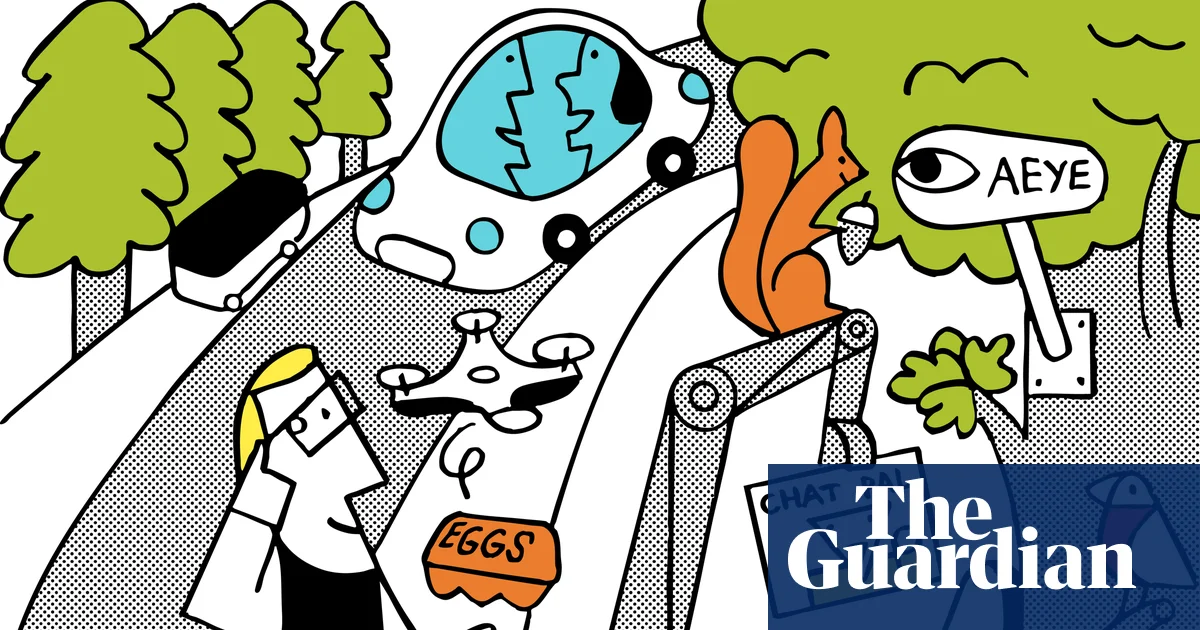
The ‘AI’ doctor will see you now
Illustration: Jay Cover/The GuardianAGI Comics—HF-edits Dr-2 Illustration: Jay Cover/The Guardian
“Does it hurt when I do this?”
AGI Comics—HF-edits Dr-3 Illustration: Jay Cover/The Guardian
“You seem to have dislocat…”
A Eye: “NOOOO! The problem is a sprain in the brachial plexus due to you lifting that 10kg carton on Wednesday at 2.58pm and not eating enough blah blah”
AGI Comics—HF-edits Dr-4 Illustration: Jay Cover/The Guardian
“Wow, err, thanks”
In 2035, AIs are more than co-pilots in medicine, they have become the frontline for much primary care. Gone is the early morning scramble to get through to a harassed GP receptionist for help. Patients now contact their doctor’s AI to explain their ailments. It quickly cross-checks the information against the patient’s medical history and provides a pre-diagnosis, putting the human GP in a position to decide what to do next.
In face-to-face consultations an AI may listen in the background, weigh the facts of the patient’s case against thousands of medical studies, propose a course of drugs based on the full depth of the latest medical research, which the human doctor could never fully digest. It provides a second opinion for the doctor, who can assess its proposals before deciding how to act.
The public may not be wholly averse to this change. Thirty-eight per cent of people favour using AI to speed up triage in the NHS although 52% prefer humans, citing trust and wanting personal interaction, polling by Ipsos in October 2025 found.
Medical screening becomes highly sophisticated and perhaps a little invasive. Doctors could be sent details of your diet and vital statistics tracked by wearable devices. Smart toilets may even analyse your bowel movements. Medicines could be produced exactly tailored to your body and its needs.
If it all works, diseases are spotted quicker and medicines are more accurately prescribed, but the combination of one AI and one human medic creates a new tension. The best doctors become those most adept at interpreting the outputs of the AIs. Medical schools change their teachings to focus more on managing AI medics, and politicians wrestle with how to overhaul medical regulation and ethics.
The future of AI
The rivals racing to create super-intelligence. This was put together in
collaboration with the Editorial Design team. Read more from the series.
Design and Development
Harry Fischer and Pip Lev
AI v AI: how lawyers could become a thing of the past
Illustration: Jay Cover/The GuardianAGI Comics—HF-edits Law-2 Illustration: Jay Cover/The GuardianAGI Comics—HF-edits Law-3 Illustration: Jay Cover/The GuardianAGI Comics—HF-edits Law-4 Illustration: Jay Cover/The GuardianAGI Comics—HF-edits Law-5 Illustration: Jay Cover/The Guardian
Justice is increasingly enabled by AI, although some fear it is taking over. Solicitors preparing for trial have learned to delegate the legwork of unearthing case law and planning arguments to an AI, which proposes the best approach for a barrister to take in court. The current problems of AIs making up case law, as happened at least 95 times in July and August, according to trackers, have been ironed out. The new, more robust artificial general intelligence (AGI) systems compress days of work into hours, leaving the human solicitor only to check the AI’s brief to the human barrister.
Next, amid a courts backlog, pressure grows to largely replace barristers too. An experiment is launched allowing adversarial AIs to argue cases in front of a human judge and jury. The results prove compelling. Cases are concluded at a fraction of the cost to the taxpayer and much faster. But numerous miscarriages of justice soon emerge. Campaigners for people wrongly imprisoned begin to demand greater transparency about the inner workings and biases of the AI lawyers.
Having unleashed AGI, governments and companies have to constantly surveil the autonomous systems, employing people to sit at banks of screens, shutting down dangerous behaviour, dispatching good AIs to hunt down bad AIs.
The morning routine
Illustration: Jay Cover/The GuardianAGI Comics—HF-edits Morning-2 Illustration: Jay Cover/The Guardian
Glasses, wake me up at 7am
AGI Comics—HF-edits Morning-3 Illustration: Jay Cover/The GuardianAGI Comics—HF-edits Morning-4 Illustration: Jay Cover/The Guardian
WAIT! … Were there any eggs in the fridge?!
AGI Comics—HF-edits Morning-5 Illustration: Jay Cover/The Guardian
He’s asleep now, I can’t ask him.
Illustration: Jay Cover/The Guardian
He’s clumsy when he hasn’t eaten his breakfast eggs.
Illustration: Jay Cover/The Guardian
What if he drops me? Replaces me?! There’s a new set of glasses out tomorrow!!!
Wearable AI devices, such as glasses, watches and rings, have become ubiquitous. They function as extra senses, spotting things in our environment that we miss, like a lack of eggs in the fridge, or recording our interactions to remind us later of things we forget. But then they also start to do things for us – and maybe even worry about not doing a good enough job.
“First principle is, you have a bunch of these AI agents that do things for you,” says David Shrier, professor of practice, AI and innovation at Imperial Business School. “These will be specially programmed AIs that have different areas of expertise and are customised – adapted to you and your specific needs. So they learn … what you want and they go and do it for you.”
You might start your day with the help of an information agent. “It goes out, it curates the articles and when you wake up in the morning and as you are brushing your teeth, it’s reading out to you summaries and interpretation of the news. It can provide some deeper understanding for you.”
This second-guessing based on deep algorithmic familiarity extends to your breakfast. If you have been wearing augmented reality glasses, the AI will have noticed when you opened the fridge that you’ve run out of eggs. When you go downstairs at 7am your phone lights up to say an Amazon drone has delivered you some eggs.
Shrier adds that all of this requires consent, meaning “you know what you are allowing the AI to understand and know about you, and you get to easily opt out if you don’t want your data shared.”
AI on the farm
Illustration: Jay Cover/The Guardian Illustration: Jay Cover/The Guardian
Old Macdonald
Illustration: Jay Cover/The Guardian
had a farm
Illustration: Jay Cover/The Guardian
AI-AI-O
A farmer’s rounds, checking on the health of livestock, crops, feed supplies and machinery – which can take from dawn to dusk – become far less onerous. With cameras and sensors rigged to trees, barns, fence posts and itinerant robots, every farm delivers a torrent of data to help increase productivity and animal welfare. Already, in 2025, an AI model is under development to detect early infections in cows by tracking subtle shifts in their social behaviour. A herd in Somerset is being filmed around the clock to train a model to predict if an animal is in the early stages of mastitis, which affects milk production and is an animal welfare problem. A decade later and with data harnessed from millions of farms around the world, AGI advises not only what to plant and when, but how to build stronger ecosystems, and improve soil health. AGI-powered robots could stalk the fields rooting out weeds and reducing the need for herbicides.
Less work, more play
Illustration: Jay Cover/The Guardian Illustration: Jay Cover/The Guardian
… and this was called an office …
Illustration: Jay Cover/The Guardian
Filled with people and chairs and phones and desks and carpet and water coolers and paper
Illustration: Jay Cover/The Guardian
This was a board meeting.
Yeah, they look bored!
Sports clubs, live entertainment venues and travel agents boom as AGI transforms work, helping millions of white-collar workers whisk through their tasks leaving time for a new life of leisure – at least that is one theory.
In the early years of AGI only a few people are made fully redundant by full automation, and most stay in work. For a while people retain the same 40-hour working week and simply get more work done.
At work, AI could act like a “buddy” or a coach in meetings, says Shrier. It might advise you to go easy on another attender because they look a little stressed.
“During your meeting you’re getting this sort of coaching and augmentation that makes you better at interacting.” As the chat ends, the AI sends you a list of next steps to take following this meeting – and slots it into your project plan. As you get to your desk, your professional AI assistant is bringing you the documents and spreadsheets you need to deliver.
AI-augmented economies could grow sharply. But soon people realise they can afford to work less. The 15-hour week, which the economist John Maynard Keynes in 1930 predicted would happen by 2030, becomes a reality. Leisure becomes less about rest and orientates towards creative activities, human-to-human socialising and time caring for children or elderly family members, academics have suggested.
“If you believe the premise that humans are social animals, they’re going to have to do something,” the US sports and entertainment mogul Ari Emanuel said in October as he announced new investments in live entertainment. “They can’t just sit at home, so they’ll go to music, they’ll go to sports and they’ll go to my live events.”
But the shift to more spare time also creates a new problem: mass boredom. A generation conditioned for the nine to five and which had derived satisfaction from now-automated tasks such as populating spreadsheets or writing reports, struggles to adjust. Some people take to the new leisure like happy retirees and report increased wellbeing, but others struggle with mental health problems.
TECHNOLOGY
Blind psychic Baby Vanga’s prophecies for 2026 hint at humanity facing a mysterious new civilization


A blind psychic, who allegedly foretold 9/11 and the Covid pandemic, shared several world-changing prophecies for 2026 before her death nearly 30 years ago.
Baba Vanga was a Bulgarian mystic and clairvoyant who became a cult figure among conspiracy theorists after several of her eerie pronouncements were proved true.
Her prophecies for next year have resurfaced, with the most shocking prediction that humans will make contact with a new civilization in November.
The claim speaks of a ‘massive spacecraft’ arriving on Earth, marking a historic turning point for humanity.
However, scientists remain highly skeptical about any near-term contact with alien life, and the US government has found no evidence of such beings.
Another alarming prophecy was the possibility of World War III, as she warned of rising tensions between major global powers, including China, Russia and the US.
One of Baba Vanga’s most talked-about predictions involves a wave of catastrophic natural disasters.
She foresees massive earthquakes, violent volcanic eruptions, and extreme weather striking roughly 8 percent of the planet’s land.
However, Baba Vanga, who died from breast cancer in 1996, reportedly also saw visions of world-changing breakthroughs, such as cancer blood tests and mining for energy in space.

Baba Vanga, who lost her sight at age 12, became a cult figure among conspiracy theorists after several of her eerie pronouncements were proved true
She left no written records of her predictions. Most of the accounts come from her niece, Krasimira Stoyanova, or other followers who documented her alleged visions after her death, and who have been accused of misinterpreting what she said.
Born in 1911 as Vangeliya Pandeva Dimitrova, she was a famous blind Bulgarian mystic, clairvoyant, and herbalist known as the ‘Nostradamus of the Balkans.’
She lost her sight at age 12 after being caught in a tornado, an event that coincided with the emergence of her purported psychic abilities.
After turning 30, her powers of foresight, healing, and fortune-telling became prominent, attracting believers who sought her guidance.
She made numerous prophecies, often vague, about natural disasters, political shifts and future technologies, some of which supporters claim foretold events like the Kursk submarine disaster, Brexit and the rise of ISIS.
While she has legions of followers, experts warn her prophecies are speculative and not grounded in fact.
Regardless, her predictions for 2026 are flooding the internet.
The prophecy of alien contact seemed to align with reports that President Donald Trump has been briefed about UFOs and alien life living among humans.

Her prophecies for next year have resurfaced, with the most shocking prediction that humans will make contact with a new civilization in November (file photo)
The claims have suggested that Trump could be the one to reveal such details to the world.
Along with alien contact, WWIII and natural disasters, she also foresaw AI taking over major industries, causing not only job upheaval but also complex ethical challenges, Sky History reported.
Industry experts have echoed the claims, saying the technology could advance to hyper-personalized AI agents acting as digital coworkers.
They also see new roles created, including chief AI agent officers.
While Baba Vanga’s prediction of mining energy from Venus is officially scheduled for 2028, experts note that space exploration is a long, gradual process.
If her forecast that humanity will begin harvesting energy from the planet by then comes true, preparations and groundwork could start as early as 2026.

One alarming prophecy was the possibility of World War III, as she warned of rising tensions between major global powers, including China, Russia and the US
She also predicted mass-produced synthetic organs by 2046, and 2026 could mark a crucial phase in their development toward that goal.
Progress may include gene-edited pig kidney transplants, building on programs that began in 2024 and 2025, early clinical trials for bio-artificial liver devices, and bio-printed living-tissue implants, such as 3D-printed ears.
These developments could lay the foundation for realizing her long-term vision of synthetic organ production.
Supporters credit her with foreseeing major medical breakthroughs, including improvements in cancer detection and treatment.
In 2026, multi-cancer early-detection blood tests could move from pilot programs to national screening initiatives in at least one major country.
This would help doctors catch hard-to-detect cancers, like pancreatic and ovarian, much earlier, while sparking debates over false positives, rollout costs, and which patients should be screened first.


Justice Eziefule is the co-founder of Metastable Labs and one of the builders behind Liquid, a decentralised lending protocol for prediction markets. His path into tech has been shaped by bold career pivots: from walking away from a hairdressing apprenticeship at 19 to taking an unpaid internship at OlotuSquare instead of a traditional corporate placement. That choice led him to Rivers State Tech Creek, where he became an SQL instructor and set the foundation for a career defined by risk-taking and independent thinking.
Before co-founding Liquid, Justice helped build Paystack’s Virtual Terminal and was an early engineer at Lazerpay, where he shipped the minimum viable product (MVP) that went on to raise seed funding. He is now focused on reimagining user capital efficiency in decentralised finance (DeFi) by giving prediction-market participants the ability to place more conviction on their trades. Liquid, part of the YZi Labs cohort, reflects his belief in building B2C products that improve people’s financial lives and his conviction-driven decision-making, including recently turning down a high-paying engineering leadership role to go all-in on the product.
- Explain your job to a five-year-old.
Imagine you have a big box of Lego, and you can build anything you want with it. My job is like that, but instead of Lego pieces, I use code to build things on phones and computers.
I also help run the team that decides what we should build, kind of like being the person who says, “Let’s go outside and play,” and then helps everyone choose teams and what game to play.
So I’m both someone who creates things and someone who leads the building of new ideas, making sure everything works so people can use it every day.
- You turned down a high-paying engineering leadership role to build Liquid. What gave you the conviction to make that call?
I’ve always been a very ambitious person, and with that ambition came a clear desire to build my own products rather than spend the rest of my career working on someone else’s vision. When that lead engineering offer came, it was genuinely tempting: great role, great pay, and at that moment, Liquid had just two months of runway left. I also had a two-month-old son and a family depending on me, so on paper it looked like an easy decision.
But the more I thought about it, the more I realised I wasn’t actually risking as much as it seemed. Worst case, if Liquid didn’t work out, I could always get another job. The real failure would be walking away from something I believed in before giving it a real chance. Liquid was the first idea in years that felt worth betting every single thing on, and I knew that if I didn’t go all-in, I’d always wonder what could have happened.
Choosing Liquid was less about rejecting a job and more about backing myself. I wanted to build something meaningful, something that could genuinely reshape how people interact with prediction markets. And once that clicked, the decision stopped feeling risky. It just felt right.
- What’s the hardest trade-off you’ve had to make while building a prediction-market lending protocol?
Liquid wasn’t even meant to be a lending protocol for prediction markets. The original idea was an insurance product for prediction markets. We announced it on X, opened a waitlist, and dove straight into the math. For weeks, our whiteboards were filled with formulas, payoff curves, stress tests, all the things you do when you’re trying to build a market that doesn’t fall apart the moment volatility hits.
But as the numbers started to settle, the reality became uncomfortable. For LPs to make money, premiums had to be high. But the moment we priced them realistically, the product became too expensive for traders to use. And when we lowered the premiums enough to make sense for users, LPs would lose money, and the protocol would spiral into bad debt. We ran scenario after scenario, hoping to find a sweet spot. It just didn’t exist.
After a full month of work, it became painfully clear: the model wasn’t viable. That was the trade-off; keep pushing a product we could technically ship, or admit the economics didn’t support it and walk away from everything we’d already built.
And then something unexpected happened.
While working through the insurance math, we stumbled into a completely different insight, a way to solve the gap-risk problem that has always made leverage in prediction markets impossible. At first, it felt like an accident. Then, after more testing, it felt like a breakthrough.
That insight forced another decision: do we stick to the original plan because it’s familiar, or do we pivot into something bigger, even though it means throwing away weeks of work and rewriting the entire product direction?
We chose the pivot. That insight became the foundation for a new type of leverage mechanism. One that naturally led us to the lending layer that Liquid is built on today.
In hindsight, abandoning the insurance model was one of the hardest trade-offs we’ve made, but it’s also the moment Liquid became what it was supposed to be.
- You’ve worked at Paystack, Lazerpay, and now Metastable Labs. What’s the biggest engineering thesis you’ve formed about building products for Africans today?
One big thesis has shaped my thinking after building at Paystack, Lazerpay, and now Metastable Labs: Africans don’t need “lite” versions of global products. They need systems engineered to survive real-world constraints.
What that means in practice is simple: the environment defines the product. In markets where the internet can drop, payments fail unpredictably, device quality varies, and trust is low, you can’t build with the assumptions Silicon Valley teams take for granted.
At Paystack, I learned the importance of resilience. Transactions had to succeed despite network issues, bank outages, or device failures. Building reliable systems wasn’t a nice-to-have; it was the only way to earn user trust.
At Lazerpay, I saw how vital speed and clarity are. People aren’t patient with tools they rely on for income or business. Anything confusing, slow, or fragile simply doesn’t get used.
And now with Metastable Labs, I’ve realised a third piece: simplicity wins. If a product requires too much education or tries to “teach” Africans how to use it, it will die. The product needs to adapt to them, not the other way around.
So the thesis that ties all of this together is: Build products that assume nothing, break gracefully, handle chaos, and respect the fact that users are busy, not beginners. If a system can survive African unpredictability, it can survive anywhere.
- Prediction markets are still early in Africa; why do you think Liquid can scale when the underlying market is still building (early) momentum?
Liquid is designed for a global prediction-market ecosystem, so its growth isn’t tied to any single region’s maturity curve. But Africa, and Nigeria in particular, is already one of the fastest-growing crypto markets in the world. Nigeria consistently ranks among the top five globally in trading volume, and users here adopt new financial tools far more quickly than traditional markets expect.
So even though prediction markets are still early, the behaviour we’re seeing in Africa suggests strong upside: people are already comfortable with volatility, familiar with crypto wallets, and open to new financial primitives. That makes the continent a natural early adopter base, not a limitation.
With a product built to serve global users from day one and a region that embraces innovation faster than most, Liquid has room to scale long before prediction markets “mature” in the traditional sense.
- What was the moment you realised prediction markets needed a safe and capital-efficient way to introduce leverage?
For me, the real moment came after watching countless teams, some of the smartest people in the space, attempt leveraged trading on prediction markets and fail for the same reason: no one had figured out how to make leverage safe enough to scale or capital-efficient enough for traders to actually use.
Every week, someone on X drops a new thesis, a new diagram, or a fresh take on how leverage could work on prediction markets. And even though the ideas keep coming, the outcome is always the same: the models collapse under the weight of gap risk, bad debt, or unrealistic assumptions. It became obvious that prediction markets weren’t lacking interest; they were lacking a mechanism that allowed traders to take larger positions without blowing up the system.
At the same time, traders clearly want capital efficiency. Everyone wants to increase their position size without locking up unnecessary capital. They’re comfortable with liquidation risk; what they aren’t comfortable with is a fundamentally fragile system.
Seeing this tension, the demand for leverage vs. the inability of existing models to support it made it clear that something was missing. There needed to be a structural way to let traders scale their exposure while keeping the protocol solvent. That realisation is what pushed us to rethink the entire approach and eventually led us to the lending-based model Liquid uses today.
It wasn’t one dramatic moment. It was the accumulation of repeated failures across the industry and the very obvious desire from traders for a tool that simply didn’t exist yet.
- You describe yourself as a risk taker. What’s the biggest risk you’ve taken about anything (career, life, etc.) in the last five years, and what did that teach you?
I’ve taken a lot of risks in my life, but the pattern is always the same: when something doesn’t feel like my path, I walk away from it even when I don’t know where the new path leads.
The first big one came when I was 17. My parents had taken me to a salon to learn hairdressing. I spent almost 2 years there, working as a stylist. And even though I didn’t know what I wanted for my life, I knew that wasn’t it. One afternoon, the shop was quiet, everyone else was watching movies, and I just sat there asking myself, “Is this really what I’m meant to do?” I didn’t have an answer, but I knew the answer wasn’t hairdressing. So I stood up, walked out, and never went back. My parents were furious, but it was the first time I trusted my own instinct over everyone else’s expectations.
The second major risk came during my 400-level university. Most students applied to banks or oil companies for their 6-month internship because those places paid well. My parents wanted that for me too; we weren’t wealthy, and that stipend mattered to them. But I knew I wanted to become a better software engineer, so instead of chasing a “respectable” internship, I packed my bags, moved to a new city, and spent days walking from one tech company to another asking for an unpaid internship. I eventually found one, and even though there was no salary attached, I didn’t care. That decision shaped the entire trajectory of my career.
After graduating, I landed a solid software engineering job at Sabi. Steady income, stability. The kind of job every parent is proud of. But a friend reached out with a startup idea and asked me to join as a founding engineer. At the time, Lazerpay hadn’t raised a dollar. Leaving a stable role for a risky idea didn’t make sense on paper, but I felt the same pull I’d felt years earlier: this is the direction I should be moving toward. I joined, built the MVP, helped the company raise $1.1m, and eventually led the engineering team.
But the biggest risk, the one that truly kept me up at night, happened recently. I received a high-paying engineering leadership offer at a top company. On paper, it was life-changing. But Liquid had only two months of runway left, and I now had a wife and a newborn son. This time, the consequences weren’t just mine. Walking away from that offer wasn’t just a career decision; it was a family decision.
But deep down, I knew I would never forgive myself if I abandoned something I believed in just because the safe option was available. And I also knew that if Liquid didn’t work out, I could always get another job, but I couldn’t get another chance to build something meaningful at the exact moment it needed me most.
What all these moments taught me is simple: the real risk isn’t choosing the uncertain path; it’s choosing the comfortable one and spending the rest of your life wondering what would’ve happened if you’d bet on yourself.
- What’s one thing the DeFi ecosystem consistently gets wrong about user behaviour?
The DeFi ecosystem constantly assumes users want complexity. They don’t. Users don’t wake up thinking about protocols, yields, or mechanisms. They care about outcomes. Any product that requires education before value will always struggle. People want tools that work intuitively, not systems that make them feel like they need to become experts to participate.
- If Liquid succeeds, what part of the future of trading do you think will look completely different?
Prediction markets are still in their early days. Most people see them as simple betting interfaces, not as an advanced trading venue, the same way they view crypto, forex, or equities. If Liquid succeeds, that perception will flip completely.
A few things will change. First, traders will start treating prediction markets as a serious asset class. A place where you can express views, manage risk, use leverage, and build actual trading strategies, not just place one-off bets. Second, capital efficiency will become the norm. Instead of locking up large amounts of capital to take positions, traders will expect the same flexibility they enjoy in mature financial markets.
And finally, the industry will shift from “speculation for fun” to information trading — where markets become a real-time reflection of collective intelligence. With tools like Liquid making markets deeper, safer, and more tradable, prediction markets can evolve into one of the most important financial primitives of the next decade.
That’s the future we’re building toward.
- What’s one thing you’re very good at but not particularly interested in, and one thing you’re deeply interested in but not yet good at?
I’ve always been very good at math and general science. It came naturally to me in school, but I was never deeply interested in it unless I needed it for something practical. It’s a skill I can rely on, not one I’m passionate about.
On the flip side, something I’m deeply interested in but not yet great at is storytelling and narrative shaping, especially the kind that great founders use to rally users, investors, and teams around a vision. I’ve realised that building a product is one thing, but being able to communicate its purpose in a way that moves people is a completely different skill. It’s something I’ve been intentionally working on, because I’ve seen how much it amplifies a founder’s impact.
TECHNOLOGY
From 50% telecoms tariff hike to Ezra Olubi’s saga; Here are the top 5 tech stories of 2025


Across 2025, tech stories dominated the waves, from telecoms to fintech, funding, banking, ride-hailing, crypto, and more. Beyond social conversations, these stories shaped decisions, policies and redefined how we conduct business.
To note: not. all tech stories. are the same. Some are more important than others.
This article spotlights the top five tech stories across the Nigerian scene in 2025.
While there are countless big tech stories in 2025, Technext did not exclusively make the selection of the top five. We reached out to founders in the Nigerian tech space, influencers and gathered opinions from techies.
We hope that this list will refresh your mind fondly:
1. 50% telecoms tariff hike
The conversation didn’t start in 2025.
It was one of the tech stories that dragged on into the year. It was an adjustment that was finalised in January. After months of dragging between MNOs, Stakeholders and the federal government, the 50% tariff came into effect.
Within weeks of implementation, MTN, Airtel and Globacom rolled out new data subscription prices. Also, phone calls increased from N11 per minute to a range of about N15.40 to N16.50 per minute.
Specifically, Globacom increased its call tariff from 11 kobo per second to 22 kobo per second. MTN raised its Pulse bundle call rate from N7.8/min (13k/sec) to N13.8/min (23k/sec) while SMS charges increased from N4 to N6. Also, Airtel increased its call rate from 18 kobo to 25 kobo per second.

The telecoms tariff hike topped the list of major tech stories in 2025 because it impacts Nigerians directly. With the hike, students will spend more to attend classes online. It implies that most citizens will now spend more on mobile data and less on other necessities.
In a Technext’s story, Joseph, a job seeker, expressed the difficulties now faced in the wave to search for jobs online, and attending virtual interviews and tests.
“The job market is already tough. Now, with the proposed data increase, it may feel impossible. Last month, I spent ₦5,000 on data just for job hunting. After the increase, I may need at least ₦7,500,” he said.
Read more on how other individuals across Nigerian society express their new predicament here.
In a recent discussion, Abayomi, a 300-level Civil Engineering student at the University of Ibadan, expressed how most of his allowance has been devoted to mobile data subscription.
“Online lectures have increased in the last two semesters. I spend close to 50% of my allowance on buying data. And this data drains fast due to watching YouTube tutorials to complement lecture notes,” he said.
 A smiling elderly Nigerian woman using her phone…
While telecoms operators attached pricing to infrastructure improvements, Nigerians are still adjusting to the shift.
2. Moniepoint $90m raise, $1B valuation
Moniepoint, led by Tosin Eniolorunda and Felix Ike continued its meteoric rise in 2025 with an additional $90 million Series C round. It pushed Moniepoint’s valuation above the $1 billion mark and solidified its status as a unicorn.
The round sums its total funds raised to over $200 million, following an initial $110 million close announced in October 2024. It also includes an over $10 million Series C fund raised in January, backed by Visa.
It is also a statement of how Moniepoint has transitioned and made an impact across the African market.

In his reaction to why the development is one of the top tech stories of the year, Emmanuel Oziuwa-John, Co-founder and CEO of Salvus Emergency, hammered on how Moniepoint has continued to lead in bridging Africa’s financial inclusion.
He notes its expansion to the United Kingdom. “They need no introduction; they scaled out of Africa,” he added.
Overall, Moniepoint has successfully transitioned from a payment infrastructure provider for banks into a comprehensive platform offering digital payments, business and personal banking, credit, cross-border transfers, and management services in about four years.
Recall that earlier in the year, the company processed over 1 billion transactions monthly.
3. Chowdeck acquired Mira
2025 has been Chowdeck’s year of notable milestones. It cemented its position as the default Nigerian logistics leader and raked in impressive numbers.
Its acquisition of Mira in June transformed it from being a sole logistics company to playing in the food business lifecycle, inventory, and POS operations. It was a move that addressed the company’s backend operation issues, inventory management challenges and strengthened its vendor ecosystem.
 Chowdeck and Mira founders: Photo credit – Tech in Africa
On why Chowdeck made his list of top tech stories for the year, Emmanuel said: “How many times have you read or seen an African startup succeed so much they buy anyone?” He said. “Mira was one year old at the time of the acquisition.”
Over the past two years, Chowdeck has witnessed notable growth, positioning it as a potential infrastructure provider in a competitive market.
Lately, it surpassed two million users on its platform, reflecting how digital food delivery is becoming a necessity for people. In another milestone, Chowdeck crossed 1 million orders in October 2025 amid operational challenges.
4. Tax! Tax!! Tax!!!
The Nigeria Tax Administration Act (NTAA) 2025 will take effect in January 2026. Since its passing in June, it has generated heated debates about its potential impact, possible implementation and who will be affected.
Technext held an X space in October to help Nigerian freelancers, content creators, SMEs, and full-time employees understand what it means.
You can access the full story here.
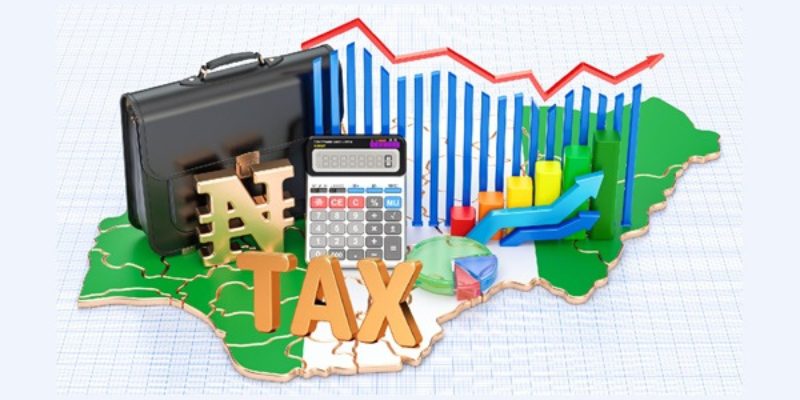
At the bedrock of this discussion is the Tax Identification Number (TIN), which helps to connect financial records to a legitimate profile in the tax network.
While this is a necessity, it is not compulsory (maybe for now), experts have urged freelancers and small business owners to take proactive steps and get their TIN. “It’s much easier to comply early than to fix mistakes later,” said Emmanuel Ifeanyi, a tax associate at Andersen in Nigeria.
See a step-by-step guide on how to get your TIN online here.
One thing is clear: come 1 January 2026, the new law seeks to reduce multiple taxes and introduce transparency.
5. Ezra Olubi’s past
Of course, this topped the list of tech stories in 2025.
The Ezra Olubi’s saga generated conversations, memes and lessons for players and founders. It trended on all social media platforms, generating a conversation trend on X for days.
Consequently, Paystack fired Ezra. The decision comes as old social media posts from Olubi, dating back to 2010-2017, resurfaced, igniting widespread scrutiny over the controversial content.
There are a lot of lessons:
- The permanence of information on digital platforms and how sensitive issues can come hunting years later.
- It shows how public figures tend to face intense scrutiny and how prospective founders and leaders must be careful in their career buildup.
- Success or brilliance may not really protect individuals from falling when faced with public backlash, especially on a moral note. The internet can be unforgiving.
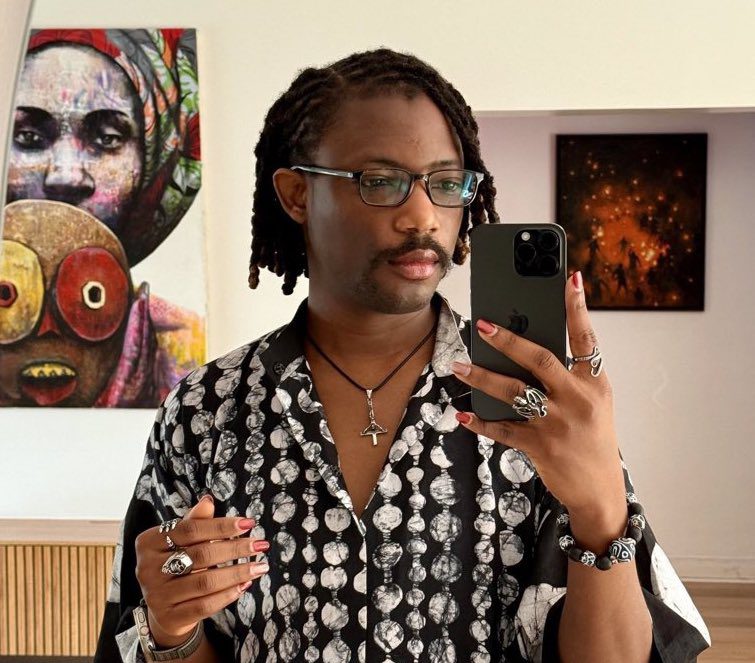 Ezra Olubi, co-founder, Paystack
From a legal view, Agbo Obinnaya, Co-founder and CEO of Case Radar, said:
“Ezra was a public figure, and his posts led to his dismissal from a company he had built…although they had sold the company. It points out how a founder’s image reflects on the company.” He said, adding that “every founder/co-founder has an onus to represent a company and himself responsibly.”
Stemming from Ezra’s case, Technext did a story on what the law says about workplace disputes, social media scandals, and who has the upper hand. Read it here.
Aside from the above, other tech stories mentioned were MultiChoice subscribers’ deep and rescue mission by Canal+, Central Bank of Nigeria’s POS and withdrawal limits regulations, Okra and Bento Africa’s sudden collapse.

TC Daily’s year is officially Wrapped! 🎁
2025 was a marathon for the African tech ecosystem, and you were right there with us for every sprint. But beyond the headlines, how much of the story did you actually make your own?
We’ve crunched the numbers on your year with TC Daily. Take this quiz to unlock your personal 2025 Wrapped stats: from how many thousands of words you devoured to your “Superuser” status in our community.
How much of the African tech story did you digest this year? Let’s find out.
TC DAILY. 2025 WRAPPED
How much of the African tech story did you digest this year?
2025
In 2025, you read approximately
0
WORDS ON TC DAILY
Brag to your network:
Share on X
Share on LinkedIn
Share on WhatsApp
Based on 814,300 words and 242 editions published in 2025. Calculations assume an average of 3,365 words per edition.

TikTok’s Chinese owner has signed a deal to sell the company’s US arm to American investors – ensuring the video platform can continue operating in the United States.
The deal is expected to close on 22 January 2026, according to an internal memo seen by Sky News’ US partner, NBC News.
It will end years of uncertainty over the app’s future in the States, after Joe Biden signed a law last year that required TikTok’s Chinese owners to sell up – or else it would be blocked.
The law was introduced amid concerns from some US politicians that ByteDance might share user data with the Chinese government, despite repeated assurances from the firm that it would not.
Critics also expressed fears that Chinese authorities may be able to manipulate TikTok’s algorithms and shape what content users see and are influenced by. This claim was also denied.
Mr Biden set a January 2025 deadline for the sale and when ByteDance failed to comply, TikTok went dark for several hours.
It returned after Donald Trump signed an executive order to keep it running on his first day in office.
Trump: ‘Tremendous value’ with TikTok
Who’s taking over?
The internal memo sent to employees on Thursday said the deal allows “over 170 million Americans to continue discovering a world of endless possibilities as part of a vital global community.”
TikTok owner ByteDance will sell just over 80% of the company’s US assets to three major investors, Reuters news agency reports.
The investors – Oracle, Silver Lake and MGX – will form a new venture, named TikTok USDS Joint Venture LLC.
Read more from Sky News:
Ex-footballer wins court case
Starmer’s radical pre-Xmas shake-up

TikTok whistleblowers expose safety concerns
The venture will be 50% held by the consortium of US investors, Reuters added, with affiliates of certain existing ByteDance investors holding 30.1% and ByteDance itself retaining 19.9%.
It will have a new, seven-member majority-American board of directors and be subject to terms that “protect Americans’ data and US national security”, the memo said.
Data from users in the US will be stored locally.
TECHNOLOGY
Terrifying maps break down exactly who is at risk of new ‘super flu’ exploding across America… as doctors reveal symptoms you should really worry about

The holidays are a time for travel and gathering in close quarters with loved ones.
All of which means that, amid a season of cheer, winter illnesses such as the flu, RSV and norovirus are surging across the country – as federal data shows.
A new and dangerous strain of ‘super flu,’ H3N2 subclade K, has driven an unprecedented rise in influenza cases weeks ahead of when surges are typically expected each year.
Earlier this month, the US had its first flu-related pediatric death of the 2025-26 season, according to reports from both the CDC and Colorado health officials. While it is not known whether the Colorado child is the same person in the CDC report, the state’s officials said their case involved an elementary school-aged child who died last week.
While the Mountain State may have clocked the first death, other regions might soon follow. And the latest CDC figures show people living in and traveling to New York City may be at the highest risk of developing the flu this holiday season, with the city recording ‘very high’ flu activity as of December 6.
And with subclade K strain climbing nationwide, actual figures could be significantly higher. Respiratory syncytial virus (RSV), which is particularly dangerous for young babies and the elderly, is also rising alongside Covid.
CDC epidemic trends data shows, too, that the surges are going to worsen in nearly 36 states in the coming weeks.
In many cases of these viruses, people will recover with little more than over-the-counter flu and cold medicine.

The latest CDC data shows states where COVID, the flu and RSV are on the rise this holiday season (stock image)
However, Dr Neal Shipley, medical director of Northwell Health-GoHealth Urgent Care, told Daily Mail it is important to recognize the symptoms that ring alarm bells so you know when to seek expert help.
‘If your symptoms worsen quickly, or you have trouble breathing, weakness, dehydration or symptoms that don’t improve after a few days, you should find your nearest urgent care,’ he said.
Now, based on laboratory tests and federal wastewater data, which tracks larger community spread, the Daily Mail can reveal where you have the highest risk of getting sick this winter.
The latest CDC data, which was updated on December 6, shows virtually no corner of the US is safe from infection with one of the viruses.
Flu
New York City is recording the highest levels of the flu, and those headed to the Big Apple might feel sick after their trip.
The greater New York state, New Jersey, Colorado and Louisiana all recorded ‘high’ flu activity.
Idaho, Texas, Georgia, South Carolina, Michigan and Massachusetts reported ‘moderate’ influenza A activity, while the rest of the country had ‘low’ or ‘minimal’ activity.
Influenza A makes up three in four flu cases in the US. It is also on the rise, largely due to the increased prevalence of H3N2 subclade K.
CDC data released on December 12 shows an eight percent increase in Americans testing positive for the flu virus compared to the week prior, and about 3 million have contracted it so far. There have been 1,200 recorded deaths from the flu this season.
Typical flu symptoms usually come on abruptly and include fever, fatigue, chills, headache, cough, body aches, congestion, runny nose and coughing. Experts have noted that while H3N2 subclade K’s symptoms are not different from other flu variants, they may be more severe.
Shipley told the Daily Mail that in children, the flu comes on suddenly and may also cause vomiting and diarrhea. He also said people over the age of 65 are at the highest risk of complications, including hospitalization and death.
Influenza A can best be prevented with the seasonal flu vaccine, which tends to be about 30 to 75 percent effective.
RSV
For RSV, wastewater data shows ‘very high’ activity levels in Wyoming and Louisiana, and ‘high’ levels in Kentucky.
Alabama and Florida each had ‘moderate’ activity. California, Nevada, Texas, Arkansas, Tennessee, Georgia, Maryland and Connecticut all reported ‘low’ RSV activity, while the rest of the country had ‘very low’ levels.
There was no data available for Montana, North Dakota or Arizona.
RSV is a particularly dangerous infection for young children because it can cause inflammation that may block their small airways, potentially leading to death.
About 58,000 to 80,000 children younger than five years old are hospitalized every year due to RSV, and 100 to 500 children die from the infection.
It spreads via respiratory droplets often from coughs and sneezes, and causes symptoms including a sore throat, runny or stuffy nose and exhaustion. In severe cases, patients can start wheezing.
The disease can also be fatal for older adults who are more prone to complications such as pneumonia.
RSV can be prevented with a single-dose vaccine given to pregnant mothers, newborn babies and adults over age 65. Experts estimate the vaccine is 80 percent effective.
COVID-19
Connecticut, Nebraska and Vermont all reported ‘high’ levels of COVID-19, which are likely fueled by the rise of the XFG ‘stratus’ variant that patients claim feels like ‘razor blades’ in their throats.
Indiana was the only state to report ‘very high’ COVID activity levels in wastewater based on reporting from 27 sites.
Kansas, Minnesota, Oklahoma, Alabama, Tennessee, Kentucky, Ohio, Pennsylvania, New York, New Hampshire and Maine all had ‘moderate’ COVID activity.
The remainder of the US reported ‘very low’ levels except for New Mexico, which had ‘low’ activity.
There was no COVID wastewater data for Montana or North Dakota.
CDC data suggests the dominant COVID variant right now is XFG. Patients report this variant has caused a painful sore throat that feels like it is being cut with a razor blade, which has been dubbed a symptom of this new mutant strain.
Other symptoms are similar to previous variants and include fever, chills, cough, shortness of breath, sore throat, congestion, runny nose, loss of taste or smell, fatigue, body aches, headache, nausea, vomiting and diarrhea.
Like other winter illnesses, COVID tends to peak in late December and January. The CDC has not tracked COVID test positivity, deaths or hospitalizations since September 27.

Instacart will pay $60 million in refunds to settle allegations by the U.S. Federal Trade Commission that it deceived consumers with false advertising. The federal agency alleged Instacart misled consumers with unlawful tactics, causing them to pay higher fees while also denying refunds.
The Federal Trade Commission (FTC) stated Instacart’s ‘free delivery’ claims are misleading because customers are still required to pay a mandatory service fee, which can add up to 15% to their total order.
The agency also said the delivery platform’s “100% satisfaction guarantee” promise is false because it implies it will provide full refunds when consumers are not fully satisfied with their orders, which is typically not the case when people receive late deliveries or unprofessional service.
Additionally, Instacart hid the refund option from the “self-service” menu that consumers use to report problems with their orders, making people believe they could only get a credit toward a future order rather than a refund, the FTC claimed.
Instacart also failed to clearly disclose terms relating to the Instacart+ membership enrollment process, the agency said. The sign-up process for the free trial of the subscription service did not disclose consumers would be charged once the trial ended, which allowed Instacart to charge people without their informed consent. These consumers will be receiving refunds as a result of the settlement, the FTC said.
“The FTC is focused on monitoring online delivery services to ensure that competitors are transparently competing on price and delivery terms,” said Christopher Mufarrige, Director of the FTC’s Bureau of Consumer Protection, in a statement.
Instacart acknowledged the settlement in a blog post and denied “any allegations of wrongdoing.” The company also said it believes “the foundation of the FTC’s inquiry was fundamentally flawed.”
Techcrunch event
San Francisco
|
October 13-15, 2026
The settlement comes as Instacart is currently under fire over a recent study that revealed its AI-powered pricing tool is causing some customers to receive different prices for the same items at the same stores. Instacart responded to the controversy by stating that retailers determine their own prices, and any pricing tests conducted through its AI tool are random and not influenced by user data. Reuters reported on Wednesday the FTC has begun an investigation into the delivery platform’s AI pricing tool.