
TECHNOLOGY
Ex-Splunk execs’ startup Resolve AI hits $1 billion valuation with Series A


Resolve AI, a startup developing an autonomous site reliability engineer (SRE), a tool that automatically maintains software systems, has raised a Series A led by Lightspeed Venture Partners, according to three people familiar with the deal.
The headline valuation for the fresh round is $1 billion, sources said. However, the company’s actual blended valuation was lower because of a multi-tranched structure. In this setup, investors purchased some equity at a $1 billion valuation but acquired the remainder — likely a larger percentage of the round — at a lower price. This novel investment approach has recently become popular for the most sought-after AI startups, investors say.
The startup’s annual recurring revenue (ARR) is approximately $4 million, two of the people said. The size of the funding round couldn’t be learned.
Resolve AI and Lightspeed didn’t respond to our request for comment.
Founded less than two years ago, the startup is led by former Splunk executive Spiros Xanthos and Mayank Agarwal, Splunk’s former chief architect for observability. The duo’s partnership dates back 20 years to their graduate studies at the University of Illinois Urbana-Champaign. This isn’t their first collaboration; they previously co-founded Omnition, a startup that was acquired by Splunk in 2019.
While human SREs are traditionally responsible for manually troubleshooting and resolving system failures, Resolve AI automates this process by autonomously identifying, diagnosing, and resolving production issues in real time.
The automation addresses a growing challenge for companies. As software systems become more complex and distributed across cloud infrastructure, outfits often struggle to find and retain enough skilled SREs to keep systems running smoothly. Automating these tasks can reduce downtime, lower operational costs, and free up engineering teams to focus on building new features rather than trying to constantly stomp out production issues.
Techcrunch event
San Francisco
|
October 13-15, 2026
Last October, Resolve AI raised a $35 million seed round led by Greylock with participation from World Labs founder Fei-Fei Li and Google DeepMind scientist Jeff Dean.
Resolve AI competes with Traversal, an AI SRE startup that raised a $48 million Series A led by Kleiner Perkins, with participation from Sequoia.
TECHNOLOGY
‘What are they hiding?’ Bermuda Triangle conspiracy theories reignite online after scientists discover a giant structure hidden beneath Bermuda that is ‘unlike anything else on Earth’

Bermuda Triangle conspiracy theories have reignited online after scientists announced a startling discovery.
Geologists revealed they had found a vast stone structure beneath Bermuda that is ‘unlike anything else on Earth’.
The researchers say there is a simple, natural explanation – but that hasn’t satisfied the internet–dwelling conspiracy theorists who have flooded social media.
One X user said: ‘Are we finally gonna stop pretending the city of Atlantis vanished ‘without a trace’?’
Another added: ‘The Bermuda triangle is the gate to Atlantis.’
And one imaginative social media user asked: ‘Is that where all the aliens live that take all the planes and humans that fly over to study them?’
Although many of the theories are bizarre, psychologists say these intense reactions are part of how some people are driven to respond to unfamiliar information.
Dr Daniel Jolley, an expert on conspiracy theories from the University of Nottingham, told Daily Mail: ‘The Bermuda Triangle is a perfect recipe for conspiracy–style thinking because it taps directly into core psychological needs.’

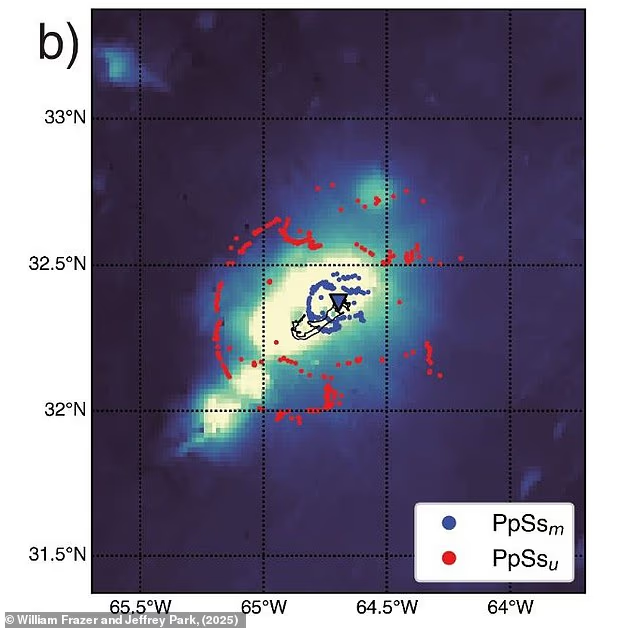
Conspiracy theories have been reignited online after scientists discovered a 12.4–mile–thick (20km) layer of rock beneath Bermuda that is ‘unlike anything else on Earth’ using seismic studies (illustrated)

While the science is clear that the rocky structure beneath Bermuda is natural, conspiracy theorists have been quick to offer their own wild suggestions

Meanwhile, some internet–dwelling conspiracy theorists have seen the discovery of the rocky structure as evidence for the existence of a lost civilisation like Atlantis
The Bermuda Triangle has long been surrounded by mystery and speculation thanks to stories of disappearing ships and planes.
Some believe that a mysterious force in the water between Florida, Puerto Rico and Bermuda causes navigation systems to fail and vessels to sink without a trace.
Although scientists point out that there’s no evidence this is the case, famous shipwrecks like that of the USS Cyclops have cemented this idea in the public imagination.
Conspiracy theorists have tied the supposed mystery of the triangle to all manner of bizarre theories.
So, as researchers announced their geological discovery, these wild theories have once again flared back to life.
For many, the discovery of the rock structure was clear evidence for the existence of an advanced lost civilisation like the city of Atlantis.
On X, one commenter wrote: ‘What if a highly advanced civilization that is many millions of years old built an underground centre of the earth lair to live and survive and they are still there? It explains them poaching people that enter the Bermuda triangle as well.’
While another joked: ‘Babe wake up, they found Atlantis.’

On social media, commenters reignited old conspiracy theories that the Bermuda Triangle hides the gateway to Atlantis

One commenter even joked that scientists had ‘found’ Atlantis at last
What did scientists find beneath Bermuda?
Researchers discovered a 2.4–mile–thick (20km) layer of rock beneath Bermuda.
They found that seismic waves from distant earthquakes were being deflected by this lower density rock.
This explains why Bermuda sits on a raised area of ocean crust known as an ‘oceanic swell’, which lifts it above the surrounding area.
Lead researcher Dr William Frazer, a seismologist at Carnegie Science, told Daily Mail: ‘Typically these types of swells, like Hawaii or Iceland, are associated with active volcanism and an active upwelling from the deep mantle. Bermuda is strange because there is evidence from rocks at the surface that suggest it has stayed relatively stagnant.’
Meanwhile, other conspiracy theorists speculated that the rocky plate must have something to do with aliens, with one writing: ‘That’s where the mothership is’.
Some online theorists took the opportunity to launch into even wilder speculation.
One enthusiastic commenter suggested: ‘It’s a portal to hell, protected by demonic principalities, witches and wizards. There are cities beneath the oceans run by evil demons.’
Some people even connected the discovery to a bizarre theory that every NASA rocket actually lands in the Bermuda Triangle to avoid revealing that the Earth is really flat.
A flat Earther wrote on X: ‘Oh look, the mysterious triangle where they land all the space shuttles as they don’t go into space as they would hit the glass ceiling’
‘NASA – specializing in one–way trips to the Bermuda Triangle since 1958,’ another chimed in.
Speaking to the Daily Mail, Dr Jolley explained why the Bermuda Triangle has attracted so many conspiracy theories throughout the years.
‘When events feel random or chaotic, people want to feel that someone or something is in control. Even a malevolent force is more comforting than randomness,’ he explained.

Some social media users even tied the discovery into a bizarre theory that NASA’s rockets are fired into the Bermuda Triangle to hide the fact that the world is flat

Scientists say that the Bermuda Triangle’s history of mysterious shipwrecks makes it a natural target for conspiracy theorists
‘And socially, being part of a group that “knows the truth” about the Triangle offers a distinct identity: insiders versus the naïve majority.’
However, as speculation about the discovery beneath Bermuda spread online, an entirely new conspiracy theory appears to have emerged.
On social media, many conspiracy theorists have started to speculate that the discovery of an unusually thick rock slab was somehow concocted to ‘distract’ the public from the release of the ‘Epstein files’.
The so–called Epstein files are a massive trove of investigative documents related to the billionaire sex offender Jeffrey Epstein, which are due to be released by the US Justice Department by Friday.
A commenter wrote: ‘Bringing up 30 year old conspiracies. How bad are the Epstein files.’
‘The Epstein files are so bad they are bringing the Bermuda Triangle back,’ suggested another.
One social media user even joked: ‘Bermuda Triangle must be hiding the Epstein files.’
According to Dr Jolley, this habit of seeing connections between unrelated events is a common feature of the conspiracy theorist psychology.

The discovery even prompted some social media users to suggest a new conspiracy theory. Claiming that the geological discovery was somehow intended to be a distraction from the release of the so–called Epstein files

One commenter even suggested that the Epstein files might be ‘hiding’ in the Bermuda Triangle

According to psychologists, conspiracy theories tend to be drawn into a cohesive ‘worldview’, making it seem natural to connect the fictional mystery of the Bermuda Triangle to the real crimes of sex offender Jeffrey Epstein (pictured)
He says: ‘Conspiracy beliefs tend to merge into a broader worldview. When someone adopts a lens that says, “elites lie” or “official accounts are fake,” unrelated theories suddenly feel coherent.
‘The specific subject matters less than the common structure: secretive agents, hidden truth, suppressed evidence.’
This is what makes conspiracy theories so difficult to challenge and enables them to spread so rapidly on social media.
Professor Karen Douglas, an expert on beliefs in conspiracy theories from the University of Kent, told Daily Mail: ‘It is easy to find and share conspiracy theories on social media. People who are interested in conspiracy theories can find them almost immediately, and they can spread rapidly.
‘Once conspiracy theories are out there, they are difficult to quell, especially when some of the facts are still unknown.
‘Even after that, once people believe in a conspiracy theory, it is often difficult to convince them otherwise.’
THE BERMUDA TRIANGLE
The Bermuda Triangle is a section of the Atlantic Ocean roughly bounded by Miami, Bermuda and Puerto Rico where dozens of ships and airplanes have disappeared.
Unexplained circumstances surround some of these accidents.
Although a range of strange theories have been proposed regarding the Bermuda Triangle, none of them prove that mysterious disappearances occur more frequently there than in other well–travelled sections of the ocean.
Many people navigate the area every day without incident.


Moses Ogunranti knew when the Nigerian logistics system stopped making sense for him. In 2016, after partnering with GreenLab Microfactory, an electronics distributor, to build robotic kits for kids, delivering these same kits across the nation was impractical. For kits built on the premise of affordability, domestic shipping was costly and digging deep into his profit margins. Even sourcing components from local suppliers as a small business had challenges of its own. “We would buy components from Lagos for about ₦1,500 ($1.03)…and then we end up delivering it to our office for ₦4,500 ($3.08).”
The problem was, no one was truly solving it. Not the key players in the logistics industry offering high prices with slow delivery times, or bus drivers with swift delivery and no way to be held accountable. For Ogunranti, it certainly wasn’t logistics and transportation startups that aggregated delivery prices of more popular logistics companies to determine theirs.
By 2018, a light bulb went off in his head. What if travellers picked up packages as they commuted across states, and earned money while they did? He did not know it yet, but that was the beginning of Travella, a consumer-driven logistics company, redefining the status quo of logistics in Nigeria.
Day 1: Where the journey begins
Ogunranti and his co-founder, Olufemi Christopher Agboola, launched Travella in January 2021. “We allow everybody to be able to get involved in the delivery process,” Ogunranti says of the company’s operations. “That means, if you’re travelling, you can pick a package, whether you’re going as a passenger in a public transport system or you own your own vehicle,” Ogunranti says.
Travellers can pick up a maximum of five parcels less than 3kg each and make, on average, ₦10,000 per trip. To determine what each parcel weighs, senders declare the weight and value of the parcels they want delivered.
Hundred users and three months later, Ogunranti wanted to scale. He signed up for Lion’s Den, a pan-African pitching show modelled after the American TV series, Shark Tank. The then 23-year-old student of the Federal University of Technology, Akure (FUTA), secured funding for his ‘peer-to-peer’ logistics company with the buy-in of three investors.
A critical challenge with the peer-to-peer logistics system that Ogunranti was building was trust. On the pitch show, investors said as much. He recalls, “One popular question asked on the show was, how are you guys going to handle trust?”
Just like drivers on ride-hailing apps, Travella approached its travellers as independent contractors: conducting background checks and appraising them with a rating system. Every traveller is registered on Travella’s system and verified by their Bank Verification Number (BVN), which allows Travella to know their name, state of origin and other important details.
Travella implemented geo-tracking to know where travellers were at all points during their commute times. The company makes sure all items are covered in case of an unforeseen loss financially protecting its customers. But verifying the travellers and tracking their journey was half the problem solved—how do the senders know to reach travellers delivering packages for them?
Day 300: The voyage for better visibility
Lion’s Den aired in January 2022, and leveraging social media, word began to spread about Travella. For many businesses who were “looking for the cheapest, the fastest system,” Travella began to spread through word of mouth advertising. And so, capturing the B2B market became easier.
It was truly logistics for the people, by the people. Ogunranti says.
“We sell to clients, affordability and 24-hour service delivery, which is hard for centralised delivery services to do. Affordability and speed don’t often come together in the same scope.”
To determine the pricing for goods sent, Travella operated under a negotiation-based pricing system, where customers set prices that were comfortable for them. But as time passed, this became impractical.
Get The Best African Tech Newsletters In Your Inbox
Day 700: Stop signs and sour negotiations
By late 2023, Ogunranti and his team realised that consumer-driven pricing came with challenges they could not look away from. What was once a unique value proposition started to raise friction between the senders and the travellers. “We figured the bargaining wouldn’t work.” Ogunranti says, “It was…stressful. [One person] charging a lot, and then [another] debating and debating. It wasn’t going to work, so we scrapped it.”
Ogunranti particularly considered that for the small businesses who comprised a large portion of his client base, running a business and having to constantly bargain logistics prices at a car park was unnecessarily complicated.
By early 2024, Travella transitioned from a negotiation pricing model to a standard pricing model, charging a flat rate of ₦ 4,500 ($3.08) for packages up to 3 kg, a percentage of which the company earns as revenue.
DAY 1000 and the miles after: Coverage, expansion and security
With 10,000 successful deliveries across Nigeria, Travella is inching closer to its operational sweet spot and earning invaluable trust from its customers. Ogunranti’s promise is that Travella will always deliver: Customers will receive their packages in 36 hours. And if the time elapses, Travella’s recovery team steps in to speed up the process, issuing the sender a full refund while still delivering their package as agreed.
This is the last mile hurdle that remains in Travella’s operations. On Lion’s Den, as a young founder, Ogunranti had shared plans to have Travella’s staff situated at every park to handle hand-offs to the last mile.
Travella established offices in key locations within its operational routes (Ibadan-Lagos, Abuja-Lagos, Ondo-Lagos, and within Lagos), so travellers could drop the items off once they arrived in their destination cities. “We had offices at almost every general interstate motor park, where [we operate]. When you arrive at a particular state, you could just drop your packages in our office, and then we’ll deal with the last-mile delivery based on the options selected by the customer.”
Demands for more flexible, customer-convenient delivery options, however, will see the operational model upgraded come 2026.
According to Ogunranti, these alternative drop-off are currently in the works with plans to go live early in 2026. A wider national reach and groundwork for international logistics are in the pipeline, too.
The goal for Travella remains simple yet ambitious: to become the world’s largest alternative and decentralised delivery system.
*Exchange rate calculated at ₦ 1459.45 per $1 as of the time of publishing.
TECHNOLOGY
Investment in data centers worldwide hit record $61bn in 2025, report finds | Artificial intelligence (AI)


A new report finds that investment in the worldwide data center market reached $61bn this year, setting a new record atop the wave of the artificial intelligence boom.
The analysis by S&P Global, first reported by CNBC, documented what the market intelligence firm called a “global construction frenzy that shows no signs of slowing”, to build out the massive real estate, hardware, and energy requirements driven by insatiable demand from AI companies. S&P pegged 2024’s investment in the data center market at $60.8bn, just below the 2025 number.
“Unable to buy, many investors are turning to new builds,” wrote Iuri Struta, an analyst for S&P Global.
There are approximately 500 data centers in the United Kingdom, compared with about 4,000 in the United States, according to Data Center Map, which tracks the facilities globally.
Struta, the S&P Global analyst, said he does not see the demand for data centers slowing.
“The global data center footprint is projected to expand at a faster rate over the next five years than it did in the previous five, spurred by demand for energy- and computer-intensive AI workloads,” said Struta.
S&P Global’s report comes at a time when some investors worry that the entire artificial intelligence sector may be in the midst of huge overspending for unproven ongoing returns.
Last week, Oracle’s shares dropped 11% after it reported lower quarterly earnings than analysts had expected, which in turn dragged the stock prices on some other major companies in AI. Some companies such as Oracle, along with Nvidia and OpenAI, have been criticized recently for making deals with one another that seem circular to many investors.
Earlier this year, the International Energy Agency noted in a lengthy report that, globally, “electricity demand for data centres more than doubles by 2030”, reaching 945 terawatt hours (TWh), or just more than “Japan’s total electricity consumption today”.
This month, a trio of analysts from Deutsche Bank put out a staggering chart indicating that OpenAI alone will burn through $143bn between 2024 and 2029, the year before the company claims it will turn a profit. That chart shows how much more the ChatGPT maker, seen as a bellwether of the AI industry, plans to spend relative to other tech giants of the last two decades, including Amazon, Tesla and Uber, reached profitability.
“Of course, OpenAI may continue to attract significant funding and could ultimately develop products that generate substantial profits and revolutionise the world,” Jim Reid, managing director, global head of macro research and thematic strategy at Deutsche Bank, wrote.
“But at present, no startup in history has operated with losses on anything approaching this scale. We are firmly in uncharted territory.”

Sequoia Capital partner Shaun Maguire is once again drawing unwanted attention to the prominent venture firm after falsely accusing a Palestinian student of being behind the December 13 Brown University mass shooting and the subsequent murder of an MIT professor.
In since-deleted posts on X, Maguire speculated that “it seems very likely” the student was the perpetrator, pointing to Brown “actively scrubbing his online presence.” In reality, authorities identified the shooter as Claudio Manuel Neves Valente, a 48-year-old Portuguese national who was later found dead in a New Hampshire storage facility. Brown officials said they removed the student’s digital footprint as a protective measure against dangerous speculation.
Fast Company republished two of Maguire’s deleted posts on Friday (he has previously left inflammatory content online and did not delete comments he made proposing that the MIT professor was targeted for being Jewish). The incident follows months of controversial posts targeting Muslims and pro-Palestine activists, including calling New York City Mayor-elect Zohran Mamdani an “Islamist” in July. That post led to a swift online backlash, with nearly 1,200 founders and tech industry professionals signing an open letter urging Sequoia to take action. An open letter later surfaced supporting Maguire.
The newest episode raises questions about whether Sequoia’s new leadership — managing partners Alfred Lin and Pat Grady, who took over last month — can or will rein in Maguire’s social media activity. Chief operating officer Sumaiya Balbale left the firm in August over Sequoia’s inaction on Maguire’s anti-Muslim comments, according to earlier reporting by the Financial Times. Former managing partner Roelof Botha, who stepped down in November, defended Maguire’s behavior during an interview at TechCrunch Disrupt in October, calling Sequoia a believer in its partners’ right to “free speech.”
“Internally, we celebrate diversity of opinions, and we need ‘spiky’ people inside Sequoia,” Botha said, referring to Maguire. He offered that Maguire had a “specific profile” that appeals to certain founders. Maguire has led investments in numerous defense tech and AI startups, and reportedly has deep connections with Elon Musk’s companies, managing Sequoia’s investments in Neuralink, SpaceX, The Boring Company, X, and xAI.
However, Botha acknowledged trade-offs to Maguire’s outspokenness. “Does it come with trade-offs? Yes, it does,” he said.
Lin and Grady have not publicly addressed Maguire’s conduct since taking over leadership.
Techcrunch event
San Francisco
|
October 13-15, 2026
The Council on American-Islamic Relations has called for Maguire’s firing, telling Fast Company that his accusations are “deeply irresponsible and incredibly dangerous.”
TechCrunch has reached out to Sequoia for comment.
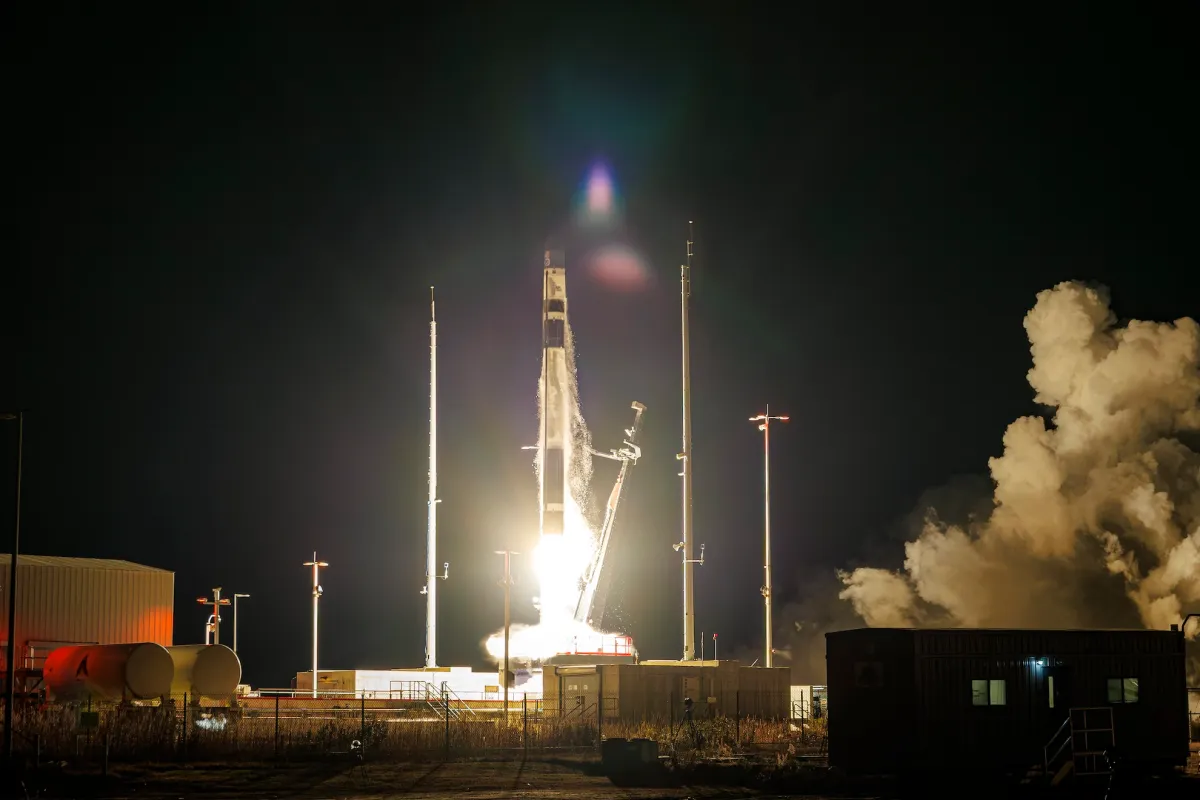
Rocket Lab has won an $816 million contract — its largest to date — with the U.S. Space Development Agency as the company continues to diversify beyond its “rocket company” label.
The company said Friday that its subsidiary, Rocket Lab USA, was awarded a prime contract by the Space Development Agency (SDA) to design and manufacture 18 satellites. The satellites will be equipped with advanced missile warning, tracking, and defense sensors for the agency’s Tracking Layer Tranche 3 program.
This contract is separate from an existing $515 million award to deliver satellites for the SDA’s Transport Layer-Beta Tranche 2 program. That program aims to provide a satellite communications network in low Earth orbit that sends encrypted, low-latency data to the military.
Together, Rocket Lab has SDA contracts valued at more than $1.3 billion.
Rocket Lab has expanded into defense and has more recently said it would bid for multibillion-dollar Department of Defense initiatives like Golden Dome.
The Department of Justice has released a large number of the Epstein files, but Americans have already been blocked from accessing them because of network issues.
The files the DOJ released Friday afternoon were made public following a roughly hour-long delay in the court-mandated deadline to unseal all of the documents connected to the 2019 Jeffrey Epstein sex trafficking investigation.
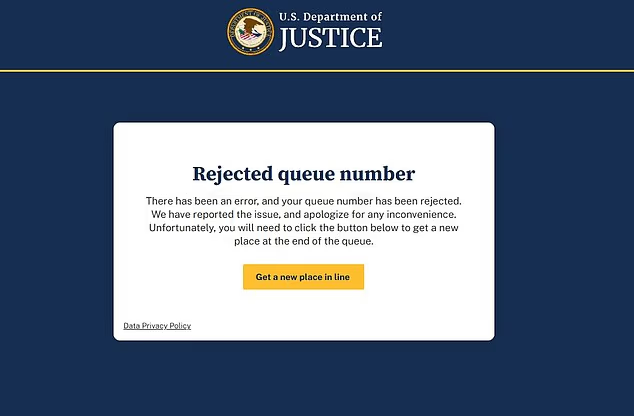
However, countless Americans attempting to download the newly released files from the DOJ’s website were taken to an online queue which immediately rejected their attempt to wait in line.
Any attempt to refresh the page led to a message from DOJ stating: ‘Your queue number is no longer valid.’
The Daily Mail has gained access to the trove of documents connected to the Epstein case is currently reviewing them.
Among a collection of photos released Friday, former President Bill Clinton was pictured spending time with Epstein and convicted sex trafficker Ghislaine Maxwell. Clinton was also pictured frolicking in a hot tub with Maxwell.
Additionally, an image of President Donald Trump’s name was listed in a redacted version of Epstein’s ‘contact book’ released in the latest file dump.

An image of the technical problems encountered when Americans try to access the Epstein files on the Department of Justice website

Images released by the US Department of Justice Friday revealed Jeffrey Epstein meeting with former President Bill Clinton
Dozens of the released photos contained nude images of young women, which were blocked out by federal officials.
Hundreds of images were completely redacted to conceal the identities of the alleged victims.
Many of the images featured Maxwell in various states of undress or in costumes at Epstein’s parties.
She was also seen posing with Clinton and actor Kevin Spacey, who was acquitted of criminal sexual assault charges in the UK in 2023 and in a civil case in the US in 2022. Spacey has denied all allegations of wrongdoing.
Also seen in the thousands of documents were pictures of celebrities Michael Jackson and Mick Jagger posing with Epstein and Clinton.
The newest file dump contained hundreds of records from Epstein’s trips around the world, including stops in Moscow, Copenhagen, and Paris.

The files also contained photos of Epstein with celebrities Mick Jagger (Pictured) and Michael Jackson

Multiple photos seen the Friday release included Jeffrey Epstein (Left) and the late singer Michael Jackson (Right)
Share or comment on this article:
Americans blocked from Epstein files moments after secret documents are released

Anonymous messaging app NGL announced on Friday that it has been acquired by Mode Mobile, a smartphone rewards company that makes money by flooding its users with ads.
NGL quickly climbed the App Store charts after its launch in late 2021, joining a group of similar apps popular among teens that allow users to send and receive anonymous questions and messages. But it’s been embroiled in controversy for most of its existence.
Anonymous messaging apps are problematic because they can encourage bullying among teens — Snapchat banned third-party apps like NGL, LMK, Sendit, and YOLO from its platform in 2022 after a parent sued the company for its alleged role in her teenage son’s suicide.
NGL also came under fire for its shady growth hacking tactics, like sending fake messages to users that seemed like they were from real people but were actually automated by the app. Some users were tricked into paying a $9.99 monthly subscription to get hints about who sent the messages, which were fake.
After a two-year investigation, the FTC announced in 2024 that it would ban NGL from offering its app to minors — one of its most drastic interventions to protect minors from harmful social media experiences.
“NGL’s bait-and-switch tactic prompted many consumers to complain, which NGL executives laughed off, dismissing such users as ‘suckers’,” the FTC said in a statement at the time. NGL paid a $5 million fine to the FTC and complied with its demands.
NGL’s two founders, Raj Vir and João Figueiredo, are moving on from the app, according to Business Insider. The remaining three employees of the app will work for Mode Mobile.
Techcrunch event
San Francisco
|
October 13-15, 2026
Given NGL’s track record of dubious growth hacking, this partnership with Mode Mobile seems like a good match.
Mode Mobile makes a smartphone, which it calls the “EarnPhone,” that has “built-in earning features.” The company claims that users can make money by performing everyday tasks on their phone, like listening to music, playing games, and browsing the web. According to the company’s investor materials, Mode Mobile generates revenue from “digital advertising partners” that “pay for user attention and engagement.” Basically, your phone is constantly flooded with ads, but you might make enough money to buy a round of beers at a dive bar.
The terms of the sale were not disclosed.


Sending money to Africa has become easier over the past decade, but the cost difference between services remains significant. The cheapest option for your specific transfer depends on where you’re sending from, where the money is going, how much you’re moving, and how quickly it needs to arrive.
Understanding how these services make money helps you avoid overpaying. Some charge upfront fees with transparent exchange rates. Others advertise zero fees but mark up the exchange rate. The total amount your recipient receives matters more than how the costs are structured.
This guide breaks down the services by category and explains what to look for when comparing options.
Digital-first remittance platforms
These companies operate primarily online and through mobile apps. They tend to have lower costs than traditional services because they don’t maintain physical locations.
Africhange
Africhange operates across key remittance corridors from Canada, the UK, and Australia into West and East Africa, with a focus on cost efficiency and speed. Part of Africhange’s appeal lies in its regulatory footing. Its Nigerian subsidiary holds an International Money Transfer Operator licence from the Central Bank of Nigeria, which allows the company to process remittances directly rather than through third-party intermediaries. This structure shortens settlement timelines and reduces avoidable costs once funds are received in Nigeria.
Africhange currently supports transfers from Canada to Nigeria, as well as to other markets including Ghana, Kenya, Benin, Togo, and Senegal. The platform also supports multiple currencies on both the sending and receiving sides, which makes it easier to manage cross-border payments without constant conversion headaches.
Read. also: Africhange launches UK bank accounts and Achieves Bank of Canada registration
LemFi
LemFi has emerged as one of the fastest‑growing platforms for remittances to Africa. It combines low cost with a smooth app experience that works well for people sending money from North America, the UK, and Europe. Users open an account, verify their identity, and then send money directly to bank accounts or mobile wallets in countries like Nigeria, Ghana, Kenya, Cameroon, Senegal, and others. Most corridors carry zero transfer fees, and many transfers arrive within minutes.
You can hold balances in US dollars, British pounds, Canadian dollars, and other major currencies, then convert and send at competitive exchange rates. The platform is regulated in the UK and Canada and holds licences to operate remittances into key African markets. Funds typically reach a recipient’s bank or mobile wallet in minutes.
A loyalty or rewards component may appear, providing additional value for frequent senders.
Remitly
Remitly is one of the long‑standing players in cross‑border money transfers. It operates through a simple app and web interface that walks you through sending money step by step. When you use Remitly, you choose between two ways to send.
One option keeps fees low but takes a little longer. The other delivers faster if timing matters more than cost. You can fund transfers with a bank debit or credit card, and your recipient can get money straight into a bank account or popular mobile money wallets used in many African countries.
WorldRemit
WorldRemit is similar to Remitly but supports a wider range of payout methods in many countries across Africa. In addition to bank deposits and mobile money, WorldRemit sometimes offers cash pick‑up options at local partners if the recipient prefers that.
The interface is straightforward. You enter the amount, pick where you are sending it, choose how the recipient will collect the cash, and the app shows fees and delivery times before you confirm.
WorldRemit tends to settle transfers within a few hours for most corridors, though it can vary by country and bank processing times.
Wise
Wise focuses on transparency and cost efficiency. Unlike many banks or money transfer services, it uses the real mid‑market exchange rate and charges a single, upfront fee. This means the recipient gets the exact amount shown before you confirm the transfer, without hidden markups.
Wise is particularly suitable if keeping costs low is your priority, and you can wait for the transfer to process. Delivery times vary depending on the destination bank, but most transfers arrive within a few hours to a couple of days. The platform supports multiple currencies and countries, making it convenient for repeat transfers with predictable pricing.
Traditional networks
These established services have extensive physical networks across Africa. They’re useful when recipients need cash pickup or live in areas without reliable banking infrastructure.
Western Union
Western Union has one of the largest agent networks in Africa, making it a reliable option for recipients who may not have access to a bank or mobile money account. The service supports cash pickup, bank transfers, and mobile money in many countries.
Cash pickup is fast, often available within minutes, but it is more expensive than other payout methods. Bank transfers and mobile money can be cheaper, though delivery times may vary depending on the destination and local partners. Fees are generally higher than those of digital-first platforms, and exchange rates include a markup.
You can send money through the Western Union website, mobile app, or at a physical agent location. Online bank transfers are typically less costly than cash pickup, making them the better option when speed is not the top priority.
MoneyGram
MoneyGram operates across Africa with a large agent network, covering many urban and semi‑urban areas. The service allows recipients to collect cash quickly, often within minutes or a few hours, though timing can vary depending on the location.
Transfers can be sent online, via the MoneyGram app, or at agent locations, including major retailers. In addition to cash pickup, the platform supports bank transfers and mobile money in many countries. Fees for cash pickup are sometimes slightly lower than Western Union, but the cost depends on the sending corridor and payment method.
MoneyGram provides a reliable alternative for recipients without bank accounts or mobile wallets, while also offering multiple ways to receive funds for those who prefer digital options.
Mobile Money and regional platforms
Mobile money has transformed how people send and receive money in Africa. In several countries, more adults now have mobile money accounts than traditional bank accounts. This widespread adoption has made it easier to move money quickly, securely, and without relying on banks.
Mobile Money overview
Mobile money lets people receive, store, and spend money using just a mobile phone, without needing a bank account. Major providers include M‑Pesa in Kenya and Tanzania, MTN Mobile Money across several countries, Orange Money in West Africa, and Airtel Money in multiple markets.
Most international transfer services now support sending money directly to mobile money accounts. This method is often faster and cheaper than using bank transfers or cash pickup, making it a popular choice for both senders and recipients in some countries.
Wave
Wave is a mobile money platform that operates in Senegal, Côte d’Ivoire, Burkina Faso, Mali, and Benin. Transfers from the US to Wave accounts typically carry no transfer fees. The exchange rate is the main cost for the sender.
Recipients need a Wave account to receive funds, and creating one is straightforward. Wave functions as both a transfer service and a mobile money wallet, allowing users to send, receive, and spend money through the app.
Coverage is currently limited to the West African countries where Wave operates, but within those markets, the platform is fast, simple, and easy to use.
Sending money to Africa is more efficient now than it was years ago. Digital platforms are driving down costs and forcing greater clarity in pricing. Whether you prioritise cost, speed, or convenience, some options fit your needs. Check fees and exchange rates before you hit send, and choose the right tool for your corridor and frequency.

Joe Rogan invoked three words that still haunt Americans more than two decades later while discussing how the country might react to an alien threat.
Speaking on his podcast, Rogan said such a world-changing event could evoke reactions similar to those seen ‘after September 11th.’
‘It was a horrible tragedy, but there was a beautiful result temporarily, where everybody was really united,’ he said on Thursday.
‘There were American flags on everybody’s cars in Los Angeles. In New York, everyone was friendly.’
Rogan added that Americans had all decided that we were together and that we were faced with a real threat and that we had to be united, suggesting a similar reaction would unfold in the event of visitors from another world.
Along with the widespread displays of American flags, there were spontaneous memorial vigils, national unity under the ‘United We Stand’ theme, lawmakers singing ‘God Bless America,’ and a surge in support for military and first responders.
The discussion was sparked when Rogan referenced a famous moment from history, recalling Ronald Reagan’s speech at the United Nations.
‘Imagine how united we would be if faced with an alien threat from another world,’ he said. ‘We’d forget our differences and realize that, at the core, we’re all connected.’

Joe Rogan released a new podcast on Thursday, where he shared his feelings about how Americans could react to an alien threat

Rogan said such a world-changing event could evoke reactions similar to those seen ‘after September 11th’
Rogan’s guest, Michael P. Masters, a professor of biological anthropology at Montana Tech, agreed, expanding on the idea by suggesting humanity may be linked by a deeper, shared consciousness, an idea he said some researchers associate with the UFO phenomenon.
‘If we recognize that we are just fingerprints on the same hand, then we’re all iterations of the same overarching consciousness,’ Masters said.
‘And there may be aspects of that reflected in the UFO phenomenon.’
Rogan has a long-standing obsession with the topic of extraterrestrial life and UFOs, and in his stand-up comedy.
He often expresses the view that aliens ‘are out there’ and that the government might be covering up the truth.
The podcaster also believes that, given the ‘hundreds of billions of galaxies’ and stars in the universe, it is mathematically certain that ‘for sure there’s something else out here.’
While often focusing on the physical evidence, he has also explored alternative theories with guests, such as the idea that aliens might be interdimensional beings or human time travelers from the future, which aligns with Masters’ theories.
Masters, who holds a PhD in anthropology from The Ohio State University, has gained attention beyond academia for his unconventional theories about UFOs.

‘Imagine how united we would be if faced with an alien threat from another world,’ he said. ‘We’d forget our differences and realize that, at the core, we’re all connected.’

Rogan’s guest, Michael P. Masters, a professor of biological anthropology at Montana Tech, agreed, expanding on the idea by suggesting humanity may be linked by a deeper, shared consciousness, an idea he said some researchers associate with the UFO phenomenon
In his books, including Identified Flying Objects and The Extratempestrial Model, he argues that some UFO encounters may not involve extraterrestrials at all.
Instead, Masters has proposed that the beings described in many sightings could be future human descendants traveling back through time, a hypothesis he has publicly discussed for years.
‘The phenomenon may be our own distant descendants coming back through time to study us in their own evolutionary past,’ he said in a 2019 interview.
While Rogan expressed confidence that something unexplained is occurring, Masters emphasized caution, noting that many claims surrounding UFOs and alien encounters require further study as stigma around the topic continues to fade.
Masters also argued the ‘gray’ alien archetype, large heads, big eyes, thin bodies, mirrors projected human evolution amid declining robustness, fertility issues and genetic engineering.
He linked abductions involving reproductive material extraction to future humans addressing fertility crises, citing cases like Jim Penniston’s Rendlesham Forest message, claiming the need for genetic material.
Rogan and Masters touched on government reverse-engineering, whistleblowers like Bob Lazar, transmedium craft, and Peruvian tridactyl mummies resembling grays, with Masters cautious pending further study.
Rogan expressed conviction in the phenomenon, while Masters shared a personal sighting and childhood ‘tasking’ inspiring his research.
The episode framed UFOs as potentially intratemporal, urging discernment of encounter reports amid diminishing stigma.

Renowned AI scientist Yann LeCun confirmed on Thursday that he had launched a new startup — the worst-kept secret in the tech world — though he said he will not be running the new company as its CEO.
His startup is called Advanced Machine Intelligence (or AMI) and has hired Alex LeBrun, co-founder and CEO of medical transcription AI startup darling Nabla, as its CEO. Nabla disclosed LeBrun’s new job in a press release and LeCun confirmed it in a brief post on LinkedIn.
“Yes, AMI Labs is my new startup. I’m the Executive Chairman. And Alex LeBrun is transitioning from CEO of Nabla to CEO of AMI Labs!” LeCun wrote.
AMI Labs is also reportedly seeking to raise €500 million (about $586 million) at a €3 billion valuation (about $3.5 billion) right out of the gate, before even launching, the Financial Times reported, citing people familiar with the dealmaking. Given the kind of money that VCs are throwing at AI startups founded by world-recognized AI scientists these days, that’s not even an comparatively outrageous ask.
For instance, former OpenAI CTO Mira Murati’s startup, Thinking Machines Lab, was valued at $12 billion for its seed round last year. And Murati doesn’t have the same kind of street cred as LeCun.
LeCun, a professor at New York University who was formerly VP and Chief AI Scientist Meta, won the prestigious A.M. Turing Award, for his work on reinforcement learning.
The press release also confirms what everyone knew as well: that AMI Labs is working on world model AI. This is an alternative to LLMs where the AI attempts to understand its environment (aka the world) so it can simulate cause-and-effect and what-if scenarios to predict outcomes. World model creators believe it’s the answer to LLMs’ structural hallucination problems. LLMs can’t be trusted never to fabricate info because it is their very nature to be “non-deterministic,” aka creative.
Techcrunch event
San Francisco
|
October 13-15, 2026
Top labs and startups like Google DeepMind and Fei-Fei Li’s startup, World Labs, are also developing world models. By that comparison, the fundraising aspirations of AMI might appear a bit more audacious. When World Labs debuted, Li raised $230 million at a $1 billion valuation right out of the gate, which was considered a lot at the time. But that was way back in August 2024, or about 100 AI years ago.
Meanwhile, Nabla says the company will be searching for a new CEO and will be, for now, run by its co-founder and COO, Delphine Groll, who has not been handed the permanent reins yet. Nabla also says it has signed a partnership to use AMI’s models as they are developed.
Nabla has raised $120 million in total from an all-star list of backers, including a $70 million Series C in June. LeCun is one of Nabla’s investors, as is Tony Fadell’s Build Collective, HV Capital, Highland Europe, and Cathay Innovation.
Nabla’s LeBrun could be a good choice for CEO. He’s been building multi-modal AI since before anyone called it that, working at Nuance Communications in the early 2010s, which originally powered Apple’s Siri in those long-ago years when Siri was wow technology. (Microsoft eventually acquired Nuance.) He founded and sold a couple of natural language startups, including one to Facebook. Then he ran Facebook’s AI division before founding Nabla in 2018, according to his LinkedIn.
LeBrun said that Nabla, a darling of the Paris-based AI startup community, is still growing well.
“We have more than tripled our live ARR this year. Up next to $1B!” LeBrun wrote as he announced his departure as CEO. The founder says he will remain on at Nabla as chairman and Chief AI Scientist. Nabla declined further comment and AMI did not immediately respond to our request for comment.