
NIGERIA NEWS
Bayelsa: Varsity graduate shot dead in suspected cult clash


By Samuel Oyadongha & Emem Idio
A graduate of the Federal University, Otuoke, Bayelsa State, has been shot dead in a suspected cult clash.
It was gathered that the clash, which resulted in his killing on Friday, was between members of the Neo Black Movement, otherwise known as Black Axe, and Vikings, DNKI.
The deceased graduate identified as Mark was reportedly shot in the stomach and attempts by friends and sympathisers to rush him to the hospital for medical care failed.
A source within the institution claimed the deceased was not the main target but the attackers made up of Black Axe hit men shot him because they could not locate their target.
He said: “These armed boys did not see their target and later saw Maro and shot him.”
He further said the deceased would have survived, but while his friends were rushing him to the hospital, their vehicle hit a speed bump causing an accident.
Few other friends described the deceased as a very calm and friendly person who avoided trouble and was always smiling.
The source added: “He focused more on making money and was not actively involved in cult activities. Other friends said they never even knew he was a cultist because he often advised them against cultism. Vikings members had advised him to leave the area, but he stayed because of his girlfriend.”
Contacted by Sunday Vanguard, Police Public Relations Officer, Musa Mohammed, confirmed the incident and said the police are conducting a discreet and thorough investigation into the incident.
The post Bayelsa: Varsity graduate shot dead in suspected cult clash appeared first on Vanguard News.








The Apex Igbo Sociocultural Organization, Ohanaeze Ndigbo, finds it imperative to communicate an undeniable and poignant truth to the Southeast Governors. As we approach this festive season, we face an unrelenting economic downturn that has resulted in unprecedented hikes in transportation fares. This unfortunate circumstance has rendered numerous intending Igbos in Lagos, Abuja, Kano, Kaduna, and other regions in Northern Nigeria unable to return home to the Southeast to reunite with their families.
Even those Igbos capable of affording the exorbitant travel fees are filled with trepidation, driven by the pervasive concerns surrounding unresolved security issues throughout the nation, particularly in the Southeast. It is, therefore, the responsibility – indeed, the moral obligation – of the Southeast Governors to respond with urgency and empathy to these pressing challenges confronting our people.
Ohanaeze Ndigbo implores the Southeast Governors to take immediate action by facilitating the return of our people stranded in various parts of the country. We call for the provision of at least 250 free buses (50 buses from each Southeast state) to transport our citizens back to their homes this festive season. Such an initiative would serve as a gesture of goodwill and solidarity, reinforcing the bond of our Igbo heritage and culture during this joyous yet challenging period.
Furthermore, we extend our commendation to the Federal Government for its commendable efforts in mitigating insecurity in specific communities within Igboland. The collaborative actions of the Nigerian military and allied security agencies have significantly restored normalcy, allowing many Igbos to reclaim their territory after a prolonged absence due to security threats. It is with this newfound safety that we can once again gather with our loved ones to celebrate the Yuletide season.
However, we stress that security must remain a paramount focus. Ohanaeze Ndigbo urges the Southeast Governors, in their roles as Chief Security Officers of their respective states, to enhance security measures, particularly around border communities in Enugu, Anambra, Ebonyi, and Imo States. This is a crucial step toward safeguarding lives and preventing any potential terrorist incursions, especially from fleeing Northern bandits.
Let it be known that any Governor failing to take appropriate measures—be it the provision of free transportation or the fortification of security—will face the ire of the Ndigbo people. In contrast, those who heed this call for action shall be recognized and celebrated for their dedication to the welfare of Ndigbo.
Finally, Ohanaeze Ndigbo enthusiastically acknowledges President Bola Ahmed Tinubu’s establishment of a military training depot in Abakaliki, Ebonyi State – a significant development that represents a departure from practices historically restricted to the Northern regions since Nigeria’s independence in 1960. This military installment is pivotal in reshaping the mindset of Igbo youths, encouraging their participation in military recruitment initiatives, and ultimately contributing to enhanced security in the Southeast.
We stand firm in our commitment to advocating for the interests of the Igbo people and advancing their welfare. As the festive season approaches, let us endeavor to work together for the greater good of our region .
E-Signed
Mazi Okechukwu Isiguzoro
Deputy President General
Ohanaeze Ndigbo Worldwide
Chief Chinenyeze Ohia
National Spokesman
Ohanaeze Ndigbo Worldwide
Related


The Lagos State Police Command has arrested a 26-year-old housewife named Misturah Bada, and a 30-year-old man, Adedamola Daniel for allegedly staging the lady’s kidnap to extort N2.5 million from her husband who is based in South Africa.
The arrest followed investigations into a kidnapping report received by the Command on November 24, 2025.
Police spokesperson, SP Abimbola Adebisi, said the woman’s husband contacted the police through an emergency line, claiming that his wife had been abducted by armed men who initially demanded a ransom of N10 million but later reduced it to N3 million.
According to the police, despite paying N2.5 million, the supposed kidnappers refused to release the woman, prompting intensified investigations by the Command.
Adebisi explained that the police deployed both technical and human resources, after which Mrs. Bada was later released and reunited with her family. During questioning, she claimed she was abducted by six armed men in a silver Toyota Venza, taken to an unknown location and relieved of her iPhone 12 Pro Max.
She further told investigators that the ransom paid by her husband was first transferred into her bank account before being handed over to the kidnappers.
However, police said inconsistencies in her account raised suspicion. On December 3, 2025, operatives arrested Adedamola Daniel in Ede, Osun State. A SIM card linked to the WhatsApp account used for ransom negotiations was recovered from him.
Investigators said Daniel confessed that Mrs. Bada asked him to provide a SIM card to open the WhatsApp account used to communicate with the husband and that he shared the one-time password sent to his line, allowing her to control the account.
“After being confronted with the findings, Mrs. Bada admitted that she faked her own kidnapping in order to extort money from her husband,” the police said.
Further investigations led to the recovery of the iPhone 12 Pro Max earlier reported as stolen. The phone was recovered from one Yusuf Sodiq, 34, who told police that he bought it from Mrs. Bada for N380,000 and was warned not to insert any SIM card into it.
Commenting on the incident, the Commissioner of Police, Lagos State, CP Olohundare Jimoh, cautioned members of the public against false reports and criminal deception, noting that such acts divert security resources from genuine emergencies.
The police said investigations are ongoing and that the suspects will be charged to court once it is concluded.

A prominent digital and human rights activist, Muhammed Bello Buhari has criticised the Nigerian government’s newly announced ban on the admission and transfer of students into Senior Secondary School Three (SS3), warning that the policy overlooks the realities of insecurity and displacement in Northern Nigeria.
The Federal Government recently announced a nationwide ban on the admission and transfer of students into SS3 in both public and private secondary schools across the country.
The directive was issued by the Federal Ministry of Education in a press release dated December 14, 2025, and signed by the Director of Press and Public Relations, Boriowo Folasade.
According to the ministry, the decision followed “growing concerns over the increasing incidence of examination malpractice, including the use of so called special centres during external examinations.” It stated that the policy would take effect from the 2026/2027 academic session, adding that “admission or transfer into SS3 will no longer be permitted under any circumstance.”
Reacting to the announcement, Buhari expressed concern in a post shared on his Facebook page on Sunday, arguing that the policy would unfairly affect children whose education has been disrupted by banditry, terrorism and forced migration in the North.
He said many families in the region relocate not to seek academic advantage, but to escape violent attacks that have destroyed communities and schools, an issue he said was ignored in the policy design.
“In the North, most of the people are not moving because they are chasing special centres,” Buhari wrote. “They are moving because their villages have been attacked. Because bandits came at night. Because terrorists burnt schools.”
He explained that displacement has become a normal part of life in several states, including Zamfara, Katsina, Kaduna, Niger, Borno, Yobe, Plateau and Benue, forcing parents to move with their children, often in the middle of an academic session.
Buhari questioned how the policy would affect students who have completed SS2 but are forced to enroll in new schools due to insecurity, as well as those already in SS3 whose families are compelled to relocate.
“Now imagine an SS2 student in an IDP camp who finally gets a chance to enroll in a new school,” he said. “According to this policy, if that child advances to SS3 in a different school, it becomes illegal.”
He argued that the ban would not address examination malpractice, noting that cheating is driven by systemic issues such as weak supervision, poor teaching conditions and pressure to pass examinations, rather than student transfers.
“Stopping SS3 transfers will not stop cheating,” Buhari stated. “It will only stop vulnerable students from continuing their education.”
The activist also warned that the policy could worsen the already high number of out-of-school children in Northern Nigeria, where access to education is challenged by poverty, insecurity and displacement.
He called on the Federal Government to review the directive and introduce exemptions for displaced students and conflict-affected communities, stressing that education policies must reflect the realities of Nigerians.
“If this policy goes ahead without exemptions,” Buhari said, “it will only deepen exclusion and inequality and once again, the North willpay the highest price.”


Beneficiaries of an agricultural intervention programme in Kano State say the project led to many positives, including increased yields and higher profits for farmers and agripreneurs.
They spoke to PREMIUM TIMES on Saturday during a ceremony marking the closure of the first phase of the Kano State Agro-Pastoral Development Project (KSADP).
The five-year project, implemented by the Sasakawa Africa Association (SAA), was designed as a multifaceted initiative to enhance food security, alleviate poverty, create employment opportunities, and mitigate conflict.
Funded with $95 million by the Islamic Development Bank (IsDB) and the Lives and Livelihoods Fund (LLF), the project spans several sectors, including livestock, irrigation, infrastructure, and crop productivity—the latter of which was implemented by the SAA.
Akibu Safiyanu
Akibu Safiyanu, who lives with a disability, described his journey from struggling to find capital after his diploma to becoming a local agricultural expert in the Dawakin Kudu Local Government Area.
“In the beginning, I struggled to buy even one or two pieces of agrochemicals. I didn’t have a shop; I used to take cover at nearby shops whenever it rained, but when I enrolled in the KSADP intervention, everything changed.” Mr Safiyanu said.
Through the programme, Mr Safiyanu received technical training, a dedicated kiosk, and an initial stock of agrochemicals.
“With the proceeds from the business, I was able to complete my Higher National Diploma (HND) in Animal Husbandry. I am now an expert in the field, and dozens of local farmers rely on my services,” he said. “If not for this intervention, I might have been forced into begging due to my condition.”
Laraba Muhammad, a farmer from the Kura Local Government Area, said the programme rescued her from financial loss.
“We were trained in modern, climate-smart agricultural practices and have now become master trainers ourselves,” she told PREMIUM TIMES.
Mrs Muhammad now produces nutrient-dense meals for children and was empowered with a tricycle for her business.
Empowering women and youth
The Project Coordinator, Abdulrasheed Hamisu, highlighted the project’s heavy investment in crop yields and the empowerment of vulnerable groups.
According to Mr Hamisu, the project provided 370 agro-input stockists and 168 milling machines distributed across the 44 Local Government Areas.
“Others are 397 rice parboiling kits and nine rice parboiling enterprise centres for women, 75 tomato processing enterprises, 107 groundnut oil extractors, and 91 onion storage facilities to reduce spoilage, among others,” Mr Hamisu said.
The Country Director of the Sasakawa Africa Association, Godwin Atser, noted that the project was launched in 2020 to address critical challenges like low productivity and weak extension systems.
The results, he stated, have been transformative. Yields increased, and major crops saw productivity rise between 150 per cent and 226 per cent.
Mr Atser said post-harvest losses reduced significantly by 51 per cent, and farmers’ incomes improved to an average of ₦972,462 per hectare.
He said over 477,284 farmers were reached with best practices, and 100,000 women and youth were integrated into agribusiness.
As the SAA concluded its implementation of the first phase, Mr Atser urged the Kano State Government to sustain the project.
He mentioned the lessons learnt from the project, which included the importance of market orientation, the value of bundled interventions, the centrality of strong public institutions, and the need for flexibility and adaptive management.
The project
PREMIUM TIMES earlier reported how the project contributed to bumper harvests for many farmers in Kano State, with experts saying it is an example of how collaboration between the government and the private sector can improve the lives of farmers and contribute to food sustainability in Nigeria’s most populous state.
“The size of the farm is 0.5 (half a hectare), which I used to harvest 20 to 25 bags of paddy rice. After the training and mentorship, I harvested 38 bags of paddy in the same farm,” Mrs Muhammad told PREMIUM TIMES last year.
Another beneficiary, Aminu Bakanike, said he got 62 bags of maize seedlings from a hectare of land after getting all the required seedlings, fertiliser, pesticide, and other inputs for free.
“Previously, I harvested a maximum of 27 bags,” the farmer said last year.
With the first phase of the project now complete and Saskawa exiting as a partner, the state government moved to allay the concerns of farmers in the state.
Bashir Sanusi, permanent secretary at the Kano State Ministry of Agriculture, assured stakeholders that the state has developed a comprehensive plan to sustain and scale the systems and partnerships established under the KSADP.
The overall objective of the KSADP is to contribute to reducing poverty and strengthening food and nutrition security in the state by developing agro-pastoral production systems.
READ ALSO: Group urges Nigeria to scale up infection prevention, control at PHCs
The Sasakawa Africa Association (SAA), which has been operating in Nigeria for 36 years, partnered with the Kano State government in 2020 to implement the crop value chain of the project, worth about $19.3 million.
The primary mandate of SAA was to support 450,000 direct beneficiaries across the 44 local government areas of Kano State. The farmers supported were those growing cereals, such as rice, maize, millet, and sorghum, as well as vegetables like tomatoes, onions, and cabbage.
NIGERIA NEWS
Ex-corper who saved N77K allawee for one year starts foodstuffs business, shows off store in video



A former National Youth Service Corps (NYSC) member has inspired many on social media after revealing how she saved her monthly allowance for 12 months and used it to start a foodstuff business.
The young entrepreneur, identified on TikTok as @new_era_foods, disclosed that she saved a total of ₦77,000 during her service year and invested the money into renting and stocking a small shop.
 Ex-corper
Lady shows off her shop
In a video shared online, she proudly showcased her newly opened store, neatly arranged with various food items and provisions.
The clip also captured her business flier, as she encouraged viewers to “do their calculations,” noting how consistent saving helped her take her first step into entrepreneurship.
“After saving 77k for 12 months. Do your calculations,” she captioned.
Many social media users expressed admiration for her discipline, creativity, and determination, praising her for turning a modest amount into a sustainable business venture.
However some netizens have reacted to her post, sharing their mixed opinions.
Check out reactions…
@brokensoul_39 said: “You no dey chop??”
Explore with Prestige said: “Which one be say she dy lie. i saved mine too.uf he reach your turn use am buy clothes full ground.”
@VĘŘÏFÝ ČHÎŽŽY said: “Nah only u get sense for this app but how come u survive tell me I want start next year.”
@Myra> said: “Are u saying the 900 thousand did dis ??? Pls it’s a question.”
Watch video below …
@new_era_foods
#c2#nysc #corper #pop #fyp @Rike_thrift_store
♬ original sound – Foodstuff vendor in Lagos

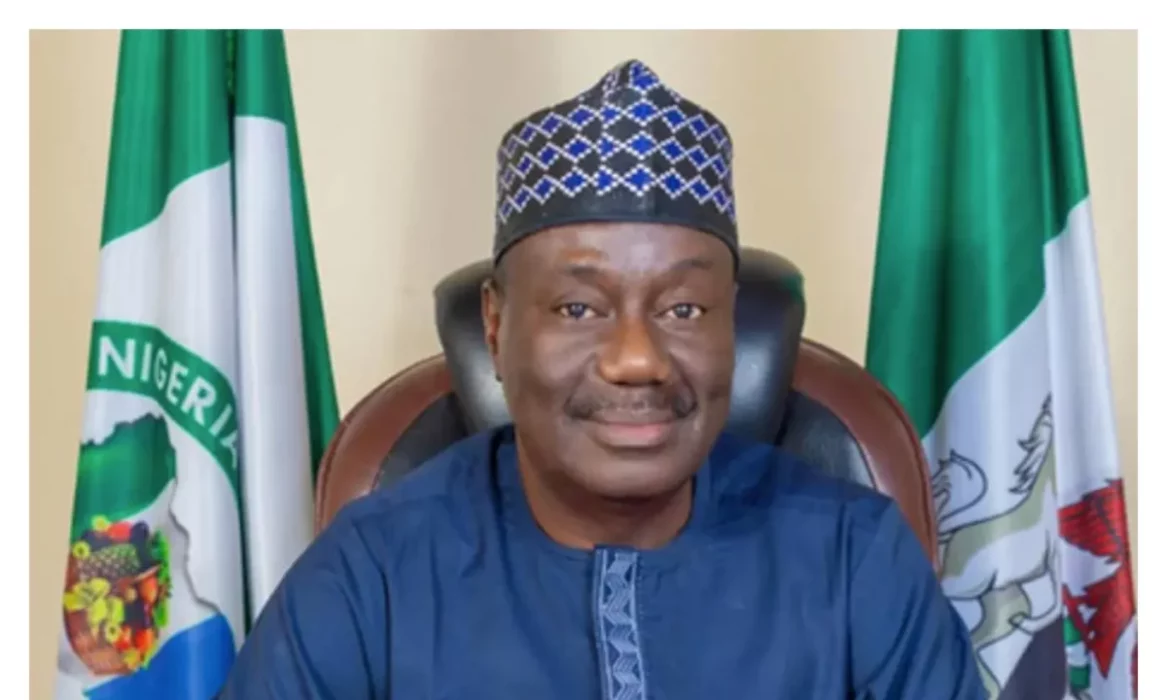
The New Nigeria People’s Party (NNPP) yesterday re-elected Dr Ahmed Ajuji as its national chairman.
Ajuji was re-elected unopposed through voice votes at the party’s National Convention held in Abuja.
The convention, which was monitored by the Independent National Electoral Commission (INEC), also witnessed the return of Dipo Olayoku as national secretary, alongside other national officials, all of whom were elected unopposed.
The elections were subsequently affirmed by delegates present at the convention.
In his acceptance speech, Ajuji pledged that the newly elected leadership under his guidance would work diligently to achieve the objectives of the NNPP, with particular emphasis on securing victory in the 2027 general elections.
He stated that he accepted, on behalf of the leadership, the responsibility entrusted to them to manage the affairs of the party over the next four years.
He further urged members of the newly elected national officials to regard their re-election as a call to service, stressing the importance of abiding by the oath of office that had just been administered to them.
Earlier, in his welcome remarks, Ajuji encouraged NNPP members to keep hope alive and remain committed to the pursuit of a strong, virile, united, progressive, equitable, prosperous and decent democratic nation.
He said the NNPP’s flag must fly higher across all parts of Nigeria to reassure citizens that a new, better, greater and more prosperous Nigeria was achievable.
“This is what citizens need and will have in the upcoming general election.
“NNPP has been repositioned, restructured and strengthened as a major stakeholder in the nation’s democratic process.
“All eyes are on our great party to point the way forward for sustainable democracy and development in Nigeria.
“Our country deserves a fresh start and citizens deserve a fresh new deal which only NNPP is capable to offer,” he said.
The national leader of the NNPP and former governor of Kano State, Sen. Rabiu Kwankwaso, congratulated the newly elected national executive members of the party.
Kwankwaso urged the new leaders and members to continue to be disciplined and loyal to NNPP.
He noted that the performance of NNPP led government in Kano State was a demonstration of what Nigerians should expect in 2027, when the party was elected into power.
Gov. Abba Yusuf of Kano state, described the national convention as a defining moment and a reflection of the future of NNPP.
Congratulating the newly elected leaders of the party, Yusuf urged them to promote unity, fairness and inclusivity where no one would be left behind.
“Let this convention mark a new beginning for the party at all levels where no one will be left behind,” Yusuf said.
Chairman of the National Convention Planning Committee, Bala Mohammed, said over the past four years, the NNPP had recorded remarkable achievements and had continued to make its mark in the Nigerian political landscape.
This, according to him, reflects a clear reflection of a collective commitment, resilience, and belief in the ideals of the NNPP.
He said that the convention was to ratify the decisions of the National Executive Committee and election of new national officials of NNPP.
“This convention also serves as an opportunity to strengthen the unity and brotherhood that bind us together as members of one political family,” Mohammed said.
He commended the party member’s loyalty to NNPP, saying their courage, resilience, and commitment to the ideals of the NNPP remained our greatest strength.
The party’s national adviser, Magaji Ibrahim, advised members not to be deceived by the rumour of division within NNPP, saying the party remained united under Kwankwaso’s leadership.
“I can assure you, that nothing will divide the party and it stands united, solidified, going forward to 2027. No controversy about that,” Ibrahim said.
Highlight of the convention was the ratification of the suspension of Article 37(1) of the NNPP Constitution 2024 as amended.

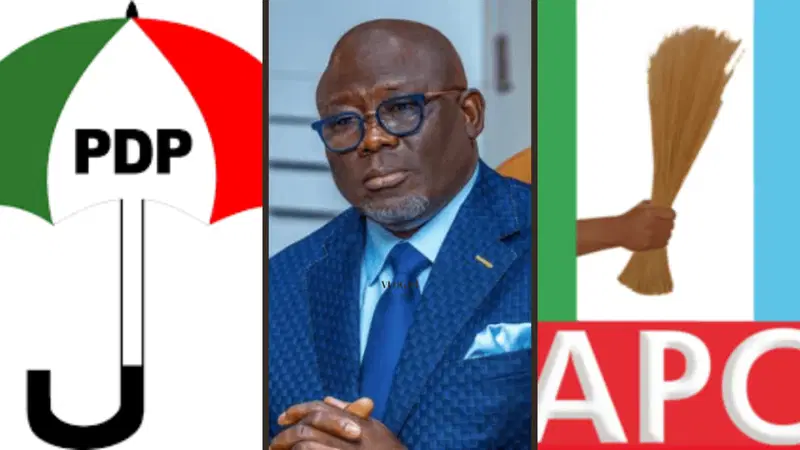
The Peoples Democratic Party (PDP) has been dragged into a fresh legal battle following the defection of Delta State Governor, Sheriff Oborevwori, to the All Progressives Congress (APC).
A member of the PDP in Delta State has asked the Federal High Court in Abuja to declare the governor’s defection unconstitutional while he remains in office.
The suit was filed by Alex Akporute, a PDP member from Ward 3/7 in Ughelli North Local Government Area of Delta State.
He approached the court through an originating summons, challenging the legality of Oborevwori’s move from the PDP to the APC.
In the suit, Governor Oborevwori is listed as the 1st defendant.
Other defendants include the PDP, the APC, the Independent National Electoral Commission (INEC), and the Attorney-General of Delta State.
The case, marked Suit No: FHC/ABJ/CS/2601/2025, was filed on December 3, 2025.
Court documents show that all parties were served with hearing notices on December 17, 2025.
The matter has now been assigned to Justice Omotosho of the Federal High Court, Abuja Division.
The plaintiff is asking the court to determine four major constitutional issues.
Central to the case is whether a sitting governor can defect to another political party and still retain the electoral mandate won on the platform of his former party.
Akporute argues that while the Constitution guarantees freedom of association, that right does not extend to transferring an electoral mandate from one political party to another.
He insists that the mandate belongs to the PDP, under which Oborevwori contested and won the governorship election.
The plaintiff also questions whether the governor’s defection undermines the will of the electorate who voted for the PDP in Delta State.
According to him, allowing such a defection without consequences weakens democratic principles and the supremacy of the people’s votes.
In his claims, Akporute maintains that Oborevwori’s continued stay in office while aligning with the APC breaches several provisions of the 1999 Constitution and the Electoral Act 2022.
He insists that the governor cannot lawfully promote or implement APC policies, having not been elected on that platform.
Among the reliefs sought is a declaration that the governor’s constitutional rights cannot be exercised in a way that conflicts with the electoral mandate given to the PDP by voters in Delta State.
The plaintiff also wants the court to declare that any executive action taken by Oborevwori on the platform of the APC is unconstitutional and legally invalid.
The suit further seeks an order restraining the APC from presenting itself as the ruling party in Delta State while Oborevwori remains in office as governor.
Akporute is also asking the court to nullify Oborevwori’s membership of the APC, on the grounds that his defection violates both the Constitution and the Electoral Act.
In a key argument, the plaintiff contends that Section 40 of the Constitution, which guarantees freedom of association, can only apply to Oborevwori after he resigns as governor or after his tenure ends on May 29, 2027.
However, the case is different from previous suits against defecting governors.
Unlike earlier cases where plaintiffs asked the court to compel governors to vacate office, this suit focuses on restricting the political and executive consequences of defection while in office.
The legal action comes at a time when Governor Oborevwori has been openly participating in APC activities, including attendance at high-level party meetings.

The United States has approved a $2.1 billion health funding package for Nigeria, placing strong emphasis on Christian faith-based healthcare providers across the country.
The funding follows the signing of a five-year bilateral agreement between Washington and Abuja aimed at strengthening Nigeria’s health system and expanding access to essential medical services, especially in communities served by Christian institutions.
Under the agreement, the U.S. Department of State, working with Congress, will commit nearly $2.1 billion to support preventive and curative healthcare services.
The focus areas include HIV, tuberculosis, malaria, polio, as well as maternal and child health.
As part of the deal, the Nigerian government has also pledged to significantly raise its own spending on health. Nigeria is expected to increase domestic health funding by close to $3 billion over the five-year period covered by the agreement.
The Memorandum of Understanding (MOU) has been described as the largest co-investment made by any country so far under the America First Global Health Strategy. State Department spokesperson, Thomas Pigott, confirmed that the agreement reflects a deeper health partnership between both countries.
According to U.S. officials, the MOU was negotiated within the context of Nigeria’s ongoing reforms aimed at protecting Christian populations from violence. The agreement includes dedicated funding targeted at strengthening Christian-owned hospitals, clinics, and healthcare programmes.
The investment is designed to complement the work of about 900 faith-based clinics and hospitals operating in Nigeria. These facilities currently provide medical services to millions of Nigerians, particularly in underserved and rural communities.
The U.S. government noted that the funding would also help improve Nigeria’s overall health infrastructure, while encouraging long-term self-reliance and accountability in the health sector.
However, U.S. authorities made it clear that continued funding would depend on alignment with American national interests.
Officials stated that the President and the Secretary of State retain the authority to pause or terminate programmes that fail to meet agreed conditions.
Pigott added that the U.S. expects Nigeria to continue taking concrete steps to combat extremist religious violence, especially attacks targeting vulnerable Christian communities.
The agreement was signed despite Nigeria’s continued designation by the U.S. as a Country of Particular Concern.
Nigeria was also recently included on a U.S. travel restriction list, a move President Donald Trump linked to terrorism concerns and visa overstay rates.
The America First Global Health Strategy, released in September 2025, applies to several countries worldwide. The policy prioritises self-reliance, data protection, and targeted funding for diseases such as HIV, TB, malaria, and maternal and child health.
NIGERIA NEWS
Banana Island land prices jump over 540% to N3.05 million per sqm in five years – Report


Land prices in Banana Island surged by more than 540% between 2020 and 2025, reaching approximately N3.05 million per square metre in 2025.
This is according to the Lagos Residential Market Report 2025 by Edala Development, a real estate company.
The report highlights the strong demand for one of Lagos’ most exclusive residential locations over the five-year period.
The sharp increase reflects limited land availability and the continued demand for prime real estate in the area.
What the report is saying
According to the report, land prices in Banana Island experienced the most dramatic growth among the locations reviewed, rising from an average of N470,000 per square metre in 2020 to about N3.05 million per square metre in 2025.
The report highlighted the strong performance of the area’s luxury residential market, where ultra-luxury mansions and detached houses, many priced in US dollars, continued to attract high demand.
“Land prices in Banana Island remain among the most valuable real estate assets in Nigeria. The price per square meter increased by over 540%, rising from an average of N470,000 in 2020 to an impressive N3.05 million by 2025,” the report read in part.
The Banana Island rental market recorded significant growth over the five-year period. A three-bedroom home that rented for N11 million in 2020 increased to N27.5 million in 2025, while a four-bedroom property rose from N18 million to N30.5 million. Two-bedroom apartments more than doubled in rental value during the same period.
In the sales market, a four-bedroom home appreciated from N350 million in 2020 to N800 million in 2025, three-bedroom properties rose to about N600 million, and two-bedroom apartments were valued at around N385 million by 2025.
Strong growth across rental markets
The report further noted that rental values across Ikoyi, Victoria Island, and Lekki Phase 1 showed consistent and significant growth between 2020 and 2025.
- In Ikoyi, one-bedroom apartments rose from N2 million in 2020 to N8 million in 2025, two-bedroom units increased by 150%, three-bedroom homes grew from N8.5 million to N25.5 million, and four-bedroom properties averaged N28.5 million.
- Victoria Island recorded similar trends, with four-bedroom rentals increasing from N5.4 million to N20 million, and three-bedroom units rising by over 212% to N15 million.
- Lekki Phase 1 also saw notable growth, with four-bedroom homes rising from N4.3 million to N13.5 million, three-bedroom units to N11.3 million, two-bedroom apartments to N8.5 million, and one-bedroom units climbing to N4.5 million, reflecting strong demand across these Lagos high-end residential hubs.
Sales markets deliver impressive capital appreciation
The report also highlighted substantial gains in the sales market for Ikoyi, Victoria Island, and Lekki Phase 1. In Ikoyi, one-bedroom apartments rose from N80 million to N170 million, two-bedroom units from N102 million to N350 million, three-bedroom homes from N255 million to N550 million, and four-bedroom properties from N300 million to N750 million.
Victoria Island saw similar growth, with four-bedroom homes rising from N225 million to N750 million, three-bedroom units to N500 million, and two-bedroom apartments valued around N350 million.
Lekki Phase 1 sales also performed strongly, with two-bedroom apartments surging from N70.5 million to N247.5 million, and three-bedroom homes rising from N102 million to N315.3 million. Larger properties and those with verified Certificates of Occupancy commanded higher prices, reflecting buyer confidence and the area’s strong investment appeal.
Land values soar across prime locations
The report showed that land prices also recorded dramatic growth across Ikoyi, Victoria Island, and Lekki Phase 1.
In Ikoyi, the average per square metre increased from N420,000 in 2020 to N2.15 million in 2025, while Victoria Island rose from N350,000 to N1.55 million per sqm.
Lekki Phase 1 also saw significant appreciation, climbing from N264,000 to N1.1 million per square metre, a 316% increase. These trends reflect strong demand, limited availability of premium plots, and the strategic locations of these high-end residential areas.
What you should know
Nairametrics had earlier noted, based on a report from Estate Intel, that Lagos’ luxury residential market delivered strong sales growth over the past five years.
Eko Atlantic led with a 59.5% sales growth rate, highlighting its status as a prime destination for luxury real estate investments.
Ikoyi followed closely with a 58.14% increase, reflecting sustained demand from affluent buyers.
Banana Island recorded a 55.30% growth, driven by limited waterfront properties and ultra-luxury residences, aligning with Edala Development’s observations of rising land, rental, and sales values in the area.
Victoria Island saw a 45.04% rise, highlighting steady demand in its mixed-use commercial and residential environment.
Overall, these prime Lagos locations delivered annualized gains of 38%–60% in naira, illustrating the resilience and continued attractiveness of the city’s high-end property market.
Follow us for Breaking News and Market Intelligence.




SOURCE PAGE

Adedayo Akinwale in Abuja
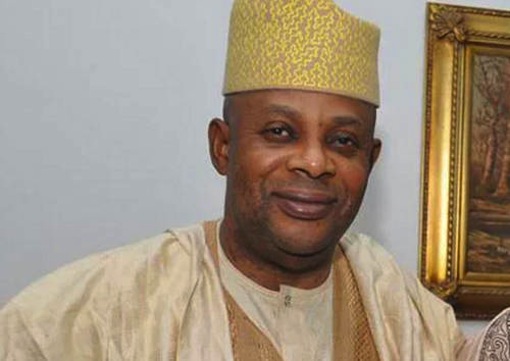
A lawmaker representing Ikeja Federal Constituency in the House of Representatives, Hon. James Faleke, said President Bola Tinubu won the presidential 2023 election because he was anointed.
Faleke, who is also the Convener of Tinubu Support Groups, stated this yesterday in Abuja during the flag-off of nationwide rice distribution exercise.
He stated: “The DG had enumerated some of the achievements of the president very briefly. But you’re all aware that, despite the crisis and the Naira redesign, Bola Ahmed Tinubu was not wanted to win the election; the Naira was redesigned.
“And so many of us cannot even afford to buy bread because we have no naira, and there is no cash. We went into the election without cash, without anything l, but God who has anointed Bola Ahmed Tinubu, said he will win the election, and he won the election.”
Faleke told the support groups that the gathering was organised to thank them for their support.
He added that by January 2026, political activities and mobilisation would commence, saying they had to prepare.
Faleke noted: “I’m sure that the party will announce its programme very soon, from membership registration to party congresses. So you need to get ready.
“We are also aware that voter registration, the first phase, has closed. The second phase will soon start in January. You must mobilise everyone to register. If you don’t have a voter’s card, you cannot vote. And nobody will be a member of any of our support groups without a voter’s card. You must show your voter’s card before you are accepted or registered as a member of the support group.
“We are not in a campaign yet. When the campaign begins, we will let you know. We will roll out.”
Earlier, the Director General of TSG, Dr. Umar Tanko-Yakasai, said Tinubu has stabilised the economy, given loans to students, and paid foreign debt of about $7 billion and $3.5 billion.
On his part, Senator Magnus Abe said Tinubu is the answer to the country’s current challenges.
According to him, the past few years have shown that the president has done things in this country that no other leader has ever done. He has changed the narrative about our country, and he’s seeking real solutions to Nigeria’s problems in ways no leader has before.