
NIGERIA NEWS
Ex-Katsina SSG accuses Gov Radda of withholding LG funds


A former Secretary to the Katsina State Government, Dr. Mustapha Mohammed Inuwa, has accused Governor Dikko Umaru Radda of withholding funds meant for the state’s 34 local government councils despite a Supreme Court judgment granting councils financial autonomy.
Inuwa made the allegation on Friday evening while speaking with journalists at his residence in Katsina.
He claimed that the state government still controls local government allocations from the federation account, contrary to the ruling of the apex court.
The Supreme Court had barred state governments from collecting and withholding local government allocations and ordered the Accountant-General of the Federation to pay the funds directly to the councils.
The former SSG described the alleged action as “unconstitutional, illegal and an impeachable offence,” arguing that local governments, as the third tier of government, are constitutionally empowered to manage their finances and execute projects independently for grassroots development.
Inuwa, who is also the Katsina State leader of the African Democratic Congress, ADC, said it was wrong for the state government to determine projects executed by local councils.
“There is no financial autonomy for local governments in Katsina. The governor has withheld local government funds and releases money to them at will, which is why they are executing similar projects,” he said.
Reacting, the Director-General, Media, to Governor Radda, Maiwada Danmallam, dismissed the allegations, insisting that the state government was not withholding council funds.
Danmallam said the state and local governments are constitutionally empowered to jointly plan and execute development projects, citing Section 7(3) of the 1999 Constitution.
“Accusing the state government of withholding local government funds only reflects ignorance of the constitutional provisions guiding this matter,” he said.
He added that the Katsina State Government had established the State Joint Planning Board for State and Local Governments, which, according to him, operates within the framework of the constitution.






By Daniel Tyokua
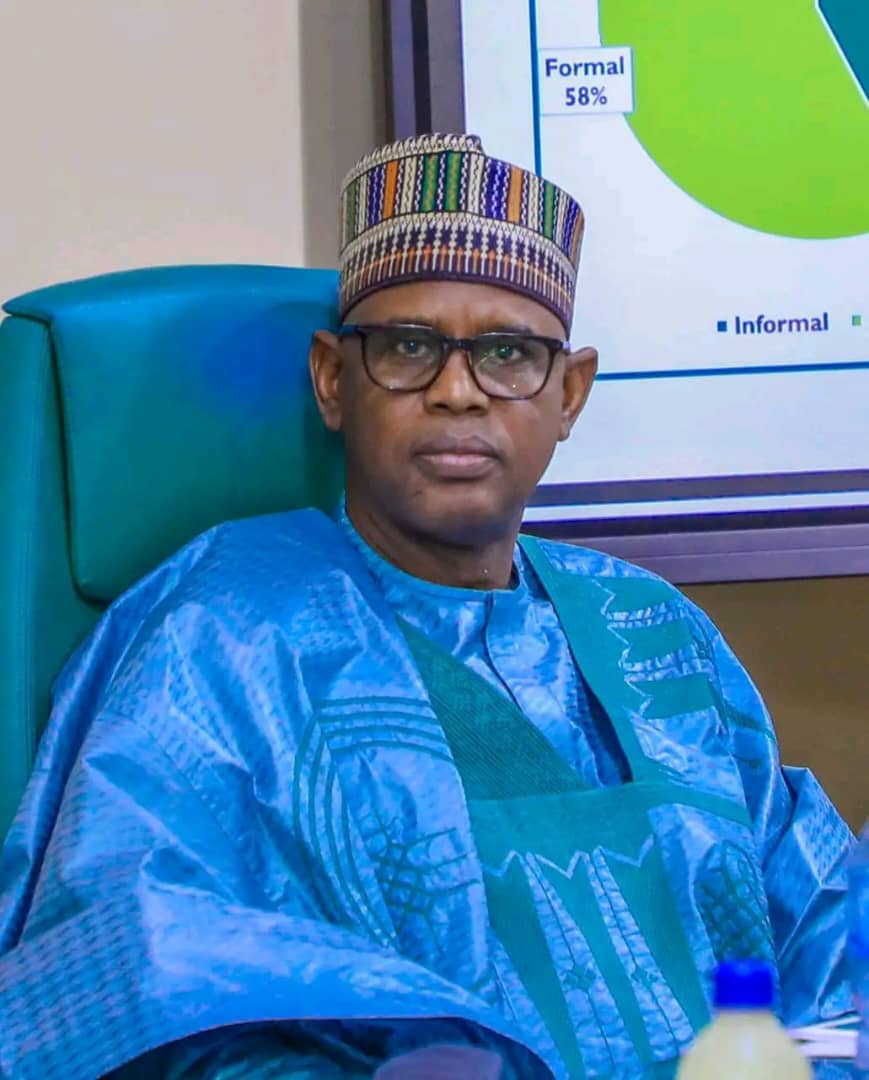
The Minister of State for Works, Mr. Bello Goronyo, has lauded President Bola Tinubu for special attention given to roads, and security in the 2026 Appropriation Bill.
He described the budget as people-centered and responsive to the pressing needs of people.
In a statement issued by the Special Assistant on Media to the Minister, Abdullahi Mohammed on Saturday, said the budget shows Tinubu’s unwavering commitment to safeguarding lives and property across the country.
It explained that no meaningful development can be achieved without a secure environment, and improved security.
He also praised the strong emphasis placed on road infrastructure, stating that sustained investment in the construction, rehabilitation, and completion of federal roads will ease transportation challenges, reduce travel time, lower vehicle operating costs, and improve access to markets and essential services nationwide.
Goronyo emphasized that the combined focus on enhanced security and improved road infrastructure, alongside economic reforms, fiscal discipline, human capital development in education and health, will go a long way in alleviating the hardship currently faced by citizens.
He noted that these priorities will create jobs, stimulate economic growth, and improve the overall quality of life of Nigerians.
The Minister assured Nigerians that the Federal Ministry of Works remains fully committed to the effective implementation of all road projects approved in the 2026 budget, in line with President Tinubu’s Renewed Hope Agenda. He also called for the continued support and cooperation of all stakeholders to ensure the timely delivery of projects across the country.


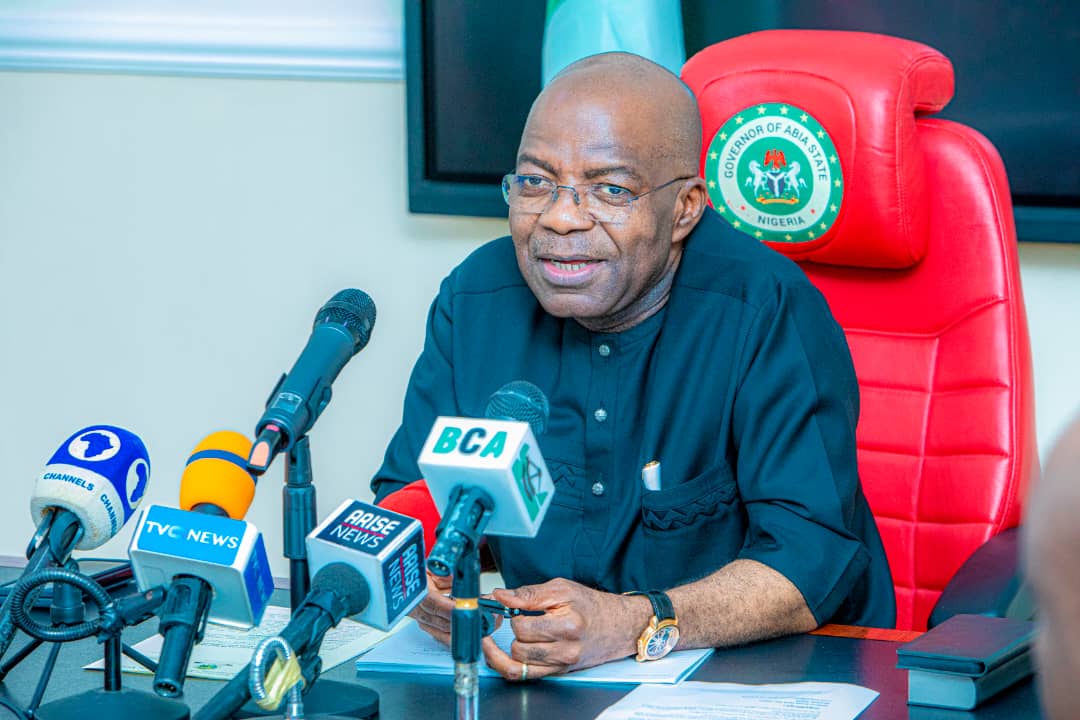
Abia State governor, Alex Otti, has distanced himself from either presidential, vice presidential or senatorial ambition after leaving office as governor.
Otti stated this in Umuahia, the state capital, while reacting to a viral report where he was berated for visiting the jailed leader of the Indigenous People of Biafra, Nnamdi Kanu, in Sokoto.
He said he acknowledged that criticism is part of democracy, as everyone is free to hold an opinion, adding that holding a different opinion does not mean one is right.
”In the first place, that is the beauty of democracy. So, people should hold their opinions, and we respect people’s opinions. And that you hold a different opinion doesn’t mean you are right.
”One of the things he talked about was my ambition after being governor. And I had said it before, and I want to say it again, that by the time I’m done with governorship, I will retire.
”I came for a mission. And when I deliver that mission, I will give way to younger people. He was talking of Igbo presidency; I don’t even understand what that means,” he said.
He maintained that if his accuser’s “thesis is based on that assumption”, then the assumption has collapsed because he won’t see him on the ballot.
Otti further noted that it is important for a political officeholder to know when to quit, especially when he has done what he is asked to do.
”When you have done what you have been asked to do, you clear, give way for other people. We’ve seen people here, after serving as governor, who went on to become local government chairmen.
”The second point is about Nnamdi Kanu. And I don’t want to put this matter in the public space so that it doesn’t jeopardise the discussions that I’m having.
”And going to see him is the right thing to do because he comes from my state. In fact, he comes from this local government (Umuahia North).”
He noted that he had in the past initiated discussions at the highest level on Kanu, believing that there are always ways to solve a problem and not to keep quiet over it.
”And I had written extensively, even about Nnamdi Kanu and Operation Python Dance, I think in 2017 or 2018. And I condemned it. I still condemn it. And some of the recordings that the gentleman put in his video, I cannot vouch for the veracity of those recordings.”


I don’t even know which feeling should guide this write-up.
I don’t even know if I should be excited or cover myself in black tar as I attempt to write this farewell to two of the most cerebral men who have walked through Customs Street, Lagos.
Customs Street houses the core of the mega, trillion-naira–valued Nigerian capital market.
That is where you will find the giant NGX Group and the equally mighty CSCS, the custodian that is deemed to be the biggest in Africa.
Tony Ibeziakor, after 11 years, is leaving the system.
I have heard a lot of undercurrents and innuendos leading to, and trying to explain, this shocking move, but I will not bother myself with those in this write-up.
The leadership of NGX, especially its GMD and Chairman, Temi Popoola and Umaru Kwairanga, can do no wrong in my eyes, which is why this write-up has taken me a while to complete.
Tony has given the system 11 years, during which he earned a reputation as the “revenue” man, being responsible for a massive slice of its revenues year in and year out.
Tony had risen to the level of a DGM and was poised for leadership, all things being equal.
I have known Tony for over 20 years, and I must say he carries with him the mind of a genius—sharp and engaging, with fortuitous clarity.
I replaced him at BGL, where I found his footprint too huge for me to fill, and when I left, he replaced me before beating a brilliant footpath towards the Exchange.
Jalo, on the other hand, is a massively influential figure in the Nigerian capital market.
It is safe to say that there has been no impactful policy at all levels of the market without his input.
Jalo built the CSCS from a backwater custodial business to one of the most profitable institutions of its nature on the continent.
He led the digital revolution that has seen it plug in globally, improve efficiency, and drive value for all its stakeholders.
Today, the CSCS is the beautiful bride, as its revenues dwarf those of other such institutions in the space.
Jalo’s pedigree is one of the richest in the market, having worked in and led some of the finest institutions.
From Afrinvest to Kakawa Asset, where I met him, through UBA Capital, down to the NGX before settling at the CSCS, where he immortalised himself as a visionary CEO.
Speaking with Jalo the other night, he sounded very enthusiastic about life post-service, remained very grateful for the opportunity to serve and meet great minds, but prayed for his legacy to be protected.
His exit was most likely as a result of the tenor-limit policy of the SEC, which I strongly support.
In things like this, you expect collateral damage, as it has now knocked out one of the strongest pillars of the renaissance in our market.
Our fight for the right-sizing of the market, in a bid to better position it, was driven by two central pillars—generational change and tenor limits—which were to imbue robust corporate governance, among others.
The capital market succeeded on both counts, as it produced the Umaru Kwairanga–led leadership, with strong young guns like Temi Popoola, Nonso Okpala, and Mohammed Garuba at the NGX.
In contrast, on the tenor limit, it eliminated such dinosaurs as Falowo at the NASD and Koko at FMDQ, but sadly, it also took out Jalo.
In pushing for these policies, Jalo, in my mind, was very central to a much more purpose-driven market environment, and I still believe that this is very possible even in his retirement.
The system must build inroads towards not only Jalo but other right-thinking stalwarts who have now rightly earned their pips as well-respected elder statesmen, if it is to continue on this trajectory.
The SEC, as led by my brother Dr Agama, if it doesn’t already have that structure, must seek to build an advisory council in the mould of the Council of State, where the capital market, at the highest levels, can continue to enjoy the brilliance of people like Jalo.
As for Tony, age is still on his side; he will surely resurface somewhere else, where he will continue the role that he has been destined to play in the markets.
These two Irokos have done well, and we must give them their accolades.
Well done, guys.
Duke of Shomolu
NIGERIA NEWS
We’re Watching INEC Closely, Says Kwankwaso, APC Holds National Convention March 2026 – THISDAYLIVE


Chuks Okocha and Adedayo Akinwale in Abuja
The presidential candidate of the New Nigeria Peoples Party (NNPP) in the 2023 general election, Senator Rabiu Kwankwaso, yesterday stated that the party would keep a close watch on the Independent National Electoral Commission (INEC) ahead of the 2027 general election, describing the electoral umpire’s role as critical to the survival of democracy.
This is just as the All Progressives Congress (APC) has revealed that its national convention would hold from March 25 to 28, 2026.
Kwankwaso spoke in Abuja at the NNPP national convention, shortly after newly re-elected party executives took their oath of office, in the presence of INEC representatives, party leaders, and delegates from across the country.
Also, Kano State Governor, Abba Yusuf, warned against internal exclusion that could weaken the NNPP’s base.
The NNPP national leader congratulated INEC on the appointment of its new national chairman, Prof. Joash Amupitan, while stressing that public confidence in elections depends mainly on the commission’s conduct.
He said, “Let me thank all of you, especially those who came from far. I also want to appreciate the INEC representatives here today and, through you, congratulate the newly appointed National Chairman of the commission, Prof Joash Amupitan.
“I want to say so far so good, we are keeping our eyes on INEC because its job is so critical that it can make or mar democracy in this country. Thank you for coming, and we look forward to an even better relationship between INEC and, of course, our party.
“I want to assure you that the leadership of the NNPP at all levels will continue to do whatever it takes to ensure that this party grows from strength to strength. Let me also thank the Governor of Kano State for supporting this party over these years.”
The convention, which ratified decisions of the party’s National Executive Committee (NEC) and elected members of the National Working Committee (NWC), comes as the NNPP intensifies preparations for the 2027 polls after its breakout performance in the 2023 general election.
Gov Yusuf Seeks Inclusiveness, Fairness as NNPP Elects National Officers
Speaking at the convention, Kano State Governor Abdullahi Umar Ganduje described the gathering as a turning point for the party and warned against internal exclusion that could weaken its base.
“This convention is just not another gathering. It is a defining moment for our party. It is a moment to reflect on where we are coming from. To examine where we stand today and to boldly chart our future.
“In future political engagements, I call on all leaders at every level to promote inclusiveness and fairness. No ward, state, zone, or group should feel marginalised. Women and youth, who form the backbone of our population, must be fully included, not just in words but in action.
“Distinguished delegates, no political party can succeed without unity. Parties that stand divided fall weakened. When every member feels valued, the party grows stronger. When every voice is heard, the party becomes more resilient,” he urged.
In his acceptance speech, the re-elected National Chairman, Dr Ajuji Ahmed, said the party had drawn lessons from the last general election and was determined to work harder ahead of 2027.
“All eyes are on our great party to point the way forward for sustainable democracy and development in Nigeria. NNPP is known for its strict compliance with internal democracy.
“We have learned from the 2023 general election and will work harder for the 2027 general election. Nigerians look up to the NNPP to chart the way forward for our dear nation. We must live up to their expectations. Together we will restore genuine democracy in Nigeria,” he said.
Also speaking, Secretary of the Board of Trustees, Hon. Buba Galadima, said the party’s strength lies in its grassroots acceptability rather than reliance on political heavyweights.
“We congratulate the chairman of INEC as the national leader of our party, as the national leader of our party earlier did. The NNPP does not rely on big names. We rely on the acceptability and ability of our people at all levels, whom we owe a duty to thank for keeping the flag of our party flying.
“Secondly, I want to use this opportunity to thank our National Leader for accepting the burden of responsibility of running a political party. I want to say, as a party administrator for the last 47 years, it is not easy for any individual to run a national political party like the NNPP,” he argued.
The newly re-elected NNPP executives include: National Chairman, Dr Ajuji Ahmed; National Secretary, Dipo Olayoku; National Publicity Secretary, Ladipo Johnson; National Treasurer, Ahmed Balewa; National Financial Secretary, Chief Aneine Clement; and National Legal Adviser, Robert Hon, among others
APC Holds National Convention March 2026
Meanwhile, APC has scheduled its national convention from March 25 to 28, 2026.
The National Secretary of the party, Senator Ajibola Bashir made this known in a notice issued yesterday in Abuja.
He said the convention is in line with the provisions of Article 11: A sub-section (i-xiii), and Article 17(i) of APC’s Constitution on the conduct of congresses across Wards, Local Government Areas (LGAs) and states of the Federation to elect party officials.
Bashir said Ward congresses would hold on February 18 2026, while the appeals arising from the Congress are scheduled to take place on February 19.
He added that state congresses would be held on March 7, 2026, while appeals arising from the state congresses would be held between March 9 and 11.
According to him, the party will move to the zonal level, with the purchase and submission of forms for zonal congresses.
According to the schedule, zonal congresses will be inaugurated on March 18, followed by the screening of aspirants on March 19 and 20.
He said the zonal congresses across the six geopolitical zones will take place on Saturday, March 21, 2026.
The designated zonal offices are Ibadan for the South-west, Enugu for the South-east, Rivers/Cross River for the South-South, Kaduna for the North-west, Gombe/Bauchi for the North-east, and Nasarawa for the North-central., while appeals arising from the zonal congresses will be heard on March 23.


- PMS sells as high as N990/litre in Delta, others
Many filling stations across the country are yet to reduce their pump prices despite the latest reduction in price to N739 or N740 per litre by Dangote Refinery.
Our correspondents who have been tracking fuel prices over the last few days found that many MRS retail outlets in Lagos and environs were selling at N850 per litre, about N110 more than the announced price for the product by the President, Dangote Group, Aliko Dangote.
Dangote had assured Nigerians that all MRS filling stations would sell the product at N739 or N740 per litre.
At the MRS filling station at Alagbole, a border town between Lagos and Ogun States, petrol sold for N850 per liter. Similarly, MRS filling stations on Ekoro Road, Abule Egba, sold between N825 and N870 per litre.
At BOVAS filling station in Ojodu, it was N820 per litre while NNPC petrol station at Berger sold at N825.
A petrol attendant in an MRS station in Alagbole, told The Nation that the price would be adjusted to N740 per litre from Monday.
“Yes, we are still selling at N850 per litre today (yesterday) because we still have old stock. Once we take delivery of new stock at the new gantry price, then we will adjust our price to N750 per litre,” the female attendant said.
Other major marketers retail outlets like Mobil, TotalEnergies, ConOil are still selling at between N850 and N890 per litre.
Reports from Oyo, Delta and Enugu States showed that petrol price ranged between N830 and N900.
But the situation is different in Abuja where some filling stations, including NNPC, Ardova, AA Rano, and Bovas all in Abuja have reduced petrol prices, with MRS now selling at N739 per litre.
Some outlets in the nation’s capital are selling N70 cheaper, according to findings by our reporter.
Last week, The Independent Petroleum Marketers Association of Nigeria (IPMAN) called on all its members nationwide to patronise the Dangote Refinery in their purchase of premium motor spirit (PMS) or petrol, noting that the refinery already offers the best affordable price for all marketers, even as free delivery commences in January 2026.
IPMAN National President, Abubakar Maigandi, expressed delight over a recent agreement by the Dangote Petroleum Refinery to begin the supply of petrol directly to registered IPMAN members.
“We are also excited at the recent agreement by the Dangote Refinery to begin the supply of PMS products directly to registered IPMAN members and its free delivery to our filling stations anywhere and everywhere in Nigeria which will commence in January 2026.
“This will again, certainly lead to further decrease in the pump price of the products at our filing stations. Therefore, I am calling on all IPMAN members nationwide to prioritise patronising the Dangote Refinery in their purchase of PMS products, as they already offer the best affordable price for all marketers today,” he said.

In precolonial Africa, the societal values of honesty, respect and fairness were influenced by shared norms and beliefs which fostered healthy relationships. Everyone cherished the values and no one needed to be threatened with written sanctions in order to keep faith with the norms.
Perhaps, the most important factor which aided general acceptance of shared values was the fear of societal stigma for any breach. No one wanted to be known as a member of a family castigated by the entire community for any misdemeanour capable of instigating rejection by others. In those days, good name rather than wealth determined acceptability of people by other members of the same com- munity. Put differently, the best guarantor of a person for any subject was a credible family.
It was therefore difficult for any person to display a conduct that could tarnish the image of his entire family. Indeed, it may not be necessary to formally train a child on the subject because it was virtually self-explanatory from daily activities in the home. Some family members often told their younger ones who were embarking on a trip that all they wanted each traveller to buy for them was a gift called ‘good name.’ Unfortunately, the principle of accountability which the Europeans introduced in later years never gained the same traction as the African system that was built on naturally shared norms. The technicalities in the processes and procedures of sanctions for breach of accountability could also not rest on the same shared beliefs and norms.
It is against this backdrop that we situate the allegation by Aliko Dangote, Africa’s richest man that the Chief Executive of the Nigerian Midstream and Downstream Petroleum Regulatory Authority (NMDPRA), Engr. Farouk Ahmed, spent over $5 million on the foreign secondary education of his four children in Switzerland. Dangote made the issue easier to understand by not harping on the technical title of accountability. Instead, he was asking us all to take our minds back to the African system which forbids a man to live above his means. Aliko Dangote was calling for a greater impetus in the fight against corruption – a fight which has for long pursued shadows rather than substance.
There are analysts who are certain that there is nothing altruistic about Dangote’s advocacy. They probably have a point which is however insignificant. If a regulator wants to suffocate the man, should he die in silence? More importantly is the issue of public interest. Should any ordinary citizen support a regulator that is focusing at this point on importation which has always been Nigeria’s albatross? Second, does one need to be an economist to appreciate the efficacy of protecting local industries as well as the employment opportunities which such indus- tries offer to Nigerians? Third, why is the oil industry unable to see Dangote as a patriot; do they prefer wealthy Nigerians who invest abroad?
What makes Dangote’s allegation persuasive is the general perception of how our public services have degenerated into unethical jungle. Almost everyone is dis- gusted over the disposition of public officers who enthusiastically look forward to gratification. A second group does not just anticipate it; many openly demand instant reward. A third group is one step further down into the jungle. This third group uses aggressive extortion by holding back services until they get bribed. Quite often, such bribes are usually so high that one begins to wonder if one is dealing with a contractor instead of a public servant that already enjoys pay from the public treasury. In other words, citizens come across public servants who insist on being paid for doing a job for which they are ordinarily employed and remunerated.
The argument that the approach is encouraged by the fact that public salaries in Nigeria are inadequate is weak. This is because extorting a citizen is not a legal way to raise one’s pay. What extortion in the circumstance achieves is that it raises the general cost of living as those extorted find ways of getting back at society thereby up-turning the social system. The public servants who take so much from people as distinct from those who get gifted are however not readily aware that they are active participants in the hyperinflation in their environment. While it is true that other sectors are also contributors to the problem, efforts should be made to stop the trading going on in public offices in Nigeria because public offices are not markets just as public servants are not traders.
Whereas there is no evidence that much can be done to change the situation, we can at least start from the known. Painfully, although we are in a position to know what public officers are expected to earn, we see many in a life- style that their take-home pay cannot withstand and yet, we do nothing about it. Many public servants are no doubt involved in stealing. Quite often, ridiculous explanations are rendered for incredible wealth or occurrences. Mele Kyari, a former Group Chief Executive Officer of the Nigerian National Petroleum Corporation Limited (NNPCL), once said that a minority of elite Nigerians were responsible for stealing $3.6 billion from Nigeria’s crude oil annually. How can government know the amount and period involved as well as the perpetrators but never arrested anyone?
For long, monies earmarked for public expenditure always vanished from government with no one held. One story that would be difficult to forget during the Buhari years concerned some animals that ‘ate’ about N17bn. Until Ishaq Oloyede rescued the Joint Admissions and Matriculations Board (JAMB) it was customary for animals to swallow the Board’s money. In one instance, a clerk in the organization alleged that snakes swallowed N36million which had been raised from the sale of scratch cards.
At the Nigeria Social Insurance Trust Fund (NSITF) termites had allegedly eaten up vouchers that would have explained how the agency spent N17 billion. In Kano, the Zoological Gardens lost N6.8 million which a finance officer in the zoo claimed was eaten up by a gorilla. During the same period of havoc by animals the Northern Senators Forum lost N70million which Monkeys swallowed in the farm of their then Chairman.
Nothing in Nigeria’s posture suggests that much can be done about the disposition of many Nigerians to corrupt practices. Reports that huge sums of money were siphoned or misappropriated are not restricted to the previous government. It is therefore not enough to remember past reports. For example, like her predecessor, the immediate past Minister of Humanitarian Affairs was indicted and dropped. But why are highly placed persons in government accused of one infraction or another just asked to resign? Some say it is to give such people soft landing; yet government does not tell the public the merit of allowing criminally-minded officers to land softly. We can only hope that government will be persuaded to be more active in dealing with such people now that the richest man in Africa has assumed the role of a whistle blower.
If the truth must be told, government also uses its soft-landing strategy to encourage public servants to live above their means. One apt example is the idea of not applying the appropriate sanctions to insider abuses in public offices. Every time a piece of land is discovered to have been wrongly allocated or a building demolished for illegal approval, it is usually the owner that is penalized. Top officials remain silent on the colluding insider who should have been shown the way out. This needs a change of heart.
It is also hoped that government will take steps to give public servants better security of tenure. It is difficult these days to blame some public servants who now have divided loyalty in view of the politicization of bureaucracy by which some of them are superseded by unqualified party loyalists. While it is in order to appoint political loyalists to the boards of public organizations, it is irritating to allow political activists take over the job of techno- crats thereby destabilizing the career of some citizens whose only offence is that they remained faithful public ser- vants. When that happens, democracy illogically tran- sits from the government of the people to that of the party.
Many years ago, it was slightly difficult to find competent hands for all positions from different parts of the country. It is no longer so today. There is therefore no need to allow favouritism that en- courages the lowering of standards. Besides, persons whose appointments are renewed must be those whose excellent performances speak for themselves. Such persons in office will always be motivated by job satisfaction. If done differently, the system would inadvertently give birth to the urge to live above one’s means.
The post Dangote illuminates Nigeria’s abandoned values, by Tonnie Iredia appeared first on Vanguard News.

Nigeria’s biking community is growing fast, with louder engines, larger formations on highways, and a vibrant subculture built on freedom, friendship, and discipline. Yet, behind the helmets and leather jackets lies a world many Nigerians still misunderstand. For years, bikers have been labelled gangsters, drug couriers, or simply reckless thrill-seekers. Conversations with members of the community, including veteran rider and AI Cloud Engineer Michael Anderson, also known as “Cowboy”, the founder of Riders Fora Worldwide, revealed a much more layered world.
Mr Anderson’s entry into biking mirrors the origin story of many riders: an early fascination with the sound and feel of motorcycles. His group, Riders Fora Worldwide, was born from a solo road trip to Cameroon in 2011, when he created a BBM group to share his journey with fellow riders, long before WhatsApp reshaped social communities. Formal biker groups, such as the All-Nigeria Motorcycle Club (ANMC), communicated via Yahoo Mail. The rise of instant messaging changed everything: riders across states could now connect, plan road trips and organise charity rides in real time. Ask any Nigerian biker, and you’ll hear a familiar list of misconceptions:
“Drug Peddlers”: Many Nigerians assume that bikers’ side boxes and top boxes are used to hide contraband. In reality, they store riding apparel, clothing, tools and safety equipment needed for short and long-distance trips.
“Dangerous or Violent”: Far from it. Riders include HRH, bankers, military and paramilitary personnel, pastors, professionals, retirees, and others. It is one of the most professionally diverse subcultures in the country.
“Impatient or Aggressive”: Riders often appear restless in traffic because their gear, boots, gloves, armour jackets, and traps can trap and build up heat. Bikes also overheat if left to idle for an extended period. What appears to be aggression is often discomfort due to Nigeria’s weather.
Safety Is a Culture, Not an Afterthought. Contrary to the belief that bikers love speed, most seasoned riders insist that discipline keeps you alive. Group rides follow structured formations. New riders undergo training. And protective gear is non-negotiable. Anderson distinguishes between “show bikers,” who purchase motorcycles primarily for aesthetic reasons, and committed riders who understand the sport, its inherent risks, and its ethical implications.
Nigeria now boasts an impressive number of female bikers, including Aunt Joan, Queen, Fly Girl, Speed Diva, Attracta, Aisha B, Ebaide, Alicia, Awero, Tigres, Kelz, Ogo, Mmandu, MVM, Tui, among others, who undertake long-distance trips. Their presence helps challenge the hyper-masculine stereotype of biking and expands the diversity of the community.
Beyond the roar of engines, riders regularly participate in charity-driven projects, including orphanage visits, donations,
escort support for safety teams, and city awareness rides. Many riders describe biking as therapeutic, a way to detach from the intensity of city life. “The peace you get on the road is something you can’t explain,” Mr Anderson says. “It clears your mind.”
Nigeria’s biking culture is thriving, but not without friction. Riders routinely deal with Harassment from security agents who believe their gear hides illegal items. Public suspicion or disrespect. Poor road conditions. Extreme heat during short-distance trips. These realities make biking both an adventure and a test of endurance—bikers: More Ordinary Than You Think. Strip away the sound, the leather and the chrome, and what remains is a community of everyday Nigerians who love the open road. People seeking freedom, therapy, adrenaline, or a sense of belonging. “We’re not what people think,” Mr Anderson says. “We are fathers, mothers, professionals, responsible Nigerians who just enjoy the ride.” In a country battling stress, traffic, and the daily grind, perhaps the biker community offers a reminder: that there is more to Nigerian life than mere survival; there is also room for passion, escape, and the quiet rhythm of a long road stretching ahead.


President Bola Tinubu has approved the renaming of the Federal University of Sciences, Azare, in honour of the esteemed Islamic scholar, Sheikh Dahiru Usman Bauchi, in recognition of his significant contributions to faith, education, and leadership.
Tinubu announced this decision on Saturday during a condolence visit to Bauchi State, where he paid tribute to the late cleric, offered prayers for his soul, and extended his sympathies to his family.
Upon his arrival at the Abubakar Tafawa Balewa International Airport in Bauchi, the president was warmly received by the Governor of Bauchi State, Bala Mohammed, as well as the Governor of Plateau State, Caleb Mutfwang, ministers, and other senior government officials.
Among those present were the Minister of Foreign Affairs, Yusuf Tuggar, and the Minister of Health, Ali Pate, along with other dignitaries.
Members of the presidential entourage included the Speaker of the House of Representatives, Tajuddeen Abbas; Yobe State Governor, Mai Mala Buni; and several prominent figures.
Governor Mohammed expressed appreciation to President Tinubu for his condolence visit and the decision to immortalise Sheikh Usman through the renaming of the university. He described this gesture as a great honour for Bauchi State and for Nigeria as a whole.
Sheikh Usman passed away in late November, with Governor Mohammed calling it a profound national loss. The governor praised the Sheikh’s lifelong dedication to promoting peace, tolerance, and interfaith harmony.
A statement from the governor’s Special Adviser on Media and Publicity, Mukhtar Gidado, noted that the Bauchi leader conveyed his condolences to the Sheikh’s family, followers, students, and the wider Muslim community.
“Sheikh Dahiru Usman Bauchi was a towering figure in Islamic scholarship. He embodied deep faith, humility, and wisdom throughout his remarkable life,” the governor said.
The esteemed Islamic scholar led the Tijjaniyya order and hailed from a family with roots in both Bauchi and Gombe. He held a Tijjaniyya ijāzah recognised throughout West Africa.
READ MORE FROM: NIGERIAN TRIBUNE

The Media Adviser to the former Vice President, Atiku Abubakar, has called for the suspension of the implementation of the laws pending a thorough investigation into the allegations of alterations.
Naija News reports that the laws came under scrutiny when a member of the House of Representatives, Abdussamad Dasuki, alleged discrepancies between the tax laws passed by the National Assembly and the versions gazetted and released to the public.
In an interview with Punch, Paul Ibe described the alleged alteration as a falsification and a crime.
He argued that halting implementation would allow for proper scrutiny by lawmakers and the public, and help safeguard the integrity of the legislative process.
He said, “Something is wrong with this country. It is a very serious issue. Something has been appended to the law, and some people have gone ahead to alter it. This is falsification, and it is criminal. The big question is: what else has been doctored? What else has been falsified?
“This is dangerous, and it affirms the state capture the opposition warned about in our joint statement”.
Meanwhile, the National Coordinator of the Take-It-Back Movement, Juwon Sanyaolu, said they had begun mobilising Nigerians nationwide against the tax reform laws, describing the reforms as anti-people and illegitimate.
Sanyaolu, while speaking with Punch, described the alleged alteration as a continuation of impunity by the President Bola Tinubu-led administration, arguing that the policy was designed to exploit ordinary Nigerians.
According to him, the reform targets employers, entrepreneurs, young people, content creators and other informal workers.
He said, “The law itself is primarily targeted against the people of Nigeria. This tax reform seeks to exploit about 90 per cent of the population.”


President Bola Tinubu has renamed the Federal University of Health Sciences, Azare, Bauchi State, as Sheikh Dahiru Usman Bauchi University of Health Sciences, in honour of the late Islamic scholar and spiritual leader.
The announcement was made during President Tinubu’s condolence visit to the Bauchi State Government and the family of Mr Bauchi.
President Tinubu highlighted the remarkable legacy of the revered cleric, noting that the honour is well deserved.
“The late Sheikh brought impactful knowledge to the people, a great scholar, a Nigerian conscience that had worked so hard on the path of Almighty Allah, preaching the word, the sermon, the knowledge, and the value of honesty, integrity and a great character”, the president said.
The visit provided the president with an opportunity to pay tribute to the late cleric’s lifelong contributions to religious scholarship, national unity, and social development.
“I am here to offer my condolences to all of you: the government, the people, and the public at large—not just Bauchi alone, but the entire country,” he added.
The president also urged Nigerians to uphold Sheikh Dahiru Usman Bauchi’s principles of righteousness, tolerance, and unity, and to ensure that future generations continue to learn from the values he stood for.
Bauchi State Governor, Bala Mohammed, expressed profound gratitude to the president for personally paying a condolence visit and for the support extended to the family.
He highlighted that President Tinubu had previously sent Vice President Kashim Shettima and a high-powered delegation to attend the funeral prayers, a gesture reflecting the nation’s respect for the late scholar.
“Looking at the streets, Mr President, you know that the people of Bauchi are with you. It’s a reciprocal love, because even going back to memory lane, you had a good relationship and with the late Sheikh Dahiru Bauchi,” the governor stressed.
Mr Mohammed described the president’s presence as a demonstration of deep solidarity and respect for both the family and the people of Bauchi State.
Speaking on behalf of the family, Bashir Bauchi thanked President Tinubu for his support and for recognising Dahiru Bauchi’s contributions. He described the late cleric as a global scholar and spiritual leader whose legacy includes the establishment of educational institutions and philanthropic initiatives that benefit both Muslims and non-Muslims across Nigeria and beyond.
Mr Bashir affirmed the family’s commitment to continuing his work under the leadership of the Khalifa, while also praising Mr Mohammed for his unwavering support of the family.
READ ALSO: Nigerian billionaire Rabiu offers rare glimpse into luxury lifestyle
Among those present during the visit were the Governor of Yobe State, Mala Buni; the Governor of Plateau State, Caleb Mutfwang; members of the National Assembly from Bauchi; the Minister of Foreign Affairs, Yusuf Tuggar; and the Minister of Health and Social Development, Muhammad Pate.
Members of the presidential entourage include the Speaker of the House of Representatives, Tajudeen Abbas; a former Speaker, Yakubu Dogara; and former governors Isa Yuguda and Mohammed Abdullahi Abubakar, among other dignitaries.
Bayo Onanuga
Special Adviser to the President
(Information & Strategy)
December 20, 2025