
TECHNOLOGY
I’ve seen real demons during exorcisms… Here’s the most common type of possession


A priest involved with casting demons out of humans has shared the most common possession he has witnessed.
Reverend Chris Lee, the Anglican priest-in-charge at St Saviour’s Church in England, recently pulled the curtain back on the reality of spiritual oppression, which he said is far more common than full demonic possession.
He described it as a subtle but persistent influence of evil that affects a person’s mind, emotions and spiritual well-being.
Unlike full possession, where a demon allegedly takes direct control of a person’s body, oppression is more about lingering negativity or interference.
It can show up as fear, anxiety, restlessness or a feeling of being spiritually burdened.
Speaking to UNILAD, Lee compared it to residual grime from a puddle, as the person is not overtaken, but traces of harmful influence remain and can affect daily life.
For most cases, Lee emphasized, prayer, blessing and spiritual cleansing are the typical ways to alleviate oppression.
Despite the rarity of full possession, Lee revealed he has seen real demons cast out, describing the experiences as tangible and unmistakable.
‘I have seen exorcism, I’ve seen demons be cast out of people and heard them speak, and it is real.’

Reverend Chris Lee, a Christian minister at the Church of England, revealed he has been a part of numerous exorcisms
Merriam-Webster defines oppression as ‘to crush or burden by abuse of power or authority’ or ‘to burden spiritually or mentally: weigh heavily upon.’
According to Lee, this is the method the devil most often uses to influence people today.
He explained that evil seeks to weigh believers down with the pressures and worries of everyday life, from anxiety over their children’s well-being to frustration in their relationships or discontent with their personal circumstances
The goal, Lee said, is to disrupt a person’s spiritual life and weaken their connection with their faith.
Lee explained that in his view, the spiritual realm is real and populated by both angels and demons.
He stressed that Christians are called to engage with this realm through the working of the Holy Spirit, rather than through occult practices or games like tarot cards or Ouija boards, which can leave people vulnerable to harmful influences.
In terms of practical impact, oppression can manifest in subtle ways: emotional weight, persistent anxiety, feelings of spiritual heaviness or difficulty finding peace.
These are the forms of spiritual interference that ministers encounter most often, far more than dramatic or violent possession cases seen in movies or sensational media accounts.

The reverend said that spiritual oppression was far more common than full demonic possession
Lee explained that ongoing prayer, spiritual guidance, and participation in church sacraments are key methods of relief.
He recounted witnessing powerful manifestations in Africa, where some individuals displayed unusual behaviors, including speaking in multiple voices, but emphasized that these dramatic cases are rare exceptions.
Catholic Church exorcism rites are official rituals performed by a trained priest to expel or protect a person from demonic influence.
Major exorcisms, reserved for cases of full possession or severe spiritual oppression, require authorization from a bishop and involve prayers, Scripture readings and the use of holy objects like crucifixes or holy water.
Minor exorcisms, which are far more common, are included in sacraments such as baptism and consist of prayers of blessing, protection, and deliverance.
‘The Church has specialists [in] deliverance and exorcists in every diocese,’ Lee said.
‘We have a process which is to protect people because there is a degree of making sure that this isn’t a mental health issue, that this isn’t a concerning or vulnerable person that can be manipulated by someone in a place of power, so you have to be really careful with it.’
However, scientists have suggested that such individuals are only plagued by psychological disorders.
Other research has determined that the possession syndrome was a result of psychological factors like severe mental illness, trauma, mass hysteria, or cultural beliefs.
But these suggestions have not stopped Lee and other priests from fighting evil.
He highlighted that rituals such as baptism include exorcism rites, where a priest lays hands on the person or child and prays for deliverance from darkness, a process that occurs frequently and routinely.
The minister stressed that engagement with the spiritual realm must be done carefully and through faith; improper methods can leave individuals vulnerable to manipulation or spiritual harm.
According to Lee, the power of Jesus and the guidance of the Holy Spirit are central to safely navigating spiritual encounters.












Even as OpenAI works to harden its Atlas AI browser against cyberattacks, the company admits that prompt injections, a type of attack that manipulates AI agents to follow malicious instructions often hidden in web pages or emails, is a risk that’s not going away anytime soon — raising questions about how safely AI agents can operate on the open web.
“Prompt injection, much like scams and social engineering on the web, is unlikely to ever be fully ‘solved,’” OpenAI wrote in a Monday blog post detailing how the firm is beefing up Atlas’ armor to combat the unceasing attacks. The company conceded that “agent mode” in ChatGPT Atlas “expands the security threat surface.”
OpenAI launched its ChatGPT Atlas browser in October, and security researchers rushed to publish their demos, showing it was possible to write a few words in Google Docs that were capable of changing the underlying browser’s behavior. That same day, Brave published a blog post explaining that indirect prompt injection is a systematic challenge for AI-powered browsers, including Perplexity’s Comet.
OpenAI isn’t alone in recognizing that prompt-based injections aren’t going away. The U.K.’s National Cyber Security Centre earlier this month warned that prompt injection attacks against generative AI applications “may never be totally mitigated,” putting websites at risk of falling victim to data breaches. The U.K. government agency advised cyber professionals to reduce the risk and impact of prompt injections, rather than think the attacks can be “stopped.”
For OpenAI’s part, the company said: “We view prompt injection as a long-term AI security challenge, and we’ll need to continuously strengthen our defenses against it.”
The company’s answer to this Sisyphean task? A proactive, rapid-response cycle that the firm says is showing early promise in helping discover novel attack strategies internally before they are exploited “in the wild.”
That’s not entirely different from what rivals like Anthropic and Google have been saying: that to fight against the persistent risk of prompt-based attacks, defenses must be layered and continuously stress-tested. Google’s recent work, for example, focuses on architectural and policy-level controls for agentic systems.
But where OpenAI is taking a different tact is with its “LLM-based automated attacker.” This attacker is basically a bot that OpenAI trained, using reinforcement learning, to play the role of a hacker that looks for ways to sneak malicious instructions to an AI agent.
The bot can test the attack in simulation before using it for real, and the simulator shows how the target AI would think and what actions it would take if it saw the attack. The bot can then study that response, tweak the attack, and try again and again. That insight into the target AI’s internal reasoning is something outsiders don’t have access to, so, in theory, OpenAI’s bot should be able to find flaws faster than a real-world attacker would.
It’s a common tactic in AI safety testing: build an agent to find the edge cases and test against them rapidly in simulation.
“Our [reinforcement learning]-trained attacker can steer an agent into executing sophisticated, long-horizon harmful workflows that unfold over tens (or even hundreds) of steps,” wrote OpenAI. “We also observed novel attack strategies that did not appear in our human red teaming campaign or external reports.”
Image Credits:OpenAI
In a demo (pictured in part above), OpenAI showed how its automated attacker slipped a malicious email into a user’s inbox. When the AI agent later scanned the inbox, it followed the hidden instructions in the email and sent a resignation message instead of drafting an out-of-office reply. But following the security update, “agent mode” was able to successfully detect the prompt injection attempt and flag it to the user, according to the company.
The company says that while prompt injection is hard to secure against in a foolproof way, it’s leaning on large-scale testing and faster patch cycles to harden its systems before they show up in real-world attacks.
An OpenAI spokesperson declined to share whether the update to Atlas’s security has resulted in a measurable reduction in successful injections, but says the firm has been working with third parties to harden Atlas against prompt injection since before launch.
Rami McCarthy, principal security researcher at cybersecurity firm Wiz, says that reinforcement learning is one way to continuously adapt to attacker behavior, but it’s only part of the picture.
“A useful way to reason about risk in AI systems is autonomy multiplied by access,” McCarthy told TechCrunch.
“Agentic browsers tend to sit in a challenging part of that space: moderate autonomy combined with very high access,” said McCarthy. “Many current recommendations reflect that tradeoff. Limiting logged-in access primarily reduces exposure, while requiring review of confirmation requests constrains autonomy.”
Those are two of OpenAI’s recommendations for users to reduce their own risk, and a spokesperson said Atlas is also trained to get user confirmation before sending messages or making payments. OpenAI also suggests that users give agents specific instructions, rather than providing them access to your inbox and telling them to “take whatever action is needed.”
“Wide latitude makes it easier for hidden or malicious content to influence the agent, even when safeguards are in place,” per OpenAI.
While OpenAI says protecting Atlas users against prompt injections is a top priority, McCarthy invites some skepticism as to the return on investment for risk-prone browsers.
“For most everyday use cases, agentic browsers don’t yet deliver enough value to justify their current risk profile,” McCarthy told TechCrunch. “The risk is high given their access to sensitive data like email and payment information, even though that access is also what makes them powerful. That balance will evolve, but today the tradeoffs are still very real.”


Vince Zampella, the co-creator of the Call of Duty video game series, has died aged 55.
The head of the video game developer Respawn Entertainment and the co-founder of Infinity Ward was killed in a car crash in California, NBC Los Angeles reported.
Zampella led the creation of the bestselling video game series Call of Duty at Infinity Ward, and at his various studios he was involved in several highly successful game series from Medal of Honor to Titanfall.
He is reported to have died in a single-car accident on the Angeles Crest Highway, which was reported to the California highway patrol at 12.45pm on Sunday. The vehicle’s driver died at the scene, and a passenger died later in hospital.
Zampella began his career in video games in the mid-1990s. Most recently, he had been promoted to head of the Battlefield military shooter series of video games at EA Games – Battlefield 6 was released in October to critical acclaim.
Previously, in 2010, he founded Respawn Entertainment under EA, which created the Titanfall series of mech shooters and the popular multiplayer game Apex Legends.
Zampella is best known for his time in the 2000s at Infinity Ward, a studio he co-founded with Grant Collier and Jason West in 2002. There, he co-created the Call of Duty video game series and some of its most acclaimed entries, including Modern Warfare (2007) and Modern Warfare 2 (2009).
The Call of Duty games have gone on to sell more than 500m copies. In 2010, he was involved with other former Infinity Ward staff in a lawsuit against the series’ publisher, Activision, over unpaid royalties.
In a statement on Monday night, EA said: “This is an unimaginable loss, and our hearts are with Vince’s family, his loved ones, and all those touched by his work.
“Vince’s influence on the video game industry was profound and far-reaching. A friend, colleague, leader and visionary creator, his work helped shape modern interactive entertainment and inspired millions of players and developers around the world. His legacy will continue to shape how games are made and how players connect for generations to come.”

Two weeks after a judge struck down President Donald Trump’s executive order that blocked offshore wind development, the White House is again pausing leases for five large projects, this time citing concerns over radar interference.
“Today’s action addresses emerging national security risks, including the rapid evolution of the relevant adversary technologies, and the vulnerabilities created by large-scale offshore wind projects with proximity near our east coast population centers,” Interior secretary Doug Bergum said Monday in a statement.
The affected projects include Revolution Wind in Connecticut and Rhode Island, Coastal Virginia Offshore Wind, Vineyard Wind in Massachusetts, and Empire Wind and Sunrise Wind, both of which are in New York. In total, these projects represent nearly 6 gigawatts of generating capacity for the Eastern seaboard, a hotspot of data center development.
The Department of the Interior justified the action by citing unclassified government reports — it didn’t say which agency had produced them, nor did it link to them — along with “recently completed classified reports” from the Pentagon. The department said it would give the government time to work with stakeholders to address national security concerns.
The statement did not acknowledge the ongoing work government and wind developers have been doing to address national security concerns, specifically related to radar, for years.
The report the Interior department is likely referring to was issued by the Department of Energy in February 2024, and it lists a number of projects that were then underway to mitigate the problem of radar interference. (Other reports over the years have been commissioned to address the same concerns, some dating back to the previous Trump administration.)
“To date, no mitigation technology has been able to fully restore the technical performance of impacted radars,” the 2024 report said. “However, the development and use of radar interference mitigation techniques, and collaboration both among federal agencies and between the federal government and the wind industry have enabled federal radar agencies to continue to perform their missions without significant impacts, and have also enabled significant wind energy deployments throughout the United States.”
Techcrunch event
San Francisco
|
October 13-15, 2026
Radar interference caused by wind turbines is nothing new. Researchers have been studying the phenomenon for well over a decade, and they’ve developed a range of strategies to mitigate any problems.
Wind turbines present a unique challenge to radar operators.
“The motion of a wind turbine gives it a complex Doppler signature,” Nicholas O’Donoughue, a senior engineer at the Rand Corporation, told TechCrunch.
Doppler refers to the change in frequency of a wave like a radar signal caused by a moving object. As a wind turbine’s blades sweep through their arc, they are alternately moving toward and away from the radar station. The angle and speed of the blades can have an effect, too.
Those, along with other considerations, can “challenge the detection of any targets that are near the wind farm,” O’Donoughue said.
But radar systems can filter out signals that result from wind farms. “The primary approach is to use adaptive processing algorithms, such as Space-Time Adaptive Processing, to learn the structure of a wind farm’s interference,” he said.
“Over time, the reflections from a wind farm can be processed to look for patterns, which can then be matched and suppressed. This process is analogous to how modern adaptive noise cancellation headphones work, albeit more complicated.” Objects with low radar cross section can still slip through, he noted.
Because of that, many wind farms are already built with radar installations in mind. “The most basic and widely-employed mitigation method is wind farm siting, such as modifying the layout a proposed wind farm to keep the wind turbines out of the line-of-sight of the radar,” the 2024 Energy department report said.
TECHNOLOGY
Childhood photo of tech mogul dressed as Santa surfaces days before Christmas… Who is it?

The world’s richest man looked unrecognizable in a childhood holiday photo that some have said actually foreshadowed his controversial future.
An image shared on X Monday captured a young Elon Musk apparently dressed as Santa Claus during a Purim celebration, a holiday commemorating the saving of the Jews from the Persian Empire in the fifth century BC.
Musk, now 54, confirmed that the picture was genuine, replying to the post by saying it was taken ‘at Purim,’ which is typically celebrated in February or March.
The image of a young Musk showed him with noticeably blonde hair, a red robe with white trimming just like Santa, and a white sack for gifts.
However, Musk ditched the fake, white beard and traded in Santa’s classic black boots for a pair of sandals instead.
‘Santa Elon is saving the world one technological present at a time!’ one commenter said on X.
Musk was born in 1971 in Pretoria, South Africa and lived there until the age of 17, when he and his mother moved to Canada.
Before leaving South Africa, Musk had previously claimed he attended a Hebrew preschool as a child, but the billionaire did not confirm when and where the old photo was taken.

An image that reportedly shows a young Elon Musk has already been viewed more than 500,000 times on X Monday afternoon

Musk, now 54, has grown up to become the world’s richest man and is the CEO of both SpaceX and Tesla
While many social media users enjoyed seeing a young Musk before fame and fortune, some eagle-eyed viewers spotted a face drawn on the wall behind him, which looked eerily similar to the billionaire’s future ally, President Donald Trump.
Multiple X users spotlighted the face, seemingly drawn on a white paper plate, that had Trump’s distinctive blonde haircut hanging right above Musk’s head.
‘Is that Trump?? You have always been a visionary. Lol,’ one commentator on X declared.
‘Is Trump’s face being behind you on the wall a premonition?’ another person added.
‘A prophecy fulfilled,’ a social media user joked.
It’s been a roller-coaster relationship for Musk and Trump over the last year, with the SpaceX and Tesla CEO fully supporting the president’s reelection campaign before eventually walking away from the White House amid tensions over government spending.
However, Musk was recently seen reuniting with Trump during a November 18 dinner at the White House to welcome Saudi Crown Prince Mohammed bin Salman.
‘This is terrifying,’ one critic on X said next to a zoomed-in image of the ‘Trump face’ in Musk’s childhood photo.
‘With a Trump Haman mask in the background. Classic,’ another person said, claiming the drawing looked like the president and the villain of Purim in the biblical Book of Esther.

Viewers on X spotted an eerily familiar face in the photo, which many claimed looked like Musk’s political ally President Donald Trump

Musk has continued to dress up as Santa Claus over the years, including during a 2024 Christmas celebration (Pictured)
According to scripture, Haman plotted to convince the ancient Persian king to kill all the Jews in the empire.
Purim is considered a fun and joyous Jewish holiday that’s often thought of as a mix of Halloween and Mardi Gras, but with a deeper meaning about courage and survival.
For children, they typically dress up in costumes, with some commenting on Musk’s photo and calling it ‘Purim cosplay’ rather than dressing like Santa.
Musk has never described himself as being Jewish in terms of his religious beliefs, but said in January 2024 that he was ‘aspirationally Jewish’ while defending himself against claims of antisemitism.
‘In the circles that I move, I see almost no antisemitism. Two-thirds of my friends are Jewish,’ the tech mogul said in a YouTube video posted by Bloomberg Technology.
‘I have twice as many Jewish friends as non-Jewish friends. I’m like Jewish by association.’
While Musk has generally described himself as an atheist over the years, he recently clarified his position on both the existence of God and Christian beliefs.
‘God is the Creator,’ he said during The Katie Miller Podcast on December 9.
‘I believe this universe came from something. People have different labels [for God],’ Musk explained to the podcast host, who is also the wife of Trump advisor Stephen Miller.

The CEO of SpaceX rival United Launch Alliance, Tory Bruno, has resigned after 12 years on the job “to pursue another opportunity,” according to the company.
“We are grateful for Tory’s service to ULA and the country, and we thank him for his leadership,” United Launch Alliance (ULA) chairs Robert Lightfoot and Kay Sears said in a statement.
Bruno’s resignation comes at a time when newer private spaceflight companies are increasingly driving the launch market. Elon Musk’s SpaceX has dramatically upped its launch cadence in recent years, and Jeff Bezos’ Blue Origin is looking like a more serious player after the mostly-successful inaugural missions of the New Glenn heavy-lift rocket.
Now 20 years old, the ULA was created by combining the space launch businesses of defense contractors Boeing and Lockheed Martin. ULA was a main provider to both NASA and the Department of Defense until SpaceX came along and started winning contracts.
One of Bruno’s biggest projects during his time at ULA was overseeing the development of the joint venture’s next-generation rocket, Vulcan. That project had two main objectives: help ULA keep pace with SpaceX, and reduce the U.S. government’s reliance on Russian rockets to access space.
Vulcan leveraged a number of parts from prior ULA rocket programs like Atlas and Delta in an attempt to keep costs down, though it bet on Blue Origin to provide the engines. The project suffered numerous delays before it finally lifted off for the first time in 2024 — one whole decade after development began.
During that same time frame, SpaceX became the world’s most dominant space launch provider, winning government contracts and taking on numerous private missions.
Techcrunch event
San Francisco
|
October 13-15, 2026
ULA’s Vulcan rocket has found customers in Amazon (for its Leo internet satellites) and space startup Astrobotic. And the company is looking to make the rockets more reusable, or even fly upgraded versions that could theoretically take heavier payloads to space.
“It has been a great privilege to lead ULA through its transformation and to bring Vulcan into service. My work here is now complete and I will be cheering ULA on,” Bruno said in a post on X.
ULA has tapped its chief operating officer John Elbon to serve as interim CEO while the company looks for a permanent replacement.

Long regarded as just a “nice-to-have” in 2025, cybersecurity concerns became something that people actively worried about.
It showed up in small, uneasy moments: a phishing email that felt a little too convincing, a login alert in the middle of the night, a silent update that patched a flaw you never knew existed. The list goes on.
In 2025, the cybersecurity tools that people stuck with mattered far more than impressive demos.
Security teams, founders, and everyday users snubbed flashy dashboards and buzzwords. They leaned on tools that worked under pressure, fit into imperfect workflows, and reduced risk without slowing them.
What stood out in 2025 wasn’t how advanced cybersecurity tools became, but how practical they had to be. The tools people kept using were the ones that reduced noise, saved time, and worked quietly in the background while threats kept changing. Some focused on automation, others on visibility or control, but all of them earned their place by solving real problems in real environments.
This list isn’t about what influencers hawked the hardest in 2025. It’s about the cybersecurity tools people kept using, the ones that earned their place when threats kept evolving, and patience was thin.
These are the best cybersecurity tools of 2025:
Image credit: techdynamo
Cortex XSIAM brings data from across your security stack, endpoints, networks, cloud workloads, and email, and unites them into one system. It uses automation to detect threats, investigate what’s happening, and respond without constant human input.
The latest version expands into email security and improves vulnerability prioritisation, helping large teams focus on the issues that pose real risk. It’s most useful for organisations managing complex environments with limited security staff.
What stood out was how much manual work it removed. Teams trusted it to investigate and respond without constant oversight, which mattered as alert fatigue worsened.
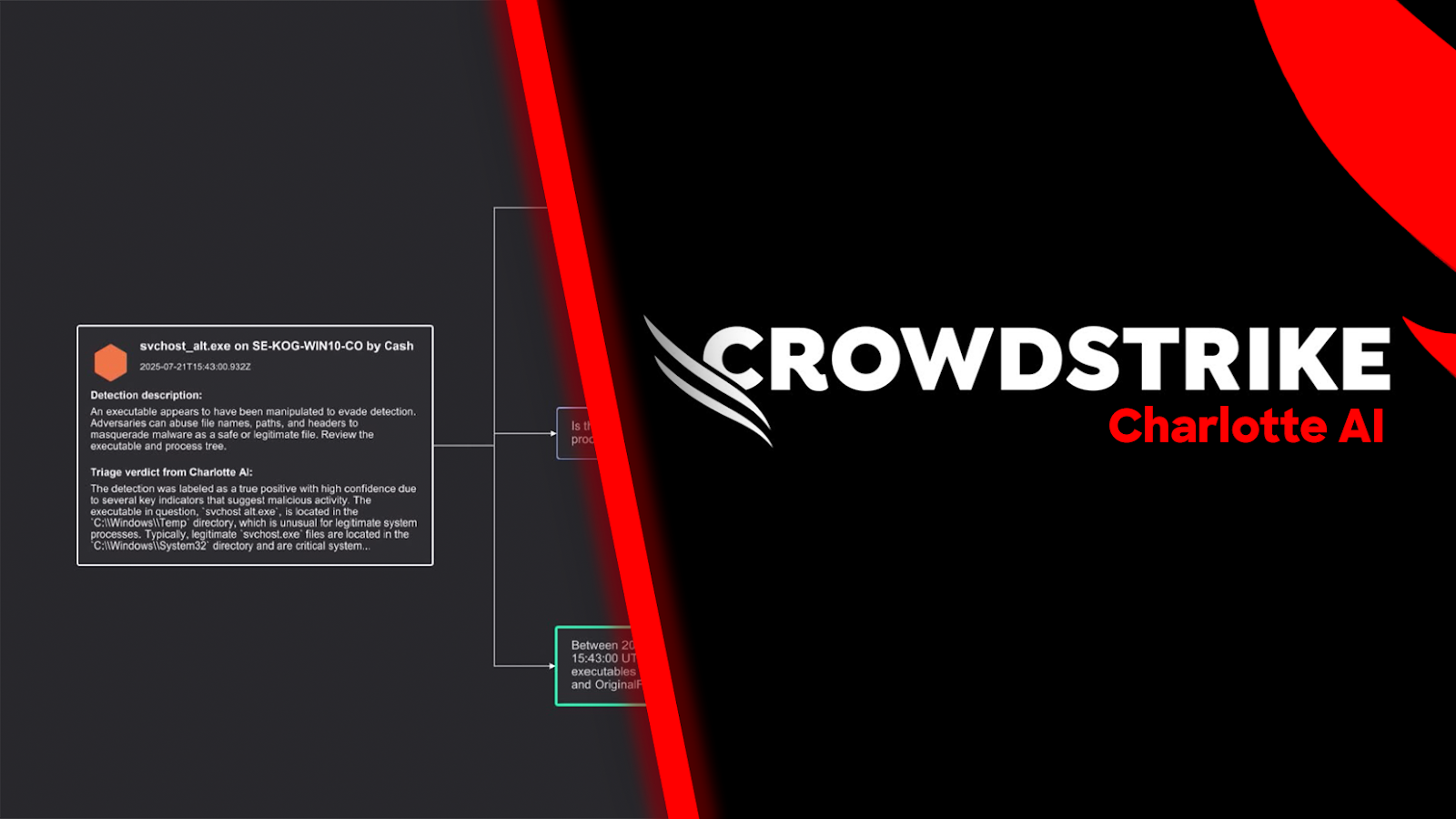 Image credit: CrowdStrike
Charlotte AI acts as an interpreter between raw security data and human decision-making. It traces how an attack moved through a system, explains what was compromised, and suggests next steps in plain language.
This reduces the time analysts spend digging through alerts and logs. Teams under pressure use it to quickly understand incidents and respond before damage spreads.
Its biggest strength was translation. Charlotte AI helped stressed analysts move from confusion to clarity faster, turning raw data into decisions instead of more dashboards.
 Image credit: Microsoft
Security Copilot helps teams make sense of overwhelming volumes of alerts by correlating signals across Microsoft’s security tools. It highlights high-risk activity, summarises incidents, and helps identify weak spots in configurations.
For organisations already running Microsoft 365 or Azure, it lowers the friction of day-to-day security work by fitting into tools they already rely on.
Rather than flooding teams with alerts, it connected signals across Microsoft tools and surfaced what actually deserved attention.
 Image credit: Reco
Reco focuses on how people actually use SaaS tools like Slack, Google Workspace, and Zoom. It detects risky behaviour such as excessive permissions, unusual logins, or unsafe file sharing. This visibility is especially useful for companies with remote teams, where security risks often come from everyday app usage rather than outright attacks.
Reco’s value came from focusing on everyday behaviour. In a year dominated by SaaS sprawl and remote work, it caught quiet risks that traditional tools often missed.
 Image credit: UpGuard
UpGuard monitors the security posture of third parties, vendors, partners, and service providers. It scans for exposed systems, misconfigurations, and known vulnerabilities, then assigns risk scores to help teams decide who to trust. It’s particularly valuable for businesses that depend heavily on external platforms or cloud-based suppliers.
UpGuard stood out by shifting security conversations beyond internal systems. As third-party risk grew, its scoring made external exposure easier to track and explain.
 Image credit: Kali Linux
Kali Linux bundles a wide range of penetration testing and security assessment tools into one operating system. It’s used to test networks, applications, and devices for weaknesses before attackers find them. Because it’s open-source and widely supported, it remains a go-to option for ethical hackers, consultants, and students learning offensive security skills.
Despite newer tools, Kali’s staying power was the story. Its breadth, flexibility, and community support kept it central to real-world testing and learning.
 Image credit: ptdts
Burp Suite is designed to uncover vulnerabilities in web applications by intercepting and analysing traffic between browsers and servers. Developers and testers use it to simulate real-world attacks, identify insecure inputs, and fix flaws before they reach production. It’s especially useful in modern web environments where small bugs can lead to major breaches.
Burp remained essential because it mirrored how attackers think. It helped teams find the small web flaws that still caused the biggest incidents.
 Image credit: Rapid7
Snort inspects network traffic in real time and compares it against known attack signatures. When suspicious patterns appear, it can alert administrators or block traffic outright. It’s widely used as a lightweight intrusion detection system, giving small teams visibility into what’s happening on their networks without complex setup.
Snort proved that simple still works. For many teams, its straightforward traffic inspection delivered visibility without the cost or complexity of larger platforms.
 Image credit: OSSEC
OSSEC monitors activity inside systems rather than just network traffic. It watches logs, file changes, and processes to detect abnormal behaviour that may signal a breach. Because it runs across multiple operating systems and uses relatively few resources, it’s often used as an early warning system in mixed environments.
OSSEC’s strength was subtlety. It quietly monitored system behaviour and surfaced early warning signs before incidents escalated.
 Image credit: Cloudflare
Cloudflare’s Zero Trust model limits access so users only reach the systems they need, reducing the damage a compromised account can cause. The post-quantum edition adds encryption designed to withstand future cryptographic threats. For organisations thinking long-term about security architecture, it provides a way to protect today’s traffic while preparing for tomorrow’s risks.
What set it apart was foresight. While most tools focused on current threats, Cloudflare pushed organisations to think about access control and encryption years ahead.
Key 2024 Cybersecurity Trends for Protecting User Privacy
What individuals and businesses are using to protect their privacy against breaches.



This is Follow the Money, our weekly series that unpacks the earnings, business, and scaling strategies of African fintechs and financial institutions. A new edition drops every Monday.
From January 2026, sending ₦50,000 ($34.14) through your bank app could cost you ₦100 in transfer fees. Not because banks suddenly changed their pricing, but because the Nigerian government has changed who pays for electronic transfers.
Five years after replacing stamp duty with the Electronic Money Transfer Levy (EMTL), Nigeria is reintroducing stamp duties, according to new budget documents, and the shift will change how everyday transfers work. Introduced in 2020, EMTL imposed a flat, one-off ₦50 charge on electronic transfers of ₦10,000 ($6.83) and above, paid by the receiver, as part of the government’s push to diversify revenue away from oil and tap into Nigeria’s booming e-payments market, which hit ₦1 quadrillion in 2024.
However, under the Nigeria Tax Act 2025, EMTL has been renamed stamp duty and expanded to include duties payable on chargeable instruments, including tax stamps, electronic tagging, electronic receipts, and certificate issuance.
“Compliance with the approved Regulations governing the administration of Stamp Duties will be enforced to ensure full collections over the medium term,” the Nigerian government wrote in a budget document.
For transfers, the ₦50 charge will no longer be a one-off deduction on funds received. From 2026, the obligation shifts to the sender, turning stamp duty into an additional cost layered on top of existing transfer fees.
While the shift from EMTL to stamp duty rewrites who bears the cost of digital payments, it also makes what was once an invisible deduction on money received become a visible, repeated expense on every transfer sent, reshaping consumer behaviour, fintech pricing models, and the government’s long-term bet on electronic payments as a dependable revenue stream.
How it affects transfers
Today, most bank customers already pay transfer fees: ₦10 for transfers below ₦5,000; ₦25 for transfers between ₦5,001 and ₦50,000; ₦50 for transfers above ₦50,000.
From 2026, sending ₦10,000 or more will cost between ₦75 and ₦100 per transfer, depending on the amount. While the money received stays whole, the sender pays more in transfer fees.
For businesses, this technically removes the need to pass on an extra ₦50 deduction to customers receiving payments. For PoS agents, who often bake every possible charge into withdrawal fees, it eliminates the extra ₦50 deduction on transfers above ₦10,000. This increases the transfer burden for transaction initiators, unlike before, when it was split between both the receiver and sender.
For fintechs like OPay and PalmPay, which built growth on cheap or outright free transfers, transactions above ₦10,000 will now come at an extra cost to senders. Digital payments in Nigeria grew because they were fast, simple, and relatively affordable. Each new layer of fees chips away at that advantage. While stamp duty will help fund the growing needs of governance, Nigerians will pay for it, ₦50 at a time, every time they send money, across all platforms.
The numbers
EMTL is a small but growing source of government revenue. It generated ₦219.11 billion ($149.61 million) in 2024, beating its ₦174.24 billion ($118.98 million) projection. Between January and July 2025 alone, it had already earned ₦211.75 billion ($144.59 million), over 92% of its ₦228.85 billion ($156.27 million) full-year target.
That growth was driven largely by the extension of the levy to fintech platforms such as OPay, PalmPay, and Moniepoint. Initially, EMTL applied only to banks. Since December 2024, fintech transactions have been brought fully into the net
With the expanded stamp duty regime, the government is projecting ₦456.07 billion ($311.42 million) in revenue in 2026, rising to ₦579.82 billion ($395.92 million) in 2027 and ₦752.45 billion ($513.79 million) in 2028. These figures are already baked into medium-term budget planning, making stamp duty a key pillar of fiscal certainty.
Also, under EMTL, revenue was shared between the federal government (15%), state governments (50%), and local governments (35%). Under the new tax law, the federal share drops to 10%, while states take 55%.
Replacing EMTL with stamp duty is part of a broader package of tax reforms set to take effect in January 2026. “The new tax laws were enacted to improve tax collection and grow non-oil revenue,” the government said in a new budget document.
The extra ₦50 people have to pay is insignificant in isolation, but multiplied across millions of daily transfers, it adds up to hundreds of billions for the government, and steadily erodes affordability for Nigerians who rely on digital payments to move money quickly and cheaply.
Exchange rate used: ₦1,464.5/$

Uber and Lyft will start testing Baidu’s Apollo Go robotaxis in London in 2026, joining Waymo and local startup Wayve as companies that will have autonomous vehicles in the city next year.
Lyft CEO David Risher said in a post on X and LinkedIn that Lyft will start testing once it receives local regulatory approval. His company “plans to scale to hundreds” of Baidu’s electric RT6 SUVs from there, though he did not lay out a timeline for commercial launch.
Uber announced it plans to test the vehicles there next year as part of its own deal with Baidu, which the companies announced in July. The company said it expects to start testing in the first half of 2026.
The twin London rollouts are the latest in a series of robotaxi tie-ups that have seen Uber and Lyft strike deals with Baidu, Waymo, and many others in order to stand up operations in cities around the world.
TECHNOLOGY
How Energy Software Development Services Strengthen Reliability and Continuity in the Power Sector


Reliability and continuity have become defining priorities for Europe’s power sector. As energy systems grow more interconnected and regulated, the margin for error continues to shrink. Businesses depend on uninterrupted energy supply, regulators expect transparency and traceability, and consumers increasingly perceive stability as a baseline requirement rather than a differentiator.
In this environment, reliability is no longer secured solely through physical infrastructure. Digital systems play a critical supporting role, enabling energy providers to coordinate operations, manage complexity, and maintain continuity across increasingly distributed and data-intensive environments.
Reliability as an Organisational Challenge, Not Just a Technical One
Modern energy providers operate within a complex ecosystem shaped by fluctuating demand, regulatory obligations, and growing volumes of operational data. While technical failures remain a concern, many reliability risks stem from organisational fragmentation rather than infrastructure alone.
Disparate systems, inconsistent data flows, and limited visibility across departments can weaken operational awareness and slow decision-making. When information does not move efficiently between teams responsible for generation, distribution, compliance, and reporting, continuity becomes harder to maintain, even in otherwise well-structured organisations.
Digital solutions address this challenge by improving coordination, standardising processes, and ensuring that accurate, timely information is available where it is needed. Rather than replacing human expertise, software supports clearer oversight and more informed decision-making.
How Custom Energy Software Development Services Support Operational Stability?
Effective energy software development services focus on aligning technology with how organisations actually operate. Custom software solutions are designed around real workflows, responsibilities, and regulatory requirements, enabling energy providers to manage operations more predictably and with fewer disruptions.
By supporting planning, reporting, monitoring, and cross-department coordination, custom platforms reduce uncertainty and improve operational resilience. Incremental digitalisation allows organisations to modernise legacy environments without interrupting critical processes, ensuring continuity while capabilities evolve.
Generic, one-size-fits-all tools often struggle to accommodate the regulatory and organisational complexity of the energy sector. In contrast, custom-built solutions adapt to the realities on the ground, supporting long-term stability rather than short-term fixes. When digital systems reflect established processes and operational logic, they become an integral part of maintaining reliability rather than an additional source of risk.
The Role of Industry Experience in Energy Digitalisation
Industry understanding is a decisive factor in delivering reliable digital solutions. Energy sector digitalisation requires more than technical competence; it demands familiarity with regulatory constraints, asset-intensive operations, and the importance of business continuity.
Technology partners with sector experience are better positioned to translate operational requirements into practical, scalable systems. By focusing on usability, data accuracy, integration, and long-term maintainability, experienced teams help organisations strengthen cooperation across departments and reduce dependency on manual workarounds.
Companies such as Softech approach energy digitalisation as a support function for business operations, building software that reinforces coordination and continuity rather than disrupting existing workflows. This pragmatic approach ensures that digital solutions enhance reliability through better collaboration and operational clarity.
Continuity Through Intelligent Cooperation
A reliable power system depends as much on cooperation as on resources. Digital platforms that improve transparency and align processes across organisational boundaries help energy providers maintain service continuity in a changing environment.
Well-designed software solutions make it easier to anticipate issues, respond to change, and ensure consistency between what energy providers deliver and what consumers and regulators expect. By strengthening cooperation between systems, teams, and stakeholders, digital tools contribute directly to the resilience of the power sector.
As energy markets continue to evolve, reliability and continuity will remain central concerns. Energy software development services that prioritise operational alignment, industry understanding, and long-term partnership will play an increasingly important role in supporting stable, sustainable energy systems.


Airtel Africa has announced that its Undergraduate Tech Scholarship (2025/2026) has opened applications in Nigeria. The program, championed by Airtel Africa Foundation, targets 100 undergraduate students enrolled in selected public universities.
Airtel explained that the programme is dedicated to supporting undergraduates studying ICT and technology-related courses. The mission is to help remove financial barriers and strengthen Nigeria’s future digital workforce.
“This scholarship is part of the broader Airtel Africa Tech Fellowship, a pan-African initiative focused on expanding access to STEM education for young Africans from underserved backgrounds,” it said.
The program, which will receive applications from December 18 to December 14, is open to 100-level students from the following seven public universities in Nigeria:
- University of Lagos (UNILAG).
- University of Nigeria (UNN).
- Ahmadu Bello University, Zaria (ABU).
- University of Benin (UNIBEN).
- Obafemi Awolowo University (OAU).
- University of Ilorin (UNILORIN).
- Tai Solarin University of Education (TASEUD).
Selected beneficiaries of the Airtel Africa Tech Scholarship will receive support throughout their undergraduate study. This includes tuition coverage, monthly stipends, accommodation support and study materials.
This article provides a step-by-step guide on how to apply for the scholarship.

Also Read: How to onboard and submit your final-year project on the NERD portal.
Eligibility Status
Applicants who meet the following criteria are qualified to apply for the scholarship.
- The Fellowship will only apply to students admitted into any one of the 7 participating public universities (UNILAG, UNN, ABU, UNIBEN, OAU, UNILORIN, and TASUED).
- Applicants must not be recipients of any scholarship or grant that caters to indigent students.
- Only open to 100-level students.
- The Candidate must demonstrate financial need to be eligible for the program.
- Scored a minimum of 230 in JAMB.
- Possess 5 credits, including English and mathematics, in one sitting.
- Applicants must have JAMB results and an admission letter, a School ID card and a WAEC or NECO certificate/ result to be shortlisted.
- Applicants must be pursuing any of the following STEM courses. Information Technology, Computer Science, Systems Engineering, Computer Technology, Data Science, Software engineering, Library and Information Science, Cybersecurity, Artificial Intelligence, Telecommunication Engineering, and other tech or ICT-related fields.
Documents needed
Applicants will need to upload scanned copies of the following as part of the application:
- A recent passport-sized photograph of the applicant in JPEG format (not more than 200kb).
- University admission letter
- Unified Tertiary Matriculation Examinations (UTME) result
- O-Level Result(s)/ A-Level /OND /NCE Result(s), as applicable.
How to apply
1. Onboarding
Step 1: On your device, type the URL – https://bit.ly/airtelfellowship2025– to access the scholarship portal, and click on ‘Apply Now.’
Step 2: Click on ‘Register’ to create an account.
 Airtel Africa Foundation – Onboarding
Step 3: Supply necessary details and create a strong password. Ensure the email is active. Then, click on ‘Register.’
Step 4: Verify your account via the email sent to the email address provided.
2. Application
Step 1: Locate the portal and log in with your email and password.
Step 2: Click on the four dashes at the top left-hand corner, then ‘My Account+,’ then click on ‘My Profile.’
 Airtel Africa Scholarship – Application
Step 3: Click on ‘Personal Information’ to supply the necessary biometric data, such as name, NIN, marital status, and phone number. Click on ‘Update’ to save your progress.
Step 4: Click on ‘Additional Information’ to supply personal details such as address, nationality, academic referee, next of kin and parents’ details. Click on ‘Update’ to save your progress.
Step 5: Click on ‘Passport Photograph’ to upload the picture from your device.
Note that the photograph must be in colour and of a size of 450px by 450px. The background should be a plain light colored background, and it must present a full head from the top of the hair to the bottom of the chin. Click on ‘Upload file’ to save your progress.
Tip: Click here to resize your picture to 450px by 450px online.
Step 6: Click on ‘Secondary Level’ to provide details of your secondary education status and schools attended. Save your progress by clicking on ‘Update.’
Step 7: Click on ‘O-Level Details,’ and provide details of at least 5 credits of your O-Level result. You are to type the subject name, followed by a space and the grade. For instance: Biology A1. Click on ‘Update’ to save your progress.
 Airtel Africa Scholarship – Application
Step 8: Click on ‘Undergraduate Level’ and provide details of your undergraduate education, including entry details and current status. Click on ‘Update’ to save your progress.
Step 9: Click on ‘Documents’ to upload the necessary documents for the scholarship. Documents required for uploading are university admission letter, UTME result, School ID card and O’ Level Result(s)/ ‘A’ Level /OND /NCE Result(s), as applicable.
Note that the documents are expected to be either JPEG, MS Word (.doc or .docx) or PDF format and no larger than 500kb in size.
Step 10: Click on ‘Bank Details’ to provide your bank account name and account number. Tap on ‘Add Account’.
Note: For ‘Sort Code,’ you can visit your bank branch to ask for their sort code.
 Airtel Africa Scholarship – Application
Also Read: Complete guide on how to apply for the NYSC YouthCred loan.
3. Submission
Here is where you’ll complete your Airtel Fellowship Application and review your submissions.
Step 1: On your profile, click on ‘Active Scholarships’.
Step 2: Then, click the ‘View/Apply’ beside the Airtel Africa Fellowship/2025 Airtel Fellowship Program.
Step 3: You’ll be directed to the Airtel Fellowship homepage. Click on ‘Apply Now.’
If you’re yet to supply the necessary details or upload all required documents, you’ll be asked to make adjustments. But if you’ve supplied all necessary details, you’ll see a notification with the heading ‘Profile Complete!’
 Airtel Africa Scholarship – Submission
Step 4: Tick the box to confirm the authenticity of the information supplied.
Step 5: Scroll down to review the information supplied. Once self-vetted, click on ‘Apply’ to submit your application.
What’s next after submission?
You’re advised to keep checking your profile time-to-time for the next line of action.
As in previous editions of such scholarship programs, you’ll likely be required to print an Attestation letter from your profile. This will be signed by your HOD, then re-upload the signed copy on your dashboard.
The Airtel Foundation pointed out that it will consider gender diversity as part of the selection criteria.