
SCIENCE
Organ-tuning books in English churches provide notes on a warming climate | Climate crisis


Yangang Xing had never heard of organ-tuning books, but his colleague Andrew Knight often played the pipe organ at churches as a teenager.
When the pair, who are researchers at Nottingham Trent University, set out to study how environmental conditions in churches had changed over time, Knight explained that all over the country many organs had notebooks full of data tucked away in their recesses.
“I would sit at the organ between hymns, or between weddings,” said Knight. “Quite often, the only thing to look at between services was this little red book that sat in the corner.”
Xing realised organ-tuning books were troves of data that might span decades. “We said, ‘Oh, this is a goldmine,’” he recalled.
Organ tuners make brief records of their visits and often jot down observations in the books. Photograph: The Reengineer
Organ tuners make brief records of their visits and often jot down observations, including the temperature and humidity inside the building. Materials within organs are sensitive to climatic changes, which can knock the majestic instruments out of tune.
Earlier this month, Xing, Knight and their colleague Bruno Bingley published a paper in the journal Buildings & Cities, with preliminary data gleaned from 18 organ-tuning books associated with churches in London, Nottinghamshire and Derbyshire. The records date back to 1966 and indicate a rise in average temperatures inside churches since then, during winter and summer periods.
It reflects that churches are being heated, artificially, to a greater extent today than in the past but also that these old buildings are getting warmer even in summer months when heating systems are more likely to be turned off – a “hint” of global heating, said Knight.
The average summer temperature for urban churches in the sample was 17.2C during the late 1960s. By the 2020s it had reached 19.8C.
“It quantifies what we’ve seen,” said Andrew Scott, the managing director of Harrison & Harrison, a Durham-based company that builds and services pipe organs. “A rise of internal ambient temperature through the unheated summer months due to rising temperatures outside.”
Organ-tuning records could be useful for climate studies, said Neil Macdonald, a professor of geography at the University of Liverpool. “As somebody that’s worked on a lot of historical records of climate and weather, I’ve never come across this,” he said. “I was fascinated.”
It is possible that summer temperatures in churches could be influenced by factors besides climate breakdown, he noted – perhaps some churches were ventilated more frequently in years gone by, for example.
Organ tuners care about temperature because it affects the expansion and contraction of materials such as wood and metal, commonly used in organs, Scott said.
Humidity plays a role, too. One remark left by a tuner and noted by the researchers relates to a church organ in Nottingham. Part of the instrument appeared damaged and more difficult to tune than last time. “Weather? Misty,” the tuner wrote.
While many churches are large, difficult-to-heat stone buildings – making them refuges for some during heatwaves – hot summer weather can still trouble an organ. A change of just one degree celsius may alter the pitch of one of these instruments by 0.8 hertz, said Scott.
That means if an organ is tuned at 16C, for example, and then the temperature later rises to 20C, the notes the instrument produces can be perceptibly different.
Scott’s company has tuned organs all over the world, including in Nigeria, Malaysia and India. In hot countries, keeping an organ in tune is already challenging – climate breakdown threatens to make it harder still. And besides weather, powerful heating systems in churches can affect pipe organs even more profoundly, he added.
Xing said he and his colleagues hoped to analyse more organ-tuning book data and he urged anyone who owned such records to contact him. “If we can find older ones, it would be fascinating,” he said. “I hope people realise the value of tuning books.”











SCIENCE
New EV motor invention could cut 1,000 pounds from future vehicles, making them much lighter while boosting their range


A new in-wheel motor for electric vehicles (EVs) delivers a massive amount of torque in a lightweight package, its developers say.
The motor — which was made by YASA, a subsidiary of Mercedes-Benz that also provides motors to Ferrari — weighs only 28 pounds (12.7 kilograms) but can deliver up to 1,000 horsepower at once or a sustained 469 to 536 hp for longer durations. This new mark breaks YASA’s own previous unofficial record, a 29-pound motor that yielded 738 horsepower, company representatives said in a statement.
You may like
The ability to pack so much power into such a compact, lightweight motor is due in part to YASA’s axial flux technology. Traditional radial flux motors are longer, tube-like structures, with a stator — the stationary part of a motor that creates a magnetic field used to produce motion — surrounding a cylindrical rotor. A magnetic field is passed perpendicularly to the shaft through the cylinder to spin the rotor.
By contrast, an axial flux motor is more like a pancake, with a disc-like rotor and stator. Magnetic flux passes along the axis parallel to the shaft (hence the name). The axial flux tech allows for much smaller designs than traditional radial designs, according to YASA.
Much lighter EVs in the future
The company emphasized that the design is scalable and doesn’t rely on any rare or exotic materials to function.
The design also opens up a pathway for massive weight reduction in EV design. YASA said that deploying the in-wheel motors in lieu of a traditional power and drivetrain could save around 440 pounds (200 kg). And for vehicles designed from the ground up to incorporate the new motor, the savings could be closer to 1,100 pounds (500 kg).
This is in part because the system also incorporates advanced regenerative braking, the process by which electric vehicles capture energy that would normally be lost as heat during braking and utilize it to recharge the battery.
Instead of power being shunted from the battery to spin the wheels, energy from the wheels is captured to spin the motor, which generates electricity rather than consuming it. The motor resists the rotation while generating energy, thereby slowing the car and powering up the battery. YASA says efficient regenerative braking could reduce the need for traditional friction brakes, saving both weight and space.
While the current iteration is clearly geared toward high-performance EVs and supercars, axial flux motor technology opens the door for longer-range electric vehicles capable of generating more power with fewer, lighter components. The reduction in space required for traditional powertrain components also provides manufacturers an opportunity to streamline aerodynamics or provide more interior space for cargo or passengers.


What was your skywatching highlight of 2025? A comet becoming visible to the naked eye? Mars disappearing behind the moon? Or did you glimpse a “blood moon” total lunar eclipse and see the northern lights at last?
Here’s what happened in the skies in 2025, in spectacular images.
1. A Wolf Moon “eats” Mars
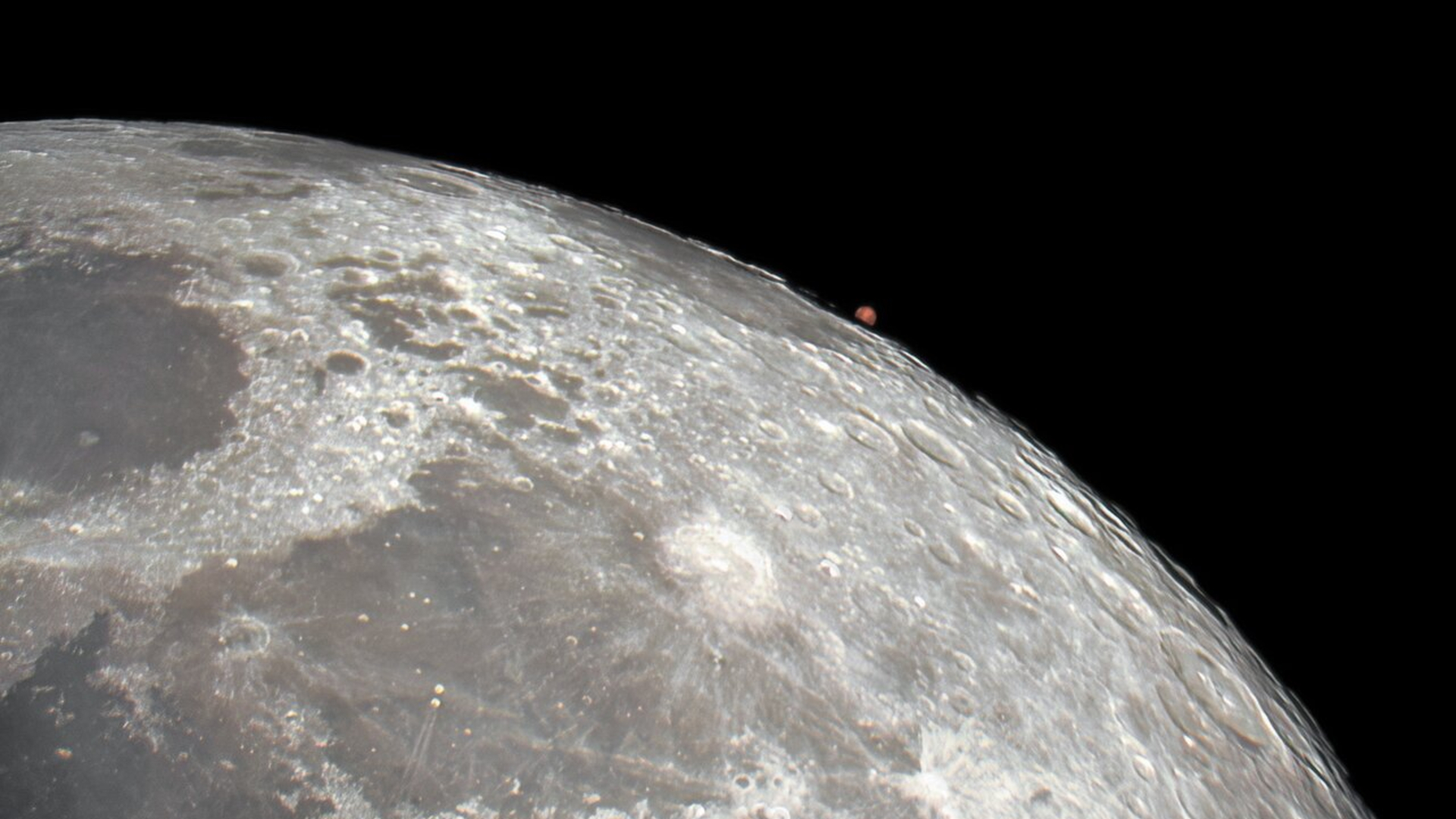
Mars rises out of a lunar occultation from Kitt Peak National Observatory in Arizona on Jan. 13, 2025. (Image credit: KPNO/NOIRLab/NSF/AURA/J. Winsky & A. Sorensen (Image credit: J. Winsky & M. Zamani (NSF NOIRLab))
Mars comes to a bright opposition in Earth’s sky only once every 26 months. But just before its big day came on Jan. 15, it grabbed skywatchers’ attention when it crossed paths with the moon. North America had a ringside seat to the full Wolf Moon’s occultation of the Red Planet, which happens just once every 14 years from a specific place on Earth’s surface.
You may like
Read more: Mars hides behind the full Wolf Moon in gorgeous photos from around the world
2. A “great comet” appears
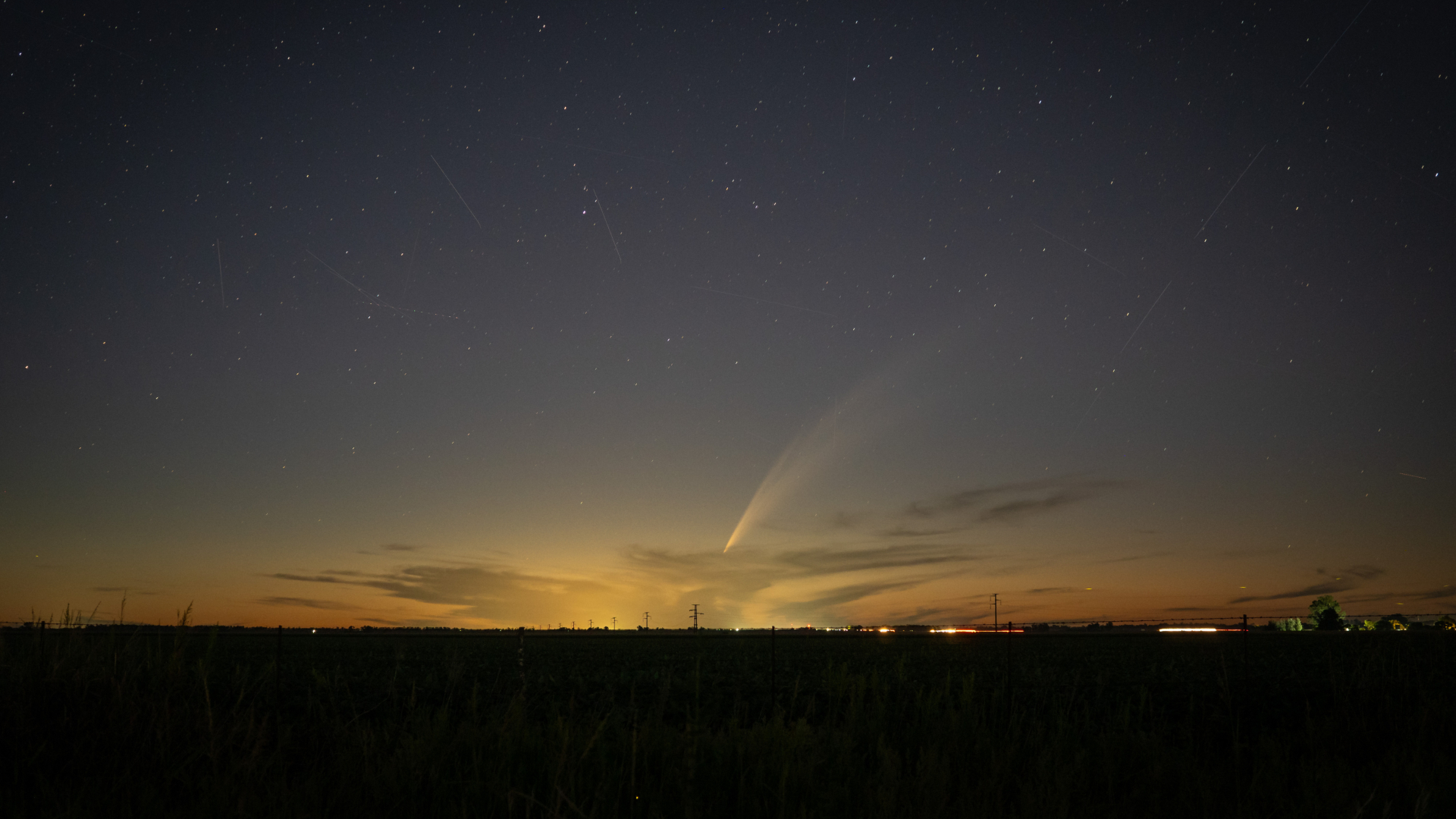
Comet C/2024 G3 (Atlas) appears in the sky over a rural area near Firmat, Argentina, on Jan. 20, 2025. (Image credit: Patricio Murphy/SOPA Images/LightRocket via Getty Images))
If you don’t remember 2025’s “great comet,” it’s probably because you’re in the Northern Hemisphere. Back in mid- to late January, Comet 2024 G3 (ATLAS) made a close pass of the sun before sprouting a bright, structured tail that delighted astrophotographers south of the equator. The comet even became bright enough to be visible in the daytime with the naked eye.
Read more: Why Comet G3 (ATLAS) will be ‘remembered as the Great Comet of 2025’ (photos)
3. “Blue Ghost” lands on the moon
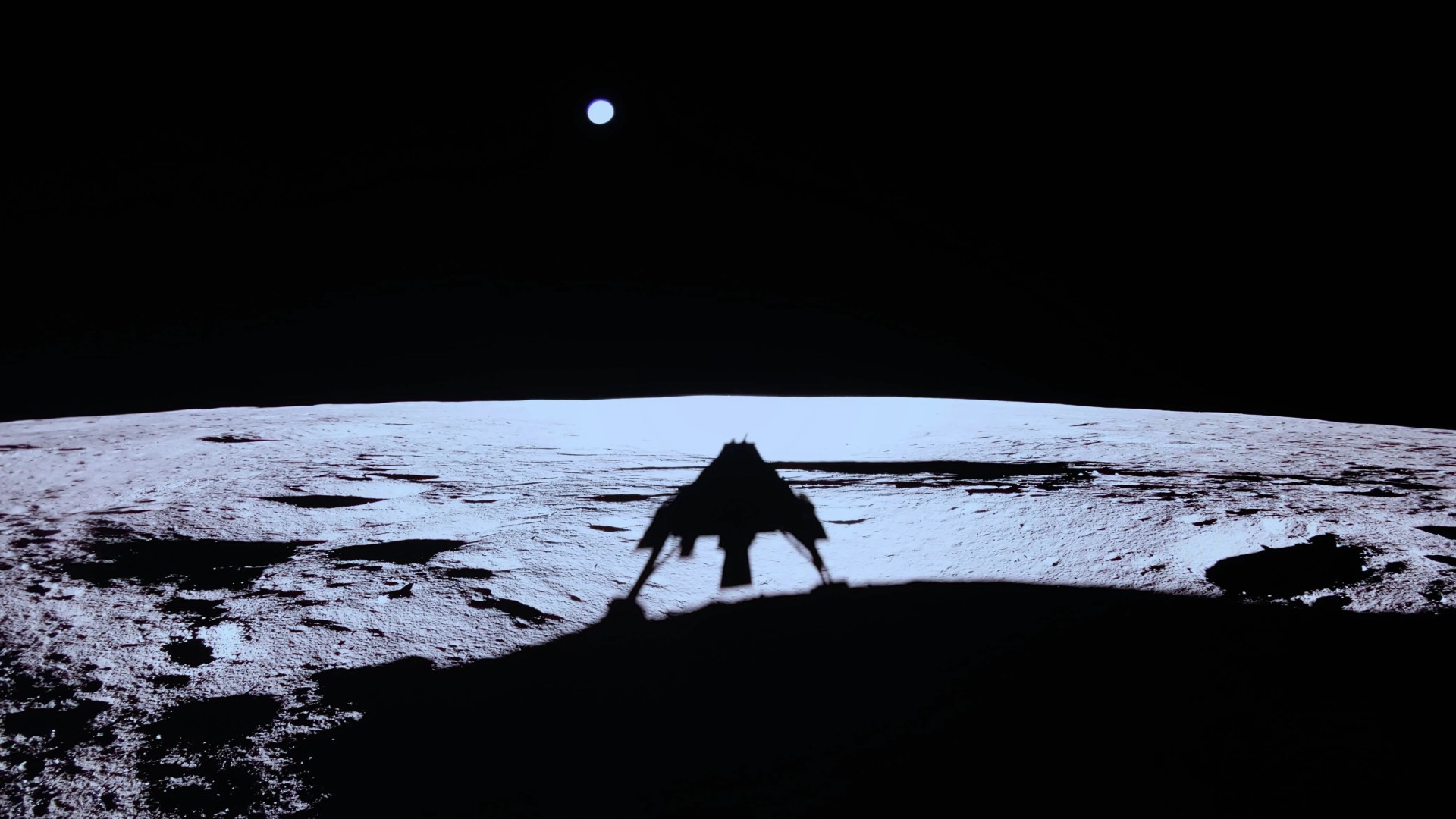
Firefly Aerospace’s Blue Ghost Mission 1 landed on the moon on March 2, 2025. (Image credit: Firefly Aerospace)
After launching atop a SpaceX Falcon 9 rocket in January, Texas-based Firefly Aerospace successfully landed its Blue Ghost spacecraft on the moon’s 300-mile-wide (500 kilometers) Mare Crisium (“Sea of Crises”) basin in early March, becoming the second private spacecraft ever to soft-land on the moon. The company shared a spectacular video showing Blue Ghost’s descent and spectacular landing, complete with its own long lunar shadow.
Read more: Touch down on the moon with private Blue Ghost lander in this amazing video
4. A star trail is visible from orbit

NASA astronaut Don Pettit captured this long-exposure view showing Earth and stars as intense streaks over time, as seen from the International Space Station. (Image credit: NASA/Don Pettit and Babak Tafreshi via X)
Between September 2024 and April 2025, NASA astronaut Don Pettit — famed for his pioneering work in astrophotography from orbit — conducted his third mission on the International Space Station. In collaboration with astrophotographer Babak Tafreshi of The World at Night on the ground, Pettit took the art form to another level, capturing dozens of mesmerizing star trails.
Read more: Astronaut takes a mind-bending trip over Earth beneath star trails: Space photo of the day
You may like
5. A “blood moon” total lunar eclipse captivates skywatchers
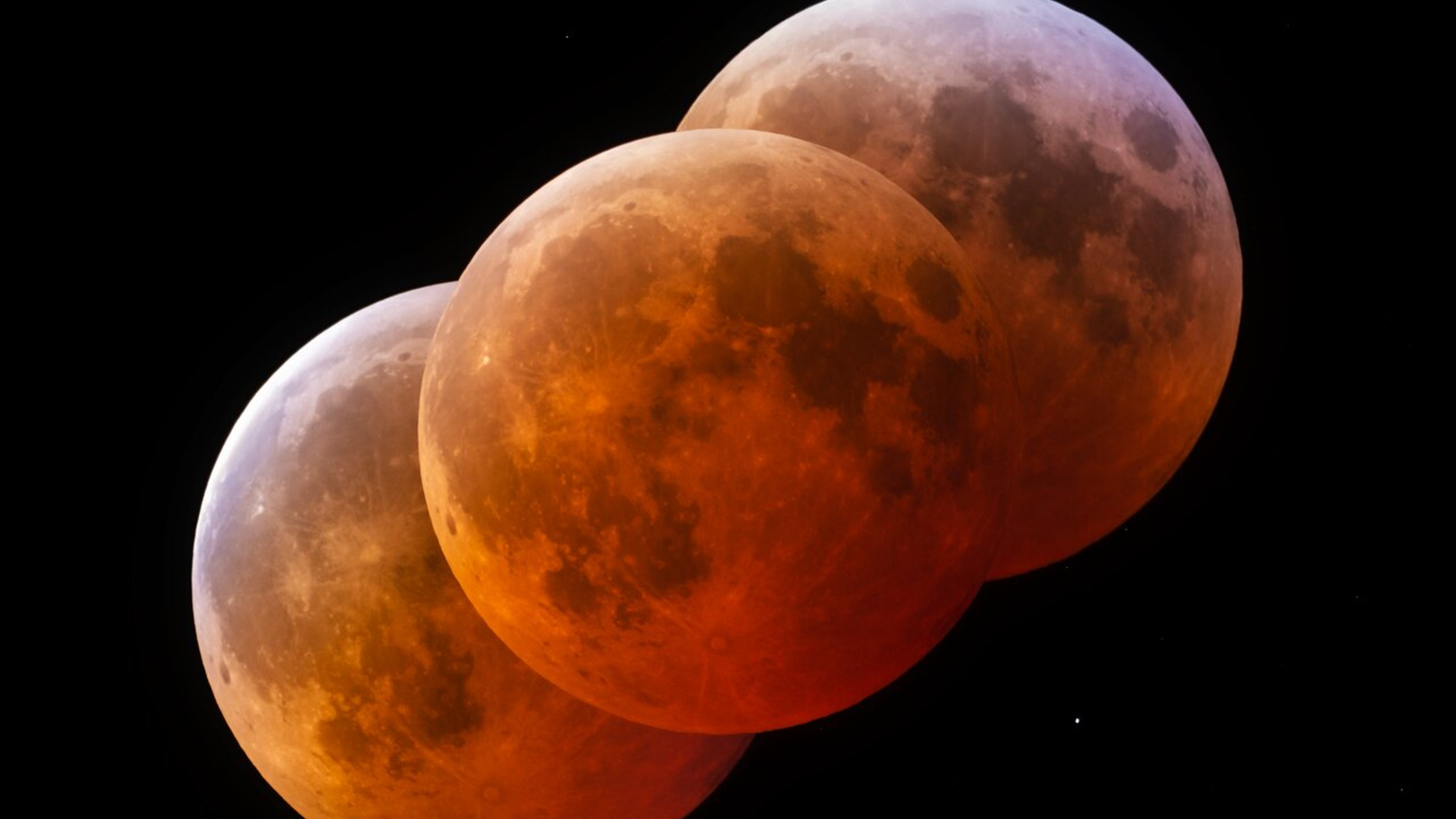
Petr Horálek, NOIRLab’s photo ambassador, captured a total lunar eclipse from the Cerro Tololo Inter-American Observatory in Chile. (Image credit: CTIO/NOIRLab/NSF/AURA/P. Horálek (Institute of Physics in Opava))
The first total lunar eclipse in three years delighted skywatchers on March 13-14, 2025, when a full Worm Moon crept through Earth’s central shadow in space for 65 minutes, making the lunar surface appear reddish-orange from our perspective on Earth. The event, visible from Earth’s nightside, was captured with a moonbow from Kentucky and with the Milky Way from Chile. Another lunar eclipse on Sept. 7-8 made for some spectacular photos, including one taken over Egypt’s White Desert.
Read more: Total lunar eclipse March 2025: Best photos of the “Blood Worm Moon”
6. Vapor tracers appear inside auroras
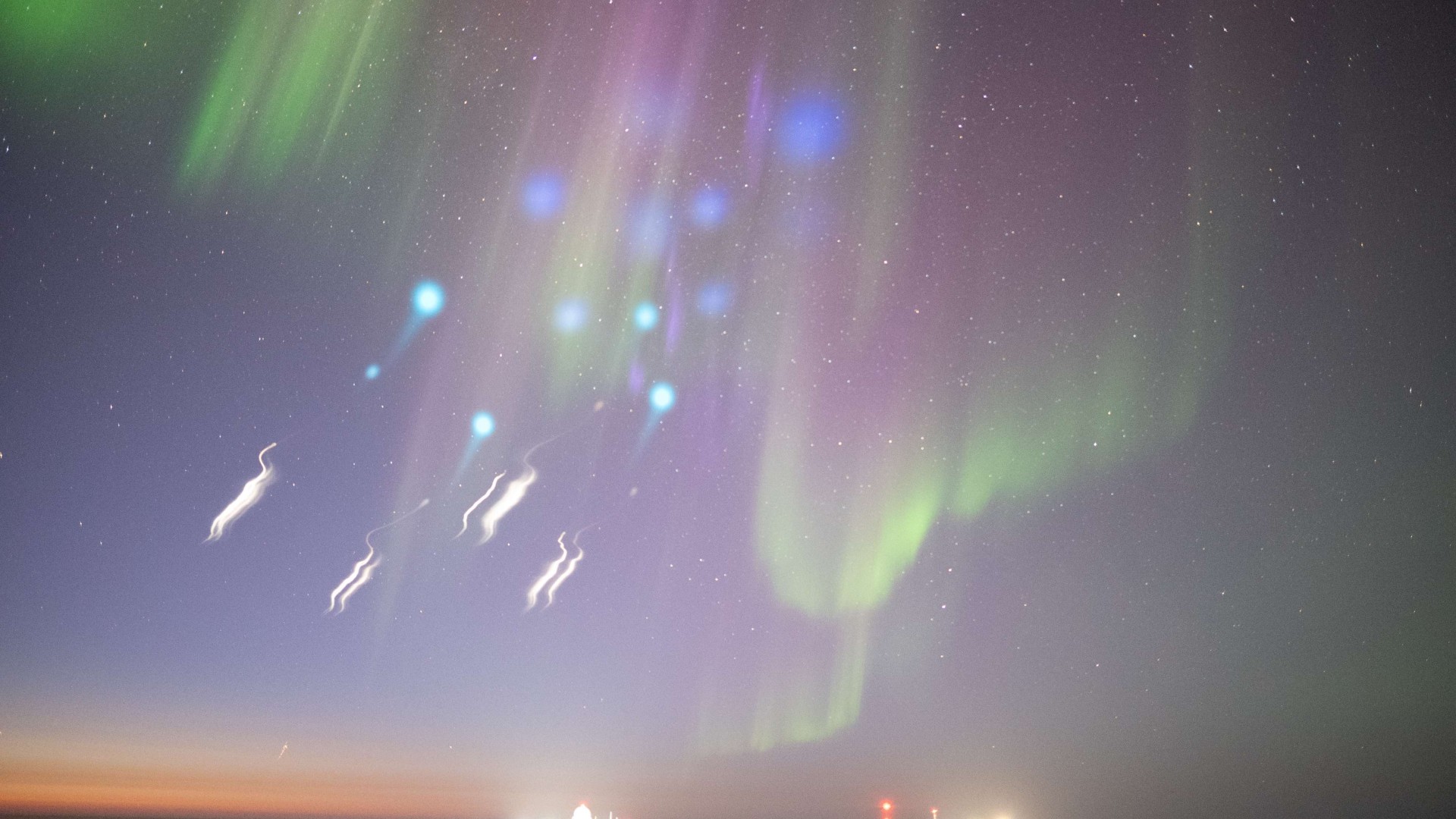
Vapor tracers light up the atmosphere over the Arctic Ocean as seen from Utqiagvik, Alaska, on March 25, 2025. (Image credit: AWESOME Mission)
Just as an aurora substorm erupted, two NASA sounding rockets poised for launch at Alaska’s Poker Flat Research Range suddenly went skyward, releasing colorful vapor tracers within the aurora borealis, or northern lights. As part of the AWESOME mission, vapor tracers were imaged using cameras across northern Alaska to track winds, particle flows and magnetic changes during the outburst.
Read more: NASA launches rockets into auroras, creating breathtaking lights in Alaskan skies (photos)
7. Perseids blast through moonlight

A meteor streaks across the sky over Spruce Knob, West Virginia, on Aug. 3, 2025. (Image credit: NASA/Bill Ingalls)
It may be the Northern Hemisphere’s favorite annual meteor shower, but the Perseids weren’t a classic in 2025, as they were marred by an 84%-illuminated crescent moon. However, before the peak night of the Perseid meteor shower on Aug. 12-13, there was a short window of darkness, during which a few bright meteors were seen in the predawn hours. About 10 days before the peak night, NASA photographer Bill Ingalls took this long exposure of a Perseid meteor in Spruce Knob, West Virginia.
Read more: Perseid meteor shower 2025 outshines moon to put on a spectacular show (photos)
8. An interstellar comet grows a tail

A deep image of the interstellar comet 3I/ATLAS by the Gemini South Telescope in Chile. (Image credit: International Gemini Observatory/NOIRLab/NSF/AURA/Shadow the Scientist. Image Processing: J. Miller & M. Rodriguez (International Gemini Observatory/NSF NOIRLab)/T.A. Rector (University of Alaska Anchorage/NSF NOIRLab)/M. Zamani (NSF NOIRLab).)
For comet hunters, 2025 was a landmark year, primarily because it saw the discovery of the third interstellar object ever to visit our solar system. Comet 3I/ATLAS, as it came to be known, followed in the wake of ‘Oumuamua (1I/2017 U1) in 2017 and 2I/Borisov in 2019. In late August, astronomers using the Gemini South telescope in Chile glimpsed the tail of the interstellar interloper.
Read more: Scientists capture interstellar invader comet 3I/ATLAS growing a tail
9. Solar maximum continues to deliver

The great aurora of June 1, 2025. (Image credit: VW Pics /Getty Images)
Following an incredible year in 2024, it was likely that 2025 would experience some significant geomagnetic activity, thanks to solar maximum, the peak of the 11-year solar cycle. Observers in the right place at the right time on April 14-15, June 1, June 17 and Sept. 2 (and many other dates) enjoyed spectacular auroras as G4 geomagnetic storms produced auroras at low latitudes.
Read more: Severe G4 geomagnetic storm sparks northern lights across US and beyond (photos)
10. Comet Lemmon ripens
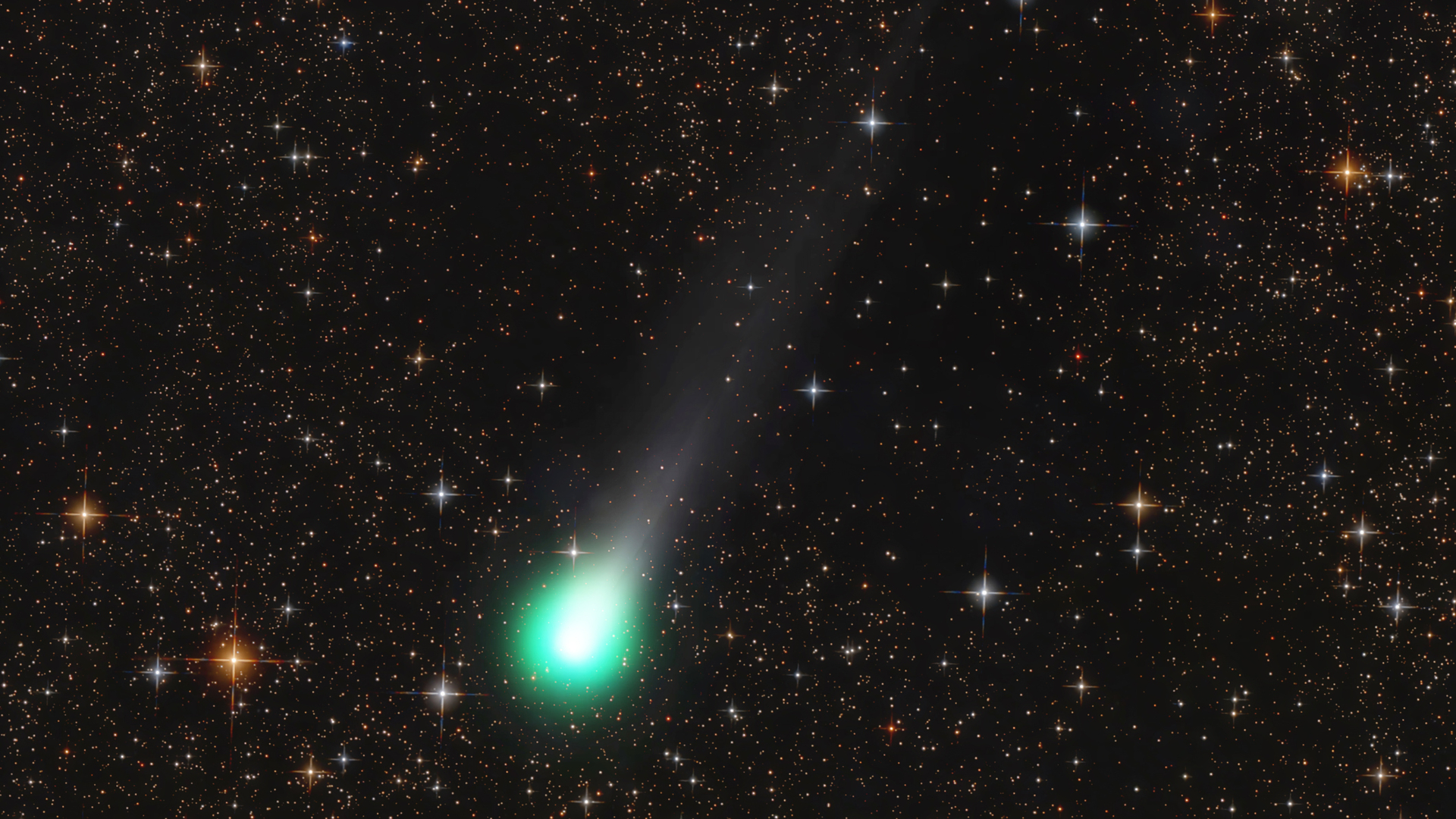
Comet C/2025 A6 (Lemmon) with a glowing green coma and visible tail as seen from Málaga, Spain, on Oct. 1, 2025. (Image credit: Javier Zayas Photography/Getty Images)
What are the chances of a naked-eye comet becoming visible on the same night as the peak of the Orionid meteor shower? Although it was only on the cusp of naked-eye visibility — and was visible only to astrophotographers in the Northern Hemisphere — Comet Lemmon (C/2025 A6) put on a show in mid- to late October. A surprise companion, Comet C/2025 R2 (SWAN), appeared in telescope images on Sept. 10. But although it was initially bright, it never got as luminous as Lemmon.
Read more: Astrophotographers capture dazzling new views of Comet C/2025 A6 (Lemmon) as it brightens for October skies

QUICK FACTS
Name: Holy Crib
What it is: Five pieces of sycamore wood
Where it is from: Jerusalem
When it was made: Circa 4 to 6 B.C.
In the 640s, Sophronius, the patriarch of Jerusalem, sent several unassuming wooden slats to Rome for safekeeping after the Muslim conquest of Jerusalem. Sophronius asked Pope Theodore I to protect the pieces of wood, which he said were the remains of the Holy Crib — Jesus’ manger.
According to Monsignor Piero Marini, who is the guardian of the Holy Crib, four of the wooden slats once formed two X’s, while the fifth slat ran down the middle to hold them together. Wooden mangers in the late first century B.C. would have been topped with straw for animals to eat. But this particular manger is much more significant: It is said to have once held the baby Jesus.
You may like
The Gospel of Luke mentions that Jesus was born in Bethlehem. Because there was nowhere for Mary and Joseph to stay in town, the newborn Jesus was laid in a manger. Many biblical scholars believe that Jesus was born between 6 and 4 B.C. And while his birth is celebrated on Dec. 25 every year, scholars are unsure of his exact birth date.
The first historical mention of the manger pieces comes from Origen, an early Christian scholar, who wrote in A.D. 220 that the crib was preserved in Bethlehem, according to Marini. Then, around A.D. 400, St. Jerome discussed the Holy Crib and many people’s pilgrimages to it in the Grotto of the Nativity in Bethlehem. Ever since the wood pieces made their way to Rome in the seventh century, the manger has remained in Santa Maria Maggiore.
In 1894, abbot Giuseppe Cozza-Luzi was the first to study the remains of the Holy Crib. His examination revealed that there are two longer pieces of wood and three shorter pieces — ranging from about 25 to 33.5 inches (64 to 85 centimeters) in length — and that all of them had been damaged over time. Several of the wooden pieces also had holes and traces of metal, suggesting they had once been constructed into a manger.
MORE ASTONISHING ARTIFACTS
Based on a microscopic analysis of a small piece of wood that had been removed in the 1600s, Cozza-Luzi concluded that the wood was a kind of hard maple, possibly sycamore. The type of wood, the form of the slats, and the evidence of construction — along with historical references — all suggested to him that the Holy Crib remains were part of an authentic ancient manger from the Jerusalem area.
In 2019, experts restored the wooden slats, and Pope Francis took the opportunity to give a small piece of the crib back to the Holy Land, with a plaque that read “Ex cunis Iesu Infantis,” meaning “From the crib of the Infant Jesus.”
Each year, many Christians visit the Holy Crib during the annual Christmas Eve mass at midnight at Santa Maria Maggiore, which is also called Santa Maria ad Praesepe (St. Mary of the Crib) and the “Bethlehem of the West” for its association with Mary and her baby’s manger.
For more stunning archaeological discoveries, check out our Astonishing Artifacts archives.
SCIENCE
Trump’s shuttering of the National Center for Atmospheric Research is Stalinist | Michael Mann and Bob Ward

The Soviet dictator Joseph Stalin would no doubt have understood and even appreciated the latest attack by the Trump administration on climate researchers and their work.
The National Center for Atmospheric Research in Boulder, Colorado, is to be dismantled after more than 50 years at the forefront of global research on climate science and monitoring.
This is the latest step in the administration’s climate Lysenkoism and its relentless purge of climate researchers who refuse to be co-opted into its quest for American energy dominance though fossil fuels.
Stalin’s embrace of the work of Trofim Denisovitch Lysenko, who wrongly believed that wheat could inherit characteristics acquired by previous generations, underpinned policies that failed to prevent crop failures and millions of deaths from famine during the 1930s.
Scientists who opposed Lysenkoism were denounced, fired, imprisoned and even executed. While Trump has not gone as far as Stalin, his administration’s persecution of climate researchers could ultimately lead to many millions of deaths from increases in extreme weather and sea level rise in the United States and across the world.
Six years ago, we warned in an op-ed for the Guardian of the dangers of climate Lysenkoism during Trump’s first presidential term. Little did we know that there would be a second term and an even more extreme war against scientific reality.
The closure of NCAR was announced on X, the Trump administration’s preferred propaganda platform, by Russell Vought, the director of the office of management and budget.
He laughably described NCAR as “one of the largest sources of climate alarmism in the country”, but it is transparently part of the Trump administration’s promotion of wilful ignorance about climate change.
We both have direct experience of the deep expertise and careful methodology of the many generations of scientists who have worked at NCAR, a stark contrast with the blatant mischaracterisation offered by Vought.
He is the architect of climate Lysenkoism during Trump’s second term, and Vought laid out his plans to eliminate all governmental knowledge and understanding of climate change in his Project 2025 manifesto during the presidential campaign.
Vought was also behind the Trump budget proposal earlier this year that proposed to end funding for most government laboratories and institutions that carry out any work related to climate change.
Fortunately, Congress rejected most of the funding cuts in the administration’s budget, but Vought will no doubt try again next year as part of the administration’s promotion of climate Lysenkoism.
While it is difficult to understand the workings of Donald Trump’s mind, his administration’s pretence that climate change does not exist is in line with his ambition to make the United States and the rest of the world more dependent on American oil, gas and coal.
Trump’s presidential campaign received at least $75m from oil and gas interests, according to media reports, and he promised to repay their investments through his administration’s support for more exploration and production.
The administration’s war on climate researchers helps to shield oil and gas executives from criticism of the damage that their industry is causing.
We are both seeing first-hand the impact of this at the annual meeting of the American Geophysical Union in New Orleans, where scientists usually gather to discuss the latest advancements in climate research.
This year, there are far fewer climate scientists taking part, with many federally funded researchers having lost their jobs or had their budgets slashed.
However, there are signs that the administration’s attempt to promote a bogus version of climate science is not advancing quite as smoothly as they’d hoped.
In July, the Department of Energy published a ludicrous report that attempted to present a revisionist account of established climate science.
The report, called A Critical Review of Impacts of Greenhouse Gas Emissions on the US Climate, was commissioned by Chris Wright, the former head of oil and gas company Liberty Energy, whom Donald Trump selected to be energy secretary and chief propagandist.
The report was written by five scientists who were obviously selected to produce a version of climate science that was aligned with the administration’s political agenda.
It was clearly intended to support an attempt by the Environmental Protection Agency, launched on the same day, to overturn the supreme court’s so-called endangerment finding, which requires the government to regulate greenhouse gas emissions.
However, a group of more than 85 climate scientists comprehensively debunked Wright’s report in September, exposing numerous fundamental errors and falsehoods. They showed that the Department of Energy report was a blatant example of policy-based evidence-making.
In addition, the highly respected and authoritative National Academy of Sciences published its own assessment in September that concluded “the evidence for current and future harm to human health and welfare created by human-caused GHGs [greenhouse gases] is beyond scientific dispute”.
It is now widely expected that the comprehensive demolition of Wright’s report means the Environmental Protection Agency will drop references to the science when it publishes in the new year its updated case for overturning the endangerment finding.
Sadly, this setback is unlikely to stop the Trump administration’s assault on researchers, and its Soviet-style campaign to prevent Americans and the rest of the world from knowing the truth about climate change.
The Trump administration continues to act as if the story of the ransacking of the library of Alexandria is a playbook instead of a cautionary tale.
-
Professor Michael Mann is the presidential distinguished professor and director of the Penn Center for Science, Sustainability and the Media at the University of Pennsylvania, and co-author with Peter Hotez of Science Under Siege; Bob Ward is policy and communications director at the Grantham Research Institute on Climate Change and the Environment at the London School of Economics and Political Science

The seventh-ever mission of Japan’s H3 rocket did not go according to plan.
The H3 launched from Tanegashima Space Center on Sunday (Dec. 21) at 8:51 p.m. EST (0151 GMT and 10:51 a.m. local Japan time on Dec. 22), carrying a navigation satellite known as Michibiki 5, or QZS-5, aloft.
“However, the second stage engine’s second ignition failed to start normally and shut down prematurely,” officials with the Japan Aerospace Exploration Agency (JAXA) said in a statement early Monay morning (Dec. 22). “As a result, QZS-5 could not be put into the planned orbit, and the launch failed.”
You may like
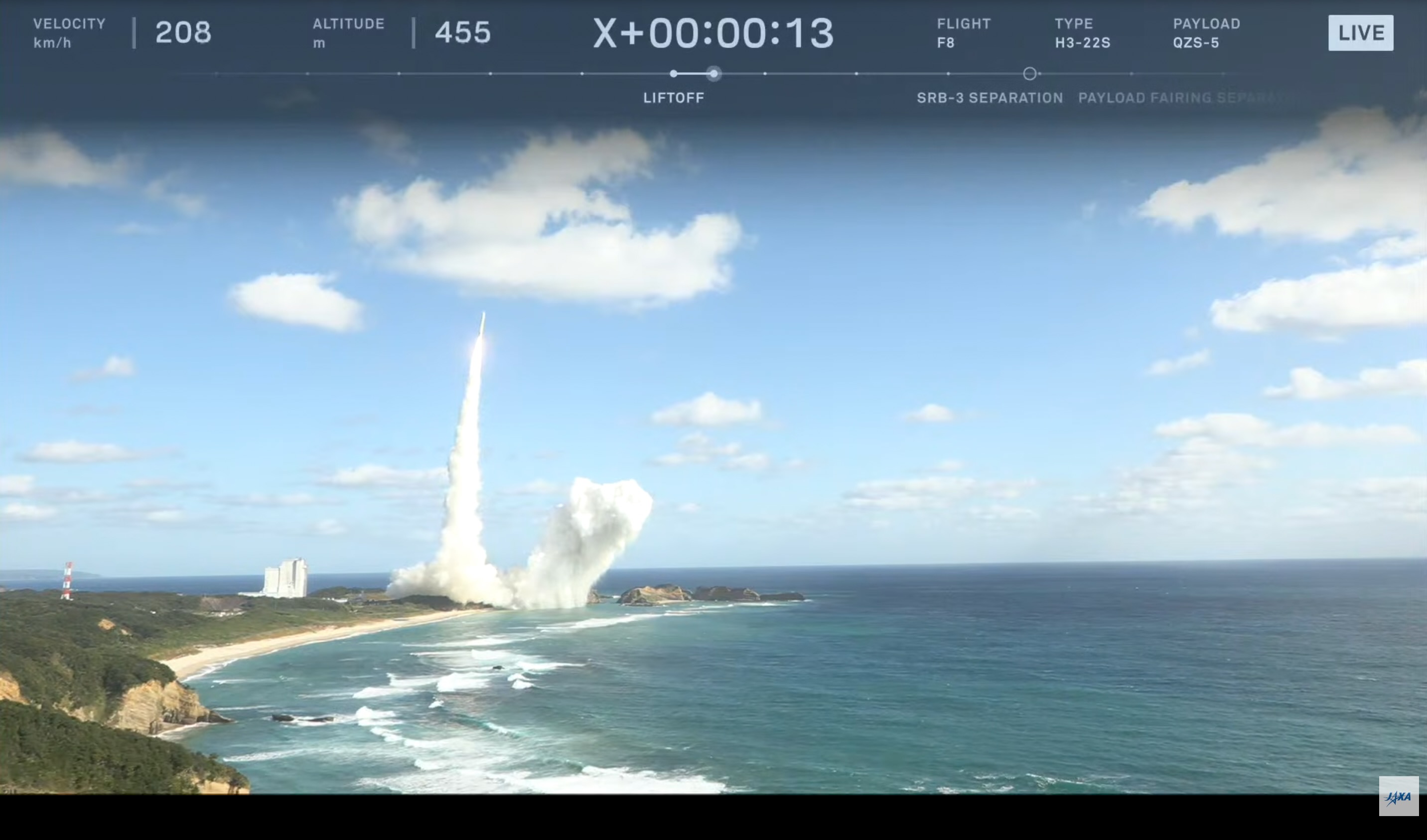
The H3 rises into the sky on Dec. 21, 2025. (Image credit: JAXA)
The 10,580-pound (4,800 kilograms) Michibiki 5 was supposed to be part of Japan’s homegrown Quasi-Zenith Satellite System (QZSS), a navigation network in geosynchronous orbit high above Earth.
“This system is compatible with GPS satellites and can be utilized with them in an integrated fashion,” Japanese officials wrote in a description of the QZSS project.
“QZSW can be used even in the Asia-Oceania regions with longitudes close to Japan, so its usage will be expanded to other countries in these regions as well,” they added.
The first QZSS satellite, a pathfinder, launched in September 2010. The system currently consists of four operational spacecraft, but Japan wants it to grow, as Sunday’s unsuccessful launch shows. Indeed, the network will eventually consist of 11 spacecraft, if all goes according to plan.
The two-stage H3 rocket was developed by JAXA and Mitsubishi Heavy Industries. It’s the successor to the H-2A, a workhorse launcher that retired in June after a quarter-century of orbital service.
The H3 failed during its debut launch in March 2023 but bounced back with five consecutive successes — until Sunday night. JAXA has set up a task force headed by agency chief Hiroshi Yamakawa to help get to the bottom of the Michibiki 5 launch anomaly.
“We would like to express our deepest apology to many people and entities, particularly those related to the QZS-5, local organizations and the public, who had high expectations for this project,” JAXA officials wrote in Monday morning’s update.

The year ahead in numbers
As we say goodbye to 2025, let’s delight in its numerical charms one final time. The year was unique this century as being a square number.
442 = 1936
452 = 2025
462 = 2116
Five 9s
Six 8s.
Six 7s.
Six 6s.
Four 5s.
Six 4s.
Four 3s.
Four 2s.
a partridge in a pear tree. (Only joking)
Continue reading…
SOURCE PAGE

With the holidays upon us, a great space board game makes for great entertainment and a terrific gift for the family, or just for you.
Games are classified as heavy, medium or lightweight, depending on their complexity and the amount of time required to play. All of the games in this article were either self-purchased or played with friends who own them; none were given to me for review, but we have reviewed a few of the entries below. You’ll find some of the best space board games ever made here, and if you’re stuck for gift ideas, why not check out the best star projectors or the best holiday gifts under $100?
Best space board games this holiday season
Why you can trust Space.com
Our expert reviewers spend hours testing and comparing products and services so you can choose the best for you. Find out more about how we test and review products.
Best heavyweight board games
Image 1 of 1
 (Image credit: Amazon)
Twilight Imperium: Fourth Edition
A competitive diplomacy and war game.
Specifications
Number of players: 4-8 (more with expansions)
MSRP: $130
Age rating: 14+
Publisher: Fantasy Flight Games
Reasons to buy
+
Great mix of action and diplomacy
+
Engaging for several players
Reasons to avoid
–
Takes a lot of time to complete
–
It’s complex, so not the easiest to pick up immediately
Twilight Imperium is the quintessential game for hard-core gamers. The game starts out with exploration and resource building, but can quickly skew towards battles, depending on how aggressively it is played. In the base version, players select one of 17 factions; with both expansions, that number grows to 30 options.
Negotiations and diplomacy are essential. Immediate deals are binding, but the rules actually state that ‘future’ promises are not. Players tend to carve out chunks of space around their home planets, using those resources to expand their fleet. Attacks are common, particularly along borders.
In addition to resources, your planets also have influence, which helps during the diplomacy phase of the game. Players vote on council issues that affect the rules, players or individual planets, and influence is vital. So is convincing others to vote your way.
Twilight Imperium is one of the most complex and longest games in the boardgaming community, but it provides sufficient variety to keep players returning for more. But it’s not for the faint of heart. It’s also worth noting that two expansions, Prophecy of Kings and Thunder’s Edge, add additional elements to the game, as well as expanding faction options. Including them will increase game time.
Today’s best Twilight Imperium 4th Edition deals


Gaia Project
In this Eurogame, players use different factions to terraform and colonize planets before their opponents.
Specifications
Number of players: 1-4
MSRP: $100
Age rating: 14+
Publisher: Captstone Games
Reasons to buy
+
Great strategy-based game
+
Requires forward thinking and is engaging for players
+
Plenty of replayability
Reasons to avoid
–
Not as immersive as other games
–
Can be a headache for those who don’t want to think ahead
Gaia Project is one of my top game choices at the moment. It features several improvements over its predecessor, Terra Mystica, including a variable game board. Gaia Project’s changing, rotating hexes mix can be combined to create a wealth of different playing spaces, making the game infinitely replayable.
Players have an option to select one of fourteen factions in the base game; the expansion provides four additional options. Because each faction board is double-sided, that reduces the choices during the game but also prevents two players of the same planet type, which is a small price to pay. Each round scores differently, and the scoring options are mixed up for each play. The tech board options also change, along with the map, again, making the game infinitely replayable.
I also own the expansion, Lost Fleet, and found that while the base game is excellent, the expansion makes it better. It introduces an additional mechanic (ships that grant access to new action spaces) and smaller, new map tiles, which, combined with the larger board, enhance the game’s playability. I still love the base game but definitely prefer the expansion!
Today’s best Capstone Games Gaia Project deals


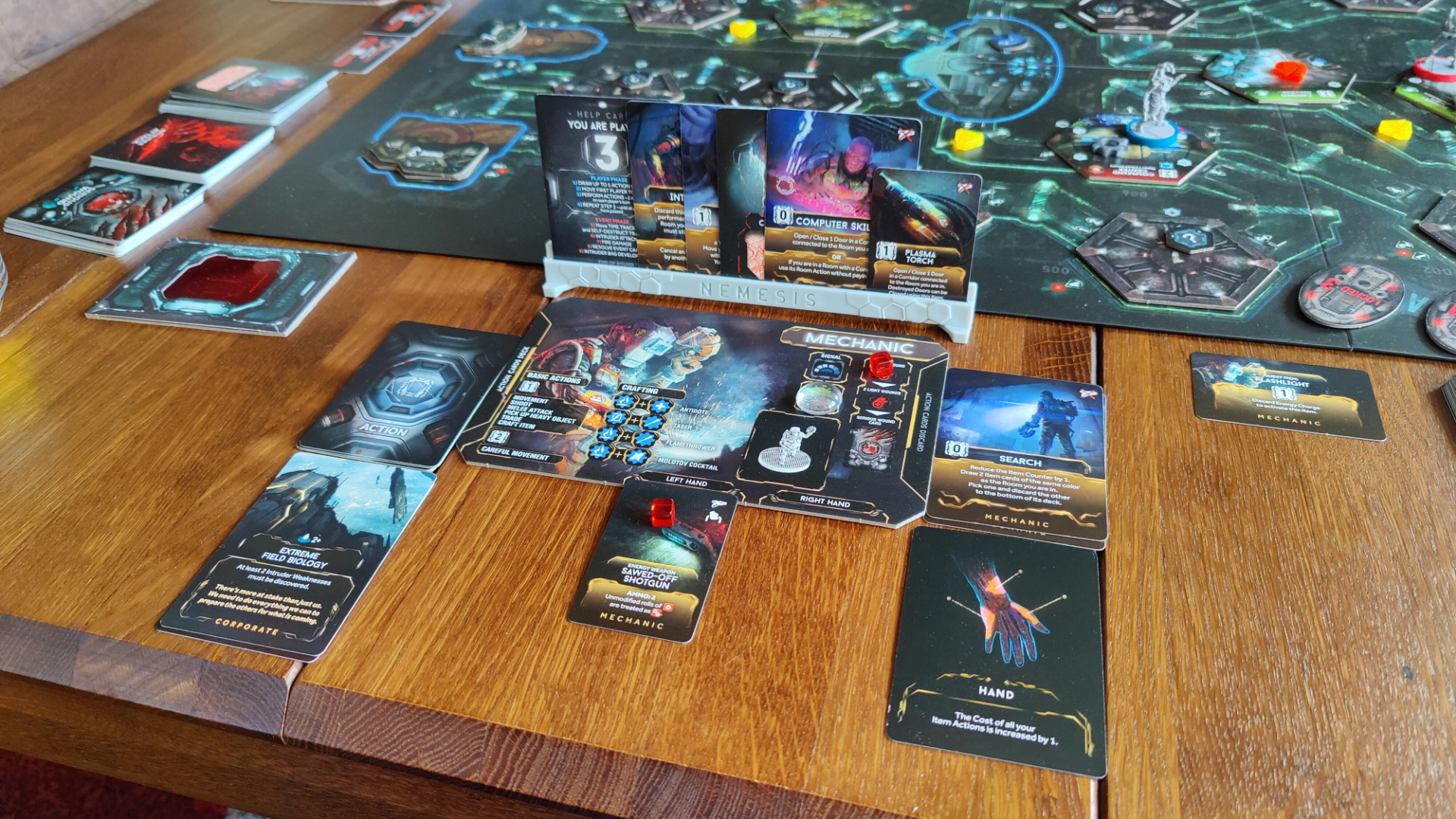
(Image credit: Ian Stokes)
A somewhat cooperative, risk-management survival game that pits your crew against the aliens.
Specifications
Number of players: 1-5
MSRP: $120
Age rating: 14+
Publisher: Rebel Studio
Reasons to buy
+
Beautiful miniatures and game board
+
Deep and strategic gameplay
+
Co-op with potential for traitors adds a unique dynamic
Reasons to avoid
–
Intimidating for new players
–
Expensive
Nemesis is an alien-themed board game that I heard best described as “inspired by but legally different from” the Alien franchise. It’s also complex and time-consuming.
Setting up a four-player game took us roughly half an hour, although I suspect most of it was because only one of the four of us knew how to set it up. All three of our new players watched a 23-minute teaching video beforehand, so we got the speed-teach in person.
The game itself was a lot of fun. Players wake up from hypersleep after an alien lifeform has been detected on the ship. With no memory of the ship layout, we scurry around trying to accomplish individual goals. Xenomorphs of all sizes randomly pop up and must be fought off or escaped. And of course, one of your party members may be working against you — after all, the crew may well be expendable.
Nemesis has a solo mode, which I’ve not played. It’s ranked 23rd on BoardGameGeek.com. There are several expansions, none of which I have played (yet). They include Nemesis: Aftermath, Nemesis: Carnomorphs, Nemesis: Void Seeders and several promo decks and dice.
Today’s best Nemesis deals
Best mediumweight board games
(Image credit: Future)
A competitive board game that transforms the red planet into a human-habitable world.
Specifications
Number of players: $68
MSRP: $130
Recommended Age: 3+
Publisher: Stronghold Games
Reasons to buy
+
Expansive card deck
+
Clever mix of gameplay elements
+
Minimal player conflict
Reasons to avoid
–
Lackluster art
–
Slow-style endgame
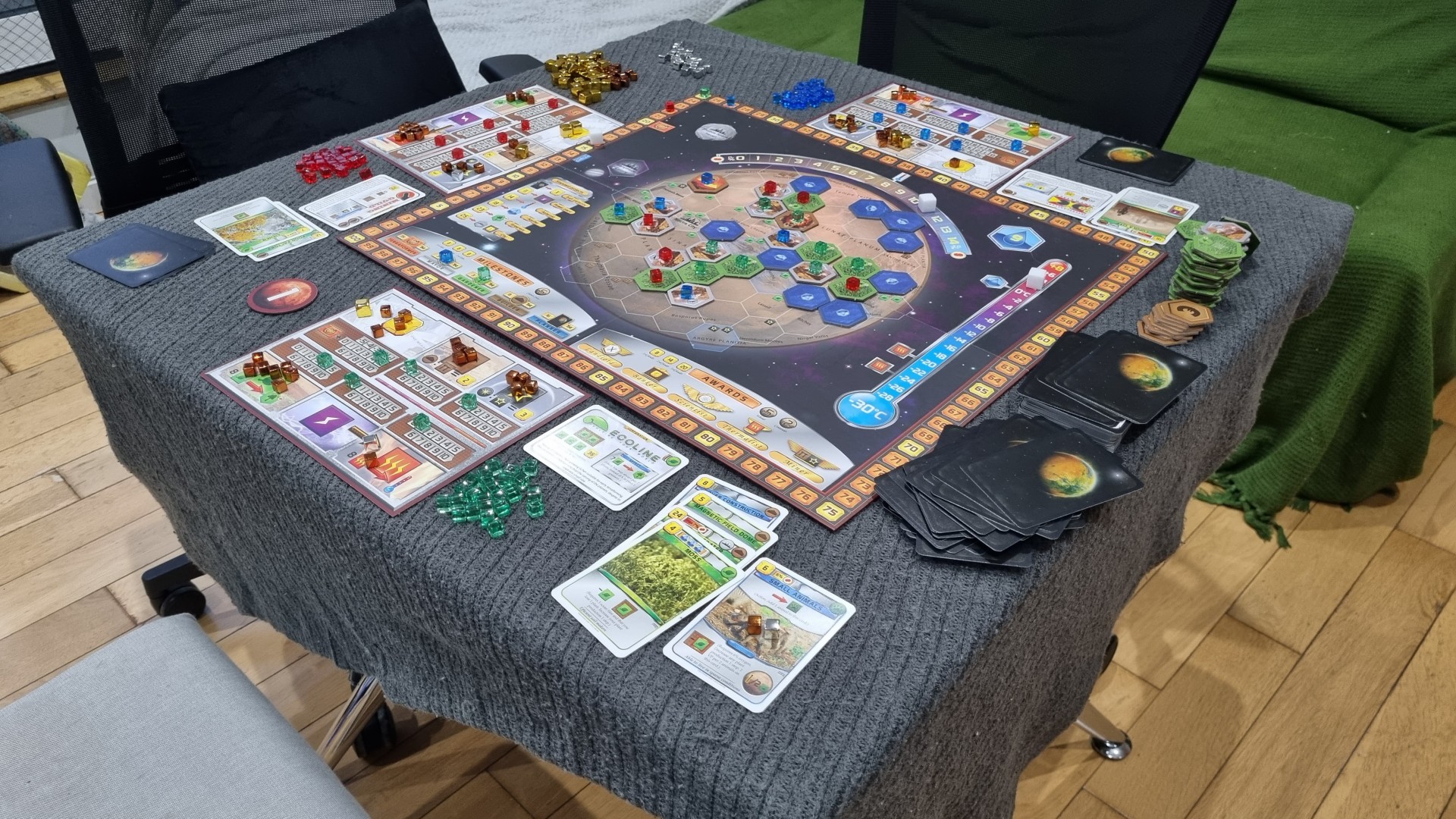
Terraforming Mars (TM) looks complex, but is relatively easy to pick up. Its popularity suggests that many have used it as a first step into heavier board games. The efforts of all of the players contribute to the terraforming action, even though you aren’t all working together.
Each player represents a corporation, striving to make money by converting Mars into a human-habitable planet. Players can place ocean or forest tiles, use heat resources to raise the temperature and build cities to colonize. There are myriad options to succeed, and you have to keep an eye on other players to make sure they don’t beat you in the goal you’re working towards. You can read more in our full Terraforming Mars review.
There are a LOT of expansions, including TM: Prelude, TM: Hellas & ELysium, TM: Colonies, TM: Venus and TM: Turmoil. You can get these five combined in TM: Big Box, which also includes a set of 3D terrain tiles and some additional goodies. There is also TM: Prelude 2, TM: Automa (for solo players), TM: Utopia & Cimmeria and TM: Amazonis & Vastitas.
Today’s best Terraforming Mars Board Game deals


(Image credit: Amazon)
Apiary
Space bees! A worker placement game where bees manage resources to explore the galaxy.
Specifications
Number of players: 1-5
MSRP: $75
Recommended age: 14+
Publisher: Stonemaier Games
Reasons to buy
+
Great artwork and premium pieces
+
Great flow to the game
+
Fast-paced
Reasons to avoid
–
Progress can seem tricky if you don’t think ahead
–
The endgame can approach suddenly
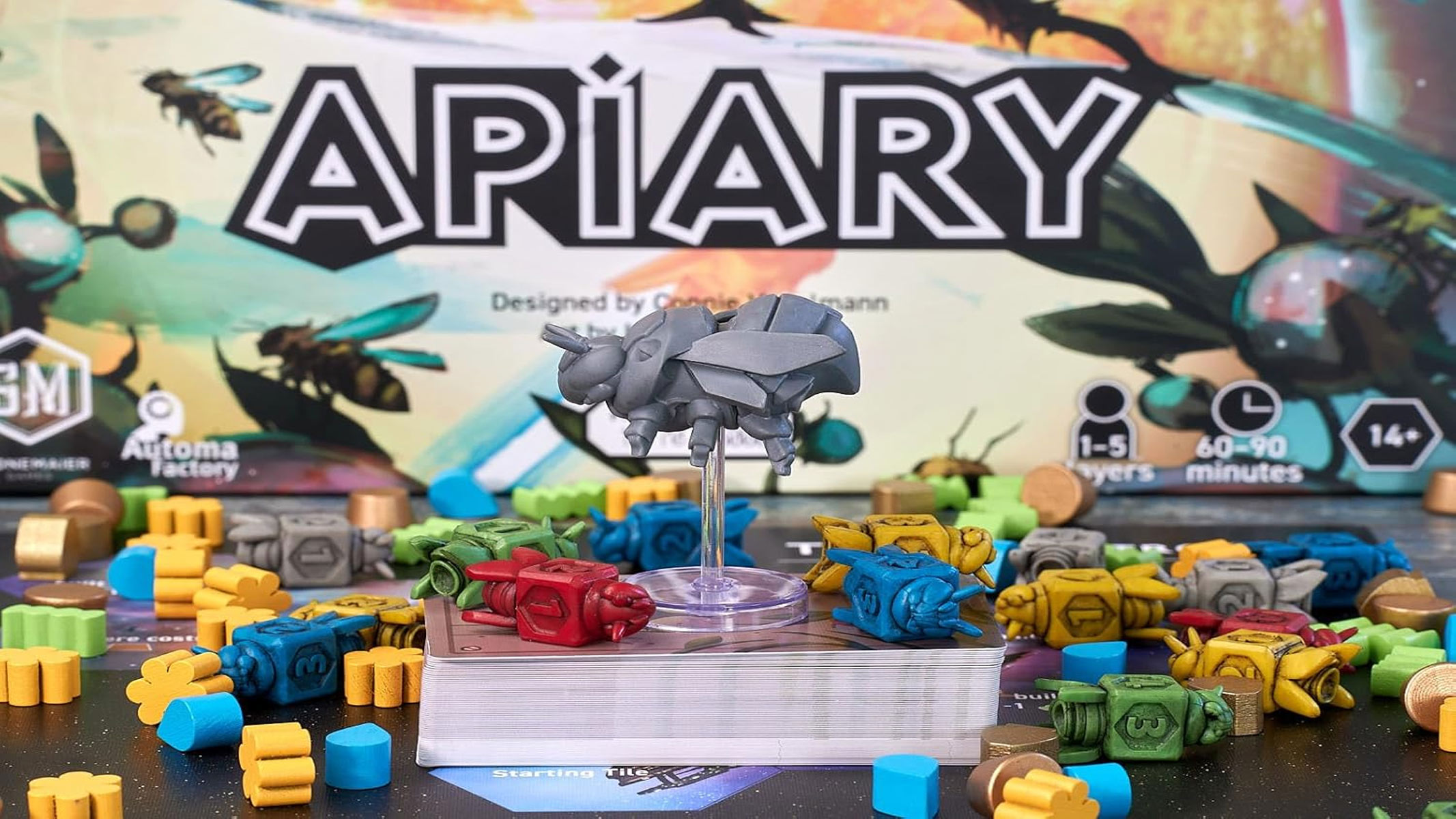
All they had to say was ‘space bees’, and I was hooked. In Apiary, humanity has died off, and bees dominate the Earth. Now those bees have gone to space, and it’s your job to grow their crew and their ship.
Apiary is a medium-weight, engine-building worker placement game that has a few unique twists. Unlike most worker placement games, you’ll never find someone else blocking your spot; you can easily bump them, though you may not always want to. The game is relatively fast-paced, which means the end can come up suddenly. But it’s an interesting theme, and a lot of fun.
The original game offers a solo mode via an automata, which I have not yet played. The expansion of Apiary, Expanding the Hive, adds additional ships, factions, frames and dances to the base game. I found the frames the most valuable, along with the new rules regarding exploration tokens, and thought it was worth the cost.
Today’s best Apiary deals


(Image credit: Amazon)
Expeditions
A card-driven engine game of exploration, Expeditions follows Siberian scientists exploring a Tunguska-like meteor fall.
Specifications
Number of players: 1-6
MSRP: $42
Recommended age: 14+
Publisher: Stonemaier Games
Reasons to buy
+
Doesn’t need intensive forward-thinking
+
Incredible artwork
Reasons to avoid
–
Not much interaction required
–
Earth-based, not space-based
Expeditions is a card-engine worker-placement game that casts the Tunguska meteor explosion in a completely different light. Instead of a warning event, Expeditions imagines the historical fall that corrupts the Earth. Scientists travel to Siberia to hunt for related meteorites and cleanse the Earth of the meteorites’ spreading corruption.
The mechs, the workers and the board are familiar, but Expeditions utilizes cards and workers to expand the gameplay. Essentially, players build a hand with cards that can be amplified by workers of the same color/type. The game offers a variety of paths to earning points, one being the collection of meteorites, creating the tenuous space connection.
Expeditions is another game where the expansion, Gears of Corruption, only makes it better. Surprisingly, the biggest differences are minor: The addition of resources and a wild worker at the start, along with map tokens with rewards, brings far more value than the additional player and mech types. I prefer the expansion’s upgraded player boards, which offer two recessed tracks for tracking resources, but that is one of the perks rather than a drawback.
I have to say, the artwork is some of the most stunning of any board game I have seen. The cards are gorgeous, and there are times when I have been tempted to take a face-up card not for what it could do but just because I loved the art.
Today’s best Stonemaier Games Expeditions deals
(Image credit: CGE)
Pulsar 2849
A dice-drafting game that harnesses the power of pulsars to explore the galaxy.
Specifications
Number of players: 2-4
MSRP: $45
Recommended age: 14+
Publisher: Czech Games Edition
Reasons to buy
+
Competitive over cooperative
+
Plenty of replayability
+
Multiple ways to reach your goal
Reasons to avoid
–
Can be tricky to follow at times
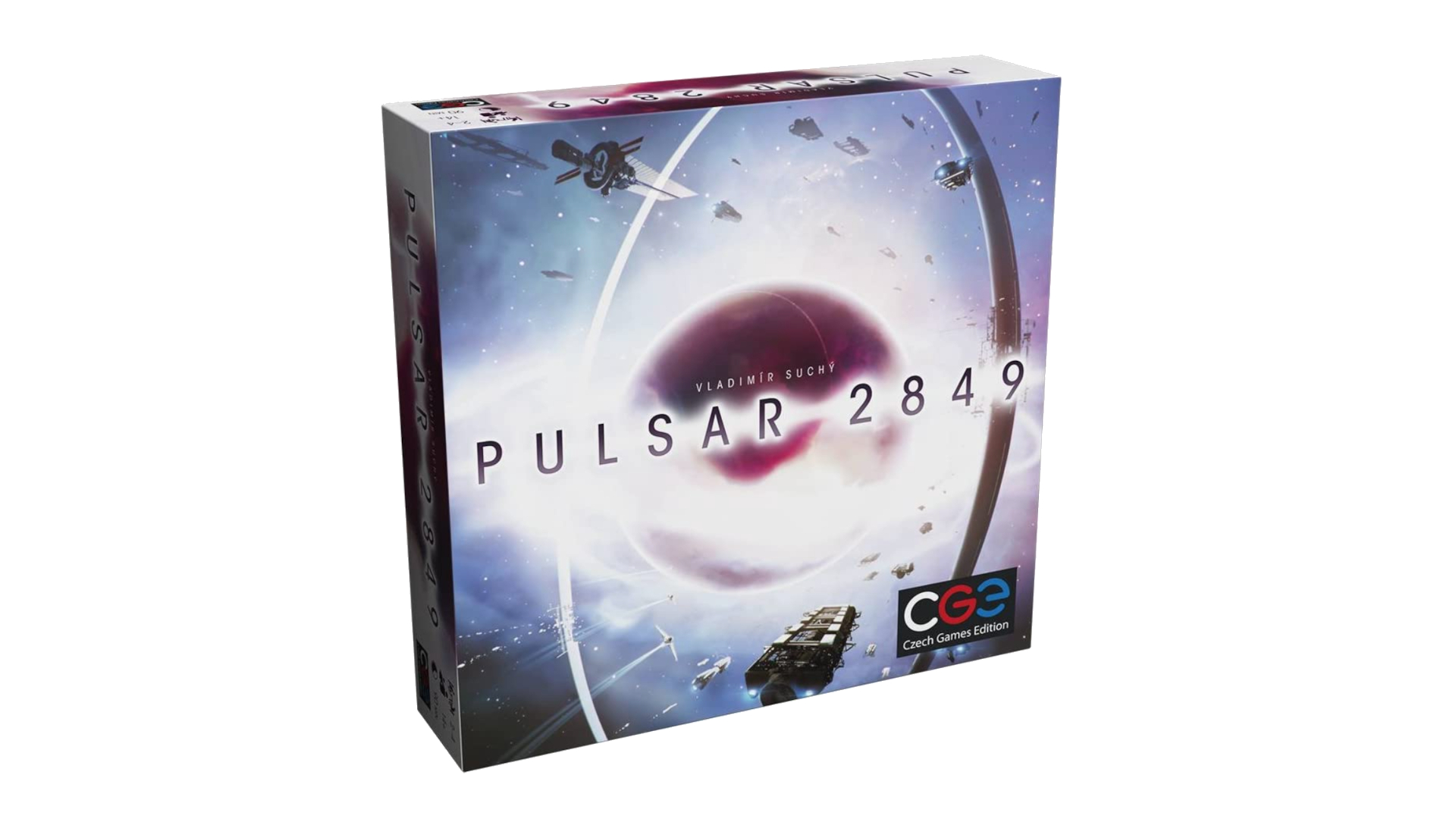
Pulsar 2849 intrigued me with its neutron star premise. Players move through the galaxy, exploring systems and claiming colonies or pulsars, as well as ‘spinning up’ Pulsars they already have in play. Discovering tech that will help build on a cosmic scale is also an option.
Although the game is heavily reliant on dice, the randomness is fairly well mitigated because players can pick one of several dice rolls to apply. The game has several paths to winning, although players will self-eliminate options as they move through the rounds.
Today’s best Pulsar 2849 deals
(Image credit: Amazon)
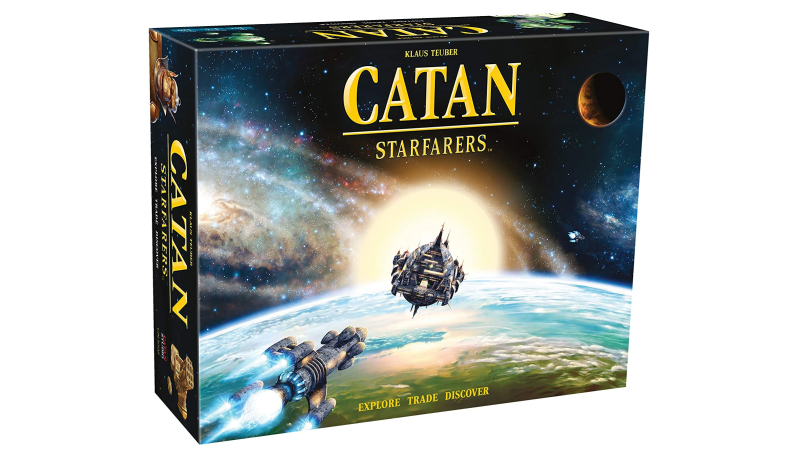
Catan: Starfarers
Based on the original Catan, this is a low-to-medium-weight game that will appeal to kids as well as adults.
Specifications
Number of players: 2-4
MSRP: $90
Recommended age: 14+
Publisher: Catan
Reasons to buy
+
It’s Catan in space!
+
Simple to follow and get the hang of
Reasons to avoid
–
Rules aren’t well written
For more than 25 years, Catan has been the default board game for gamers who want to explore outside the standard mass market games. For many, myself included, it was the first exposure to the slightly more complex world of board games, one that was introduced by my then-elementary/middle school kids. Over the years, Catan has had a wealth of expansions, but all of them exist on a relatively Terran-like planet.
No more. Catan: Starfarers finally opens the universe up to settlers. Whole planets make up the previously established land types, producing food, fuel and other goods that drive your development. Players familiar with the Catan universe will recognize that many of the elements of ocean travel have been reapplied to space, though movement has been upgraded to cover the vast distances required.
Encounter cards offer a new experience (though I’ll admit I haven’t played all of the terrestrial expansions). Things that have caused struggles, like never getting the dice to roll your way, have been remedied by allowing players to draw on their turn, based on their score, making it easier to start when colonies are scarce.
Every player gets a rocket. Not a small, movable piece on the board. I mean, you get that too, but a rocket roughly half as tall as my forearm, used to establish movement and track upgrades. I’m still deciding how I feel about it, but it seems like something kids would love. As you cannot blockade other players, and things like ‘longest road’ and ‘largest army’ are gone, the game is overall less complicated than regular Catan. It’s up to you to decide if that’s better or worse.
Today’s best Catan Starfarers deals
Best lightweight board games
(Image credit: Thames & Kosmos)
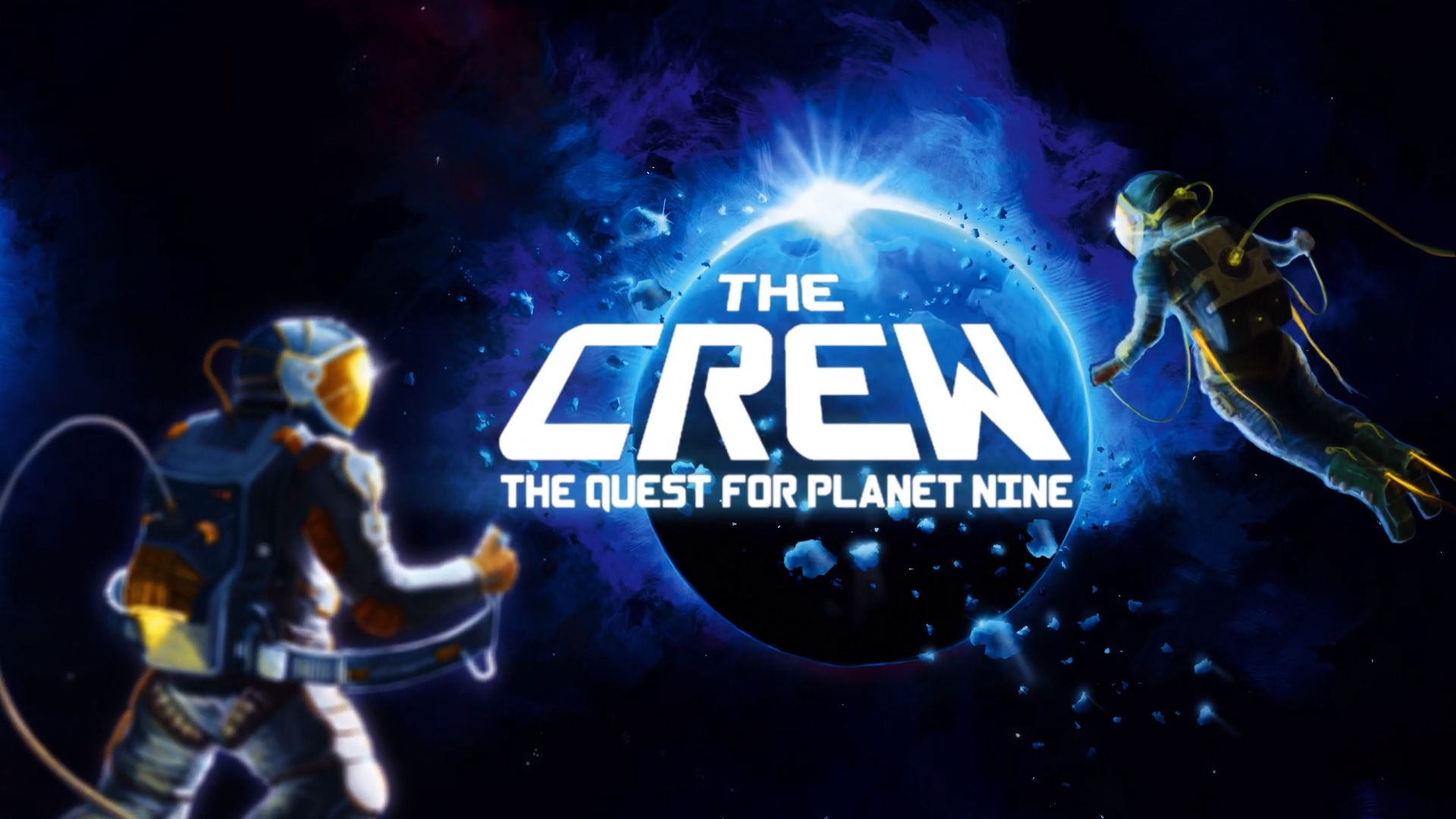
The Crew: Quest For Planet Nine
A lightweight cooperative trick-taking card game, Planet Nine has players working together to meet a variety of goals.
Specifications
Number of players: 3-5
MSRP: $15
Recommended age: 10+
Publisher: Thames & Kosmos
Reasons to buy
+
Easy to pick up and learn
+
Interesting co-op play
Reasons to avoid
–
Randomness can either make the game super enjoyable or tricky to play
The Crew: The Quest for Planet Nine is a group trick-taking game where players work together to complete two randomly selected missions. Players are dealt their hands, and the first player, the commander, is selected and leads accordingly. Unlike a standard 52-card deck, there is only a single trump suit, which makes it a bit easier to follow. While direct communication is not allowed, players can use their token once per game to provide hints about their hand.
This is a great, quick game, with each hand taking only five to ten minutes to play. The variety of missions lends itself to replayability, and the ease fits nicely for more casual gamers.
The company also produced The Crew: Deep Sea Mission, and there may not be enough of a difference to warrant purchasing both. While Planet Nine has more straightforward missions, Deep Sea has potentially more interesting combinations. Some players prefer Planet Nine for more casual players and Deep Space for slightly more seasoned ones, but both work for light gaming.
Today’s best The Crew: The Quest for Planet Nine deals

(Image credit: Amazon)
Twilight: Inscription
If you don’t have two days free for Twilight Imperium, try this lightweight dice-rolling version that provides a similar flavor.
Specifications
Number of players : 1-8
MSRP: $48
Recommended age: 14+
Publisher: Fantasy Flight Games
Reasons to buy
+
Smaller, quicker version of Twilight: Imperium
+
A great dice-based game
Reasons to avoid
–
In the shadow of Twilight: Imperium
Twilight Imperium is my husband’s favorite game that he never gets to play, so when I learned Twilight Inscription was a lighter version that didn’t require coordinating a crowd, of course, we had to buy it.
The game provides 25 different factions from the original game, and you get four sheets rather than a giant planet-spreading board. You’ll track your progress using dry-erase markers on your board, including building up a fleet similar to the good old days of pencil-and-paper Battleship. I don’t have any previous experience with roll and write games, so this was a good introduction.
If you expect this to be a streamlined version of Twilight Imperium, you’ll be disappointed, but it still does a decent job of capturing the flavor. You’ll still build dreadnoughts and war suns, research techs to gain points and you’ll be making your drive for Mecatol Rex. If you’ve never played, this can be a great way to catch (or share) the flavor of the game in a shorter form.
Today’s best Fantasy Flight Games Twilight Inscription deals

Round up of today’s best deals
SCIENCE
One in eight of 14- to 17-year-olds in Great Britain say they have used nicotine pouches | Health

One in eight teenagers aged 14 to 17 have used nicotine pouches, a survey has found, adding to health experts’ concern about their growing popularity.
Users hold the small sachets, which look like mini-teabags and are often flavoured, in their mouths to enjoy the release of the nicotine they contain. They are also known as “snus”.
Unlike smoking the pouches do not raise the risk of cancer, but they have caused alarm because of the fear that users could become addicted to nicotine and suffer mouth and dental problems.
A survey of 500 teenagers aged 14 to 17 in England, Scotland and Wales found that 13% have used a nicotine pouch, of whom 30% said they did so at least once a week. Most get them from friends or buy them in shops, which are not subject to any age restrictions as to who they can sell them to.
The same survey, by Deltapoll for the Future Health consultancy, found that seven in 10 respondents backed the UK government’s planned crackdown on them. The tobacco and vapes bill will outlaw selling pouches to under-18s, as well as changing the packaging and limiting the use of flavours and the amount of nicotine to make them less appealing to children and young people.
Steve Brine, a former public health minister, wrote in a foreword to a new report by Future Health on the pouches: “These unregulated products are being heavily pushed at young people, whether it be through shop displays, social media or in partnerships with UK music festivals.”
Referencing that most of the main brands were made by cigarette companies, Brine added: “The tobacco industry is constantly looking for the next business opportunity with which to addict a new generation to nicotine.”
Almost half (46%) of the teenagers surveyed had seen nicotine pouches advertised, mainly in shops and on social media. Three-quarters (73%) want to see restrictions on their promotion, sale and use, while a majority want it made illegal for under-18s to buy them (63%) and back health warnings (59%).
The survey was undertaken for Kenvue, which makes Nicorette, the over the counter nicotine replacement therapy that some smokers use to try to quit. Future Health is run by Richard Sloggett, a former special adviser at the Department of Health and Social Care (DHSC).
The report says: “Health concerns have to date focused on oral health issues such as a dry mouth, gum lesions or blisters, unusual jaw sensations and receding gums.
“[But] studies have also raised concerns that 30mg nicotine pouches have led to a higher nicotine uptake compared with cigarettes and increased arterial stiffness.”
Sales of brands such as Velo, Nordic Spirit and Zyn are growing fast.
A group of international health experts warned in the European Heart Journal this week that “nicotine is toxic to the heart and blood vessels, regardless of whether it is consumed via a vape, a pouch, a shisha or a cigarette”. They voiced concern about the recent dramatic rise in use of vapes, heated tobacco and nicotine pouches, especially among adolescents and young adults.
Separate research published this week in the journal Lancet Public Health found that more than 500,000 people in Britain now use nicotine, with the boom driven by members of gen Z, especially young men. The proportion of 16- to 24-year-olds doing so has jumped from 0.7% in 2022 to 4% this year, according to the study led by Dr Harry Tattan-Birch of University College London.
“Pouches have a substantially lower risk to health than cigarettes and are likely less harmful than e-cigarettes. However, they are not harmless,” he said.
A spokesperson for Zyn, which is made by the tobacco firm Philip Morris International, said: “The reality is smoke-free products such as nicotine pouches have successfully supported millions of adults to leave cigarettes behind. Public health policymakers should be encouraged that, according to Ash, 96% of teenagers have never tried nicotine pouches.”
Asli Ertonguc, the head of British American Tobacco in the UK and western Europe, highlighted that last week’s Lancet study also found that more and more smokers are using pouches to help them give up. A ban on advertising snus could put that press at risk, she added.
A spokesperson for Japan Tobacco International, which makes Nordic Spirit, said: “We welcome regulation that prohibits sale of nicotine products to minors but have concerns about some aspects of the [tobacco and vapes] legislation that could needlessly damage an emerging category and risk undermining the UK’s success in promoting smoking alternatives if passed.”
A DHSC spokesperson said: “We’re acting to protect people’s health and stop young people getting hooked on nicotine. Right now, nicotine pouches are far less regulated than nicotine vapes. This will change. The tobacco and vapes bill will make it illegal to sell nicotine pouches and other nicotine products to anyone aged under 18 to keep young people safe.”


Scientists have identified a previously unknown natural compound produced by heat-loving cyanobacteria that helps protect against ultraviolet radiation. Natural sunscreen ingredients can protect the skin from damaging radiation while reducing the risk of allergic reactions. In a recent study, scientists identified a previously unknown compound called β-glucose-bound hydroxy mycosporine-sarcosine that is produced by heat-loving cyanobacteria […]
SOURCE PAGE

This article was originally published at Eos. The publication contributed the article to Space.com’s Expert Voices: Op-Ed & Insights.
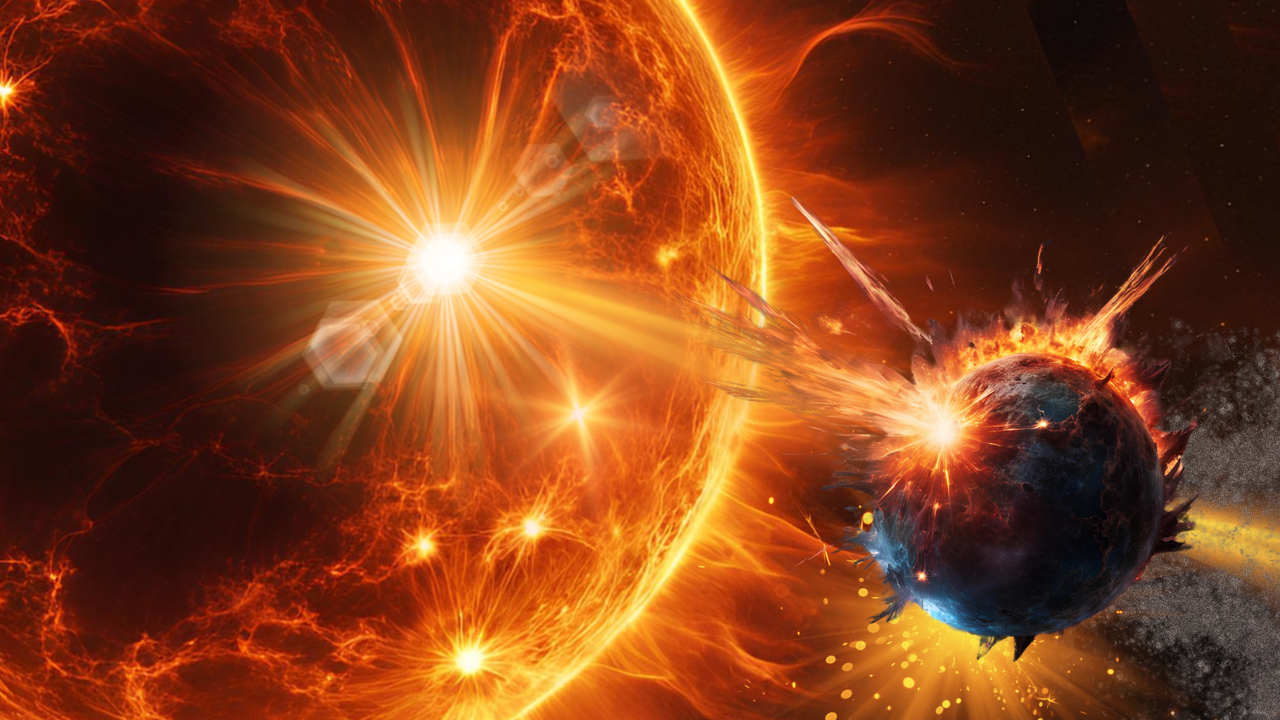
Our sun is about halfway through its life, which means Earth is as well. After a star exhausts its hydrogen nuclear fuel, its diameter expands more than a hundredfold, engulfing any unlucky planets in close orbits. That day is at least 5 billion years off for our solar system, but scientists have spotted a possible preview of our world’s fate.
Using data from the TESS (Transiting Exoplanet Survey Satellite) observatory, astronomers Edward Bryant of the University of Warwick and Vincent Van Eylen of University College London compared systems with stars in the main sequence of their lifetimes—fusing hydrogen, like the sun—with post–main sequence stars closer to the end of their lifetimes, both with and without planets.
You may like
“We saw that these planets are getting rarer [as stars age],” Bryant said. In other words, planets are disappearing as their host stars grow old. The comparison between planetary systems with younger and older stars makes it clear that the discrepancy does not stem from the fact that the planets weren’t there in the first place: Elderly stars just get hungry.
“We’re fairly confident that it’s not due to a formation effect,” Bryant explained, “because we don’t see large differences in the mass and [chemical composition] of these stars versus the main sequence star populations.”
Complete engulfment isn’t the only way giant stars can obliterate planets. As they grow, giant stars also exert increasingly larger tidal forces on their satellites that make their orbits decay, strip them of their atmospheres, and can even tear them apart completely. The orbital decay aspect is potentially measurable, and this is the effect Bryant and Van Eylen considered in their model for how planets die.
“We’re looking at how common planets are around different types of stars, with number of planets per star,” Bryant said. Bryant and Van Eylen identified 456,941 post–main sequence stars in TESS data and, from those, found 130 planets and planet candidates with close-in orbits. “The fraction [of stars with planets] gets significantly lower for all stars and shorter-period planets, which is very much in line with the predictions from the theory that tidal decay becomes very strong as these stars evolved.”
Astronomers use TESS to find exoplanets by looking for the diminishment in light as they pass in front of their host stars, a miniature eclipse known as a transit. As with any exoplanet detection method, transits are best suited to large, Jupiter-sized planets in relatively small orbits lasting less than half of an Earth year, sometimes much less. So these solar systems aren’t much like ours in that respect. Studying planets orbiting post–main sequence stars poses additional challenges.
“If you have the same size planet but a larger star, you have a smaller transit,” Bryant said. “That makes it harder to find these systems because the signals are much shallower.”
However, though the stars in the sample data have a much greater surface area, they are comparable in mass to the sun, and that’s what matters most, the researchers said. A star with the same mass as the sun will go through the same life stages and die the same way, and that similarity is what helps reveal our solar system’s future.
You may like
“The processes that take place once the star evolves [past main sequence] can tell us about the interaction between planets and host star,” said Sabine Reffert, an astronomer at Universität Heidelberg who was not involved in the study. “We had never seen this kind of difference in planet occurrence rates between [main sequence] and giants before because we did not have enough planets to statistically see this difference before. It’s a very promising approach.”
Planets: Part of a balanced stellar breakfast
Exoplanet science is one of astronomy’s biggest successes in the modern era: Since the first exoplanet discovery 30 years ago, astronomers have confirmed more than 6,000 planets and identified many more candidates for follow-up observations. At the same time, the work can be challenging when it comes to planets orbiting post–main sequence stars.
One tricky aspect of this work is related to the age of the stars, which formed billions of years before our sun. Older stars have a lower abundance of chemical elements heavier than helium, a measure astronomers call “metallicity.” Observations have found a correlation between high metallicity and exoplanet abundance.
“A small difference in metallicity…could potentially double the occurrence rate,” Reffert said, stressing that the general conclusions from the article would hold but the details would need to be refined with better metallicity data.
Future observations to measure metallicity using spectra, along with star and planet mass, would improve the model. In addition, the European Space Agency’s Plato Mission, slated to launch in December 2026, will add more sensitive data to the TESS observations.
Earth’s fiery fate is a long way in the future, but researchers have made a big step toward understanding how dying stars might eat their planets. With more TESS and Plato data, we might even glimpse the minute orbital changes that indicate a planet spiraling to its doom—a grim end for that world but a wonderful discovery for our understanding of the coevolution of planets and their host stars.