
NIGERIA NEWS
Tinubu’s Politics of Security, Sacrifice and Consolidation – THISDAYLIVE


President Bola Tinubu’s 2026 federal budget proposal’s presentation last Friday signals a decisive political moment, blending hard security choices, economic reforms and legislative partnership in Nigeria’s search for stability, writes Sunday Aborisade.
When President Bola Tinubu walked into the chamber of the National Assembly on Friday to present the 2026 Appropriation Bill, the ritual was familiar. Yet the message was unmistakably political. Beyond figures and fiscal projections, the N58.18 trillion proposal represented a defining statement about power, priorities and the direction of governance midway into his administration.
Tagged the “Budget of Consolidation, Renewed Resilience and Shared Prosperity,” the estimates place defence and security at the centre of national planning, allocating N5.41 trillion, which is the largest single sectoral vote.
In a polity still grappling with insurgency, banditry, kidnapping and violent criminal networks, the choice was deliberate and symbolic: security, Tinubu argued, is the foundation upon which all other ambitions rest.
Budgets, as lawmakers often remind Nigerians, are more than economic tools; they are political documents that reveal the soul of a government.
Tinubu acknowledged this directly, telling the joint session that the numbers before them were “not mere accounting lines but a clear statement of national priorities.”
The figures underscore that intent. Total projected revenue for 2026 stands at N34.33 trillion against expenditure of N58.18 trillion, with N15.52 trillion set aside for debt servicing.
Capital expenditure of N26.08 trillion outweighs recurrent (non-debt) spending of N15.25 trillion, a ratio the president framed as evidence of a development-driven agenda.
The fiscal deficit of N23.85 trillion, equivalent to 4.28 per cent of GDP, sits just within legislated limits, signalling a careful balance between expansion and restraint.
Underlying the proposal are conservative assumptions: oil benchmarked at $64.85 per barrel, production at 1.84 million barrels per day, and an exchange rate of N1,400 to the dollar.
In political terms, this caution is designed to avoid the credibility gaps that plagued earlier budgets built on overly optimistic forecasts.
The political centrepiece of Tinubu’s speech was security, not only in funding, but in doctrine. His declaration that all armed groups and gun-wielding non-state actors operating outside state authority would henceforth be treated as terrorists marked a significant rhetorical and policy escalation.
Bandits, militias, violent cult groups, forest-based armed collectives and even foreign-linked mercenaries were explicitly named. More strikingly, the president extended culpability to financiers, arms suppliers, informants, ransom negotiators and political protectors, warning that no shield, political, traditional or religious, would be tolerated.
In a country where security crises have often been complicated by local politics and elite complicity, the statement carried heavy political implications. It was an attempt to redraw the moral and legal boundaries of violence, collapsing grey areas into a clear binary: loyalty to the state or enmity against it.
The N5.41 trillion earmarked for defence and security is intended to back that posture with resources, modernising the armed forces, strengthening intelligence-led policing, improving border security and deploying technology-enabled surveillance.
Tinubu promised that spending would now be tied to “clear accountability and measurable outcomes,” a pledge aimed at addressing long-standing public scepticism about security votes.
Beyond security, the budget allocates N3.56 trillion to infrastructure, N3.52 trillion to education and N2.48 trillion to health. Tinubu framed these sectors as mutually reinforcing pillars of national renewal.
“Without security, investment will not thrive. Without educated and healthy citizens, productivity will not rise. Without infrastructure, jobs and enterprise will not scale,” he told the lawmakers.
Politically, this framing seeks to counter criticism that the administration’s early focus on macroeconomic reforms, fuel subsidy removal, exchange rate unification and tax changes, came at the expense of social welfare.
By foregrounding education and health alongside roads, power and rail, the president attempted to re-anchor his reform agenda in everyday human outcomes.
Still, some legislators hinted that allocations to education and health might be revisited during parliamentary scrutiny, reflecting the enduring tension between fiscal realism and social demand.
Perhaps the most politically sensitive moment of the address came when Tinubu openly acknowledged the hardship Nigerians have endured.
“Families and businesses have faced pressure; established systems have been disrupted; and budget execution has been tested,” he said, conceding what many citizens have felt acutely since 2023.
This admission was not merely rhetorical empathy. It was a calculated political move to own the costs of reform while asking for patience.
Tinubu insisted that the sacrifices were yielding results and that the 2026 budget was designed to consolidate gains and translate recovery into improved living standards.
To support this claim, he cited macroeconomic indicators: GDP growth of 3.98 per cent in the third quarter of 2025; inflation moderating for eight consecutive months to 14.45 per cent by November; improved oil production; expanded non-oil revenues through tax administration; and external reserves rising to about $47 billion a seven-year high.
In Nigeria’s contested political space, such statistics are not neutral facts but instruments of persuasion, deployed to sustain legitimacy amid lingering discontent.
Another politically significant aspect of the 2026 proposal is Tinubu’s determination to enforce fiscal discipline and end the culture of perpetual roll-over budgets.
He directed the Ministers of Finance and Budget, alongside the Accountant-General and the Budget Office, to conclude outstanding components of the 2024 and 2025 budgets by March 2026.
The implication is clear: 2026 should stand alone, implemented fully within its fiscal year. Government-owned enterprises were also warned to meet revenue targets, as the administration moves toward end-to-end digitisation of revenue collection, real-time dashboards and interoperable payment platforms to block leakages.
For lawmakers and policy analysts, this represents a structural shift. A ranking senator described the approach as a “bold departure” from past practices that blurred accountability and weakened implementation.
The political tone of the event was notably cooperative. Senate President, GodswillAkpabio described the presentation as a “defining national conversation,” emphasizing that progress is fastest when the executive and legislature work in partnership.
Speaker of the House of Representatives, Tajudeen Abbas, echoed this sentiment, calling the moment “democracy at its strongest” and framing the budget as evidence of Nigeria’s transition from fiscal turbulence to stability and reform-driven growth.
Both leaders pledged rigorous but timely scrutiny, with lawmakers even suggesting they would forgo holidays to ensure speedy passage.
This harmony contrasts sharply with past budget cycles marked by confrontation and delay, and it strengthens Tinubu’s political hand as he seeks swift legislative backing.
On his part, Minister of Information and National Orientation, Mohammed Idris, reinforced the political messaging. He described the 2026 estimates as a move “beyond promises to practical implementation,” stressing the administration’s “no mercy” stance against terrorism and violent crime.
Lawmakers who spoke to THISDAY highlighted the coherence of the strategy, particularly the link between security, infrastructure and human capital.
Deputy Senate Leader, Senator Ashiru, called the engagement with the president reassuring, pointing to the scale of the security vote and the broader macroeconomic improvements.
Yet there were also notes of caution. Some legislators argued that education and health deserved even greater emphasis, signalling that the politics of appropriation, bargaining, adjustment and oversight, is only beginning.
Ultimately, the 2026 budget estimate’s presentation was about consolidation, power, policy and narrative. For Tinubu, it was an opportunity to assert control over the reform story, to reframe hardship as transition, and to project firmness on security at a time of persistent threats.
It was also a test of trust: trust that the promised discipline will materialise, that security spending will deliver tangible safety, and that economic recovery will reach households, not just balance sheets.
As the budget proposal moves into legislative scrutiny, its fate will reveal much about Nigeria’s evolving political economy. For now, Tinubu has set the tone: a government betting that security, discipline and shared sacrifice can anchor renewed confidence, and that the politics of consolidation can hold.






Nigeria’s exports to the United States declined sharply by N940.98 billion in the first nine months of 2025, highlighting the growing strain on bilateral trade as US tariffs and tougher market conditions weighed on Nigerian shipments, according to data from the National Bureau of Statistics (NBS).
An analysis of the NBS foreign trade statistics showed that Nigeria exported goods worth N3.65 trillion to the US between January and September 2025, down from N4.59 trillion in the corresponding period of 2024.
The 20.5% drop in export value reflects weakening demand for Nigerian goods in the US market amid tariff-related headwinds.
The export contraction occurred alongside Washington’s implementation of a so-called “reciprocal” tariff regime. Under the policy, US President Donald Trump signed an executive order raising Nigeria’s tariff rate from 14% to 15%, with the measure taking effect on August 7, 2025.
While crude oil exports have largely been exempted, the higher duty applies to a broad range of non-oil Nigerian exports, increasing costs for US importers and dampening demand.
With crude oil shipments relatively insulated, non-oil exports appear to have borne the brunt of the tariff impact, contributing significantly to the decline in Nigeria’s overall export earnings from the US market.
What is the data saying
The nine-month trade figures underline the extent of the reversal in Nigeria–US trade relations.
In the first nine months of 2024, Nigeria exported N4.59 trillion worth of goods to the US and imported N3.01 trillion, resulting in a trade surplus of N1.57 trillion.
By the same period in 2025, exports had fallen to N3.65 trillion, while imports surged to N6.80 trillion, pushing the trade balance into a deficit of about N3.15 trillion.
Quarterly data show that exports opened 2025 on a relatively strong note but weakened rapidly as the year progressed. Exports stood at N1.54 trillion in the first quarter of 2025 before declining to N1.36 trillion in the second quarter and plunging to N743.63 billion in the third quarter.
The 45.3% quarter-on-quarter collapse in the third quarter marked the steepest contraction in shipments to the US during the period under review.
Imports moved in the opposite direction, rising from N1.42 trillion in the first quarter to N2.16 trillion in the second quarter, before surging further to N3.22 trillion in the third quarter, intensifying pressure on Nigeria’s trade position.
On a year-on-year basis, exports to the US grew by 17.7% in the first quarter of 2025 compared with the same period of 2024, but the trend reversed sharply thereafter. Exports declined by 14.3% in the second quarter and plunged by 56.0% in the third quarter, reflecting weaker demand and more challenging trade conditions.
The sharp contraction in export earnings explains why the United States dropped out of Nigeria’s top five export destinations by the second and third quarters of 2025, despite remaining one of Nigeria’s largest sources of imports.
Crude dominates exports to America
Product-level data from the NBS further highlight the imbalance. In the first quarter of 2025, Nigeria’s exports to the US were dominated by crude petroleum oils valued at N779.38 billion, followed by urea at N240.17 billion and kerosene-type jet fuel at N214.30 billion.
Other export items included petroleum gases in gaseous state valued at N95.97 billion and standard quality cocoa beans at N58.84 billion.
By the third quarter of 2025, Nigeria’s export basket to the US had narrowed significantly, consisting mainly of smaller-value items such as flours and meals of soya beans valued at N23.60 billion, cocoa powder preparations worth N36.83 million, and technically specified natural rubber valued at N5.03 billion.
What you should know
The shift in America’s trade balance with Nigeria comes against the backdrop of new U.S. tariff measures on African partners. Beginning August 7, 2025, Washington implemented “reciprocal tariffs” under a revised schedule that set Nigeria’s country rate at 15%.
- While Nigeria previously faced a 14% tariff under the April “Liberation Day” order, the revised rate formalised the adjustment.
- South Africa and Algeria were each assigned 30%, while Egypt remained at the 10% baseline, with its Qualifying Industrial Zone (QIZ) exports still enjoying duty-free access.
- These tariffs add to existing most-favoured-nation duties and are designed to mirror restrictions faced by U.S. goods in the affected markets.
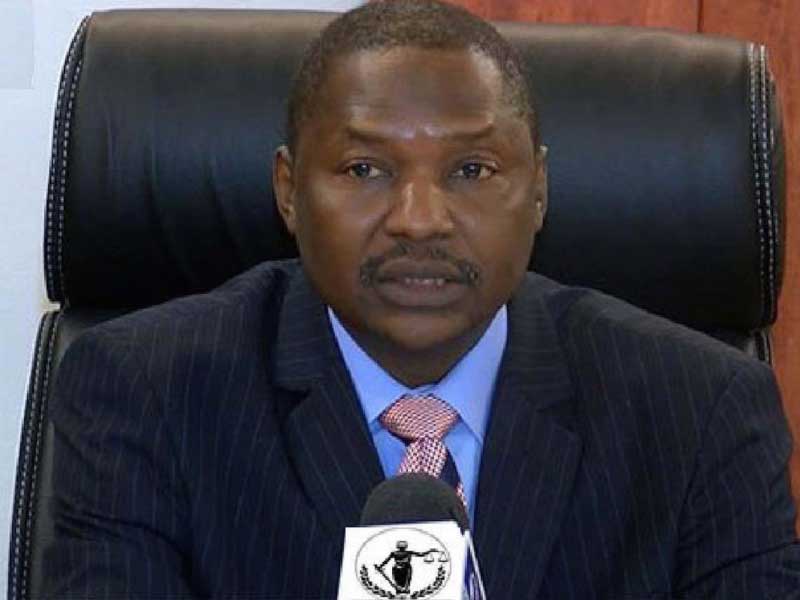
A coalition of Northern youth groups has accused the federal government and the Economic and Financial Crimes Commission (EFCC) of what it described as selective justice and politically motivated persecution of Northern opposition figures, particularly former Attorney General of the Federation, Abubakar Malami.
Rising from a press conference held at Arewa House, Kaduna, the Coalition of Northern Youth Groups said recent actions by the anti-graft agency against Malami and other opposition leaders were not driven by a genuine fight against corruption but by an alleged attempt to silence dissent and weaken emerging opposition forces ahead of future political contests.
Comrade Ibrahim Mohamed, who is the leader of the coalition, said the North is witnessing “a disturbing pattern of intimidation and harassment” targeted at individuals perceived to be opposed to the administration of President Bola Ahmed Tinubu.
“What is unfolding before the eyes of Nigerians is not a fight against corruption.
It is targeted persecution, deliberate witch-hunting, and a calculated attempt to destroy the reputation and political relevance of respected Northern opposition figures,” he said.
The coalition expressed particular concern over what it described as the harassment of Malami’s family members, which it said went beyond acceptable legal boundaries.
According to the group, the alleged pressure on family members was unprecedented and inconsistent with democratic norms.
“Even the families of individuals once accused of plotting coups were not treated with this level of hostility. This is unacceptable in any democratic society,” Mohammed said.
The youths warned that continued intimidation of opposition figures could undermine national cohesion and erode public confidence in state institutions.
Central to the coalition’s grievance is what it described as double standards in the handling of corruption allegations across regions and political affiliations.
The group questioned why some high-profile political figures from the southern part of the country, who have at various times been linked to corruption allegations, were not subjected to similar treatment.
Citing names such as Betta Edu, Nyesom Wike, Ifeanyi Okowa and Godswill Akpabio, the coalition argued that the EFCC’s actions gave the impression of selective enforcement.
“If the anti-corruption war is truly sincere, it must be even-handed,” the group said, insisting that no individual should be shielded on the basis of political loyalty or regional origin.
The coalition also referenced past public statements by the current National Security Adviser, Nuhu Ribadu, as further grounds for its call for consistency and transparency in the anti-graft campaign.
Beyond Malami, the youth groups said they were aware of alleged plans to arrest or investigate other prominent Northern political figures, including former Kaduna State governor Nasir El-Rufai, Rabiu Musa Kwankwaso and former Adamawa State governor Jibrilla Bindow.
They claimed such moves were part of a broader strategy to weaken opposition coalitions, particularly within the African Democratic Congress (ADC).
The coalition contrasted this with what it described as the continued freedom of some politically connected individuals within the ruling All Progressives Congress (APC), a situation it said fuels suspicion of a push toward a one-party state.
The youths also linked their political concerns to broader economic grievances, especially in agriculture.
They accused the federal government of policies that they said were hurting Northern farmers, including the approval of food imports for crops largely produced in the region.
According to them, such decisions have worsened poverty and undercut local agricultural production in Northern communities.
The coalition, has therefore, called for the immediate release of Abubakar Malami, an end to what it described as harassment of his family, and the release of other opposition figures allegedly detained by the EFCC.
It also called for a halt to selective justice and urged the anti-graft agency to conduct investigations “fairly and without political bias.”
“We will not be intimidated. We will not be silenced,” the chairman declared. “We call on Northerners to rise in unity to defend our leaders, our dignity and our collective interests.”

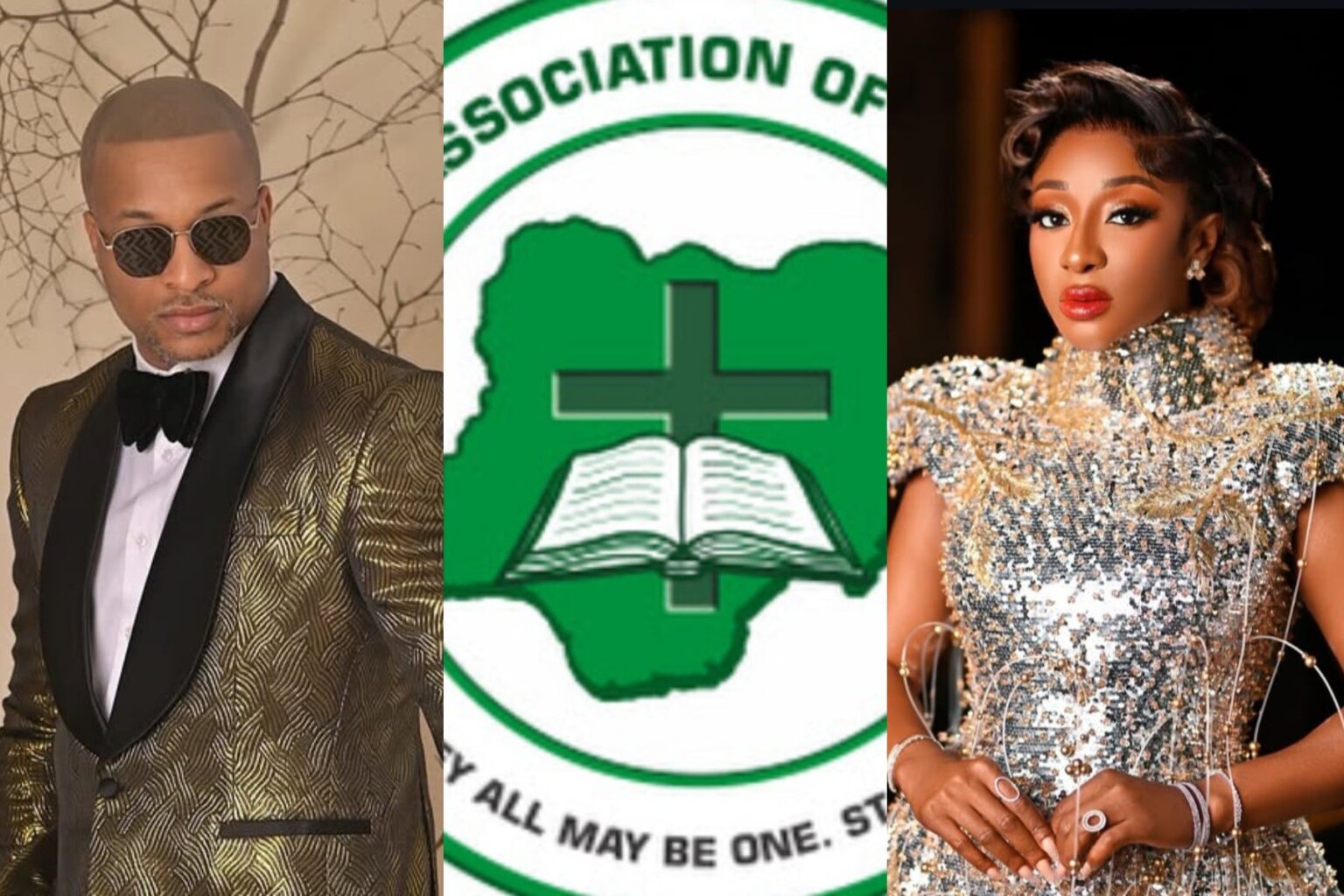
Actor IK Ogbonna has expressed strong support for his colleague Ini Edo, who is facing backlash from the Christian Association of Nigeria (CAN) over the title of her new movie, A Very Dirty Christmas.
In a statement on Instagram, Ogbonna said he is deeply disappointed with CAN, saying they had seen the promotions for the movie title for months and chose to remain silent.
He questioned the timing of CAN’s reaction, pointing out that the movie title had been officially approved by the Censors Board and the film was now showing nationwide and doing well.
Ogbonna emphasised that the issue was not about conflict, but about fairness, consistency, and integrity.
He asked how Christian it is to stay silent all along, then speak only when progress has been made, adding that this isn’t about conflict, it’s about fairness, consistency, and integrity.
“TBH! I am deeply disappointed with CAN. You saw the promotions for this title for months and said nothing. The movie title was officially approved by the Censors Board, and we moved forward in good faith.
“Now that the film is out, showing nationwide and doing well, suddenly there’s an issue with the title. How Christian is it to stay silent all along, then speak only when progress has been made? This isn’t about conflict – it’s about fairness, consistency, and integrity”, he wrote.

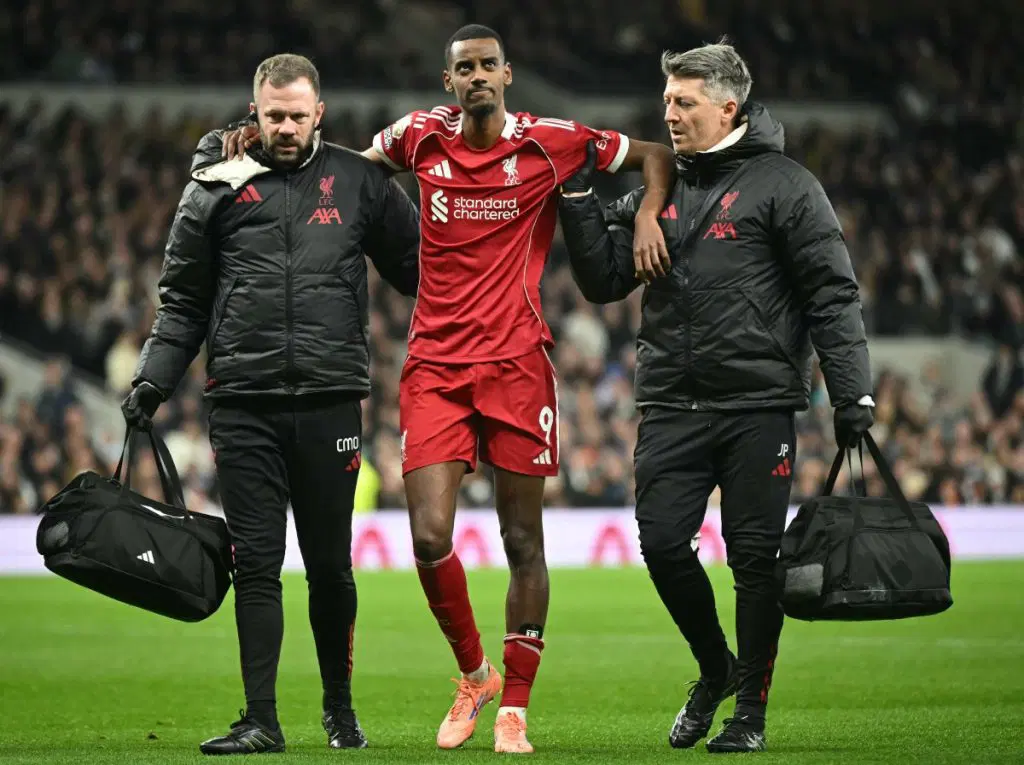
Liverpool are awaiting scan results they fear will confirm record signing Alexander Isak has suffered a broken leg after he was injured in their win against Tottenham, reports said Monday.
The Sweden forward was hurt in the act of scoring the opening goal in Saturday’s 2-1 victory in London after a sliding challenge from Spurs defender Micky van der Ven.
Isak, 26, who had come on as a second-half substitute, was unable to celebrate with his teammates and left the pitch in considerable distress.
Immediately after the game Liverpool boss Arne Slot admitted the injury was “not a good thing”.
“If a player doesn’t even try to come back, that is usually not a good thing but I cannot say anything more than that,” he said.
“That is just gut feeling and nothing medical… let’s not be too negative yet. We don’t know yet. Let’s hope he is back with us soon.”
The Athletic and Sky Sports reported Monday that Liverpool fear Isak has broken his leg, which would mean a lengthy period on the sidelines.
Isak has had a disrupted start to his life at Anfield, making just 16 appearances and scoring three goals since his £125 million ($168 million) British record move from Newcastle on transfer deadline day.
A dispute with Newcastle meant he did not have a proper pre-season programme and arrived at Anfield well behind his team-mates in terms of fitness. His season was then interrupted by a groin injury.
Any absence would be a major blow for Slot, with Mohamed Salah at the Africa Cup of Nations and Cody Gakpo not ready to return from a muscle injury until early in the yew year.
It leaves the Liverpool manager with Hugo Ekitike, who has five goals in his past four games, and the little-used Federico Chiesa as his only senior forwards.
Liverpool, whose Premier League title defence collapsed after a shocking run of results, have climbed to fifth in the table after extending their unbeaten league run to five games.
AFP
The post Liverpool fear Isak has broken leg – Reports appeared first on Vanguard News.


The usual gridlock on the Abuja-Lokoja expressway has again surfaced following a disruption as a result of a standoff between truck drivers and military personnel over the weekend, leaving thousands of travellers for the yuletide stranded and helpless, despite repeated assurances by the works ministry that traffic will not be an obstacle to intending road users.
Checks reveal that the ever-busy Abuja-Lokoja express was locked down for many hours, while pregnant women, children, the old, the young, and journalists lamented helplessly at the ugly development, which contradicts a statement by the Ministry of Works that the gridlock was cleared and the road decongested.
The works ministry, through its director of press and Public Relations, Mohammed A. Ahmed, had claimed in a press release that normal traffic flow had returned to the Abuja-Lokoja expressway. He asserted that the Minister of Works, Engr. David Umahi, had announced that normal traffic flow has been restored to the Abuja-Lokoja Highway, following a disruption occasioned by a standoff between truck drivers and military personnel over the weekend.
“The incident, which reportedly involved the smashing of a truck’s windscreen, led to a blockade of a portion of the road by truck drivers, resulting in severe traffic gridlock along the alignment. This caused significant delays and hardship to road users travelling towards Lokoja and other destinations during this festive season.
“In response, the Honourable Minister directed the immediate opening of already completed sections of the expressway and approved the deployment of all necessary measures to restore free movement and ease the hardship being experienced by the road users.
“The directive, which was promptly implemented on Sunday, 21st December, 2025, has helped to decongest the affected corridor and improve traffic flow. The Federal Controller of Works, Kogi State, Engr. Patiko Isah disclosed that the Field Headquarters, in collaboration with the Federal Road Safety Corps (FRSC) and other security agencies, restored the free flow of traffic at about 2:00 a.m. today.”
He further claimed that “while addressing the development, Engr. Umahi appealed to motorists to remain patient, orderly, and cautious, particularly during this peak holiday travel period. He reassured Nigerians of the Federal Government’s unwavering commitment to ensuring safe, efficient, and reliable road transportation nationwide.
“The Honourable Minister also extends his best wishes to Nigerians for a peaceful, safe, and joyous celebration.”
This claim was immediately countered by a journalist covering the ministry in the official WhatsApp group of the ministry’s media team, who debunked the claim outright as a victim on the same road, trapped in gridlock for hours.
According to the journalist, “We have been on the long bridge since 2:15pm.”
Another traveller, Usman Abdullahi, told The Guardian that the gridlock had forced babies and nursing mothers into dehumanised situations. “It is not true that the road has been cleared; people are stranded here, and I want to tell you that the situation is bad, especially with little children, sick people, nursing women, and others stuck for hours.”
Another traveller, James Koffi, told The Guardian that the government should wake up to its responsibility and stop propaganda that only shows dishonesty and incompetence.
He also urged the media to remain mindful of their responsibility to act as the watchdog of society by holding public office holders accountable and exposing bad behaviour.
According to Mr Koffi, “I am stuck here on the road, as thousands of travellers are going through the same suffering, but the most disturbing part is a report I read on an online platform saying the gridlock was decongested, and I am asking how the reporter or media organisation arrived at that.”
“When I read further, the report quoted ministry staff, and I just wept for this profession and for Nigeria. Why didn’t the media organisation make its own findings rather than rely on what the ministry says, which are complete lies?
Nothing is being decongested here. In fact, it is even scarier that, during this era of kidnapping and terrorist rampage, this is happening on a road notorious for such vices. I think the media can do better, especially the online platforms.”
Recall that during a press briefing, the Minister of Works assured that travellers would have a hitch-free journey on all major roads, including the Abuja-Lokoja Expressway.
Barely three days after, the situation on the Abuja-Lokoja expressway reared its ugly head, with attempts by the ministry’s officials to paint a beautiful picture of an ugly development, just for optics.
Checks reveal that travellers spent the night of Sunday on the Abuja-Lokoja Expressway. A journalist covering the Ministry of Works, simply put this morning, said, “May you not experience what we experienced on that road till this morning.”
Meanwhile, the Ministry of Works has summoned all the Directors, Zonal Directors, and Controllers of Works in the Ministry, as well as Managing Directors and Project Managers of companies handling the Ministry’s road projects, to an emergency meeting in Abuja on Tuesday to return to the drawing board to ensure that travellers have easy movement.
In a statement, Mr. R. O. Adeladan, Permanent Secretary of the ministry, said, “All Controllers of Works are hereby directed to ensure that all Federal roads currently under construction, as well as those already completed within their respective zones, are opened to commuters and road users throughout the festive period to facilitate smooth and safe travel nationwide.”

The Ojotumoro of Abigi, Oba Olusegun Ogunye, has honoured Otunba Temitayo and Yeye Olabisi Onanuga with prestigious chieftaincy titles in Abigi, Ogun Waterside Local Government.
The installation ceremony, held on Thursday 11 December, 2025 at the Ojotumoro’s Palace, drew dignitaries from various walks of life, including the Orimolusi of Ijebu Igbo, HRH., Oba Lawrence Jaiyeoba Adebajo, Ojuromi V1.
The UK- based couple, and natives of Isonyin, Ijebu North East Local Government, who are advocates of community development were conferred with the titles of Otunba Gbadero and Yeyeluwa of Abigi Kingdom.
The Ojotumoro has a family tie with Yeyeluwa’s late mother, Chief Mrs. Bolajoko Efuniyi,- Mama Montessori, CEO Ebenezer Group of Schools, Lagos, held the title of Yeye Oba of Abigi Kingdom before her demise.
Please follow and like us:


The Federal Government of Nigeria has declared Thursday, 25th December, 2025; Friday, 26th December, 2025 and Thursday, 1st January, 2026 as public holidays to celebrate Christmas Day, Boxing Day and New Year respectively.
The declaration was contained in a statement issued on Monday by the Permanent Secretary of the Ministry of Interior, Dr Magdalene Ajani, on behalf of the Minister of Interior, Olubunmi Tunji-Ojo.
Related

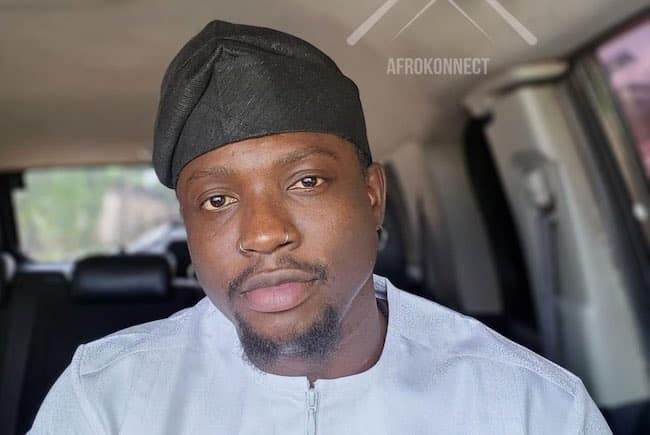
Controversial social media influencer and activist, Martins Otse, popularly known as VeryDarkMan, has threatened to release what he described as “damaging and criminal evidence” against Pastor Chris Okafor of Grace Nation Bible Ministry and Prophet Jeremiah Omoto Fufeyin if actress Doris Ogala is not released from custody by Tuesday, December 23, 2025.
Naija News reports that VeryDarkMan made the threat on Sunday afternoon in a video shared on his Instagram page while reacting to the arrest of the Nollywood actress.
In the video, the influencer alleged that Ogala was being detained because she claimed to possess incriminating evidence against the clerics, adding that the authorities were trying to confiscate and destroy such evidence.
“Let me advise you, just let her go. Everything you think is on her phone is with me. So, you better let her go,” he warned.
He added, “I give you until Tuesday to let her go. If you don’t let her go, there’s no problem, then we all start. And you know what I do? I go very hard.”
Allegations Against Pastors
VeryDarkMan accused Pastor Okafor and Prophet Fufeyin of allegedly manipulating Ogala and using her to cover up serious crimes, insisting that she was more of a victim than a perpetrator.
“Doris is not as evil as the pastors that use her to cover atrocity, the pastor that manipulated her and promised to buy her a car so that she could do their bidding,” he alleged.
He further accused some clerics of exploiting women and minors under the guise of religion.
“These so-called evil men of God hide under the name of Jesus Christ to take advantage of women, girl children, boys, and married women under the name of Jesus Christ,” he said.
Ogala Was Used
The influencer claimed that Ogala had shared all the alleged evidence with him before her arrest, stressing that she acted as an accomplice under manipulation.
“Please note that Doris was used; she was an accomplice. Take it from me,” he said, adding that many women had similar stories involving religious leaders.
VeryDarkMan also claimed that he had taken steps to ensure the evidence would not be suppressed, even if he was arrested.
“Trust me, I have so much proof. It will be very messy,” he said.
“I have sent all the evidence to 20 different persons and I will wipe the chats… just in case the police pick me up, they will just be seeing evidence flying right and centre.”
He directly addressed the clerics, saying, “I’m talking to you, Chris Okafor. I’m talking to you, Jeremiah. If by Tuesday I don’t see that lady, hell will be let loose.”
The arrest of Doris Ogala has continued to generate controversy on social media.
The actress was arrested on Saturday, December 20, 2025, after publicly calling out Pastor Chris Okafor over his alleged failure to fulfil a marriage promise to her.
In a series of Instagram posts before her arrest, Ogala alleged that she assisted Pastor Okafor and Prophet Jeremiah Fufeyin in suppressing the case of a missing child identified as Testimony, as well as other alleged criminal matters.
As of the time of filing this report, neither the Nigeria Police nor the Department of State Services had officially reacted to VeryDarkMan’s claims.
Similarly, Pastor Chris Okafor and Prophet Jeremiah Fufeyin were yet to respond to the allegations levelled against them.


- Rising Nigerian artist Fola, whose real name is Odunlami Afolarin Temiloluwa, reflects on a meaningful gesture from his late friend Mohbad.
- Fola is known for his popular songs, including “YOU,” and collaborations with artist BNXN.
- The impact of Mohbad’s kindness continues to resonate with Fola more than two years after Mohbad’s passing.
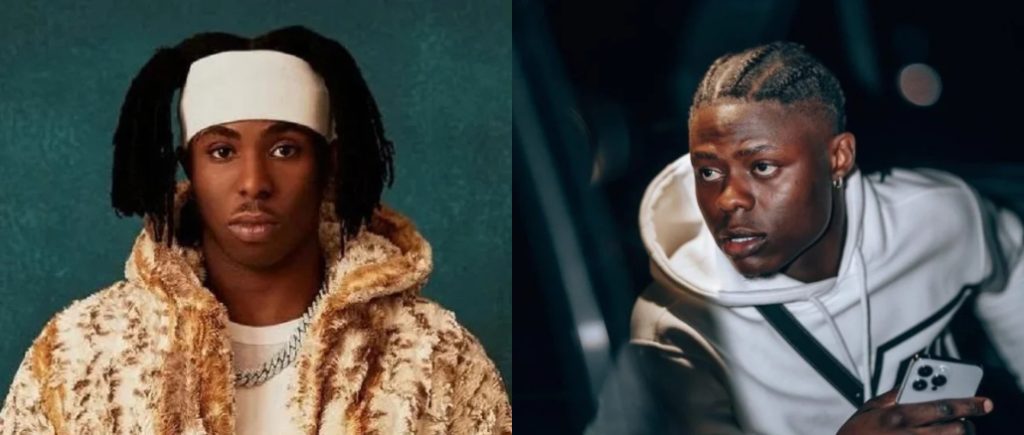
Rising Nigerian artist Odunlami Afolarin Temiloluwa, popularly known as Fola, recently opened up about a touching gesture of kindness from his late friend, Mohbad.
Fola, who has made waves with songs like YOU and collaborations with BNXN, shared how Mohbad’s act continues to resonate with him even more than two years after the singer’s untimely passing.
During a recent interview, the Afrobeats singer became visibly emotional as he recounted a meaningful memory with Mohbad. When asked whom he would choose to share a Coke with if given the opportunity, Fola gave a heartfelt reply.
He stated,
“I would like to share a Coke with Mohbad. RIP to Mohbad, I can’t forget, he bought me my first iPhone. He bought me an iPhone 6 in 2019. I still miss him, and I still wanna share a Coke with him.”
The iPhone 6, which Mohbad gifted him in 2019, came at a pivotal moment in Fola’s early music career.
Fola, known for his emotional pop-soul Afrobeats style, shared a close bond with Mohbad before they rose to fame. The two artists began their musical journeys around the same time, supporting each other as they navigated the industry.
Beyond music, Mohbad recognized Fola’s potential and helped him connect with key figures in the scene, including introducing him to Bella Shmurda. This connection eventually led to Fola signing with Dagbana Republik.
Reflecting on his journey, Fola credits these early relationships for helping him transition from Ibadan to Lagos and establish his place in the Nigerian music industry.
Watch the video below:
Read some comments below:
@FindingKan:”Wow! Mohbad was such a gem. Wickedness in this world didn’t allow that boy’s light shine. Imole 💡”
@oluwatobijamiu:”Like they always say, nobody is a nobody, and nobody stems out from nowhere. They’ve always been around….. it’s always the underground artist waiting for their turn, I’m happy it got to his turn ❤️”
@mee_tunde:”That’s how you know some people live beyond music. Kindness leaves receipts 🕊️”
@EgbeAsa:”I always tell people, there are so many of my friends who aren’t online but they are more handy than the ones online and cos I don’t post the shii they do doesn’t mean their deeds don’t count. Mohbad did this but nobody knew until now. I love this kind of people. Help in silence”
@Dreamahsfx:”Funny how life goes too fast and now Fola is getting bigger daily and steady. RIP to him and pls to everyone out there, try to stay alive.”
@_tzy_9:”Mohbad is a good guy as they described him, it only painful that they don’t allow him get justice”

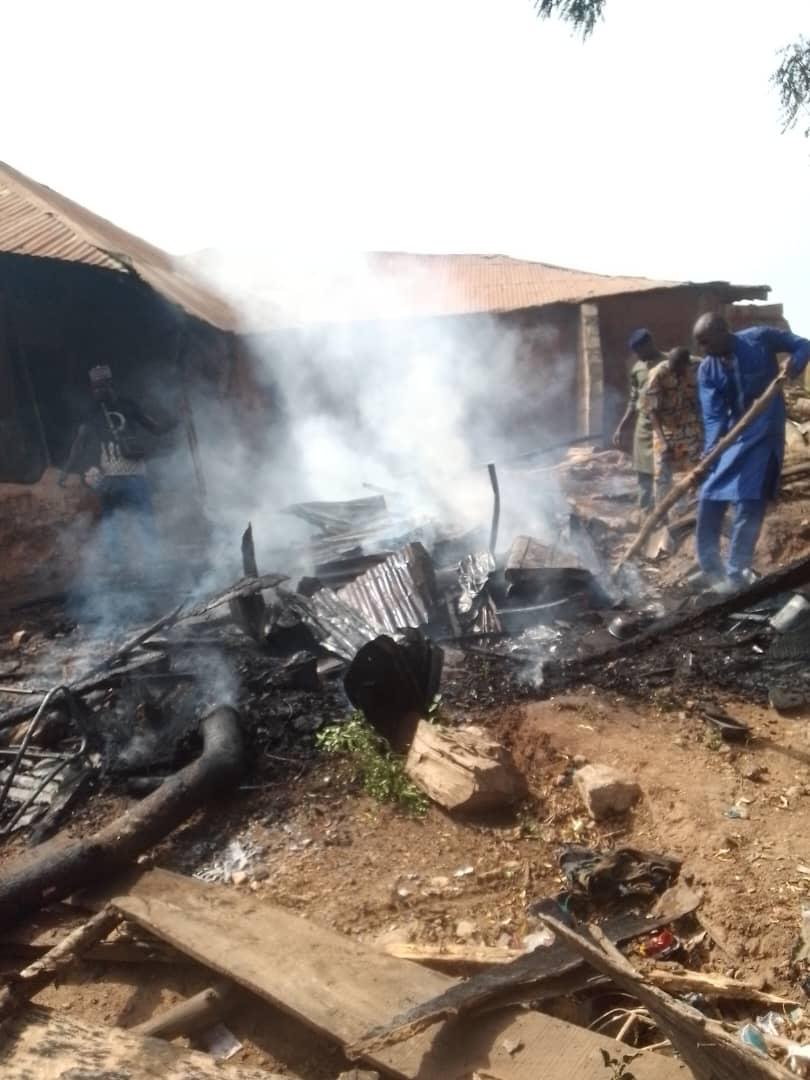
A mechanic workshop in Ogbomoso, Oyo State has been ravaged by fire, DAILY POST reports.
DAILY POST gathered that the workshop is located at Agboni area in Ogbomoso.
Our correspondent gathered that properties worth millions of naira have been destroyed as a result of the inferno.
The incident according to sources occurred on Saturday.
It was learnt that fire was caused by some items that were not attended to.
Properties worth millions of naira were said to be affected during the incident.
Chairman of Oyo State Fire Service, Hon Maroof Akinwande confirmed the incident.
Akinwande in a statement signed and made available to DAILY POST on Sunday noted that no life was lost in the incident.
He said, “Upon arrival, it was discovered that a mechanic workshop is on fire, well alight.
“Immediately firemen swung into action and restricted the fire from spreading to nearby residential building.
“Properties worth millions of naira were saved by the fire service. No casualty was recorded, the fire incident was as a result of an ember left unattended to ignited combustible materials and caught fire.”