
SCIENCE
Earth’s seasons vary wildly, even at the same latitude, new research finds


Earth’s seasonal cycles can vary dramatically across short distances, even at the same latitudes, a new study suggests.
Researchers have compiled a detailed map of seasonal rhythms around the world, which shows that some physically close regions have dramatically different timing for seasonal variations such as the start and end of the growing season. These differences could contribute to high biodiversity in certain ecosystems, the development of new species and even the different types of coffee harvested in Colombia, the team said.
“Seasonality may often [be] thought of as a simple rhythm — winter, spring, summer, fall — but our work shows that nature’s calendar is far more complex,” study co-author Drew Terasaki Hart, an ecologist and data analyst at the Commonwealth Scientific and Industrial Research Organization (CSIRO) in Australia, said in a statement. “This is especially true in regions where the shape and timing of the typical local seasonal cycle differs dramatically across the landscape. This can have profound implications for ecology and evolution in these regions.”
You may like
The idea of a simple, seasonal growing pattern works well for plants that grow at high latitudes, such as those in much of Europe and North America, researchers wrote in the study, published Aug. 27 in the journal Nature. But it doesn’t work quite as well in arid or tropical ecosystems.
In the study, Terasaki Hart and his colleagues used 20 years’ worth of satellite data that captured how plants reflected infrared light throughout the year to map vegetation’s growth cycles around the world.
Areas on the slopes of mountains in tropical regions or that have a balmy Mediterranean climate frequently exhibited seasonal asynchrony, or differences in their seasonal cycles across short distances, the team found. In these areas, the availability of light and water was more important for the local plants’ growth cycles than the temperature.
“Our map predicts stark geographic differences in flowering timing and genetic relatedness across a wide variety of plant and animal species,” Terasaki Hart said in the statement. “It even explains the complex geography of coffee harvest seasons in Colombia — a nation where coffee farms separated by a day’s drive over the mountains can have reproductive cycles as out of sync as if they were in opposite hemispheres.”
These starkly different niches over short distances could explain why tropical regions have such high biodiversity, the team wrote in the study. Plant and animal species on different seasonal cycles would slowly diverge, reproducing at different times and possibly forming new species after many years.
The results could help explain how species evolve in other ecosystems, such as in river or ocean environments, as well as how environments are adapting to climate change, the researchers wrote in the study.
“We suggest exciting future directions for evolutionary biology, climate change ecology, and biodiversity research, but this way of looking at the world has interesting implications even further afield, such as in agricultural sciences or epidemiology,” Terasaki Hart added.










Russian state-owned Energia rocket company has secured a patent for a novel spacecraft architecture designed to generate artificial gravity, a capability which could provide a huge boost for long-duration crewed missions.
A report from Russian state media outlet TASS, which obtained the patent, states that the rotating system is designed to generate a gravitational force of 0.5g, or 50% of Earth’s gravity. The patent documentation includes illustrations of a notional space station structure with a central axial module with both static and rotating components, with modules and habitats connected by a hermetically sealed, flexible junction.
You may like
The documentation notes the disadvantage of the need for spinning and coordinating the rotation of transport ships to dock with the station, which it notes reduces the safety of using such a station.
Generating artificial gravity could have profound impacts for crews on long-duration space missions, whether in low Earth orbit on interplanetary voyages into deep space. Exposure to microgravity has numerous impacts on astronauts, including muscle atrophy and bone density loss.
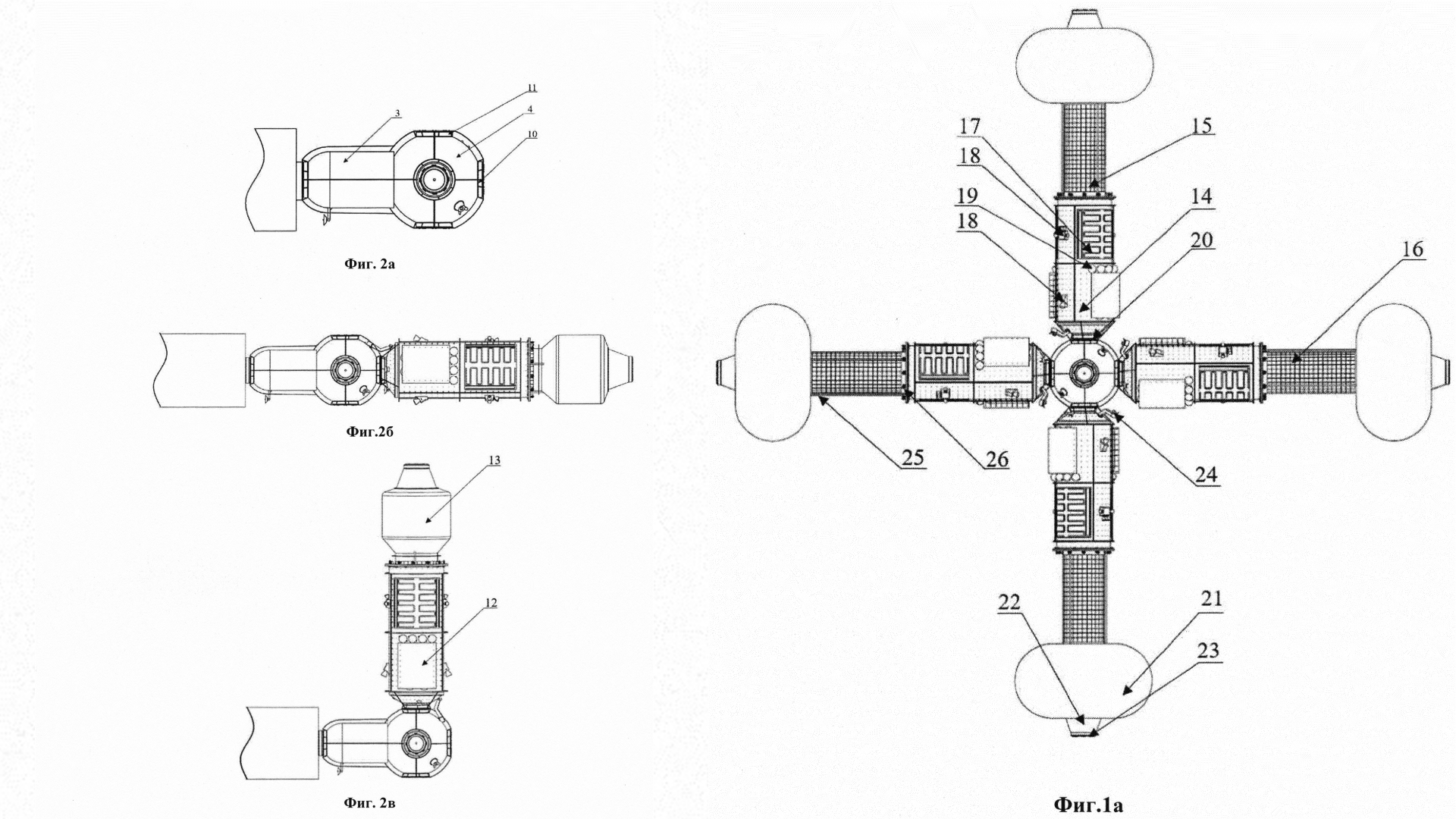
Illustrations accompanying a patent for an artificial gravity space station submitted by Russian state-owned Energia rocket company. (Image credit: RSC Energia)
NASA has produced concepts such as the rotating wheel space station concept Nautilus-X, while, more recently, commercial firm Vast has said it will pursue artificial gravity stations.
Russia did not indicate timelines for such a project nor resources to back its development. The patent does however indicate interest in the concept of artificial gravity at a time when the end of the International Space Station (ISS) is approaching and new national and commercial station plans are moving forward.
Currently, NASA and Roscosmos plan to deorbit the ISS in 2030, using a modified SpaceX Dragon capsule to push the station down into a fiery death over the Pacific Ocean. Russia has committed to stay aboard the ISS until 2028.
SCIENCE
Santa’s sleigh or the International Space Station? How to spot a bright Christmas flyby Dec. 24 and 25


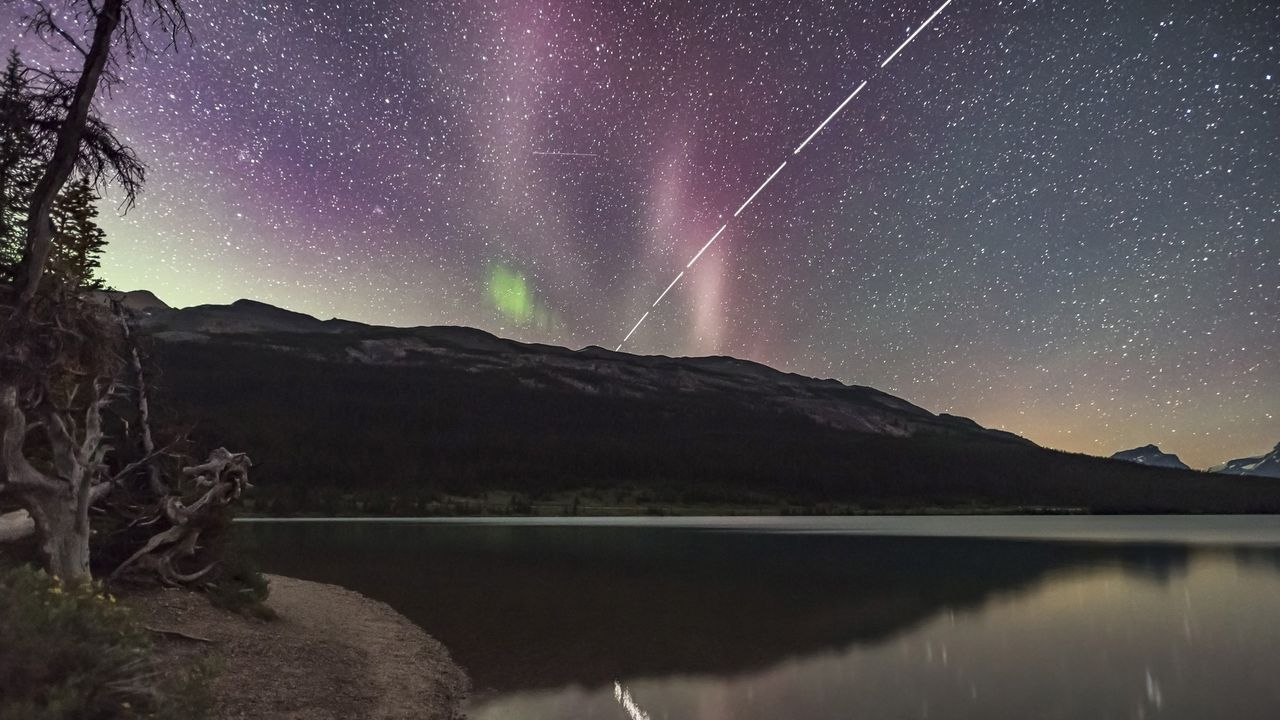
Early risers across North America and Europe may notice something unusual in the skies this Christmas, a bright, silent light, gliding smoothly overhead in the hours before sunrise on Dec. 24 and Dec. 25.
It won’t blink like an airplane and it won’t leave a trail behind. Instead, it will appear suddenly, move steadily across the sky and fade away just minutes later. To young, eager eyes already awake and brimming with excitement, it might look like something (or someone) making a quiet journey through the dawn sky.
You may like
This Christmas, the International Space Station is also perfectly placed to reflect sunlight down to Earth during early-morning passes, making it one of the brightest objects in the sky.
Whether you choose to see it as a seasonal mystery or a space-age marvel, the sight may be brief, but it is beautiful and easy to spot with the naked eye — so long as you are in the right place at the right time.
In the table below, we have listed some of the best times to look up over major cities, weather permitting — information gathered from AstroViewer.net.
Swipe to scroll horizontallyWhen to look for the Christmas sky surprise
City
Date
Local time
Duration
Max altitude
New York
Dec. 24
6:43–6:48 a.m. EST
~5 min
19°
New York
Dec. 25
5:56–5:59 a.m. EST
~3 min
16°
Chicago
Dec. 24
5:42–5:45 a.m. CST
~3 min
16°
Chicago
Dec. 25
6:29–6:35 a.m. CST
~6 min
26°
Toronto
Dec. 24
6:42–6:47 a.m. EST
~5 min
25°
Toronto
Dec. 25
7:30–7:35 a.m. EST
~5 min
56°
London
Dec. 24
7:04–7:10 a.m. GMT
~6 min
55°
London
Dec. 25
6:17–6:22 a.m. GMT
~5 min
70°
Rome
Dec. 25
7:19–7:22 a.m. CET
~3 min
35°
To see the flyby, head outside with a clear view of the sky. You don’t need binoculars or a telescope to spot it, just your eyes and a little patience.
The bright light comes from the International Space Station. It shines when sunlight reflects off the large structure while it orbits Earth every 90 minutes.
For those who want to check future sightings, or quietly confirm what they’ve seen, NASA’s Spot the Station service shows when the space station will pass overhead from any location.

Around 18,000 years ago, ice age people in what is now Ukraine likely weathered the extremely harsh climate by building parts of their shelters out of mammoth bones, a new study finds.
The mammoth dwellings show how communities thrived in extreme environments, turning the remnants of giant animals into protective architecture,” the archaeologists wrote in a statement.
You may like
To investigate these questions, archaeologists re-examined the site to try and get a better idea of when it was built and how long it stayed in use. They dated the remains of about a dozen small animals found near the mammoth dwellings to try and get a more precise chronology.
The largest structure at Mezhyrich dates to 18,323 to 17,839 years ago, the team reported in the study, published on Nov. 21 on the publishing platform Open Research Europe. These dates are just after the Last Glacial Maximum (26,500 to 19,000 years ago), the coldest part of the last ice age. The researchers noted that the dwelling may have been used for up to 429 years. This indicates that the “shelters were practical solutions for survival rather than permanent settlements,” they wrote in the statement.
Mammoth bones were used to help make shelters in Ukraine. They would have protected people during the harshest parts of the last ice age. (Image credit: Pavlo Shydlovskyi)
The foundation of the shelters may have had “mammoth skulls and large long bones, set vertically into the ground [which] formed a kind of plinth or ‘foundation,'” study co-author Pavlo Shydlovskyi, an archaeology professor at the Taras Shevchenko National University of Kyiv, told Live Science in an email.
A wooden framework may have covered parts of the shelter, along with hides from smaller animals or possibly birch bark. In addition, “tusks and large flat bones were placed on the upper part of the structure [the roof] functioning as weights and wind protection,” Shydlovskyi said.
Five to seven people likely lived within each shelter, Shydlovskyi said. A variety of activities such as flint knapping, animal skin processing and small animal butchering were likely done inside.
Francois Djindjian, an honorary professor at the University of Paris 1 Panthéon Sorbonne has done research on other possible mammoth bone shelters but was not involved in the new paper. He was cautious about the team’s dates, and said that he thought that more dates were needed from more of the site. Getting more radiocarbon dates from across the site would give a better idea of when it was used.
Last ice age quiz: How much do you know about Earth’s frosty past?


Ancient wolves found on a human-occupied Baltic island reveal unexpected and complex forms of prehistoric human-animal interaction. Researchers have uncovered wolf remains dating back thousands of years on a small and remote island in the Baltic Sea. Because the island is naturally isolated, the animals could only have arrived there with human involvement. The study, […]
SOURCE PAGE

Stargazers may get an extra gift this Christmas, as the northern lights could put on a subtle show thanks to ongoing unsettled space weather activity from the sun.
While this isn’t likely to be a major aurora event, conditions are more unsettled than background levels, raising the odds for festive auroras, especially at high latitudes.
Earth is currently being buffeted by fast solar wind spewing from a large coronal hole on the sun. These high-speed winds have already triggered minor (G1) geomagnetic storm conditions Dec. 22 through Dec. 23, with solar wind speeds climbing to around 500 miles (800 kilometers) per second — roughly twice as fast as typical background solar wind levels, according to NOAA’s Space Weather Prediction Center.
You may like
These enhanced solar wind conditions are forecast to persist through Dec. 23-25, keeping geomagnetic activity elevated through Christmas Eve into Christmas Day. While storm levels may ease off slightly, there is a possibility of periods of active geomagnetic conditions according to space weather forecasters at NOAA and the U.K. Met Office.
There is also a possible wildcard at play.
According to NOAA, a coronal mass ejection (CME) that left the sun on Dec. 20 could pass close to Earth on Dec. 24, potentially striking our planet with a glancing blow. While no clearly Earth-directed CME has been observed, even a near-miss could briefly enhance aurora activity by disrupting the already disturbed solar wind environment around Earth.
Any aurora enhancement is likely to be limited to high latitudes; for the U.S., this means northern states such as Alaska, Washington, North Dakota and Minnesota. Elsewhere, elevated geomagnetic conditions could see auroras dance for skywatchers in northern Canada, Greenland and parts of Scandinavia.
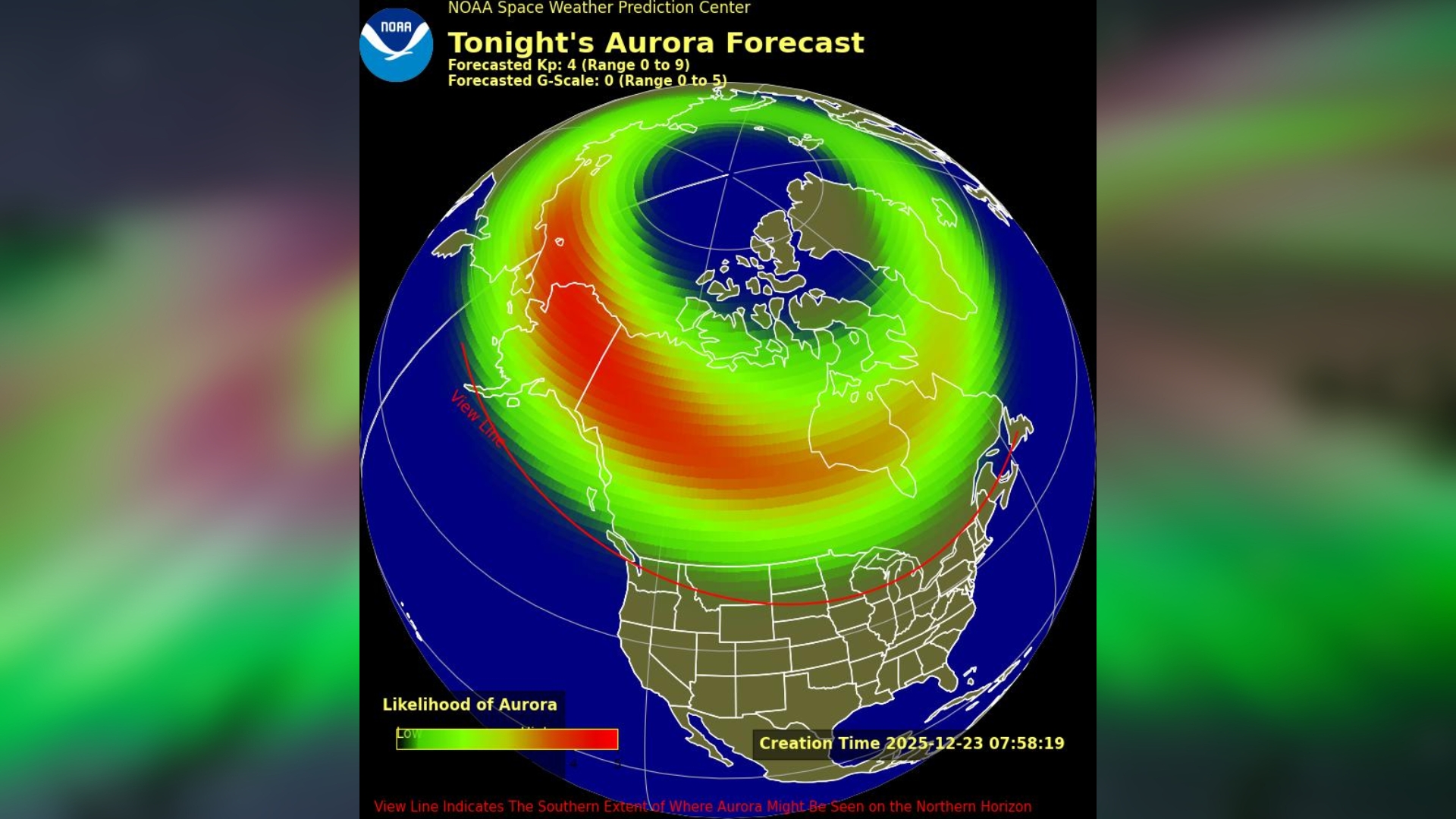
Aurora forecast tonight courtesy of NOAA’s Space Weather Prediction Center. (Image credit: Map: NOAA Space Weather Prediction Center, graphic created in Canva Pro by Daisy Dobrijevic.)
To keep informed about when and if you can expect to catch a glimpse of the northern lights from where you live, we recommend downloading a space weather app that provides aurora forecasts based on your location. One option I use is “My Aurora Forecast & Alerts,” available for both iOS and Android. However, any similar app should work well.
I also use the “Space Weather Live” app, which is available on iOS and Android, to get a deeper understanding of whether the current space weather conditions are favorable for aurora sightings. Want to capture the perfect photo? Our how to photograph auroras guide can help.

A new brain-machine interface (BMI) uses light to “speak” to the brain, mouse experiments show.
The minimally invasive wireless device, which is placed under the scalp, receives inputs in the form of light patterns, which are then conveyed to genetically modified neurons in brain tissue.
In the new study, these neurons activated as if they were responding to sensory information from the mice’s eyes. The mice learned to match these different patterns of brain activity to perform specific tasks — namely, to uncover the locations of tasty snacks in a series of lab experiments.
You may like
The device marks a step toward a new generation of BMIs that will be capable of receiving artificial inputs — in this case, LED light — independent of typical sensory channels the brain relies on, such as the eyes. This would help scientists build devices that interface with the brain, without requiring trailing wires or bulky external parts.
“The technology is a very powerful tool for doing fundamental research,” and it could address human health challenges in the longer term, said John Rogers, a bioelectronics researcher at Northwestern University and senior author of the study, which was published Dec. 8 in the journal Nature Neuroscience.
Bypassing the sensory system
The device, which is smaller than a human index finger, is soft and flexible, so it conforms to the curvature of the skull. It includes 64 tiny LEDs, an electronic circuit that powers the lights, and a receiver antenna. Additionally, an external antenna controls the LEDs using near-field-communications (NFC) — electromagnetic fields for short-range communications as is done for contactless card payments.
The compact device is designed to be placed under the skin, rather than being implanted directly into the brain. “It projects light directly onto the brain [through the skull], and the response of the brain to that light is generated by a genetic modification in the neurons,” Rogers told Live Science.
Brain cells don’t normally respond to light that is shone on them, so gene editing is required to make that happen.
“The genetic modification creates light-sensitive ion channels,” Rogers explained. When activated by light, these channels allow charged particles to flow into brain cells, tripping a signal that then gets sent to other cells. “Through that mechanism, we create light sensitivity directly in the brain tissue itself,” he said. The genetic modification of the brain cells was done using a viral vector, a harmless virus made to deliver the desired genetic tweak into specific cells in different regions of the brain.
The use of light to control the activity of genetically modified cells is called optogenetics, and it’s a relatively new science. In past work, the researchers used a similar approach to activate just one group of brain cells, but the new device enabled them to toggle the activity of many neurons across the brain.
You may like
“[The genetic modification] is not just stimulating the part of the brain that’s naturally responsible for visual perception, but across the entire surface of the cortex,” Rogers said. Thus, sending different patterns of illumination creates a corresponding distribution of neural activity. “It’s like we can project a series of images — almost like play a movie — directly into the brain by controlling [the] sequence of patterns.”
The researchers tested the implant in the mice by wirelessly instructing it to produce various patterned bursts of light. The mice were trained to respond to each pattern with a specific behavior, indicating that they could distinguish between the patterns transmitted. With each type of signal, they had to go to a specific cavity in a wall, and for choosing correctly, they’d get sugar water as a reward.
Bin He, a neuroengineering researcher at Carnegie Mellon University who wasn’t involved in the study, called it a novel technique for using light to tune circuits across the brain. “It may have various applications in neuroscience research using animal models … and beyond,” he said.
For instance, the researchers see potential for this device in future prosthetics. Applications could include adding sensations, like touch or pressure, to prosthetic limbs, or sending visual or auditory signals to vision or hearing prostheses.
“Optogenetic techniques are just beginning to be used with humans,” Rogers said. “There are tremendous advantages [to using light] because you don’t need to disrupt the brain tissues. You can use different wavelengths of light to control different regions of the brain.”
Rogers said that from a technology standpoint, the platform could scale to cover much larger areas of the brain and contain more micro-LEDs. However, they would have to rethink the power-supply requirements to support a larger device. It should technically work in humans as it does in mice, but further research will be needed before any tests are attempted in humans.
“The biggest hurdle is around the regulatory approval for the genetic modification,” he said.
Brain quiz: Test your knowledge of the most complex organ in the body

Mosasaurs were enormous reptiles best known for ruling ancient oceans more than 66 million years ago, but new evidence suggests some also lived in rivers. Scientists reached this conclusion after analyzing a mosasaur tooth discovered in North Dakota. The tooth is thought to have come from an animal that may have grown up to 11 […]
SOURCE PAGE


Researchers have created the lining of a womb in a dish, which promises to shed light on the mysterious early stages of human pregnancy and the glitches that can lead to miscarriage and medical complications.
In laboratory experiments, early-stage human embryos donated from couples after IVF treatment successfully implanted into the engineered lining and began to churn out key compounds, such as the hormone that results in a blue line on positive pregnancy tests.
The approach allowed scientists to eavesdrop on the chemical chatter that arises between the embryo and the womb lining as it embeds and begins to be nourished in the first weeks of gestation.
“It’s incredible to see it,” said Dr Peter Rugg-Gunn, a senior author on the study and group leader at the Babraham Institute in Cambridge. “Previously we’ve only had snapshots of this critical stage of pregnancy. This opens up a lot of new directions for us.”
Implantation takes place a week or so after fertilisation when the developing embryo attaches and then embeds itself into the uterus wall. It is a crucial phase in pregnancy, but the process is poorly understood because it is so hard to observe. Much of what is known comes from studies of hysterectomies that were performed in early pregnancy more than half a century ago.
To build the replica womb lining, Rugg-Gunn and his colleagues obtained uterine tissue from healthy women who donated biopsy samples. From this, the scientists isolated two different types of cells: stromal cells that give structural support to the womb lining, and epithelial cells, which form the lining’s surface. They encapsulated the stromal cells in a biodegradable material called a hydrogel and put the epithelial cells on top.
The researchers tested the engineered womb lining with donated early-stage IVF embryos. Writing in the journal Cell, they describe how the microscopic balls of cells attached and implanted as hoped. They then ramped up secretion of a hormone called human chorionic gonadotropin (hCG), the biochemical marker detected by pregnancy tests, along with other pregnancy-related compounds.
The technique enabled scientists to watch embryos grow for up to 14 days post-fertilisation, the legal limit for research. During the process, the embryos formed specialised cells and other cells involved in the growth of the placenta.
To understand the process more deeply, the scientists zoomed in on the spots where embryos had embedded in the engineered womb lining and decoded the molecular signals that passed back and forth. Such signals are critical for achieving and maintaining a healthy pregnancy.
Scientists will now use the approach to investigate how pregnancies become established and what can go awry. “We know that half of all embryos fail to implant and we have no idea why,” Rugg-Gunn said. Finding answers could provide a much-needed boost to IVF success rates.
Further experiments will explore what happens after implantation when the placenta starts to form. Many serious complications of pregnancy are thought to arise at this stage. In the study, the researchers used a chemical to block a particular signal between the embryo and the lining, producing severe defects in the tissue that forms the placenta, demonstrating its power for testing the impact of signalling problems.
In a separate study in the journal, Chinese researchers created their own replica womb lining and identified drugs that might improve implantation rates in patients with recurrent implantation failure (RIF), where good-quality IVF embryos fail to establish a pregnancy.
John Aplin, a professor of reproductive medicine at the University of Manchester, said that during 40-plus years of assisted reproduction, implantation rates had remained stubbornly low.
“As the embryo implants, a programme is initiated to begin development of the placenta, which will supply nutrients and oxygen to the foetus,” he said. “The earliest stages are crucial to the progression of the pregnancy, are not well understood, and frequently fail. This work will allow treatments to be explored that seek to improve implantation efficiency.”

Webcast: AST SpaceMobile BlueBird 6 Mission Live Launch – YouTube

Watch On
An Indian rocket is scheduled to launch the record-breaking BlueBird 6 smartphone satellite tonight (Dec. 23), and you can watch the action live.
You may like
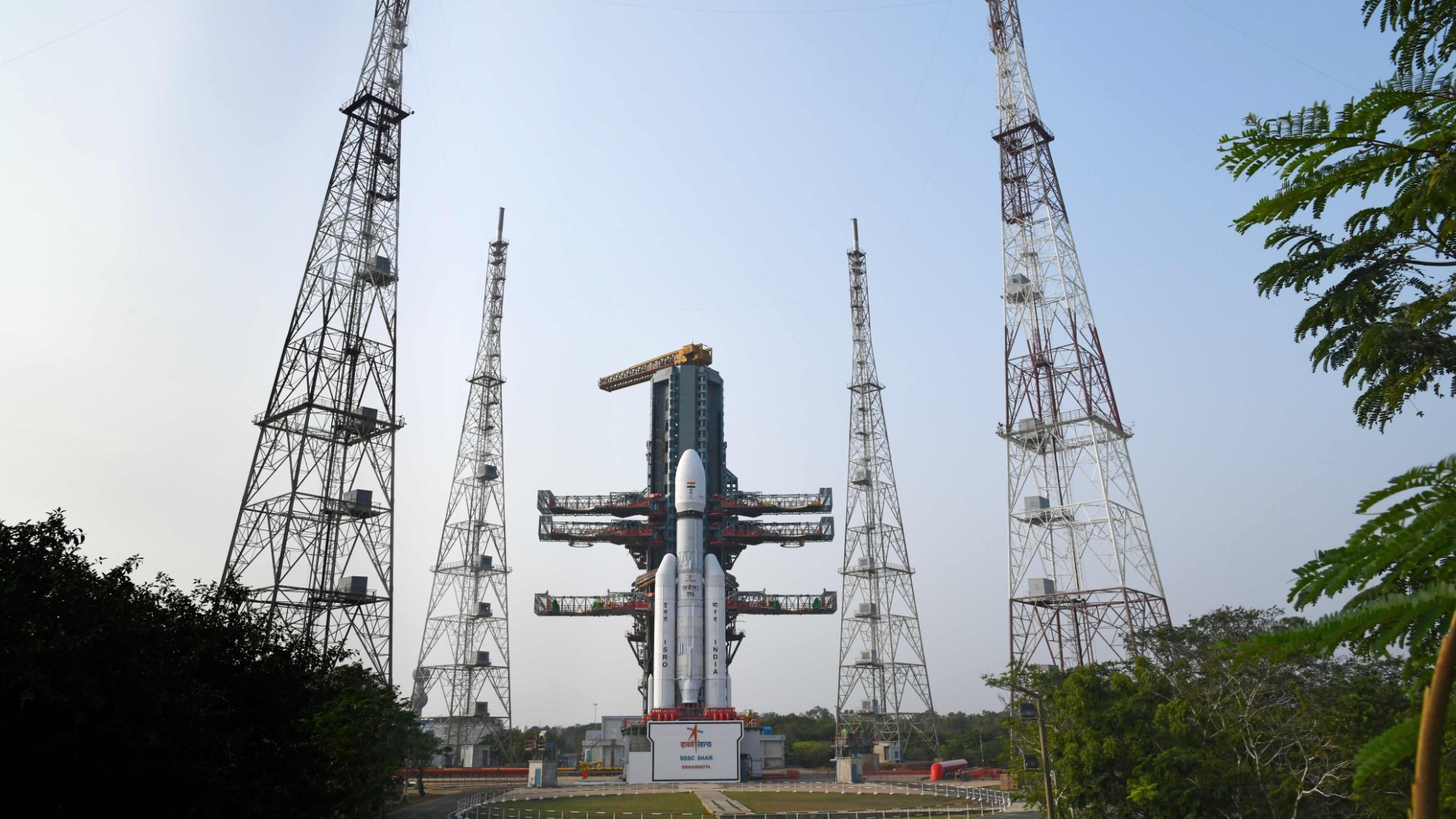
An Indian LVM3 rocket on the pad ahead of the planned Dec. 23, 2025 launch of the BlueBird 6 satellite for AST SpaceMobile. (Image credit: ISRO)
AST SpaceMobile is building a constellation of satellites in low Earth orbit (LEO) that beam broadband service directly to standard smartphones on the ground.
The company has launched five operational satellites to date, all of them aboard a single SpaceX Falcon 9 rocket in September 2024. Those spacecraft, BlueBirds 1 through 5, feature 693-square-foot (64.4 square meters) communication arrays — the largest ever unfurled in LEO.
BlueBird 6 will break that record, and by a healthy margin. It’s the first of AST SpaceMobile’s next-generation BlueBirds, whose arrays cover nearly 2,400 square feet (223 square meters) apiece.
Tonight’s liftoff will be the ninth overall for the three-stage, 143-foot-tall (43.5 m) LVM3, which is India’s most powerful rocket. It debuted in December 2014 and has a 100% success rate to date.
BlueBird 6, which tips the scales at about 13,450 pounds (6,100 kilograms), will be the heaviest payload that the LVM3 has ever hauled to LEO, according to the Indian Space Research Organisation.
SCIENCE
Cats meow more at men than women to get their attention — and it’s a sign they are master manipulators

Over 10,000 years of domestication, cats have learned to meow to get exactly what they want from their human servants. Now, researchers in Turkey have found that cats greet men far more vocally than they do women — and this could be another way they manipulate us to get the attention they deserve.
The new research reveals “cats’ ability to categorize bonded individuals and modulate their responses,” said study co-author Kaan Kerman, principal investigator of the Animal Behavior and Human-animal Interactions Research Group at Bilkent University in Turkey. “This shows that cats are not automata and possess cognitive abilities that enable them to live alongside humans in an adaptive manner,” he told Live Science in an email.
You may like
“Both the public imagination and the scientific community for a time viewed cats as loners with little need for social bonds,” Kerman said. However, “cats are more social than previously assumed. They do not interact with humans solely to obtain food. They actively seek social contact and form bonds with their caregivers.”
Greeting is a key part of that sociability, as it helps reinforce bonds between domestic cats (Felis catus) and their humans, the researchers wrote in the study, which was published Nov. 14 in the journal Ethology.
To find out more about how cats greet humans, the researchers fitted 40 cat owners with cameras. They were asked to film the first 100 seconds of their interactions with their cat after returning home. The participants were told to act normally so they could capture typical interactions. The researchers then analyzed the footage to assess whether certain behaviors are related, and whether different demographic variables influenced the cats’ behaviors.
Nine people were excluded from the study for various reasons, but videos from the remaining 31 participants revealed that the cats were far more vocal toward men than women when their humans first walked in. “No other demographic factor had a discernible effect on the frequency or duration of greetings,” the researchers wrote.
The researchers then accounted for different factors, such as the animals’ sex, pedigree status and number of cats in the household — but found that the sex of the human was the only significant influence on cat vocalizations.
The researchers suggest this could be because women are typically more verbally active with their cats and better at interpreting what their cats want. Men, on the other hand, may need a lot more prompting before they pay sufficient attention to their cats, the researchers hypothesized in the study.
The team also speculate that cultural factors may have influenced their findings. Previous research shows that people in different cultures interact with cats in different ways — and that this also impacts how cats interact with humans. In this case, the participants were in Turkey, and it may be that men in Turkey are less likely to be chatty with their cats, the team wrote. “However, this interpretation remains speculative and warrants further exploration in future research,” the team wrote.
You may like
The team also found that meowing and other vocalizations didn’t fit into a specific pattern of behavior — meaning these vocalizations were not a sign of a specific emotional state or need.
The team acknowledged that the study has several limitations, including the small sample size and the participants being from the same region. The researchers also noted that the study did not control for other potentially important factors, such as how hungry the cats were when their humans returned, the number of other people in the household or the length of time the animals were alone. Previous research suggested that cats react differently to humans — such as by purring and stretching more — when they are separated for longer periods of time, so the results don’t necessarily reveal that cats always meow more at men.
“One important next step is to replicate the findings in different cultural contexts. This would help us understand how generalizable the results are,” Kerman said.
Dennis Turner, director of the Institute for Applied Ethology and Animal Psychology in Switzerland who was not involved in the study, said he was impressed by the team’s findings.
“I liked the authors’ speculation about the reason for this finding and suspect that the men either were less attentive to the cats’ vocalizations on other occasions or reacted differently (more or less strongly, different voice frequency) to the greeting vocalizations than women,” he told Live Science in an email.
“Much of my team’s research [h]as shown that men and women (and children) interact differently with cats in the household.” For instance, women speak more to cats and are likelier to go down to the cats’ level to interact with them, he noted.
However, cats likely have no preference towards men or women, Turner added. Instead, he agreed with the researchers’ view that more meowing toward men is a sign of cats’ social flexibility.
Cat quiz: Can you get a purr-fect score?
SCIENCE
How 2025 became the year of comet — The rise of interstellar 3I/ATLAS, an icy Lemmon and a cosmic SWAN

2025 has seen stargazers look on in awe as a trio of magnificent comets barreled headlong into the inner solar system to survive a close brush with the sun, only to emerge to race back out into the blackness of space, never to be seen again.
Of these comets — the interstellar invader 3I/ATLAS, C/2025 A6 (Lemmon) and C/2025 R2 (SWAN) — not all survived their trial by solar radiation intact, while others drew the attention of a global audience thanks in part to their scientific significance and in some cases, the disinformation that swirled around them.
You may like
5 incredible moments that made 2025 the year of the comet
1. Enter interstellar comet 3I/ATLAS
Comet 3I/ATLAS was discovered on July 1, 2025, by the NASA-funded ATLAS telescope in Rio Hurtado, Chile and was quickly confirmed to be just the third interstellar visitor to our solar system, after 1I’Oumuamua and 2I/Borisov.
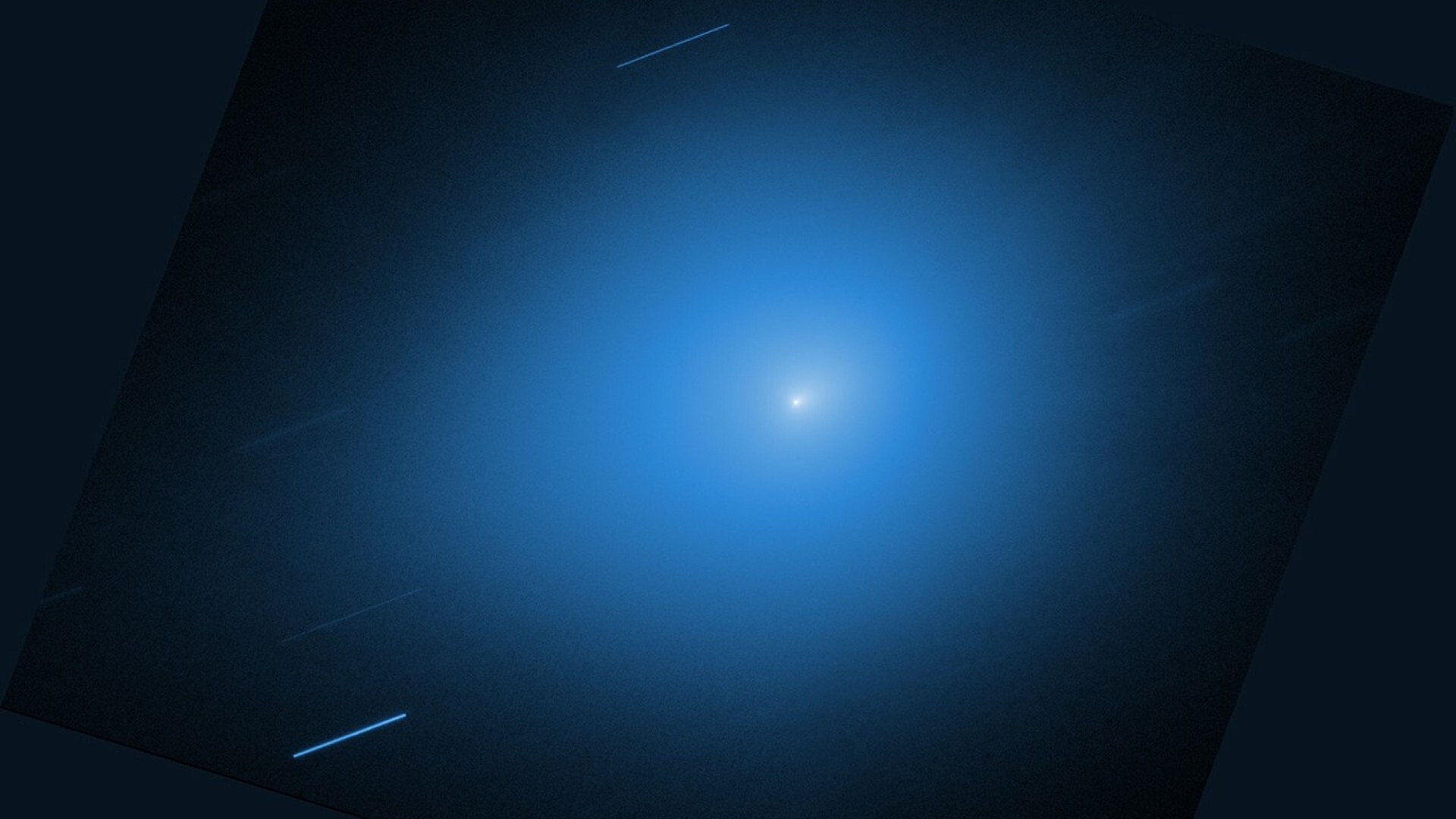
Hubble Space Telescope captured interstellar comet 3I/ATLAS in November. (Image credit: NASA, ESA, STScI, D. Jewitt (UCLA). Image Processing: J. DePasquale (STScI))
Its exotic nature quickly seized the interest of the scientific community and the imagination of the public while simultaneously sending the conspiracy-peddling community into a frenzy, some of whom claimed that 3I/ATLAS was an alien spacecraft that had voyaged to the heliosphere for reasons unknown.
Follow-up observations confirmed 3I/ATLAS to be the brightest and potentially the largest interstellar object discovered to date, measuring up to 3.5 miles (5.6 kilometers) in diameter, based on observations from the Hubble Space Telescope, according to NASA.
2. When the cosmos gives you Lemmon, make astrophotography
If 3I/ATLAS was the most scientifically riveting of the cometary trio, C/2026 A6 (Lemmon) was arguably the most dynamic and photogenic. Comet Lemmon was discovered on Jan. 3 earlier this year and swiftly became a popular target among the astrophotography community, as it brightened from +21.5 to naked eye visibility around its close approach to the sun —known as perihelion — on Nov. 8.
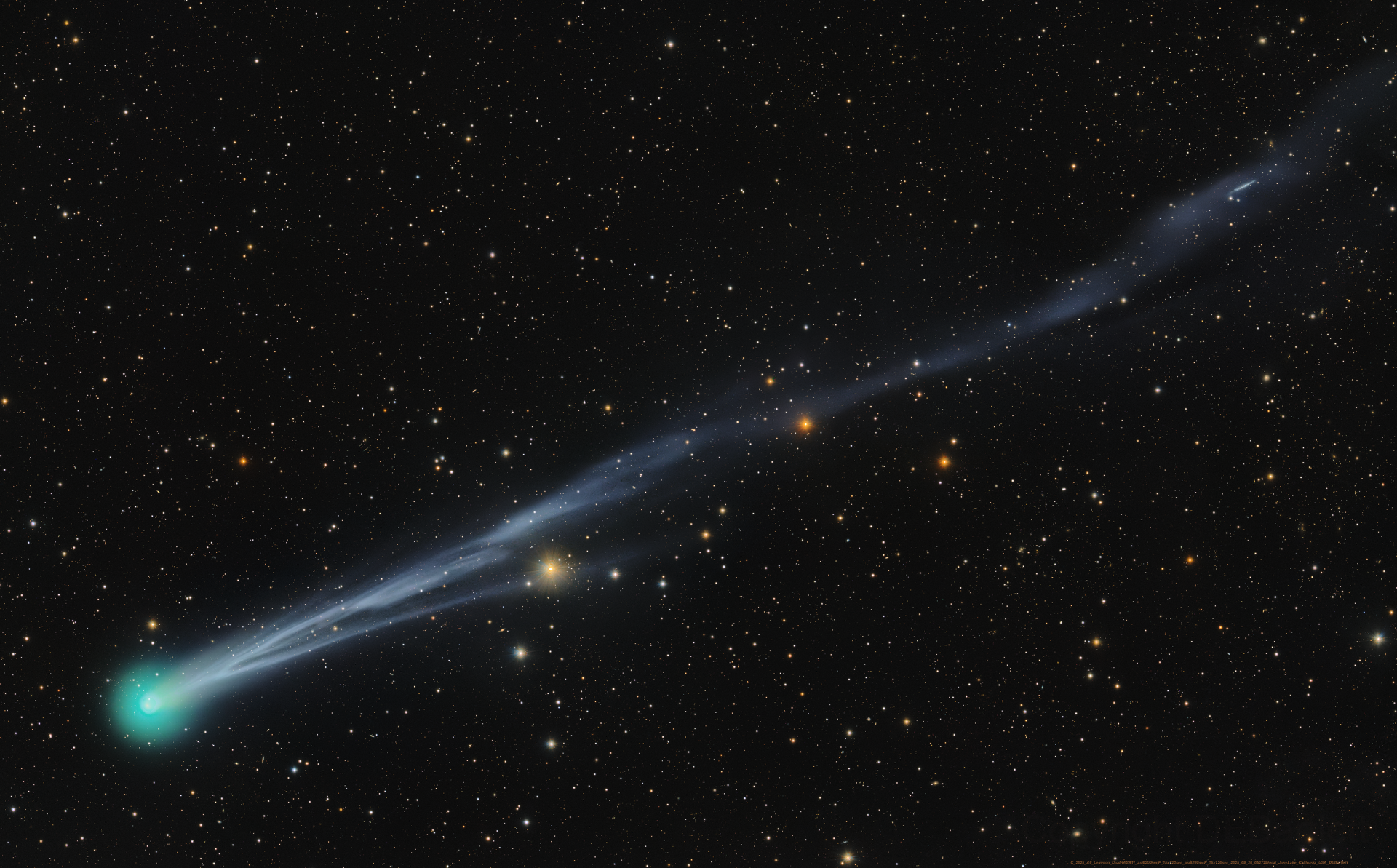
A view of Comet Lemmon on September 20th (Image credit: Dan Bartlett)
Astrophotographers kept C/2026 A6 (Lemmon) firmly locked in their field of view throughout its journey, capturing each stage of its dramatic evolution. As it approached the sun, the increase in heat radiation caused icy matter in the comet’s central nucleus to sublimate into gas, dragging dust particles with it.
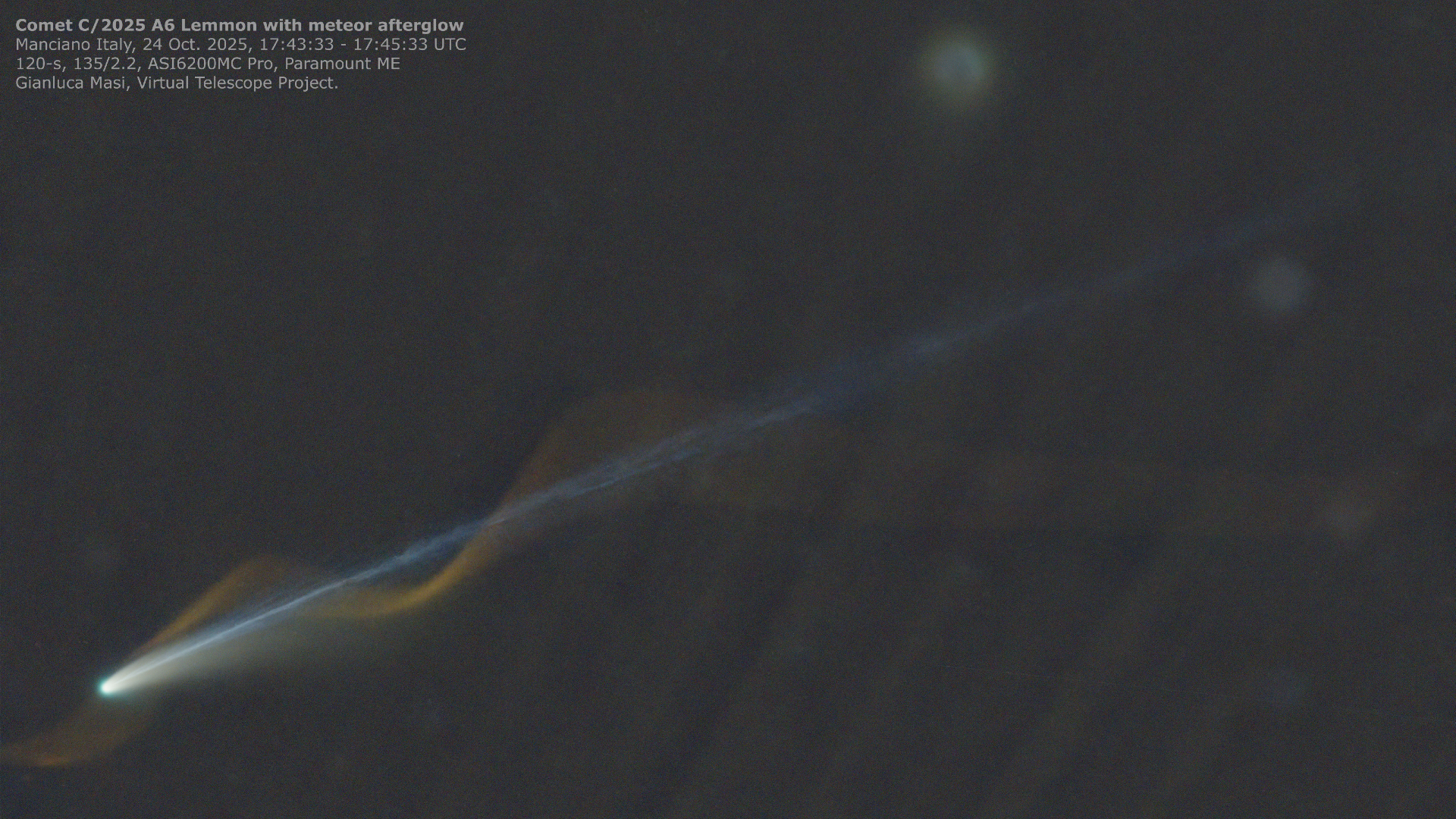
A glowing meteor trail appears to wrap around the tail of Comet Lemmon as seen by astronomer Gianluca Masi of the Virtual Telescope Project on Oct. 24. (Image credit: Gianluca Masi, Virtual Telescope Project)
The resulting cloud of cometary debris was then snatched up by the charged particles pouring out from the sun — called the solar wind — giving rise to a spectacular tail.
Astronomer Gianluca Masi captured a rare shot of the cosmic wanderer, when a glowing meteor tail in Earth’s upper atmosphere appeared to wrap itself around Comet Lemmon’s distant tail as it passed through the constellation Serpens on Oct. 24, creating a “a pure perspective miracle”.
You may like
3. Comet SWAN dives through the Eagle Nebula
While Comet Lemmon’s complex tail snagged the attention of astrophotographers worldwide, others took aim at the solar system wanderer C/2025 R2 (SWAN), which put on a magnificent show on Oct. 17, as it passed in front of the Eagle Nebula in the constellation Serpens.

Comet C/2025 R2 (SWAN) glows alongside the Eagle Nebula. (Image credit: Daniele Gasparri)
Daniele Gasparri captured a striking view of C/2025 R2 (SWAN)’s vivid green coma as it hung in the pristine skies above the Atacama Desert in Chile, with the vast emission nebula serving as a jaw-dropping backdrop for the cometary body.
The pillars of creation, vast columns of interstellar dust and gas shaped by the radiation of nearby stars and made famous by the Hubble Space Telescope, can be seen nestled in the glowing heart of the vast nebula, to the left of the comet’s glowing central nucleus.
4. Comet 3I/ATLAS reaches perihelion
Oct. 30 marked the climax of interstellar traveller 3I/ATLAS’s headlong charge into the inner solar system, as it made its closest approach to the sun, passing 125 million miles (202 million km) from our parent star at the point of perihelion.
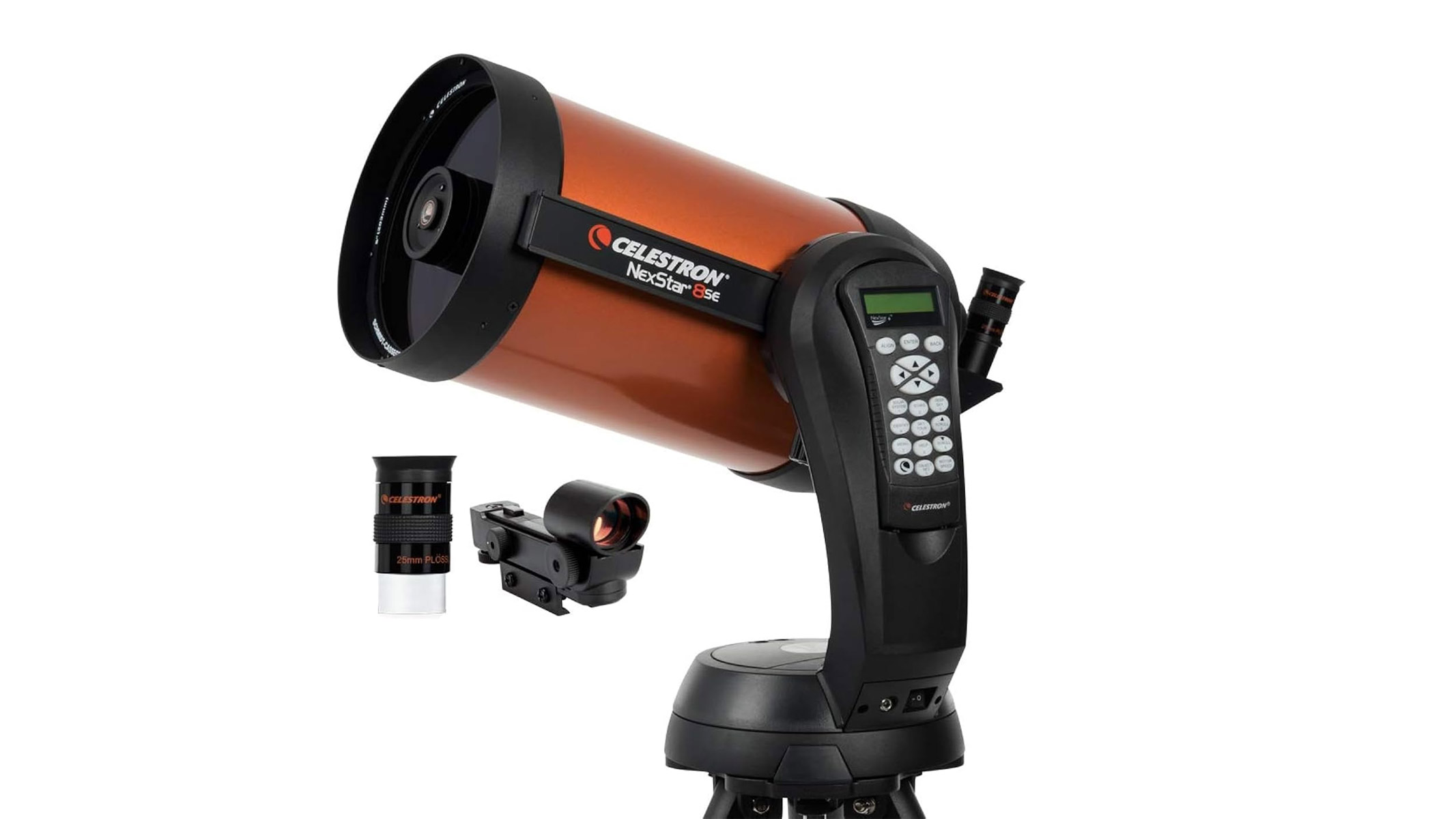
Celestron NexStar 8SE
(Image credit: Amazon)
We reckon the Celestron NexStar 8SE is the best motorized telescope out there as it’s great for astrophotography, deep-space observing and it offers stunning detailed imagery. It is a little pricey but for what you get, it’s good value. For a more detailed look, you can check out our Celestron NexStar 8SE review.
The event occurred just as 3I/ATLAS flew behind the sun from the perspective of Earth, robbing some of humanity’s most powerful observatories of the chance to analyze the comet’s chemical composition as it reached a peak of activity. Thankfully, perihelion was observed from elsewhere in the solar system by a flotilla of spacecraft orbiting Mars and travelling through interplanetary space.
3I/ATLAS finally emerged intact from behind the glare of the sun to become visible to Earthbound astronomers and skywatchers in early November, though it remained too dim to spot with the naked eye.
NASA subsequently held a press conference on Nov. 19 following the re-opening of the federal government, where it revealed several new images of the interstellar invader that documented its glowing central nucleus, sun-facing jet and growing tail. Conspiracy theorists were left somewhat broken-hearted by NASA Associate Administrator Amit Kshatriya, who noted, “It looks and behaves like a comet, and all evidence points to it being a comet”, as opposed to the technologically advanced spaceship suggested by others.
5. K1 ATLAS breakup
One of the most dramatic cometary moments of 2025 occurred on the night of Nov. 11, when astronomers tracked the solar system comet C/2025 K1 (ATLAS) as its central nucleus broke into three massive pieces, following its close pass of the sun on Oct. 8.

Comet C/2025 K1 (ATLAS) caught fragmenting by the 1.82 m Copernicus telescope at the Asiago Observatory in Italy (Image credit: F. Ferrigno/INAF/Univ. Parthenope)
The comet may have crumbled during its first visit to the inner solar system from the shell of icy material which surrounds its outer edge, known as the Oort Cloud.
The increase in heat radiation experienced during perihelion may have created a violent and sudden outflow of material from the nucleus, which could have undermined its structure, leading to the fracturing seen on Nov. 11, according to Elena Mazzotta Epifani of the Italian National Institute for Astrophysics.
Editor’s Note: If you would like to share your astrophotography with Space.com’s readers, then please send your photo(s), comments, and your name and location to spacephotos@space.com.
SCIENCE
‘A huge surprise’: 1,500-year-old church found next to Zoroastrianism place of worship in Iraq

About 1,500 years ago, early Christian monks and adherents of the Persian religion Zoroastrianism lived together without conflict in northern Iraq, according to a new study.
This wasn’t the only place where Zoroastrians mingled with people of other faiths; a 2,000-year-old sanctuary discovered in modern Georgia reveals a mixture of Zoroastrian beliefs and those of other religions, another study reports.
Taken together, the finds are more evidence that Zoroastrianism — the official religion of the royal dynasties that governed the Persian empires for more than 1,000 years — often coexisted peacefully with other religions.
You may like
In the Iraq finding, a team led by archaeologists Alexander Tamm, of the Friedrich-Alexander University of Erlangen-Nuremberg, and Dirk Wicke, of Goethe University Frankfurt, examined the ruins of a building complex at the Gird-î Kazhaw site in the Kurdistan region of the country, according to a statement from Goethe University Frankfurt.
They found buried stone pillars and other architectural evidence that the building complex had been a church at the center of a Christian monastery, which was originally discovered in 2015. The monastery was built in about A.D. 500 — “a huge surprise” because it was the first Christian structure ever found there, according to the statement.
The team also unearthed buried fragments of a large jug decorated with an early Christian cross. (Crosses were rarely used as Christian symbols until the Roman Empire legalized Christianity in the fourth century.)
And yet the newly investigated Christian monastery lies only a few yards from a Sasanian Persian fortification where Zoroastrianism was practiced. The two structures’ proximity indicates that Christians and Zoroastrians were living peacefully side by side at this location, the statement said.
Buried pillars suggest there was a Christian church and monastery at the site about 1,500 years ago. (Image credit: Institute of Archaeological Sciences, Goethe University Frankfurt)
Rival empires
The archaeological team noted that in that era, Christianity was spreading beyond the borders of the Roman Empire, where it had been the official religion since the Edict of Thessalonica by Emperor Theodosius in 380.
The Romans — and, later, the Byzantines — were usually rivals of the Persians, and sometimes allies. The new religion of Christianity, however, was spreading even among the Persians. “The early dating for a church building into the fifth to sixth century AD is not unusual in the region,” the statement said. “There are comparable structures in northern Syria and northern Mesopotamia.”
“Grandiose” temple in Georgia
The finds in northern Iraq come amid new details of a roughly 2,000-year-old sanctuary within a “grandiose” temple complex at Dedoplis Gora in Georgia, less than 400 miles (600 kilometers) north of Gird-î Kazhaw in Iraq.
You may like
Dedoplis Gora was under the independent Kartli kingdom at that time. However, the region was heavily influenced by the Achaemenid Persian Empire, and there is extensive evidence that Zoroastrianism was practiced there.
According to a study in the January 2026 issue of the American Journal of Archaeology by David Gagoshidze, an archaeologist at the University of Georgia in Tbilisi, “the kings of Kartli worshiped Iranian (Zoroastrian) gods merged with local Georgian astral deities.” The study looks at three sanctuary rooms in the Dedoplis Gora palace that had different religious traditions.

Archaeologists have unearthed pottery fragments in Iraq from a large jug decorated with a Christian cross. (Image credit: Institute of Archaeological Sciences, Goethe University Frankfurt)
In one sanctuary, the rites of Zoroastrainism were practiced at an altar where “permanent residents of the palace of Dedoplis Gora offered daily sacrifices and prayed.” In another room, it appears the “noble owners of the palace” worshipped the Greek cult of Apollo, “based on the statuettes found there,” according to the study.
Finally, in a third room, in what seems to have been a “syncretic” ceremony (that is, a ceremony that combines more than one religious tradition), rituals were likely carried out for a local cult related to “fertility, agriculture and harvest.”
History of Zoroastrianism
The studies indicate the official Persian religion of Zoroastrianism was generally tolerant of other beliefs, although there were times during the late Sasanian Persian Empire when followers of rival religions like Christianity or Manicheism (a now-extinct Persian religion centered on the prophet Mani) were persecuted.
Zoroastrianism is named after the Persian prophet Zarathustra (Zoroaster in Greek), who is thought to have lived about 3,500 years ago, and it is centered on the worship of the “Wise Lord” Ahura Mazda, whose primary symbol is fire. (The phrase “Thus spake Zarathustra” is the title of a book by the 19th-century German philosopher Friedrich Nietzsche, who wasn’t Zoroastrian but used Zarathustra as a fictional mouthpiece for his ideas.)
Zoroastrianism sharply declined in Persia (now Iran) after the Islamic conquest of the Sasanian Empire in the seventh century, and now there are only about 120,000 practicing Zoroastrians worldwide.

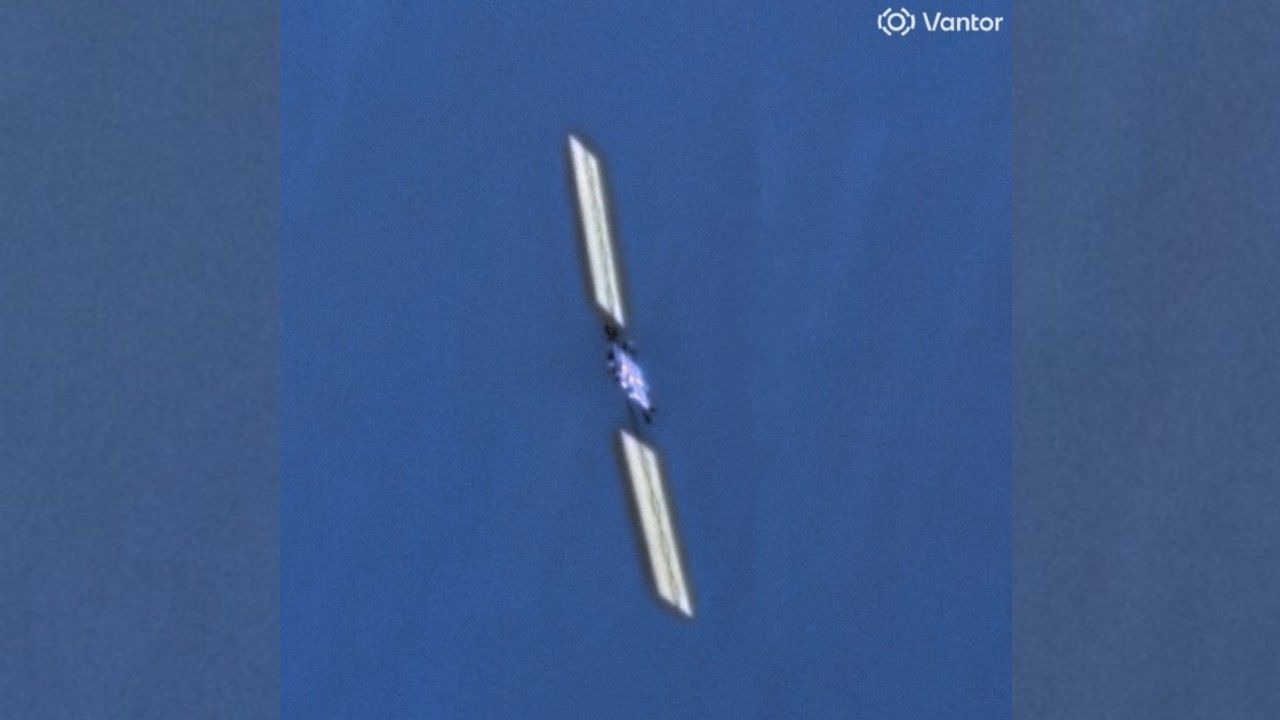
We just got a great up-close look at a SpaceX Starlink satellite in orbit, thanks to Vantor’s WorldView-3 spacecraft.
On Wednesday (Dec. 17), this particular Starlink suffered an anomaly that caused a loss of communication with the ground and an unscheduled venting of its propulsion tank. The satellite is now tumbling and headed down toward Earth’s atmosphere, where it will be incinerated in a matter of weeks, according to SpaceX.
You may like
The company used its WorldView-3 Earth-observing satellite to image the Starlink spacecraft on Thursday (Dec. 18) from a distance of 150 miles (241 kilometers).
The photo, taken while the duo were flying over Alaska, features a resolution of 4.7 inches (12 centimeters), providing SpaceX with key information about the satellite.
“Our team took advantage of the advanced capabilities of our non-Earth imaging technology and recently expanded collection capacity to move quickly and provide SpaceX with confirmation that their satellite was mostly intact,” Todd Surdey, Vantor’s executive vice president and general manager of enterprise and emerging products, said in a statement on Saturday (Dec. 20). “This rapid intelligence delivery enabled them to quickly assess possible damage to the spacecraft.”
Imagery collected by Vantor’s WorldView-3 satellite about 1 day after the anomaly shows that @starlink Satellite 35956 is largely intact. The 12-cm resolution image was collected over Alaska from 241 km away. We appreciate the rapid response by @vantortech to provide this… https://t.co/8OcTZsk5Gx pic.twitter.com/1PafjFwuRPDecember 20, 2025
There is apparently some damage: Data suggests that the satellite released a small number of debris objects as a result of the anomaly. But those pieces, and the satellite itself, shouldn’t a present a problem to other spacecraft in low Earth orbit (LEO), according to SpaceX.
“We appreciate the rapid response by @vantortech to provide this imagery. Additional data suggest that there is a small number of trackable debris objects from the event, and we expect the satellite and debris to reenter and fully demise within weeks,” Michael Nicolls, vice president of Starlink engineering at SpaceX, said in an X post on Saturday.
Starlink is by far the largest satellite constellation ever assembled. It currently consists of about 9,300 active spacecraft — about 65% of all the operational satellites in Earth orbit.
SCIENCE
Graphene supercapacitor breakthrough could boost energy storage in future EVs and other household devices

Scientists have found a new way to manipulate graphene to create a substance with record-breaking energy and power density.
When incorporated into energy storage devices called supercapacitors, this new form of graphene could be the key to high-capacity, fast-charging energy storage that could deliver power more quickly than conventional batteries, the researchers said in a statement.
You may like
Pouch cells are used in electric vehicles, drones, wearable electronics, laptops, smartphones and tablets. Building them from M-rGO could lead to improvements in total capacity, charge time and the ability to power more complex and power-hungry devices with smaller batteries, according to the research team.
Soaking up power
Whereas traditional batteries store energy in chemical bonds, supercapacitors are electrochemical capacitors that store energy as separated electric charge on electrode surfaces. They have the advantage of superior energy density — how much energy can be stored in a given space — and power density — how quickly energy can be delivered per unit volume — over traditional batteries.
Until now, however, supercapacitors have been hamstrung by one significant limitation: only a portion of the potential energy storage of the materials from which they were created was available for use.
This limitation comes from graphene’s physical makeup. While it has the advantage of allowing for denser electrodes — the solid conductors in a battery where charge is stored — it’s very inefficient at using that space. Simply stacking graphene, for instance, is inefficient because the sheets adhere too closely together and don’t leave enough space for the ions that need to move in and out to store energy.
To get around this problem, scientists built messy 3D structures similar to sponges, which provide both large amounts of storage area and pathways for ions to move. While lightweight, the downside is that these structures were large and cumbersome.
This breakthrough overcomes that issue by heating the graphene in a two-step process. This results in a tangled, curved graphene network with multiple levels of structure that still allows for the rapid movement of ions while providing lots of surface area for energy storage.
“This discovery could allow us to build fast-charging supercapacitors that store enough energy to replace batteries in many applications, and deliver it far more quickly,” said Mainak Majumder, a professor of mechanical and aerospace engineering at Australia’s Monash University, in the statement.

There are few better ways to spend the long winter nights than under a crisp, clear December sky — and between Christmas and New Year’s Eve 2025, the Northern Hemisphere night sky will be at its very best. A waxing moon will glide past Saturn, the Pleiades and Jupiter — now shining brightly in the east, right on cue, as a “Christmas Star — while deep-sky wonders like the Rosette Nebula rise high around midnight. Whether you’re trying out one of the best beginner telescopes gifted to you, you’re trying out stargazing with binoculars or you’re using only your eyes, here’s what to see in the night sky this holiday season.
If you want better views of the night sky, we have expert-led guides to the best telescopes, binoculars and cameras to view and image the heavens.
Wednesday, Dec. 24: A crescent moon
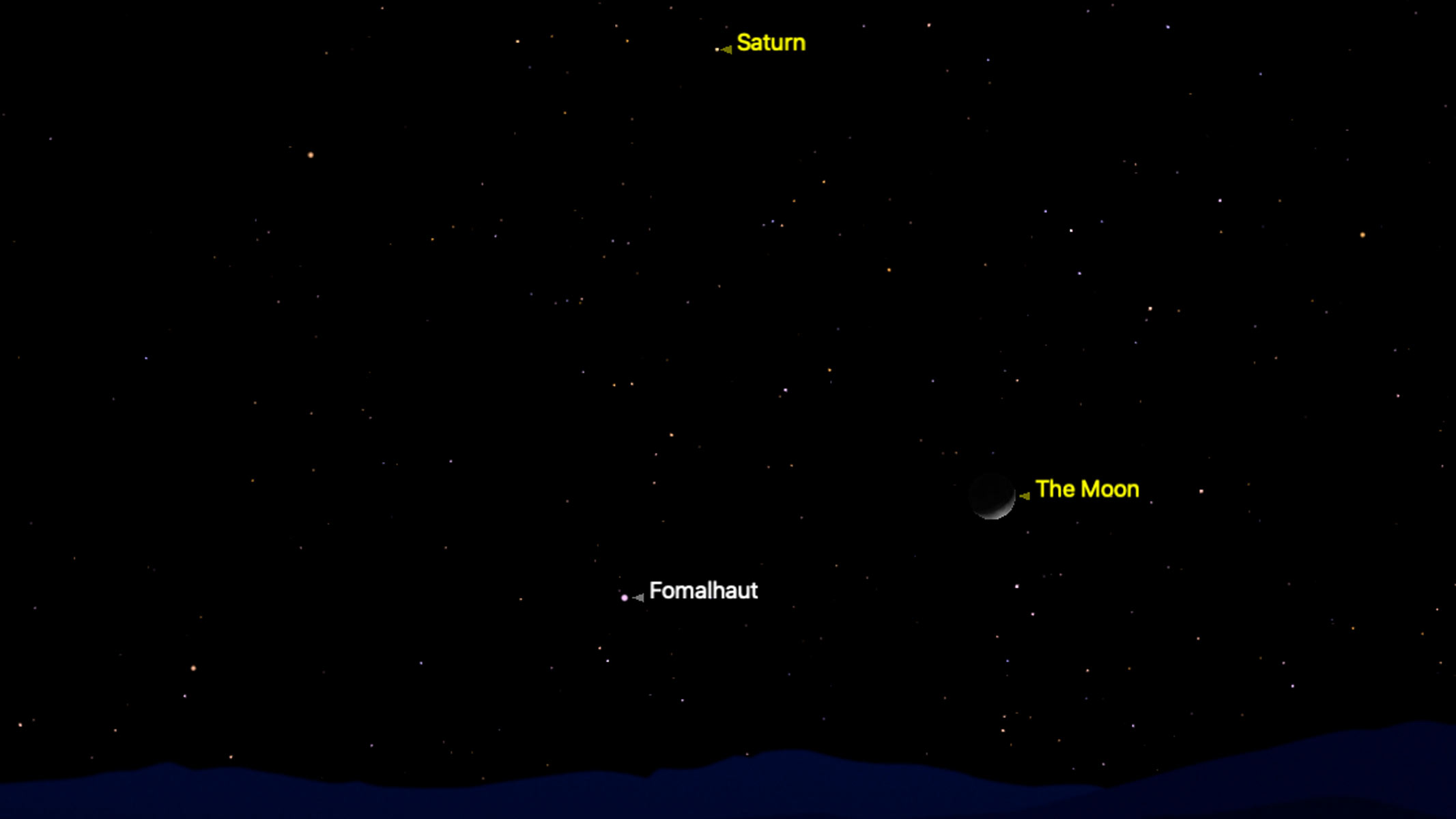
A 20%-illuminated waxing crescent moon will shine with Fomalhaut and Saturn on Christmas Eve. (Image credit: Starry Night)
If you’re looking for the quiet wonder of Christmas Eve, turn your gaze to the southwest sky as it gets dark. There, nicely illuminated, though not yet bright, will be a waxing crescent moon. A fifth of what you’ll see will be its day-side; the other four-fifths — its night-side — will be gently lit by sunlight reflected from our planet — Earthshine. If you have binoculars or a small telescope, point them at the terminator, that line between day and night, to see long shadows and craters in relief. Naked eye observers should look to the left of the moon for Fomalhaut (below) and Saturn (above).
You may like
Also read: How to choose binoculars for astronomy and skywatching
Thursday, Dec. 25: Jupiter as the ‘Star of Bethlehem’
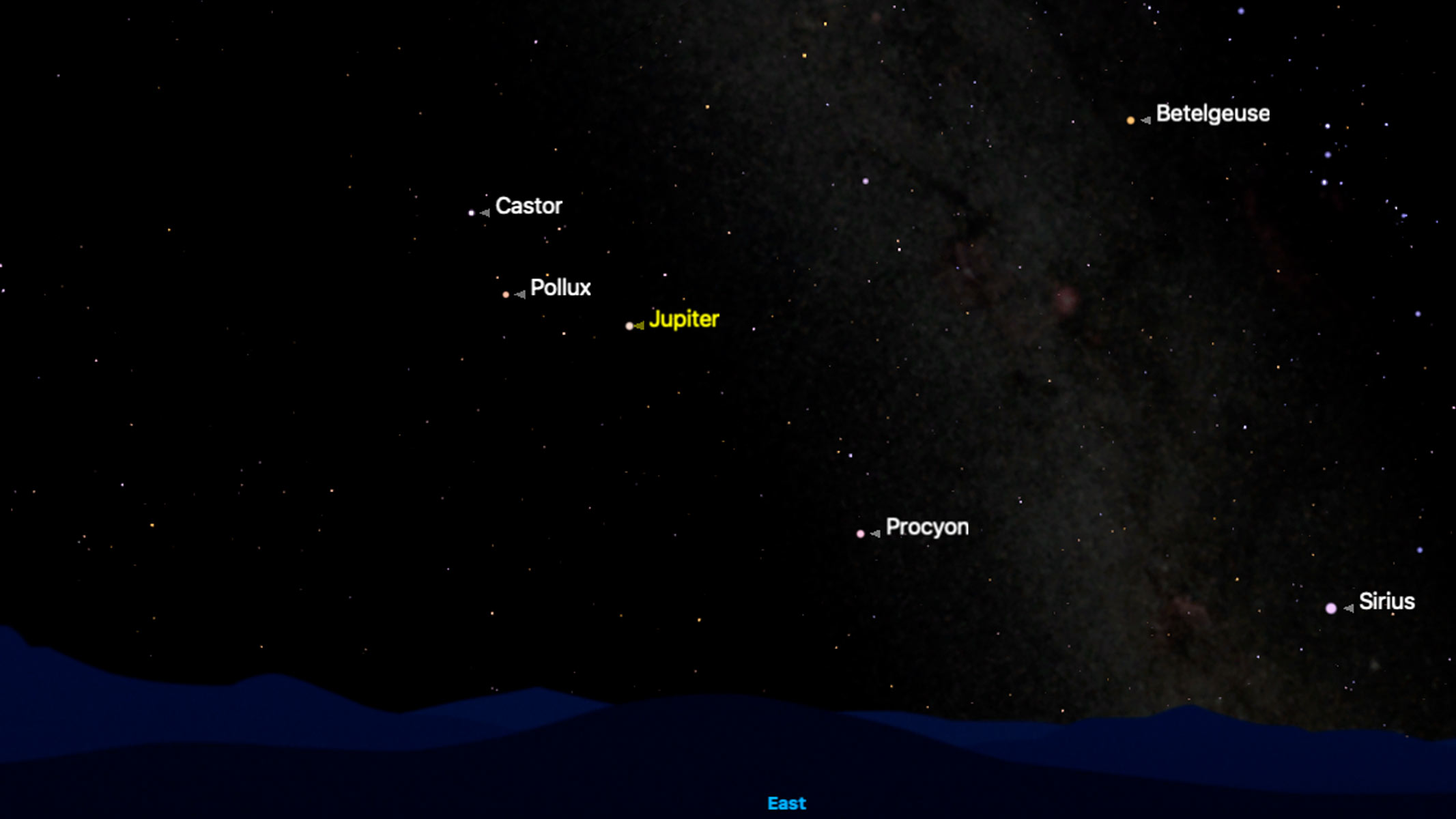
Jupiter is now just two weeks from its annual opposition, so it is as bright as it ever gets. (Image credit: Starry Night)
Christmas Day needs a “Christmas Star,” and what better candidate than Jupiter, which tonight shines at magnitude -2.5 in the constellation Gemini. Look to the east anytime after dark, and you’ll see the giant planet close to “the twins” of Gemini — the stars Castor and Pollux — as it shines brighter than anything else in the night sky, save for the moon. Now is the ideal time to observe Jupiter, which reaches its annual opposition — when Earth is between it and the sun — on Jan. 10, 2026. Typically, an outer planet is at its best for a couple of weeks either side of its opposition; any small telescope should allow a glimpse of its cloud bands, with a 6-inch telescope able to see its Great Red Spot (when it’s facing Earth).
Also read: Best telescopes for seeing planets in 2025
Friday, Dec. 26: Saturn and the moon in conjunction
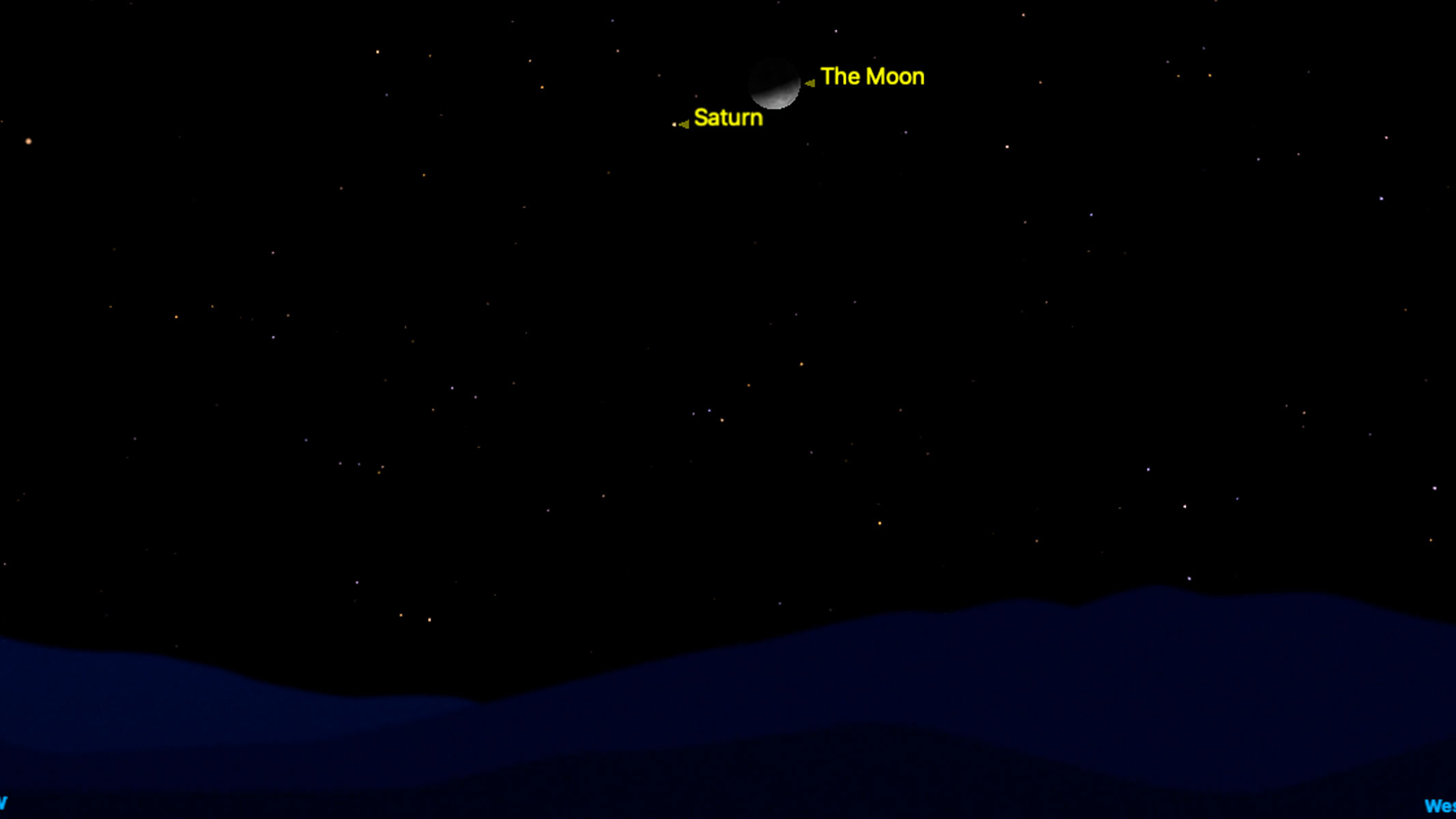
Boxing Day sees the moon meet Saturn in a close conjunction. (Image credit: Starry Night)
Get out of the house as soon as it gets dark on Boxing Day for one of the most beautiful sights of the week, a crescent moon and the planet Saturn. Now a 41%-illuminated waxing crescent, the moon will appear to curl around the sixth planet, and the two will be separated by a mere four degrees. That’s a bit less than the width of your three middle fingers held at arm’s length against the sky. Saturn will appear as a steady, golden point of light, though you’ll need a small telescope to glimpse its ring pattern.
Also read: Best beginner telescopes
Saturday, Dec. 27: Lava plains on the first quarter moon
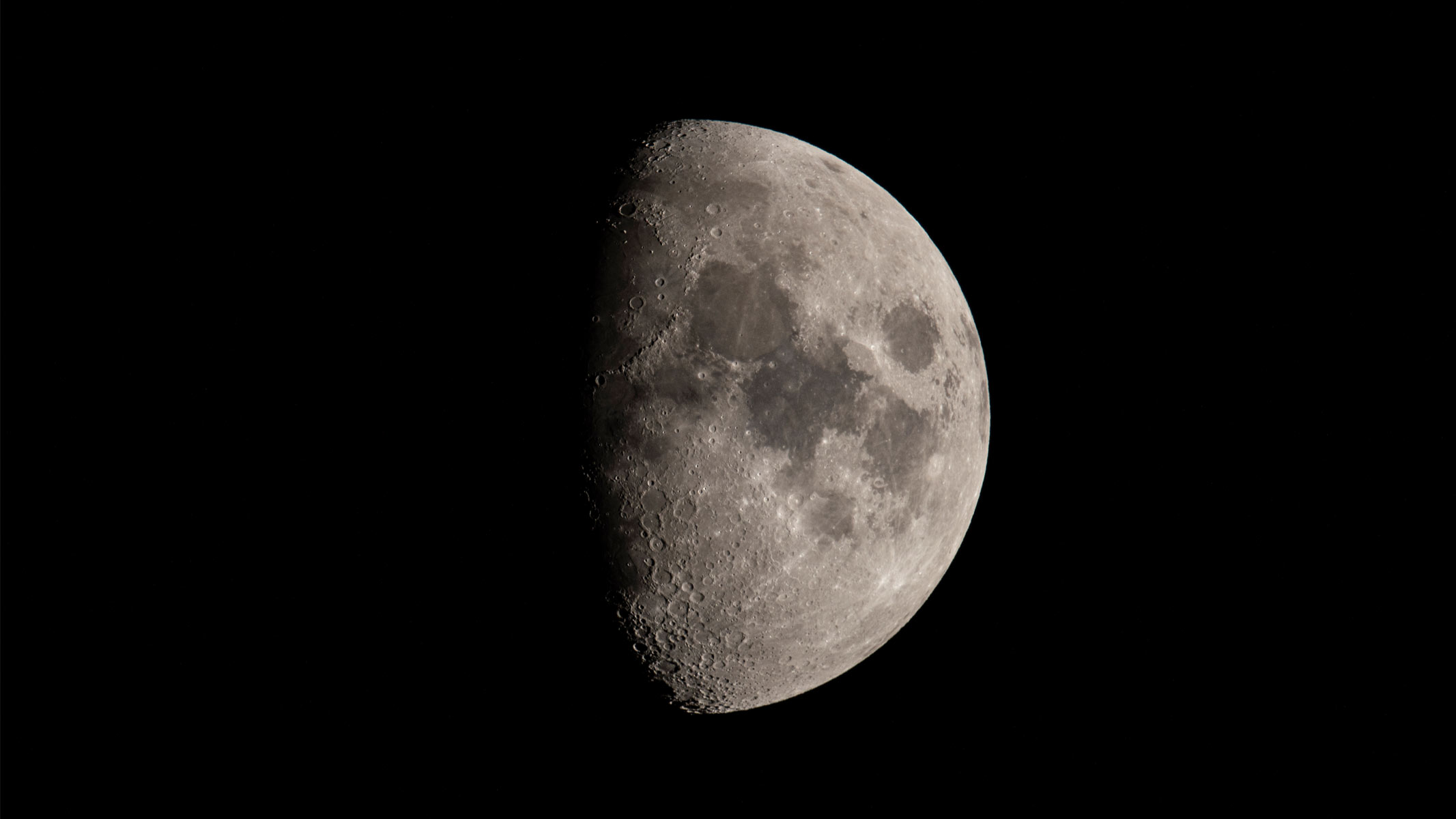
A first-quarter moon will rise on Dec. 27, 2025. (Image credit: Getty Images)
It’s half-day, half-night on the moon tonight as it reaches its first quarter phase in the southern sky. For amateur astronomers, it’s a bittersweet moment — the next week will see the moon grow in brightness as it waxes towards full, making faint star clusters, galaxies and nebulae harder to see. However, a “half-moon” is one of the best times to explore the lunar surface if you have a pair of binoculars. The line between light and dark — the terminator — cuts right down the middle tonight, causing long shadows to stretch across the lunar plains, making every bump and ridge stand out like a black-and-white relief map. The dark regions you see on the right-hand side of the moon are called maria, Latin for seas, but these are no oceans. These are vast plains of lava that solidified billions of years ago in the aftermath of asteroids slamming into the young moon.
Also read: Best telescopes for deep space
You may like
Sunday, Dec. 28: Rosette Nebula
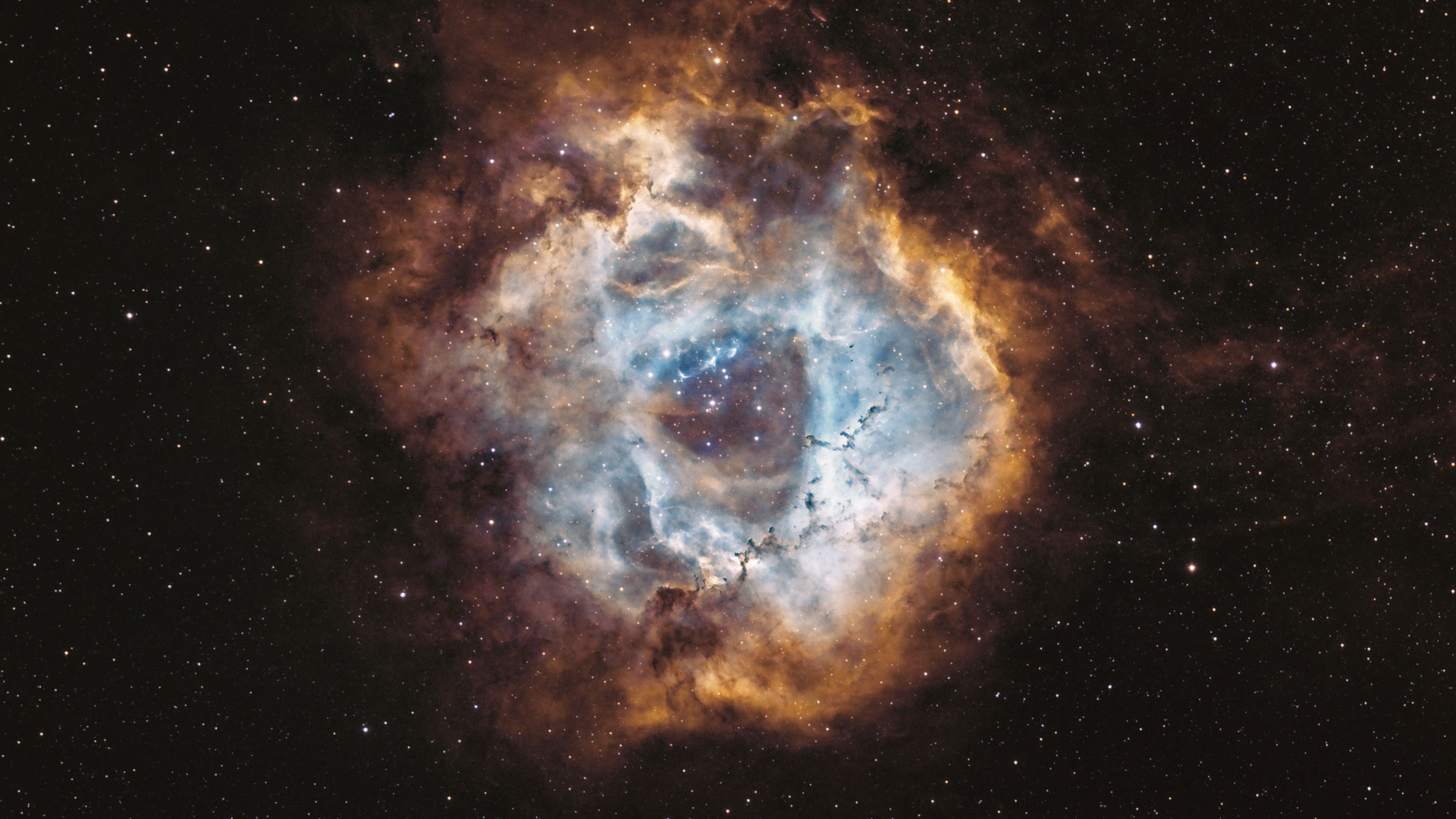
A small telescope will allow you to view the Rosette Nebula at its best on Dec. 28, 2025. (Image credit: Getty Images)
If you have a small telescope, find the ruddy star Betelgeuse in Orion and range left to the quiet constellation Monoceros, the Unicorn, home to an open cluster of stars about 5,000 light-years from the solar system. The Rosette Nebula (also called NGC 2244 and Caldwell 49) is an emission nebula — a cloud of gas that emits its own light because it’s being energized by radiation from nearby stars — and a star-forming region. A flower-like shape, it’s visible through a pair of 10×50 or 15×70 binoculars in very dark skies, or easily in a small telescope. According to In-The-Sky.org, the Rosette Nebula is now well placed, reaching its highest in the sky around midnight local time. If you have trouble finding it, draw an imaginary line from Betelgeuse in Orion toward Procyon in Canis Minor. About one-third of the way along that line, just south of it, is the region of the Rosette Nebula. It’s about three times the diameter of the full moon.
Also read: Best smart telescopes
Monday, Dec. 29: Orion’s Snake
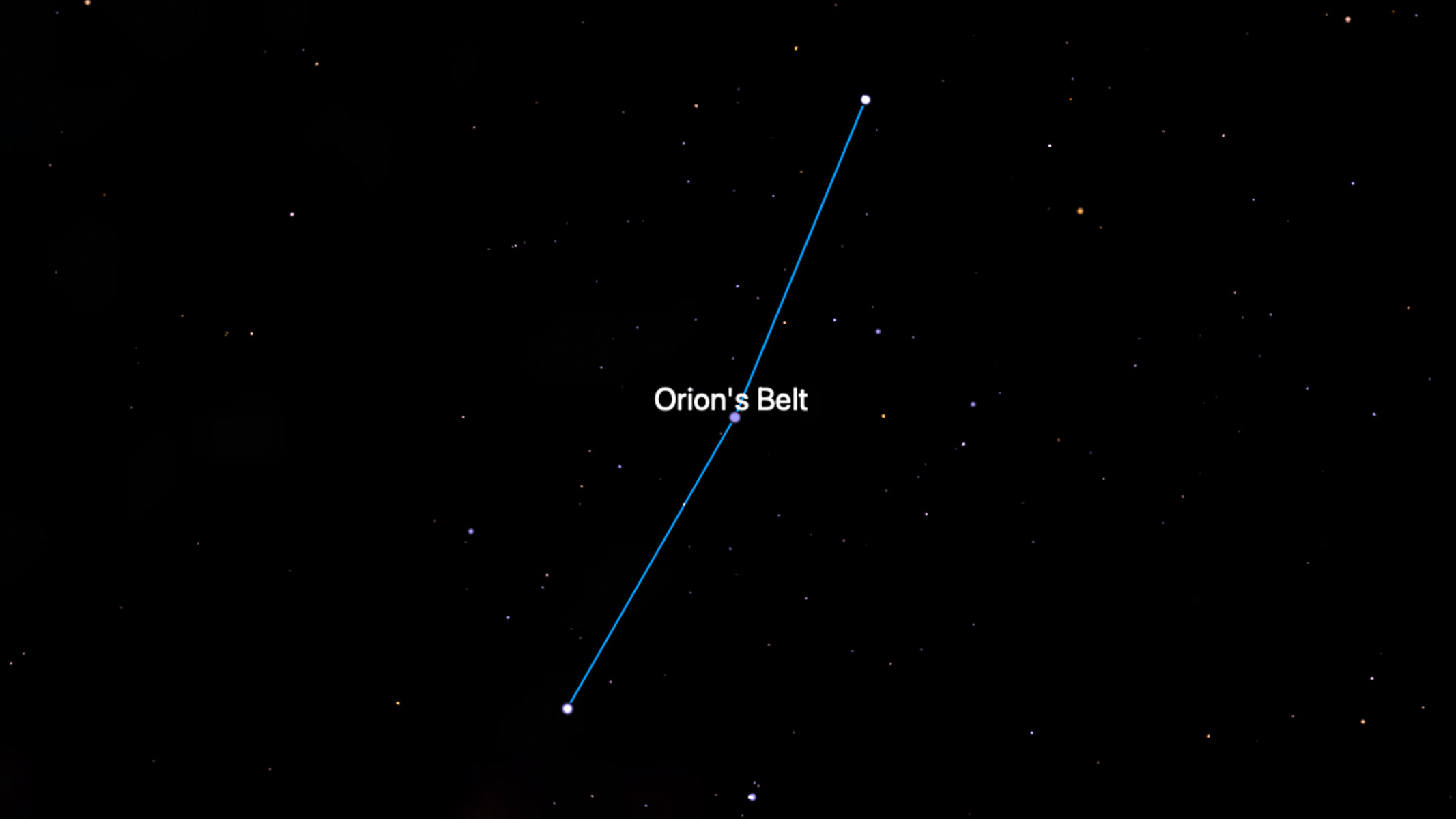
Trace an ’S’ shape of stars in Orion’s Belt on Dec. 29, 2025. (Image credit: Starry Night)
Orion’s Belt — the famous trio of stars in Orion, sometimes nicknamed the “Belt of Orion” or the “Three Kings” — is an icon of the late-December night sky. Look east tonight for Alnitak, Alnilam and Mintaka, strung out in a neat row, rising into the eastern sky as soon as it gets dark. Put a pair of binoculars on them, and you’ll discover great riches. Just to the right is, of course, the Great Nebula in Orion (also called M42). Lesser known is a delicate chain of faint stars curving across the field of view in a subtle “S” shape, running from just above Mintaka to just below Alnilam. It’s very clear through binoculars.
Also read: Best binoculars this holiday season
Tuesday, Dec. 30: Jupiter’s Galilean moons
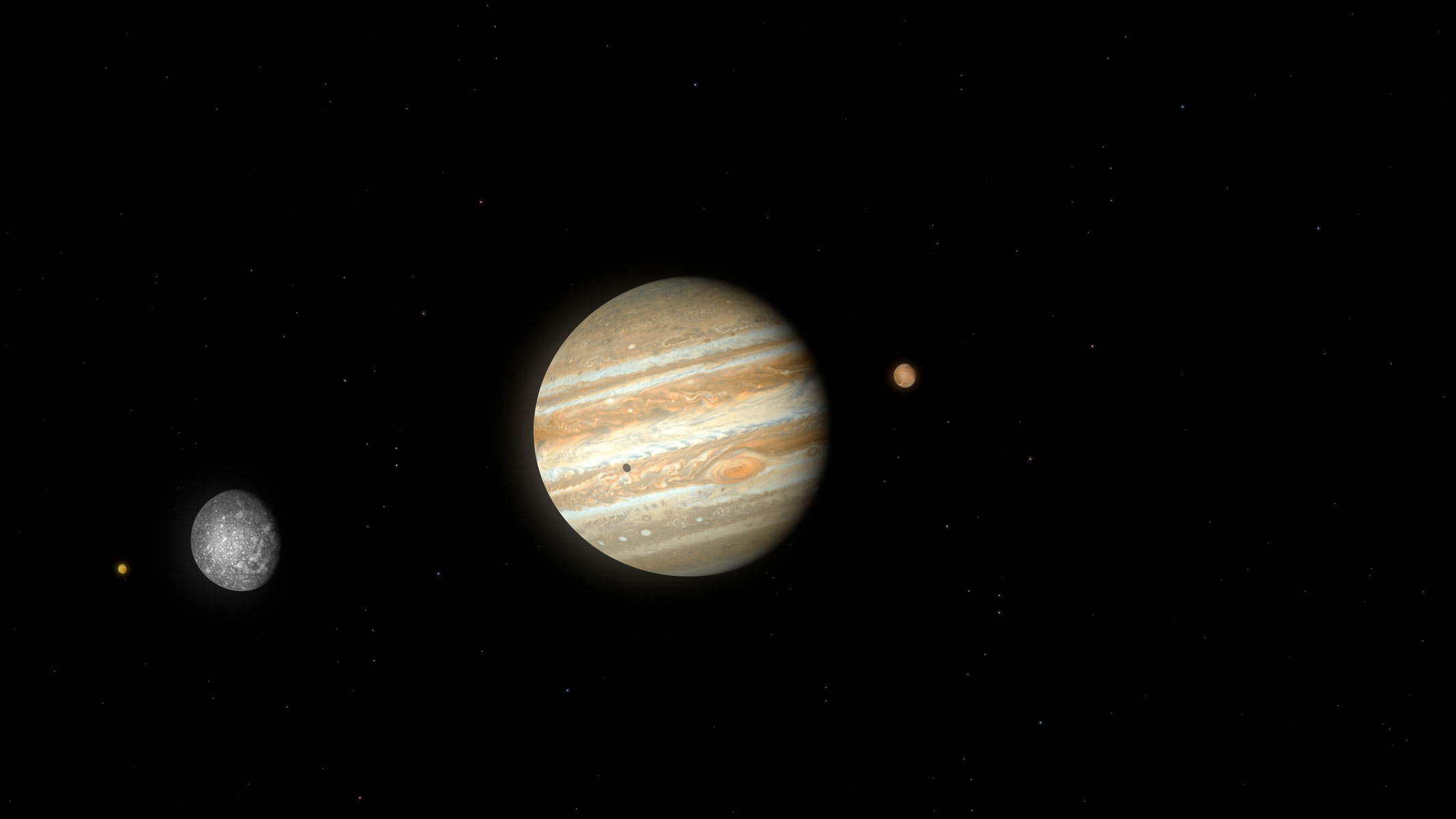
See Jupiter’s moons on Dec. 30, 2025. (Image credit: Getty Images)
Jupiter getting close to its opposition means more than it merely becoming brighter. Since it’s closest to Earth (about four Earth-sun distances), its disk is bigger in the sky, and it’s visible all night. Jupiter’s opposition is also the best time to see its largest four moons — Io, Callisto, Ganymede and Europa. These moons, called Galilean moons because they were first spotted by Italian astronomer Galileo Galilei in 1610, can be seen in any small telescope as pinpricks of light, but also in binoculars.
Also read: Best telescopes for deep space
Wednesday, Dec. 31: Pleiades and the moon in conjunction
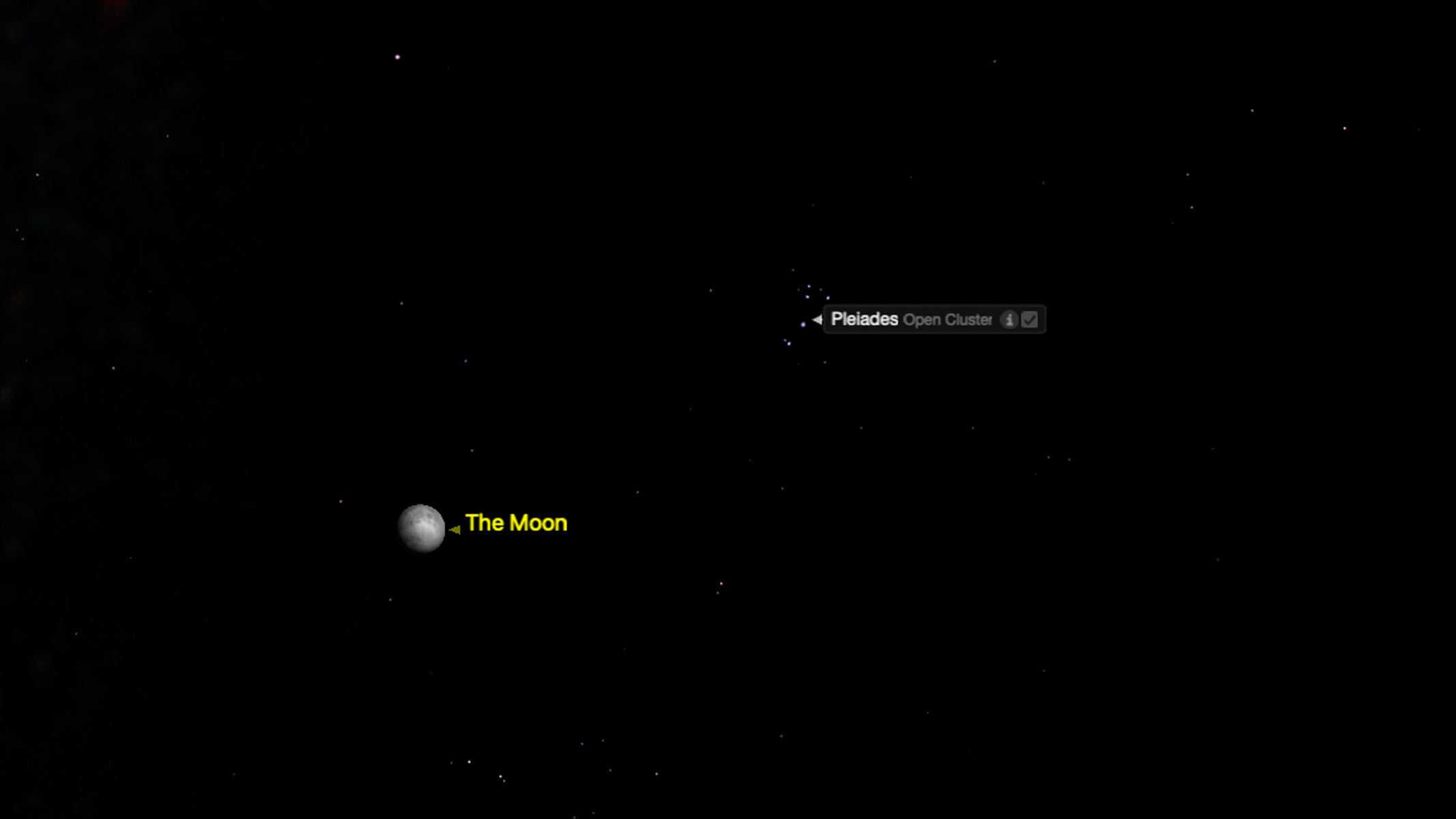
See the Pleiades and the moon close together on Dec. 31, 2025. (Image credit: Starry Night)
As your final stargazing act of the year, step outside as it gets dark and find Orion’s Belt, that iconic trio of bright stars, rising from the eastern horizon like an arrow. Trace Orion’s Belt upward, and high above it, you’ll find the moon, now 92% illuminated. Just above the moon will be the Pleiades — also known as the Seven Sisters and M45 — one of the closest open clusters of stars to the solar system. The bright moonlight may make it hard to see the Pleiades with the naked eye, but any pair of binoculars should bring them into view.
Also read: How to choose binoculars for astronomy and skywatching