
TECHNOLOGY
Google Integrates Vibe-Coding Tool Opal Into Gemini


Photo by Van Tay Media / Unsplash
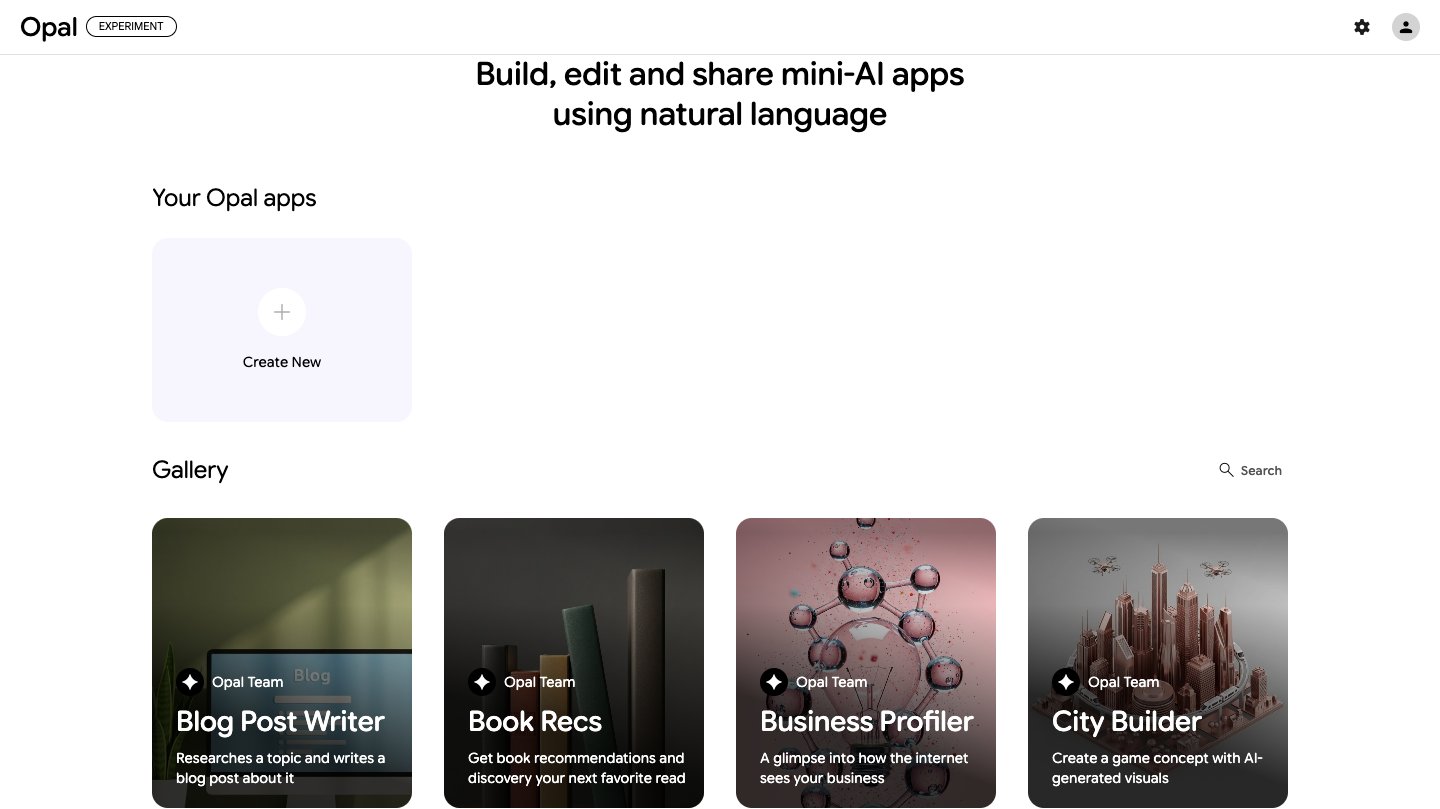
Google has officially integrated Opal, its experimental vibe coding tool, directly into the Gemini web app. The move quietly but fundamentally changes what Gemini is. It’s no longer just a place to ask questions or generate text. It’s now a tool for building working software.
With Opal built in, users can create small web apps, called Gems, simply by describing what they want in plain English. There’s no coding required. Instead of writing logic or designing interfaces by hand, users explain the outcome they want and let Gemini handle the rest.
This is where vibe coding comes in. Rather than focusing on syntax or programming rules, vibe coding shifts software creation toward intent. You describe behavior, purpose, or flow, and the system translates that into a working application. While products like Cursor or Lovable are aimed at developers and technical teams, Opal inside Gemini is designed for everyday users. Google takes care of hosting, deployment, and infrastructure automatically in the cloud.
 Screenshot: Ejiro Onose / Techloy.com
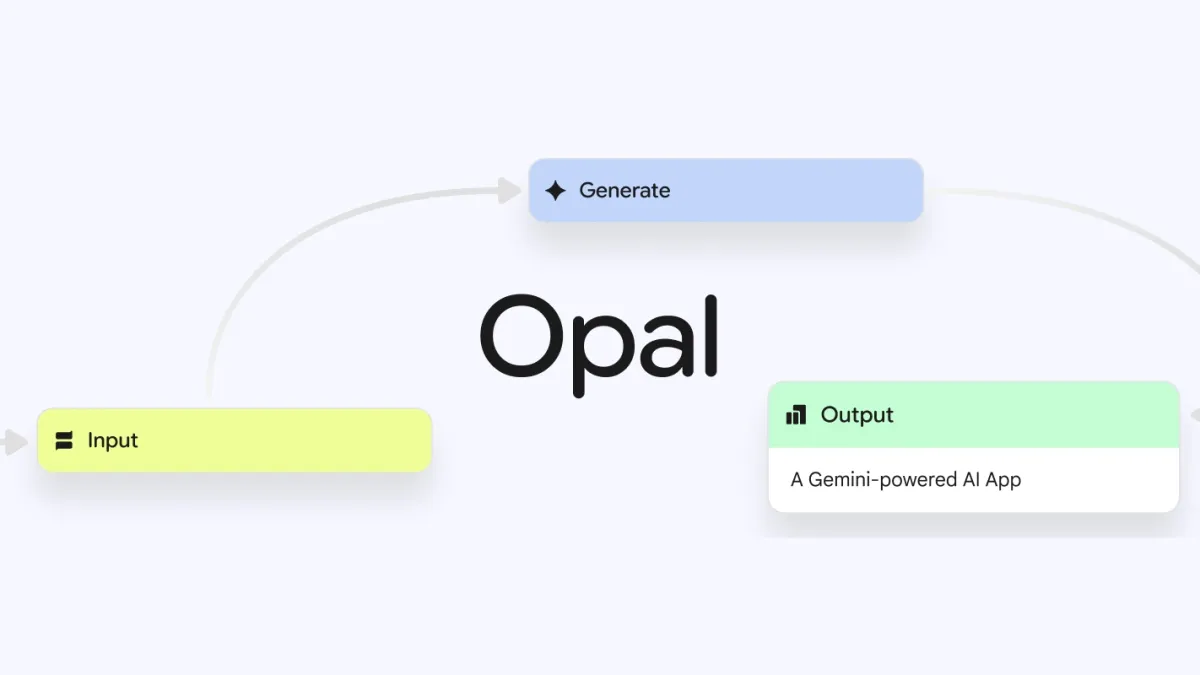
The workflow in Opal seems intentionally simple. It starts with a prompt. You might type something like, “Create a stock portfolio tracker that pulls real-time prices.” Opal then generates both the backend logic and a visual interface. Unlike traditional AI tools that return code snippets, Opal produces a live, interactive web app. From there, refinement happens either visually or conversationally. You can adjust steps in a visual editor or ask Gemini to make changes, such as changing colors or adding new data fields.
For non-technical users, the usefulness is immediate. A freelance trader can spin up a custom crypto price tracker in minutes. A home cook can build a daily recipe tool that avoids specific allergens. These are not mockups or demos. They are deployed apps that work in a browser.
Right now, Opal is available as a Google Labs experiment on the Gemini web app in more than 160 countries. Google is also letting users remix existing Gems, which means starting from a prebuilt app and customizing it instead of building from scratch. That lowers the barrier even further and speeds up experimentation.
Taken together, this integration shows where Google wants Gemini to go. Not just as an assistant that answers questions, but as a layer that helps people create tools for themselves. If vibe coding takes off at this scale, building simple software may no longer be something you learn. It may be something you describe.
Google has launched a vibe coding app that basically lets you build apps without code
You type a plain-language description of the app you want to build, and Opal turns it into a working web app.
December 23, 2025
Link copied!
Copy failed!










Hello!
Welcome back to Francophone Weekly by TechCabal, your weekly deep dive into the tech ecosystem across French-speaking Africa. Previous editions have been published on the web, but email versions of the newsletter will land directly in your inbox every Tuesday at noon. By default, this newsletter is in French—but don’t worry, you can click the button below to switch to the English version.
Avant de nous plonger dans la newsletter d’aujourd’hui, nous aimerions connaître votre avis. Préférez-vous recevoir les e-mails de Francophone Weekly en anglais ou en français ? Répondez à notre rapide sondage ici. Votre opinion compte. Aidez-nous à améliorer cette newsletter. Merci!
Remarque : Aujourd’hui, le 23 décembre, marque la dernière édition hebdomadaire francophone de l’année. Le bulletin d’information reprendra le 6 janvier 2026.
Dans nos éditions précédentes, nous avons examiné comment les écosystèmes technologiques africains francophones repensent progressivement la croissance, en accordant davantage d’attention à la dette, aux marchés de capitaux locaux et au financement au-delà des capitaux propres de démarrage. La semaine dernière, nous avons approfondi la conversation en nous concentrant sur le Sénégal et les institutions qui sont à l’origine de ce changement sur le terrain. L’une des figures clés de cette initiative est Elena Dia, qui dirige l’animation de l’écosystème au sein de la Délégation générale pour l’entrepreneuriat rapide des femmes et des jeunes (DER).
Grâce à son travail, la DER s’éloigne du soutien générique à l’entrepreneuriat pour se tourner vers des programmes plus spécifiques à chaque secteur et adaptés aux besoins réels des fondateurs. Dans cette interview, Mme Dia partage les leçons tirées de ces dernières années et décrit à quoi pourrait ressembler une approche plus structurée de la création de start-ups en Afrique francophone.
Cette interview a été légèrement modifiée pour plus de clarté.
‘We don’t want generic programmes anymore; we want to deliberately build champions’ — Elena Dia
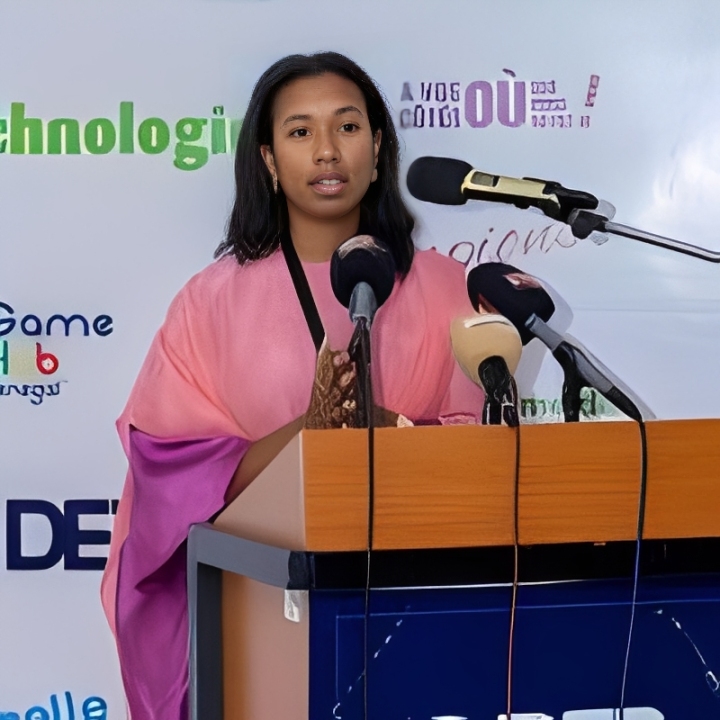
Elena Dia, responsable de l’unité Animation de l’écosystème, DER Sénégal/Source de l’image : LinkedIn
Lina Kacyem: Qu’est-ce qui a motivé votre transition du secteur bancaire au travail dans l’écosystème entrepreneurial ?
Elena Dia: Quand j’étais en banque, j’ai fait beaucoup de rotations — trésor, FX sales & trading, ALM, capital market, et surtout de l’investissement bancaire. J’ai eu un véritable « crush » sur la finance de projet. J’ai compris que je voulais un métier où la finance rencontre le développement et l’approche projet. C’est comme ça que ma transition vers l’écosystème entrepreneurial a commencé.
LK: Quels défis avez-vous constatés quand vous avez rejoint la DER ?
ED: Je suis arrivé à la DER dans ce rôle ou je dirige la cellule animation de l’écosystème, qui est en fait en charge de tous les projets programmes en lien avec l’innovation et la tech. Le plus difficile était de trouver assez de bons profils pour les programmes que nous mettions en place. On voit souvent les mêmes startups dans plusieurs programmes, car beaucoup d’accompagnements ciblent le même niveau de maturité et il n’y avait pas assez de profiles adéquats pour les programmes. Il manque des “vrais” programmes d’accélération longs et intensifs, comme Station F en France qui est un programme de deux ans, tu vois, avec du suivi personnalisé, et caetera.
LK: Quelles initiatives ont eu le plus grand impact ?
ED: Par rapport à ça, il y a deux programmes principaux que je pourrais citer. Le premier, c’est Line Stack Invest. C’est un programme qu’on avait mis en place avec l’Ambassade de France, avec 1 million d’euros (1,2 million de dollars) de l’Ambassade pour des activités d’animation de l’écosystème, donc des programmes d’accélération, celui dont je te parlais tout à l’heure, de l’incubation, il y a un roadshow international, il y a de la mise en relation avec des investisseurs étrangers à travers la plateforme Euroquity de BPI France, et 1 million d’euros (1,2 million de dollars) pour du financement direct de startup. Je trouve que c’est un très bon modèle de programme dans le sens où on était vraiment dans un partenariat déjà avec l’Ambassade, et donc on a eu beaucoup d’échanges de bonnes pratiques, et on était vraiment en mode projet, et on avait des KPI très spécifiques. Et je pense qu’honnêtement, ce programme-là est l’une des raisons pour lesquelles le Sénégal est devenu un écosystème très dynamique par rapport même à d’autres pays francophone qui ont des économies plus grandes ou plus dynamiques.
Et le deuxième, pour les PMEs et les startups, avec un focus sur l’inclusion financière, on a un très beau programme avec la Fondation Mastercard qui s’appelle BE YES. C’est un programme où on met en place des espaces de créativité partout dans le Sénégal, des plateaux d’innovation, où en fait l’objectif c’est que les jeunes aspirants entrepreneurs puissent venir se former à de la technologie innovante dans les Fab Labs. Donc on a par exemple de la broderie numérique, on a de l’imprimante 3D, on a aussi des formations un peu plus génériques, genre marketing digital, création de logos, site web, etc. C’est aussi un très beau programme d’inclusion qui couvre un petit peu des territoires dans l’InnoTech en dehors de Dakar, parce qu’effectivement, on a du mal à sourcer des profils InnoTech à Dakar, donc je te laisse imaginer la situation dans le reste du Sénégal. Donc voilà, ces deux programmes-là, je pense, ont eu beaucoup d’impact et c’est un petit peu des modèles de ce pourquoi la DER existe et ce pourquoi la DER est une institution, vraiment un très bel instrument.
(InnoTech = Innovation et Technologie)
LK: Comment conçoit-on de nouveaux programmes ?
ED: Pour structurer des programmes, on a beaucoup de chance à la DER vu qu’on a maintenant huit ans d’existence, donc beaucoup de learnings sur l’écosystème et aussi beaucoup de learnings sur tous les secteurs. Donc, ça nous aide beaucoup. Il y a des programmes qu’on a débuté et fini. Il y a beaucoup d’existants sur lesquels se baser pour structurer de nouvelles choses. Quand on structure des choses en lien avec l’écosystème tech par exemple, quelque chose que je suis en train d’essayer de mettre en place pour l’année prochaine typiquement, c’est de mettre en place des programmes d’accompagnement, donc technical assistance, mais plus sectoriels. Pourquoi ? Parce que comme je te disais tout à l’heure, les programmes qu’on a délivrés pour le moment étaient plutôt génériques en vrai. C’est l’entrepreneur s’adapte à la formation plutôt que le contraire. Là, ce que je souhaiterais faire, c’est délivrer des programmes qui vont être beaucoup plus tailor-made, un peu beaucoup plus comme du comme du advisory, et deuxièmement, c’est de mettre des programmes qui vont être beaucoup plus sectoriels. Donc là, typiquement, je suis en train d’essayer de structurer un programme sur l’industrie musicale parce que j’aimerais bien que d’ici deux/trois ans, je puisse regarder mon portefeuille et me dire grâce à ces programmes, j’ai maintenant six champions dans l’industrie musicale, j’ai six champions sur le digital and green innovation, j’ai sept champions sur autre chose. Le but est de construire des champions par chaîne de valeur. C’est ce que je souhaiterais faire plutôt que de faire un programme multisectoriel et voir en fait ce qui va se passer. Voilà, c’est un peu l’approche structurante qu’on souhaiterait mettre en place l’année prochaine par rapport à par rapport aux learnings qu’on a eu jusqu’à présent.
LK: Comment fonctionne le modèle de financement de DER sans licence bancaire ?
ED: J’adore cette question sur notre modèle opérationnel et notre mécanisme de financement. En fait, c’est assez simple. Nous avons deux produits principaux : le Guichet Autonomisation et le Guichet Soutien au TPME.
Le Guichet Autonomisation est celui où nous nous concentrons vraiment sur l’inclusion financière. Nous proposons des tickets allant de 50 000 FCFA à 2 millions de FCFA (90 à 3 570 dollars). Ce qui est formidable avec ce produit, c’est que pour les montants inférieurs à 2 millions de FCFA (3 570 dollars), nous n’avons pas besoin de passer par la banque centrale. Par conséquent, nous n’avons pas besoin d’utiliser des comptes bancaires standard dans les banques commerciales. Cela nous donne beaucoup de flexibilité.
L’ensemble du processus est numérisé. Par exemple, nous avons développé un outil interne chez DER. Cela nous a pris beaucoup de temps, mais nous en sommes très fiers. Cet outil nous permet, sur la base du profil de l’entrepreneur, d’effectuer une notation en ligne. Nous saisissons toutes leurs coordonnées, ainsi qu’un questionnaire auquel ils répondent, et l’outil de notation en ligne détermine si, sur la base de leur demande (par exemple, s’ils demandent 1 million de FCFA (1 785 dollars)), ils sont éligibles à 100 %, 80 % ou 50 % de ce montant. C’est donc déjà très bien et très utile. Et comme je l’ai mentionné, comme il s’agit d’un outil interne, lorsque nous constatons des limites ou des éléments à corriger, nous pouvons le mettre à jour naturellement sans passer par un fournisseur externe.
Un autre avantage est que ce produit utilise l’argent mobile. Nous utilisons des portefeuilles électroniques du début à la fin. L’entrepreneur reçoit les fonds via Orange Money ou Wave et peut également effectuer ses remboursements via ces mêmes plateformes. La DER est une institution de service public, et ce niveau de numérisation nous permet d’atteindre les entrepreneurs dans les 552 communes du Sénégal. Sinon, nous devrions demander aux entrepreneurs de se déplacer pour recevoir leur financement, puis de se déplacer à nouveau chaque fois qu’ils doivent effectuer un remboursement, potentiellement tous les mois. Cela représente une énorme perte de temps.
Nous sommes également censés répondre aux contraintes spécifiques des femmes entrepreneurs. Et en effet, les femmes sont confrontées à des contraintes différentes, en particulier dans les zones rurales. Peuvent-elles laisser leurs enfants pour faire tous ces trajets ? Bien sûr que non. C’est donc quelque chose que je trouve très innovant et qui exprime vraiment la beauté de notre modèle. C’est la partie Autonomisation.
Le deuxième produit est le Guichet Soutien au TPME. C’est là que nous travaillons sur des projets plus structurés, à partir de 2 millions de FCFA (3 570 dollars). Comme nous traitons des montants plus élevés, nous utilisons généralement les systèmes bancaires traditionnels, ce qui signifie que l’entrepreneur doit ouvrir un compte bancaire auprès de l’une de nos institutions financières partenaires et présenter un plan d’affaires complet.
L’inconvénient est que nous ne contrôlons pas l’ensemble de la chaîne de A à Z, comme nous le faisons avec le Guichet Autonomisation. Ainsi, en cas de retard au niveau de nos partenaires financiers, DER dépend entièrement de leurs délais de traitement et de décaissement, car nous ne disposons pas d’une licence bancaire. Nous nous occupons du traitement des demandes, mais le décaissement est effectué par nos institutions financières partenaires. Cela signifie que l’entrepreneur n’ouvre pas de compte chez DER, il ouvre un compte à la Banque Nationale pour le Développement Économique (BNDE), par exemple, qui est l’une de nos institutions financières partenaires, avec Pamecas, le Crédit Mutuel du Sénégal (CMS), l’Association Sénégalaise pour le Soutien et l’Encadrement des Petites Entreprises (ASSEP) et La Banque Agricole (LBA), avec lesquelles nous travaillons également beaucoup.
Dans ces cas, comme nous ne contrôlons pas l’ensemble de la chaîne, nous dépendons nécessairement de nos partenaires. Cependant, nous avons mis en place des processus pour faciliter le travail. Nous développons actuellement un système d’interconnexion avec toutes les institutions financières partenaires avec lesquelles nous travaillons. Cela signifie que nous serons en mesure de connecter nos systèmes d’information afin de traiter les demandes plus facilement. Ce projet est encore en cours, mais des mesures importantes sont prises et je pense que les perspectives sont très bonnes pour rationaliser véritablement le guichet TPME.
LK: Quelles synergies existent avec des institutions comme FONSIS ?
ED: J’aime beaucoup cette question car, oui, il existe de nombreuses possibilités de collaboration entre les différentes structures étatiques. Il n’y a pas que le Fonds souverain d’investissements stratégiques (FONSIS) : il y a aussi l’Agence de développement et d’encadrement des petites et moyennes entreprises (ADEPME), par exemple, qui fournit une assistance technique ; il y a le FGIP (Fonds de garantie pour les investissements prioritaires), qui fournit des garanties ; il y a le Bureau de mise à niveau ; il y a vraiment beaucoup d’institutions. Nous travaillons déjà beaucoup avec toutes ces institutions, mais il y a bien sûr encore beaucoup à faire.
Avec le FONSIS en particulier, nous mettons en place un nouveau processus. Je vais vous donner un exemple pour vous expliquer. Pour nos startups, je mets en place un ticket d’environ 50 000 à 60 000 euros (58 695 à 70 400 dollars), et l’objectif est que ce financement par emprunt ait un effet de levier afin que la startup puisse ensuite lever des fonds si elle le souhaite, sous forme de dette ou de capitaux propres, en fonction des partenaires de l’écosystème, qu’il s’agisse de sociétés de capital-risque ou d’autres types d’investisseurs. FONSIS fournit des financements par emprunt et par capitaux propres, ce qui en fait une étape naturelle pour les start-ups que nous soutenons. Notre objectif est de nous aligner sur les indicateurs clés de performance (KPI) de FONSIS afin de pouvoir alimenter leur pipeline avec des start-ups pertinentes.
Nous acquérons également une connaissance approfondie de tous les différents fonds gérés par FONSIS. L’organisation gère plusieurs véhicules distincts, notamment FONSIS lui-même, WeFunds et des instruments financiers islamiques. En comprenant l’orientation de chaque fonds, nous pouvons nous assurer de leur envoyer les profils les plus adaptés.
LK: Quelles opportunités et quels risques voyez-vous pour l’écosystème du Sénégal ?
ED: Alors en termes d’opportunités, disons que le travail d’Ecosystem Building que la DER a mis en place, il est un petit peu « vieux » ou obsolète maintenant, vu que d’autres challenges se presentes. Le Sénégal, notamment à travers l’action de la DER, a été précurseur, donc nos startups ont maintenant 5–7 ans de maturité. On a des belles success stories, aussi bien les startups que les SMEs. On commence à avoir des exits également. C’est preuve de tous ces indicateurs qui vont définir le dynamisme ou non d’un écosystème entrepreneurial. Moi, mon objectif en tout cas personnellement, c’est que Wave, qui est le premiere licorne sénégalaise, ne soit qu’un exemple parmi d’autres et que les startups que nous avons accompgnes figurent parmi ces exemples la d’ici 5 ans. Ce serait un énorme gain pour l’ecosystem de voir Logidoo ou PAPS être a ce stade la ou du moins pas loin. Nous avons cette opportunité-là parce que nous avons été un peu précurseurs.
Du côté du risque, on est forcément affecté par l’environnement macro qui se passe. Le risque majeur, c’est la diminution des financements des bailleurs (USAID, coopérations bilatérales). Il faut donc diversifier les sources de financement. En termes de funding beaucoup de programmes d’assistance technique, d’incubation, d’accélération dans notre écosystème sont financés souvent par des donneurs bilatéraux, la coopération bilatérale. C’est un sujet un peu délicat en ce moment. Par exemple l’USAID a été dissoute alors qu’ils avaient un très beau programme d’investissement sur l’entrepreneuriat au Sénégal. Les coopérations bilatérales sont en train d’avoir beaucoup de cuts, beaucoup moins de budget. C’est un risque qui n’est pas unique au Sénégal, mais présent dans tous les écosystèmes du continent. C’est aussi une opportunité de se réapproprier peut-être un petit peu nos écosystèmes, de chercher des sources de financement autres, de diversifier surtout. Parce que si l’écosystème s’effondre, ça veut dire que le risque de diversification n’a pas été pris en charge de manière assez efficiente.
LK: Quels conseils donneriez-vous aux institutions et personnes qui construisent un écosystème ?
ED: La recommandation que je pourrais donner, c’est d’avoir le mindset projet. Un écosystème, c’est tellement complexe comme son nom l’indique. Il y a plusieurs acteurs, des agendas différents, et bien plus encore. Ce que nous avons vu qui a été vraiment utile, c’etait de prendre l’écosystème de manière globale et de faire de l’écosystème un projet avec un lead, mais de manière très inclusive. Par exemple, La DER était en lead avec des partenaires comme l’ambassade de France. On était très inclusif aussi dans l’approche, on avait un comité de pilotage qui était mixte : la DER, l’ambassade de France, Senstartup qui est l’association des start-ups, des universités, des incubateurs, des SAE, etc. C’était vraiment très inclusif. Le mindset projet doit venir avec un budget déterminé, avec des lignes de budget spécifiques et des activités déclinées. Ça peut changer forcément comme tous les projets en fonction de ce qu’on trouve sur place. Il est impératif aussi d’avoir un cadre de mesure, pour mesurer l’impact, car ça permet aussi de montrer des avancées de façon concrète. On peut partager des donnees telles que : le nombre de start-up financées, nombre de ces start-ups ont ensuite réussi à lever des fonds sur la base de notre ticket de financement, quantité et qualité des mises en relation, etc.

Touchez les acteurs qui font bouger l’écosystème technologique et commercial francophone. Faites de la publicité dans la newsletter hebdomadaire francophone de TechCabal et présentez votre marque aux décideurs, opérateurs, fondateurs et chefs d’entreprise qui comptent le plus pour votre croissance. Prêt à vous lancer ? Envoyez un e-mail à ads@bigcabal.com.

Image: Techloy.com
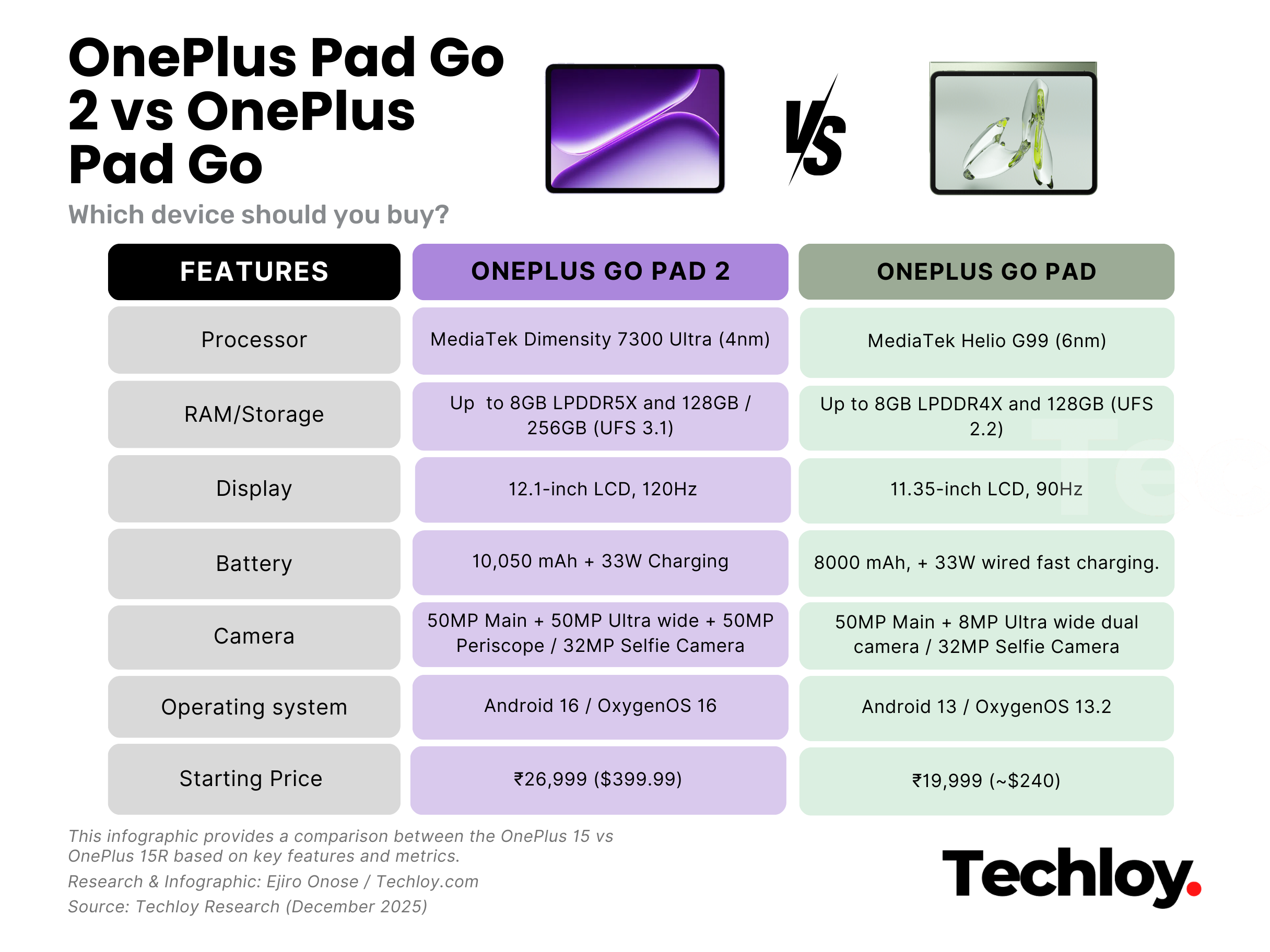
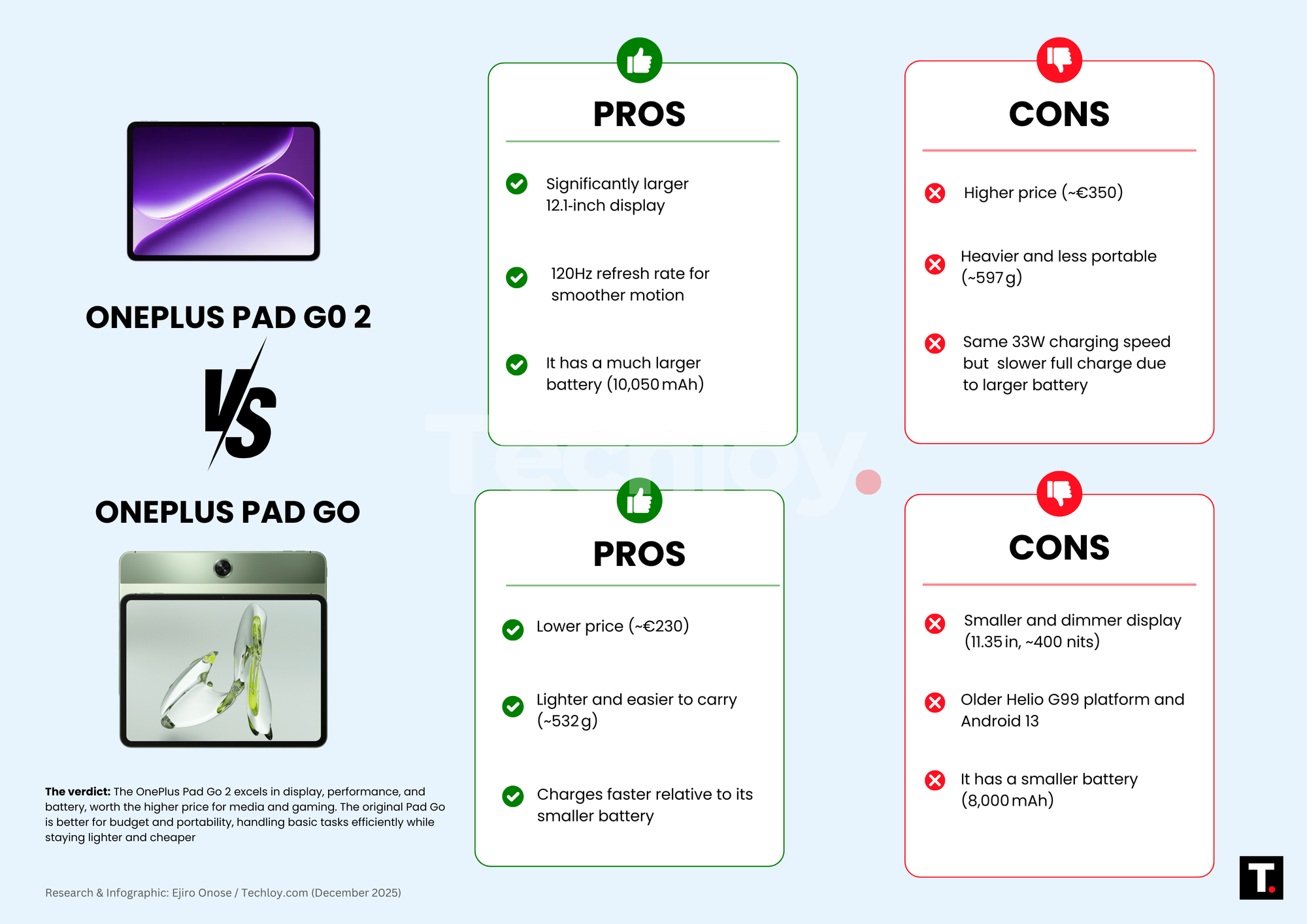
When OnePlus launched the Pad Go in 2023, its appeal was simple: a lightweight tablet that delivered acceptable performance and display quality at a budget-friendly €230. It was designed to be easy to carry, easy to recommend, and easy on the wallet.
The OnePlus Pad Go 2 takes a different approach. Priced closer to €350, it targets a higher tier with a larger 120Hz display, a newer chipset, and a much bigger battery. These upgrades are meaningful, but they also come with clear compromises in weight and portability.
This comparison examines whether the Pad Go 2’s move upmarket results in a better tablet overall, or whether the original Pad Go remains the more sensible choice for users who valued affordability and true “grab-and-go” convenience.
OnePlus 15R vs OnePlus 15
Comparison of performance, battery life, cameras, charging, and value to help buyers choose between the OnePlus 15R and OnePlus 15.

/1. Display
The display upgrade is the most significant differentiator between these two tablets. The Pad Go 2 has a substantial 12.1-inch screen, dwarfing the original Pad Go’s 11.35-inch panel. This new screen offers a smoother 120Hz refresh rate, a noticeable step up from the previous 90Hz standard.
Brightness sees a massive leap as well. The Pad Go 2 hits a peak of 900 nits, making it usable in bright environments where the original’s 400-nit panel struggles. For visual fidelity, the newer model renders the original obsolete.
💡
Verdict:The Pad Go 2 renders the original obsolete in visual fidelity and outdoor usability.
/2. Performance
Under the hood, the engines drive two very different experiences. The Pad Go 2 utilizes the MediaTek Dimensity 7300 Ultra (4nm) chipset running Android 16, marking a generational leap in efficiency.
While the Pad Go relies on the older Helio G99 (6nm) and Android 13, the new model ensures significantly better longevity and gaming performance. The Pad Go 2 manages multitasking and heavier applications with superior stability, whereas the original is strictly suited for basic tasks.
💡
Verdict: The Pad Go 2 is the clear winner for longevity and gaming; the original is now strictly for light use.
/3. Battery
OnePlus increased the fuel tank significantly in the new model. The Pad Go 2 houses a massive 10,050 mAh battery, a major increase over the original’s 8,000 mAh unit. This guarantees extended screen-on time for long media sessions.
However, a crucial critique remains: both tablets rely on the same 33W charging speed. Because the Pad Go 2’s battery is much larger, it requires significantly more time to reach a full charge. This stagnation in charging tech creates a friction point for power users.
💡
Verdict: The Pad Go 2 wins on endurance, but the original Pad Go charges faster.
/4. Portability
The “Go” branding implies portability, but the Pad Go 2 compromises on this front. It weighs approximately 597g, making it noticeably heavier than the 532g of the Pad Go.
The larger footprint also makes the new device less distinct from standard full-size tablets. Users seeking a truly lightweight, grab-and-go slate will find the original model far more accommodating for one-handed use and travel.
💡
Verdict: The original Pad Go retains the true “Go” spirit; the new model is closer to a standard, heavy table
The Verdict
If your priority is content consumption, the upgrade is non-negotiable. The 900-nit brightness, 120Hz refresh rate, and massive battery create a superior viewing experience.
The original remains the better option for pure portability and value. It is lighter, charges faster relative to its capacity, and saves you over €100 while still handling basic video duties.
OnePlus Open vs. Samsung Galaxy Z Fold 7
This guide pits the Galaxy Z Fold 7 against the OnePlus Open to see which foldable truly delivers the best mix of power, design, and value.

December 23, 2025
Link copied!
Copy failed!


Nigeria is currently in talks with Google for a new subsea cable that seeks to strengthen its digital and connectivity backbone. This is according to a Bloomberg report on Tuesday.
In an interview in Abuja, Kashifu Inuwa Abdullahi, Director General and Chief Executive Officer of the National Information Technology Development Agency (NITDA), noted that Nigeria wants to increase its existing subsea cable links with Europe through the proposed infrastructure. He added that such investment is needed to help transform Nigeria into a digital hub in Africa and support the vision for a $1 trillion digital economy.
While the proposed deal is a plus for internet access, the NITDA boss tagged Nigeria’s current reliance on cables that follow the same path “a single point of failure.” In such a case, damage causes significant internet disruption, which affects economic activities.
 DG, NITDA, Kashifu Inuwa Abdullahi
According to the report, a Google spokesperson confirmed that talks between both parties are at an advanced stage. This development builds on Google’s plan to bridge the digital divide in Africa. In September, Google revealed plans for four new infrastructure hubs in Africa to connect its latest underwater fibre-optic cables.
The development comes at a time when Nigerian and other African countries are suffering from internet blackouts due to subsea cable damage. In a continent that has the world’s fastest-growing population, issues with seamless internet connectivity pose a threat to innovation and restrict access to advanced technology such as artificial intelligence.
Aside from the ongoing talks with Google, Abdullahi said that Nigeria is talking to other tech giants alongside. Nigeria is also seeking to drive investment in digital infrastructure. This will provide improved access to reliable cloud and computer power needed to broaden the use of high-tech tools.
Also Read: Meta completes 2Africa subsea cable system, the first cable to connect Africa to the world.

Subsea cables to the rescue for Nigeria and Africa
In its move to ensure every Nigerian is digitally connected, the federal government, in partnership with the World Bank, invested $2 billion in 90,000 kilometres of subsea cable network across the country. The infrastructure, whose rollout is underway, forms part of Nigeria’s continued push for a digital economy.
While subsea cables are described as the real backbone of the digital economy, they’ve been faced with challenges such as vandalism, cable cuts and other disruptions.
For instance, data by the International Telecommunications Union (ITU) revealed that about 150 to 200 cable cuts occur globally yearly, causing connectivity disruptions across all sectors of the global economy, including banking and telecoms.
To bridge the gap, Nigeria and Africa as a whole recently recorded a milestone in digital connectivity.
Last month, Meta Inc. completed the core 2Africa Subsea Cable system, an infrastructure that links East and West Africa to the Middle East, South Asia and Europe. The subsea cable, the first to connect Africa to the rest of the world, seeks to transform connectivity for 3 billion people, including Africa’s 1.4 billion people, over the next 10 years.
 The 2Africa Subsea Cable reaches 3 continents and lands in 33 countries, connecting over 3 billion people.
The subsea cable marks a defining moment for Africa’s economy and community development, and the facility represents a major change in international bandwidth for Africa, with technical capacity that far exceeds previous systems.
According to Meta, the subsea cable on the West segment stretched from England to South Africa, and landed in countries such as Senegal, Ghana, Cote d’Ivoire, Nigeria, Gabon, the Republic of Congo, DRC, and Angola. In addition, the cable supports 21 terabits per second (Tbps) per fibre pair, with 8 fibre pairs on the trunk.

Like Arnie’s pulverised cyborg at the end of T2, the Terminator franchise has lumbered on long past the point of being properly functional. Every film since Judgment Day has been a disappointment or an outright disaster, and its video game spinoffs haven’t fared much better. While some half-decent ones have emerged, such as 2019’s Terminator: Resistance, there hasn’t been a great Terminator game in about 30 years.
So it makes perfect sense for Terminator 2D: No Fate to attempt to fix our broken future by travelling back to the past. Developer Bitmap Bureau appeals to the series’ heyday by retelling the story of Judgment Day through a medley of retro 80s and 90s playstyles. The result is a charming and frequently thrilling action throwback, though ironically it is at its strongest when it strays furthest from James Cameron’s film.
Terminator 2D begins several years before the events of the film, charting Sarah Connor’s doomed attempt to sabotage Cyberdyne systems before her incarceration at Pescadero Hospital. These early levels, which see Sarah running and gunning her way through a gang of outlaws, police, and hazmat-wearing researchers, are among the game’s best. Bitmap Bureau does a remarkable job capturing Linda Hamilton’s gritty performance in a handful of pixels, while the scenarios eke impressive variety from simple arcade fundamentals.
Gaming greatness … Terminator 2D: No Fate. Photograph: Bitmap Bureau/ Reef Entertainment
The momentum carries on into the future, where you spend a couple of levels fighting the armies of Skynet as adult John Connor in nuclear-blasted LA. Terminator 2D ramps up the spectacle here, with laser weapons and incendiary grenades deployed against Chrome-plated T-800s and several enormous mini-bosses. The section culminates in a thrilling boss fight against a flying Hunter-Killer drone, at which Bitmap Bureau throws all the fireworks its 16-bit aesthetic allows.
No Fate loses some of its thrust once it catches up with Judgment Day. The midsection replicates key scenes from the film in playable form, such as the chase sequences that bookend the story. But these feel overly constrained by the game’s self-imposed limitations and aren’t very exciting to play. Better served are Arnie’s bar-fight scene and Sarah Connor’s escape from Pescadero, which employ beat ’em up principles and stealth respectively. While stylish and capably designed, these ideas deserve more room to breathe.
T2D regains its earlier verve in its concluding levels, though the story reaches its denouement quicker than the actual film. Fortunately, as is always the case in Terminator, the end is not really the end. Like its arcade forebears, No Fate places heavy emphasis on replay value. Not only do its harder modes challenge you with adjusted enemy placements, completing the story mode unlocks new pathways that explore alternate futures hinging on Sarah’s choices.
While No Fate doesn’t move the needle for Terminator games as much as I’d like, it succeeds in resetting the clock for the series’ interactive arm. It’s a pointed reminder that Terminator has gaming greatness within it.
Terminator 2D: No Fate is out now; £24.99


Like many Americans, most countries are in a lot of debt.
Developing countries, alone, carry nearly $31 trillion worth of debt. Enough debt to give everyone in the world a check for $3,750. Or to pay for Jeff Bezos to throw a $50 million wedding in Venice every weekend for the next 11,900 years. Or, at least in theory, to solve world hunger with trillions to spare.
But instead, many countries across Africa, Asia, and Latin America are saddled with so much debt that today more than 3 billion people — over one-third of humankind — live in nations that spend more on interest payments than they do on health care or education. This is nothing new. But it’s gotten far worse in recent years as part of a vicious cycle that will be all too familiar to most Americans who’ve ever fallen behind on a credit card bill or a student loan payment.
You take out a new credit card to pretend you can pay the old one. No matter how much you pay off each month, somehow the amount you owe seems to grow larger each year. And if a disaster strikes at the absolute worst possible moment — be it a hurricane or a medical emergency — then forget it.
- Low- and middle-income countries are in a lot of debt. So much debt that many now spend more on interest payments than they do on education or healthcare.
- Once you’re stuck in a debt spiral, it’s almost impossible to climb out. It’s gotten even stickier in recent years as interest rates rose, climate disasters piled up, and the composition of creditors changed to include more private lenders and China.
- Who benefits from the debt spiral? Wall Street lenders tend to charge the highest interest rates, meaning some have gotten rich off of lending to developing countries.
- There’s no silver bullet to fixing the global debt trap. But proposed laws in New York and London, where most sovereign debt is issued, could help prevent the worst abuses. And anything that makes restructuring debt easier could help countries escape the cycle faster.
For poor countries, as with people, debt twists into a financial hole with no end in sight.
“It’s like the Hotel California,” said Penelope Hawkins, senior economic affairs officer at the United Nations focusing on debt and development finance. “You can check out any time you want, but you can never leave.”
And when the crisis gets deep enough, indebted countries stop building hospitals, just like deeply indebted Americans forgo health care and trips to the dentist. The nations defund their schools. Their economies slow. And their credit rating tanks, meaning that any future loans will be even more expensive.
“These aren’t just statistics,” said Joel Curtain, director of advocacy at Partners in Health, which has been pushing for reform to the system for resolving runaway debt. “This crisis is embodied in sickness, ill health, and death.”
To understand a pernicious piece of how this all works, look no further than the handful of Manhattan hedge funds that effectively control the financial fate of some entire countries — just like they may control your mortgage and your own highly profitable credit card debt.
The terms of most countries’ debt contracts — also known as sovereign bonds — are not handled by some international body or within the debtor country, but rather, are split between the jurisdiction of judges in the two largest financial hubs in the world, New York and London. After all, that’s where the money is.
And thousands of miles away, it is ordinary people who face the hidden but profound consequences of that debt deal gone wrong. They are the ones who will hurt the most when the government cuts kick in, when the price of bread doubles, their kids’ classrooms size balloons, and the hospitals go dark.
But as poor countries face down a broader shortage of funding for critical development projects driven by sweeping foreign aid cuts, some activists see a real opening for relief.
There is nothing inherently wrong with having some debt.
It costs money to get ahead. If you want a well-paying job, you probably have to go to college. And if you don’t have family who can cover the bill, then you probably need to take out loans.
The same is true for countries. If you want to grow your economy, you’ve got to build schools, staff hospitals, and invest in infrastructure. And if your country is not wealthy to begin with — if you got the short end of colonialism’s stick — then the only way to pay for that is to take out loans.
“No country has grown without some debt,” Hawkins said. “No country has developed without debt.”
Vietnam, for example, was once one of the poorest countries in the world. But a series of economic reforms in the late ‘80s — accompanied by $26 billion in World Bank loans since 1993 — literally catapulted the country into the global middle class, nearly eradicating extreme poverty in the process.
The problem is, the loans that poor countries take out these days have become so expensive — and the growth they’re supposed to fuel is often so sluggish — that they can never pay them back. The interest adds up before the returns come in.
And yikes, has that bill added up over the years.
Developing countries have seen their total debt balloon by almost 160 percent over the past decade. More than 60 of those countries now spend more than 10 percent of their government revenues on interest payments.
Since you’re a responsible news-consuming citizen, this is the moment when you might be wondering: Doesn’t the US owe gazillions of dollars to its creditors, too?
Yes, in fact, it absolutely does.
While Americans say they care about the debt, they don’t vote like they do, though they probably should! But they don’t, largely because a rich country like the United States gets to borrow in its own currency and it can almost always take out more cheap loans to pay off the old ones.
This means that the national debt rarely affects the lives of ordinary Americans. The US does not need to cut Social Security or stop paying for road maintenance to indefinitely manage its debt. Not yet, at least.
But poorer countries lack that luxury.
Just like low-income Americans often contend with backbreaking interest rates if they want to borrow cash, so too do low-income countries. African nations pay an average of 10 percent interest on their loans, whereas interest rates for rich countries like the US are typically under 3 percent.
And this is where we get to Wall Street. Because private creditors like hedge funds and insurance companies increasingly hold the bulk — about 60 percent in 2023 — of low- and middle-income countries’ external debt, a trend that has been rising since 2010.
That wasn’t always the case. For much of the 20th century, when a developing country needed finance, it usually turned to the Paris Club, an informal grouping of Western creditor countries, or newly formed Western-controlled multilateral institutions like the International Monetary Fund and World Bank, while working more sporadically with private creditors like banks.
But in the early 2000s, the Paris Club pulled back on lending after a protest campaign endorsed by Bono and the Vatican caused it to forgive billions of dollars in poor countries’ debt. Then, boom — the Great Recession hit and interest rates plummeted, forcing private creditors to start looking for a new way to earn cash.
They found it in poor countries, where they could charge much higher interest rates than they could in rich countries. In fact, bonds became so unprofitable in places like Germany that they entered negative territory a few years after the financial crisis, whereas interest rates across Africa hovered above 5 percent. The modern sovereign debt business was born. And these private companies made a killing on those high-interest loans.
“It’s good business to lend,” said Martín Guzmán, an economist and former economy minister of Argentina. “Almost too good of a business.”
Few countries know that as well as Argentina does. After years of debt drama, a slew of neoliberal reforms compelled by the International Monetary Fund (IMF) and a debilitating economic crisis, the country stopped paying off its $100 billion debt on Christmas Eve 2001.
It was the second-largest sovereign debt default in history, one that sent its creditors — from Wall Street barons to pension funds — into a tailspin. Fear of exactly this worst-case scenario illustrates why loans are so expensive for low- and middle-income countries: The higher the risk, the higher the interest rates demanded by lenders. In Argentina’s case, chronic overspending and cycles of inflation have made borrowing especially expensive.
Almost nobody benefits when a country defaults. Lenders have to take a haircut on their loans, while the debtor country has to make painful cuts and becomes a sort of pariah in the global financial world. But there are exceptions.
Most creditors eventually accepted new discounted terms to Argentina’s debt, but others, hoping to make a quick buck and wash their hands of the crisis, sold off their Argentine bonds — or loan contracts — for pennies to the dollar to vulture funds, investors that specialize in hounding debtors for what they’re owed.
You can imagine what came next. The vultures who bought up Argentina’s loans pounced, the most notorious of them being the hedge fund Elliott Management. Elliott sued the bejeezus out of Argentina for nonpayment, even seizing an Argentine naval ship ported in Ghana in an attempt to recoup the loans in 2012.

Argentina has been embroiled in recurrent debt crises for decades now, and thousands of people haven taken to the streets to protest against austerity measures and the International Monetary Fund. Muhammed Emin Canik/Anadolu Agency
Creditors who lend to poor and middle-income countries “want to charge high interest rates, but they also demand to be repaid in full when risks happen,” said Tim Jones, policy director of the longstanding advocacy group Debt Justice. “They want to have their cake and eat it too.”
In the end, Elliott won. After a 15-year battle in New York state court — since about half of all sovereign debt is litigated on Wall Street’s turf — Elliott managed to score a highly profitable $2.4 billion settlement, a 392 percent return on the original value of the bonds, but since Eliott paid very little for those bonds, the company earned a profit of 10 to 15 times what it initially paid.
At the time, Elliott’s CEO, Paul Singer, blamed Argentina for its own “sad path” to financial crisis as a “once very impactful country economically” coming out of World War II. “They are imposing damage on themselves way out of proportion to the cost of paying the debt,” he said.
It’s true that Argentina was in part a victim of its own mistakes. But it’s also true that Argentina, which was once one of the wealthiest countries in the world, has never fully recovered. And it was ordinary Argentinians, not those who were making the decisions, who paid the price.
The real cost of repayment
There is no shortage of reasons that poor and middle-income countries fail to pay off their loans, including the most obvious: overspending.
When the southern African country of Zambia defaulted on its debt in 2020, the IMF and other analysts blamed it on years of unsustainable borrowing, corruption, and poorly targeted infrastructure projects underwritten mostly by private creditors and, increasingly, China. There were also factors mostly outside of Zambia’s control, like a drought the year prior that strained the country’s finances to its breaking point, and an extractive economy based around copper mining that developed under colonialism that forces the country to take out more loans when the price of the commodity drops..
“There is a school of thought that whenever a country is in default, it is all the fault of the lenders, and that is usually not the case,” said Gregory Makoff, a self-professed sovereign debt obsessive, author of Default: The Landmark Court Battle Over Argentina’s $100 Billion Debt Restructuring, and a fellow at the Centre for International Governance Innovation.
As a result, 3.4 billion people now live in the 46 developing countries that spend more — $921 billion in 2024, a 10 percent increase from 2023 — on interest payments alone than they do on health or education, according to the United Nations.
“It is usually the fault of the borrower,” he said, because the borrower is the one who makes the decision to take out a loan, the one who “uses the funds and has to take responsibility for itself.”
But for every handful of nations that stop paying their loans, dozens dutifully take out new loans to pay off their old ones each year.
One reason that debt burdens are so high today is the Covid-19 pandemic, which forced many countries to take out additional loans to keep their economies and healthcare systems afloat.
Another is interest rates. Remember when the Federal Reserve hiked the price of borrowing to try to quell inflation in the US? That didn’t just impact your mortgage rates — it made borrowing that much more expensive for poor countries too.
Add in the war in Ukraine, which drove up energy and food prices globally, and increasingly frequent climate disasters that force countries to borrow even more just to rebuild, and you’ve got a recipe for the worst sovereign debt crisis in decades.
But even as countries’ debt balloons, defaults like Argentina’s are relatively rare these days, largely because nobody wants to be chased by a vulture fund or find themselves locked out of global financial markets. Instead, many countries are digging deep into whatever savings or spending cuts they can muster to pay off those loans.
“Countries are not defaulting on debts,” Guzmán said. “But they’re defaulting on development.”
Developing countries spent $741 billion more on paying back their loans than they received in new finance between 2022 and 2024, the largest gap in 50 years. But despite these payments, their debt has just grown larger, rising at twice the rate of rich countries.
If you’re an austerity hawk, that might sound like a good thing.
These kinds of cuts are compelled by the IMF not because that institution is mean-spirited, but because it’s a way to bring countries closer to eventually paying off their loans and finding a stronger financial footing in the long term.
If your uncle is “drunk and always is running up his credit card and running personal bankruptcy, are you going to blame his credit card lenders and his mortgage provider for his problems?” Makoff asked. “Or maybe he made some bad decisions.”
At the end of the day, the IMF is brought in to “do math” for countries that have “generally made a lot of bad decisions,” said Makoff. “They make sure the money [that comes] in and out adds up” and do their best to avoid catastrophic social spending cuts in the process.
But for billions of people around the world, this kind of fiscal responsibility can also mean hospitals that don’t get built. Schools that don’t get textbooks. Roads that don’t get paved.
Every dollar of interest lining the pockets of Wall Street’s Bonobos pants and fleece-lined vests is a dollar less for development.
“Western governments tend to only see it as a crisis when people stop paying,” Jones said, but “the real crisis is the fact that they are paying and the cost that’s happening through cuts” to service these debts, which he described as “catastrophic for the future.”
And this is more or less by design. For decades, the US-dominated IMF has required countries looking to restructure their debt to impose cuts to social services.

Increasingly frequent disasters like droughts and cyclones have made it even more difficult for low-income countries like Malawi to climb their way out of debt spirals. Andrew Renneisen/Getty Images
So Malawi’s government has taken out loans. A lot of loans, many of which carry very high interest rates, because lenders don’t trust that the impoverished country will be able to pay them back. Over the past several years, Malawi’s total public debt has soared to above 80 percent of its GDP or around $12 billion, up from 35.5 percent of GDP — under $3.2 billion — a decade ago.
Take Malawi, for example. The landlocked southeast African country, the world’s third poorest per capita, is in the midst of the worst economic crisis in its history. Since 2019, it has faced back-to-back climate disasters, including the region’s worst drought in a century, which has plunged over half of Malawians — most of whom are subsistence farmers — into profound food insecurity.
Long story short, if you want to understand the dystopian and often surreal reality of global debt financing, look at Malawi’s budget for the coming fiscal year. The country will spend just over $440 million — $20 per person — on health care. It will spend just over $770 million on education.
And it will spend over $1.25 billion, more than what it spends on health and education combined, on interest payments. Again, these are just interest payments, which go straight into the pockets of commercial banks and foreign investors who own them.
Given that 75 percent of Malawians live on less than $3 per day, the government can hardly rely on tax revenue, so it will need to borrow even more money to make those payments on time.
And so the cycle continues, and ordinary Malawians suffer the most.
“We don’t have enough doctors. We don’t have enough nurses,” said Makhumbo Munthali, director of partnerships at Partners in Health’s office in Malawi. In Malawi, he said, a generation of trained local health professionals can’t get jobs because the “government is trying to meet austerity measures” imposed by the IMF. Most end up moving abroad for work, leaving the country with just two physicians for every 100,000 people.
“The IMF has been saying that there will be some sort of pain for a while and then later on things will stabilize,” he said. “But that has not been the case.”
Why there’s hope for change
Malawi is far from alone. Almost half of low-income countries are now in or at high risk of debt distress, meaning they’re struggling to pay their loans.
To make matters more complicated, sweeping foreign aid cuts have left many countries scrambling to fill funding gaps this year. Many poor countries normally rely on foreign donors — chief among them, the United States — to subsidize the majority of health and education programs in their country. The United States previously subsidized at least half of all annual health spending in Afghanistan, Somalia, South Sudan, and Malawi. Countries like Nigeria have already begun taking out new loans to keep their health systems afloat.
And so far, it appears that Trump’s new foreign policy prerogative will mean that when the US does choose to fund development, it will increasingly be in the form of loans, rather than grants. China, an increasingly important lender for poor countries — especially in Africa — also conducts much of its foreign aid this way, and has also faced its own criticism for leading nations into debt spirals.
One of Trump’s first actions upon taking office was to stop all US funding to a program that helped vulnerable countries prepare and adapt to climate change. Many of those countries have no choice but to regularly take out enormous new loans in the aftermath of every new disaster, like Hurricane Melissa in Jamaica. It’s a burden that seems to grow every year.
These countries “are piling on debt not to build infrastructure, not to grow, not to develop like other countries,” said Ritu Bharadwaj, a climate finance and resilience expert at the International Institute for Environment and Development, but simply “to rebuild and bring the economy back on track” when disaster strikes.
Sri Lanka, for example, was recently forced to ask the IMF for a multimillion-dollar loan to fuel its recovery in the aftermath of Cyclone Ditwah last month, even as the country continues to recover after defaulting on its loans in 2022.
At the time, Sri Lanka’s debt crisis forced schools to cancel exams because they ran out of paper. Hospitals canceled surgeries because they ran out of medication. Fuel shortages forced doctors to stitch wounds in the dark and food prices rose by 90 percent, leaving over a quarter of people food insecure.
But if there is one silver lining to the aid cuts, it is that countries struggling widely with debt burdens have gained a powerful new moral argument for changing the system.

An enormous advocacy push managed to erase over $100 billion in poor countries’ debt at the turn of the century. Though the contours of the crisis has changed, advocates say that similar large-scale relief is necessary today. Mufty Munir/AFP
If wealthy countries are unwilling to help subsidize what it costs for poor countries to adapt to climate change, Bharadwaj said, then “we really need to at least provide them a fair chance to do it themselves,” because most developing countries spend far more on interest payments than they’ve ever received in foreign aid.
Even some private creditors are calling for change. At recent meetings with bondholders, UNCTAD’s Hawkins said, some acknowledged that pushing countries to keep paying unsustainable debts ultimately hurts everyone — including creditors who want borrowers to stay solvent enough to keep doing business.
For some activists, the solution starts on Wall Street. Over the past few years, organizers in the financial hubs of New York and London have been exploring changes to local law that could shield vulnerable countries from the most egregious debt litigation.
We’re talking about Elliott Management in Argentina. Or more recently, an entity called Hamilton Reserve Bank, which has refused to agree to a debt restructuring plan for Sri Lanka, instead suing the country for $250 million in a lawsuit still ongoing in New York.
The proposed New York state law would offer countries a framework for obtaining relief and restructuring their debt, with provisions against private creditors that attempt to hold out on a deal. Amid a concerted lobbying effort from Wall Street firms, the deal failed to move forward this year, but will be coming up for a vote again in the year ahead.
Even if this bill — and a similar one in London — passes next year, it’s not going to transform the problem overnight. There’s no silver bullet for dismantling the debt vortex that so many poor countries find themselves in — especially if it doesn’t involve significant loan forgiveness.
But anything that makes it easier for countries to renegotiate their debt — which both the New York and London bills aim to do — would be a big win. Unlike individuals or companies, countries don’t have the option of declaring bankruptcy. So when a nation like Sri Lanka can no longer pay its loans, its only option is to head back to the negotiating table with its creditors.
And even when there are no supervillainous vulture funds involved, such renegotiations are “just a monstrous process for a debtor to go through,” said Jones of Debt Justice, citing Zambia, a neighbor of Malawi that defaulted on its loans in 2020 and has been renegotiating its debt ever since.
”My daughter was born around the time the Zambian process started, and she can now read and write,” he said, noting that if New York or London manages to eke out a restructuring bill, then more countries will feel empowered to apply for debt relief.
Without it, they’ll just keep borrowing, often from multilateral organizations like the World Bank, whose loans are ineligible for restructuring and contingent on painful policies that can stifle development in the long run.
And without comprehensive structural reform and genuine debt forgiveness, those countries will never escape. Every “extension of term” on loan repayments may give them a “breather,” said Hawkins, but only delays the inevitable for countries made insolvent by deals that were often rotten to begin with.
“This idea that we can continue to kick the can down the road” is no longer tenable, she said. “That horizon is coming very much closer to us.”
You’ve read 1 article in the last month
Here at Vox, we’re unwavering in our commitment to covering the issues that matter most to you — threats to democracy, immigration, reproductive rights, the environment, and the rising polarization across this country.
Our mission is to provide clear, accessible journalism that empowers you to stay informed and engaged in shaping our world. By becoming a Vox Member, you directly strengthen our ability to deliver in-depth, independent reporting that drives meaningful change.
We rely on readers like you — join us.

Swati Sharma
Vox Editor-in-Chief
TECHNOLOGY
Time really does feel slower on the treadmill! Scientists reveal how running tricks your brain into overestimating duration

Nothing ever feels quite as slow as a minute on the treadmill.
Now, scientists have confirmed that running really does alter how we perceive time – making us overestimate how long we’ve been working out.
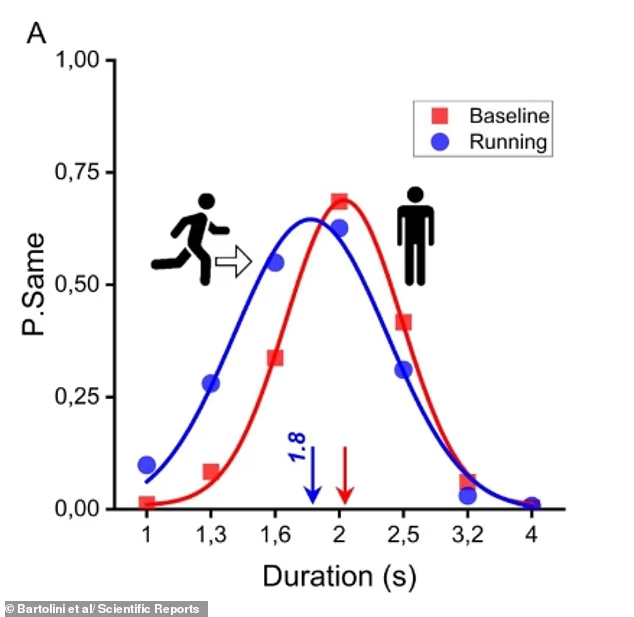
Researchers asked 22 participants to look at an image on a screen for two seconds and then judge whether a subsequent image appeared for the same amount of time.
The task was performed under a range of different conditions including standing still, walking backwards and running on a treadmill.
Analysis revealed that, when running, participants overestimated the passage of time by around nine per cent.
This means that, if you’re out for a jog or getting some miles in at the gym, what feels like a minute would actually correlate to 54.6 seconds.
Previous research has suggested that this phenomenon is down to an increased heart rate during exercise.
But the new study suggests the effect is mainly driven by the large amount of brain power required to manage the balance and coordination required for running.

The study found that compared to standing still, participants overestimated how quickly time passed when they were running
Writing in the journal Scientific Reports the team, from the Italian Institute of Technology, said: ‘Having an accurate perception of the passage of time is essential for many everyday activities, [but] the subjective feeling of events’ duration often does not match their physical duration.’
This can include everyday experiences like waiting for a bus or for your microwave meal to be ready – both of which typically feel ‘longer’ than they are.
Meanwhile time is also known to ‘fly’, for example when you are having fun or on holiday.
The researchers, led by Tommaso Bartolini, found that while running led participants to overestimate time by nine per cent, walking backwards also caused them to produce a similar distortion of seven per cent.
Although running elevated heart rate substantially more than walking backwards, the time distortion was nearly identical, they said.
This strongly suggests the effect is not driven by physiological exertion – such as heart rate – but instead by the cognitive effort needed to control movement.
‘The results of the current study suggest that we should be very cautious in interpreting perceptual timing biases observed during physical activities as reflecting physiological alterations,’ they wrote.
‘The results also encourage the scientific community investigating time perception… to consider the potential confounding role of cognitive factors implicated in the execution of complex motor routines.’

Scientists have confirmed that running really does alter how we perceive time – making us overestimate how long we’ve been working out (file image)
Previous research has revealed that time really does fly when you’re looking forward to something exciting such as a holiday.
Researchers from Al-Sadiq University in Iraq surveyed more than 1,000 people living in the UK and 600 people in Iraq, asking if they believed Christmas or Ramadan came more quickly each year.
They also measured participants’ memory function and attention to time passing, as well as age, gender and social life.
Analysis revealed that 70 per cent and 76 per cent of people respectively reported that Christmas or Ramadan seemed to come quicker every year.
They were more likely to report this perceived acceleration if they paid more attention to time, were more forgetful of plans, or reported a love of the holiday.
Share or comment on this article:
Time really does feel slower on the treadmill! Scientists reveal how running tricks your brain into overestimating duration

The United States has announced a new visa restriction that will affect Nigerians who plan to travel, study, or move there beginning next year.
A notice from the U.S. Mission in Nigeria states that the American government will partially suspend visa issuance to citizens of 19 countries, including Nigeria, starting January 1, 2026. This move comes after a presidential order to tighten U.S. border and immigration rules.
Under the new rule, Nigerians applying for visitor visas, student visas, exchange programmes, and most immigrant visas may face rejection, even if they successfully complete the application process and attend interviews.

What changes for Nigerians in January
The restriction does not apply to everyone. Nigerians who already have valid U.S. visas as of January 1, 2026, will still be allowed to travel, and none of those visas will be cancelled due to the policy. The suspension only affects individuals outside the United States who do not hold a valid visa when the rule takes effect.
Certain categories are also exempt. These include Nigerians with dual citizenship who apply using a passport from a country not on the restricted list, U.S. permanent residents, and individuals travelling for specific international sporting events. Special immigrant visas linked to U.S. government employment are also excluded.

This announcement creates new uncertainty for students and young professionals. Nigerians can still apply and schedule interviews for study, exchange, or short-term travel visas. However, visa approval is no longer guaranteed, even for qualified applicants with good intentions. This means many applications could be denied.
Also read: US visa: Nigerian applicants directed to list social media usernames in last 5 years
The timing matters. Nigeria remains one of Africa’s largest sources of international students and visitors to the United States. The restriction could slow academic admissions, disrupt exchange programmes, and limit short-term business or conference travel for Nigerians.

There are wider issues too. Families waiting for immigrant visas may experience increased delays. Additionally, U.S. organisations that depend on Nigerian students and workers might see fewer of them participating. For those applying, not knowing how long the suspension will last makes it harder to plan.
For now, the U.S. Mission has made it clear that the policy is not retroactive. Anyone holding a valid visa before the deadline is unaffected. But for new applicants from Nigeria in 2026, the path to the United States just became significantly narrower.


Fake adverts for weight loss drugs by a company pretending to be health and beauty retailer Boots have been removed from TikTok after the firm complained.
The adverts for prescription-only weight loss drugs appeared to show smiling healthcare professionals from the British retailer – but in reality they were made with AI.
It is illegal to advertise prescription-only weight loss drugs to the public.
A spokesperson for Boots told the BBC the firm was “aware” of the videos and had complained to TikTok, which said it had removed the videos.
A TikTok spokesperson said it did not allow “harmful or misleading AI-generated ads” on its platform.
But the BBC found while the videos were removed, the account – seemingly located in Hong Kong – was not.
It was able to re-upload the exact same videos despite the originals being removed.
TikTok was again notified of this, and the user was subsequently deleted.
Weight-loss jabs have been available on the NHS in England since the end of June, but they are not available over-the-counter and patients must meet strict criteria in order to be eligible for a prescription.
Before the fake Boots account was removed, its videos linked to a website where weight loss drugs could be bought.
It featured testimonies from customers and doctors which were either made with AI or taken from other websites.
The TikTok videos showed what appeared to be health workers drinking from a vial of blue liquid.
This would then appear to jump forward several months, with the workers apparently having lost a drastic amount of weight.
“AI now makes it trivially easy to generate a convincing series of videos or images showing an apparent change in a plausibly real generic health professional, or to impersonate specific health professionals wholesale,” AI expert Sam Gregory told the BBC.
“The underlying question is how quickly and comprehensively platforms act when they detect – or are notified of – scams that clearly breach their terms of service.
“Major brands like Boots will get prioritised over an individual business owner who’s been targeted.”
Other videos uploaded by the same account on TikTok seemed to have used content originally posted by real people, showcasing their weight-loss journey, but repurposed and used without permission.
All of the videos used similar branding and names to that of the official Boots account on TikTok – using the handle “@BootsOfficial”.
Boots said it only runs adverts on social media through its actual account @BootsUK.
The website also included warnings from the MHRA, the UK’s governmental body that ensures medicines and medical devices are safe, about purchasing counterfeit products.
A spokesperson for the body told the BBC weight loss medicines “should only be obtained from a registered pharmacy against a prescription issued by a healthcare professional”.
“Taking these medicines sourced in any other way carries serious risks to your health with no guarantees about what they contain,” they said.
TikTok said it would continue to “strengthen” its detection methods for AI-generated content and it does not allow “the depiction, promotion, or trade of controlled substances”.
TECHNOLOGY
Biography aims to fill gaps in story of ultra-libertarian Telegram founder Pavel Durov | Russia


Tech visionary, Kremlin dissident, FSB agent, free speech absolutist, health guru. These are just some of the labels admirers and critics have attached to Pavel Durov over the past decade.
The Russian-born tech entrepreneur founded Russia’s version of Facebook before going on to create the messaging app Telegram, launch a cryptocurrency ecosystem and amass a multibillion-dollar fortune, all while clashing repeatedly with authorities in Russia and beyond.
But much of Durov’s real story – and the logic that drives him – remains obscured.
A new biography aims to change that.
The Populist, by the independent Russian writer Nikolay Kononov, traces the 41-year-old’s rise from a St Petersburg schoolboy science protege to the founder of Telegram, one of the world’s most influential communications platforms, which has more than a billion users.
Kononov describes the book as the product of a 14-year attempt to map Durov’s strategy and mindset, drawing on conversations with Durov himself and people who worked with him, as well as rivals and critics.
The book’s title, he said, refers to a thread running through Durov’s life: his desire to address Telegram’s millions of users directly, allowing him to bypass institutions, the press and any system of representation.
“Durov is one of the first digital populists,” Kononov said in an interview, explaining that “from the very beginning, as soon as he started making his digital products, he programmed into them the ability to write and communicate his ideas directly to his audience.”.
Durov delivering a keynote speech during the Mobile World Congress in Barcelona in 2016. Photograph: Albert Gea/Reuters
Both VKontakte, Durov’s first venture, and Telegram have at times pushed messages from Durov directly to all users, including users who had not opted in, outlining his libertarian worldview.
“He sees himself as a visionary. And obviously wants to be heard,” the author said.
That strategy has helped promote Durov’s central promise – almost absolute freedom of expression – even as Telegram has become a go-to tool for dissidents, extremists, scammers and war propagandists.
If Durov’s public brand is built on libertarianism, Kononov says his private management style points in the opposite direction: power concentrated in one man’s hands, with few visible checks.
“He is essentially the only one making all the product decisions at Telegram,” Kononov said. “Marketing, PR – it’s a one-man show.”
The portrait he draws is of a tech founder whose worldview has not wavered over the years, remaining most comfortable within an ultra-libertarian, anti-institutional strand of the right that is often misogynistic and, at times, conspiratorial.
“What surprised me most is that Durov hasn’t changed or evolved in all the years that I have interviewed him,” Kononov said.
Durov is not an outlier, Kononov writes, but part of a broader new wave of moguls – most visibly in the US – who pair technological dominance with an outsized sense of personal mythology and a deep suspicion of government constraint.
Like Elon Musk, Peter Thiel and Jeff Bezos, he has shown a strong interest in longevity science as well as pronatalism, the belief that having as many children as possible is a social or civilisational duty.
Durov does not drink or use drugs, Kononov says, regularly dispenses spartan health advice – often alongside photos of him shirtless – and has said he has fathered dozens of children through sperm donation.
Demonstrators with an icon-stylised painting of Durov protest against the blocking of Telegram in Russia during a May Day rally in Saint Petersburg in 2018. Photograph: Olga Maltseva/AFP/Getty Images
One of the book’s most striking sections tells for the first time of Durov’s tense early meeting with President Vladimir Putin in 2014, held behind closed doors.
Kononov writes that Durov described the encounter as a one-way conversation, in which the Kremlin leader reprimanded him over illegal content on Vkontakte and suggested that Durov leave the country.
Under pressure from the authorities, Durov sold his stake in Vkontakte, left Russia and eventually settled in Dubai, where he founded Telegram.
But the clearest mark on Durov in recent years, Kononov suggests, came not from Russia but from France.
Durov, who also holds French citizenship, was detained and held for three days in France in August last year as part of an investigation into crimes linked to Telegram, including the circulation of child sexual abuse images, drug trafficking and fraudulent transactions.
His detention came as a shock to the tech mogul. In interviews conducted in Paris after his arrest, Durov described to Kononov a harsh, disorienting ordeal – a permanently lit cell and little sleep – that rattled a man who had spent years insulating himself from the reach of the state.
It also appears to have sharpened his hostility towards the west. Kononov says Durov now frames Europe as sliding toward “total digital control”, and increasingly conspiratorial rhetoric.
Most recently, Durov appeared to endorse a conspiracy theory promoted by the far-right blogger Candace Owens, suggesting that Paris was behind the killing of Charlie Kirk.
“What interests me about Durov is that, on the one hand, he clearly has a very high IQ,” Kononov said. “But at the same time, he is prone to conspiracy theories.”
Kononov is adamant, however, that Durov’s views should not be conflated with formal political allegiances.
One of the most persistent claims surrounding Durov is that he is secretly aligned with Russian security services.
But Kononov said that in the course of his research, he found no evidence that Durov has worked with, or on behalf of, the Russian state. “He has a huge number of flaws – but not the sin of Telegram acting as a backdoor for the FSB,” Kononov said.
Kononov argues that what Durov has ultimately learned is the need to compromise – with both Russian and western authorities – when it serves his interests and allows Telegram to continue operating.
Kononov recalls Durov once telling him: “I never waste time on things that are unnecessary or that cannot be useful to me personally.” That self-serving mindset, Kononov said, ultimately ended their personal relationship.
About a year ago, the writer asked Durov whether he saw a contradiction between Telegram’s highly centralised, almost authoritarian internal structure and his professed devotion to freedom of expression. After that, Durov stopped responding.
“He quickly realised it wasn’t going to be a book to his liking,” Kononov said.
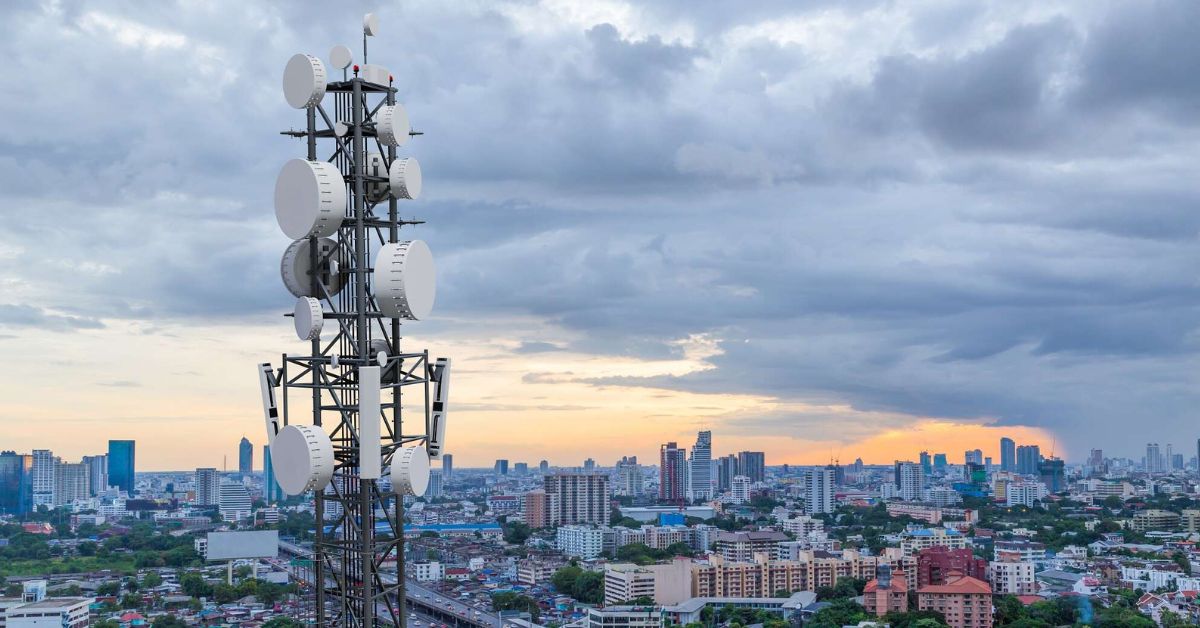
In 2025, Africa’s telecom industry entered a defining chapter. Towers and cell sites now blanket the continent, yet hundreds of millions of people still can’t afford to get online. Mobile operators raised prices even as they slashed tariffs to survive bruising price wars. Fibre raced across coastlines and deep into cities, and 5G towers lit up skylines—yet for many consumers, the devices needed to use them were priced far out of reach.
It was a year built on contradictions. Africa’s digital infrastructure is scaling faster than at any point in its history, but the impact remains uneven. The gap between coverage and affordability widened; the gap between infrastructure and usable connectivity became impossible to ignore. By 2025, these pressures collided, forcing operators, regulators, and investors to make uncomfortable choices about pricing, expansion, and what sustainable growth truly entails.
In December 2024, mobile coverage across Africa had reached roughly 88.4% of the population, according to International Telecommunication Union (ITU) estimates. In theory, almost everyone lived within reach of a signal. In practice, only about 416 million Africans were using mobile internet as of September 2025, according to data from the GSMA, translating to a roughly 28% penetration rate. Total internet usage, including fixed broadband, hovered between 36% and 38%, still the lowest of any region in the world.
The gap between coverage and usage has become Africa’s defining telecom challenge. While more than 80% of the population now lives within reach of 3G or better networks, hundreds of millions remain offline because of high device costs, limited digital literacy, and constrained household incomes. The result is a continent where infrastructure is no longer the primary bottleneck, but demand is.
Despite this, telecoms remained one of Africa’s most important economic sectors. In 2024, mobile services contributed $220 billion to the continent’s GDP, accounting for roughly 7.7% of the total output. Unique mobile subscribers numbered around 710 million, accounting for nearly 47% of the population. Growth continued, but it was slower and more contested than in previous decades.
Pricing wars in an inflationary year
Against this backdrop, pricing became the industry’s most visible battleground. Across 2025, operators in Nigeria, Kenya, South Africa, and Ghana unleashed aggressive promotions, bonus data offers, and app-specific bundles to defend market share as inflation squeezed consumers and over-the-top services continued to erode traditional voice and SMS revenues.
Smaller challengers, mobile virtual network operators (MVNOs), and new satellite-enabled offerings added further pressure. To retain users, incumbents leaned heavily on segmentation strategies, bundling mobile data with fintech services, entertainment content, and fixed-wireless broadband.
Nowhere were these tensions more evident than in Nigeria and South Africa. In January 2025, the Nigerian Communications Commission approved a landmark 50% increase in regulated telecom tariffs, the first such adjustment in over a decade. Minimum voice rates rose from about ₦11 to ₦15.40 per minute. SMS prices increased from ₦4 to ₦5.60. The reference price for 1GB of data moved from roughly ₦1,000 to at least ₦1,400.
The reaction was immediate. MTN Nigeria and SWIFT Networks were among the first to raise prices, with MTN adjusting several popular bundles above the headline increase before issuing a public apology. Airtel Nigeria followed days later, restructuring its plans and lifting prices by roughly 50%. By mid-2025, the average cost of 1GB had risen sharply to roughly ₦430–₦450 ($0.31), up from under ₦300 before the 50% tariff hike and subsequent bundle repricing.
South Africa reignited its “data expiry wars” as Parliament pushed for non-expiring or long-term data, while operators defended the current rules. Lawmakers argued that high costs and short validity periods harmed consumers and proposed applying the Consumer Protection Act’s three-year voucher standard to prepaid data. MTN and Vodacom countered, warning regulators that removing expiry entirely was “unfeasible,” would disrupt pricing models, and could increase the cost of short-term bundles for low-income users.
Higher prices, higher revenues, louder backlash
The tariff reset delivered what operators had long argued for: breathing room to invest. By the second quarter of 2025, MTN and Airtel reported average revenue per user increases of around 31% to 32%. Industry data showed Nigerians spending roughly ₦721 billion ($480.7 million) monthly on data by mid-year, even as consumer groups warned that affordability was deteriorating.
Telecoms’ contribution to Nigeria’s GDP rebounded sharply, with Q3 output reaching about ₦4.4 trillion ($2.93 billion). Operators unlocked more than $1 billion in new infrastructure spending, linking higher tariffs directly to renewed capital expenditure.
But the backlash never fully subsided. The same pricing moves that restored balance sheets also deepened the usage gap. For millions of low-income users, higher data prices meant rationing connectivity or dropping off the internet altogether, even as networks expanded around them.
Fibre becomes the real competitive moat
If pricing defined consumer-facing competition in 2025, fibre defined the strategic war beneath it. Across Africa, operators, governments, and neutral-host infrastructure players rushed to control fibre routes linking subsea cables to cities, data centres, and 5G sites.
The arrival of new subsea systems—including the Medusa cable, which made its first African landing in Bizerte, Tunisia, on November 1, 2025, and the SEA-ME-WE-6 cable, which completed its first Egyptian landing on July 2, 2025—has reshaped the regional connectivity landscape.
By September 2025, the 2Africa cable had completed landings along both Africa’s west and east coasts, dramatically expanding international bandwidth for countries such as Nigeria, South Africa, Kenya, Senegal, and Ghana. Combined with Google’s Equiano cable, these systems slashed wholesale bandwidth costs and positioned major coastal markets as regional interconnection hubs.
Governments acted in parallel. In Nigeria, the World Bank has approved $500 million toward a $2 billion public-private program to deploy 90,000 km of fiber by late 2025, thereby boosting inland coverage and 5G readiness. Across East and Southern Africa, similar national and regional fibre backbones are emerging.
Kenya is expanding its National Optic Fibre Backbone Infrastructure (NOFBI) to counties and borders, linking Uganda, Ethiopia, South Sudan, and Tanzania. Meanwhile, World Bank–supported corridors are piggybacking on transport projects, such as the Northern Corridor and the Lamu Port-South Sudan-Ethiopia Transport (LAPSSET) project.
In Southern Africa, networks from Openserve, Liquid, and WIOCC connect subsea landings to major cities and neighbouring countries, forming multi-country backbone rings. Landlocked nations such as Uganda, Rwanda, and Zambia have built wholesale backbones tied to African Union “digital superhighway” plans, reducing costs and reliance on a few MNO‑controlled routes, mirroring Nigeria’s open-access fibre vision.
Fibre, data centres, and the AI pull
Africa also hosts more than 150 active data centres, with South Africa (25.1%), Nigeria (15%), and Kenya (13.3%) holding the largest shares. New carrier‑neutral data centres are being clustered near major subsea cable landing stations and linked by high‑capacity fibre rings, reducing latency and backhaul costs while enabling low‑latency services for enterprises and global cloud providers
This shift altered how telecom operators viewed growth. Consumer mobile services remained important, but enterprise connectivity, data centre interconnection, and wholesale fibre emerged as more stable revenue pools. Whoever controlled the best fibre routes was best placed to capture the next wave of digital demand.
In 2025, Africa’s largest operators accelerated fibre backhaul investment to fuel the rollout of 5G and high-speed home broadband across key markets.
Airtel Africa, MTN, Safaricom, and Liquid Intelligent Technologies expanded long-haul capacity in Nigeria and Kenya, with Airtel Nigeria lifting capex to $875–$900 million, Safaricom growing its 5G network to 1,700 sites covering 30% of the population, MTN’s Bayobab targeting 135,000 km of proprietary fibre, and Liquid leveraging its 110,000 km network to support middle-mile connectivity for 5G and cloud.
Vodacom Group pursued a similar strategy, acquiring a 30% stake in Maziv (Vumatel and DFA) for $790.49 million, allocating $1.38 billion in regional capex, and signing an infrastructure-sharing deal with Airtel Africa to accelerate 5G backhaul in Tanzania, Mozambique, and the DRC.
5G expands, monetisation lags
While fibre quietly strengthened the industry’s backbone, 5G remained the most visible marker of progress. In 2025, South African operators transitioned from pilots to broader mid-band 5G rollouts, prioritising Fixed Wireless Access (FWA) for high-capacity home and business broadband.
Telkom SA focused on FWA to expand its broadband ecosystem, Vodacom deployed dual-band massive MIMO (Multiple-Input Multiple-Output) to boost FWA capacity, MTN reached 44% population coverage, emphasising mid-band FWA and private networks, and Rain solidified its position with uncapped 5G home WiFi. FWA has emerged as a major revenue driver, accounting for 24% of 5G earnings as router costs fell below $80.
In Nigeria, operators continue to promote 5G as a fixed-broadband alternative, offering home routers and uncapped or high-capacity data plans in cities with limited fibre or copper infrastructure. MTN and Airtel sell routers that support dozens of devices in Lagos, Abuja, Port Harcourt, and other urban centres.
In East Africa, Safaricom more than doubled the number of its 5G sites in Kenya in 2025, from 803 to 1,700, covering approximately 30% of the population as part of its national broadband goals.
In North Africa, Tunisia and Egypt launched commercial 5G services in early and mid-2025, while Morocco’s ANRT (Agence Nationale de Réglementation des Télécommunication) granted licences to Maroc Telecom, Orange, and inwi, requiring at least 45% population coverage by 2026 and 85% by 2030, making regulatory targets a key driver of rollout.
Monetisation lagged despite 5G deployment. By 2024–2025, 5G represented only 1–2% of mobile connections in Sub‑Saharan Africa, with 98–99% of SIMs still on 2G–4G, and 4G making up roughly one-third to nearly half of connections, depending on the country.
Entry-level 5G smartphones in markets like Nigeria cost ₦160,000 ($114)–₦200,000 ($143)—more than three times the monthly minimum wage—while GSMA estimates a basic smartphone consumes about 48% of a low-income earner’s monthly income. Consequently, millions continue using 3G/4G devices, where speeds are adequate for apps like WhatsApp, streaming, and mobile money. The result is a paradox: capital-intensive 5G networks deployed into markets still constrained by basic affordability.
Reinvention at the operator level
These pressures prompted operators to rethink their business models, with T2 Nigeria, formerly 9mobile and the country’s fourth-largest operator, offering a clear example.
Under new ownership, the company embarked on a multi-phase turnaround, starting with stabilisation and moving into large-scale modernisation. Years of underinvestment had left its infrastructure obsolete, forcing management to rebuild radio networks, core systems, transmission infrastructure, and billing platforms almost from scratch.
The transformation culminated in a full rebrand to “T2” in August 2025, framed as a digital-first comeback. Executives positioned the new identity as a signal of renewed competitiveness, backed by shareholder commitments to fund network upgrades and reposition the brand in an increasingly brutal market.
Whether the reinvention succeeds remains an open question, but the move reflected a broader industry reality: standing still was no longer an option.
Satellites enter the equation
Even as fibre and 5G dominated headlines, 2025 also marked a turning point for satellite and mobile convergence. Airtel Africa announced on May 5, 2025, a landmark partnership with SpaceX to introduce Starlink Direct-to-Cell connectivity across its 14 markets, covering 174 million customers.
The service, expected to begin in 2026, will allow compatible smartphones to connect directly to satellites in areas without terrestrial coverage. For Airtel, the deal offered a way to extend service into remote regions where fibre and towers remain uneconomical, reinforcing its digital inclusion narrative.
The partnership signalled a shift in how operators think about coverage. Rather than replacing terrestrial networks, satellite connectivity increasingly complements them, filling gaps at the edges of the map.
A collision with no easy resolution
In 2025, African telecoms entered into a more complex phase of development. Pricing reforms restored investment capacity but deepened affordability concerns. Fibre investment surged, but mostly in urban and economically strategic corridors. 5G expanded rapidly, even as many consumers struggled to justify upgrading.
The collision of pricing, fibre, and 5G forced the industry to confront a central question: how to balance financial sustainability with inclusive growth. The answer remains unresolved.
What is clear is that 2025 marked a structural turning point. The era of easy subscriber growth is over. Africa’s telecom future will be shaped not just by how fast networks expand, but by who can afford to use them and who is left behind.

Photo by fabio / Unsplash
Security didn’t fail because it was ignored — it failed because it was too slow. Cloud systems ship code, reshape infrastructure, and change dependencies without waiting for approval.
DevSecOps emerged not as a best practice, but as the only way security could survive continuous delivery. The providers below stand out because they build security to operate under pressure, not just pass audits.
Geniusee: DevSecOps as Production Infrastructure
Geniusee doesn’t sell DevSecOps as a feature set. They treat it like plumbing. Invisible when it works. Catastrophic when it doesn’t.
Their approach starts from an uncomfortable truth: production is messy. Pipelines change. Teams rotate. Clouds sprawl. Security controls that look perfect in diagrams tend to collapse under that weight.
Instead of layering tools on top of existing chaos, their Geniusee DevOps services embed security logic directly into infrastructure, pipelines, and runtime behavior. The goal isn’t more dashboards. It’s fewer surprises.
In practice, that usually looks like:
- Infrastructure as Code, where security policies live inside templates, not in forgotten documents;
- CI/CD pipelines with automated checks that block bad states early, not post-mortems later;
- Continuous dependency and vulnerability scanning because yesterday’s safe library rarely stays safe;
- Cloud configuration governance that notices drift before someone screenshots it for Slack;
- Identity, access, and secrets managed by systems, not tribal memory;
- Runtime monitoring tied to response playbooks, not vanity metrics.
What really separates Geniusee is its focus on survivability. These systems are built for friction. Frequent releases. Multi-cloud compromises. Compliance rules that don’t care about developer velocity.
This mindset fits environments where failure is expensive, and reputations matter. Fintech. SaaS platforms carry customer data. Healthcare systems that can’t afford downtime. Places where security isn’t optional and can’t be theatrical.
Snyk: Security Where Developers Actually Work
Snyk focused early on a simple idea: bring security feedback to developers, not the other way around. No context switches. No lectures. Just early, actionable signals.
That strategy works. Snyk is effective at catching issues before they turn into incidents — vulnerable dependencies, misconfigured containers, and IaC mistakes that slip through reviews.
Its scope is intentionally narrow:
- Open-source dependency scanning;
- Container image security;
- Infrastructure as Code analysis;
- Deep Git integrations.
The value is speed. Feedback appears in pull requests, fixes cost less, and security feels like background noise instead of a gate.
The limitation is reached. Snyk lives mainly in the application and build layers. Cloud governance, identity risk, and runtime behavior require additional tools.
Palo Alto Networks (Prisma Cloud): Enterprise-Scale Control
Prisma Cloud operates in a different gravity field. Large organizations. Many accounts. Multiple clouds. Regulatory pressure that doesn’t negotiate.
Its coverage is broad by design:
- Continuous cloud posture monitoring;
- Runtime protection for workloads and containers;
- Identity and access risk analysis;
- Compliance reporting auditors actually recognize.
For enterprises, that breadth matters. Centralized visibility reduces blind spots. Policy enforcement brings consistency to environments that otherwise drift apart.
But there’s a cost. Prisma Cloud isn’t lightweight. Deployment takes planning. Maintenance takes people. Tuning takes patience.
For small or fast-moving teams, that overhead can feel heavy. For organizations with regulatory exposure, it’s often the price of control.
Wiz: Seeing the Cloud Without Guessing
Wiz focuses on visibility. Instead of replacing everything, it helps teams understand real cloud exposure using fast, agentless scanning.
Wiz correlates vulnerabilities, misconfigurations, identities, and data into a single risk view — clearer than managing disconnected tools.
Key strengths:
- Unified cloud visibility;
- Risk correlation over alert noise;
- Agentless, fast onboarding;
- Clear prioritization.
Wiz answers one question well: where are we exposed right now? It doesn’t remediate issues — it works best as the lens that guides fixes elsewhere.
Aqua Security: Deep Container and Kubernetes Defense
Aqua Security specializes in cloud-native runtime environments where containers and Kubernetes dominate.
Its focus is deliberate:
- Container image scanning;
- Kubernetes posture management;
- Runtime threat detection;
- Supply chain security.
Aqua is strong where many tools struggle: runtime protection. It’s a specialist, not a full DevSecOps platform — cloud governance, CI/CD, and identity controls still require other solutions.
What Separates Strong DevSecOps Providers
On paper, most providers look alike. Fundamental differences appear only when systems scale, and mistakes matter.
Strong DevSecOps platforms share a few essentials:
- Security lives inside workflows — controls run in code, pipelines, and infrastructure, not inside tools.
- Policies are code — versioned, reviewed, and enforced automatically.
- Unified visibility — application, cloud, identity, and runtime risks are seen together.
- Scales without friction — pipelines stay fast, alerts stay sane.
- Continuous feedback — drift is detected early, before it becomes an incident.
When these pieces align, DevSecOps stops being overhead and becomes how teams stay in control as systems evolve.
Choosing the Right DevSecOps Partner
There is no universal answer. Context matters more than features. Product teams usually prefer security that fits naturally into developer workflows. Enterprises often focus on centralized governance and auditability. Cloud-native platforms need strong runtime and container coverage where infrastructure changes constantly.
Regulated industries typically require customized, service-led setups. The most common mistake is treating DevSecOps as something you can “install.” It has to match how teams actually build, deploy, and respond when things break.
Final Thoughts
DevSecOps isn’t optional anymore. Cloud systems move fast, surfaces shift constantly, and threats don’t pause for planning cycles. Security has to be built into delivery, not around it. When releases stack up and infrastructure changes daily, protection either keeps pace or quietly falls behind.
What matters is whether security holds under pressure, when incidents don’t follow scripts, when dependencies change without warning, when teams need clarity instead of noise. Security done right creates space to operate. Not zero risk. Managed risk. Visible risk. Risk that stays contained and doesn’t spill into the middle of the night. That’s the bar now.

An expert on the inner workings of the Earth has revealed that the planet actually has two North Poles, and the movement of one of them could quietly disrupt global travel.
Scott Brame of Clemson University explained that the shifting ‘magnetic North Pole’ changes the direction a compass points, so without regular updates to navigation systems, everyday tools like smartphone maps could give wrong directions.
If the pole shifts faster than expected and models aren’t updated in time, this could lead to bigger errors in phone or car GPS apps, potentially causing people to get lost, take longer routes, or even face safety risks in remote areas.
Brame is a research professor who has studied geology and underground water sources hidden under the Earth’s surface, also known as hydrogeology.
Although the world has a point that’s called ‘true north,’ which sits at the top of the Earth’s axis, Brame said there’s also a ‘magnetic north’ which has been shifting across northern Canada for centuries.
Since the 1990s, however, that movement has accelerated dramatically, increasing from roughly six to nine miles per year to about 34 miles per year, according to scientists.
A 2020 study in the journal Nature Geoscience has explained that this acceleration was mainly caused by changes in the flow of molten iron in Earth’s outer core that alter the planet’s magnetic field, but the exact trigger is still unclear.
So, when Santa is done delivering presents on Christmas Eve, he could use a compass, but then he has a challenge: He has to be able to find the right North Pole, since the one on a map and the one a compass relies on aren’t the same.

The magnetic North Pole has wandered since the late 1500s, picking up speed in the recent century

Earth’s magnetic North Pole has been in constant motion for centuries, but the speed accelerated dramatically in the 1990s (Stock Image)
The two North Poles
The geographic North Pole, also called true north, is the point at one end of the Earth’s axis of rotation.
Try taking a tennis ball in your right hand, putting your thumb on the bottom and your middle finger on the top, and rotating the ball with the fingers of your left hand. The place where the thumb and middle finger of your right hand contact the tennis ball as it spins define the axis of rotation. The axis extends from the south pole to the north pole as it passes through the center of the ball.
Earth’s magnetic North Pole is different.
Over 1,000 years ago, explorers began using compasses, typically made with a floating cork or piece of wood with a magnetized needle in it, to find their way. The Earth has a magnetic field that acts like a giant magnet, and the compass needle aligns with it.
The magnetic North Pole is used by devices such as smartphones for navigation – and that pole moves around over time.
Why the magnetic north pole moves around
The movement of the magnetic North Pole is the result of the Earth having an active core. The inner core, starting about 3,200 miles below your feet, is solid and under such immense pressure that it cannot melt. But the outer core is molten, consisting of melted iron and nickel.
Heat from the inner core makes the molten iron and nickel in the outer core move around, much like soup in a pot on a hot stove. The movement of the iron-rich liquid induces a magnetic field that covers the entire Earth.
As the molten iron in the outer core moves around, the magnetic North Pole wanders.

Although the world has a point that’s called ‘true north,’ which sits at the top of the Earth’s axis, the ‘magnetic North Pole’ continues to shift across Canada, moving at 34mph

Santa Claus is believed to live at the North Pole, but a researcher has revealed that there’s actually two North Poles on Earth (Stock Image)
For most of the past 600 years, the pole has been wandering around over northern Canada. It was moving relatively slowly, around six to nine miles per year, until around 1990, when its speed increased dramatically, up to 34 miles per year.
It started moving in the general direction of the geographic North Pole about a century ago. Earth scientists cannot say exactly why other than that it reflects a change in flow within the outer core.
Getting Santa home
So, if Santa’s home is the geographic North Pole – which, incidentally, is in the ice-covered middle of the Arctic Ocean – how does he correct his compass bearing if the two North Poles are in different locations?
No matter what device he might be using – compass or smartphone – both rely on magnetic north as a reference to determine the direction he needs to move.
While modern GPS systems can tell you precisely where you are as you make your way to grandma’s house, they cannot accurately tell which direction to go without your device knowing the direction of magnetic north.
If Santa is using an old-fashioned compass, he’ll need to adjust it for the difference between true north and magnetic north. To do that, he needs to know the declination at his location – the angle between true north and magnetic north – and make the correction to his compass. The National Oceanic and Atmospheric Administration has an online calculator that can help.
If you are using a smartphone, your phone has a built-in magnetometer that does the work for you. It measures the Earth’s magnetic field at your location and then uses the World Magnetic Model to correct for precise navigation.
Whatever method Santa uses, he may be relying on magnetic north to find his way to your house and back home again. Or maybe the reindeer just know the way.
This article is adapted from The Conversation, a nonprofit news organization dedicated to sharing the knowledge of experts. It was written by Scott Brame, a research assistant professor of Earth Science at Clemson University.

Victor Pelevin made his name in 90s Russia with scathing satires of authoritarianism. But while his literary peers have faced censorship and fled the country, he still sells millions. Has he become a Kremlin apologist?
At 18, Mustafa was told his only way out of prison was to join the regime forces. After 14 years, his past as one of Assad’s fighters could get him killed
When fossilised remains were discovered in the Djurab desert in 2001, they were hailed as radically rewriting the history of our species. But not everyone was convinced – and the bitter argument that followed has consumed the lives of scholars ever since
Philippa Barnes was a child when her family joined the Jesus Fellowship. As an adult, she helped expose the shocking scale of abuse it had perpetrated
Many of his supporters hoped the prime minister would restore the UK’s commitment to international law. Yet Labour’s record over the past year has been curiously mixed
The Black Swan follows a repentant master criminal as she sets up corrupt clients in front of hidden cameras. But is she really reformed – and is the director up to his own tricks?
From murder scenes to whale blubber, Ben Giles has seen it – and cleaned it – all. In their stickiest hours, people rely on him to restore order
Beset by colonial controversy, difficult finances and the discovery of a thief on the inside, Britain’s No 1 museum is in deep trouble. Can it restore its reputation?
The Victorians called it ‘pernicious vomiting of pregnancy’, but modern medicine has offered no end to the torture of hyperemesis gravidarum – until now
A violent fanatic and pioneer in bigotry, Meir Kahane died a political outcast 35 years ago. Today, his ideas influence the very highest levels of government
With his brilliant mind and impeccable credentials, it’s little wonder that wealthy clients trusted him with their fortunes. Then they started to get suspicious
The tiny, astonishingly wealthy country has become a major player on the world stage, trying to solve some of the most intractable conflicts. What’s driving this project?
Deeply unpopular in France, President Macron relishes the international stage, where he projects himself as the leader best placed to handle Trump. Seven years after our last encounter, I joined him as he prepared for battle
How did the daughter of an aristocrat end up at the Old Bailey with her partner, charged with killing their two-week-old baby?
When Donald Trump set about dismantling USAID, many around the world were shocked. But on the ground in Sierra Leone, the latest betrayal was not unexpected
When details about a scientific study in the 1960s became public, there was shock, outrage and anxiety. But exactly what happened?
He’s spent 24 hours immersed in slime, two days buried alive – and showered vast amounts of cash on lucky participants. But are MrBeast’s videos simply very savvy clickbait – or acts of avant garde genius?
With sea levels rising, much of the nation’s population is confronting the prospect that their home may soon cease to exist. Where are they going to go?
I knew he was running away from something. It wasn’t until many years later that I discovered the truth
In 2020, after spending half his life in the US, Song-Chun Zhu took a one-way ticket to China. Now he might hold the key to who wins the global AI race
And finally: In case you’re curious, these were our Top 10 most read pieces of 2025 and these were the 10 most read pieces from our archive. And here are our best ofs for 2024, 2023, 2022, 2021, 2020, 2019, 2018, 2017, 2016 and 2015.
Illustration: Guardian Design
The best stories take time. From politics to philosophy, personal stories to true crime, discover a selection of the Guardian’s finest longform journalism, in one beautiful edition. In the new Guardian Long Read Magazine, you’ll find pieces on how MrBeast became the world’s biggest YouTube star, how Emmanuel Macron deals with Donald Trump, and shocking revelations at the British Museum. Order your copy today at the Guardian bookshop.
Listen to our podcasts here and sign up to the long read weekly email here.
Show your support for the Guardian’s open, independent journalism in 2025 and beyond, including the long read
A top Amazon executive has said the US technology giant has blocked more than 1,800 job applications from suspected North Korean agents.
North Koreans tried to apply for remote working IT jobs using stolen or fake identities, Amazon’s chief security officer Stephen Schmidt said in a LinkedIn post.
“Their objective is typically straightforward: get hired, get paid, and funnel wages back to fund the regime’s weapons programs,” he said, adding that this trend is likely to be happening at scale across the industry, especially in the US.
Authorities in the US and South Korea have warned about Pyongyang’s operatives carrying out online scams.
Amazon has seen a nearly one-third increase in job applications from North Koreans in the past year, said Mr Schmidt in his post.
He said the operatives typically work with people managing “laptop farms” – referring to computers based in the US that are run remotely from outside of the country.
The firm used a combination of artificial intelligence (AI) tools and verification by its staff to screen job applications, he said.
The strategies used by such fraudsters have become more sophisticated, Mr Schmidt said.
Bad actors are hijacking dormant LinkedIn accounts using leaked credentials to gain verification. They target genuine software engineers to appear credible, he said, urging firms to report suspicious job applications to the authorities.
Mr Schmidt warned employers to look out for indicators of fraudulent North Korean job applications, including incorrectly formatted phone numbers and mismatched education histories.
In June, the US government said it had uncovered 29 “laptop farms” that were being operated illegally across the country by North Korean IT workers.
They used stolen or forged identities of Americans to help North Korean nationals get jobs in the US, said the Department of Justice (DOJ).
It also indicted US brokers who had helped secure jobs for the North Korean operatives.
In July, a woman from Arizona was sentenced to more than eight years in jail for running a laptop farm to help North Korean IT workers secure remote jobs at more than 300 US companies.
The DOJ said the scheme generated more than $17m (£12.6m) in illicit gains for her and Pyongyang.


The UK could be set to have had its warmest year on record, according to forecasters.
The Met Office says 2025 is on track to become one of the UK’s warmest years, possibly surpassing 2022.
The average annual temperature is tracking at 10.05C – ahead of the previous record of 10.03C set in 2022.
A forecasted cold spell over Christmas means the final figure is not yet confirmed.
People enjoy the warm weather in Folkestone, Kent, in July. Pic: PA
If it is confirmed, 2025 will be only the second year in observational records where the UK’s annual mean temperature has topped 10C.
Four of the last five years will then appear in the top five warmest years since records began in 1884. All of the top 10 warmest years will have occurred in the last two decades.
A new record has been previously set for the UK annual mean temperature five times this century – in 2002, 2003, 2006, 2014 and 2022.
Has COP30 moved the climate dial at all?
‘Extraordinary times’
Mike Kendon, a senior scientist at the Met Office, said: “At this stage it looks more likely than not that 2025 will be confirmed as the warmest year on record for the UK.”
He added: “In terms of our climate, we are living in extraordinary times. The changes we are seeing are unprecedented in observational records back to the 19th century.”
Read more from Sky News:
Major city may have to evacuate as water is running out
Climate activists dye Venice canal green
Professor of climate science Friederike Otto described the findings as “devastating and utterly unsurprising”, adding: “10C might not sound very warm, but it is an average and means much higher temperatures in the summer, high temperatures that would have never been possible are now common and that is not good news.”
Bob Ward, from the Grantham Research Institute on Climate Change and the Environment, said: “This is further evidence of the impacts of climate change in the UK, and the urgent need for us to stop warming by leading the world in reaching net zero emissions of greenhouse gases as soon as possible.”