
NIGERIA NEWS
I Regretted Supporting Tinubu – Makinde

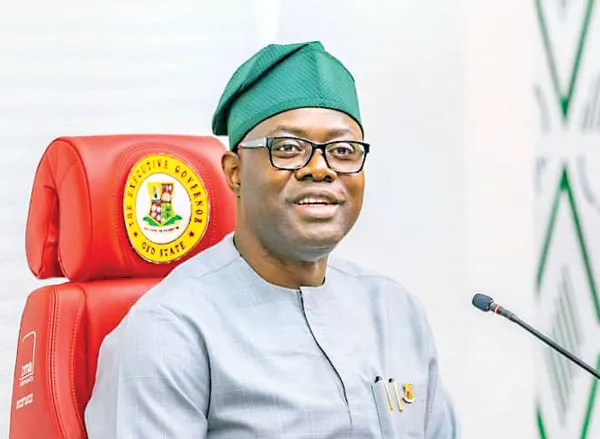
Oyo State Governor, Seyi Makinde, has expressed regret for supporting President Bola Tinubu during the 2023 presidential election, saying the decision did not yield the results he had anticipated.
Makinde made the disclosure on Tuesday while speaking with journalists at the Government House in Ibadan.
The governor was among the G5 Peoples Democratic Party (PDP) governors who opposed their party’s presidential candidate, Atiku Abubakar, in 2023, arguing that it was the turn of a southerner to lead the country after President Muhammadu Buhari, a northerner.
Makinde explained that his support for Tinubu, then the presidential candidate of the All Progressives Congress (APC), was motivated by the belief that Tinubu would act in the national interest if elected.
“I said it earlier, I’m human. I supported the current president, even though I was in another party at the time, because I thought we’d do what is right for the country,” he said.
The governor added that he had hoped the president would reset the country and bring together competent individuals from across Nigeria to tackle the nation’s challenges. “But unfortunately, that is not what we’re seeing. I regret that action. Yes, I do,” he lamented.
Makinde also revealed the source of his political disagreement with FCT Minister, Nyesom Wike. He said the rift began after Wike told President Tinubu during a meeting that he would “hold PDP for the President” ahead of the 2027 election, a statement Makinde said was made without the consent of other party members.
“I was in a meeting with the President, Wike, and a few others, and Wike said to the President that he would hold PDP for him against 2027. So, we got up, and I asked Wike, did we agree to this?” Makinde recounted.
He noted that while Wike has the right to support Tinubu’s re-election bid, other party members also have the responsibility to protect the PDP and oppose any actions that could undermine democratic pluralism.







Former Minister of Justice and Attorney-General of the Federation, Abubakar Malami, has been granted bail by a High Court of the Federal Capital Territory, Abuja Judicial Division.
Naija News reports that Malami was granted bail on Monday by Justice Bello Kawu in connection with the charges brought against him by the Economic and Financial Crimes Commission (EFCC).
The bail was granted on the same terms earlier considered by the EFCC, including the surrender of Malami’s international passport and the execution of bail bonds by two sureties.
The sureties include the Director-General of the Nigerian Legal Aid Council and a serving member of the House of Representatives representing the Augie/Argungu Federal Constituency.
Justice Kawu held that the application for bail was granted on grounds of exceptional hardship, pending the hearing and determination of the substantive motion on notice.
The matter has been adjourned to January 5, 2026, for the hearing of the motion on notice.
Earlier, Malami had rejected allegations by the EFCC that he operates 46 unlawful bank accounts and has ties to financial misconduct, including the repatriation of the late General Sani Abacha loot.
In a statement issued by his media aide, Bello Doka, Malami maintained that the accusations are “ridiculous and baseless,” insisting he has only six bank accounts in his name, which are already known to the anti-graft commission.
Doka emphasized that the former Minister has no connection to the recovered funds of the late dictator or any other allegations of financial impropriety being circulated in the media.


Nigeria’s Super Eagles opened their AFCON 2025 campaign with a 2–1 victory over the Taifa Stars of Tanzania, but it was a night that underlined both promise and problems.
Against a Tanzania side desperate to make history, Nigeria did just enough.
Semi Ajayi and Ademola Lookman found the net, while a moment of overconfidence from Stanley Nwabali allowed Charles M’Mombwa pull Tanzania level, briefly turning what should have been a controlled evening into a test of nerve.
It was a performance heavy on defensive grit and individual moments, but light on fluency and ruthlessness, a reminder that tournament football punishes waste.
PREMIUM TIMES provides a detailed assessment of the Nigeria Super Eagles, following their narrow win over the Tanzania Taifa Stars.
The first eleven
Goalkeeper
Stanley Nwabali – 6/10
The Chippa United captain had a largely quiet first hlf, but his lapse early in the second period proved costly. Nwabali was slow to close down Charles M’Mombwa, allowing Tanzania back into the game.
The error exposed a momentary loss of defensive focus, with Zaidu Sanusi closest but switched off. A reminder that concentration is non-negotiable at AFCON.
Defenders
Calvin Bassey – 7.5/10
Strong, composed and largely dominant. Bassey anchored the backline with authority, forming a solid partnership with Semi Ajayi. The goal conceded was the only blemish on an otherwise assured display.
Semi Ajayi – 8/10
Nigeria’s standout defender on the night. Calm under pressure, commanding in the air and decisive when it mattered most.
His second international goal, Nigeria’s opener, proved vital and set the tone early.
Bright Osayi-Samuel – 6.5/10
Balanced and disciplined. Osayi-Samuel offered defensive solidity while still supporting attacks when needed. Not spectacular, but effective.
Zaidu Sanusi – 6/10
The obvious weak link on the night. While neat in possession at times, his positional awareness was exposed in the build-up to Tanzania’s equaliser. AFCON-level football demands sharper defensive discipline.
Midfielders & Forwards
Wilfred Ndidi – 7/10
A captain’s performance in effort and commitment.
Wearing the armband with authority, Ndidi covered huge ground, disrupted Tanzania’s rhythm and provided balance in midfield. His leadership presence was clear.
Alex Iwobi – 7.5/10
Influential and composed. Iwobi dictated tempo, kept Nigeria ticking and delivered the assist for Ajayi’s opener. One of Nigeria’s most reliable outlets on the night.
Ademola Lookman – 8/10
Decisive when Nigeria needed him most. Just two minutes after Tanzania equalised, Lookman restored Nigeria’s lead with a calm, confident finish. Moments like this define tournaments.
Fans would be hoping that it becomes a regular sight as the team
Samuel Chukwueze – 6/10
Bright early on, but faded after the break. His influence dropped as Tanzania grew into the game, and his substitution felt timely.
Akor Adams – 6.5/10
Unlucky not to score. His first-half header rattled the crossbar, and his movement caused problems. A solid showing without end product.
Victor Osimhen – 6/10
A frustrating evening for Nigeria’s talisman. Osimhen worked hard but missed several presentable chances, particularly in the first half. His goals will come, but this was a night to forget.
The Substitutes
Fisayo Dele-Bashiru – 6/10
Brought energy and legs into midfield after coming on for Chukwueze. Kept things tidy without significantly shifting momentum.
Moses Simon – 6.5/10
Lively and direct. Simon injected pace and creativity from the bench, troubling Tanzania’s defence with his dribbling and movement. Also, stretching the opposition thing.
Paul Onuachu – N/A
Introduced late for Osimhen with little time to influence proceedings.
READ ALSO: AFCON 2025: Three Tanzania stars Nigerias Super Eagles must stop in Fez
Final Word
Nigeria got the result, and in tournament football, that matters. But the Super Eagles will know they must sharpen up quickly. Defensive lapses, missed chances and spells of sluggish control are luxuries AFCON rarely forgives.
Three points secured. Lessons learned. The real test begins now.



Lady shares how her parents refused to attend her wedding because her husband did not pay her bride price, as required by tradition.
In a post shared on TikTok, the lady, identified as @itsreallyorga, revealed that only a few friends, coworkers, and two of her siblings were present on her wedding day.
 Lady.
Lady.
She explained that the absence of her parents was due to their disagreement over the bride price.
According to her, the decision for her husband not to pay the bride price was entirely hers, but her parents strongly opposed it.
She noted that despite explaining her stance, her parents chose to stay away from the ceremony in protest.
The lady said …
“I just wish my parents were there for me. Especially having eight siblings and only three of them showing up on the biggest day of my life. I was emotionally hurt, but I tried my best to stay focused on my wedding. I cried a lot. I’ve learned that people only show up if they truly want to. A lot of people will congratulate you online, but won’t show up in person. Still, I genuinely appreciate every congratulations and all the support even from people I don’t know.”
Watch the video below …
@itsreallyorga
I just wish my parents were there for me. Especially having eight siblings and only three of them showing up on the biggest day of my life. I was emotionally hurt, but I tried my best to stay focused on my wedding. I cried a lot. I’ve learned that people only show up if they truly want to. A lot of people will congratulate you online, but won’t show up in person. Still, I genuinely appreciate every congratulations and all the support even from people I don’t know. #brideprice #africanparents #traditionalwedding #foryoupage
♬ original sound – ✨Olga M🫧


The Action people’s Party, APP, lmo chapter, has condemned the alleged restriction of its leader, Mazi chima Matthew Amadi, not to use the private wing of Sam Mbakwe lnternational Cargo Airport, Owerri, by the agents of the lmo state government.
The opposition party claimed the political pettiness and intimidation against Amadi was under the directive of Governor Hope Uzodinma.
The unfortunate incident, according to the party, took place on Tuesday in the presence of the member representing Ngor Okpala/Aboh Mbaise federal constituency, Hon. Matthew Nwogu who shared the flight with Amadi.
APP viewed the attack as not logistical oversight but a targeted and state-orchestrated action designed to harass and intimidate its leader, Amadi.
This was contained in a statement issued on Tuesday by the state Publicity Secretary, Cajetan Duke and made available to DAILY POST.
Part of the statement reads, “We find this action both laughable and profoundly condescending. Amadi has always been and remains a man of the people; the public wing of the airport better aligns with his personal character and commitment to interacting directly with citizens.
“This petty restriction, therefore, fails as an inconvenience and succeeds only in revealing the administration’s deep-seated insecurity and its reliance on intimidation and brute force as political tools.”
It stated that the incident was not isolated but part of a sustained and worrying pattern of conduct, nothing that It follows closely on the heels of the government’s shameful attempt to disrupt the civic reception organized by the enterprising and resourceful people of Ideato Nation in honour of their brilliant, illustrious, and performing son and representative, Rt. Hon. Ikenga Ugochinyere.
“We stand in solidarity with all Imolites and advocates of democracy in condemning this brute-force approach to dissent. Such actions represent a reckless resort to political rascality and brutality.
“Targeting perceived opponents with state power is the reflex of an administration that has lost the argument with the people and now clings to coercion.
“It is, unequivocally, the grasping at straws of a drowning government.This sustained culture of political banditry and brigandage has become the unfortunate hallmark of the present state government.
“Instead of channelling state resources and energy into this barren pursuit of harassing opponents, we demand an immediate redirection of focus toward the pressing needs of Imo State.
“The people yearn for and deserve good governance, not grudge-holding.
“The energy spent on orchestrating airport restrictions should be committed to providing security, rebuilding infrastructure, reviving healthcare, and creating opportunities for modest, dignified living. This administration’s priorities are dangerously misplaced.
“Though we have observed a sustained pattern of harassment and outright suppression targeted at prominent leaders of opposition political parties in the state, our party remains undaunted and resolute.
“We will not be intimidated by these juvenile displays of power. We call on all people of goodwill to recognize these acts for what they are: signs of a failing government.Our commitment to the people of Imo State and to the principles of democratic engagement remains unwavering.

The cry of persecution emanating from the camp of the former Attorney-General of the Federation and Minister of Justice, AbubakarMalami, over his arrest and detention by the Economic and Financial Crimes Commission is a far cry from what he unleashed on people while in office, Wale Igbintade writes.
The unfolding confrontation between former Attorney-General of the Federation and Minister of Justice, AbubakarMalami (SAN) and the Economic and Financial Crimes Commission (EFCC) is far more than a clash of personalities. It has evolved into a defining moment for Nigeria’s justice system, testing not only the independence of its anti-corruption institutions but also the sincerity of elite commitment to the rule of law.
Malami, who is facing an investigation for 18 alleged offences, including money laundering, abuse of office, and terrorism financing, and his detention, is claiming that he is being persecuted by the anti-graft agency for political reasons.
At the heart of the controversy lies a fundamental question: can a former Chief Law Officer of the Federation legitimately resist investigation through public outrage instead of judicial process?
Malami’s demand that EFCC Chairman, Ola Olukoyede, recuse himself from an investigation involving him on allegations of bias, personal vendetta, and political persecution—marks a sharp and troubling departure from the legal principles he once vigorously defended while in office.
Rather than embracing the courts as the constitutionally recognised forum for resolving disputes, Malami has chosen to wage his defence in the court of public opinion, relying on press statements and political narratives to preempt institutional scrutiny.
This approach has attracted widespread criticism, particularly from voices who view it as inconsistent with his own record as Attorney-General. One of the interventions came from the Chairman of the Forum of Former Members of the Enugu State House of Assembly (FOF-MEHA), Josef Onoh.
In a statement issued from Paris, Onoh described Malami’s call for Olukoyede’s recusal as “pathetic, unfortunate and desperate,” arguing that it amounted to an attempt to blackmail and intimidate the anti-graft agency.
Onoh dismissed Malami’s reliance on Chapter Nine of the Justice Ayo Salami Judicial Commission of Inquiry Report as legally unsustainable, insisting that nothing in the report bars the EFCC from investigating former public officials, including a former Attorney-General.
According to him, the invocation of the report was a deliberate misrepresentation designed to confer on Malami a false sense of immunity from scrutiny.
More significantly, Onoh underscored what he described as the irony of Malami’s sudden discovery of persecution. He recalled that as Attorney-General, Malami presided over and defended several prosecutions that were widely criticised as politically motivated.
Among the most prominent was the prolonged detention of former National Security Adviser, Col. Sambo Dasuki (rtd), despite multiple court orders granting him bail. Onoh also referenced the prosecution of former Peoples Democratic Party (PDP) spokesman, OlisaMetuh, as well as the proscription of the Indigenous People of Biafra (IPOB) and the handling of NnamdiKanu’s case, all of which, he argued, illustrated an expansive and often coercive use of prosecutorial power under Malami’s watch.
These recollections are not mere historical footnotes. They form part of a broader pattern that weakens Malami’s current posture. As Attorney-General, he repeatedly insisted that investigation did not amount to guilt and that only courts were empowered to determine culpability.
Today, confronted with investigative scrutiny, he appears unwilling to submit to the very process he once urged upon others. The contradiction is difficult to ignore and has done little to strengthen public sympathy for his claims.
Onoh further accused Malami of orchestrating the 2020 removal of former EFCC Acting Chairman, Ibrahim Magu, describing it as a vindictive power struggle rather than a principled anti-corruption intervention. He noted that Malami levelled more than 22 allegations against Magu and supervised the Justice Ayo Salami Panel that investigated them. Yet, despite the gravity of those allegations, Magu was never prosecuted or convicted of any offence. His career, however, was effectively destroyed. To Onoh, this episode exemplifies a troubling pattern in which allegations are weaponised for control rather than pursued to logical legal conclusion.
Beyond personalities, the legal point remains central. Onoh argued that Olukoyede’s role as Secretary to the Salami Panel does not amount to a conflict of interest requiring recusal. He stressed that recusal is a doctrine applicable to judicial or quasi-judicial proceedings, where impartial adjudication is required, not to routine law-enforcement investigations. To conflate the two, he warned, is to distort settled legal principles and undermine the operational independence of investigative agencies.
This position reflects established jurisprudence. Allegations of bias or selective prosecution are not resolved through media exchanges. They are addressed through motions, affidavits, cross-examination, and judicial review. Courts exist precisely to test claims of institutional abuse and protect individual rights. By sidestepping these mechanisms, Malami risks creating the impression that he seeks exemption from accountability rather than vindication through due process.
Civil society organisations have echoed similar concerns. The Centre for Anti-Corruption and Accountability (CACA) described Malami’s posture as ironic and unbecoming of a former Attorney-General and Senior Advocate of Nigeria. The criticism resonates because holders of high prosecutorial offices carry an enduring obligation to respect the institutions they once commanded. That obligation does not diminish after leaving the office; if anything, it increases.
The broader operational record of the EFCC further complicates claims of political persecution. The commission has investigated and prosecuted individuals across party lines, including politically influential figures associated with the ruling party. The arraignment of Senator Chris Ngige and the ongoing investigation of former Delta State Governor, IfeanyiOkowa, despite his political realignment—undermine assertions that the EFCC operates as a partisan tool. Political affiliation, in law, has never constituted a shield against investigation.
Perhaps the most uncomfortable backdrop to Malami’s current protest lies in the memory of judicial raids carried out during his tenure as Attorney-General. The night-time invasions of the homes of serving judges—widely condemned as assaults on judicial independence, remain among the darkest chapters in Nigeria’s recent legal history. The judges were publicly humiliated, and later exonerated, but the judiciary was left deeply shaken.
Not done, the former AGF also instigated the removal from office, of the then Chief Justice of Nigeria (CJN), Justice Walter Onnoghen, through the Code of Conduct Tribunal over hopeless allegations. Those legacies continue to inform public perception.
Against this background, appeals to institutional victimhood ring hollow. Accountability, as Onoh observed, is reciprocal. A former Attorney-General who presided over such excesses cannot plausibly demand exceptional sensitivity when the investigative lens turns inward.
On its part, the EFCC has maintained that it will not be intimidated or blackmailed into abandoning lawful investigations. Onoh reinforced this stance, warning that attempts to undermine the commission would fail under the Tinubu administration. He urged Malami to submit himself to investigation if confident of his innocence and challenged him to publicly declare his assets prior to assuming office—an act that would lend credibility to his claims.
Also reacting to Malami’s claim that the EFCC was acting political script in its dealings with him, a former Chairman of the National Human Rights Commission (NHRC), Prof. ChidiOdinkalu, criticised the former AGF, describing him as a “grubby, vexatiously political Attorney-General” during his tenure.
He added that if the former AGF now believes the EFCC is politicised, he should remember that “they’re following what he taught them.”
“Someone should tell AbubakarMalami to please sit this out. If he’s now complaining that EFCC is political, they should tell him that they’re following what he taught them. They have no need to deny it!”
Nigeria’s democracy cannot afford an accountability framework that collapses under pressure from powerful former officials. Where the EFCC errs, the courts exist to correct it. Where investigators overreach, judicial oversight provides remedy. What remains impermissible is the attempt to delegitimise lawful investigation simply because the subject once occupied high office.
At its core, this episode is about leadership by example. Arraignment is not humiliation; it is the lawful gateway to exoneration. A person confident in his innocence does not fear the courtroom—he embraces it. Delay, diversion, and media advocacy only deepen suspicion and erode public trust.
Ultimately, the Malami–EFCC standoff transcends the individuals involved. It exposes a persistent weakness in Nigeria’s political culture: resistance to accountability once power has been relinquished. In a constitutional democracy, former authority confers no permanent privilege.
The courts remain open. The law is clear. What remains is the willingness to submit to both. In Nigeria’s justice system, there is no higher vindication, and no credible alternative.


The Peoples Democratic Party (PDP) has insisted that it is not divided into factions, dismissing claims of a leadership split within the party.
The party’s National Publicity Secretary, Ini Ememobong, made this clarification while responding to the Independent National Electoral Commission’s (INEC) decision to reject the Kabiru Turaki-led National Working Committee (NWC).
INEC had announced that it would not recognise the national officers elected at the PDP’s National Convention held on November 15 and 16, 2025, in Ibadan, Oyo State.
In a letter dated December 22, 2025, and signed by its Secretary, Dr Rose Oriaran-Anthony, the commission explained that it was unable to upload the list of the elected officers on its website due to existing court judgements.
INEC stated that its position was guided by subsisting court rulings and pending litigation surrounding the party’s leadership crisis, stressing that it would be inappropriate to recognise any factional officers while the matter remains before the courts.
Reacting to the development, Ememobong disclosed that the PDP has appealed the judgement relied upon by INEC in rejecting the Turaki-led NWC.
In a statement he signed, he said, “The leadership of the Peoples Democratic Party reiterates that, in law and in fact, there is no faction within the PDP.
“This clarification has become necessary following INEC’s letter citing Federal High Court judgements as the reason for its inability to recognise and upload the details of our legitimately elected leadership from the Ibadan convention.
“The judgements in question have been appealed, and applications for a stay of execution have also been filed. The Court of Appeal is expected to hear and determine the matters soon.
“The fact remains that there is no faction in the PDP, as all legitimate organs and the administrative structure of the party are under the leadership of Kabiru Tanimu Turaki, SAN.”
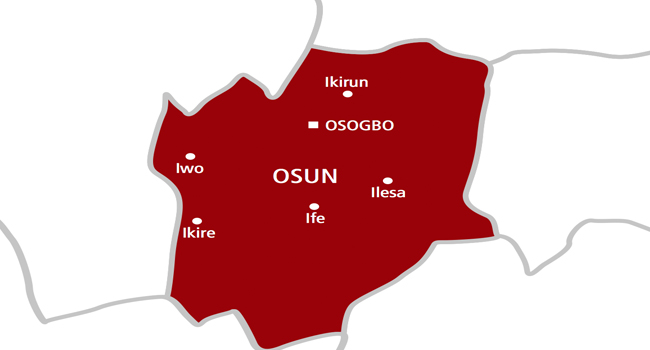
The All Progressives Congress (APC) wing of the Association of Local Governments of Nigeria (ALGON) in Osun State has declared that it is now fully in charge of all local government councils in the state, including their finances.
According to the group, there are no longer legal barriers stopping APC-backed council chairmen from operating as heads of government at the grassroots level.
It insisted that control of council allocations and administration has shifted in its favour.
The Osun APC-led ALGON Chairman, Samuel Abiodun Idowu, made this known while speaking with members of the Nigeria Union of Journalists (NUJ), Osun Correspondents’ Chapel, in Osogbo.
He said the association has been reinstated and is now functioning fully across the state.
Idowu explained that residents at the grassroots should expect visible changes beginning next year. He said development programmes aimed at improving living conditions in towns and villages would soon be unveiled.
The ALGON chairman, who also serves as the reinstated Chairman of Ifedayo Local Government Area, linked the new development to a recent Supreme Court judgment.
He stated that the ruling resolved the lingering dispute over control of local councils in Osun State.
According to him, the judgment favoured their faction and confirmed their authority over council operations.
He disclosed that his group had already been accessing council accounts to pay salaries and has now taken full charge of statutory allocations.
Idowu assured that the councils would enjoy greater stability going forward. He added that full administrative and developmental activities across the local governments would begin in earnest in early 2026.
He also praised journalists in the state for what he described as “fair reportage” of the prolonged political disputes affecting local government administration in Osun.
The ALGON chairman commended President Bola Tinubu for championing local government autonomy. He said the policy, if properly implemented and monitored, would strengthen governance and accelerate development at the community level.
“The Supreme Court judgment has come and gone and it is six against one. Anybody bringing anything against that is just a novice. We are so much in charge of local councils in Osun and very soon, we will be rolling out programmes in the state. The grassroots is the most important stage of society and joking with that level is going to be a lot of wastage for the people.
“President Tinubu has done well by bringing this autonomy to local councils and I am sure in a few years to come, our town and villages would have improved if this autonomy can be well monitored and implemented.”
Idowu further claimed that he has received official recognition from the national leadership of ALGON. He said he holds a letter from the association’s national office confirming him as the authentic ALGON chairman in Osun State.
He dismissed claims by other factions, declaring that “any other chairman is a counterfeit.”
The council boss also revealed that his group has approached the Federal High Court in Osogbo. He said the suit seeks a clear judicial interpretation of when the tenure of local government chairmen elected under the administration of former Governor Gboyega Oyetola would officially expire.
While awaiting the court’s decision, Idowu stated that his camp believes their tenure commenced on February 10, 2025.
NIGERIA NEWS
The Art Resale Market Report 2025: Resale value, market growth, and investment potential of Nigerian artists


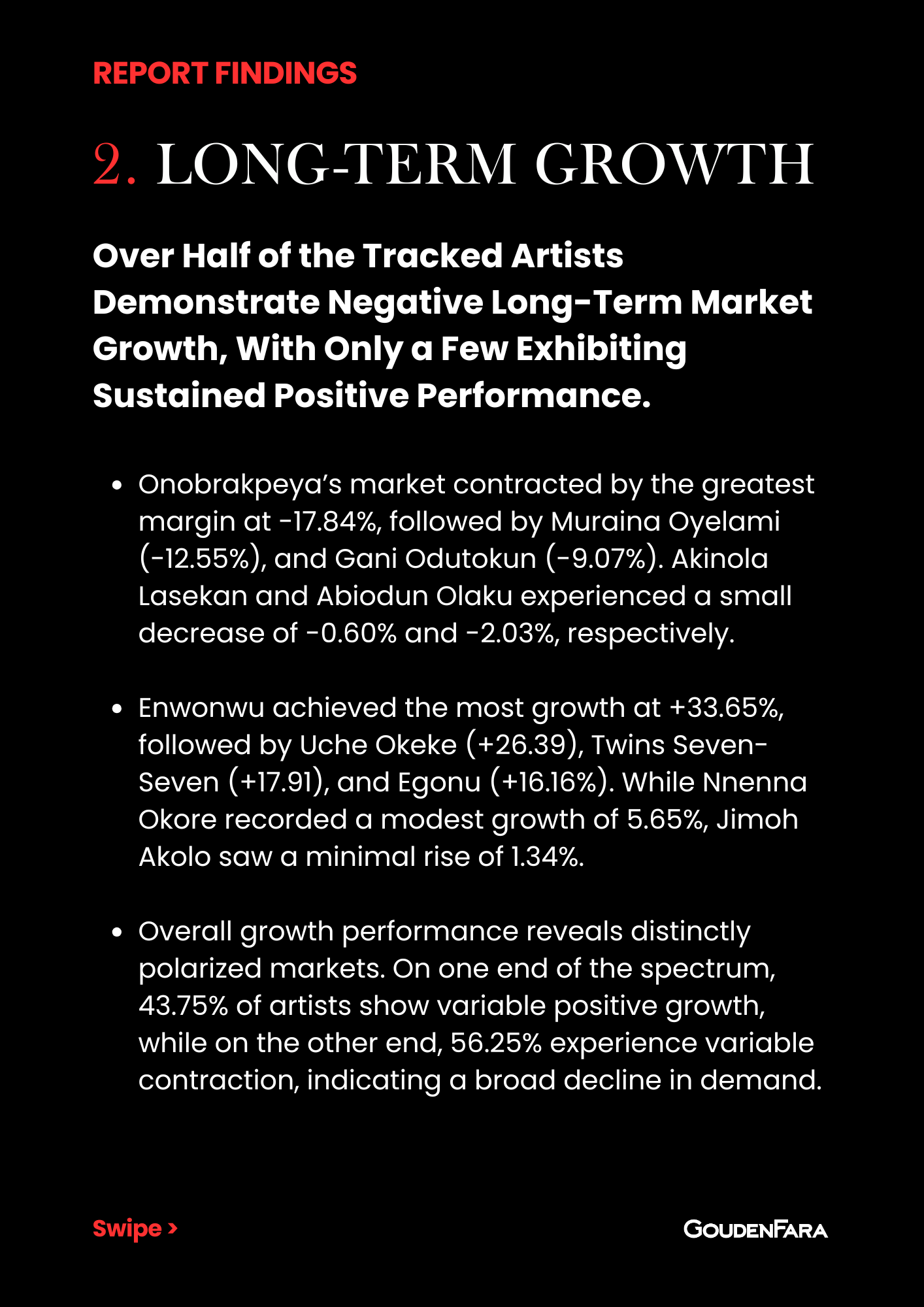
- The Art Resale Market Report 2025 analyzes the secondary market performance of sixteen Nigerian artists, revealing a highly concentrated market where one artist accounts for 83% of cumulative revenue and 67.27% of total resale value
- Despite uneven liquidity and performance, some artists delivered exceptional returns, outperforming equity benchmarks and reinforcing art as a viable alternative investment for portfolio diversification.
- The report highlights the decline of Nigeria’s domestic auction ecosystem, with only Sogal remaining active, and calls for the establishment of three to five independent, well-managed auction houses to revitalize the sector.
Vetiva and GoudenFara today release the inaugural edition of The Art Resale Market Report 2025.
The report tracks the individual resale markets of sixteen Nigerian artists, from modernists such as Akinola Lasekan and Ben Enwonwu to contemporary figures like Nnenna Okore and Kainebi Osahenye.
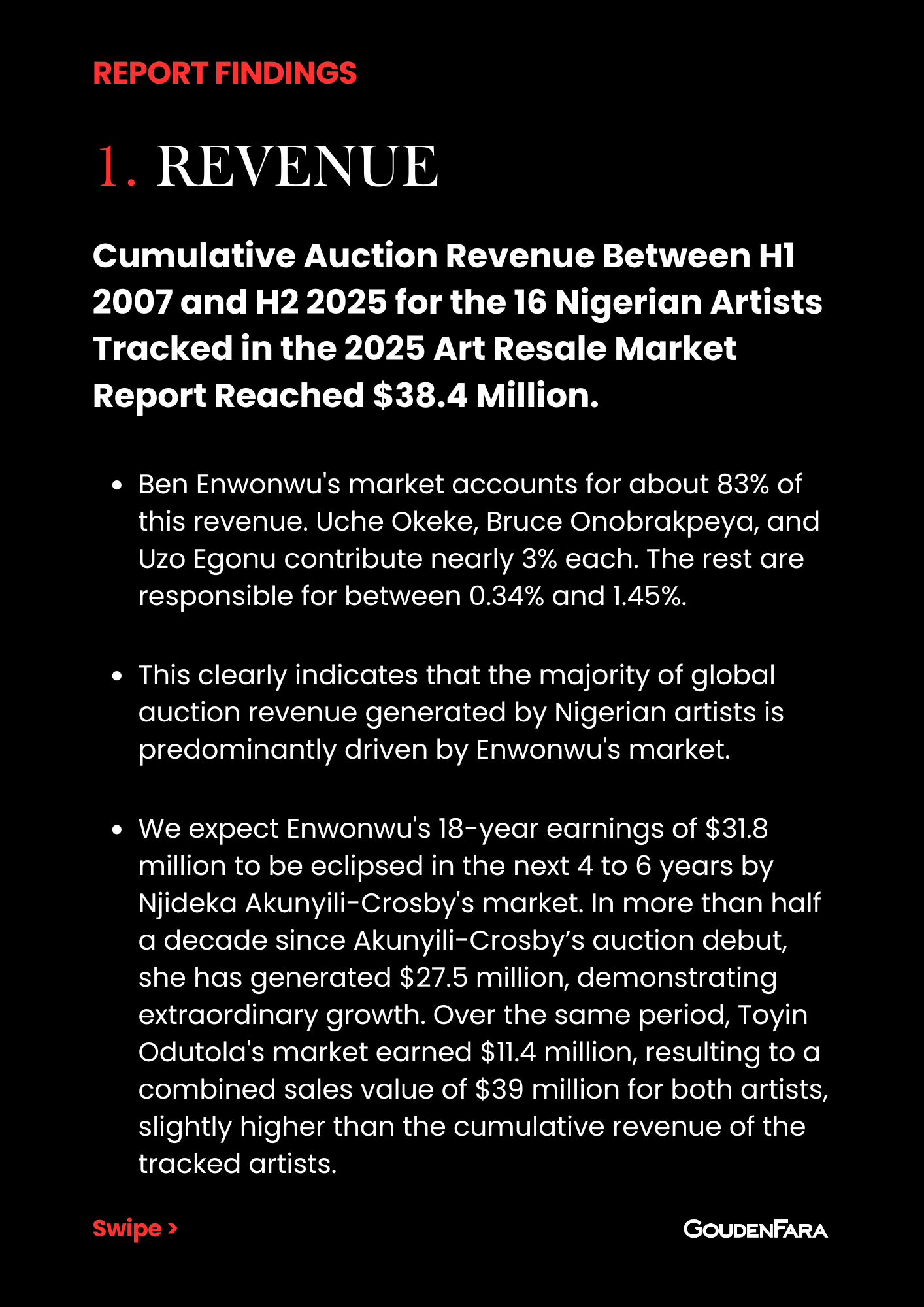
The report reveals an unbalanced market, notably dominated by one artist, who accounts for about 83% of the cumulative revenue across the reviewed period, as well as 67.27% of the total resale value.
Despite the sharp contrast in resale performance and liquidity depth, a few artists delivered exceptional returns across holding periods, with some even significantly outperforming the broader equity benchmark and solidifying art’s position as a viable alternative asset for a diversified investment portfolio.
Oyelade Eigbe, Managing Director, Vetiva Fund Managers Limited, noted that: “The Art Resale Market Report 2025 arrived at a critical moment for both seasoned collectors and new entrants exploring art as an alternative investment class. For the first time, investors have a structured, data-driven view of how Nigerian artists perform in the secondary market, offering clarity on value appreciation, liquidity depth, and return potential. By tracking various artists across generations, this report provides a transparent framework that helps investors distinguish between sentiment-driven collecting and informed, evidence-based art investment.”
“Beyond its analytical depth, this report is timely. Nigeria’s domestic auction ecosystem has thinned significantly in recent years, even as international markets continue to attract strong demand and higher sales value for Nigerian art. This publication fills a long-standing gap by equipping art investors with the insights necessary to make confident, strategic decisions in a rapidly evolving—and increasingly global—resale market.”
Ekiko Ita Inyang, CEO/Head of Global Market, GoudenFara, stated: “Nigeria’s secondary art market has experienced a slowdown in recent periods, a trend reflected in the deceleration of domestic auction sales captured in this report, as momentum completely shift towards London.TKMG held its last auction in July 2018, while Arthouse has scaled down operations following its July 2022 sale.
Sogal, whose operation is intertwined with Signature Gallery, appears to be the sole active auctioneer in Nigeria, underscoring how underserved the sector is, given the incredible number of talented, distinguished artists available in the market, with a diverse demography of new collectors.”
“However, several artists tracked in the report — including Simon Okeke, Gani Odutokun, and Jimoh Akolo, who were consistently offered across both pioneer houses (TKMG and Arthouse), have since experienced marginal auction offerings due to the ‘winding down’ of both houses. We believe three to five independent, broker-focused, pure-play auction houses with good management and solid expertise are needed to revamp Nigeria’s domestic auction sector.”
About Vetiva Fund Managers Limited
Vetiva Fund Managers Limited is a subsidiary of Vetiva Capital Management Limited and is registered and licensed by the Securities & Exchange Commission to carry out business as Fund/Portfolio Manager.
VFML also manages 5 Exchange Traded Funds and 2 Mutual Funds namely, the Vetiva Griffin 30 ETF, Vetiva Banking ETF, Vetiva Consumer Goods ETF, Vetiva Industrial ETF, Vetiva S&P Nigerian Sovereign Bond ETF, Vetiva Money Market Fund and Vetiva USD Fixed Income Fund, and provides multi-asset class, holistic wealth management services to individuals and institutions.
GoudenFara
GoudenFara provides art-finance advice and solutions to high-net-worth individuals, private and investment banks, asset and wealth managers, sovereign entities, and multi-family offices.

Rwandan President Paul Kagame has stirred fresh debate across Africa after arguing that some military coups can be justified if they confront corruption and governance failures, rather than serve personal ambition.
Speaking during a recent press interaction, Kagame said coups often reflect deeper problems within civilian governments. Clips from the exchange have since gone viral on social media.
‘Not All Coups Are the Same’
“Where coups are taking place, it means there’s something wrong,” Kagame said. He drew a distinction between opportunistic power seizures and interventions driven by public anger against corrupt or abusive leadership.
According to him, some coups emerge from “genuine public outrage,” while others are simply attempts to hijack power.
Context of Rising Military Takeovers
Kagame’s remarks come amid a renewed wave of military interventions on the continent. In 2025 alone, Guinea-Bissau and Madagascar joined a growing list of countries that have experienced coups.
These developments follow earlier takeovers in Mali, Burkina Faso, Niger and Gabon, highlighting persistent political instability in parts of Africa.
Governance Failures Under Scrutiny
The Rwandan leader said the recent coups have, in some ways, validated long-standing concerns about corruption, election manipulation and repression in civilian administrations.
He suggested that such failures, when left unaddressed, create conditions that make military intervention more likely.
Kagame’s Record and Critics’ Concerns
Kagame has ruled Rwanda since 2000, after his rebel movement ended the 1994 genocide.
Under his leadership, Rwanda has gained recognition for economic growth, infrastructure development and low corruption levels.
However, critics accuse him of authoritarianism, limiting political freedoms and suppressing dissent, as well as involvement in regional conflicts.
Divided Public Reaction
The viral video, widely shared on X and other platforms, has generated sharp reactions.
Supporters praise Kagame for what they see as blunt honesty, arguing that coups may be defensible if they improve governance.
Opponents counter that military takeovers undermine democracy and constitutional order, regardless of motive or outcome.
Clash With Continental Norms
The African Union maintains a firm stance against unconstitutional changes of government, often suspending countries following coups.
Kagame’s comments challenge this position, calling for stronger accountability mechanisms to check elected leaders who fail to govern responsibly.
A Wider African Debate
As Africa faces youth-led protests, economic pressure and political unrest—from Gen Z movements in East Africa to ongoing instability in the Sahel—the debate Kagame raised remains unresolved.
Analysts say the issue reflects a deeper tension between stability and accountability, and whether forceful rule or abrupt regime change can deliver lasting solutions.
Kagame has urged African leaders to confront corruption openly and engage citizens honestly, warning that failure to do so may invite further upheaval.
NIGERIA NEWS
Group Warns against Plot to Arrest Atiku, Amaechi,El-Rufai, Aregbesola, Others – THISDAYLIVE


Adedayo Akinwale in Abuja
A civil society group has raised the alarm over an alleged coordinated plan to arrest and detain leading opposition figures, including former Vice President Atiku Abubakar, the immediate past Governor of Kaduna State, Nasir El-Rufai, former Minister of Interior, Rauf Aregbesola, former Minister of Transportation, Rotimi Amaechi, among others.
The group alleged that the move forms part of a broader strategy to weaken opposition politics and entrench a de facto one-party state in Nigeria.
In a statement released yesterday by its Coordinator, Adekunle Adebayo, the group alleged that Atiku Abubakar, Amaechi and El-Rufai have been marked for arrest.
He noted: “The arrests are linked to a covert multi-agency security directive allegedly coordinated from the Office of the National Security Adviser (ONSA) and executed through a task force involving anti-corruption, intelligence, and financial-crime agencies.”
The group alleged that the strategy includes selective arrests and prolonged detentions without charge, coercion of politically exposed persons to defect to the ruling party, disruption of lawful opposition meetings, engineered factionalisation within opposition parties, and the use of prolonged litigation to exhaust opposition resources.
The a group on the platform of “Bí a bá pa ìtàn mọ́, ìtàn á pa wa.” (When truth is suppressed, it eventually destroys those who suppress it), further claimed that Isa Pantami, Kashim Imam, and other prominent figures are also being targeted, following earlier arrests and detentions of Aminu Tambuwal, Abubakar Malami, and Chris Ngige.
The group described the reported plan to arrest el-Rufai as especially revealing, noting that his administration has already been subjected to extensive investigation for over two years without any established evidence of personal wrongdoing, despite sustained scrutiny.
The group warned that “these actions, if carried out, would constitute grave violations of the 1999 Constitution as amended, including breaches of the rights to personal liberty, freedom of association and expression, equality before the law, and judicial independence.
It stressed that selective application of law enforcement based on political affiliation is incompatible with constitutional democracy.

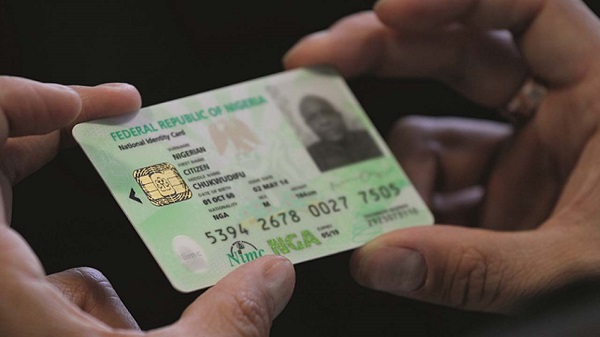
The Federal Inland Revenue Service (FIRS) has clarified that the National Identification Number (NIN) issued by the National Identity Management Commission (NIMC) has automatically become the Tax Identification Number (Tax ID) for individual Nigerians under the new tax framework.
The clarification was made in a public sensitisation video on the new tax laws, which was circulated online.
In the video, the FIRS explained that the reform is aimed at simplifying tax administration and addressing public concerns surrounding the requirement of Tax ID for certain financial and economic transactions.
According to the Service, registered businesses will also not be required to obtain a separate Tax ID, as their Corporate Affairs Commission (CAC) registration number now automatically serves that purpose under the new tax system.
“The Tax ID unifies all TINs previously issued by FIRS and state internal revenue services into a single identifier,” the Service said. “For individuals, your NIN automatically serves as your Tax ID, while for registered companies, your CAC RC number is used. You do not need a physical card, the Tax ID is a unique number linked directly into your identity.”
This declaration comes amid widespread public concern over provisions in the tax laws suggesting that Tax ID would be mandatory for bank account ownership.
The FIRS explained that the requirement is rooted in the Nigeria Tax Administration Act (NTAA), which is scheduled to come into force from January 1, 2026.
The agency noted, however, that the use of Tax ID for transactions is not a new development. It stated that the requirement has existed since the Finance Act of 2019 and has only been strengthened under the NTAA to improve efficiency and compliance.
The FIRS noted that the new Tax ID system is designed to simplify identification, eliminate duplication, close loopholes that enable tax evasion and promote fairness by ensuring that individuals and businesses earning taxable income contribute appropriately.
With the new arrangement, all Nigerians who have been issued a NIN are now deemed to automatically possess a Tax ID and can be brought into the tax net, provided they earn income that is subject to tax.
This development effectively addresses fears that millions of Nigerians would be required to undergo another round of registration to obtain a Tax ID from 2026 in order to access banking services.
Data released by the National Identity Management Commission show that as of October 2025, about 123.9 million Nigerians have been issued the National Identification Number, a development that significantly expands the country’s capacity to streamline tax administration and improve compliance under the evolving tax system.

By Dayo Johnson
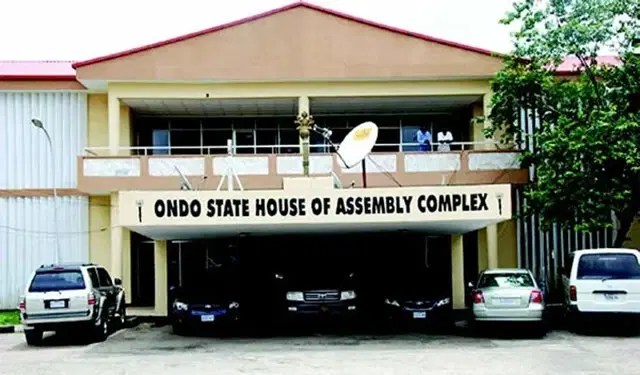
AKURE — THE Ondo State House of Assembly, yesterday, passed into law the N524.41 billion 2026 budget Appropriation Bill.
The approved budget reflects an increase of N31.61 billion over the original proposal submitted by Governor Lucky Aiyedatiwa, who had earlier presented a total sum of N492,795,667,939.00 to the House on November 17
While presenting the committee’s report at plenary presided over by the Speaker, Mr Chief Olamide Oladiji, the Chairman of the House Committee on Finance and Appropriation, Mr Oluwole Ogunmolasuyi, said the committee observed that the fiscal documents adequately reflected current economic realities.
Ogunmolasuyi said that the committee carefully examined all provisions of the bill and compared them with the 2025 budget performance.
He said: “The committee also noted that capital project execution in 2025 was adversely affected by limited access to funds and urged MDAs to strengthen their revenue drive mechanisms to boost Internally Generated Revenue, IGR.”
The post Ondo Assembly passes N524.41bn 2026 budget appeared first on Vanguard News.


A former International Labour Organisation (ILO) social protection expert, Segun Tekun, has warned that Nigeria’s plan to extend social protection to over 60 million informal sector workers may fail unless deep structural flaws are addressed.
Tekun, in a statement yesterday, said that although Nigeria has progressive social protection laws, they largely fail the informal economy, where more than 80 per cent of Nigerians earn a living.
“Nigeria’s social protection system was built for offices and factories. But Nigeria’s economy runs in markets, on farms, in motor parks and along informal trade routes,” Tekun noted.
He said the gaps cut across all regions of the country.
In the Southwest, market women in Ibadan and Abeokuta still pay out-of-pocket for healthcare, despite the National Health Insurance Authority Act making insurance compulsory.
According to him, in Aba and Onitsha, traders running thriving commercial centres remain excluded from pensions and injury insurance.
Across the North-West and Northeast, farmers and herders face drought, insecurity and health shocks with little to no formal protection.
Tekun said artisanal miners and rural farmers in the North Central suffer frequent work-related injuries without access to compensation schemes.
Along the South-South coast, he added, fisherfolk lose livelihoods to flooding and oil pollution but lack structured insurance or income protection.
On health insurance, Tekun said universal coverage exists “more in law than in real life” three years after the NHIA Act was signed.
He noted that state health insurance schemes in Lagos, Anambra and Kano still focus largely on civil servants and formal private-sector workers.
“In rural Jigawa or Benue, farmers sell produce to pay hospital bills. In riverine Bayelsa, fisherfolk rely on traditional care or debt,” he said.
Tekun blamed fixed premiums, weak outreach and poor service quality for low enrolment among informal workers.
…
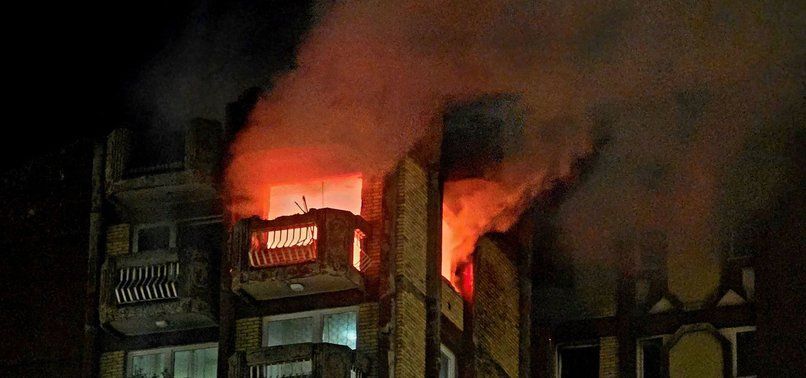
A late-night fire outbreak on Tuesday razed a section of the Jos Main Market in Plateau State, destroying scores of shops and goods worth millions of naira.
The inferno reportedly broke out at about 8:00 p.m., causing panic among traders and residents around the market area.
Confirming the incident, the General Manager of the Jos Main Market Authority, Hon. Mangna Yusuf Wamyil, said operatives of the Plateau State Fire Service responded promptly and successfully contained the blaze.
According to him, the swift intervention of the fire service prevented the fire from spreading to other sections of the market.
“Men of the fire service are on ground and they have put out the fire. As at the time of this report, we cannot ascertain the exact cause of the fire or the extent of the damage,” Wamyil said.
He added that a comprehensive assessment would be carried out after preliminary investigations to determine the number of shops affected and the value of goods lost.
It would be recalled that the market suffered a similar fire outbreak a few months ago, during which several traders lost property estimated at millions of naira.
The General Manager urged affected traders to remain calm while investigations continue, assuring that measures would be put in place to prevent future occurrences.

Lagos State Police Command has unveiled an extensive security operation for the Christmas and New Year festivities, deploying a large number of officers across the state to prevent criminal activity, ensure smooth traffic movement and reduce the risk of road accidents during the holiday season.
The initiative follows a directive from the Inspector-General of Police, IGP Olukayode Adeolu Egbetokun, and is being implemented under the leadership of the Commissioner of Police, Lagos State Command, CP Olohundare Jimoh.
The strategy is aimed at safeguarding lives and property before, during and after the celebrations.
Under the plan, personnel from conventional police units, tactical squads and intelligence formations have been deployed statewide to monitor and neutralise threats capable of undermining public peace.
Marine police officers have also been assigned to strengthen patrols along Lagos waterways to prevent criminal activities through aquatic routes.
Special security teams have been strategically stationed across key locations, while Area Commanders, Divisional Police Officers and heads of tactical units have been directed to intensify patrols, maintain high police visibility and ensure continuous surveillance throughout the state.
Officers on duty have been instructed to conduct themselves with professionalism, courtesy and firmness.
To address the expected surge in vehicular movement during the festive period, the command disclosed that more than 5,000 police personnel have been assigned specifically to traffic management duties on major highways, inner roads and congestion-prone areas across Lagos.
In response to the increasing rate of fatal road accidents during the yuletide, CP Jimoh recently convened a strategic meeting with the Executive Secretary of the Lagos State Security Trust Fund, Dr Ayodele Ogunsan, alongside other safety and security stakeholders.
Participants at the meeting included representatives of the Federal Road Safety Corps, Lagos State Traffic Management Authority, Lagos State Fire Service and the Federal Controller of Works.
Discussions centred on long-term strategies to reduce accidents and enhance public safety.
The police also confirmed the deployment of joint task teams made up of conventional officers, tactical units, smart operatives and intelligence personnel to clamp down on traffic robbers, hoodlums and other criminal elements who may attempt to exploit the festive season.
According to the command, heightened security attention is being given to places of worship, recreational facilities, nightclubs, markets, motor parks and other public spaces expected to attract large crowds during the celebrations.
CP Jimoh reassured residents and visitors of the police command’s commitment to maintaining peace and security throughout the festive period and beyond.
He urged members of the public to remain vigilant, obey the law and promptly report suspicious activities to the nearest police station or through the command’s emergency lines: 07061019374, 08065154338, 08063299264 and 08039344870.
The Lagos State Police Command reaffirmed its determination to ensure a safe, orderly and crime-free Christmas and New Year across the state.