
LIFESTYLE
The science-backed hacks for avoiding weight gain this Christmas


Stay ahead of the curve with our weekly guide to the latest trends, fashion, relationships and more
Stay ahead of the curve with our weekly guide to the latest trends, fashion, relationships and more
Stay ahead of the curve with our weekly guide to the latest trends, fashion, relationships and more

This article was originally published in 2023 and has been republished by The Independent in the lead-up to Christmas.
As Christmas approaches, so does the challenge of healthy eating and maintaining weight-related goals. The season’s many social gatherings can easily tempt us to indulge in calorie-rich food and celebratory drinks. It’s why we typically gain weight over Christmas and then struggle to take it off for the remainder of the year.
Christmas also exacerbates cost-of-living pressures, prompting some to rethink their food choices. Throughout 2023, 71 per cent of Australians – or 14.2 million people – adapted their eating behaviour in response to rising costs.
Fortunately, there are some simple, science-backed hacks for the festive season to help you celebrate with the food traditions you love without impacting your healthy eating habits, weight, or hip pocket.
If your festive season is filled with end-of-year parties likely to tempt you to fill up on finger foods and meals high in fat, salt, and sugar and low in nutritional value, have a healthy pre-event snack before you head out.
Research shows carefully selected snack foods can impact satiety (feelings of fullness after eating), potentially reducing the calories you eat later. High-protein, high-fibre snack foods have the strongest effect: because they take longer to digest, our hunger is satisfied for longer.
 Snacking before heading to a Christmas event will help you to feel fuller for longer (Getty Images/iStockphoto)
So enjoy a handful of nuts, a tub of yoghurt, or a serving of hummus with veggie sticks before you head out to help keep your healthy eating plan on track.
Despite the marketing promises, low-carb alcoholic drinks aren’t better for our health or waistlines.
Many low-carb options have a similar amount of carbohydrates as regular options but lull us into thinking they’re better, so we drink more. A survey found 15 per cent of low-carb beer drinkers drank more beer than they usually would because they believed it was healthier for them.
A typical lager or ale will contain less than 1.5 grams of carbohydrate per 100 ml while the “lower-carb” variety can range anywhere from 0.5 grams to 2.0 grams. The calories in drinks come from the alcohol itself, not the carbohydrate content.
Next time you go to order, think about the quantity of alcohol you’re drinking rather than the carbs. Make sure you sip lots of water in between drinks to stay hydrated, too.
About the author
Nick Fuller is Charles Perkins Centre Research Program Leader at the University of Sydney.
This article is republished from The Conversation under a Creative Commons licence. Read the original article.
There’s a perception that healthy eating is more expensive. But studies show this is a misconception. A recent analysis in Victoria, for example, found following the Australian Dietary Guidelines cost the average family A$156 less a fortnight than the cost of the average diet, which incorporates packaged processed foods and alcohol.
So when you’re planning your Christmas Day meal, give the pre-prepared, processed food a miss and swap in healthier ingredients:
- swap the heavy, salted ham for leaner and lighter meats such as fresh seafood. Some seafood, such as prawns, is also tipped to be cheaper this year thanks to favourable weather conditions boosting local supplies
- for side dishes, opt for fresh salads incorporating seasonal ingredients such as mango, watermelon, peach, cucumber and tomatoes. This will save you money and ensure you’re eating foods when they’re freshest and most flavoursome
- if you’re roasting veggies, use healthier cooking oils like olive as opposed to vegetable oil, and use flavourful herbs instead of salt
- if there’s an out-of-season vegetable you want to include, look for frozen and canned substitutes. They’re cheaper, and just as nutritious and tasty because the produce is usually frozen or canned at its best. Watch the sodium content of canned foods, though, and give them a quick rinse to remove any salty water
- give store-bought sauces and dressings a miss, making your own from scratch using fresh ingredients.
Before heading to the supermarket to shop for your Christmas Day meal, create a detailed meal plan and shopping list, and don’t forget to check your pantry and fridge for things you already have.
Eating beforehand and shopping with a plan in hand means you’ll only buy what you need and avoid impulse purchasing.
When you’re shopping, price check everything. Comparing the cost per 100 grams is the most effective way to save money and get the best value. Check prices on products sold in different ways and places, too, such as nuts you scoop yourself versus prepacked options.
We’ve all been tempted to skip or have a small breakfast on Christmas morning to “save” the calories for later. But this plan will fail when you sit down at lunch hungry and find yourself eating far more calories than you’d “saved” for.
Research shows a low-calorie or small breakfast leads to increased feelings of hunger, specifically appetite for sweets, across the course of the day.
What you eat for breakfast on Christmas morning is just as important too – choosing the right foods will help you manage your appetite and avoid the temptation to overindulge later in the day.
Studies show a breakfast containing protein-rich foods, such as eggs, will leave us feeling fuller for longer.
So before you head out to the Christmas lunch, have a large, nutritionally balanced breakfast, such as eggs on wholegrain toast with avocado.









The Slum2School Green Academy ,Saga ,Epe ,Lagos.
On the calm waters of Saga, a riverine community in Epe, Lagos State, a school now stands where many believed one could never exist. Built from bamboo, powered by the sun, harvesting rainwater, and converting waste into clean energy, the Slum2School Green Academy is redefining what quality education can look like in underserved communities. More than a school, it is a living blueprint for how education, sustainability, and community can come together in powerful ways.
A Journey That Began with a Simple Question
For Slum2School Africa, the Green Academy represents the culmination of over a decade of work focused on one enduring question: What would it take for every child, regardless of where they are born, to have access to quality education?
Founded in 2012 by social entrepreneur Orondaam Otto, Slum2School Africa began as a volunteer-driven response to the stark inequalities visible across Nigeria’s informal settlements and riverine communities. Over the years, that response has grown into a Pan-African movement, supporting more than 710,000 children across over 550 communities with education, health, and psychosocial services.
The commissioning of the Green Academy in 2025 marks a bold evolution of that work, bringing together sustainability, technology, and deep community ownership into a single, transformative model.
The Crisis That Demands Innovation
Nigeria is home to one of the world’s fastest-growing populations. Yet behind this demographic growth lies a sobering reality: over 20 million children are currently out of school, many of them living in riverine, rural, or informal settlements where weak infrastructure, poverty, and climate vulnerability make learning difficult.
For Otto, the crisis was never abstract. A visit to Makoko in 2011 exposed a painful truth: children with dreams but no classrooms, no teachers, and no safe spaces to learn. That moment planted the seed for Slum2School Africa and shaped its guiding belief: every child deserves access to quality education, regardless of circumstance.
The Slum2School Green Academy is the physical expression of that belief.
An Eco-Digital School Like No Other
Widely regarded as Nigeria’s first fully eco-friendly, climate-resilient green school, the Slum2School Green Academy was designed to respond to real environmental and infrastructural challenges.
Its circular classroom design reflects African communal values, while bamboo, a fast-growing local material, reinforces environmental responsibility and climate resilience.

Aerial view of the Saga community and the Slum2School Green Academy
Key features of the Academy include:
- 15 digitally equipped classrooms with teacher tablets, and interactive learning materials.
- A 27kW solar farm powering the entire campus
- Rainwater harvesting and purification systems providing clean water
- Biogas units converting waste into usable cooking gas
- Recreation and biodiversity zones, including a school garden.
- Fully furnished teachers’ quarters, supporting educator retention
- Satellite internet enabling global learning and virtual collaboration
- Remote security systems ensuring child safety
- A mindfulness and psychosocial support centre for holistic development
Designed to serve over 250 children from seven riverine communities, the Academy was built with replication in mind across Nigeria and Africa.
Technology at the Heart of Learning
Technology is woven into every layer of the Green Academy’s approach, building on Slum2School Africa’s award-winning digital learning initiatives. Through a hybrid learning model, students combine in-person instruction with digital lessons, interactive content, and global classroom exchanges. A solar-powered digital lab connects learners to resources far beyond their immediate environment, while teachers receive continuous training in digital pedagogy, supported by Slum2School’s global volunteer network.
This approach ensures that children in remote riverine communities are not left behind in the digital age.
Beyond the Classroom: Educating the Whole Child
At the Green Academy, education extends far beyond textbooks. Learning is structured around seven holistic pillars:
- STEM & Innovation
- Music & Performing Arts
- Sports & Athletics
- Creative and Fine Arts
- Environmental Sustainability
- Home Economics & Entrepreneurship
- Literacy, Public Speaking & Leadership
Learners also receive health services, occasional nutrition, mentorship, and psychosocial support, ensuring they grow not only academically but also emotionally and socially.
“Orondaam Otto, Founder of Slum2School Africa, emphasizes that Nigeria’s demographic future will be shaped not simply by school enrollment, but by the quality, resilience, and relevance of the learning environments children experience. The Slum2School Green Academy was deliberately designed as a long-term infrastructure solution, one that integrates effective learning, climate adaptation, and economic viability. By embedding sustainability and cost efficiency into its core design, the Academy demonstrates that education infrastructure can remain relevant decades into the future. It offers a practical, scalable model that can be adopted by governments, supported by development finance, and strengthened through private sector partnerships, without compromising educational outcomes or equity.”

Orondaam Otto , founder of Slum2School Africa , speaking at the launch of the Slum2School Green Academy
Built With the Community, Not For the Community
From conception through construction, the Saga community was actively involved in shaping the Academy. Bamboo was locally sourced, artisans were trained in eco-construction techniques, and parents helped embed cultural identity into the design, with women transforming water hyacinths into raffia used to wrap and finish the wooden structures.
This shared ownership has transformed the Academy into more than a school; it is now a community hub for learning, health outreach, and civic engagement.
Partnerships Powering Impact
The Slum2School Green Academy stands as a testament to the power of strategic partnerships and collective action. The major construction funding was provided by bioMérieux through its Endowment Award, which Slum2School won in 2024, enabling the realization of a climate-smart learning environment in a hard-to-reach community. HP supported the Academy with digital devices and learning tools, strengthening its technology-enabled approach to education, while United Airlines contributed educational materials and logistical support.
Additional partners, including the Norwegian Embassy and Universal Music Group, provided support for Slum2School’s Early Childhood programs, reinforcing the organization’s commitment to foundational learning. Local organizations such as Triton and Preserve Our Roots played key roles in construction, finishing, and playtime integration. Government agencies contributed technical support, while Slum2School’s global volunteer network continues to provide mentorship, funding, skills transfer, and sustained programmatic support.
“Collaboration is our currency,” Otto explains. “With every partner, we multiply impact.”

Aerial view of the Slum2School Green Academy at night showing the solar-powered campus
A Moment That Captured the Nation’s Attention
Since images and videos of the Green Academy began circulating online, reactions have been overwhelmingly positive. Many viewers have described feeling inspired, emotional, and hopeful after seeing the quality of the school and the joy on the children’s faces.
One such video, shared by Orondaam Otto on Instagram, has sparked widespread conversation and admiration.
You can view the post here:
Looking Ahead:Scaling Across Africa
While Saga hosts the first Green Academy, the vision extends far beyond one community. Slum2School Africa plans to replicate this eco-digital, community-driven model across Nigeria and other parts of Africa, particularly in riverine, rural, and hard-to-reach regions where traditional school infrastructure often fails.
From the Niger Delta to lake communities in East Africa, the Green Academy offers a scalable solution rooted in local realities and aligned with global priorities, including the UN Sustainable Development Goals, especially SDG 4 (Quality Education), SDG 7 (Affordable & Clean Energy), and SDG 13 (Climate Action)
As the Academy welcomes its first full cohort of learners, Slum2School Africa extends an open invitation to partners, volunteers, and supporters: every child who walks into this school carries the dreams of a continent.

Various partners and volunteers at the commissioning of the Slum2School Green Academy

A bright learner in grade 4 at the Slum2School Green Academy

Aerial view of the solar powered water borehole with rain water collection technology

A learner at the Slum2School Green Academy , exploring virtual reality

A Digital Lab at the Slum2School Green Academy




BellaNaija is a Media Partner for Slum2School Africa

Hey there, Edo bride-to-be, trust us when we say you deserve a glamorous look to honour your roots on your big day.
For that regal effect, Beccas Needles n Stitches expertly designed this breathtaking Edo bridal look and it’s truly a work of art. The whole sleeveless ensemble is covered in patterned coral beads, followed by a velvet train — a vision of pure traditional elegance. This is a look that is tied to its roots and with the majestic Okuku by Okuku by Ojone sitting perfectly. Studio by Bibyonce absolutely understood the assignment as usual, with this glamorous, flawless makeup look that adds a beautiful finishing touch. If you’re an Edo bride-to-be searching for a truly divine look, this is one that we think you should absolutely consider.
Enjoy the photos below and be inspired:



Credit
Dress: @beccaneedlesnstitches
Makeup: @studiobibyonce_
Hair : @glory_excel.hair
Okuku : @okuku_by_ojone
Photography: @toniegrapher

Stay ahead of the curve with our weekly guide to the latest trends, fashion, relationships and more
Stay ahead of the curve with our weekly guide to the latest trends, fashion, relationships and more
Stay ahead of the curve with our weekly guide to the latest trends, fashion, relationships and more
Brrr…. it only takes a surprise cold snap to remind us there’s nothing more miserable than sleeping in the cold – especially if your bed is far from the safe haven it promised to be.
Especially as temperatures dip, diving under the duvet and keeping your tootsies warm can feel like an uphill struggle against the wintry chill.
However, with these expert winter-ready bedding tips and clever hacks, here’s how to make struggling to sleep on frosty nights a thing of the past…Start with the right bedding
“When temperatures drop, staying warm at night relies on more than simply adding layers,” says Michael Buckle, head of buying, Dreams.
“Modern sleep technology plays a key role in maintaining comfort, he explains. “Advanced materials are now designed to respond to your body’s natural rhythms – absorbing, retaining or releasing heat as needed to keep your temperature steady throughout the night.”
This kind of intelligent thermoregulation helps prevent the common cycle of overheating and cooling too quickly, outlines Buckle, which can disrupt sleep.
“By choosing winter bedding and mattresses engineered to work with your body, you can create a cosy, consistent sleep environment that supports deep, uninterrupted rest,” advises Buckle.
Don’t overlook cooling technology in winter
“Although it may seem counter-intuitive, bedding known for its cooling properties can be a real asset in the colder months,” notes Buckle.
These fabrics are designed to manage heat gently and efficiently, so instead of trapping too much warmth or letting it escape, they help keep your temperature even, he explains.
“When paired with a winter-ready duvet, cooling bedding can provide a comfortable balance that stops you from feeling too hot at first, and too cold later on.”
Choose a higher-tog winter duvet
A simple seasonal switch can make a big difference, highlights Buckle. “A higher-tog duvet offers better insulation and helps trap warmth without relying on lots of heavy layers.
“Combining a winter-appropriate duvet with temperature-responsive bedding creates a cosy environment that keeps you warm without feeling weighed down.”
Add adjustable warmth with a heated blanket or throw
For those who feel the chill as soon as they get into bed, Buckle says a heated blanket or throw can provide instant comfort. “Pre-warming the bed on a low setting makes slipping in far more inviting, and adjustable controls mean you can reduce the heat once you’re settled.
“It’s an easy way to create a snug, relaxing space, while still avoiding overnight overheating,” suggests Buckle.
In addition to sleep technology and features such as temperature control, Sammy Margo, sleep expert at Dreams, says there are some simple hacks to help you drift off in slumber.
“While a cool room is ideal for helping your body release the sleep-supporting hormone, melatonin, being too cold can have the opposite effect,” warns Margo.
“If your body has to work overtime just to stay warm, it becomes harder to relax and drift into deep, uninterrupted sleep – the key is keeping your environment cool while still retaining your own body heat.”
Cosy, breathable layers, warming your pyjamas beforehand, creating a little ‘body-heat tent’, and choosing insulating materials can all help you stay comfortably snug, says Margo, “so you can enjoy the benefits of a cool room without the chills.”
Pre-warm your bed… and your PJs
“If you don’t have a heated blanket or throw, you can still make those first moments in bed wonderfully cosy,” underlines Margo.
“Try placing a hot water bottle under the duvet for around 20 minutes before bedtime; it gently warms the space and takes the chill off.
“For an extra-snug touch, pop your pyjamas in the dryer for a few minutes beforehand – there’s nothing better than slipping into warm sleepwear on a cold night.”
Try the ‘tenting’ trick
If the room feels a little bit chilly but you’re trying to avoid cranking the heating up, she says to tuck the edges of your duvet tightly around your body; or underneath the mattress, “trapping your own body heat in, and creating a sleeping-bag-esque cocoon.”
Toast your toes
As Margo points out, cold feet make your whole body feel chilly. “Wear fuzzy socks or invest in a foot warmer.”
“For a quirky twist, some people swear by filling a small sock with rice, microwaving it, and placing it at the foot of the bed,” says Margo. “It stays warm for hours.”
Insulate your room and block out drafts
Before bed, make sure windows and doors are properly sealed to keep the cold at bay, suggests Margo. “Draught excluders and thick curtains or thermal blinds can help trap warmth where you want it – inside.”
Don’t forget the floor either, she says. “Adding a cosy rug can make a surprising difference on chilly nights… just be careful not to overheat the room.
“A balanced, well-insulated space is the sweet spot for comfortable sleep.”
Try the ‘hat-trick’ on extra-cold nights
“It might sound old-fashioned, but wearing a soft beanie to bed really does help on freezing nights,” suggests Margo.
“We lose a lot of heat through the head at night, as it’s not covered by a duvet; so keeping it covered can make your whole body feel warmer.”
For more sleep-related tips and expert advice to help you get a good night’s sleep, visit Dreams Sleep Matters Club.

Photo Credit: Frank Itom/Instagram
There are so many things to say about the traditional wedding ceremony of Ifedayo Agoro — the woman we all know as Diary of a Naija Girl — and her sweetheart, Frank Itom. From the very first moments, there was so much to take in, and yes, BellaNaija Weddings was there live and direct to capture every beautiful detail. It was the kind of celebration that holds your attention and keeps giving you moments worth pausing for.
Before anything else, let’s talk about the Edo look. Frank Itom is from Edo State, and as we all know, Nigerian traditional weddings are a space where culture shows up boldly, especially through fashion. This look did exactly that. Every colour choice, every detail and every cultural reference felt carefully considered and proudly Edo.
The couple appeared perfectly aligned. Ifedayo stepped out in a fully beaded crimson gown designed with an off-shoulder neckline and a fitted silhouette. The beadwork ran across the entire dress, with layered fringe details. She completed the look with an okuku — the traditional Edo (Benin) ceremonial hairstyle that speaks to wealth, marital status and royalty — alongside multiple layers of coral beads worn around her neck and wrists.
Frank matched her every step in a traditional Benin royal look of his own. He wore a flowing crimson agbada finished with gold beadwork along the edges and sleeves. Underneath sat a white inner garment, paired with a deep burgundy velvet wrapper that gathered neatly at the floor. A white traditional cap and layers of coral beads rounded off his look, keeping everything in harmony.
And this was just one of the many looks the couple served during their traditional wedding ceremony. We’ll be sharing more from the celebration, but for now, take your time with their Edo looks below — they’re well worth it.

Sign up to our free Living Well email for advice on living a happier, healthier and longer life
Live your life healthier and happier with our free weekly Living Well newsletter
Live your life healthier and happier with our free weekly Living Well newsletter

It starts with a slight scratchiness at the back of your throat.
Then, a sneeze.
Then coughing, sniffling and full-on congestion, with or without fever, for a few insufferable days.
Viral upper respiratory tract infections – also known as the common cold – afflict everyone, typically three times per year, lasting, on average, nine days.
Colds don’t respond to antibiotics, and most over-the-counter medications deliver modest results at best.
In recent years, research has emerged demonstrating the effectiveness of the ancient practice of nasal saline irrigation in fighting the common cold in both adults and children.
Not only does nasal saline irrigation decrease the duration of illness, it also reduces viral transmission to other people, minimizes the need for antibiotics and could even lower a patient’s risk of hospitalization. Better yet, it costs pennies and doesn’t require a prescription.
I’m both an adjunct assistant professor of medicine and a practicing physician. As a family doctor, I see the common cold every day. My patients are usually skeptical when I first recommend nasal saline irrigation. However, they frequently return to tell me that this practice has changed their life. Not only does it help with upper respiratory viruses, but it also helps manage allergies, chronic congestion, postnasal drip and recurrent sinus infections.

open image in gallery
People typically get a cold three times a year (Getty/iStock)
What is nasal saline irrigation?
Nasal saline irrigation is a process by which the nasal cavity is bathed in a saltwater solution. In some studies, this is accomplished using a pump-action spray bottle.
In others, participants used a traditional neti pot, which is a vessel resembling a teapot.
This practice of nasal irrigation originated in the Ayurvedic tradition, which is a system of alternative medicine from India dating back more than 5,000 years.
The neti pot can be traced back to the 15th century. It garnered mainstream interest in the U.S. in 2012 after Dr. Oz demonstrated it on the Oprah Winfrey Show. But it’s not the only device that has historically been employed for such purposes. Ancient Greek and Roman physicians had their own nasal lavage devices. Such practices were even discussed in medical journals such as The Lancet over a century ago, in 1902.
How does nasal saline irrigation work?
Nasal saline has a few key benefits. First, it physically flushes debris out of the nasal passage. This not only includes mucus and crust, but also the virus itself, along with allergens and other environmental contaminants.
Second, salt water is slightly lower on the pH scale compared with fresh water. Its acidity creates an environment that is inhospitable for viruses and makes it harder for them to replicate.
Third, nasal saline helps restore the actions of part of our natural defense system, which is composed of microscopic, hairlike projections called cilia that line the surface of the nasal passage. These cilia beat in a coordinated fashion to act like an escalator, propelling viruses and other foreign particles out of the body. Nasal saline irrigation helps keep this system running effectively.
About the author
Mary J. Scourboutakos is an Adjunct Assistant Professor in Family and Community Medicine, Macon & Joan Brock Virginia Health Sciences at Old Dominion University.
This article was first published by The Conversation and is republished under a Creative Commons license. Read the original article.
What the research shows
A study of more than 11,000 people published in The Lancet in 2024 demonstrated that nasal saline irrigation, initiated at the first sign of symptoms and performed up to six times per day, reduced the duration of symptomatic illness by approximately two days. Meanwhile, smaller studies have reported that the reduced duration of illness could be as high as four days.
Research has also demonstrated that nasal saline irrigation can help prevent the spread of illness. A study in hospitalized patients showed that after detection of COVID-19 via nasal swab, nasal saline irrigation performed every four hours over a 16-hour period decreased COVID-19 viral load by 8.9 per cent. Meanwhile, the viral load in the control group continued to increase during that time.
The benefits of nasal saline also extend beyond acute infectious illnesses. When performed regularly by patients with allergic rhinitis, also known as hayfever, a meta-analysis of 10 randomized controlled trials showed that nasal saline irrigation can enable a 62 per cent reduction in the use of allergy medications. It’s also effective for chronic congestion, postnasal drip and recurrent sinus infections.
Why it matters
Besides helping patients feel better faster, one of the most valuable benefits of nasal saline irrigation is that its use can help decrease unnecessary antibiotic prescriptions, which are a major contributor to antibiotic resistance.
It is well established that antibiotics do not shorten the duration or reduce the severity of respiratory tract infections. Despite this, studies have shown that patients are happier when they leave their doctor’s office with an antibiotic prescription in hand.

open image in gallery
The neti pot can be traced back to the 15th century (AP)
This may be why 10 million inappropriate antibiotic prescriptions are given each year for viral respiratory tract infections. In one study of more than 49,000 patient encounters for respiratory infections, antibiotics were unnecessarily prescribed to 42.4 per cent of patients.
One reason patients with upper respiratory viral infections tend to initially feel better with antibiotics is because of their off-target, anti-inflammatory properties. However, this benefit can be better achieved with anti-inflammatory medications such as ibuprofen or naproxen, that can be taken in conjunction with nasal saline irrigation.
Overall, nasal saline irrigation is a cheap, effective, evidence-based alternative that will not only shorten the duration of illness but also prevent its spread, minimize the need for unnecessary antibiotics and keep people out of the hospital.
How to do it
For those who want to try it, you don’t need anything fancy. Even a neti pot is not necessary. Many pharmacies sell salt water in a container with a nozzle and even spray bottles that can be refilled with a homemade saltwater solution.
You’ll mix approximately half a teaspoon of non-iodized salt with 1 cup of water. It’s important for your safety that the water be either distilled water or boiled for at least five minutes and then cooled to destroy any harmful bacteria. You can also add a pinch of baking soda to reduce any potential sting.
Note that saltier solutions are not more effective. However, some studies have suggested natural seawater, due to its additional minerals such as magnesium, potassium and calcium, could offer even greater benefits. Saltwater solutions can also be purchased commercially, which might be worth a try for those with an insufficient response to saline alone.
You can use nasal saline irrigation after any potential exposure to an infectious illness. For best results, you’ll want to start irrigating the nasal passage at the first sign of an infection. You can repeat rinses throughout the day as often as needed for the duration of the illness. At minimum, you’ll want to irrigate the nasal passages every morning and evening. You can also consider gargling salt water as an adjunctive therapy.

Stay ahead of the curve with our weekly guide to the latest trends, fashion, relationships and more
Stay ahead of the curve with our weekly guide to the latest trends, fashion, relationships and more
Stay ahead of the curve with our weekly guide to the latest trends, fashion, relationships and more
Meghan Markle and Prince Harry have confirmed that staff cuts are coming at their charity, now known as Archewell Philanthropies, amid its restructure.
Meghan and Harry responded on Monday to reports in The Daily Mail that job cuts at the organization, formerly known as the Archewell Foundation, were being made “because the charity was closing.
“The move toward a fiscal sponsor operating model does mean that some staff redundancies are inevitable, particularly with junior admin roles,” the spokesperson told People. “We will not be discussing these personnel details further, other than to say that we are honored to have worked with incredibly talented and caring people who dedicate themselves to helping others,” the spokesperson added.
The Independent has contacted representatives for Harry and Meghan for comment.
Last week, Harry and Meghan — who share a six-year-old son, Archie, and four-year-old daughter, Lilibet — announced that after five years, the Archwell Foundation was becoming Archewell Philanthropies.
 Meghan and Harry say staff cuts could affect ‘junior admin roles’ as they restructure their chairty (Getty Images)
According to the organization’s website, the name change “allows the [Harry and Meghan] and their children to expand upon their global philanthropic endeavors as a family.”
“This next chapter allows Prince Harry and Meghan, Duke and Duchess of Sussex, to broaden their global philanthropic efforts as a family, with meaningful reach and maximum impact, grounded in the same values, partnerships, and their commitment to show up and do good,” a spokesperson for the couple added in a statement at the time.
Archewell Foundation has previously donated to various causes. The charity donated $500,000 to projects supporting injured children from Gaza and Ukraine, with the money being used to help the World Health Organisation with medical evacuations, and also to fund work developing prosthetics for youngsters seriously hurt in the conflicts.
The donations included $200,000 for the WHO to support medical evacuations from Gaza to Jordan, $150,000 the Save the Children charity to provide ongoing humanitarian support in Gaza, and $150,000 for the Centre of Blast Injury Studies to help its efforts to develop prostheses for injured children, particularly those children injured from the conflicts in Ukraine and Gaza.
In May 2024, the charity was listed as “delinquent” and a delinquency notice letter was sent to the foundation for “failing to submit required annual report(s) and/or renewal fees”, but the status of Archewell Foundation had been changed to “current” days later.
The letter had warned that an organisation listed as delinquent is banned from “soliciting or disbursing charitable funds” and “its registration may be suspended or revoked by the registry.” A statement from California’s Department of Justice later said the Archewell Foundation is “current and in good standing.”

Stay ahead of the curve with our weekly guide to the latest trends, fashion, relationships and more
Stay ahead of the curve with our weekly guide to the latest trends, fashion, relationships and more
Stay ahead of the curve with our weekly guide to the latest trends, fashion, relationships and more
The holiday season is officially in full swing, with Christmas Eve and Christmas Day coming up this week. Which means your time for last-minute shopping is running out.
Typically, you’ve already finished your holiday shopping by now, and maybe already have your presents wrapped and under the tree. But you still need to go to your local grocery store to buy a ham for your Christmas dinner.
This Wednesday, which is Christmas Eve, many retailers will be open for any shopping you need to do, but with limited hours.
However, Christmas Day is a federal holiday in the U.S., and most stores, including Target and Walmart, will be closed entirely that day.
Here’s the guide to the stores that are open and closed on Christmas Eve and Christmas Day.

open image in gallery
Most retailers are closed on Christmas Day (iStock)
Costco
Costco will be open on Christmas Eve, but only from 10 a.m. until 5 p.m. However, specific hours vary based on the store location. On Christmas Day, Costco will be closed entirely.
Walmart
On Christmas Eve, Walmart will be operating with limited hours, and most stores are only open from 6 a.m. to 6 p.m. However, Walmart will be closed on Christmas Day.
Target

open image in gallery
Target closes early on Christmas Eve (Getty Images)
Target stores will be open from 7 a.m. to 8 p.m. on Christmas Eve. However, hours vary for each location. Target will be closed on Christmas Day.
Trader Joe’s
Trader Joe’s will be operating with limited hours on Christmas Eve, with most stores only open from 9 a.m. to 5 p.m. All Trader Joe’s stores will be closed on Christmas Day.
Kroger
Kroger will open at its usual time of 8 a.m. on Christmas Eve, with most stores closing at 5 p.m. The popular retailer will be closed on Christmas Day.
Wegmans

open image in gallery
Wegmans is closed entirely on Christmas Day (Getty Images)
Wegmans stores will open at 7 a.m. on Christmas Eve, but will be closed by 6 p.m. All stores will be closed on Christmas Day.
Starbucks
Starbucks will be open during its usual hours on Christmas Eve, between 5 a.m. and 9 p.m. Some stores will be open on Christmas Day, but specific hours for each location vary, which can be found on Starbucks’ store locator.
Dunkin’ Donuts
Dunkin’ Donuts will be open during its usual hours on Christmas Eve, which vary for each location. Some stores will be open on Christmas Day, with specific hours found on the brand’s website.
Whole Foods
Whole Foods will be operating with limited hours on Christmas Eve, with most stores open from 8 a.m. to 7 p.m. All stores will be closed on Christmas Day.
Aldi

open image in gallery
Aldi closes at 4 p.m. on Christmas Eve (Getty Images)
Aldi will be open on Christmas Eve, but only from 9 a.m. to 4 p.m. On Christmas Day, all stores will be closed.
BJ’s
On Christmas Eve, BJ’s will be open with limited hours, from 8 a.m. to 6 p.m. BJ’s will be closed on Christmas Day.
CVS
CVS will be open during its usual hours on Christmas Eve. Some stores will be open on Christmas Day with limited hours, depending on each location.
Walgreens
Walgreens will be open during its usual hours on Christmas Eve. Stores will also be open on Christmas Day, but the hours of operation are different for every store.

Sign up to our free Living Well email for advice on living a happier, healthier and longer life
Live your life healthier and happier with our free weekly Living Well newsletter
Live your life healthier and happier with our free weekly Living Well newsletter
Many people may know that eating too much salty food can raise your risk for high blood pressure and life-threatening heart disease.
But it may come as a surprise that foods high in sodium can also age the skin.
It may cause the skin to look dry or puffy and even interfere with our production of collagen: the protein that helps keep skin firm, hydrated and healthy.
“Salt plays an essential role in the body by helping regulate fluid balance, nerve function, and muscle contractions,” Westlake Dermatology’s Dr. Timothy Tran said in a statement.
“However, when consumed in excess, sodium can lead to a host of issues, and the skin is often the first area to reflect these imbalances.”

open image in gallery
Too much sodium in our diets can prematurely age the skin, experts warn (Getty Images/iStock)
It’s recommended that Americans consume around 2,300 milligrams a day. However, most Americans get 1,100 more than that.
As a result of that and other factors, nearly half of all American adults live with high blood pressure.
High blood pressure can weaken the skin and interfere with collagen production, according to dermatologist Dr. Michael Lin.
“When sodium disrupts the skin’s hydration and promotes oxidative stress, the skin becomes more vulnerable to collagen breakdown,” Tran explained. “Over time, this can result in sagging, fine lines, and a rough skin texture.”
A salt-heavy diet can make our skin look puffier by causing the body to keep excess water to try to counteract the effects of the salt, according to the Cleveland Clinic.
The skin may also appear dry, because it pulls the water from the cells.
“This will then prompt the body to pull water from your cells and skin, resulting in dehydration. It could mean dry and flaky skin, with more prominent lines and wrinkles, as well as a lackluster appearance,” Singapore’s Cutis Medical Laser Clinics notes.
Sodium that is stored in the skin could even play a role in developing eczema: an uncomfortable skin condition that causes the skin to become dry, red and bumpy. More than 31 million Americans suffer from some form of eczema, according to the National Eczema Association.
Just one extra gram of sodium a day increases the likelihood of flares by more than 20 percent, according to researchers in San Francisco.
Sodium may also have a role in the chronic inflammation in eczema that accelerates skin aging, and the skin naturally becomes drier as we age.

open image in gallery
Eating meats and other high-sodium foods often can make skin dry and puffy (Getty Images)
To fight the effects of sodium on our skin and keep it happy and healthy, experts recommend people limit their intake of ultraprocessed foods, such as chips, canned soups, fast food, meats, pickles and bread.
You can still get your salty fix eating healthier foods including nuts, beans, fish and reduced-sodium cheese or other options.
Low-sodium eating is made easier when cooking at home, because we often use less salt than is used in frozen or store-bought food.
Make sure to rinse any canned foods to remove excess salt from the preserving process and use herbs and spices for seasoning.
Rinsing canned beans can remove up to 40 percent of their sodium content, registered dietitian Amy Davis told Health.
And, eating salty foods with foods that are high in potassium – such as a banana – can also help to counteract some of the water retention caused by the sodium.
It’s important to keep the skin well-hydrated and moisturized, because it is our largest organ and protects the body in many ways.
“The skin provides a barrier to protect the body from invasion by bacteria and other possible environmental hazards that can be dangerous for human health,” National Institutes of Health dermatologist Dr. Heidi Kong said.

Stay ahead of the curve with our weekly guide to the latest trends, fashion, relationships and more
Stay ahead of the curve with our weekly guide to the latest trends, fashion, relationships and more
Stay ahead of the curve with our weekly guide to the latest trends, fashion, relationships and more
Bruce Willis’ wife, Emma Heming Willis, has mixed feelings this holiday season amid her husband’s dementia diagnosis.
The 70-year-old actor’s family announced in 2023 that he had been diagnosed with frontotemporal dementia (FTD), only a year after they said he was “stepping away” from acting because he had aphasia.
Since announcing her husband’s diagnosis, Heming Willis has spoken often about his health and how it’s affected their two daughters, Mabel Ray, 13, and Evelyn Penn, 11.
In a blog post shared on Saturday titled “The Holiday Looks Different Now,” she wrote about how her feelings and holiday traditions have changed since her husband’s diagnosis.
“Traditions that once felt somewhat effortless require planning- lots of planning. Moments that once brought uncomplicated joy may arrive tangled in a web of grief,” Heming Willis, who is the Die Hard star’s primary caregiver, wrote.

open image in gallery
Bruce Willis’ wife Emma Heming says holiday traditions ‘that once felt somewhat effortless require planning’ due to husband’s condition (Getty Images)
open image in gallery
Heming Willis is her husband’s primary caregiver (Getty)
“I know this because I’m living it. Yet despite that, there can still be meaning. There can still be warmth. There can still be joy. I’ve learned that the holidays don’t disappear when dementia enters your life. They change.”
She recalled her husband’s holiday traditions, including how he used to make pancakes in the morning and go out in the snow and play with his young daughters. Although Heming Willis’ family doesn’t have that holiday routine anymore, the actor’s dementia “doesn’t erase those memories.”
She went on to describe the unexpected ways her grief has surfaced this year.
“It can arrive while pulling decorations out of storage, wrapping gifts or hearing a familiar song. It can catch you off guard in the middle of a room full of people, or in the quiet moment when everyone else has gone to bed,” Heming Willis wrote.
As she comes to terms with how different the holidays look this year, she said she’s making space for new memories with her family, without erasing the old ones.

open image in gallery
Bruce was diagnosed with frontotemporal dementia in 2023 (Getty Images for Film at Lincoln)
“There’s a misconception that if the holidays aren’t what they once were, they must be hollow. But meaning doesn’t require everything to stay the same. It requires connection. This holiday season, our family will still unwrap gifts and sit together at breakfast. But instead of Bruce making our favorite pancakes, I will,” she concluded. “There will be laughter and cuddles. And there will almost certainly be tears because we can grieve and make room for joy.”
Heming Willis’s blog post comes one month after she addressed criticism about moving Willis out of their family home due to the degenerative nature of his condition.
“F*** em! As Bruce would say,” she told the audience at End Well 2025, a Los Angeles conference focused on end-of-life care, in November.
She got emotional when she confessed that she was forced to make “impossible decisions” in the wake of her husband’s diagnosis.
“This is not how I envisioned our life,” she said through tears. “So I had to make the best and safest decision for our family. And I knew, by being honest and open about it, that it would be met with a lot of judgment.”
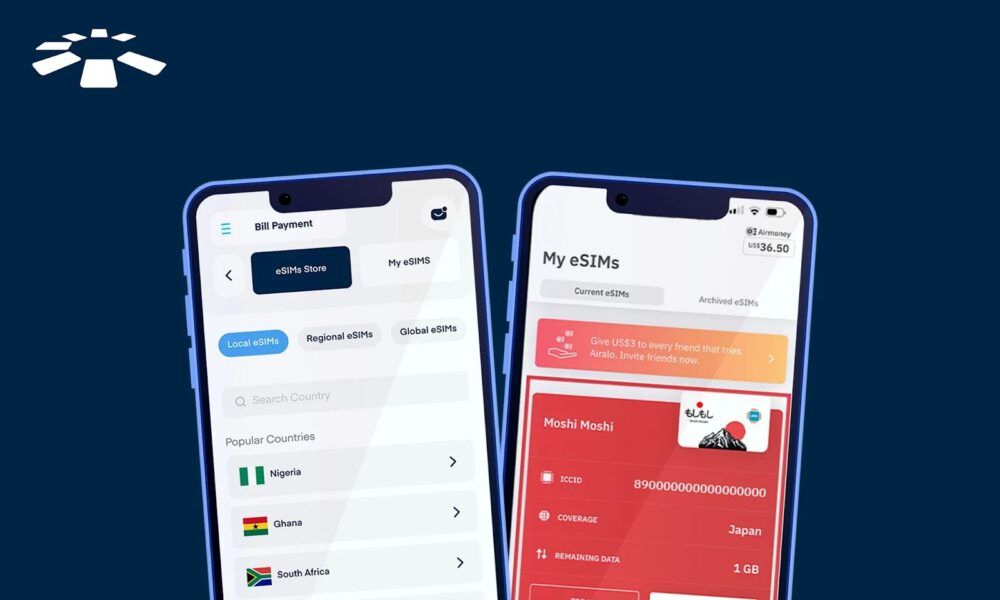
We live in an era when eSIM changed the narrative and helped travellers everywhere stay connected without having to own a physical SIM card. Gone are the days of endless queuing to access SIMs while in a new place. eSIMs have come to stay and are increasingly growing in popularity in Africa.
For the average frequent traveller, the priority has always been getting value for their money. Besides, every traveller desires not just coverage but also a reliable connection.
In Africa, two eSIMs currently stand out; Cardtonic and Airalo. Each product has its strengths and weaknesses. This write up compares both products to determine which offered the best value for frequent travellers based on coverage, plans, pricing and payment.
But first, understand each product.
What is Cardtonic eSIM?
Cardtonic is a top fintech platform operating in Nigeria and Ghana. It offers an eSIM that caters to travellers in over 140 countries. Cardtonic launched its eSIM plan in 2025, letting frequent travellers access flexible mobile data options abroad without roaming.
In addition to eSIM Cardtonic also offers gift card trading, local and international bill payments, gadget sales and virtual cards.
What is Airalo eSIM?
Airalo is a renowned eSIM store that launched in 2019 in Singapore. It is one of the largest eSIM providers globally with coverage in 200 locations and counting.
Frequent travellers use Airalo to access data connectivity via flexible local, regional, and global plans. It provides a dedicated mobile app for accessing eSIM plans on the go.
Cardtonic eSIM vs Airalo eSIM: Which Offers Better Value?
Cardtonic eSIM compared to Airalo eSIM based on ease of use, coverage, plans and pricing, payment options, customer support/ratings, and extra perks.
S/No
Factor
Cardtonic eSIM
Airalo eSIM
1.
Ease of Use
Instant Activation.
Easy to use
Easy installation and setup in minutes.
2.
Coverage
140+ countries
200+ countries
3.
Plans and Pricing
Starts from $4.50/1GB/7-day
Starts from $4/1GB/3-day
4.
Payment/Funding Options
Pay via bank transfer or gift card.
Fund in Naira or Cedis.
Pay via a debit card, PayPal, or Google Pay.
Supports up to 6 currencies
5.
Customer Rating and Support
4.6 stars from 19k reviews (Play Store)
Strong 24/7 support
4.5 stars from 137k reviews (Play Store)
24-hr support
6.
Extra Perks
Multi-service app.
Discounts
Loyalty programme.
Refer and Earn
1. Ease of Use
Usability is the most important factor when starting out with an eSIM. For Cardtonic, it is really straightforward. Just open up the app and head to the “Bills and eSIM” option. Then go ahead and tap eSIMs. You get to see available plans to choose from. Once selected, tap “Buy Now”. And once paid, your eSIM will be ready to install.
Installation is also simple. You can install directly if your device supports it. Otherwise, you can use a QR code or even do a manual installation. Everything is completed in a few minutes. There are zero complicated steps and hardly any delay.
Airalo also offers one of the easiest installation processes. You head to the app and purchase an eSIM of your choice. Then, use either a direct, QR code or manual method to install the eSIM.
Additionally, Airalo provides detailed guidelines to select mobile devices. Once installed, you can activate and connect to a local network.
2. Coverage
Cardtonic eSIMs, a relatively new player, connect over 140 countries. From London to Dubai, New York, and African destinations. It partners with local carriers to deliver a stable and fast browsing experience.
In contrast, Airalo covers over 200 locations. It gives you more connectivity to visit top destinations around the world. Furthermore, the app is available in over 50 languages and up to six currencies.
3. Plans and Pricing
Cardtonic eSIM offers some more budget-friendly options than Airalo. You have local plans starting at $4.50 for 1GB lasting 7 days. The cost per day will be $0.64. Hence, you have enough data for non-heavy applications, such as browsing and using your favourite apps.
Meanwhile, Airalo offers plans starting at $4 for 1GB that last only 3 days, which is about $1.33 per day. Hence, you spend more on data overall.
Like Cardtonic, Airalo offers not only data plans but also global plans for data, calls, and texts. You also get unlimited data options. As such, you have more data to handle heavier tasks, such as video streaming and video conferencing.
4. Payment Options
Cardtonic offers a more flexible payment option, especially for Nigerians or Ghanaians. You can pay via digital wallet in Naira or Cedis, depending on your location. You can also opt to fund your wallet via local bank transfer or by selling gift cards.
While rates are charged in USD, you get the Naira equivalent alongside. Hence, it saves you the hassle of manual conversions.
Airalo eSIM plans are charged in about six currencies (USD, GBP, CAD, AUD, EUR, JPY), depending on your preference. You can pay via standard routes with your debit card, Google Pay, or PayPal.
5. Customer Support and Rating
Although Cardtonic offers way more services than just eSIMs, it boasts a strong rating on the Play Store with over 4.6 stars from over 19k reviews. Its rating shows strong customer confidence. Besides, the team delivers 24/7 support without unnecessary wait times.
Unsurprisingly, Airalo eSIM is rated 4.5 stars over 137k reviews on the Play Store. Combine this rating with its impressive 4-star rating on Trustpilot, and then you have a brand that values its customers. Furthermore, the Airalo team is available 24/7, offering support either via in-app chat or on WhatsApp.
6. Extra perks
One major advantage of using the Cardtonic mobile app is the abundance of services and the flexibility to manage almost your entire digital life in one place. With a single app, you can purchase eSIMs, get a virtual card, pay local and international bills and shop for gadgets or even virtual cards.
Airalo does not provide the same level of versatility as Cardtonic. You enjoy other extra perks, like Refer and Earn; you get to earn Airmoney when you refer friends. Other extra features include a loyalty programme that offers up to 10% cashback for Airalo users.
Frequently Asked Questions Concerning Cardtonic eSIM Vs Airalo eSIM
What is The Major Difference Between Cardtonic eSIM and Airalo eSIM?
Cardtonic eSIM differs from Airalo primarily in terms of audience and coverage. Cardtonic is best suited for African travellers, particularly those from Nigeria and Ghana, because it allows payment via digital wallets in local currencies.
Airalo is better suited for a global audience. Its payment can be denominated in up to six currencies. Airalo lets users pay via the traditional payment channels, i.e., debit card, Google Pay, and PayPal
Do These eSIMs Include Calls and SMS?
Yes, Cardtonic eSIM doesn’t just offer data; it provides data, calls, and SMS in its global plans. The same applies to Airalo. It supports data, calls, and texts in the Discover+ Global plan.
What are The Disadvantages of Airalo eSIM?
Airalo eSIM has some limitations, such as a relatively higher per-day data cost compared to the Cardtonic eSIM. Besides, Airalo’s cheapest plans often come with a very short time span, i.e., 3 days.
Moreover, Airalo primarily concentrates on data plans, with the exception of its global plans that offer data/call and text options.
Which Product is Cheaper For Frequent Travellers?
Cardtonic eSIM edges out Airalo on affordability. Its 1 GB/7-day plans start at $4.50 ($0.64 per day), ahead of Airalo’s 1 GB plan, which starts at $4 and lasts only 3 days. That is about $1.33 per day.
Which eSIM is Best for Nigerians and Ghanaians Travelling Abroad?
Cardtonic eSIM offers better value for frequent travellers from Nigeria and Ghana. You not only get affordable data prices but also access to flexible plans and payment options.
Cardtonic eSIM flexible plans ensure less waste and better data savings overall. Its flexible payment options are particularly suited for users in Nigeria and Ghana. You can pay in local currency without extra forex or card charges.
Conclusion
E-SIMs have changed the status quo, enabling frequent travellers to stay connected without having to queue up for physical SIMs. In Africa, two products have stood out; Cardtonic and Airalo.
While it may be tough to determine which eSIM has the best value for frequent travellers. Cardtonic edges out Airalo. Thanks to its instant connectivity, most affordable prices and payment options suited for regular African travellers. Additionally, it’s versatility allows users to access and manage multiple digital services using a single app.
Conversely, Airalo eSIM serves a global travel audience and provides wider coverage in more countries. It boasts a stronger track record in terms of connectivity, having been around way longer than Cardtonic. Additionally, Airalo eSIM offers extra perks like Refer and Earn and a customer loyalty programme, which are extra cool for users.
Sponsored Content

Stay ahead of the curve with our weekly guide to the latest trends, fashion, relationships and more
Stay ahead of the curve with our weekly guide to the latest trends, fashion, relationships and more
Stay ahead of the curve with our weekly guide to the latest trends, fashion, relationships and more
Reese Witherspoon fans thought they were seeing double in her latest post with her 26-year-old daughter, Ava Phillippe.
The 49-year-old actor posted a series of holiday photos with family and friends to Instagram Sunday, including one with her 26-year-old daughter, whom she shares with ex-husband Ryan Phillippe. In the picture, the mother-daughter duo smiled for the camera while wearing matching black and silver outfits.
“Making Merry,” Witherspoon wrote in the caption.
In the comments, fans pointed out the striking resemblance between Witherspoon and her daughter.
“Woah I had to double take bc I didn’t know which one was you! So beautiful – both of you,” influencer Peyton Baxter wrote.
 Reese Witherspoon and her daughter Ava Phillippe wore matching black and metallic outfits in a new holiday photo (Instagram)
“My goodness, you ladies are twins!” one fan wrote, while another added: Your girl it’s a carbon copy of you!!!! Merry Christmas.”
Podcast host Dax Shepard also agreed: “Holy Doppelgänger!!!!!”
The holiday photo dump also included a mirror selfie of the Legally Blonde star and her eldest son, 22-year-old Deacon, whom she also shares with Ryan. A third snap showed Witherspoon smiling with her 13-year-old son, Tennessee, whom she shares with ex-husband Jim Toth, while a fourth featured her and her Big Little Lies co-star, Laura Dern.
Ava has previously addressed her and her mother’s uncanny resemblance. During an interview with Shop Today in 2024, she noted that whenever she posts a photo on Instagram, followers immediately comment on how much she looks like Witherspoon.
“It’s funny, I’m like, it would be a lot weirder if I didn’t look like my parents,” she said. “My brother and I joke about it a lot because he gets similar comments. But I don’t hate it. It’s a great comparison.”
However, The Morning Show star has claimed that she doesn’t see the resemblance with her daughter on that scale.
“You think so? You see it? [Ava] and I don’t see it that much,” she said on Today in 2022, after host Jenna Bush Hager called the mother and daughter twins.
Still, Witherspoon appreciates when fans comment about her looking like Ava. “Well, I love being mistaken for her because it makes me feel so young. I’m so proud of her. She really rolls with it. I’m sure it’s not easy looking exactly like your mother,” she said on CBS This Morning in 2021.
LIFESTYLE
#BN2025Epilogues: Ashaolu Prevailer’s 2025 Started With Intense Struggle, But Starting a Business Turned Things Around


As I sit down to reflect on how 2025 has been, I am reminded of the profound lessons I’ve learned and the unyielding resilience that has defined my journey. At just 15 years old, I’ve faced challenges that have tested my spirit and pushed me to the brink of exhaustion.
This year was marked by periods of intense struggle, both physically and emotionally. A week-long illness left me bedridden, and for four arduous days, I couldn’t muster the strength to change out of the clothes that clung to my weary body. The cold seeped into my bones, and my feet felt like ice for three long days. It was a season of vulnerability, and I cried a lot, pouring out my heart to God in desperation.
The weight of financial struggles bore down on my family and me, leaving us feeling lost and uncertain about our future. There were months when it seemed like the darkness would consume us, but in the midst of the turmoil, I found solace in prayer and faith. And then, like a beacon of hope, God’s mercy broke through, lifting us out of the depths of our struggles and setting our feet on solid ground.
In the midst of these challenges, I made a bold decision to start my own business at the age of 15. I’m grateful for the leap of faith I took, as it’s been a journey of growth, learning and empowerment. My business is built around my passions, and I’m excited to share that I’m into Tote bags, self-care products, home essentials, and some other accessories like electric fans, influencer-led lights and more. My store is named Everythin’ by Tee, and while it’s been great, I still need a lot of support for my business to grow. The entrepreneurial journey has its challenges, but it has taught me valuable skills, discipline and the importance of perseverance. I’m proud of what I’ve achieved so far, and I’m excited to see what the future holds.
As I look back on the ups and downs of 2025, I’m reminded that even in the midst of turmoil, there is always hope. This year may have been a test of my resolve, but it has also been a catalyst for growth and a deeper understanding of myself and my place in the world. I’m grateful for the lessons learned, the strength gained, and I look forward to the opportunities that 2026 will bring.

Sign up to IndyEat’s free newsletter for weekly recipes, foodie features and cookbook releases
Get our food and drink newsletter for free
Get our food and drink newsletter for free

Instacart has announced it is discontinuing a controversial pricing program that allowed some customers to see different prices for the same product, ordered simultaneously from the same store, when using its delivery service.
The move follows significant public scrutiny and concerns over transparency.
The decision comes after a report from Consumer Reports, alongside advocacy groups Groundwork Collaborative and More Perfect Union, revealed that Instacart presented nearly three out of every four grocery items to shoppers at multiple prices during an experiment.
This practice raised alarms, prompting Instacart to state in a blog post, “At a time when families are working exceptionally hard to stretch every grocery dollar, those tests raised concerns, leaving some people questioning the prices they see on Instacart. That’s not okay – especially for a company built on trust, transparency, and affordability.”
The program, which began in 2023, was initially intended to help grocers understand customer price sensitivity, mirroring how physical stores might offer varied prices across different locations.
.jpg) The program, which began in 2023, was initially intended to help grocers understand customer price sensitivity (Getty Images)
The program, which began in 2023, was initially intended to help grocers understand customer price sensitivity (Getty Images)
Instacart clarified that this was neither “dynamic pricing,” where prices fluctuate with demand, nor “surveillance pricing,” which tailors prices based on personal data. Instead, prices were offered randomly, with some customers seeing slightly higher or lower figures. For instance, the Consumer Reports experiment found Instacart customers were shown one of five different prices for a dozen Lucerne eggs from a Washington, D.C. Safeway, $3.99, $4.28, $4.59, $4.69, or $4.79.
While retailers will retain the autonomy to set their own prices on the delivery platform and vary them in their brick-and-mortar outlets, Instacart confirmed that “from now on, Instacart will not support any item price testing services.” The company declined to specify how many customers were affected, but the service has ceased immediately.
This development follows a separate legal challenge last week, where Instacart agreed to pay $60 million in customer refunds to settle federal allegations of deceptive practices.
The Federal Trade Commission had accused the company of falsely advertising free deliveries and failing to clearly disclose service fees, which could add up to 15% to an order. Instacart denied wrongdoing in that case, stating the settlement was reached to allow it to move forward.
In its blog post, Instacart concluded, “Trust is earned through clarity and consistency. Customers should never have to second-guess the prices they’re seeing.”

Photo Credit: Mercy Aigbe/Instagram
You just have to believe us when we say Mercy Aigbe is a queen when it comes to fashion. Owambe, she is there. Weddings, she slays. Red carpets, premieres, film screenings — Aigbe has built a reputation around showing up fully formed, every single time.
So when she arrived at the premiere of “Colours of Fire,” it felt less like a surprise and more like confirmation. Aigbe, who plays Efunsetan in the film, stepped out in a look that leaned into symbolism without softening its intent. The deep red gown hugged the body before giving way to a sweeping train, its surface detailed with gold and red embroidery arranged in flame-like movements. Across the bodice, a corset structure framed a sweetheart neckline, interrupted by bold wing-shaped stitching in gold and orange threads.
Then came the wings. Oversized and feathered, they rose from the back of the gown in layers of crimson, orange and yellow, referencing fire in a way that felt literal and unapologetic.
She paired the gown with a ruby-toned statement necklace and matching earrings, keeping her jewellery close to the neckline. Her hair fell in long dark curls, while her makeup focused on sharp liner, sculpted contours and a nude glossy lip.
She captioned the photos “Fearless, formidable, fire,” complete with a fire emoji, and it felt fitting.
See more photos below

Wanting to return a faulty or unwanted Christmas present? Martin Lewis tells all as he explains your rights.
Appearing on This Morning, the Money Saving Expert founder explained the difference between return policies for both in-store and online purchases, as well as the distinction between products that are broken, as opposed to those you do not like.
He said that whilst “people hate hearing this”, he advised those who have purchased expensive presents to test it works before gifting it, in case the exchange period runs out and you “give a present that is faulty”.