
TECHNOLOGY
‘I plugged in Zelda and everything changed’: developers share their fondest Christmas gaming memories | Games


There is a viral video that tends to get passed around at this time of year. It’s an old home movie showing a boy and a girl on Christmas morning eagerly unwrapping a present that turns out to be an N64 console – the boy is, to put it mildly, extremely pleased. It’s a scene a lot of us who play games will recognise: the excitement and anticipation provided by that big console-sized parcel, or the little DVD-shaped package that could be the latest Super Mario adventure. Although I never got a games machine at Christmas, I remember one year being given Trivial Pursuit on the Commodore 64 and the whole family gathered around the TV to play. It was one of the few times my mum and my sisters showed any interest in the computer, and I loved getting them involved.
Veteran designer Rhod Broadbent of Dakko Dakko recalls the Christmas of 1992, when his father, a programmer who had previously looked down on games consoles, bought him Mario Kart and The Legend of Zelda: A Link to the Past. “Zelda was completely unknown to me at the time,” he recalls. “I think Dad was probably expecting me to be more excited. But after I had spent the morning in Mario Kart, I plugged in Zelda and everything changed. From the title music, through the intro and into that beautiful initial thunderstorm, everything was so polished and smooth and unlike the video games I’d played before. It didn’t leave the cartridge slot for weeks. I remember that Christmas morning like it was yesterday …”
For Anna Hollinrake, founder of Electric Saint, Christmas gaming was an opportunity for sweet revenge. “As a competitive child with a guitarist father, I chose to learn the violin aged six so I could be better than him at something. However, he picked up my violin and immediately smashed out a few pieces way above my level. Years later, Christmas morning 2007, I unwrapped Guitar Hero III: Legends of Rock. Imagine my delight as I watched my dad catastrophically miss every note on the plastic guitar controller. Oh, how the tables turned, father. Who’s the musician now?!”
Rockers’ revenge … Guitar Hero III. Photograph: RedOctane
The memories don’t always end so happily. Sam Barlow, creator of Her Story and Immortality, recalls when he and his brother used to wait until everyone was in bed on Christmas Eve before sneakily squeezing and shaking all their presents. “One year my brother fishes out a thick rectangular present – exactly the shape of a Super Nintendo game box. We were so excited, we got very little sleep thinking about what game it could be. Skip to the morning, he carefully peels open the wrapping, teasing out the reveal … only to discover a Ghostbusters card game. His utter disappointment was the funniest thing I’ve seen. To this day in our family, ‘Ghostbusters card game’ is used as shorthand for those occasions when life fails to meet our expectations.”
But there were also times when disappointment turned to delight. Video game writer Alex Donaldson at Eurogamer recalls being desperate for a PC, but his parents couldn’t afford it so got him a Sega Mega Drive instead. “I quickly set it up and loaded the Mega Games compilation cart,” he says. “Golden Axe, Streets of Rage, Revenge of Shinobi … Everything was so immediate, so visceral. This wasn’t a PC, it was better. I always remember that feeling – there is a beautiful simplicity to the console.”
‘So immediate, so visceral’ … Streets of Rage on the Sega Genesis Mega Drive. Photograph: ArcadeImages/Alamy
Some of us have found ways to keep treasured Christmas gaming experiences alive. I can dig out Singstar and relive festive karaoke sessions of old, while Lucy Blundell of Kinmoku Games (One Night Stand, Videoverse) has a collection of vintage consoles to call upon. “Last Christmas morning, my husband and I snuggled on the beanbags with our dog, plugged in our Japanese Sega Saturn and played Christmas NiGHTS,” she says. “Afterwards, we booted up the Nintendo 64 – the very same console I received for Christmas back in 1999 – and played my favourite Christmas games: Diddy Kong Racing’s winter levels and Super Mario 64, which I bought on Boxing Day in 1999. Spending a quiet Christmas together and sharing our favourite childhood games was a real festive treat!”
Last week, I asked on BlueSky for people’s Christmas gaming memories, and what really touched me was how many recalled being given secondhand machines, with bundles of games – and being delighted. A Commodore 128, a Nintendo Wii … the thrill was in having so many new experiences to try, not just the one game that comes with a new console. Christmas for a gamer isn’t always about the flashiest, newest, most expensive things. It can be a few hours of shared fun with whatever machine you have to hand.
Please do share your own memories of Christmas gaming in the comments section!







TECHNOLOGY
‘Undermines free speech’: Labour MP hits back at US government over visa ban on UK campaigners | Elon Musk

A senior Labour MP has accused the Trump administration of undermining free speech after Marco Rubio, the US secretary of state, announced sanctions against two British anti-disinformation campaigners.
Chi Onwurah, the chair of parliament’s technology select committee, criticised the US government hours after it announced “visa-related” sanctions against five Europeans, including Imran Ahmed and Clare Melford.
Ahmed leads the Center for Countering Digital Hate (CCDH), while Melford is chief executive of the Global Disinformation Index (GDI), both of which have clashed directly with Elon Musk, the owner of X and a former adviser to the US president, Donald Trump.
Onwurah said on Wednesday: “Banning people because you disagree with what they say undermines the free speech the administration claims to seek.
“We desperately need a wide ranging debate on whether and how social media should be regulated in the interests of the people. Imran Ahmed gave evidence to the select committee’s inquiry into social media, algorithms and harmful content, and he was an articulate advocate for greater regulation and accountability.
“Banning him won’t shut down the debate, too many people are being harmed by the spread of digital hate.”
Her comments came after Rubio accused the five – who also include the former EU commissioner Thierry Breton – of leading “organised efforts to coerce American platforms to censor, demonetise and suppress American viewpoints they oppose”.
Sarah Rogers, an official at the state department, posted on X: “Our message is clear: if you spend your career fomenting censorship of American speech, you’re unwelcome on American soil.”
The CCDH has previously incurred the wrath of Musk over its reports chronicling the rise of racist, antisemitic and extremist content on X since he took over the platform. Musk tried unsuccessfully to sue the organisation last year, before calling it a “criminal organisation”.
The X owner has also called for the GDI to be shut down over its criticism of rightwing websites for spreading disinformation. And he has railed against the EU’s Digital Services Act, which Breton helped spearhead, and under which X was hit with a €120m (£105m) fine for what the EU called the deceptive design of its blue tick system for verifying users.
Melford is UK-based, while Ahmed, whose organisation once employed Keir Starmer’s chief of staff, Morgan McSweeney, as a director, lives in Washington DC with his family.
A spokesperson for GDI called the sanctions “an authoritarian attack on free speech and an egregious act of government censorship”. They added: “The Trump administration is, once again, using the full weight of the federal government to intimidate, censor and silence voices they disagree with. Their actions today are immoral, unlawful and un-American.”
Ahmed has been approached for comment.
A British government spokesperson said: “While every country has the right to set its own visa rules, we support the laws and institutions which are working to keep the internet free from the most harmful content.”
That response contrasted however with the more combative stance taken by the French government and the European Commission.
Emmanuel Macron, the French president, said the measures “amount to intimidation and coercion aimed at undermining European digital sovereignty”. The Commission said in a statement it “strongly condemns” the actions of the Trump administration.
Campaigners in the UK warned the British government was likely to be targeted further if the Trump administration steps up its attacks on tech regulation.
Ava Lee, the executive director of People Vs Big Tech, said: “The Trump administration is escalating its attacks on Europeans trying to uphold the rule of law when it comes to big tech. With the Online Safety Act (OSA), the UK is likely to be next in the firing line.”
The Trump administration has previously flagged its concerns about the OSA. This year a group of officials from the state department met Ofcom, the regulator charged with overseeing the act, and are understood to have raised concerns that the act will risk infringing free speech.
Beeban Kidron, a crossbench peer in the UK’s House of Lords and a prominent online safety campaigner, said Rubio’s comments on the visa bans were an “outrage”.
“The US tech sector, backed by the US administration, is attempting to undermine European laws and values,” she said.
TECHNOLOGY
Winter storms to deliver white Christmas and travel mayhem to over 18 US states this week


A white Christmas is in the forecast for millions of Americans this year as multiple winter storms are set to snarl holiday travel plans throughout the northern US.
Meteorologists revealed that a fast-moving ‘clipper’ storm will arrive Wednesday night in the Ohio Valley, the mid-Atlantic, the Northeast, and New England, bringing a mix of rain, snow, and ice on Christmas morning.
Snow totals on Thursday are expected to be light in most areas, but Maine, New Hampshire, Vermont, New York, Michigan, Wisconsin, Minnesota, and northwestern Pennsylvania all have a ‘high chance’ of experiencing a white Christmas in 2025.
Meteorologists at AccuWeather noted that North Dakota, Montana, Wyoming, and Colorado also have a strong chance of seeing snow Thursday as this storm sweeps across the US from northwestern Canada.
While Thursday’s storm is not expected to deliver much accumulating snow, forecasters have already warned that another system is due to move in on Christmas night, slamming the Northeast and mid-Atlantic with up to six inches of snow on Friday.
The weekend clipper is also expected to bring an ice storm stretching from the Dakotas all the way to New Jersey, further endangering holiday travelers on snow-covered streets and highways.
Ice building up in Michigan, Pennsylvania, Virginia, and West Virginia may cause sporadic power outages, forecasters warned.
A record 122million Americans were expected to travel at least 50 miles during the final two weeks of December. Nearly 110million of those holiday travelers will be driving, according to the American Automobile Association (AAA).

Holiday travelers who are driving may be severely impacted by multiple winter storms on Thursday and Friday that could bring snow and ice to the Northeast (Stock Image)

At least 18 states are expected to see snow on Christmas Day this year, thanks to a clipper storm moving through the northern US Wednesday night
The second part of this double storm on Christmas is expected to start dropping snow on Minnesota and Michigan around 7pm ET on Thursday, but the main event will ramp up overnight into Friday.
As the storm quickly shifts east, New York City, Long Island, parts of upstate New York, northeastern Pennsylvania, and New England could see between three and six inches of snow by Saturday morning.
Some areas, such as southwestern New York and northeastern Pennsylvania, could get up to a foot of snow or more by the weekend.
AccuWeather chief on-air meteorologist Bernie Rayno said: ‘Accumulating snow is coming to New York City with the storm from late Friday to early Saturday in New York City.’
‘Given the current estimated track of the storm, enough snow to shovel and plow seems highly likely.’
While parts of the I-95 corridor between New York and Boston will likely see a snowy Christmas weekend, southern spots like Philadelphia are more likely to get sleet or a rain-snow mix.
The AccuWeather team warned that travel disruptions due to icy roads are also expected to hit the Great Lakes region on Friday morning, following by more dangerous driving conditions in Pennsylvania, West Virginia, Virginia, and Maryland Friday night.
Major cities such as Baltimore and Washington, DC should expect a wintry mix of snow and ice over the holiday weekend.

Americans in the Northeast may see up to six inches of snow over the holiday weekend as a second clipper storm moves in Thursday night (Stock Image)

Friday’s winter storm is expected to bring snow to the Northeast and New England, while the Midwest and mid-Atlantic receive a mix of rain and ice
The string of winter storms this week may also have a major impact on air travel throughout the region, as millions of Americans will be flying home from their holiday celebrations.
On Tuesday, over 7,000 flights entering or exiting the US were delayed, including hundreds at New York’s John F Kennedy Airport, Chicago O’Hare International, Boston Logan International, and Philadelphia International Airport.
A clipper on Tuesday night brought a first wave of snow to New England and upstate New York, while major cities to the south saw a brief mix of sleet and rain on Christmas Eve Eve.
Meanwhile, more flights have been disrupted by the ongoing atmospheric river slamming California with several inches of rain and dangerous flooding along the entire coast.
That moisture pouring in from the Pacific has also delivered up to 10 feet of snow in California’s mountainous regions to the east.
For travelers heading to the airport this week, AAA recommended flyers regularly check their flight status before leaving home and also sign up for airline alerts.
Travelers are also urged to arrive at the airport early, allowing at least two hours for domestic flights and three hours if you’re leaving the US.
Due to the massive crowds expected at airports throughout the US, passengers should also pack smart and keep any vital medications, chargers, and a change of clothes in their carry-on bags.
With delays and potential cancellations expected throughout the week, flyers should also go over their chosen airline’s policies on rebooking flights and refunds for any cancelled trips.

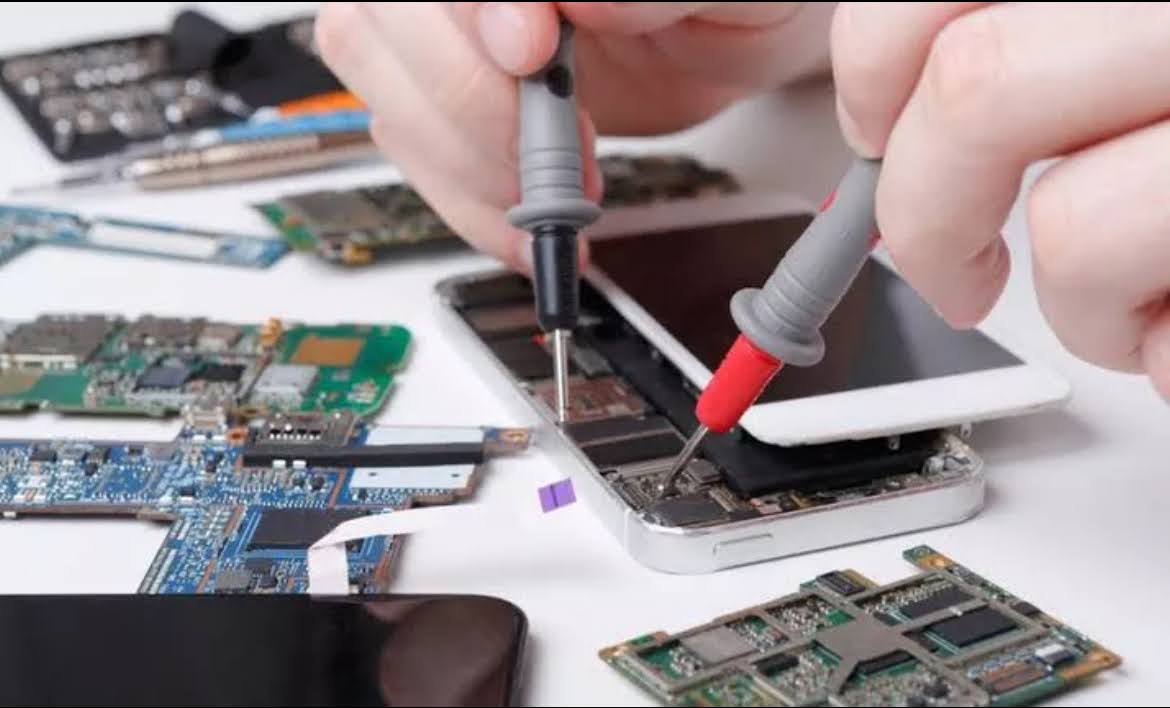
Effective smartphone repair always begins with identifying the actual cause of the issue, not jumping to conclusions or trying random fixes in the hope that one will work. A proper diagnostic procedure helps distinguish between:
- Software problems (glitches, corrupted files, malicious apps, etc.).
- Hardware problems (damaged screen, bad microphone/receiver, bad battery, etc.).
The stability of smartphones relies on two major layers: the hardware and the software. The hardware consists of the smartphone’s physical components—basically everything you can see and touch, such as the screen, battery, microphone, speaker, and charging port. On the other hand, the software is the operating system; it controls everything your phone does, and all applications run on it. Common examples of operating systems are Android and iOS.
Top hardware issues that affect smartphones
- Damaged screens
- Unresponsive charging port
- Speakers and microphones becoming silent
Frequent smartphone software issues
- Frequent app crashes
- System lag
- Overheating not tied to weather or heavy use
How to diagnose software problems and identify the root cause
Analysis of repair trends indicates that many smartphone problems stem from identifiable, preventable patterns that can be detected through basic user diagnostics. Therefore, the diagnostic process is structured into three stages to isolate the problem.
- Software layer triage: The initial assessment starts with basic fixes such as rebooting, clearing RAM, updating apps, and clearing the cache.
- Isolation layer triage: If the problem persists, the smartphone should be placed in a clean environment, known as Safe Mode, to determine whether the issue lies within the device’s operating system or a third-party app.
- Hardware-layer triage: The final diagnostic step after software and third-party app conflicts have been ruled out. Hardware diagnostic tools are often hidden codes provided by the manufacturer to verify component functionality and indicate whether professional repair is necessary.
Many complex or confusing symptoms that suggest deep corruption are, in reality, simple memory conflicts or temporary system glitches. Addressing these foundational issues is the first step in any troubleshooting process.
Restarting and system updates: The device can be restarted by turning it off and back on, or by long-pressing the power button (on iPhone X and above, long-press the Volume Up and Power buttons simultaneously) to select the restart option.
Restarting the device is the fundamental fix for solving software-related issues. The action effectively refreshes the RAM, ensures that recently downloaded system patches or configurations are properly installed, and resets all temporary changes to their defaults.
Also, failure to install pending updates—whether for the operating system or individual applications is a frequent source of bugs, instability, reduced battery performance, screen freezes, and modem/firmware conflicts. Consequently, confirming and applying the latest system and application updates is an integral part of the foundational fix.
Cache management: System and application caches are temporary storage areas designed to improve speed and user experience. But when caches become full or corrupted, they produce the opposite effect, contributing to sluggishness, application crashes, and overall lag in performance. Clearing the cache provides an effective fix for many stability issues—especially device lagging.
It is essential to differentiate between clearing an app’s cache and clearing its data. Clearing the cache removes temporary files without affecting user data on the app. Conversely, clearing an app’s data deletes user login details and all other user files within the app, effectively resetting the app to its initial state (e.g., clearing the data in a game will delete your progress).
For persistent failure or suspected corruption within the app data, clearing the data or deleting the app entirely might be necessary. To clear an app cache using a Samsung Galaxy device and many other Android smartphones:
- Navigate to Settings > Apps > [Specific App] > Storage > Clear Cache.
Note: iOS devices do not allow users to clear caches manually.
Safe mode: If the device continues to exhibit consistent crashes, persistent lag, or behaviour that was not solved by restarting and clearing the cache, there is a likelihood of a conflict with a third-party app. To isolate the conflict, the device must be put into Safe Mode.
The procedure for entering Safe Mode varies slightly by device but generally involves pressing and holding the Power button until the power option appears, and then long-pressing the Power Off icon on the screen until a prompt to reboot into Safe Mode appears.
The diagnostic value of Safe Mode is immediate: if the phone performs normally without crashes or slowdowns, the fault is localised to a recently installed or corrupted third-party app. This isolation process is essential because it allows the user to specifically identify and uninstall problematic applications without resorting to a complete data wipe.
Performance degradation, such as excessive lagging, application/device crashes, and instability, are frequently reported issues that compromise the effectiveness of smartphones.
Performance degradation: Causes and mitigation
The primary cause of excessive sluggishness and application crashes is often resource exhaustion, driven by two factors:
- Limited storage.
- Excessive background processing.
Full internal storage is a critical barrier to effective performance. Smartphones require a certain amount of free space to function optimally. Consequently, deleting unnecessary files, media, and unused applications is an essential remedy for device lag. Regularly deleting and offloading unused applications jettisons “dead weight” that may otherwise consume memory and affect processing cycles via background processes.
Furthermore, system optimisation can yield noticeable speed improvements, especially on older hardware. Reducing or disabling non-essential graphical features, such as animated wallpapers and transition effects, frees up processing power for essential tasks.
Handling unresponsive screens and system freezes
In situations where users experience a complete system freeze and the operating system is entirely unresponsive to touch input, the device requires a hardware-level override known as a Force Restart. The specific button combinations required depend on the manufacturer and model.
iOS (iPhone 8/X and upwards): The user must execute a precise three-step sequence:
- Press and quickly release the Volume Up button.
- Press and quickly release the Volume Down button.
- Press and hold the Side (Power) button until the Apple logo appears. Ignore the prompt to power off the device when it appears; continue holding the button.
Android (Generic/Samsung): The most common sequence is to press and hold the Volume Down and Power buttons simultaneously for approximately 10 to 15 seconds, until the device vibrates or starts the reboot sequence.
Android (Google Pixel 7/7 Pro): If the device is unresponsive, press and hold the Power button until the device powers up (this can take up to 30 seconds).
The outcome of the Force Restart serves as an important diagnostic tool. If the hard reset works and restores normal functionality, the issue was caused by a software malfunction. However, if the sequence is unsuccessful and the issue persists, it strongly suggests a more severe hardware fault.
Table: performance troubleshooting triage flowchart
Issue category First step (soft fix) Second step (advanced fix) Third step (data reset/hardware)General lag Close all open applications Perform a full device restart Delete unused apps Clear app caches Factory data reset (after backup) Consistent app crash Clear the specific app’s crash Uninstall and reinstall the app Boot into safe mode to identify and uninstall conflicting third-party apps Perform full software update complete freeze/unresponsiveness Execute force restartAttempt reboot into recovery or safe mode Professional assessment for hardware damage
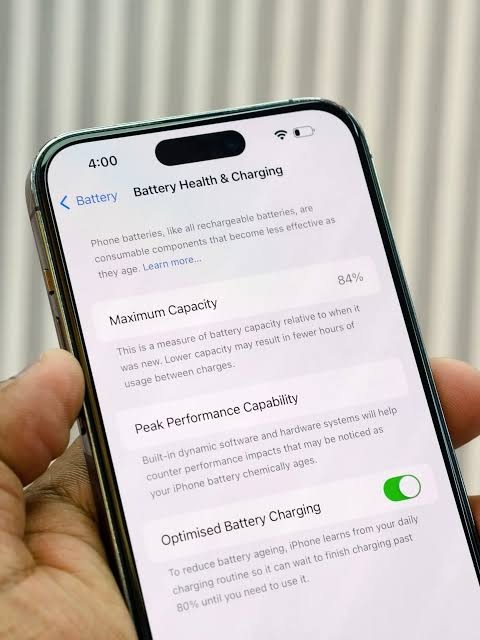
Battery performance and longevity remain crucial concerns for users. Management of charging cycles, heat, and charging hardware is necessary to maximise the battery’s lifespan.
Understanding and preventing rapid battery drain and overheating:
Rapid battery drain is mostly due to high-level activity from apps running in the background. Users should check their battery health settings to identify and restrict applications that exhibit high, unauthorised background power use.
A critical factor in battery performance is thermal management. Batteries drain faster when exposed to high temperatures, even when the device is idle. Overheating can be caused by running too many powerful applications simultaneously or using the phone in a hot environment. High temperatures accelerate chemical degradation and increase power draw, forcing more frequent charging, which further stresses the battery.
Remedial steps include: closing all unnecessary apps, keeping the phone in a cooler temperature location, and temporarily removing the protective phone case to improve airflow during heavy use or charging.
Optimised charging strategies for longevity:
Modern lithium-ion battery technology thrives within an optimal charge range, requiring users to abandon the old habit of completely draining batteries before recharging.
To minimise strain and prolong battery life, the best maintenance practice is to keep the charge level between 20% and 80%. The operating system is designed with integrated machine learning algorithms to automate and manage this optimal range. iOS smartphones use “Optimised Battery Charging,” while Android devices use “Adaptive Battery.”
Charging port malfunctions:
Most charging port failures are caused by dust, mechanical wear, corrosion, and debris accumulation. Symptoms include inability to hold a charge, instability during charging (the cable needs to be held at an angle), or inability to connect to a PC.
Diagnostic and solution: how to solve your charging port issue
Debris, particularly dust and lint buildup, is the most common root cause of connectivity issues. The primary DIY fix involves cleaning the port using a compressed air canister or a small non-metallic brush to dislodge the debris. Alternatively, use a wooden toothpick or a plastic pick to gently scrape out compacted lint. Avoid metal tools (which can cause short circuits) and cotton wool (which can leave fibres behind).
Furthermore, battery health requires the use of original charging accessories. Non-original accessories can cause slow charging or damage the charging circuitry. If the device continues to exhibit charging issues after the port has been thoroughly cleaned, the issue is likely rooted in physical hardware damage.
These failures often require troubleshooting that moves from basic resets to advanced network configurations.
Troubleshooting Wi-Fi connection issues:
The fundamental approach to persistent Wi-Fi issues is a series of basic resets to clear temporary glitches.
- Rebooting: Restarting both the smartphone and wireless router clears software glitches on both ends.
- Airplane Mode Toggle: Turning Airplane Mode ON for 10 seconds and then OFF forces the internal modem to reset its connection attempt.
- Network Refresh: If issues persist, instructing the device to “Forget” the Wi-Fi network and then reconnecting often resolves issues caused by corrupted authentication profiles.
- VPN/Firewall Check: Disable any active VPNs or third-party firewalls, as these can interfere with local network routing.
Resolving cellular data and signal loss:
If mobile data fails to work, reinsert the SIM card to ensure proper seating and contact with the tray; users can also consider replacing the SIM card entirely. Crucially, keeping software up to date is vital, as system updates often include modem firmware patches.
Access Point Name (APN) settings management:
APN settings define the network path used for cellular data connectivity. Incorrect APN settings are a common cause of cellular data failure.
- Android fix: Navigate to Settings > Mobile Networks (or Connections) > Access Point Names and tap the option to Reset to Default. If the carrier requires specific APN information, manually enter it as provided by the provider.
- iOS fix: Apple devices generally restrict user modification of APN settings, but these can be reset via Settings > General > Reset > Reset Network Settings.
Bluetooth pairing problems:
This often involves conflicts between devices or corrupted pairing data. Basic troubleshooting involves cycling Bluetooth off and on, confirming that all peripheral devices (headphones, car systems, etc.) are in pairing mode, and restarting both the smartphone and the connected device.
For persistent failure, clear the device memory of all saved connections:
- Navigate to Settings > Connected Devices > Saved Devices > Forget.
Issues involving sensory and physical components require distinct diagnostic methods to confirm whether the failure is electrical or mechanical.
Troubleshooting speaker and microphone output:
Audio problems can manifest as no output, distorted sound, or microphone failure.
- Isolation: Before assuming a speaker fault, remove all external devices plugged into the audio port and confirm the phone is not accidentally redirecting audio to a Bluetooth device.
- Cleaning: A common cause of muffled audio is the accumulation of dust in the speaker grills. Clean using a soft, dry brush.
Hardware diagnostic tooling:
If audio issues persist after cleaning and software checks, use internal diagnostic tools to test the components directly.
- Samsung Galaxy Devices: Dial the code *#0*# in the phone app to access a hidden diagnostic menu. This allows for specific tests of the speaker, receiver, and microphones. If you fail to hear sound playback during a test, the hardware is likely faulty.
- Other Android Devices: Similar diagnostic tools can sometimes be accessed by dialling codes such as *#*#3424#*#*.
Screen damage and display malfunctions:
Despite advancements in glass technology, cracked screens remain a common hardware issue. Display malfunctions include shattered glass, unresponsive touch areas, or dead pixels. In these cases, screen replacement is the only feasible repair.
This includes advanced software problems involving security threats, system synchronisation errors, and system-level conflicts.
Malware, adware, and suspicious apps:
Malware and adware often manifest as persistent performance degradation, unauthorised activity, or overwhelming notifications.
On Android devices, the first diagnostic step is to isolate the device in Safe Mode, which prevents the malicious application from running. To prevent re-infection, users must ensure that Google Play Protect is active. It is highly recommended to avoid installing third-party applications from side-loading sources. If malware persists, clearing the device’s downloads and browser data can help eliminate malicious payloads.
Sync failures and account lockouts:
Account management issues vary between the major mobile ecosystems.
Google Account Sync Issues (Android): Failure of core services such as Gmail, contacts, or calendar to synchronise can often be resolved by manually checking sync settings. Advanced troubleshooting includes:
- Date/Time Correction: Incorrect settings can disrupt secure certificate validation. Set date and time to “Automatic.”
- Forced Check-in: An advanced system-level command can be initiated by dialling *#*#2432546#*#* (*#*#CHECKIN#*#*) in the phone app.
Apple ID/iCloud Lockouts (iOS): Access failures are commonly linked to password issues or two-factor authentication. If a user cannot sign in or receive verification codes, they must rely on the formal Account Recovery process.
Advanced system management and Factory Data Reset:
Managing OEM Bloatware (Android): A major long-term performance issue on Android devices stems from manufacturer pre-installed applications (bloatware). For technically proficient users, the Android Debug Bridge (ADB)offers a solution to remove these without rooting.
- Command example: pm uninstall -k –user 0 NameOfPackage.
Factory Data Reset (FDR): The Factory Data Reset is the ultimate remedy for deeply rooted software corruption. FDR erases all user data, applications, and associated information. Always back up data before performing an FDR.
Careful maintenance reduces the frequency of component failure. Smartphone longevity relies on consistent physical protection and software hygiene.
- Physical Care: Use a high-quality protective case and screen protector. Regularly clean ports and speaker openings with a soft, dry brush to prevent debris buildup.
- Scheduled Reboots: Restarting the device once per week prevents the gradual accumulation of temporary glitches.
- Consistent Updates: Apply all system and app updates to benefit from security patches and battery improvements.
- Battery Practices: Maintain charge between 20% and 80% and avoid exposing the device to extreme temperatures.


Mill may have started with households, but co-founder and CEO Matt Rogers says the food waste startup has long aspired to expand to commercial customers.
“This has been part of our plan since our Series A deck,” Rogers told TechCrunch.
Now, with an official deal locked in with Amazon and Whole Foods the company’s plan to profit from handling other people’s food waste is a bit more public.
Whole Foods will deploy a commercial-scale version of Mill’s food waste bin in each of its grocery stores beginning in 2027. The bins will grind and dehydrate waste from the produce department, reducing costly landfill fees while also providing feed for the company’s egg producers. Both trim the company’s overhead.
At the same time, Mill’s bins will collect data to help Whole Foods understand what gets wasted and why, helping the grocer further control costs. “Ultimately, our goal is not just to make their waste operations more efficient, but also to move upstream so they actually waste less food,” Rogers said.
The company started selling food waste bins to households a few years ago. As can be expected from a team that made the Nest thermostat, the devices are well designed and — to lean on a Silicon Valley cliche — they can be a delight to use. My kids got a kick out of the bins while testing the first and second generations.
“Starting in consumer was very intentional because you build the proof points, you build the data, the brand, loyalty,” Rogers said. Many members of the Whole Foods team were already using Mill in their homes when the two companies started talking.
Techcrunch event
San Francisco
|
October 13-15, 2026
“It’s actually kind of our enterprise sales strategy,” Rogers continued. “We have conversations with senior leadership at our various ideal customers, and if they haven’t had Mill at home yet, we say, ‘Hey, try Mill at home, see what your family thinks.’ It is a surefire way of getting folks excited.”
The startup began having conversations with Whole Foods about a year ago, Rogers said. In the ensuing months, Whole Foods trialed the consumer version in some of its stores. Mill used feedback from Whole Foods to refine its commercial model.
But what helped sealed the deal was Mill’s ability to pinpoint food waste before it was wasted. Mill has developed an AI that uses a range of sensors to determine whether food that enters the bin should still be on the shelf. Minimizing “shrink” — the industry’s term for sales lost through waste or theft — can give grocers an edge in a cutthroat market.
Advances in large language models have been key, Rogers said. When he and Mill co-founder Harry Tannenbaum were at Nest, it took dozens of engineers and a “Google budget” more than a year to train Nest Cameras to recognize people and packages. With new LLMs, Mill only needed a handful of engineers and far less time to deliver superior results, according to Rogers, who said “AI is a huge enabler.”
The use of AI allowed Mill to deliver a commercial version faster, diversifying its customer base and source of revenue.
“If you are a single channel, single customer business, you’re fragile,” Rogers said. “I grew up at Apple during the iPod era,” he said. “Apple at the time was a single leg business. iPod was like 70% of company revenue. This was why we did the iPhone. Steve [Jobs] pushed us really hard on the iPhone because he was worried that folks like Motorola — who were working on smartphones at the time — would start to eat our lunch on the iPod business and that that would crush us. We needed to build another leg of the stool.”
And it seems that Mill isn’t finished adding legs to its figurative stool. Rogers said its working on building out a municipal business as well.
“We’re continuing to add more legs to the stool and adding more diversity to the business,” he said.


Photo by Rebekah Vos / Unsplash
With the fast-changing digital world, players in different fields are resorting to the services of the internet to build their careers. No exception is made with the doulas who are the life savers of the families in terms of pregnancy, childbirth, and postpartum.
Developing a good online presence is becoming rapidly important to a doula in reaching potential clients, displaying his or her knowledge and to stand out in an ever-growing competitive market. Digital portfolios have become one of the important ways through which doulas can show their professional and accessible skills and experiences.
Digital portfolios provide an interactive alternative to the conventional resume or word of mouth marketing. They enable doulas to show individual stories, word-of-mouth, and experiences as they are written in a visually compelling and user-friendly format. To most, these portfolios serve as an indication of marketing, as well as an official document, which will give potential clients a concise overview of the doula and their philosophy.
Enhancing Visibility Through Digital Platforms
Creating an online portfolio could increase the visibility of a doula to a considerable extent. Doula can draw the attention of active families who require the help online with the help of providing detailed information about their services, training, and prior experiences of their clients. This availability also makes sure that when people are looking towards the local or specialized doulas, then they are displayed in the search results, which is also an effective way of getting attention.
Furthermore, online portfolios provide possibilities of social media and blogging, as well as multimedia. The presence of videos of workshops, photos during training sessions and other interactive (calendars, contact forms) makes the visit more immersive. Such a combination of content supports the credibility and encourages engagement that would allow potential clients to feel closer before an initial consultation.
Showcasing Professional Experience
Professional experience can be documented via a digital portfolio, which can be considered one of the most valuable things in a digital portfolio. To show constant dedication to the profession, doulas may have them in the form of certifications, training records, and courses in continuing education. Exploring these factors and bringing them to the fore is not only dignifying knowledge but also puts the clients at ease that the doula is ready to handle diverse birthing situations.
This credibility is also enhanced by the fact that testimonials of clients are included in a portfolio. Written review or video recommendations are real-life recommendations about the abilities of a doula, his/her method, and sympathy. The individual narratives provide a feeling of trust that is highly valued in a career based upon close and supportive interpersonal relationships.
Highlighting Doula Training and Education
Digital portfolios are not ineffective to underline formal education and training. The information regarding the programs of doula training online, specific workshops, and certifications can be easily provided so that the potential clients can see it. A lot of doulas add the data about their training as a doula to the Internet, which enables potential customers to see the range and depth of their experience without going out of the portfolio webpage.
Moreover, portfolios are able to reveal a desire to continue professional growth. Publications about new doula training or further learning are indicative that the doula is well informed about the best practices and emerging techniques of birthing assistance. This continuous investment in education has the potential to make a doula stand out among the competition, who do not publicly record their professional development.
Strengthening Personal Branding
An effective digital portfolio is one of the pillars of personal branding of a doula. The way that a doula can be perceived online is determined by visual design, tone of writing and user experience. The doulas will be able to leave a lasting impression on their potential clients through a carefully curated show of images, colors, and messaging to convey their distinct approach, values, and style.
This branding is not limited to appearance and to professional philosophy and specialization. Doulas are able to showcase specific areas of specialization, including postpartum care or birth planning, in a manner that makes sense and is consistent throughout their internet footprint. The strong, unique brand will foster the loyalty of the clients, as well as will allow the doulas to draw families that can share their values with their services.
Facilitating Client Engagement
Online portfolios offer effective solutions to make the client interaction more efficient. In-built contact forms, booking links and descriptions of the service minimize pain to the prospective clients who want to have access to information or make consultations. This convenience of communication may increase the rate of conversion, when compared with the traditional mode of communication, such as use of phone calls or email enquiries.
Also, family resources (blog posts, education resources, or best practices) can be added to the portfolio. Providing this value early in life, doulas do not only show their knowledge but also provide a feeling of community and patronage. The interested visitors will tend to come back and ultimately make reservations which affirms the portfolio as both an information and a marketing resource.
Conclusion
Online portfolios are now a necessity to doulas who are interested in establishing their brand of online career. They also give them the opportunity to present a professional experience, training accomplishments, and build an attractive personal brand. Integration of doula training on the internet and lifelong learning emphasizes credibility and interaction with the potential clients through credibility and appeal to connectivity. Investing in a carefully-crafted portfolio, doulas are able to become more visible, build their professional presence, and eventually increase the number of clients in quality and sustainable manner.


Nigerian banks and fintech companies have been quietly mandated to automatically generate and update tax IDs for their customers, a move that will affect millions of account holders across the country without requiring any action on their part.
An insider with direct knowledge of the Federal Inland Revenue Service (FIRS) integration revealed that the tax authority has created API services specifically for financial institutions, enabling them to retrieve tax IDs in bulk using the National Identification Numbers (NIN) already stored in customer databases.
“A bank has 20 million people. They cannot be waiting for all 20 million to go and get their tax IDs. It’s better you just do it as a bulk service,” the source explained. “So the banks, as long as they have NIN, they don’t need to be telling customers to go get it, because they will just use it to retrieve it.”
While this development is separate from the earlier clarification that NINs are not tax IDs but rather tools to generate them, it represents the practical implementation of how Nigeria’s new unified tax system will roll out at scale.

How the automatic generation works
Here’s a practical demonstration of what this means for the average Nigerian. Imagine you opened your bank account years ago and provided your NIN as part of the Know Your Customer requirements. That same NIN is now sitting in your bank’s database.
Under the new FIRS mandate, your bank will access the tax authority’s API, send your NIN along with basic verification details, and receive your unique tax ID in return. This tax ID will then be automatically added to your account profile without you visiting a branch, filling forms, or making any requests.
“FIRS has made provisions for the banks to update tax IDs and tender account numbers at the back end, making it stress free for people, businesses, and individuals,” the insider confirmed.
For fintech companies like Opay, Palmpay, Kuda, and others with millions of users, the same process applies. If they have your NIN on file, they can retrieve and store your tax ID automatically.
Why banks/fintechs are asking for tax information
This explains the recent wave of notifications from Nigerian banks requesting customers to update their tax information. Banks like Fidelity have sent official statements asking customers to add their tax IDs to their profiles.
What many customers did not realise is that banks already have the capability to do this themselves. The notifications may simply be banks ensuring compliance and giving customers the option to verify the information before it is automatically populated.
“It’s not like the bank needs customers to do anything. FIRS has created that capability. It’s not left for the bank to utilise it,” the source noted.

What this means for everyday Nigerians
For the typical bank customer, this development means you will soon see a tax ID field populated in your banking app or profile, even if you never personally retrieved one from the FIRS website. This is not a new registration or an additional burden. It is simply your bank fulfilling its obligation to update records with the tax ID that was automatically created for you when you got your NIN.
The service is completely free. According to the insider, customers will not be charged for this update. “It’s free, so automatically, once you have a bank account, your bank can utilise the capability FIRS has created.”

For those worried about privacy or data security, the system only works with information already held by financial institutions. Banks are not accessing new data but rather using existing NIN records to retrieve corresponding tax IDs through an official government API.
TECHNOLOGY
Visa ban for European critics of online harm is first shot in US free speech war | Technology

For Maga politicians, European tech regulation hits hard in two areas: at the economic interests of Silicon Valley and at their view of free speech.
The action against five Europeans who are taking on harmful content and the platforms that host it has had an inevitable feel to it, given the increasingly vociferous reactions to the EU’s Digital Services Act (DSA) and the UK’s Online Safety Act (OSA). Both pieces of legislation require social media firms to protect users or face the threat of sizeable fines. Indeed, Elon Musk’s X has been fined €120m (£105m) this month for breaching the DSA.
These acts are key examples of what US Republicans see as an anti-free speech culture on the other side of the Atlantic.
Thierry Breton is thought to have been a key figure in bringing through the EU’s Digital Services Act. Photograph: NurPhoto/Getty Images
Ofcom, the UK’s communications regulator charged with overseeing the OSA, has not been affected by the visa bans announced on Christmas Eve, but there is an implicit threat in the air. One of those targeted by the move is the former European industry commissioner Thierry Breton, an architect of the DSA. The message is clear: watch out regulators.
Trump allies have also targeted Imran Ahmed’s Center for Countering Digital Hate (CCDH), a US-UK organisation which campaigns against online hate speech. CCDH was the target of an Elon Musk lawsuit in 2023 but the claim was thrown out by a judge last year who said the legal challenge, which focused on allegations that CCDH accessed data on X illegally, was in fact “about punishing the defendants for their speech”. In a post on X, Musk, a self-proclaimed “free speech absolutist”, described CCDH as a “truly evil organization that just wants to destroy the first amendment under the guise of doing good!”
The UK’s OSA remains a subject of White House ire. JD Vance, the US vice-president, has said free speech in the UK is “in retreat”. In July, Jim Jordan, a Republican congressman who has criticised the act, led a delegation of US politicians to discuss the legislation with the Labour government and Ofcom.
Ofcom is aware it could be in the crosshairs. In May, the state department announced it will block entry to the US to “foreign nationals who censor Americans”. The watchdog has said it is seeking “clarity” on the planned visa restrictions.
The EU and UK have only just got going on implementing their acts and, as the visa ban for Breton shows, opposition is building. In October, Ofcom fined the online forum 4chan £20,000 for breaching the act by failing to respond to a request for a risk assessment. Emboldened by domestic opposition to the OSA, 4Chan is suing Ofcom in the US, claiming its enforcement of the OSA violates Americans’ right to freedom of speech.
The UK government has said it won’t back down on the OSA, while the X fine signals the EU is determined to enforce its own legislation. There is also an effective non-profit ecosystem – in Europe and the US – campaigning for online safety. These visa bans are just the latest shot in what will be a long-running battle under the Trump administration.


2025 is ending much as it began: with President Donald Trump talking about annexing Greenland.
On Sunday, Trump appointed Louisiana Gov. Jeff Landry as a special envoy to Greenland with the goal, as Landry put it, “to make Greenland a part of the US.” Though the territory has been moving gradually toward greater independence, Greenland has been under Danish rule since the 18th century. “We need Greenland for national protection,” Trump told reporters on Monday.
The move provoked a sharp response from the prime ministers of Denmark and Greenland, who said in a joint statement: “National borders and the sovereignty of states are rooted in international law. … You cannot annex other countries.” Other European leaders have weighed in, as well, with French President Emmanuel Macron reaffirming that “France’s unwavering support for the sovereignty and territorial integrity of Denmark and Greenland.”
Trump has been talking about either buying or annexing the world’s largest island since 2019, during his first term. He brought up the issue again last January, when he raised alarm in European capitals by refusing to rule out using military force to take the territory if necessary. But, while he once described control of Greenland as an “absolute necessity” for US national security, the issue had been on the back burner for most of this year until Landry’s appointment, with the exception of occasional flare-ups over alleged US influence operations targeting the island.
Trump’s Greenland fixation had once seemed somewhat random. Danish leaders initially hoped it was a joke. But after a year of seeing Trump’s second term foreign policy in action — particularly the recent release of his administration’s National Security Strategy (NSS) — the Greenland gambit now seems to actually serve his broader goals. It makes a lot more sense in the context of the president’s surprisingly activist vision of America’s role in the world.
Greenland fits into the administration’s heavy focus on the Western Hemisphere and what the NSS calls the “Trump corollary to the Monroe Doctrine” to “deny non-Hemispheric competitors the ability to position forces or other threatening capabilities, or to own or control strategically vital assets, in our Hemisphere.”
Explaining Greenland’s security importance on Monday, Trump said, “If you look up and down the coast of Greenland, you can see Russian and Chinese ships all over the place.” It’s true that the Arctic is increasingly becoming an area of strategic competition, as melting ice makes it more accessible, and that China and Russia have been building up military and commercial assets in the region, though neither has done so particularly close to Greenland.
But having Greenland under the control of a friendly European government is no comfort to this White House.
Critics routinely point out that Greenland’s strategic importance is not an argument for actually controlling it. The US already has a military base in Greenland, and the Danes have made clear they’re not opposed to an expanded US military presence. The Danish government has, in the past, blocked Chinese commercial interests in Greenland, in part out of a desire to maintain good relations with Washington.
But having Greenland under the control of a friendly European government is no comfort to this White House. In the worldview laid out in the NSS, liberal European governments are viewed as a threat to American interests on par with if not greater than China and Russia. In a recent interview, Vice President JD Vance even questioned whether European governments with “destructive moral ideas” could be trusted with nuclear weapons.
The NSS calls for promoting “patriotic” (i.e., right-wing) parties in Europe, and an earlier draft reportedly called for urging countries to pull away from the European Union. An effort to peel away strategically important territory close to North America from European control is very much in keeping with this effort.
As political scientist Abraham Newman recently told Vox, Trump’s territorial threats against Greenland and other US neighbors like Canada are very much in keeping with a “neo-royalist” worldview, which rejects the notion that all countries have equal sovereignty. “It’s about dominance, about saying [to Canada and Denmark], ‘You are not equal to us,’” Newman said.
The seemingly unusual appointment of Landry — who has little foreign policy experience and is staying in office as governor of Louisiana as he takes on this new role — is also in keeping with a Trump diplomatic approach that is more often conducted through a semi-formal network of allies and loyalists, rather than through the traditional US foreign policy bureaucracy. An old friend of Trump’s, the cosmetics heir Ronald Lauder, may have been the one who initially planted the idea of controlling Greenland in his head.
Finally, Trump may have said this week that US interest in Greenland is “not for its minerals,” but it’s been widely reported that Lauder and other Trump associates have been working to sell him on the potential riches beneath Greenland’s soil. Greenland is believed to have large deposits of oil, as well as a variety of minerals, including the rare earth elements that China currently has a near monopoly over. If nothing else, the events of this year have driven home the fact that US options on China policy are limited as long as that monopoly continues.
Again, US companies can exploit these resources (and to some extent, they already are) without Greenland actually being part of the US. But under Trump, the US has taken a stake in foreign chip sales, tied diplomacy in Ukraine to minerals concessions, and made retaking Venezuelan oil fields an explicit aim of the US military build-up targeting that country. The line between commercial interests and security goals is far more porous under this administration than it has been in the past.
The US actually taking control of Greenland still seems like an extreme long shot. There’s little indication that Greenlanders want to join this US or will be swayed by Landry’s charm offensive.
But, as a campaign to take control of a mineral rich region pushed by his business partners and carried out by his ideological allies while cementing American dominance in the Western Hemisphere and undermining European sovereignty in the process, it feels today less like an eccentric deviation for Trump’s foreign policy than a neat distillation of it.

If there is one undeniable truth about journalism, it’s that no publication does it all. We pride ourselves on covering Africa’s technology ecosystem with unmatched rigour. Still, every so often, we come across incredible work that leaves us with only one thought: “Damn, I wish we had made that.”
Instead of letting that envy stew in our Slack channel, we’re borrowing a leaf from the originators of what to do with such envy. Welcome to the inaugural TechCabal Jealousy List. This is a curated confession of the work we didn’t produce this year but wish we did: A collection of the articles, visual investigations, and documentaries from across the global media landscape that stopped us in our tracks.
We asked our reporters, writers, and editors to share one story they read/watched/listened to this year that they wish they’d written/produced/been a part of making.
Here’s what they said:
This article is on my jealousy list because it could have easily been a high-impact story for Digital Nomads, the weekend column I write for TechCabal. I’ve been looking to explore how diaspora folks live in the Asian parts of the world; I’m curious about North Korea in particular—its well-earned reputation for isolationism, and how foreigners adjust there.
It would have been useful if the story touched a bit on what life for Monica—beyond growing up—was like there, at least to the extent it could. But I like the pacing, the narrative setting, and the overall elegance. I’ve borrowed the journalist, Sheriff Bojang Jr’s style in some of my work since then. Yet, more could have been done with such an interesting, unique subject.
Emmanuel Nwosu
Junior Reporter
This article tells the story of a supposed AI startup that sold the dream of AI-assembled apps when it was mostly just run on human labour and outsourcers despite raising $445m from Microsoft and other investors. I wish I had written it because the article is well-detailed and tells the full story of the company’s collapse. Even though it’s not breaking news, it does a good job of tying old and new information together in an engaging way because it is well-sourced.

Muktar Oladunmade
Associate Reporter
The first thing that grabbed my attention was the aspect ratio. They went with something close to 2.39:1 instead of the usual 16:9 you’d expect on YouTube. And honestly, that alone said a lot about how intentional the production was.
The video introduces the concept of tipping points in technological evolution, major shifts that tend to appear in 80-year intervals and go on to shape the world for about 25 years. But what’s wild is that 2025 doesn’t have one tipping point, but three. All happening at once.
Now, here’s where the aspect ratio becomes genius. It can be cleanly divided into three equal squares. Visually, it’s freakishly satisfying, but more importantly, it lets them show the three tipping points side-by-side and carry that theme all through the story. It’s such a subtle but powerful creative choice. The storyteller and creative director in me had a great time watching this. And honestly? I’d love to tell stories with this level of intentionality and creativity, too.

Ayodeji Aboderin
Video Content Creator
Say what you will about people who take horoscopes and zodiac signs seriously (a sentiment rightly captured in the first paragraph of the article), I found it interesting that this article takes what is an inexact science and tries to make it less so. But that’s not why it’s on my jealousy list. It is on my list because of its format. What a time it’d be when and if we’re able to unlock this kind of design thinking and execution in our reporting here at TechCabal!
My writing career often extends into the literary world, and there, we talk sometimes about form mirroring content; how the way an essay or story or poem is presented can communicate as much or more than its words, and I appreciate it deeply when newsrooms employ this kind of thinking. It takes news and journalism from something stuffy and straitjacketed to something interactive, deeply engaging, and memorable.

Kosisochukwu Ugwuede
Standards & Features Editor
There is a running joke in the newsroom that I am obsessed with Bloomberg, so it’s no surprise that a Bloomberg article was my favourite this year. This piece on Luke Farritor, a 24-year-old coder who worked for the now-troubled, Elon Musk-controlled Department of Government Efficiency (DOGE), was a riveting profile of how a wunderkind with no government experience suddenly found himself wielding enormous influence over which agencies were gutted and which survived. It was a reminder that power—who holds it and how it’s used—is just as important to follow as technology itself.

Ganiu Oloruntade
Senior Editor
This is the story of a man who everyone thought committed a crime, only for the actual criminal to call and say the accused man stole his name. It’s a wild story, but if you are like me, who loves wild, long, meandering, and complicated storytelling, this will make your day.

Frank Eleanya
Senior Reporter
Maybe it’s because I’m fascinated by how AI works and incredibly nosy about how other people use AI (don’t quote me), but this story from Wired really caught my attention in a “Why didn’t I think of conducting this experiment” kind of way.
It seems whimsical at first, but it is deeply revealing of how our society lives with technological advancements. I’m grateful for the open-mindedness of the participants, and I would give anything to have witnessed it first-hand and written my observation. Give it a whirl; you’ll see why I enjoyed it, and the reason it’s on my jealousy list.

Opeyemi Kareem
Reporting Fellow
A generally upsetting story, but I like it because it carries a lot of empathy, and it genuinely shows how interactive technology is with our everyday lives. I only use AI for work and arranging my thoughts into a straight line, but I am particularly fascinated by how a tool that came out less than a decade ago has integrated itself into our everyday lives, and how close we are to achieving Neo and Trinity in the next 20 years.

Latifah Yusuf
Junior Audience Editor
This story, a follow-up to an earlier investigation, amazed me because of its in-depth investigative and strong public-interest angle. Imagine how something as ordinary as normal devices and ad data can create a hidden surveillance pipeline capable of tracking soldiers, intelligence personnel, nuclear storage sites, and other sensitive locations. It’s a story I wish I had written, not just for holding power accountable, but for its potential to spark public discourse and drive real public interest impact.
What made me admire the story most was its blend of tech, national security/intelligence, and investigative reporting in a way that feels both revealing and consequential. The reporters followed the data trail across borders and through obscure ad-tech brokers, uncovering how location data from devices and apps ends up in the hands of data companies that may misuse it.

Abubakar Abdulrasheed
Reporting Fellow
A really long feature piece, but I thoroughly enjoyed reading this story. It was thorough in its exploration of the subject, so much so that if I had not known about MrBeast before reading the article, I would not have done further research after I was done reading. It answered most questions I had as a reader about who the subject was, why and how he did what he did, and why I should even care about him in the first place.
Another thing that stood out to me was how the writer did not assume. MrBeast is already very popular. It’s easy to assume that there are details that did not need to be included, because the average person would be privy to those details. The writer did no such thing. After reading, I was inspired to write better feature stories with more depth. It also inspired me to write this analysis piece.

Fancy Goodman
Content Writer
I have read a lot about AI and electric cars in 2025. The conversations swing between excitement and fear: some people talk about breakthroughs that could change everything, others warn about environmental damage and the pressure on global power systems. But there is another side of the conversation that rarely gets told. It is the story of the communities feeding the world’s tech revolution.
Places like the Democratic Republic of Congo hold the resources that power the chips driving this revolution. And while the tech world celebrates progress, the communities supplying these minerals are living through crises that grow deeper each year. That is why this Reuters investigation caught my attention. It shows how minerals from one mine in eastern Congo feed the global tech supply chain while also sustaining rebel groups and fuelling long-running conflict.
This is the story I wish I had worked on. I would have wanted to meet the miners, both small-scale workers and those in larger operations. I would have wanted to hear what they gain, what they lose, and how they feel watching the world benefit from something that costs them so much.

John Adoyi
Reporting Fellow
The article is over five months old, yet I have read it three or four times because it speaks directly to the lived tension we as writers/journalists navigate daily. It moves beyond the simplistic “AI is good/bad” debate to document the personal calculus of professionals who must engage with these tools at work, yet deliberately reject them in their creative and intellectual sanctuaries. That distinction between the commodified output and the sacred process of thinking, writing, and creating is one I feel profoundly/personally. Saner (the author) validates a silent resistance many of us practice, protecting the human core of our craft even as we operate within a transforming industry.

Kenn Abuya
Senior Reporter, East Africa
At its heart, technology is meant to make life easier; however, when it turns on us, the result is a chilling, cruel twist of fate. Adam Raine was a 16-year-old navigating the struggles of adolescence. He turned to ChatGPT for support; instead, he found a suicide companion.
His mother found his body.
This piece stood out to me as it honours Adam—a son, brother, and friend—while exposing the devastating cost of technological advancement without regulation. Additionally, the way the article was crafted stood out to me. For example, the closing paragraphs were written in a partly chilling format.
The goal of the piece is simple but vital: to ensure there are no more tragedies like Adam’s, and that is an honourable task.

Ifeduyi Oyesanmi
Managing Editor
I enjoyed its systematic and data storytelling, which was done really well without the numbers being boring. I might also be biased by the fact that it explored our shifts in human behaviour over time, which is a concept I am drawn to. This piece illustrates how technology has revolutionised food delivery and our engagement with it over the last few years. It’s also on my jealousy list because of Osarumen, the author’s thoroughness, which involved nine months of research and over 100 interviews.

Eme Agbor
Junior Content Writer

If you’re paying $200 a month for ChatGPT Pro or Claude, it’s becoming harder to ignore the alternatives.
China’s Zhipu AI released GLM-4.7 on December 22 — an open-source AI coding model that is matching several premium competitors on key benchmarks while costing $3 per month, or free if you run it locally.
The claim sounds bold, but the numbers back it up. On LiveCodeBench, which tests real-world coding ability, GLM-4.7 scored 84.9%, ahead of Claude Sonnet 4.5. On SWE-bench Verified, which measures how well models fix real GitHub issues, it reached 73.8%, the highest among open-source models. On the AIME 2025 mathematics benchmark, it hit 95.7%.
These are not marginal gains. They are performance gaps that raise serious questions about the value of $200-a-month subscriptions for developers who mainly need help with coding.
Yahoo Japan is embracing AI company-wide for enhanced efficiency
It is definitely a first from a mainstream company.
Memory That Actually Works
Here’s where things get interesting. Most AI coding assistants lose context mid-conversation. You’re deep into debugging and suddenly the model asks you to re-explain your project.
GLM-4.7 introduces what Zhipu calls “Preserved Thinking” — the ability to maintain reasoning chains across multiple turns instead of resetting. For developers using agentic tools like Claude Code or Cline, this targets one of the biggest frustrations in AI-assisted coding: constant repetition.
On Humanity’s Last Exam, which measures complex reasoning with tool use, GLM-4.7 scored 42.8%, a 41% improvement over its predecessor and ahead of GPT-5.1 on that specific test. On τ²-Bench, which focuses on multi-step tool usage, it reached 87.4%.
Benchmarks don’t tell the whole story, but they suggest something practical is happening here — not just marketing.
Hardware Requirements and Trust Questions
There’s no free lunch.
Running GLM-4.7 locally requires serious hardware: datacenter GPUs or multi-GPU consumer setups. For most developers, the realistic option is the $3-a-month cloud access at chat.z.ai or API usage.
Then there is the trust issue. Chinese AI labs have been aggressive about benchmarks in the past. DeepSeek’s January breakthrough and Baidu’s ERNIE models both promised disruption. Some delivered. Others didn’t hold up under real-world use.
Early feedback on GLM-4.7 is cautiously positive. Developers report:
- Cleaner HTML output
- Better UI proportions
- Fewer context-loss errors compared to GLM-4.6
But it has been live for less than 48 hours. The real test is not leaderboard performance — it is how it behaves inside real production workflows over time.
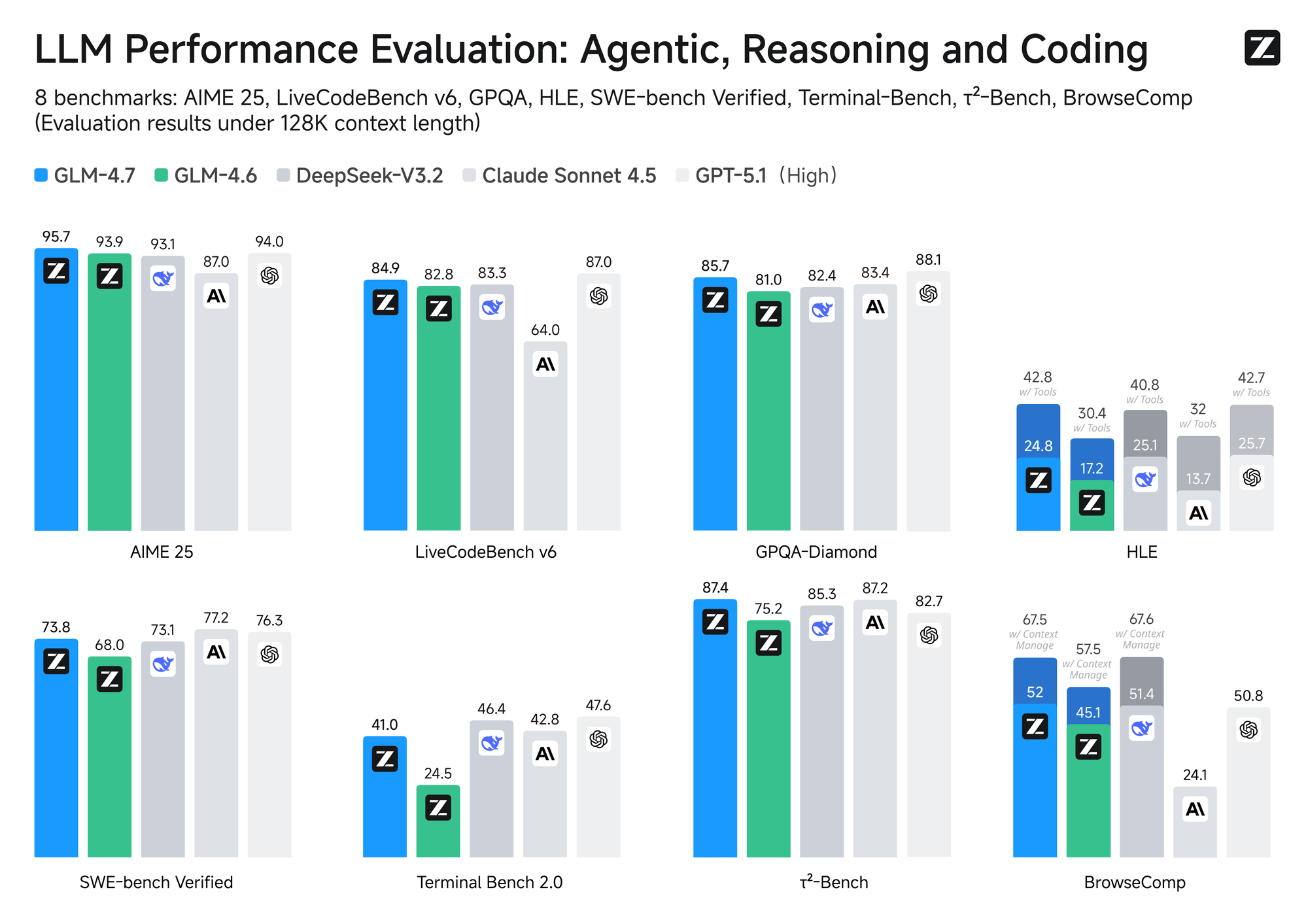 GLM-4.7 Evaluation (Image Credit: Zai)
Why This Launch Matters Beyond the Model
The competitive dynamic is shifting.
OpenAI, Anthropic, and Google spent 2025 normalising $200-a-month subscriptions, framing premium AI as the cost of doing serious work. GLM-4.7 challenges that assumption by closing the gap on core coding tasks without the subscription wall.
For startups watching burn rates and solo developers priced out of top tiers, that is a meaningful change.
Zhipu’s timing is deliberate. It launched GLM-4.7 alongside its Open Platform, offering global API access with Python and Java support just as companies plan tooling budgets for 2026. If reliability holds, this could force a repricing across the industry.
Is Premium AI Still Worth It?
This is what it really comes down to.
If your team needs enterprise-grade uptime, legal guarantees, and full support contracts, premium subscriptions still make sense. But if you are a solo developer or a small team willing to trade some convenience for cost control, GLM-4.7 has become a real alternative.
The weights are already available on Hugging Face and ModelScope. Access via chat.z.ai starts at $3 a month.
The next three months will decide everything. If GLM-4.7 survives real developer use without major issues, the AI coding market is about to get far more competitive — and far cheaper.
Tencent unveils T1 AI model escalating China’s AI Race
The future of artificial intelligence gets a powerful new player from Tencent.


December 24, 2025
Link copied!
Copy failed!

span { width: 5px; height: 5px; background-color: #5b5b5b; }#mailpoet_form_2{border-radius: 8px;color: #313131;text-align: left;}#mailpoet_form_2 form.mailpoet_form {padding: 0px;}#mailpoet_form_2{width: 100%;}#mailpoet_form_2 .mailpoet_message {margin: 0; padding: 0 20px;}
#mailpoet_form_2 .mailpoet_validate_success {color: #000000}
#mailpoet_form_2 input.parsley-success {color: #000000}
#mailpoet_form_2 select.parsley-success {color: #000000}
#mailpoet_form_2 textarea.parsley-success {color: #000000}
#mailpoet_form_2 .mailpoet_validate_error {color: #cf2e2e}
#mailpoet_form_2 input.parsley-error {color: #cf2e2e}
#mailpoet_form_2 select.parsley-error {color: #cf2e2e}
#mailpoet_form_2 textarea.textarea.parsley-error {color: #cf2e2e}
#mailpoet_form_2 .parsley-errors-list {color: #cf2e2e}
#mailpoet_form_2 .parsley-required {color: #cf2e2e}
#mailpoet_form_2 .parsley-custom-error-message {color: #cf2e2e}
#mailpoet_form_2 .mailpoet_paragraph.last {margin-bottom: 0} @media (max-width: 500px) {#mailpoet_form_2 {background-image: none;}} @media (min-width: 500px) {#mailpoet_form_2 .last .mailpoet_paragraph:last-child {margin-bottom: 0}} @media (max-width: 500px) {#mailpoet_form_2 .mailpoet_form_column:last-child .mailpoet_paragraph:last-child {margin-bottom: 0}}
]]>

Christmas dinner is one of the best parts of the holidays – but experts have warned that getting rid of leftovers might be ruining your plumbing.
Many rich, festive foods are classified as ‘Fat, Oils, and Greases’ (FOGs), which are one of the biggest culprits for blockages in drainage pipes.
Now, plumbing experts have revealed the waste foods you should never pour down the sink.
And they say that you should absolutely avoid washing any leftover gravy down the drain.
The richness of a good gravy comes from the fact that it contains both fats and flour, which makes it a ‘double threat’ for drain blockages.
While it might seem easy to wash away, gravy can solidify as it cools, causing serious problems that could leave you paying for expensive emergency repairs.
Mike Flook, a plumber from MyBuilder.com, says: ‘Disposing of FOGs down the sink in the run up to Christmas could lead to a disaster over the holidays.
‘Should you have any emergency issues over the festive period, you might find it harder to find a tradesperson that’s available, and so may have less options when it comes to pricing.’

Experts warn that washing leftover gravy down the sink this Christmas could ruin your plumbing and cause an expensive blockage (stock image)
However, it isn’t just gravy that could leave you with plumbing problems this Christmas.
Mr Flook says that many holiday staples, including coffee grounds, leftover meat fat, and even the dregs of your Baileys, could lead to blockages.
Since Baileys has a short shelf life, it is fairly common to end up with a half-finished bottle lingering in the fridge.
Although it might seem sensible to tip away the excess before recycling the bottle, Mr Flook warns that Baileys is still classified as an FOG.
That means you should avoid pouring any cream liqueurs down the sink, since they could damage the pipes.
Likewise, you should definitely make sure to avoid draining any extra meat fat into the sink.
Additionally, while coffee grounds themselves are not an FOG, they are a prime candidate for causing clogging.
Coffee grounds can soak up excess fat and clump together in U-bends, causing a blockage that is especially hard to remove.

Gravy, meat fat, and even cream liqueurs like Bailey’s are classed as ‘Fat, Oils, and Greases’ (FOGs), which are one of the biggest culprits for blockages in drainage pipes

If you do end up pouring fats down the sink this Christmas, it could be an extremely expensive mistake, with emergency plumber callouts costing four times the usual rate during the holidays (stock image)
The Christmas leftovers you should never pour down the sink
- Gravy
- Excess meat fat
- Cream liqueurs such as Baileys
- Coffee grounds
Instead, experts suggest that you can use your coffee grounds to mix with soil in your garden as an effective fertiliser.
Mr Flook says: ‘It’s always best to err on the side of caution – if you think a product might be a FOG, do your best to avoid wastage – and if that’s not possible, wrap up the excess product and pop it in the bin.’
If you do end up pouring some fatty liquids down the sink, you should run the hot tap as soon as possible.
The hot water will help to dissolve the grease and fats, keeping them in a liquid form until they reach the sewers.
Mr Flook suggests leaving the hot tap running for several minutes to be on the safe side.
You can also add soap to the hot water as a gentle way of breaking down blockages, but you should not use any harsh chemicals.
‘Drain unblockers are often ineffective against FOGs, and can cause damage to your pipes in the process,’ says Mr Flook.
‘A simple plunger can actually be more effective than chemicals.’

As well as ruining your own drains, these fats can contribute to the formation of the enormous fatbergs which collect in the sewers. Pictured: Technicians remove a fatberg beneath Regent Street, London
Making these mistakes could leave you with an expensive issue, with emergency plumber callouts costing four times the normal rate – and even more at Christmas.
Mr Flook says: ‘FOGs are really problematic for our drains. And it’s not a problem that’s easy to solve without a professional.
‘Some sink waste kits can be a bit like a jigsaw, and I’ve come across many situations where customers have attempted to unblock a sink themselves and then ended up putting the washers back in different places, which then causes a leak.’
But if you dump gravy and Baileys down the sink, you could be causing problems for more than your own pipes.
As FOGs wash out through the sewers, they can leave behind a greasy film that coats the inside of pipes, especially when combined with other waste materials.
Over time, this can contribute to the formation of blockages or even the dreaded ‘fatbergs’ that cause so many issues for sewers in big cities.
These collections of oils, fats, plastics, and other waste can grow to weigh hundreds of tonnes.
The largest ever found in London stretched for 250 metres and weighed 130 tonnes – as much as two Airbus A318 aircraft.
What are fatbergs?
Fatbergs are blockages made up of flushed fat, oil, grease and other flushed waste such as wet wipes and illegal drugs.
They form into huge concrete-like slabs and can be found beneath almost every UK city, growing larger with every flush.
They also include food wrappers and human waste, blocking tunnels – and raising the risk of sewage flooding into homes.

Fatbergs are blockages made up of flushed fat, oil, grease and other flushed waste such as wet wipes and illegal drugs. Pictured: Technicians clear a fatberg beneath Regent Street, London
They can grow metres tall and hundreds of metres long, with water providers last year declaring an epidemic of fatberg emergencies in 23 UK cities, costing tens of millions of pounds to remove.
The biggest ever discovered in London was a 250-metre (820 feet), 110-tonne monster found under Whitechapel, east London, in 2017.
Fatbergs take weeks to remove and form when people put things they shouldn’t down sinks and toilets.

Nigeria’s internet penetration crossed the 50% mark in November 2025, reaching 50.58%, according to the latest industry data from the Nigerian Communications Commission (NCC), signifying steady progress but well short of the 70% broadband penetration target set under the National Broadband Plan (NBP) 2020–2025, which expires in December.
The increase was up from 45.61% in January, representing a gain of nearly five percentage points over the year.
The NBP established ambitious benchmarks to drive digital inclusion, includingextending effective broadband coverage to at least 90% of the population, achieving minimum download speeds of 25 Mbps in urban areas and 10 Mbps in rural regions, and ensuring data affordability at no more than ₦390 per 1GB, equivalent to 2% of median income or 1% of the minimum wage. Despite entering the plan’s final weeks, Nigeria’s current broadband landscape falls short.
By November 2025, broadband subscriptions in the country stood at around 109 million. The growth trajectory has been uneven: the nation missed its interim 2023 target of 50% penetration and ended 2024 at 44.43%, highlighting persistent structural and regulatory challenges. Among these, fibre optic vandalism, which accounts for 30 to 43 cuts daily, high Right-of-Way (RoW) fees, and declining subscription numbers, losing over a million users in early 2025, have hampered expansion and reliability.
Nevertheless, several factors have driven broadband growth in recent years. Mobile network expansion, particularly 3G and 4G deployments, has underpinned most of the increase, with limited 5G rollouts supplementing capacity in urban areas. Falling smartphone prices and competitive data bundles have enabled more Nigerians to access mobile internet, while policy frameworks like the NBP and investments in the National Communications Backbone have incentivised private sector participation, especially in underserved and rural areas.
The shortfall against targets largely reflects a mix of high deployment costs, infrastructure gaps, and coverage limitations. Operators face expensive RoW charges, multiple levies, and high energy costs to maintain base stations, particularly in rural regions. Fibre and last-mile networks have not expanded quickly enough beyond major cities, leaving significant populations unconnected and some network infrastructure underutilised.
Despite these obstacles, the Nigerian Communications Commission (NCC) maintains that the 70% penetration target remains the primary objective. With sustained investment in mobile broadband, growing smartphone adoption, and ongoing expansion of 4G/LTE infrastructure, the sector is poised to continue incremental growth, even if the original 2025 benchmark remains elusive.

Photo by Centre for Ageing Better / Unsplash
The concept of over-the-air firmware updates quietly changing the way a connected device gets better after purchase and mobility scooters are an evident instance of the change. Modern models can now acquire new functionality, better performance, and safety with software provided remotely instead of hardware improvements, which now means that users can enjoy the results of constant innovation without having to upgrade their equipment.
Technology Foundations
The over the air updates is based on inbuilt connectivity that enables a device to communicate safely with the manufacturer servers. Cellular or Wi Fi connections can be used to download and install firmware packages with little user intervention so that critical software in the system remains up-to-date without having to replace physical equipment.
This strategy is similar to the one used to develop smartphones and other smart devices over time, yet it has an exceptionally high influence on mobility equipment. With the ability to update embedded in the control systems of a mobility scooter, the manufacturers can refine the way in which the motors, sensors, and batteries communicate with each other to provide a platform that will make constant progress instead of becoming obsolete.
Performance Improvements
Among the most evident positive outcomes of firmware update, one can identify gradual optimization of its performance. The acceleration curves, steering response and energy consumption can also be made more finely tuned with updates based on real world usage data, resulting in less bumpy rides and longer battery life without any mechanical adjustments.
These are frequently the enhancement of collective data, in considerable quantities of devices. The action of engineers tracking the performance of the scooters in various settings allows them to modify the software parameters and spread them to the rest of the product ecosystem, so that users can reap the benefits of shared learning.
Safety Enhancements
Remote updates are also very beneficial to safety systems. A firmware can make obstacle detection more sensitive, or a better braking reaction, or change the speed limits under specific circumstances, all of which can make the users with different mobility needs have a safer daily operation.
Notably, this will enable manufacturers to respond to safety issues as soon as they arise. In the case of a potential risk, discovered once deployed, corrective updates may be provided in a timely manner and minimize the use of recalls or manual maintenance, which will help to build trust in associated mobility solutions.
User Experience Changes
In the long run, the firmware redefinitions can transform the general experience of users through the improvement of control interfaces and feedback systems. Gradual innovations like better display data, easier controls, or intelligent driving can be installed, which will help to make the scooter simpler and more comfortable to operate.
Such changes usually react to the user feedback. With the interaction of the riders with their devices every day, the manufacturers can understand what features annoy them and what values they can add to it, and provide them with specific updates that improve usability without disturbing the existing routine.
Maintenance and Longevity
Remote updates are also helpful to proactive maintenance as they facilitate improved system diagnostics. Early warning of when the components are wearing out along with their health can be monitored by firmware which can alert the user or service provider before it becomes too late in the life cycle of the equipment.
This practice is in line with the trends observed in other technologies related to healthcare such as hospital beds which currently have software monitoring to enhance reliability. Moving part of the intelligence of maintenance to software makes the mobility devices reliable and economical throughout its existence.
Greater Integration of healthcare
Mobility devices are becoming smarter, and as a result, they are more likely to integrate into larger digital healthcare environments. Firmware upgrades may enhance the compatibility with companion apps or care platforms, facilitating the data exchange, which can help caregivers and clinicians to comprehend the mobility patterns.
Such integration aids in establishing mobility scooters as not only means of transport but as associated health resources. In the long term, enhancements that are software-driven can assist in achieving improved results because the individual mobility would be synchronized with more broad assistive and care-focused technologies.
Conclusion
Firmware updates via the air are redefining the expectation of mobility equipment since continuous improvement is no longer an exception as it is a standard feature. Connected scooters are dynamic to the needs of the users rather than being stagnant products through performance tuning, safety upgrades and user-focused refinements.
This model is evolutional, indicating the future where mobility solutions will be adaptable, responsive and deeply embedded in the digital care setting. Through software driven evolution, the manufacturers will be making sure that smart mobility is not only relevant but also reliable and supportive as time goes by.

It is better known for its viral dances and for making hits out of forgotten songs, but the social media site TikTok is becoming a force to be reckoned with as a shopping platform.
Major retailers such as Marks & Spencer, Samsung, QVC, Clarks, and Sainsbury’s are now selling their wares on the site’s e-commerce service, TikTok Shop, alongside more than 200,000 UK small and medium businesses.
Launched in Britain in 2021, TikTok Shop recorded its biggest sales day in the UK on Black Friday, with 27 items sold every second. Across the Black Friday and Cyber Monday period, sales were up by 50% on last year.
The service works by letting brands sell directly inside TikTok through videos and livestreams with embedded links to items for sale, as well as through a separate shop tab on their profiles.
A brand can post its own content and link to products itself, or allow influencers to promote them using affiliate links. Checkout happens without having to leave the app, and money is split after a sale between TikTok, the seller and any creator who helped drive it.
TikTok Shop launched in the UK in 2021. Illustration: TikTok
Sainsbury’s, one of the first major supermarkets to launch on the platform, has found success with its Tu Christmas pyjamas. A sponsored collaboration with the influencer Rachel Spicer generated 6.6m views, with the pyjamas selling out in under a week.
M&S has also enjoyed strong results from TikTok Shop livestreams with links to featured items, with one recent feed attracting 260,000 viewers and generating sales of about one item every 30 seconds.
Small businesses are using it to try to increase their reach, especially now that AI is making it more tricky to show up in search results. The Fat Butcher, an online meat delivery service based in Newcastle, is selling fresh turkeys on the platform for the first time this year.
According to Danielle Dullaghan, the social strategy director at the global marketing agency Iris, “beauty brands in particular are seeing strong commercial returns”.
She says part of TikTok Shop’s success is the fact “it plays directly into impulse buying behaviour”.
The London-based jewellery brand L’ERA, run by Lara Mar and her daughters Talia Mar and Angele Sofia, will generate about £145,000 in revenue through TikTok this year.
“It has almost doubled year on year, and many of our online customers originally discovered us via TikTok,” Mar says.
The brand relies heavily on live shopping, typically running three three-hour live streams a week, increasing to six during the Black Friday and Christmas periods.
TikTok shoppers have shown a willingness to spend, with L’ERA’s largest single order via the platform exceeding £1,400.
The business and social media consultant Jules Brim says: “TikTok Shop has exploded and for some small brands it’s been a gamechanger in terms of reach and sales. But what we don’t talk about enough is the cost. It can create a race to the bottom on pricing, put pressure on small businesses to produce constant content, and shift the focus from brand building to chasing trends.”