
SCIENCE
Science history: James Webb Space Telescope launches — and promptly cracks our view of the universe — Dec. 25, 2021


Milestone: James Webb Space Telescope launches
Date: Dec. 25, 2021
Where: Guiana Space Centre, Kourou, French Guiana
Who: NASA, European Space Agency and Canadian Space Agency scientists
On a cloudy winter’s day, in the Amazon jungle, a shuttle blasted off into space — and changed our view of the universe forever.
You may like
JWST has been so pivotal in part because it can peer back to the “cosmic dawn,” a period a few hundred million years after the Big Bang, when the first stars were winking on.
“The James Webb Space Telescope has proven itself capable of seeing 98% of the way back to the Big Bang,” Peter Jakobsen, an affiliate professor of astrophysics at the University of Copenhagen in Denmark, previously told Live Science in an email.
Yet Webb, which was first conceived at Lockheed Martin in the late 1990s, almost didn’t launch at all. The now-iconic, $10 billion project was catastrophically over budget, plagued by years’ worth of delays and snarled by “stupid mistakes.”
That was in part because, when it launched, it was by far the most complex telescope ever built.
It took more than 20,000 engineers and hundreds of scientists to design, build and launch the eye in the sky. That 21.3 feet (6.5 meter) mirror had to be folded into a honeycomb shape to be lofted on a rocket, then unfolded once in space. Yet despite being foldable, it also had to be so smooth that if it were as big as a continent, “it would feature no hill or valley greater than ankle height,” according to Quanta Magazine.
This stunning image of the Cosmic Cliffs was the first one released by JWST. In it, you can see a profusion of stars in their earliest stages of star formation, a frenetic period which lasts between 50,000 and 100,000 years. (Image credit: NASA, ESA, CSA, and STScI)
To see the earliest epochs of cosmic history, Webb needed infrared vision. That’s because ancient light has been stretched, or red-shifted, into infrared wavelengths as it travels across space-time. On Earth, humans and every other living thing give off heat in the form of infrared radiation, and that would drown out the faint infrared signals from the most distant, ancient starlight. So JWST needed to be lofted into the cold dark of outer space to use its infrared instruments.
Once JWST started imaging the cosmos, it promptly began breaking our existing models of the universe. It rapidly confirmed the Hubble tension — the discrepancy between the universe’s expansion rates depending on where and what astronomers measure. It has found hints of potentially life-sustaining atmospheres shrouding distant exoplanets. And it has spotted shockingly bright galaxies and seemingly “impossible” black holes at the dawn of time. All these clues are pointing to new understandings of the universe.
Some of the questions JWST is raising, such as whether other planets harbor life, it will probably not be able to answer in its planned 10-year lifespan. But future telescopes — such as the currently operational Vera C. Rubin Observatory, meant to create a real-time “movie of the universe”; the recently completed Nancy Grace Roman Telescope, set to launch in 2027 and resolve questions about dark matter and energy; the Extremely Large Telescope, set to turn on in 2029; or the recently announced Habitable Worlds Observatory, which may come online in the 2030s — could start to answer the questions that Webb is raising.




Psychologists have typically believed that we become less curious as we age, but recent research has shown curiosity actually becomes more targeted and specific in our later years. In this episode from September, Madeleine Finlay hears from Dr Mary Whatley, an assistant professor of psychology at Western Carolina University, and Dr Matthias Gruber of Cardiff University’s Brain Research Imaging Centre to find out why we change in this way, and how maintaining broad curiosity into older age can help keep our brains young
SCIENCE
‘Gospel stories themselves tell of dislocation and danger’: A historian describes the world Jesus was born into

Every year, millions of people sing the beautiful carol Silent Night, with its line “all is calm, all is bright”.
We all know the Christmas story is one in which peace and joy are proclaimed, and this permeates our festivities, family gatherings and present-giving. Countless Christmas cards depict the Holy Family – starlit, in a quaint stable, nestled comfortably in a sleepy little village.
However, when I began to research my book on the childhood of Jesus, Boy Jesus: Growing up Judaean in Turbulent Times, that carol started to sound jarringly wrong in terms of his family’s actual circumstances at the time he was born.
You may like
The Gospel stories themselves tell of dislocation and danger. For example, a “manger” was, in fact, a foul-smelling feeding trough for donkeys. A newborn baby laid in one is a profound sign given to the shepherds, who were guarding their flocks at night from dangerous wild animals (Luke 2:12).
Take King Herod, for example. He enters the scene in the nativity stories without any introduction at all, and readers are supposed to know he was bad news. But Herod was appointed by the Romans as their trusted client ruler of the province of Judaea. He stayed long in his post because he was – in Roman terms – doing a reasonable job.
Jesus’ family claimed to be of the lineage of Judaean kings, descended from David and expected to bring forth a future ruler. The Gospel of Matthew begins with Jesus’ entire genealogy, it was that important to his identity.
But a few years before Jesus’ birth, Herod had violated the tomb of David and looted it. How did that affect the family and the stories they would tell Jesus? How did they feel about the Romans?
A time of fear and revolt
As for Herod’s attitude to Bethlehem, remembered as David’s home, things get yet more dangerous and complex.
When Herod was first appointed, he was evicted by a rival ruler supported by the Parthians (Rome’s enemy) who was loved by many local people. Herod was attacked by those people just near Bethlehem.
You may like
He and his forces fought back and massacred the attackers. When Rome vanquished the rival and brought Herod back, he built a memorial to his victorious massacre on a nearby site he called Herodium, overlooking Bethlehem. How did that make the local people feel?
Bethlehem (in 1898-1914) with Herodium on the skyline: memorial to a massacre. (Image credit: Matson Collection via Wikimedia Commons)
And far from being a sleepy village, Bethlehem was so significant as a town that a major aqueduct construction brought water to its centre. Fearing Herod, Jesus’ family fled from their home there, but they were on the wrong side of Rome from the start.
They were not alone in their fears or their attitude to the colonisers. The events that unfolded, as told by the first-century historian Josephus, show a nation in open revolt against Rome shortly after Jesus was born.
When Herod died, thousands of people took over the Jerusalem temple and demanded liberation. Herod’s son Archelaus massacred them. A number of Judaean revolutionary would-be kings and rulers seized control of parts of the country, including Galilee.
It was at this time, in the Gospel of Matthew, that Joseph brought his family back from refuge in Egypt – to this independent Galilee and a village there, Nazareth.
But independence in Galilee didn’t last long. Roman forces, under the general Varus, marched down from Syria with allied forces, destroyed the nearby city of Sepphoris, torched countless villages and crucified huge numbers of Judaean rebels, eventually putting down the revolts.
Archelaus – once he was installed officially as ruler – followed this up with a continuing reign of terror.
A nativity story for today
As a historian, I’d like to see a film that shows Jesus and his family embedded in this chaotic, unstable and traumatic social world, in a nation under Roman rule.
Instead, viewers have now been offered The Carpenter’s Son, a film starring Nicholas Cage. It’s partly inspired by an apocryphal (not biblical) text named the Paidika Iesou – the Childhood of Jesus – later called The Infancy Gospel of Thomas.
THE CARPENTER’S SON | OFFICIAL TRAILER | IN CINEMAS NOW | ON DIGITAL DEC 22 | Altitude Films – YouTube

You might think the Paidika would be something like an ancient version of the hit TV show Smallville from the 2000s, which followed the boy Clark Kent before he became Superman.
But no, rather than being about Jesus grappling with his amazing powers and destiny, it is a short and quite disturbing piece of literature made up of bits and pieces, assembled more than 100 years after the life of Jesus.
The Paidika presents the young Jesus as a kind of demigod no one should mess with, including his playmates and teachers. It was very popular with non-Jewish, pagan-turned-Christian audiences who sat in an uneasy place within wider society.
The miracle-working Jesus zaps all his enemies – and even innocents. At one point, a child runs into Jesus and hurts his shoulder, so Jesus strikes him dead. Joseph says to Mary, “Do not let him out of the house so that those who make him angry may not die.”
Such stories rest on a problematic idea that one must never kindle a god’s wrath. And this young Jesus shows instant, deadly wrath. He also lacks much of a moral compass.
But this text also rests on the idea that Jesus’ boyhood actions against his playmates and teachers were justified because they were “the Jews”. “A Jew” turns up as an accuser just a few lines in. There should be a content warning.
The nativity scene from The Carpenter’s Son is certainly not peaceful. There is a lot of screaming and horrific images of Roman soldiers throwing babies into a fire. But, like so many films, the violence is somehow just evil and arbitrary, not really about Judaea and Rome.
It is surely the contextual, bigger story of the nativity and Jesus’ childhood that is so relevant today, in our times of fracturing and “othering”, where so many feel under the thumb of the unyielding powers of this world.
In fact, some churches in the United States are now reflecting this contemporary relevance as they adapt nativity scenes to depict ICE detentions and deportations of immigrants and refugees.
In many ways, the real nativity is indeed not a simple one of peace and joy, but rather one of struggle – and yet mystifying hope.
This edited article is republished from The Conversation under a Creative Commons license. Read the original article.
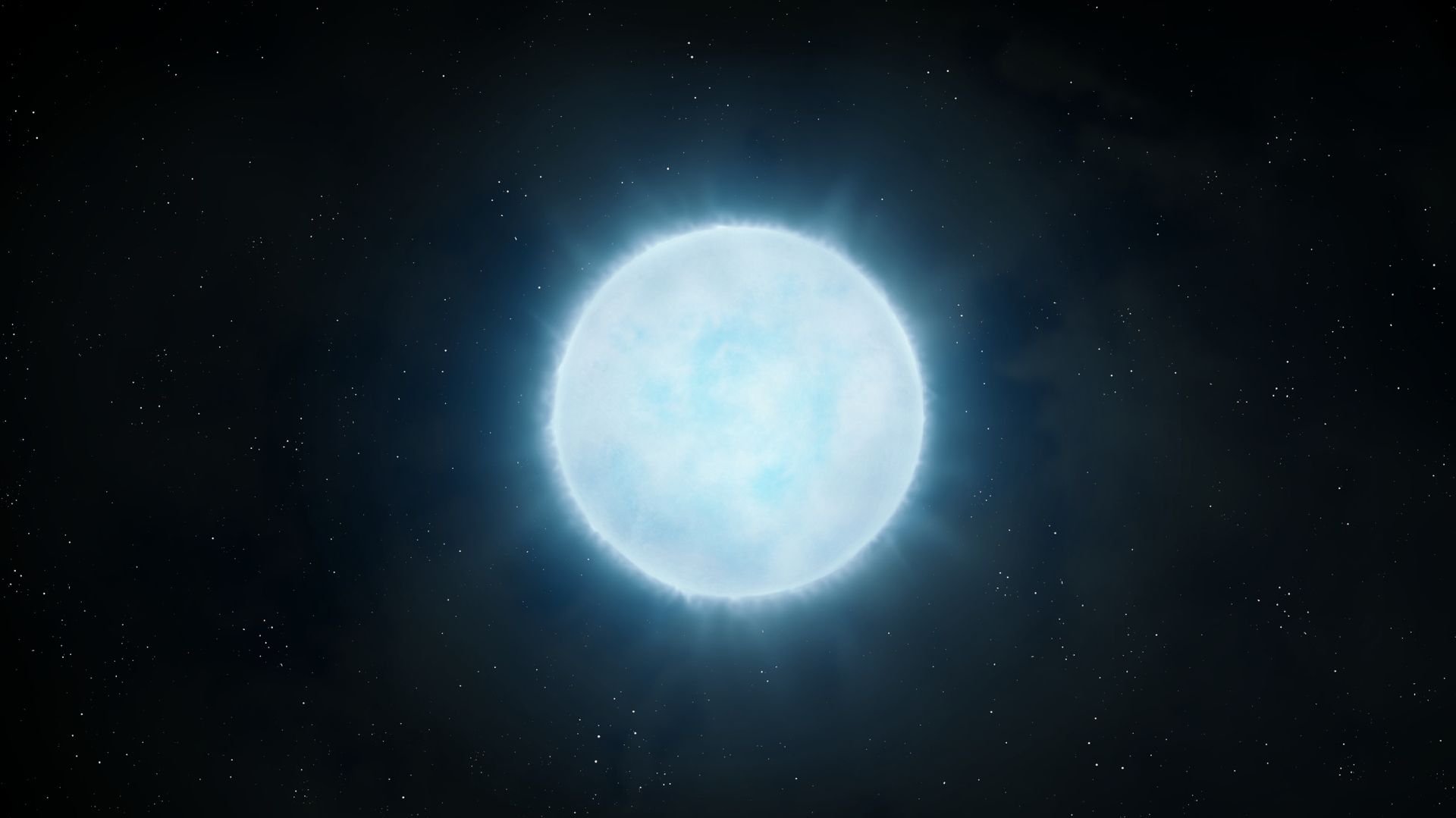
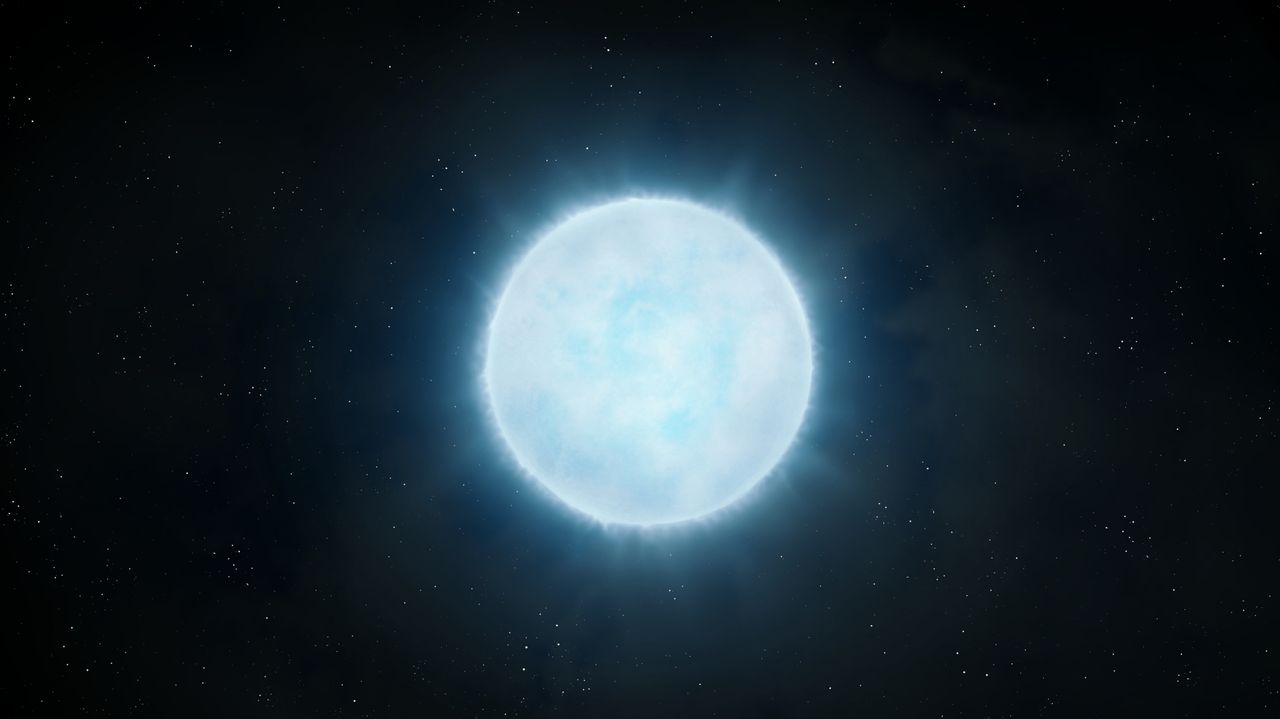
How do you search for invisible hypothetical particles? One way is to see how quickly they could kill white dwarfs — the dense, leftover cores of dead stars.
In recent years, astronomers have become increasingly interested in a theoretical particle known as the axion, which was concocted decades ago to solve a challenging problem with the strong nuclear force. After initial attempts to find it in particle collider experiments turned up empty, however, the idea sunk into the background.
You may like
Just because this little particle would be largely invisible, it doesn’t mean it would go completely unnoticed in the universe. In a pre-print paper published in November 2025 in the open access server arXiv, researchers reported a way to test axion models using old archival data from the Hubble Space Telescope. Although they didn’t find any evidence for axions, they beat other attempts and gave us a much clearer picture of what is and isn’t allowed in this universe.
The targets for this study were white dwarfs — the dense, dim cores of dead stars. A single white dwarf can pack the mass of the sun into an object smaller than Earth, making white dwarfs among the most exotic objects in the universe. Crucially, white dwarfs support themselves against collapse through something called electron degeneracy pressure, in which a huge sea of free-floating electrons resists collapse because, according to quantum mechanics, electrons can never share the same state.
Some models of how axions might behave say these particles could be created by electrons: If an electron were moving quickly enough, it would trigger the formation of an axion. And because the electrons deep inside a white dwarf are moving very, very quickly — at nearly the speed of light — as they buzz around in their tight confines, they could produce a lot of axions.
The axions would then go speeding off, leaving the white dwarf altogether. This production of escaping axions would rob the white dwarf of energy. And because white dwarfs don’t produce energy on their own, this would cause them to cool off faster than they would otherwise.
The researchers fed this model of axion cooling into a sophisticated software suite that can simulate the evolution of stars and how their temperature and brightness change as their interiors evolve.
This model allowed the researchers to predict the typical temperature of a white dwarf, given its age, both with and without axion cooling. With the results in hand, they turned to data of the globular cluster 47 Tucanae collected with Hubble. Global clusters are crucial because all of the white dwarfs in them were born at roughly the same time, giving the astronomers a large sample to study.
In short, the researchers found no evidence for axion cooling in the white dwarf population. But their results did give brand-new constraints on the ability for electrons to produce axions: They can’t do it more efficiently than once every trillion chances.
This result doesn’t rule out axions entirely, but it does say it’s unlikely that electrons and axions directly interact with each other. So, if we’re going to keep searching for axions, we’re going to have to find even more clever ways to look.
SCIENCE
60,000 feet above Earth, NASA is hunting for the minerals that power phones, EVs and clean energy



NASA has a new high-tech sensor to help the search for critical minerals in the American West.
The sensor is called AVIRIS-5 (Airborne Visible/Infrared Imaging Spectrometer-5), and it comes from technology developed by NASA’s Jet Propulsion Laboratory (JPL) back in the 1970s. About the size of a microwave, AVIRIS-5 fits inside the nose of one of NASA’s ER-2 high-altitude research aircraft. The sensor’s first iteration was employed in 1986, and JPL has worked to improve it ever since.
You may like
GEMx is an ongoing project. One of the reasons why deserts are an ideal spot for mineral spectroscopy is because few trees grow there. Since 2023, the joint team has covered more than 366,000 square miles (950,000 square kilometers) in the vast expanse of the American West.
Many of the minerals that the GEMx project is trying to find have “unique chemical structures,” that reflect different wavelengths of light. By detecting this reflected light, AVIRIS-5 is able to uncover the “spectral fingerprints” that are specific to the critical minerals.
The USGS defines critical minerals as those that have “significant consequences for the economic or national security of the U.S.” These include aluminum, lithium, zinc, graphite, tungsten and titanium. Minerals such as these are used in the manufacturing supply chains for crucial technologies such as semiconductors, solar electricity systems or electric vehicle batteries.
In March 2025, the White House issued an Executive Order to boost the production of these minerals “to the maximum possible extent,” stating that American national and economic security are “now acutely threatened by our reliance upon hostile foreign powers’ mineral production”
Aside from helping hunt for critical minerals, spectrometers similar to AVIRIS-5 that JPL has designed over the years have also been used on spacecraft to help NASA scientists understand more about planets in our solar system, like Mars, Mercury, and Pluto.
“One is en route to Europa, an ocean moon of Jupiter, to search for the chemical ingredients needed to support life,” a JPL spokesperson wrote in a statement.
Dana Chadwick, a JPL Earth system scientist, envisions many more uses for the new sensor besides hunting minerals in the desert.
“The breadth of different questions you can take on with this technology is really exciting, from land management to snowpack water resources to wildfire risk,” Chadwick said in a statement. “Critical minerals are just the beginning for AVIRIS-5.”

China is rounding off what has been a year of big progress in space, including major crewed lunar landing tests, new rockets and booster landing attempts, a new deep space mission and even successfully resolving its first human spaceflight emergency.
The country has already smashed its previous record for launches in a calendar year (68, set in 2024), amassing more than 80 orbital launch attempts at time of reporting, with a couple of weeks still to go. Two of these launches ended in failure, both from commercial launch providers, but the venerable Long March rocket series continued a long, failure-free run dating back to 2020.
You may like
Chinese space successes in 2025
Driving some of this growth in launches are the country’s two megaconstellations: the national Guowang project and the Shanghai-backed Thousand Sails constellation, both of which are to consist of more than 10,000 satellites each. These are China’s response to SpaceX’s Starlink and other Western low Earth orbit communications constellations. There were 15 launches this year for Guowang alone, but expect launches for these projects to increase in 2026.
One area of major progress for China in 2025 was its crewed lunar program. The country aims to land a pair of its astronauts on the moon before 2030 and this year saw some of the first major hardware tests for the ambitious project. Key tests included testing a shortened stage of the new moon rocket, a liftoff and landing test in simulated lunar conditions for the Lanyue crew lander, and a pad abort test for the crew spacecraft. This progress has contributed to concerns in the U.S. that China will land its astronauts on the moon before America can return to the lunar surface with Artemis 3.
China also made a launch to deep space, with the Tianwen 2 near-Earth asteroid sample return mission launching in May and now on its way to the mysterious asteroid Kamo’oalewa. The spacecraft is expected to reach the asteroid in July 2026, providing us with images and eventually samples of another new world. Tianwen 2 is China’s second deep space exploration mission, following the 2020 Tianwen 1 Mars rover and orbiter. Incidentally, the orbiter for that mission is still active and in October, captured images of interstellar comet 3I/ATLAS; one of the major space events of the year.
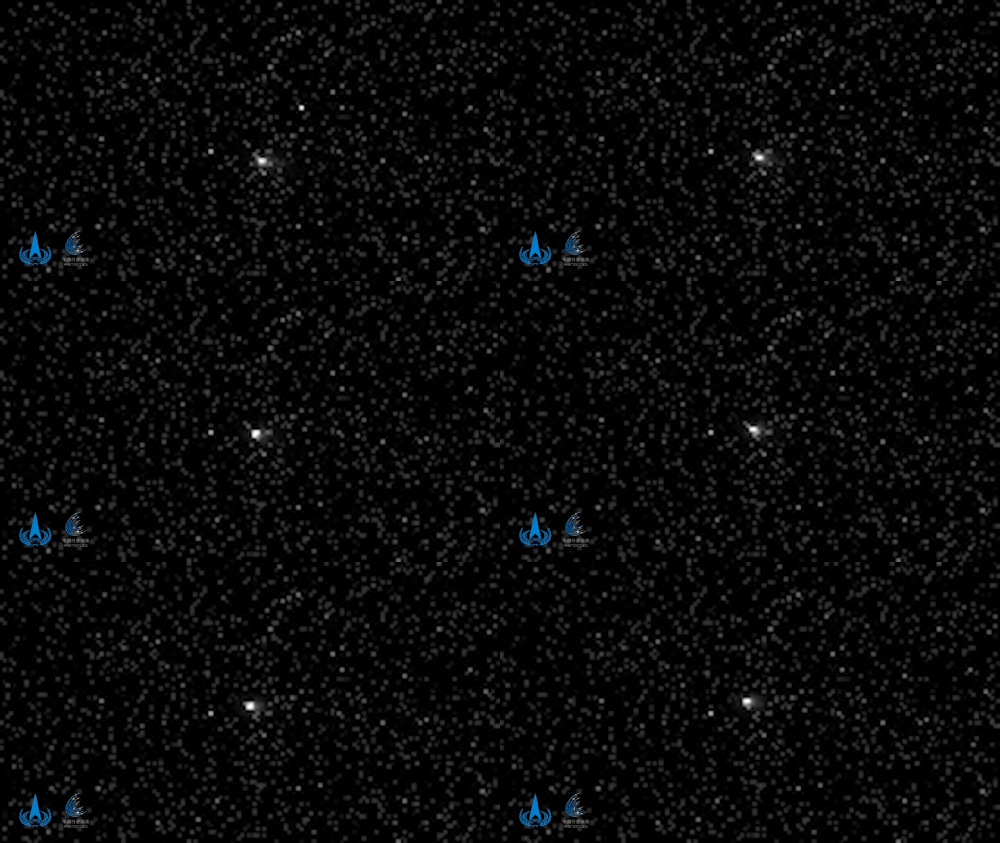
A series of photos of the interstellar comet 3I/ATLAS, captured from Mars orbit by Tianwen 1 in early October 2025. (Image credit: CNSA)
Closer to Earth, China also appeared to have completed a pioneering satellite refueling in geostationary orbit, high above the equator. The test could mark a breakthrough for extending spacecraft lifetimes, reducing debris, and bringing strategic flexibility.
China resolves 1st spaceflight emergency
Not everything went according to plan for China in 2025. The country planned three missions to its Tiangong space station in 2025: the crewed Shenzhou 20 and Shenzhou 21 missions, which launched in April and October respectively, and the Tianzhou 9 cargo spacecraft in July.
These plans were upended, however, when routine checks found an external crack in a Shenzhou 20 spacecraft viewport window on Nov. 5, likely caused by space debris, just before it was due to carry its three astronauts back to Earth. The spacecraft was deemed not to be safe to carry astronauts through the heat of reentry, meaning emergency protocols were initiated.
The Shenzhou 20 astronauts instead returned to Earth in the recently-arrived Shenzhou 21 spacecraft, while the Shenzhou 22 spacecraft — on standby for just a scenario at Jiuquan spaceport — was readied in 16 days and launched to Tiangong uncrewed to provide a lifeboat for the Shenzhou 21 astronauts. The incident was the first major human spaceflight emergency for China, with its orderly response quickly solving the crisis.
You may like

Astronaut Chen Dong, who was the commander of China’s Shenzhou-20 mission, salutes a crowd. (Image credit: VCG/Getty Images)
The year ahead for Chinese space missions
China’s already accelerating launch rate is only likely to increase in 2026, with further reusable rocket test flights and landing attempts, megaconstellation launches, and the continued expansion of its spaceports, particularly in Jiuquan in the Gobi Desert, the Hainan commercial launch pads, and the maritime spaceport in the Eastern province of Shandong.
There will also be flagship missions. The second half of the year will see the launch of the Chang’e 7 robotic lunar mission, which will target a landing at the lunar south pole and aim to seek out water-ice. There will also be a joint space weather mission, named SMILE, from the Chinese Academy of Sciences and the European Space Agency (ESA), launching in the spring.
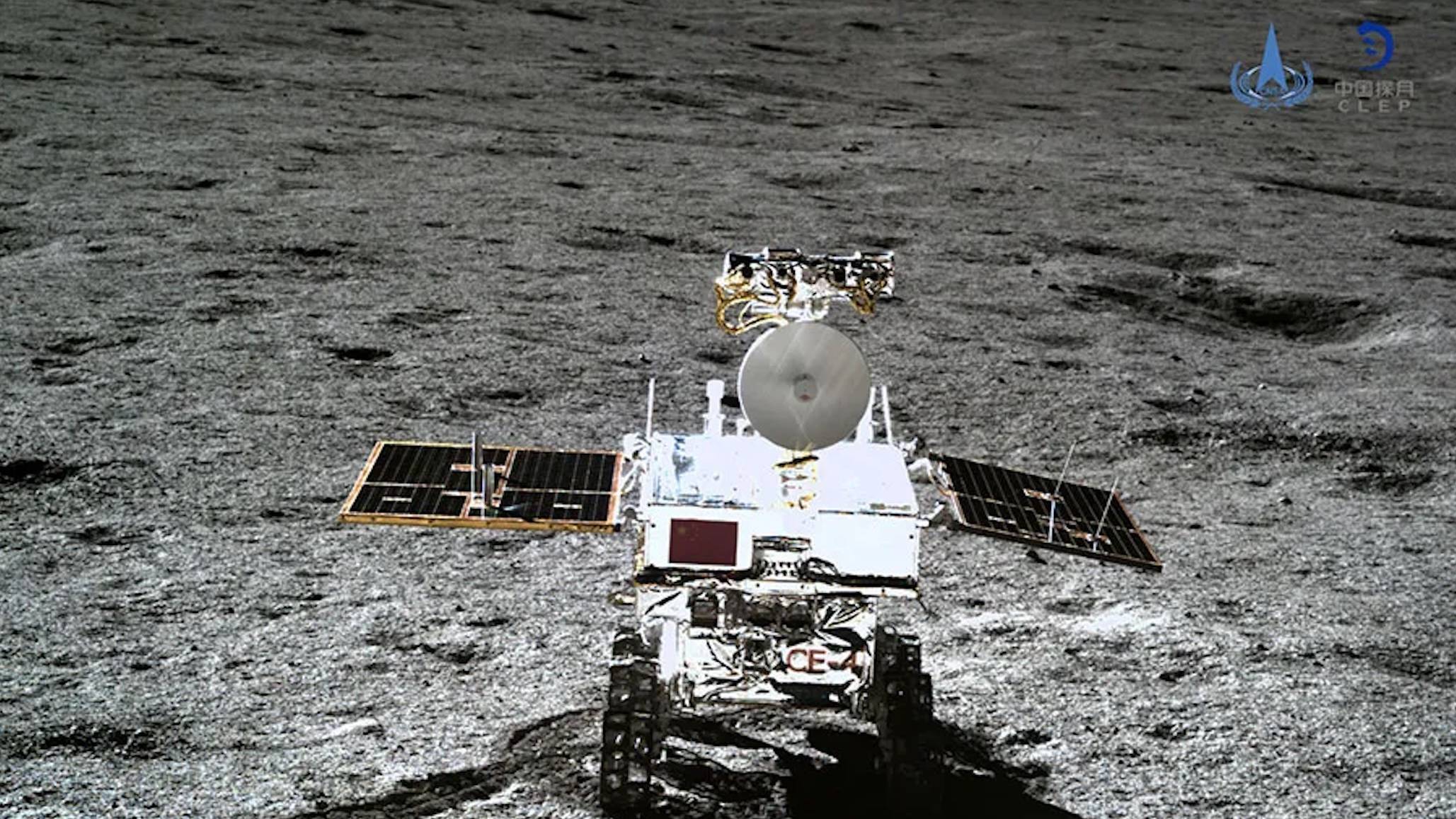
China’s Yutu 2 lunar rover, as seen by the Chang’e 4 lander, on the far side of the moon. The 2026 Chang’e 7 mission will also feature a large rover, as well as a lander and a small hopper that will explore lunar craters. (Image credit: CNSA)
China will also take new steps in human spaceflight in 2026. The country will send a pair of missions to Tiangong, namely Shenzhou 23 and Shenzhou 24. One of these is expected to carry the first International astronaut from Pakistan to the space station. The stay is expected to be short, launching on a Shenzhou as part of a three-person crew, and returning days later with two Chinese astronauts returning to Earth after their six-month-long stay in orbit. That will leave one Chinese astronaut from the completed mission to stay in orbit for a further six months, becoming the first Chinese astronaut to spend an entire year in orbit continuously.
Maybe the most closely watched and consequential missions will be related to China’s crewed moon plans. China plans debut flights for its Long March 10 rocket and the Mengzhou spacecraft in 2026, with success being crucial to achieving its goal of landing its astronauts on the moon before 2030.
SCIENCE
‘What the heck is this?’ James Webb telescope spots inexplicable planet with diamonds and soot in its atmosphere

A distant exoplanet appears to sport a sooty atmosphere that is confusing the scientists who recently spotted it.
The Jupiter-size world, detected by the James Webb Space Telescope (JWST), doesn’t have the familiar helium-hydrogen combination we are used to in atmospheres from our solar system, nor other common molecules, like water, methane or carbon dioxide.
You may like
“This was an absolute surprise,” study co-author Peter Gao, a staff scientist at the Carnegie Earth and Planets Laboratory, said in a statement. “I remember after we got the data down, our collective reaction was, ‘What the heck is this?’ It’s extremely different from what we expected.”
Neutron sun
Researchers probed the bizarre environment of the planet, known as PSR J2322-2650b, in a paper published Tuesday (Dec. 16) in The Astrophysical Journal Letters. Although the planet was detected by a radio telescope survey in 2017, it took the sharper vision of JWST (which launched in 2021) to examine PSR J2322-2650b’s environment from 750 light-years away.
PSR J2322-2650b orbits a pulsar. Pulsars are fast-spinning neutron stars — the ultradense cores of stars that have exploded as supernovas — that emit radiation in brief, regular pulses that are visible only when their lighthouse-like beams of electromagnetic radiation aim squarely at Earth. (That’s bizarre on its own, as no other pulsar is known to have a gas-giant planet, and few pulsars have planets at all, the science team stated.)
The infrared instruments on JWST can’t actually see this particular pulsar because it is sending out high-energy gamma-rays. However, JWST’s “blindness” to the pulsar is actually a boon to scientists because they can easily probe the companion planet, PSR J2322-2650b, to see what the planet’s environment is like.
“This system is unique because we are able to view the planet illuminated by its host star, but not see the host star at all,” co-author Maya Beleznay, a doctoral candidate in physics at Stanford University, said in the statement. “We can study this system in more detail than normal exoplanets.”
An artist’s concept of the exoplanet PSR J2322-2650b. (Image credit: NASA, ESA, CSA, Ralf Crawford (STScI))
Formation mystery
PSR J2322-2650b’s origin story is an enigma. It is only a million miles (1.6 million kilometers) from its star — nearly 100 times closer than Earth is to the sun. That’s even stranger when you consider that the gas giant planets of our solar system are much farther out — Jupiter is 484 million miles (778 million km) from the sun, for example.
The planet whips around its star in only 7.8 hours, and it’s shaped like a lemon because the gravitational forces of the pulsar are pulling extremely strongly on the planet. At first glance, it appears PSR J2322-2650b could have a similar formation scenario as “black widow” systems, where a sunlike star is next to a small pulsar.
You may like
In black-widow systems, the pulsar “consumes” or erodes the nearby star, much like the myth of the black widow spider’s feasting behavior after which the phenomena is named. That happens because the star is so close to the pulsar that its material falls onto the pulsar. The extra stellar material causes the pulsar to gradually spin faster and to generate a strong “wind” of radiation that erodes the nearby star.
But lead author Michael Zhang, a postdoctoral fellow in exoplanet atmospheres at the University of Chicago, said this pathway made it difficult to understand how PSR J2322-2650b came to be. In fact, the planet’s formation appears to be unexplainable at this point.
“Did this thing form like a normal planet? No, because the composition is entirely different,” Zhang said in the statement. “It’s very hard to imagine how you get this extremely carbon-enriched composition. It seems to rule out every known formation mechanism.”
Diamonds in the air
Scientists still can’t explain how the soot or diamonds are present in the exoplanet’s atmosphere. Usually, molecular carbon doesn’t appear in planets that are very close to their stars, due to the extreme heat.
One possibility for what happened comes from study co-author Roger Romani, a professor of physics at Stanford University and the Kavli Institute for Particle Astrophysics and Cosmology. After the planet cooled down from its formation, he suggested, carbon and oxygen in its interior crystallized.
But even that doesn’t account for all of the odd properties. “Pure carbon crystals float to the top and get mixed into the helium … but then something has to happen to keep the oxygen and nitrogen away,” Romani explained in the same statement. “And that’s where the mystery [comes] in.”
Scientists hope to continue studying PSR J2322-2650b. “It’s nice to not know everything,” Romani said. “I’m looking forward to learning more about the weirdness of this atmosphere. It’s great to have a puzzle to go after.”

Using the Hubble Space Telescope, astronomers have imaged the largest and most chaotic site of planetary birth humanity has ever seen.
Appearing like a stunning cosmic bat, this protoplanetary disk, located around 1,000 light-years away, stretches out for around 400 billion years, around 40 times the size of our solar system, out to the ring of cometary bodies known as the Kuiper belt.
This protoplanetary disk with an infant star at its heart has the official designation IRAS 23077+6707, but also has the incredible nickname “Dracula’s Chivito.” But it isn’t just its staggering size and unique nickname that make IRAS 23077+6707 so remarkable.
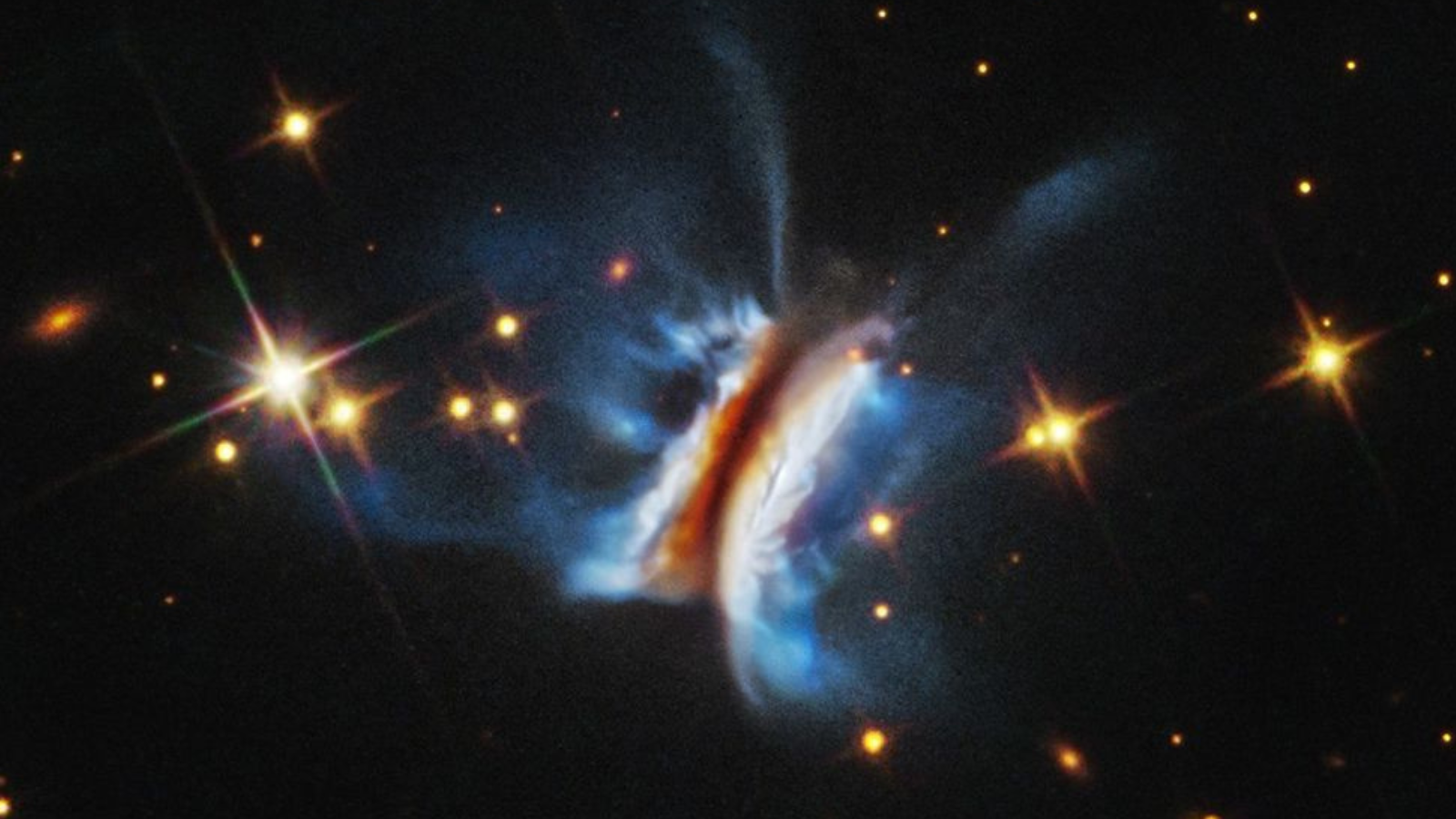
A Hubble image of Dracula’s Chivito, the largest protoplanetary disk ever seen (Image credit: NASA, ESA, STScI, Kristina Monsch (CfA); Image Processing: Joseph DePasquale (STScI))
“The level of detail we’re seeing is rare in protoplanetary disk imaging, and these new Hubble images show that planet nurseries can be much more active and chaotic than we expected,” team leader Kristina Monsch of the Center for Astrophysics | Harvard & Smithsonian (CfA) said in a statement. “We’re seeing this disk nearly edge-on, and its wispy upper layers and asymmetric features are especially striking.”
You may like
Monsch added that both Hubble and the James Webb Space Telescope (JWST) have glimpsed similar structures in other disks, but Dracula’s Chivito provides astronomers with an exceptional perspective that allows them to trace its substructures in visible light at an unprecedented level of detail.
“This makes the system a unique, new laboratory for studying planet formation and the environments where it happens,” Monsch continued.
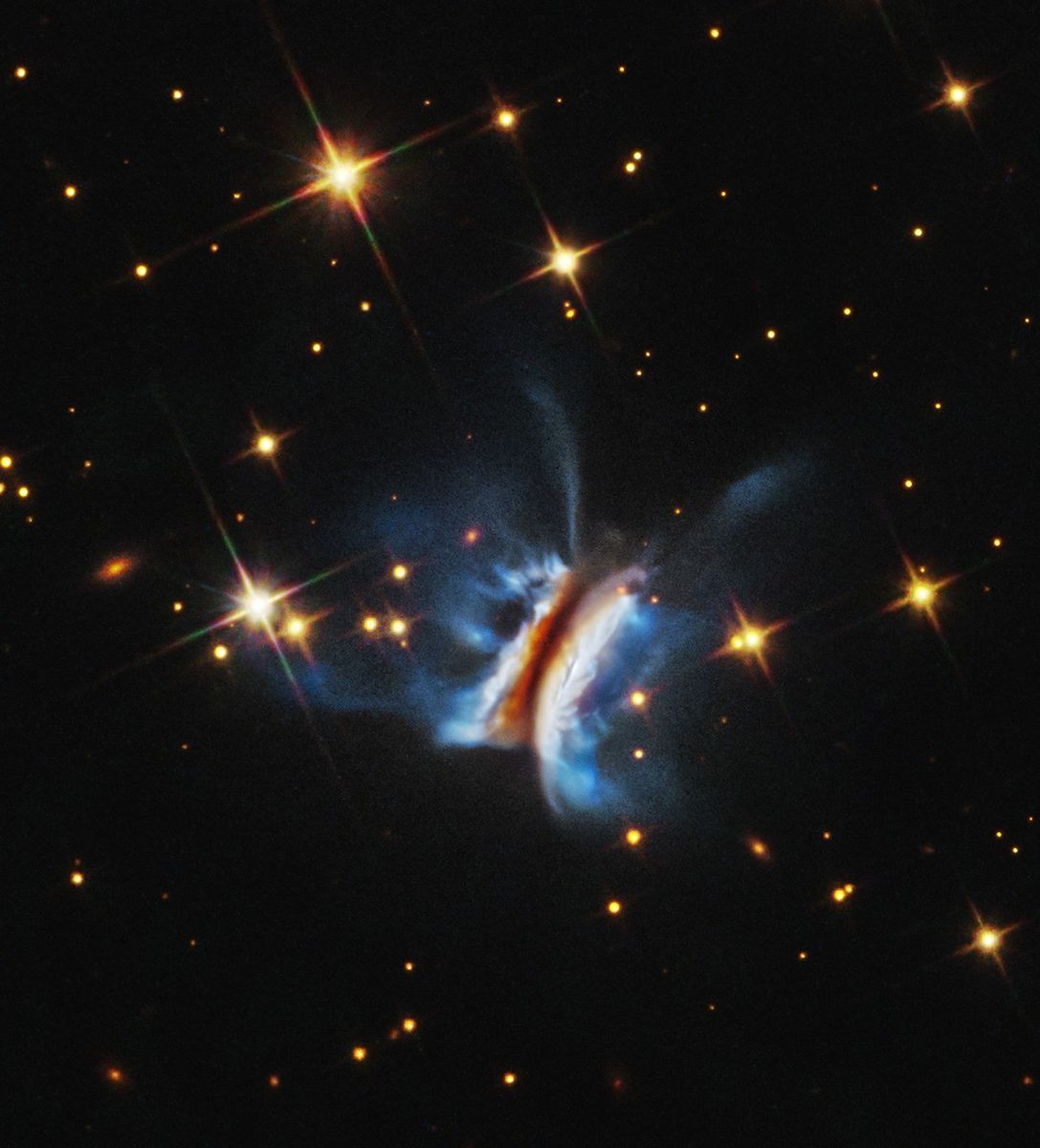
The full Hubble image of IRAS 23077+6707, appearing like a cosmic steak sandwich (Image credit: NASA, ESA, STScI, Kristina Monsch (CfA); Image Processing: Joseph DePasquale (STScI))
The unsymmetrical appearance of the gas and dust lanes in Dracula’s Chivito in this stunning Hubble image indicates that dynamic processes are occurring within the disk as its morphology is gradually shaped by interactions with its surroundings.
“We were stunned to see how asymmetric this disk is,” team member Joshua Bennett Lovell, also an astronomer at the CfA, said. “Hubble has given us a front row seat to the chaotic processes that are shaping disks as they build new planets — processes that we don’t yet fully understand but can now study in a whole new way.”
Not only does this give scientists a better picture of planetary birth, but Dracula’s Chivito also offers a look at what the solar system may have looked like when it was forming planets 4.6 billion years ago, albeit on a much larger scale.
“In theory, IRAS 23077+6707 could host a vast planetary system,” said Monsch. “While planet formation may differ in such massive environments, the underlying processes are likely similar.
“Right now, we have more questions than answers, but these new images are a starting point for understanding how planets form over time and in different environments.”
By the way, in case you are wondering, the “Dracula” element of this protoplanetary disk’s nickname is a playful reference to the Transvaniian heritage of one of the team members behind this research. Meanwhile, a “Chivito” is a massive steak sandwich, an iconic national dish from Uruguay, the homeland of another of the crew of scientists.
Don’t panic, Drac, that’s “steak,” not “stake.”
SCIENCE
Guess the number quiz: Can you work out these scientific numbers and constants and top the leaderboard?

Whether you’re cooking up chemistry, getting physical with physics or bending your mind over mathematics, one thing that remains constant is, well, constants. Some numbers are so fundamental to the way we conduct science that we’d be lost without them, and their discovery has helped us better understand the world around us.
So how many of these key figures do you know? Try our new quiz and find out. We’ll be dropping another number in the mix every day for you to guess, and if you prove yourself to be a numberphile, maybe you’ll make it to the top of our leaderboard. All you need to do is register and your score will be saved, and be sure to leave a comment and share how you got on (but no spoilers please).
—Live Science crossword: Test your knowledge on all things science with our weekly, free puzzle!
You may like
—Periodic table of elements quiz: How many elements can you name in 10 minutes?
—How quickly can you name all 12 Apollo astronauts that walked on the moon?


Social media often feels overwhelmingly toxic, but the reality is more restrained. Research finds that most harmful content comes from a tiny fraction of users who post frequently and loudly. Many Americans believe that hostile behavior dominates online spaces, but research suggests this belief is far off the mark. People often assume that nearly half […]
SOURCE PAGE
SCIENCE
Throwing out flame-retardant furniture can reduce toxic chemicals in blood, study finds | US news


Removing old furniture made with flame retardants from people’s homes can significantly reduce the amount of the toxic chemicals in blood, a new 10-year, peer-reviewed study by California regulators and public health groups has found.
The drop that researchers found was a “super big deal”, said Arlene Blum, the director of the Green Science Policy Institute who has for decades worked to reduce the level of flame retardants in consumer goods.
“To my mind, that’s a pretty dramatic change, and it shows how you can effect change and improve public health with a regulation,” Blum said.
Most furniture made with foam between about 1975 and 2015 contained any of a range of toxic flame retardants that are linked to serious health problems, and especially present a risk for kids.
In 2015, California scrapped requirements for several of the most toxic and common flame retardants used in furniture. The California department of public health and environmental non-profits at the time checked for flame retardants in the blood of dozens of people that had furniture with the chemicals, and monitored levels over the next 10 years.
Flame retardant levels dropped about four times faster in the blood of those that removed furniture with flame retardants compared with those who didn’t. The levels in blood on average were reduced by about half within just 1.4 years.
Flame retardants commonly used in furniture are linked to serious health issues, including cancer, neurotoxicity, thyroid disease, pre-term birth, decreased fertility, deficits in motor skills, and a drop in IQ in children.
During the mid-1970s, state and federal legislators passed laws requiring a range of products to meet flammability standards, including furniture, electronics, car seats and kids’ pyjamas. But the first generation of flame retardants were found to be highly toxic, and Blum led advocacy in 1977 that helped stop the use of the most dangerous in kids’ pyjamas.
Later generations of flame retardants have proven to be nearly as toxic as the first. In 2015, after years of pressure, California updated its flammability standards to eliminate a requirement for chemical flame retardants in furniture.
The retardants often break off from furniture and attach to dust that is inhaled or ingested. Researchers found much lower levels of flame retardants in the dust of homes from which the furniture was removed.
A few years later, the state banned some of the most dangerous flame retardant compounds in furniture and other goods, and Congress adopted a similar measure in 2020. The furniture industry has largely moved away from using any flame retardants, Blum said, meaning the level of the chemicals in Americans’ blood more broadly is probably dropping as the furniture is disposed of.
Blum recommends replacing furniture made between 1975 and 2015 with products made before or after that period. Replacing foam in couch cushions can be a more economical safeguard, she said. If those options are not in the budget, regularly dusting and using a vacuum with a Hepa filter can help reduce the amount of flame retardants in a home.

The Predator | Holiday Special | 20th Century FOX – YouTube

Watch On
The holiday season evokes majestic memories of family, friends, gifts, and… the Predator?! Wait, that last one doesn’t sound right, but it’s true. Everyone’s favorite intergalactic trophy hunting species has a Christmas connection, as he battled Santa Claus’ reindeer in a forgotten animated short titled “The Predator Holiday Special.”
You may like

(Image credit: 20th Century Studios)
What follows is a pulsating hunting mission, as Sprinkles runs for the hills but appears to fall victim to the rabid Yautja’s sharp blades. Santa’s trusty reindeer – all kitted out like they have posters of Arnold Schwarzenegger’s Dutch Schaefer above their beds – assemble in a coordinated military fashion, but their efforts prove to be futile, since the Predator savages and makes mincemeat out of them.
It’s glory kills galore, as the hunter recreates some of the franchise’s most brutal moments with the reindeer. All those weapons and training seemed to be lost on them, with the chances of “Reindeer vs. Predator” replacing “Alien vs. Predator” as the mega-money crossover evaporating with each dead reindeer.
Now, the heart-in-throat anxiety pounds faster and harder, as the Yautja approaches Santa’s house. This is it – Christmas is about to be cancelled, folks! The Grinch cheers from his home on Mount Crumpit. Or maybe not. Jolly ol’ Saint Nick (Keith Silverstein) steps out to face the enemy, and he has an ace up his sleeve: Larry the reindeer! Like a force of nature out of every single ’80s action movie and powered by the testosterone of Stallone, Schwarzenegger, and Van Damme, Larry unloads on the Predator, sending him to the great big trophy hunting museum in the sky.

(Image credit: 20th Century Studios)
Of course, Santa and Larry celebrate accordingly by reenacting the iconic handshake between Dutch and Al Dillion (Carl Weathers) from 1987’s “Predator.”
Then more Predators show up. Uh-oh! Actually, scratch that. They’re here to take away their deceased clan member, and one of them even leaves a basket of decorated eggs with Santa. Aw! The kind gesture does nothing to endear the gift givers to the North Pole residents, as Sprinkles returns and unleashes the fury of John Wick on the remaining Predators.
Related: Predator movies ranked, from worst to best

(Image credit: 20th Century Studios)
Despite Santa and his crew having the Yautja’s number here, the creatures have the last laugh, thanks to a carefully placed Trojan horse: The basket of eggs. In the final scene of the film, one of the eggs opens up to reveal it’s an Ovomorph, indicating that a Facehugging Xenomorph is imminent here. Drats! And sadly, in the North Pole, no one can hear you scream…
You may like
Where did this idea even come from? According to Senreich’s comments to Entertainment Weekly, it was born out of “a random hangout moment.” Then, the concept evolved into chucking the Predator into the world of “Rudolph the Red-Nosed Reindeer”-styled animation, because nothing screams Christmas quite like a Yautja hunt in the North Pole.
Ultimately, “The Predator Holiday Special” was created as a neat promo to drum up anticipation for the home release of Shane Black’s “The Predator,” which arrived in December 2018. Who could have guessed that this barely two-minute short was better than all 108 minutes of Black’s baffling blockbuster that almost sent the Yautja into extinction?
The special is still available to watch on YouTube, so make it a holiday tradition like watching the best Christmas movie of all time (Die Hard, obviously) every year. If you’d rather check out some more serious Predator movies, they’re all available to watch on Hulu (US) and Disney+ (UK).
If you’re going to be out of the country this holiday season, you can still watch your streaming service of choice using a VPN. You’ll be able to connect to the service you’ve paid for, no matter where you are (on Earth, it won’t work in space, sorry).
There are loads of great VPN services out there, but if you’re looking for a recommendation, NordVPN is our top pick.
SCIENCE
‘Biological time capsules’: How DNA from cave dirt is revealing clues about early humans and Neanderthals

The last two decades have seen a revolution in scientists’ ability to reconstruct the past. This has been made possible through technological advances in the way DNA is extracted from ancient bones and analyzed.
These advances have revealed that Neanderthals and modern humans interbred — something that wasn’t previously thought to have happened. It has allowed researchers to disentangle the various migrations that shaped modern people. It has also allowed teams to sequence the genomes of extinct animals, such as the mammoth, and extinct agents of disease, such as defunct strains of plague.
You may like
Caves can preserve tens of thousands of years of genetic history, providing ideal archives for studying long-term human–ecosystem interactions. The deposits beneath our feet become biological time capsules.
It is something we are exploring here at the Geogenomic Archaeology Campus Tübingen (GACT) in Germany. Analyzing DNA from cave sediments allows us to reconstruct who lived in ice age Europe, how ecosystems changed and what role humans played. For example, did modern humans and Neanderthals overlap in the same caves? It’s also possible to obtain genetic material from faeces left in caves. At the moment we are analyzing DNA from the droppings of a cave hyena that lived in Europe around 40,000 years ago.
The oldest sediment DNA discovered so far comes from Greenland and is 2 million years old.
Paleogenetics has come a long way since the first genome of an extinct animal, the quagga, a close relative of modern zebras, was sequenced in 1984. Over the past two decades, next-generation genetic sequencing machines, laboratory robotics and bioinformatics (the ability to analyze large, complex biological datasets) have turned ancient DNA from a fragile curiosity into a high-throughput scientific tool.
The sediment samples from Hohle Fels are divided up for different analysis methods. Some go to the clean room, some to the geochemical laboratory. (Image credit: GACT)
Today, sequencing machines can decode up to a hundred million times more DNA than their early predecessors. Where the first human genome took over a decade to complete, modern laboratories can now sequence hundreds of full human genomes in a single day.
GACT is a growing research network based in Tübingen, Germany, where three institutions collaborate across disciplines to establish new methods for finding DNA in sediments. Archaeologists, geoscientists, bioinformaticians, microbiologists and ancient-DNA specialists combine their expertise to uncover insights that no single field could achieve alone —- a collaboration in which the whole genuinely becomes greater than the sum of its parts.
You may like
The network extends well beyond Germany. International partners enable fieldwork in archaeological cave sites and natural caves all over the world. This summer, for example, the team investigated cave sites in Serbia, collecting several hundred sediment samples for ancient DNA and related ecological analyses. Future work is planned in South Africa and the western United States to test the limits of ancient DNA preservation in sediments from different environments and time periods.
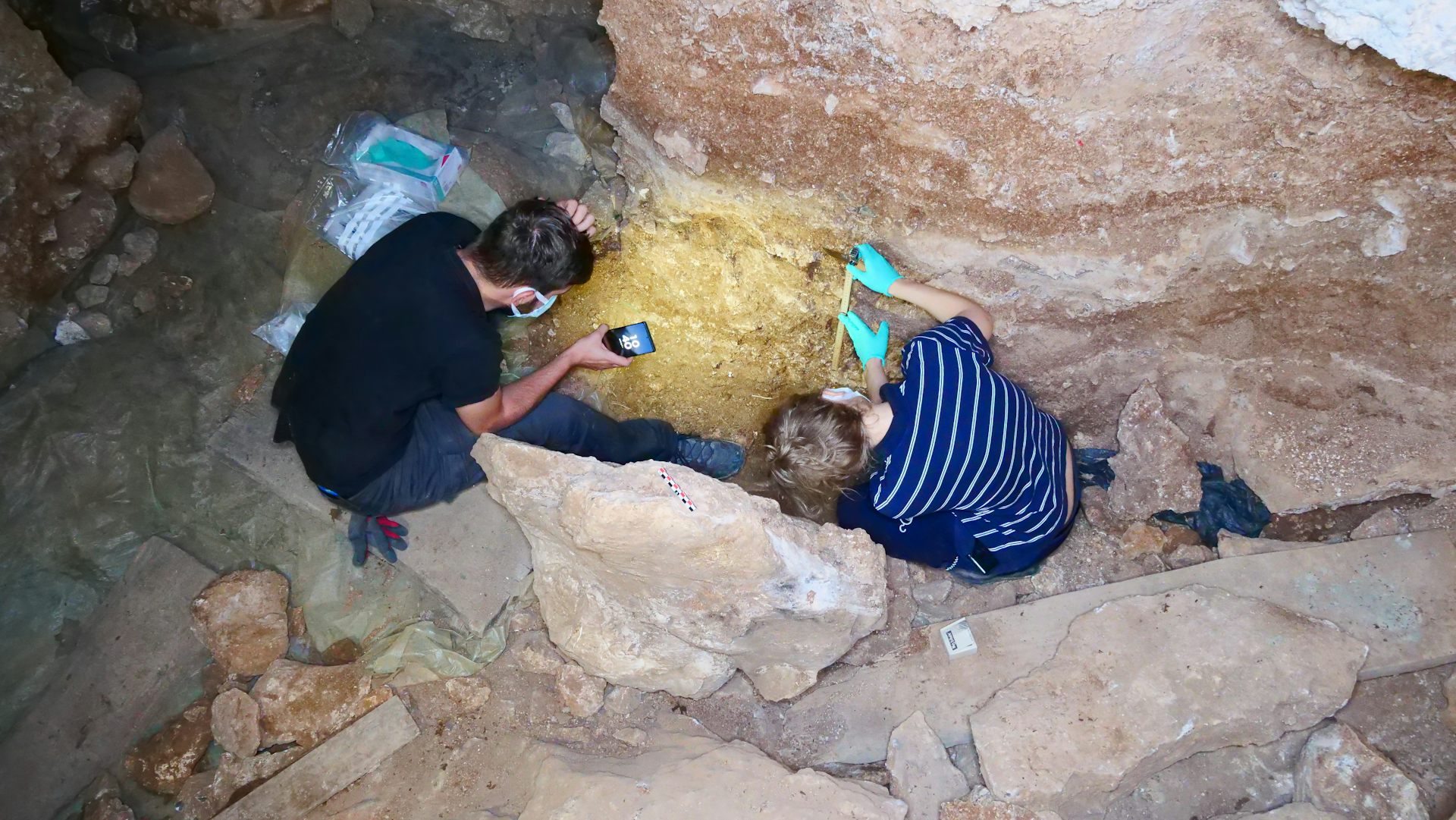
Work underway at a cave site in Serbia. (Image credit: GACT)
A needle in a haystack
Recovering DNA from sediments sounds simple: take a scoop, extract, sequence. In reality, it is far more complex. The molecules are scarce, degraded and fragmented, and mixed with modern contamination from cave visitors and wildlife. Detecting authentic ice age molecules relies on subtle chemical damage patterns to the DNA itself, ultra-clean laboratories, robotic extraction, and specialized bioinformatics. Every positive identification is a small triumph, revealing patterns invisible to conventional archaeology.
Much of GACT’s work takes place in the caves of the Swabian Jura within Unesco World Heritage sites such as Hohle Fels, home to the world’s oldest musical instruments and figurative art. Neanderthals and Homo sapiens left behind stone artifacts, bones, ivory and sediments that accumulated over tens of millennia. Caves are natural DNA archives, where stable conditions preserve fragile biomolecules, enabling researchers to build up a genetic history of ice age Europe.
One of the most exciting aspects of sediment DNA research is its ability to detect species long gone, even when no bones or artifacts remain. A particular focus lies on humans: who lived in the cave, and when? How modern humans and Neanderthals use the caves and, as mentioned, were they there at the same times? Did cave bears and humans compete for shelter and resources? And what might the microbes that lived alongside them reveal about the impact humans had on past ecosystems?
Sediment DNA also traces life outside the cave. Predators dragged prey into sheltered chambers, humans left waste behind. By following changes in human, animal and microbial DNA over time, researchers can examine ancient extinctions and ecosystem shifts, offering insights relevant to today’s biodiversity crisis.
The work is ambitious: using sedimentary DNA to reconstruct ice age ecosystems and to understand the ecological consequences of human presence. Only two years into GACT, every dataset generates new questions. Every cave layer adds another twist to the story.
With hundreds of samples now being processed, major discoveries lie ahead. Researchers expect soon to detect the first cave bear genomes, the earliest human traces, and complex microbial communities that once thrived in darkness. Will the sediments reveal all their secrets? Time will tell — but the prospects are exhilarating.
This edited article is republished from The Conversation under a Creative Commons license. Read the original article.

Black holes are arguably the most fascinating entities in the whole realm of science — these are regions in the fabric of spacetime that surround an infinitely dense, infinitesimally small point of mass and exert a gravitational force so strong that not even light can escape their grips.
It is therefore no surprise that just as black holes grip light (and everything else, for that matter) they grip the attention of scientists and the general public, too. And 2025 has been no exception, with the year bringing forth some intriguing and jaw-dropping scientific breakthroughs regarding these cosmic titans.
You may like
1. James Webb Space Telescope spots rapidly feeding “little red dot”
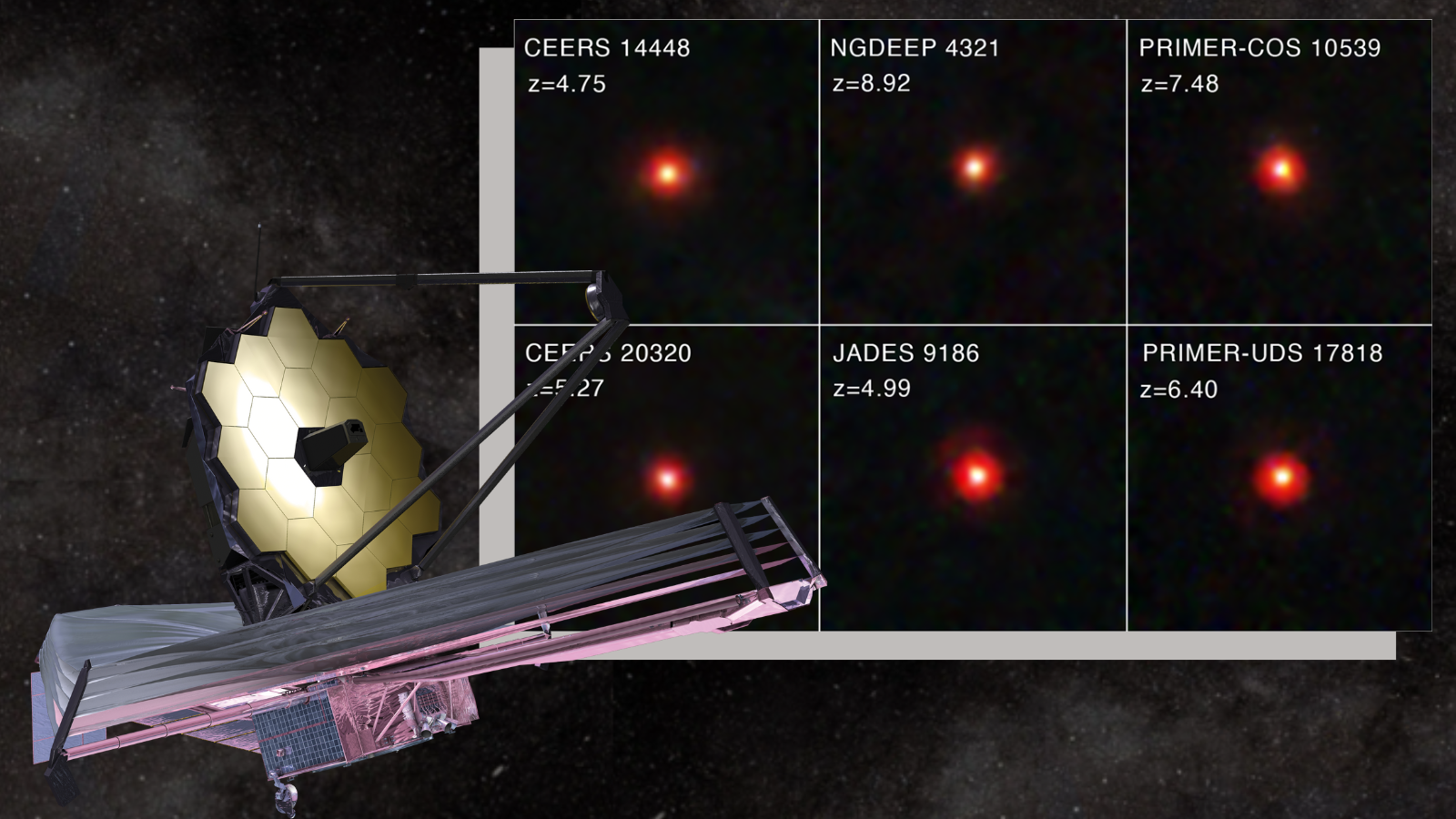
An illustration shows the JWST in space next to its observations of some of the earliest galaxies ever seen, the so-called “little red dots.” (Image credit: NASA, ESA, CSA, STScI, Dale Kocevski (Colby College)/ Robert Lea (created with Canva))
In November, astronomers revealed they used the James Webb Space Telescope (JWST) to discover a voraciously feeding and rapidly growing supermassive black hole in the infant universe. Existing just 570 million years after the Big Bang, this black hole sits at the heart of the galaxy CANUCS-LRD-z8.6, a so-called “little red dot” galaxy, or a class of small, bright and extremely distant objects the JWST has been routinely discovering since it began observations in 2022
“This discovery is truly remarkable. We’ve observed a galaxy from less than 600 million years after the Big Bang, and not only is it hosting a supermassive black hole, but the black hole is growing rapidly — far faster than we would expect in such a galaxy at this early time,” discovery team leader Roberta Tripodi of the University of Ljubljana FMF in Slovenia said in a statement at the time. “This challenges our understanding of black hole and galaxy formation in the early universe and opens up new avenues of research into how these objects came to be.”Read more about CANUCS-LRD-z8.6 and its supermassive black hole inhabitant here.
2. This black hole is a runaway!
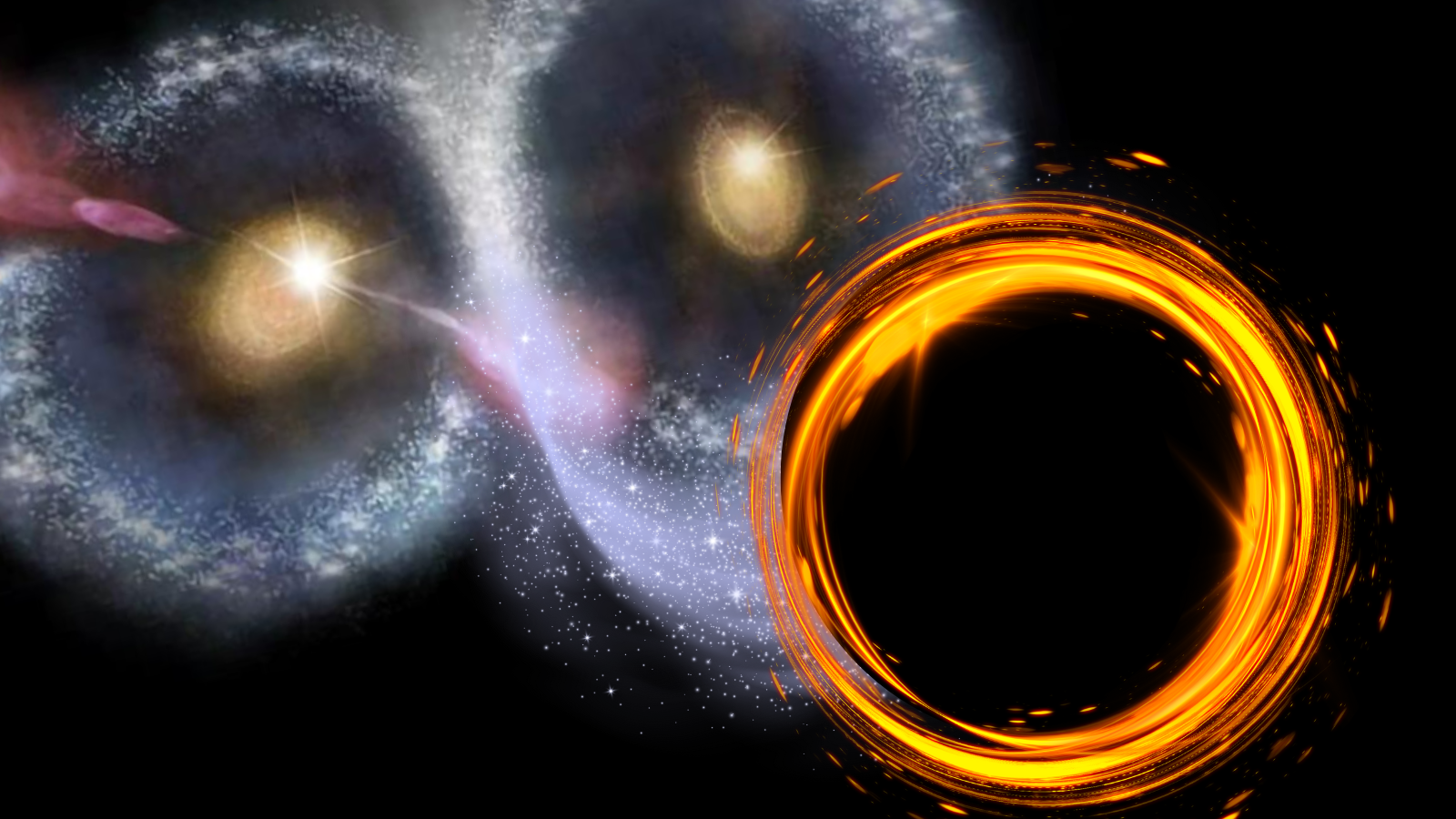
Runaway supermassive black hole flees the Cosmic Owl galaxies leaving a trail of stars (Image credit: Li et al/ Robert Lea (created with Canva))
Sticking with the JWST, in December, astronomers used the $10 billion space telescope to confirm the first sighting of a runaway supermassive black hole. This cosmic titan weighs in at 10 million times the mass of the sun and is rocketing through space at a staggering 2.2 million miles per hour (3.5 million kilometers per hour), which is 3,000 times the speed of sound at sea level here on Earth.
The runaway supermassive black hole is pushing forward a literal galaxy-size “bow-shock” of matter in front of it, as well as dragging a 200,000 light-year-long tail behind it that is gathering gas and actively birthing stars.
“It boggles the mind!” discovery team leader Pieter van Dokkum of Yale University told Space.com. “The forces that are needed to dislodge such a massive black hole from its home are enormous. And yet, it was predicted that such escapes should occur!”
Read more about this cosmic runaway here.
3. Black hole tornadoes at the heart of the Milky Way
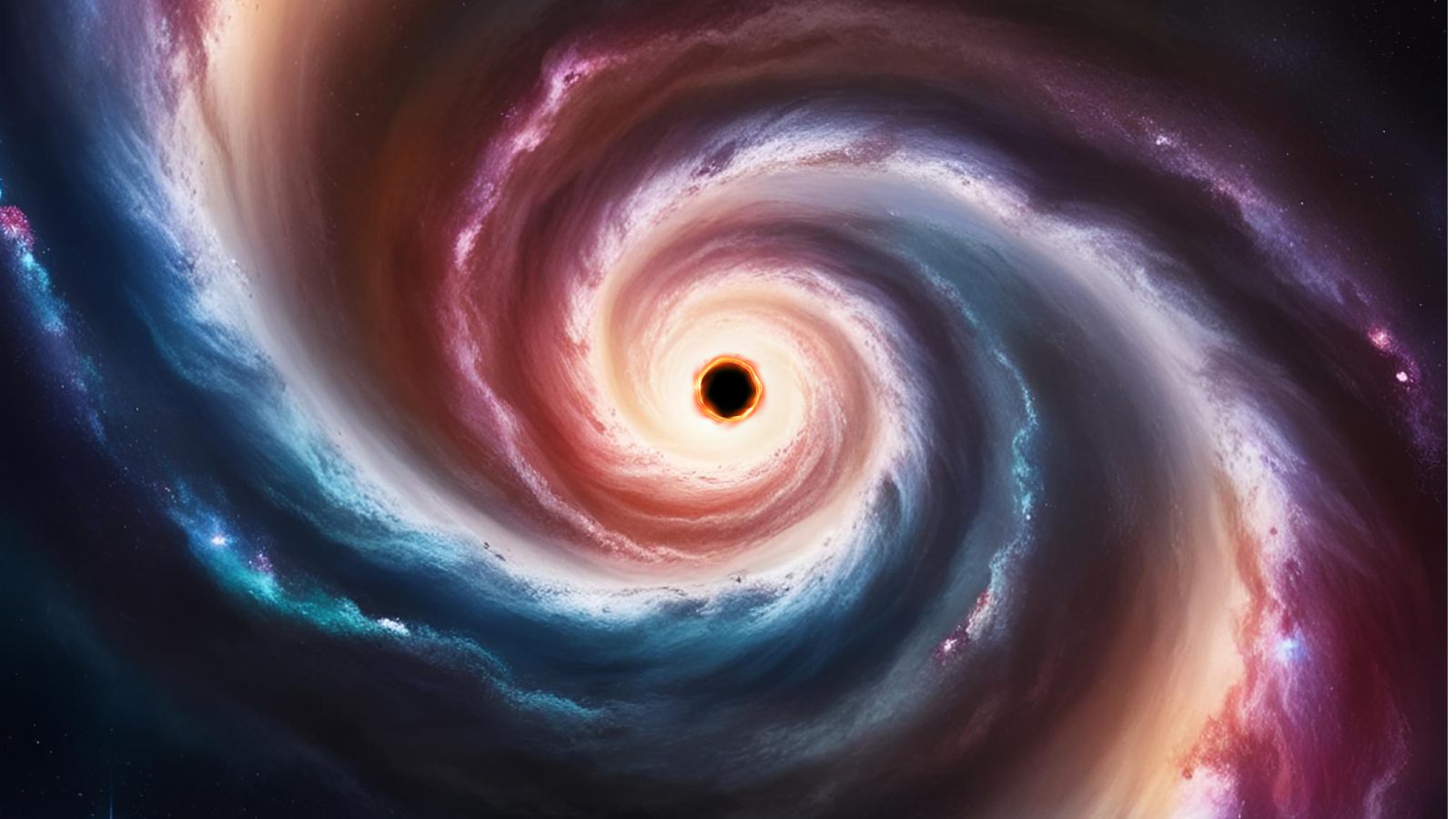
An illustration shows a cosmic tornado flowing around Sgr A* the Milky Way’s central supermassive black hole (Image credit: Robert Lea (created with Canva))
Not all supermassive black holes are associated with violent activity. Take our own supermassive black hole, Sagittarius A* (Sgr A*), which sits at the heart of the Milky Way. Unlike other black holes, Sgr A* isn’t greedily feasting on gas, dust and stars, but rather exists on a diet that scientists have related to a human consuming one grain of rice every million years.However, in March 2025, scientists revealed that it isn’t all quiet at the heart of our galaxy. Using the Atacama Large Millimeter/ submillimeter Array (ALMA), a team of astronomers discovered “space tornadoes” raging around Sgr A*, revolutionizing our view of the Galactic Center and the nature of “quiet” black holes.
You may like
“Our research contributes to the fascinating Galactic Center landscape by uncovering these slim filaments as an important part of material circulation,” team member Xing Lu of the Shanghai Astronomical Observatory said in a statement. “We can envision these as space tornados: they are violent streams of gas, they dissipate shortly and they distribute materials into the environment efficiently.”
Read more about these space tornadoes here.
4.
The Milky Way’s supermassive black hole was noisier than usual back in January 2025, when astronomers used the JWST to observe it throwing out highly energetic flares.
This represented the first time astronomers had seen flares from Sgr A* in the mid-infrared range of the electromagnetic spectrum, with the team behind these observations using them to better model outflows from supermassive black holes in research released in November.
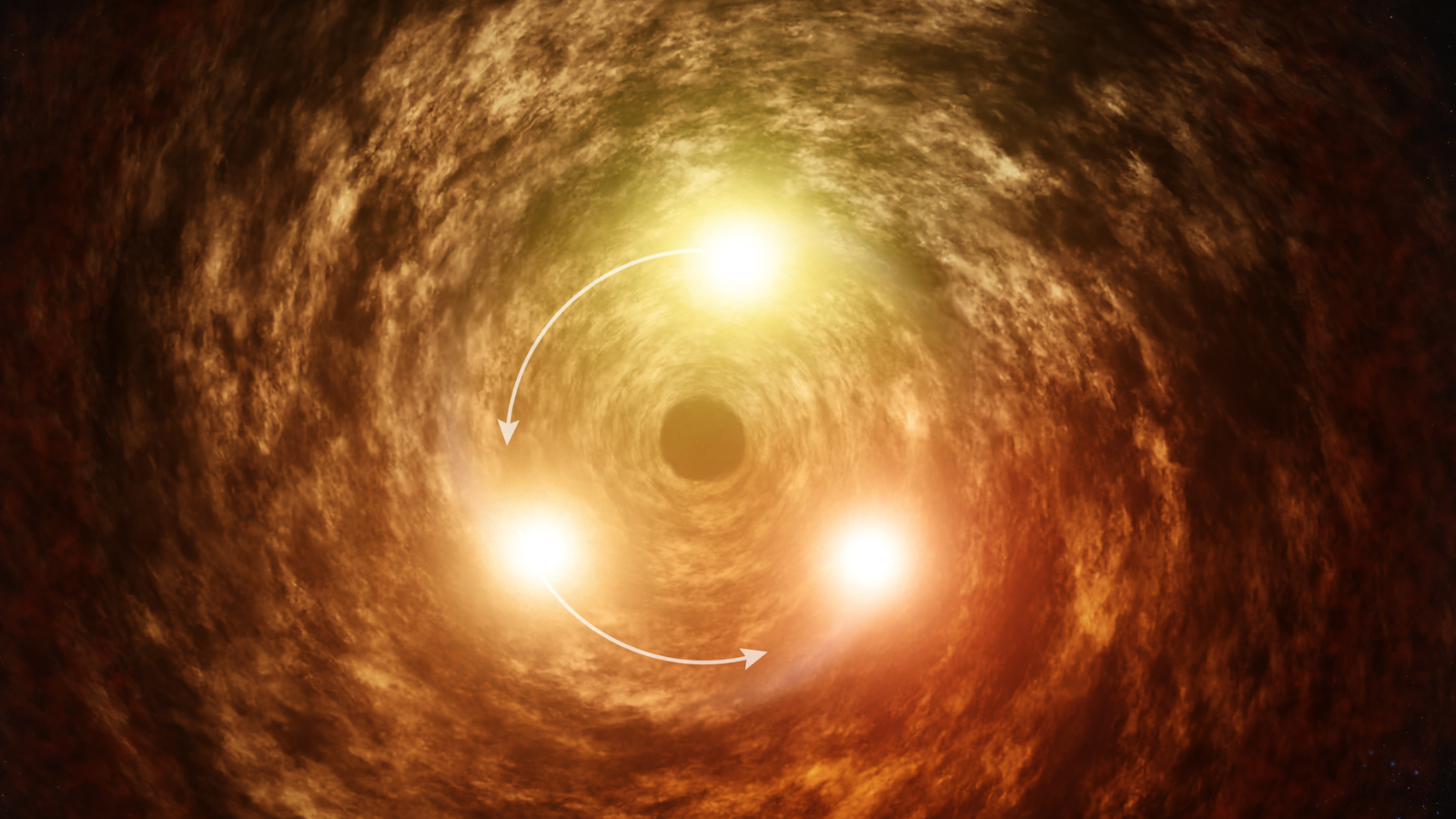
An illustration of the mid-infrared flare moving as electrons spiral around the magnetic fields of Sgr A*. (Image credit: CfA/Mel Weiss)
“The mid-infrared data is exciting because, thanks to the new JWST data, we can close the gap between the radio and near-infrared regimes, which had been a ‘gaping hole’ in the spectrum of Sgr A*,” Sebastiano von Fellenberg of the Max Planck Institute for Radio Astronomy in Bonn, Germany, told Space.com. “On the one hand, our mid-infrared flare looks like a typical near-infrared flare, so we now know flares also occur in the mid-infrared regime — and this isn’t trivial as, for instance, the radio variability looks quite different, and we do not see pronounced flare-like peaks in the light curve.”
Read more about this discovery here.
5. Supermassive black hole experiences 134-million-mph ‘burp.’
If you thought Christmas dinner gave you a massive case of indigestion, spare a thought for the black hole at the heart of spiral galaxy NGC 3783. In December, scientists revealed they had witnessed the supermassive black hole in NGC 3783 burping out a jet of material at a staggering 134 million miles per hour (216 million kilometers per hour), which is about 20% the speed of light.
The eruption of plasma was preceded by a flare of X-rays spotted by European Space Agency (ESA) XRISM X-ray telescope, with follow-up observations performed by NASA’s XMM-Newton spacecraft, helping to measure the scale and structure of this tumultuous cosmic storm.
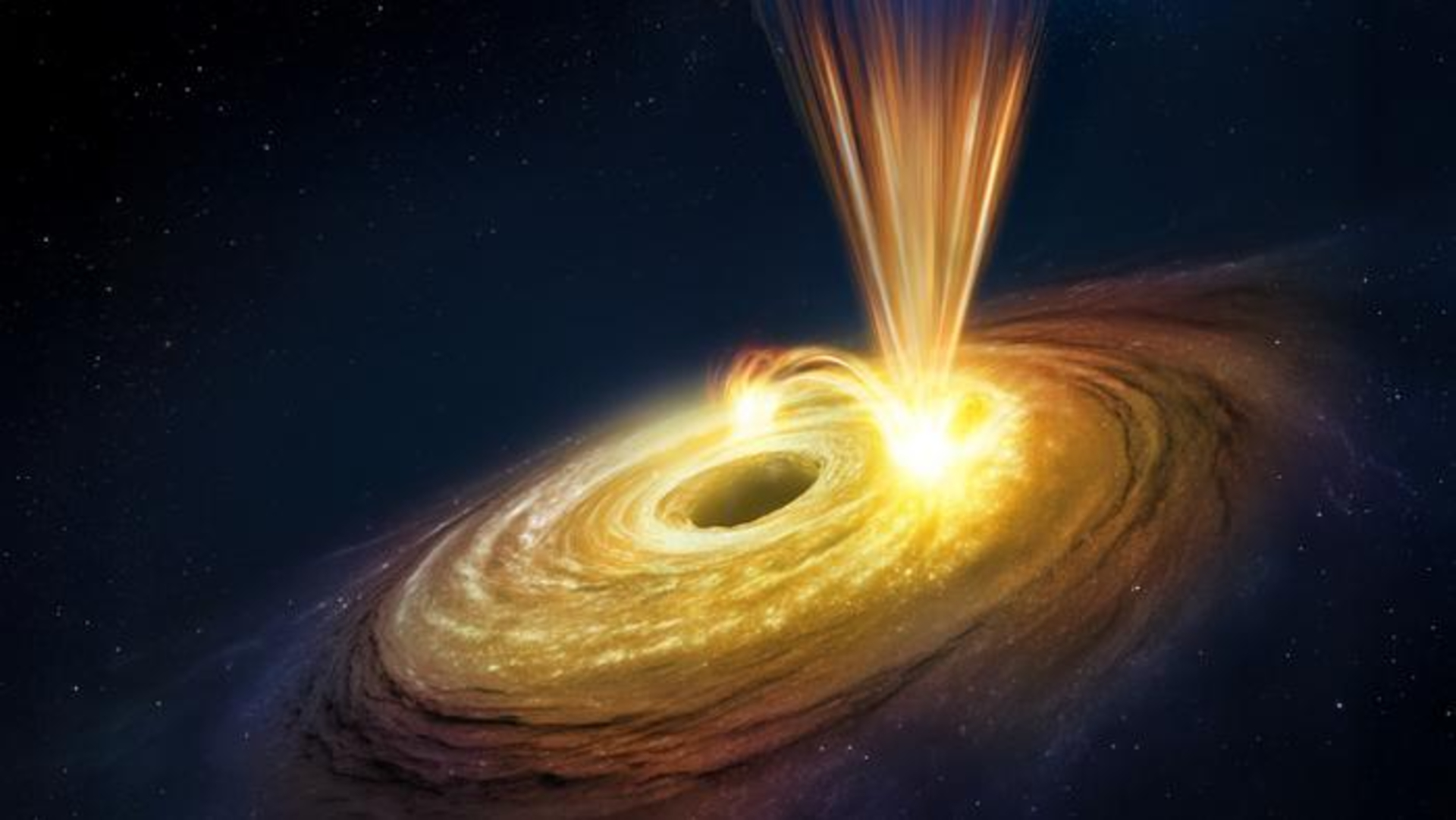
An illustration of a black hole with golden rings of gas and dust around it with a jet of energy shooting upwards on its right side. (Image credit: European Space Agency (ESA))
“Windy active galactic nuclei also play a big role in how their host galaxies evolve over time and how they form new stars,” team member and ESA research fellow Camille Diez, a coauthor of the study, in a recent press release. “Because they’re so influential, knowing more about the magnetism of active galactic nuclei, and how they whip up winds such as these, is key to understanding the history of galaxies throughout the universe.”
Someone pass the Pepto.
Read more here.
6. The power of 10 trillion suns
In any other year, the supermassive black hole mentioned above would probably scoop the award for most striking outburst, but not in 2025. This year, that accolade goes to a flare designated J2245+3743, spotted erupting from a supermassive black hole located in the center of a galaxy 10 billion light-years away from Earth.
What made this flare so amazing isn’t just the fact that it is the most distant black hole flare ever seen, but also that it is pumping out energy equivalent to the output of 10 trillion suns! That is 30 times more energetic than the previous most energetic flare, the wonderfully named “Scary Barbie” spotted back in 2018. The flare is believed to be the result of a star wandering too close to this supermassive black hole, which has the mass of 500 million suns.
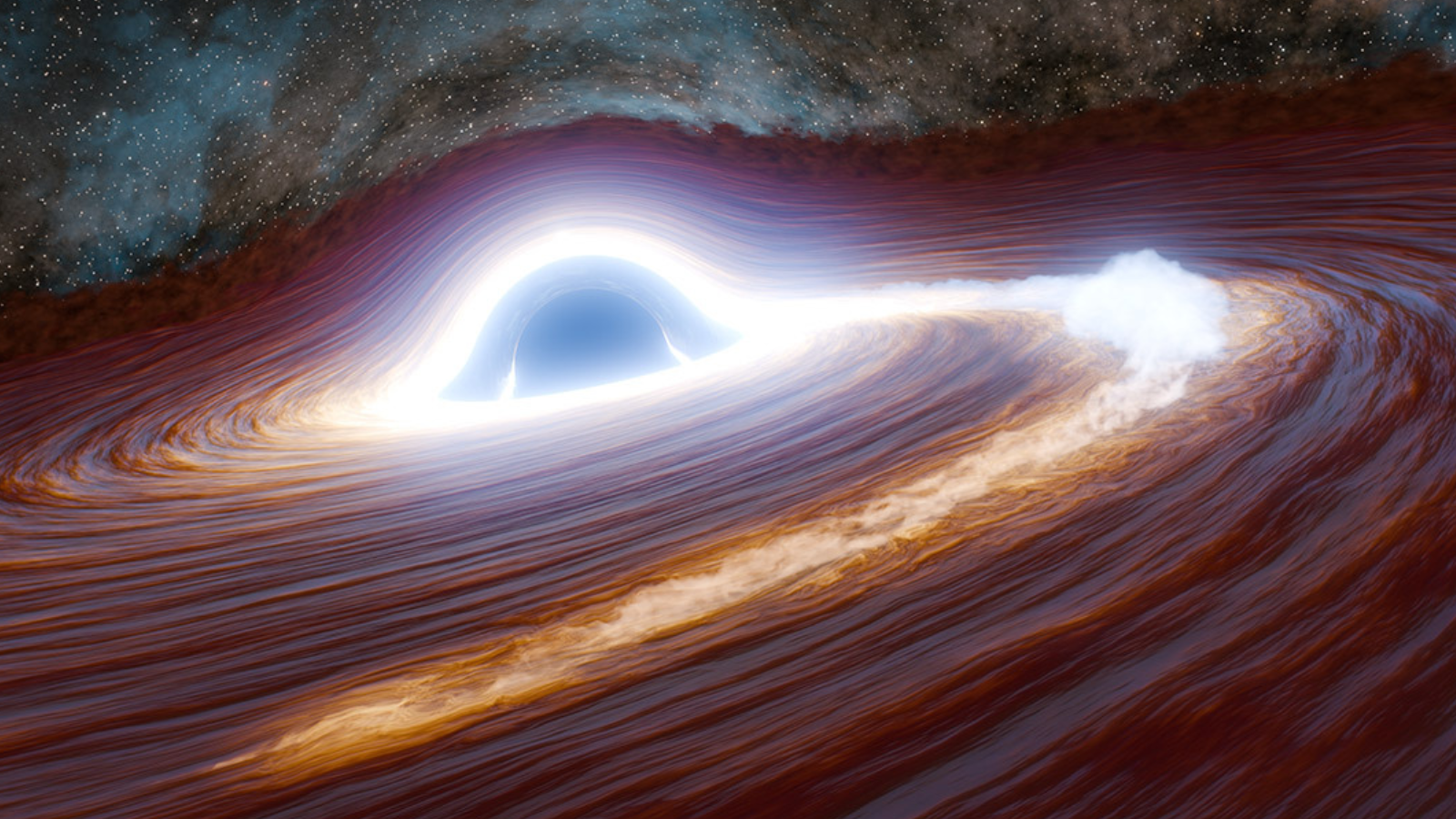
An illustration of the biggest and most distant black hole flare ever seen (Image credit: Caltech/R. Hurt (IPAC) )
The fact that J2245+3743 is ongoing indicates that this black hole is still swallowing this doomed star, with discovery team member Matthew Graham of the California Institute of Technology (Caltech) likening the situation to “a fish only halfway down the whale’s gullet.”
Read more here.
7. Astronomers discover the universe’s oldest and most distant black hole…
In August, scientists revealed they have the most distant and earliest supermassive black hole. Sitting in a galaxy designated CAPERS-LRD-z9, another one of those JWST little red dots, this beast with a mass equivalent to 300 million suns, is seen as it was just 500 million years after
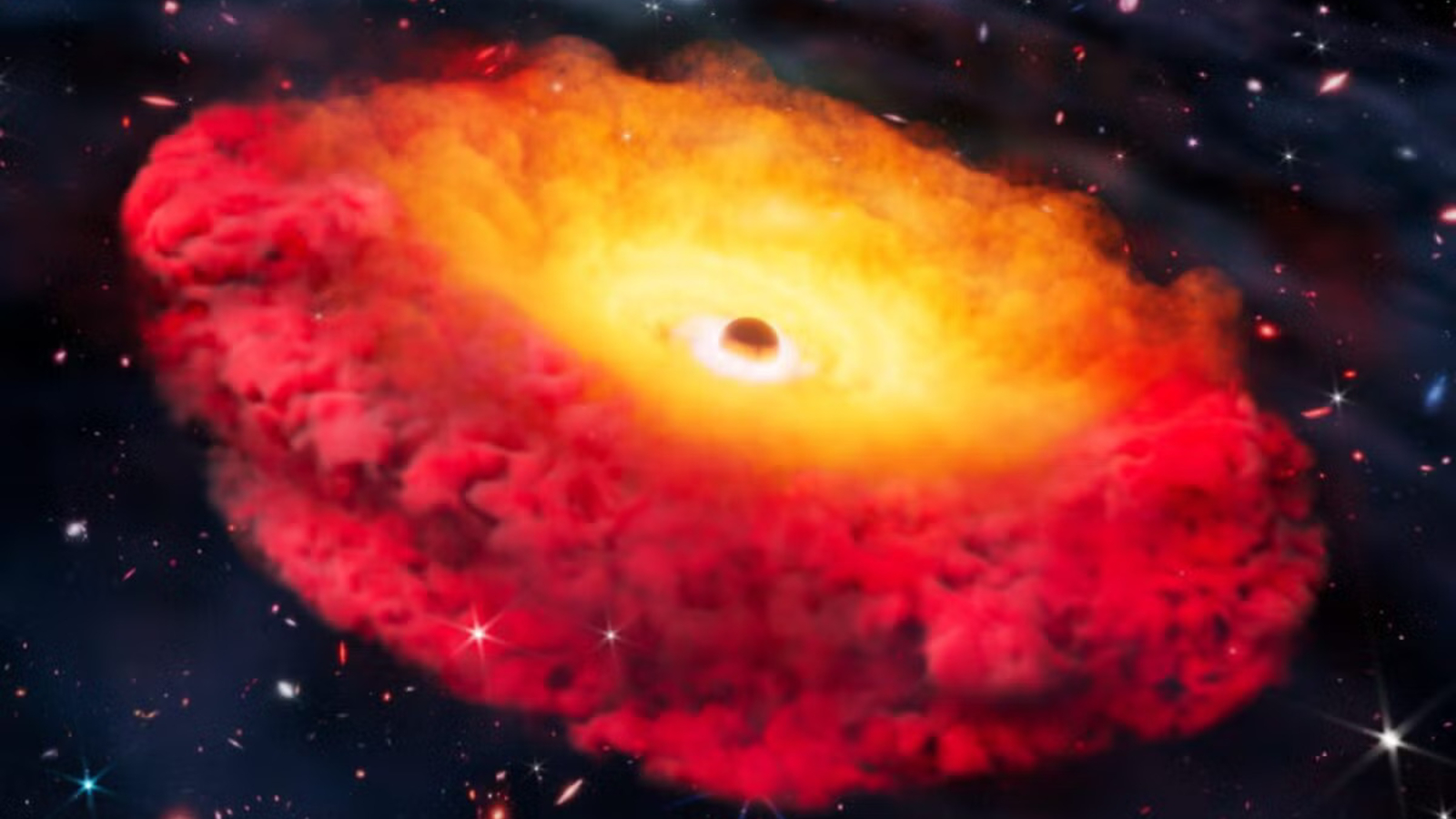
The oldest and most distance black hole has been observed. (Image credit: Erik Zumalt/The University of Texas at Austin)
“When looking for black holes, this is about as far back as you can practically go,” Anthony Taylor, a postdoctoral fellow at the Cosmic Frontier Center at the University of Texas at Austin, who led the discovery, said in a statement. “We’re really pushing the boundaries of what current technology can detect.”
Read more here.
8. …And the biggest black hole (maybe)?
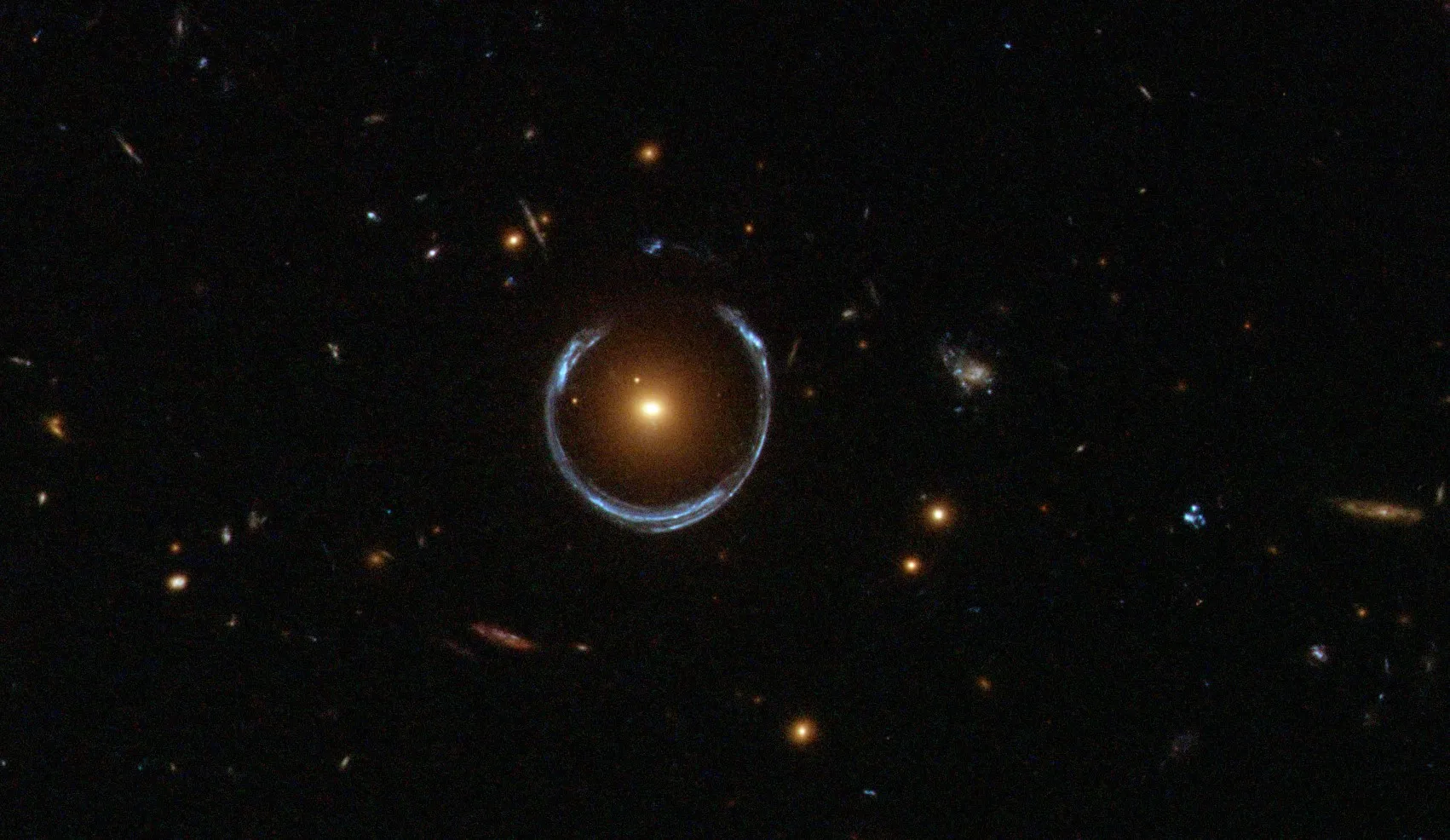
This blue horseshoe is a distant galaxy magnified and distorted by the strong gravitational pull of the massive foreground Luminous Red Galaxy. Together, these galaxies create the Cosmic Horseshoe system. (Image credit: NASA, ESA)
August was a big month for black hole discoveries — not only did astronomers discover the most ancient black hole as mentioned above, but in the same month a separate team of researchers announced they have discovered what may turn out to be the most massive black hole ever seen.
Located in one of the most massive galaxies ever seen and 5 billion light-years from Earth, this black hole seems to have a mass equivalent to 36 billion suns. Measuring the mass of such a massive body at this kind of distance is tough, and this supermassive black hole has tough competition from Phoenix A, the central black hole of the Phoenix cluster, estimated to have a mass somewhere in the region of 100 billion suns.
“This is amongst the top 10 most massive black holes ever discovered, and quite possibly the most massive,” Thomas Collett, study author and a professor at the University of Portsmouth in England, said in a statement.
Read more here.
Who knows, maybe 2026 will deliver an even more massive black hole, or a brighter flare, or something we can’t even currently comprehend. Whatever the case, it is certain that Space.com will be there for every exciting and mind-blowing discovery.

Winter in the Northern Hemisphere is the best season for stargazing with binoculars. The nights are long, the air is cold and the stars seem brighter than in summer.
Naked-eye stargazing in winter is a joy, but lift a pair of binoculars to your eyes and the whole experience changes. The sky stops being a flat backdrop and suddenly has depth. It’s layered with stars, open clusters and nebulas that you never knew were there. Galactic immersion is yours.
That’s the magic of binocular astronomy. Sweeping the sky with both eyes open, holding a pair of binoculars up to the night sky, feels natural and relaxed, yet you’re seeing so much more than with the unaided eye. It’s also easy and affordable to do — all you need is a warm coat, a dark corner and a steady pair of hands.
You may like
Choose a good pair of the best stargazing binoculars — something like 7×50, 8×42 or 10×50 — and you’ll unlock a second layer of the winter night sky with almost no effort. Here’s what to look at in a pair of binoculars from the Northern Hemisphere this season.
1. Sirius, the kaleidoscope star
Sirius displays a rainbow of colors as seen through binoculars. (Image credit: wenbin via Getty Images)
It’s the brightest star in the night sky, but Sirius in the constellation Canis Major also appears to be one of the most colorful. Although it’s a blue-white star, Sirius shows a rainbow of colors as it twinkles.
Its high brightness and the fact that it is low in the sky during the Northern Hemisphere winter make Sirius shimmer in multiple colors as its starlight is refracted by Earth’s atmosphere. Put your binoculars on Sirius and you will see a kaleidoscope of colors.
Get a closer look


2. Jupiter at opposition
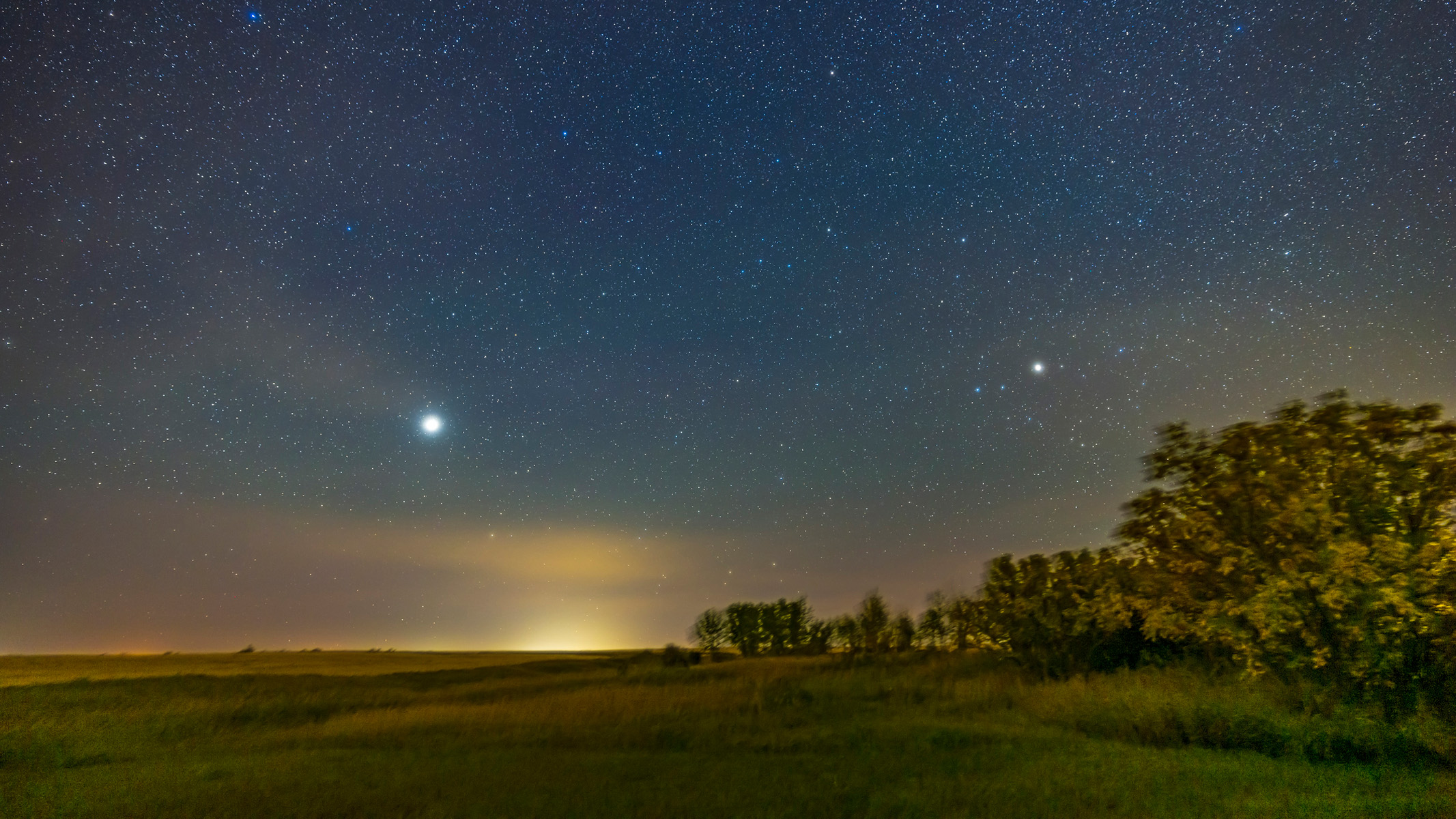
Jupiter looks at its best in binoculars when it is at opposition. (Image credit: Alan Dyer/Stocktrek Images via Getty Images)
The best time to look at an outer planet is when it is at opposition. At that moment, the Earth is between the planet and the sun, making the planet both closest to Earth and fully illuminated by the sun.
On Jan. 10, 2026, Jupiter will come to opposition, something that happens once every 13 months. For a few weeks either side of this date, put a pair of 8×42, 10×42 or 10×50 binoculars on Jupiter and you will see its four Galilean moons — Europa, Callisto, Ganymede and Io — as dots either side of the giant planet.
Get a closer look

3. First quarter moon
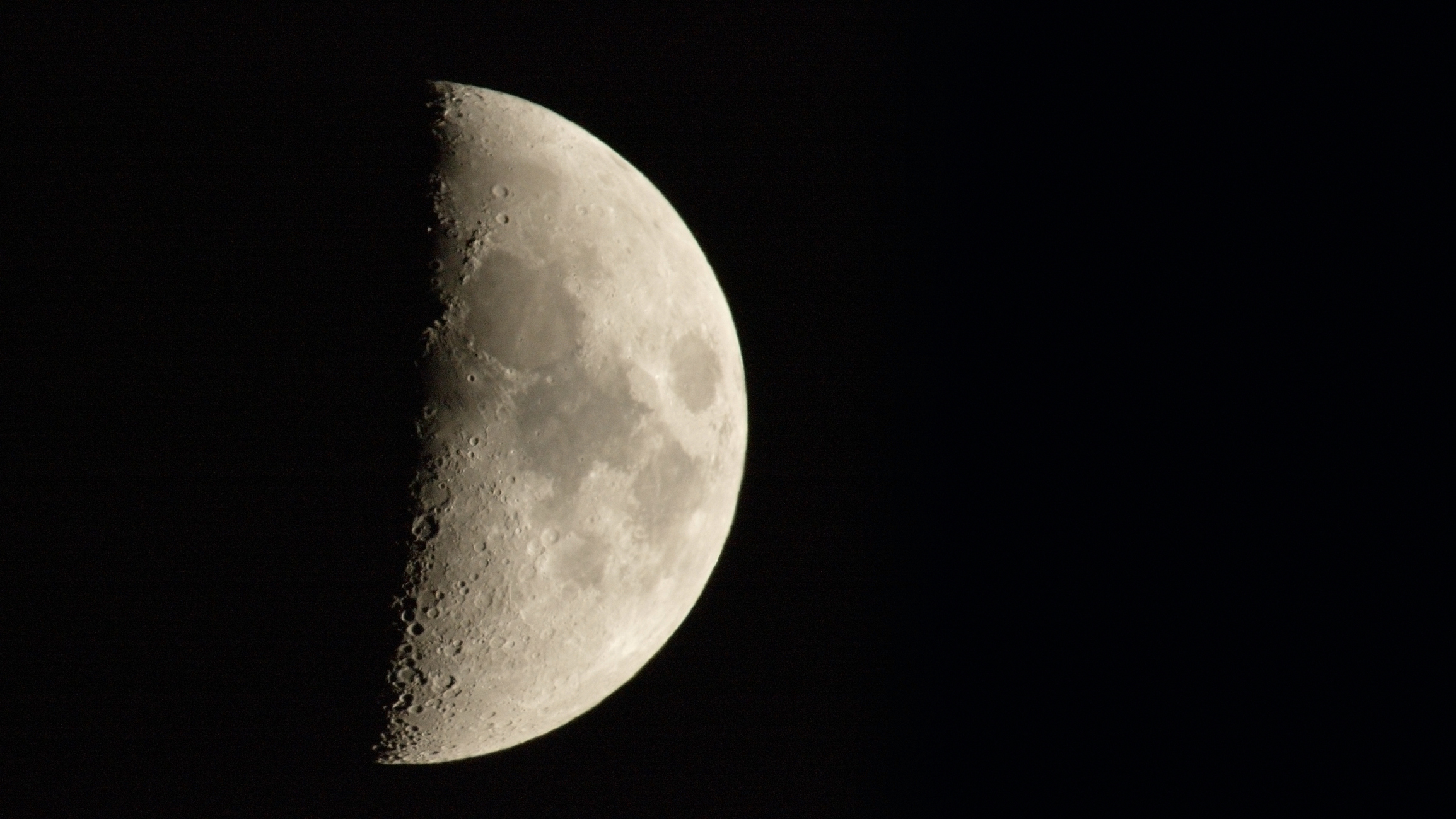
The first quarter moon is when our satellite looks its best through binoculars. (Image credit: ValentynVolkov Via Getty Images)
Ask someone when the best time to look at the moon is, and they will almost always say when it’s a full moon — but that’s bad advice. Through binoculars, the moon looks better at almost any other time of month, with perhaps the most intriguing (and convenient) coming at first quarter moon, when dramatic shadows can be seen along the terminator — the line between lunar night and day.
You may like
Use any pair of 10x binoculars and you’ll get a spectacular close-up of shadows cast by the craters, valleys and mountains on the moon. As a bonus, a first-quarter moon is up from dusk until midnight.
Get a closer look


4. The Owl Cluster
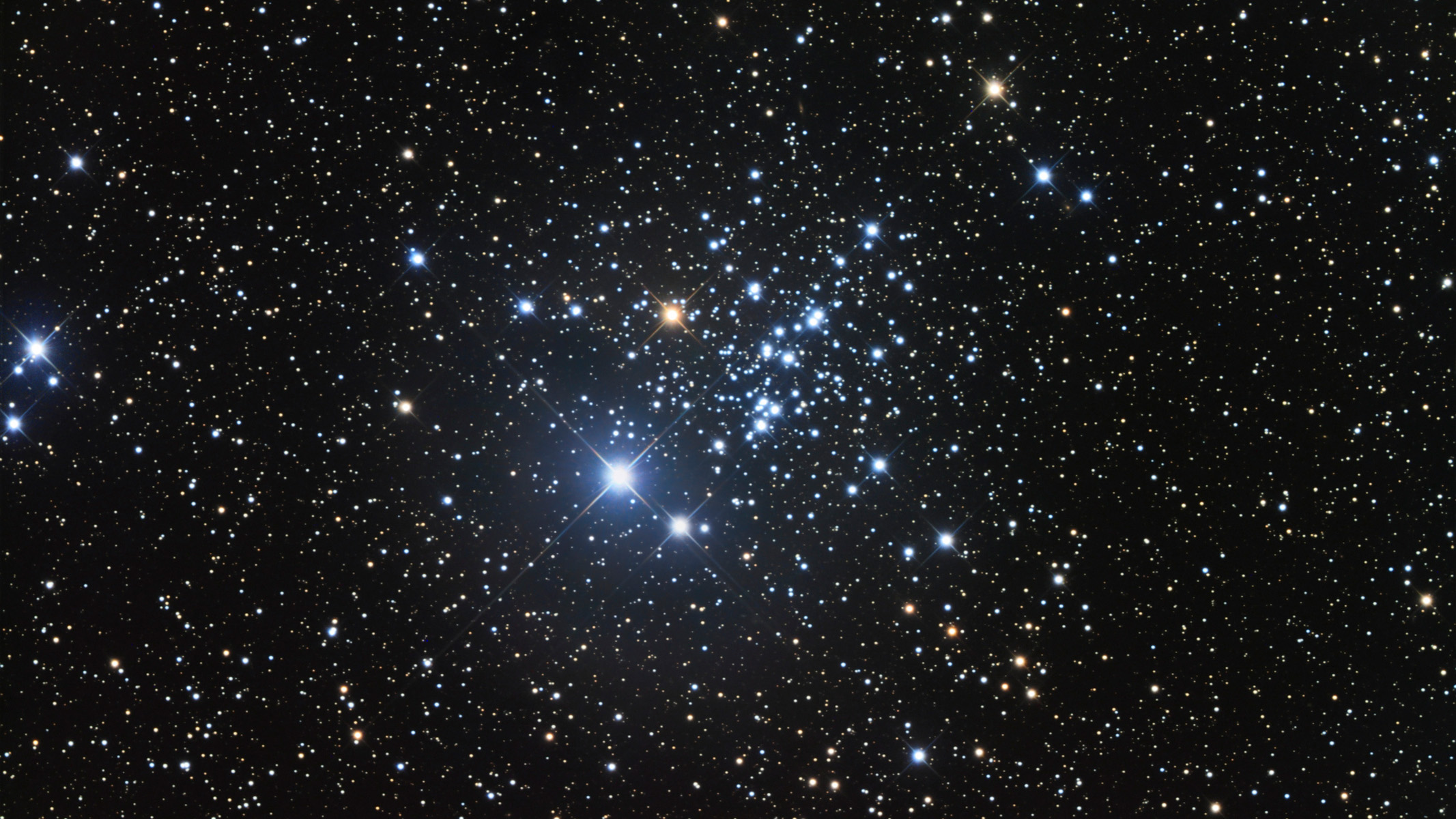
NGC 457. (Image credit: Stocktrek Images via Getty Images)
A particularly bright open star cluster in the constellation Cassiopeia, the Owl Cluster (or NGC 457 , if you prefer) is over 9,000 light-years from the solar system and contains almost 100 stars.
Its name comes from its yellow and blue stars, which are said to resemble the eyes of an owl. If you see Cassiopeia as a ‘W’ shape, NGC 457 is just beneath the first ‘V’.
Get a closer look

5. A supermoon rising
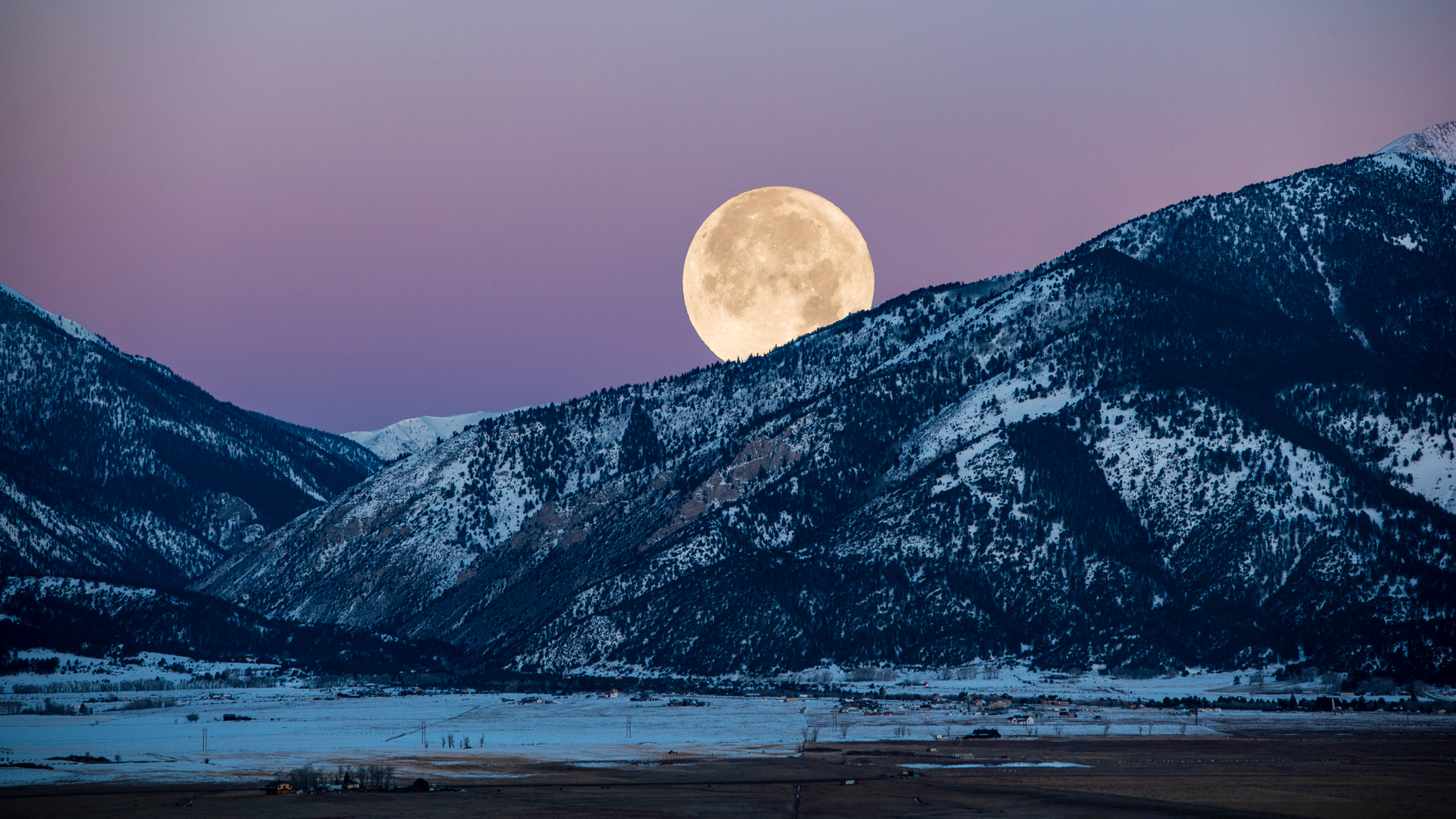
A full moon looks spectacular in binoculars if you catch it as it rises. (Image credit: Brad McGinley Photography via Getty Images)
As we’ve already said, the full moon phase is not the best time to look at the moon through binoculars — with one very specific exception.
If you can catch the full moon as it rises in the east during dusk, there are a few better sights than the lunar surface cast in an orange light. It looks that way because the sunlight being reflected into your eyes is traveling through the thickest part of Earth’s atmosphere, which scatters away short-wavelength blue light, while the longer wavelengths of red and orange light pass through easily.
See the full moon rise on Dec. 4 (Cold Supermoon), Jan. 3 (Wolf Supermoon) and Feb. 1 (Snow Moon), researching the exact time of moonrise for your location and looking east a few minutes after.
Get a closer look

6. Auriga’s star clusters
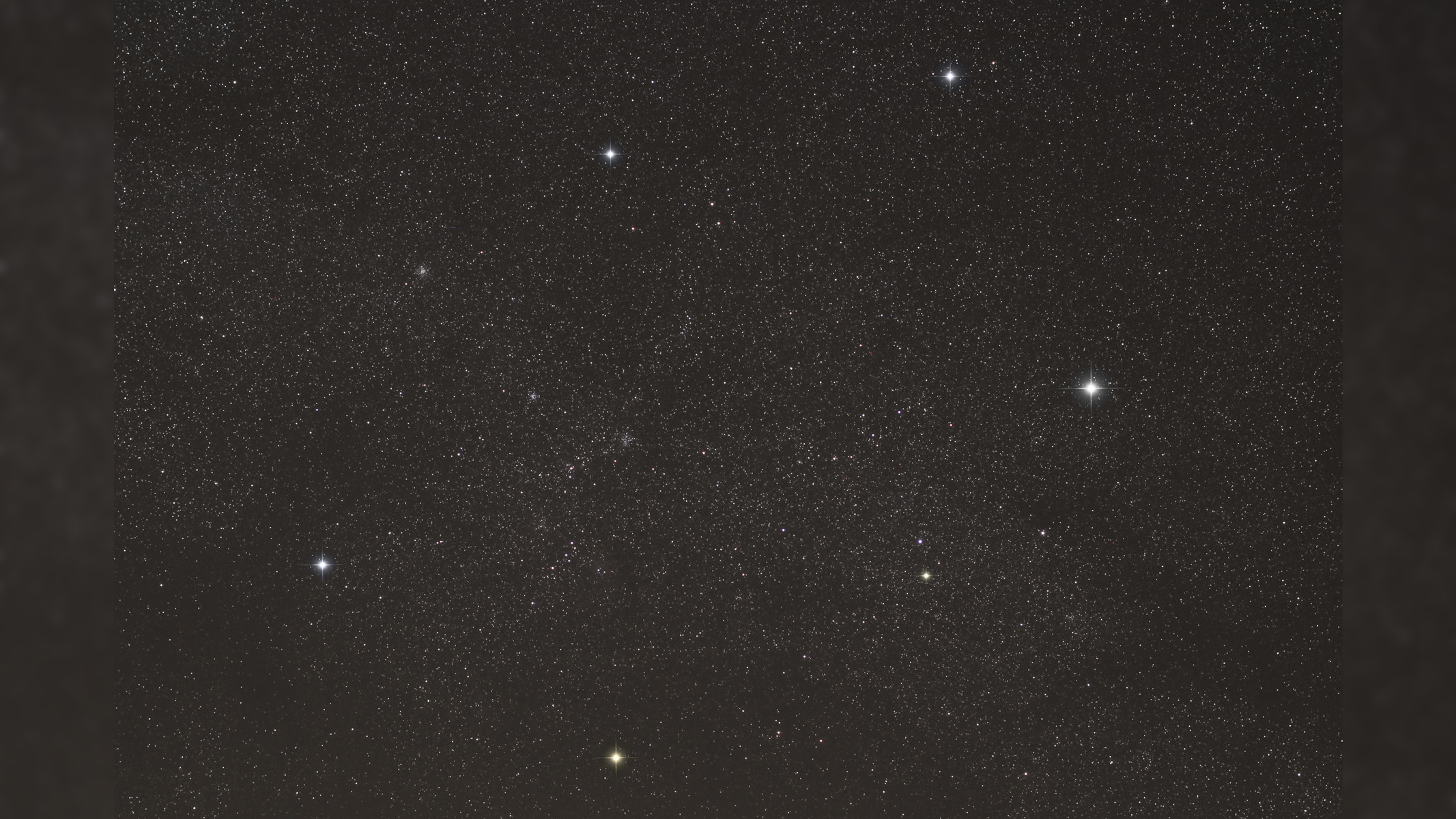
Auriga is home to the star clusters M36, M37 and M38. (Image credit: Christophe Lehenaff via Getty Images)
The constellation of Auriga dominates the autumn and winter sky, but tends to get overshadowed by the rising stars in the constellation Orion below. Auriga’s brightest star is Capella, the goat star — the brightest in a rough pentagon of five stars.
However, within the constellation, there are some deep sky delights in the form of three star clusters — M36, M37 and M38. Find M36, and all three will be in the field of view of a pair of most 10×50 binoculars.
Get a closer look

7. Winter Milky Way
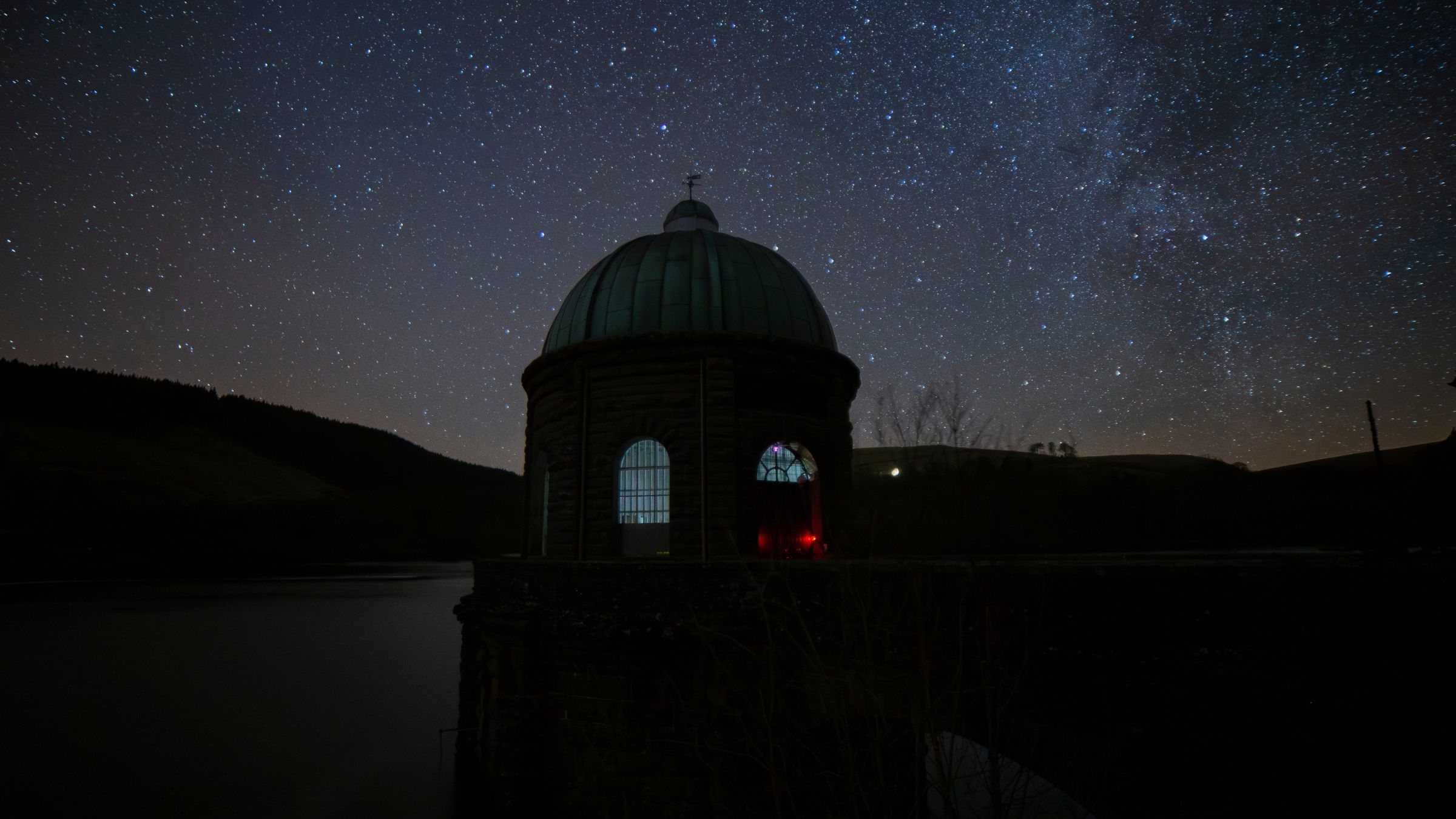
Winter’s Milky Way from Elan Valley Dark Sky Park, Wales. (Image credit: Jamie Carter)
Stargazers and astrophotographers rave about capturing the Milky Way during the Northern Hemisphere summer months, but the dense star fields of our galaxy’s spiral arms can easily be seen in winter. All you need to do is scan your binoculars between the constellations of Orion in the south and Cassiopeia high in the north, and you will see many thousands of bright stars.
Looking its best between December and February, it’s not as bright as the summer Milky Way, but the crisp and cold nights can give it a gorgeous, glittering look.
Get a closer look

8. Caroline’s Rose
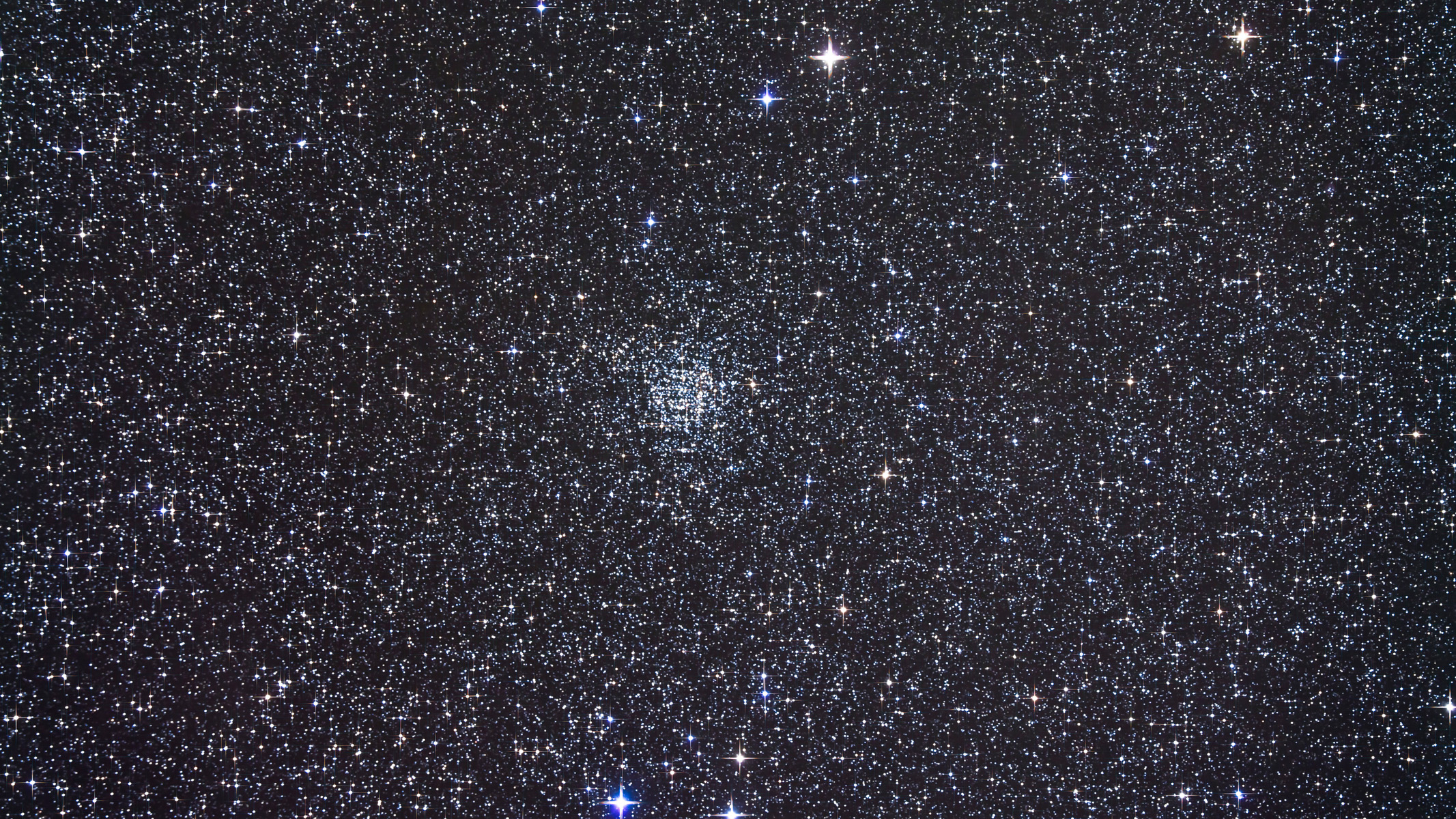
NGC 7789 is a dense open cluster of stars. (Image credit: Alan Dyer/StockTrek Via Getty Images)
In the constellation Cassiopeia there is an open cluster, NGC 7789, whose stars and the dark lanes between them are said to resemble a rose. A great target for binoculars, the name comes from its discoverer in 1783, Caroline Herschel — a noted comet-hunter and the younger sister of astronomer William Herschel, who discovered Uranus.
If you see Cassiopeia as a ‘W’ shape, NGC 7789 is close to the final point, marked by the star Caph.
Get a closer look

9. Earthshine on the moon
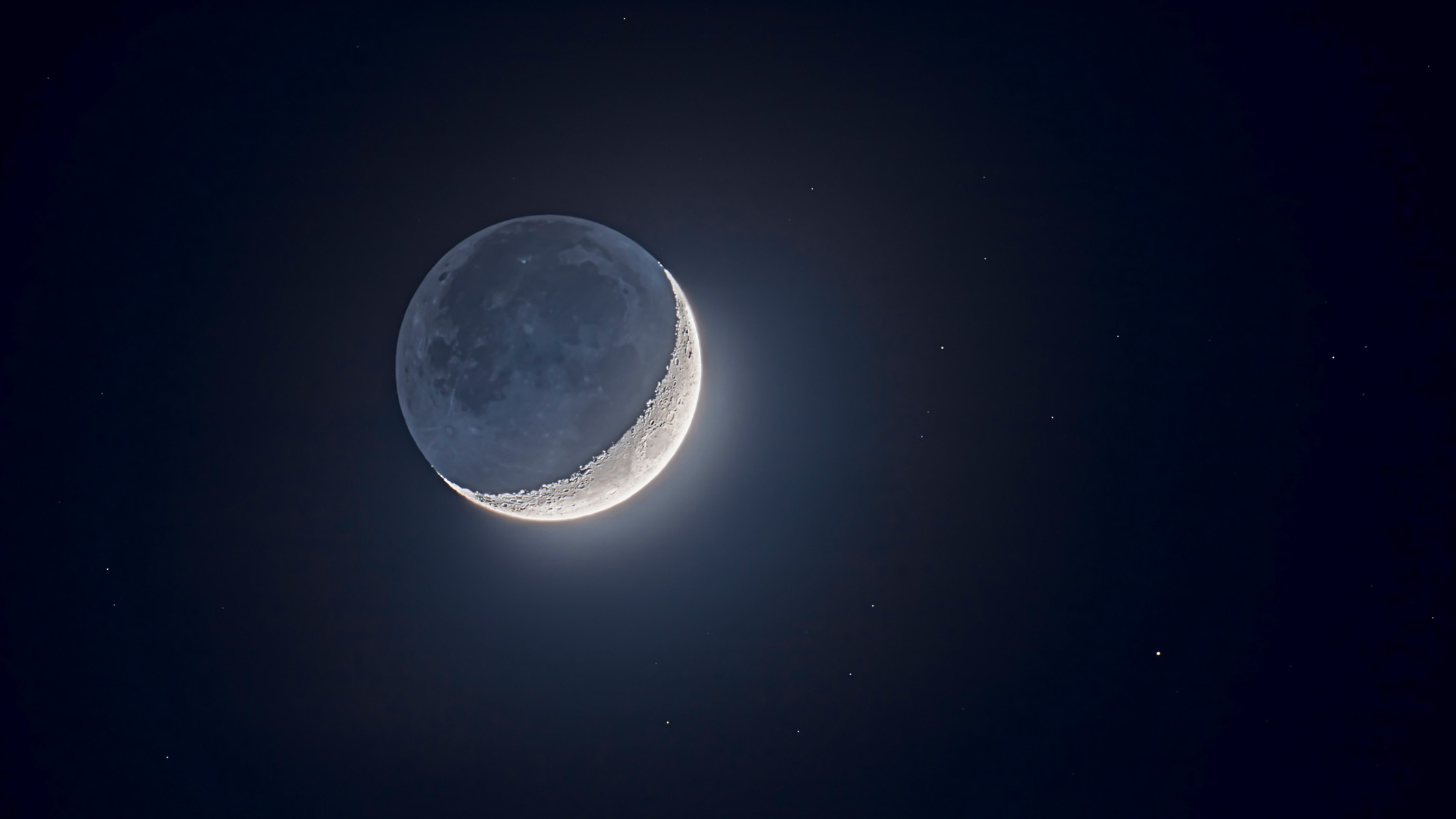
Earthshine occurs for a few nights each month. (Image credit: Alan Dyer/Stocktrek Images via Getty Images)
It is one of the easiest and most spectacular sights of all to see through a pair of binoculars, but Earthshine doesn’t get the attention it deserves. When the moon is a slim crescent, put your binoculars on the night side of the moon, and you will see detail on the lunar surface. This is Earthshine, sunlight reflected from Earth’s icecaps, oceans and clouds, gently illuminating the dark side of the moon.
You’ll see it for two or three nights, either side of the new moon phase, initially during a waning crescent moon visible in the east just before dawn, and later during a waxing crescent moon in the west just after dusk. New moons occur on Dec. 19, 2025, and Jan. 18, 2026.
Get a closer look


Christmas may seem like a time for switching off and suspending disbelief but there are plenty of ways to introduce a little science into the celebrations.
We asked experts for their top home experiments to challenge friends and family.
Sweet science
Matthew Cobb, a professor of zoology at the University of Manchester, suggests picking a sweet such as a jellybean and, with your eyes shut and holding your nose, putting it in your mouth and chewing, keeping your mouth shut.
“See if you can tell what the sweet tastes of – you will probably just say ‘sweet’ and maybe have a vague idea of something else,” says Cobb. “After five seconds, take your fingers off your nose and you should get a sudden rush of sensation that enables you to correctly identify the flavour.”
A more extreme version of this experiment, he says, involves grating an onion and an apple, separately, then tasting each on a spoon with your eyes shut and your nose firmly held. “They should taste the same – until you take your fingers off your nose.”
Cobb says such experiments show how flavour largely consists of smell, not taste. “When we chew, the volatile smells emitted by the food go up into our nose via the back of our mouth, where they stimulate our olfactory neurons,” he says, adding that it is the combination of taste and smell that produces flavour.
“Without smell, things don’t taste of much. We all discovered this during the first outbreak of Covid, when people temporarily lost their sense of smell.”
Have a laugh
With crackers a staple of Christmas, Sophie Scott, a professor of cognitive neuroscience at University College London suggests experimenting to see what can influence whether or not people laugh at a (terrible) joke.
“First, try reading those jokes to yourself and see if you laugh at any of them,” she says. “Second, read the jokes to someone else – maybe a room full of people.”
Scott says to look and see if anyone laughs – including you – when you get to the punchline, or if they respond in some other way such as groaning. She notes that although we associate laughter with jokes and humour, we laugh mainly for social reasons.
“You are 30 times more likely to laugh if there is someone else with you than if you are on your own,” she says. “What this means for cracker jokes is that a joke read by someone alone is much less likely to make them laugh than the same joke read – or heard – in company. And laughter is amplified by social connection, so the more you know and like the people that you are with, the more laughter there will be.”
Get stuck into the festive fowl
Look at the bones and understand how they fit together and move. Photograph: Jonathan Knowles/Getty Images
If you are having a turkey or another bird for your Christmas meal then take time to explore the carcass.
“We did a Thanksgiving dinner a few weeks ago and I got an enormous turkey, cooked the thing for a few hours, basted it lovingly every 30 minutes or so,” says Steve Brusatte, a professor of palaeontology and evolution at the University of Edinburgh. “Mostly so it would be delicious, but also so the meat would fall off the bone well enough that I could remove the bones and show my wife and my six-year-old boy the shoulder area.”
That allowed Brusatte to demonstrate how the various bones fit together to move the wing up and down, and how the huge springy wishbone stores energy as the wings beat.
“This is a simple thing that you can do with a roast turkey or chicken – actually look at the bones and understand how they fit together and move, and that gives a better understanding of biomechanics and flight motions than I’ve ever seen in any textbook during my many years of study,” he says. “And then you get a delicious meal afterwards.”
Prof Sue Black, a forensic anthropologist, anatomist and academic at the University of Oxford, also recommends dissecting the festive bird to understand the anatomy of motion.
“Boil the carcass so that only the bones are left and you have a 3D jigsaw to reconstruct,” she says.
Chemistry of Christmas
Salt is commonly spread on pavements in the winter and there is a simple experiment that can help to explain why.
“You will need 500ml of full-fat milk or cream, five egg yolks and 125g of sugar. A bit of vanilla never goes amiss,” says Andrea Sella, a professor of inorganic chemistry at UCL.
“Whisk them together and then warm almost to the boil until the mixture starts to thicken. Let it cool to room temperature. Meanwhile, get some ice from the freezer. Either bash it, like an alchemist, with a mortar and pestle, or grind it up in a blender like a modernist.”
Next, he says, take two plastic bags – ideally zippable ones. “Drop some of your crushed ice into one and add generous amount of salt. Into the second, spoon some of your custard mixture, adding sprinkles, nuts or bits of fruit. Seal the [second bag] and put it into the first.
“Now mash the ice and salt together, and the custard in the bag. The temperature will plunge, to -10C or even lower. In seconds you’ll have ice-cream, a soft (and delicious) solid.”
Sella says this happens because the dissolved salt prevents liquid water molecules, produced as the ice melts, from freezing back on to the remaining ice.
“So the ice keeps melting and steals heat from the custard (and your fingers),” he says. “It’s practical magic – also known as science.”
Festive pi(e)
ϖ seems to crop up in really unusual places. Photograph: Anastassiya Bezhekeneva/Getty Images
“One of the most surprising little science experiments you can do at home is called Buffon’s Needle, but for festive purposes let’s call it Buffon’s Pine Needles. It’s a way of approximating the value of ϖ,” says Kit Yates, a professor of mathematical biology and public engagement at the University of Bath.
First off, grab a bunch of pine needles and select as many as you can that are roughly the same length (L). “Let’s say you manage to find a total (T) of similar-sized pine needles. You’re going to also need a piece of paper that has lines ruled on it which are a distance W apart – further apart than the length of your needles,” Yates says.
Scatter the pine needles, without aiming, on top of your piece of ruled paper and then count the number of needles that cross one of the lines. This number is C.
Once you have counted, you can find your approximation of ϖ by plugging your numbers into this formula: ϖ ≈ 2LT/CW
“What I love about this is that it demonstrates how ϖ seems to crop up in really unusual places,” Yates says. “It feels almost like magic, but it’s just probability in action on your living room floor.”