
TECHNOLOGY
Why Millions of Players Can’t Log Into Fortnite Right Now


If you tried logging into Fortnite on Christmas Eve and got hit with a wall of error messages instead of a Victory Royale, you’re not alone.
Fortnite is currently experiencing a major outage, with players across PlayStation 5, Xbox, PC, and Nintendo Switch reporting widespread login failures. The issue is affecting gamers globally and has come at one of the worst possible times, peak holiday gaming hours.
Players are being blocked at the sign-in screen, receiving error messages like “An error occurred while connecting to Epic Servers” and “Unable to login to Fortnite Servers. Please try again later.” For many, that means no access to Battle Royale, Zero Build, Creative modes, or any in-game events at all.
According to outage-tracking platforms and community forums, reports began surging on Christmas Eve, with over 700 confirmed complaints within a short period. Epic Games has since acknowledged the problem on its Public Status page, confirming that its team is actively investigating an authentication failure impacting Epic Online Services (EOS) the system that handles logins across Epic’s ecosystem.
Fortnite returns to Google Play in the US after Epic wins key app store fight
Fortnite’s return means Android players finally get a simple, secure way to install the game after years of messy detours.
What’s actually happening
Players across all platforms console, PC, and mobile are experiencing the exact same issue, making it clear that this is a server-side failure, not a local device issue. While Fortnite’s core game servers seem to be operational, the login and authentication layer is where things are breaking down.
As a result, typical troubleshooting steps like restarting your console, power-cycling your router, clearing cache, or verifying game files on PC haven’t made any difference for most users.
Why this outage stings more than usual
This outage hits especially hard because it lands right in the middle of a holiday, when millions of players worldwide finally have time off school or work and are jumping online together.
Fortnite isn’t just a game at this point it’s a social space, an event platform, and for many people, a big part of their holiday plans. When the login doors close, entire communities are left hanging.
This isn’t the first time recently. Just days ago, on December 21, 2025, Fortnite and other Epic titles experienced similar authentication issues. Although that disruption was resolved, today’s problems suggest that the underlying infrastructure is still under heavy strain.
Fortnite is coming to Xbox PC Store
Players can now play fortnite games on Xbox using the Xbox Game Pass

What players can do right now
Unfortunately, there’s no instant fix until Epic resolves the issue on their end. However, players can stay informed and avoid making things worse by:
- Monitoring the Epic Games Status page and enabling notifications for real-time updates.
- Avoiding repeated login attempts, which can overload the authentication servers.
- Ensuring their internet connection and platform network services are stable. Console users should also perform a full power cycle.
- For PC and Mac users, verifying game files through the Epic Games Launcher.
Even with all that, the reality is that this outage will only be fixed once Epic stabilizes its authentication services.
Epic Games has confirmed its teams are actively working on the problem, though no official restoration time has been shared yet.
The Takeaway
This outage is a reminder of just how dependent modern gaming has become on centralised online infrastructure. When authentication systems fail, even the world’s biggest games grind to a halt no matter how powerful your console or how fast your internet is.
Until Epic fixes the authentication layer, Fortnite remains effectively offline for a huge part of its global community and on Christmas Eve of all days, that sting is especially real gamers.
How an AWS Outage Froze Gamers Out of Fortnite and Roblox
What happens when a few hours of downtime erases millions in revenue, and exposes just how dependent gaming is on a single cloud provider?


December 25, 2025
Link copied!
Copy failed!












PS5, Xbox, Switch, PC
Have you ever wanted to romance your record player? Date Everything! offers players the chance to develop relationships with everyday objects around your house, in a fully voiced sandbox romp featuring over 100 anthropomorphised characters. Wonderfully meta; you can put the moves on the textbox, or even “Michael Transaction” (microtransaction – get it?) himself. Meghan Ellis
Sorry We’re Closed
PS4/5, Xbox, Switch, PC
A raucous debut by indie studio à la mode games, Sorry We’re Closed is a survival horror where the monster is love and the dungeon is a dingy London neighbourhood. Fight demons, fend off unwanted admirers and survive work shifts in this queer, neon homage to 1990s PlayStation-era horror. ME
Clues by Sam
Web browser
The trick of this daily logic puzzle is that you can’t guess, or make wrong answers. Presented with a grid of characters, you must identify the “innocent” and the “criminal” based on clues revealed with each correct answer. But the game will only accept an answer if it’s sure you know it for a fact. An idealistic vision of a criminal justice system. Duncan Fyfe
Blippo+
Switch, Playdate, PC
Blippo+ is a channel surfing simulator that rides the line between video game and absurd cable subscription service. Experienced entirely by trawling through the interface of a virtual TV guide, you can tune into intergalactic music videos, curious cooking shows, and psychic weather reports, learning an alien culture through charming live-action skits that evoke the sketch comedy of Tim and Eric. Sarah Thwaites
Out of this world … Blippo+. Photograph: Panic
Stray Children
Switch, PC
A sequel in all but name to Love-de-Lic’s 1997 role-playing game satire Moon, Stray Children is a monster-taming adventure where you whisper away the worries of troubled “Olders” that have come to dominate the inhabitants of an unfinished video game. Finessed by a crunchy pixel art style and a combat system inspired by Undertale, this nostalgic odyssey will pull on your heartstrings while testing your reflexes at the same time. ST
BALL x PIT
PS5, Xbox, Switch, Switch 2, PC
A fiendish, almost cruelly addictive mashup of Vampire Survivors-esque monster horde control and Breakout-style ball-bouncing. Descend into a pit full of demons and shoot a continuous stream of richocheting, burning, poisonous and otherwise deadly balls at them until the screen is just a brain-melting confusion of visual effects. Keza MacDonald
To a T
PS5, Xbox, PC
You are a cheerful pubescent boy with a unique problem: your arms are stuck out in a T-pose. How do you navigate school, family, friendships and brushing your teeth when you can’t bend your arms? A sweet, family friendly slice-of-life physical comedy game with an unexpectedly affecting message, and excellent songs sung by a gourmand giraffe. KM
PS5, Xbox, PC
Just a chill bike-racing game where your ride is possessed by an ancient speed spirit. Wheel around a soothingly minimalist island of cycling obsessives, picking up new swappable bike parts and blasting past local gangs of racers on downhill courses. Uncomplicated, good looking and thoughtfully put together. KM
A wheely good time … Wheel World. Photograph: Annapurna Interactive
The Drifter
PC
Powerhoof’s excellent pixelated point-and-click game teases its dystopian plot throughout, mixing influences such as The Thing, Michael Crichton’s Coma and Total Recall. It’s an intriguing mix: combined with a heartfelt story full of painful human emotions and some fantastic audio, it’s a tense yet warming tale, guaranteed to coil its way around your heart. Graeme Mason
Xbox, PC
While the combat mechanics are familiar, it’s South of Midnight’s evocative backdrop that marks it apart. Set in an overgrown and misty American deep south, it stars Hazel, a young woman thrust into the aftermath of a hurricane and forced to battle the evil manifestations of deep-rooted sorrows. Beautiful and engaging, its soundtrack is also wonderful, perfectly complementing the uncanny scenery. GM
PC
Your task is simple in the brilliantly silly Skin Deep: save a bunch of talking cats from marauding space pirates. The execution is anything but as you crouch in vents, pull glass from your feet, and deploy sneezing powder and slippery soap bars to incapacitate your foes. Like Metal Gear Solid meets a Looney Tunes cartoon, the pleasure here lies in pushing the game’s miniature sandboxes to their slapstick limit. Lewis Gordon
Out of the bag … Skin Deep. Photograph: Annapurna Interactive
PS5, PC
Casting you as a knight with a hoverboard, Sword of the Sea is a mystical journey through a desert which roils like an ocean. You pull grab tricks and get big air on cresting dunes, but the greater enjoyment stems from simply soaking up the game’s breathtaking, nature-infused landscapes at high speed. A gorgeously dreamy, new age take on extreme sport. LG
The Roottrees Are Dead
PC
If ancestry.com has yet to reveal your hidden royal lineage, try digging into the Roottree clan instead. Armed with a 1998 web browser, you have to deduce the loves, losses and lies of a sprawling candy dynasty (no relation to Rowntree). A compelling blend of Her Story and Who Do You Think You Are? Matthew Castle
Final Fantasy Tactics: The Ivalice Chronicles
PS4/5, Xbox, Switch, Switch 2, PC
Shakespearean dialogue, bruising boss battles and a tale steeped in class struggle make this a refreshingly different Final Fantasy. As you command a troupe of society’s most downtrodden, excellent voice acting lends this once silent PlayStation 1 game new life. As rewarding to play as it is affecting, in 2025, Yasumi Matsuno’s tale of inequality and division has never felt more relevant. Tom Regan
Absolum
PS4/5, Switch, PC
Combining the best parts of Hades with the immediacy of Streets of Rage, this colourful co-operative caper is an endless delight. As you roam Talamh’s lived-in fantasy world, this roguelike rewards you with satisfying new powers and beguiling side quests. With precise combat and varied movesets, Absolum adds some much-needed depth to the oft shallow beat ’em up genre. A co-op classic. TR
Promise Mascot Agency
PS5, Xbox, Switch, PC
If the prospect of a disgraced mobster tooling around small-town Japan accompanied by a giant depraved thumb doesn’t intrigue you, keep moving. But give Promise Mascot Agency some time and you’ll discover this compact open-world adventure is filled with chaotic charm. At its heart it’s a story of redemption, as you manage a gang of weirdo mascots and restore a dilapidated community, all while driving the best pickup truck in any video game. Christian Donlan
Eternal Strands
PS5, Xbox, PC
Here’s a fantasy role-playing game that’s happy to embrace elemental powers, even if it leads to pinwheeling chaos. In a world where fire attacks can spread uncontrollably and ice can lead to giant dragons dropping out of the sky as their wings freeze up, this colourful piece of whimsy offers fun that genuinely scales to your own imagination. CD
Elemental … Eternal Strands. Photograph: PR
Lushfoil Photography Sim
PS5, Xbox, PC
Matt Newell’s hymn to photography is also a gorgeous investigation into the creative power of solitude and of paying attention to your surroundings. Learn your way around a beautifully simulated digital camera, but also explore the visual potential of a range of exquisitely crafted 3D landscapes. There are no puzzles and not much in the way of scoring, just you and your ever-developing eye. CD
PS5, Xbox, PC
A football game that’s closer to the likes of Rocket League than it is Fifa, Rematch has you feeling as if you’re playing an actual match of five-a-side: developer Sloclap have utterly mastered the sensation and pace of charging up a field and passing between your mates before knocking the ball into the back of the net. Daniella Lucas
PS5, PC
Proof that love and hate can be two sides of the same coin, this ridiculous adventure has you taking control of a grown man in a onesie trying to remember how to walk. You have to separately control each of your legs over a series of obstacles that lead to some absurdly funny moments, but equally has you kneeling in despair as you fall, yet again, off a wooden plank while trying to get a stupid hat. Worth it though. DL
Baby Steps. Photograph: Devolver Digital
While Waiting
Switch, PC
A game all about slowing life down, While Waiting takes mundane situations – from breaking down in your car to waiting for a delayed train – and gives you multiple choices on how to handle them. Due to the way it rewards experimentation, and squeezing the fun out of everyday moments, While Waiting has taught me how to be more patient – and that wasting time by fiddling around with things is the key to a healthy life-balance. Thomas Hobbs
Strange Antiquities
Switch, PC
One for the Halloween-loving girlies and ghoulies, this companion to Strange Horticulture has you dealing in occult objects rather than plants. Explore gothic Cumbrian locales to find artefacts, identify them via vague tomes, solve puzzles and occasionally divert the plot by giving a customer something other than what they wanted. Jordan Erica Webber
Shop of horrors … Strange Antiquities. Photograph: Iceberg interactive
Old Skies
Switch, PC
Developer Wadjet Eye keeps the point-and-click adventure genre alive in an apt tale of time-travelling tourism. As punters pay to revisit lost loves and settle scores, it’s your job to protect the timeline. From a timeloop farce to an urgent visit to pre-9/11 New York, Old Skies unfolds like a short story anthology. A surprise on every page. MC
Is This Seat Taken?
Switch, PC, iOS, Android
Sudoku meets speed dating. This charming puzzle game sees you play matchmaker via seating plans, seating cute little characters together based on their hilarious pet peeves and preferences in a host of fun settings. Its puzzles are cosy, relaxing and never frustrating. Bex April May
Look Outside
PC
What if your friendly neighbourhood turned into a waking nightmare? That’s the premise of this RPG-style survival horror set in an apartment complex where unspeakable horrors are going on right outside your window – but whatever you do, you mustn’t look at them, or you risk mutating like your poor, revolting neighbours. Best enjoyed with the curtains drawn. BAM
Deltarune
PS4/5, Switch, Switch 2, PC
From its tongue-in-cheek writing to its ridiculous creatures, Toby Fox’s episodic role-playing game is charming and witty. Like Undertale before it, Deltarune flips the genre on its head with humour and heart, leaving you itching for more. (The game’s next chapter isn’t until the second half of 2026 at the earliest.) We dare you not to crack a smile at this one. Vic Hood
Luto
PS5, Xbox, PC
This psychological horror immediately tells you what to expect: “This is a story about death.” As Sam, you attempt to escape your home, an increasingly twisted labyrinth of puzzles and memories. Channelling the unsettling atmosphere of Hideo Kojima’s PT, Luto delivers a powerful message about grief and life after loss. VH
PS5, Switch, PC
You play as a fly in Time Flies, buzzing around different environments – a home or a museum, for instance – doing fly things, such as tickling people’s feet or avoiding lightbulbs. The time you have to complete the fly’s bucket list depends on your actual location, leaving just minutes or seconds to get everything done. Who knew speedrunning a fly’s life could be so delightful? Nicole Carpenter
When you’re having fun … Time Flies. Photograph: Playables / Panic
And Roger
Switch, PC
And Roger is disorienting, devastating and one of the most emotional games to be released this year. From developer TearyHand Studio, And Roger’s evocative story and simple-yet-distinct art is reminiscent of Mountains’ 2018 release Florence. Within three chapters, a mystery unfolds: Who is this man in the house? Where’s my father? The answers reveal a tragic, beautiful story of love and family. NC
Spirit Swap: Lofi Beats to Match-3 To
Xbox, PC
Soft Not Weak’s Spirit Swap: Lofi Beats to Match-3 To is a visual novel, dating simulator, and match-three game all in one. While it’s driven by its classic puzzle gameplay,this is a masterclass in characters and character design: Each individual you meetis just as interesting and well-developed as the last. It’s a must-play for both puzzle fanatics and visual novel lovers. NC
TECHNOLOGY
Revealed: The ‘Americanisms’ creeping into British children’s vocabulary – so, how many do your kids use?


British children are unknowingly incorporating ‘Americanisms’ into their vocabulary, experts from language learning app Preply have revealed.
From ‘period’ to ‘for real’, these words and phrases are hugely popular across the pond.
Now, they’re becoming mainstream in classrooms across the UK, thanks to American TV shows, YouTube channels, and video games.
‘The expansion of the English language is a natural part of how vocabulary evolves. Right now, American media dominates much of what children consume,’ explained the experts at Preply.
‘From popular Netflix shows like Cocomelon to YouTube channels such as MrBeast and games like Fortnite and Minecraft, which bring together players from around the world, children are constantly exposed to American slang and humour.
‘This exposure is likely why so many are adopting certain words into their everyday speech.’
If you hear your child spouting these Americanisms, there’s no need to panic – the experts reassure these changes are ‘usually temporary and harmless’.
So, how many of these US words and phrases do you know the British equivalent of?

British children are unknowingly incorporating ‘Americanisms’ into their vocabulary, experts from language learning app Preply have revealed
Preply highlights several of the most common Americanisms creeping into British children’s vocabulary.
‘Period’ is typically used to show finality or to end a discussion.
For example, you might hear your child saying something like: ‘No, I’m not tidying my room, period.’
The closest British equivalent would be ‘end of’, according to Preply.
‘I’m good’ is often used as a polite refusal, in place of ‘no thanks’.
Meanwhile, ‘my bad’ is typically used to admit responsibility or to apologise for a mistake.
Finally, ‘for real’ is a term usually used in American English to express sincerity or surprise.
‘”You had teeth out? For real?” in British English [would be] something like “are you serious?”.’ Preply’s experts said.

When kids spend time watching American TV shows and YouTube channels, or playing American video games, they subconsciously begin to mirror what they hear (stock image)
Americanisms – and what they really mean
- Period: Used to show finality or to end a discussion, meaning that’s it.
- I’m good: Often used as a polite refusal, often instead of saying ‘no thanks’.
- That’s on me/my bad: Used to admit responsibility or to apologise for a mistake.
- For real: Used to express sincerity or surprise, similar to ‘really?’ or ‘seriously?’.
- Quit it: Used to tell someone to stop doing something.
When kids spend time watching American TV shows and YouTube channels, or playing American video games, they subconsciously begin to mirror what they hear.
This is through a process known as ‘linguistic convergence’, according to Preply.
‘It happens when our brains adjust our speech and vocabulary to match the people we hear regularly,’ the experts explained.
‘It is something humans have done for generations. It helps us feel accepted and part of a group.
‘For children, whose sense of belonging is still developing, this kind of language mirroring can be especially strong.’
While it might seem like your child is rejecting British English, the experts say this is not the case.
‘It simply reflects the media they are surrounded by, much like how we all adapt to new environments,’ they added.
Thankfully, the adoption Americanisms is usually only fleeting, and will likely fade away as their interests change.
‘What is important to remember is that parents do not need to correct or tell children off for using Americanisms,’ the experts said.
‘Instead, it helps to understand why these words are being used in place of what came before.
‘We often see words fade from use because of shifts in culture or values, particularly in a modern, interconnected society where language changes all the time.
‘This is especially true with children’s exposure to social media and the slang they pick up.
‘Young people are leading the way in how language evolves, and it is not something we can change or stop by simply telling them off for it.’


In 2025, Nigerians used AI for far more than drafting emails or summarising PDFs. Chatbots became makeshift therapists, romantic intermediaries, and personal consultants.
As we wrap up the year, one thing is clear: while much of the world was worried about AI taking over jobs, Nigerians were teaching chatbots to navigate the treacherous waters of the “talking stage” and the fallout of heartbreak.
I spoke with seven Nigerians about the most ridiculous things they used AI for this year. Here’s what they told me.
The automated heartbreak recovery and emotional auditing
AI chatbots became a mirror for Lagos-based UI designer Obaloluwa Olaniyi’s fractured relationship, serving as a forensic tool to dissect past traumas.
“I used it to go through a heartbreak,” Olaniyi says, adding that AI helped run scenarios to identify “behaviours I was blind to see and [provided] advice on how to heal [without] repeating the same mistakes.”
This trend of emotional auditing wasn’t just for the post-mortem phase of a breakup. Mark*, a content editor, used AI as a moral compass during conflicts with his partner, relying on the technology for “soundboarding my relationship messages for empathy check.”
To avoid being labelled a manipulator, Mark used AI as a check, ensuring his messages didn’t come off as offensive to his partner.
Victor Ilo, a public relations consultant, admitted to using AI for “therapy to heal from a relationship,” proving that, for many Nigerians, a prompt was more accessible, less intimidating (and maybe less expensive) than a traditional therapist’s couch.
The pivot toward digital intimacy is not localised but reflects a massive global shift in mental health care. The “AI-as-therapist” phenomenon ballooned into a multi-billion-dollar industry in 2025, with millions of users globally opting for the non-judgmental ear of a machine over human practitioners. In high-income countries, including the UK, the trend was driven by the prohibitive cost of private sessions, while in emerging markets, it was the sheer anonymity that appealed most. Digital companion apps and specialised therapy bots became the first line of defence for a generation grappling with loneliness, offering 24/7 availability that no human clinic could match.
The most vulnerable conversations of a significant portion of the global population are now happening in a chat bubble. A 2025 study by Kantar, an AI-native marketing data and analytics business, which surveyed over 10,000 consumers across ten global markets, including South Africa, India, and the UK, revealed that 54% of global consumers have now used AI for at least one emotional or mental well-being purpose.
Navigating the delicate art of the breakup
For many people, AI has become a strategic consultant for the most awkward social transition known to man: the death of the talking stage.
Ending a “talking stage” has always been a social minefield, particularly when the other person is genuinely kind. Product marketer Iyanu Hunye found herself in this exact predicament with a partner she described as a “nice guy and a softie.” Rather than ghosting or sending a blunt text, she outsourced the emotional labour to AI.
“I wanted to break things up in a way that doesn’t invalidate his feelings,” she says.
Using AI as a buffer for social awkwardness highlights a shift in how people communicate. People now use machines to ensure they remain humanely empathetic, even when we are checking out of a situation.
For Chioma Nwandiko, a product designer, AI serves as a lie detector, asking it to “analyse a text” specifically to check for “any underlying manipulation,” effectively turning her smartphone into a digital shield against “red flags” in her interaction with people.
The suburban shaman for retail and aesthetics
Away from the drama of the heart, AI found a home in the mundane but essential tasks of personal grooming and consumerism.
Nwandiko’s usage patterns suggest that AI has become the ultimate “bestie” for shopping and styling. She used the technology to “colour-code my hair if I want to mix extensions,” turning a complex visual task into a data-driven decision.
AI was a highly specialised personal assistant for Nwandiko in 2025. She says she also took photos of two competing products to ask AI which was superior, and asked a bot to track down “random episodes of series I like when I want to binge watch.”
Academic shortcuts and the simulation of corporate excellence
Of course, the professional and academic spaces were not left out. David Idam, an IT support specialist, took a group work to its logical automated conclusion by “writing a full term paper for my whole group using Claude,” a move that likely saved dozens of hours of collaborative friction.
Idam’s AI use mirrors a nationwide explosion in AI adoption. In Nigeria, Google Search data from late 2025 revealed that searches for “AI + studying” surged by over 200% compared to the previous year, with interest in “AI + Chemistry” and “AI + Maths” leading the charge.
Nigerian students are using AI for academic tasks, ranging from simplifying complex jargon to generating complete project drafts. This has raised concerns in the academic community, evidenced by a 290% increase in searches for “AI detection” by worried lecturers. As a result, Nigerian universities like UNILAG made moves earlier in the year to draft formal “Ethical AI” policies as faculty reported a sharp rise in plagiarism.
In the professional world, the desire to project high-level competence led Tope*, a corporate communications officer, to transform a chatbot into an elite advisor. He used AI to “act as a MBB management consultant, used to describe the three top-tier strategy consulting firms: McKinsey & Company, Bain & Company, and Boston Consulting Group. Tope used AI to deliver a “detailed project management plan for a website revamp project.”
AI use in the workforce and corporate space has had quite the impact: A World Economic Forum report shows that while AI has automated 30% of routine corporate tasks, it has also created 1.6 million unfilled AI positions globally.
Cultural pivot
Nigerians were busy operationalising AI in 2025 to solve the immediate and somewhat messy problems of life. This is a cultural pivot where chatbots have become a primary intermediary for our most intimate and professional vulnerabilities.
However, as we move into 2026, the stakes are rising. The same tools helping a student write a term paper are contributing to a gap that the labour market is only just beginning to quantify. We are witnessing the birth of a new social trend, one where we are no longer just users of technology, but orchestrators of a digital consciousness that mirrors us.
If anything, Nigerians have mastered the art of the prompt to survive the chaotic, beautiful, and often confusing realities of modern love and life.

Everyone’s in recap mode right now, reflecting on the past 12 months, celebrating what worked, and laughing at what flopped. From the top tech gadget lists to music playlists, the year-end ritual is everywhere.
At Techloy, we decided to ask the editorial team about the apps that made their lives easier in 2025. Some of their answers were exciting discoveries, others delivered memorable experiences, a few truly stuck because they made them more productive.
Here’s what the Techloy team had to say about their favourite apps of 2025, and why they stood out.
Favourite app: Duolingo
Photo by appshunter.io / Unsplash
Why: This year, I used quite a few apps, but this language learning app stood out for me. During one of my vacations to Spain and France earlier this year, Duolingo helped me a lot with communicating while I was there.
Although I’m not at a native level yet, it boosted my confidence enough to hold basic conversations. Without it, the language barrier would have been a real dilemma, but thanks to Duolingo, I never had to worry.
Among all the apps I used, this one tops my list because it’s practical and fun. It makes learning a new language feel achievable and not overwhelming.
Favourite apps: Spotify, SoundCloud, and Untitled Stream

Why: This year, I spent most of my time on social media and instant messaging apps like WhatsApp, Facebook, X, TikTok, Snapchat, and Instagram. I also relied heavily on productivity tools such as Google Docs, Canva, and ChatGPT, along with streaming apps like Spotify and Audiomack.
Honestly, it’s hard to pick just one app that stood out because each played a role in my day-to-day life, whether for work, relaxation, or staying connected. All of them contribute to my day.
But if I had to choose the ones that truly shaped both my work life and personal life, it would be streaming platforms like Spotify, SoundCloud, and Untitled Stream. Most of what I do revolves around them, and they’ve become an essential part of my routine.
Favourite app: TikTok

Why: Among all the apps I used this year, TikTok stands out as my most used and has slowly become my favourite. It’s easily my biggest source of entertainment on the internet right now. I enjoy the feeds, the rewards system during live sessions, and even the little things like digital high-fives.
It’s the kind of app you open for a few minutes and end up staying much longer, not because you planned to, but because it keeps giving you something worth watching.
Favourite app: YouTube

Why: Not sure I can put a number on how many apps I used this year, but one thing I can say is I made it a mission to try out a ton of new apps and games this year, so it was all very experimental.
But among all the things I tried, YouTube remained my one true app since the first time I had access to a phone with internet connection, so I can’t say it’s surprising that till now, my screentime for YouTube alone is like 6-7 hours a day.
I consider myself a visual learner and someone who just likes premium entertainment and storytelling at my fingertips. And YouTube provides that.
Kelechi Edeh (Senior Creative Associate)
Favourite app: ChatGPT

Why: I know I used TikTok, IG, and X a lot this year, but ChatGPT easily took the top spot. It’s obvious there’s a lot of scepticism around AI right now, especially in creative spaces, but I’ve found ChatGPT genuinely helpful, and it has changed the way I approach ideas and shape stories.
As someone who writes fiction and works with video, I use it less as a shortcut and more as a thinking partner. It helps me break through creative blocks, test story ideas, sharpen drafts, and think through concepts before they become visuals. It doesn’t replace the work, but it makes the process less lonely and a lot more fluid.
Aside from ChatGPT, I’d say Instagram and maybe Letterboxd deserve a mention, mostly because they kept me sane (and a little delusional) while the world fell apart in 2025.
Favourite apps: X, ManagPlus, Tachiyomi

Why: I’ve curated X to the point where it feels personal. It’s where I get gists, stories, and sharp takes from people I actually like and learn from. Once you clean up your timeline, it becomes a really good place to keep up with conversations that matter to you. Then there’s MangaPlus and Tachiyomi, which are my go-to apps for manga. They’re how I keep up with new chapters, discover new series, and unwind.
Between quick reads on X and long manga sessions, those apps were a big part of my daily routine this year and, of course, the way I approach writing as a whole. The constant exposure to different voices, ideas, and storytelling styles shapes how I think, what I pay attention to, and how I put my own words together.
Dennis Da-ala Mirilla (Managing Editor)
Favourite app: Substack
 Image from Substack
Why: There were only a few meaningful apps I used this year, like Substack. I have had the app for a long time, but this year it became my go-to. On any given subject, you would find some of the smartest takes on Substack. I like the app particularly because it feels like social media for people looking for the real deal and not just noise. It has broadened my interests. I have become so into China only because of this app.
I love scrolling and then going back to my history and just reading on the weekend. So much debate is happening in the world. I learnt about an anti-modernity group living in rural parts of Ireland this year. That is very fascinating, even just knowing that people are protecting themselves like that. I am so grateful for it.
Favourite app: Chrome

Why: Chrome was my favourite app this year because I use it for almost everything I do. I like how it just syncs across all my devices, so I can start something on my laptop and pick it up on my phone or tablet without missing a thing.
The desktop version is really useful too; it makes managing my tabs, passwords, and little tasks so much easier. For me, it’s one of those apps that doesn’t get in the way and makes my whole day run smoother.
Favourite app: Instagram

Why: Now that I think about it, I didn’t really try that many apps this year, but I can say for a fact that I use productivity tools like Google Docs and Canva almost every day for work, alongside apps like Instagram, X, and comic apps like Manga Zone. However, Instagram stands out because it’s my go-to when I need to take a break, and second, as a reliable source for consumer tech content.
It takes the No. 1 spot as my favourite because it helps me find topics to focus on for tech guides, discover trending conversations, and learn about upcoming consumer tech products to compare. Beyond that, Instagram has given me fresh perspectives on video scripting and content creation. For me, Instagram is a creative toolkit that fuels my work and keeps me ahead of the curve.
Favourite app: TikTok

Why: Well, if I had to put a number on it, I used roughly around 50 apps this year alone, but TikTok was just it for me. All in one, if you’d like to call it that. It’s how I get most of my news and insightful content because it really has the best algorithm for picking up exactly what I like. I type in what I want, and somehow it just nails it every single time.
TikTok has completely changed the way I search for content, which is why it’s my favourite pick for 2025. And when it comes to entertainment, it’s on another level compared to Instagram and Facebook. Nothing else even comes close.
The Winners of the 2025 Techloy Readers’ Choice Smartphone Awards
The people have spoken and the results are in.

TECHNOLOGY
Why Trump administration is so annoyed with Europe’s online rules | Science, Climate & Tech News


The row between Europe and Washington about what you can do online just ramped up.
On Christmas Eve, the White House imposed visa bans on five public figures in Europe.
It’s all about what European officials describe as the regulation of online harm and what America’s officials consider censorship.
“If you spend your career fomenting censorship of American speech, you’re unwelcome on American soil,” said Sarah Rogers, the US under secretary of state for public diplomacy, as the bans were announced.
The highest profile figure facing travel restrictions is Thierry Breton, a former EU commissioner responsible for regulating social media and a key architect of the Digital Services Act (DSA) – a piece of legislation that is very unpopular in the White House.
The Trump administration has accused the EU of placing “undue” restrictions on freedom of expression in its efforts to combat hateful speech, misinformation and disinformation.
It argues the DSA unfairly targets US companies and cities, who it is not elected to represent.
Mr Breton has already had some fiery spats with Elon Musk, the owner of X and former Trump adviser.
File pic: AP
Earlier this year, Musk called him a “tyrant of Europe” and Mr Breton accused Musk of “lying like hell” about online restrictions he was facing.
“Is McCarthy’s witch hunt back?” he posted on X after the bans were announced.
The other four people facing visa bans are from the UK and Germany and work in disinformation organisations.
They are the UK’s Imran Ahmed, chief executive of the Centre for Countering Digital Hate and Clare Melford, who runs the Global Disinformation Index and Germany’s Josephine Ballon and Anna-Lena von Hodenberg from HateAid.
Although this is the first time Washington has put visa bans in place, it is an argument that’s been brewing for years.
Europe and the UK have much stricter controls over what you can do online compared to America.
In Europe, there is the Digital Services Act which regulates online activity. In the UK, we now have the Online Safety Act that began being fully enforced in July.
We also have a number of other laws that govern what you can say and can lead to jail time if you breach them.

Joey Barton avoids jail over X posts
Just this month, ex-footballer Joey Barton was given a six-month suspended prison sentence for “grossly offensive” posts he sent on X.
Under both of those acts, platforms hosting harmful content can be fined significant amounts, even if they’re based in the US.
Musk’s platform X, for example, was recently fined €120m (£104m) by the EU over issues relating to transparency.
Fines like that are what annoy the Trump administration so much. It sees rules like the Digital Services Act as governments in Europe undermining Americans’ right to freedom of speech.
Ironically, that’s exactly what European leaders are now accusing Washington of – overreach.
The EU commission has strongly condemned the visa bans and the UK government said it “supports the laws and institutions which are working to keep the internet free from the most harmful content”.
The politician who replaced Breton in his EU commissioner role, Stephane Sejourne, said: “No sanction will silence the sovereignty of the European peoples. Total solidarity with him and all the people of Europe affected by this.”

As people prepare to carve into their Christmas Day turkeys, some may wonder why the birds’ eggs never make it onto the holiday menu.
Turkey eggs are almost never found on grocery shelves or holiday plates.
The reasons lie in biology, economics and practicality, experts said.
Unlike chickens, which reliably lay about one egg every 24 hours, turkeys produce only one or two per week.
Kimmon Williams, of the National Turkey Federation, told ModernFarmer: ‘Turkeys have a longer life cycle, so they need to get to about seven months before they are able to produce laying eggs.’
Chickens, on the other hand, only have to reach about five months before they lay eggs.
Raising turkeys is also more expensive, as they require significantly more feed and larger housing, both of which drive up production costs.
As a result, farmers would need to charge at least £2.22 per turkey egg, meaning a dozen would cost around £26.64.

Unlike chickens, which reliably lay about one egg every 24 hours, turkeys produce only one or two per week
Some cooking professionals have said that turkey eggs are better for sauces because their yolks are creamier and richer, Slate reported.
But the recommendations are not enough to get them on menus.
Turkeys are indigenous to North America, making them a staple among Native American tribes, while chickens arrived in the UK during the Iron Age.
Native Americans introduced turkeys to early European settlers in the 1600s.
The large, wild birds were exotic animals to Europeans who became instant fans.
Early Spanish explorers to the New World even returned home with turkeys, but rumours quickly spread that the eggs were linked to outbreaks of leprosy.
The suspicions were largely among the French, who were wary about the birds’ foreign origins.
In medieval Europe, diseases like leprosy were often seen as divine punishment or the result of moral failings.
And new foods from a land deemed dangerous did not align with the established norms of the time.
Technological advancements allowed farmers to specialize in chickens for egg production or meat, making chicken eggs more cost-efficient and readily available.
Today, turkey eggs are a rarity, sought mainly by food enthusiasts or farmers looking to meet England’s demand for Christmas.
Share or comment on this article:
Revealed: Why we DON’T eat turkey eggs at Christmas
TECHNOLOGY
Mind-boggling optical illusion tricks your brain into thinking these eyes are different colours – but they’re actually identical

From the cigar nestled in the brickwork to ‘The Dress’, many optical illusions have left viewers around the world baffled over the years.
But the latest illusion is arguably one of the most bizarre yet.
Dr Dean Jackson, a biologist and BBC presenter, has shared a strange illusion on TikTok, which tricks your brain into seeing two eyes as different colours.
In the video, a cartoon face is split down the middle, with the left half coloured red, and the right half coloured blue.
While the two eyes appear to be different colours, Dr Jackson explains that they’re actually identical.
‘This girl’s eyes are the same colour as each other,’ he says.
‘You are seeing the same colour too, but your brain is treating the background as two separate filters and cleverly working out what the eyes would be under those filters.
‘But it’s actually being too clever for its own good.’


Dr Dean Jackson , a biologist and BBC presenter, has shared a strange illusion on TikTok , which tricks your brain into seeing two eyes as different colours
In the video, Dr Jackson brings up a grey square on screen, and explains that this is actually the colour of both eyes.
‘Both of her eyes are that shade of grey, but your brain is telling you otherwise,’ he explains.
To prove that this is the case, Dr Jackson covers the coloured background with grey bars which are the same colour as the girl’s eyes.
‘I’m not changing the colour of the girl’s eyes, I absolutely promise you of that,’ he reassures.
As the grey bars are placed over the coloured background, it immediately becomes clear that Dr Jackson is telling the truth – the eyes really are identical.
The baffling optical illusion has garnered huge interest on TikTok, with hundreds of confused viewers taking to the comments.
‘I saw her left eye as blue and her right eye as yellow! I love your content but I’m now finding it difficult to trust my own brain!!!!’ one user commented.
Another wrote: ‘THE EYES ARE NOT GREY! HELLPPP.’


This isn’t the first time that Dr Jackson has amazed viewers with his color-based optical illusions. Earlier this year, he posted a video showing a picture of a red fire truck on a road, before adding a cyan filter, and asking what colour you think the fire truck is
And one joked: ‘My brain is not my friend, pranking me like this.’
This isn’t the first time that Dr Jackson has amazed viewers with his color-based optical illusions.
Earlier this year, he posted a video showing a picture of a red fire truck on a road, before adding a cyan filter, and asking what colour you think the fire truck is.
While your inital reaction is likely ‘red’, Dr Jackson explains that the fire truck is actually now grey.
‘Red light cannot pass through a cyan filter, it just can’t,’ he explained.
‘So now there is no red light in that picture, I can promise you. And yet your brain is still telling you that it’s red.’
WHAT IS THE CAFÉ WALL OPTICAL ILLUSION?
The café wall optical illusion was first described by Richard Gregory, professor of neuropsychology at the University of Bristol, in 1979.
When alternating columns of dark and light tiles are placed out of line vertically, they can create the illusion that the rows of horizontal lines taper at one end.
The effect depends on the presence of a visible line of gray mortar between the tiles.

When alternating columns of dark and light tiles are placed out of line vertically, they can create the illusion that the rows of horizontal lines taper at one end. The effect depends on the presence of a visible line of gray mortar between the tiles
The illusion was first observed when a member of Professor Gregory’s lab noticed an unusual visual effect created by the tiling pattern on the wall of a café at the bottom of St Michael’s Hill in Bristol.
The café, close to the university, was tiled with alternate rows of offset black and white tiles, with visible mortar lines in between.
Diagonal lines are perceived because of the way neurons in the brain interact.
Different types of neurons react to the perception of dark and light colours, and because of the placement of the dark and light tiles, different parts of the grout lines are dimmed or brightened in the retina.
Where there is a brightness contrast across the grout line, a small scale asymmetry occurs whereby half the dark and light tiles move toward each other forming small wedges.

The café wall optical illusion was first described by Richard Gregory, professor of neuropsychology at the University of Bristol, in 1979. The unusual visual effect was noticed in the tiling pattern on the wall of a nearby café. Both are shown in this image
These little wedges are then integrated into long wedges with the brain interpreting the grout line as a sloping line.
Professor Gregory’s findings surrounding the café wall illusion were first published in a 1979 edition of the journal Perception.
The café wall illusion has helped neuropsychologists study the way in which visual information is processed by the brain.
The illusion has also been used in graphic design and art applications, as well as architectural applications.
The effect is also known as the Munsterberg illusion, as it was previously reported in 1897 by Hugo Munsterberg who referred to it as the ‘shifted chequerboard figure.’
It has also been called the ‘illusion of kindergarten patterns’, because it was often seen in the weaving of kindergarten students.

The illusion has been used in graphic design and art applications, as well as architectural applications, like the Port 1010 building in the Docklands region of Melbourne, Australia
Share or comment on this article:
Mind-boggling optical illusion tricks your brain into thinking these eyes are different colours – but they’re actually identical


Nvidia has struck a non-exclusive licensing agreement with AI chip competitor Groq. As part of the deal, Nvidia will hire Groq founder Jonathan Ross, president Sunny Madra, and other employees.
CNBC reported that Nvidia is acquiring assets from Groq for $20 billion; Nvidia told TechCrunch that this is not an acquisition of the company and did not comment on the scope of the deal. But if CNBC’s numbers are accurate, this purchase is expected to be Nvidia’s largest ever, and with Groq on its side, Nvidia is poised to become even more dominant in chip manufacturing.
As tech companies compete to grow their AI capabilities, they need computing power, and Nvidia’s GPUs have emerged as the industry standard. But Groq has been working on a different type of chip called an LPU (language processing unit), which it has claimed can run LLMs at 10 times faster and using one-tenth the energy. Groq’s CEO Jonathan Ross is known for this sort of innovation — when he worked for Google, he helped invent the TPU (tensor processing unit), a custom AI accelerator chip.
In September, Groq raised $750 million at a $6.9 billion valuation. Its growth has been quick and significant — the company said that it powers the AI apps of more than 2 million developers, up from about 356,000 last year.
Updated, 12/24/25 at 5:40 p.m. ET, with clarification from Nvidia about the nature of the deal.

There was a time when most Americans had little to no knowledge about their local data center. Long the invisible but critical backbone of the internet, server farms have rarely been a point of interest for folks outside of the tech industry, let alone an issue of particularly captivating political resonance.
Well, as of 2025, it would appear those days are officially over.
Over the past 12 months, data centers have inspired protests in dozens of states, as regional activists have sought to combat America’s ever-increasing compute buildup. Data Center Watch, an organization tracking anti-data center activism, writes that there are currently 142 different activist groups across 24 states that are organizing against data center developments.
Activists have a variety of concerns: the environmental and potential health impacts of these projects, the controversial ways in which AI is being used, and, most importantly, the fact that so many new additions to America’s power grid may be driving up local electricity bills.
Such a sudden populist uprising appears to be a natural response to an industry that has grown so quickly that it’s now showing up in people’s backyards. Indeed, as the AI industry has swelled to dizzying heights, so, too, has the cloud computing business. Recent U.S. Census Bureau data shows that, since 2021, construction spending on data centers has skyrocketed a stunning 331%. Spending on these projects totals in the hundreds of billions of dollars. So many new data centers have been proposed in recent months that many experts believe that a majority of them will not — and, indeed, could not possibly — be built.
This buildout shows no signs of slowing down in the meantime. Major tech giants — including Google, Meta, Microsoft, and Amazon — have all announced significant capital expenditure projections for the new year, a majority of which will likely go toward such projects.
New AI infrastructure isn’t just being pushed by Silicon Valley but by Washington, D.C., where the Trump administration has made artificial intelligence a central plank of its agenda. The Stargate Project, announced in January, set the stage for 2025’s massive AI infrastructure buildout by heralding a supposed “re-industrialization of the United States.”
Techcrunch event
San Francisco
|
October 13-15, 2026
In the process of scaling itself exponentially, an industry that once had little public exposure has suddenly been thrust into the limelight — and is now suffering backlash. Danny Cendejas, an activist with the nonprofit MediaJustice, has been personally involved in a number of actions against data centers, including a protest that took place in Memphis, Tennessee, earlier this year, where locals came out to decry the expansion of Colossus, a project from Elon Musk’s startup, xAI.
Cendejas told TechCrunch that he meets new people every week who express interest in organizing against a data center in their community. “I don’t think this is going to stop anytime soon,” he said. “I think it’s going to keep building, and we’re going to see more wins — more projects are going to be stopped.”
Evidence in support of Cendejas’ assessment is everywhere you look. Across the country, communities have reacted to newly announced server farms in much the same way the average person might react to the presence of a highly contagious plague. In Michigan, for instance, where developers are currently eyeing 16 different locations for potential data center construction, protesters recently descended upon the state’s capitol, saying things like: “Michiganders do not want data centers in our yards, in our communities.” Meanwhile, in Wisconsin — another development hot spot — angry locals appear to have recently dissuaded Microsoft from using their town as a headquarters for a new 244-acre data center. In Southern California, the tiny city of Imperial Valley recently filed a lawsuit to overturn its county’s approval of a data center project, expressing environmental concerns as the rationale.
The discontent surrounding these projects has gotten so intense that politicians believe it could make or break particular candidates at the ballot box. In November, it was reported that rising electricity costs — which many believe are being driven by the AI boom — could become a critical issue that determines the 2026 midterm elections.
“The whole connection to everybody’s energy bills going up — I think that’s what’s really made this an issue that is so stark for people,” Cendejas told TechCrunch. “So many of us are struggling month to month. Meanwhile, there’s this huge expansion of data centers…[People are wondering] Where is all that money coming from? How are our local governments giving away subsidies and public funds to incentivize these projects, when there’s so much need in our communities?”
In some cases, protests appear to be working and even halting (if only temporarily) planned developments. Data Center Watch claims that some $64 billion worth of developments have been blocked or delayed as the result of grassroots opposition. Cendejas is certainly a believer in the idea that organized action can halt companies in their tracks. “All this public pressure is working,” he said, noting that he could sense a “very palpable anger” around the issue.
Unsurprisingly, the tech industry is fighting back. Earlier this month, Politico reported that a relatively new trade group, the National Artificial Intelligence Association (NAIA), has been “distributing talking points to members of Congress and organizing local data center field trips to better pitch voters on their value.” Tech companies, including Meta, have been taking out ad campaigns to sell voters on the economic benefits of data centers, the outlet wrote. In short: The tech industry’s AI hopes are pegged to a compute buildout of epic proportions, so for now it’s safe to say that in 2026 the server surge will continue, as will the backlash and polarization that surround it.

Photo by Traxer / Unsplash
Automating crypto payments on your website is becoming essential as Bitcoin, Ethereum, and especially stablecoins gain massive popularity in everyday transactions. E-commerce stores, SaaS platforms, freelance marketplaces – everyone’s looking for ways to accept crypto quickly, securely, and without eating up hours of manual work.
Manual processing is slow and error-prone — you have to track wallets, rates, and confirmations. Automation handles all of that in the background, keeping payments accurate and instant. This guide explains how to set up a smooth, reliable crypto payment flow on your website with minimal technical effort.
Why automating crypto payments became essential
Picture an online store processing hundreds of orders daily. Every Bitcoin payment needs to be checked: did the transaction come through, does the amount match current exchange rates, how many network confirmations have we got. Business owners figure out fast: you can’t do this manually.
Coinbase Commerce claims that companies that have implemented automated crypto solutions have significantly reduced order processing times. Errors from human oversight dropped to nearly zero. Customers get instant payment confirmation, the system automatically converts cryptocurrency to fiat or stores it in stablecoins – whatever you’ve configured.
Speed aside, there’s another argument: global reach. Traditional payment systems impose geographic restrictions, hefty fees for international transfers, delays stretching several days. Crypto operates 24/7 with no weekends or borders. A business in London can sell services to a client in Buenos Aires, and funds arrive within minutes.
How cryptocurrency payment automation works
The technical chain looks simpler than you’d think. When a customer chooses crypto payment, the gateway generates a unique wallet address or QR code specifically for that transaction. The buyer scans the code or copies the address, sends funds from their crypto wallet.
A monitoring system tracks the blockchain in real-time. The moment a transaction appears on the network, the platform logs it and starts counting confirmations. For Bitcoin, three to six confirmations usually suffice, for Ethereum – twelve. Once you’ve hit the required number, the order automatically switches to “paid” status, and the customer receives their product or service access.
Conversion happens simultaneously. If the seller doesn’t want to hold cryptocurrency due to volatility, the system instantly exchanges received funds for dollars, euros, or pounds at current market rates. Money then transfers to the business’s bank account according to the payout schedule – daily, weekly, or on demand.
Choosing a provider for accepting crypto payments
The payment gateway market for cryptocurrencies is crowded. There are giants, startups, specialized solutions for specific niches. Sorting through this variety matters because your choice affects work comfort for years ahead.
BitPay – one of the oldest players, operating since 2011. Supports Bitcoin, Bitcoin cash, Ethereum, and several stablecoins. Their fee runs 1% per transaction, competitive compared to traditional merchant services. Clients include Microsoft, AT&T, Newegg.
Coinbase Commerce positions itself as a plug-and-play solution. Integration takes literally 15 minutes through ready-made plugins for WooCommerce, Shopify, Magento. They don’t charge processing fees, only standard blockchain network costs. Important detail: funds go straight to the merchant’s wallet, no intermediaries.
CoinGate offers over 70 cryptocurrencies for acceptance – from Bitcoin to exotic altcoins like Dogecoin or Litecoin. Fees start at 1%, depending on your pricing plan. The hook – you can configure automatic conversion to euros with SEPA account payouts, handy for European companies.
NOWPayments specializes in mass payouts and subscriptions. If your business model involves recurring payments – monthly service subscriptions, club memberships – their API lets you set this up without additional coding.
Worth mentioning separately: platforms like Inqud that allow you to accept payments in cryptocurrency with enhanced customization capabilities. They target businesses needing flexible configurations for specific requirements – multi-currency settlements, CRM system integration, detailed transaction analytics.
Technical integration: step by step
Let’s say you’re running a WordPress site with WooCommerce plugin. Here’s a realistic crypto payment integration scenario.
You register with your chosen provider, go through verification. Most services just need email confirmation and basic company information. You create an API key in your dashboard – this secret code connects your site to the payment system.
Install the provider’s plugin from the official WordPress repository. Usually takes a couple clicks: Plugins → Add New → search by name → Install → Activate. In WooCommerce settings, a new Payment Gateways tab appears where you enter your API key.
Configure parameters: which cryptocurrencies to accept, whether to auto-convert to fiat, how much time to give customers for payment. Most gateways offer a 15-minute window – enough to send the transaction, but not so long that rates shift dramatically.
Test in sandbox mode. Nearly all serious providers offer test environments where you can run fake transactions, verify order statuses update correctly, check email notifications arrive. Only after successful tests do you switch to production.
Security and compliance: what you can’t forget
Crypto gets associated with freedom, but that doesn’t mean anarchy. Regulators in the European Union are passing legislation requiring businesses to follow certain rules.
In 2024, the EU’s Markets in Crypto-Assets (MiCA) regulation came into full effect. Companies accepting cryptocurrency must register as crypto asset service providers if volumes exceed certain thresholds. This involves KYC procedures for customers, reporting to financial authorities, adherence to AML rules.
Practically speaking, many payment gateways shoulder this burden themselves. They already hold licenses, conduct proper transaction screening for suspicious activity, maintain necessary documentation. Merchants just need to integrate their service and work peacefully.
Technical security – the other side of the coin. Private keys for crypto wallets should be stored in cold storage or hardware devices like Ledger or Trezor. If you use a hot wallet for daily operations, keep minimal amounts there – only what you need for current transactions.
Two-factor authentication, database encryption, regular backups – standard practices that become critical when money’s involved. One breach can cost the entire business.
Conversion optimization: making crypto payments convenient
Customers often fear cryptocurrency because they don’t understand it. The website owner’s job – make the process as simple and clear as possible.
Visual clarity: the “Pay with Crypto” button should be noticeable but not aggressive. Bitcoin, Ethereum, USDT icons immediately signal which currencies work. Coinbase ran A/B testing and found adding the phrase “Instant confirmation” next to the crypto option increased conversion by 23%.
QR codes simplify life for mobile users. Instead of copying a long wallet address and risking mistakes, customers just point their phone camera, scan the code – their crypto app automatically fills all fields.
A countdown timer shows how much time remains for payment. This isn’t pressure, it’s help: customers understand the rate is locked for 15 minutes and can calmly complete the transaction without risking overpayment from price swings.
An FAQ section right on the payment page answers typical questions: “What if I sent the wrong amount?”, “How long does confirmation take?”, “Can I get a refund?”. This reduces anxiety and builds trust.
Analytics and reporting in crypto operations
Financial transparency isn’t optional, it’s necessary for any serious business. Payment gateways provide detailed dashboards with metrics: how many transactions processed per day, average ticket size, which currencies are most popular with customers.
BTCPay Server – an open-source solution for those wanting full data control. Deploy it on your own server, integrate with your site, and get all analytics without third-party involvement. Fees are zero because there’s no middleman. Downside – you need technical skills for setup and maintenance.
Data export in CSV or JSON format lets you download all transaction history and import it into accounting software like QuickBooks, Xero, or Sage.
The future of crypto payments: Lightning Network and Layer 2
Bitcoin often gets criticized for slowness and high fees during network congestion periods. Lightning Network solves this through payment channels off the main blockchain. Transactions go through almost instantly, fees measure in satoshis – fractions of a cent.
Strike, Phoenix Wallet, Wallet of Satoshi – apps supporting Lightning. Website integration still requires more technical knowledge, but providers like OpenNode already offer turnkey solutions. El Salvador, the first country adopting Bitcoin as legal tender, massively uses Lightning specifically for daily transactions.
Ethereum Layer 2 – Polygon, Arbitrum, Optimism – allow processing thousands of transactions per second with minimal costs. This proves especially valuable for NFT marketplaces, Web3 games, DeFi services. Integration happens through the same payment gateways, but with network selection during configuration.
Real cases: who already automated crypto settlements
Overstock.com started accepting Bitcoin back in 2014 through partnership with Coinbase. First month they processed over a million dollars in transactions. Today their crypto strategy includes automatic conversion, support for multiple currencies, and seamless integration with existing IT infrastructure.
Travala – a travel platform where you can book hotels with cryptocurrency. They accept over 90 different coins, the process fully automated from room search to booking confirmation. Their audience – crypto enthusiasts traveling the world who don’t want to convert assets to fiat.
Inqud provides infrastructure for various e-commerce projects across Europe. Electronics stores, clothing retailers, even food delivery services have integrated their gateway. The fintech company reports merchant numbers growing 300% over the past year – demand is obvious.
TECHNOLOGY
US military reveals its famous tracking Santa program started completely by accident after one phone call

One child’s phone call 70 years ago set the stage for a military operation that now answers hundreds of thousands of calls in a single night as Santa journeys around the globe.
NORAD, the North American Aerospace Defense Command, is a joint US-Canadian military organization that has been defending North America since the late 1950s using a mix of ground-based radars, satellites, and fighter aircraft.
However, that same military unit responsible for defending the nation from airborne threats has also used their space-age equipment to track Santa Claus’s journey after a mistake in a local newspaper.
In 1955, a newspaper ad in Colorado mistakenly printed a military hotline number instead of Sears’ Santa Claus phone line, leading one child to call the top-secret Continental Air Defense Command operations center – NORAD’s predecessor.
The duty officer, Colonel Harry Shoup, realized the wild mix-up and decided to have his team give ‘Santa updates’ to young callers, launching a beloved holiday tradition that has not turned into a high-tech satellite monitoring program on Christmas Eve.
The Daily Mail spoke to the NORAD Tracks Santa program manager, US Army Captain Alex Werden, who revealed that nearly 400,000 children will be calling the Colorado Springs base to find out where Santa is this year.
‘Last year, our peak was between 5 and 7pm [Mountain Time]. Each of those two hours, we received just about 60,000 calls per hour,’ Werden said.
Thanks to a major technological update in 2025, he added that children now have more ways to follow Santa’s journey than ever before, including through their main phone hotline, 1-877-HI-NORAD.

NORAD has enlisted 1,000 volunteers for the Tracking Santa program this year

The military operation for children began in 1955 after a child mistakenly dialed the wrong phone number looking for Santa
To meet the massive demand for information on Santa’s flight, this year’s military tracking program has been upgraded with a fully web-based call center, web calling via Twilio, and Amazon Connect for better handling of global calls.
Since the Colorado base speaks with children from all nations, interpreters fluent in 200 languages provided by Interpreters Unlimited will also be available for international calls so the military can answer questions without language barriers.
The Army captain added that 1,000 volunteers will also be on hand tonight, using laptops and headsets to answer calls, checking on Santa’s real-time location on NORAD’s tracking map, and telling callers exactly when he will reach their home.
‘I’d say that the technologic solutions that we use and the capabilities that are provided to us by our contributors have certainly enabled the most modern call center experience yet,’ Werden told the Daily Mail.
Kids can also visit the noradsanta.org website for a live 3D map, Santa-cam videos, and even a new web-based calling option that connects directly to NORAD volunteers, so children don’t even have to wait on a phone this year.
‘Up until this year, we’ve been using the same phone and headset setup since 2005,’ Werden explained.
Mobile users can download free apps from the Apple App or Google Play stores to track Santa on the go, while those with Amazon Alexa can simply ask ‘Where’s Santa?’ or press the blue OnStar button in GM cars for instant updates.
For extra fun, NORAD has rolled out OpenAI-powered activities like creating your own elf avatar or designing a dream toy on their website, and radio listeners can catch live reports on channels like SiriusXM’s Kids Place.

NORAD will have volunteers who speak 200 languages this year as roughly 400,000 children are expected to call for information on Santa’s flight

NORAD Tracks Santa also have a livestream online which shows every step of the Christmas Eve journey
This is Werden’s first year leading the program, having joined NORAD and US Northern Command earlier in 2025, though he’s been one of the many volunteers helping the operation in past years.
He also noted that the growing list of partners from the private sector over the years has allowed NORAD to keep running their Christmas operation without using a single dollar of taxpayer money from the Pentagon’s budget.
As for how the militaries of the US and Canada are able to ‘track’ Santa’s every movement, Werden claimed that NORAD uses real defense assets like the North Warning Radar System in northern Canada and Alaska to detect the sleigh’s takeoff.
Infrared satellites orbiting 22,000 miles up that usually look for threats entering North American airspace are used to detect the heat signature from Rudolph’s shiny nose.
Werden added that the Air Force’s most formidable fighter jets, including F-15s, F-16s, F-22s, and F-35s, will be scrambled to ‘escort’ Santa over North America Wednesday night.
The program manager also hinted that some lucky children may have their call to NORAD answered by the first family this evening.
‘For a few years, either the First Lady of the United States and or the President of the United States has received a few of these calls via NORAD,’ Werden revealed.
However, the captain told the Daily Mail children who do call the hotline still need to be in bed between 9pm and midnight local time, because that’s when Santa arrives at homes around the world, and only after kids have gone to sleep.

The excitement for the European startup market was hard to ignore at the annual Slush conference in Helsinki last month. But the actual data on the state of the region’s venture market shows a different reality.
The upshot: The European market has not recovered from the global venture capital reset that occurred in 2022 and 2023. But there is evidence it is on the cusp of a turnaround, including Klarna’s recent exit and the region’s homegrown AI startups garnering attention from local investors and beyond.
Investors poured €43.7 billion ($52.3 billion) into European startups in 2025 across 7,743 deals through the third quarter, according to PitchBook data. That means the yearly total is on pace to match — not exceed — the €62.1 billion invested in 2024 and €62.3 billion in 2023.
In comparison, U.S. venture deal volume in 2025 had already surpassed 2022, 2023, and 2024 by the end of the third quarter, according to PitchBook data.
Deal recovery isn’t Europe’s biggest problem, though — it’s VC firm fundraising. Through Q3 2025, European VC firms raised a mere €8.3 billion ($9.7 billion), which puts Europe on track for its lowest overall fundraising yearly total in a decade.
“Fundraising, LP to GP, is definitely the weakest area within Europe,” Navina Rajan, a senior analyst at PitchBook, told TechCrunch. “We’re on track for around 50% to 60% decline in the first nine months of this year. A lot of that is made up now by emerging managers versus experienced firms, and the mega funds that closed last year haven’t repeated this year.”
While Rajan doesn’t share the same fever that oozed out of attendees at Slush, she pointed to a few positive data points that suggest the European market is turning around.
Techcrunch event
San Francisco
|
October 13-15, 2026
For one, the participation of U.S. investors in European startup deals is back on the rise. Rajan said that figure dipped to a low in 2023 when U.S.-based VCs participated in just 19% of European venture deals. It has been steadily on the rise since, she said.
“They seem pretty optimistic on the European market,” Rajan said. “Just from an entry point of view, because you think about valuations, especially within AI tech and in the U.S., it’s just impossible to get in now, whereas, if you’re in Europe and your multiples are lower, and you’re new as an investor, it just provides a better entry point for perhaps similar tech.”
Swedish vibe-coding startup Lovable is one example of this shift. Vibe-coding companies have raised a lot of VC money in the United States. But U.S. investors also clearly love Lovable. The company just announced a new $330 million Series B round that was both led by and participated in by a slew of U.S.-based VCs, including Salesforce Ventures, CapitalG, and Menlo Ventures, among others.
French AI research lab Mistral has seen similar love from U.S.-based firms. Mistral landed a €1.7 billion Series C round in September that included Andreessen Horowitz, Nvidia, and Lightspeed.
Klarna’s recent exit also suggests a turnaround is underway.
Swedish fintech giant Klarna went public in September after raising $6.2 billion across two decades in the private market. That exit likely recycled some capital back to European LPs or gave them confidence in a changing exit environment.
For Victor Englesson, a partner at Swedish EQT, the recent European success stories, like Klarna, have started to change how founders in Europe approach building their companies.
“Ambitious founders have seen what great looks like in companies like Spotify, Klarna, Revolut and are now starting companies with that type of ambition,” Englesson told TechCrunch. They’re not starting companies with like, I want to win in Europe, or I want to win in Germany. They start companies with a mindset that I want to win globally. I don’t think we have seen that to the same extent before.”
That mindset has EQT, and others, bullish on Europe.
“For EQT, we’ve invested $120 billion in Europe [over the] last five years,” Englesson said. “We’re going to invest $250 billion [over the] next five years in Europe. So we are extremely committed to Europe.”


It’s that time of the year again when you feel the urge to prove to your friends that you have enough money in your bank account. Everyone wants to have a “Detty December” but forget that their January can be “dirty” too.
Detty December is Nigeria’s unofficial end-of-year season. At this time, on the streets of Lagos, there are concerts, parties, and nonstop fun. With the return of the IJGBs (I Just Got Back), the energy gets high, and so does the spending.
Everyone is in the mood to enjoy, go out, and treat themselves, often without thinking too much about how much they’re spending. The “long January” is when critical non-negotiable expenses finally hit hard.
December doesn’t have to be a financial free-for-all. Smart individuals and business leaders know it’s actually the final, most important quarter of the year, a time to enjoy responsibly while making deliberate financial choices.
 Margaret Banasko, Head of Marketing at FairMoney MFB
According to Margaret Banasko, Head of Marketing at FairMoney MFB, the key is shifting from emotional spending to planning. From using simple budgeting rules like the 50/30/20 method, to setting up automated savings and leaning on flexible tools such as FlexiCredit as a liquidity buffer, there are practical ways to enjoy the season without compromising your Q1 plans.
Here are five practical ways Banasko recommends to help you enjoy Detty December fully without dirtying your pocket.
Read also: 5 ways to maximise your mobile data budget for Detty December

1. Capitalise on discounted bill payments
The increased consumption of utilities, airtime, and data during this period necessitates higher essential recurring costs. Smart financial governance dictates actively seeking value in these high-frequency expenditures.
To avoid this, pay all essential bills, from electricity tokens to data bundles and Cable TV subscriptions. This ensures that operational necessity does not unduly drain capital.
Every percentage saved on recurring utilities is capital effectively preserved for critical Q1 requirements.

2. Implement the 50/30/20 rule strategically
Acknowledge the inevitable social expenditure of Detty December by imposing a clear framework for resource allocation. This strategic rule dictates how your income must be distributed to ensure financial security.
Divide your December income into three non-negotiable categories: Allocate 50% of your income directly to critical January financial requirements like rent, transportation, and structured debt payments; this sum must not be compromised.
Allocate 30% to your discretionary December wants, covering social activities, gifts, and controlled splurges; once this budget threshold is met, spending must cease. Crucially, assign the remaining 20% to structured savings and investment.

3. Convert festive windfalls into Capital
Do not view every incoming festive cash gift or unexpected bonus as mere spending money. Instead, strategically treat any financial windfall as a direct deposit into your future wealth accumulation.
The 100% rule applies here. Commit to saving or investing 100% of any financial gift, as this capital was not part of your planned income, offering a critical opportunity to grow your savings effortlessly. Immediately isolate any unexpected cash injections and categorise them as investment capital rather than disposable income.

4. De-risk your December savings strategy
FairMoney’s premium, revolving credit line up to ₦5,000,000, FlexiCredit, serves as a crucial liquidity shield over your protected capital.
Instead of being forced to prematurely break fixed deposits or liquidate interest-earning savings accounts to cover sudden, urgent expenses such as an unexpected repair or a short-notice business need, you can immediately draw the required funds from your FlexiCredit limit.
This allows critical, ring-fenced funds to remain untouched, continue accruing interest, and maintain their full readiness for the inevitable “Long January” obligations like rent and school fees.

5. Prioritise high-value, low-cost experiential activities
While Detty December’s allure often stems from high-ticket social events and luxury venues, truly impactful celebrations are measured by the quality of connection, not the cost of admission.
Instead of defaulting to expensive restaurant dinners, exclusive concerts, or impulse travel, strategically redirect your social budget toward creative, high-value experiential activities.
Organise themed potlucks with friends, host a family Christmas hangout at home, or explore local attractions like parks and museums that offer rich experiences without the premium price tag.
By substituting generic, high-cost outings with thoughtful, collective events, you significantly slash discretionary spending while often increasing the depth and enjoyment of the festive season, guaranteeing maximum emotional return on minimum financial investment.
Read also: Finally, Ghana is set to legalise and regulate crypto assets by December 2025

Waymo is shipping a software update to help its robotaxis navigate disabled traffic lights during power outages “more decisively,” the company said Tuesday in a blog post that explains why its self-driving vehicles got stuck at intersections during a blackout in San Francisco this past weekend.
Waymo said the self-driving system in its robotaxis treat dead stop lights as four-way stops, just like humans are supposed to. That should have allowed the robotaxis to operate normally in spite of the massive outage.
Instead, many of the vehicles requested a “confirmation check” from Waymo’s fleet response team to make sure what they were doing is correct. All Waymo robotaxis have the ability to make these confirmation checks. With such a wide-spread outage on Saturday, there was a “concentrated spike” in these confirmation requests, Waymo said, which helped create all the congestion caught on video.
Waymo said it built this confirmation request system “out of an abundance of caution during our early deployment” but that it is now refining it to “match our current scale.”
“While this strategy was effective during smaller outages, we are now implementing fleet-wide updates that provide the [self-driving software] with specific power outage context, allowing it to navigate more decisively,” the company wrote.
The software update will add “even more context about regional outages” to the company’s self-driving software. Waymo also said it will improve its emergency response protocols by “incorporating lessons from this event.”
While a lot of focus has been placed on the instances where Waymo’s robotaxis got stuck during the power outage, the company shared that its vehicles “successfully traversed more than 7,000 dark signals on Saturday.”
Techcrunch event
San Francisco
|
October 13-15, 2026
“Navigating an event of this magnitude presented a unique challenge for autonomous technology,” the company wrote.
Saturday’s mess is the latest example of how Waymo is still uncovering unforeseen issues with its software and its approach to designing a reliable fleet of self-driving vehicles. The company already had to ship multiple software updates to make its robotaxis wait for stopped school buses, which prompted a National Highway Traffic Safety Administration investigation and led to a recall.

OpenAI just changed the conversation around artificial general intelligence. In a post shared Tuesday, December 23, the company stated that reaching AGI in 2026 will depend as much on helping people use AI effectively as on advancing frontier models themselves. The core concept is “capability overhang” the gap between what AI models can already accomplish and what most users actually do with them.
OpenAI’s own assessment states this gap is “immense,” despite current models demonstrating expert-level performance across knowledge work tasks. The company’s 2026 roadmap now emphasizes closing this “deployment gap” in healthcare, business operations, and people’s daily lives, not just building more powerful models.
Image Credit: OpenAI on X
The evidence backing this shift is tangible. Enterprise data shows that 75% of workers report AI improves either speed or quality of their output, with users saving 40 to 60 minutes daily. Yet, a widening gap exists between “frontier” workers in the 95th percentile—who send six times more AI messages than median employees—and the majority of knowledge workers who still interact with AI through basic queries, unchanged workflows, and isolated tasks rather than integrated systems.
Real-world deployments reveal both the potential and the challenge. In Kenya, OpenAI partnered with Penda Health to deploy an AI clinical copilot across 15 clinics, resulting in a 16% reduction in diagnostic errors and a 13% reduction in treatment errors across 39,849 patient visits. However, success required intensive implementation work, including clinician training, workflow integration, and continuous refinement based on frontline feedback.
According to OpenAI, market opportunities will increasingly focus on this type of AI deployment, user enablement, and integration into practical workflows, rather than solely on developing new frontier models. The strategic pivot acknowledges that as AI models advance, the primary challenge is no longer model capability but real-world implementation.
Credit: OpenAI
The reaction on social platforms split sharply. One observer noted that “capability isn’t the bottleneck anymore, adoption is,” seeing validation that existing models are powerful enough to transform work. Others pushed back harder, arguing that the gap reflects design failure rather than user failure, stating, “The problem isn’t that users are behind. It’s that the models stopped walking beside them.”
The stakes are measurable. Healthcare enterprises that leverage AI are experiencing deeper workflow integration, though the sector started from a smaller base compared to finance or technology. Companies that master implementation see compounding returns, where frontier firms send twice as many AI messages per seat and show deeper integration across teams, with time savings increasing as users engage across more distinct tasks.
This marks a fundamental shift in how progress toward AGI gets measured. The race isn’t just about which lab builds the smartest model. It’s about which organizations figure out how to deploy intelligence at scale across real workflows in healthcare, business, and daily life. OpenAI’s 2026 prediction suggests the next breakthrough might come not from a research lab, but from a hospital or an enterprise that cracks workflow integration.
OpenAI Admits Prompt Injection Isn’t Going Away as It Hardens Security for Atlas
Prompt injection has become a permanent risk for AI agents on the open web, and even OpenAI now admits the goal is damage control, not total prevention.
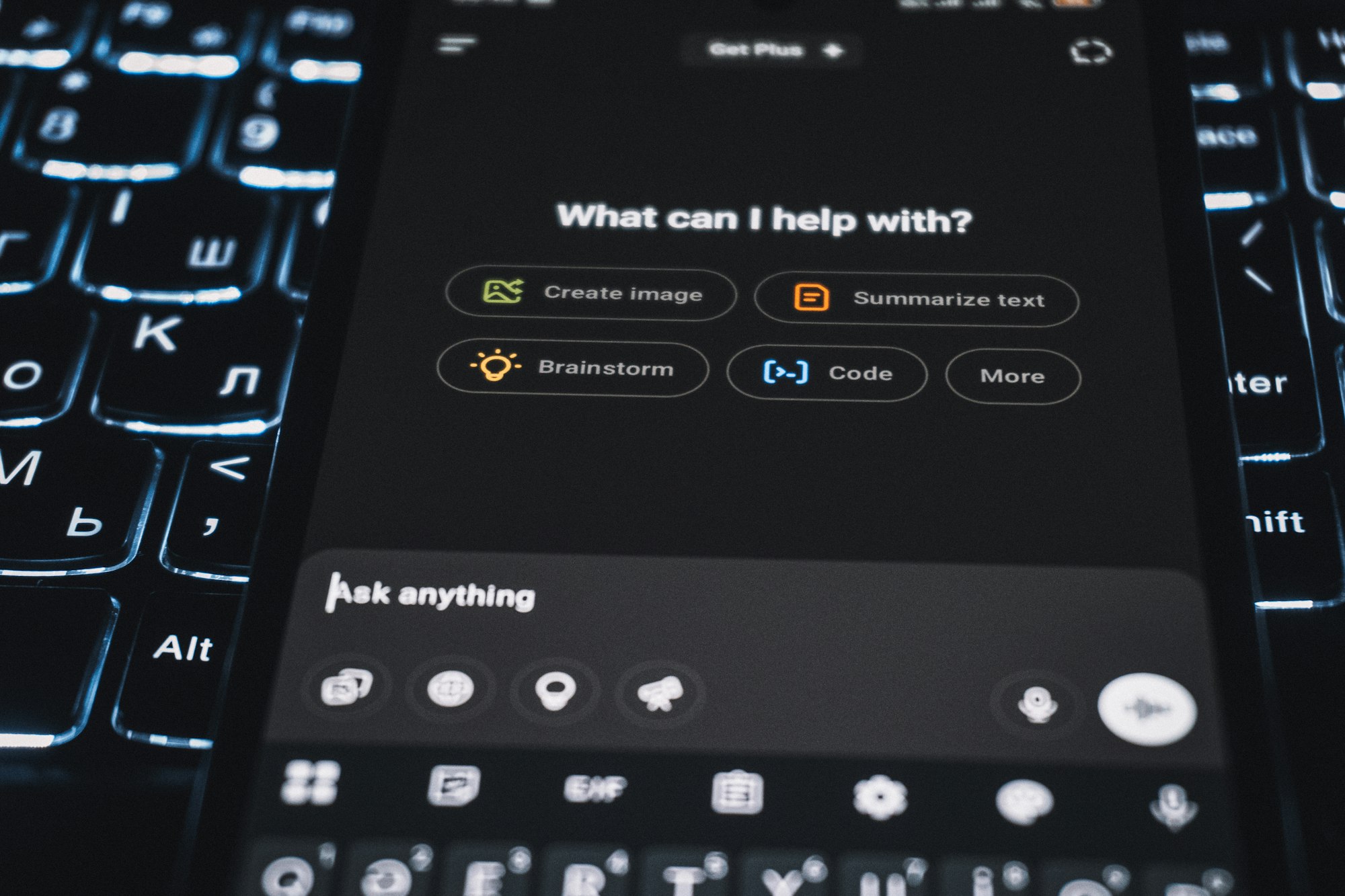

December 24, 2025
Link copied!
Copy failed!