
SCIENCE
Uranus and Neptune may be ‘rock giants,’ not ‘ice giants,’ new model of their cores suggests


The interiors of Uranus and Neptune may be rockier than scientists previously thought, a new computational model suggests — challenging the idea that the planets should be called “ice giants.”
The new study, published Dec. 10 in the journal Astronomy & Astrophysics, may also help to explain the planets’ puzzling magnetic fields.
You may like
Far out planets
Morf and his supervisor, Ravit Helled, developed a new hybrid model in an attempt to better understand the interior of these cold planets. Models based on physics alone rely heavily on assumptions made by the modeler, while observational models can be too simplistic, Morf explained. “We combined both approaches to get interior models that are both unbiased and physically consistent,” he said.
The pair started by considering how the density of each planet’s core could vary with distance from the center of the planets and then adjusted the model to account for the planets’ gravities. From this, they inferred the temperature and composition of the core and generated a new density profile. The team inputted the new density parameters back into the model and iterated this process until the model core fully matched current observational data.
Voyager 2 took this snaphost of Neptune in 1989. Data on Uranus and Neptune taken during Voyager’s flybys are still some of the best we have. (Image credit: NASA / Voyager 2)
This method generated eight total possible cores for both Uranus and Neptune, three of which had high rock-to-water ratios. This shows that the interiors of Uranus and Neptune are not limited to ice, as previously thought, the researchers said.
All of the modeled cores had convective regions where pure water exists in its ionic phase. This is where extreme temperatures and pressures cause water molecules to break apart into charged protons (H+) and hydroxide ions (OH-). The team thinks such layers may be the source of the planets’ multiple magnetic fields, which cause Uranus and Neptune to have more than two poles. The model also suggests that Uranus’ magnetic field is generated closer to its center than Neptune’s is.
“One of the main issues is that physicists still barely understand how materials behave under the exotic conditions of [high] pressure and temperature found at the heart of a planet [and] this could impact our results,” Morf said. The team aims to improve their model by including other molecules, like methane and ammonia, which also may be found in the cores.
“Both Uranus and Neptune could be rock giants or ice giants depending on the model assumptions,” Helled said. She noted that much of our understanding of these planets may be incomplete, as it’s based largely on data collected by the Voyager 2 space probe in the 1980s.
“Current data is insufficient to distinguish the two, and we therefore need dedicated missions to Uranus and Neptune that can reveal their true nature,” Helled added
The team hopes the model may act as an unbiased tool for any new data from future space missions to these planets.










If you have multiple streaming subscriptions and you want to access all content in one place, you’ll want the best streaming device available, but what is that?
A streaming device is something, usually a box or a stick, that connects to your TV (usually via HDMI) and displays apps that are installed through Wi-Fi connectivity, once you’re connected.
Visual Quality
In order to get the most out of your streaming device, you’ll need a device (i.e. a TV/laptop etc) that can support the visual quality the streaming device offers. These days, the best streaming devices all support 4K viewing, although some support it better than others.
If you do have a TV, or another device that supports 4K viewing, you’ll be pleased to hear that the Amazon Fire TV Stick, Roku Ultra, Apple TV and Google TV Streamer all offer 4K visuals. The Apple TV device offers the best picture with its 4K HDR ability, which means it offers 4K viewing, with improved contrast and brightness.
The Roku Ultra offers 4K UHD as a maximum resolution, whereas the Google TV Streamer offers a genuine 4K resolution and the Fire TV stick can play 4K HDR at 60FPS. All of this means you get high-quality visuals from each, but the Apple TV device is technically ahead, marginally, of the others.
Image 1 of 2
 The Amazon Fire TV stick can play 4K HDR at 60FPS.(Image credit: Amazon)
 The Roku Ultra offers 4K UHD as a maximum resolution.(Image credit: Roku)
The extra detail of 4K UHD compared to standard 4K viewing is subtle, but it is the difference between a 3,840 x 2160 and a 4,096 x 2160 resolution. Typically, to the average viewer, this won’t make any noticeable difference, but there are more pixels and a slightly finer picture produced in 4K viewing as opposed to 4K UHD.
Swipe to scroll horizontallyVideo Resolution
Amazon Fire TV Stick
4K HDR up to 60FPS
Roku Ultra
4K UHD
Apple TV 4K
4K HDR
Google TV Streamer
4K
Audio Quality
It’s all well and good viewing something with clear visual quality, but your experience will be ruined if the sound is terrible, so the audio quality is almost, if not just as, important as the visual quality.
Again, the Apple TV streaming device is marginally ahead of the rest, thanks to its Dolby Atmos Spatial Audio feature. Spatial Audio means you get a 3D audio atmosphere, so the audio sounds like it’s coming from different, specific points.
All the other streaming devices in this article offer regular Dolby Atmos audio quality. That’s still an outstanding feature. It’s much better than standard audio, and it means that the audio comes across with more depth and height, leading to a more impressive audio experience. The difference is that the Apple TV’s Dolby Atmos Spatial Audio offers a slightly more immersive audio experience.
Power and Available Apps
Image 1 of 2
 The Apple TV 4K is the premium option.(Image credit: Apple)
 The Google TV Streamer is a close second.(Image credit: Amazon)
Unsurprisingly, as the Apple TV 4K is the premium option in this clash of the best streaming devices, it has the best tech internally to keep it running smoothly. It features 4GB of RAM and an A 15 bionic chip to help it load apps quicker and run faster than previous generations. You can also get up to 128GB of storage, so you can download and use more than enough apps to satisfy your streaming needs.
The Google TV Streamer is a close second with 4GB of RAM, and a quad-core processor. The reason this comes a close second to the Apple TV 4K is due to its storage size; at just 32GB, it’s enough to use some apps, but not nearly as much as you get in the Apple model. Still, it performs well and costs less.
The Amazon Fire TV Stick marks a drop in processing power as it has a quad-core processor, but only 2GB of RAM and only up to 16GB of internal storage. Now, this is enough to get by, and get by sufficiently, but it’s clear that it doesn’t have the same firepower as the competition.
Swipe to scroll horizontallyInternal Power and specs
Apple TV 4K
4GB RAM, A 15 bionic chip, up to 128GB storage
Google TV Streamer
4GB RAM, quad-core processor, 32GB storage
Amazon Fire TV Stick
2GB Ram, up to 16GB internal storage
Roku Ultra
2GB RAM, ARM Cortex 55 CPU
Then we have the Roku Ultra, not bad by any stretch of the imagination, but with 2GB of RAM and an ARM Cortex A 55 CPU, it has all you need to perform well, without boasting the same firepower as the Google or the Apple models.
In terms of the apps available on each device, there are no notable absentees. All of the above have all major streaming services available to access, with the exception of some regional options in some cases. That’s a huge part of what makes these four stand out; you’re truly able to access the streaming services you would want to access, all in one place.
Price
When it comes to actually having to pay for everything you’ve read above, which costs a premium and which is great value?
Well, perhaps unsurprisingly, the premium model, the Apple TV 4K, costs the most. With options costing up to $149, it’s comfortably the most expensive on this list. But considering it’s also the best overall, maybe it isn’t as steep as expected, depending on how much you are willing to spend on a streaming device.
Price Comparison
- Apple TV 4K: Up to $149
- Roku Ultra: $100, regularly on offer
- Google TV Streamer: $100, sometimes on offer
- Amazon Fire TV Stick: Up to $65, regularly on offer
The value option here is undoubtedly the Amazon Fire TV Stick. There are different options available, ranging from the $35 mark to $60. It’s important to remember that these are regularly on sale if you’re buying from Amazon, so you probably won’t have to pay full price.
In between these, we find the Roku Ultra, which will set you back around $100, but is regularly on sale and it’s the same for the Google TV Streamer. Again, we have seen it on sale occasionally.
Verdict
Now that we’ve pitted four of the best streaming devices against each other, we can’t sit on the fence and say they’re all good; it’s down to what you want. While different people will have different preferences, we think the Apple TV 4K is the best streaming device out there.
Its internal storage, power and processor allow for a top streaming experience. Its visuals, audio and loading capabilities put it a little ahead of the competition. However, it is comfortably the most expensive option out there.
If you’re looking for value, or something that’s going to do everything you need and want with a friendly price tag, the Amazon Fire TV Stick is the option you want to pick. Of course, if you don’t want a stick and you want an actual box, the Roku Ultra is a great choice as it’s regularly on sale for a price that competes with the Fire TV Stick. And, if you’re an Android user, or you see a great offer, the Google TV Streamer becomes a top choice. But, overall, the Apple TV 4K reigns supreme here.
SCIENCE
The Guardian view on adapting to the climate crisis: it demands political honesty about extreme weather | Editorial


The record-breaking 252mph winds of Hurricane Melissa that devastated Caribbean islands at the end of October were made five times more likely by the climate crisis. Scorching wildfire weather in Spain and Portugal during the summer was made 40 times more likely, while June’s heatwave in England was made 100 times more likely.
Attribution science has made one thing clear: global heating is behind today’s extreme weather. That greenhouse gas emissions warmed the planet was understood. What can now be shown is that this warming produces record heatwaves and more violent storms with increasing frequency.
What we can do to minimise, or at least reduce, the risks to life from such events – as well as more gradual changes – is what climate adaptation experts think about all the time. The alarming consensus is that we are not doing anywhere near enough. The result is paid for in lives: floods and cyclonic storms across Thailand, Sri Lanka and Indonesia left hundreds dead at the end of November.
The president of Cop30 in Brazil, André Corrêa do Lago, called for the UN climate change conference to be a “Cop of adaptation”. But the governments of the most vulnerable countries went home from Belém angry about an outcome that saw the projected size of the annual adaptation budget triple to $120bn, but with the deadline pushed back to 2035 and no clear mechanism to make rich countries pay up.
Even that total falls short of the $300bn in climate finance overall that was agreed at Cop29 in 2024. The risk is that without international support, heavily indebted countries such as Jamaica become trapped, with resources that ought to be directed towards green energy and future-proofing being spent instead on coping with disasters.
But the need for preparation is not limited to low-lying countries and those most affected by extreme heat and violent storms. This imbalance in climate programmes can be seen all over the world. Last month, a group of UK scientists organised what they called a “national emergency briefing” in London in an effort to alert people to the scale of the climate crisis threat – and alarming underpreparedness.
Everyday injustice
In the global context, the politics of adaptation are clear. Poorer countries, including the small island states whose existence is threatened by sea-level rises, have consistently argued that the rich nations whose historical and current emissions are responsible for climate heating must support them to adapt to the crisis, as well as to transition away from fossil fuels. Rightwing, nationalist governments in the west are extremely hostile to this idea – and to aid spending more broadly – even if their most vociferous objections are reserved for the phaseout of fossil fuels and net zero.
But within wealthy countries, adaptation can appear more as a technocratic challenge than a political one. Policies regarding flood risks or increased resilience to high temperatures are not usually top priorities for voters – except when there is a disaster such as the floods in eastern Spain that led to the resignation of Carlos Mazón, president of Valencia, in November. While the grossly mismanaged water industry is a live political issue in England and Wales, big questions about natural resources and the resilience of infrastructure sit outside the daily cut and thrust, with responsibility delegated to arm’s-length agencies and rarely touched on by party leaders.
A recent report from the UK’s Glacier Trust and Climate Majority Project argued that charities and politicians should seek to change this, and promote an “action-oriented public understanding of climate risk”. All must recognise that adaptation cannot simply be left to market forces because the economics of climate risk make private finance retreat just as danger rises.
The long, low-profit investments needed to defend communities from flood, fire and heat are not attractive to private lenders. It is the state that must build seawalls or insure subsistence farmers when the risk becomes too great. Leah Aronowsky, a historian of science at Columbia University, says that climate risk is everyday injustice made worse – and she is right to argue that how we adapt is a political battle.
What adaptation should look like
One reason that adaptation receives so little attention is the sheer urgency of cutting emissions. In the context of warnings that the 1.5C target in the Paris agreement could move out of reach, mitigation – reducing or removing emissions – is the top priority.
Discussing preparations for global heating can feel like a distraction or even an admission of defeat. But while it makes sense for climate campaigners to maintain the strongest possible pressure for emissions cuts, there ought to be scope to get ready for a hotter, more unstable climate as well. Under the terms of the UK’s Climate Change Act, the government is legally obliged to do so, and to regularly review its preparations.
The UK’s Climate Change Committee will soon outline what a truly “well-adapted” country should look like: flood defences that can withstand the storms to come, transport links built for a harsher climate, food and supply chains resilient to global shocks, and coastal communities protected rather than abandoned. Experts also want to ensure that the 1.5m homes that the government has pledged to build in England alone are fit for the future. In an era of polarised attacks on net zero, such projects could help rebuild a shared belief in responsible care for the land.
For the rich world, adaptation is prudent. For the poor world, it is survival. The latest UN report is unequivocal: developing countries will need more than $310bn annually by 2035, yet received just $26bn in 2023. Catastrophic floods in Asia and worsening droughts in Africa this year point to the growing need to accelerate climate adaptation.
Under the Paris agreement, nationally determined contributions (NDCs) – country plans to tackle global heating – are meant to cover both emissions reduction and adaptation to climate impacts.
But NDCs end up focusing mostly on cutting greenhouse gases and establishing decarbonisation pathways. That needs to change. National adaptation plans, which came out of Cop16, need to be foregrounded. These put adaptation centre stage – and demand real plans, real finance, real justice. They ask the question that really matters now: how do vulnerable nations survive a warming world that emissions cuts alone can’t stop?

On Dec. 4, 2025, proud U.S. Space Force officer trainees donned their new service dress uniforms for a class photo ahead of their Officer Training School (OTS) graduation. Arranged in formation, the officers present a unified, formal appearance, signaling the Space Force has reached a new phase of maturity, moving beyond its formative years toward a more established presence within the U.S. military.
What is it?
Since its creation, the Space Force has focused on defining not just missions and capabilities, but also identity. Traditions, ranks, culture, and symbols all play a role in shaping a service that must simultaneously honor military heritage and adapt to the technical, rapidly changing nature of space operations. One of the most visible elements of that identity is the service dress uniform.
You may like
Where is it?
The image was captured at Maxwell Air Force Base, in Alabama.

The new class of US Space Force Guardians pose before their graduation ceremony. (Image credit: Tech. Sgt. Savannah L. Waters)
Why is it amazing?
The photograph connects long-standing military customs — such as formal graduation portraits and service dress — with the modern mission of space operations. This blend underscores how the Space Force draws from established military values while preparing for challenges unique to space.
Service dress uniforms are worn during ceremonies, official events, and moments of public representation. Seeing Space Force officers in their own distinctive uniform reinforces the service’s legitimacy and permanence, both within the Department of Defense and in the public eye.
As these newly commissioned Guardians move on to their first assignments, the image stands as a reminder that even in the era of space-based missions and digital warfare, tradition, identity, and human commitment remain central to military service.
Want to learn more?
You can learn more about the US Space Force and military projects.
SCIENCE
1.5 million-year-old Homo erectus face was just reconstructed — and its mix of old and new traits is complicating the picture of human evolution

Scientists have reconstructed the head of an ancient human relative from 1.5 million year-old fossilized bones and teeth. But the face staring back is complicating scientists’ understanding of early human evolution and dispersal, according to a new study.
The rebuilt fossil skull, called DAN5, shares traits with Homo erectus, the first early human relatives to have modern body proportions and to disperse from Africa. But the skull also has some features associated with the earlier species Homo habilis. The findings suggest a complex evolutionary path from early human ancestors to H. erectus, researchers reported Dec. 16 in the journal Nature Communications.
You may like
“We already knew that the DAN5 fossil had a small brain, but this new reconstruction shows that the face is also more primitive than classic African Homo erectus of the same antiquity,” study co-author Karen Baab, a paleontologist at Midwestern University in Arizona, said in a statement. This could mean that the population from the Gona region might have “retained the anatomy of the population that originally migrated out of Africa approximately 300,000 years earlier,” she said.
To reconstruct DAN5’s face, the researchers used micro-computerized tomographic (CT) scans of 10 fossils — five fragments of facial bones and five teeth — to build a 3D model. The process was like “a very complicated 3D puzzle, and one where you do not know the exact outcome in advance,” Baab said. “Fortunately, we do know how faces fit together in general, so we were not starting from scratch.”
The shape of DAN5’s braincase was similar to that of H. erectus. But some of the facial features such as large molars and a flat and narrow nose were more similar to features in the older human ancestor H. habilis.
A similar mix of old and new traits was previously observed in 1.8 million-year-old H. erectus fossils from Dmanisi in the Republic of Georgia, which led some scientists to believe that the species evolved in Eurasia from an earlier Homo population. Older H. erectus fossils dating back 1.8 million years have also been found in Africa. But DAN5 is the first African fossil to have the same mixture of attributes as the Dmanisi hominins, which could support the hypothesis that H. erectus evolved primarily in Africa like other hominins before it. Further complicating the picture, though, is the fact that the DAN5 fossils are younger than those from Dmanisi, suggesting the mixture of old and new traits persisted in Africa for at least 300,000 years.
In future work, the team plans to compare the DAN5 fossils to 1 million-year-old human fossils from Europe, including some that have been identified as H. erectus and as Homo antecessor — a later human relative that lived 1.2 million to 0.8 million years ago — to better understand variability in face shape in the early Homo genus. The team also plans to investigate whether DAN5 might be a product of interbreeding between multiple Homo species.
“We’re going to need several more fossils dated between one to two million years ago to sort this out,” study co-author Michael Rogers, an anthropologist at Southern Connecticut State University, said in the statement.


Researchers analyzing ancient sewer drains at the Roman fort of Vindolanda near Hadrian’s Wall have found clear evidence that people living at the site were infected with three intestinal parasites: roundworm, whipworm, and Giardia duodenalis. All three parasites spread through poor sanitation, typically when food, water, or hands are contaminated with human feces. Roundworms can […]
SOURCE PAGE
Celestron NexStar 8SE
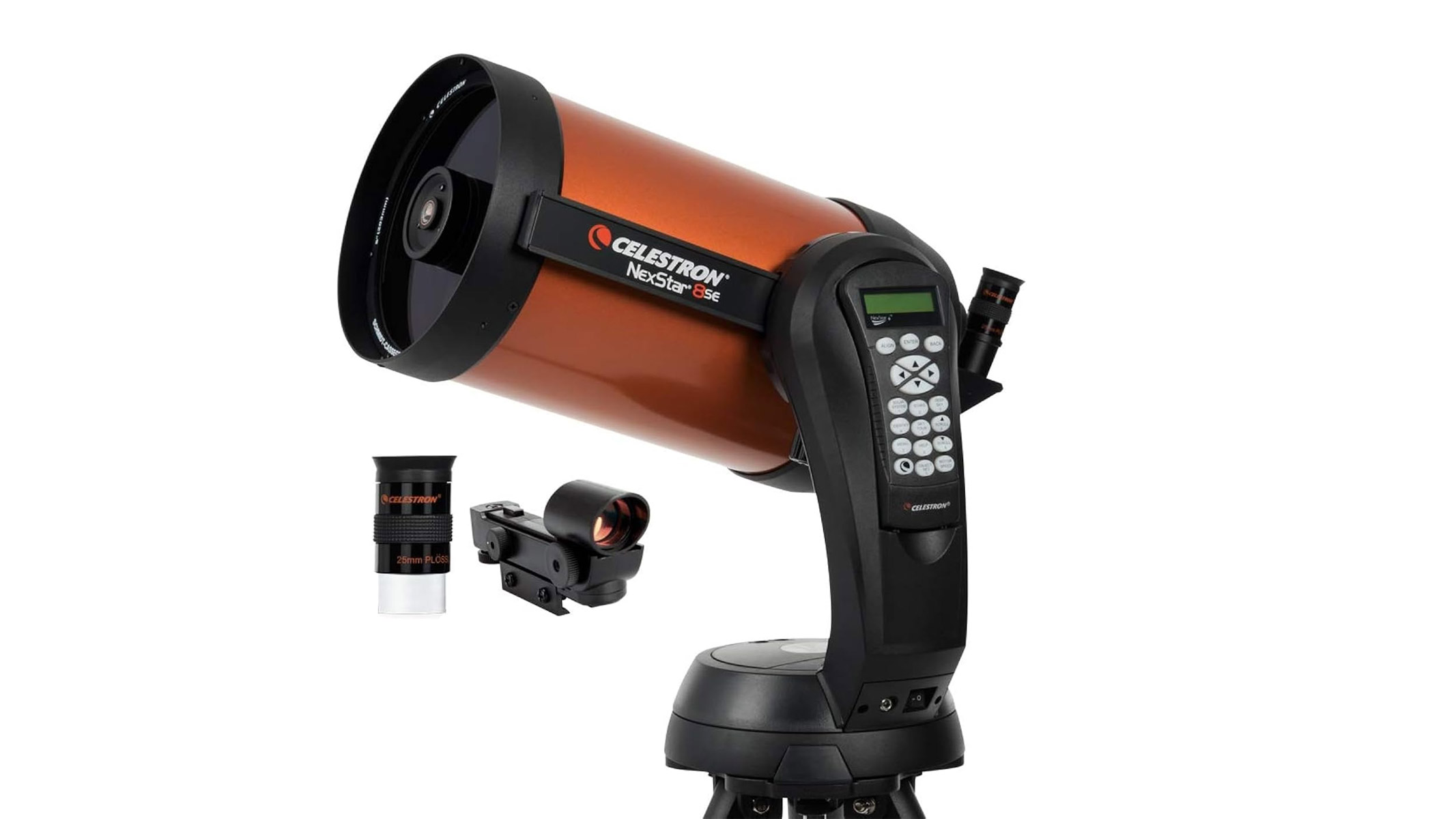
(Image credit: Amazon)
We reckon the Celestron NexStar 8SE is the best motorized telescope out there as it’s great for astrophotography, deep-space observing and it offers stunning detailed imagery. It is a little pricey but for what you get, it’s good value. For a more detailed look, you can check out our Celestron NexStar 8SE review.
Look to the southern sky after dark on Dec. 26 to spot the waxing crescent moon shining near the gas giant Saturn among the stars of the constellation Pisces.
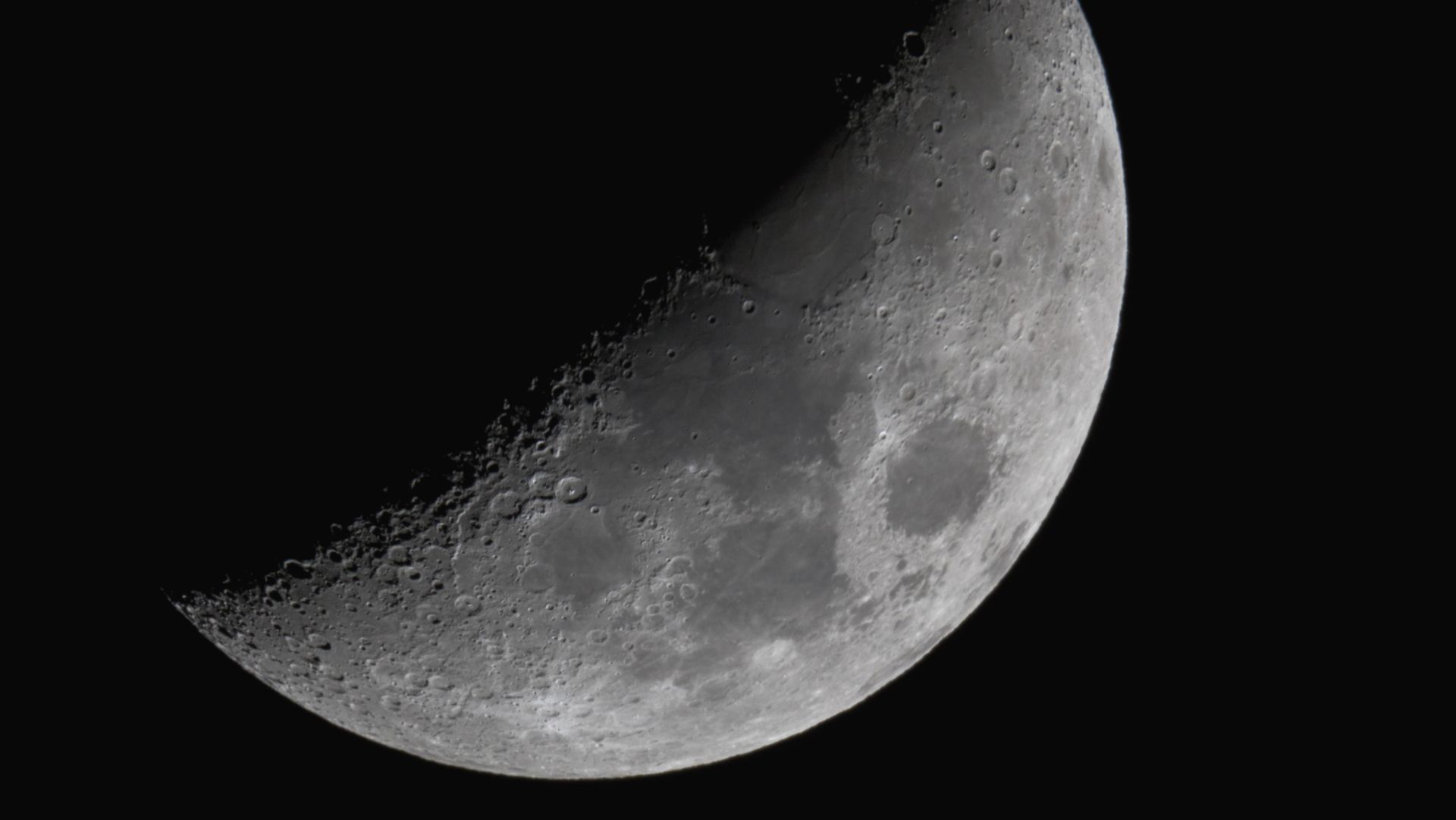
A pair of 10×50 binoculars should easily fit both Saturn and the moon within the same field of view, while revealing an assortment of fascinating surface features on Earth’s natural satellite, which will appear almost half-lit just one day shy of its first quarter phase on Dec. 27.
You may like
Look to the upper region of the lunar crescent to find the menacing form of the Aristotles crater with its eastern rim bathed in impenetrable shadow. The Eudoxus crater is visible just beneath and beyond the dark expanses of Mare Serenitatis (the Sea of Serenity) and Mare Tranquilitatis (the Sea of Tranquility), which served as the landing site of the historic Apollo 11 lunar landing.
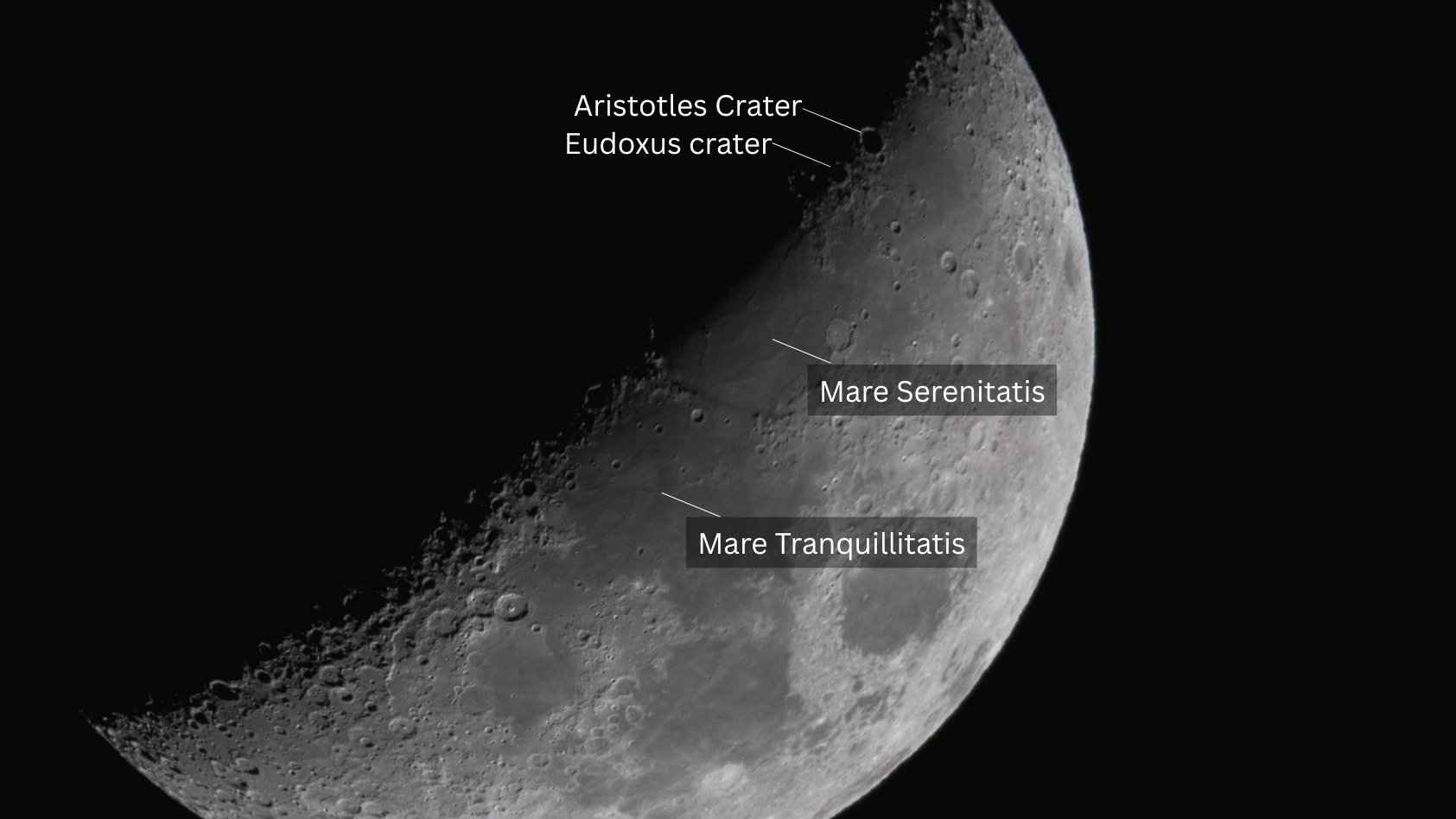
The moon pictured shortly before its first quarter phase. (Image credit: Photo by Rick Kern via Getty Images, annotated by Anthony Wood in Canva)
A telescope with a 6-inch (152 millimeter) aperture will begin to reveal the razor-thin profile of Saturn’s rings, as they rest oriented edge-on to Earth following the gas giant’s ring plane crossing in March. Astronomy filters can also aid in revealing details in Saturn’s upper atmosphere, which appears divided into distinct multi-colored cloud bands that circle the gas giant at 1,600 feet (500 meters) per second.
Want to get a closer look at the diverse menagerie of worlds populating our solar system? Then be sure to browse our picks of the best telescopes for exploring the night sky, along with our guides to picking the best cameras and lenses for astrophotography, if you want to immortalize your stargazing sessions.
Editor’s Note: If you capture an image of the moon with Saturn and want to share it with Space.com’s readers, then please send your photo(s), comments, and your name and location to spacephotos@space.com.

The next global volcanic disaster is more likely to come from volcanoes that appear dormant and are barely monitored than from the likes of famous volcanoes such as Etna in Sicily or Yellowstone in the US.
Often overlooked, these “hidden” volcanoes erupt more often than most people realise. In regions like the Pacific, South America and Indonesia, an eruption from a volcano with no recorded history occurs every seven to ten years. And their effects can be unexpected and far-reaching.
You may like
You don’t have to look far back in history to find another example. In 1982, the little-known and unmonitored Mexican volcano El Chichón erupted explosively after lying dormant for centuries. This series of eruptions caught authorities off-guard: hot avalanches of rock, ash and gas flattened vast areas of jungle. Rivers were dammed, buildings destroyed, and ash fell as far as Guatemala.
More than 2,000 people died and 20,000 were displaced in Mexico’s worst volcanic disaster in modern times. But the catastrophe did not end in Mexico. The sulphur from the eruption formed reflective particles in the upper atmosphere, cooling the northern hemisphere and shifting the African monsoon southwards, causing extreme drought.
This alone would test the resilience and coping strategies of any region. But when it coincided with a vulnerable population that was already experiencing poverty and civil war, disaster was inevitable. The Ethiopian (and East African) famine of 1983-85 claimed the lives of an estimated 1 million people. This brought global attention to poverty with campaigns like Live Aid.
Few scientists, even within my field of Earth science, realise that a remote, little-known volcano played a part in this tragedy.
Despite these lessons, global investment in volcanology has not kept pace with the risks: fewer than half of active volcanoes are monitored, and scientific research still disproportionately focuses on the well-known few.
🌋 #HayliGubbi — a once-dormant shield volcano in Ethiopia’s Afar Rift — has exploded to life. Its ash plume soared to 45,000 ft, signaling a rare, high-energy event in a volcano with no known eruptions for millennia.Visualized: @NASAEarth🛰 #NASA🌍 #worldview pic.twitter.com/BBPyaUjAzzNovember 23, 2025
There are more published studies on one volcano (Mount Etna) than on all the 160 volcanoes of Indonesia, Philippines and Vanuatu combined. These are some of the most densely populated volcanic regions on Earth – and the least understood.
The largest eruptions don’t just affect the communities around them. They can temporarily cool the planet, disrupt monsoons and reduce harvests across entire regions. In the past, such shifts have contributed to famines, disease outbreaks and major social upheaval, yet scientists still lack a global system to anticipate or manage these future risks.
You may like
Mount Etna on the Italian island of Sicily. (Image credit: By Wead via Shutterstock)
To help address this, my colleagues and I recently launched the Global Volcano Risk Alliance, a charity that focuses on anticipatory preparedness for high-impact eruptions. We work with scientists, policymakers and humanitarian organisations to highlight overlooked risks, strengthen monitoring capacity where it is most needed, and support communities before eruptions occur.
Acting early, rather than responding only after disaster strikes, stands the best chance of preventing the next hidden volcano from becoming a global crisis.
Why ‘quiet’ volcanoes aren’t safe
So why do volcanoes fail to receive attention proportionate to their risk? In part, it comes down to predictable human biases. Many people tend to assume that what has been quiet will remain quiet (normalcy bias). If a volcano has not erupted for generations, it is often instinctively considered safe.
The likelihood of an event tends to be judged by how easily examples come to mind (this mental shortcut is known as availability heuristic). Well-known volcanoes or eruptions, such as the Icelandic ash cloud from 2010, are familiar and can feel threatening, while remote volcanoes with no recent eruptions rarely register at all.
These biases create a dangerous pattern: we only invest most heavily after a disaster has already happened (response bias). El Chichón, for instance, was only monitored after the 1982 catastrophe. However, three-quarters of large eruptions (like El Chichón and bigger) come from volcanoes that have been quiet for at least 100 years and, as a result, receive the least attention.
Volcano preparedness needs to be proactive rather than reactive. When volcanoes are monitored, when communities know how to respond, and when communication and coordination between scientists and authorities is effective, thousands of lives can be saved.
Disasters have been averted in these ways in 1991 (at Mount Pinatubo in the Philippines), in 2019 (at Mount Merapi in Indonesia) and in 2021 (at La Soufrière on the Caribbean island of Saint Vincent).
To close these gaps, the world needs to shift attention towards undermonitored volcanoes in regions such as Latin America, south-east Asia, Africa and the Pacific – places where millions of people live close to volcanoes that have little or no historical record. This is where the greatest risks lie, and where even modest investments in monitoring, early warning and community preparedness could save the most lives.
This edited article is republished from The Conversation under a Creative Commons license. Read the original article.

For half a century, psychedelics largely belonged to the cultural left: anti-war, anti-capitalist, suspicious of the church and state. Now, one of the most politically consequential psychedelic drugs in the US – ibogaine – is being championed by evangelical Christians, Republican governors, military veterans, and big tech billionaires.
Many of them see ibogaine, an intense psychedelic derived from a central African rootbark, as a divine technology. In fact, some pointedly do not refer to it as a psychedelic, given the apparent baggage of the term in some circles.
“The psychedelic renaissance is three things: capitalized, conservative and Christian,” Jamie Wheal, author of Recapture the Rapture: Rethinking God, Sex, and Death in a World That’s Lost Its Mind, wrote earlier this year in an article titled Make America Hallucinate Again. “The tactical decision to make military veterans the face of [the psychedelic reform] movement has now taken on a life of its own.”
After the Food and Drug Administration’s rejection of MDMA-assisted therapy for PTSD last year, ibogaine is now center stage. Texas governor Greg Abbott signed off on a landmark $50m funding package for ibogaine research in June, noting the “great promise” of the drug in treating conditions suffered by veterans – more of whom live in Texas than any other state.
Reform discussions are also under way in Ohio, while Colorado is already moving towards sanctioning legal ibogaine treatments, in which patients embark on rollercoaster trips of about 12 hours.
“It has a breakthrough therapeutic impact on veterans who have experienced all the visible and invisible traumas of war, including traumatic brain injuries, which have been fully resolved with a single ibogaine treatment,” says Bryan Hubbard, CEO of advocacy group Americans for Ibogaine and a lawyer from Kentucky who often references his personal prayer, Isaiah 61:1. “This very special emancipation medication has the capacity to substantially improve treatment outcomes for afflictions that affect the mind, body and soul.”
In a Stanford University study published last year in Nature Medicine, 30 US special forces veterans who underwent ibogaine treatment in Mexico experienced significant reductions in traumatic brain injury (TBI), PTSD and depression symptoms. A month later, most of the patients had improved even further, without any reported side effects.
Hubbard, a devout Christian, says the irony of conservative Republicans like himself standing at the forefront of the campaign to provide legal access to psychedelic therapies is not lost on him. His own legal experiences in clinics in Mexico with ibogaine, however, were “the most profound spiritual experiences in my life”.
But there is growing scrutiny of the apparent victory of the cultural right in who gets to define psychedelic healing, and what Wheal has described bleakly as a “counter-counter-cultural turn” in the psychedelics world. “The psychedelic [QAnon] shaman storming the White House on January 6 was an early awakening that within Maga there could be rightwing psychonauts,” says Jeremy Wheat, director of the nonprofit Global Ibogaine Therapy Alliance, a nonprofit.
Ibogaine, which Hunter Biden took in 2014 in a failed attempt to address his drug and alcohol addiction, is “a maverick molecule for a maverick moment”, Wheat adds, after its accidental discovery as a treatment for opioid addiction in the 1960s by heroin addict and film-maker Howard Lotsof. But as clinics in legal jurisdictions expand to cope with the rising demand, the dream-inducing psychedelic – which can rid addicts of even debilitating withdrawal symptoms, while also providing consumers with autobiographical and sometimes distressing movies of their lives – is “just becoming a pill you take”, Wheat says, as part of a “ruthlessly transactional” and lucrative American-style healthcare system.
That traumatized US veterans and victims of the pharmaceutical industry’s opioid crisis are flocking to Mexico to take an African psychedelic is just one consequence of how the “effervescence of irrationality” has migrated to the right in recent years, where libertarian Republican political figures appear keener to take previously unfathomable risks.
On 7 September, ketamine therapy enthusiast Elon Musk – whose allies are now some of the biggest individual funders of psychedelic NGOs, research and drug development – posted on X: “White people are a rapidly diminishing minority of [the] global population.” A few hours later, he added: “We cannot understand the true nature of the Universe, unless we question deeply. I want to know what is real, even if the answer is total obliteration of my consciousness.”
Towards the end of November, former UFC champion Conor McGregor, who recently lost his appeal in a civil rape case after being alleged to have held his female victim in a chokehold, did ibogaine and claimed to have experienced visions of being initiated by Jesus in a viral X post. “I was shown the light,” he wrote. Jesus descended from the white marble steps of heaven and anointed me with a crown. I was saved! My brain. My heart. My soul. Healed!”
McGregor seemingly has political aspirations. He attended Trump’s inauguration in January and visited the president again in March, before hosting Tucker Carlson in Dublin and then running a short-lived anti-immigration campaign for president of Ireland.
A week after McGregor’s trip, the “Don’t Die” longevity entrepreneur Bryan Johnson, a Trump supporter who became a centimillionaire after selling web payments company Braintree in 2013, live-streamed himself tripping on mushrooms – with more than a million people watching on X. Billionaire Salesforce CEO Mark Benioff joined the live stream just weeks after saying Trump should send troops into San Francisco to make the city safer.
Others at the forefront of calls to expand access to ibogaine treatment include former Texas governor Rick Perry, who was Trump’s energy secretary from 2017 to 2019 and co-founded Americans for Ibogaine with Hubbard after receiving funding from Rex Elsass, described by GQ as “the most powerful man in the GOP” that nobody has ever heard of. Google co-founder Sergey Brin reportedly made a $15m investment into a startup researching ibogaine last year.
Congressman Morgan Luttrell, a former Navy Seal, did ibogaine and another psychedelic, 5-MeO-DMT, also known as “the God molecule” himself in 2018 in Mexico prior to his election to the House in 2023. He is the only known federal lawmaker to have tripped on the drugs, which he said eased his war traumas. “I was always ready to go,” he told the Washington Examiner. “I was a hyper-aggressive spec war guy that just couldn’t turn the page and start the new chapter.” But psychedelics were “life-changing” for him. “It was a clean slate; start completely over,” he said.
It was much the same for Rob O’Neill, the Navy Seal veteran credited with killing Osama bin Laden in 2011, who says that ibogaine has helped him address his PTSD as part of a grueling set of trips in which he was forced to witness his own demons. “It gets in your brain. It shows you stuff. And it kind of cleans out the closet,” O’Neill told Tucker Carlson earlier this year. “It’s terrifying.”
But aside from the terrors, the psychedelic experience, says Norman Ohler, author of Tripped: Nazi Germany, the CIA, and the Dawn of the Psychedelic Age, is often characterized by a “unified worldview, without borders or enemies, because you work through your trauma”. Even while he doubts psychedelics can make peace-loving men of the most ardent warmongers, Ohler does not see the apparent upswell in rightwing figures publicly aligning themselves with the psychedelic reform movement as a negative phenomenon.
“If both camps are embracing psychedelics, they can be a unifying force for society,” he says. “Maybe psychedelics will destroy fascism.”
Ohler also recently took ibogaine himself, for psychospiritual purposes, at a clinic in Mexico alongside a group of veterans, one of whom had been suffering from daily migraines after being shot in the head in Afghanistan years before. “After taking ibogaine, his pain was completely gone,” says Ohler. “This is a very special medicine.”
A medicine that also comes with mortal risks. Ibogaine is contraindicated with a host of other drugs and can lead to cardiac arrest, which is why treatments best take place with intensive care ward care and monitoring. A 2021 study reported that 33 ibogaine-related deaths have been reported publicly, but the true figure is likely much higher and there have been questions over how certain clinics have dealt with deaths under their care – even while the psychedelic has reportedly transformed thousands of lives.
For Hubbard, it is paramount that ibogaine is treated as the “very serious medication” that it is. “I don’t shy away from [the term] psychedelics,” he says.
But he does seek to avoid “flamboyant and quixotic” language when making the case. “Someone who is eating a handful of mushrooms and rolling around the mud at Woodstock in 1969 is not a credible advocate for how psychedelics can help deliver individual healing and broader spiritual enlightenment,” he says.

This year, the number of NASA-tracked confirmed worlds discovered beyond our solar system surpassed 6,000, and several thousand more await confirmation.
The milestone, reached just three decades after the Nobel Prize-winning discovery of the first planet orbiting a sunlike star in 1995, is largely the result of the planet-hunting power of NASA’s Kepler space telescope and Transiting Exoplanet Survey Satellite (TESS).
The growing tally reflects how dramatically humanity’s view of our home galaxy, the Milky Way, has expanded — and how diverse its planetary population has turned out to be.
You may like
Far from mirroring the relatively flat, orderly architecture of our own solar system, new observations and more detailed reexaminations of familiar worlds revealed entire classes of planets with no counterparts at home — super-Earths, mini-Neptunes and hot Jupiters — as well as worlds on contorted orbits that are forcing astronomers to rethink how planets form and evolve.
As the year comes to a close, here’s a look back at some of the most intriguing, puzzling and rule-breaking exoplanets astronomers studied in 2025. These worlds illustrate both how far exoplanet science has come and how much there still is to learn.
“Tatooine” worlds
More “Tatooine-like” worlds leapt from science fiction into the exoplanet database this year, as astronomers identified multiple planets orbiting two suns — sometimes in configurations that challenge the basic rules of planetary formation.
The strangest of these worlds emerged in April, when a team reported the discovery of 2M1510 (AB) b, a planet orbiting two brown dwarfs, which are often called “failed stars” because they’re not massive enough to ignite nuclear fusion.
Located about 120 light-years from Earth, the world orbits above and below the poles of its two stars, rather than along the usual flat plane. The discovery team inferred the planet’s presence using the Very Large Telescope in Chile, after detecting an unusual backward wobble in the brown dwarfs’ orbits. This was a gravitational clue that the researchers said could be explained only by a hidden, steeply inclined planet that was possibly knocked into place by a stellar flyby long ago.
Later in the year, a different team discovered three Earth-size planets orbiting the compact binary system TOI-2267, just 73 light-years from Earth. Using data from TESS, the team found that all three worlds transit both stars, even though such tightly bound stellar pairs are thought to be gravitationally unstable environments for planet formation.
Adding to the haul, two independent teams identified HD 143811 (AB) b, a massive planet that had been hidden in archival data for years. Captured by the Gemini Planet Imager on the Gemini South telescope in Chile, the world orbits a young twin-star system about 446 light-years from Earth. Though it’s roughly six times the size of Jupiter, the planet is only 13 million years old and still glows with heat left over from its formation.
You may like
The alien world’s host stars whirl around each other every 18 days, while the planet itself traces a slow, 300-year orbit around both. The contrast of a fast-dancing binary and a distant, lumbering giant poses a lingering mystery of how such a massive planet formed and survived in such a dynamically complex system.
The search for life on K2-18b
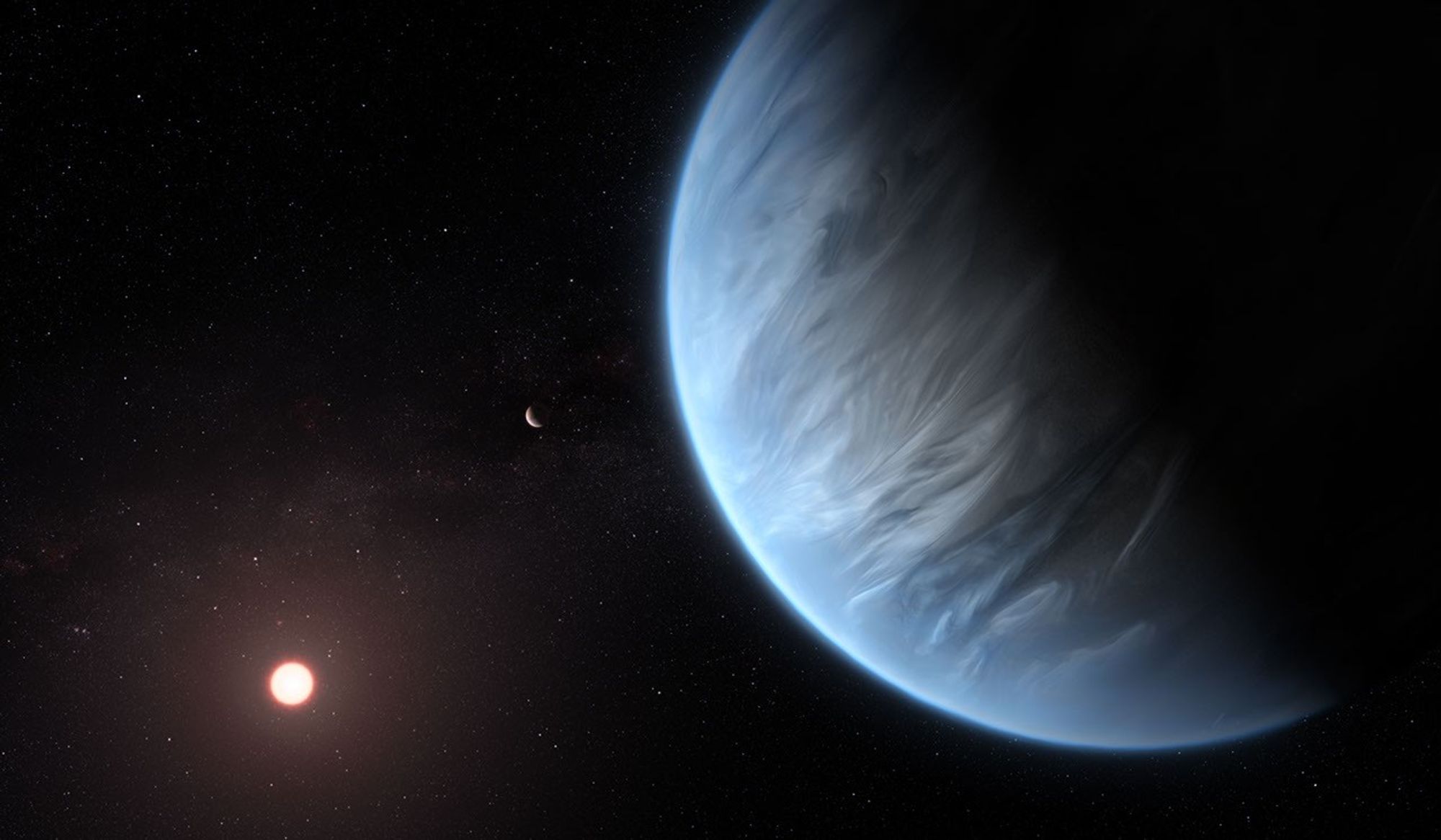
This artist’s impression shows the planet K2-18b, its host star and an accompanying planet in its system. (Image credit: ESA/Hubble, M. Kornmesser)
The exoplanet K2-18b arguably became one of 2025’s loudest exoplanet flash points after renewed claims of possible life swiftly ignited scientific debate.
The world made headlines in April when a University of Cambridge-led team announced what it called its strongest evidence yet for potential biosignature gases in the planet’s atmosphere. Using new transit spectra from the James Webb Space Telescope (JWST), the researchers argued that the data were consistent with dimethyl sulfide, and possibly dimethyl disulfide — gases that on Earth are strongly associated with marine biology. The findings, the team argued, bolstered the case that the planet could support life on an ocean-covered world they described as potentially “teeming with life.”
Within weeks, however, independent analyses challenged that interpretation. One group showed that nonbiological gases, including propyne, could reproduce the same spectral features without invoking life, while another concluded that the JWST signal was too noisy or too weak to draw definitive conclusions.
The debate also drew attention to the limits of JWST, which was conceived before the discovery of exoplanets and is now being pushed to the edge of its capabilities to study one.
Still, researchers emphasize that K2-18b remains a high-value target for understanding sub-Neptunes, a class of planets absent from our solar system. Additional JWST transits already in hand may yet clarify what, if anything, the planet’s atmosphere is truly revealing.
“If the ultimate result of this story is that the public is more circumspect about future claims of life detection, that’s not a terrible thing,” Eddie Schwieterman, an assistant professor of astrobiology at the University of California, Riverside, who was not involved with the research, told Space.com.
Dashed hopes for TRAPPIST-1e’s habitability
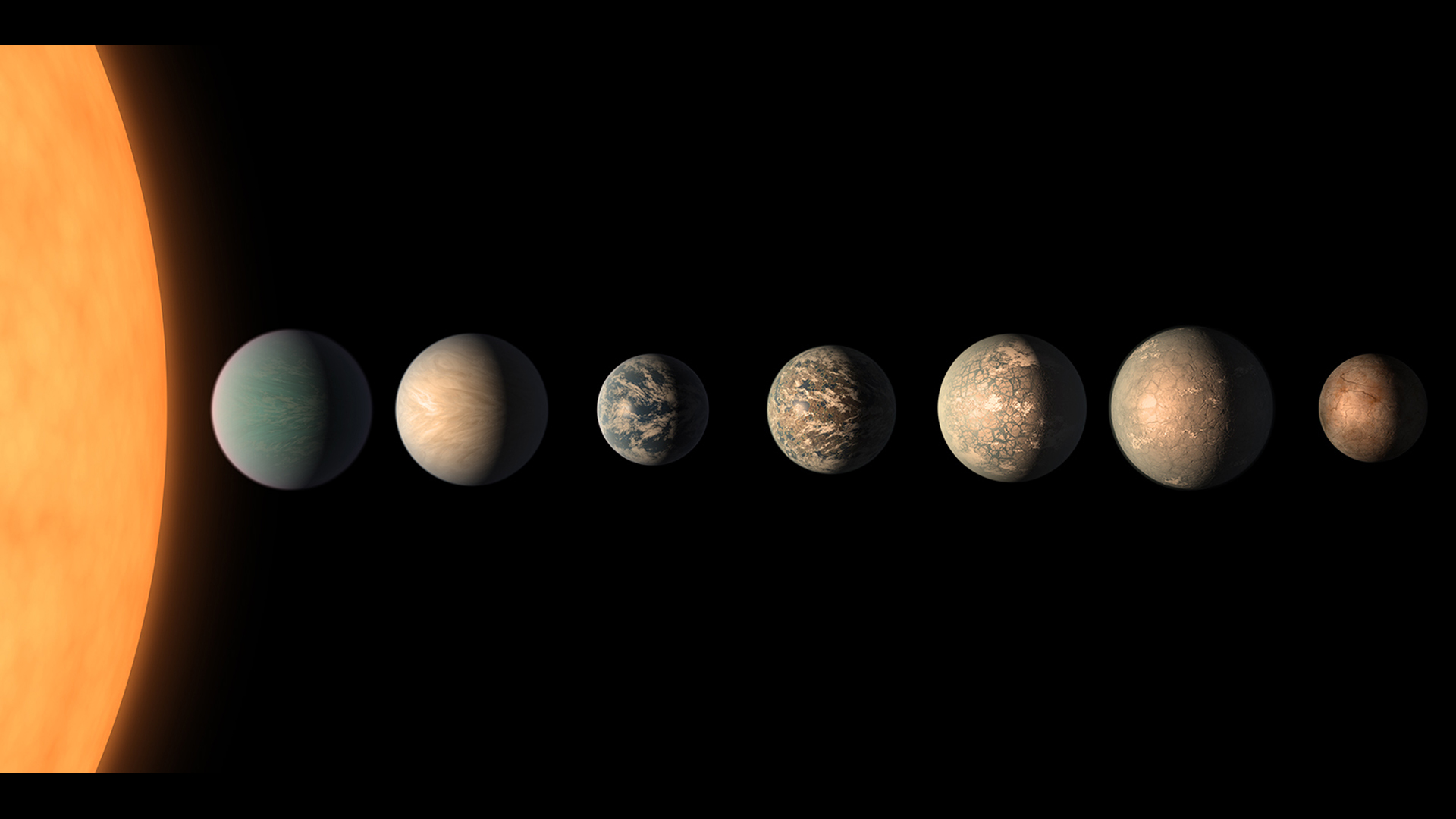
An illustration of the TRAPPIST system. (Image credit: NASA/JPL-Caltech)
New analyses of TRAPPIST-1e, one of seven Earth-size planets orbiting a cool red dwarf star about 40 light-years from Earth, suggest the planet may lack a substantial atmosphere, complicating hopes that it could support life-friendly liquid water.
Earlier JWST observations hinted at methane in the planet’s atmosphere, raising the possibility of complex chemistry or even biological activity. Follow-up studies, however, indicated those signals were likely contaminated by the star itself.
Computer simulations showed that any methane on TRAPPIST-1e would be rapidly destroyed by intense ultraviolet radiation, surviving only about 200,000 years — not nearly long enough for geological processes to replenish it.
Variations in the signal from transit to transit further suggest that if an atmosphere exists at all, it remains extremely difficult to detect — a reminder that even the most promising worlds can defy easy answers.
A clearer look at Proxima Centauri
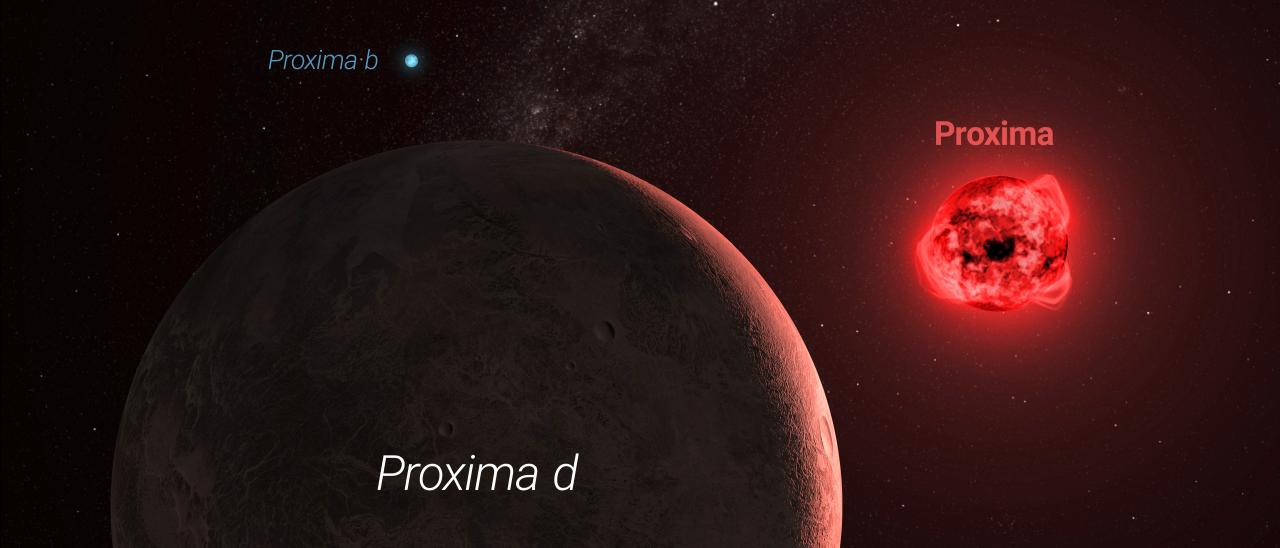
Artistic impression of the Proxima Centauri system, with the planets Proxima b and Proxima d, the latter confirmed by NIRPS. (Image credit: Gabriel Pérez Díaz (IAC))
In 2025, astronomers sharpened their view of the planetary system around Proxima Centauri — the sun’s closest stellar neighbor, which lies just 4.2 light-years away — thanks to a powerful new instrument designed to hunt worlds around small, cool stars.
The Near-Infrared Planet Searcher (NIRPS), a new high-resolution spectrograph installed at La Silla Observatory in Chile, delivered its first science results in July.
A team led by Alejandro Mascareño of the Institute of Astrophysics of the Canary Islands in Spain confirmed the presence of Proxima b, an Earth-size planet known to orbit within the star’s habitable zone, thereby validating the instrument’s capabilities.
NIRPS also confirmed a smaller planet, Proxima d, and helped rule out a previously claimed third world, thus refining the census of the nearest planetary system.
The results also marked a technical milestone. For the first time, astronomers reached the precision needed to detect the faint gravitational pull of small, rocky planets around red dwarf stars, which emit most of their light at infrared wavelengths — making instruments like NIRPS valuable in the search for Earth-like planets beyond our solar system.
The tails of disintegrating worlds
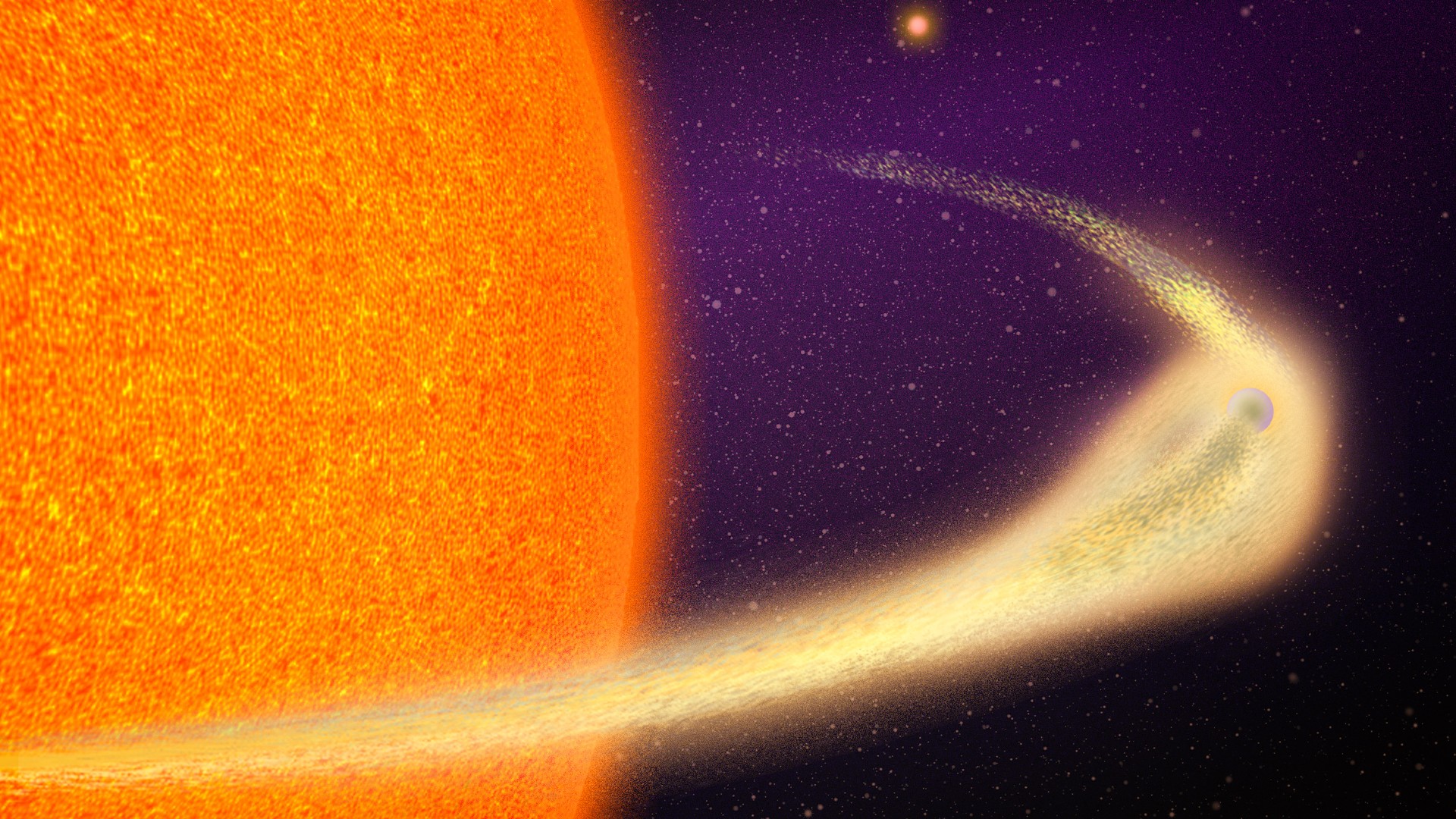
An illustration of a disintegrating planet orbiting a giant star. (Image credit: Jose-Luis Olivares, MIT)
This year, astronomers discovered rare exoplanets that orbit so close to their stars that they have long tails of material. These worlds are caught in a fleeting moment, in cosmic terms, before they disintegrate.
One such world, BD+05 4868 Ab, was spotted by TESS about 140 light-years from Earth, in the constellation Pegasus. The planet completes a full orbit every 30.5 hours, circling its star at a distance roughly 20 times closer than Mercury orbits the sun. At such proximity, intense stellar heat vaporizes material from the planet’s surface, which then streams into space, forming a blazing, comet-like tail. That tail is enormous, stretching up to 5.6 million miles (9 million kilometers), or about half the planet’s orbit.
The discovery team estimates that the planet sheds the equivalent of a Mount Everest’s worth of material every orbit and could completely disintegrate within 1 million to 2 million years. The dust in the tail may contain material from the planet’s crust, its mantle or even its core, which would give scientists a rare opportunity to study the internal composition of a distant world — something normally far beyond observational reach.
Another team used JWST to study a very different kind of planetary tail around the ultrahot Jupiter WASP-121b, also known as Tylos, located about 858 light-years from Earth. Instead of shedding rock, the planet is losing its atmosphere. JWST revealed two enormous helium tails spanning nearly 60% of the planet’s orbit — one trailing behind, pushed back by stellar radiation and wind, and a second, rarer leading tail curved ahead of the planet, likely drawn inward by the star’s gravity.
A lava world that refuses to go bare

Artist’s rendition of TOI-561, one of the oldest, most metal-poor planetary systems discovered yet in the Milky Way galaxy. (Image credit: W. M. Keck Observatory/Adam Makarenko)
Astronomers using JWST found an atmosphere clinging to a planet that, by all conventional rules, should be completely airless.
The world, TOI-561b, is a small, scorching lava planet that orbits one of the oldest stars in the Milky Way so closely that its year lasts less than a single Earth day.
Tidally locked, with one side permanently facing its star, the planet reaches surface temperatures of more than 3,140 degrees Fahrenheit (about 1,726 degrees Celsius) — hot enough to melt rock — and is old enough that any primordial atmosphere should have escaped long ago.
Yet JWST observations suggest the planet’s dayside is cooler than expected for a bare, airless rock, pointing to the presence of a substantial atmosphere that may have persisted for billions of years and is redistributing heat around the planet.
If confirmed, the finding would mark the strongest evidence yet for a long-lived atmosphere on a hot, rocky world that is neither massive nor temperate, challenging assumptions about the extreme conditions in which planetary atmospheres can survive.
The birth and death of an alien world
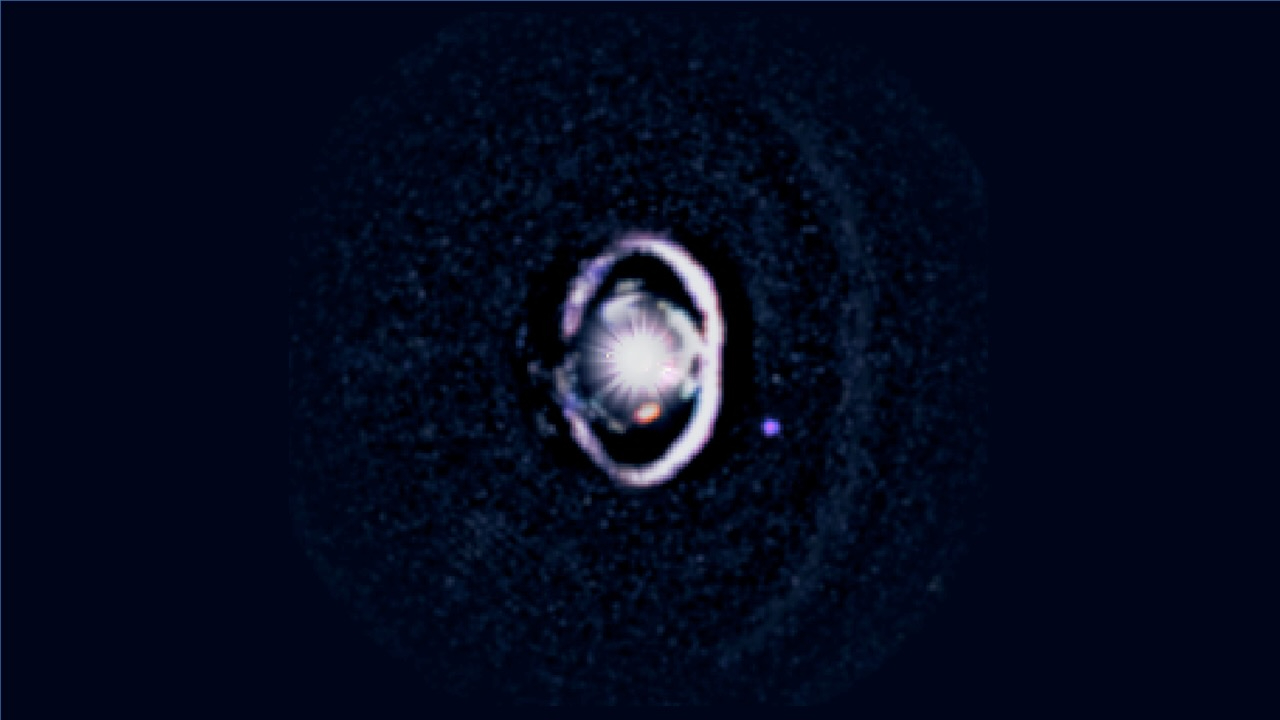
The baby exoplanet WISPIT 2b appears as a small purple dot beside a bright white dust ring encircling its star, with a fainter outer ring visible beyond it in new observations from the Magellan and Large Binocular Telescopes. (Image credit: Laird Close, University of Arizona)
This year, astronomers observed two cosmic moments that bookend the life of a planet.
In one study, astronomers captured a never-before-seen view of a planet forming about 437 light-years from Earth.
The observations, taken with the Magellan Telescopes in Chile and the Large Binocular Telescope in Arizona, show the alien world as a faint, purple dot embedded within a ring-shaped gap in a dusty disk around its star. The forming world, WISPIT 2b, is just 5 million years old, yet it is already about five times as massive as Jupiter, and it’s sitting within a clearing in the disk as it gathers dust and gas to grow.
Astronomers have long suspected that such gaps mark the presence of newborn planets, but this is the first time one has been directly observed actively carving out its orbit. The team also identified a second candidate planet closer to the star, hinting that this system may be building multiple worlds at once.
Closer to Earth, another team captured a glimpse of a dead star’s remains. Observations of the white dwarf LSPM J0207+3331, the dense remnant of a long-gone massive star about 145 light-years from Earth, reveal the ongoing destruction of a planetary relic — possibly a body roughly 120 miles (193 km) wide — being torn apart by the star’s intense gravity.
Using telescopes in Chile and Hawaii, astronomers detected heavy elements recently deposited on the white dwarf’s surface, which they say is evidence that the debris was accreted within the past 35,000 years and may still be falling in today.
The findings suggest that gravitational forces that shift as the star decays can destabilize surviving planets and smaller bodies such as asteroids, thereby triggering collisions and sending fragments spiraling inward to their destruction.
SCIENCE
The secrets of the body clock: how to tune into your natural rhythms – and have a better day | Life and style

It’s easy to hate clocks. Their unstoppable forward churn wakes us up and shames us for running late. They are a constant reminder that every enjoyable moment, just like life itself, is ephemeral. But even if we rounded up all our time-telling devices and buried them deep in the earth, we could never escape clocks. Because we are one.
We don’t need to have studied the intricacies of circadian rhythms to know that we are ravenous at certain times and not others, that the mid-afternoon slump is real, and if we party until 4am we’re unlikely to sleep for eight hours afterwards, because the body clock has no sympathy for hangovers. But to better understand this all-encompassing daily cycle is to truly know our animal selves.
Most of us are awake for 16-17 hours each day, during which we never stop changing, biologically speaking. Every minute, says Debra Skene, a professor in chronobiology at the University of Surrey, “our bodies are different”. She is referring not just to our chemical makeup, bodily functions and energy levels, but also our motivations, behaviour, mood and alertness. “At every point in time, we’ve got rhythms that are either going up or going down. Some are at their peak, some are at their middle point. It’s a dynamic system.”
Some of us are early-rising larks and others are midnight-oil-burning owls, because our intrinsic clocks are unique to us. These different chronotypes, as they are known, are normal genetic variations, says Skene. Some people run a little fast, others a little slow; left unchecked, they would slip further ahead or behind.
“Over time, you’d be really desynchronised with life on Earth,” she says, “so the role of light and dark is critical to reset your clock to 24 hours each day.” The light-dark cycle “is the strongest, most consistent signal that all animals have evolved to respond to”. This is why we’re becoming increasingly aware of the negative effects of too much artificial light at night: it confuses our systems, just as it does for migrating birds and sea-turtle hatchlings.
Your body has been preparing to wake up for an hour or two before it happens. Photograph: Posed by model; ArtistGNDphotography/Getty Images
While we’re all kept more or less in line by the same 24-hour light cycle, our different chronotypes mean some of us prefer to wake up and go to bed earlier or later than others. Skene’s team found that even if a night owl trains their body clock to comfortably run two hours earlier, by strictly adhering to regular waking, bed, breakfast and lunch times, when they stop that training, “they might drift back to being late types”, in accordance with their internal clocks.
The circadian clock is designed to ensure survival. To do this, it needs to anticipate what is going to happen. It doesn’t respond to you waking up; it has been secretly preparing your body to wake up an hour or two before it happens. “Your cortisol hormone, which is directly driven by the master clock in your hypothalamus, is beginning to rise, so by the time you wake up, it is nearly at its peak,” says Skene. “And you need the cortisol because it provides a source of glucose, and gives you the courage to get up and face the world.”
Any fundamental change in your behaviour as you move through the day, says Robert Lucas, the director of the centre for biological timing at the University of Manchester, “has to involve coordination across lots of different aspects of your body. So let’s say there’s a time of day when you are likely to be hungry and looking forward to a big meal. That’s a motivational change in your brain, but you also need to have a coordinated change in your digestive system and your liver to predict that that food is going to arrive.”
It’s your biological clock that keeps track of time and makes sure everything happens when you need it. If you keep chopping and changing your routine, Lucas says: “This coordination can fall apart, and the predictive ability of your body doesn’t work very well. We can experience it to a minor extent even when the clocks change, but definitely with jet lag.” Skene’s team at Surrey found that if you eat at midnight, food won’t be metabolised the same way it would if you ate at midday, resulting in higher levels of triglycerides (fat) circulating in your blood.
There’s a whole system of alertness at play, too, and the battle to maintain it becomes harder the longer we’re awake. “Even if you’ve had a good night’s sleep,” says Skene, “you’ve got something counting the hours of being awake, like an hourglass. Your sleep pressure builds up all day.” But with such a long day, we need an extra boost to get us safely through the last part. So late afternoon, or early evening, we experience a secondary peak in energy and cognitive function. “That’s our circadian rhythm in alertness,” says Skene, helping you stay awake until bedtime.
Deer change with the seasons – but do humans? Photograph: Jared Lloyd/Getty Images
If light is regulating our master clocks, surely seasonal swings in daylight hours would change our behaviour? Skene says: “When the dawn and dusk are changing, we’ve got a bit of flexibility in the system. Animals like sheep and deer change their reproductive capacity, skin colour and body weight based on seasons. The big question we are still trying to answer is: how seasonal are humans?” It’s tricky to study, she says, because “we’ve so changed our environment, our body doesn’t know it’s dark winter out there, because we’ve got lights and heating on. So we think we’ve got the capacity to be seasonal, but the way we’ve changed our world now, it’s hard to detect.”
—
The more holistic biologists’ understanding of the body becomes, the more juicy clues to the true complexity of our body clocks emerge. The gut microbiome has its own circadian rhythm, for example. Its daily routines interact with ours as it carries out tasks including helping to digest and extract nutrients after we’ve eaten, and making neurotransmitters such as serotonin. Even our mitochondria, the energy sources within our cells, have their own circadian rhythms, according to researchers at University College London (UCL).
Their 2019 paper, A Day in the Life of Mitochondria, showed that they “kick in really hard early in the mornings”, says Glen Jeffery, a professor of neuroscience at UCL. “They know dawn is coming when we’re still asleep.” That’s when they start generating energy, “so they’re getting you ready. This probably goes back to our evolutionary state – when you wake up early in the morning, you’re really vulnerable. Something could have been watching you during the night. You want to get up and you want to be very functional.”
Mitochondria, Jeffery suspects, perform many other crucial bodily tasks we have yet to pin down, but we do know they have a big say in ageing and death, so they’re pretty fundamental. The energy they produce comes in the form of ATP (adenosine triphosphate), a chemical present in your cells. ATP is constantly being produced and burned up. “You make your body weight in it every day,” says Jeffery. “It’s a vast process – you do not do anything in this world without ATP.” As ATP starts peaking in the morning, so does our metabolism. “Your metabolism is in a very fast state,” says Jeffery. “You may not feel like it when you crawl out of bed, but it is.”
Around midday, the mitochondria start slowing down, producing less energy, and by the evening they are much less active. Jeffery says this is why muscles can ache more after evening exercise. At night, when mitochondria-produced ATP is low, your body can produce ATP energy a second way; but, says Jeffery, it uses “this bad pathway, which is called glycolysis. Glycolysis is terribly inefficient, and when you go for a run late in the day, and you run really hard, and all your muscles hurt, that’s because of glycolysis. Glycolysis is like an old Ford Cortina. It moves, but it produces a lot of crap.” By crap, he means pro-inflammatory substances.
Running at night may make your muscles ache more. Photograph: Posed by model; dusanpetkovic/Getty Images
Like our circadian rhythms, mitochondrial body clocks are led by sunlight. “They watch light all the time,” says Jeffery, “and what makes them super exciting is they talk to one another. So if I start messing with mitochondria in your toe, by the following morning, mitochondria in the rest of your body know exactly what’s going on.”
Jeffery spent his early career in the Arctic, looking specifically at how animals deal with light and darkness. He noticed that when it was dark all day, his colleagues would not only turn on the lights, but they were “very fond of having fires. A fire produces the same wavelength of light as the sun.”
“Mitochondria are a battery,” he continues. “You could put an electrode across them and see the charge. When the charge runs down far enough, they signal cell death. And if there’s enough mitochondria signalling cell death, the organism dies.” Sunlight helps charge those batteries.
Earlier this year, his team published a paper demonstrating that “if I take you outside in normal sunlight, and I put a spectrometer and a radiometer in your back, and I face you to the sun, I can measure long wavelengths of light coming through your body that are improving your mitochondrial function.” Even on a cloudy day, it may feel as though there isn’t any sunlight. Not so, says Jeffery. In fact, he says: “Those long wavelengths of light that mitochondria need are scattered by the cloud, so it doesn’t matter that it’s a cloudy day. It’s not that significant.”
Lucas’s team at Manchester are investigating the importance of daytime light, and whether going outside to maximise it can help counter the confusing effects on our daily bodily rhythms caused by artificial light in the evenings.
Softer light may be beneficial in the evening.
Photograph: Posed by model; Westend61/Getty Images
“There’s an understanding that for these biological clocks it is damaging to be exposed to light in the evening and at night,” he says. “But the other thing that’s happened is, because of electric lighting, we can spend most of our days indoors, and that means we’re also not exposed to the natural, very bright daytime light that we would have been exposed to throughout our evolutionary history. Changing daytime light exposure, for most people, is going to be a more tractable thing than changing their evening and night-time light exposure, right?” In other words, it’s harder to persuade people to give up watching TV or using social media in the evening than it is to cajole them into going for a walk outside during the day.
It’s all about routine – which, says Lucas, is highly individual, making it hard to generalise about precise biological coordinates throughout the day. “As soon as you say, ‘People sleep best at night,’ there will be somebody who says, ‘Actually, I really like being awake until four.’ There are big inter-individual differences in these things.” He has noticed his own routines change as he has got older. “I’m reliably awake now at six in the morning. When I was 18, I wasn’t. So they definitely are flexible and malleable.”
But the universal truth, says Lucas, “is that everybody will experience these rhythmic changes in pretty much every aspect of their body”. And perhaps, to stay better in tune with ourselves, it pays to remember the complex, body-wide changes occurring beyond what we feel at any given moment.
“Your lived experience might be feeling sleepy,” says Lucas, “but buried underneath that are a lot of things for your body to get ready. The same goes for when you’re hungry, frisky and all of those things.”

If you’ve just unboxed a telescope for Christmas 2025, you’re in luck. Not only is a waxing crescent moon in the evening sky in the week between Christmas Day and New Year’s Eve, but Jupiter is riding high — looking like a “Christmas Star” — and some of the best deep-sky objects are at their best. There’s even a full moon coming — the Wolf Supermoon — in the first week of 2026.
The trick with a new telescope is not to chase everything at once; the best gift you can give yourself when starting in astronomy is patience. Your first nights should be about getting comfortable: setting up, choosing the right magnification and aiming at bright, forgiving targets rather than hunting for “faint fuzzies” in a night sky you cannot yet navigate.
You may like
Setting up for the first time
Before you think about what to look at, make sure your telescope is ready to use while it’s still light outside. Use the instructions in the box to assemble it, taking your time to get it right. Take it outside and level the tripod, tighten all the clamps, familiarize yourself with what the various knobs and levers do, and which direction they move, and — perhaps most importantly — get your finder aligned by using a distant object, such as a tree. Once what you see in the finder and eyepiece are identical, you’re ready to use it for astronomy. Setting up in daylight also gives the telescope time to cool down before night arrives; a cold telescope will give you sharper views.
The best affordable beginner telescope
Finding the moon
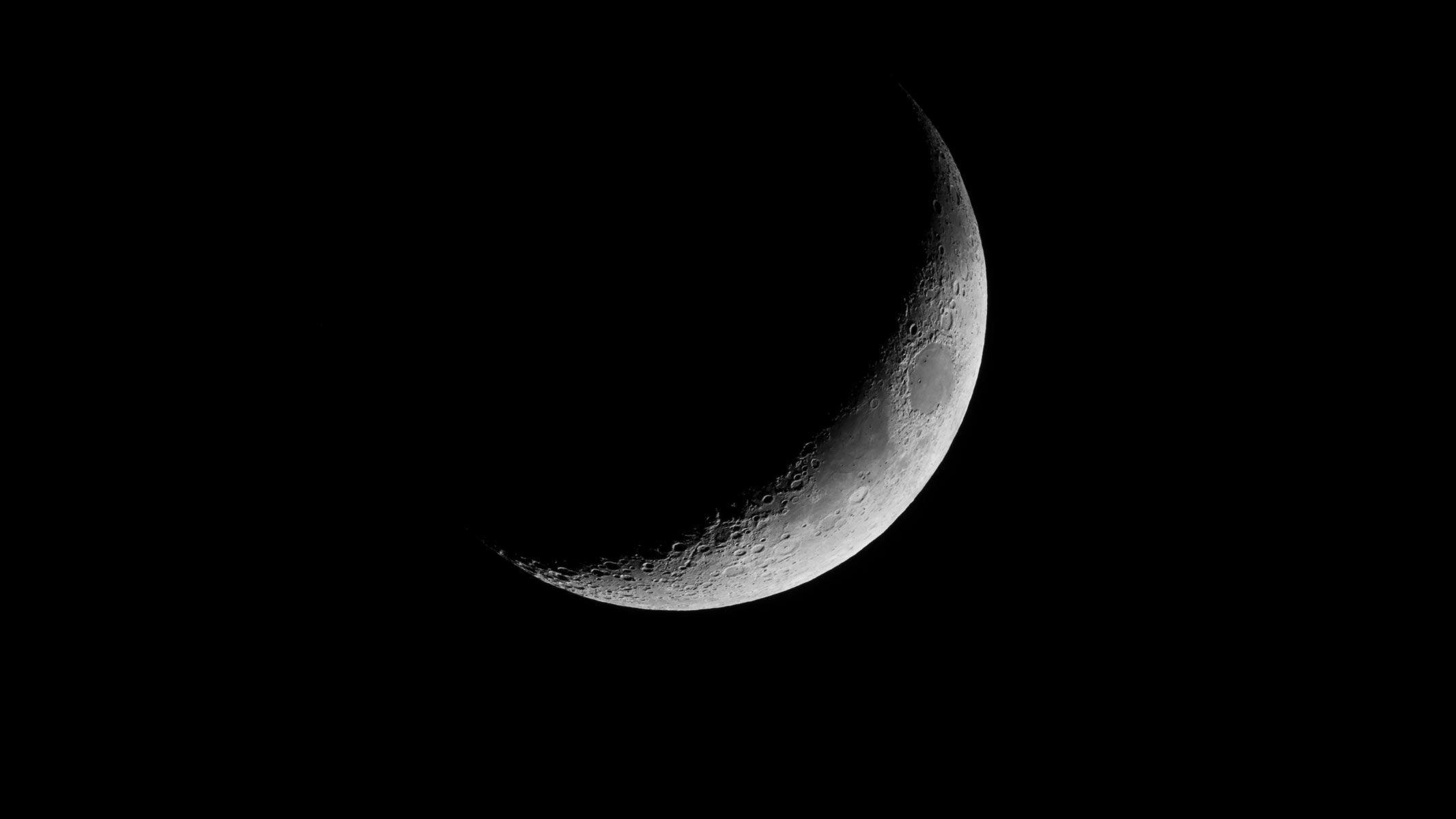
A crescent moon makes an ideal first target. (Image credit: Getty Images)
The first thing most new telescope owners want to do is to get a close-up of the moon. Luckily, the last week of December 2025 is the sweet spot for observing the moon in the evening, helping you learn your way around a telescope. The moon is waxing from a thick crescent in the southwest on Christmas Day through to first quarter on Dec. 27, when it’s half-lit and visible in the south after dark. It will be easy to find as soon as it gets dark — about 30 minutes after sunset — so it’s perfect for practising pointing and focusing on the moon’s bright limb.
Most beginner telescopes come with two eyepieces — 10mm and 25mm. Start with the low-power 25mm eyepiece, whose low magnification and wide field of view are handy for locating objects. If you have a red dot finder, point it at the moon, and a bright light will appear in the eyepiece. Adjust the focus until it becomes sharp. Concentrate your gaze on the terminator, the dividing line between light and dark on the moon, and you’ll see shadowed craters and mountains. Now is the time to switch to the medium-power 10mm eyepiece.
Try to get your telescope on the moon before it reaches first quarter phase, after which the shadows get shorter. Full moon is not the best time to point a telescope at the moon because the light is flat and so bright, but it can be fun during a moonrise.
Navigating the night sky
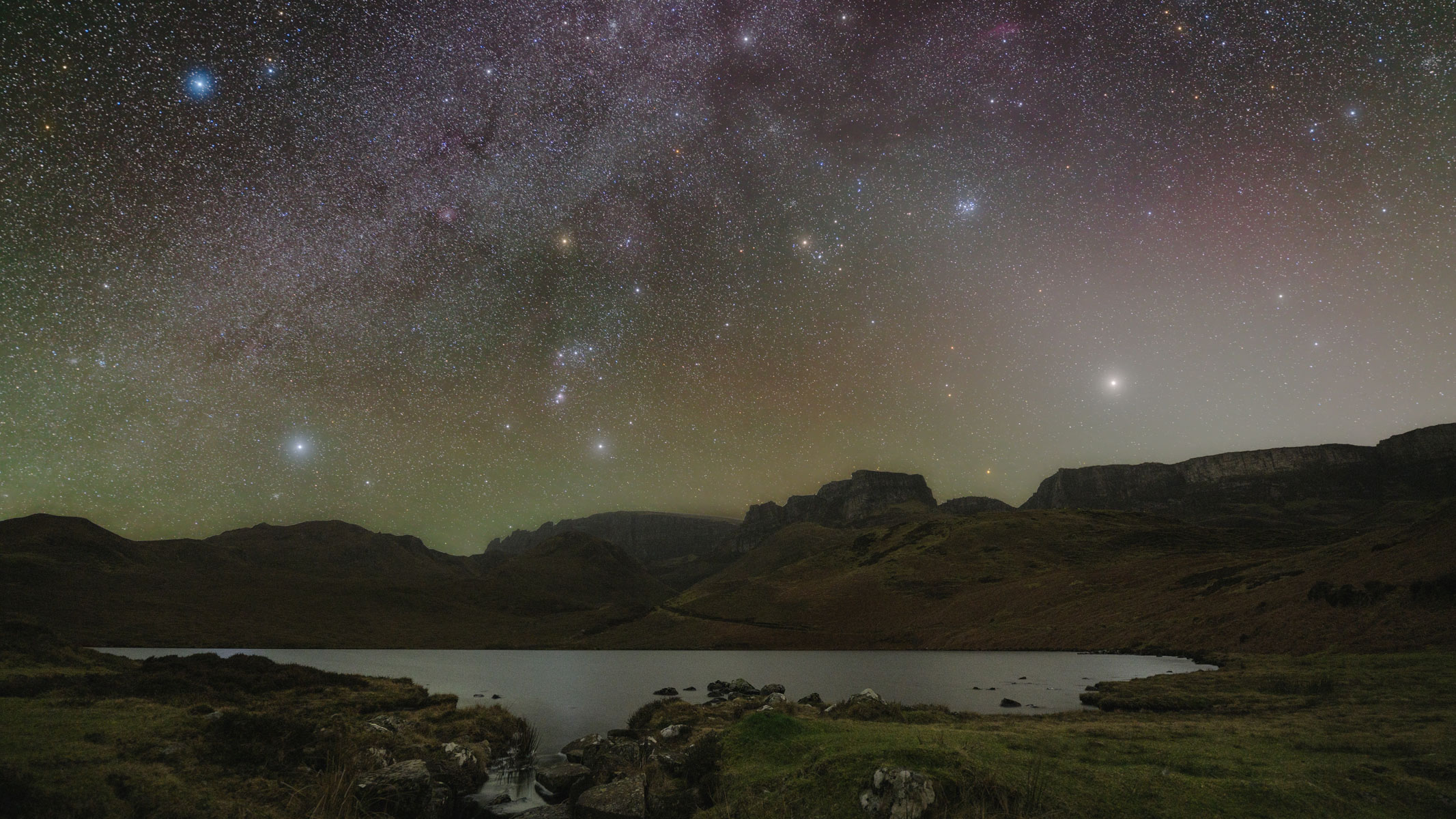
The winter night sky is packed with iconic constellations and deep-sky objects. (Image credit: Getty Images)
Patterns of stars that make up constellations are irrelevant to a telescope because it sees straight through them, right? Not so. Using a telescope properly is only possible once you know the basic geography of the night sky — so think of constellations as regions, counties or states, within which are objects of interest such as star clusters, galaxies and nebulae.
In late December and January evenings from the Northern Hemisphere, constellations including Orion, Taurus, Auriga and Gemini dominate the southeast sky. In late 2025 and early 2026, Jupiter is shining brightly within this region, too. Together, they form a ready-made roadmap for a new telescope owner to navigate. With the naked eye, find Orion’s Belt, trace up to bright Capella in Auriga and over to the Pleiades open cluster (M45) in Taurus.
From the Southern Hemisphere, Orion appears the other way up and in the northeast, with Taurus nearby. Bright stars Sirius and Canopus blaze low in the south, with the Southern Cross rising beneath.
You may like
Once the major constellations become familiar, dropping a telescope on a cluster or nebula within becomes much easier.
Observing planets
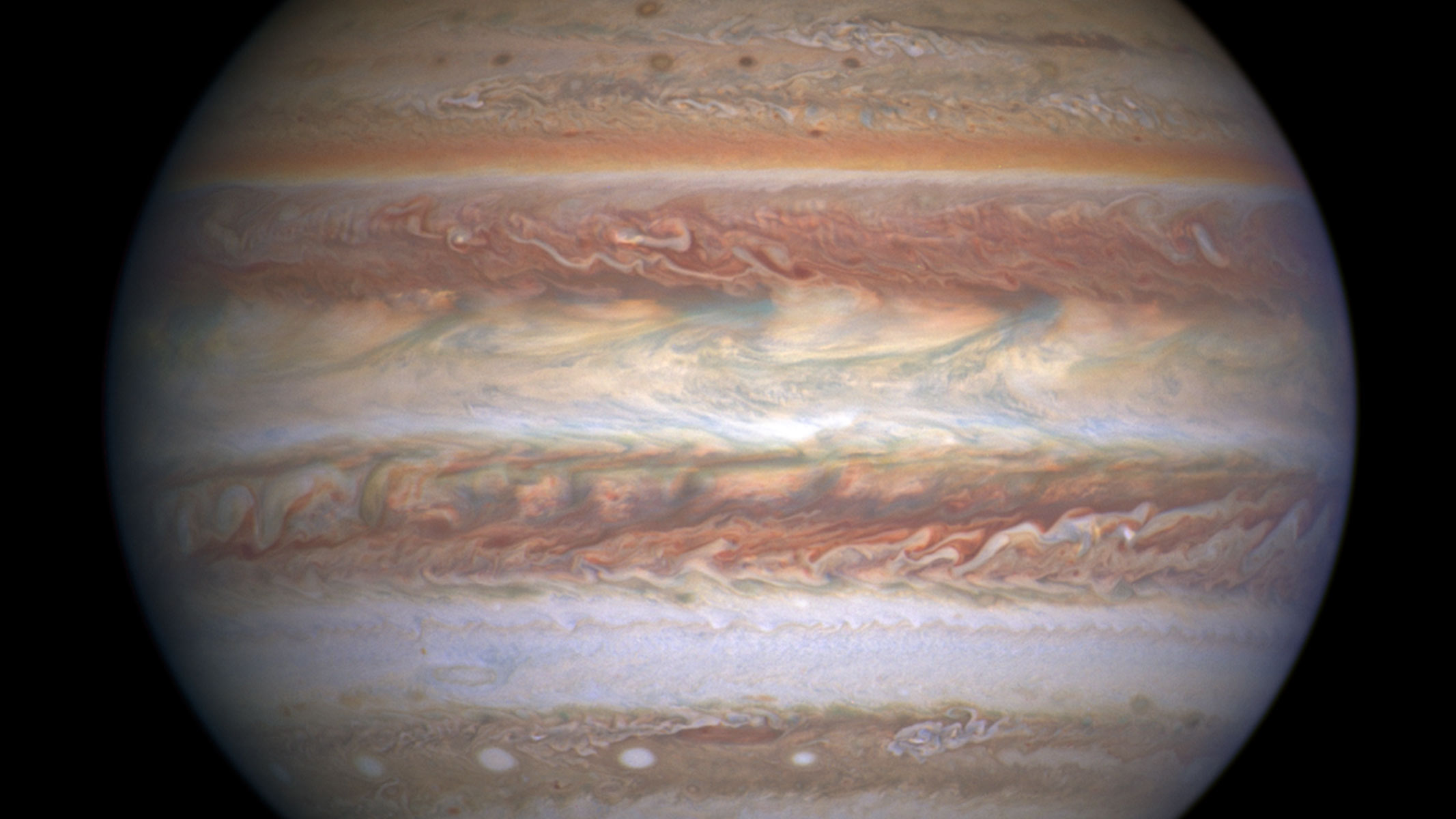
Jupiter at opposition, as captured by the Hubble Space Telescope in 2017. (Image credit: NASA, ESA, and M.H. Wong (UC Berkeley))
Can you tell the difference between a planet and a star? It’s easy — planets don’t twinkle because they are much larger disks rather than mere points of light. Planets are some of the most rewarding objects for a new telescope owner, and this season is all about Jupiter and Saturn. Through late December 2025 and into January 2026, the giant planet is blazing in the night sky; on Jan. 10, 2026, it reaches opposition, when Earth is directly between Jupiter and the sun. That’s when it’s closest, largest and brightest in our sky.
You don’t need to hit that exact date – a few weeks either side is fine. Step outside in the early evening, look east for the brightest “star” that doesn’t twinkle (clue: it’s close to the “twins” of Gemini, Castor and Pollux), center it in the finder, then put it in the 25mm eyepiece. Once you’ve got a clean, sharp disk, swap to the 10mm eyepiece. You may see one or two dark cloud bands and up to four tiny moons — Ganymede, Callisto, Europa and Io — lined up beside the planet. Since it’s close to opposition, Jupiter is “up” all night in January.
Saturn is the other planet on show, but you should try to catch it early in the evening. It’s lower and fainter than Jupiter, hanging in the southwestern sky shortly after sunset, but even a modest telescope will show its iconic ring pattern (currently edge-on). As with Jupiter, locate it using the red dot finder and the low-power eyepiece before swapping to high-power. With steady seeing (astro-speak for a lack of turbulence in Earth’s atmosphere), you may spot Titan, Saturn’s largest moon, shining nearby.
Well-known targets in the Northern Hemisphere
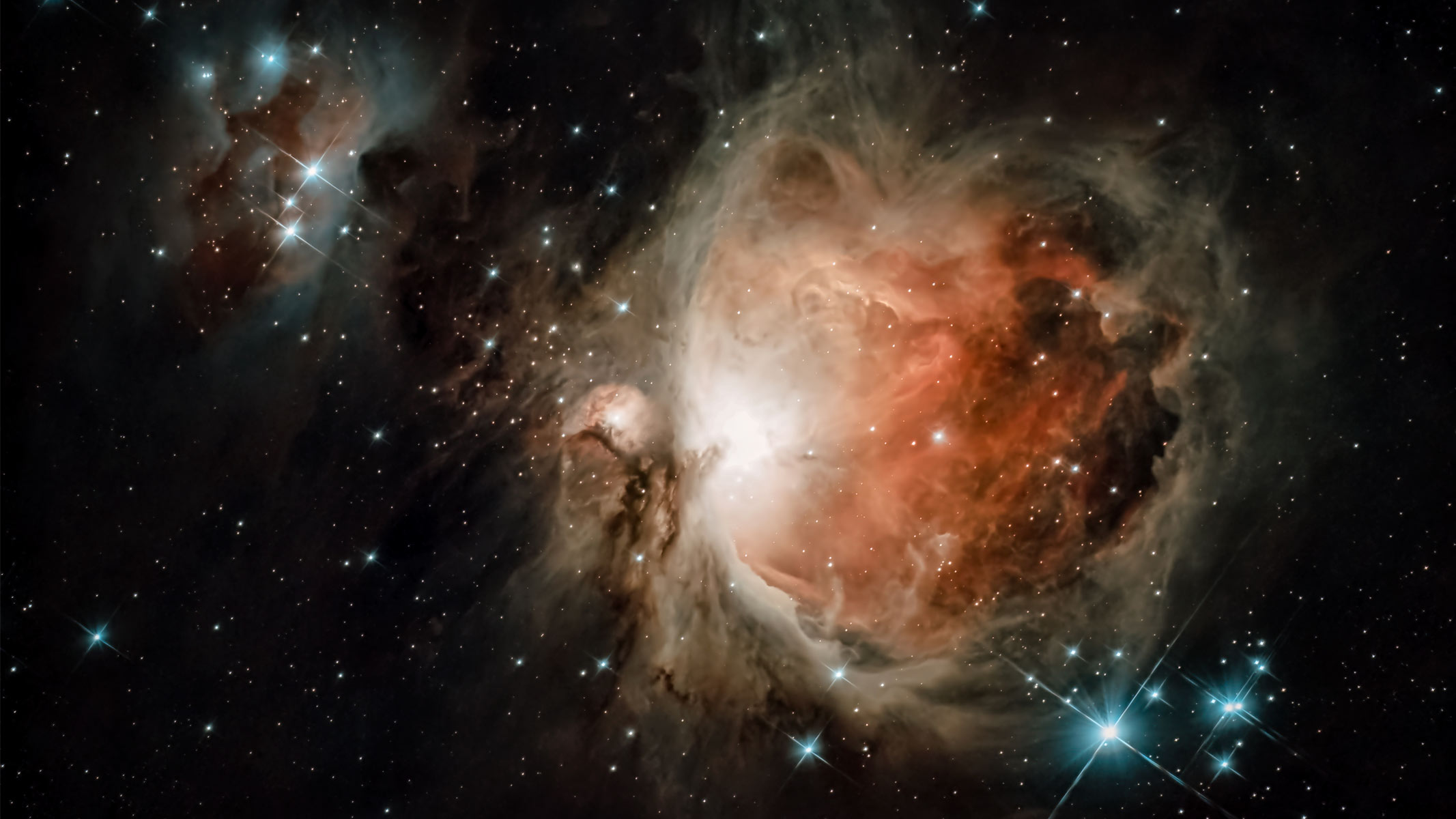
The Orion Nebula is unmissable in December and January. (Image credit: Getty Images)
The winter night sky north of the equator has many classic sights ideal for first-time telescope users:
Orion Nebula (M42) in Orion
The Pleiades (M45) open cluster in Taurus
Double Cluster (NGC 869 and NGC 884) in Perseus
Beehive Cluster (M44) in Cancer
Crab Nebula (M1) in Taurus
Andromeda Galaxy (M31) in Andromeda
Well-known targets in the Southern Hemisphere
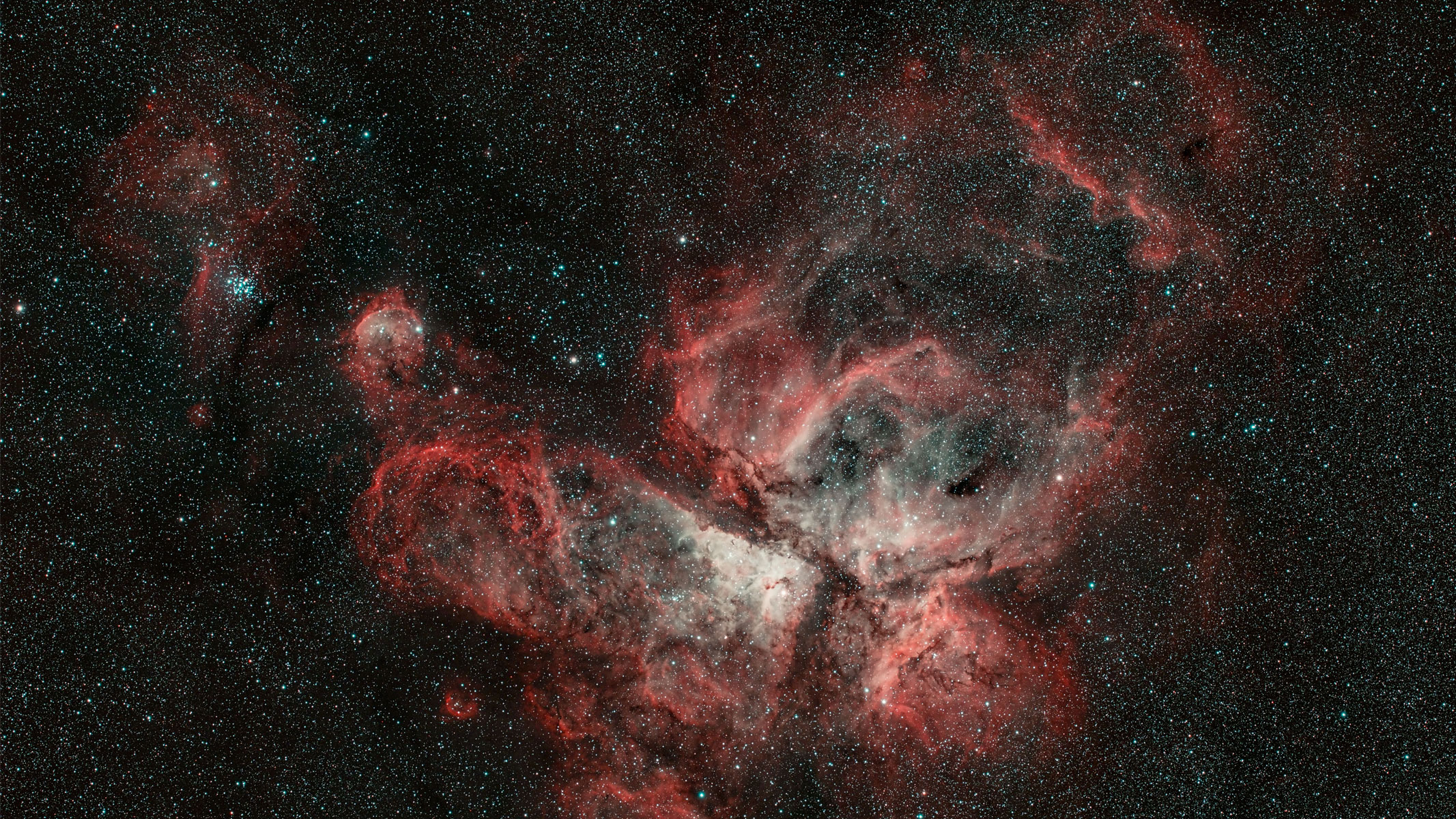
The Carina Nebula is at its best in December and January in the Southern Hemisphere. (Image credit: Getty Images)
If you’re under southern skies, the same December-January period has its own list of showpieces:
Orion Nebula (M42) in Orion
The Pleiades (M45) open cluster in Taurus
Carina Nebula (NGC 3372)
Southern Pleiades (IC 2602)
Large Magellanic Cloud (LMC) and Small Magellanic Cloud (SMC)
Omega Centauri (NGC 5139)
Where to point your telescope at next
You’ve used your telescope for the first time. You’ve seen the moon up close (what a sight!) and how it changes phase, watched Jupiter at opposition and ticked off a handful of bright star clusters and spectacular nebulae. That’s an incredible way to begin, but don’t rush the next part. Spend time gradually building up your knowledge and experience, taking advantage of any clear nights — preferably the dark, moonless nights between the last quarter moon and the new moon. What begins as an overwhelming infinity of stars soon becomes a map — and with time, a landscape you know well — once you start observing it regularly through a telescope.

Researchers have photographed a rare cat in Thailand that hasn’t been seen in the country for almost 30 years — and it’s adorable.
Flat-headed cats (Prionailurus planiceps), named after their flattened foreheads, live in fragmented pockets across Brunei, Indonesia and Malaysia, but they were feared extinct in Thailand.
Researchers rediscovered the cats using remote camera traps in Thailand’s Princess Sirindhorn Wildlife Sanctuary in 2024 and 2025 — the first detections in Thailand since 1995. Cat conservation organization Panthera announced the rediscovery on Friday (Dec. 26), which is also Thailand’s annual Wildlife Protection Day.
You may like
“For decades, the flat-headed cat has been classified as ‘likely extinct,’ but after years of sustained protection, strong scientific partnerships, and community stewardship, we can now celebrate its return to Thailand this National Wildlife Day,” Suchart Chomklin, Thailand’s minister of Natural Resources and Environment, said in a statement.
Flat-headed cats have webbed feet to traverse wetland habitats, such as waterlogged peat-swamp forest, where the species is thought to primarily hunt fish. However, researchers know very little about their lives. The enigmatic cat is the smallest in Southeast Asia, weighing around 4.4 pounds (2 kilograms) — less than a domestic cat — and is scarcely seen by humans.
The International Union for Conservation of Nature’s (IUCN) last assessment of the species, carried out in 2014, concluded that flat-headed cats were endangered. They are primarily threatened by the loss and degradation of their wetlands and lowland forests, as well as other human pressures like overfishing and hunting.
Researchers went looking for the cats in remote areas of Thailand in what Panthera described as the “largest-ever survey of the species.” The work is part of a new Panthera-led IUCN assessment of flat-headed cats, which Panthera expects to publish in early 2026.
The camera traps photographed several flat-headed cats, including a female with a cub, demonstrating that they are not only living in southern Thailand but also breeding in the region.
“Rediscovery of the flat-headed cat in southern Thailand is a significant win for conservation in Thailand and the broader southeast Asia region where the species is still found,” Atthapol Charoenchansa, the director general of Thailand’s Department of National Parks, Wildlife and Plant Conservation, said in the statement.
SCIENCE
Science history: Marie Curie discovers a strange radioactive substance that would eventually kill her — Dec. 26, 1898

QUICK FACTS
Milestone: Discovery of radium and polonium
Date: Dec. 26, 1898
Where: Paris
Who: Marie and Pierre Curie, Gustave Bémont
On this day, chemists discovered a substance 900 times more radioactive than uranium. Their research led to unprecedented medical breakthroughs and worldwide fame — but it would also kill one of them.
Marie Curie was a medical student at the Sorbonne, a university in Paris, when she decided to study the new field of radiation for her thesis. In 1895, Wilhelm Röntgen discovered powerful “Röntgen rays,” which would eventually be dubbed X-rays. The following year, Henri Becquerel accidentally discovered much weaker rays emitted by uranium salts would fog up photographic plates just like light rays did — even in the absence of light.
Curie realized that she wouldn’t have to read a long list of prior papers on the newfangled subject before diving into experimental work, according to the American Institute of Physics. Curie’s husband, Pierre, found her a workspace in a musty, crowded storeroom at his institution, the Paris Municipal School of Industrial Physics and Chemistry. He soon became so fascinated with her research that he abandoned his own to pursue hers.
You may like
Key to Marie Curie’s research was the piezoelectric quartz electrometer. The device, invented by her brother-in-law, Jacques Curie, measured the weak electrical currents produced by radioactivity.
“Instead of making these bodies act upon photographic plates, I preferred to determine the intensity of their radiation by measuring the conductivity of the air exposed to the action of the rays,” Curie wrote in a 1904 article for Century magazine.
The damp storeroom messed with her results, but she ultimately discovered that the intensity of this radiation depended on the concentration of uranium in the minerals she studied. She speculated that something intrinsic to the atomic structure of uranium must be at play.
Working with her husband Pierre and Gustave Bémont, the head of chemistry at the Higher School of Industrial Physics and Chemistry of the City of Paris, they began to study pitchblende, a black mineral rich in uranium often found in deposits alongside silver.
Pitchblende, or uraninite, is a mineral composed of up to 30 different elements. Some of its constituents, including radium and polonium, are highly radioactive. (Image credit: Martin Divisek/Bloomberg via Getty Images)
Curie noticed that it could be much more radioactive than uranium ore itself.
“How could an ore, containing many substances which I had proved inactive, be more active than the active substances of which it was formed? The answer came to me immediately: The ore must contain a substance more radioactive than uranium and thorium, and this substance must necessarily be a chemical element as yet unknown,” Marie Curie wrote in Century magazine in 1903.
Marie Curie deduced that whatever this mysterious substance was, it had to exist only in small quantities yet have a remarkable level of what she had dubbed “radio-activity.” The trio decided to try to separate pitchblende, which can be composed of up to 30 minerals, into its constituent parts to identify the radioactive substance. They used the light spectra of different substances to try to isolate and identify the ingredients.
You may like
In July, they pinpointed one mineral that was around 60 times more “radio-active” than uranium, which they named polonium. And on Dec. 21, they found another — called radium — that was an unprecedented 900 times more radioactive than uranium. They described both new substances during a talk at the French Academy of Sciences on Dec. 26.
The Curies would go on to isolate the radioactive elements over the next several years, while working in a poorly ventilated shed in the courtyard across from the original storeroom.
Their research on radiation earned the Curies and Becquerel the Nobel Prize in Physics in 1903. (Marie was originally going to be passed over, but she received the prize only after her husband, Pierre, insisted the committee credit her work.) Marie would earn another Nobel Prize in 1911, this time in chemistry, for her work on radium.
Pierre was killed by a horse-drawn carriage in 1906, but Marie would go on to advocate for the use of X-rays in medicine — including developing vehicles that could provide mobile X-rays for soldiers on the battlefield during World War I. She also noted that radium killed off diseased cells faster than healthy ones, a principle that would later inspire the development of radiotherapy for cancer treatment.
Radium caused frequent radiation sickness and burns in both Curies. Marie’s radiation exposure likely killed her; she died in 1934 at age 66 due to aplastic anemia, a type of leukemia that can be caused by radiation damage to bone marrow. The notebook she used to document her 1898 discovery is still radioactive and is stored in a lead box.

One of the closest living relatives of the dodo has been spotted multiple times in Samoa — raising hopes that this critically endangered creature can be saved from the brink of extinction.
The Samoa Conservation Society’s (SCS) latest field survey, which took place from Oct. 17-Nov. 13, reported five sightings of the manumea (Didunculus strigirostris). Previous surveys only yielded a single sighting, if any. The last photograph of the cryptic species in the wild was taken in 2013.
You may like
“That was our worry,” said Moeumu Uili, a project coordinator focusing on manumea with SCS. “What happens if we can’t find the bird? Does that mean the manumea is no more?”
Despite confirming the manumea’s existence, the team found it difficult to photograph due to their distance from the bird, its quick movement and rainy conditions. “All of a sudden, it appears out of nowhere,” Uili told Live Science. “When we see it through the binoculars, we can see the bird.”
But by the time researchers lower their binoculars to get a camera, the bird is gone, she said.
Last of its kind
The manumea is the only living species of its Didunculus genus, which will end if the bird goes extinct. The chicken-size manumea’s scientific name, Didunculus strigirostris, means “little dodo.” Both the dodo and manumea are classified as island ground pigeons.
“The impact on manumea is certainly catastrophic,” Joe Wood, the manager of International Conservation Programs at the Toledo Zoo, told Live Science. “It seems very likely that feral cats are a major cause of decline,” said Wood, who also co-chairs a group at the International Union for Conservation of Nature that works on manumea conservation efforts. “There has to be some kind of control program.”
Saving manumea
In this fall’s latest survey, Uili’s team focused on the remote coastal rainforest of Uafato, but manumea potentially live in six additional forests in Samoa. A current invasive species management program already exists in one of those forests, Samoa’s Malololelei Recreation Reserve, Uili said. If there’s funding, SCS wants to expand the invasive species management to areas like Uafato.
You may like
If a manumea is secured, the partners working to save it said they can use biobanking to preserve biological samples to establish cultured cell lines for the bird. These cell lines will allow them to study the manumea’s genetic material and learn more about it. With more information, they can determine the best measures to take, such as potential captive breeding, to repopulate the species, experts said.
The nonprofit conservation arm of Colossal Biosciences is also supporting some manumea conservation efforts, for instance, by building an app to distinguish the manumea’s call from another bird’s in hopes of getting a more accurate estimate of the manumea’s prevalence.
Colossal has said they have plans to bring dodos back from extinction. It recently made headlines for “de-extincting” dire wolves — essentially gene editing gray wolves to include a handful of traits that make them look more like dire wolves.
But there’s a need to be wary of efforts to bring extinct species back into ecosystems that have changed since they were alive, Nic Rawlence, an associate professor and director of the Otago Palaeogenetics Laboratory in the Department of Zoology at the University of Otago in New Zealand, told Live Science.
Rawlence also said you must bring back enough species to ensure genetic diversity so they can adapt and survive, which is known as the 500-rule in conservation.
To save the manumea, Rawlence echoed Wood and stressed it’s crucial to stop invasive species and other threats to the manumea’s survival without many left.
“I think it’s still going to come down to the grunt work of predator control, habitat restoration, translocation,” he said.
Manumea conservation work in Samoa is supported by SCS, the Samoa Ministry of Natural Resources and Environment, BirdLife International, the Colossal Foundation, the Toledo Zoo, and the Waddesdon Foundation through the Zoological Society of London.
Editor’s Note: This story was produced in partnership with the Fellowship in Journalism and Health Impact through the University of Toronto Dalla Lana School of Public Health.

Exceptional performers play a central role in advancing knowledge and addressing major global challenges. Because of this, societies have a strong interest in understanding how outstanding talent develops. A new review published in the journal Science argues that many widely used approaches to gifted education and talent development are built on incorrect assumptions. For the […]
SOURCE PAGE