
TECHNOLOGY
CHKDSK Is Not Available for RAW Drives: How to Fix


CHKDSK is an old yet effective disk repair utility that has been integrated into nearly every version of Windows. However, when you run it, you may encounter a frustrating error message:
“The type of the file system is RAW. CHKDSK is not available for RAW drives.”
When this happens, the drive becomes inaccessible, and Windows may repeatedly prompt you to format it. But don’t worry—this error doesn’t necessarily mean your drive is permanently damaged or that your data is gone. Here, we’ll briefly explain why this dread error appears and show you how to safely repair a RAW drive. Stay with us!
Overview of CHKDSK Is Not Available for RAW Drives
What Is a RAW Drive and Why CHKDSK Cannot Run on It?
Before a storage device can be used, it must have a file system—such as NTFS, FAT32, exFAT, or APFS—created on it. If your drive’s file system is missing or corrupted, the operating system will not be able to access it. In this state, the drive is referred to as a RAW drive.
CHKDSK, on the other hand, relies on a valid file system to repair disk errors. This is why you may see the message: “CHKDSK is not available for RAW drives.”
Common Causes of a RAW Drive
Several factors can cause a drive to enter a RAW state, including:
- Virus or malware infection
- Abrupt ejection during formatting or file transfer
- Physical damage or wear on the drive
- Improper removal of external drives, sudden power loss, or system crashes
- Corrupted partition table or MBR
- Driver conflicts
Now, let’s take a closer look at how to fix the ‘CHKDSK is not available for RAW drives Windows 10’ issue!
How Do I Fix CHKDSK Is Not Available for RAW Drives?
Step 1: Check the Drive for Physical Problems
So, how can you fix the “Check Disk not available for RAW drives” error? On some occasions, RAW drive errors are caused by faulty cables, ports, or hardware failures rather than file system corruption.
Start by ensuring the drive is properly connected to your computer. Inspect the USB or SATA cable for any visible damage, and try using a different port or cable to eliminate connection issues. It’s also helpful to connect the disk to another Windows machine to see if it’s detected. For hard drives, pay attention to unusual noises, such as clicking or grinding, which may indicate mechanical failure.
If physical damage is suspected, stop using the drive immediately and seek professional assistance. Any DIY repairs, such as formatting or running disk health monitoring tools, could potentially cause further damage.
Step 2: Rescue Data from the RAW Drive
When you encounter the “CHKDSK is not available for RAW drives SD card” error, the very first thing to do is to perform data recovery. Tenorshare 4DDiG is a powerful data recovery software, especially effective at extracting files from drives that are unreadable, inaccessible, or in a RAW state. It works with over 2,000 types of storage devices, including USB sticks, memory cards, HDDs, SSDs, etc. Here’s more details about this tool:
- Supports recovery of multiple data types.
- Offers a high recovery rate with fast scanning speed.
- Provides a free trial for Windows users.
- Requires no technical knowledge; user-friendly interface.
- Allows inspection of files before performing recovery.
- Offers disk image recovery.
Here’s an example of how to recover data from a RAW drive with the aid of 4DDiG:
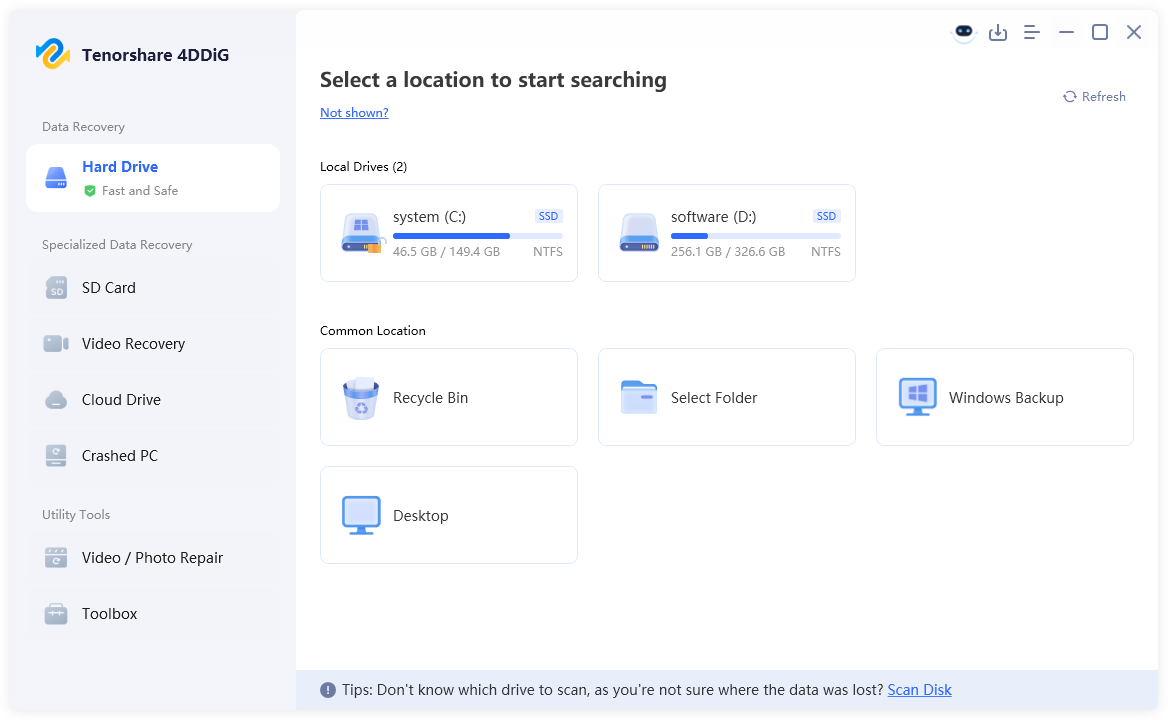
- First, install and run the Tenorshare 4DDiG data recovery tool on your Windows computer. From the list of detected storage devices, select the RAW drive from which you want to recover data, then click on “Scan” to begin the process.
- 4DDiG will perform a comprehensive scan of the RAW drive. Once the scan is complete, the software will display a list of recoverable files. You can use the built-in filters or the search box to quickly locate the files you are looking for.
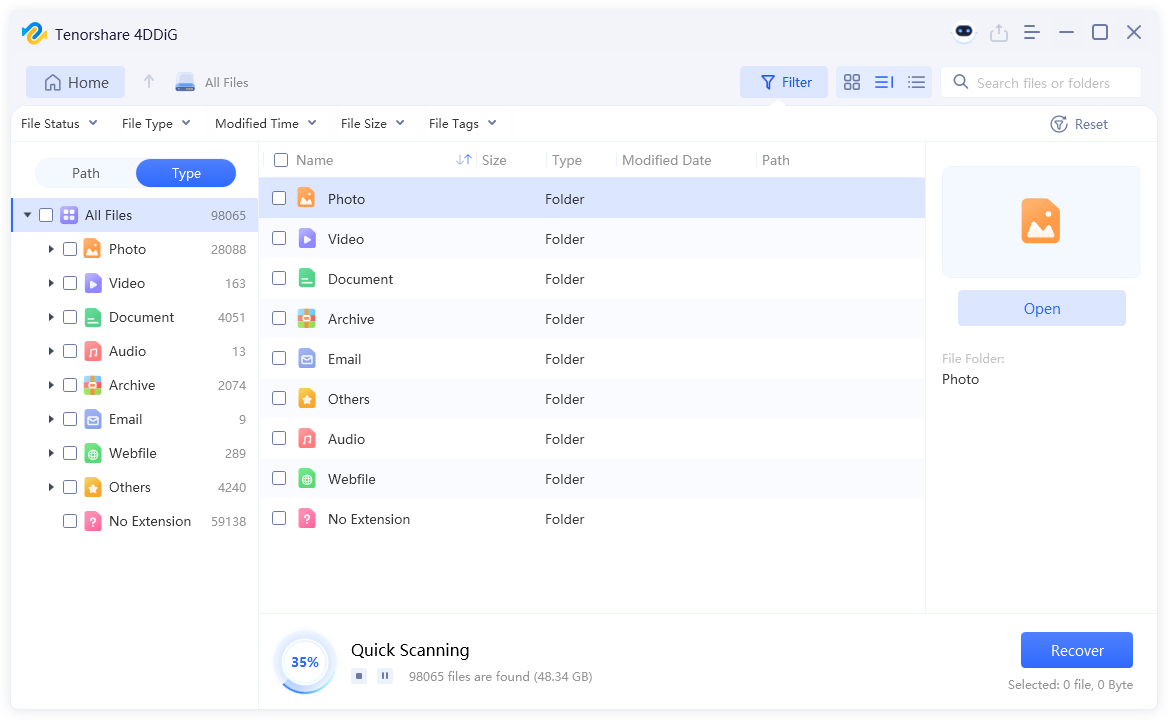
- Plus, you can use the preview feature to verify the integrity of the desired files. After confirming, select the target files and click the “Recover” button in the bottom-right corner. When choosing a recovery location, consider saving the files to a cloud storage service or another separate drive to avoid overwriting any remaining data on the RAW drive.
Step 3: Reformat the RAW Drive
Once your data has been safely recovered, it’s time to create a new, recognizable file system on the RAW drive. Fortunately, Windows offers several built-in tools to help you get the job done. Here’s how to convert your RAW drive to a normal one:
Use Disk Management
- Press Win + R, write diskmgmt.msc, and hit the Enter key. Then, locate the RAW drive in the list.
- If the drive shows as RAW, right-click it and select “Format.” Choose a proper file system, assign a drive letter, and confirm.
- However, if the drive appears as unallocated, right-click the unallocated space and pick “New Simple Volume.” Next, follow the wizard to create a new partition.
- Once completed, re-run CHKDSK on the problematic drive to check if the “CHKDSK is not available for RAW drives Windows 10” issue has been resolved.
Use DiskPart
- Start by running Command Prompt as an administrator.
- Type diskpart and press Enter to launch the tool.
- List all disks by typing list disk.
- Select the RAW drive using select disk X (replace X with the proper disk number).
- Clean the drive with clean.
- Afte that, run the create partition primary command.
- Type format fs=ntfs quick (or replace NTFS with exFAT) and hit enter.
- Finally, input exit to close DiskPart.
Final Words
Now you should no longer need to worry about the error message “The type of the file system is RAW. CHKDSK is not available for RAW drives.” By following the steps outlined in this post—checking for physical issues, recovering data, and restoring a new file system using Windows tools—you can safely regain access to your drive. Plus, remember to always back up your data regularly to avoid future surprises.

December 27, 2025
Link copied!
Copy failed!










span { width: 5px; height: 5px; background-color: #5b5b5b; }#mailpoet_form_2{border-radius: 8px;color: #313131;text-align: left;}#mailpoet_form_2 form.mailpoet_form {padding: 0px;}#mailpoet_form_2{width: 100%;}#mailpoet_form_2 .mailpoet_message {margin: 0; padding: 0 20px;}
#mailpoet_form_2 .mailpoet_validate_success {color: #000000}
#mailpoet_form_2 input.parsley-success {color: #000000}
#mailpoet_form_2 select.parsley-success {color: #000000}
#mailpoet_form_2 textarea.parsley-success {color: #000000}
#mailpoet_form_2 .mailpoet_validate_error {color: #cf2e2e}
#mailpoet_form_2 input.parsley-error {color: #cf2e2e}
#mailpoet_form_2 select.parsley-error {color: #cf2e2e}
#mailpoet_form_2 textarea.textarea.parsley-error {color: #cf2e2e}
#mailpoet_form_2 .parsley-errors-list {color: #cf2e2e}
#mailpoet_form_2 .parsley-required {color: #cf2e2e}
#mailpoet_form_2 .parsley-custom-error-message {color: #cf2e2e}
#mailpoet_form_2 .mailpoet_paragraph.last {margin-bottom: 0} @media (max-width: 500px) {#mailpoet_form_2 {background-image: none;}} @media (min-width: 500px) {#mailpoet_form_2 .last .mailpoet_paragraph:last-child {margin-bottom: 0}} @media (max-width: 500px) {#mailpoet_form_2 .mailpoet_form_column:last-child .mailpoet_paragraph:last-child {margin-bottom: 0}}
]]>
TECHNOLOGY
The deals aren’t done yet: 25 of the best after-Christmas sales in the US | Life and style


The eggnog’s kicked, the tree is dropping its needles and distant family members have vacated your guest bedroom. Time to recycle your gift wrap, compost your tree and donate to a cause you care about.
Then reward yourself by buying what you really wanted for Christmas.
While Black Friday remains the uncontested king of shopping holidays, those who held off on some purchases will find their patience rewarded. Retailers are motivated to slash prices: seasonal items including Christmas decor are no longer in demand, winter apparel has a dwindling shelf life, and this year’s electronics are about to become last year’s electronics when new models arrive at the world’s biggest tech expo in January.
But it’s still good stuff, and it’s all on sale for a limited time. So our expert staff rounded up the best after-Christmas sales for the eight most popular categories. Nick Mokey, Filter editor
How we selected these best after-Christmas sales
Our recommendations are based on items tested and loved by our contributors and staff, and you’ll find many of them in our other buying guides. These are products we believe are worth purchasing year-round – the discount is just a bonus.
The very best after-Christmas sales at a glance
Now $6 monthly, originally $10 monthlyNow $99, originally $150 at CanopyNow $19.00, originally $39.99 at AmazonNow $29.99, originally $39.99 at AmazonNow $32, originally $40 at AnydayNow $64.98 for four, originally $99 at AmazonNow $48.99 annually, originally $69.99Now $175, originally $250 at Aritzia
More of the best after-Christmas streaming sales
Deals curated by Nick Mokey, the Filter US editor.
MasterClass
Photograph: Bloomberg/Getty ImagesNow $6 monthly, originally $10 monthly
If you’ve been gorging on reality TV all holiday season and need some leafy greens for the mind, that’s MasterClass. Learn writing from Malcolm Gladwell, filmmaking from James Cameron or conservation from the late Dr Jane Goodall through video classes and workshops. But be quick – the sale ends tonight.
Photograph: Courtesy of DirecTV
DirecTV Entertainment bundle
$49.99 for one month of DirecTV, originally $79.99
This price is only good for one month, but that is also all you need to catch college football playoffs on the included ESPN package, plus AMC, Bravo, CNN and more than 85 other channels.
Disney+, Hulu and ESPN Unlimited bundle
Photograph: Sopa Images/LightRocket/Getty Images$29.99 monthly for one year, originally $35.99 monthly
Here’s an even cheaper way to get ESPN: bundle it with Disney+ and Hulu for $29.99 monthly. Unlike the DirecTV promo, this one is good for 12 months. Just keep in mind all three services have ads at this level – but you can dispense with them for another $9 a month.
More of the best after-Christmas home sales
Deals curated by Lauren Gould, the Filter US editorial coordinator.
Brooklinen super-plush bath towel
Photograph: Courtesy of BrooklinenNow $84.15, originally $99 at Brooklinen
Recently, seasoned consumer journalist Jon Chan tested 10 different bath towels to find the very best on the market, and he found this one was the best value. “It’s the kind of towel I’d drape over my towel rack and proudly point to when guests come over – if I had a towel rack,” Chan wrote.
Canopy showerhead filter
Photograph: Courtesy of CanopyNow $99, originally $150 at Canopy
A shower filter can help remove chemicals and minerals that can dry out your skin and hair. This filter, crowned as the winner in our quest to find the best, is on sale for over 30% off. Author Stephen Treffinger favored the Canopy for “delivering the best showering experience”, noting it was one of the only models he tested where he noticed a difference in his skin.
Papier favorite pet planner
Photograph: Courtesy of PapierNow $28.80, originally $36 at Papier
This adorable planner from Papier was a reader favorite in 2025, and after receiving the Damson Madder edition for Christmas, I’m with them. Originally recommended as part of our holiday mega gift guide, this planner is a stylish way to kickstart your 2026 planning. If you aren’t a dog person, it also comes in a ton of other beautiful patterns and designs.
More of the best after-Christmas kitchen sales
Deals curated by Karen Yuan, the Filter US commissioning editor.
Le Creuset Signature Petite Cocotte
Photograph: Courtesy of Sur La TableNow $21.96, originally $31.95 at Sur La Table
This cocotte – an 8oz, petite bowl-sized pot – from the heritage French cookware brand was one of this year’s most-bought items by Filter readers, and thankfully, it’s still on sale. Home and kitchen writer Megan Wahn called it perfect for “roasting garlic, serving dips and small batches of soup, or even making baked eggs”.
Anyday Two-Cup Glass Round Dish Multipack
Photograph: Courtesy of AnydayNow $32, originally $40 at Anyday
Food writer Emily Farris called these glass food storage containers from Anyday “a game changer” for keeping and reheating leftovers. The microwave-safe and oven-safe container can release steam through its silicone vent. “After using them for just a few months, I noticed my family was wasting less food – and I was doing fewer dishes,” she wrote.
Vitamix 5200 Blender
Photograph: Courtesy of VitamixNow $449.95, originally $499.95 at Vitamix
Look, we know it’s not the biggest discount at $50 off, but any sale is a golden opportunity to snag one of these iconic blenders. A Vitamix 5200 is “a legend for a reason”, as food writer Marian Bull put it in her review of this buy-it-for-life blender beloved by chefs and smoothie shops.
More of the best after-Christmas travel sales
Deals curated by Karen Yuan, Filter US commissioning editor.
Anker Nano Travel Power Adapter
Photograph: Courtesy of AmazonNow $19.99, originally $25.99 at Amazon
Tiny and lightweight but mighty, this travel adapter can charge four USB devices at once and works with 11 different wall outlets, covering 200 countries. It has been recommended by multiple Guardian contributors traveling all over the world.
Spanx Scuba Micro Flare Legging
Photograph: Courtesy of SpanxNow $59, originally $118 at Spanx
Comfy enough for a long flight and more stylish than athletic leggings, thanks to an elevated scuba fabric. (No polyester here!) Plus, the shaping waistband gives “just the right amount of support without being constrictive”, travel writer Lydia Mansel reports.
Apple AirTags
Photograph: Courtesy of AmazonNow $64.98 for four, originally $99 at Amazon
These nifty AirTags were some of this year’s bestsellers among Filter readers. Imagine putting one of these on your keys, one in your wallet, one in your purse or backpack and one in your luggage. Feel that immense peace of mind just wash over you? It could be reality with this pack of four, which is still full price on Apple’s website but 34% off on Amazon and Walmart.
Away Softside Bigger Carry-On Suitcase
Photograph: Courtesy of AwayNow $171, originally $245 at Away
After trying at least 10 other suitcases, travel writer Lydia Mansel firmly believes that Away’s Bigger Carry-On holds more than any other carry-on out there. She has used this carry-on bag for years, and you can too, after snagging it for 30% off during Away’s end-of-year sale.
More of the best after-Christmas tech sales
Deals curated by Nick Mokey, the Filter US editor.
Roku Streaming Stick Plus
Photograph: Courtesy of AmazonNow $19.00, was $39.99 at Amazon
One of the most intuitive streaming platforms is now also one of the cheapest. The Roku Streaming Stick Plus packs Netflix, Hulu and every other service you could imagine into a stick no bigger than your finger, so you can hide it behind your TV for zero clutter. The HD version is on sale for $15.99, but for an extra $3 you definitely want this Plus model, which supports 4K resolution. You will notice the difference.
Roborock Qrevo Edge S5A
Photograph: Courtesy of RoborockNow $599.99 was $999.99 at Roborock
Pet owners, thank me later. I used to review robot vacuums, and Roborock makes the best, many of which are now up 50% off. The maddening naming scheme can make it tough to identify the model you want, but the Qrevo Edge S5A has all the main features you want: mopping and a self-emptying, self-cleaning dock so you don’t need to maintain your robot every day. If you really want to take advantage of the sale, the flagship Saros Z70 has a mechanical arm that picks up stray socks, and it’s discounted $1,300. Yes, really.
Amazon Echo Spot
Photograph: Courtesy of AmazonNow $44.99, was $79.99 at Amazon
This is my favorite of about half a dozen Echo smart speakers I own, and it’s now at its lowest price ever. The vivid screen dims to a level that won’t keep you awake at night if you use it as an alarm clock, and the audio quality is shockingly robust for a device this tiny. Buy two and connect them for stereo sound, or pair it with some smart light bulbs (like these TP-Link models also on sale – for under $5 apiece) and you’ll never need to climb out of bed to flick off the lights again.
More of the best after-Christmas wellness sales
Deals curated by Lauren Gould, Filter US editorial coordinator.
Headspace subscription
Photograph: Sopa Images/LightRocket/Getty ImagesNow $48.99 annually, originally $69.99
If you’re looking to bring mindfulness into 2026, meditation is a great place to start. After testing dozens of meditation apps, Filter US contributor Jason R Rich ruled Headspace as the best for beginners. With minutes-long tutorials and myriad guided meditation sessions, “Headspace offers the smoothest path to get started,” he wrote.
Nike Metcon sneakers
Photograph: Courtesy of NikeNow $116.25, originally $155 at Nike (Discount in cart)
In our 2025 fitness gift guide, Filter US contributor Juno DeMelo recommended Nike’s Metcon workout shoes. She loves them so much, she is now on her fifth pair. “The versatile 10s are my favorite Metcons yet: they’re grippy and stable enough for heavy squats,” she wrote.
Lululemon swiftly tech long sleeve
Photograph: Courtesy of LululemonNow $54, originally $78 at Lululemon
Lululemon’s swiftly tech long-sleeved shirt has been a staple in my winter running wardrobe for years. It acts as a perfect base layer for my morning runs, and I adore its comfy fit and sweat-wicking material.
More of the best after-Christmas sleep sales
Deals curated by Karen Yuan, Filter US commissioning editor.
Mzoo Luxury Sleep Mask
Photograph: Juno DeMelo/The GuardianNow $29.99, originally $39.99 at Amazon
Our Filter US readers sure are a sleepy bunch because this sleep mask was our bestselling item all year. Lifestyle writer Juno DeMelo tested 24 sleep masks and declared the Mzoo “the Goldilocks of masks”, turning to it night after night. It blocks light, doesn’t budge and feels comfortable even for side sleepers – and it’s 25% off.
Coop Original Pillow
Photograph: Courtesy of CoopNow $71.20, originally $89 at Coop Sleep Goods (Discount in cart)
It’s a pillow! Possibly the perfect pillow? Guardian contributor Kori Perten can confirm it after testing multiple styles. She has used this sleep coach-approved pillow for five years, during which time her partner kept stealing it, too. (She has since bought a second one for him.) You can add or remove its memory-foam filling to perfectly align your head and neck with your spine for proper support.
Manta Sound Sleep Mask
Photograph: Courtesy of Manta SleepNow $127.20, originally $159 at Manta (Discount in cart)
This is the final boss of sleep masks. It ensures total darkness (DeMelo says she couldn’t tell whether lights were on or off with a Manta sleep mask on) and zero noise disturbances, thanks to its built-in Bluetooth speakers. If it doesn’t work for you, Manta offers a 60-day money-back guarantee.
More of the best after-Christmas fashion sales
Deals curated by Lauren Gould, the Filter US editorial coordinator.
Aritzia Super Puff coat
Photograph: Courtesy of AritziaNow $175, originally $250 at Aritzia
Hate on puffer coats all you want, but I credit my Aritzia Super Puff jacket with getting me through the last three winters. It’s designed with 800+ fill-power premium down that keeps me warm, and is both wind- and water-resistant. If you’re on the hunt for a coat that can withstand frigid temperatures (as cold as -22F), the durable Superpuff is a solid option.
Damson Madder hooded scarf
Photograph: Courtesy of Damson MadderNow $70, originally $98 at Damson Madder
If you’re as chronically online as I am, you have probably seen someone sporting the semi-viral, reversible trench coat from Damson Madder. If you’re looking for a more affordable introduction to the brand, this stylish hooded scarf, recommended in our fashion gift guide by content creator Reni Balogun, is on sale for 15% off.
Birkenstock shearling clogs
Photograph: Courtesy of BirkenstockNow $149.96, originally $199.95 at Birkenstock
I don’t think I will ever be over the Birkenstock’s trendy Boston Clogs. If you’re looking for a wintry version, I adore this comfy pair, made with cozy teddy shearling. I also love the gold buckle, which adds a chic finishing touch. And if you’re lucky enough to live somewhere warm year-round, Birkenstock’s suede Boston Clog is currently on sale at Revolve for more than 30% off.

Every year, TechCrunch’s Startup Battlefield pitch contest draws thousands of applicants. We whittle those applications down to the top 200 contenders, and of them, the top 20 compete on the big stage to become the winner, taking home the Startup Battlefield Cup and a cash prize of $100,000. But the remaining 180 startups all blew us away as well in their respective categories and compete in their own pitch competition.
Here is the full list of the space and defense tech Startup Battlefield 200 selectees, along with a note on why they landed in the competition.
Airbility
What it does: Airbility is creating two-seat manned electric vertical take-off and landing (eVTOL) aircraft.
Why it’s noteworthy: Its aircraft uses a unique fixed-wing-based VTOL technology combined with a distributed electric fan-jet propulsion system that makes them light, maneuverable, and versatile.
Astrum Drive Aerospace
What it does: Astrum has developed a propellantless, electricity-only space propulsion system.
Why it’s noteworthy: The company says its patented tech eliminates the need to carry fuel onboard, which can extend the lifespans of crafts and lower costs and could enable deep space exploration.
Charter Space
What it does: Offers a fintech-esq risk analysis platform for spacecraft that enables them to obtain insurance coverage.
Techcrunch event
San Francisco
|
October 13-15, 2026
Why it’s noteworthy: The company’s goal is to use insurability as a springboard to power new forms of credit for the space industry.
Endox
What it does: Endox offers AI systems that help inspect and maintain systems and equipment for the U.S. military.
Why it’s noteworthy: Endox is combining its own proprietary data capture systems with robotics tech.
Hance
What it does: Hance is building an AI neural network specifically to process and enhance real-time audio.
Why it’s noteworthy: Hance’s audio AI is designed to handle the unpredictable nature of live audio with its background noises, room reverb, and uncontrolled environments, such as those encountered by the military.
Skylark Labs
What it does: Skylark has created a self-learning AI specifically designed to be used by machines and in safety applications.
Why it’s noteworthy: Skylark is attempting to solve the technical issues with physically embodied AI, such as speedily processing information at the edge.
Skyline Nav AI
What it does: Has created navigation software not dependent on GPS.
Why it’s noteworthy: Skyline uses AI to quickly recognize a scene without expensive GPUs and is effective in combating GPS jamming tech.
TECHNOLOGY
You’re using your microwave wrong! Expert reveals why you should NEVER store items on top of the kitchen appliance


Whether it’s reheating a meal or popping some popcorn, many of us use our microwaves on a daily basis.
But it turns out you’ve probably been using your microwave wrong this whole time.
Many people store items on top of the kitchen appliance – including fruit bowls, paper towels, or cookbooks.
However, experts from Cookology have warned that this could prove dangerous.
‘If you’re in a smaller kitchen with limited surface space and a countertop microwave, it might be tempting to use the top of it for additional storage,’ they explained.
‘However, this can block the vents, causing them to overheat, leading to potential damage or even creating a fire hazard.’
To help ensure you’re using your microwave properly, Cookology has revealed the everyday mistakes you’re probably making.
From forgetting to stir to sealing containers too tightly, here are the top blunders – and how to prevent them.

Many people store items on top of the kitchen appliance – including fruit bowls, paper towels, or cookbooks. However, experts from Cookology have warned that this could prove dangerous (stock image)
‘Microwaves are brilliant tools when used properly, but we see the same mistakes again and again,’ said Andrew Wright, founder of Cookology.
‘People often treat them like a one–button solution, but a little know–how goes a long way in improving results and extending the life of the machine.’
1. Using unsafe containers
We all know that you can’t microwave anything with metal on it.
However, Cookology explains that it’s not just foil trims or twist ties that you need to keep an eye out for.
‘Microwaving plastic can also be a problem,’ the experts explained.
‘Plastic tubs that aren’t microwave–safe can leak chemicals into food, especially when heating fatty or oily dishes.’
2. Forgetting to stir or rotate

It’s essential to cover your food in the microwave – both for even cooking and to avoid messy splatters. However, make sure you don’t go to the other extreme and seal your containers too tightly (stock image)
While most microwaves now feature turntables, they don’t always heat food evenly.
That’s why it’s important you regularly pause the applicance to give your food a quick stir.
‘Stirring halfway through or rotating the dish ensures safer, more consistent results, especially important when reheating rice, meat or leftovers,’ Cookology said.
3. Sealing containers too tightly
It’s essential to cover your food in the microwave – both for even cooking and to avoid messy splatters.
However, make sure you don’t go to the other extreme and seal your containers too tightly.
‘It’s just as important to leave a small gap for steam to escape,’ Cookology explained.
‘Fully sealed lids can cause pressure to build up, which may lead to the container warping or the lid popping off.

Cleaning the microwave is a chore that many people dread. But according to the experts at Cookology, it’s essential for both hygiene and efficiency (stock image)
‘Even microwave–safe containers can become damaged if the lid is fastened too tightly.
‘For best results, cover your food loosely to keep heat and moisture in, but allowing it to safely vent.
4. Ignoring cleanliness
Cleaning the microwave is a chore that many people dread.
But according to the experts at Cookology, it’s essential for both hygiene and efficiency.
‘A dirty microwave absorbs more energy and cooks less efficiently,’ they explained.
‘Food splatters also increase the risk of unpleasant smells and smoke.’
However, it’s best to avoid cleaners containing bleach or other ammonia-based solutions.
‘In an enclosed space like your microwave, these can leave behind toxic fumes that can contaminate your food,’ Cookology added.
TIPS FOR AVOIDING GETTING FOOD POISONING
1. Keep a clean work space
Germs can survive across all of the different surfaces in the kitchen, so it’s essential to keep the cooking area and your hands clean.
2. Avoid cross-contamination
Raw meat, poultry, seafood and eggs can spread germs to ready-to-eat foods if not kept separate.
The CDC recommends using separate cutting boards and plates when handling these ingredients.
They should also be stored separately in the fridge.
3. Use a thermometer
To cook food safely, the internal temperature must get high enough to kill the germs that could cause food poisoning.
The correct internal temperature varies by ingredient, and only sure-fire way to tell if food is safely cooked is to use a food thermometer.
4. Store food properly
Storing food properly is essential to combating harmful bacteria.
Perishable food should be refrigerated within two hours of when it was purchased, and the refrigerator should be set to below 40°F.
5. Don’t rely solely on expiration dates
Expiration dates aren’t the only indication of when a food item should be thrown away.
If something seems to have a strange smell or colour, it’s probably better to be safe and pitch it.
6. Don’t thaw frozen food on the counter
Thawing frozen foods on the counter allows bacteria to multiply quickly in the outer parts as they reach room temperature.
Frozen foods should be thawed in the refrigerator, in cold water, or in the microwave.
TECHNOLOGY
‘It brings you closer to the natural world’: the rise of the Merlin birdsong identifying app | Birds

When Natasha Walter first became curious about the birds around her, she recorded their songs on her phone and arduously tried to match each song with online recordings. After a friend recommended Merlin Bird ID, a free app, she tried it in her London garden and was delighted to discover the birds she assumed were female blackbirds – “this is how bad a birder I was” – were actually song thrushes and mistle thrushes.
“I’m obsessed with Merlin – it’s wonderful and it’s been a joy to me,” says Walter, a writer and human rights activist. “This is what AI and machine-learning have been invented for. It’s the one good thing!”
Screenshots of the Merlin app in action. Composite: cornell.edu
Merlin is having a moment. The app, developed by the Cornell Lab of Ornithology in New York, which listens for birdsong and identifies the species singing, has been downloaded 33m times, in 240 countries and territories around the world. Britain has the second highest total number of users – more than 1.5 million in 2024, an 88% increase from 2023. Every month, there has been a 30% increase in new users of the app, whose sound identification function was launched in 2021.
Merlin has been trained to identify the songs of more than 1,300 species around the world, with more birds added twice a year. Different songs make distinct patterns on spectrograms and Merlin is trained to recognise these different shapes and attribute them to a species.
For latecomers to birding, or those lacking a knowledgeable friend, the app has become their teacher. “My fear at first was I wouldn’t actually learn because I’m outsourcing my understanding of birds to this app,” says Walter. “But that hasn’t come to pass. It’s helped me continue my journey of learning.” Nowadays, she guesses, and uses Merlin to confirm her hunches. “It’s wonderful if you’re coming to bird-watching late and don’t really have a mentor,” she says.
Angela Townsend from Bedfordshire began using Merlin after going on a nightingale walk one spring and being overwhelmed by the range of bird-voices in the evening chorus. She has found it has steadily built up her bird knowledge. “Warblers were just little brown jobbies but I can now recognise Cetti’s warblers and willow warblers when I’m out without having to put the app on,” she says.
Mary Novakovich, author of My Family and Other Enemies, is another recent adopter. She has found it particularly useful when travelling across Croatia, where her parents are from. “I love putting a name to a face and a name to the sound,” she says. “It really brings you closer to the natural world, rather than it being disconnected from your life. It’s part of what makes life a joy.”
Merlin is not flawless, however. The first time Kasper Wall, 12, tried it in his Norfolk garden, it detected a northern cardinal and a brown-headed cowbird – North American species not found in Britain.
“I think it was figuring out where we live,” says Wall, who enjoys using it even though he is now an extremely knowledgeable birder. “A couple of weeks ago we were looking at a large group of goldcrest and it came up with a firecrest. I thought, ‘Oh, there must be a firecrest in here too’ and 30 seconds later we saw one, which was the first I’d ever seen. I like it and it’s very good but I wouldn’t say that it’s better than the best people at identifying bird-calls like [the naturalist] Nick Acheson. It can definitely be fooled.”
Wall enjoys fooling Merlin with his uncanny impressions of a curlew, barn owl and greenshank.
Acheson doesn’t use Merlin. He welcomes it, but points out it can replace learning. “Anything that gets people out, thinking about and reacting to nature is a great thing,” he says. “But there’s certainly a risk that people don’t learn and just abdicate responsibility for learning to Merlin.”
He has noticed a glitch where Merlin interprets a certain type of chaffinch call as a redstart, leading to people being absolutely adamant that there is a rare bird in their garden. “There’s no substitute for a real person explaining to you how a birdsong feels and encouraging someone to engage with it emotionally,” he says.
John Williamson, who works as a guide for Norfolk Wildlife Trust, has found Merlin repeatedly identifying high-pitched calls as a spotted flycatcher, a bird that is very unlikely to be found in the middle of Hickling Broad nature reserve’s large reedbeds. “Merlin can’t do habitat,” he says.
Merlin has also excited visitors by identifying a golden oriole, a very occasional rare migrant, in Hickling woods, but no one has actually seen the species. Williamson is convinced it is misinterpreting a fairly unusual “catcall” of a female jay, a common woodland bird.
That said, Williamson finds it a “good tool” and welcomes how it is encouraging new people to enjoy birdsong, and particularly its mental health benefits. He knows one person who suffers from acute anxiety but Merlin has got him out into the world again and into nature, providing a focus for calming trips outdoors. “I find it impressive that an app can empower people to go out into nature,” he says.
Research has found that birdsong is particularly beneficial to mental health, and has a lasting positive impact on wellbeing. For millions around the globe, that’s exactly what Merlin is doing.
“It reminds you that there are birds knitted into your daily life,” says Walter. “It’s not about, ‘now I’m going to do a bit of birdwatching’, you may simply be walking through the park and you hear something and it gives you a sense that these birds are singing away all the time, even in London.”
TECHNOLOGY
Eat a burger a week to help save the planet, scientists say in ‘vegan-annoying announcement’- because ‘some meat is environmentally good’

Scientists have found eating one burger a week – rather than cutting meat out of people’s diets altogether – could be ‘environmentally good’ for the planet.
Academics at the University of Edinburgh found that cutting meat consumption down by a whopping 90 per cent in the UK would dramatically reduce harmful greenhouse gases produced by raising cattle.
But giving meat up altogether could have a negative impact on the UK’s biodiversity – because insect and butterfly populations, needed to feed birds and bats, are greatly sustained by cow dung.
Researchers found for example that the manure produced by a single 700kg cow can nurture enough insects to feed 30 swallows.
Alfy Gathorne-Hardy at the University of Edinburgh told The Times: ‘The normal way we look at meat production is saying, “how much can we afford within our environmental limits?”
‘And what we’ve been realising is some meat has a really clear positive role to play.
‘That’s why we’re trying to change the narrative from “how much can we afford” to “how much do we need”.
Mr Gathorne-Hardy admitted the finding that ‘some meat is environmentally good’ would be ‘annoying’ to vegans.

Scientists have found eating one burger a week – rather than cutting meat out of people’s diets altogether – could be ‘environmentally good’ for the planet

Researchers found that the manure produced by a single 700kg cow can nurture enough insects to feed 30 swallows
He also risked the ire of farmers by suggesting 4million of the current 13million hectares used for beef production could be used to grow beans instead, in a bid to reduce levels of methane, a greenhouse gas emitted by cows and sheep.
His research aimed to discover the optimum number of cow pats needed to sustain biodiversity.
The research also found that bats – which were recorded on infra-red cameras during night hours – were four times more likely to feed in fields with cow dung than in cow-free fields.
They were 12 times more likely to visit the field if cows were also present.
The University of Edinburgh’s findings add to a body of research that supports the argument consuming smaller quantities of meat could have environmental benefits.
Share or comment on this article:
Eat a burger a week to help save the planet, scientists say in ‘vegan-annoying announcement’- because ‘some meat is environmentally good’


In 2025, we published 37 editions of the Digital Nomads column. We spoke to diasporan African professionals across tech, finance, law, privacy, venture capital, and a growing class of location-independent workers who move frequently.
The internet often describes the world as a ‘global village.’ In practice, borders are less fluid, limiting movement for many in the Global South. Job applications still filter by geography. At embassies, in job interviews, Africans still need to make a painstaking case for why they deserve access and opportunities to build a life away from home.
If 2025 taught us anything, it’s not that the system has become fairer, but that Africa’s workforce have become more deliberate. Mobility requires planning, capital, loads of paperwork, and trade-offs. The location-independent lifestyle rarely happens by chance, especially for average earners.
If you’re thinking about global mobility in 2026, here are a few rules and lessons to keep in mind as you plan:
Rule 1: Nobody just travels
Movement begins long before the airport. It starts with sorting visa hassles, flight routing, and housing math. It involves choosing where to be based not on aesthetics, but on access.
Many African founders we spoke to moved abroad with a clear purpose. In our reporting on first-time African founders going global, two founders relocated to cities where investors, accelerators, and partners were concentrated, while keeping teams and markets rooted on the continent. In that instance, travel became directional, not exploratory.
Amaka Amaku’s experience shows how intentional this can be. By securing a Benin passport, the Nigerian travel content creator unlocked visa-free movement across several French-speaking countries in West Africa and parts of Europe. That single document changed how easily she could move, who she could meet, and which opportunities were worth pursuing. Mobility was no longer constrained by Nigerian passport limitations. It became a tool she could deploy.
Other nomads structured their lives around hubs. One digital nomad we reported on used Dubai as a base to explore other regions in Southeast Asia. The city’s residency options, flight connectivity, and tax structure made it a practical launchpad for frequent work and pleasure trips, he told us in September. In 2025, travel still requires budgeting and planning, but having a stable base reduces friction.
Get The Best African Tech Newsletters In Your Inbox
Rule 2: Visas are career infrastructure
The most ambitious professionals we encountered plan visas the way others plan promotions. Skilled worker permits. Digital nomad visas. Investor pathways. Each option comes with constraints that quietly shape careers.
Skilled worker visas across several countries open a clear path to residency abroad, but some of them can also be distressing. Our reporting captured this through the experience of a tech worker who relocated to the UK from Rwanda after securing a role at a global tech company. When he was laid off in early 2025, his job loss immediately became an immigration emergency. His visa was tied to his employer. Without a new sponsor, he had 60 days to leave the UK.
After weeks of interview runs and crippling uncertainty, he eventually secured a job and another sponsor.
Several other visa types also opened access to career upgrades. The most common one we saw was the student visa. Several African nomads, including Mark Irozuru (a UK-based DevOps engineer), Motunrayo Adebayo (a US-based tech privacy analyst), Oghenerukevwe Odjugo (an Australia-based equity analyst), and Jephte Ioudom Foubi (a tech consulting business owner in Portugal), all of whom we spoke to, relied on these visa types to access global markets. These visas became launchpads for their global careers.
Digital nomad visas also became more sought-after, especially in countries like South Africa. In countries rolling out these visas and adjacent entrepreneurship programmes, location-independent workers could live legally without employer sponsorship, provided they meet income thresholds. It unlocked Western influx into countries like South Africa and opened access to East African countries, such as Kenya and Rwanda, attracting tech workers from other countries on the continent.
Investor mobility routes served yet another purpose. Founders and investors tapped business-grade visas to access global markets like the US.
Rule 3: Remote work did not erase inequality
Global hiring specialists told us plainly that location still plays a major role in how Africa-based remote workers are paid and levelled. Remote roles may be global, but compensation bands often remain regional. Africans working remotely from the continent frequently earn less than peers doing identical work elsewhere, though a few still break through the ceiling.
Migration does not automatically fix this. Several recruiters noted that it is common for African professionals relocating abroad to accept lower titles or pay cuts to re-enter competitive markets. For example, a senior developer taking mid-level roles, or a DevOps specialist stepping back, because their experience does not yet include large-scale AI infrastructure or hyperscale cloud systems common in Western firms.
African tech professionals who break through these ceilings, either working remotely from Africa or migrating abroad, do so by stacking scarce skills, building visible track records, or positioning themselves in roles where credibility outweighs location. Others combine migration with targeted upskilling, accepting short-term regressions to unlock longer-term mobility. The ceiling exists, but it is not absolute.
Rule 4: Less-crowded paths unlock new careers
Everyone doesn’t compete in the same lane.
As global tech roles became saturated, some professionals deliberately moved sideways into emerging or underserved fields. Tech privacy is one such path. Evolving regulatory complexity, compliance demands, and jurisdictional nuance created a space for specialists who could operate across borders.
Motunrayo Adebayo’s career illustrates this shift. Her move into tech privacy was not about escaping inequality or competing harder. It was about choosing a lane where demand outpaced supply. As privacy regulations tightened globally, her expertise became portable. The work travelled easily across jurisdictions, and her career expanded with it.
In 2025, two global recruiters told us that niche roles in demand are great relocation opportunities for skilled African professionals willing to specialise, particularly in markets like site reliability engineering (SRE), cloud and AI systems, and other unique roles in growing sectors, like pet-tech.
Rule 5: Africa remains the market
Leaving home does not mean disengaging.
Founders building for African markets quickly learned that distance creates blind spots. Cultural nuance, regulatory interpretation, and user behaviour cannot be fully abstracted. Successful operators built structures to stay close.
Oluwaleke Fakorede’s approach with GoWagr, a startup that allows users to predict real-life outcomes and earn money, made this explicit. Fakorede moved to the US on the H-1B visa before transferring to the O-1, setting him on a path to permanent residency. Yet while operating from the US, leadership remained split across geographies. Decision-making stayed anchored in Nigeria through his co-founders, who understood local behaviour, payments, and regulatory ambiguity.
The goal was not to return permanently, but to remain informed continuously.
Get The Best African Tech Newsletters In Your Inbox
Milton Tutu, whose marketing career led him to settle in three African countries within five years, emphasises this. Tutu set up the groundwork for Selar’s expansion into Kenya in 2024 and relocated to the country in the same year. He says, “There is nothing as good or better than being present in the markets that you want to expand to.”
You can change countries as a nomadic African founder, but you cannot outsource context. The same is true when investing in Africa, especially as a foreign investor coming to the market. Global mobility plays a huge role in how these firms invest, and several investors who spoke to us said they only commit capital after spending significant time on the ground, building local relationships, and understanding regulatory nuances that cannot be learned from pitch decks or short visits.
For them, mobility is not about flying in and out. It is about being present long enough to see how deals actually work, who makes decisions informally, and where risks and opportunities really sit in Africa’s tech ecosystem.
Rule 6: The goal is choice
Across these stories, one pattern held. Global mobility is about control and stacking up choices for longterm careers, lifestyle, and access.
Some people moved to access opportunities. Others moved so they could decide when not to. Digital nomad visas, investor routes, second passports, and hybrid careers expanded the menu of options, but none removed the need for planning.
Adebayo Aderohunmu’s journey reflected this clearly. His mobility was slow, intentional, and designed around sustainability rather than speed. Travel supported his work. It did not replace it.
Mobility today is not an identity. It is a hedge. A way to reduce dependence on a single labour market, passport, or system.
For Africans building global careers now, the work is not about being everywhere. It is about being able to choose where to be and when.
We would love to hear what you think about this edition of Digital Nomads and stories you’d love to see us explore. Share your thoughts and ideas with us here.

Apple is seeking to overturn a landmark £1.5bn court ruling on behalf of millions of UK customers, which found the company overcharged them for years in its App Store.
The iPhone maker has applied to the court of appeal to challenge a verdict that campaigners heralded as the start of a “tidal shift against big tech”.
It is one of a cluster of cases heading towards trial in 2026 as consumers realise the mounting cost of paying up to 30% commission – what campaigners call the “Apple tax” – on apps and in-app purchases, which more people rely on for activities from fitness to dating.
The appeal, if allowed, involves one of several class action suits against Apple and Google in which consumers, small businesses and entrepreneurs are demanding over £6bn in combined compensation. The class action cases use an opt-out system that means millions of people can be represented at once in claims of breaches of competition law.
“It’s definitely a tipping point,” said Dr Rachael Kent, an academic at King’s College London who won the £1.5bn case against Apple on behalf of 36 million UK consumers. “People are pushing back against the harms from digital worlds, which they have to be living in and through every day and the financial implications of that,” she said.
Apple said most apps are subject to a 15% commission, and the App Store helps drive the UK’s digital economy. Photograph: Jakub Porzycki/NurPhoto/Shutterstock
Kent added that the win in October still felt “a bit pinch me”. If Apple’s appeal fails, every person in the UK who made App Store purchases between 2015 and 2024 could be entitled to a payout.
In the suite of class action cases, Apple and Google are accused of overcharging British consumers and developers in their app stores and, in the case of Apple, of “trapping” and overcharging customers with its iCloud data storage service.
Instead of up to 30%, Apple should be charging commission of 17.5% when selling apps and 10% on in-app purchases, while app developers should pay 10%, the competition appeal tribunal found in Kent’s case.
Another of the cases is being brought by Barry Rodger, a law professor at the University of Strathclyde, on behalf of more than 2,000 app developers who he argues are collectively entitled to up to £1bn in compensation.
“Small and medium-sized app developer businesses have suffered as the result of excessive profiteering by the App Store and Google Play,” he said. His case alleges Google Play has charged “excessive, arbitrary and discriminatory commissions” against developers, with the makers of dating and games apps particularly affected.
His suit is expected to reach trial at the competitions appeal tribunal in October 2026, and will be jointly managed with a claim for about £1bn on behalf of 19 million Google Play customers, who are alleged to have been overcharged. That case is being brought by the consumer activist Liz Coll and accuses Google of “excluding competition and/or charging an unlawfully high level of commission on digital purchases”, breaching competition law.
Coll said: “These types of large collective proceedings are new in the UK, but I’m really excited about the potential of the Kent decision to not only make people aware they were paying too much for apps through opaque commission but also that there is now a clear route to getting that put right. Where we need consumers to get really active now is in claiming back the money they’re owed.”
A Google spokesperson said: “Android provides more choice than any other platform and our fees are the lowest of any major app platform. We’ll defend these cases vigorously.”
A class action has also been brought on behalf of Google Play customers. Photograph: Issei Kato/Reuters
Google argues that the class action cases seek to upend a system that has lowered prices and increased choice and that, if successful, would make downloading and using apps on Android phones more complicated and less safe.
And in the largest of all the claims, November saw the consumer campaign group Which? announce a £3bn claim against Apple over its iCloud services, claiming it is “trapping” customers with Apple devices into using it.
Apple called the Which? claims unfounded and said no customers are required to use iCloud. The company said it strongly disagrees with the ruling in Kent’s case over the App Store, and the tribunal took a flawed view of the “thriving and competitive app economy”, with other platforms providing “vigorous competition”. It said most apps are subject to a 15% commission, and the App Store helps drive the UK’s digital economy, facilitating billings and sales of over $55bn (£41bn) in the UK in 2024.
Kent said that people are “waking up to the harms of digital life and how it can be detrimental mentally, physically and financially”.
“There is a tidal shift that is happening against big tech,” she said. “Consumers are looking at all of the tools that they have to use every day. Covid really accelerated our reliance on technology and many of us went from using five apps in a week to perhaps 10 apps in a day to manage food shopping, food delivery, retail, fitness and diet tracking, keeping in close communication with friends and family, much more social media, increased screen time.
“A big part of the last six years working the case has been about educating people that this is actually happening. That’s what tech giants and marketeers like Apple are so brilliant at. It’s creating an ecosystem where we are foreclosed into decision making and we don’t even realise that this is actually how it’s happening.”
TECHNOLOGY
Is this proof that Noah’s Ark really did exist? Pottery fragments found near last resting place of biblical boat suggest region WAS settled by humans at time of Great Flood
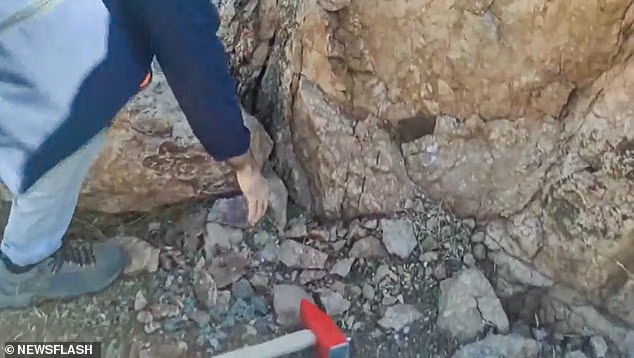
Ceramic fragments found near a site believed to be the last resting place of Noah’s Ark could prove the biblical boat really did exist.
Prof. Dr Faruk Kaya of Agri Ibrahim Cecen University said the pieces were found close to the alleged Ark outline at the Dogubayazit site on Turkey’s Mount Ararat, according to Turkish media.
The fragments were uncovered during road construction near the Durupinar Formation in Agri province, a boat-shaped geological structure that has been at the centre of Noah’s Ark claims for decades.
Academics involved in the research said the ceramic material points to human activity in the region during the Chalcolithic period, roughly between 5500 BC and 3000 BC, a timeframe that some scholars and believers associate with the era traditionally linked to the Biblical figure of Noah.
Prof Dr Kaya said: ‘The ceramic fragments show that there was human activity in this region during the Chalcolithic period, between 5500 and 3000 BC.’
The fresh revelations have also prompted renewed calls for the site to be formally protected, amid concerns that visitors are removing stones and fragments as souvenirs.
Prof Dr Kaya said: ‘This formation and its surroundings must be protected, and the removal of stones, rocks or similar material from the site must be prevented.’
He warned that tourists had been taking material from the area, including stones bearing markings, potentially damaging what researchers believe is an important archaeological and religious heritage site.

Ceramic fragments found near a site believed to be the last resting place of Noah’s Ark could prove the region was settled by humans at the time of the Great Flood

The fragments were uncovered near the Durupinar Formation in Agri province, a boat-shaped geological structure that has been at the centre of Noah’s Ark claims for decades

Prof Dr Faruk Kaya (pictured), of Agri Ibrahim Cecen University, said the pieces were found close to the alleged Ark outline at the Dogubayazit site on Turkey’s Mount Ararat, according to Turkish media
The Durupinar Formation was first identified on 11th September 1959, by Captain Ilhan Durupinar, a Turkish surveying engineer who spotted the structure while mapping eastern Anatolia from an aircraft operated by the Turkish Armed Forces.
Heavy rain and earthquakes later eroded surrounding earth, exposing more of the formation’s outline.
The structure has long drawn attention because of its boat-like shape and its proximity to Mount Ararat, Turkey’s highest peak, which has been associated with the Ark in Christian tradition for centuries.
The Bible’s Book of Genesis states that Noah’s Ark came to rest on the ‘mountains of Ararat’ after a flood that submerged the Earth for 150 days.
Biblical measurements describe the Ark as 300 cubits long, 50 cubits wide and 30 cubits high, dimensions that some researchers argue broadly correspond to the scale of the Durupinar site.
Prof Dr Kaya said the dating of the pottery broadly aligned with traditional estimates of Noah’s lifetime.
He said: ‘This period roughly coincides with the time in which Prophet Noah is believed to have lived.’
Scientific interest in the area has intensified in recent years.
The Mount Ararat and Noah’s Ark Research Team was formally established in 2022 through a collaboration between Agri Ibrahim Cecen University and Istanbul Technical University, bringing together experts in geophysics, chemistry and geoarchaeology.
Rock and soil samples collected from the formation were analysed in laboratories at Istanbul Technical University.
Researchers said the results indicated that sustained human life in the region was possible from the Chalcolithic period onwards, adding further basis to the claim that it could be the real-life Biblical site.
The pottery fragments discovered during the recent roadworks are being viewed as a notable development, as ceramics are widely regarded by archaeologists as one of the clearest indicators of human settlement.
Prof Dr Kaya said: ‘There is no other structure like this identified anywhere else in the world,’ describing the formation as unique in both scale and shape.
He also raised concerns about natural threats to the site, warning that landslides – particularly during spring rains – were eroding both sides of the formation and accelerating damage.
As part of wider preservation efforts, Prof Dr Kaya suggested that a dedicated Noah’s Ark museum or research centre should be established near Mount Ararat, arguing that similar themed attractions already exist in countries such as the United States, the Netherlands and Hong Kong.
MOUNT ARARAT
Many believe that Turkey’s Mount Ararat, the region’s highest point, is where the Noah’s Ark and its inhabitants came aground thousands of years ago.
In 2010, a group of Chinese and Turkish evangelical explorers set out on an expedition to explore the region and find the vessel’s remains.
After a few weeks, they claimed to have found wooden specimens from an ark-like structure 4,000m (13,000 ft) up the mountain.
The team claimed they carried out carbon dating on the wood, which proved it was 4,800 years old, around the time the Ark is said to have been afloat.
Although considered a historical event, most scholars and archaeologists do not believe in a literal interpretation of the Ark story.
Nicholas Purcell, a lecturer in ancient history at Oxford University told MailOnline the claims were the ‘usual nonsense’.
‘If floodwaters covered Eurasia 12,000ft [3,700 metres] deep in 2,800BC, how did the complex societies of Egypt and Mesopotamia, already many centuries old, keep right on regardless?’
Talking back in 2010 when the claims were first made, Mike Pitt, a British archaeologist, said the evangelical explorers had yet to produce compelling evidence.
He said: ‘If there had been a flood capable of lifting a huge ship 2.5 miles [4km] up the side of a mountain 4,800 years ago, I think there would be substantial geological evidence for this flood around the world. And there isn’t.’
TECHNOLOGY
The real cost of climate change: Heatwaves, wildfires, droughts and storms cost the world more than $120 BILLION in 2025, study reveals
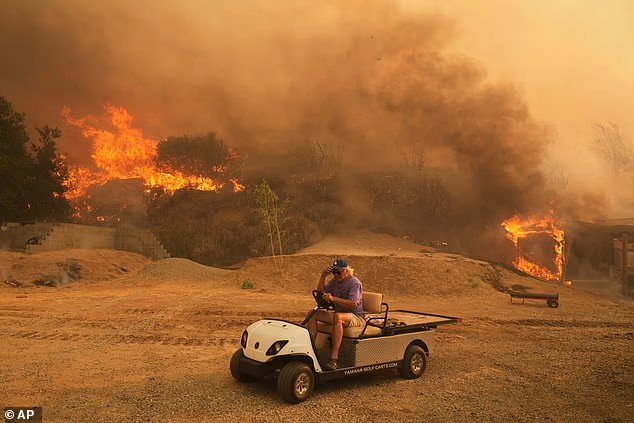
A study has laid bare the shocking true cost of climate change as heatwaves, wildfires, droughts and storms cause havoc around the world.
The 10 most costly climate disasters alone cost the world more than $120 billion (£88.78 billion) in 2025, according to a report from Christian Aid.
Each was made significantly more likely and more devastating by the effects of human-caused climate change.
And scientists warn that these calculations only reflect insured losses, with the true cost of climate-influenced disasters likely to have been even higher.
America took the brunt of the damage this year as the Palisades and Eaton wildfires swept through Los Angeles in January.
This devastating fire alone caused more than $60 billion (£44.4 billion) in damages and killed 40 people.
This was followed by the cyclones which struck Southeast Asia, causing $25 billion (£18.5) in damage and killing more than 1,750 people across Thailand, Indonesia, Sri Lanka, Viet Nam and Malaysia.
The researchers also highlighted 10 less costly but equally shocking climate disasters, including the destructive wildfires which struck the UK this summer.

The 10 most costly climate disasters cost the world more than $120 billion (£88.78 billion) in 2025. The most damaging were January’s Los Angeles Wildfires, which caused more than $60 billion (£44.4 billion) in damages and killed 40 people
Scientists have gathered a vast amount of evidence showing a clear, incontrovertible connection between a warming climate and more intense climate disasters.
It is not that human-caused climate change creates extreme weather events, but it does make them more likely to occur and more intense when they do.
Dr Davide Faranda, Research Director in Climate Physics in the Laboratoire de Science du Climat et de l’Environnement (LSCE), who was not involved in the report, says: ‘The events documented in this report are not isolated disasters or acts of nature.
‘They are the predictable outcome of a warmer atmosphere and hotter oceans, driven by decades of fossil fuel emissions.’
In this report, researchers have tallied the total costs of the biggest disasters that have been intensified by the changing climate.
Even though extreme weather events in rich countries where property prices are higher typically incur greater costs, the worst-affected countries have been poorer.
Of the six most costly climate disasters in 2025, four hit Asia for a combined cost of $48 billion (£35.5 billion).
That includes devastating floods which struck China in June and August, killing more than 30 people and creating $11.7 billion (£8.6 billion) of damage.

Four of the six most costly climate disasters were in Asia, including cyclones that struck Southeast Asia, causing $25 billion (£18.5) in damage and killing more than 1,750 people. Pictured: People flee flood waters in Hat Yai, Southern Thailand

China experienced some of the most severe flooding in recent history, as rising waters killed more than 30 people and created $11.7 billion (£8.6 billion) of damage. Pictured: Flood-affected areas in Congjiang, southwestern China
Throughout 2025, China was hit by devastating floods in regions where such weather was previously unheard of, as unusually high rainfall followed months of drought.
This year also saw the Caribbean face the ‘storm of the century’ as Hurricane Melissa made landfall over Jamaica, Cuba, and the Bahamas, costing at least $8 billion (£5.9 billion).
Since hurricanes are driven by warm ocean waters, humans’ continued creation of planet-warming greenhouse gases directly contributes towards making these storms more frequent and more powerful.
In a cooler world without climate change, a Melissa–type hurricane would have made landfall once every 8,000 years, according to research.
But in today’s climate, with 1.3°C warming, it has become four times more likely – with such an event now expected once every 1,700 years.
Professor Joanna Haigh, an atmospheric physicist from Imperial College London, who was not involved in the report, says: ‘These disasters are not “natural” – they are the inevitable result of continued fossil fuel expansion and political delay.
‘The world is paying an ever-higher price for a crisis we already know how to solve. While the costs run into the billions, the heaviest burden falls on communities with the least resources to recover.’
However, no inhabited continent on Earth was unaffected by climate disasters this year.

Jamaica was hit by the ‘storm of the century’ as Hurricane Melissa made landfall, costing at least $8 billion (£5.9 billion). Pictured: Destroyed houses in St. Elizabeth, Jamaica

Scientists say that climate change warmed the waters over which Hurricane Melissa (pictured) formed, making the deadly storm four times as likely
Besides the 10 most destructive events, Christian Aid also analysed 10 other extreme weather incidents that have lower financial cost but are equally concerning.
Chief among these are the enormous wildfires that burned through large parts of the UK in late summer this year.
Across England, Scotland, Wales, and Northern Ireland, fire crews responded to the highest number of wildfire incidents on record, with over 1,000 separate outbreaks by early September.
Early estimates suggest that more than 47,000 hectares (184 square miles) of forest, moorland, and heath were burned – the largest annual area since records began.
In June, the Carrbridge and Dava Moor blaze consumed 11,000 hectares (42.5 square miles) of land to become the UK’s first recorded ‘mega fire’.
According to climate and wildfire researchers, the increased intensity and frequency of these blazes were a direct product of climate change.
An exceptionally wet winter followed by one of the hottest, driest springs on record led to an unusually large amount of dead, dry plant matter that fuelled the fires.
Likewise, the report points to the Iberian Wildfires, which were caused by record-breaking extreme temperatures.

Outside of the 10 most expensive events, the report also tracked a number of notable climate incidents. These included the record-breaking wildfires, which destroyed 47,000 hectares (184 square miles) of forest, moorland, and heath in the UK. Pictured: Wildfires rage in the Isle of Arran, Scotland

Spain and Portugal were also hit by the Iberian Wildfires, which were caused by record-breaking extreme temperatures. Pictured: Fires burning in Vesu, Portugal
Weeks of extreme heatwaves, with temperatures exceeding 40°C (104°F), combined with low humidity, created explosive fire conditions.
These fires consumed 383,000 hectares (1,480 square miles) in Spain and 260,000 hectares (1,000 square miles) in Portugal – about three per cent of the country’s land.
Preliminary estimates suggest that these fires caused direct economic losses of $810 million (£600 million).
Scientists estimate that climate change made this event around 40 times more likely and increased the intensity of fire conditions by about 30 per cent.
The report also analysed Japan’s year of extreme weather, after the country was battered by back-to-back snowstorms and heatwaves.
Unusually heavy snowstorms and winds killed 12 people and destroyed several houses at the start of the year, followed by the hottest summer ever recorded, with average temperatures 2.36°C (4.25°F) above the average.
Scientists call this phenomenon ‘climate whiplash’, and research shows that it is likely to become more common as climate change alters global weather patterns.
The most costly climate disasters in 2025
- Palisades and Eaton Fires, USA: $60 billion
- South & Southeast Asia Cyclones, Thailand, Indonesia, Sri Lanka, Viet Nam, Malaysia: $25 billion
- Seasonal flooding, China: $11.7 billion
- Hurricane Melissa, Jamaica, Cuba, Bahamas, $8 billion
- Monsoon season flooding, India and Pakistan: $5.6 billion
- Typhoons, Philippines: $5 billion
- Drought, Brazil: $4.75 billion
- Ex-Tropical Cyclone Alfred, Australia: $1.2 billion
- Cyclone Garance, Réunion: $1.05 billion
- Texas floods, USA: $1 billion
Source: Christian Aid, Counting the Cost 2025: A year of climate breakdown
TECHNOLOGY
How reality crushed Ÿnsect, the French startup that had raised over $600M for insect farming


French startup Ÿnsect shot into the spotlight when “Iron Man” star Robert Downey Jr. touted its merits on the Late Show during Super Bowl weekend 2021. Now, nearly four years later, the insect farming company has been placed into judicial liquidation — essentially bankruptcy — for insolvency.
The company’s demise is hardly a surprise, as Ÿnsect had been embattled for months. Still, there is plenty to unpack about how a startup can go bankrupt despite raising over $600 million, including from Downey Jr’s FootPrint Coalition, taxpayers, and many others.
Ultimately, Ÿnsect failed to fulfill its ambition to “revolutionize the food chain” with insect-based protein. But don’t be too quick to attribute its failure to the ‘ick’ factor that many Westerners feel about bugs. Human food was never its core focus.
Instead, Ÿnsect focused on producing insect protein for animal feed and pet food, two markets with very different economics and margins that the company never quite chose between.
That indecision extended to its M&A strategy. In 2021, Ÿnsect acquired Protifarm, a Dutch company raising mealworms for human food applications, adding a third market to the mix. Even as the company announced the deal, then-CEO Antoine Hubert admitted it would take a couple of years for human food to represent just 10% to 15% of Ÿnsect’s revenue.
“We still see pet food and fish feed being the largest contributor to our revenues in the coming years,” Hubert declared at the time. In other words, Ÿnsect was acquiring a company in a market segment that would remain marginal for years — at a time when the startup desperately needed revenue growth.
And revenue was the problem. According to publicly available data, Ÿnsect’s revenue from its main entity peaked at €17.8 million in 2021 (approximately $21 million) — a figure reportedly inflated by internal transfers between subsidiaries. By 2023, the company had racked up a net loss of €79.7 million ($94 million).
Techcrunch event
San Francisco
|
October 13-15, 2026
So how did a company with such meager revenue raise over $600 million? The answer wasn’t hype-driven crossover funds paying ambitious multiples during the 2021 funding frenzy. Instead, Ÿnsect attracted impact-focused investors like Astanor Ventures and public investment bank Bpifrance that bought into a compelling sustainability vision.
Its pitch to them was simple — offering an alternative to resource-intensive proteins like fishmeal and soy. That same thesis also attracted significant capital to competitors like Better Origin and Innovafeed, and it seemed promising.
But the vision collided with market reality. Animal feed is a commodity market driven by price, not sustainability premiums. In a perfect world, insect protein would be fully circular, with insects fed on food waste that would otherwise go to landfill. But in practice, factory-scale insect production typically ends up relying on cereal byproducts that are already usable as animal feed — meaning insect protein just adds an expensive extra step. For animal feed, the math simply wasn’t working.
Ÿnsect eventually recognized this. Pet food proved to be a different equation: it is less price-driven than animal feed and a far better market for insect protein, even with competition from other alternative proteins such as lab-grown meat. By 2023, the company refocused its strategy on pet food and other higher-margin segments, with Hubert citing broader economic pressures.
“In an environment where there is inflation on energy and raw materials but also on the cost of capital and debt, we cannot afford to invest loads of resources in markets which are the least remunerative (animal feed), while you have other markets where there is a lot of demand, good returns and higher margins,” Hubert said at the time.
The 2023 pivot to pet food came too late. By then, Ÿnsect had already committed to a massive, capital-intensive bet that would ultimately doom the company. That bet was Ÿnfarm, a “giga-factory” in Northern France that the company billed “the world’s most expensive bug farm.” Built for insect production at scale, the facility consumed hundreds of millions in funding — money spent before Ÿnsect had proven its business model or figured out its unit economics.
To oversee Ÿnfarm’s launch, Ÿnsect brought in Shankar Krishnamoorthy, a former executive at French energy giant Engie. When that move to pet food failed to save the company, Krishnamoorthy replaced Hubert as CEO.
Ÿnsect then shut down the production plant it had acquired from Protifarm and cut jobs. But shuttering one facility while operating a giga-factory built for the wrong market couldn’t solve the fundamental problem.
For Professor Joe Haslam, who teaches a course on Scaling Up in the MBA Program at IE Business School, “Ÿnsect’s struggles are not a mystery and not mainly about insects. They are the result of a mismatch between industrial ambition, capital markets, and timing, compounded by some execution and strategy choices.”
The fact that Ÿnsect failed doesn’t mean the entire insect farming sector is doomed. Competitor Innovafeed is reportedly holding up better, in part because it started with a smaller production site and is ramping up incrementally.
For Prof. Haslam, Ÿnsect exemplifies a broader European problem. “Ÿnsect is a case study in Europe’s scaling gap. We fund moonshots. We underfund factories. We celebrate pilots. We abandon industrialization. See Northvolt [a struggling Swedish battery maker], Volocopter [a German air taxi startup, and Lilium [a failed Germany flying taxi company],” he said.
The failure has prompted some soul-searching. Hubert himself co-founded Start Industrie, an association advocating for policies to support French industrial startups — a recognition that Europe needs more than just funding to build the next generation of deep-tech companies.

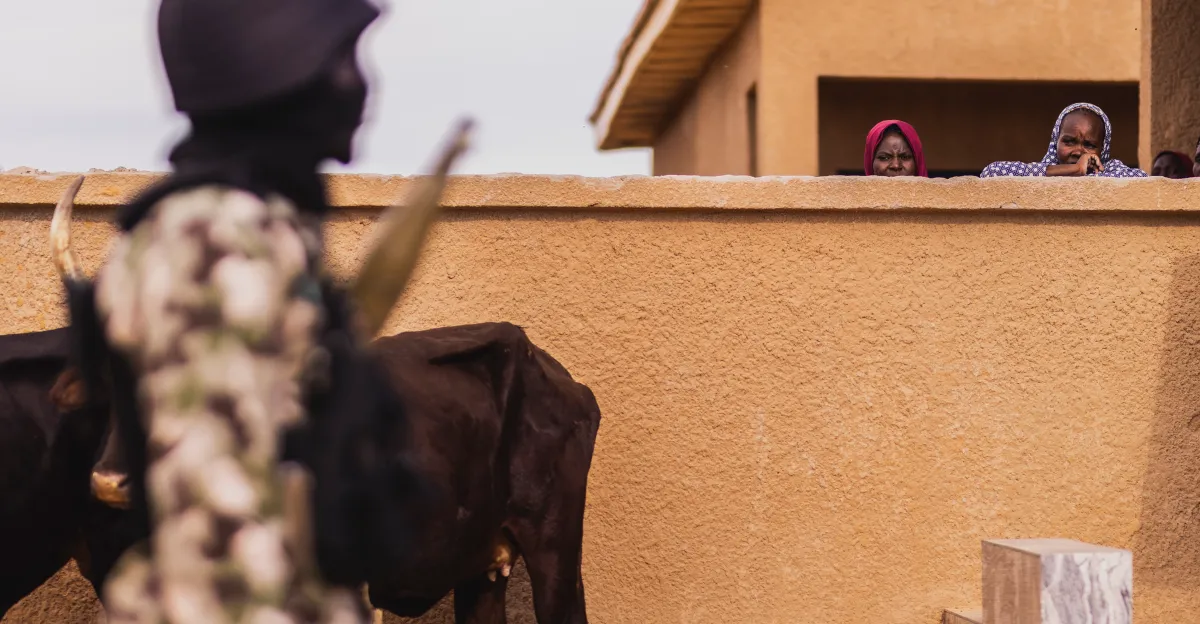

Two girls are pictured behind an armed soldier in the small village, that was destroyed by Boko Haram on December 19, 2022, in Ngarannam, Nigeria. | Florian Gaertner/Photothek via Getty Images
President Donald Trump rang in Christmas Day by ordering airstrikes against two ISIS camps in Nigeria. The strikes, involving more than a dozen Tomahawk missiles fired from a Navy ship, came shortly after Trump vowed retaliation against ISIS, which allegedly carried out deadly attacks against US troops and civilians around the world last week.
But Trump has been talking about military action in Nigeria, specifically, since November, when he vowed on social media to go “guns-a-blazing” into the country if its government failed to prevent the persecution of Christians.
In his post announcing the strikes on Christmas, Trump accused ISIS of “targeting and viciously killing, primarily, innocent Christians at levels not seen for many years, and even Centuries!”
It’s the latest example of how the Nobel Peace Prize aspirant and advocate of “America First” foreign policy is more than willing to use military force to accomplish his foreign policy goals, and to interfere in the domestic affairs of other countries, when doing so aligns with his domestic political priorities.
In this sense, the actions in Nigeria are similar to the ongoing military build-up around Venezuela, where military strikes on land may still take place in the immediate future. In both cases, the president appears to be contradicting his frequently expressed opposition to military interventionism, but these are interventions linked to the priorities of his political base: in one case, keeping drugs and migrants out of the US. In another, protecting Christians.
As we get deeper into Trump’s second term, it’s becoming increasingly clear that MAGA is not immune from the temptation to go abroad in search of monsters to destroy.
What is actually happening in Nigeria?
The problem Trump is talking about here is a real one. The hardline Islamist terror group known as Boko Haram and its offshoots have waged a brutal insurgency against the Nigerian state in the northern part of the country since 2009, committing numerous high-profile massacres and kidnappings, including the 2014 Chibok schoolgirl abduction that attracted a global media campaign. A Boko Haram splinter group has been fighting under the ISIS banner since around 2016.
This isn’t the only religious conflict going on. Recent years have also seen a wave of clashes and attacks between predominantly Muslim herders and predominantly Christian farming communities in Northwest and Northcentral Nigeria. The Nigerian military has been fighting the insurgency for years, but President Bola Ahmed Tinubu has been accused of ignoring the plight of Christians, in particular, and the military campaign has been hampered by widespread corruption and alleged human rights abuses.
In addition, several Nigerian states have some of the world’s most draconian blasphemy laws, which critics say are disproportionately enforced against Christians. Atheists and members of minority Muslim sects have been persecuted as well, though.
Trump’s sudden interest in Africa’s most populous country was likely motivated less by any particular event there — these are all longstanding issues — than by developments in Washington. Though it doesn’t get a ton of mainstream media attention, the plight of Christians in Nigeria has been a galvanizing issue for evangelical Christians in the US in recent years. When I went to see former Nigerian President Muhammadu Buhari speak in Washington in 2022, the event was repeatedly interrupted by protesters. On Truth Social, Trump has cited numbers from a report from the international Christian rights NGO Open Doors stating that of the 4,476 Christians killed for their faith globally in 2024, 3,100 were in Nigeria.
This also isn’t the first time Trump has taken an interest in the issue. When Buhari visited the White House during Trump’s first term in 2020, the president pointedly asked him, “Why are you killing Christians in Nigeria?” During Trump’s first term, the US added Nigeria to the State Department’s list of Countries of Particular Concern for violations of religious freedom. The Biden administration controversially removed Nigeria from the list in 2021, just before a visit by Secretary of State Antony Blinken to the country, which is viewed by the US as both an important counterterrorism partner and a major political and economic player in Africa.
So it was not surprising to see Trump’s initial Truth Social post in November that he was returning Nigeria to the CPC list.
The bipartisan US Commission on International Religious Freedom (USCIRF), a bipartisan federal watchdog appointed by Congress and the White House, had been urging him to do so, as had recent legislation introduced by Sen. Ted Cruz. (R-Tex.), who has been consistently outspoken on the issue.
Mohamed Elsanousi, one of the USCIRF commissioners, told Vox that the commission welcomed Trump’s announcement and his highlighting of the killing of Christians, but added, “there are also violations and killings of Muslims and African traditional religion practitioners. So we would have loved for the President to mention all the other communities that are facing the same kind of persecutions as well.”
Humanitarian intervention, MAGA style
Trump suggested there may be more strikes, tweeting, “MERRY CHRISTMAS to all, including the dead Terrorists, of which there will be many more if their slaughter of Christians continues.”
Still, an extended counterinsurgency campaign in Nigeria seems unlikely. While hardly a pacifist, Trump prefers quick interventions that promise decisive victories and carry little risk of quagmire or US casualties. None of that applies in Nigeria. It’s probably relevant that the Nigerian government is not viewed particularly favorably by the Trump administration for a number of reasons, including its refusal to accept deported migrants from the US and its criticism of Israel over the war in Gaza.
It’s notable that despite Trump’s earlier threats and allegations targeting Nigeria’s government, these strikes were carried out in coordination with that government, according to statements from both capitals. This is, therefore, more in keeping with the “over-the-horizon” counterterrorist strikes the US regularly carries out in coordination with allies in various countries rather than the invasion by force of Nigeria that Trump’s statements last fall suggested.
US troops have been involved in training and assistance missions with Western African countries, including Nigeria, for two decades now. Though the future of those missions is uncertain as more countries in the region turn toward security partnerships with Russia and as US foreign aid cuts hamper US efforts to try to stabilize countries where insurgencies are thriving.
It’s worth pointing out that in August, the administration approved $346 million in arms sales to the government it is now accusing of allowing the wholesale killing of Christians and of perpetrating its own human rights abuses. There are very good reasons to suggest the US should rethink a strategy of security assistance to Nigeria — it has plainly failed to put down Boko Haram’s insurgency — but little reason to believe US airstrikes will be much more effective.
Trump’s own statements suggest that he also believes this. In his speech in Saudi Arabia in May, he criticized past administrations for “intervening in complex societies that they did not even understand themselves.” Addressing military commanders in Quantico in September, he vowed to restore “the fundamental principle that defending the homeland is the military’s first and most important priority” and argued that “Only in recent decades did politicians somehow come to believe that our job is to police the far reaches of Kenya and Somalia, while America is under invasion from within.”
And yet now he’s putting the US military into the middle of a dizzyingly complex ethnic conflict in an African country that few in the US really understand.
It’s yet more evidence that for all his America First messaging, Trump is essentially a globalist: someone who believes the US plays an indispensable role on the world stage, and should play a role in solving global crises, including those with little relevance to America’s narrowly defined national security interests. But the big difference between Trump and the liberal internationalists or neoconservatives who came before him is the degree to which his foreign interventions are aligned with his domestic political priorities.
That can mean throwing US economic might behind a MAGA-friendly party in an Argentinian election or the trial of an ally in Brazil. It can mean revamping US refugee policy so that it predominantly helps white South Africans. It may soon mean a regime change campaign in Venezuela couched in the rhetoric of drug and migration policy. And in the case of Nigeria, it means reviving the supposedly discredited notion of humanitarian military intervention — but only in a case where it aligns with the priorities of one of Trump’s important constituencies.
In previous years, the grisly scenes emerging from El Fasher, Sudan in recent months, might have prompted a debate about the necessity of American military intervention. Don’t count on it in today’s Washington.
Update, December 26, 2025, 12:10 pm: This article was originally published in November after President Donald Trump made his initial comments threatening military action in Nigeria, and was updated to reflect the airstrikes on December 25.

In recent years, people have been increasingly looking for new ways to form platonic connections, as loneliness and social isolation have become more prevalent.
In 2023, the U.S. Surgeon General went so far as to label this issue a public health crisis. Remote workers, who miss the everyday interactions found in an office, and younger individuals eager to create their adult social circles based on shared interests and hobbies, are among those seeking meaningful friendships.
Thanks to online dating apps, the stigma associated with finding connections online has largely faded away. This has welcomed a new wave of apps focused on fostering friendships and building local communities.
According to estimates from Appfigures, over a dozen local-focused friendship apps have collectively generated approximately $16 million in consumer spending in the U.S. so far this year. Some notable examples include Timeleft, Meet5, and Bumble’s BFF. Additionally, these apps have garnered approximately 4.3 million downloads thus far in 2025.
The apps aim to provide a less awkward solution than, for instance, approaching a stranger at the gym or local café and trying to strike up a conversation. These platforms clearly indicate that everyone using the app is looking for the same thing — friendship, not romance — making it much less intimidating to initiate conversations.
From major players like Meetup to newer ones like 222, there are plenty of apps that cater to the growing demand for meaningful friendships. We’ve compiled a list of them for you to try out.
222
Image Credits:222 (screenshot)
The app 222 is an iOS-only social events platform that facilitates in-person meetups by pairing a group of strangers based on their personality test results. The app sends invitations to nearby public social events, such as wine bars and comedy clubs. There is then a vetting process, and selected participants are notified on the day of the event. A bonus for those who feel socially anxious: You’re allowed to bring a plus-one.
Techcrunch event
San Francisco
|
October 13-15, 2026
The service charges a $22.22 curation fee or a monthly subscription for the same price.
BFF
 Image Credits:Bumble
Dating giant Bumble is among the more established players to enter the friendship space, launching its friend-finding feature in 2016, which then spun out into a stand-alone app in 2023. The friend-making app has recently undergone a significant redesign, with an increased emphasis on facilitating group meetups, catering to users’ desires to grow their social circles.
BFF is available for free download on iOS and Android devices.
Clyx
 Image Credits:Clyx
Clyx is another emerging app in the group-based social networking landscape, with a strong focus on discovering local events. The social platform helps users find community events by integrating data from platforms like Ticketmaster and TikTok. Additionally, Clyx allows users to upload their contact lists, helping them see which events their friends plan to attend. The app also includes a feature that recommends other users to connect with at these events.
As of now, Clyx operates exclusively in two cities: Miami and London. However, it has plans to expand to additional areas in the near future, with New York City and São Paulo at the top of the list. The app is available on the App Store and Google Play Store.
Les Amís
 Image Credits:Les Amis
Les Amís is a friendship app tailored for women, transgender, and LGBTQ+ individuals that leverages AI to match users based on similar interests and encourages participation in local events, such as pottery classes, book clubs, and wine tastings. Matches are made every Monday, allowing users to chat and plan meetups later in the week.
Available on iOS and Android, Les Amís serves cities across Europe, including Amsterdam, Barcelona, Berlin, Madrid, Paris, and Stockholm. In the U.S., the app is available in Austin and New York, with plans to expand to Boston, Miami, and Los Angeles.
The app uses a paid membership model that varies by city, with fees of $70 in New York and €55 in Amsterdam.
Meetup
 Image Credits:Meetup
The local event-discovery platform has been around since 2002, helping millions of users connect with others who share similar interests. Users can RSVP to events; join groups that cater to a variety of hobbies, professions, or social causes; and create their own groups and events. They can also chat with group members and post updates and photos from gatherings.
Meet5
 Image Credits:Meet5
This European community-building app recently launched in the U.S., targeting users over 40 who want to meet new people in their area and participate in group activities such as picnics, concerts, and hiking. Notably, in a short time, there have been around 777,000 U.S. downloads so far across the App Store and Google Play Store, according to Appfigures estimates.
Pie
 Image Credits:Pie
Pie is another one of the newer social apps on the market. It features an AI-driven quiz designed to predict which users are most likely to be compatible with each other. Each person who RSVPs to a Pie event takes a brief personality assessment, and the algorithm organizes attendees into groups of six, who are then added to a group chat within the Pie app, allowing them to interact with each other before the event.
Currently, the app is only available in Austin, Chicago, and San Francisco. Users can download Pie from the App Store and Google Play Store.
Timeleft
 Image Credits:Timeleft
Timeleft is a relatively new platform that helps you organize weekly dinner dates with groups of strangers. The app uses a special algorithm to match you with others, taking into account your age, gender, and personality. Users are matched with four other people, but they only learn minor details about them the night before, including their occupations and zodiac signs.
Dinners take place at a selected restaurant on Wednesday evenings at 7:00 p.m. To help everyone break the ice, the app offers a game with conversation starters. After dinner, there is an after-party at a local bar.
Users can book dinners online or through the app. In terms of pricing, it varies depending on the country and restaurant. Users pay for a ticket up front and are responsible for covering their own dinner and drinks.
Wyzr Friends
 Image Credits:Wzyr Friends
Wyzr Friends is an activity-based friendship app designed for adults 40 and older, catering to empty nesters, those who are divorced, and other users seeking to connect with like-minded individuals. Users can thumbs up or down potential friends and arrange in-person activities based on shared interests, such as going to the movies or hiking.
It’s available on iOS and Android devices in the U.S., Canada, Australia, Ireland, the Philippines, Singapore, and Mexico.
Mmotion
 Image Credits:Mmotion (Image has been modified)
Mmotion is a newly launched friendship app that blends location tracking with social discovery to help users connect with people nearby and explore new bars and restaurants in their area. Upon joining, users can participate in interest-based groups—such as hiking, basketball, or art—view a map of active users, and send messages to those nearby. The app also highlights new places on the map, making it easy to find a restaurant or venue to try.
Mmotion is currently only available to users in New York City on iOS and Android devices. Users must first submit an application to be considered.
This story was updated after publication.

Trust Wallet has pledged to cover roughly $7 million in customer funds lost in a Christmas Day exploit, its founder, Changpeng Zhao, confirmed on the social platform X. The sudden breach has rattled part of the crypto community. Still, Zhao’s swift assurance aims to steady nerves and restore confidence in the popular self-custodial wallet.
The incident unfolded on December 25, when a compromised version of the Trust Wallet browser extension was used to drain assets from users’ wallets.
Early investigations suggest the malicious code was active in version 2.68 of the extension, prompting unauthorised transfers across multiple blockchains, including Ethereum, Bitcoin and Solana. Within hours, on-chain data showed funds being siphoned away to unknown addresses, with losses quickly approaching $7 million.
In a post on X on Friday, Zhao emphasised that “user funds are SAFU,” using the popular crypto industry acronym for Secure Asset Fund for Users. He said Trust Wallet will reimburse affected users for their losses. The team is continuing to investigate exactly how the attackers were able to upload and distribute the compromised extension.
 Chinpeng Zao
The wallet provider also described the breach as limited to the browser extension. Trust Wallet urged users to disable the compromised version immediately and update to the fixed release, version 2.69, available via the official Chrome Web Store.
Mobile app users and those using other extension versions were reportedly not affected.
How the Trust Wallet exploit played out
Security researchers and on-chain analysts have begun piecing together a timeline of the attack. Initial signs of preparation by the threat actors date back to early December, according to cybersecurity firm SlowMist. Their reporting indicates that malicious code was embedded into the extension build before going live, suggesting a carefully planned exploit rather than a simple automated attack.
Once live on Christmas Day, the compromised extension collected sensitive user data, including seed phrases, and transmitted it to a remote server controlled by the attackers. Victims who imported a seed phrase into the extension saw their wallets drained in a matter of minutes, even if they had followed common security practices.
Across the crypto community, on-chain sleuths flagged hundreds of wallets affected by the breach. The rapid movement of assets through mixing services complicated efforts to trace stolen funds, making recovery efforts challenging.
The broader market felt the shock of the news, coming at a time when crypto prices were already under pressure. Despite the relatively modest size of the loss compared with massive exchange hacks this year, the incident has drawn fresh scrutiny to browser-based wallet infrastructure and supply chain security.

Meanwhile, Zhao’s public promise to cover the losses was intended to reassure users that the incident would not result in personal financial loss. His message emphasised that affected funds will be reimbursed from Trust Wallet’s reserves, and that the issue appears to be confined to the compromised extension.
Some industry observers have raised questions about how the malicious version passed through review and was distributed via official channels.
There are early suggestions that the breach may involve a supply chain compromise or even insider knowledge, given how the altered code was able to slip into the official release. These suggestions have sparked debate across forums and social platforms, with some users voicing concerns about internal controls and review processes.
Trust Wallet has responded by prioritising the release of the patched extension and asking users to update immediately. It has also been recommended that those affected generate new seed phrases and migrate assets to secure environments.
TECHNOLOGY
FAA issues nationwide travel alerts triggering hours-long delays for thousands of holiday flyers
Tens of thousands of airline passengers are being warned to brace for major delays as federal officials say US airports have been overwhelmed by the holiday travel rush.
The Federal Aviation Administration (FAA) has issued eight separate airspace flow restrictions on Friday, which affect nearly every major air traffic control center in the US, including New York, Los Angeles, Chicago, Atlanta, Boston, Dallas, and Miami.
The widespread series of Airspace Flow Programs (AFPs) will impact almost any major airport in the US or Canada flying to Florida or the Caribbean on Friday, one of the busiest travel days of the year, with some delays reaching over six hours.
Specifically, the FAA is slashing the number of planes allowed to take off and enter certain busy sections of airspace to prevent any dangerous situations of overcrowding as hundreds of flights all head to the same destinations.
Hourly limits have been set on how many flights can cross the FAA’s Flow Constrained Area (FCA) boundaries, specific zones over or around the US created by the agency marking flight routes which they expect to be too busy with holiday travel.
Friday’s zones include flight routes over the Atlantic Ocean and Caribbean Sea leading to southern Florida, Jamaica, Puerto Rico, Turks and Caicos, St Lucia, Aruba region, Mexico, and San Diego.
Between 3pm and 6pm, the FAA expects the average delays to be the worst, with some routes over Mexico and the Dominican Republic expecting peak delay times exceeding three hours.
Maximum delays for flights traveling through the FCA over Florida will reach a staggering 398 minutes, or more than six and a half hours Friday afternoon.

A holiday traveler waits for her flight amid major airport delays due to high volumes of flyers during the Christmas travel week (Stock Image)

Travelers at San Francisco International Airport stand in long lines waiting for flights. Over eight million people are expected to fly during the final two weeks of December
Most of the travel restrictions began Friday morning and are scheduled to last until between 6pm and 10pm ET tonight.
Other major US travel regions being affected by the Monday restrictions include Salt Lake City, Houston, Jacksonville, Cleveland, Denver, Oakland, Kansas City, Memphis, Minneapolis, and Seattle.
Several major airports throughout Canada have also been impacted by the FAA’s holiday travel announcement, including Toronto Pearson International Airport, Montréal–Trudeau International Airport, and Vancouver International Airport.
Contributing to the overcrowding over Florida are the record 122million Americans who were expected to travel during the final two weeks of December. Over 8million of those holiday travelers will be flying, according to the American Automobile Association (AAA).
In their annual report, AAA revealed that Orlando, Fort Lauderdale, and Miami were the top three domestic destinations for holiday travelers this year.
Meanwhile, Cancun, Mexico and the Dominican Republic’s Punta Cana were the top travel getaways internationally this week.
As of 12pm, over 3,600 flights entering or exiting the US have been delayed. Over 1,300 have been cancelled, with some forced to postpone due to a major winter storm expected to slam the US East Coast Friday night.
The FAA has also issued ground delays at Aspen/Pitkin County and Eagle County Regional Airports in Colorado, Witham Field in Florida, and Southwest Florida International Airport due to issues with ‘volume,’ or overcrowding.

Hundreds of flights to Florida and the Caribbean have been delayed Friday due to overcrowding at airports throughout the US and Canada heading to these destinations (Stock Image)
For travelers heading to the airport on Friday, AAA recommended flyers regularly check their flight status before leaving home and also sign up for airline alerts.
Travelers are also urged to arrive at the airport early, allowing at least two hours for domestic flights and three hours if you’re leaving the US.
Due to the massive crowds expected at airports throughout the US, passengers should also pack smart and keep any vital medications, chargers, and a change of clothes in their carry-on bags.
With delays and potential cancellations now expected to increase throughout the day, flyers should also go over their chosen airline’s policies on rebooking flights and refunds for any cancelled trips.