
LIFESTYLE
Pack Your Bags: PalmPay’s Travel Carnival Awaits!


Some opportunities arrive quietly, disguised as routine. You notice them later, usually as regret. PalmPay’s Travel Carnival is one of those moments. Former Big Brother Naija stars Imisi and Kola (Komisi) have teamed up with PalmPay, and the collaboration is already making serious waves online. Users now stand a chance to share from a massive ₦400 million cash reward pool and even travel abroad for free.
Everyday actions like buying airtime, paying for data and making transfers now carry the possibility of something more lasting: a share of ₦400 million in cash, or an all-expense paid journey to places people promise themselves “someday” —- London, Sydney, Cape Town, Dubai, New York.
To begin, open the PalmPay app and tap the Travel Carnival banner on the home or Rewards page. Complete eligible tasks to earn City Cards: one task, one card or redemption right. Some tasks unlock the rare London Card. Collect all five cities and merge them into a World Card to qualify for each
round’s cash pool. The more World Cards you merge, the more your reward grows. T&C applies.
Cards can be sent or requested from friends using unique Card IDs, often the difference between almost and complete. Each card is redeemed once, and timing matters. The Carnival runs across three rounds from Dec 17 to Jan 8, 2026, with cash rewards credited automatically at the end of each round.
The top two users per round, ranked by eligible transactions after merging a World Card, will also win a fully paid international trip once per user. Years from now, travel regrets tend to sound the same: I could have gone. This time, you don’t have to. Open the app. Collect the cards. Pack your bags.
Visit our social media page for more info
Sponsored Content










Stay ahead of the curve with our weekly guide to the latest trends, fashion, relationships and more
Stay ahead of the curve with our weekly guide to the latest trends, fashion, relationships and more
Stay ahead of the curve with our weekly guide to the latest trends, fashion, relationships and more

Multiple bags of dog treats have been recalled due to a potentially dangerous health risk.
Consumers Supply Distributing, LLC, based in Iowa, is recalling four-pound bags of biscuits for dogs, according to a company announcement shared by the U.S. Food and Drug Administration Wednesday. The recall is due to the potential presence of salmonella, a type of bacteria that can cause a common bacterial illness.
The recall affects four-pound bags of Country Vet Biscuits, Original Meaty Flavor, with the UPC 899623000463, lot code 40906513, and expiration date of September 6, 2026.
Four-pound bags of Heartland Harvest Dog Biscuits, with the UPC 840227340691, are also included in the recall. The product has the lot code 40906513 and expiration date of September 6, 2026.
The recalled products were sold at various retail stores in seven states: Colorado, Iowa, Kansas, Missouri, Texas, Montana, and Nebraska.
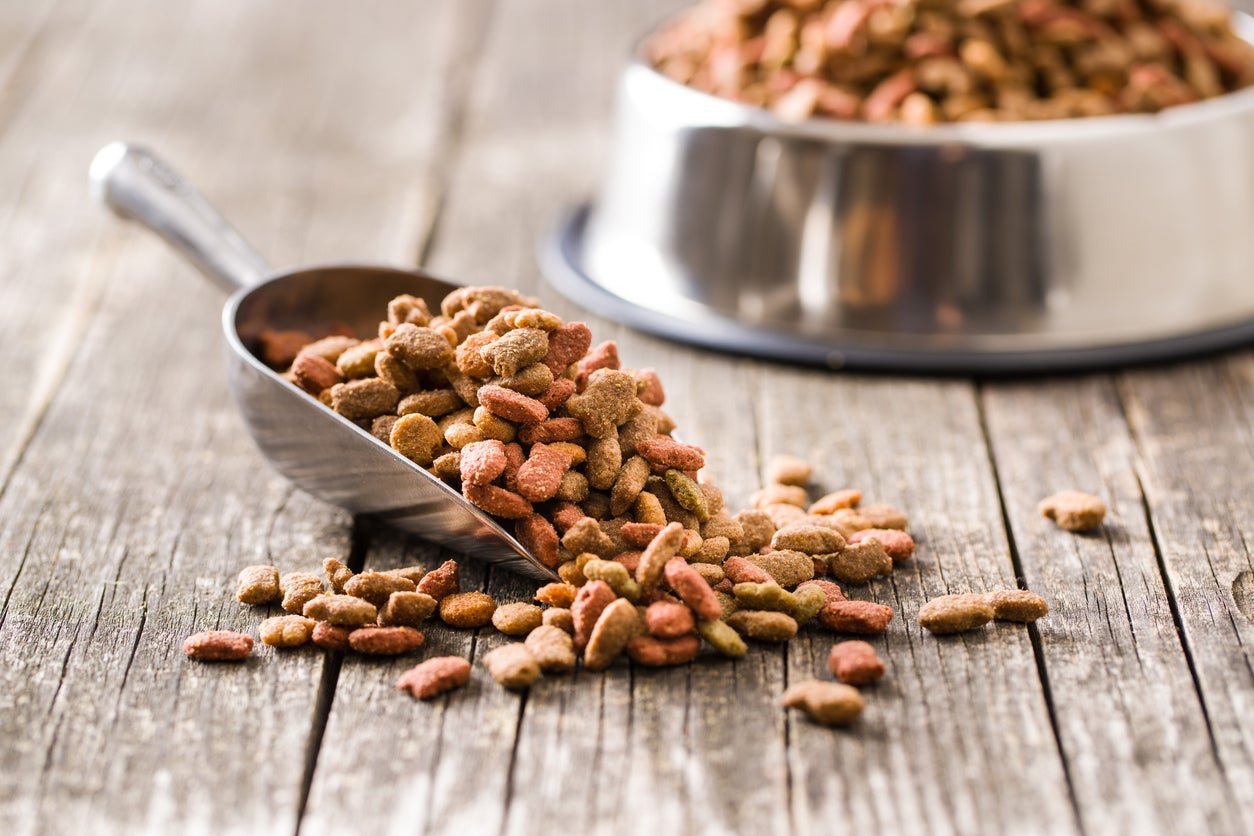 Some Country Vet Biscuits and Heartland Harvest Dog Biscuits have been recalled due to salmonella risk (Getty Images)
The recall was issued after a routine sampling program by the FDA “revealed that the finished products contained the bacteria,” according to the report shared by the health organization.
“The company has ceased the production and distribution of the lot number as FDA and the company continue their investigation as to what caused the problem,” the FDA report notes.
While there haven’t been any illnesses reported to date, consumers are urged to discard the recalled dog treats immediately or return them to the place of purchase for a full refund.
As noted in the FDA report, pets with salmonella infections can be “lethargic and have diarrhea or bloody diarrhea, fever, and vomiting.” Some can have only “decreased appetite, fever, and abdominal pain.” Pets that have the infections but are otherwise healthy can still infect other animals or humans.
If your pet has eaten the recalled product and is showing symptoms, contact your veterinarian. Pet owners are also urged to thoroughly wash their hands after touching the pet food or any surface exposed to it in order to stop the spread of bacteria.
In people, salmonella infections can occur anywhere between 12 and 72 hours after eating food that is contaminated with the bacteria, and symptoms can “usually last four to seven days,” according to the FDA’s website.
Symptoms can range from diarrhea, fever, and abdominal cramps. Elderly people, children younger than five, and people with weakened immune systems are “more likely to have severe infections.”
Salmonella is the second leading cause of foodborne illnesses in the U.S., according to the CDC. The organization also notes that each year, there are 1.35 million illnesses, 420 deaths, and 26,500 hospitalizations due to salmonella.
Multiple types of pet foods were also recalled earlier this year due to a health risk. In October, Wisconsin-based Foodynamics voluntarily recalled specific lots of freeze-dried pet treats from brands Raw Dog Barkery, BellePepper Cats, Kanu Pets, and What’s In the Bowl, because of the potential presence of salmonella.
In addition, Raw Bistro Pet Fare, based in Minnesota, also recalled three-pound bags of the Raw Bistro Dog Fare Grass-Fed Beef Entrée and 18-pound cases of the Raw Bistro Dog Fare Grass-Fed Beef Entrée.

Sign up to our free Living Well email for advice on living a happier, healthier and longer life
Live your life healthier and happier with our free weekly Living Well newsletter
Live your life healthier and happier with our free weekly Living Well newsletter

Whether you had breakfast this morning or not, your pancreas is working quietly behind the scenes. This vital organ produces the enzymes that help digest your food and the hormones that regulate your metabolism. But when something goes wrong with your pancreas, the consequences can be devastating.
Pancreatic cancer has earned the grim nickname “the silent killer” for good reason. By the time most patients experience symptoms, the disease has often progressed to an advanced stage where treatment options become severely limited.
In the UK alone, over 10,700 new cases and 9,500 deaths from pancreatic cancer were recorded between 2017 and 2019, with incidence rates continuing to rise.
The most common form, pancreatic ductal adenocarcinoma (PDAC), develops in the pancreatic duct – a tube connecting the pancreas to the small intestine.
When tumours form here, they can block the flow of digestive enzymes, causing energy metabolism problems that leave patients feeling chronically tired and unwell. Yet these symptoms are often so subtle that they’re easily dismissed or attributed to other causes.
open image in gallery
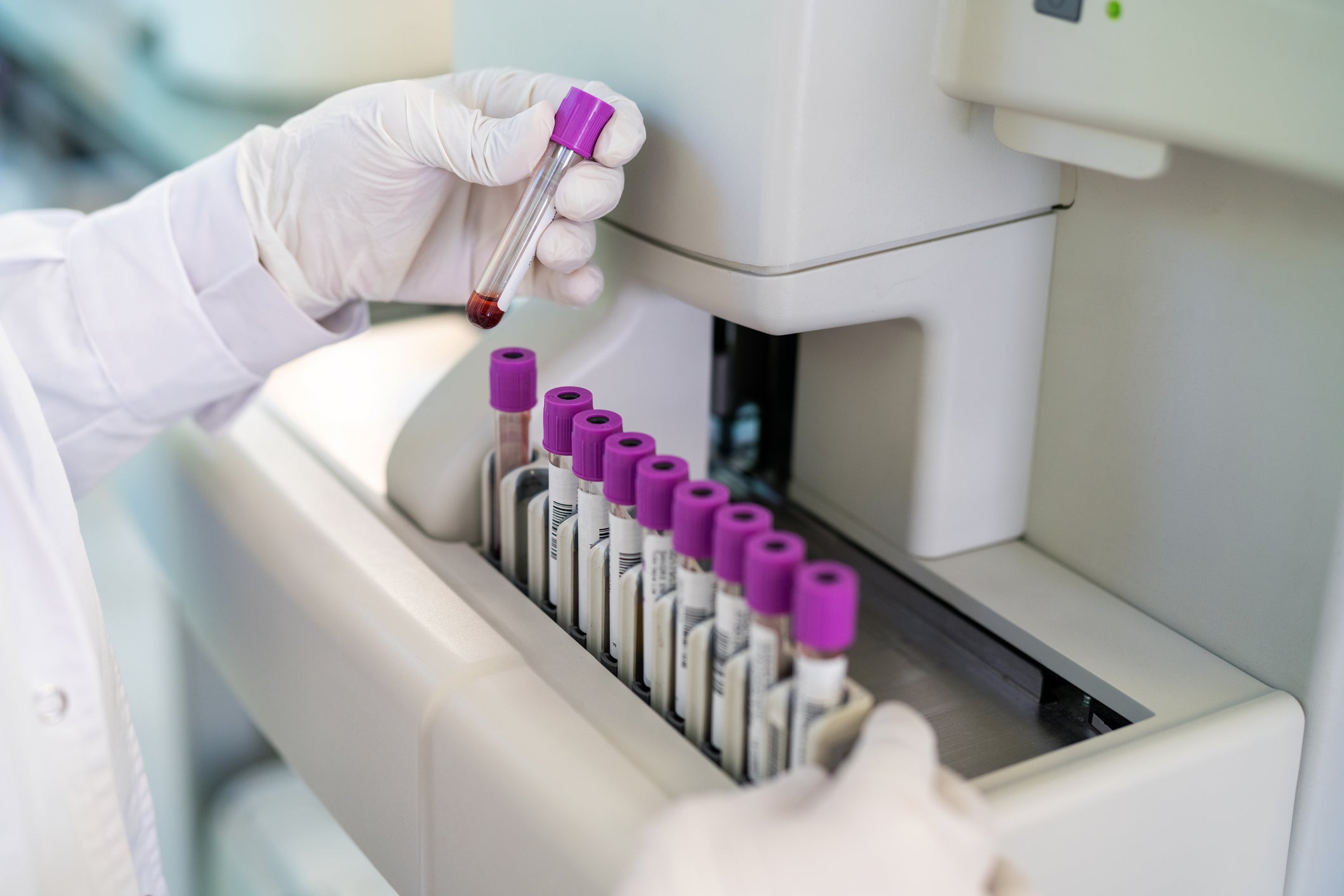
Advancements in microbiome research offer hope for earlier detection (Getty/iStock)
Now, researchers are turning to an unexpected source for early PDAC detection: faecal samples. While analysing poo might seem an unlikely approach to cancer diagnosis, scientists are discovering that our waste contains a treasure trove of information about our health.
This is because your gut is home to trillions of bacteria – in fact, bacterial cells in your body outnumber human cells by roughly 40 trillion to 30 trillion. These microscopic residents form complex communities that can reflect the state of your health, including the presence of disease.
Since PDAC typically develops in the part of the pancreas that connects to the gut, and most people have regular bowel movements, stool samples provide a practical, non-invasive window into what is happening inside the body.
Global evidence builds
This innovative approach has been validated in studies across several countries, including Japan, China and Spain. The latest breakthrough comes from a 2025 international study involving researchers in Finland and Iran, which set out to examine the relationship between gut bacteria and pancreatic cancer onset across different populations.
About the authors
Falk Hildebrand is a Researcher in Bioinformatician at the Quadram Institute.
Daisuke Suzuki is a PhD Candidate in Gut Microbiome at the Quadram Institute.
This article is republished from The Conversation under a Creative Commons licence. Read the original article.
The researchers collected stool samples and analysed bacterial DNA using a technique called 16S rRNA gene amplicon sequencing. Despite the complex name, the principle is straightforward: scientists sequence and compare a genetic region found in every bacterium’s genome, allowing them to both identify and count different bacterial species simultaneously.
The findings from the Finnish-Iranian study were striking. Patients with PDAC exhibited reduced bacterial diversity in their gut, with certain species either enriched or depleted compared with healthy people. More importantly, the team developed an artificial intelligence model that could accurately distinguish between cancer patients and healthy people based solely on their gut bacterial profiles.
The field of microbiome research is evolving rapidly. While this study used amplicon sequencing, newer methods like “shotgun metagenomic sequencing” are providing even more detailed insights. This advanced technique captures the entire bacterial genome content rather than focusing on a single gene, offering an unprecedented resolution that can even detect whether bacteria have recently transferred between individuals.
These technological advances are driving a fundamental shift in how we think about health and disease. We’re moving from a purely human-centred view to understanding ourselves as “human plus microbiome” – complex ecosystems where our bacterial partners play crucial roles in our wellbeing.

open image in gallery
Pancreatic cancer has the lowest survival rate of all cancers (PA)
Beyond pancreatic cancer
The possibilities go well beyond pancreatic cancer. At Quadram, we’re applying similar methods to study colorectal cancer. We’ve already analysed over a thousand stool samples using advanced computational tools that piece together bacterial genomes and their functions from fragmented DNA. This ongoing work aims to reveal how gut microbes behave in colorectal cancer, much like other scientists have done for PDAC.
The bidirectional interactions between cancer and bacteria are particularly fascinating – not only can certain bacterial profiles indicate disease presence, but the disease itself can alter the gut microbiome, as we previously showed in Parkinson’s disease, creating a complex web of cause and effect that researchers are still unravelling.
Nonetheless, by understanding how our microbial partners respond to and influence disease, we’re gaining insights that could revolutionise both diagnosis and treatment. Our past research has shown this to be incredibly complex and sometimes difficult to understand, but developments in biotechnology and artificial intelligence are increasingly helping us to make sense of this microscopic world.
For cancer patients and their families, this and other advancements in microbiome research offer hope for earlier detection. While we’re still in the early stages of translating these findings into clinical practice, the potential to catch this silent killer before it becomes deadly could transform outcomes for thousands of patients, but it will require more careful and fundamental research.
The microbial perspective on health is no longer a distant scientific curiosity – it’s rapidly becoming a practical reality that could save lives. As researchers continue to explore this inner frontier, we’re learning that the answer to some of our most challenging medical questions might be hiding in plain sight – in the waste we flush away each day.

Where are all our stylish ladies at? Still in the spirit of Christmas, today we’re gifting you some wedding guest inspo to level up your next wedding slay.
These 10 dashing #BNWedding Flow looks were intentionally curated to deliver 100% slay. Think of this as Stylish Santa’s special gift to you this festive season. From high glamour to effortless elegance, your next wedding invite is about to be graced with confidence, stunning style, and undeniable radiance. Why? Because every fashion preference is beautifully represented. Need proof? Dive in and see just how magical each look truly is.
Enjoy the photos below and be inspired:
Belle: @iniedo |Dress: @sevondejana | Stylist: @styl.addiction | Makeup: @just_glitz | Hairstylist: @adefunkeee | Photography: @shotbysukre

Belle: @tomike_a | Photography: @uforoabia

Belle: @diana_eneje | Dress: @moelleessentials

Belle: @riyah_abdul | Dress: @tonia.luchi_collections

Dress: @cynthetic_fits

Dress: @ijebydazzy

Belle: @kenesgloww | Dress: @illona.atelier | Makeup: @deoladacosta | Hair: @adefunkeee | Photography: @x.l_visuals

Belle: @hawa_magaji | Dress: @lanredasilvaajayi | Hair: @adefunkeee |Makeup: @annablissglams_ Photography: @koal_world | Production: @studio_showdown

Belle: @mayosama | Dress: @tmo_international x @lfjofficial

Photography: @flashandflicks_
Stay ahead of the curve with our weekly guide to the latest trends, fashion, relationships and more
Stay ahead of the curve with our weekly guide to the latest trends, fashion, relationships and more
Stay ahead of the curve with our weekly guide to the latest trends, fashion, relationships and more
In a world where new streaming platforms seem to launch every month (and the ones you’ve already signed up for are hiking up their prices almost as frequently), one simple device is offering access to pretty much everything you could ever want to watch. You just have to get in touch with a friend of a friend, or follow a dubious link on a pop-up-laden website, hand over a one-off fee, and you’re sorted. Or so you think.
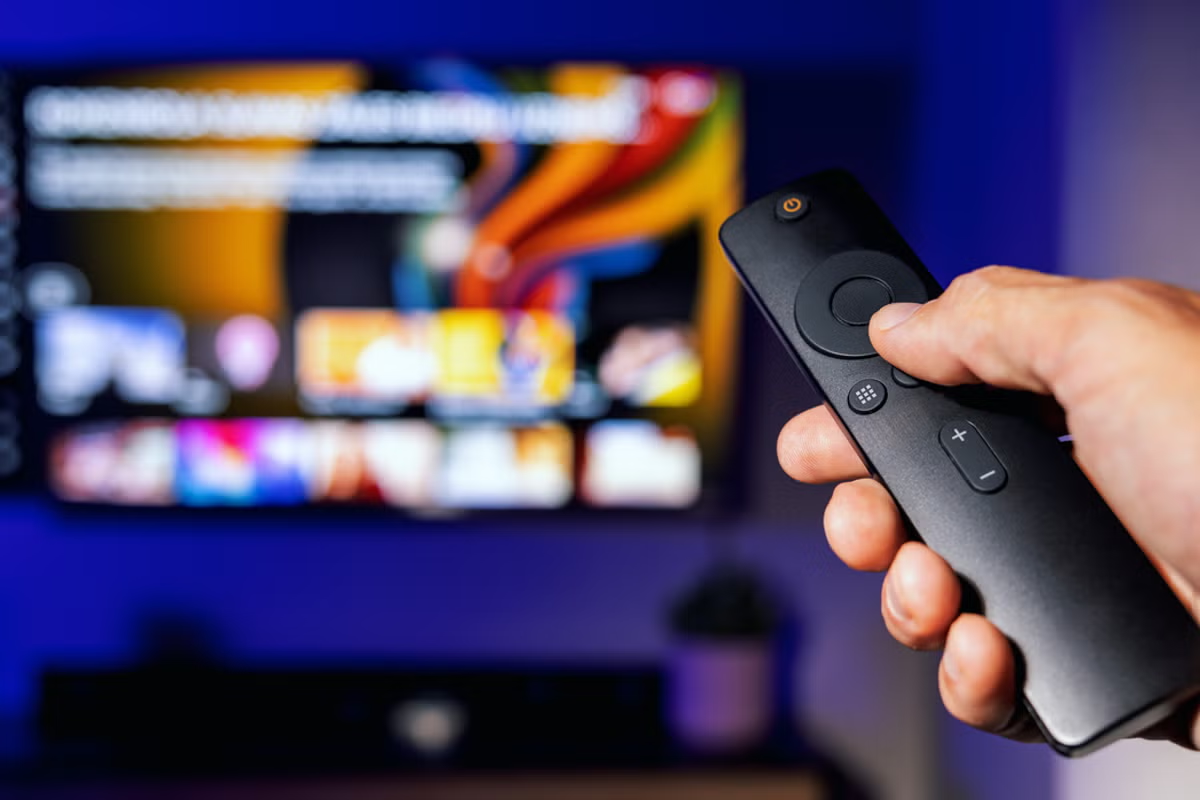
This is the promise of the so-called “dodgy stick”, the ubiquitous nickname for modified – or, to use the more technical term, “jailbroken” – versions of easy-to-use devices such as Amazon Fire Sticks that come pre-loaded with thousands of free channels and streaming libraries. Conduct a quick poll of your friends or colleagues, and you’ll probably discover that many of them already own a similar device. Perhaps they’re using it to follow their football team of choice without endless sports subscriptions, or to watch American shows before they land in the UK.
The only catch? It’s completely illegal. Using modified sticks to stream content that you’re not paying for violates the Fraud Act of 2006. Yet this doesn’t seem to put off the devotees. Otherwise law-abiding citizens who’d never dream of dabbling in other illicit behaviour seem perfectly happy to break the rules when it comes to dodgy sticks. Some of them don’t even realise they’re doing anything wrong.
Recent stats from The Athletic found that almost five million of us consumed pirated sports coverage over the past six months, with 31 per cent admitting to using a modified Fire TV Stick or similar to do so. These devices have become so widespread that earlier this year, Sky’s chief operating officer Nick Herm claimed that their use accounted for “probably about half of the piracy” in the UK, and argued that “tech giants” such as Amazon were failing to sufficiently “address some of those problems”. He suggested it is costing the broadcasting industry hundreds of millions of dollars in lost revenue.
It’s almost as if owning a dodgy stick has become the ultimate “acceptable” crime, infiltrating middle-class homes. Eva*, 34, is a recent convert. She and her partner sourced one from a friend after they worked out the exact amount they’d been spending on streaming as part of their mortgage application process. “It was ridiculous how much we were paying each month, especially for sports,” she says. “It wasn’t worth it for a couple of games or boxing matches.” It is £80 for a year’s use of the illegal option, or spend just under that amount per month on the legitimate versions? It was an easy decision – especially when it meant they had unlimited access to new episodes of Below Deck.
The platform she uses boasts sports, TV series and films – even ambient footage of virtual log fires, just in time for Christmas festivities. Sometimes they have to faff around with the language settings when their new favourite show suddenly defaults to a French dub, but it’s a sacrifice they’re willing to make for the savings. That they might be eating away at the potential profits of a mega media corporation “hasn’t crossed [their] minds” and the fact that “everybody is doing it” makes it feel less illicit.
So how does it work? What makes a dodgy stick so, well, dodgy? When a device is “jailbroken”, its inbuilt protections have been bypassed, explains ethical hacker Rob Shapland. Once this has been done, pirates can load it up with their own apps from outside the official app stores, which allow viewers to access illegal content in a process known as “sideloading”.
Sellers tend to rely on word-of-mouth recommendations. “It’s mates bragging down the pub, saying, ‘I’ve got access to this’, and it feels like there’s no downside,” Shapland says. WhatsApp groups, social media accounts and websites will pop up offering the devices, too.
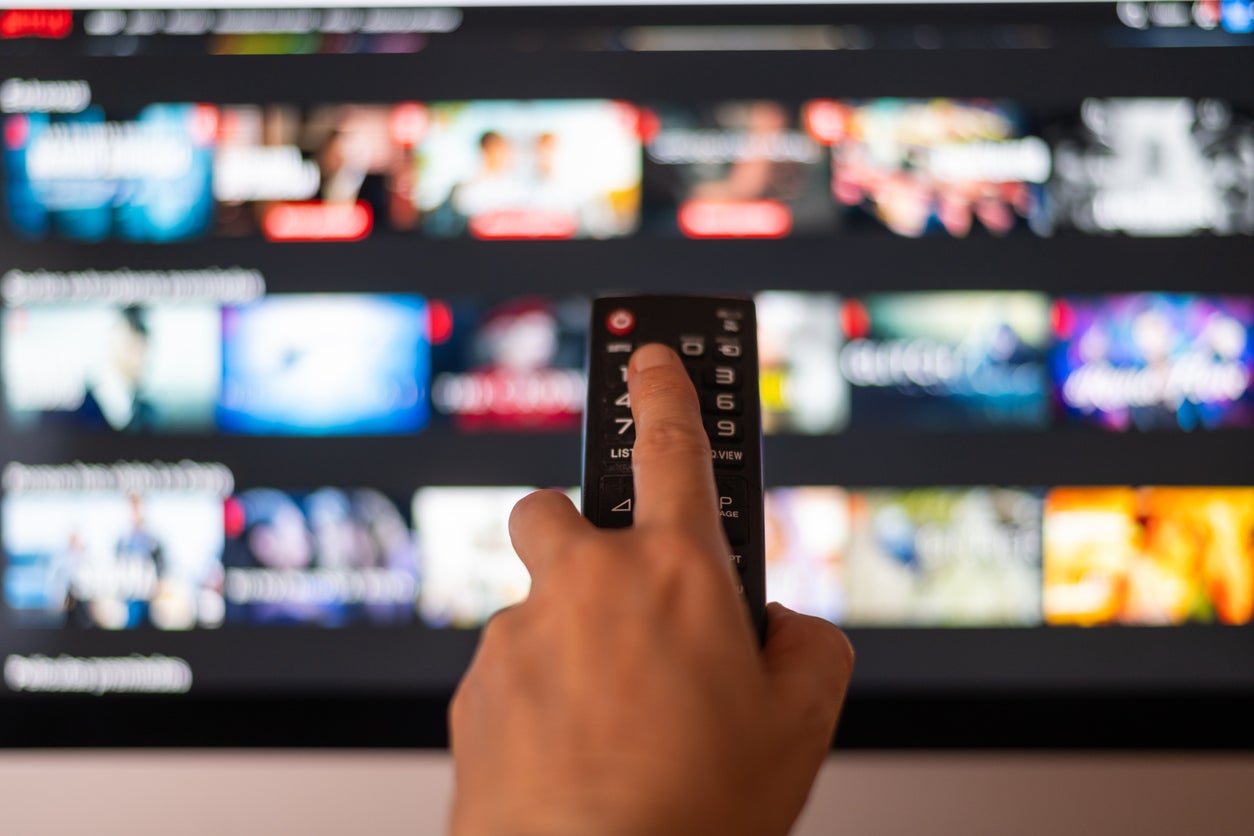
open image in gallery
‘Jailbroken’ devices can be packed with illegal streaming apps – and with malware (Getty Images)
The illicit appeal is obvious: the pirates have taken something that the average consumer already knows how to use (like a Fire TV Stick, for example) and packed it with a whole load of shiny streaming options, at what seems like a great price. Once, anyone hoping to access an illegal stream would have had to poke around in the murky recesses of the internet to try and find one. With one of these devices, though, they can simply plug and play.
It’s so straightforward that it might not necessarily feel like breaking the law. Using a modified stick “becomes an easy route into illegal streaming”, says David Ingham, head of media, entertainment and sport at tech consultancy Cognizant. The average customer, he suggests, “and even some of the middlemen selling these devices, [does] not realise that they are stepping into a world of piracy, fraud and the theft of intellectual property. They think they are simply buying or passing on a low-cost gadget”.
And as for those who do know that they’re doing something dubious? “The simple fact of the matter is that this is a fraud and everyone since time immemorial has tended to look at fraud as a victimless crime against corporations,” says Kieron Sharp, chairman at the anti-piracy organisation Federation Against Copyright Theft (FACT). He suggests that the popularity of modified sticks is essentially the modern equivalent of picking up pirated videos or DVDs back in the day. “People would jump at the chance of buying them very cheaply regardless of the fact that they were stolen.”
The cost of living crisis has certainly squeezed the nation’s disposable income; couple this with rising streaming subscription prices, and you have a landscape where it’s easy for users to “justify the infraction as acceptable”, as Ingham puts it. This year alone, Netflix has upped the cost of its standard ad-free subscription in the UK to £12.99 a month, marking an increase of 18 per cent; Disney+ has hiked its standard rates by £1 a month, and so has Apple TV (a subscription for the latter now costs twice as much as it did when it launched in November 2019).
This is a fraud and everyone since time immemorial has tended to look at fraud as a victimless crime against corporations
Kieron Sharp, FACT
But investing in a device that seems like a bargain might turn out to cause users a whole load of pain in the long run. As well as coming pre-loaded with streaming apps, the chances are that your dodgy stick will also be riddled with viruses and malware. A recent survey from BeStreamWise found that 65 per cent of people who’ve watched content illegally over the past 12 months have had a security scare while doing so. “If you think about the morals of the people that are making the sticks, they’re obviously breaking the rules already,” says Shapland. “It’s not a very big step to then put software on there that allows [them] to access someone’s online banking account”.
Sometimes, Shapland adds, the device might act as a keylogger, recording your passwords and personal details and then sending them on to the criminals. According to a survey from BeStreamWise, almost four in 10 illegal streamers have suffered financial losses after being targeted by fraudsters; the average amount stolen was £1,680, but one in 10 respondents ended up losing more than £5,000.
Once you’ve entered your payment details, fraudsters might activate “set and forget” payments, and “just keep billing”, says Gareth Sutcliffe, the author of a recent report into video piracy from media and tech consultancy Enders Analysis. Or they might steer users towards cryptocurrencies through dodgy sideloaded apps, or sell your details to a third party.
So, when you’re handing over, say, £20 for your dodgy stick, you’re potentially inviting organised crime groups into the comfort of your own living room. “The idea, really, is [for criminals] to be able to put their tentacles right into the average consumer”, who often thinks that “they’ve got a good deal, when in fact they’ve opened the hen house door to the fox”, says Sutcliffe. And your money could end up funding other types of organised crime activity, too.

open image in gallery
Illegal streaming is thought to be costing sports broadcasters millions of dollars (Getty Images/iStockphoto)
But Sutcliffe reckons that the rise of the dodgy stick is not just about arbitrage, or “getting something for less than you would pay for if you were going through a legitimate service”. It’s also a question of innovation. “If the broadcasters were innovating more, providing different sets of packages, a wider range of services, would that be something that perhaps would ameliorate the risk from piracy?” he asks. “You have to argue: ‘possibly, yes.’”
Sky’s chief operating officer has estimated that piracy is costing sports broadcasting companies hundreds of millions of dollars. Again, it’s easy for illegal streamers to tell themselves that football, for example, is already a wildly lucrative industry, and that broadcasters (and the players) don’t need the extra money. But Sharp tells me that “the Premier League would not be attracting the best players in the world, would not be seen as the best league in the world, would not be the most watched sporting event in the world if people weren’t paying for it in the first place”.
The same goes for TV shows and films. Most of these projects cost vast amounts of money, Sharp notes, and plenty of them “don’t actually make a profit. None of those things would happen if people weren’t paying [for content]”. And when broadcasters cut back, it’s the ordinary workers who feel the impact. “There’s only a few people getting millions – the rest are all being paid normal wages as sound technicians or set designers or whatever it might be,” he says.
A crackdown is underway. Over the past couple of years, a handful of sellers have been sentenced to between two and four years in prison on copyright and fraud charges. And in recent weeks, you might have seen headlines about a spate of raids targeting 17 areas across the UK. When law enforcement operatives raid suppliers, they can typically access their customer databases and find out who is using the devices, Sharp explains.
But, he says, the emphasis is usually on the suppliers. “Our intention is never to criminalise everybody within the whole ecosystem,” he says, noting that the users are “people we would like to see as being legitimate players. They’re obviously film fans, football fans – we want to see them paying for the original content in its best format, and to save themselves any potential future heartache if they were to fall foul of the law”.
Even if this particular Fire Stick diminishes in terms of its risk to the public and to content owners, others will come up in its place
Gareth Sutcliffe, Enders Analysis
Amazon has also stepped up its efforts. Last month, the company, which has always maintained that it “encourages the responsible consumption of content”, confirmed that it is in the process of blocking pirate apps on its Fire TV Sticks. This is currently in progress in Germany and France and is set to expand globally. “We’ll now block apps identified as providing access to pirated content, including those downloaded from outside our app store,” a spokesperson said. And the latest Fire TV Stick model, the 4K Select, uses a new operating system called Vega, which doesn’t allow sideloading, rather than the previous Android software.
This won’t necessarily wipe out the pirates, who are pretty nifty when it comes to innovating and adapting. “Even if this particular Fire Stick diminishes in terms of its risk to the public and to content owners, others will come up in its place,” says Sutcliffe. “It’s always like whack-a-mole.”
And if you’re still willing to break the law to get your streaming fix? Just don’t kid yourself that you’re making some big anti-establishment gesture. “It’s very easy to think of it as, ‘I’m just sticking a finger up to the man,’” Shapland says. “But you end up screwing yourself over instead.”
*Name has been changed for anonymity
Stay ahead of the curve with our weekly guide to the latest trends, fashion, relationships and more
Stay ahead of the curve with our weekly guide to the latest trends, fashion, relationships and more
Stay ahead of the curve with our weekly guide to the latest trends, fashion, relationships and more
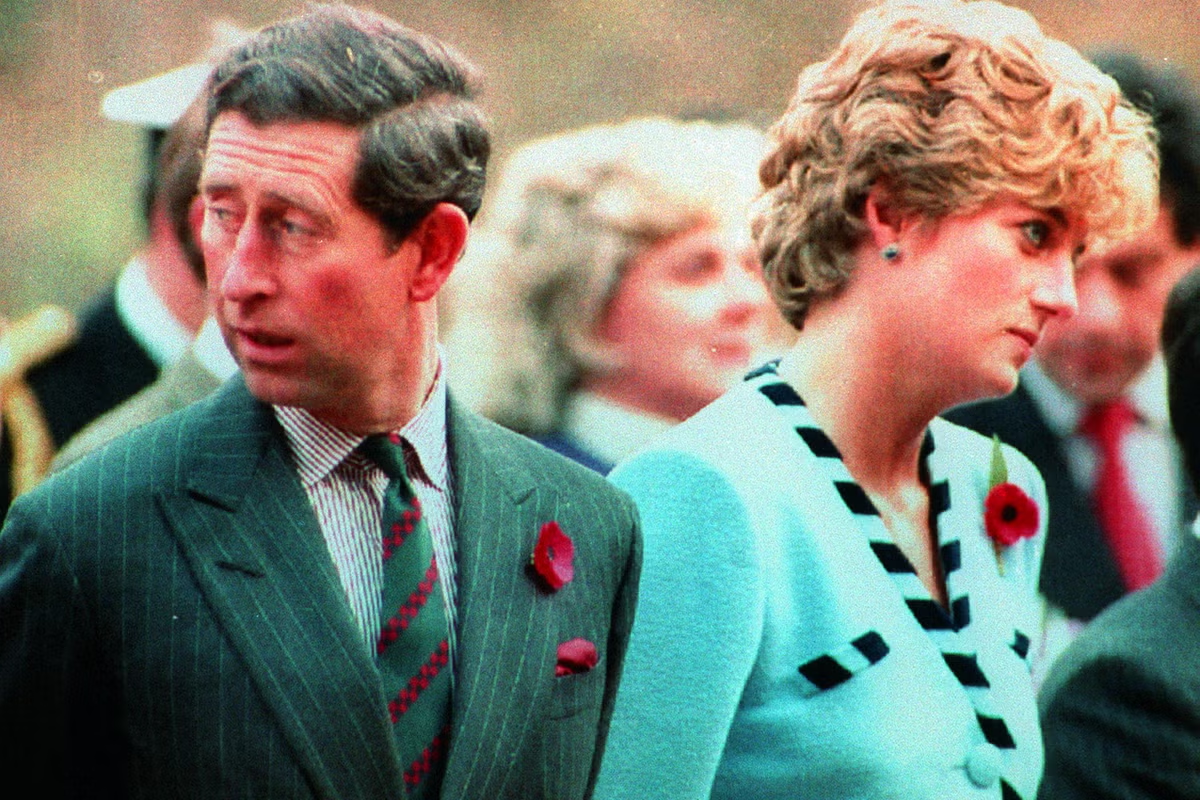
Diana, Princess of Wales, was considered “far more” adept at navigating the media landscape than Charles, then Prince of Wales, Irish officials were informed three decades ago.
Newly declassified documents from the National Archives of Ireland reveal that her staff were actively engaged in “upstaging” St James’ Palace during their highly publicised separation.
These files also shed light on Charles’s two-day visit to Ireland in June 1995, following his 1992 split from Diana.
His inner circle reportedly viewed the extensive coverage of this trip as a crucial component of a “long-term public relations strategy to rehabilitate the Prince in the eyes of the British public” in the wake of their high-profile divorce.
Charles’s press team, led by press secretary Alan Percival and his successor Sandy Henney, had reported to Irish officials that they felt the visit to Ireland was “the best public outing the Prince has had in a very long time”.
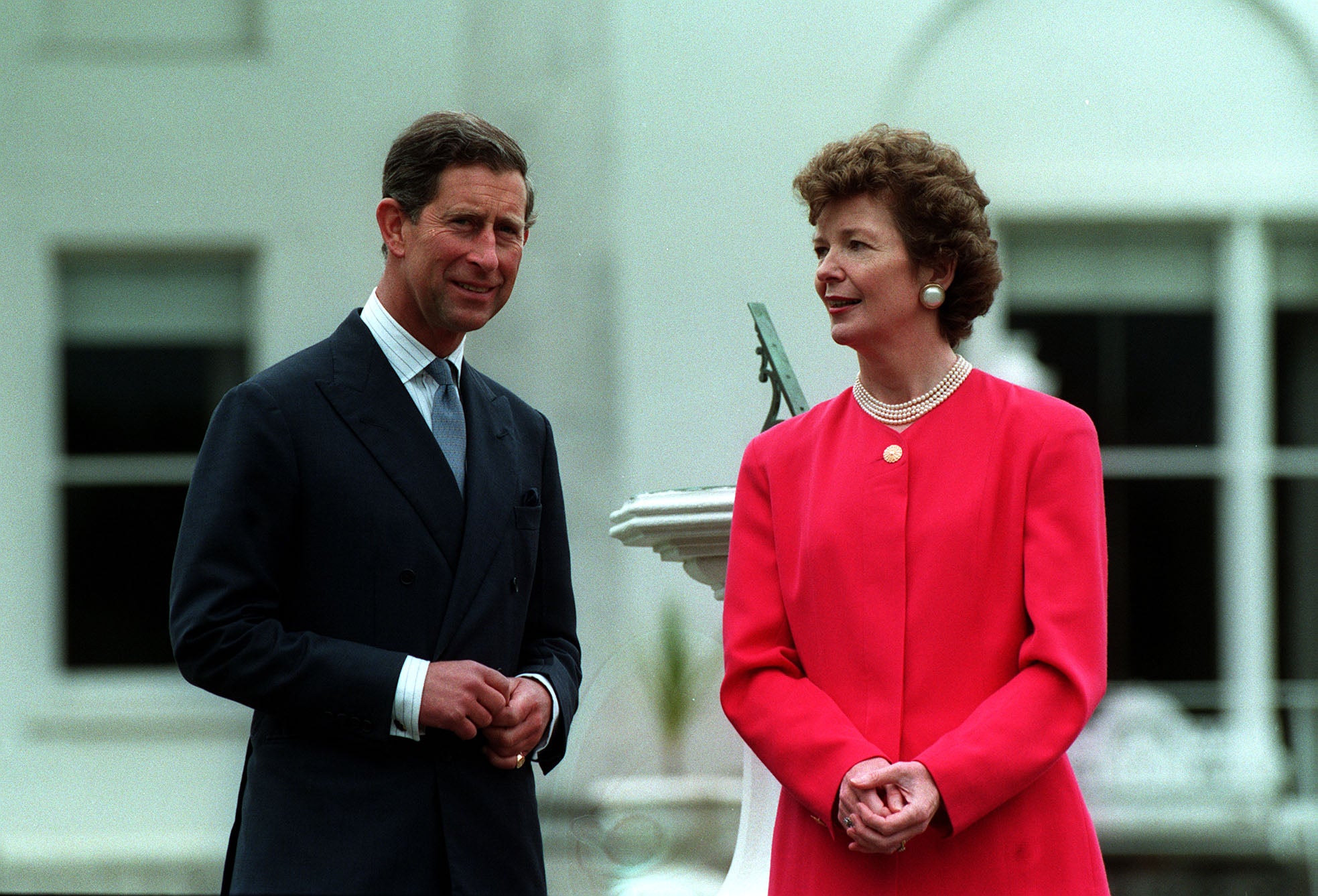 Charles, then the Prince of Wales, conducted a two-day visit to Ireland while Prince of Wales in June 1995 (Martin Keene/PA Wire)
Ms Henney was described in the Irish Department of Foreign Affairs’ document as “fiercely loyal” to Charles and “alive to every opportunity to advance his cause”.
A Department of Foreign Affairs note shows officials were unsure if she was joking when she suggested that Diana may also want to visit Ireland.
“Henney (who would have been less aware of the political dimension than the more restrained Percival) told me that if she had any say in it the Prince would be here again before the summer was out,” according to the document.
“She also remarked that if practice to date was any guide we could shortly expect an approach from Princess Diana!”
Department of Foreign Affairs official Joe Hayes added: “I took this as a joke until she repeated it and assured me that in the media battle between the two, the Princess was by far the more predatory and skilled and her staff devoted a great deal of time to finding ways and means of upstaging St James’ Palace.”
Charles’ officials agreed with the Irish diplomats that coverage of the visit in the UK was, while positive, “relatively light” compared with that in Ireland.
It was noted by officials on both sides of the Irish Sea that, in contrast with the blanket coverage in Ireland, the coverage of the visit in the UK was “though positive, relatively light” in tone.
This article is based on documents contained in the file labelled 2025/124/160 in the National Archives of Ireland.
LIFESTYLE
King Charles and Prince William ‘could visit the US next year’ as UK aims to finalise trade deal


Get the free Morning Headlines email for news from our reporters across the world
Sign up to our free Morning Headlines email
Sign up to our free Morning Headlines email

The King and the Prince of Wales are reportedly planning separate visits to the United States in 2026, a year that will mark the 250th anniversary of American independence.
Advanced discussions for a trip by the King are said to be under way, while Prince William is expected to visit during the Fifa World Cup later that year, according to reports in The Times.
These potential royal engagements would coincide with ongoing UK trade deal negotiations and would be the first by a reigning British monarch since 2007.

open image in gallery
(Getty)
But it would also come as the UK continues efforts to finalise a trade deal with the US, after Washington reportedly paused the tech partnership announced during President Donald Trump’s state visit to the UK in September.
Earlier in December, Downing Street said the government was still in “active conversations” with the US on the tech deal.
But the Prime Minister’s spokesman acknowledged that “negotiations of this kind are never straightforward”.

open image in gallery
(Yui Mok/PA Wire)
Reports suggested US negotiators had become frustrated by slow progress in agreeing a wider trade deal announced in May 2025, when Britain avoided the 20 per cent tariffs Mr Trump imposed on much of the rest of the world.
Britain’s digital services tax, opposed by Mr Trump’s big tech backers, and the sensitive issue of greater access to British markets for US farmers, are thought to be key sticking points.
The Times suggested the King’s visit to the US could take place in April.
William, who is president of the Football Association, could then visit during the World Cup being held in the US, Canada and Mexico between June and July.

Stay ahead of the curve with our weekly guide to the latest trends, fashion, relationships and more
Stay ahead of the curve with our weekly guide to the latest trends, fashion, relationships and more
Stay ahead of the curve with our weekly guide to the latest trends, fashion, relationships and more
The iconic New Year’s Eve ball drop is getting an encore in 2026 — but this time on the Fourth of July.
Tourists and New York City locals will take over the streets of Times Square at midnight on January 1, to watch the multi-colored LED crystal ball, also known as the Constellation Ball, drop, in celebration of the new year.
America will also be marking a major milestone in 2026 with the 250th anniversary of the signing of the Declaration of Independence. So America250 — the nonpartisan organization that commemorates the 250th anniversary — is launching a second ball drop July 3.
But a preview will be taking place in just a few days in Times Square.
At 12:04 a.m. on January 1 — four minutes after the regular New Year’s Eve Ball drop — the Times Square Ball will be relit in red, white, and blue, with an America250 design and rise above the illuminated “2026” numbers.
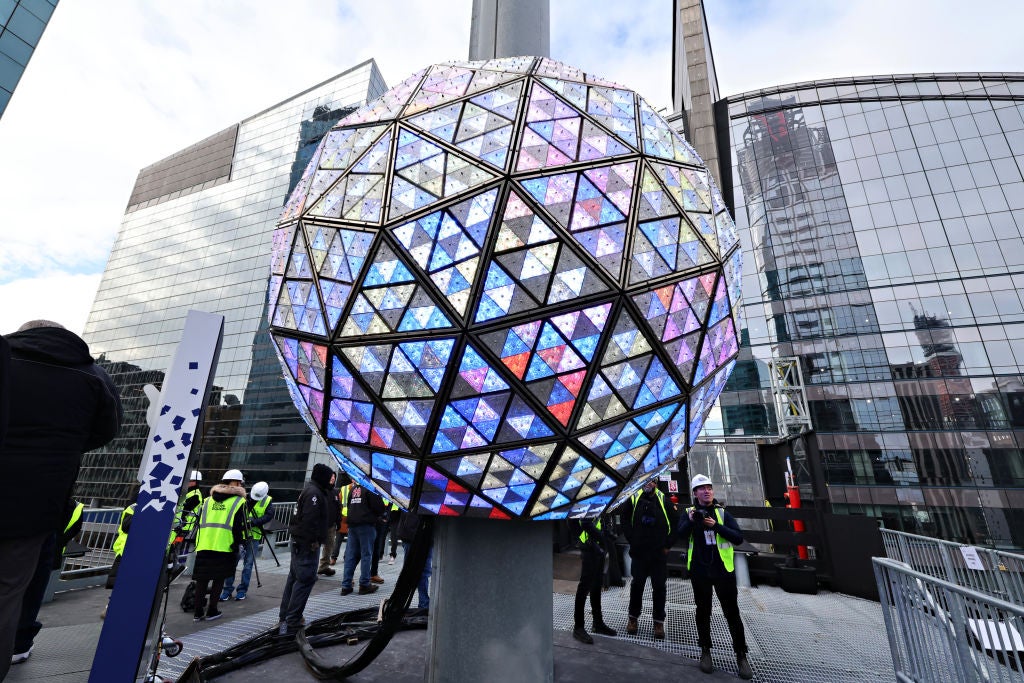 Another ball drop is happening in New York City in July for America’s 250th birthday (Getty Images)
There will also be “a first-ever post-midnight release of 2,000 pounds of red, white, and blue confetti, and a dynamic pyro finale set to Ray Charles’ rendition of ‘America the Beautiful,’” as noted by America250.
New York City residents and locals can return to Times Square July 3, when the iconic ball will drop again, right before midnight strikes on the Fourth of July.
“America250 will kick off the Semiquincentennial year on New Year’s Eve in Times Square — the most watched celebration on the planet — signaling that the largest and most inspiring celebration and commemoration in our nation’s history is underway in 2026,” Rosie Rios, Chair of America250, said in a statement. “Our goal is to inspire all 350 million Americans to join in this moment to celebrate our country.”
However, according to a city hall spokesperson, the details for the second ball drop in July are still being figured out. “As the city continues to work on the details, nothing is finalized, and conversations are ongoing,” the spokesperson told the New York Post.
Still, Rios has teased that America250 has big plans in store to honor the signing of the Declaration of Independence.
“I’m telling you right now, whatever you’re imagining, it’s going to be much more than that,” he told the Associated Press. “It’s going to be one for the ages, the most inspirational celebration this country and maybe the world has ever seen.”

Sign up to our free Living Well email for advice on living a happier, healthier and longer life
Live your life healthier and happier with our free weekly Living Well newsletter
Live your life healthier and happier with our free weekly Living Well newsletter
Financial concerns have surpassed health as the primary motivation for Britons embarking on Dry January, a charity has revealed.
Alcohol Change UK reports that a staggering 17.5 million people intend to begin the new year with a month-long abstinence from alcohol.
While 21 per cent cited saving money as their top reason, closely followed by 20 per cent prioritising improved health, weight loss motivated 15 per cent of participants.
Additionally, 11 per cent of drinkers expressed a desire to enhance their mental health and wellbeing or boost their physical fitness.
Alcohol Change UK’s chief executive Dr Richard Piper said: “Given the current pressure on our personal finances, we’re not surprised to see that saving money is the top motivator for taking a break from alcohol in January.
“People are often shocked to hear estimates of what an average drinker spends on alcohol, which our research suggests is more than £62,000 over a lifetime – that’s a lot of holidays, more than a brand new car or a big chunk off our mortgage.
“Even on a day-to-day basis, our drinking habits add up, and we can easily find ourselves spending more money on alcohol than we’d like – often without us really noticing until we step back and take a break.
“In fact, many members of our community who are actively changing their relationship with alcohol report being surprised by how much money they’re saving in a short period of time, or in other words just how much they were spending on booze beforehand.”
 11 per cent of drinkers expressed a desire to enhance their mental health and wellbeing or boost their physical fitness (iStock)
A total of £1.55 billion has been saved since 2018 by drinkers who used the charity’s Try Dry app along with other online tools and groups to take part in Dry January, researchers found.
A closer look at figures from the app which tracks units drunk, calories and money saved while enabling drinkers to log dry days and get tips, found that drinkers also cut their alcohol consumption by 258 million units.
This is around 129 million pints of average strength beer or medium glasses of wine which amounts to approximately two units per drink.
They also avoided 16.2 billion empty calories – which is equivalent to around 80 million 200-calorie chocolate bars.
Some 31 per cent of UK drinkers said they had concerns about the long-term damage their alcohol consumption might be doing to them, a survey of 2,000 people carried out by Censuswide also found.
They also felt that alcohol may be negatively affecting their appearance, fitness, sleep and physical health and 52 per cent of drinkers said they had taken steps to manage their intake in the past year.
Public health minister Ashley Dalton said: “It’s fantastic that millions of people will be taking positive steps towards better health and wellbeing in the New Year.
“As we work to build a healthier nation through our 10 Year Health Plan, initiatives like the Dry January challenge remind us that prevention starts with the choices we make every day, and the evidence shows it can lead to lasting changes.
“Whether it’s improving sleep, boosting mental health or saving money, taking a break from alcohol can make a real difference to our lives.”
Regularly drinking more than 14 units of alcohol a week risks damaging your health, the NHS website states.
The number of units in a drink is based on the size of the drink and its alcohol strength.
LIFESTYLE
Heineken Honours Omoyemi Akerele’s Earthshot Prize Win with an Evening Dedicated to Sustainable Impact

As part of its ongoing commitment to sustainability and purpose-led partnerships, Heineken hosted an intimate dinner on Tuesday, December 16, 2025, in honour of Omoyemi Akerele’s Earthshot Prize win and the Heineken Lagos Fashion Week team. The gathering took place at Vici, Victoria Island, Lagos, bringing together members of the Heineken Lagos Fashion Week team, the Heineken team, and close friends and associates of Omoyemi Akerele.
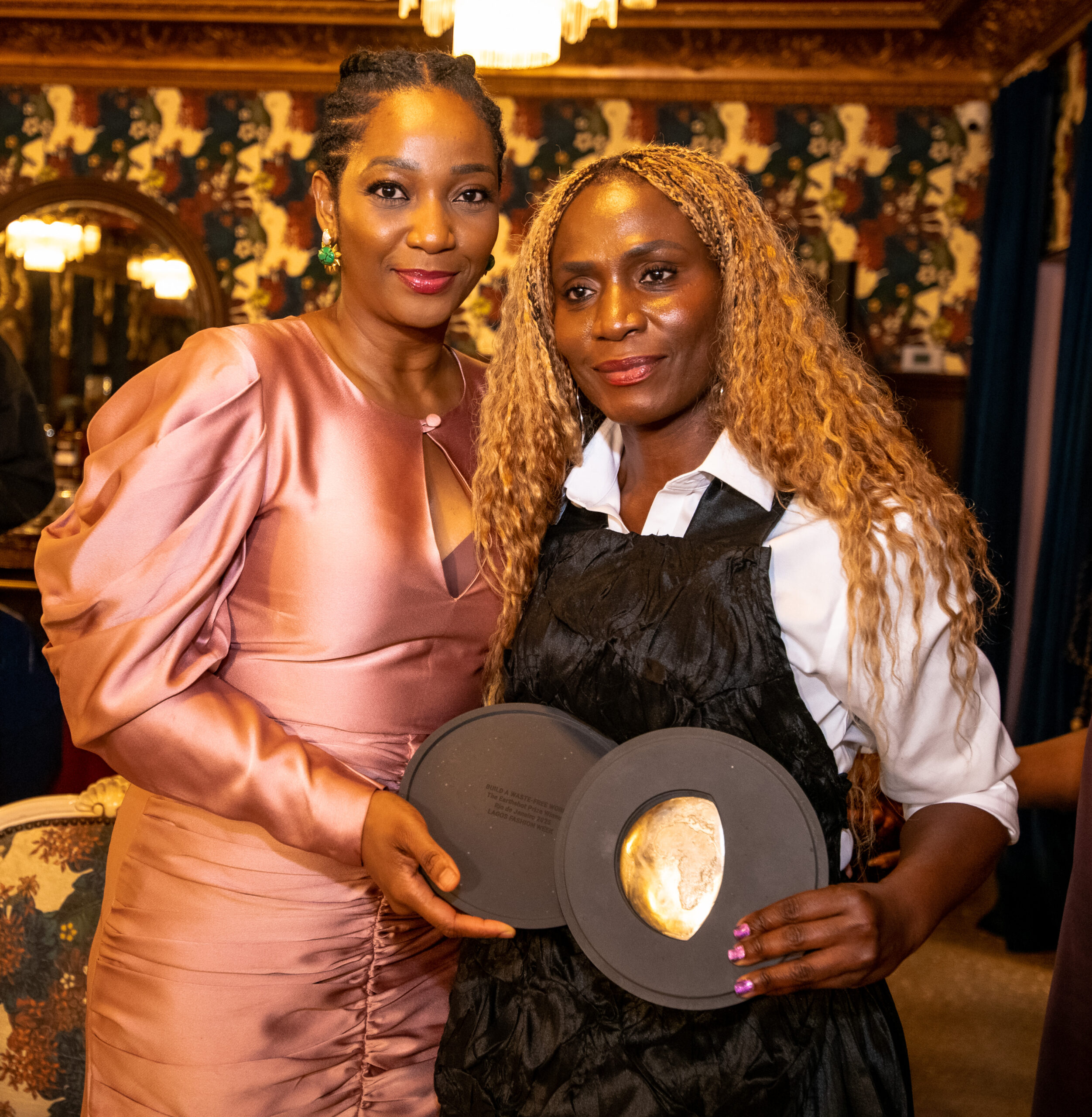
The evening offered a relaxed setting to celebrate the milestone alongside those who have been part of the journey and supported the work behind the achievement.
The Earthshot Prize recognises solutions that protect and restore the planet, and Omoyemi Akerele’s win stands as a powerful example of how creative industries can contribute meaningfully to environmental progress. Through Heineken Lagos Fashion Week, she has championed responsible production, circular design, and sustainable practices, helping to shift conversations around waste and ethics in African fashion.

For Heineken, the evening reflected a shared commitment to sustainability as a driver of long-term impact. The brand’s partnership with Lagos Fashion Week is rooted in a belief that progress is built through collaboration — supporting platforms that not only celebrate creativity, but also encourage innovation that is mindful of people and the planet.
By honouring Omoyemi Akerele and the Lagos Fashion Week team, Heineken reinforced its dedication to championing initiatives that align with its sustainability ambitions; from reducing waste and promoting circularity, to supporting partners who are building more responsible industries.
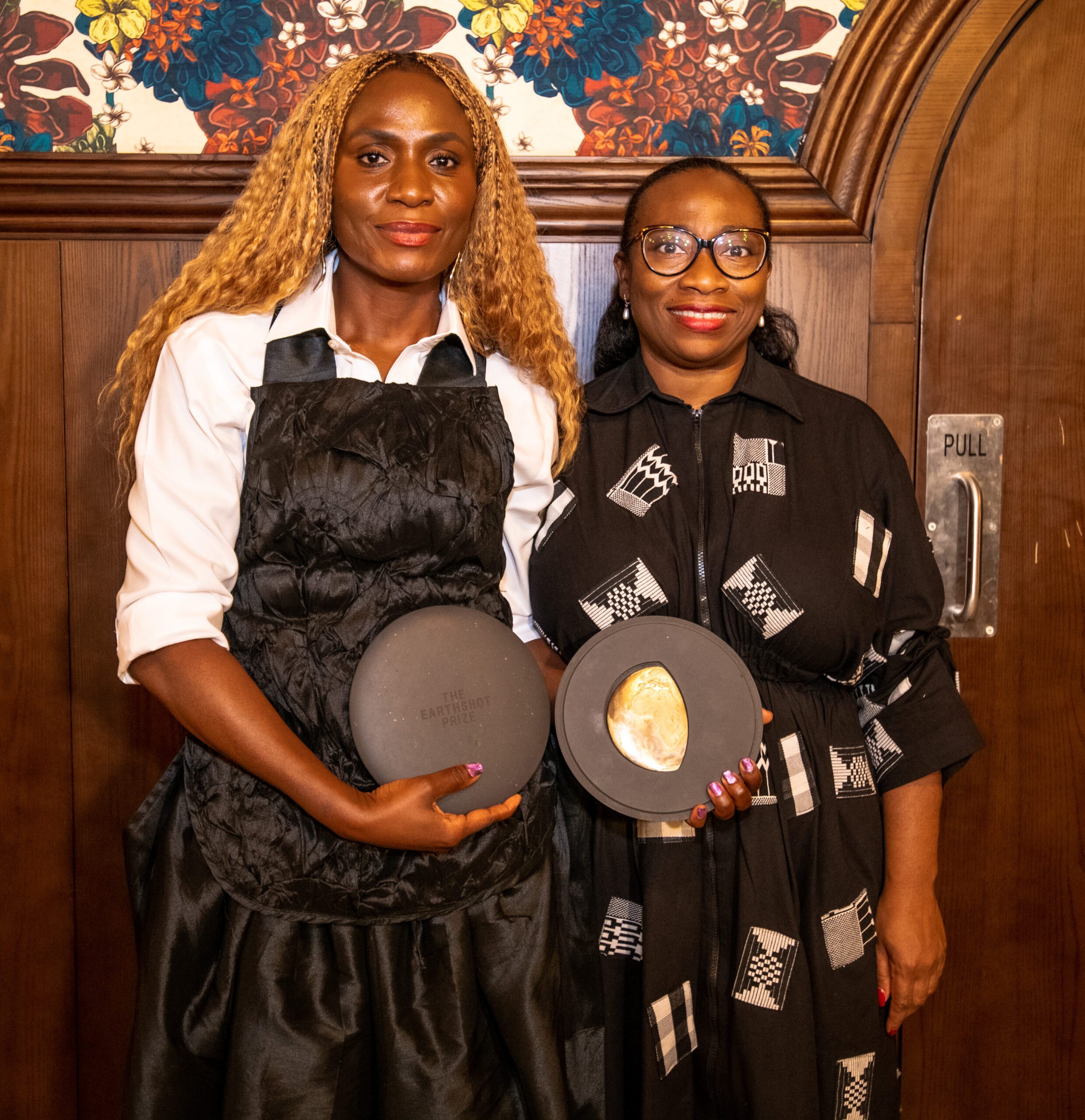
The evening served as a reminder that sustainability is not a standalone effort, but a collective journey. One that thrives when global brands and local platforms come together to create lasting change.
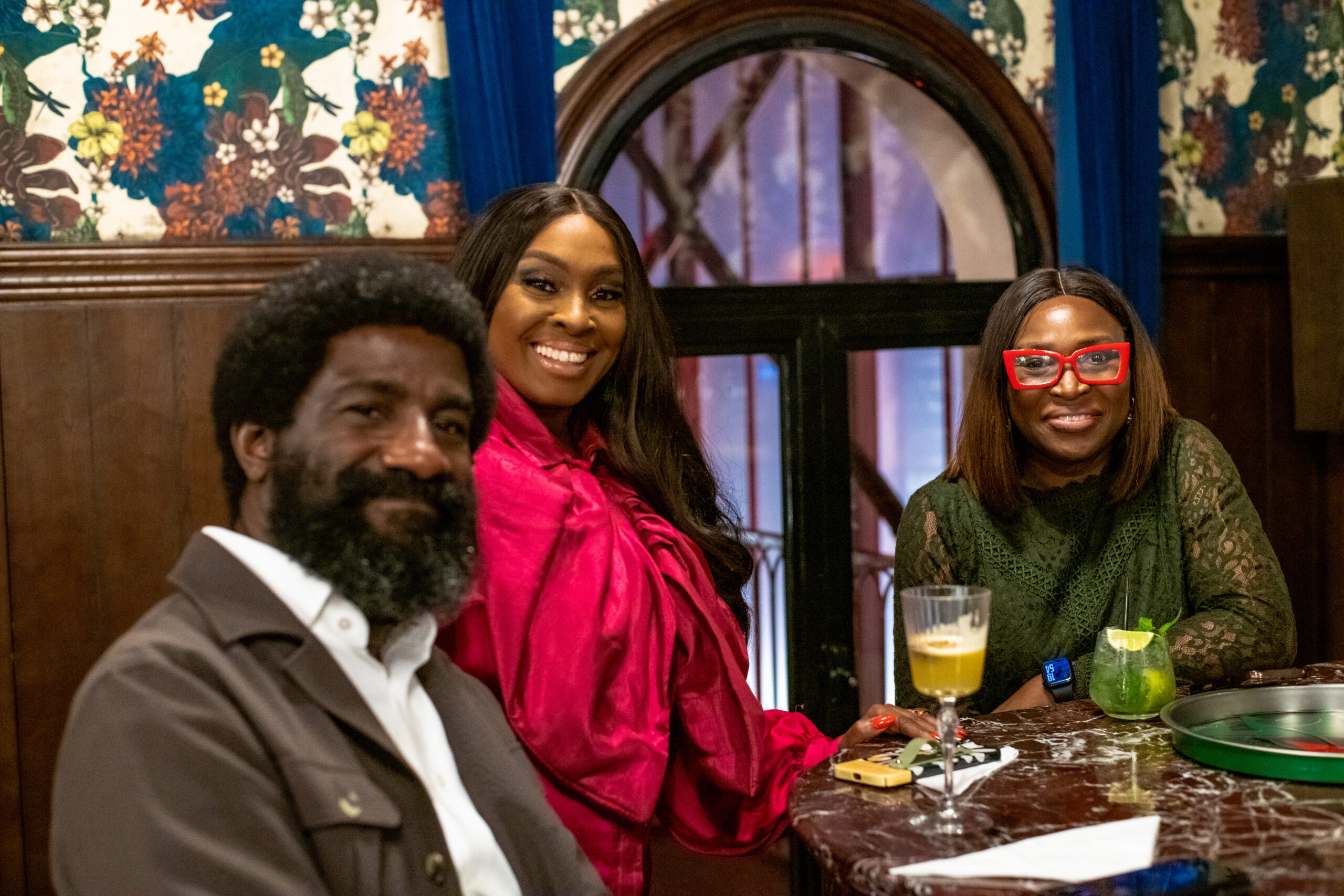


Sponsored Content

Stay ahead of the curve with our weekly guide to the latest trends, fashion, relationships and more
Stay ahead of the curve with our weekly guide to the latest trends, fashion, relationships and more
Stay ahead of the curve with our weekly guide to the latest trends, fashion, relationships and more
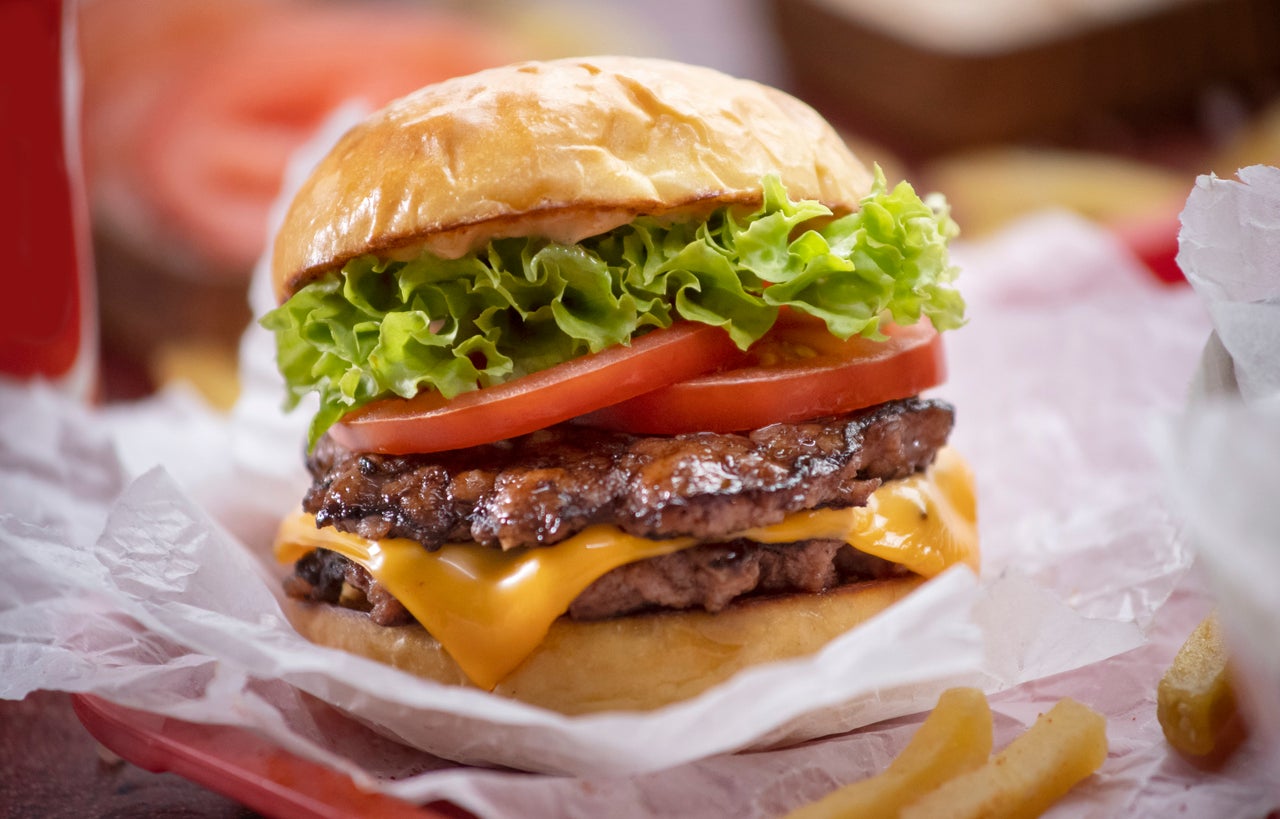
A fan favorite burger spot, Jack in the Box, has closed over 70 restaurants this year, with the potential for even more stores to follow in the days to come.
Earlier this year, the fast food franchise announced plans to permanently close 150 to 200 underperforming restaurants across the U.S., according to a press release. The move is part of the brand’s “Jack on Track” plan, which looked to improve the company’s finances.
Jack in the Box said in April that between then and December 31, it would close 80 to 120 stores. The company has since followed through, shuttering a total of 71 restaurants as part of the “Jack on Track” plan.
However, as the company has yet to hit its target number of closed restaurants, more shops could shut within the next few days.
The Independent has contacted a representative for Jack in the Box for comment.
open image in gallery
Jack in the Box closed 71 restaurants between April and December (Getty Images)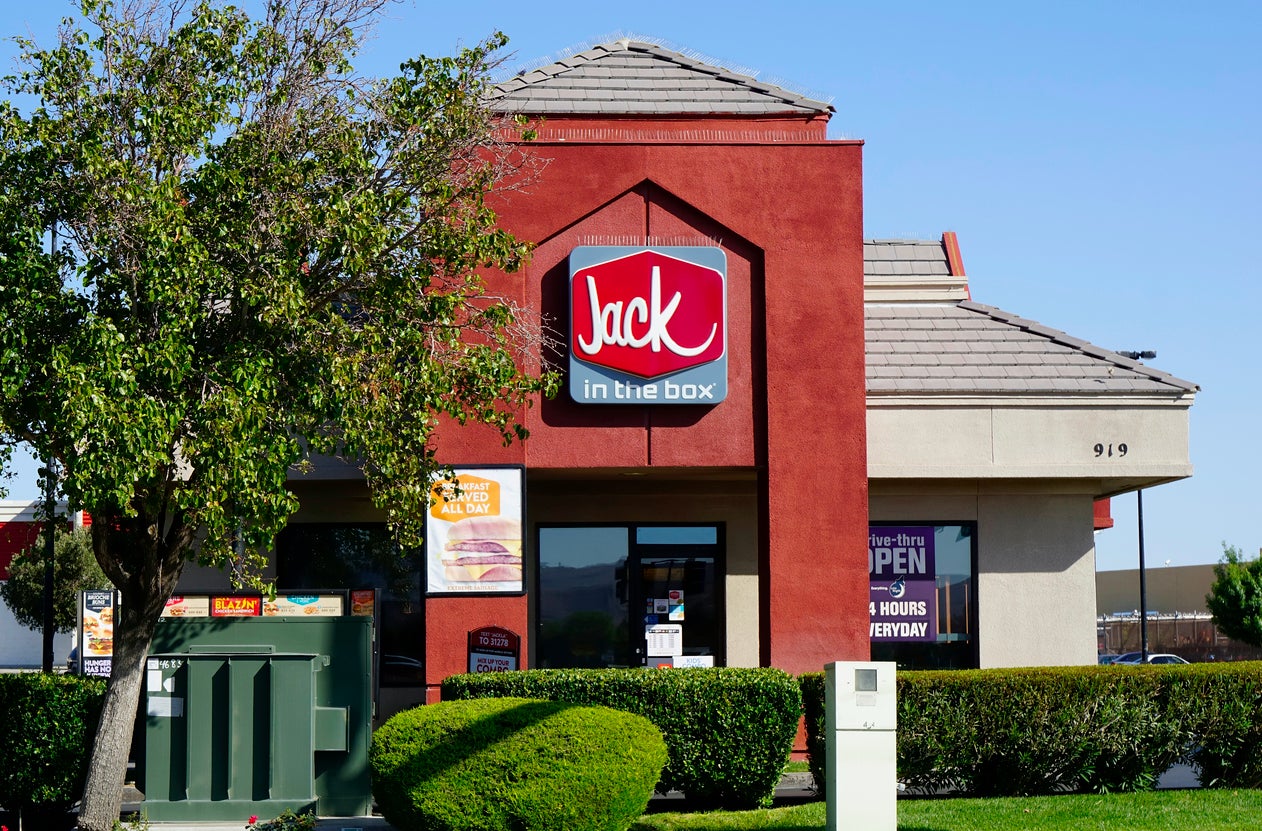
open image in gallery
Jack in the Box said in April that it plan to close up to 120 restaurants by the end of 2025 (Getty Images)
At the time of the April announcement, Jack in the Box was operating 2,200 locations across 22 states, most of which are located on the West Coast. California alone had 942 restaurants, making up 43 percent of the company’s total.
When announcing the “Jack on Track” plan in the April press release, the company said that once its restaurant closure program was completed, “Jack in the Box expects to deliver consistent, positive net unit growth, helped by the strong performance of new markets and tremendous whitespace opportunities.”
“In my time thus far as CEO, I have worked quickly with our teams to conclude that Jack in the Box operates at its best, and maximizes shareholder return potential, within a simplified and asset-light business model,” Lance Tucker, Chief Executive Officer at Jack in the Box, said in a statement.
“Our actions today focus on three main areas: addressing our balance sheet to accelerate cash flow and pay down debt, while preserving growth-oriented capital investments related to technology and restaurant reimage; closing underperforming restaurants to position ourselves for consistent net unit growth and competitive unit economics; and, an overall return to simplicity for the Jack in the Box business model and investor story.”
The franchise was also hoping to pay off $300 million in debt in the next two years from closing these locations.
Meanwhile, Jack in the Box isn’t the only chain riddled with issues.
Macy’s also announced plans to close 66 store locations and its iconic Fulton Street location in Brooklyn after 30 years by the end of 2025.

Dr. Yemi Olawaiye, Executive Director, Yeloto.
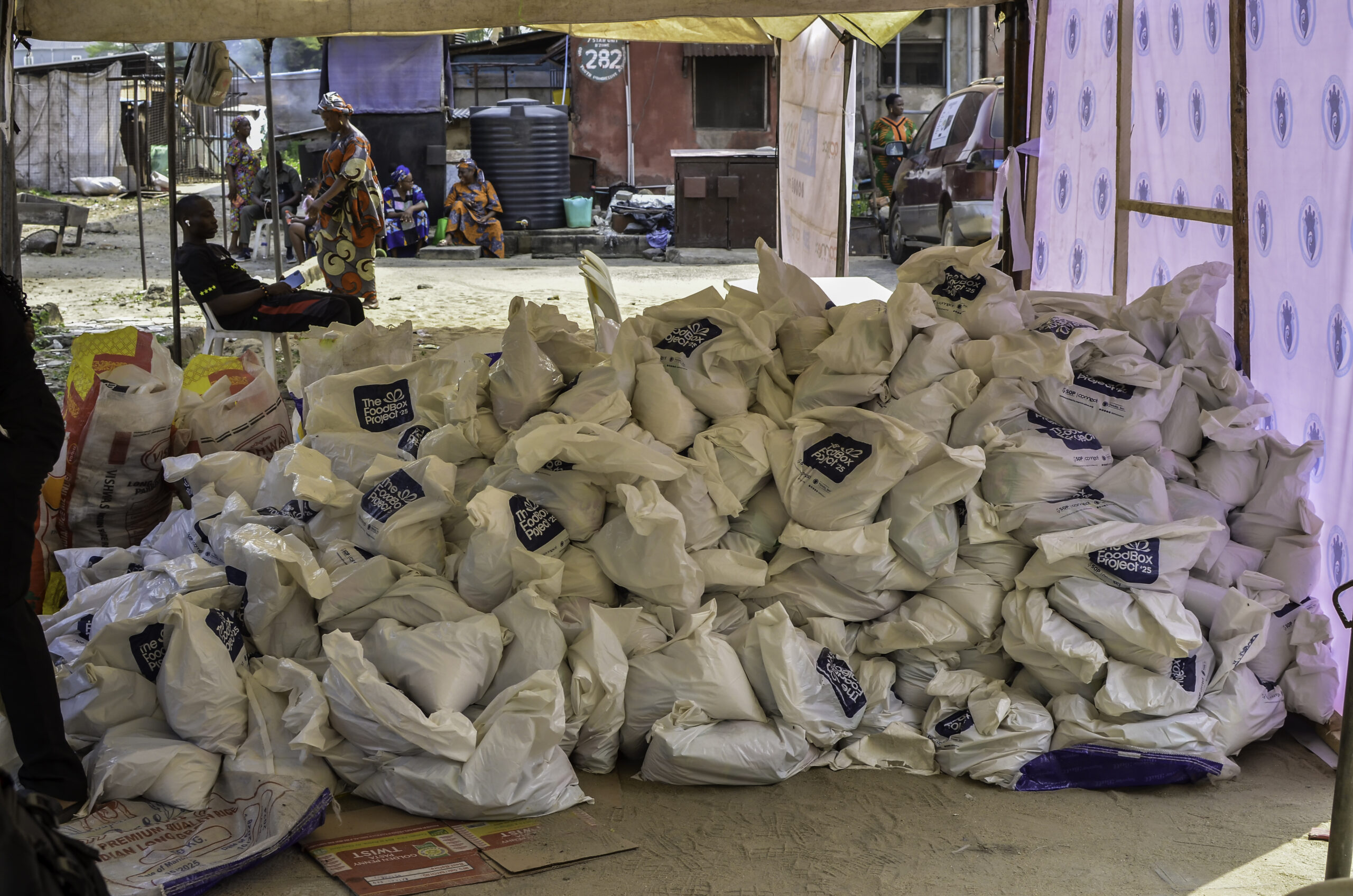
Last Saturday, The Food Box Project 2.0, a heartfelt initiative aimed at alleviating food insecurity and fostering community spirit, wrapped up triumphantly in Amuwo Odofin. Organized by Yeloto Incorporated, the event distributed essential food boxes to hundreds of families in need, while creating an atmosphere of unity and celebration through engaging games and generous cash gifts.
 In the spirit of festivities, the event drew participation from prominent figures, including, community leaders, renowned advocates of social welfare, and a notable Nollywood Actress, Rekiya Yusuf, known for her tireless efforts in grassroots empowerment.
 Their involvement underscored the project’s commitment to sustainable support and highlighted the importance of collaborative action in addressing local challenges.
Attendees enjoyed a vibrant day filled with interactive games that brought smiles to children and adults alike, alongside significant cash gifts that provided immediate relief to recipients.

“This project is more than just aid, it’s about restoring dignity and building lasting connections,” said Dr. Oluyemi Olawaiye, the Founder of Yeloto Inc.
Rekiya Yusuf added, “Seeing the joy on people’s faces reminds us why we do this; together, we can make a real difference.”
The Food Box Project 2.0 successfully reached over five hundred beneficiaries, providing nutritious staples to combat hunger amid economic pressures. Side attractions not only entertained but also encouraged community bonding, turning the event into a memorable gathering of hope and solidarity.
Yeloto extends heartfelt gratitude to all sponsors, volunteers, and participants who made this edition a resounding success. Plans are already underway for future iterations to expand impact across more communities.
The 2025 Food Box Project 2.0 was held in partnership with Symphony of Praise, a community based non governmental organization.
For more information:
Website: https://www.yeloto.org
Facebook: https://www.facebook.com/Yelotoacf
Instagram: https://instagram.com/yelotoinc
























Sponsored Content

Sign up to our free Living Well email for advice on living a happier, healthier and longer life
Live your life healthier and happier with our free weekly Living Well newsletter
Live your life healthier and happier with our free weekly Living Well newsletter
It’s the dead of winter and the only solace from the frigid cold is a giant coat and the feeling of the sun on your face before it sets before 5 p.m.
But before you step outside, experts warn that you still need to put on your sunscreen. Without it, people can get sunburned, even during the winter months – something one in five Americans said they did not know.
“UV radiation exposure is not related to the outside temperature and is present year-round,” Dr. Konstantinos Chouliaras, a board-certified surgical oncologist at Baptist MD Anderson Cancer Center, explained in a statement.
“Sunscreen is a must. Even on cloudy days, it’s important to apply as the UV rays can still reach our skin,” he said.
Ultraviolet – or UV – radiation from the sun is what leaves us at risk for skin cancer: the most common form of cancer in the U.S. that leads to thousands of deaths each year.

open image in gallery
People may be bundled up during the winter – but experts warn they’re still susceptible to dangerous sun damage. (AFP via Getty Images)
Invisible to the human eye, the rays are also what cause sunburns, wrinkles and skin aging.
Although UV levels are lower in the winter because the Earth tilts away from the sun, the radiation is still damaging and the Earth is actually closer in distance to the sun in the winter despite the tilt.
Rays from the sun hitting snow and ice in the winter can increase the intensity of the rays and your risk for skin damage – just like a day at the beach.
Clouds only reduce the UV levels by about 50 percent, according to the National institutes of Health Medline Plus Magazine.
With even the lowest UV levels on a scale between zero and 15 – with zero to two at the lowest – it takes only an hour to burn, Iowa Health Care notes.
“If you’re outdoors and can see your hand in front of your face, there is enough UV exposure to cause skin damage,” dermatologist Dr. Mona Gohara told Vogue, adding that the snow can reflect up to 80 percent of the sun’s rays back onto the skin.

open image in gallery
People should apply sunscreen of SPF 30 or higher before peak daylight hours, even during the winter, experts say. (AFP via Getty Images)
Experts say the best thing to do is to wear sunscreen between the peak daylight hours of 10 a.m. to 4 p.m. year-round.
The sunscreen should be water resistant and broad spectrum, meaning that it can protect your skin from any harmful UV rays, and should have a sun protection factor, or SPF, rating of 30 or higher.
An SPF rating of 30 reflects 97 percent of UVB rays, which are responsible for producing sunburns and cause the deadliest skin cancers.
Apply the sunscreen 20 minutes before heading outdoors and reapply it every two hours to stay shielded, the U.S. Environmental Protection Agency instructs.
Putting it on will protect from cancer and keep your skin looking younger.
“UV exposure is one of the primary causes of premature aging, leading to wrinkles, fine lines, and age spots. By applying sunscreen every two hours, even in winter, you contribute to maintaining youthful and healthy-looking skin,” says Dr. Krishna Gunturu, with the Hartford HealthCare Cancer Institute at The Hospital of Central Connecticut, said.

So, Christmas is done. You’ve survived the family gatherings, dodged the “when are you getting married?” questions, and consumed enough jollof rice to feed a small village. Your waistband is tight, your social battery is at 2%, and you’re staring at today, Boxing Day, wondering what on earth you’re supposed to do with yourself.
Well, friend, we’ve got you sorted. Whether you’re the type who wants to pretend the outside world doesn’t exist or you’re ready to reclaim your life, here’s your complete guide to making Boxing Day actually enjoyable.
Become One With Your Sofa
Let’s be real, after the chaos of Christmas Day, doing absolutely nothing sounds like a five-star holiday plan. And you know what? That’s completely valid.
The Full Laziness Package:
- Stay in your pyjamas until an ungodly hour (3 PM is perfectly acceptable)
- Watch that series you’ve been meaning to start since October
- Order takeaway because cooking is cancelled until further notice
- Ignore every single WhatsApp group chat notification
- Take strategic naps throughout the day (we call this “recovering”)
The beauty of Boxing Day is that there are zero expectations. Christmas was for showing up and being present. Boxing Day is for horizontal living and pretending your phone is broken.
The Great Escape
Had enough of family time? Need to remember what personal space feels like? Boxing Day is your get-out-of-jail-free card.
Ways to Reclaim Your Peace:
- Go to the cinema (bonus: it’s air-conditioned and quiet)
- Take yourself on a solo lunch date
- Visit that friend you’ve been meaning to catch up with
- Hit the gym and pretend you didn’t spend yesterday eating your feelings
If anyone asks where you’re going, just say “errands.” It’s vague enough to be believable and specific enough to stop further questions.
The Post-Christmas Clean-Up
Alright, some of you are those organised people who can’t relax until everything is sorted. We see you, and honestly? Respect.
Get Your Life Together Activities:
- Do that laundry mountain that’s been giving you anxiety
- Reorganise your wardrobe (all those Christmas gifts need somewhere to go)
- Meal prep for the week ahead (because Monday is coming whether we like it or not)
- Sort through your phone—delete blurry photos, back up important ones
Look, if you clean on Boxing Day, you’re either incredibly productive or avoiding family members. Either way, your space will look fantastic.
The Social Butterfly Route
For those who somehow still have social energy left (who are you people?), Boxing Day is perfect for low-key hangouts.
Chill Social Options:
- Brunch with friends to debrief on Christmas drama
- Game night at someone’s house (bring your own snacks though)
- Beach hangout or outdoor picnic
- Visit friends you didn’t see on Christmas Day
- House party hopping if your area is doing the rounds
The key here is “low-key.” Nobody has the energy for full glam. If you can show up in casual clothes and everyone’s fine with it, that’s your vibe.
Self-Care Sunday (On A Friday)
Christmas can be overwhelming, and Boxing Day is the perfect time to pour back into yourself.
Pamper Yourself Options:
- Face masks, hair treatments, the full spa experience at home
- Read that book you’ve been ignoring
- Journal about your year (we’re almost at the finish line)
- Meditation or yoga if that’s your thing
- Catch up on sleep. Seriously, just sleep
This is your reminder that rest is productive. You don’t have to be doing something every minute of the day.
Plan Your New Year’s Eve
Look, we’re less than a week away from 2026. If you’re the type who needs plans, now is the time to sort it out before everything gets booked up.
Get Ahead Activities:
- Research NYE events or parties
- Coordinate with your friend group about plans
- Book reservations if you’re doing dinner
- Start thinking about what you’re wearing (but don’t stress it yet)
- Decide if you’re staying in or going out (both are valid choices)
- Check details for a church crossover service if that’s part of your New Year tradition
Or you could do absolutely nothing and wing it on the day. That’s also a perfectly acceptable strategy.
So whether you’re out there conquering the world or becoming one with your mattress, do it with your full chest. There’s no wrong answer here. Just make sure you’re doing what genuinely makes you happy, not what you think you should be doing.
And remember: the Christmas season isn’t over until you’ve finished all the leftovers and taken down the decorations. Since most of us will still have leftovers in February and decorations up until Easter, you’ve got time.

By the time December fades into January, the festive novelty has worn thin. Instead, the decorations come down, the slogans about “new year, new you” start to settle and we begin to browse purchases that actually earn their keep. Whether it’s warmer layers to offset rising heating costs or a cookbook to cut back on dinners out, there’s no denying January is a season for staying in. And, unsurprisingly, what we’re choosing to shop this winter follows suit.
This is where The Oodie’s Boxing Day sale finds its footing. Running from mid-December through to early January, it offers up to 60 per cent off across the brand’s most recognisable pieces, from its oversized Originals to weighted blankets and plush dressing gowns. Better still, discounts are applied automatically at checkout, meaning no hunting for codes or second-guessing whether you’ve missed a hidden deal.
And the timing couldn’t be better. With several months remaining before winter turns to spring, these pieces are designed to live on sofas, beds and bodies, to support better rest and – chiefly – to provide lasting comfort. Below, you’ll find our top picks for daily wear and long-term use, all with hefty discounts to make your purchase worthwhile.
The one that started it all
(The Oodie)
The Oodie’s Originals are the reason the brand became a global talking point. Part-hoodie, part-blanket (and deliciously oversized), they’re designed to trap warmth without feeling restrictive. The ToastyTek fleece lining delivers heat quickly, while the flannel outer keeps things soft rather than bulky.
With the brand’s promise that ‘one size fits most’ (UK sizes 6-22), the Originals naturally make great Christmas gifts – but their year-round practicality shouldn’t be overlooked.
Details like extended sleeves, a deep hood and an oversized front pocket make reaching for these wearables a non-negotiable on cold mornings and long evenings. Plus, with up to 60 per cent off selected styles during the Boxing Day sale, the Originals make a strong case for investing in warmth you’ll actually use, rather than something that lives at the back of a wardrobe.
Shop Oodie Originals
Science-backed comfort for restful nights
 (The Oodie)
Weighted blankets focus on rest rather than warmth alone. Surrounding you with gentle, even pressure, they’re designed to fast track your evening wind-down, leaving you calmer and better rested. What’s more, The Oodie’s versions use premium glass beads for a more balanced weight and are finished with ultra-soft covers that feel inviting rather than clinical.
For those keen to improve their shut eye, the Boxing Day sale offers a lower risk way to test whether weighted sleep support can improve your evenings.
Shop weighted blankets
All day comfort, from bathroom to bedroom
 (The Oodie)
The Oodie’s dressing gowns are designed for real life rather than hotel bathrooms. Plush, practical and made for extended wear, they bridge the gap between getting up and fully starting the day. The floors are icy cold, the thermostat hasn’t clicked on for the day – enter, The Oodie’s Sherpa dressing gown.
With the appeal of automatic discounts and limited stock through the sale period, these pieces are often the first to sell through. Our advice? Get browsing early and snap up your size and colour preference before it’s gone. As for us, we’ll be adding the pink bows straight to our basket.
Shop dressing gowns

Each year, I choose a person who, to me, most embodies the spirit of Nigeria in that moment — our pain, our promise, and most of all, our power. Sometimes this choice surprises people: like when I chose Naira Marley at the height of his polarising fame, or Fisayo Soyombo, whose name many Nigerians didn’t know despite his extraordinary journalism. Sometimes it’s an emerging artist like Rema, right before the world caught up.
But this year, there is no need to convince anyone.
This time, we all saw it. We all felt it.
In 2025, no one captured the mood of the Nigerian soul – its courage, its defiance, its audacity – more than Senator Natasha Akpoti-Uduaghan.
Just days ago, as I write this, I saw her in the news speaking to young women on the International Day of the Girl Child. “Be bold. Be fearless,” she told them. And I thought – if there is anyone in Nigerian public life today with the right to say those words and mean them, it is Natasha.
Because this is a woman who has stood alone. And done so repeatedly.
There was the unforgettable moment — now folklore – when, blocked from entering her constituency by what she alleged was state-sponsored sabotage, she didn’t cancel the visit. She didn’t sulk. She didn’t beg. She literally flew over the obstruction and landed by helicopter to rapturous cheers from thousands of waiting constituents.
It was an iconic moment. Not just of resistance. But of knowing. Of understanding power in a Nigerian context and knowing exactly how to wield it. But the past year took her story from symbolic to seismic.
When she accused Senate President Godswill Akpabio of orchestrating her removal from the Red Chamber in a saga of raw politics, legal drama, and institutional silence, she refused to back down.
When she was removed from office, she went to court.
When colleagues abandoned her – including, strikingly, all the women senators – she marched alone.
When the court ruled in her favour, she walked back into the National Assembly flanked by her husband, flanked by history.
She was not cowed. She was not quiet. She was not broken.
And that is why she matters.
Because Natasha is not just another political actor. She is not another “strong woman” in quotes. She is a Nigerian woman navigating one of the most violently exclusionary, patriarchal spaces in the country and refusing to play small.
She has done it not just with presence, but with poise. She showed up in court in full glam. She did the hard work of legislating and the soft power of Instagram. She aligned with feminist icons like Oby Ezekwesili and Aisha Yesufu. She showed that power doesn’t have to come at the expense of joy, or femininity, or flair.
Even when barred from speaking for her constituents in the chamber, she returned home to commission projects, organise interventions, and nurture the same community that stood by her when institutions turned their backs. That loop – the intimacy between Natasha and the people she represents – has remained unbroken.
Of course, the court case is still ongoing. Of course, we don’t know the full truth of every allegation. But that is not what this honour is about.
This recognition is not about legal outcomes. It is about spirit. It is about resistance. It is about showing Nigerians – every Nigerian – what is possible when you stand your ground, even if you must stand alone.
In a year filled with apathy, cynicism, and cooptation, Natasha gave us something rare: a public figure who refused to bow. Who refused to apologise for being visible, vocal, victorious.
She reminded Nigerians – young and old, wherever they are – that you don’t have to shrink to survive. That even in a rigged game, you can play to win.
And for that reason, Natasha Akpoti is the Culture Icon for 2025.