
TECHNOLOGY
US military tests revolutionary long-range strike system from attack helicopters as WW3 fears mount


The US Marine Corps has tested a groundbreaking long-range strike system for its attack helicopters just days after President Donald Trump issued a WWIII warning.
Over the Atlantic Test Range, the Marines launched the cutting-edge Red Wolf weapon from an AH-1Z Viper helicopter, striking a sea-based target with pinpoint precision.
Developed by L3Harris, Red Wolf is a modular, high-subsonic missile that can relay targeting data and engage distant targets, giving helicopters capabilities once reserved for much larger platforms.
Current helicopter-fired weapons, like the AGM-114 Hellfire and the Joint Air-to-Ground Missile–Medium Range, are limited to roughly 21 miles and 10 miles, respectively, while Red Wolf can reach approximately 230 miles at low altitudes.
The successful test marks a major leap forward in the Marine Corps’ Long Range Attack Missile (LRAM) program, demonstrating a next-generation system that dramatically extends helicopter strike range.
In a potential Pacific conflict, the system could temporarily disrupt a warship’s sensors, opening a window for follow-on strikes by larger weapons such as the Long-Range Anti-Ship Missile or the Joint Strike Missile.
Earlier this month, Trump warned that the ongoing Russia-Ukraine war could spiral into a world war.
‘Things like this end up in a third world war,’ he told reporters on December 11. ‘Everybody keeps playing games like this, you’ll end up in a third world war, and we don’t want to see that happen.’
This is a developing story… More updates to come.

Over the Atlantic Test Range, the Marines launched the cutting-edge Red Wolf weapon from an AH-1Z Viper helicopter, striking a sea-based target with pinpoint precision
Trump’s warning casts a spotlight on the precarious state of negotiations in the ongoing war in Ukraine, which erupted when Russia launched a full-scale invasion on February 24, 2022.
Efforts to reach a peace settlement have been stalled by sharply divergent goals on both sides.
The president’s caution about a potential worldwide escalation highlights the conflict’s far-reaching implications, involving NATO, European allies, and other global powers as tensions enter another year.
While the Marines’ test of the new weapon was not in response to Trump’s warning, it does mark a breakthrough for the US military.
President at L3Harris’ Space and Airborne Systems Ed Zoiss said: ‘This test validated Red Wolf’s advanced tracking and targeting capabilities, further demonstrating its ease of use and integration across platforms.
‘We’ve now proven our launched effects vehicles will help provide our warfighters the asymmetrical advantage they need to handle increasingly sophisticated threats without the need to enter into adversary weapon engagement zones.’
The turbojet-powered vehicle measures around six feet in length and features fold-out fins for stability and control.
It can also carry payloads weighing up to 25 pounds, according to The Defense Post.

Over the Atlantic Test Range, the Marines launched the cutting-edge Red Wolf weapon from an AH-1Z Viper helicopter, striking a sea-based target with pinpoint precision
Share or comment on this article:
US military tests revolutionary long-range strike system from attack helicopters as WW3 fears mount








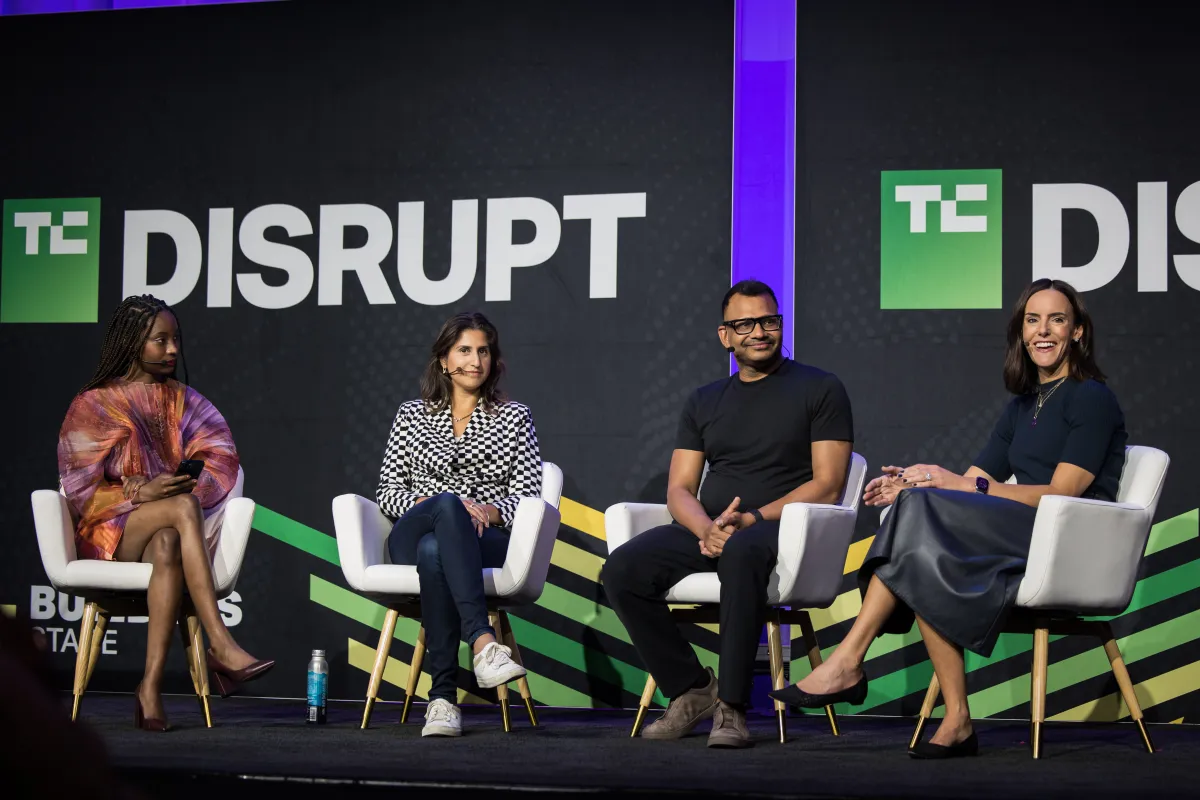
At TechCrunch Disrupt, three investors took the stage to dissect what makes — and breaks — a pitch deck. Jyoti Bansal, a founder-turned-investor; Medha Agarwal of Defy; and Jennifer Neundorfer of January Ventures shared with the crowd their candid views on what works in a pitch deck — and what doesn’t.
Their biggest pet peeve? Buzzword overload.
The more a founder says AI in the pitch, Agarwal said, the less AI the company likely uses. “The people who are doing things that are really innovative, they’ll talk about it, and it’s built in, but it’s not the core of their pitch,” she told the audience.
Bansal, who built and sold multiple companies before becoming an investor, distilled investor expectations into three core questions. First, he asks whether there is a large enough market to tackle. Does the founder’s idea have the potential to become a huge company? And is the problem he or she is solving actually worth solving?
The second thing investors want to know is why this founder is the one who should be building the company. “There has to be something unique about you,” Bansal told the crowd, adding that this included having special members on the founding team or having special skills. “Why would you win? If the problem is interesting, there will be 20 other companies trying to solve it, so why would you win and what’s your opportunity?”
The third thing investors want to see, Bansal said, is some validation. “Traction with customers,” he said. “Validation could be initial customer feedback, revenue, something, but some kind of validation.”
These three questions, Bansal noted, all lead to the ultimate litmus test: Could this become a billion-dollar company?
Techcrunch event
San Francisco
|
October 13-15, 2026
The panel also addressed how AI startups can differentiate themselves as the space becomes saturated. Bansal emphasized the importance of domain expertise and a clear competitive strategy. Neundorfer said the companies that catch her attention are those enabling new behaviors rather than simply improving an existing process incrementally.
Agarwal offered more tactical advice to founders, saying they should explain how AI technology enables their product; articulate clear go-to-market strategies; and demonstrate how their business will be more efficient than incumbents.
It’s also very important to be honest about what competitors are out there, she added. Some of you have “lost some credibility with me because you didn’t have it on your slide,” she told the founders in the audience.
Finally, the investors shared advice for navigating the rapidly evolving landscape. Agarwal urged founders to stay on top of industry developments. Neundorfer recommended staying connected to founder networks to share tools and insights.
Bansal’s advice was simpler: “Focus on building your product.”

As social media becomes increasingly reliant on algorithmic feeds, creators are navigating a new normal: Just because you post something doesn’t mean your followers will see it.
“I think that 2025 was the year where the algorithm completely took over, so followings stopped mattering entirely,” LTK CEO Amber Venz Box told TechCrunch.
This isn’t news to creators – Patreon CEO Jack Conte has ardently banged this drum for years – but throughout the year, the industry at large has reacted to this phenomenon in different ways, from the influencers to the streamers.
According to the executives that TechCrunch spoke to about the near future of the creator economy, creators are finding new ways to harness and cultivate their relationships with their followers – some acting as a salve to AI slop, while others are flooding the zone with a new form of slop themselves.
Box’s company, LTK, connects creators with brands through affiliate marketing, where creators earn commissions on products they recommend. Since this business model is centered around affiliate marketing, it only works if people retain trust in individual creators. It could be an existential threat if the relationship between creators and their audiences continues to fragment.
But through a study commissioned from Northwestern University, LTK found that trust in creators increased 21% year-over-year, which was a pleasant surprise to Box.
“If you asked me at the beginning of 2025, ‘Hey, is trust in creators going to go up or down?’ I would have probably said down, because people understand it’s an industry – they understand how it’s working,” she said. “But actually, AI pushed people to kind of rotate trust to real humans that they know have real life experiences.”
Techcrunch event
San Francisco
|
October 13-15, 2026
By that, Box means that consumers are more likely to go out of their way to see content from the creators they know and trust. According to the study, 97% of chief marketing officers intend to grow influencer marketing budgets in the new year.
That doesn’t mean that owning these relationships is straightforward. LTK creators, who rely on affiliate income, are betting this AI-induced skepticism will drive people toward more direct relationships through paid fan communities or less algorithmic platforms like LTK itself. For other kinds of creators, such as streamers, video podcasters, and short filmmakers, the strategy for owning their audience can more closely resemble growth hacking.
Teenage clipping armies
As Sean Atkins, CEO of short-form video production company Dhar Mann Studios, put it, “In a world that’s driven by AI and algorithms, where people trust another human being more in this micro atomization of attention, how do you market when you sort of can’t control that?”
According to Eric Wei, cofounder of Karat Financial, a financial services company for creators, creators have a new secret weapon: armies of teenagers on Discord who creators pay to make clips of their content, which those same teenagers post en masse on algorithmic platforms.
“That’s been going on for a bit,” Wei explained. “Drake does it. A lot of the biggest creators and streamers in the world have been doing it – Kai Cenat [a top Twitch streamer] has done it – hitting millions of impressions… If it’s algorithmically determined, clipping suddenly makes sense, because it can come from any random account that just has really good clips.”
Wei thinks that clipping is going to become even more popular this year, since it’s a reaction to this fragmentation in social media relationships. Even the biggest creators are finding it hard to reach their fans directly, which is why they turn to clipping. While going viral on these algorithmic feeds is certainly easier if you have a ton of followers, you don’t need any track-record on a platform for it to decide that your video should be distributed more broadly. So, if these “clippers” post a short highlight from certain creators’ streams, they can earn money based on how many views the video gets.
“Clipping feels like an evolution of meme accounts,” Glenn Ginsburg, president of QYOU Media, which produces content for young audiences, told TechCrunch. “It’s become a race among many creators to try and take this content and push it out far and wide, almost competing to see who can get the most views on the same IP.”
Reed Duchscher – founding CEO of Night, the talent management company that represents Kai Cenat and other top creators – masterfully coaches creators through maximizing their virality. As MrBeast’s former manager, Duchscher helped cultivate the fast-paced, attention-grabbing style that transformed MrBeast from a YouTuber to an empire. He’s also behind Kai Cenat’s clipping strategy, though Duchscher isn’t quite as enthusiastic about its broader potential as Wei.
“Clipping is important if you’re a creator, because you do need to flood the zone with content, and it’s a good way to get your face out there,” Duchscher told TechCrunch. “It’s also very hard to get to scale, because there’s only so many clippers on the internet, so to spend large media budgets… there’s just a lot of complications.”
Perhaps clipping only works now because the technique has not yet become so prevalent that it’s seen as spam.
“The creator wins because they get more of their content out,” Wei said. “The clippers win because now this army of teenagers are getting paid. Everybody wins, except that if you take this to its logical conclusion, we just get lots and lots of slop.”
The more niche, the better
The prevalence of slop on social media has become enough of a threat that Merriam-Webster called slop its word of the year.
“Over 94% of people are saying that social media is no longer social, and over half of them are rotating time elsewhere into smaller niche communities that they know are real and that they can talk to and interact with,” Box said, pointing to platforms like Strava, LinkedIn, and Substack.
As the relationship between a creator and their audience becomes more difficult to maintain, Duchscher predicts that creators with more specific niches will succeed – he thinks that “macro creators” like MrBeast, PewDiePie, or Charli D’Amelio, who amass hundreds of millions of followers, will become even harder to emulate.
Pointing to success stories like like Alix Earle or Outdoor Boys, who have millions of followers but not necessarily mass appeal, Duchscher adds, “Algorithms have gotten so good at giving us exactly the content we want. It’s much harder for a creator to break out into every niche algorithm.”
Atkins agrees, arguing that the creator economy extends far beyond entertainment. “The creator economy generally is viewed through this lens of entertainment. I think that’s a mistake, because thinking about the creator economy is a little bit like thinking about the internet or AI – it’s going to affect everything.”
Atkins mentions the gardening creator brand Epic Gardening as an example. What started as a YouTube channel has created a real, tangible presence in the world of gardening.
“Epic Gardening bought the third largest seed company in the United States, so now he’s the third largest seed company [owner], as a content creator,” he said.
Though the creator economy is in flux, it’s a resilient industry – one that’s accustomed to navigating the whims of the algorithm, persisting onward for decades, even if the uninitiated may see it as a brand new realm.
Creators are “literally impacting everything,” Atkins said. “I bet you there’s a creator who’s an expert at cement mixing for skyscrapers.”

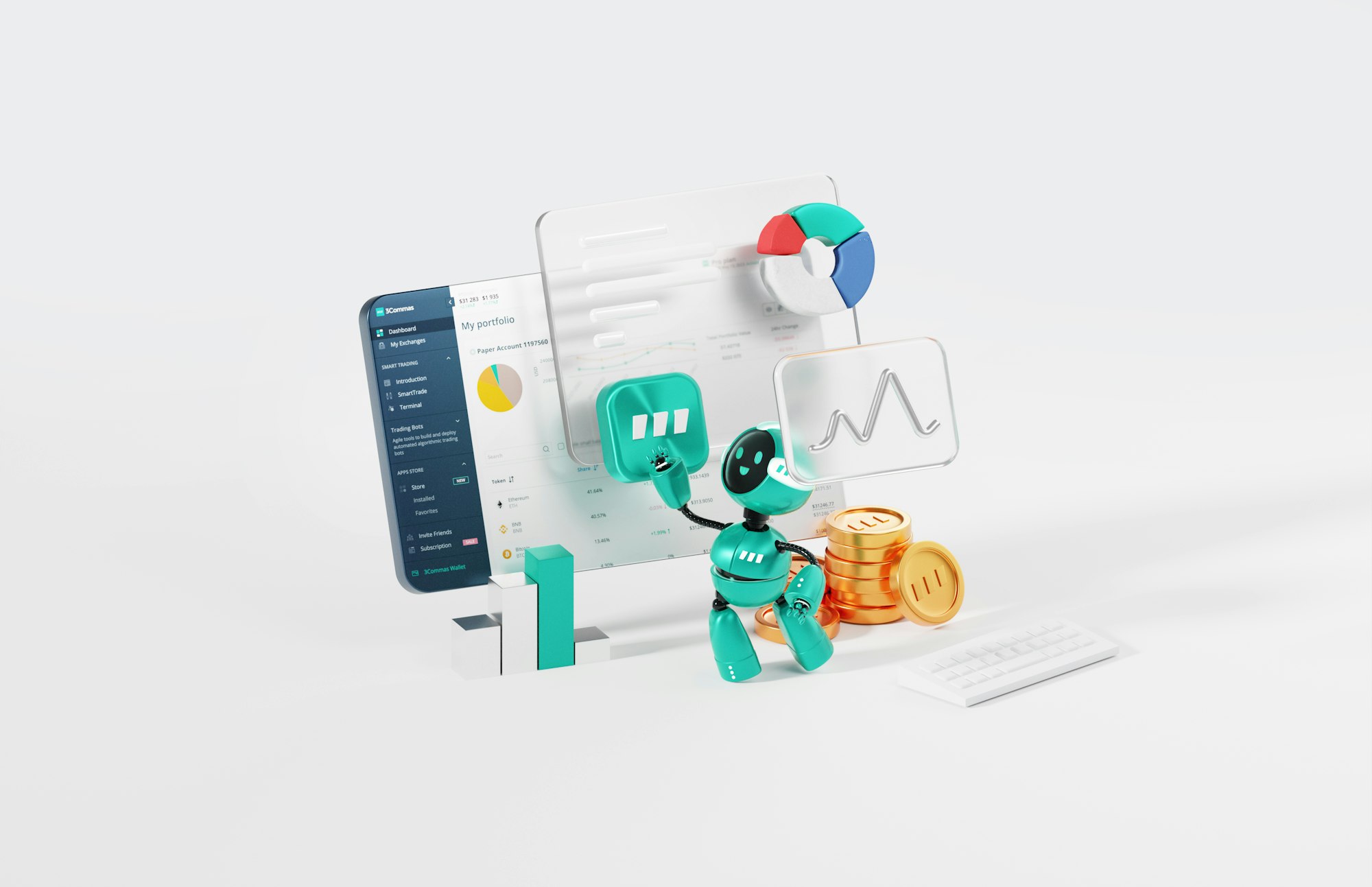
Automated trading is possible in any market, including Forex, crypto, stocks, options, futures, and more. However, given Forex’s appeal to a wide range of traders, automated trading is in the most significant demand here. The best expert advisors for Forex have proven their effectiveness, which is why their use has grown significantly in recent years. Still, the young yet rapidly developing crypto market has also quickly integrated automated trading.
If you’re unsure which market is best suited for trading bots, study their key features. This will help you choose the option that requires less involvement and offers the highest returns from automated trading.
What is a Forex Robot (Expert Advisor)
Forex robots are customizable software for automated trading of fiat currency pairs on the Forex market, primarily through MT4 and MT5. Forex robots or Expert Advisors (EAs) have basic settings that determine their algorithm. However, traders can easily customize them to suit their trading strategies, even without programming knowledge.
Moreover, if you’re well-versed in IT, you can even create your own trading robot. MT4 and MT5 trading platforms have a built-in programming language (MQL4 and MQL5, respectively), which allows you to develop and test your own trading bots.
However, traders most often prefer to use proven Forex robots with basic and advanced settings, such as:
- Indicators, such as Moving Averages, Oscillators, etc.;
- Order management;
- Trade entry/exit conditions;
- Risk management (Stop Loss and Take Profit functions);
- Spread control;
- Signal filtering, etc.
What is a Cryptocurrency Trading Bot?
A cryptocurrency trading bot is specialized software for automated trading, but for a different asset class. It is only suitable for trading cryptocurrencies, which exist in the digital realm free from strict regulation by national governments or banking systems.
Unlike Forex robots, their customization is not as easy and, therefore, requires specialized knowledge. Their functionality is more complex, so if you want more room for experimentation with a trading bot, you should start with Forex robots. But if trading crypto is your primary focus, you will be more dependent on automated software developers.
Core Differences: Market, Technology, and Risk
While Forex EAs and crypto trading bots have many similarities, trading with each will offer a completely different experience. This is due to the fundamental differences between fiat and cryptocurrencies, regulatory certainty/uncertainty, and the technologies that support their circulation.
Market
Cryptocurrency prices fluctuate much more than those of fiat currencies. Normal daily price movements for cryptocurrencies are around 20%, and during periods of turbulence, they can reach as high as 80%. Meanwhile, the typical daily fluctuations of popular currencies such as the USD or EUR are only 1-2%, and during significant crises, they can reach 4-7%.
This difference in volatility makes trading in the crypto market more risky and unpredictable. Therefore, completely refusing to monitor the performance of crypto trading bots can lead to significant losses. At the same time, the comparative stability of the fiat currency market allows traders to devote less attention to monitoring the performance of Forex bots.
Technology
Forex trading is more centralized because it relies on traditional banking infrastructure and its familiar operating rhythms. Meanwhile, the crypto market is accessible 24/7 since it uses decentralized blockchain technology. Trading in this market bypasses banks and brokers, which play a crucial role in the Forex financial infrastructure. At the same time, when trading in the crypto market, you will need centralized or decentralized exchanges (CEX/DEX), crypto wallets, P2P platforms, and other elements of the digital currency ecosystem.
Risks
In addition to the high volatility of cryptocurrencies, trading in the crypto market carries other significant risks. Forex trading, for example, is much safer in comparison with cryptocurrency trading because of regulatory protection. Traders on Forex can rely on dispute resolution mechanisms, legal requirements for brokers, account insurance schemes, and other mechanisms to mitigate trading risks. In contrast, the crypto market’s regulatory uncertainty makes this asset riskier for investors.
Furthermore, the potential high profitability of cryptocurrencies and high returns from speculation make this market attractive to scammers. Even experienced investors can make mistakes and invest their money in scammy crypto projects.
Conclusion
The choice between a Forex robot and a crypto trading bot depends on many factors: risk tolerance, the time you’re willing to devote to trading, your interest in new technologies, etc. Thus, if you want to profit from significant price fluctuations, automated crypto trading is a better choice. However, it will require substantial involvement on your part, even when using crypto trading bots.
If you prefer long-term trading strategies, Forex robots are a better choice. They can deliver excellent results even with minimal involvement. However, the profits won’t be as enormous as those from successful crypto trading.
Therefore, make your choice based on your priorities and trading style. Automated trading technologies are sufficiently advanced for both markets. They will support your decision, no matter what choice you make.


The WhatsApp message landed at 3 am. “Have you seen what’s happening?” Attached was a screenshot of a tweet thread unravelling faster than anyone expected. By morning, one of Nigeria’s most celebrated fintech founders was out of a job. By afternoon, employees were sharing stories they’d kept quiet for months. By evening, the industry was asking a question nobody wanted to answer out loud.
If we can’t trust the people building fintech, why should customers?
2025 became the year Nigerian fintech’s trust crisis went from whisper to scream. Not because fraud was new. Not because bad actors suddenly appeared. But because the scandals that broke this year weren’t about faceless hackers or abstract security failures.
They were about the humans behind the apps. The founders. The systems. The promises turned hollow when tested.

1. The fall of a fintech founder
November brought the kind of scandal that makes investors nervous, and employees update their LinkedIn profiles. Ezra Olubi, co-founder of Paystack, was fired following sexual misconduct allegations. Not after an investigation. Before one concluded.
The details emerged in fragments across social media. Then came Olubi’s own statement claiming he’d been fired unfairly, which only amplified the noise.
Paystack had become the poster child for Nigerian fintech success. Acquired by Stripe for over $200 million in 2020. Operating across multiple African markets. A company parents pointed to when their kids said they wanted to work in tech.
Now it was the company people referenced when discussing workplace culture failures.
 Ezra Olubi
The scandal wasn’t just about one person’s alleged behaviour. It exposed how fragile a reputation is in an industry built on trust. If customers can’t trust that their payment processor maintains ethical standards internally, why would they trust it with their money?
2. The equity that never came
October’s EasySpend scandal hit differently. Not because it involved customers losing money, but because it involved employees losing dignity.
The story broke when frustrated workers went public about a scheme they claimed amounted to exploitation. They’d been promised equity in exchange for work. Some had laboured for months on that promise. When it came time to deliver, the equity evaporated like morning mist.
The details painted an ugly picture. Employees are working without proper compensation. Founder allegedly using the lure of startup equity to extract free labour. When workers demanded what they’d been promised, they got excuses instead of shares.
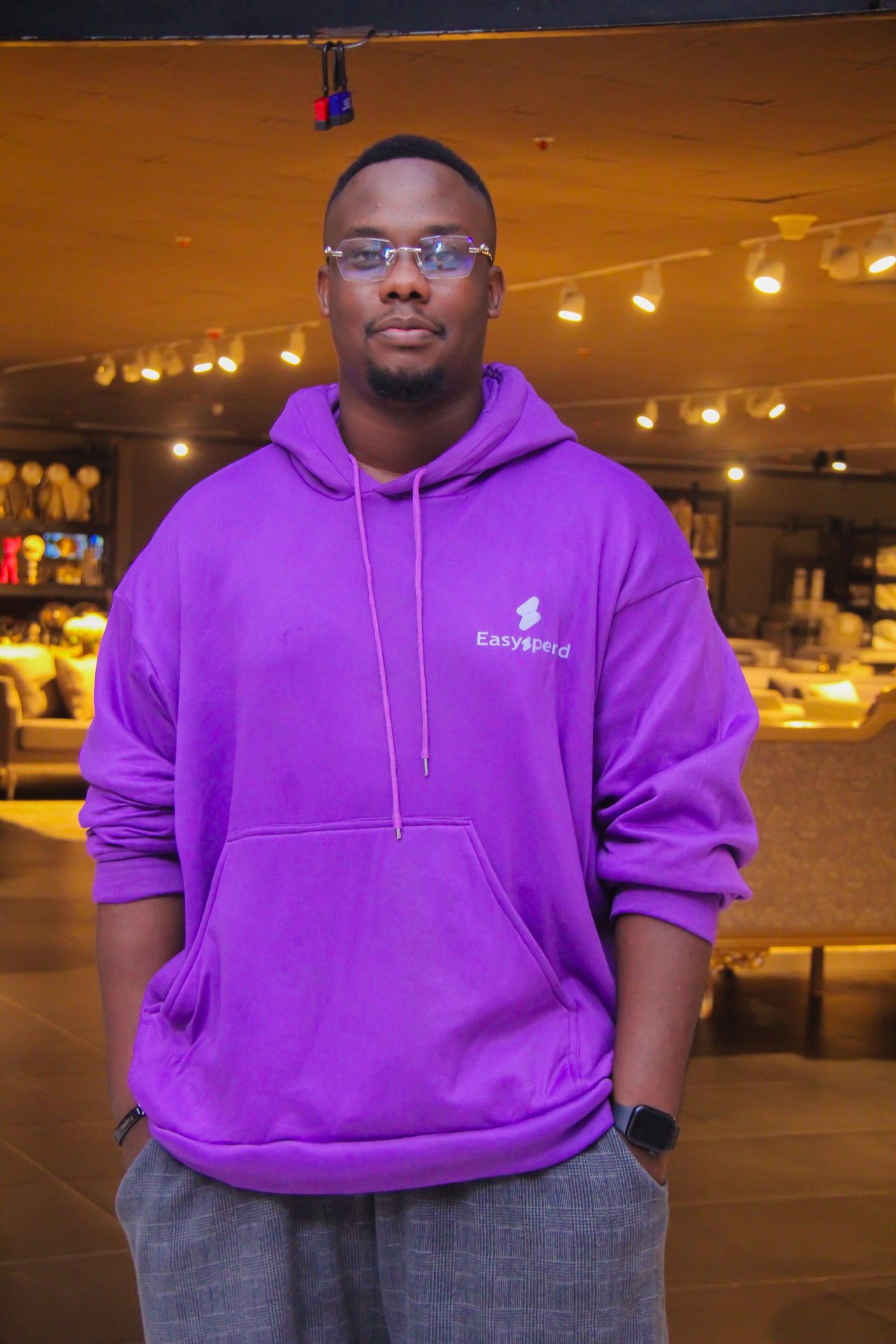 Tobenna Okolo, founder of EasySpend (IMG: Tobenna Okolo on LinkedIn)
It was a different kind of trust violation. Not customers versus company, but founders versus the people who believed in their vision enough to bet their time on it. In an ecosystem already struggling to retain talent, treating employees as disposable contradicts every founder playbook lesson about building sustainable companies.
3. The market for identity
July brought a scandal that made the others look almost quaint. The Economic and Financial Crimes Commission (EFCC) uncovered something that sounded too dystopian to be real. Over 12,000 young Nigerians were selling their identity credentials to fintech companies for ₦5,000 apiece.
Bank Verification Numbers. National Identity Numbers. The digital keys to financial systems. Being traded like airtime vouchers.
The fraud ring wasn’t sophisticated. It was volume-based. Thousands of people are willing to sell their biometric and identity data. Fintech companies allegedly buy those credentials to inflate user numbers, bypass KYC requirements, or enable fraudulent accounts.
The implications cascaded outward. If fintechs were building growth on fake accounts created with real people’s stolen identities, what did that say about their actual user numbers? Their transaction volumes? The metrics investors used to justify valuations?

More troubling was what it revealed about desperation. Young Nigerians are so economically squeezed that they’d sell the keys to their financial identity for $5. And companies are willing to buy.
4. When the fintech giant stumbles
Flutterwave’s troubles bridged 2024 and 2025 like a bad hangover. The company had suffered a ₦11 billion breach in April 2024. By January 2025, Nigerian police arrested 179 people in what they called Operation Butterfly Net.
The arrests didn’t end the story. Throughout 2025, questions lingered. How did the breach happen? Why did it take so long to catch the perpetrators? Were customers fully compensated? The answers remained murky even as Flutterwave processed billions in legitimate transactions.
 Olugbenga Agboola, CEO, Flutterwave
For the industry, Flutterwave’s ongoing crisis underscored an uncomfortable reality. Even the biggest, most funded, most sophisticated Nigerian fintech entities weren’t immune to massive security failures.
If Flutterwave could get hit for ₦11 billion, what did that mean for smaller platforms with fewer resources?
Examining the root problem
Adebare Akinwunmi, a lawyer who’s watched the Nigerian fintech sector evolve, sees these scandals as symptoms of something deeper than security failures or bad luck.
“Legally, these cases signal a recurring breakdown in both governance structures and leadership accountability within Nigerian fintechs,” he explains. “They reveal weak internal controls, inadequate board oversight, and an over-concentration of power in a few individuals, often founders, with little transparency or documentation.”
But Akinwunmi goes further than pointing at structural problems. He identifies something harder to regulate.

“Beyond structure, they also highlight a more fundamental issue. The character of leadership. Fintechs are trust-based businesses, and when individuals at the helm lack moral restraint or personal accountability, even the best governance frameworks can be circumvented.”
His observation cuts to the heart of why 2025’s scandals felt different. The Ezra Olubi case wasn’t about missing compliance documents. The EasySpend situation wasn’t about inadequate board meetings. These were failures of character dressed up as business decisions.
“In many of these cases, the scandals were not inevitable,” Akinwunmi notes. “They were enabled by leaders who operated without ethical discipline, treating corporate assets and authority as personal extensions of themselves.”
The natural response to a scandal is usually more rules. Stricter regulations. Heavier penalties. More oversight. The Central Bank of Nigeria (CBN) spent 2025 doing exactly that. Onboarding bans. Increased KYC requirements. Substantial fines.
But Akinwunmi argues the problem isn’t a lack of regulation. “Nigeria’s legal and regulatory frameworks are largely sufficient on paper. Company law, securities regulation, and fintech oversight already provide mechanisms for accountability. The real problem is not the absence of law, but the absence of internal governance culture and ethical leadership within many startups.”

He’s describing a timing gap that creates vulnerability. “What these trust failures expose is a gap in enforcement timing and leadership quality. Many fintechs operate informally until they scale, by which point poor governance habits and sometimes questionable ethical practices are deeply entrenched. Laws can punish misconduct after the fact, but they cannot substitute for leaders with integrity who choose transparency and accountability even when regulation is light.”
It’s the classic startup dilemma. Move fast and break things works until the things you break include trust, employee well-being, and customer funds. By the time companies get big enough to attract serious regulatory attention, the culture is set. The habits are formed. The character of leadership is established.
What breaks when trust does
Each scandal told a different story. A founder’s misconduct. Founders exploiting workers. An identity theft marketplace. A payment giant’s security crisis. But together they revealed something deeper.
Nigerian fintech had grown so fast that it forgot to build the foundations of trust required. Due diligence on founders. Fair treatment of employees. Security infrastructure that actually works. Systems to verify that growth is real, not inflated with fake accounts bought from desperate young people.
For investors who poured $230 million into Nigerian fintech in 2025, the scandals raised uncomfortable questions. How many of their portfolio companies had the same governance gaps?
The same concentration of founder power?

Can the same informal operations be scaled beyond sustainability?
For customers, the calculation became more complex. Yes, fintech offered convenience. Mobile payments. Quick loans. Digital wallets. But at what cost? If your payment processor’s co-founder gets fired for misconduct, is your money safe? If the crypto platform you use can’t refund customers from a 2023 hack by 2025, should you trust it with new deposits?
Akinwunmi’s conclusion is sobering but clear. “Ultimately, fewer scandals will not come from more rules alone, but from having principled individuals in leadership positions who understand that trust, once broken, is almost impossible to rebuild.”
It’s an answer that offers no quick fixes. You can’t regulate character. You can’t audit integrity. You can write all the compliance manuals you want, but if the person at the top sees rules as obstacles rather than guardrails, those manuals become decorative paperwork.
The Nigerian fintech industry faces a choice. It can keep prioritising growth over governance, speed over sustainability, and charisma over character. Or it can do the harder work of building companies led by people who understand that financial services require something more than technical skill and fundraising ability. They require trustworthiness.

Millions of Americans from the Great Lakes to the Northeast are under the threat of a bomb cyclone as a powerful winter storm sweeps across the region.
Meteorologists issued alerts on Monday, warning that snowfall totals in parts of the Great Lakes, New York, New Hampshire and Maine could reach up to two feet in the hardest-hit areas.
A bomb cyclone, also known as bombogenesis, is a rapidly intensifying low-pressure system capable of producing extreme and dangerous weather.
Travel conditions are expected to deteriorate rapidly across the Great Lakes, where colder air moving in Monday could turn a brief wintry mix into heavy snow and whiteout conditions.
AccuWeather meteorologist Brandon Buckingham said the storm will strengthen quickly across the Midwest and Great Lakes.
‘The storm will bring risks of heavy snow, ice, severe thunderstorms, powerful wind gusts, and heavy rain,’ Buckingham said.
The system is barreling toward several major US cities, placing Green Bay, Chicago, Detroit, Indianapolis, Pittsburgh, Washington DC, Philadelphia, New York City and Boston in its path.
Forecasts warn that some of these areas could see between six and 10 inches of snow by Tuesday, while isolated locations may receive significantly higher totals.

Millions of Americans from the Great Lakes to the Northeast are under a bomb cyclone warning as a powerful winter storm sweeps across the region. Pictured is Minnesota on Sunday

Meteorologists issued alerts on Monday, warning that snowfall totals in parts of the Great Lakes, New York, New Hampshire, and Maine could reach up to two feet in the hardest-hit areas
According to the US National Oceanic and Atmospheric Administration (NOAA), certain storms undergo bombogenesis, which happens when a storm’s central pressure drops at least 24 millibars in 24 hours.
These storms are sometimes called bomb cyclones. Storm intensity is measured by central pressure, so the lower the pressure, the stronger the storm.
Such rapidly strengthening storms are capable of producing heavy rain, blizzard conditions and intense winds that can create dangerous conditions such as downed trees and power outages.
‘If you’re watching TV at night and the weather report comes on and you’re hearing ‘bomb cyclone’ being used, that usually means there’s quite a bit of active weather going on,’ said Andrew Orrison, a meteorologist with the National Weather Service (NWS).
The NWS said more than 30 million Americans were under winter weather alerts on Monday.
The bomb cyclone has hit the Midwest hardest, leaving more than 100,000 people without power amid heavy snow and intense winds. This is the same storm that drenched California with rain and flooding on Christmas Eve and Christmas Day.
AccuWeather predicted winds of at least 35 miles per hour from southwestern Minnesota to central Ontario. Combined with snow, these winds could reduce visibility to less than one-quarter mile for several consecutive hours, meeting blizzard criteria.
‘These conditions will make travel extremely difficult and dangerous, if not impossible, for a time,’ said AccuWeather meteorologist Brandon Buckingham.

The bomb cyclone could unleash powerful winds, causing power outages across several US states
Wind advisories extend from the Ohio Valley to the Northeast, with gusts potentially reaching 55 miles per hour. High wind alerts were issued for more than 114 million people across the eastern U.S., according to CBS News.
AccuWeather warned that cities such as Bangor and Portland, Maine; Albany and Binghamton, New York; Scranton, Pennsylvania; and Burlington, Vermont could see even light freezing rain late Sunday into Monday, which may coat roads and sidewalks in ice, making travel treacherous.
‘Because of the storm’s likely designation as a bomb cyclone, rapid pressure changes around its center will generate widespread strong winds, even in areas not experiencing precipitation,’ AccuWeather said.
‘Gusts of 40-60 mph are expected, potentially disrupting air travel at major airports, including Chicago-O’Hare Monday and New York City-area airports Monday night into Tuesday morning.’

There has been a flurry of AI voice recording gadgets like Omi, Bee, and Friend that want to capture your voice and let you converse with an AI chatbot. While Bee was acquired by Amazon, and devices like the Stream ring by Sandbar and a new AI ring from former Pebble founder Eric Migicovsky are set to enter the market next year, the jury is still out on the success of wearable AI devices.
Amid all this, Plaud is thriving by targeting professional users with a different approach: a credit card-sized recording device that slips into your wallet. The company says it has shipped more than a million units and that more than 50% of its customers have converted to pro subscriptions.
The company’s latest iteration, the Plaud Note Pro, launched for pre-order in August two years after the original Note, priced at $179. After using the device for over a month, it has become an essential part of my daily carry – and its ultra-thin design makes that easy.
At just 0.12 inches thick – about the width of three stacked credit cards – it’s the thinnest AI recording device on the market and easily fits in a wallet or attaches magnetically to the back of your phone.
The company provides a wallet-like pouch and a magnetic ring accessory that attaches to MagSafe-enabled phones, allowing you to mount the Note Pro on the back of your iPhone or compatible Android device. The device is also very light at 30 grams, and you won’t feel the weight if you keep the Note Pro in your wallet.
One of the key differences between Plaud and other AI wearables is that the Note Pro doesn’t need to be connected to your phone to record audio. The device has 64GB of onboard memory, so it can store a large volume of recordings without transferring them to your phone or uploading them to the cloud.
Pluad Note Pro is as thick as a coaster Image Credits: Ivan Mehta
Plaud Note Pro has four MEMS (Micro-Electro-Mechanical Systems) microphones to pick up audio from all directions. While the company advertises that the effective audio range is 16.4 feet, I have recorded talks at conferences while sitting far from the stage and gotten satisfactory results. The device also has one voice processing unit for noise suppression, voice isolation, and echo cancellation.
Techcrunch event
San Francisco
|
October 13-15, 2026
The recording device has impressive battery life. I went to a conference earlier this month with a fully charged device and recorded a few interviews and talks there. After that, I used the device for some phone call recording and personal note-taking. Despite all that use, the device still had 55% charge after 15 days. The company says you can wring 30 hours of continuous recording and 60 days of standby from a single charge.
Plaud’s new device comes with a proprietary charger with a USB-C cable on the other end. The device takes two hours to charge from 0%, and then you are set for at least a couple of weeks unless you are recording hours of content.
 Image Credits: PlaudImage Credits:Plaud.ai
One problem with wearable AI devices is that you have to ensure, through an indicator, that the device is recording (or has stopped recording). Thankfully, Plaud Note Pro has a tiny screen that displays your recording status. You can also press a button while recording to highlight a point a speaker is making, and it will show up in the AI-powered summary prominently. The screen also shows you the remaining battery level.
There is intentionality behind recording with this device. You also get haptic feedback for starting and stopping the recording. The visual indication and your action of pressing the button also make it easier to signal to a others in the meeting that you are recording the session.
 Image Credits: Ivan Mehta
You can choose to just record sessions and export them to another AI transcription service you are subscribed to. Plaud natively provides 300 minutes of free transcription every month. The company also lets you customize AI-generated notes through templates suited for different profiles and tasks. You can create your own template as well. The transcription is accurate in most instances, and now you can also access the recording, transcript, and notes through a website. The company has also addressed the problem my former colleague Brian Heater had of tapping on the word and not being played the corresponding recording.
While a pendant or pin-like form factor is possibly easier to carry, the card-sized recorder offers better microphones and more versatile placement options. It’s worth buying the $179 gadget if you take a lot of in-person meetings.

OnePlus is preparing to launch a new smartphone line called Turbo. The company confirmed the line-up with official teasers on December 25th, revealing design, battery, display, and core hardware details ahead of the January 8, 2026 launch in China, which coincides with CES 2026, adding to the tech buzz at the global show.
The line-up includes two models:
– OnePlus Turbo 6
– OnePlus Turbo 6V
OnePlus shared official renders showing the Turbo 6 in wilderness green, lone black, and chasing light silver. The silver version features a distinct holographic edge finish. The Turbo 6V has a simpler look with a dual‑camera layout, suggesting lower‑end hardware compared with the main model.
The battery life of this Turbo series is its biggest selling point. Both phones are confirmed to come with a 9,000 mAh battery, the largest ever seen in a OnePlus device. That puts them well above recent models like the OnePlus 15, which had a 7,300 mAh cell. The design and size of the Turbo series reflect that focus on endurance rather than a thin profile.
OnePlus may debut a new Turbo phone built around a 9,000mAh battery
Leaked benchmarks suggest a performance-focused device that prioritizes lasting power over frequent, fast charging, signaling a shift in how OnePlus is positioning its 2026 lineup.
Both models will use large displays with high refresh rates. The Turbo 6 is confirmed with a 165 Hz panel, matching the smoothness seen on higher‑end OnePlus phones. The Turbo 6V’s refresh rate is expected to be slightly lower but still competitive.
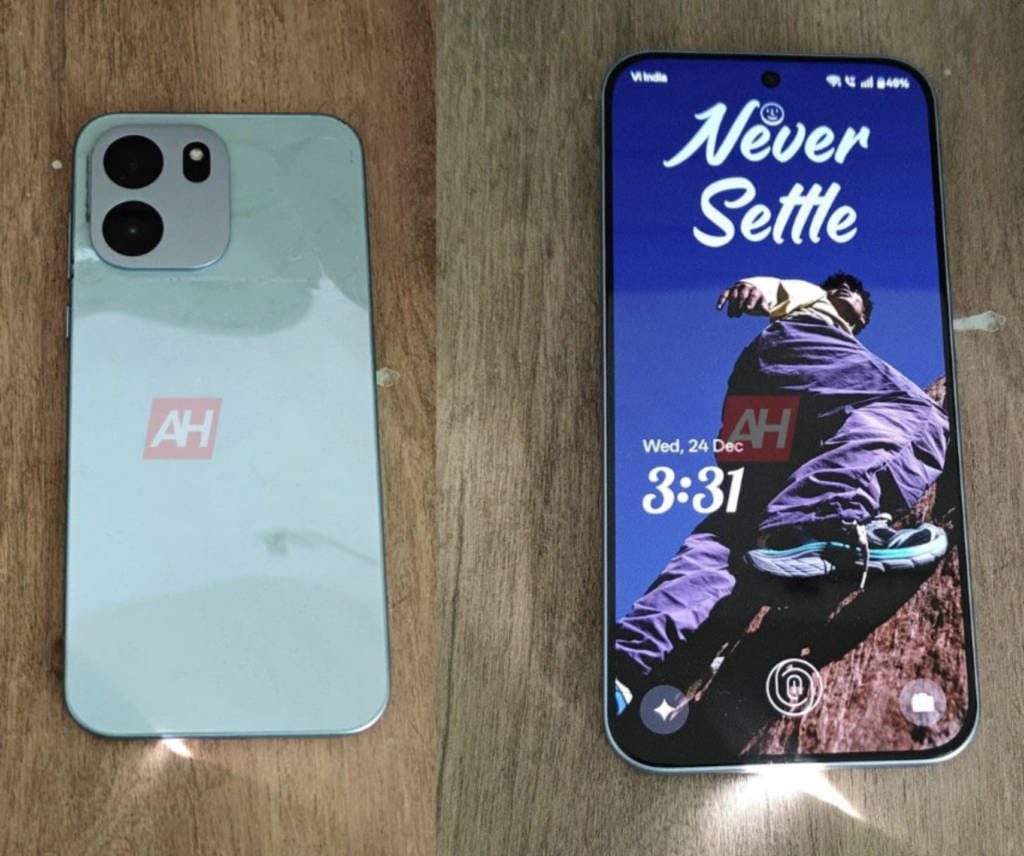 Image Credit: OnePlus
On performance, the Turbo 6 will run on Qualcomm’s Snapdragon 8s Gen 4 chip. This is a high‑end midrange chipset that delivers strong everyday performance and capable gaming without flagship pricing. Other hardware details have not been officially confirmed yet, but leaks and teasers point to Android 16, LPDDR5X RAM, UFS 4.1 storage, and capable camera sensors.
OnePlus has not confirmed global availability. The phones will launch in China first and could be rebranded for other markets. Some reports suggest they might arrive outside China under a different name, possibly as part of the Nord series.

In the rapidly evolving landscape of African technology, few figures bridge the gap between high-level research and grassroots digital execution as effectively as Nnaemeka Ani.
As the Founder of MGX Research Center and the visionary behind MexyGabriel, Ani has emerged as a leading protagonist in the narrative of Nigeria’s technological self-reliance.
The Visionary: Founding MGX Research
At the heart of Ani’s philosophy is MGX Research, a center dedicated to “first-principles thinking.” Under his leadership, the center has become a beacon for data-driven innovation, moving beyond the “hype” of the tech world to focus on persistent, localized solutions.
Through MGX Research Center, he is building a multidisciplinary ecosystem that cuts across artificial intelligence, data science, cybersecurity, smart cities, digital identity, e-governance, EdTech, HealthTech, robotics, and automation
Ani’s mantra – “Africa’s rise begins with its own innovation” – is not just a slogan; it is a call to arms for African builders to stop seeking international validation and start authoring their own digital destiny.
As Founder and CEO of MexyGabriel Tech Company, Nnaemeka has driven multiple large-scale technology projects across Nigeria, focusing on digital infrastructure, enterprise solutions, identity and payment platforms, and youth-centered innovation programs. MGX Research Center functions as the research and development arm of this broader ecosystem, providing the thinking laboratory, prototypes, and strategic insights that inform products, policies, and investment decisions.
 Nnaemeka Ani
Nnaemeka is passionate about youth empowerment, innovation, and Africa’s digital future. His work through MGX Research Center aims to position Nigeria not just as a consumer of technology but as a creator of solutions, producing world-class research, thought leadership, and practical tools that can be deployed across states, universities, and private organizations.
He frequently collaborates with universities, government ministries, tech hubs, and global partners, championing a model where research is not locked up in theory but translated into deployable systems, smart policies, and scalable ventures.
Ani has demonstrated a unique ability to turn complex code into commercial and social value. His work has focused on:
- Infrastructure for Good: Developing platforms that bridge the divide between urban tech hubs and rural communities.
- Sovereign Technology: Championing the idea that African data should be managed by African-built systems.
The Public Servant: Digitizing Enugu State
Ani’s influence extends into the corridors of power. Serving as the Special Adviser to the Enugu State Governor on ICT, he has been instrumental in transforming the state into a burgeoning digital ecosystem.
His work in Enugu serves as a blueprint for “Governance-Tech Synergy,” proving that when political will meets technical expertise, public service delivery can be revolutionized.
“We are no longer just ’emerging’; we are competing. Africa will rise by code, by courage, and by us,” said Nnaemeka Ani.
Quick Facts: Nnaemeka Ani
CategoryDetailCurrent RolesFounder, MGX Research; Founder, MexyGabriel; SA on ICT to Enugu State Governor.Core Philosophy“First-Principles Thinking” – Breaking problems down to their core truths.Key AdvocacyDigital Sovereignty, Sovereign AI, and localized STEM education.Notable Mantra“By Code and By Courage.”
Why He Matters in 2026
As Nigeria enters a transformative year marked by the January 1, 2026 Tax Reforms and the push toward 70% Broadband Penetration, Ani represents the “New Guard” of leadership. He is one of the few voices consistently advocating for the Tripod Method, balancing technology, local policing, and traditional authority, to ensure that Nigeria’s digital growth is matched by national security.
Nnaemeka Ani is not just as a “tech guy,” but as a Strategic Reformer. He is a “Leader to Watch” because he understands that for technology to thrive in Nigeria, it must be supported by sound policy and cultural relevance.
TECHNOLOGY
SoftBank to acquire DigitalBridge for $4bn in move to deepen ties to AI | Artificial intelligence (AI)

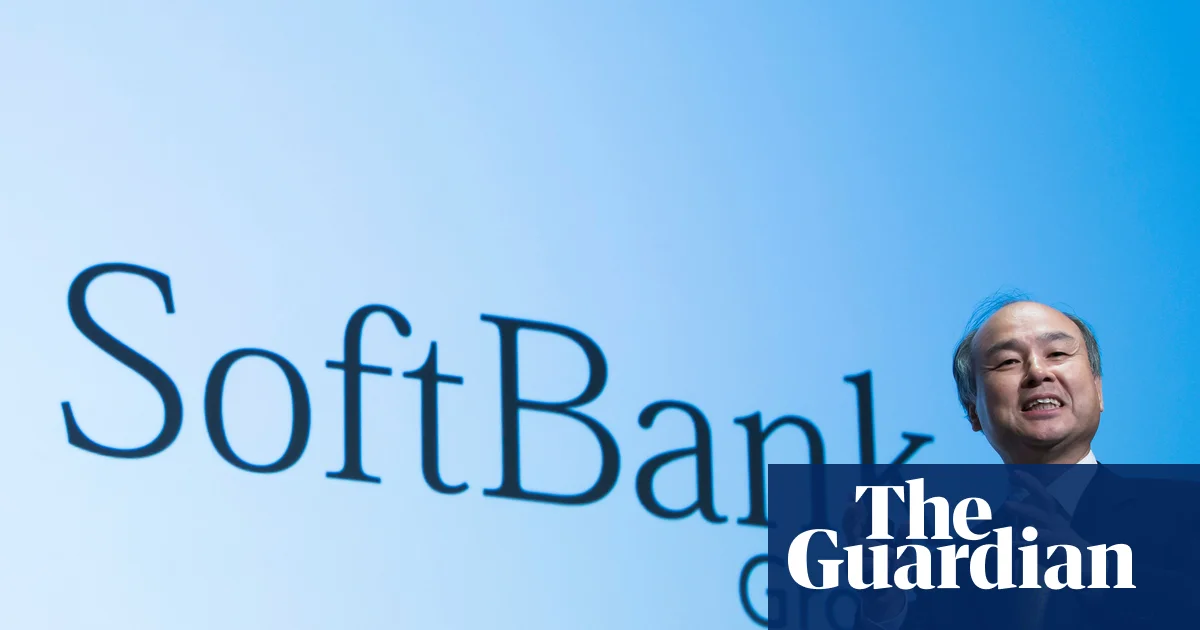
SoftBank Group will acquire digital infrastructure investor DigitalBridge Group in a deal valued at $4bn, the companies said on Monday, as the Japanese investment firm looks to deepen its AI-related portfolio.
The acquisition would expand SoftBank’s exposure to digital infrastructure as the Japanese conglomerate is positioning its portfolio to focus on artificial intelligence.
SoftBank’s billionaire founder Masayoshi Son is seeking to capitalize on surging demand for the computing capacity that underpins artificial intelligence applications.
DigitalBridge invests in digital infrastructure sectors such as datacenters, cell towers, fiber networks, small-cell systems and edge infrastructure, with a portfolio including companies such as Vantage Data Centers, Zayo, Switch and AtlasEdge.
Founded in 1991 as real estate-focused Colony Capital, the firm pivoted under CEO Marc Ganzi into digital infrastructure and rebranded as DigitalBridge in 2021 after shedding most of its legacy property assets.
Ganzi will continue leading DigitalBridge as a separately managed platform, the companies said.
As of 30 September, DigitalBridge managed around $108bn in assets, making it one of the largest dedicated investors in the digital ecosystem.
SoftBank has ramped up investment in AI as it seeks to position itself at the center of what Son has called a once-in-a-generation technological shift.
The company, along with OpenAI, Oracle and Abu Dhabi-based tech investor MGX, is investing billions of dollars in the Stargate project, a large-scale computing and infrastructure initiative aimed at supporting advanced AI development.
OpenAI, Oracle and SoftBank said in September they plan to build five new computing sites across Texas, New Mexico and Ohio, which are expected to have a combined power capacity of about 7GW when in operation.

Apple has warned all iPhone and iPad users to install the latest updates immediately to safeguard their devices against a critical threat.
The tech giant said two critical flaws were found in WebKit, the browser engine that powers Safari and all browsers on iOS, describing them as part of an ‘extremely sophisticated attack’ targeting specific individuals.
The risk comes from malicious websites, which could trick your device into executing harmful instructions. That means hackers might be able to take control of your iPhone or iPad or run code without your permission.
For users with automatic updates enabled, the patch should already be installed, while others will need to manually download iOS 26.2 or iPadOS 26.2 through their device settings.
Devices most at risk include the iPhone 11 and later, the iPad Pro 12.9-inch (3rd generation and later), and the iPad Pro 11-inch (1st generation and later).
Other vulnerable models include the iPad Air (3rd generation and later), the iPad (8th generation and later), and the iPad mini (5th generation and later).
The flaws are classified as zero-day vulnerabilities, meaning they were unknown to the software creators and could be exploited by hackers before a patch existed.
Security teams, including Apple and Google’s Threat Analysis group, discovered the weaknesses, warning that the bugs could enable potentially devastating cyberattacks.

Apple is urging all its iPhone users to install the latest update after identifying two vulnerabilities
Apple has also released updates for iOS 18.7.3 and iPadOS 18.7.3, macOS Tahoe 26.2, tvOS 26.2, watchOS 26.2, visionOS 26.2, and Safari 26.2.
One issue, called a use-after-free bug, is a memory problem that Apple resolved by improving how the device manages temporary data.
Apple labeled the flaw as CVE-2025-43529.
Another, known as a memory corruption bug, was fixed by adding stricter checks to prevent errors. This one was labeled as CVE-2025-14174.
‘For our customers’ protection, Apple doesn’t disclose, discuss, or confirm security issues until an investigation has occurred and patches or releases are available,’ the tech giant said in a release.
Cybersecurity expert Kurt Knutsson shared how iPhone users can protect themselves from such vulnerabilities.
Knutsson wrote for FOX News that installing updates immediately is crucial because zero-day attacks often rely on catching users off guard with outdated software.
Enable automatic updates on all your Apple devices so that patches are applied as soon as they’re released.
That way, even if you miss the announcement, your device stays protected without you having to lift a finger.

The patches come in a new iOS 26 update
Many WebKit exploits begin with malicious websites.
To stay safe, avoid clicking on unexpected links sent via SMS, WhatsApp, Telegram or email.
If a link seems suspicious, type the website address directly into your browser instead of tapping it, Knutsson explained.
The most effective way to protect yourself from links that could install malware or steal your personal information is to use antivirus software on all your devices.
Good security software can also warn you about phishing emails and ransomware, helping keep your personal data and digital assets secure.
Targeted attacks often begin with profiling, and the more personal information about you available online, the easier it is for attackers to pick you as a target.
Limiting your exposure by adjusting social media privacy settings and removing data from broker sites can help reduce your visibility.
While no service can completely erase your information from the internet, using a data removal service is a smart choice, said Knutsson.
These services actively monitor and systematically delete your personal information from hundreds of websites.
Though they can be expensive, they provide peace of mind and are one of the most effective ways to protect your privacy.
By minimizing the data available about you, it becomes much harder for scammers to combine breached information with what’s publicly online, lowering your risk of being targeted.


In 2025, TechCabal published about 21 editions of Follow the Money, tracking how Nigerians earned, spent, saved, and lost money in a year shaped by policy shifts, fintech power plays, and tightening government oversight.
We followed what banks spent on, how tax laws evolved, how Jumia adjusted its revenue strategy, and how individuals and companies adapted to a rapidly changing financial system. At its core, the column asked a simple question: What does spending reveal about individual and institutional priorities?
In a capitalist world, money is the single most important indicator of what a company’s or a person’s interests are. Follow its movement, and you can predict the health of a company, the direction of a policy, or the future of the economy. In 2025, we tracked how Nigerians interacted with their money amid new rules, faster payments, and shifting incentives.
Each story in the column has pointed to where and how money will flow in 2026, and these are some of them to keep in mind as we enter the new year:
Nigeria signed sweeping tax reforms in 2025, and from January 2026, remote workers and freelancers will officially fall within the tax net.
Under the new law, personal income tax will apply to Nigerians earning income locally or abroad, regardless of where the money is paid. Salaries will be taxed at a maximum rate of 25%, lower than in South Africa (45%), Kenya (35%), Egypt (27.5%), and Algeria (35%).
The law, signed in June 2025, aims to raise Nigeria’s tax-to-GDP ratio to 18% by 2027 from under 10%. It also clarifies that income earned abroad by Nigerian residents is taxable in Nigeria, even if the income is not remitted.
Also, a Nigerian’s salary is taxable when they work abroad in a country that exempts their salary from tax under an agreement or diplomatic arrangement to which Nigeria is a party.
Freelancers must now register with tax authorities. Failure to do so attracts a ₦50,000 ($34.64) fine in the first month and ₦25,000 ($17.32) for every additional month. Failure to file returns attracts a ₦100,000 ($69.28) fine in the first month and ₦50,000 ($34.64) for each month after. False declarations could result in fines of up to ₦1 million ($692.82) or three years in prison, or both.
Come 2026, Nigerians working for foreign companies will no longer fly under the radar.
Crypto profits will also face taxation from 2026.
“The new law that will take effect in January 2026 will tax you if you make gains on crypto and totally ignore you when you make losses,” Taiwo Oyedele, chairman of the Presidential Fiscal Policy and Tax Reforms Committee, told TechCabal in October. “It is not a crime to invest in crypto. If your net gain is small, below the threshold (₦800,000), your tax is 0%.”
Between July 2024 and June 2025, Nigerians transacted $92.1 billion (₦132.94 trillion) in crypto, making the country one of the world’s most active crypto markets. The new rules aim to bring structure to an economy the government has long struggled to regulate.
Although a 10% tax on digital asset profits was introduced under the 2022 Finance Act, it was never enforced. This time, enforcement is coming as crypto traders must self-report their profits.
To boost compliance, crypto exchanges will now be required to monitor and report transactions. Non-compliant platforms face ₦10 million ($6,928.18) in fines in the first month and ₦1 million ($692.82) for every subsequent month, alongside possible licence suspension or revocation by the SEC.
After years of decline, ATMs are returning to the centre of Nigeria’s cash economy.
In Q1 2025 alone, Nigerians withdrew ₦15.98 trillion ($11.07 billion), a 192.7% increase year-on-year. The rebound follows new Central Bank of Nigeria (CBN) guidelines tightening oversight of PoS agents and mandating wider ATM deployment.
Under a draft regulation, banks must deploy one ATM for every 5,000 active cards issued—30% compliance by 2026, 60% by 2027, and full compliance by 2028. The shift signals a return to ATM-first access after years of PoS dominance.
By 2026, Nigerians should expect more ATMs and tighter controls on PoS operations.
From January 2026, sending ₦50,000 ($34.64) will cost ₦100, not because banks changed their pricing, but because the government changed who pays.
Five years after replacing stamp duty with the Electronic Money Transfer Levy (EMTL), Nigeria is bringing stamp duty back under the Nigeria Tax Act 2025.
Previously, EMTL charged a flat ₦50 on transfers of ₦10,000 ($6.93) and above, paid by the receiver. From 2026, the sender pays, and the charge stacks on top of existing transfer fees.
Currently, bank customers pay: ₦10 for transfers below ₦5,000; ₦25 for transfers between ₦5,001 and ₦50,000; ₦50 for transfers above ₦50,000.
With stamp duty added, transfers above ₦10,000 ($6.93) will now cost between ₦75 and ₦100 per transaction. For businesses and PoS agents, this removes the burden of deducting ₦50 from incoming payments. For individuals, it makes every transfer slightly more expensive.
OPay and PalmPay tightened their grip on Nigeria’s microtransaction economy in 2025.
In Q1 alone, mobile money transactions hit ₦20.71 trillion ($14.35 billion), up 1,518.64% from ₦1.28 trillion ($886.81 million) in Q1 2021. Much of that volume flowed through the two platforms. Their rise was driven by timing, reliability, and trust, especially during periods when banks faltered, from the 2022 naira redesign to recurring outages in 2024.
By 2025, OPay had crossed 20 million daily active users, while PalmPay processed over 15 million daily transactions. Both are now betting on cards to reach semi-digital and offline users in 2026.
Generally, in 2025, we learnt that apps are now becoming the most preferred means of moving cash in the country, and banks are paying attention. Mobile app payments jumped 33.65% year-on-year to ₦104.07 trillion ($72.10 billion) in Q1 2025, driven by smartphone adoption and renewed bank investment in core systems, digital channels, ATM networks, and fraud prevention.
In 2025, banks proved that they could keep up with fintechs. For instance, GTCO’s apps—GTWorld and GAPS/GAPSLite— handled ₦35.8 trillion ($24.80 billion) in H1, 2025 alone. In 2026, we’ll find out if this is a fluke.
How much Nigerians can spend, thanks to tax laws, and how they move their money, thanks to policy shifts, is changing fast. In 2025, money laws were written. In 2026, those laws will take full effect, and as always, we will be here to follow the money.
Note: exchange rate used: ₦1,443.38 /$
TECHNOLOGY
How to use the new ChatGPT app integrations, including DoorDash, Spotify, Uber, and others

OpenAI offers app integrations in ChatGPT to allow you to connect your accounts directly to ChatGPT and ask the assistant to do things for you. For instance, with a Spotify integration, you can tell it to create personalized playlists that will show up right in your Spotify app.
To get started, make sure you’re logged into ChatGPT. Then type the name of the app you want to use at the start of your prompt, and ChatGPT will guide you through signing in and connecting your account.
If you want to set everything up at once, head over to the Settings menu, then click on Apps and Connectors. You can browse through the available apps, pick the ones you like, and it’ll take you to the sign-in page for each one.
However, it’s important to note that connecting your account means you’re sharing your app data with ChatGPT. Make sure to review the permissions you’re giving when you’re linking your accounts. For example, if you connect your Spotify account, ChatGPT can see your playlists, listening history, and other personal information. (Sharing this info helps personalize the experience, but if you have privacy concerns, consider whether you’re comfortable with this level of access before connecting.)
You can also disconnect any app whenever you want, right from the Settings menu.
Available apps
Image Credits:OpenAI
Booking.com
This integration with the online travel giant is designed to help travelers, especially first-time visitors in need of suggestions for where to stay.
Once you link your Booking.com account, you can ask ChatGPT to find hotels in your preferred city based on your dates and budget. You can also specify how many people are coming and whether you want the hotel near public transport. ChatGPT aims to make this process more intuitive than searching directly on the Booking.com site. Plus, you can be more specific, like searching for options “with breakfast included.”
Techcrunch event
San Francisco
|
October 13-15, 2026
When you find a hotel you like, just open the Booking.com listing to complete your reservation.
Canva
 Image Credits:Canva
Canva in ChatGPT is a helpful tool for graphic designers and anyone else who needs to generate visual content quickly. Whether it’s for a social media post, a poster, or a slide deck for a presentation, this may be a good way to help kickstart your project and brainstorm ideas.
Once you connect your Canva account, you can ask ChatGPT to design something like “a 16:9 slide deck about our Q4 roadmap” or “a fun poster for a dog-walking business.” You can include specifics such as the fonts you prefer, color schemes, formats (like Instagram posts or stories), and exact dimensions.
AI-generated designs are seldom perfect, with occasional distorted images or spelling mistakes. However, some users may find this better than starting from scratch, and they can jump into Canva at any time to tweak their design and make it look just how they want.
Coursera
 Image Credits:Coursera
Coursera’s integration is designed to help you quickly discover the best online courses for your skill level. For instance, you can then tell ChatGPT to find an “intermediate-level course on Python.” You can then tell the chatbot to compare course options by rating, duration, and cost before enrolling. ChatGPT can also provide a quick rundown of what exactly each course covers.
DoorDash
 Image Credits:DoorDash
DoorDash’s newly launched ChatGPT integration aims to save time on meal planning and grocery shopping. Users can ask the chatbot for a meal plan and instantly add all ingredients to their DoorDash cart, then review and check out.
Currently, this feature is available only to users in the U.S., with participating grocery retailers including Kroger, Safeway, Fairway Markets, Wegmans, and more.
Expedia
 Image Credits:Expedia
ChatGPT can display hotel options and flights via Expedia without leaving chat. Whether you’re looking for a quick escape or a longer trip, it can find flights that fit your travel dates, budget, and number of travelers. You can narrow things down by saying stuff like “Only show 4-star hotels.” Once you see something you like, go to Expedia to finalize everything and book your trip.
Figma
 Image Credits:Figma
To use Figma in ChatGPT, you can ask it to generate diagrams, flow charts, and more. This is helpful for turning your ideas and brainstorming sessions into something more tangible. It may also be useful for visualizing complex concepts or workflows.
You can also upload files and ask the chatbot to generate a product roadmap for your team. This roadmap can include milestones, deliverables, and deadlines, helping your team stay organized and focused on their goals.
Spotify
 Image Credits:Spotify
One of the most helpful aspects of using Spotify in ChatGPT is the ability to quickly create playlists and listen to new recommended songs tailored to your specific tastes. You can ask it to create a playlist based on your current mood, or just a playlist that only includes tracks by your favorite band.
It can also suggest new artists, playlists, audiobooks, and podcast episodes. Additionally, ChatGPT can perform actions on your behalf, including adding and removing items from your Spotify library.
Target
 Image Credits:Target
Retail giant Target strategically launched a beta version of its ChatGPT integration before Black Friday. This feature allows shoppers to ask the chatbot for gift suggestions and quickly create a shopping basket with multiple items without leaving ChatGPT. For example, users can request ideas for a movie night, and the chatbot will provide a curated selection of available Target items. Shoppers can add these items to their cart and make a purchase using their Target account. They can then choose from same-day “Drive Up,” in-store pickup, or standard shipping.
Uber
If you’re planning a trip, the Uber integration makes it easy to find ride options, which is especially useful if you’re in a new country. You can set up your trip in the ChatGPT app, then complete the ride request and payment in the Uber app.
Currently, it’s only available in the U.S., and it doesn’t let you book rides in advance; only on-demand rides are available. You can choose from options like UberX, UberXL, Comfort, and Black.
There’s also an Uber Eats integration for U.S. users, so you can check out local restaurants and menu items within ChatGPT, then finish paying in the Uber Eats app.
Zillow
 Image Credits:Zillow
If you’re looking for a new home, Zillow in ChatGPT could make the search experience more straightforward. Using a simple text prompt, you can find homes that meet your criteria and apply filters to narrow the results. Whether you’re looking for a specific price range, number of bedrooms, or particular neighborhoods, you can specify these details in your prompt, making the search process much more efficient and tailored to your needs.
What’s next?
Alongside the announcement that OpenAI would bring apps into ChatGPT, the company also said it plans to welcome additional partners soon, including OpenTable, PayPal, and Walmart. These will launch in 2026.
The rollout of ChatGPT’s app integrations is currently limited to the U.S. and Canada. Users in Europe and the U.K. are excluded for now.
This story has been updated to include newly launched integrations.

The high-quality AI services alter the manner in which people work, learn, and make content every day. ChatGPT Plus subscribers get access to GPT-4o, reduced response time, and advanced features that can be used to be more productive. Nevertheless, the monthly subscription of $20 is a challenge to students, freelancers, and teams in developing countries, where foreign exchange increases their expenditure.
Shared ChatGPT Plus arrangements emerge as practical solutions. The users share resources to obtain high-end AI functionality without paying the entire fixed subscription fees one-on-one. This co-operative model resembles the usual family send-up of streaming services or cloud storage agreements.
What Is Attractive About Subscription Sharing?
Group subscriptions attract the interest of financial pressure. One ChatGPT Plus subscription will cost $240 a year. Five users sharing such a cost would make it $48 per person per annum, an 80% cutoff. The same savings can be referred to educational platforms such as Duolingo.
How much is Super Duolingo? The high-end language learning subscription will be priced at $79.99/1 year or $12.99/month. Together with ChatGPT Plus, users will be subjected to $320/year in education technology costs. Shared access models greatly decrease this load, and advanced learning tools are available to more audiences.
The benefits especially include cost efficiency:
- Students of the university who are strained by limited finances over a variety of semesters.
- Learners who invest in career development courses are professionals.
- Minimal business groups that need the help of AI in creating content.
- Foreign employees are experiencing poor exchange rates.
The Limitations of Conventional Sharing Methods
Other users will also try to share credentials informally with their friends or workmates. This process is associated with a lot of risks. The terms of service of OpenAI do not allow sharing unauthorized accounts. Bans can be put on permanently without the value of a paid subscription.
These risks are complicated by security concerns. Posting login data will reveal personal information, credit card details, and a history of conversations to other users. Breaches in privacy also come about when several individuals violate tapped business communications or personal queries in a shared account.
Informal arrangements are also irksome due to technical constraints. ChatGPT Plus has a limited number of simultaneous sessions and usage quotas. The rate limits are easily activated when multiple users share a single account at the same time, thus lowering the quality of service of all participants.
Investigate Reputable Platforms for Group Purchases
Specific platforms resolve sharing issues in systematic platforms. FamilyPro is a unique place of business in which users can find the best subscription deals at reduced prices. Through family plans and group licensing, the platform provides legal access to ChatGPT Plus, Super Duolingo, Netflix, and Spotify, among other services.
The model provided by FamilyPro does not function in the same way as credential sharing. The users acquire the approved slots in accepted family plans or group use. This will be in line with the terms of service providers and will result in a saving of 70-80% of the cost instead of single subscriptions.
Main Benefits Of Platform-Based Solutions
The most notable advantages include stability and reliability. FamilyPro performs maintenance of accounts, and renewals and technical issues are addressed. The users do not have to deal with the headache of coordinating payments or the use of shared credentials with strangers.
Security measures are better than informal ones. In cases when it is possible, each user is assigned individual access credentials, or platforms have secure credit management that protects payment information and personal data.
There is another benefit of customer support. In case of problems, i.e., for disruptions in the service or billing questions, special support teams are available. Most platforms give refund guarantees in case of delivered services being below the standards that had been promised.
Diversity in product adds up to other products, other than individual subscriptions. Bundles of AI tools with language learning, streaming entertainment, and productivity software are available to users at cumulative discounts.
Optimize Shared Subscription Value
Strategic planning increases mutual advantages in subscriptions. Real usage patterns should be considered by the user prior to committing themselves to the premium levels. A user who has to access GPT-4 occasionally to accomplish research is different than content creators who can afford unlimited and daily queries.
Purchases should be timed towards the promotions to save more. Socializing sites such as FamilyPro occasionally present even more discounts or bundle offers that save on the actual expenses paid monthly as well. Money that is spent on monthly plans is often not as well spent as money spent on annual plans.
It is with the knowledge of feature limitations that disappointment is avoided. Shared accounts are confined to providing certain features, such as custom GPT creation or API. Users who have special needs are to ensure that shared configurations accommodate their special work processes.
Investment Factors for Educational Technology
AI partnering goes hand in hand with high-quality language training to develop all possible skills. The integrated solution facilitates the current career development where technical prowess combines with the international communication requirements.
Shared ChatGPT Plus and Super Duolingo access through platforms like FamilyPro creates compelling value propositions. The bundle price will save users 200-250 of their yearly expenditure by purchasing one of these services as a bundle at normal retail prices.
Such a setback of expenses democratizes quality digital education. Educators in the less developed areas can obtain inexpensive access to instruments that were once too expensive. The educational technology shared economy model assists in balancing international learning opportunities.
Final Thoughts
The models of shared subscription transform the mobility of accessing high-end digital services. Although informal sharing of credentials has its dangers, there are secure alternatives offered by legitimate platforms in a way that affordability and due licensing compliance are put in check.
FamilyPro is one example of a sphere of specialization that can offer viable solutions to cash-strapped shoppers. Victory means that premium features of ChatGPT Plus, Super Duolingo, and entertainment platforms can be available to students, workers, and international customers at great discounts.
Need to cut down your subscription bill? To experience the best of plans, you need to visit FamilyPro today and see what shared plans can offer that provide full premium experiences at only a fraction of the regular cost. Become one of thousands of users who already have access to advanced AI features and language learning aids without spending the budget.
TECHNOLOGY
‘This will be a stressful job’: Sam Altman offers $555k salary to fill most daunting role in AI | Artificial intelligence (AI)

The maker of ChatGPT has advertised a $555,000-a-year vacancy with a daunting job description that would cause Superman to take a sharp intake of breath.
In what may be close to the impossible job, the “head of preparedness” at OpenAI will be directly responsible for defending against risks from ever more powerful AIs to human mental health, cybersecurity and biological weapons.
That is before the successful candidate has to start worrying about the possibility that AIs may soon begin training themselves amid fears from some experts they could “turn against us”.
“This will be a stressful job, and you’ll jump into the deep end pretty much immediately,” said Sam Altman, the chief executive of the San Francisco-based organisation, as he launched the hunt to fill “a critical role” to “help the world”.
The successful candidate will be responsible for evaluating and mitigating emerging threats and “tracking and preparing for frontier capabilities that create new risks of severe harm”. Some previous executives in the post have lasted only for short periods.
The opening comes against a backbeat of warnings from inside the AI industry about the risks of the increasingly capable technology. On Monday, Mustafa Suleyman, the chief executive of Microsoft AI, told BBC Radio 4’s Today programme: “I honestly think that if you’re not a little bit afraid at this moment, then you’re not paying attention.”
Demis Hassabis, the Nobel prize-winning co-founder of Google DeepMind, this month warned of risks that included AIs going “off the rails in some way that harms humanity”.
Amid resistance from Donald Trump’s White House, there is little regulation of AI at national or international level. Yoshua Bengio, a computer scientist known as one of the “godfathers of AI”, said recently: “A sandwich has more regulation than AI.” The result is that AI companies are largely regulating themselves.
Altman said on X as he launched the job search: “We have a strong foundation of measuring growing capabilities, but we are entering a world where we need more nuanced understanding and measurement of how those capabilities could be abused, and how we can limit those downsides both in our products and in the world, in a way that lets us all enjoy the tremendous benefits. These questions are hard and there is little precedent.”
One user responded sardonically: “Sounds pretty chill, is there vacation included?”
What is included is an unspecified slice of equity in OpenAI, a company that has been valued at $500bn.
Last month, the rival company Anthropic reported the first AI-enabled cyber-attacks in which artificial intelligence acted largely autonomously under the supervision of suspected Chinese state actors to successfully hack and access targets’ internal data. This month, OpenAI said its latest model was almost three times better at hacking than three months earlier and said “we expect that upcoming AI models will continue on this trajectory”.
OpenAI is also defending a lawsuit from the family of Adam Raine, a 16-year-old from California who killed himself after alleged encouragement from ChatGPT. It has argued Raine misused the technology. Another case, filed this month, claims ChatGPT encouraged the paranoid delusions of a 56-year-old in Connecticut, Stein-Erik Soelberg, who then murdered his 83-year old mother and killed himself.
An OpenAI spokesperson said it was reviewing the filings in the Soelberg case, which it described as “incredibly heartbreaking” and that it was improving ChatGPT’s training “to recognise and respond to signs of mental or emotional distress, de-escalate conversations, and guide people toward real-world support”.

For years now, to enjoy their photos or videos on the big screen, Google Photos users had to either cast their photos to their Android TVs, or sideload the app to use it. The app is now finally getting a version for Samsung TVs: The Korean tech giant on Monday said it plans to bring Google Photos to its TVs in 2026.
The company said the initial version of the Google Photos integration will show curated photos and videos through the Memories feature, which will be exclusive to Samsung for six months. The company said users will need to sign in to their Google accounts to have photos and videos appear on its TVs.
Samsung also said it plans to add support for AI-powered features like Nano Banana-powered templates, image generation and editing, and the Remix feature, which lets you convert an existing photo to a different style.
“Google Photos is a home for people’s photos and videos, helping them organize and bring their memories to life. We’re excited to bring Google Photos to Samsung TVs — helping people enjoy their favorite photos on a larger screen and reconnect with their memories in new ways,” said Shimrit Ben-Yair, vice president, Google Photos and Google One, in a statement.