
NIGERIA NEWS
Death toll rises to five as Lagos Island inferno rages days after outbreak


Despite efforts by emergency responders to contain the inferno, the blaze yesterday continued to ravage what remains of the 25-storey Great Nigeria Insurance Plc building on Martins Street, Lagos Island, with more bodies recovered from the rubble.
The Lagos State Emergency Management Agency (LASEMA) had earlier confirmed the death of three people in the fire, which broke out at about 6:00 p.m. on Christmas Eve, December 24, 2024. However, officials at the scene said five bodies have so far been recovered.
At least 12 people were injured, goods worth millions of naira were destroyed, and 13 others were rescued alive. The first three bodies were recovered from the rubble on the fourth day after the incident. They included one adult female and two adult males; the woman’s body was handed over to her husband.
The fire also affected several neighbouring structures, including a seven-storey building to the right, a three-storey building behind it, a two-storey building to the left, a three-storey building opposite the site, a mosque, two additional three-storey buildings behind the complex and other properties.
A trader, Kafayat Adesina, said: “I am a trader in one of the affected buildings, and I was lucky to leave on time. We initially thought the fire was minor, but in under five minutes it spread wildly. We were happy when the Lagos State Fire Service arrived, but they could do little. The fire outbreak in Lagos State calls for major attention, and I think the government should establish more fire posts to control fires more easily.”
Another trader, Abimbola Adeosun, said: “My daughter has a shop in the affected building, and my son-in-law also has one. I have been crying; there is nothing left. That is where they get money to feed me. We are calling for government intervention. Days later, the fire is still raging, and the fire service has been unable to put it out.”
A trader, Musiliu Kaleed, said: “The number of shops being consumed by fire in Lagos is alarming; billions are lost yearly. The government should do something to help us. Some traders took loans to start their businesses, so they should be given relief.”
Meanwhile, Great Nigeria Insurance Plc lamented what it described as the attitude of the lessor’s family towards the property. Referring to the fire incident at No. 47/57 Martins Street during the Christmas break as unfortunate, the company, in a statement, sympathised with all those affected.
It stated: “For the record, Great Nigeria Insurance Plc (GNI) was granted a long lease of bare land at No. 47/57 Martins Street, Lagos Island, by the Shitta-Bey Family, which is due to expire on December 31, 2036. GNI erected a 25-storey building on the land for strategic investment purposes.
“It is noteworthy that GNI has been in court with the Shitta-Bey family over the property, as the family instituted three separate suits against GNI at both the Lagos State High Court and the Federal High Court. All the suits were decided in favour of GNI. Thereafter, the family filed appeals at the Lagos Judicial Division of the Court of Appeal.
“In 2020, during the pendency of these appeals, the Shitta-Bey family, in disregard of court orders and during the subsistence of GNI’s unexpired leasehold, resorted to self-help, forcefully entered and took over possession of the property.
“The family also proceeded to lease out the property to tenants without recourse to GNI.
“As a responsible corporate organisation, GNI approached the High Court of Lagos State through a trespass action. The court ordered the family to vacate the property and restrained it from further acts of trespass. Dissatisfied, the family appealed against the ruling. Meanwhile, the substantive suit challenging the family for trespass remains pending at the Lagos Judicial Division of the High Court of Lagos State.”
“Consequently, GNI has for over five years been denied physical possession of the property. Our company has had no dealings whatsoever with the management or tenants occupying the property during this period.
“We thank the general public and our stakeholders, especially our customers, for their concern and wish to reassure them that the fire incident has not affected our operations in any way. GNI does not maintain any office or conduct any operations in the burnt building. Our head office remains at No. 8 Omo Osagie Street, off Awolowo Road, Ikoyi, Lagos, and we continue to operate from there and our other branches nationwide.”


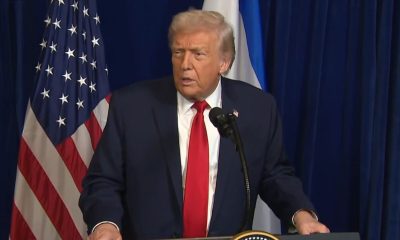





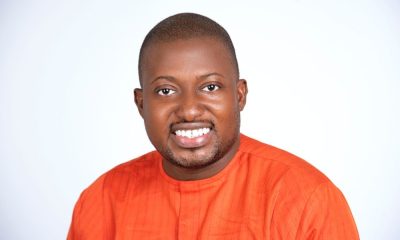




An economic expert at Bayero University, Kano, Professor Kabiru Isah Dandago, has said the Federal Government can proceed with the implementation of the newly signed tax reform laws despite objections raised by some members of the House of Representatives.
Professor Dandago in an exclusive interview with DAILYPOST said the tax laws remain valid, noting that protests by lawmakers after the passage and signing of the bills do not invalidate them.
“Despite their protest after the fact, the tax laws still stand,” he said.
Dandago’s remarks come amid ongoing controversy over the implementation of the new tax laws. The controversy began after a lawmaker, Abdussamad Dasuki, alleged discrepancies between the tax laws passed by the National Assembly and the versions later gazetted and released to the public.
He argued that the gazetted laws did not reflect what lawmakers debated and approved.
Dandago explained that concerns should only arise if any provision of the laws is proven to negatively affect the livelihood of Nigerians.
“It remains unclear what these discrepancies are, where the issue lies is if there is some clause inserted in the law that will affect the livelihood of the masses negatively, but so far, nothing has been brought forth as such,” Dandago said.
The professor added that if members of the House of Representatives are convinced there are serious issues with the laws, they should present clear facts to support a review.
“If the Representatives are serious, then they should get their facts ready so that a review can be done,” he stated.
Meanwhile, the Minority Caucus of the House of Representatives has also asked the Federal Government to suspend implementation, citing alleged alterations to the versions of the bills passed by the National Assembly.
The call followed comments by the Chairman of the Presidential Committee on Fiscal Policy and Tax Reforms, Taiwo Oyedele, who insisted that the January 1, 2026 implementation date for the Nigerian Tax Act and the Nigerian Tax Administration Act remains unchanged.


President Bola Tinubu has approved the cancellation of debts totalling $1.42 billion and ₦5.57 trillion (about $3.85 billion) owed by the Nigerian National Petroleum Company (NNPC) Ltd to the federal government, as part of efforts to clean up the company’s finances and improve transparency in the oil sector.
The presidency disclosed the decision on Monday, noting that it comes amid growing fiscal pressures on Africa’s largest oil producer, including weak revenues and rising public debt. The move is also linked to the government’s broader plan to reform NNPC ahead of proposed divestments in oil and gas assets.
Details of the approval were provided by the Nigerian Upstream Petroleum Regulatory Commission (NUPRC), which said the decision was reached during the November Federal Accounts Allocation Committee meeting held last week. The meeting followed recommendations by a reconciliation panel tasked with reviewing NNPC’s financial obligations to the government.
According to the presidency, the debt write-off covers liabilities accrued up to December 31, 2024. These include obligations arising from production-sharing contracts, domestic crude supply arrangements, repayment agreements, modified carry contracts and joint venture royalties.
However, the government said outstanding obligations incurred between January and October 2025 are still being pursued. In addition, a long-standing dispute over an alleged $42.37 billion under-remittance by NNPC between 2011 and 2017 remains unresolved. While the government continues to raise concerns over the issue, NNPC has maintained that all revenues during the period were fully and properly accounted for.
The presidency said the debt cancellation is aimed at strengthening transparency and accountability in Nigeria’s oil and gas industry, while resetting fiscal relations between the government and its state-owned energy company, which remains central to national revenue generation.
Related
Executive members of the New Nigeria Peoples Party, NNPP, in Gargari Ward, Dawakin Tofa Local Government Area of Kano State, have removed and expelled the state party chairman, Hashimu Dungurawa, from the party, barely two weeks after his re-election.
A resolution signed by 27 ward executives said the decision was taken during the ward’s second executive meeting, led by the Ward Chairman, Shuaibu Hassan, with the secretary, Yahaya Saidu Dungurawa, in attendance.
According to the resolution, Dungurawa was removed over allegations of causing division within the party, fueling internal crises, failing to pay party dues, and making abusive comments against the Kano State Governor.
The executives said his alleged actions were unacceptable and harmful to the image, unity, and progress of the NNPP.
They stated that the decision followed the party’s constitution and was aimed at maintaining discipline, unity, and internal harmony within the party.
The ward leadership said copies of the resolution had been sent to the party’s local government, state, and national offices for further action.
“The decision had been communicated to the party’s national leader, Senator Rabiu Musa Kwankwaso, and the Kano State Governor, Alhaji Abba Kabir Yusuf”.
The ward executives said the move was meant to warn party members who abuse their positions and act as if they are above party rules.
They reaffirmed their loyalty to the NNPP national leadership under Kwankwaso and pledged continued support for Governor Abba Kabir Yusuf, while stressing their commitment to peace, unity, and the growth of the party.
NIGERIA NEWS
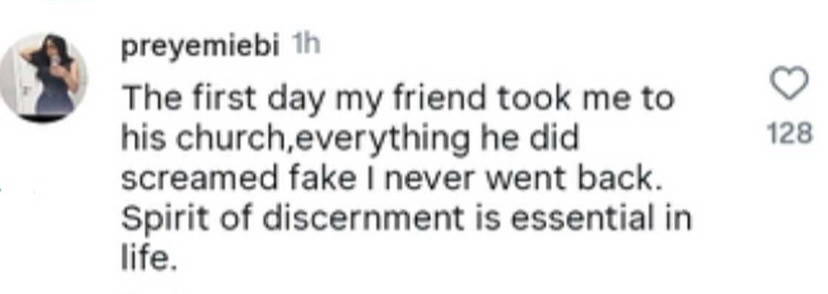
“I never went back” – Lady who attended Chris Okafor’s church for the first time shares what turned her off

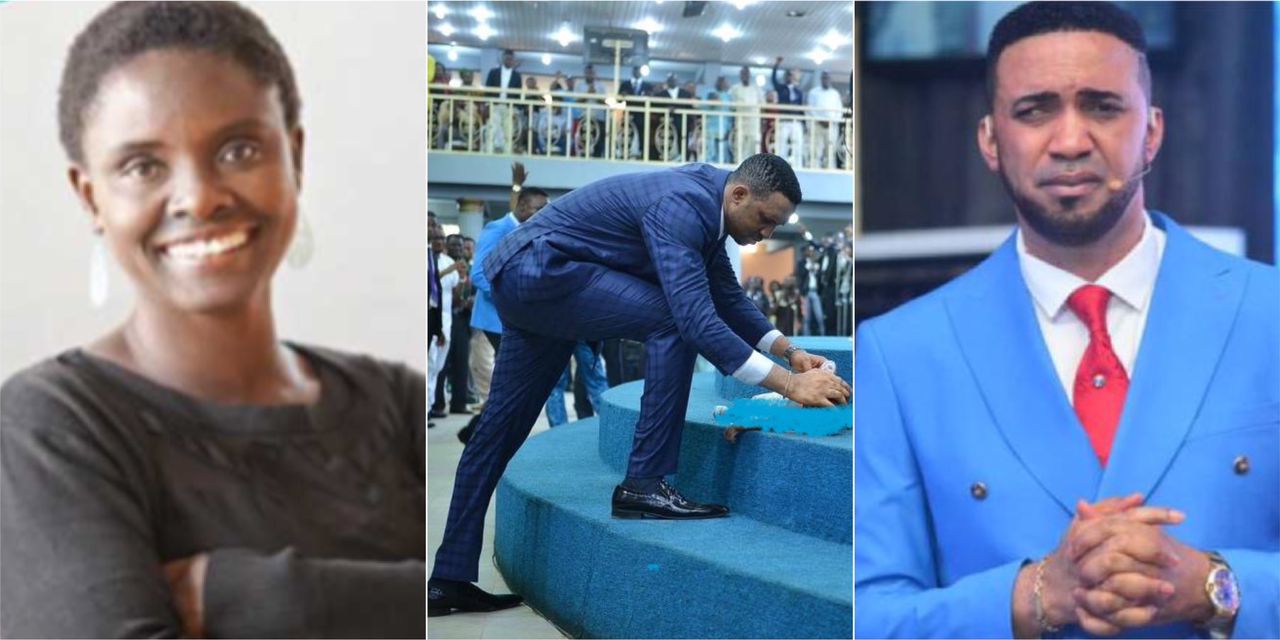

A Nigerian lady has shared why she decided she would never step into Pastor Chris Okafor’s church again after attending a service there for the first time.
First-Time Visit That Changed Her Mind
The lady, identified on Instagram as @preyemiebi, revealed that she attended the church after a close friend invited her.
Out of curiosity and trust, she honored the invitation even though she had no prior attachment to the church or its leader.
“Everything Felt Off” – Lady Explains
According to her, the experience during the service left her deeply uncomfortable. She said several activities she witnessed didn’t sit right with her and raised serious doubts in her mind.
To her, the atmosphere and events unfolding during the service did not feel genuine.
Doubts About What She Saw
She explained that some actions during the programme appeared questionable, and what she observed did not align with what she personally expected from a place of worship. The more the service went on, the more uneasy she felt.
Decision Made Before the Service Ended
Before the programme was even over, she said she already made up her mind not to return. Trusting her instincts, she walked away convinced the church was not for her.
In her words: “The first day my friend took me to his church, everything he did screamed fake. I never went back. Spirit of discernment is essential in life.”
See below;


Governor of Kogi State, Alhaji Ahmed Usman Ododo, has kicked off the All Progressives Congress (APC) electronic registration (e-Registration) at his Upogoro Ward in Okene local government area.
The ceremony attracted party leaders, stakeholders and supporters who converged to witness the governor revalidate his membership on the digital platform.
After completing his registration, Governor Ododo called on the members of the party to register en masse, describing the initiative as a significant step in strengthening internal democracy and party organisation.
He noted that the e-registration platform responds to the growing interest of Nigerians who desire to identify with the party’s progressive ideology and reform agenda.
“Hundreds of thousands of people have been clamouring to register as members of our party. This platform has created the opportunity to achieve that seamlessly, thanks to our performing President and the national leadership of the party,” the Governor said.
Governor Ododo attributed the renewed confidence in the APC to the bold reforms and leadership of President Bola Ahmed Tinubu, stressing that the party has become increasingly attractive to Nigerians due to significant economic improvements.
“President Bola Ahmed Tinubu has made our party the most attractive in Nigeria today. His policies are yielding results. The economy is gradually stabilising, the naira is strengthening, food prices are easing, and agriculture is taking centre stage once again. The beginning was tough, but it was necessary to build a stronger and more resilient nation,” he stated.
The Governor expressed confidence that Nigerians would reward the President’s courage and reforms with renewed trust, noting that the people have faith in his leadership and vision for the country.
Governor Ododo further charged party leaders at all levels to ensure a smooth and massive rollout of the e-registration exercise across the state, describing it as a clear demonstration that the APC is leading Nigeria into a new era of digital party management.
He directed the highest political appointee in each Local Government Area to work closely with the council chairmen and key party stakeholders to ensure the success of the exercise in their respective councils.
“Let us open our doors wide for others to join the progressive family. Everyone who comes into this party is welcome and will be treated as an equal stakeholder,” he assured.
Reaffirming his commitment to good governance, Governor Ododo pledged to continue delivering on the promises made to the people of Kogi State, despite the commendations his administration has received.
He noted that since assuming office as Governor, he has recorded notable achievements across critical sectors, including the strengthening of security architecture through enhanced collaboration with federal agencies and local hunters, improved access to healthcare services, and renewed focus on rural electrification.
He added that he has rehabilitated key road networks and sustained investments in education and youth empowerment, noting that his administration has also prioritised agricultural development to boost food security and support farmers across the state.
Governor Ododo stressed that the positive feedback from the people would only motivate him to work harder, declaring that his administration would not “take its foot off the pedal” in the drive to build a safer, more prosperous, and inclusive Kogi State.
The Governor was accompanied by the party’s leadership in the State.


Political parties and aspirants have kicked off campaigns ahead of 2027 elections without waiting for the release of the timetable by the Independent National Electoral Commission (INEC). Deputy Editor EMMANUEL OLADESU examines the implications for the electoral framework and governance.
Billboards, flyers and posters adorn and litter many buildings, roundabouts, fences and any available wall in the cities and remotest, far-flung villages. They call attention to impending political battles among political parties and aspirants on the long queue for power.
Although the timetable for the next general election has not been released by the umpire, the 2027 race had begun almost three years ago.
Certain unregulated activities beyond the poster wars have catapulted the country into the electioneering period without the official approval.
Concern is mounting over premature campaigns across the six geo-political zones, states, senatorial districts, constituencies and local governments because political parties are in a hurry, and aspirants are impatient and unwilling to wait for the Independent National Electoral Commission (INEC)’s whistle before throwing their hats in the ring.
Due to the hunt for votes by the ruling and opposition parties, there is no demarcation between the period for politicking and the time for governance. For example, President Bola Ahmed Tinubu had hardly settled in office after the validation of his victory by the Supreme Court in 2023 when the opposition parties returned to the drawing board.
At the state level, parties outside the government also began mobiilisation immediately beyond their customary oppoosition role of constructive criticism of government policies and programmes.
In response, the ruling All Progressives Congress (APC) instantly beefed up a resistance, with its former chairman, Dr. Abdullahi Ganduje, declaring that a vacancy does not exist in Aso Villa, Abuja seat of government, in 2027.
Painting a picture of premature campaigns, a political commentator, Ayuba Ahmad, said “the nation’s political space has evolved over time into a permanent season of electioneering activities,” adding that “billboards are conspicuously displayed months or years ahead of polls, just as the mass media platforms are continually flooded with campaign messaging.” He stressed: “No doubt, the steady and deafening drumbeat of political activities, deceptively labelled “party promotion” or “grassroots mobilisation,” has real, multiple and measurable impact on governance, accountability and the public interest.”
Echoing the Kaduna-based critic, Kafilat Taiwo, a reseacher whose works focussed on the electoral system, observed that “as Nigeria approaches its upcoming major elections in 2026 and 2027, the political environment is becoming increasingly active due to the avalanche of promotional materials, social media content, rallies, and indirect endorsements before the commencement of official campaign periods as defined by law.”
She added: “Although these activities may seem innocuous. Early campaigning is emerging as a significant challenge to the integrity of Nigeria’s electoral process.”
To observers, politicians are exploiting legal loopholes to heat up the polity, knowing that they can easily evade sanctions by the electoral agency.
In September, the commission was taken aback by the early campaigns under the guise of party meetings, party visits, empowerment programmes, endorsement and other social events, including birthdays and funeral, which they elevated into campaign platforms.
Indeed, many politicians are also clever to hide under township consultative meetings, project commissioning, ceremonial events, and distribution of palliatives to constituents.
The commission expressed frustration at the inability to sanction political parties, candidates for elections and their supporters who organise campaigns before the stipulated time.
Former INEC Chairman, Prof. Mahmood Yakubu, and the Chairman of the Electoral Institute, Prof Abdullahi Abdu-Zuru, condemned the illegal campaigns at a one day conference with the theme: “Challenges of premature political campaign” in Abuja, the Federal Capital Territory (FCT).
At the roundtable, Yakubu’s predecessor, Prof Attahiru Jega, pointed out that the political class was exploring legal loopholes. He explained that the 1999 Constitution and the Electoral Act have failed to stipulate stiff sanction against those behind premature campaigns ahead of polls.
Jega said while the Electoral Act imposes a fine of N500, 000 on those who engaged in campaign less than 24 hours to the main election, there was nothing in the law that serves as sanction for those who engage in campaign less than 150 days to elections as provided for in the Electoral Act, 2022.
The former INEC Chairman also noted that the trend of campaigns ahead of off-cycle governorship elections without authorisation was disturbing, stressing that lawless politicians violate the provisions with impunity and go scot-free.
Section 94(1) of the Electoral Act 2022 prohibits the commencement of campaign earlier than 150 days, which is five months before the polling day and must end 24 hours prior to that day. Yakubu said “the idea is to prioritise governance over electioneering from one electoral cycle to another.”
But, he lamented that despite the provisions, political parties, candidates and their supporters seem to be perpetually in election mood ahead of the timeframe provided by law.
“Around the country, we have seen outdoor advertising, media campaigns and even rallies promoting various political parties and candidates. These actions and activities undermine the Commission’s ability to track campaign finance limits as politicians, prospective candidates and third-party agents expend large amount of money that cannot be effectively monitored before the official commencement of campaigns.
“Quite correctly, Nigerians expect INEC, as registrar and regulator of political parties, to act in the face of the brazen breach of the law on early campaign. However, the major challenge for the Commission is the law itself,” he said.
Like Jega, Yakubu, who shed light on the weakness of the law, called for its amendment. “Sections 94(2) of the Electoral Act 2022 imposes sanctions, albeit mild (a maximum amount of N500,000 on conviction), on any political party or a person acting on its behalf who engaged in campaigns 24 hours before polling day.
“However, there is no sanction whatsoever concerning breaches for campaigns earlier than 150 days to an election. Here lies the challenge for the Commission in dealing with early campaign by political parties, prospective candidates and their supporters.
“In a sense, the problem of early campaign in Nigeria is not new. The seeming inability of the Commission and other regulatory agencies to deal with the menace within the ambit of the existing electoral legal framework calls for deep reflection.”
Abdu-Zuru, also an INEC National Commissioner, highlighted the tricks by politicians who indulge in early campaigns. “We have seen aspirants use cultural festivals and religious gatherings to drop hints about their ambitions, often disguised as appreciation or philanthropy. Billboards and branded vehicles sometimes appear with cleverly crafted slogans that stop just short of open solicitation but leave little doubt about the intent.
“More recently, social media influencers and content creators have become key players and fronts, flooding platforms such as Facebook, Instagram, Tik-Tok, YouTube, and X with songs, skits, and hashtags that project particular aspirants many months before the permission of the law.”
Abdu-Zuru described Section 94 (1) of the Electoral Act as a safeguard introduced to ensure fairness, reduce political tension, and guarantee a level playing field for aspirants. “Unfortunately, what we see today is an increasing determination to circumvent, stretch, and even undermine this law. Often, actors such as associations, professional groups, religious groups or political support groups are used as convenient fronts for disguised early campaigning,” he said.
Noting that the implications of this trend are far-reaching, he added: “When aspirants or parties compete to dominate visibility long before the official campaign period, it distorts fairness and raises the cost of political competition.
“Moreover, it distracts from governance, as elected officials become more concerned with sustaining political relevance than delivering public service. Over time, it erodes public confidence in our electoral system and fuels cynicism about whether the law can truly be enforced.”
Abdu-Zuru said stakeholders must be frank in acknowledging the scale of the challenge and bold in designing solutions. “We must refine the regulatory framework so that what constitutes premature or early campaigning is more clearly defined in today’s digital age.
“We must strengthen enforcement, ensuring that violations are detected early and sanctioned firmly, be it by political parties, individuals, or their proxies. We must engage media organizations and social media platforms, encouraging them to cooperate in moderating content that undermines the electoral timetable. We must intensify civic education to enlighten citizens, especially the youth, on the dangers of endorsing and promoting early campaigns.
“Democracy thrives on fairness, order, and respect for the rules, regulations and guidelines governing the electoral process. Campaigns conducted within the time frame stipulated by law ensure a more level playing field, reduce political tension, and enhance the credibility of elections.
“Respecting the law is not a limitation on political participation but an affirmation that our democracy is rooted in integrity, not expediency.”
Jega, who spoke on the sub-theme: “Towards addressing the challenges of premature election campaigns in Nigeria,” described the pattern as an aberration.
“It undermines INEC’s authority, violates the rule of law and erodes the integrity of any election,” he said.
Besides, the former INEC chairman said premature campaigns encouraging lawlessness among political actors and gives unfair political advantage to parties and candidates who are reckless and brazen in disrespecting the law. Jega listed the effects of the pattern on the political system, saying: “Candidates or parties who begin campaigning early often gain more visibility and influence than other candidates, thereby creating an uneven playing field; reduces political competition, and ultimately escalates campaign spending.”
He added: “Similarly, premature campaigns shift focus from governance to politics, especially when incumbents engage in early campaigning, and divert attention to politicking rather than fulfilling their mandates to the electorate.
“Indeed, in the Nigerian context, premature campaigns quite often heat up the polity, increase political rivalry, as well as engenders hate speech, and ethno-religious polarization. This often triggers violence, especially in politically volatile areas, deters peaceful political participation, and weaken the enforcement mechanism to punish the offenders “
Major contributory factors to premature campaigns are the off-circle governorship polls, which are perceived as prelude to the general election. This is different from the four-year electoral circle. These off-circle polls are held in Kogi, Imo, Anambra, Ondo, Osun, Edo, Bayelsa, and Ekiti states. Party chieftains from other states usually storm the eight states in solidarity with their counterparts. The common refrain is that victory at the off-circle elections could predict success at the general election.
Also, the early campaigns generate a sort of economy which brings money to the media in terms of advertisement and income to the poster printers and the influencers.
There is no campaign fatigue as the off- circle poll campaigns usually herald the mobilisation for the general election. As political activities tend to intensify well in advance for the purpose of tenure renewal and power consolidation, politicians may turn governance into secondary business and focus more on elections than service delivery.
Alluding to the impact of early campaigns on Nigeria ‘s democratic system, Taiwo said, based on historical data on elections, they can confer structural advantages on certain political parties.
It is an undertatement. In 2015, candidates who initiated mobilisation before the official campaign period established significant media presence and developed grassroots networks before the INEC opened the formal campaign window. It is noteworthy that the All Progressives Congress (APC) kicked off its campaigns immediately the fusion of the legacy parties – the Action Congress of Nigeria (ACN), All Nigeria Peoples Party (ANPP), Congress for Progressive Change (CPC), a faction of All Progressive Grand Alliance (APGA) and the new-PDP – was consumated in 2014.
Also, in 2019 and 2023, social media contributed to the trend as candidates used online influencers and digital marketing to reach voters, prior to official campaign periods.
Since the first quarter of 2025, opposition politicians from the PDP, the Coalition Group and the African Democratic Congress (ADC) have been holding elaborate meetings and rallies drumming support for their platforms and campaigning against President Tinubu, who has been endorsed for a second term by the APC.
Not sleeping on guard, groups within the ruling party have reacted by holding endorsement rallies in many states of the federation. Most APC governors have set up endorsement committees which have transformed into campaign structures. The endorsements harboured the elements of premature campaigns.
“These approaches affected public perceptions of fairness in the electoral process and influenced the direction and pace of campaigns before the formal start dates,” said Taiwo, who also explained why politicians start campaigns early.
In her view, aspirants frequently begin their campaign early to demonstrate influence, establish dominance and shape national discourse ahead of elections.
Besides, internal party conflicts may prompt some candidates to initiate indirect campaigns – often through cultural festivals, philanthropic initiatives and branded events – to outpace their competitors and secure endorsements within the party. In extreme cases, some politicians conduct veiled campaigns in churches, mosques and on ethnic platforms.
When former Kaduna State Governor Nosiru El-Rufai, after defecting from APC to the Social Democratic Party (SDP) in March 2025, appealed to the North to reject President Tinubu in 2007 some Arewa, Afenifere and Ohanaeze Ndigbo chieftains started continuity campaigns for the president in the spirit of zoning. To counter the potential regional bullying, a northern musician, Dauda Kahutu Rarara, waxed a record titled: ‘Asiwaju Omo Ologo.’ It is still trending in the region.
In the past, aspirants delivered lectures of various kinds, with the media assisting in their projections through stories, features, analysis and advertisement.
Since social media is not controlled, it is often exploited and abused. “Most individuals use social media platforms such as Facebook, Instagram. Tick Tok, You Tube and X (Twitter) to increase their visibility. Due to the lack of explicit penalties, candidates often experience minimal consequences for violating regulations, which can make early campaigning more common,” Taiwo stressed.
To INEC, these premature activities severely compromise the ability to track and enforce campaign finance limits “as politicians, prospectve candidates and third party agents expend large amounts of money that cannot be effectively monitored before the official commencement of campaigns. “
Although the Nigerian Police is charged with protecting the electoral process, it has similarly admitted difficulties in monitoring campaign and enforcing regulations on campaign timings. Since 2024, multiple large billboards have become conspicuous in Abuja, many state capitals, cities and towns across the federation, with messages highlighting the 2027 elections, and often featuring incumbent figures in promotional poses.
Despite public disclaimers from the Presidency and party officials that they did not sponsor the materials, the presence and scale of the display show organised spending and messaging. The police have not acted by pulling any of them down.
At the Abuja conference, Adebayo Sogunle, Commissioner of Police In Charge of Election Monitoring, who represented Inspector General Kayode Egbetokun, noted that every law enforcement agency is saddled with the responsibility of ensuring the implementation of all laws passed by the National Assembly. He said in doing that, the question has always been the relevance of such laws to the security and welbeing of the people and the nation.
Sogunle merely added that the police will continue to enforce all laws, ensure peaceful campaigns and provide security during elections.
Ahmad identified four reasons why enforcement is diffult. He acknowledged the constraints expressed by Jega, pointing out that while campign in less than 24 hours to the poll attract penalty, those who campaign earlier than 150 days to the poll have no fear of any sanction.
Secondly, he said “many campaign materials are funded and executed by “third party” groups, including Independent coalitions, think-tanks or media houses, and this makes it harder to tie spending to a candidate or party for legal purposes.
Thirdly, INEC and the police are handicapped because they fear the repercussions of checking those in power. This is the consequence of weak institutions fretting in the face of intimidating political pressue. “Enforcement agencies such as the INEC and the Police depend in large measure on political actors and the government, for resources and cooperation. Where incumbents benefit from early visibility, the tendency for aggressive enforcement is blunted. In such a situation, enforcement becomes selective, and concomitantly, the relevant institutions get weaker,” Ahmad stressed.
Above all, the Electoral Law, when it was enacted, hardly anticipated the impact of social media potrayals. Social media is comparatively cheaper for image projection. Thus, political gladiators are attracted to the ever-multiplying plethora of online platforms because their messaging goes viral at a lower cost. “This brings up the question of whether existing campaign-timing rules can remain effective in view of the fact that the law was written before this tsunami of low-cost, high-reach digital campaigning,” Ahmad said.
The effect on political behaviour is immense. Candidates who flout the rules through early campaigns have a significant presence in the media and public spaces, which can place those adhering to campaign regulations at a disadvantage. “ For example, during the 2015 and 2019 elections, individuals who established early momentum were ultimately able to surpass competitors who complied with the official campaign,” Taiwo recalled.
There is also the money factor. As wealthy aspirants kick-start the race through premature campaigns, their struggling counterparts, who ultimately enter the fray with meagre resources may dry out. This is due to the fact that extended campaigns require additional funding, which can increase the cost of political participation and competition. This situation may ultimately benefit candidates with more financial resources and present challenges for those with fewer resources.
But there is erosion of trust due to lack of a level playing field. When voters observe politicians breaking rules without apparent consequences, confidence in the fairness of elections may decrease, resulting in reduced engagement or increased suspicion about the integrity of the electoral process.
The greatest effect is governance distraction. There is conflict between premature campaigns and service delivery based on current mandate. Putting this dilema into perspective, Taiwo, who shared the view of Jega and Abdu-Zuru, said:”Office holders who seek re-election may allocate time to campaign, which can result in less focus on immediate governance responsibilities.”
However, many politicians in Nigeria do not believe in the notion of premature campaigns. The Chairman of the House of Representatives Committee on Electoral Matters, Adebayo Balogun, rejected the notion, saying that “it is vague.”
He queried: “Is it when the governor is commissioning a project and his supporters gather to sing his praises and show appreciation or when a lawmaker empowers his constituents or when the opposition hold rallies to oppose government policies?”
Balogun, who represents Ibeju-Lekki Constituency on the platform of the APC, said restriction is a military legacy. “We should search our minds whether we should be having laws in 2025 restricting campaigns. We should put behind us these practices we inherited from the military and forge democratic ideals going forward,” he added.
The federal legislator pointed out that many candidates do not even know all the people who campaign on their behalf on the social media.
“The social media today cannot be controlled and sometimes, you don’t even know who is putting out posters on your behalf. So, who do you hold responsible when things like this happen? Is it the individual or the political parties?” he asked.
The solution is the amendment of the Electoral Act being proposed by INEC.
Fñormer Director-General of the National Orientation Agency (NOA), Prof. Tonnie Iredia, who supported the review of the electoral law on campaigns, said: “The law is to blame for premature campaigns because legal provisions on the subject failed to cover the field.
Quoting William Mackenzie, a British political scientist, he added: “If the rules limiting the struggle for power are not observed faithfully, the game will disappear amid the wreckage of the whole system.”
A political writer, Jibrin Ibrahim, who agreed with Iredia’s opinion, pointed out the conflicts in the electoral law is an obstacle.
He said: “Another problem with the Electoral Act 92(4) is its categorical provision that: “No registered political party in Nigeria, its aspirants or candidate shall be prevented from holding rallies, processions or meetings at any time for their constitutional political purposes, and the Police shall in a consultative manner, resolve any conflict of time and venue between and amongst parties where such arises.”
Ibrahim said aspirants who break the premature campaigning provision could always evoke the provision to escape any sanction for the breach they have committed. The way forward, he added, is to refine the regulatory framework so that what constitutes premature or early campaigning is more clearly defined to avoid the ambiguities that create loopholes.
Ibrahim also said that “it is important to strengthen enforcement, ensuring that violations are detected early and sanctioned firmly, be it by political parties, individuals, or their proxies.”
He blamed regulatory agencies for not immediately responding to the breach, saying: “All billboard messages have to be approved by the advertising regulatory agency and the question is: did they approve the message and did they check whether such content violated the law?”
Jega, who inisted that premature campaigns are technical violations, urged Nigeria to emulate countries like Australia, Mexico, Philippines, and to some extent, India, where premature campaigns attract penalties ranging from fines to imprisonment.
Noting that campaigns are very important aspects of elections and they play a significant role in deepening democracy, he said they should be regulated by law.
He said: “For elections to be meaningful, democratic and beneficial to the citizens, they should have integrity; they should be rule-based, transparent, free and fair, and have a level playing field for all participating political parties and candidates. Similarly, their preparation and conduct must be seen to be professional, efficient, non-partisan and impartial.
“Their period and duration should be defined by either the provisions of the constitution or Acts of the legislature and regulaby the Election Management Bodies (EMBs)”.
Jega also said all election campaign offences, especially premature campaign offences, should be carefully defined, stiff penalties specified, and strictly applied where applicable, while candidates and their parties, especially incumbent office holders and their political parties, should be vicariously held responsible and penalized for premature campaigns for them by third-parties.
He also suggested that the anti graft bodies, Economic and Financial Crimes Commission (EFCC) and Independent Corrupt Practices and Other Related Offences Commission (ICPC) should pay special attention to third-party campaigners and thoroughly interrogate their sources of funding.
Jega added: “In determining whether candidates and parties expenditures fall within approved limits, the estimated or determined expenditure by a third-party campaigner for the candidate or the party should be taken into consideration.”
The former INEC chairman also said “ the recommendation for the establishment of Elections Offences Commission and Tribunal has become even more urgent and important for consideration, and should be addressed in the current or next round of electoral reforms before 2027 elections.”
Ahmad pointed out that two years to the next election season of 2027, the political atmosphere is already overcharged with campaigns. He urged the National Assembly, through legislation or amendment, to close the legal gaps that leave the 150-day rule unenforceable. He said legislative changes should include explicit penalties and a mechanism for swift administrative enforcement of penalties such as fines or takedowns.
Ahmad added: “There is the urgent need to update the rules for digital and out-of-home advertising as well as enhancing the powers of regulatory authorities on takedown. This demands that regulatory bodies are adequately resourced to enforce quick content takedowns and trace digital funding.”
The onus is on regulatory agencies – the Broadcasting Organisation of Nigeria (BON), the National Broadcasting Commission (NBC), which regulates the broadcast media and the Advertising Regulatory Council of Nigeria (ARCON), which regulates advertisement, including outdoor advertising – to live to expectation.
Taiwo called for the disqualification of aspirants or candidate who flout the rules. She said the measures would ensure that political parties are both responsible for internally regulating their candidates and held accountable if they promote or disregard premature campaigns.
She added: ”However, INEC should promote public awareness campaigns designed to educate citizens on campaign timelines and the risks associated with premature campaigning. Such initiatives can enhance accountability by empowering voters to demand adherence to established regulations.
“INEC may utilise technology-based monitoring of campaigns, particularly on social media, to track compliance and identify instances of violation.”
NIGERIA NEWS
Fubara Not Rivers APC Leader, He Decided Late, Re-election Not Guaranteed – THISDAYLIVE


•Claims his supporters control the grassroots
•Criticises Makinde’s approach to politics
•Declares he’s decided to quit PDP, ADC not a threat to Tinubu in 2027
•You’ve exposed your anti-party activities, PDP tells Wike, vows to field presidential candidate
• You’re frustrated, party’s professionals knock FCT minister
Chuks Okocha, Olawale Ajimotokan in Abuja and Blessing Ibunge in Port Harcourt
Minister of the Federal Capital Territory (FCT), Nyesom Wike, during a long-winded media chat, yester-day, insisted that in spite of the defection of Rivers State Governor, Siminalayi Fubara, from Peoples Democratic Party (PDP) to All Progressives Congress (APC), he was not the APC leader in the state.
Wike, while mocking Fubara, said he took the decision late and his defection to APC did not guarantee his re-election in 2027.
The former Rivers State governor boasted that he remained the leader of politics in the state, claiming that his supporters control the local governments and ward structures across the state.
Wike, who further dismissed insinuations in some quarters that Fubara’s defection to APC automatically made him the party’s leader in the state, said the governor did not have structure that would guarantee him leadership of the party.
He said before the governor resigned from PDP, 22 local government chairmen in the state and more than half of the House of Assembly members had left PDP and joined APC.
Wike stated, “Defecting to another party does not make you the leader. When you said you are joining the party, you must have something to offer. There’s nothing like 001. There’s nothing like, ‘I have registered in the state as 001.’
“He (Fubara) decamped to APC with who? What is ‘001’? Let me tell you, there’s nothing like 001 in the state. You register in your ward and local government. So, if you are 001, it’s in your ward.
“Everybody registered in their own ward. You could be the first person to register, but that’s not your position.
“See, leadership is not because I’m a governor. Leadership is not because I’m a minister. You must have something that makes you a leader. Who is the leader of APC in Lagos State? There are exceptions to rules.”
The former Rivers governor boasted that he had made up his mind to leave PDP, and those loyal to him, even in other states of the federation, will join him in leaving the party.
Responding to Fubara’s earlier statement that anyone who wanted to support President Bola Tinubu should “not follow corner, corner”, Wike reiterated that he had been the most abused minister in the present administration because of his support for the president.
He stated, “Nigerians know that in 2023, I supported the president. I didn’t hide that.
“If I am doing corner corner, Assembly people will not go, the National Assembly members will not go. That is leadership. I support President Tinubu. With what the president is doing in Abuja, there is no way PDP will win the FCT in the next election.”
On the alleged breakdown of the peace agreement brokered by the president in Rivers, Wike claimed that it was due to the inability of Fubara to keep to his part of the deal, adding that the governor is being economical with the truth in his working relationship with the leadership of the Assembly.
Addressing claims by Oyo State Governor, Seyi Makinde, that the FCT minister promised to weaken PDP in favour of Tinubu ahead of the 2027 general election, Wike dismissed the assertion as untrue.
He described the allegation as “blatant lie,” and stressed that no such meeting ever took place.
“That is a blatant lie. That is why you see Seyi Makinde has never called me Wike again. That was the last time he did,” the minister stated.
Wike revealed that he played a prominent role in making Makinde governor in 2019, and said Makinde became governor after he and some party leaders handed him with the PDP structure in Oyo State.
Reacting to Makinde’s claim of making $1 million when he was in law school, Wike said, “I ran for the presidential primary of the PDP. I didn’t see Seyi use N1,000 in my primaries. I did not see it even once.
“Secondly, it’s only in Nigeria that I’ve seen someone awarded a job worth $1 million, and nobody is talking about it. But he came to the man who didn’t have $1 million to help him get structure. We said no, we will not give it to you. We gave it to Teslim. He went to SDP to run as governor and failed with his $1 million.
“Then, before 2019, he came back. We said, we are ready to give you structure. I was very grounded in politics, but I had no $1 million with me. But the man who made $1 million is going around looking for people to help him build a structure. It was when we gave him that structure that Seyi became governor in 2019.”
Asked why he failed to brief PDP leadership on the supposed agreement, he replied, “What was the purpose of that meeting? Why did Makinde not come out to tell the party that this is what Wike said? There was no such meeting.”
Wike clarified that the only meeting involving Makinde and some PDP governors after the 2023 general election was a courtesy visit to Tinubu, not a political negotiation.
“Myself, former Benue State governor, Samuel Ortom; former Abia State governor, Okezie Ikpeazu; former Enugu State governor, Ifeanyi Ugwuanyi; and Seyi Makinde went to see the president after the elections. And, of course, the Chief of Staff was there,” he said.
Describing Makinde’s declarations as misleading and unfair, Wike said it was wrong to attribute statements to him that he never made, adding that Makinde is “frustrated”.
The FCT minister said, “Seyi said I told Tinubu that I will hold PDP for him. Nothing like that happened. Everyone knows my stand on Tinubu, I don’t need a meeting to tell him that. As a minister, I have a duty to ensure that members of the G-5 benefitted from the Tinubu administration in one way or the other.”
Wike also challenged Makinde to explain to the people of Oyo State how the N50 billion grant for the January 2024 explosion victims in Bodija, Ibadan, by President Bola Tinubu was appropriated.
He held the view that such hefty grant ought to have been appropriated before spending, adding that even as FCT minister, has not received such largesse as Makinde got from the president.
Wike dismissed Makinde’s accusations as mere sour grapes, stating that his former confidant is only embittered because Tinubu overlooked his preferred candidate for ministerial nomination.
He added that it was improper for the governor to lie against people on national television simply because he did not get the ministerial slot he wanted from the president.
Wike also downplayed the question of African Democratic Congress (ADC) being a potential threat to the re-election of Tinubu in 2027, saying, “Let me tell you something, it’s really unfortunate. I said it clearly. I don’t know if anybody wants to believe it or not.
“If there should be any opposition that will give fight to the APC, it should have been PDP. I don’t know where you are saying that ADC is rising. I don’t know where they are rising. Mention the state where they are rising. Mention. You see, I don’t like this newspaper politics. Every politics is local.”
He said the fact that the chances of PDP winning the presidential election was slim did not mean the party would not win in states.
At another function, Wike also declared that members of APC and PDP in Rivers State had effectively put aside partisan differences to embrace Tinubu’s Renewed Hope Agenda.
He made the declaration during a visit to Etche and Omuma local government areas, where he addressed youth and women leaders from the two councils.
“In Rivers State, APC and PDP have already collapsed into one family, the Renewed Hope family,” Wike said.
He explained that the collaboration across party lines was driven by shared values, mutual respect, and the desire to deliver dividends of democracy to the people.
“I don’t want to hear again, ‘I am PDP’ or ‘I am APC.’ What I want to hear is that you are working together. All of us are members of the Renewed Hope Agenda. It is one family,” he added.
Wike said his visit to Etche and Omuma councils was not for political campaign but to appreciate the people for their longstanding support.
He also urged party leaders and elected officials to honour commitments made, in the interest of peace and development, saying, “Agreement is agreement. When you agree with people, you must keep it.”
The FCT minister stressed that unity remained the key to political and economic progress at the grassroots.
PDP: Media Chat Has Exposed Wike’s Anti-party Activities, His Expulsion is Justified
The PDP leadership, yesterday, said through his media chat, Wike had justified the charges of anti-party activities against him and his expulsion from the party.
In a statement by PDP National Publicity Secretary, Ini Ememobong, the party said, “By his end-of-year Media Chat, Minister Nyesom Wike has reiterated his support for, and in fact declared that he is the ‘Number one supporter’ of the presumptive candidate of the All Progressives Congress in the 2027 presidential election, while remaining a member of the Peoples Democratic Party, confirming the basis of his expulsion from the PDP, for anti-party activities.
“This fact, which he has unashamedly reiterated in several places, is nothing less than a locus classicus of anti-democratic adventurism.”
The PDP spokesman, however, said, “This attitude of Nyesom Wike is not new, as he has been a constant agent provocateur in the political space, creating trouble to mask his selfish intentions.
“Since he assumed power as governor in Rivers State in 2015, Wike has been a recurrent troublemaker in the leadership of the PDP. From the Sheriff era, where he was a forerunner in the Sheriff-for-National Chairman movement and later turned to fight and remove Sheriff.
“Later, he championed the Uche Secondus-for-National Chairman movement (in fact, he granted a very combustible interview that polarised the party just before the convention) and then was the same person fighting to remove Secondus.
“The same Wike led the movement to produce Dr. Iyorchia Ayu as National Chairman against the advice of many party leaders, and so soon thereafter, it was Wike again who led the Ayu-must-go struggle. Beyond the national leadership crises, his actions within Rivers State further illustrate this pattern.
“The imposition of candidates, internal exclusionary practices, and the unprecedented prevention of a duly nominated PDP presidential candidate from campaigning in a PDP-controlled state remain troubling departures from democratic norms.”
PDP stated, “Wike’s politics thrives on perpetual conflict, feeding on attention and seeking relevance through calculated disruption and when starved of attention, seeks to destroy everything.
“All through the interview, Minister Wike showed obvious signs of fear of losing the attention of the president, his slipping grip of Rivers State, and his frustration with the unbending nature of the true leadership of the PDP at the national level.
“The cumulative effect of these actions is a deliberate creation of tension and division, often deployed as leverage to advance narrow political objectives. Recent public statements and alignments now make clear that Wike and his group of friends have openly chosen to work against the PDP’s collective interest in favour of an opposing political platform.
“Now that the mask of his pretence is off and he has stated that he and his group of friends (Sam Anyanwu and co.) will support the president and the APC in the presidential elections, Nigerians are now clearly aware of their disposition to destroy the PDP as a part of their bargain to support the president-a clandestine agreement reached for their selfish reasons.
“We remind Wike that as a lawyer, he knows that agreements made to achieve an illegal purpose are not enforceable and should not be encouraged.”
Ememobong said, “We assure Nigerians that the PDP will field a credible presidential candidate who will receive the massive support of Nigerians and will go on to win the presidential elections in 2027. Our party is the Peoples Democratic Party, and no one person has the capacity to personalise the party.
“The Kabiru Turaki-led National Working Committee is working around the clock to rebuild the party, clear the issues in court, and prepare the party for electoral success come 2027.”
PDP Professionals Say Wike’s Comments Show His Frustrations ahead of the 2027 Election
PDP Professionals said Wike’s media chat had exposed his frustration over his failure to secure the support of credible Nigerians for Tinubu’s re-election bid in 2027.
The professionals, therefore, invited Nigerians to note the minister’s resort to hubristic invective, diversionary falsehoods, and baseless allegations against Makinde and other credible leaders.
They said the outburst stemmed from their refusal to support the Tinubu administration, which had brought untold hardship and escalated insecurity across the country over the last two years.
In a statement by its Protem National Coordinator, Obinna Nwachukwu, the group said, “From Chief Wike’s confessionary responses during the media chat—including his failed attempts to engineer a parallel leadership for the PDP—it is now clear that the travails facing the PDP are contrived to cripple the opposition.
“This is part of a sinister plot to enable President Tinubu to establish a one-party state ahead of the 2027 general election; a plot the PDP has firmly resisted.
“Through Chief Wike’s media chat, Nigerians can now clearly identify the individuals and motivations behind the subversive court actions against the PDP, the violent attacks on the new National Working Committee duly elected at the party’s National Convention, the sealing of the PDP National Secretariat, and the attempts to compromise certain INEC officials against the party.
“Our response to Minister Wike is that the PDP is too big and too deeply entrenched to be captured or derailed. His resort to personal attacks and bogus allegations against our leaders, such as Governor Makinde, will not yield the results he desires.”
PDP Professionals added, “In any case, the CP-PDP holds no sympathy for Minister Wike, who has become an expired, ‘homeless’, and pathetically isolated politician lacking a genuine base or followership.
“Having been expelled from the PDP, rejected by the All Progressives Congress (APC), and side-lined in the politics of Rivers State, Minister Wike is now clutching at straws.
“He is jittery, forlorn, and in mortal fear of imminent political oblivion—a desperation that has driven him to attack credible leaders in a futile attempt to retain his nuisance value.”

Inclusive banking is one concept that financial sector leaders are never tired of discussing. But in practice, not much is being done to advance the practice and improve the banking experience of customers, especially the blind and visually impaired customers of banks. The Central Bank of Nigeria (CBN’s) exclusion of braille feature in naira banknotes design and failure of banks to include Braille and Interactive Voice Response (IVR) features in internet/mobile banking applications and Automated Teller Machine (ATM) for visually impaired are pain-points that erode confidence in the financial system. Assistant Editor COLLINS NWEZE captures blind customers’ pains in accessing financial services and stakeholders’ inability to meet their demands.
Olurotimi Olubodede, a Ph.D. student at Nasarawa State University, Keffi, Nasarawa State, is not interested in any of the N5.01 trillion naira notes circulating in Nigeria. To him, they are merely pieces of paper—unidentifiable and unusable for meeting the banking needs of the visually impaired.
Olubodede, who is blind, is frustrated that the interests of approximately 1.2 million Nigerians, born blind or who became blind over the course of their lives, are overlooked in key financial sector policies, including the design of the naira. He lamented that current banknotes lack tactile or other features that would make them accessible to the blind. This omission adds to the numerous barriers that make it difficult for visually impaired individuals in Nigeria to access financial services.
A Lecturer in the Mass Communication Department at Adekunle Ajasin University, Ondo State, Olubodede said he intends to sustain the fight against the restriction or outright denial of banking services for the blind through advocacy and dialogue with banks and regulatory institutions. “Being born blind yet educated, I have experienced almost everything life could offer—the good, the bad, and the ugly,” he said. “I will continue to speak for visually impaired customers who are often neglected and unheard in this country.”
Olubodede argued that discrimination based on visual impairment—including denial of equal access to financial services—not only violates universal human rights but also undermines business performance and economic growth. He emphasised that blind individuals are integral to building stronger economies, and there is a clear business case for their inclusion. “With the advent of technology, everyone else is enjoying seamless banking services except the blind. We have repeatedly urged banks, including the major ones, to invest in technology that protects our accounts and enables independent transactions, but to no avail,” he lamented.
Although he cannot see, Olubodede is acutely aware of the emergence of fast, secure, and seamless digital banking services. He recounted an incident at the Ikare, Akoko branch of a new-generation bank in Ondo State, where he was initially denied a replacement ATM card because he could not produce a work ID. The branch manager eventually issued the card but noted, “I am issuing this card because of your working place.” Olubodede concluded that the visually impaired are routinely denied access to quality, technology-driven services, and in the rare cases when such services are provided, the conditions often compromise their safety and the security of their funds.
State of the industry
The CBN Governor, Olayemi Cardoso, announced that Nigeria has extended its Payment System Vision roadmap from 2020 to 2028, reflecting an ambitious commitment to modernize the country’s payments infrastructure and strengthen cybersecurity. He noted that more than 12 million contactless payment cards are now in circulation. Additionally, the regulatory sandbox has expanded to include over 40 fintech innovators, providing a platform for safe experimentation and the responsible scaling of new digital finance solutions. “Revised agent banking guidelines have tightened anti money laundering controls, including geo fencing of high risk areas, while improving consumer protection at the last mile. Integration across switching companies has improved, bringing Nigeria closer to seamless domestic interoperability,” he said.
According to Cardoso, Nigeria, supported by these measures, currently stands among Africa’s most advanced digital payments markets, with a dynamic fintech ecosystem that has produced eight of the continent’s nine unicorns. He added that by mid-2025, leading fintech apps had surpassed 10 million downloads each, with one surpassing 50 million downloads, reflecting deep consumer adoption
Despite these milestones, findings showed that the visually impaired customers of Wema Bank, Access Bank, Ecobank Nigeria, Fidelity Bank, Unity Bank, Union Bank, Keystone Bank, among others have continued to complain about the quality of services they receive from the banks. Many of these banks have stopped Interactive Voice Response (IVR) otherwise known as telephone banking for the blind to save cost. They also deny blind customers opportunity to have access to ATM cards. Aside from technology deprivation, many banks prevent them from entering their banking halls with guide-cane or white-cane meant for them to navigate their ways. The banks are also denying visually impaired customers access to loans, even when they have collaterals.
More victims narrate their experiences
National President, Nigeria Association of the Blind (NAB), Stanley Onyebuchi, agrees with Olubodede. For him, banks have failed to ensure the services they provide align with the lifestyle of all categories of customers. Onyebuchi listed the inability of visually impaired customers to access ATM cards, banks’ apps not developed with features that support their use by visually impaired customers and outright denial of banking services to his members. “We have written twice to the CBN itemising these complaints but got no rely. It is unfortunate that the apex bank is not doing enough to ensure that banks provide the right services to the visually impaired customers.
“Our members have continued to complain about banks refusing to issue them ATM cards. In the United States, and United Kingdom, and other advanced countries, the story is different. In those countries, a visually impaired cardholder will just insert his/her headphone, and the ATM will be telling him/her what to do until the transaction is completed,” he said.
According to him, “the visually impaired also have challenge using writing pen and the Nigerian banks are not accepting thumb printing. Many of us have irregular signature, unless we use stamp, which also carries its own risks of being used by third parties. Many of us cannot afford android phones to be able to read bank alerts on our phones. For the visually impaired, banking has become a nightmare,” he said.
David Okon, a visually impaired customer and Executive Member, NAB, said it is unfortunate that some banks are asking visually impaired customers to complete an indemnity form, that is stamped in the court before an account can be opened for them. He said: “Why will banks impose such huge cost on their visually impaired customers? Something they cannot do to other customers who have no such disabilities. We are working to ensure that such practice stops to allow everyone easy access to financial services.”
Okon, a staff of one of the Tier-1 banks in Nigeria, also narrated how some banks deny visually impaired customers access to internet banking and ATM services. He said: “The challenge is that the banking system does not have uniform policy on how to serve visually impaired customers. The services we get depend on which bank branch one visits, who the customer service person is and his/her dispositions. There is no binding policy that guides financial services provision to the visually impaired.”
Mrs. Patience Okafor, a member NAB, narrated her experiences with her banks. “If I don’t fill my pay slip before I walk into the banking hall, getting someone to do it for me is going to be a challenge. Another problem is access to the bank. Some of us move with the guide canes which cannot pass the electric doors installed at the entrance of the banking halls,” she said. Continuing, Mrs. Okafor said sometimes, she had to drop her cane behind, or talk to the security personnel to disable the entrance door before she can go in with the cane.
A visually impaired customer of Access Bank and Convener, Hope and Life for Disabled Persons Foundation (HALFDIPEF), Abiodun Erugbaju, spoke on horrendous experience he had during one of his visits to the bank. “How would you feel when you discover that there are no voice guidance and tactile keyboards on the ATMs your bank expects you to use. Or there is no screen reading software in terms of online banking that enables the computer to speak everything that appears on the screen. Or hearing a customer service officer ask a colleague, who will be operating the bank account for him?” These, he said, were some of his experiences in banks, almost on daily basis.
He went further: “Sadly though, the customer service officer was not even asking me directly, she was asking a colleague. When I heard it, I felt bad, and quickly told her that the question was ridiculous. If you want to ask this type of question, you should ask me. Not a third party that does not know about me. She is not my brother or someone that knows me. “Asking a stranger who will be operating my account for me is derogatory. Which means I can’t do that even as a master’s degree holder? I brought out four different ATM cards and told the customer service officer that the card she has just given me will make it the fifth that I have at the moment. Then, I told her that she had just insulted me by that question,” Erugbaju narrated.
Erugbaju said although the CBN has consistently advised banks and financial institutions to provide ATMs that are accessible to and independently useable by individuals who are blind, the banks have largely ignored the directive. “There should be more sensitization of the visually impaired and other members of the society on the workings of digital payment. I have not seen that level of seriousness on the part of the CBN educating people with sight, left alone the visually impaired,” he said.
Also speaking, a visually civil servant based in Lagos, Mrs. Zaria Abdul, said there are so many things she wanted the financial sector to improve on. She said she cannot use the ATMs because of difficulties in accessing the keys, adding that banks should put some signs on the ATM that identify the numbers on the keypad and well as the notes. “I was at Wema Bank the other time, and I had to call the security man to assist me with my account number. And you know the account number is supposed to be private, but I have to disclose it just to get the transaction done,” she said.
According to her, adding Interactive Voice Response will make it easier for visually impaired customers to listen and follow instructions in carrying out their transactions, instead of relying on third parties. Mrs. Abdul said although she has not been a victim of ATM fraud, many of her friends have been defrauded by the very people they trusted with their ATM cards and PINs.
A member of the Disability Policy and Advocacy Initiative (DPAI), Moses Adigun, who is also blind, supported Erugbayi’s argument saying the banks need to provide software tools that would enable them use internet banking facilities. He said the ATMs are not well equipped for the blind. He said that the banking halls not accessible, with many of them with inadequately measured ramps, and greater number without any.
“The ATMs are not equipped to give me my account balances, buy air airtime, pay utility bills among other services,” he said. For him such inadequacies have discouraged him from using the banks adding that bank notes are not recognisable to the blind.
“Look at the polymer notes we are using now. I don’t know how to differentiate between N5, N10, N20 and N50. They all have same texture and feature. As far as I am concerned, they are all the same. If the CBN wants to create the needed features, it can do it. But the bitter truth is that they do not even think that some people are disabled. We are the ones affected, but some of them may be disabled one day. Challenges can visit anybody just like rain can fall at any time without announcements,” he said.
Michael Kamya, Executive Director of the Union for the Blind, which operates in Lagos and Nairobi, Kenya, also recounted his experience with Barclays Bank Uganda, where his request for a $10,000 salary advance loan was declined. He said: “I applied for a loan and they said your organisation did not qualify when we did the qualification sampling. Then I said no problem, I am not qualified, but one of my staff who is not disabled applied for the loan and got it. I am the chief executive officer of the organisation where she works, how come I was not qualified? What is the problem so that I rectify it so that other staff will not be denied when they apply?
“They said I was just not qualified. Then I said, can you put what you are telling me in writing? The bank said no. Then, I contacted my lawyer who wrote them. They sensed there was big trouble when I kept writing them, up to three times. They gave me the loan. I was contemplating dragging them to court before they responded. They just sensed I was on the move.”
Kamya, who spoke while attending a conference in Ikeja, Lagos, called for continuous advocacy to draw the attention of the authorities to the various challenges faced by Persons with Disability, especially the blind. He said challenges faced by the blind differ from bank to bank, but the issues have to do with discrimination, poor customer services and outright denial of banking services. “Some banks don’t think that I am eligible to have a bank account. Some banks do not accept thumb prints thereby excluding the blind that may not be able to sign with a pen. Sometimes, it may have to do with ignorance by the staff of the banking institution. Some banks even think that as a visually impaired person, one is not entitled to a loan. There are also issues around bank notes not being accessible to blind users who will not be able to differentiate one currency from another. I have seen these practices in Lagos, Kenya and Uganda,” Kamya stated.
Views from other stakeholders
President of the Bank Customers Association of Nigeria, Dr. Uju Ogubunka, said banks are not doing enough to ensure that visually impaired persons are financially included. He said banks should make messages about their products and services available to the blind in a manner they can understand them. He called on stakeholders to work towards ensuring the effective inclusion of the blind in empowerment programmes that would have positive behavioural change on their relationship with banks.
Ogubunka, who was also former Registrar, Chartered Institute of Bankers of Nigeria (CIBN), said the exclusion of the visually impaired from the design, planning, implementation, monitoring and evaluation of government policies on key issues that affect their lives is highly disturbing. He said there is also need to include the visually impaired persons in national and state strategic plans and other relevant policy documents on banking operations, telecom and reproductive health, which he said, constitute major concern to stakeholders. For him, Nigeria banks can develop homegrown solution to provide quality services to their visually impaired customers. The banks, he added, can also borrow ideas from advanced countries on how they are meeting the banking needs of their blind customers.
A source in Ecobank Nigeria who asked not to be named because he was not authorised to speak on the matter said the bank’s ATMs have voice prompt that enables visually impaired customers to carry out their transactions seamlessly. “Our online plan is to accommodate people with disabilities and ensure they have the best of services. All the Ecobank ATMs nationwide will have voice prompt,” the source said.
For Erugbaju, what is needed is stakeholders’ dialogue, adding that sitting back and making policies without talking to those directly affected by it, will not produce the desired results. According to Kamya, governments at all levels need to be consulting with disabled persons when making policies that affect their lives and finances. “We have a slogan that says ‘Nothing for Us Without Us’ meaning that we are the better advocates for ourselves. So, we need to be part of whatever policies that are designed for us. There is also need for more sensitisation in the banking sector so that their staff look at us as human beings,” he advised.
Other stakeholders advocated for the inclusivity and accessibility of blind people’s needs, not just to banking services but also to information, safe use of public infrastructure, public transport system, access to qualitative and functional inclusive education, attainment of fully independent living, inclusion into political and socio-economic activities among others to promote equitable and sustainable society.

By Peter Duru
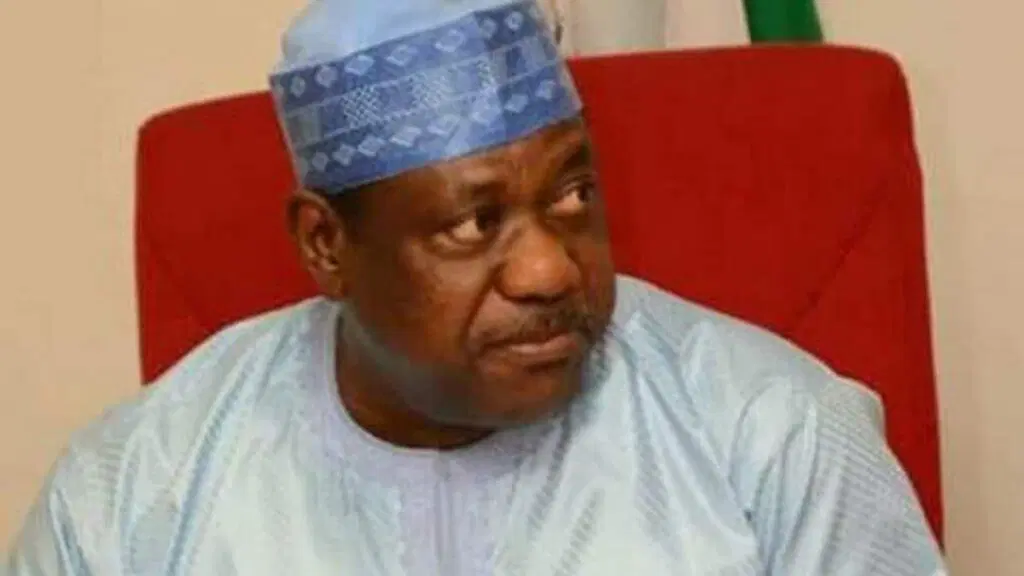
Makurdi— The lawmaker representing Gboko/Tarka federal constituency in the National Assembly, Mrs. Regina Akume, has urged her husband, the Secretary to the Government of the Federation (SGF), Senator George Akume, to fully return to Christianity, stressing that his achievements in life were rooted in his Christian faith.
Mrs. Akume made the appeal in a viral video recorded during the wedding reception of the SGF’s son, held on Sunday in Makurdi, Benue State. Senator Akume celebrated his 72nd birthday anniversary last weekend.
In a birthday prayer for her husband, the lawmaker asked God to grant him long life, sound health, and wisdom, while calling on him to remember his Christian foundation.
“I pray that the Lord will increase his years, grant him good health of mind and body, and give him clarity in thinking and doing things rightly,” she said.
Mrs. Akume further emphasized that Christianity played a central role in her husband’s rise to prominence, cautioning against abandoning the faith.
“And he should remember that he is a Christian, and it is Christianity that brought him this far. To abandon Christianity now and pursue anything else, he will not be successful,” she stated.
She advised him directly: “So my advice to him is to come back to Christianity and follow the line of Christ.”
We came all the way to SGF not through any other means but through Jesus Christ. And Jesus Christ is still alive and still working, doing things for us. So I wish that he will come back to Christianity,” Mrs. Akume said.
Her comments come amid widespread discussions on social and conventional media regarding Senator Akume’s reported marriage to another wife. Reports claimed that the former governor of Benue State recently married a prominent figure within Nigeria’s royal and elite social circles, introduced as Her Highness, Queen Zaynab Ngohemba-George Akume Dajoh.
The post Don’t abandon your Christian faith, Mrs Akume begs husband appeared first on Vanguard News.
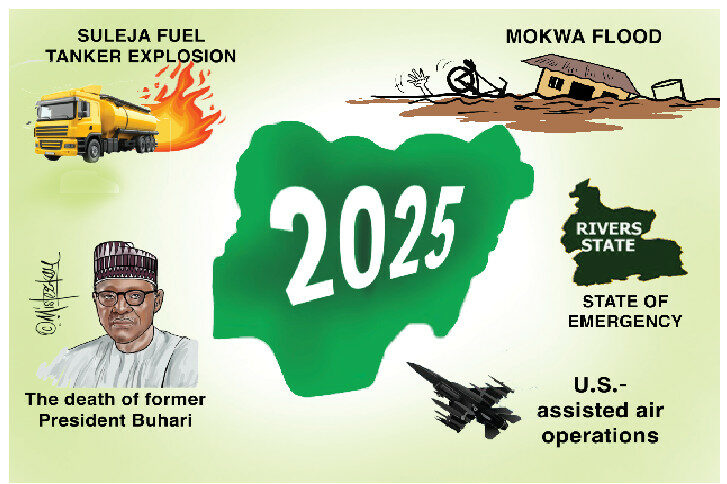
As 2025 comes to a close, it is appropriate to pause and reflect on a year that laid bare both the strengths and the vulnerabilities of the Nigerian state. It was a year marked by tragedy and debate, reform and resistance, grief and guarded optimism. From governance controversies to security anxieties, from economic reforms to social reckoning, Nigeria spent much of the year in conversation with itself. This reflection highlights only a few of the events that defined the year, fully aware that they represent just a fraction of the many stories that shaped our national experience in 2025.
Tragedy, Poverty, and State Responsibility
The year opened on a grim note in Suleja, Niger State, where a fuel tanker accident turned fatal after residents, driven by economic desperation, rushed to scoop petrol. The resulting explosion claimed scores of lives and shocked the nation. Beyond the immediate horror, the tragedy forced an uncomfortable reckoning with poverty, regulatory failure, and infrastructure decay. Many of those who died were not reckless thrill seekers, but citizens navigating hardship with limited choices in a fragile economy.
Soon after, floods submerged communities in Mokwa and nearby areas, displacing families and destroying farmlands. Farmers watched months of labour vanish overnight, while local authorities struggled to respond with urgency. For affected communities, the flood was not simply an environmental event, but another chapter in a long story of neglect. These disasters reignited public debate about climate resilience, emergency preparedness, and the uneven burden of governance failure. Once again, it was the most vulnerable Nigerians who paid the highest price.
Politics, Power, and Unsettled Alignments
Politically, 2025 was a year defined more by uncertainty than consolidation. The Peoples Democratic Party continued to grapple with internal divisions that weakened its coherence and credibility. Leadership disputes, legal battles, and defections reinforced the perception of a party struggling to redefine itself after electoral defeat. Among its traditional supporters, frustration grew that introspection had not yet translated into renewal or a compelling alternative vision.
The African Democratic Congress featured prominently in political conversations, though largely as a subject of speculation rather than as an established force. Its media presence and rhetorical positioning as a possible alternative opposition drew attention, but tangible evidence of nationwide organizational strength remained limited. For many observers, the ADC represents potential rather than proof. Whether it can mature into a credible, structured opposition capable of sustained engagement remains a question deferred to 2026.
Across the country, citizens expressed cautious realism. There is a clear appetite for alternatives to the dominant political order, but there is also skepticism born of repeated disappointments. Increasingly, Nigerians judge political parties not by slogans or alliances, but by organization, internal democracy, and the ability to remain relevant beyond election cycles.
The federal government’s declaration of a state of emergency in Rivers State further intensified political tension. The suspension of elected officials drew strong reactions across the political spectrum. Supporters argued that decisive intervention was necessary to resolve prolonged paralysis and protect public assets. Critics warned that such actions, if normalized, could weaken constitutional safeguards. The episode once again highlighted a recurring dilemma in Nigerian governance: how to balance firm leadership with democratic restraint.
Insecurity and the Weight of Fear
Security challenges continued to shape daily life in profound and unsettling ways. Communities across parts of the northwest and northeast endured attacks, kidnappings, and displacement. In Niger and Kebbi State, the abduction of schoolchildren reopened old wounds and revived national anxiety. When the children were eventually released, relief was widespread, but it was accompanied by exhaustion and unresolved trauma. Parents spoke quietly of fear that lingered long after the headlines faded.
International cooperation against terrorism also attracted attention. U.S.-assisted air operations targeting extremist groups in Sokoto State disrupted militant activity but reignited debate about sovereignty and long-term strategy. While many Nigerians welcomed any reduction in violence, others questioned whether military action alone could address the deeper drivers of insecurity, including unemployment, porous borders, and weak intelligence coordination.
In many affected communities, informal security networks and vigilante groups continued to fill gaps left by the state. Their efforts underscored both the resilience of local communities and the limitations of formal institutions. In 2025, insecurity was not merely a policy challenge discussed in Abuja; it was a lived reality shaping how Nigerians travelled, farmed, schooled their children, and imagined their future.
Economy, Reform, and Public Scrutiny
Economic pressure deepened public frustration throughout the year. Floods, insecurity, inflation, and high energy costs combined to strain household budgets. In markets from Lagos to Kano, traders complained of dwindling profits as consumers struggled with rising prices. Salaries stretched thin, savings evaporated, and patience wore down.
Against this backdrop, the federal government introduced new tax laws aimed at expanding revenue and funding development. Officials defended the reforms as necessary steps toward fiscal sustainability. Many small business owners, professionals, and informal sector workers, however, worried about the cumulative burden on an already strained economy. The debate reflected a broader national concern: how to pursue reform without deepening inequality or eroding public trust.
Business-government relations also came under intense scrutiny. The face-off between Dangote-owned companies and regulatory agencies became a national talking point. Beyond the specifics of the dispute, the episode raised larger questions about accountability, regulation, and the relationship between state power and private capital. For many Nigerians, the issue was more about whether rules apply evenly, regardless of influence or scale.
Social debates ran parallel to economic anxiety. Youth unemployment, women’s participation in leadership, and climate vulnerability dominated radio discussions, opinion pages, and public forums. Civil society groups intensified advocacy, while journalists amplified grassroots voices. These conversations reflected a society increasingly unwilling to accept policy without explanation or reform without inclusion.
Memory, Accountability, and the Road Ahead
The death of former President Muhammadu Buhari in London marked a moment of national reflection. Tributes acknowledged his personal discipline and reputation for integrity, while critics revisited unresolved questions about economic management and security during his tenure. Dr. Charles Omole’s controversial biography added depth and tension to the debate, reminding Nigerians that leadership legacies are rarely settled and often contested.
Equally divisive was the presidential pardon granted to Maryam Sanda, which reopened debates about justice, discretion, and equality before the law. Supporters framed the decision as an act of compassion, while critics worried about its implications for public confidence in the judicial system. The episode reinforced a defining theme of 2025: the growing demand for transparency, consistency, and fairness in governance decisions.
As 2025 draws to a close, it is clear that the year was not defined by a single crisis or reform. It was shaped by sustained debate, contested authority, and the everyday courage of citizens navigating uncertainty. The issues highlighted here are only a few among many, yet they capture the tensions, contradictions, and aspirations that defined the national mood.
As we look toward 2026, the task before Nigeria remains clear: to strengthen institutions, secure communities, manage the economy with fairness, and sustain open civic dialogue. To all our readers, I wish peace, progress, and renewed hope in the coming year. Happy New Year, and may 2026 bring a stronger, more stable, and more united Nigeria.
NIGERIA NEWS
Post-airstrike Assessment Confirms Extensive Damage in Tangaza as Military Recover Missile Boosters in Sokoto, Kebbi and Offa – THISDAYLIVE

…Terrorists decimated by US air strike
Chiemelie Ezeobi
Post-airstrike assessments has shown extensive destruction within a forest enclave in Tangaza Local Government Area of Sokoto State following joint air operations by the United States forces, which also lead to the recovery of missile-related debris across multiple locations, THISDAY can exclusively report.
THISDAY gathered that the joint post-strike exploitation was carried out by troops of 8 Division, Sector 2 of Operation Fasan Yamma, and Combat Intelligence Brigade (CIB) VII at first light on December 26, 2025 in Bauni Forest, around Waria and Alkassim villages in Tangaza LGA.
Military sources said the post-airstrike exploitation revealed that the forested areas around the points of impact were completely burnt and destroyed with the target persons completely decimated.
The assessment also confirmed the effectiveness of the strikes, with no reports of civilian casualties recorded during or after the operation.
In a related post-operation incident, troops of 1 Brigade, Counter Terrorism Battalion 12, deployed at Forward Operating Base Jabo in Kebbi State, reportedly heard the sound of an aircraft overhead, followed shortly by an explosion approximately one kilometre away.
Acting immediately, the troops conducted a patrol to Kajiji town in Tambuwal Local Government Area of Sokoto State.
At the location, soldiers recovered items described by military sources as suspected drone-like engine parts and other debris at what was believed to be a crash site.
The sources confirmed that no human casualties were recorded in connection with the incident.
Further post-strike patrols on December 26 led to the discovery of another object in Kajiji village where military sources identified the object as a canister suspected to have been dropped along the flight path of the missiles used during the Tangaza airstrike.
The area was immediately cordoned off to prevent access, pending a detailed assessment by an Explosive Ordnance Disposal (EOD) team.
With technical clarification from military engineers, THISDAY gathered that preliminary findings by the Equipment and Mechanical Engineers (EME) team established that the canisters recovered were fuel boosters from Tomahawk missiles used during the airstrikes.
According to the sources, these boosters are designed to be jettisoned automatically after take-off.
The sources explained that analysis showed the boosters should normally fall off several kilometres after launch. They added that a total of 16 missiles were fired during the operation, meaning that 16 fuel boosters would have been discharged.
However, as of the latest assessment, only three boosters have been reported recovered, two in Sokoto State and one in Offa.
Military sources further noted that the projected landing areas of such boosters are usually calculated before take-off.
They said it had been suggested that the appropriate authorities interface with partner forces to obtain the projected drop-off coordinates of the jettisoned boosters to enable timely recovery.
The sources warned that each booster weighs approximately 300 kilograms and is capable of penetrating soft ground to a depth of up to two metres.
While the risk is considered limited, they noted that uncontrolled landings could cause collateral damage, as reportedly observed in Offa.
Military authorities who further spoke under anonymity said investigations are ongoing and findings from the post-airstrike assessments would be used to enhance coordination, safety measures and operational synergy in future joint operations.
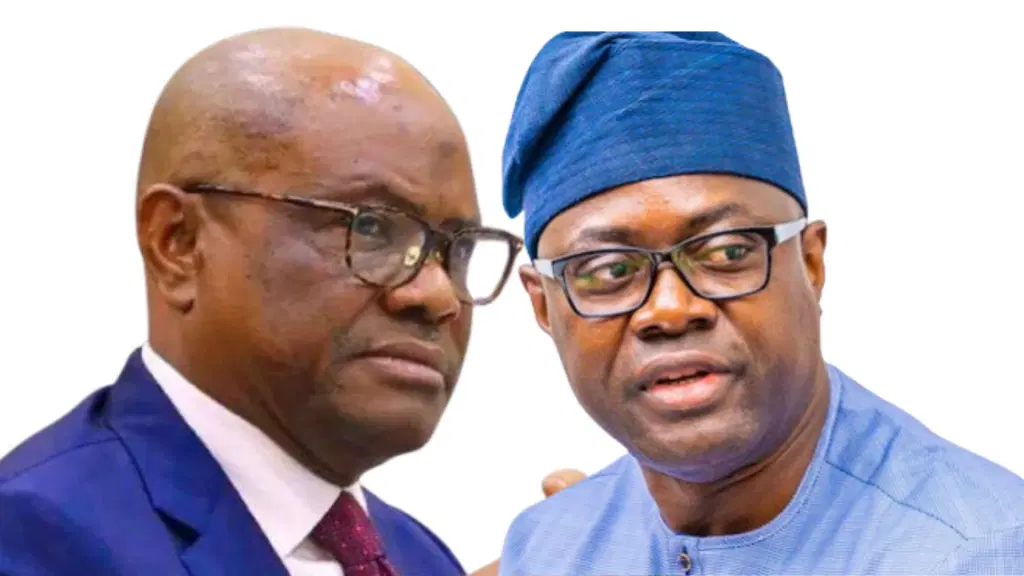
By Dan Abia & Davies Iheamnachor
PORT HARCOURT — Minister of the Federal Capital Territory, FCT, Mr. Nyesom Wike, has attacked Governor Seyi Makinde of Oyo State for saying that he (Wike) promised to “hold” the Peoples Democratic Party, PDP, for President Bola Tinubu.
Wike, who denied the allegation, also took on his successor, Governor Siminalayi Fubara of Rivers State, noting that his defection from the PDP to the All Progressives Congress (APC) came late without any established political structure to support his new party.
At a media interaction in Ibadan, last Tuesday, Makinde said his relationship with Wike collapsed after the former Rivers State governor made what he described as an unsolicited declaration during a meeting with President Tinubu.
“I was in a meeting with the President, Wike, the President’s Chief of Staff and two others. Wike said to the President, “I will hold the PDP for you against 2027,” Makinde had said, adding that the statement left him stunned.
But Wike who spoke, yesterday, during his end-of-year media chat in Port Harcourt, noted that the meeting had nothing to do with the PDP but was meant to show support for Tinubu’s leadership and assure him of continued support.
According to him, his support for Tinubu had never been hidden and did not require any special meeting to affirm.
“Seyi said I told Tinubu that I would hold PDP for him. Nothing like that happened. Everyone knows my position on Tinubu. I don’t need a meeting to tell him that,” Wike said.
He added that as a minister, he has a responsibility to ensure that members of the G-5 group benefitted from the Tinubu administration in one way or the other.
Wike also alleged that Makinde was displeased because Tinubu did not approve his nominee for a ministerial appointment.
He further claimed that he had not received the level of support Makinde allegedly got from Tinubu, including the reported N50 billion grant for victims of the Bodija explosion in Ibadan, the Oyo State capital.
However, Makinde’s Special Adviser on Media, Dr. Suleimon Olanrewaju, said only N30 billion was released, explaining that part of the funds was paid directly to victims as immediate support, while the balance was used for rebuilding and restoration.
Nonetheless, Wike maintained that the Oyo governor owed Oyo people a duty to account for how the funds were spent, adding that such expenditure should have been properly appropriated before disbursement.
Fubara has no political structure going to APC — Wike
Wike who mocked Fubara, said before the governor resigned from the PDP, about 22 chairmen of the local government areas in the state and half of the House of Assembly members had left the PDP and joined the APC and that the governor took that late decision to follow suit.
“As a governor, he has the state Assembly to move with, he has the council chairmen to move with, he has the party chairmen and members of the National Assembly to move with, but in this case, who did he move with? These people decided to move on their own.”
Wike reiterated that singing the Tinubu support slogan is not a guarantee for a re-election. “Shouting on your mandate we shall stand does not imply automatic ticket. It doesn’t mean that.”
He denied any form of fanfare on the day Fubara defected to the APC in Government House, Port Harcourt, adding “There is nothing like 001 in Rivers State. When you defect, you go to your ward and register for a new party.”
By this assertion, the minister attempted to deny that Fubara is the political leader in the state contrary to the position in the statement of the state chairman, Chief Tony Okocha on the day he issued the governor his APC membership registration number, 0001.
Wike stated that any day he decides to leave the PDP, those who are loyal to him, even in other states of the federation, will join him in leaving the PDP.
Responding to Fubara’s earlier statement that anybody who wants to support Tinubu should “not follow corner, corner,” the Minister reiterated that he has been the most abused minister in the present administration because of his support for President Tinubu.
“Nigerians know that in 2023, I supported the President. I didn’t hide that. If I am doing corner corner, Assembly people will not go, the National Assembly members will not go. That is leadership. I support President Tinubu. With what the President is doing in Abuja, there is no way PDP will win the FCT in the next election.”
On the alleged breakdown of the peace agreement brokered by the President in Rivers State, Wike admitted that it was due to inability of Fubara to keep to his part of that truce, adding that the governor was being economical with the truth in his working relationship with the leadership of the Assembly.
PDP fires back over claims of non-existence of party in Rivers
Meanwhile, the PDP has dismissed claims by Wike, that the party no longer exists in Rivers State.
Acting chairman of PDP in Rivers State, Nname Ewor, said the PDP fully exists in the state despite the defection of Fubara, the 16 members of the state Assembly and those of the National Assembly.
He said: “The APC in Rivers State is led by Fubara while the PDP in Rivers State is led by my humble self.
“I also listened to him when he said people should keep to agreement. I don’t know what he is referring to. To the best of my knowledge, what I know is that the people of Rivers State entered a social contract with the governor in 2023.
“They gave him mandate for a period of four years. It is for the people of Rivers State to renew that mandate in 2027. If there is any agreement between him (Wike) and the governor, it is personal.
“It has nothing to do with the people of Rivers State, who are in the position to renew or not to renew the mandate. I am sure that with the way the governor is performing, the people will renew that mandate.
“The FCT Minister as we speak does not belong to any political party. The PDP has expelled him and he is not in APC. So, he can afford to say that. But every Rivers man knows that the governor is leading the APC in Rivers State and that I am leading the PDP.”
Ewor said the wave of defections that hit PDP in the state is for personal interest and not people-oriented, stating that their defection does not significantly affect neither the party nor people of the state.
Also, acting Secretary of PDP in the state, Chief Ojima Ochima, cautioned the FCT Minister against instigating tribal or ethnic war in the state in pursuit of political supremacy.
Ochima said the FCT minister’s speech about supremacy of the Ikwerre in political hierarchy of the state was unfounded, stressing that all tribes in the state are important.
Vanguard News Nigeria
The post PDP crisis: Wike attacks Makinde, Fubara appeared first on Vanguard News.

Minister of the Federal Capital Territory (FCT), Nyesom Wike, has faulted Governor Seyi Makinde of Oyo State’s allegation that, in a meeting with President Bola Tinubu, he offered to hold down the Peoples Democratic Party (PDP) for the President.
He said that everyone knew his stand on the President’s re-election.
Wike made the rebuttal during his end-of-year media chat in Port Harcourt on Monday.
Governor Makinde had recently told journalists that Wike had, during a visit to the State House in 2024, promised to ‘hold PDP’ for President Tinubu.
But Wike refuted Makinde’s claim, wondering why the Oyo State governor could lie so brazenly.
He said that the meeting they held with the President had nothing to do with the PDP but was to show support for his leadership.
According to him, his position in supporting Tinubu had never been hidden and did not require a meeting to confirm it.
“Seyi said I told Tinubu that I will hold PDP for him. Nothing like that happened. Everyone knows my stand on Tinubu; I don’t need a meeting to tell him that.
“As a minister, I have a duty to ensure that members of the G-5 benefited from the Tinubu administration in one way or the other,” he said.
Wike said Governor Makinde was only angry because President Tinubu did not approve his candidate for a ministerial appointment.
The minister added that it was wrong for the governor to go on national television to lie against people simply because he did not get the ministerial slot he wanted from the President.
He, however, stated that he had not received the kind of support Makinde got from President Tinubu, including a N50 billion grant for victims of the January 2024 explosion in Bodija, Ibadan, the Oyo State capital.
Wike maintained that the Oyo governor owed his people a duty to tell them how the money was spent, adding that such funds should have been appropriated before spending.
My Grouse With Wike – Makinde
Oyo State governor, Seyi Makinde, has insisted that the rift between him and the Minister of the Federal Capital Territory (FCT), Nyesom Wike, was because the latter was trying to make the country a one-party state.
Speaking through his Special Adviser on Media, Dr Sulaimon Olanrewaju, the governor maintained that the minister planned to hold the Peoples Democratic Party (PDP) down for President Bola Tinubu in 2027.
According to him, making the country a one-party state would destroy the hard-earned democracy.
While noting that Governor Makinde had spoken on issues regarding the rift, Olanrewaju said, “It behoves on anyone the people would want to believe.”
Makinde had, during a media chat, said: “I was in a meeting with President Tinubu, Nyesom Wike and others when Wike volunteered to hold down the PDP for Tinubu against the 2027 election.
“I was in shock. Wike can support the President in 2027, but I will not,” he said.
However, Wike has denied saying this at a meeting with the President.
Wike Addresses Fubara Feud, Says All Can Never Be Well In Politics
Minister of the Federal Capital Territory (FCT), Nyesom Wike, has declared the political rift with Rivers State Governor, Siminalayi Fubara, far from resolved, bluntly stating that all can never be well in politics.
Speaking during his monthly media parley in Port Harcourt on Monday, the minister directly addressed recent comments by Governor Fubara, who, while defecting to the All Progressives Congress (APC), suggested some individuals were covertly supporting President Bola Tinubu while operating from the shadows.
Wike challenged the insinuation, widely interpreted as targeting him, given his position as a Peoples Democratic Party (PDP) member serving in an APC-led administration.
“I don’t know who is following Tinubu and doing ‘corner, corner.’ How could that be when the whole of Nigeria knows that I have stated openly that this is what I will do? Everybody knows that my position is not hidden,” he said.
The minister argued that his support for President Tinubu was decisive and public, crediting it for influencing wider support during the elections.
“If I were doing ‘corner, corner,’ so many people would not have supported Tinubu. The council chairmen wouldn’t have gone,” he said.
He framed the dispute as a matter of political integrity, contrasting himself with unreliable actors.
Wike Blasts Makinde Over Alleged Secret Deal With Tinubu, Denies Plot To Undermine PDP
Minister of the Federal Capital Territory (FCT), Nyesom Wike, has launched an attack on Oyo State Governor, Seyi Makinde, labelling him frustrated and dismissing as fiction the claim that he promised President Bola Tinubu he would undermine the opposition Peoples Democratic Party (PDP).
Wike made this known on Monday during his media chat with selected journalists in Port Harcourt, Rivers State.
The verbal assault comes amid deepening internal strife within the PDP, with the minister challenging the motive and timing of the allegation that he held a private meeting with the President to plot against his own party.
“First of all, you ask yourself, what was that meeting for? What was the purpose of that meeting – that would have led me to say, ‘Mr President, I will hold PDP down for you?’” Wike asked.
He questioned why Governor Makinde, who was allegedly present, had kept silent for so long if the claim were true.
“Why did Seyi Makinde not come up all this while to tell the party, ‘See what Wike is doing’? I was in a meeting. I saw what Wike said. It’s not correct,” Wike added.
Setting the record straight, the former Rivers State governor clarified that the visit in question was not a clandestine one-on-one meeting, but a group visit involving several PDP leaders after the general elections.
“There was no such [private] meeting. Rather, my humble self, the former governor of Benue State, Samuel Ortom, the former governor of Abia State, Okezie Ikpeazu, the former governor of Enugu State, Ifeanyi Ugwuanyi, and Seyi Makinde, went to see the President.
“We went to see the President after the elections were over to discuss certain things.”
He further explained that he invited the President’s Chief of Staff to join them to help reiterate their points, dismissing any notion of a pre-arranged, strategic political deal.
“I was the one who said, ‘Look, Chief of Staff, come and sit down, so we can remind the President of what we have discussed.’ There was nothing like a meeting we booked to go and see Mr President,” he said.
The minister insisted it was completely out of place to suggest he pledged to weaken the PDP, calling the allegation very unfair and attributing Makinde’s actions to sheer frustration.
Resolve Crisis Or Lose 2027, Wike Warns PDP
Wike also warned the leadership of the Peoples Democratic Party (PDP) to resolve the party’s internal wrangling ahead of the 2027 general elections or risk losing elections into major offices.
Wike gave the warning on Monday during a media chat in Port Harcourt, the Rivers State capital, where he said that if the party does not resolve its lingering crisis, the PDP’s chances of bouncing back to power in the next electoral cycle would be jeopardised.
“We have a leadership that is not focused; we have a leadership that does not know what to do or take any suggestions. If the leadership is committed and comes back to say, ‘We have made a mistake. Why are things happening this way, and what do we do to make corrections?’
“It is not just to take over the government; you have to position yourself. If the leadership is like that, you say, ‘Look, by 2027, it is likely that we may not make it, but are we going to allow the party to die?’
“Can’t we start to build up and make the right decisions against 2027? It is all dependent on the leadership; that is what I will say,” Wike said.
The PDP has struggled with internal crises since the 2023 elections and has lost several members, including serving governors, to the All Progressives Congress (APC).
During the media chat, the former Rivers State governor also mocked the November 15 PDP National Convention held in Ibadan, the Oyo State capital.
He accused Governor Seyi Makinde of being desperate to have total control of the party and of obtaining an ex parte order from an Ibadan court for the exercise to hold.
LEADERSHIP reports that Wike and Makinde, who had been close allies, have been at loggerheads recently.
On December 23, Makinde accused Wike of attempting to weaken the PDP in support of President Bola Tinubu’s second-term ambition.
Makinde made the statement while recounting discussions he said he had with President Tinubu, Wike and others, arguing that such political manoeuvres threaten Nigeria’s multiparty democracy.
Speaking during a media briefing at the Government House in Ibadan, the Oyo State capital, the governor disclosed that President Tinubu had once asked him to assist in organising the All Progressives Congress (APC) in the state, a request he said he turned down because of his membership of the PDP.
The Oyo governor further alleged that during a meeting attended by President Tinubu, Wike, the President’s Chief of Staff and other officials, the FCT minister openly offered to hold down the PDP for the President ahead of the 2027 general election.
Makinde said the comment came as a shock to him and raised concerns about efforts to erode the opposition and push the country towards a one-party system.
2027: PDP, APC Already Collapsed Into Renewed Hope Family In Rivers – Wike
Minister of the Federal Capital Territory (FCT), Nyesom Wike, has said that in Rivers State, all members of the All Progressives Congress (APC) and the Peoples Democratic Party (PDP) have effectively put aside partisan differences to embrace President Bola Tinubu’s Renewed Hope Agenda.
Wike made this known on Monday while addressing leaders, youths and women from Etche and Omuma local government areas of Rivers State during his visit to the two councils.
According to the former Rivers State governor, political labels now matter less than unity and collective commitment to development.
“In Rivers State, APC and PDP have already collapsed into one family, the Renewed Hope family,” Wike said.
He explained that the collaboration across party lines was driven by shared values, mutual respect and the desire to deliver dividends of democracy to the people.
“I don’t want to hear again, ‘I am PDP’ or ‘I am APC.’ What I want to hear is that you are working together. All of us are members of the Renewed Hope agenda. It is one family,” he added.
Wike said his visit to Etche and Omuma was not for political campaigning but to appreciate the people for their longstanding support.
“We didn’t come for any rally. I came to say thank you for the support you have given to us over the years. We are not ungrateful people,” he stated.
The minister commended the leadership of the local council chairman, describing him as central to sustaining unity and political stability in the area.
Urging party leaders and elected officials to honour commitments made in the interest of peace and development, he insisted:“Agreement is agreement. When you agree with people, you must keep it,” He stressed that unity remains the key to political and economic progress at the grassroots.
“When you are united, you get results. When you are divided, you lose,” he warned.
Wike expressed appreciation to women, youths and community leaders for their cooperation and support, noting that the peaceful atmosphere during the visit reflected growing political maturity in the state.
“This is not a rally; it is simply to say thank you,” he said.
PDP Vows To Vie For President In 2027
Meanwhile, the Peoples Democratic Party (PDP) has said it will field a credible presidential candidate and go on to win in 2027, contrary to Wike’s claims.
The national publicity secretary of PDP, Comrade Ini Ememobong, in a statement reacting to Wike’s comments during his end of year media chat, said the FCT minister is the “number one supporter” of the presumptive candidate of the All Progressives Congress in the 2027 presidential election.
Noting that Wike is engaged in anti-party activities to the benefit of APC, he described the FCT as “ a constant agent provocateur in the political space, creating trouble to mask his selfish intentions.”
The party said since Wike assumed power as Governor in Rivers State in 2015, he has been a recurrent troublemaker in the leadership of the PDP, adding that his “politics thrives on perpetual conflict, feeding on attention and seeking relevance through calculated disruption and when starved of attention, seeks to destroy everything.”
The party spokesman added that Wike’s declaration to support the APC candidate in 2027 has taken off the mask of pretence of his group.
“Nigerians are now clearly aware of their disposition to destroy the PDP as a part of their bargain to support the President, a clandestine agreement reached for their selfish reasons. We remind Wike that as a lawyer, he knows that agreements made to achieve an illegal purpose are not enforceable and should not be encouraged.
“We assure Nigerians that the PDP will field a credible presidential candidate who will receive the massive support of Nigerians and will go on to win the presidential elections in 2027.
“Our party is the Peoples Democratic Party, and no one person has the capacity to personalise the party,” the party said.
Kwara State Governor, AbdulRahman-AbdulRazaq
Men suspected to be political thugs yesterday stormed the Kwara State Government House to disperse women protesting peacefully over the spate of kidnappings in Ifelodun Local Council of the state.
The women, armed with placards, had arrived at the seat of power on Ahmadu Bello Way, Ilorin, to plead with the governor, AbdulRahman AbdulRazaq, to do more to save the Oke-Ode community from the clutches of bandits who, according to them, have turned the area into a desolate place.
A viral video of the incident showed more than 30 men, armed with horse whips, canes, rubber, wire and other weapons, suddenly alighting from an unmarked vehicle and unleashing beatings that sent some of the women protesters reeling into the gutters.
On arrival, the thugs were seen forcefully collecting the women’s placards and assaulting them with apparent determination.It was gathered that while the attack was ongoing, the governor was attending the passing-out parade of the state’s forest guards.
Meanwhile, the Peoples Democratic Party (PDP) in the state has condemned what it described as “the brutal, inhumane, and utterly disgraceful” assault unleashed on helpless women and children at the peaceful protest.
“These women—mostly aged mothers, wives of kidnapped victims, and their children from Oke Ode, Agbeku, Babanla, Adanla and other communities in Ifelodun Local Council—came to Kwara State Government House as a last resort.
They came crying, pleading, and begging the government to intervene in securing the release of their loved ones who have been held hostage by bandits for weeks, with outrageous ransom demands running into tens of millions of naira.
“The Kwara PDP considers videos circulating in the public space, which show these women lamenting in Yoruba how their husbands were kidnapped over a month ago, how entire communities have been deserted, and how families have sold all they own and exhausted all options.”
The party’s state publicity secretary, Olusegun Olusola Adewara, lamented that “instead of compassion, reassurance, or even basic engagement, these traumatised citizens were met with violence.
“It is unacceptable that thugs mercilessly descended on these peaceful protesters with canes and other weapons, beating, stripping, and forcefully dispersing them in full public view.”
The party also charged the Inspector-General of Police, Kayode Egbetokun, to immediately identify, investigate and prosecute all police officers who supervised or allowed the assault to take place, stressing that “justice must not only be done but must be seen to be done”.
“We also demand the immediate arrest and prosecution of all government-linked thugs who carried out this attack on peaceful protesters. No society that claims to be civilised should tolerate such lawlessness under the guise of governance.
“Furthermore, the Kwara PDP calls on President Bola Ahmed Tinubu, relevant national authorities and international human rights institutions to urgently look into this disturbing incident and the broader failure of the AbdulRahman-led Kwara State Government to protect its citizens from banditry, kidnapping and state-sponsored intimidation,” it concluded.
NIGERIA NEWS
Lady Displays Her Brother’s WhatsApp Chat With Young Girl Who Requested for N1k, People React



Ankrah Shalom (Human-Interest editor)
Shalom Ankrah is a journalist and a Human Interest Editor at Legit.ng with over six years of experience. She has a degree in Mass communication from Alex Ekwueme University. Shalom has worked with reputable news organizations including The Tide and GistReel. Email: ankrah.shalom@corp.legit.ng.